Subscribe
Share
Share
Embed
Listen and learn the ways you can level up your health and fitness lifestyle to be more integrated, and more effortless. We talk about anything and everything related to improving mindset, muscles, and meals. Or in other words we cover everything health, fitness, and self-improvement related.
Alright. This is the first episode of the FitSpace Pro podcast. My name is Alex Parker, and I'm gonna do a little introduction to myself with a little bit of a takeaway from my early weightlifting experience. Where did I start? Who am I?
Speaker 1:I am Alex Parker, and I, I love lifting weights. I have always loved lifting weights from the time I was born. Just kidding. I was about 14 when I really started to lift weights. And lifting weights is a passion of mine.
Speaker 1:Healthy eating is a passion of mine, but I also love indulging in good foods. And I kinda wanna talk about where I started, when I started, and why I started. So I begged my dad for a gym membership when I was about 12 or 13 years old. I really wanted to start working out, but he said I was too young. It was very popular to believe that with lifting weights stunted your growth.
Speaker 1:And so he said, as soon as I turned 14, I could get a gym membership. And he had a gym membership. So I wanted to go with him, and me and my friends wanted to go lift weights. But until then, I wasn't allowed to have a gym membership. I'm sure there was also a cost factor in there too.
Speaker 1:Right? But, anyway, so my friend and I, my friend, Rich, we were best pals, and we decided to start trying to work out on our own. He had some gym equipment in his garage, like a bench, barbell, some weights. He had a really rugged pulley that we hooked up to the rafters in his garage. We hooked a nylon rope up to a wooden stick for a cable press down handle.
Speaker 1:And then we had a big knot and, like, a, I think, a stick on the other end where we could put weights on it. And we had this single pulley with a dangling weight, like, totally rudimentary pulley system that we could exercise triceps on or different, you know, lat pull kinda moves. We were a little bit nervous because the heavier weight would start to swing around as we were pulling it down. But, anyways, that was a lot of fun. But I remember at this time, I was 13, maybe almost 14, and I must have been just barely 14.
Speaker 1:I was a freshman in high school, and I was about 6 foot 1, and I weighed a £135. So I was a tall beanpole. And I remember the adults would be like, man, Alex, you're such a bean. You're just sprouting up. You're so tall.
Speaker 1:I was always the tallest kid in my class. And there might've been a couple other tall people around me in, you know, elementary school and middle school, but I was just always a tall kid and a gangly kid, sort of skinny gangly, whatever. And as you get into, you know, 14 years old, you start to develop these insecurities. And being skinny and weak was an insecurity of mine. And I was strong for my size.
Speaker 1:Like, I've always been strong for my size and deceived many people in that I seemed weak, and I would be able to beat them in arm wrestling or some other, you know, strength match. But I didn't wanna be small and scrawny. In fact, being told I was skinny started to turn into this wound. You know, I remember I would be hugged by a friend. It was a girl, and she's like, god.
Speaker 1:You're so skinny. You need to eat a hamburger. And I'm sure it was said in jest and, you know, teenage girls have their own insecurities with being heavy, right, at the time. Anyways, I sunk in and I was like, I'm determined to put some meat on. So I started lifting weights.
Speaker 1:And I remember in Rich's garage, the first time I benched a £135, and I was about 6 foot and a £135 myself. I benched my body weight. That was a milestone that I was told, you know, you need to be able to bench your body weight if you wanna be strong or be considered any sort of a balanced kind of man. Right? So that was exciting.
Speaker 1:But then finally, after the garage workout sort of panned out and my dad followed through on his promise and got me a gym membership to Frog's Gym. It's just down the street from our high school. And, man, so much fun. There's so many fond memories of working on in that gym. And this is where it really came alive for me because I started to work out.
Speaker 1:I started to see changes in my body. I was also going through adolescence and puberty, so my body was changing. And I was able to put on muscle. My, you know, voice was dropping. And and I really developed a love for lifting weights and not just lifting weights like a meathead.
Speaker 1:Right? But I loved learning about what the body was doing and what targeted certain muscles. And I remember I was trying to I've always had this ever since this time, I've always had this inclination to sculpt my body or shape it and build it like I was sculpting a, you know, sculpture. And so I would I would look at my body and I would I would imagine like, okay. I wanna build this a little bit more.
Speaker 1:Like, how do I target this area of my body to build this area more? And I was wanting to build out proportionally, and I wanted to look good. It was it was very much an aesthetic target, but, and maybe because it was based in insecurity, but I did. I wanted to look good, and I wanted to build my body. And so I remember I was trying to figure out how to target my upper middle chest, And I would try all these different angles, putting my elbows at different angles, holding the barbell bench at different angles, and, in different positions, narrowness, wideness, whatever.
Speaker 1:And I remember using the Smith press in order to try to get more stability while I was targeting these awkward angles and positions. And I I found this one way that I can hold it really narrow, on an incline bench. The way that I was pressing, I could really engage my upper clavicular pectoral fibers. Right? But I didn't know what I was doing at the time.
Speaker 1:I really had no idea. I was I was just trying to use sensation to figure out what I was doing. I remember being heckled by my friends like, what are you doing? And I was like, I'm trying to target this right here. And the joke became, are you trying to target the, like, 13th fiber from the top middle part of your pec?
Speaker 1:And I was like, yeah. I am, actually. I really wanted to build this very specific region. So, anyways, fast forward many years, I really loved weightlifting through high school. It was just like my sport.
Speaker 1:I also played water polo, but playing water polo as a freshman kinda burnt me out, and we just worked so hard. We played novice and JV against I mean, we were one team and we played against 2 teams for every school that we played up against. And it was exhausting. So I took 2 years off and I bulked up. So I went from 135 pound freshman, right, lifting weights.
Speaker 1:I came back senior year to play water polo, and I was 203 or £205. And I was 63 at this point. Right? 17 years old ish. I weighed 200 over a little over £200.
Speaker 1:I had bulked up. So then my nickname became Hulk. I was the big guy on the water polo team because I really just had transformed a ton. And it was so much fun. It was really water polo is an amazing sport.
Speaker 1:It's so hard, but it's so fun. And so instead of tryouts at our school, we had hell week. And if you made it through hell week, then you were on the team. I think it's because not enough people really tried out to have tryouts. So it was just like, if you can hack it, then you're on the team.
Speaker 1:And hell week was intense. But this time, you gotta remember, I loved lifting weights. Right? So I was working out every single day. 6 days a week.
Speaker 1:I would take Sundays off. So this one week before school started, senior year was hell week, and there were 2 practices a day. In the morning, I think it was like 6 or 6:30, we'd have 2 and a half hours of swim practice where we just swam, did swimming drills, and it was all about getting faster at swimming. In the afternoon, I wanna say it was about 2 o'clock, 2:30, we would have, water polo drills practice where we would do plays and different maneuvers with practicing our water polo skills and managing the ball and sort of interacting as a team. Right?
Speaker 1:And I was like, I that's a lot of exercise every day. How am I gonna do my weights? Right? I'm gonna be exhausted. I remember having this dilemma of, like, is it worth it?
Speaker 1:Is it worth it to go do water polo if I'm gonna have to sacrifice my lifting weights? And, ultimately, I decided, no. I'm gonna go lift weights anyways every single day. Now, I was a 17 year old living under my parents' roof with little to no responsibility. So I actually could, and it was still summertime.
Speaker 1:So I didn't have a job. I didn't have really any responsibility, any demands on my time other than water polo practice morning and water polo practice afternoon or trials or whatever you wanna call it, hell week. And they were hard. They pushed us and they pushed our limits. But in between those two practices, I would lift weights for an hour.
Speaker 1:So I would wake up 2 and a half hours of drill, and then I'd come home and I'd eat and then I'd sleep. And then I'd wake up and I'd go to the gym. And I'd lift weights for an hour, come home, eat, have my protein, sleep, take a nap. I wake up and then I'd go to water polo, water polo drills practice in the afternoon, come home, sleep or eat and then sleep. Right?
Speaker 1:That was my week that was my whole week. And during that week, no joke, in one week, might have been a week and a half when I realized it. But after a week, I had dropped £18, almost £20. And at this point, I think I weighed a £180. And what shocked me is I hadn't really taken time to look at myself.
Speaker 1:I wasn't I was just trying to survive. I was trying to get through practice, morning weights in the in the, you know, mid morning, late afternoon, early afternoon, and then practice in the afternoon. And I wasn't really paying attention. It was all in 1 week, week and a half. I dropped £18.
Speaker 1:And I remember I was looking at one of my, you know, teammates, players, whatever, sunglasses I was talking to him. And I saw my reflection in his sunglasses through standing outside. And I saw abs in his sunglasses. And I didn't have like a shredded 6 pack when I was at, you know, little over £200. I was bulking.
Speaker 1:I was I was consuming a lot and bulking. I wasn't chubby or overly thick, but I I had bulked up a lot. Anyway, so I saw these abs in his sunglasses and I was like, wait, what the I looked down. I had abs, and I was like, man, I'm I'm shredded. Like, what happened?
Speaker 1:And I had shed so much body fat, and I dropped so much weight so fast. I didn't even know what had happened. So then we were so excited, and I went over to my friend's house. And we took a bunch of flexing photos of which I still have, by the way. And I had never seen my body like this with muscles and treads, and it was so fun.
Speaker 1:Just exciting. Anyways, I think all of this played together in a role to really deepen and establish the roots of my love for bodybuilding, but also just manipulating the body and the composition and building muscle and everything that goes into it. Because I am at heart a nerd. I am I'm I've always been a nerd. So I love the science behind things.
Speaker 1:I love understanding the concepts, the principles, and really the mechanisms of what makes these things happen in our body. The body is absolutely an amazing thing to me. Such a gift, and I cherish it. I try to cherish it as much as I can. And I really try to teach clients how to cherish their body too in all of its states, both good and out of shape, in shape and run down or, you know, high performing.
Speaker 1:So fast forward many more years, I stuck to it and I just always lifted weights. I went to college and I lifted weights and I loved it. And my roommates would always be like, what, dude? Why do you lift weights so much? Like, you just are you a gym rat?
Speaker 1:Are you a meathead? Whatever. And it was always just kind of part of my identity. It was my thing. Right?
Speaker 1:And then I actually went to Korea for 2 years, served a mission, and I would wake up early in the morning and we would run to the city hall and where there was a public gym and we would lift weights. And then we would run home before 6:30 when our scheduled routine would start, and I got my weights in almost every day. And when I didn't have a gym to get to, I would do push ups. I would do pull ups on door frames and I would do sit ups and I would do handstand push ups. I would do handstands against the wall and do some push ups.
Speaker 1:Like, I really tried so hard to just always stay strong and active until I got married to my wonderful wife, Lindsay. As many of you know her as lifting Lindsay. And, she is an amazing cook from the beginning, was an amazing cook. And I fell into developing software. It was a new science that I loved and I meddled with it in high school and it was just fun.
Speaker 1:And I found out I could be paid well doing it. So I started becoming a software engineer while I was going through college. And software engineer is a sitting job. You sit all the time. And the jobs that I got were not kind to being active, or I didn't know how to be active and be a software engineer.
Speaker 1:Or I would be working long, long hours, you know, 12, 15, 18 hour days. And I would just be sitting all the time. So I lost a lot of my activity, and then I sacrificed going to the gym. And I was eating extra servings because my wife's meals my wife's meals were amazing. So, really, I got out of shape after I got married and quote, let myself go.
Speaker 1:Right? And then it was when we got our first daughter that I was like, what have I done? I can't hardly reach my shoes to tie my shoes. I remember trying to reach down to tie my shoes, and it felt like I had a huge pillow between me and my thighs. And I was so uncomfortable.
Speaker 1:I was irritable. My mood swings were all over the place, and I just, I really struggled with being happy with myself because of so many reasons, but my my addictive eating almost, my emotional eating was such a part in that. I was betraying my health. I was going against what I knew was better. And the words that I said to my mom when I was in high school rang so loud in my ears.
Speaker 1:I remember where I was sitting on the floor, it might have been during how we practice or just some afternoon after school. Like, I went to the gym, and I came home. And I don't remember if I was asking my mom why she didn't go to the gym or if she wanted to go to the gym, but she was saying something along the lines of, well, when you're older, it's different. When you have kids or responsibility, it's different. And I remember saying out loud, I'll never let myself give that.
Speaker 1:At least I thought it. I thought it so loudly. I I thought I said it out loud. Whether or not I said it out loud, I don't remember exactly, but I'm pretty sure I did. And this was just a mentality that I had at the time when I was 17, 18 years old.
Speaker 1:It's like, I will never let myself get out of shape. I just won't. This is a part of me. This is part of who I am. I will never let myself gain weight and overeat.
Speaker 1:And this is just it's unacceptable. Right? Now I had some teenage dogmatic thinking, and I was proven wrong and I was humbled. And that was that moment when I realized I am out of shape and I have let myself go. And those words that I constantly thought just constantly weighed on me.
Speaker 1:I could hear myself saying, I'll never let myself get out of shape. And here I was completely out of shape. I could hardly go upstairs without huffing and puffing. I could not run for the life of me. I hated the sweat.
Speaker 1:Anything that required some physical exertion that caused me to sweat just bugged me and it irritated me, and I hated it. I hated how my pants fit. I hated that I would had to keep getting bigger belts or bigger, you know, pant sizes. I was so frustrated, but I didn't really know why I was frustrated. I just kind of shoved it to the back of my mind.
Speaker 1:I shoved it under. It's Like, well, I'm working hard. I'm doing all these things. I'm doing these things that are more important. And I I really shoved that priority down the list where my health was just not a factor anymore.
Speaker 1:And so when I had my first daughter, I realized, like, this isn't the dad that I wanna be. I don't wanna be the dad that's out of shape, that can't keep up with his kids and can't show them how to be active and how to be strong and how to be healthy. And I am a living terrible example of what I want my child to be. And so I decided it's time to change. And I woke up, I think it was March 14th or something, 2014.
Speaker 1:I have the photo saved. I woke up at, like, 5, 5:30 in the morning, took a picture of myself, front and back. I was like, it's game over for this body. Game over for this bad time to change. And I didn't know how to lose weight up to this point.
Speaker 1:I didn't actively have to really earlier on in my, you know, childhood and and through the years because I just always had this habit of being active and kind of watching what I was eating and just being careful and not overdoing things. Right? And I didn't track macros in high school, but I had a list of foods that I would eat. I was like, how to prepare chicken breast and all these different protein sources. I didn't weigh anything.
Speaker 1:I didn't measure anything. I just ate proteins. I prioritized proteins. I prioritized vegetables where I could. I would take cottage cheese and wheat thins to school, And I would eat chicken breasts, you know, at lunch.
Speaker 1:Or I would, I would pack, like, heavy meat lunches when I could. And this was senior year in high school. And I really started to get into it. My friend, Derek, gave me a bodybuilding it's like Bulgarian bodybuilding techniques booklet that he had gotten, and I was so excited about that. I actually still have it.
Speaker 1:Derek, if you're listening, I still have that binder that he gave me. There's so much in it still. Some of it is very true, and some of it is very much bro science. But I didn't know how to lose weight. And so I went to the gym, and I got on the stationary bike, and I just grinded as hard as I could for an hour.
Speaker 1:Nearly killed myself. And I lifted weights, and I started doing an hour of cardio every single day, every morning as hard as I could and as intensely as I could. And I would also just do everything I could, but I didn't know how to manage my food. And and a big thing at this point that I had developed was heavy or severe emotional eating because we had, as a family, kind of develop well, as a couple, Lindsay and I had developed this culture where if there was something worth celebrating, we would go out to eat, and then we would have a treat. If there was something that was making us sad, we would go out to eat or have a treat.
Speaker 1:When we would watch movies together, we would have soda and a treat. And this was Mount Deuce soda, not diet, no zero calories stuff. It was sugar soda and peanut M and M's. That was our go to. And so there was all these habits that we had developed together that it kinda put me into this place where I didn't realize I was fully capable of, but the emotional eating was overpowering.
Speaker 1:And it was kind of crippling because I would eat these things and I kinda feel like outside myself. Why did I eat all of that? Like, why did I eat so much? Why did I go for thirds on this meal? I didn't need it.
Speaker 1:I wasn't actually hungry, but I didn't realize I was actually emotionally eating. I was trying to cope with emotions of stress that were probably induced because I was so unhealthy. And the lack of my health was putting me in this mental condition where I just didn't feel good because I didn't feel good dealing with life stress, dealing with other stressors of life was just even harder. So I didn't realize I was finding an outlet through food. Right?
Speaker 1:And sometimes that was just eating multiple extra helpings in a meal that was delicious and satisfying or eating treats that I didn't need to eat. It was always getting ice cream after lunch when I was working in the city and we would go for spicy tacos and spicy tacos made me wanna eat chocolate ice cream. So, I'd get those every day, right? So all of these things were just really working against me and I didn't know how to unwind it. So lots of work, lots of figuring things out.
Speaker 1:Lifting weights was still paying off. I didn't know how to drop body fat, but lifting weights was still proving useful. It was bringing my muscle mass back. It was helping me to build strength and muscle, feel confident. And so I think that's where a lot of people miss the mark is they think I can't build muscle.
Speaker 1:I just need to lose fat. And so they'll just diet, diet, diet, and go into a deficit, deficit, deficit and not really focus on lifting hard and working hard in the gym. Fortunately, for me, I already knew how to do that. I already knew how to work hard in the gym. But this, you know, new approach, I didn't know how to take into fat loss while I was building muscle.
Speaker 1:So I hired a coach, and he gave me macros, and I didn't know what to do with that. I was learning how to track. I knew how to track. But all he did was give me macros and then just kind of disappeared. I expected, like, accountability and checking in.
Speaker 1:There's just wasn't a lot of that. And so my first coach was kind of a letdown, not just because of him, but because of me. I didn't know how to be coached either. I didn't know how to show up as a client. I didn't know how to be teachable.
Speaker 1:I didn't know how to, like, almost create the accountability to the coach and make that attachment right. Anyways, so parted ways there. And after a little bit more effort, I tried and tried and tried. Just wasn't having a lot of success with getting my body composition in a place where I was happy with it. And I just felt like I couldn't control it.
Speaker 1:Like, I didn't know what to do. I didn't know how to dial things in. And I didn't even realize. I didn't have the awareness that I was sabotaging it the whole time because of this emotional eating trigger. I didn't know that I was overeating.
Speaker 1:I didn't know how much I was eating. I wasn't religiously tracking, but I was, like, vaguely tracking. And I wasn't consistent with anything really. I tried all of these different hacks. I tried keto.
Speaker 1:I tried low carb. I read the Tim Ferriss 4 Hour Body, whatever it was and followed a lot of his teachings. And it was just kind of a lot of hokey pokey stuff and I didn't I was getting frustrated. So I found another coach. And this time, it was a little bit more of an investment and I had to pay a little bit more, actually quite a bit more.
Speaker 1:And I was I was nervous about it because we didn't have a lot of money at this time. We were doing in vitro and infertility stuff, and we were paying extra on our health. Like, we just didn't have the excess money that was, in my mind, justifiable to hire this coach, but found a way to make it happen. And over 6 months, he helped me dial everything in and really get lean. And I started getting leaner, and I was like, okay.
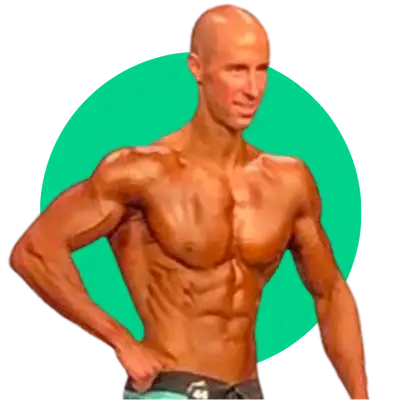
Speaker 1:I wanna do a competition. So I did a competition, and I prepped for a competition. And my motivation for doing a competition was really kinda similar to what a lot of the trend is, and it was just I wanna see what it takes to get as lean as I possibly can because I don't know that I ever have intentionally gotten lean because the whole water polo getting shredded thing was totally an accident. So I pursued that and that was fun. But then I had this appetite to really put on muscle.
Speaker 1:I got 1st place, which was fun, as a novice, true novice. 1st place in a local show, it was very validating. But I also knew the reality of my condition, which was I was not that big. I lost a lot of body fat and I was feeling big because I put on some muscle while I was training with higher body fat, but then I really shredded down and I felt like, oh, man. I'm skinny again.
Speaker 1:And then high school insecurity came back. Right? So I got this appetite to build muscle and I started working out like crazy. I started studying a ton and started really diving into it. And this was about when my wife, Lindsay, started getting really into it as well.
Speaker 1:And that was helpful. It was really helpful to have my wife join me on this and really take up a passion for it because then it was both of our thing. And then we could talk about it and we can nerd out about it and we could study stuff together. And as she started studying stuff and doing her certifications and learning what she was passionate about in, you know, building bodybuilding and fitness and health and wellness. It was just really, such a blessing that she also loved it and really can't say how grateful I am that she does love it as much as I do.
Speaker 1:So that is my intro to where I came from, just kind of my early beginnings and what spawned my love for building bodybuilding, lifting weights, and pursuing health and fitness. And there's a lot more to share. There's a lot more years since then. That was back in 2015. So it's been 9 years since then even.
Speaker 1:And been on a long journey since then through lots of ups and downs and just learning a ton. And I have more share on this podcast. I'm excited to share. But I do wanna say as the takeaway here, it doesn't really matter what gets you into it because you're gonna bounce around to lots of these different aspects and facets of becoming healthy, becoming strong, building muscle, building strength, and finding what really brings you joy in this process. Because that's really what it's about.
Speaker 1:It's finding the joy in the process. It's not finding joy in the outcome. Because having a 6 pack is fun for a moment, but then it goes away. And it's fleeting. So having fun showing up every day to the gym, loving the process of working out, whether that is your Pilates or your bodybuilding or your bro lifts or your Olympic lifts or some balance of all of them, it really doesn't matter what it is as much as you love doing it because doing all of those things is gonna bring you the strength and the longevity of your life that will pay off in years, tens of years, if not more, that when you age and you get older, you'll have a lot more life in you to live with those that you love.
Speaker 1:And that's kinda what I'll be sharing and teaching through this is mindset. The things that you can shift in your mindset to really love the process, to love your body, overcome emotional eating, overcome body image issues, to learn about muscles, what it takes to build muscle, what it takes to maintain muscle, and how to understand your muscles, the way they move biomechanically and and ways to think about it. And then macros or meals. And the meals are really what helps you manage your body composition. And not just body composition, but the health of your mind.
Speaker 1:What you put in your body really affects the way that you think and how you think. Those 3 things kinda connect together in a way that I believe creates this trifecta of balance of health, mind, and body. And so through your meals, through your muscles, and through your mindset, I wanna teach you how to really get healthy, to get well, and be strong, and live long for those that you love. And that's a wrap for today. I'll be back more later.
Speaker 1:You can find me on Instagram atalexparker.fit. You can go to the website at fitspacepro.com, and, I'll be sharing more details about that as well.