Subscribe
Share
Share
Embed
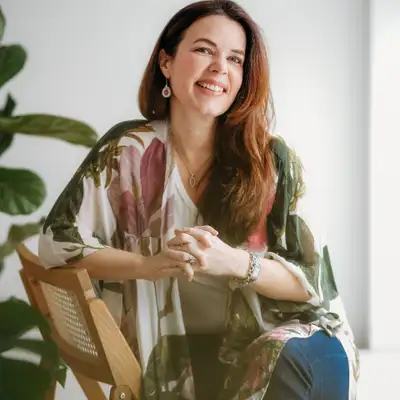
The Words in the Wilderness podcast is for those who have the conviction to make changes in their life as they drag their feet through the messy middle, crying into the void "it ends with me."
Led by Jacky Power - The Therapeutic Poet - these are conversations that look underneath the label, the diagnosis, the tidy explanation, at what's actually going on.
If you've made a decision to change your life and now you're in that wobbly, lonely bit where nobody quite gets what you're going through, I made this for you. Because I've been there. Many times.
Each episode starts with one of my own poems, using therapeutic poetry to set the scene. Sometimes it's just me, unpacking human tricky things. Sometimes it's a guest - a therapist, a coach, someone whose lived experience has taught them something worth passing on.
We talk about leaving what doesn't fit anymore, about breaking the patterns you inherited and don't want to leave as your legacy, about all your human tricky things that you've maybe been taught to hide.
I'm Jacky Power and I'm on a mission to rehumanise, one poem at a time. Reminding you that you have permission to feel and use those feelings as data to decode, not symptoms to squash.
Follow Jacky on Instagram: @the_therapeutic_poet
Find out more: www.jackypower.com
Listen to Jacky on Insight Timer: www.insighttimer.com/TheTherapeuticPoet
Join her on Substack`:www.jackypower.substack.com
Jacky (02:16)
Hello and welcome to Words in the Wilderness and welcome Lucy Wild. Pleasure. So Lucy, you're a coach who specialises in working with women, mothers after or before they've had children. And you are, a matressence activist. is like moving into motherhood basically. Yeah.
Lucy (02:20)
Thank you. Thank you for having me, Jacky
Jacky (02:37)
Yeah, which is something that I so wish had been a thing when I started to have kids. Yes. Because it's such a lonely terrain, isn't it? You know, I mean, it's a real evolution for a woman.
Lucy (02:50)
Massively. Yeah, yeah, totally.
Jacky (02:52)
And I just want to read something. So we've had a couple of emails and I want to read something ⁓ that you said in your email about what your passion is and really why we're chatting today. And you said, my main passionate point I share with the world is to try to learn and feel and know in your bones that you matter
And I start each of these episodes with a poem as a way of kind of being a launch pad really for us to have the conversation. We chatted about which poem I should use, but we settled on this one called Keep Going. When you're full of self-doubt, keep going. For there is no way of knowing when your dream or aspiration may take form. Yet to be in the collective heartbeat of faith.
Just thinking about the work you do, that collective heartbeat of faith.
I think, I don't know what your thoughts are after hearing that poem.
Lucy (04:08)
I love it. feels so lovely to have like a, it feels like a private poetry reading to have you read to me. It's so nice. And it really, it really moves me the from the very first couple of lines. It resonates with me and my story. And I just think we have to, although it sounds simple, we have to remember that we matter and people might be like, yay. Yeah, I know I matter, but it's like, if you think about it, if you pause, if you put your hands on your body,
Do you truly feel that? Do you truly feel that the people in your life treat you like you matter? Or do you treat you like you matter?
Jacky (04:42)
And I think it's such a difference, isn't it, feeling like you matter. I think that can be part of the struggle. Like I've, all the way throughout my life I felt like I mattered. Like I liked myself, I was curious about the world, was passionate about being alive. But it didn't necessarily mean that that translated into me feeling seen.
in feeling like I mattered to other people. And of course as part of our development, that's such an important part of our childhood development that we're mirrored in that way and we feel seen.
Lucy (05:19)
Yeah, totally. Yeah, to feel seen and heard are so, so vital. And I know that now from the work of Brené Brown, Gabor Maté, when I heard that for the first time, probably in the last five years, five, six years, because it was six years ago that I left my marriage and everything sort of difficult and dramatic happened. So there's been a huge amount of growth, but yeah, I remember
I did not feel seen, I did not feel heard. So hence writing a bit like you loads of poetry to help process what I've been through and help others feel seen. And yeah, the word spilling onto the page.
Jacky (05:53)
And I know one of the things we chatted before I started recording as well was about this idea of why it's so important for you that other people feel like they matter.
What's been your motivation for wanting to really get into the world and share with people that they matter?
Lucy (06:09)
it stems from birth trauma, I think, experiencing emotional abuse, physical abuse, sexual abuse, and family ostracizing me. but if I think about it, as I have over the past six years or so, I feel like it also goes back to childhood as so many things that bother us to this in adult life do. ⁓ and
It's been interesting to do some work and sort of go back to my child self and picture where I felt like I didn't matter. And I do not blame my parents. I, especially, I suppose, being a parent, I understand whatever they were going through, but there might have been a point where I felt like, ⁓ someone didn't hear my silly idea or like cute idea, or they didn't want to watch me dance at that moment, you know, whatever it might've been. So I totally forgive it, but it's so interesting to sort of.
Reparent myself and nurse the feelings from whatever version of me it is, but I think particularly Feeling like I didn't matter after having Matilda was incredibly hard It still brings some painful emotions up to this day like I wrote a poem on the weekend and it it spoke about how I was treated after having Tilly and saying some things about who was meant to look after me at that time and I totally give myself grace for this the process of of things coming up because people might be like, your daughter's 11, haven't you got over it by now? And it's like, no, I haven't. And a big part of not perhaps getting over it, maybe I won't ever fully get over it. And I get that and that's fine. A big part of it was that I wasn't seen for so long. It took me so much work and so much research to realize that I was suffering from birth trauma. then in most recent years, roughly five, six years ago, I wasn't believed about what was going on in my marriage. So I left and it's very upsetting to tell and to think about, but my family didn't believe me. They were like, ⁓ but it looked fine. it's hard to put into words really, because I haven't had to that much, I suppose, maybe a little bit in therapy, but.
Essentially, I would put it as they sided with him and not with me. And there's a version of me that still thinks, but they knew me for 37, 36 years and him for like 10. So why did they trust him?
Jacky (08:22)
Mm.
Lucy (08:23)
And so was so, so painfully that I had to learn that I'm at it away from anyone else.
Jacky (08:29)
And how did you do that? Because poetry has been such a... talk about that quite a lot and you say even at the weekend you wrote a poem. Is that what you found that actually poetry has been a place?
Lucy (08:40)
Definitely, yeah, poetry has been huge. I think I properly realised that I could write probably when Tilly was about one. Like I wrote a poem about my birth experience and it starts, my scar is amazing, my stretch marks are too, they remind me of growing and welcoming you. And it goes on and it's, it was so cathartic to write. Yeah, thanks. And and then loads of people were moved by it and were like, this is really powerful.
I'd never really been given permission to celebrate myself as someone who creates, yeah, like a poem that's powerful, a poem that moves, a poem that tells a story. So it was nice to realise that I could. And coming back to like the answer to your question, yeah, poem is so, so valuable to me. I have many books on my shelf there and I just... absolutely cherish sitting down and reading them and feeling so seen and heard in these words, but then writing my own and writing with such raw emotion, whether it's about the grief I have over not having had another baby or whether it's how I was treated or how my heart felt utterly, utterly crushed and shattered. Yeah, it's been so powerful.
I love poetry. It's huge for me, as well as therapy, as well as all sorts of healing modalities, you know, whether it's Reiki, shamanic healing, breath work, yoga, dancing, all of these things have helped so much.
Jacky (09:55)
I don't want to put you on the spot but if you have that poem, full poem to hand, I'd love you to read it. Whilst you're looking for that, you mentioned the body and I was wondering what your experience is of as you write a poem and create, what it does for you physically? What a beautiful question. Wow.
Lucy (10:15)
I mean, I'm such a body person. I love that question. I just feel lighter for having written it, but at the time, it just feels like I am channeling from above, suppose. yeah, it just feels, I feel very easeful when I'm writing. I think sometimes I well up with the depth of what I'm trying to write.
And the swear words and no filters in my poetry and sometimes I have to be careful about where I share them. Like I share them at the poetry nights that I host local to me. Sometimes I'll share them on social media. But yeah, feel like it's a safe space. I feel quite cocooned. I feel very at home. That's a lovely question. What about you? Can I ask? Yeah, the same as you.
Jacky (10:53)
Yeah, absolutely. I mean, you know, someone was talking about
I was asked me about what's the difference like with taking care of yourself or trauma healing and coping strategies And I was thinking when you're cope, it's about distraction or it's about numbing or it's about, you know, it's something to kind of put everything at bay. Whereas I think what writing poetry does, it's a really soothing experience for, and I'm sure like there's, you know, research and stuff done on it, but there's, the best way can describe it is like, I've got all of these mixed up iron filings.
And then, and it's like putting a magnet to them. And suddenly it's like this north, south, like all of the filings are kind of feel like they're in order and it's settled. and it's, it's like, it can be like a lullaby, can't it? I mean, I've, you know, I have poems where I'm repeating the same thing, I've got one that's I notice, I notice this, I notice that.
that can bring almost this chant element to it that is suddenly this rhythmical marching feeling of movement forward. Or it can be a holding and a nurturing space. Or it can be, like you said, know, the sweary words. Like I've got one that ends with the C word in one of my poems. But it was like the most appropriate word for that poem. It's for a friend of mine who was dealing with leukemia.
And it's called to Mr. Luke, Kaemia. And then, and so it was right that I was, you know, personified the cancer and it was right that I was calling him all these names. And so it, it, it's this crazy place of being both. It makes me feel like I'm in the playground and it makes me feel like I'm like you said, cocooned in the most beautiful hammock under a gorgeous sky with clouds that I can make.
Lucy (12:20)
Yes, yes.
Jacky (12:38)
know, shapes out of. All of those things.
Lucy (12:40)
Yeah, I do love and I suppose this is where we first connected, wasn't it? As I said, I do love your poetry prompts. It really makes me think, yeah, I mean, I don't feel stuck to a rhyming scheme or anything like that. And sometimes I just free write and then tweak it from there. But it's so lovely the different forms that of poetry that we can come up with. and as you say, yeah, love, I love that I got to ask you that back.
Jacky (13:02)
Yeah, no, thanks for asking because it's, it's it's kind of sort of nerding out on poetry, you know what mean?
Lucy (13:08)
Absolutely, yes, and I have found that poem
Jacky (13:11)
Yes, brilliant. Please read it.
Lucy (13:13)
Okay, great. Thank you for inviting me here to read this. My scar is amazing. My stretch marks are too. They remind me of growing and welcoming you. Four days spent in labor at home first of all, then a fifth at the hospital. They expected our call. There's a bed waiting for you. Came the words down the phone.
What an epic relief. Taxi called. Goodbye home. My mum came from Reading to be at my side. I'll never forget her arrival. I cried. Her hand held in mine. The contractions still came. I swore and I groaned. Just too hard to refrain. After full blown contractions, he cleaned up my sick and pressed on my back when contractions came. Quick!
Your sleep deprived daddy stayed strong all week through. Out of his hands, what more could he do? Wow, the spinal injection that meant I could rest. Caesarean section turned out to be best. You, me and daddy did all that we could. However you birthed them, just know you did good. Early on the sixth day you came into the world. Little Matilda, our beautiful girl.
I'm sorry I struggled when you were first born. I didn't yet know that I needed to mourn and to realise that I had to work on my healing through massage, much talking and breath work and feeling. Please know you can talk of the grief and the pain. You're not wrong or ungrateful for feeling this way. Well done strong mama. Please know you'll recover. Birth trauma is real and we must help each other.
Jacky (14:40)
⁓ Thank you for sharing that.
Lucy (14:42)
It still stirs me.
Jacky (14:43)
Yeah, yeah, because there's, my response to that is there's this innocence, the rhyme and the rhythm of it, there's this innocence of where you're at in that time of life about to become a mother and trying your best and...
And there's some kind of, you know, things that you can hold onto, like, okay, they've said there's a bed for us and my mum's holding my hand and my partner's there. And these are like these little anchor points and such a discombobulating and kind of whirly gig of a situation. And I love then the way that you...
Lucy (15:14)
Hmm.
Jacky (15:19)
that you turn it, you you're talking to her, but then you turn it to other mums as well. And I think it is this strength that we can have as women together,
There's a line in there as well, whichever way she came, like, no, you did good. And that just made me think of all of the ways, all of the pressures that mums are put under I remember with my third son, I had to have the amniocentesis because they weren't sure about different potential conditions with him
I was thinking even before he's born there's all of these measurements going on. Yeah, you know, but are you in a certain percentile or whatever or not? so that's on the person but then the pressure as a mother of is it a natural birth? Are you breastfeeding and it all seems so important at the time doesn't it? Yes. Yes and it becomes it almost kind of kind of become this battlefield of judgments.
Lucy (16:11)
Yeah, totally. Totally. That's really well put.
Jacky (16:14)
me about the Matrescence activism work that you do and how you're working to change that kind of experience.
Lucy (16:22)
I just felt this stir in my belly. get so kind of fired up about this. I love, love talking about all things motherhood and matrescence. But for anyone who's not heard the word before, I say matrescence. Some people say mattressent. So kind of either or, but essentially if you're not sure about the pronunciation, it can help to think of adolescence. so matrescence is the transition that we go through when becoming a mum, but it doesn't just end when we become a mum. Matrescence is ongoing.
And so I feel like my Matrescence right now in my Matrescence right now, because Lucy Jones, who wrote the book, Matrescence says, I think we should be able to ask one another, how's your matressence? And I think it's a, it's a great question. But for me, I feel at a funny point now, like Matilda's just got her first phone and she's a little bit more independent, but, there's those feelings of me going, my gosh, she's like slightly like one foot out of the nest. You know, she hasn't flown the nest, but.
It's tricky all the different feelings it's a moving target, not that it's to think of as a target, but as she changes, I change. So it's that kind of duality that we can always think about. If we feel a bit funny, it's not us being oversensitive, not at all. It's, it's part of matressence and men will have the same with patressence, but that is less known about, but matressence, the word has existed since
1973, but it was only added to the dictionary in 2022, which isn't a surprise because it's something to do with women and everything's fucking behind about that kind of thing. But it's great that it does exist now. You know, the next step will be the spell check not going, what is this word with the red line underneath? But yeah, it is hugely important for everyone to know about matressants in my opinion and the opinion of people that I've studied with. So I studied Matrescence with Amy Taylor-Cabas, who's in Australia. And she learned from a lady called Dr. Auralee Athan, who is based at the Motherhood Centre in New York, a researcher about this. And it's just so profoundly important because If we don't know about...what we're going through, can blame ourselves and fuck me, mums, we blame ourselves already. Society fucking blames us for so much. So when you learn about matressence, you can then start to forgive yourself, understand and have gorgeous grace and appreciation for what you and your body are going through and accept that it is a time where you might feel all muddled and all hormonal and like a mama bear and all of these things, that is part of matresence. And
Some people go, ⁓ and you see like something really landing with them. But some people, it's probably like a seed planted and it might germinate and it might come to something else bigger later on, but they don't really think about it. don't, maybe they don't have the time. for me, when I heard about it, it blew me away. went straight to ordering Amy's book called Mummarising and that's the name of the course, Mummarising. And it just well and truly cracked me open to be honest, because it made me. And I just want to explain slash caveat that my situation might be different to others. It cracked me open because after I had Matilda, things were very difficult. not just because of matresence, but because I didn't have support at home. So I was treated as though I was wrong a lot. And then I also took on that blame because I didn't have the assertiveness and the advocacy for myself that I have now. So I took it on and I felt like I was wrong in so, so, so many ways. So when I learned about matressence, it was very much intertwined with emotional abuse, with coercion and control back home. so learning, was all, I don't know if you talk about this, Jacky, but healing in hindsight,
I was just like, really sad for my former self, my early mummy self, and then just realised I wasn't wrong for feeling really, really deeply upset about kind of anything to do with not having, not having to sleep train her like I didn't want to and he did. But also people can describe mums as needy or overprotective and it's like you've grown that human being and of course even if you've adopted you've still got a strong attachment to that child so you don't need to call me needy you don't need to call us sensitive it's just a natural sensation to not easily part with your child you know people can expect date nights and coffee dates and all that and i'm like no i don't feel ready to do that yet i just want to be with my baby
Jacky (20:34)
I think I was much more in tune with my third than I was the other two and I really do feel like it took a full year for him to become a separate person to me. I would say that to my husband, you know the umbilical cord is cut but it didn't actually, I don't know whether it's spiritual level or some kind of level, it didn't actually feel that he was a separate identity, that took a year. And I think, you know,
As you were talking, I had this little voice in my head that was thinking about what the cynics would say of, for goodness sake, know, women have been giving birth since time immemorial and those kind of things. But I think when you think about what the importance of parenting, I mean, it's fundamental. You look at any sociopath, narcissist, like any of that stuff, it can be rooted down into what's going on in childhood. And to be able to provide the support nurturance, especially in the society we live in now, where we're not in that community of elders or other people being able to take care of our children. It's such an isolating time and there's that real cognitive dissonance because everyone's saying you must be so happy you've got a healthy baby, now you get to have, like you were saying, like now you get to have coffee time or you get to take your baby to, and I remember
And I wouldn't put it down to post-natal depression. I think it was circumstances. I was in a different country. My husband was working all the time. And it was miserable. And people don't talk about that enough.
Lucy (22:04)
No, they don't. No. Thank you for telling me and yeah, sharing that. Yeah, I absolutely agree. There isn't, and this comes back to the message of you matter. Like whether you're fed up and people around you keep trying to make you feel great, make you make out, should feel grateful. Your feelings matter. They really do. And you matter and you deserve to be heard no matter how, uncomfortable it might be for yourself or others to hear and admit, for you to admit to what you're feeling. And it's so freeing I've found in my experience and then people who my coach or have had in women's circles, just so freeing to be able to say, I don't like my kid at times. You know, it doesn't mean I don't love them. It doesn't mean I don't adore them the next day, but there are times when they piss me off or there are the times when my hormones like make me feel like shit and no one's great in my eyes. You know, this is all natural.
And I'm tired of particularly women being slated for so many natural things.
Jacky (22:59)
Yeah, I think, in those moments it's a real signpost to us being under-resourced as well. know, either we don't like our kids because they're acting up because... you know, maybe we're under resourced in being able to manage our way through that. it's not like you suddenly wake up and you have all of the answers or anything. And I have this sort of model that I use called the frustration triangle. And I think when we're frustrated, we either go into, we can go into one or three places. And of course it rhymes because I had to make it rhyme. So we either become a, a blamer, self-shamer or an up your gamer and I think in motherhood we easily go into that self-shamer or up your gamer which is like I'll just try harder just double down I mean I remember and you know you're saying sort of the grace for your former self but I remember having a spreadsheet for my eldest about his sleeping times and it was like if I just keep on noting them down
I'll be able to make sense of it because that had always worked in the past. It was like, if I know what I'm dealing with, then I can feel safe in that and I can work with it. But of course you don't know what you're dealing with with a baby because they change all the time. There is no schedule and you know, I mean, I know that there are different people out there that recommend certain schedules and things like that. But by the time my third son came along,
I had chucked all of those things out the window and I just was like, I'm just going to really practice gratitude of being with my son each time he needs to be fed. And I actually remember those and you they talk, think about the pain is something that can happen, but suffering is a choice. And in those moments, if I'm resistance against to what is, then I'm going to suffer. But if I go with what is, then
Lucy (24:42)
Yes.
Jacky (24:43)
There's these actual real opportunities for presence and for connection.
Lucy (24:48)
Mm, precious. I love that. Yeah, I love that. And it for some reason instantly brought to mind when I used to get frustrated when Matilda kind of didn't go to sleep very easily. And it wasn't huge. Like the time it took her to go to sleep, but I was desperate, think, particularly being a solo mom and so much on me during the stints that I have her.
everything. Like I had my boyfriend here yesterday. It was just so nice to have someone help me with something as boring as putting the bins out, you know, like bagging, putting an extra bag on and opening the door and whatever. Like it was just so nice. Yeah. To have that anyway. So I'd be so keen for her to get to sleep so I could have some time to myself. But then when I, when then I spoke to someone about the sleep, whatever. And, and it wasn't therapy per se. It was just like,
Why don't you see it as, yeah, pretty much what you said, gratitude. why don't you try to, let go of the expectation. and that really helped dismantle the rage I felt because I spoke to, I think it's either Kath Kuhnahan about this or maybe, ⁓ Mina Dubin about mum rage. And I was like, well, the rage over the bedtimes can be really, and obviously I'd never take that rage out on her, but it's just a very real, I want my time now.
Jacky (25:55)
I do remember screaming, I will be honest, I do remember screaming one time with my young kids. not like at him, wasn't like a screaming, but he was, he was present. And I remember seeing this like shock on him and thinking, well that's an imprint for him. But you know, like you're human as well, right? You do have these moments of just go to bed. And then when people say...
Well, sleep when your child sleeps and you're like, I'm a human being and I want to read or I want to just, you know, make the bedroom pretty or like, I don't want to sleep when the baby sleeps all the time.
Lucy (26:30)
⁓ 100%. Yeah. With something that you said, I just wanted to ask you, have you, you know of the work of Dr. Oscar Serulak and his work in postnatal depletion?
Jacky (26:39)
No!
Lucy (26:39)
Because what you said there about being under resourced is so, bang on because I mean, that is the story across the board for most mums, I would say. And I feel like there's another thing I want to mention. I read something saying, if you're reliable, you're pretty privileged. If you're unreliable, it can just mean that you're under resourced as a mum. And I was like, my God, that just made me feel like I don't feel bad if I'm running late.
and I have Matilda or I have to cancel something because she needs me. Like I'm such a huge advocate for mine and her needs since all the difficult stuff. But I feel like if I had say a nanny or if I had someone I could easily give Matilda to whom I trust and who Matilda feels safe with, that would be the privilege that I can then lean on to go and do whatever I needed in inverted commas to do, whether it's a client, whether it's a shop, whatever it might be.
But when I saw this, I was like, yeah, because sometimes as you've said, often, we live disconnected from so many whom we can really use as our community, that the child trusts and we trust. So yeah, to put it succinctly, privilege can make you reliable. I don't want that to sound negative, but yes, if you have someone that you can give your child to, where there's no drama upon leaving and that kind of thing, it is pretty privileged. Does that make sense?
Jacky (27:58)
Yeah, 100 % and with my youngest we did have help because I'd gone back to uni to study for my masters and I really noticed the difference in him. I think he's a much more securely attached kid as a result of me having that additional help because I was so depleted with the first two and just couldn't do it all.
No. I mean, we laugh about it, like the older two sort of laugh at him because he's, you know, he's full of his I am-ness, like, you know, he's full of I matter, but not like, not in an egotistical way, just a very like unquestioning way. we all look at him and go, that's nice. But I do think it's because, he had additional time with people that were very focused on providing for his needs did have that privilege and I had that privilege. And yeah, I do think it makes a massive difference. Also kind of a course, right?
Lucy (28:56)
Yeah, yeah. And there's no blame of anyone who do whatever they do and don't do, but it just made me think, like if I can't get my mum straight away or, or if like, I don't know, a neighbor can't help, then I can't help that. And I have to appear as unreliable. It's just very forgiving. found to hear that. And I, like, if I have someone cancel on me and they're a mum and whatever the reason, I don't shame them. don't say, like, and obviously people have cancellation policies and stuff, but I tend to be like, I get it. It's fine. Please go gently and forgive yourself. It's not a problem for me. I relate, understand whatever it is. And, and then the Dr. Oscar Cerelak thing. So yeah, I learned about him when studying with Amy Taylor-Cabas. He's Australian too. He says so many people, so many women are diagnosed with postnatal depression when it's actually depletion. They're nutritionally not supported, the help at home isn't there because of crap paternity leave or whatever. And we don't have the village that we used to have. And he witnessed with each child his wife had, her getting more exhausted and that kind of thing. And so then went about researching that it's depletion, not depression. and that can also be incredibly forgiving to learn about.
Jacky (30:06)
Yeah.
Lucy (30:06)
So helpful.
Jacky (30:07)
It is and also kind of the realities of life. I know when what happened with my first was I had a very successful career. I worked in advertising. I was an account director with a very reputable organization. My husband was an entrepreneur, started his own business, was earning more money than me. And so whenever there was a challenge about our son being sick, whatever, it would fall to me. I think that was a realistic situation. You know, I mean, I know we talk about equality but that for me was a very realistic situation, which again, then puts pressure on the mother. but that was the situation. And I decided to stop working. And I was talking about it with my husband recently, because I was saying like, so I really put my career to one side and I went and retrained in things, but it's definitely been a compromise that I've made. And I was saying to my husband, like, don't, there's not one iota of, regrets in that. I'm very, very grateful that I got to do things the way I did. But it doesn't mean that there's not also a longing for the things I didn't get to do.
Lucy (31:21)
Absolutely. Yeah.
Jacky (31:23)
Yeah.
Lucy (31:23)
Definitely, definitely. In my matrescence training, is known as the inner split. So you genuinely want to be able to split yourself in two to do both. one doesn't need to feel bad for wanting to do your work as well as wanting to be there for your child. And that can be really challenging. And I think so many people, whether it's say an older generation or obviously it takes generations to shed. sort of things that aren't so helpful from generations before, but like people of my age say I'm 42 thinking that kind of blaming perspective of, you should pick one, it's work or motherhood. And it's like, no, well, I love both and I'm grateful that I get to pursue both at this moment. And I have been able to, not without its challenges, of course, since Matilda was born, but it's been really helpful to be there for the different times where she's really fucking needed me and no one else can take that place. And I think just to touch on what I said about Dr. Oskar Serulak's work, it's really lovely that he goes into not just nutrition, but the community that we don't have.
yeah, he goes into like hormonal things and, and, and stuff and says that it's great to get tested for where you're lacking. And, and we don't talk enough about hormones. I don't think not in a positive way.
In this country or full stop, probably globally. We blame hormones for emotional upset and it's like, yeah, it's telling me something.
Jacky (32:48)
Yeah, .
Lucy (32:50)
Yeah.
Jacky (32:50)
I mean it's interesting, know, my background is in addiction and when you look at women's relapse rates and how they're linked to the monthly cycle, it's really fascinating. It's that powerful.
Lucy (33:01)
Yes, I was about to mention periods actually, because I don't know how you feel about it. And I was talking to my mom, even though she's post-menopausal, I'll talk about like the moon cycles, even if you're not bleeding anymore or a monthly cycle. ever since things got difficult in my marriage, I've called it premenstrual truth instead of premenstrual tension, because it is always rooted in some kind of truth and it comes up and it needs to be seen and heard. And whether it's me, feeling it and allowing it to surface and journaling, or my boyfriend hearing me it's just so helpful to see it as truth. It has a place in truth.
Jacky (33:35)
Hmm.
Lucy (33:35)
Because I think some people think it's just totally irrational and that they should tread carefully around a woman who's premenstrual. But actually, I just think it's such a powerful time to realize what the fire in your belly is saying, what has been suppressed.
Jacky (33:48)
there's Dr Judith Mooring, who is a psychiatrist who works within the ADHD field and addiction and women's health and hormones. And it was interesting what she was saying about how they. underlying things that you might have that might have been buffered by good estrogen levels or your progesterone fluctuating or whatever the intricacies are, as you go through that transition, they can surface because you don't have that buffer of protection of hormones anymore. So that's really interesting perspective. Like you were saying, the truth starts to surface.
Lucy (34:23)
Yeah. Yeah. And obviously it's a lesson for ourselves to stop self-silencing or to depending on who we're around and where we are, like with what we have to do each day. But if we can allowing it to surface, because we can self-silence.
Jacky (34:37)
Well, yeah, I mean, yeah, I mean, I think you're sort of going from self-centred ship, isn't it, to self-expression. And that sort of brings you back around to poetry because I think we were talking about, you your histories and how much do you share with people and how honest can you be and all of that kind of stuff.
I think that's where poetry can really help because you can be honest, but you can be using metaphor. So you feel like you're speaking your truth, but it's not like in that cold light today, Emily Dickinson, the poet, she says, tell all truth, but tell it slant. And that's one of my favorite lines, you know, because she says about, you know, all truth will, will glare or dazzle or something like that. can't remember the lines, but I think ⁓
That's so true about the role of poetry. It is telling all truth, but it's telling it at an angle that makes it palatable.
Lucy (35:24)
Yes, I love that. it's so nice to geek out about poetry.
Jacky (35:30)
Just finally tell me about the evenings that you've done because you mentioned those to me so they're these Matresence poetry nights is that right
Lucy (35:39)
Yeah, yeah. So it's a poetry night. Poetry for all written by mothers. So everyone is welcome because of course we come from a mother and it would be really lovely if like the younger people that I work with say at the climbing wall kind of come along sometime and because you can learn more about your mum through witnessing these things, which is really lovely. I host poetry nights locally to me in Caversham in Reading and done three now and every one has been really magical. The first one was on International Women's Day a couple of years ago and each time they're just pretty electric really and there's a gorgeous energy about it and I make it clear that you don't have to apologise if you're crying. Like I will probably cry or I'm often moved to tears, that kind of thing. And yeah, it's been really lovely to see who comes out of the woodwork to share their poetry, maybe for the first time or who comes to just listen. And then I invite people to maybe after a few poems or maybe after a poem, share how they feel, how it landed with them. And it's not necessarily feedback. It's just, gosh, yeah, say one lady shared about her mixed heritage and how it felt to bring up a daughter in a country that was different to her homeland, And it was just so stirring. And so I prompted a bit of a discussion by asking a question and it just went really organically from there.
It's incredibly important. And I thought about opening up to parents as opposed to just mums, but I do think mums want that space potentially away from anyone else because I feel motherhood is such an under heard and underrepresented niche and area that it helps for them to come along and say, I had a shit time in hospital during the pandemic or.
All of these things, it's just so, so powerful. Every time I've done it, people are like, when's the next one? That was amazing. And thank you and lots of hugs and it's yeah, a real warm fuzzy feeling.
Jacky (37:26)
That's I love as well about poetry nights. haven't ever gone to an unfriendly poetry night. And there's lots of spaces I've gone into which have been unfriendly or I've kind of gone, don't think I belong here. there's something, and I think that's, I say anyone that notices and pays attention is a poet really. Like that's I think what poetry is. so you're in this room that's full of people that are noticing and paying attention.
And suddenly that again, it's like that iron filings that that feels kind of safe, doesn't it? ⁓ you're seeing stuff too, you know.
Lucy (37:59)
Yeah
Yes, yeah, it's really precious and I think before I ran it, there wasn't anything like in the local area. Yes, maybe in Reading Town Centre, I think they host a poetry slam or something. But for me, like just on my doorstep in Caversham, like it's a bit of a village here. It feels really nice for people to come. And I know someone who came from like the Cotswolds, like a friend of mine comes from an hour away because she knows what it will be like and she's shared and...
Yeah, there's just such a lovely feel about it. I agree with what you've said. is a warm and welcoming environment and ears are pricked. And sometimes when people have heard a few poems, they didn't plan to share, but they're like, I do have fun to share. And of course it's all right. Please step up.
Jacky (38:41)
It's like a sharing hunger, isn't it? It's like, that's got received well, you know, by someone else. Maybe that's all right. And I love what you're doing as well because my experience, I've done permission to feel workshops, like poetry workshops, and I'm going to start those up again. So each, so we can do loneliness and grief and hope and joy and love and failure and all of these different ones. the reason that I wanted to bring that in is because there's so many circles that I've been in which are meant to be like, like you said, like safe circles or, you know, we're sharing and yet it still feels like there's something that's being performed. And I thought if we really name it and go, actually, if you're lonely, this is a poetry workshop around you feeling lonely, just come along. And there's that sort of collective experience, which is very different to...
Lucy (39:19)
Yes.
Jacky (39:33)
An open mic or a slam poetry night, which is a bit like, you know, I'm going to get up there and I'm going to like, I want the evening to be you come, you've not written anything before it. Like you come, we all create together and we share in that creation together. And then we all go away. So there's something about this, this sort of creation and then it, and then it falls away so that everyone's kind of on that same level when they're walking through the door. It's like an egalitarian poetry line.
Lucy (40:01)
Yes. that sounds amazing. I really hope I can come to at least one of them because that's so important. Yeah.
Jacky (40:08)
Yeah, I just, because I think that's what we're all doing as poets. We're really expressing, you know, feelings in a way that can be heard.
Lucy (40:18)
Absolutely. Yeah. Grief and love and hope. Those three popped out of what you've just said, because I think, mean, grief, I have grief over not having another baby. It kind of hits me at different times. And then my boyfriend's dad passed away over the Christmas period. And so he's in the thick of grief. We are in the thick of grief and it's...
It's so visceral and it's so hard. feel choked thinking about it now, just like the surrealness of it. I think it's so important to provide space like that. And when I went to a poetry, it was called the Story Slam actually in London. That was the first time I shared my poems out loud and openly. And it felt really good to like escape my hometown and go somewhere further away and share these poems about other people and difficult topics and that kind of thing. But anyway, there was a lady there who said she used to run something called the Grief Cafe.
And I just said it's so important for people to speak more openly about how they're feeling. Yeah. And then love because Brene Brown says that love or she said joy can be a very difficult feeling to feel because you're so many people are afraid of that it will be stolen away from them anytime soon. This sense of foreboding doom. What was it? Foreboding?
Jacky (41:25)
Yeah, for voting joy she talks about, yeah.
Yeah, yeah, and the gratitude is the antidote to that. And it's interesting because I've run that workshop for a group of adult children of alcoholics and they did, they struggled with the idea of joy. it was, and there's a video that I play, which is a very joyful video, but a lot of them said, you know, I got edgy about three quarters of the way through. I just got really, because it's like, okay, that's enough now. Like, you know, this needs to stop. And I think it's really interesting.
Interesting relationship, fun and joy and the relationship we have with that is as adults I think is a whole other episode we go into. Yeah, interesting. Yeah, well listen, thanks so much for joining me today. I've absolutely loved our chat. If people want to find you, tell us more so that they know.
Lucy (42:04)
Definitely. well, just thank you also, Jacky. It's been so great to talk to you. I felt like we could talk for ages more, but obviously there has to be a close point. But yeah, thank you ever so much. And people can find me at Lucy wild coaching on Instagram on sub stack that I've just joined. Very proud of myself for getting onto that. Finally, after intending to for a while and my website is Lucy Wylde coaching.com.
Jacky (42:40)
Brilliant, thank you Lucy, was an absolute pleasure talking to you today.
Lucy (42:43)
You too, thank you so much.