Subscribe
Share
Share
Embed
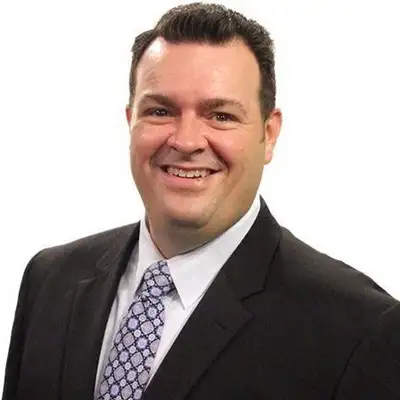
Mark Vroegop, President of The Gospel Coalition, was serving as lead pastor of College Park Church in Indianapolis and board member of The Gospel Coalition when he joined Dan Ehrman on the Church Around the World podcast to share insights for leading a growing diverse church and the spiritual challenges that led to writing books on lament and waiting. Church Connect Church Connect - Connect your church to resources from trusted publishers working to unify all people in our faith and knowledge of Jesus Christ. Receive everyday bulk discounts up to 45% off, free shipping on orders over $50, and more. Profits from each purchase go to Tyndale Foundation to award grants to Christian ministries and global mission organizations. Episode Links: Mark Vroegop "X" MarkVroegop.com Mark Vroegop Facebook Waiting Isn't a Waste More from The Church Around the World: Get email updates: Sign up here Listen to more episodes of The Church Around the World: Listen now
Host Dan Ehrman from Tyndale House Ministries invites you to join him for The Church Around the World podcast for important and impactful conversations with church and ministry leaders. They'll share stories about God at work, His people, and what's happening in faith and culture that's shaping the local and global church today. From your neighborhood to the ends of the earth, listen to these powerful and timely testimonies of blessings and challenges directly from the people that are helping build up the church around the world.
The Church Around the World in conversation
with influential church leaders,
sharing how God is at work and equipping you
with practical insights and applications for your ministry today.
From every tribe, language, and nation,
God is calling people to himself.
So join us as we look out to the fields
already ripe for harvest.
From your doorstep to the ends of the earth.
Here is your host for the Church Around the World.
Dan Ehrman.
Welcome to the Church Around the World.
I'm Dan Ehrman, joined today by the pastor
of College Park Church just outside of
Indianapolis. Mark Vroegop.
Thank you for coming on with me today.
Dan, it's a delight to be here with you.
My wife heard you give a talk a few months back
and she's like, Dan, you have to talk
to Mark and hear a little bit from him.
For folks who don't know you or College Park Church,
could you give a quick background and introduction
to who you are and what you do
and what the Lord's called you into in ministry?
I'm joyfully the pastor of College Park Church
here in Indianapolis. I've been here serving sixteen years,
which means now there's no one to blame
for any of the problems in the church.
They somehow have their roots in me
or something of that sort.
It's been a delightful run together.
Before that, I served in Western Michigan
as a lead pastor for about eleven years,
married to my wife, Sarah.
I have four children — three grown sons who are married,
two that have children. So I've got two grandkids
and an eighteen-year-old daughter
we're getting ready to launch this May.
So we are soon approaching the empty nest season of life.
I've written a couple books and have done some work
in lament in particular. And also waiting
is a new subject that I've been working on,
and both of those come out of my own story —
lament as it relates to the loss of a child in 2004,
a stillborn daughter — and waiting, just trying to figure
out how to wait on the Lord when ministry has been
pretty tough over the last number of years.
And God's brought me on a really exciting and helpful
journey in both of those spaces.
Not exactly fun topics on your top ten list of happy Christian topics there,
but substantive stuff.
A friend of mine said, so what hard subject
are you writing on next? So I don't know why,
but I tend to gravitate towards those subjects.
Didn't you squeeze in something
on racial reconciliation?
Yes, I did. I also squeezed in something on
how lament applies to racial reconciliation.
So I didn't really ever think about that,
but I guess I just kind of like the harder stuff.
I don't know what that is.
Well, your book on waiting is called Waiting Isn't a Waste,
and that comes out in June of 2024.
Is that correct?
That's correct. Yep.
That's with Crossway Books.
In talking about these subjects and getting into
the weighty stuff of both lament and waiting,
both of those sort of push against urgency and the newness
of our culture, as well as this churning of accomplishment
that we really strive after. How do you balance
the demands of leading a church
with the perceived inefficiencies of waiting on God?
That's a great question.
And my answer would be not very well —
which is why I wrote a book on it,
because I wanted to try and figure out,
hey, how do I get a hold of this idea of waiting on God?
And it's all over the scriptures,
and there are incredible promises connected to waiting.
God works for those who wait for him.
Those who wait will mount up with wings like eagles.
Psalm 27 says, let your heart take courage,
those of you who wait for the Lord.
And so there are so many hopeful promises in there.
I'm a driven, assertive, want-to-change-the-world person.
I read John Piper's book years ago, Don't Waste Your Life,
and I was just compelled by that vision.
I don't want to waste my life.
But in the process, I found that I was wasting my waiting.
And I've kind of come to the conclusion that
waiting is really part of what it means to be intentional —
not only to maximize the gap seasons,
but also to intentionally build gap seasons
into my desire to be faithful and make a difference in the kingdom.
Because waiting is not only part of our humanity,
but it's also central to Christianity.
So I think what I'm trying to do in the book on waiting
is just to recognize that there is a tension —
let's be good stewards, let's move forward,
let's see the gospel advance —
but also realizing that gaps are part of the equation.
In a similar way, like a farmer — he's going to plant hundreds
of acres of soybeans or corn this year, but he's going to wait.
And that's part of being a farmer, is waiting.
If you don't like waiting, you probably shouldn't be a farmer.
And I would just argue that part of doing things
in the world for the glory of God involves a lot of waiting.
It's not accidental, it's not incidental, it's essential.
Both of those things — and even looking at the gap season —
others have said that our proximity to God is more important
than our efficiency or effectiveness for God.
We don't really plan those gaps. We don't plan the inefficiencies.
They happen. Sometimes it can be God's leading.
Sometimes God can just sustain us through it.
It would be nice if we could schedule a six-month sabbatical
around that season and just set it aside,
but that's not really how life works.
And so for you, when you've hit those gaps,
how do you maintain both professionally
and with family — letting down and putting these things before the Lord
and kind of pressing in to God and saying, what's going on?
Well, I'd like to press a little bit on your premise,
which is I do think that we can build waiting more into the equation.
And I don't know that — part of the challenge is
we don't create that kind of space that's necessary,
whether it's personal Sabbath or even a Sunday worship service.
Silence. And helping people be okay that it's okay to not be moving,
especially in a society and culture where everything is happening
at a faster rate. Our tolerance for waiting is getting smaller and smaller all the time.
So that's one piece.
I wrote the book trying to make the case that maybe this is not only a response
to gaps that happen, but maybe we could get to the other side
and actually say, as we're thinking about our efforts in ministry
or even our strategic planning or our capital campaign,
we probably need to build waiting on God into the equation
as a part of the reality.
And then on the other side — waiting as a response to the unintended gaps of life —
I think coming to terms with the fact that
these are very uncomfortable and we don't like them.
And even the word "wait" has tension built into it.
One of the words is the Hebrew word Shabbat,
and it comes from a word with a cord meaning twisted.
What's interesting is the Hebrew word for wait
also involves the word hope.
Sometimes they're translated interchangeably in the Old Testament.
And yet in our culture, wait and hope do not go together —
that's so far from how we would think about it.
And it's been helpful for me when I'm in what would seem
like frustrating gap seasons to realize that the tension I feel is actually normal.
And I just need to sit in that tension and embrace
the reality of this is what it means to wait.
It means holding that tension and being okay with that.
That was really helpful in my research on this subject
because it changed my attitude about what I felt about the tension.
It was like, oh, I feel tense. It feels uncomfortable.
I'm waiting. That's okay.
And that just cut the emotional upheaval of waiting
almost in half, just realizing that reality.
I found that to be uniquely helpful.
As a result, when those seasons happen,
I think it allows me to be more present with my family,
not frustrated about those seasons.
And finally, I've seen God work —
he's solved things that I thought, wow, that's awesome. It's true.
God works for those who wait for him.
So sometimes I just need to release my expectations
of how fast I thought something was going to happen or how it was going to work out.
Realize God's got a plan here and it's a good plan.
It's not my plan, but it's a good one.
So you would actually say that
we should be trying to seek out waiting?
Waiting is commanded in the Bible.
So I think it's not only something we should seek.
I think it's something we should obey.
I'll actually go further than that to say
we're commanded to wait on the Lord.
And so that's just a different way of thinking about it.
And I think it can be really life-giving.
What does joy look like in waiting?
So I define waiting on God as living on what I know to be true
about God when I don't know what's true about my life.
And joy looks like I am really thrilled with
what I know to be true about God.
So think of Psalm 27.
The Lord is my light and my salvation. Whom shall I fear?
The Lord is the stronghold of my life. Of whom shall I be afraid?
If you follow the text along,
it continues and it says, one thing I have desired of the Lord,
that will I seek after, that I may dwell
in the house of the Lord all the days of my life.
There's a singularity of focus
to gaze upon the beauty of the Lord and inquire in his temple.
And then it says, and he will hide me in his shelter.
In the day of trouble, he will conceal me under the cover of his tent.
And here's the key — in his tabernacle, sacrifices of joy.
So Psalm 27 just kind of walks you through.
He's afraid. He's got enemies. Even his family has abandoned him.
That text is so loaded.
But later on it even says, and now my head will be lifted up.
My head will be lifted up above my enemies all around me.
And I will sing and make melody to the Lord.
So joy in that is realizing God works when I wait.
I can trust him and release my expectations of how my life was going to turn out —
just realize waiting is a reminder that I'm not in control.
And I can take joy in the fact that God is in control.
And I think that's what Isaiah means when he writes,
those who wait upon the Lord will renew their strength,
will mount up with wings like eagles —
there's a sense of joy knowing that God can be trusted.
As we wait, I think that's going to be really transformative
when you change your perspective on waiting like that.
Before writing about waiting, you recently wrote about lament.
And in both of those, I look at lament,
and in some church circles it has become almost overused,
and in other church circles they're ignoring the fact that it's even in the Bible.
And as a church, how can we work toward — in some spaces —
not making an idol of lament as being the cool topic du jour,
while in other spaces recognizing that lament is part
of what God's called us into as following him?
So tell me more about where you see lament being overdone.
Tell me more about that.
I don't know if I would say it's overdone.
I just think it's a popular thing to talk about in some circles.
Really? That's fascinating.
So when did you see that happening?
Is that a ten-year thing? A five-year thing? A two-year thing?
I would say two to three years.
And so it's sort of in that vein —
if I were to pigeonhole it, I would say it's in the more millennial
or younger Gen X church leaders who are a little bit more
progressive theologically, but still in the vein of evangelical —
and in that John Mark Comer vein,
that's become a pretty popular thing to talk about in the last three to five years.
Awesome. Well, this may be the first podcast or interview
that anybody's ever said that.
And I'm really encouraged by that because here's why —
I'm not disputing what you're saying,
I just wanted to know more about that.
And that was my sense a little bit — that the tide is starting to change with lament,
and that's going to have some challenges to it.
But when I wrote Dark Clouds Deep Mercy in 2018,
hardly anybody was talking about lament.
In fact, when I first pitched the idea,
some people were like, lament, what in the world?
Why would you want to write on that?
And I was like, well, because one out of every three songs —
and you probably wrote a lot of that a year or two before,
even given the publishing lead time.
It was 2014 when I first kind of had the idea,
but then the global pandemic happens and we experience culturally
where we're all sad about the exact same thing.
And it's interesting that lament historically comes out of
not just individual experiences — that's true.
But when it really gets into the culture in a way that can be helpful
is when a collective group of people are all mourning together
and they need a language in order to express their grief together.
Which is why, if you look for music that's lament-oriented
in American history, look no further than African American spirituals.
That's where you've got an entire community of people who are mourning
and they have no ability to get out of their situation
when they're writing these songs as a way of coping and dealing with pain
that, from their standpoint, has no possibility of ever changing.
And so lament comes out of that environment.
So now to go back to your question —
lament can certainly be overdone when pain becomes a cul-de-sac instead of a conduit.
Lament is designed to be processed language.
So in the book I talk about how it moves from turn to complain,
to ask and trust.
So there's a movement to it — there are rails on which you're pushing your prayer.
And it's designed to be a way where you're honest with God,
but you're claiming the promises and reaffirming your trust in who he is.
If all you do is complain and sit in your pain, you've not lamented.
You've just complained.
Biblical complaint is laying our burdens before the Lord
so that we can apply our faith to them.
So lament is in the space between what we believe and where we live,
and it connects those two realities.
In my experience growing up and as a pastor in an evangelical church —
based on the sermons I've heard, the books I've read,
the sermons I've preached, the songs we've sung —
I stepped into the lament conversation because I felt like lament was absolutely absent.
And in fact, when we had a loss of a child in 2004,
I was talking to God with gut-level honesty,
and I didn't even know what I was doing at the time.
I've been to seminary. Somehow I missed the section in the Psalms on lament.
I don't know what happened, but I just didn't understand it,
didn't know it was even a category.
And then when I began discovering lament,
I looked back on my life and was like, oh, that's what was going on.
I just didn't have a category for it. Wow.
For most of us, lament finds us.
There's some issue that happens.
We're trying to work out our theology in real time.
And lament is a category that explains what we're trying to do.
And I think in that way,
it's been a helpful language to reclaim
because most of the songs that we sing are lament-oriented.
Most of the prayers that we pray —
I would say the standard diet for the evangelical church
in the United States, Sunday after Sunday, is triumphant praise.
At its best. At its worst, it's hype.
Real Christians are always joyful.
And the result is you've got a lot of Christians coming to church
either living in denial or despair.
Denial — like, I'm doing fine and they're faking it.
Or you've got folks who are like, I might not even be a Christian
if I really struggle this way.
And lament steps into that space like, no, no, no —
it takes faith to lament.
And so I've tried to reclaim that language.
And my hope for those who have embraced it,
as you've mentioned, is that it leads to a deeper commitment
to believe in God's sovereignty, to trust in his goodness,
and to bank your life on him —
not to continually rehearse your sorrows.
That's not a biblical process of lament.
I think it's really helpful that you share that personal story.
In some ways, it developed over a decade
or over fifteen years of lived experience.
And then digging in with that.
As you've gone to write — and maybe this is a broader question than just lament —
do you find that your personal experience informs your writing,
informs your preaching?
Do you see all those things intertwined in your calling?
Yes. In fact, I wrote the lament book because I got tired —
tired is the wrong word —
I got weary and sad that we would talk with people after the service
and they'd say, hey, you just unpacked this dark psalm, this lament psalm.
Is there anything — any other material that I could read on this?
And there wasn't a lot.
And what's more, they wanted to know what their pastor
would say to help them take some next steps.
And so I really don't particularly enjoy writing.
I write to try and help people,
which is maybe why I picked darker subjects —
because I'm trying to help them with more difficult subjects
that require a longer conversation than a thirty-five-minute sermon.
In both cases — the racial reconciliation book and the book on waiting —
they were all born out of local church context
and an attempt to work out our theology in real time.
And so when I'm writing, I'm thinking about what would I say
to somebody if I'm sitting across the table at a coffee shop
and we're trying to figure out how to navigate our way through grief?
It's like a conversation I had yesterday with a guy who's not even a Christian.
He's from a non-believing background.
He lost a child and I'm trying to help him grieve well,
but also connect to the story of the gospel.
And when I handed him the book, it made my heart sing
because I know he's now got forty thousand additional words —
more than an hour and a half over a cup of coffee —
and he'll be able to think about it, wrestle with it,
and hopefully we can have more conversations.
So I write for the purpose of trying to help people,
especially with harder subjects.
But you brought up the topic of racial reconciliation
as one of your books. And from that end,
you shared some stories in a context where my wife heard you speak
about a multi-ethnic dynamic to College Park Church
and how that has grown and evolved over the years.
Could you quickly share a little bit of that story,
but moreover, what are you seeing God doing through this?
Where our church is located in Indianapolis is important.
We're on the northern side of Indy, on the southern border
of Hamilton County and the northern border of Marion County.
And our demographics are changing. As more and more people are moving
to the northern suburbs, the ethnic dynamic around us is different.
The street in front of our church is a dividing line between two very different cultures.
There's a Walmart to the south and a Target to the north,
and if you go to each of those stores, it's a very different demographic of people.
So we just began asking the question as more and more minorities —
particularly African American brothers and sisters —
were coming to our church: hey, what does this mean? What do we do?
And they began asking those questions.
That started a long, hard conversation
about what it's like to be a minority in a mostly white church.
And we started trying to think through what could this look like.
And it's been a joyful, wonderful, bumpy, sad, hard road.
It's just complicated.
One of the things that's really worked by God's grace is
we, on an annual basis, take fifty leaders, load up on a bus,
and we go to Montgomery and Birmingham and Selma and Memphis,
and we're together for five days.
We eat barbecue, we go to all these beautiful
and really difficult places. We read The Warmth of Other Suns together.
And we spend time lamenting together on that bus,
talking to God about what we're seeing,
hearing the experiences of our minority brothers and sisters.
And while I was writing my book on lament —
the first book on lament — all of this was happening.
And I began to realize, wow, what's happening here?
When we had some conversation misses taking place
about the subject of race in our church,
I began to realize, wait a second — what's going on here
is my Black brothers and sisters are grieving, they're lamenting.
And if you don't understand that,
you're missing the kind of conversation that we're having.
And so we developed a model of how to approach this,
which is: love, then listen, then lament, then learn, then leverage.
And the order of those are really important.
My theory is that if you don't put lament ahead of learning,
your learning actually isn't very helpful.
It can actually be damaging because you're asking questions
while somebody is in pain and you're not in pain.
It'd be like asking — and this happens at funerals —
when a guy who's been married for forty years, his wife dies,
and somebody asks a family member, hey, do you think your dad will marry again?
And they ask that at a really awkward, inappropriate time.
Okay, that's maybe a good question to ask at some point,
but not in close proximity to the funeral.
So there are questions that you might be curious about
that need to be delayed or deferred
until you've entered into lament.
And yet there are folks who look like me — white brothers and sisters —
we hear what's going on. We want to do something. We want to activate.
What do we do to try and fix this?
What do we do to try and rectify this situation?
And our efforts can often backfire
because we haven't entered into the emotional pain of our brothers and sisters.
That's where lament serves as — the subtitle of the book is
how lament opens the door for racial reconciliation.
It doesn't solve all the problems. It's been quite a journey.
We're not really yet a multicultural church.
Our diversity has grown from about seven percent or so,
about five or six years ago, to now about seventeen percent.
And that includes African Americans, Asian, and Hispanic.
And we're trying to figure out
what it looks like to be a multicultural church,
embracing all of those cultural experiences as a part of worship —
instead of being a white culture church
that all of the non-white folks are welcome to assimilate into.
And that's a huge difference.
And there's a significant level of discomfort for a large church,
because the unspoken rule for church growth historically in the United States
has been: find people who look alike, vote alike, think alike, talk alike,
get them together, and your church will grow.
And so we're trying to figure out how to not have that be the story.
And it's been beautiful, but it's been challenging.
That's got to be hard to lead and navigate through.
I can imagine, especially for an older generation in the church,
and in a younger church or church plant,
I could see being aggressive that way.
You can kind of set the tone coming in.
But if you have that multi-generational dynamic at play with change going on,
that can be really tricky as a leader.
Yeah, it is.
And it isn't — part of it is being an established church.
That certainly is historically true, but it also got really tricky
over the last number of years with the increased polarization
of our society and culture.
It's not all of the people — the people who struggled
were not just the folks who'd been at the church for a long time.
It was a wide variety of challenges and challenging conversations
because, well, 2020 to 2022, it was just a hard season across the board.
So I jokingly say Indiana is kind of the crossroads of America.
And it felt like our church was the crossroads of the crossroads
of evangelicalism during that season.
But by God's grace, here we are and we're still moving forward.
And the issue with race has always been a problem
and it's always difficult. And if you step into it,
you just have to be ready for some challenges.
But the reason that we do is I'm compelled by the vision of the church at Antioch,
which was the first multi-ethnic church.
It's where Barnabas grabbed Saul and said,
hey, you gotta see this — where Peter came and put all the tables together
and where Paul rebuked him for his departure from the gospel.
And it's at Antioch where the society and culture of that city —
there's some evidence that the city was actually divided into ethnic regions,
segregation if you will — and yet you've got this community of believers
and the society doesn't know what to call them.
These Jews, these Gentiles, what are they?
So they come up with a new name for them. They call them Christians.
Wow, that's like, that's the story.
So it's worth leaning into,
because it seems to me that the multi-nation, multi-ethnic thing
is central to what it means to be the church.
In the midst of pressing in with this for the church,
how are you training up other leaders?
You talked about taking fifty leaders on an annual trip,
but more in a day-to-day way — and I'm thinking even from the context
of where I grew up, at College Church in Wheaton,
where Kent Hughes was the pastor.
And Hughes, I always thought, would be well-known for writing commentaries
and that kind of stuff. But in a lot of ways,
he invested so deeply in the other pastors on staff
that when you look at the outflow of that,
there are scores of other pastors and church leaders and churches
exponentially larger than College Church,
with a huge reach globally.
For you as a pastor, leading up and training up other people
in the church, what does that look like
in your work and experience?
Are you talking specifically about race,
or are you talking across the board?
Across the board.
Well, leadership development needs to be a holistic project.
So it involves one-on-one mentoring.
It involves thinking about how an entire culture at your church
is trying to give people authority and opportunity to use their gifts.
For us, it involves starting a pastoral residency program
a number of years ago so that we had younger leaders coming in
and forcing older leaders to think about how to describe what it is that they do.
So you can help create a training environment.
There's a difference between a church that views itself
like a community hospital — bring your people in, we'll treat them,
care for them well — versus a teaching hospital,
meaning as we bring people in, we're also going to teach and train.
And so we decided to embrace the teaching hospital model.
So it's across the board, thinking in those categories.
And then another thing is just being willing to affirm what is really going well
and creating a culture where you can share constructive feedback
so that people can grow.
So one of the things I just find frightening at times is that
churches generally have very poor performance or evaluative environments.
As a result, there are two dangers.
One, if something's a problem, it just sits for so long,
and then when it's a problem, it's so big that the remedy
is really, really hard.
Or people just don't get the loving feedback
so they can become better.
And that's another really important piece —
just helping people know: we love you.
Here's what you're really good at. We love you.
Here's some things you need to grow in.
And creating a culture of that
I think can be really, really helpful.
Do you have time for one more question?
Absolutely.
In our culture, authenticity is sort of the measure
of cultural currency of relationship and trust.
And in the church, we can have this tension between wanting to have
that intimate relationship and building that up —
whether it be with the staff or the people at church —
but we also are in tension with having the seventy-five-minute Sunday program
that needs to run down to the minute.
And how do you hold that tension so that you have authenticity and relationship
while also holding to a sense of excellence in your programming?
Yeah. It's difficult. It's a tough balance.
And the larger the church gets, the more intentional you have to be,
because things tip towards the excellence, gravitational pull,
and it can become very programmatic.
We found that when we were at three services,
the gravitational pull towards more programming
and just trying to survive on Sundays was really unhelpful.
And through Covid, we ended up going down to two services
because our attendance dropped —
and now we're as large as we were before Covid,
but we're staying at two services
because we found that — and some churches can do three, great —
we just couldn't at the time.
And maybe at some point we'll figure out how to do it better.
But we really started focusing on how to intentionally
create environments where our people can connect together.
So for instance, we started talking about the fact that
the atrium is as important as the sanctuary.
And that people should be able to hang out together.
We just opened a space — and I'm going to dive in on that
for about fifteen or twenty years,
I worked with my dad's company that designed and built churches.
And back in the late eighties, early nineties, when he started out,
the church lobby was twenty to twenty-five percent
of the size of the sanctuary.
Today it's more like one hundred and twenty-five
to one hundred and fifty percent of the size of the sanctuary.
Is the lobby interesting? Wow.
That certainly wouldn't be true at our space.
And I would love to have that.
So we even created a space that we call the Portico,
which is a pavilion area.
It's like a community park and it's open —
philosophically, it's open fifty percent of the time
for anyone at any time.
It's not reservable. And we've actually had to work hard
to help our staff be okay with the fact that
it's only going to be reservable for ministry
twenty-five percent of the time.
Because the challenge is what happens is
really good ministry sort of gobbles up all of the relational space.
At one point in time — we still do this a couple times a year —
we would have donuts in the atrium.
And we used to laugh — why? People are like, why are we having donuts?
And my reason is because donuts will make you stay,
and we want you to stay.
So it's a fellowship incentive.
And then in the summer, we're doing something called Dine with Nine,
where our research indicated that fifty percent of our people
have been at our church less than five years.
So we have a lot of people who don't know each other.
And so within our setup — we divide the congregation up
into parishes or regions that our elders are responsible to shepherd —
there are dinners that are going to happen with nine people.
And someone said, hey, I'm going to be a host.
We're going to go to a restaurant, and people in our church are going to sign up.
And it's just a way for them to live in community.
And of course, you've got small groups, Sunday school classes —
all those things are really critical.
But we just had to work hard on being sure that we're pushing
the other direction — creating opportunities,
but not over-programming relational connecting spaces.
That's great.
Mark, thank you for joining me here.
If you are like me and going to one of the myriad Christian conferences
in Indianapolis this summer, check them out on Sunday
at their website, yourchurch.com —
that's College Park Church. And Mark's website is markvroegop.com.
We'll have a link to that in the show notes below,
as well as information about his forthcoming book,
Waiting Isn't a Waste: The Surprising Comfort of Trusting God
in the Uncertainties of Life.
Mark, pleasure to chat with you here.
Thank you for making time.
You too, Dan. Thanks for having me on.
You've been listening to the Church Around the World
with Dan Ehrman,
discovering how God is working in and through the church.
Practical takeaways and insights from this conversation
equip church leaders like you to carry out
Great Commission work in your local community.
To help expand the impact of this show,
make sure you subscribe, review, and share the Church Around the World
on your favorite platform. To learn more, hear previous episodes,
or contact Dan, visit us at churcharoundworld.com.