Subscribe
Share
Share
Embed
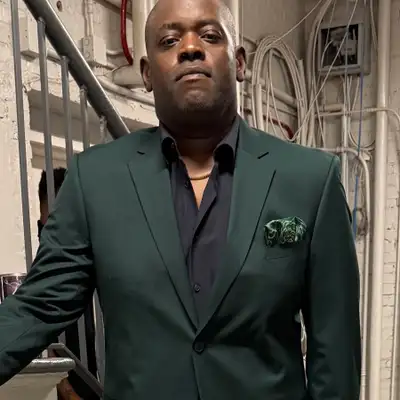
This series shares the stories of Macon/Central Georgia nonprofits, giving them a platform to raise awareness of their causes and highlighting their role in the Macon community.
Hello and welcome to another episode of Ripple Makers here on Stream the Creek. I am Charles Davis, one of your illustrious hosts and I'm joined by the more illustrious one of the group. Well, she's at least the prettier one of the group. Can guarantee you that. The lovely and talented Miss Susie Cowan.
Charles Davis:Are you doing, Oh, no. It's real. Like, I'm I'm not the pretty one in this group. But this is Ripple Makers, the show that is highlighting and spotlighting the people and the organizations in this town that are making this town what it is. And over the past couple episodes, we have focused on a lot of the music of this town.
Charles Davis:We hit upon the the the film aspect of this town with the Macon Film Festival. But this one is a special one because it talks about the other arts That's right. In this town, the other creative arts, and two great organizations that are aligned with that. We have our friends from the Making Arts Alliance coming in to talk with us. And then first up on the show today, we have our friends from four seven eight Creatives.
Charles Davis:Susie, with you being here in town and being from Arkansas, been trying to teach you all these things. We've heard about the music and all that, but how do you feel about the visual arts being an important part of a community when it comes to cultivating the idea of what that community is?
Susie Cowan:The arts are alive in Macon. And the visual arts with the murals and the galleries and the art walk and just everything you can immerse yourself in, it's just alive here
Charles Davis:in Macon. It is. It's a it's a great thing just to see the importance that people have put on it. And and that is a great thing. And these two organizations are doing incredible things to cultivate that and to ensure that it's not just about the music, it's not just about the film, that the visual arts and these artists have their opportunity to make their name in this town.
Charles Davis:So without further ado, let's talk to our friends from four seventy eight Creatives. Hey, Susie. Hey. One of the great things that I love about this show and what we're doing is that we're highlighting organizations that help make Macon what it is and Macon is known if for nothing else than being a creative city. We'll say it like that.
Charles Davis:For the longest time, we've just been looked at as a music city, but that's not everything that encompasses. So you've been in Macon long enough to see like the murals and how everything do you like them so far, Susan?
Susie Cowan:Absolutely. It was one of the reasons I was drawn to Macon is the public art and the creative spirit of Macon.
Charles Davis:Right now, what I'm gonna have you do is introduce the people because I don't want to introduce them right now. I mean, Kara, I like you. You're good. Kara Heard is in the building. But the other woman I love, love her family, love her kids, love her husband, it's just she's a New Orleans Saints fan and I'm a Falcons fan
Julie Wilkerson:Oh, no.
Charles Davis:And she's and she's one of those fans that likes to you know you know like poke and prod and things like that. There was one time where she was in the New Orleans Airport and she saw this canister of drinking water that said falcon tears on there and did I cry when I saw it? Yeah. Because had they beaten us that year? Yeah.
Charles Davis:But she is a phenomenal woman and a phenomenal artist as well. So we wanna welcome from four seventy eight Creatives, Erin Hawkins and Kara Hurd to the show.
Julie Wilkerson:Thank you so much for
Susie Cowan:being here. I'm so excited to learn more about four seventy eight Creatives. Tell me more about it.
Erin Hawkins:Four seven eight Creatives was created started back in 2021 when I was actually painting a pool for somebody in Macon and hired a bunch of other artists to help me. And I left it that day being like, oh my gosh, it is so great talking to people that are creative and think like me and we can brainstorm stuff, talk about business. From there, kinda just start setting up, meetups throughout the city. And then after about a year, I suckered Kara to join me. July is our five year anniversary of doing this So gig what kind of artists are represented?
Erin Hawkins:All. And we say artists loosely because it's visual artists, it's culinary artists, it's writers and poets, anybody, whether it's your full time gig or your hobby, if you've got that little creative spark and you want to be around other people that have that spark, we're the the place to go to find people like you.
Susie Cowan:So there's art everywhere in Macon. From galleries, pop up shows, public art, music, festivals. Why do you think that a variety of art offerings is so important to a vibrant community?
Kara Heard:I think the art is what holds us together and also what brings us back together after a lot of separations that happen. And so if we can promote that in any way and help promoting or creating these events, we wanna get it out to our audience so that they can all hear about it and see about it because sometimes promotion is the hardest hardest part and we try to share everything that we find that our audience would enjoy.
Charles Davis:Being artists yourselves, wanna make sure that people understand that even though you're helping get other people connected to art and and get their art out there. Kinda talk about how you got into this whole artistry thing and what your what your background is in it.
Kara Heard:I'm a mixed media artist and I started out with a teaching studio down in Warner Robins in Perry and I sold that about a year and a half ago and I've been focusing more on curating recently and I just love bringing people together and connecting people that maybe feel like they're an outsider. We try to make sure that everybody, no matter what their medium is, feels connected to us and the other people in the room in some way. If you don't consider yourself a creative, we want you to still be comfortable coming to one of our events so that you can learn more about the creatives in the community and how you can get involved.
Susie Cowan:Well, that leads perfectly into the next question. Why does art matter so much for a community? Not just as a means of expression, but as an economic driver for tourism and culture vibrancy.
Erin Hawkins:There's so many great statistics out there about how art makes communities better. With public art projects, whether it's in a school or on the side of a building, or on a bus shelter, when the community is involved in that process, they become more invested in the community projects. And those art projects, I have found that they're less likely to be tagged or demolished and it just becomes a point of pride not just for the artist, but everybody that's involved, everybody that's in the neighborhood. When you feel confident about that and loving your city, public art is just like another thing to share with people.
Charles Davis:With all of that, like what are the the big super huge cloud high dreams of what four seven can be in the future.
Erin Hawkins:What we have noticed is that so many creatives are siloed. They're in their own studio, they're at their own house doing their thing and what we want is to be that connective tissue between different creatives. This past spring, we did an art show that all the artwork was submitted was on vinyl records. And we had 30 some different artists ranging from seven to 70 submit pieces in show. And then we partnered up with Brag Jam to have the opening of the art show coincide with their announcement for their summer schedule.
Erin Hawkins:We had a bunch of artists that maybe had never heard of Brag Jam, a bunch of people that enjoy music, maybe felt intimidated by a gallery, all come together at Tanglewood Art Studios for an epic event of listening to live music, looking at fantastic art, food trucks, and just being in community. And so our goal is to just keep those connections, building those bridges between the different creative groups because I think in general that's just gonna make make it better.
Charles Davis:Now you just got to mention it. What other things do you all do throughout the year at four seventy eight creators that so that people can kind of be on the lookout for events that y'all have going on throughout the year?
Erin Hawkins:We typically meet once a month, but like in the summertime, we collaborate with Megan Film Festival and partner with them to both do screenings and panels. Throughout the year, we do panels with different entrepreneurs that essentially how they have taken their passion and turned it into a paycheck.
Kara Heard:We've also been really lucky. We've been invited to interview a bunch of artists that are visiting and coming into town and so we can share their stories with the people in our community too.
Susie Cowan:So if somebody is not an artist, how can they participate or support what you're doing?
Kara Heard:They can buy local art and support local artists of all genres. So whether that's going out to a local restaurant to hear a band that's here playing. And we also want to make sure that money is staying in the community, which is always great too. So if you're supporting local artists, it's all getting filtered back around.
Susie Cowan:What makes making unique when it comes to being creative?
Erin Hawkins:So I'm gonna toot our own horn on this. I think Kara and I and the work that we're doing with four seven eight creatives is stand out from a bunch of different cities that we've explored, in the sense that we were artist run and so we know what other creatives are looking for, and we understand the the struggles and, the thought process for them. And so I think we can better amplify their voices. It's been so important for us to connect with each other and run business ideas through with each other as well as creative ideas. And so we know from personal experience having other people to share this crazy journey it is being a creative, and how to succeed at it and to be supportive with one another.
Charles Davis:With your work with four seven eight creatives, have you learned something about yourself as an artist that you did not realize until you started doing this work?
Erin Hawkins:I think the biggest thing I've learned is I I went to school for graphic design. I have a bachelor of fine arts and It was a great program, but at no time was I taught business life.
Charles Davis:I
Erin Hawkins:think that's such a big hole that a lot of creatives don't have and that perpetuates the starving artist mentality. Four seventy eight Creatives has taught me to be in the room, to be at the table, having these conversations and take the ownership of my business, my art, and all of that, and to be more successful at it.
Kara Heard:We're very good about reminding each other and cheering on each other too, which is very important when you're in this work because it's very personal to put a piece out there. And so and not sure how it's gonna be received. And so it's good to have a little reminder that, you know, we're all in this together and what we're doing is important.
Charles Davis:As part of the show, we have asked four seven eight creatives to bring in a song you brought in two because as Erin said, it's the yin and the yang. We're gonna mention the two, probably only play one of them. I would say just for my own falcon's love, we don't play the one that the saint actually like. So Kara first, let's start with you. What what song did you bring in?
Kara Heard:I brought Crowded Table by the Highway Women because it's about having a place at the table for everybody to feel comfortable and safe and want to commune together.
Charles Davis:Yeah. Yeah. And miss Erin, what song did you bring to the table?
Erin Hawkins:You might have heard of it. It's called Louis Armstrong's When the Saints Go Marching In. It's an oldie but a goodie.
Charles Davis:See, what you ain't finna do here is make me make me cross my hatred for the saints for my love of Louis Armstrong. Okay? We're not gonna do that. Okay? You picked another song.
Charles Davis:Mention that one.
Erin Hawkins:I did. I did. So the other song I picked was Dog Days Are Over by Florence and the Machine. I'm ready for big changes, and I think great big changes are happening in Macon, and I think both of us are really proud and excited to be a part of those changes.
Charles Davis:Alright. Great. So if anybody wants to be involved with anything that four seven eight creators are doing, how can they do so?
Erin Hawkins:Best thing is to follow us on Instagram and join our newsletter.
Charles Davis:Thank you ladies so much for being here. We greatly appreciate you.
Erin Hawkins:Thank you, guys.
Charles Davis:Alright. Welcome back to Ripple Makers, Charles Davis, Susie Cowan. How far into it are you with fine art, ma'am? Do you have like a Van Gogh in your house somewhere?
Susie Cowan:Monet, actually. But
Charles Davis:Okay. Alright. Expensive. I
Susie Cowan:feel it. I do actually, I'm more of a street art kinda girl.
Charles Davis:I'm here for that.
Susie Cowan:The street art around Macon is just woah.
Charles Davis:It yeah. It is. There's some very great installations in this town. But, like I said, we are known for more than just the music in this town and one of the great organizations that helps preserve and keep that art history alive in this town and current is the Makers Arts Alliance. And we are joined by its executive director, miss Julie Wilkerson.
Charles Davis:Good afternoon. Miss Julie, how are you?
Julie Wilkerson:I'm doing great. How are y'all?
Charles Davis:You know what? Very, very good. Well, we are so glad to have you in the building to talk about Macon Arts Alliance. And since Susie is new here, we wanna make sure that she knows all the things about you. So Susie, I back off.
Charles Davis:You take over.
Susie Cowan:Yeah. I mean, this is just a great opportunity to tell me and the rest of the world all about the Macon Arts Alliance. So tell me all about it and like what role does it play in the community?
Julie Wilkerson:We are the local arts agency for Macon Bibb County. That just means that, actually started back in 1984, the then city of Macon and the county of Bibb designated Macon Arts Alliance as the local agency. Macon doesn't have a cultural office or an office of cultural affairs, so we serve that purpose. And for that, we are now funded in part by the hotel motel tax.
Charles Davis:Okay.
Julie Wilkerson:That also drives our mission if Macon is a vibrant, creative, wonderful city to visit, then that tourism goes up.
Susie Cowan:That's right.
Julie Wilkerson:And then our funding goes up as a result of that. So if we do our job well, then we'll be rewarded for it that way.
Susie Cowan:That's fantastic. So how did you get involved with the Make an Arts Alliance?
Julie Wilkerson:Well, years ago, I volunteered for arts organizations. My daughter danced from a young age, so I was involved with the Middle Georgia Youth Ballet and Nutcracker of Middle Georgia. Then later I was the executive director of the Ben Cox Capital Theater. I got involved with Macon Film Festival. So for a long time, I was involved with the Macon Arts Alliance as a supported organization, you know, working for those organizations that the Maker Arts Alliance supports.
Julie Wilkerson:And then in 2018, the job as Executive Director opened up, and I have been a nonprofit manager my entire career. So this was really an opportunity to combine what I enjoy doing and what I do well.
Charles Davis:Let's talk about the type of art and artists that are represented here in Macon, especially with the Arts Alliance.
Julie Wilkerson:So all kind of art. We have visual artists. A lot of people think of Macon Art Sciences as the gallery. We're at 486 1st Street next to Just Taps, so we have a visible storefront, bricks and mortar. We have First Fridays where we have maybe 200 people come through.
Julie Wilkerson:A So great opportunity to support artists and give them an audience that they may not have. In the gallery, we have paintings, we have textiles, we have glass, we have jewelry, we have ceramics. We also, for twenty years, had fireworks.
Charles Davis:Yes, always a great event.
Julie Wilkerson:Right, which is a ceramic festival, and then eight years ago we started Fire and Ice and we added glass. So now we do those twice a year, and those are local artists because we have a fabulous local contingent of ceramic and now glass artists. And then three years ago, we started the Make a Mural Festival, and that was born in a friend's pool on July 4.
Charles Davis:Nothing wrong
Julie Wilkerson:with that. And she had a friend from Sacramento visiting that was telling me about their mural festival, and I left and looked it up, and I thought, this is something that we can do. You know, it's easy. And we have a waiting list of businesses who want murals. It's a great way to make downtown more creative.
Charles Davis:Yeah.
Julie Wilkerson:We have the red brick buildings, and we have the old buildings that are beautiful, that thankfully were destroyed. Yeah. But did we look young and vibrant to that next generation? No. Probably not.
Charles Davis:No. You're right.
Julie Wilkerson:Right. So the Mural Festival has really helped with that, and we've tried to find something for everybody just to brand making us that creative place where people want to visit and live.
Susie Cowan:You've done such a great job. It's beautiful.
Julie Wilkerson:Thank you.
Susie Cowan:What are the opportunities for the community to get involved with the Arts Alliance?
Julie Wilkerson:Well, there's always the opportunity to come on First Friday. It's free. It's open to the public. Public. There's There's a a different gallery show every month.
Julie Wilkerson:We try to have an artist talk or a gallery talk to talk about it. You know, when you meet an artist and you talk to them about what inspires their work and what drives them, that's the whole thing about art that is so fantastic, right? It just brings people together. And if you think of art as the artist putting their background and their history and their ideas into medium it is, whether it's a film or music or a painting or a piece of pottery, then you bring to that the patron, the audience. And they bring their story to that.
Julie Wilkerson:So that's the great thing about art is that it can bring people together. It can bring the artist to the patron. It can bring, two different patrons with diverse backgrounds together, you know, to enjoy something together.
Charles Davis:With you being the executive director of Making Arts Alliance and being in that position now, what are your future hopes for what you would love to see be achieved with the Making Arts Alliance? What more great works do you feel like you all can do in the future with the alliance?
Julie Wilkerson:One of the things we've really that started with the Mural Festival was this focus on public art. And really to see more public art and more meaningful public art. We were thrilled when the Bicentennial Commission came and sought us out to help commission the work that is in Bicentennial Park. It's not quite completed. But those are the kinds of public art pieces that inspire people, that make people think, but they also tell our story.
Julie Wilkerson:If you look at mural on the H And H, which we did not do, that was a moon hanger project, it clearly tells the story of that building and that area in such a great quality way, so much a better way than a plaque or a website or something could, right? So everybody can see it. My vision is really Make an Arts Alliance is helping that happen. Whether we're doing it or someone else is doing it, how are we facilitating the the vibrancy and the creativity and the telling of our story?
Charles Davis:Yeah. Yeah. So if there's anybody that's listening to this, whether they are an artist or a non artist that would love to become involved with everything that you all are doing over at the make Making Arts Alliance, how can they go about doing that, Jewel?
Julie Wilkerson:They can. Give us a call, (478) 743-6940. They can check out our website, check out events like Fired Works and Fire and Ice. And we do have volunteer opportunities during the mural festival. We have some volunteer opportunities during Fireworks and Fire and Ice.
Julie Wilkerson:But also just supporting local art. That's how you can support us, is by going to Macon 365, seeing what's going on, attending those events, and volunteering for other arts organizations as well. We're the umbrella. So when somebody calls us and says, I'd love to volunteer. If we don't have an opportunity, there are arts organizations out there who live on volunteers and want opportunities.
Julie Wilkerson:Just being involved, and if someone is an artist, they can get involved with the artist network, four seventy eight Creatives, which we support. And that's a great way to meet fellow fellow artists, to get hooked into the community, and to and to really find your path for here in Macon.
Charles Davis:Yeah. No. That's an absolutely beautiful thing for everything that you all do. Well, here here on Ripple Makers, we like to talk about the organizations and play a little music that coincides with it as well. So what song did you bring in today, miss Julie?
Julie Wilkerson:I brought Friendship Train by Gladys Knight and the Pips.
Charles Davis:I'm here for Gladys. And then why that song?
Julie Wilkerson:Friendship Train is so relevant today. You know, it was written during the civil rights movement, but it was about how the the nation was not getting along. But we needed to get on the friendship train, and we needed to learn one another, and it was important for future generations that we focus on what we have in common and not what our differences are. And I really feel like that's what art can do for our community and for the world.
Susie Cowan:I love that.
Charles Davis:I love that so much. Well, Julie Wilkinson, executive director of Making Arts Alliance. Thank you so much for being here. We'll talk to you next time. Well, that is the conclusion of this episode of Ripple Makers.
Charles Davis:We do wanna thank our good friends from the Making Arts Alliance for coming in and talking about all the things that they did. And I'll thank one half of the four seven eight creators for coming in. The other half of it, the Erin Hawkins half of it, I don't really care for her. No. I love her so much.
Charles Davis:She's precious. What you all heard from me and Erin Hawkins is how me and Erin Hawkins are all the time with each other. It's so fun. But I absolutely love her. What they are doing at Four Seven Eight Creators and what they're doing at the Making Arts Alliance ensures that that the future of the arts is protected, funded, endorsed, embraced Cultivated.
Charles Davis:Cultivated.
Susie Cowan:The word cultivated. I like that.
Charles Davis:Yeah. Yeah. It that is that is cultivated and that is not is not lost in the shuffle of everything.
Susie Cowan:So it's such important work.
Charles Davis:Yeah. No. You gotta have. You can't have you can't have two pieces without the other. The arts are the arts, and you gotta have all of it.
Charles Davis:So once again, wanna thank our friends from Making Arts Alliance. Check out everything that they have. And our friends from four seven eight Creatives, check out all the things that they have going on as well. And until next time, I am the halfway decent looking Charles Davis joined by the immensely gorgeous looking miss Susie Cowan. Until next time, this has been Ripple Makers.
Charles Davis:We'll see y'all next time.
Susie Cowan:Ripple Makers is a podcast by Creek Media hosted by Charles Davis and Susie Cowan. This show is produced and edited by Big Hair Productions. Follow us on social media at stream the creek. Engage with us, like, subscribe, share with a friend. Be sure to stream this and more podcasts you may love at streamthecreek.com.