Subscribe
Share
Share
Embed
Killer Quote: “The industry that we need to build today and reshape today for the next 20 years is going to look very different than the one that we've built over the last 20, 30, 40 years.” – Victoria Meyer
Looking to lead, grow, and stay ahead in the global chemical industry?
The Chemical Show is the #1 business podcast for the chemical industry, bringing you leadership insights, business strategies, industry trends, and real-world lessons from the executives shaping the business of chemicals.
Each week, host Victoria King Meyer sits down with leaders from across the chemical industry, from Fortune 50 companies to mid-sized businesses and innovative startups. You’ll hear how they’re navigating today’s challenges and opportunities, the experiences that shaped their leadership, and the insights you can apply to your own business and career.
Conversations explore the issues that matter to chemical industry leaders, including:
• Business strategy and growth
• Leadership and talent
• Innovation and technology
• AI and digital transformation
• Supply chain and operational resilience
• Markets, customers, and industry trends
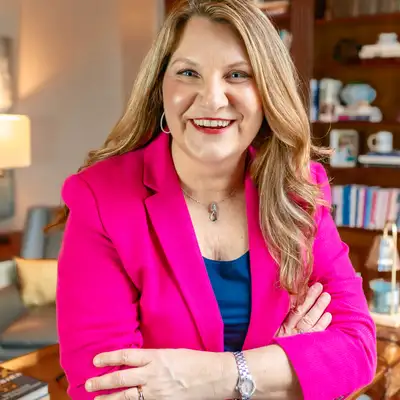
Victoria brings more than 25 years of chemical industry experience from companies including Shell, LyondellBasell, and Clariant. Today, she is an executive advisor and coach, founder of The Chemical Summit, and host of The Chemical Show.
Whether you’re an executive, business leader, or rising leader in chemicals and materials, The Chemical Show helps you stay informed, think differently, and lead with greater impact.
Follow The Chemical Show on LinkedIn and join the conversation. (https://www.linkedin.com/company/the-chemical-show/)
The Chemical Show: https://www.thechemicalshow.com
The Chemical Summit: https://www.thechemicalsummit.com
Progressio Global: https://www.progressioglobal.com
Victoria Meyer:
Welcome to The Chemical Show, the podcast where chemical means business. I'm your host, Victoria Meyer, bringing you stories and insights from leaders driving innovation and growth across the chemical industry. Each week, we explore key trends, real-world challenges, and the strategies that make an impact. Let's get started. Welcome back to The Chemical Show. Over the last several months, I've spent a lot of time talking about what's happening in the chemical industry right now. We've talked about restructuring and asset closures. We've talked about earnings and the continued pressure on margins.
Victoria Meyer:
We've talked geopolitics, tariffs, and shifting trade flows. And in fact, we've talked a lot about that recently. But lately, I find myself asking a different question. What if, what if these aren't simply separate challenges that the industry needs to work through? Instead, what if they're signals of a bigger shift in how the chemical industry operates. So yeah, I'm talking about reshaping advantage. That's the theme of the Chemical Summit that's taking place next week. It's the theme of a lot of speaking I'm doing around the industry, but it's also a bit more here. And the lens I really want to bring you today is thinking about some of the fundamental assumptions we've built the industry on, right? One of the key things is scale creates advantage, right? Global supply chains create efficiency.
Victoria Meyer:
Standardization creates value, and growing demand will ultimately absorb the capacity we build. Some of those assumptions are still holding true, right? But maybe not everywhere, and maybe not in the same way. And that's what I want to explore with you today, because right now we're seeing a fascinating set of contradictions. Prices are rising while margins remain under pressure. Plants are operating at lower rates, and yet customers continue to be supplied. Maybe not in all markets, 'cause there's some unique disruptors taking place, but in many markets, old assets are closing while new capacity continues to be built, and supply security and geography is really starting to matter differently, right? So this is, we've been on this path, and it's not a path that's changing. But the question that I've really been thinking about is bigger still better in chemicals? And maybe underlying that is, are we, Building the chemical industry that we need 20 years from now. So let's talk about this because I believe as we go forward, the next era of advantage isn't about economies of scale.
Victoria Meyer:
We have been sold this economies of scale argument for the last 30 years. I see that reshaping over the next 30 years because I also think this is about the economies of fit. What fits the business and the business models and the future of the industry going forward over the next 20 to 30 years? So let me walk through some of my thought process around this. Number one, the pricing paradox. What are we seeing right now? Chemical prices are rising across the industry, right? That's not demand-driven in most cases. It's definitely supply-driven. Demand has moved, but not substantially. Instead, this is about feedstock and energy volatility, production interruptions, and the supply constraints we're seeing, shipping and logistics, particularly related to Iran and the Strait of Hormuz, and continuing geopolitical disruption, including Russia and Ukraine, right? ICIS's Global Chemical Price Index was up 41% in 2026 by early September.
Victoria Meyer:
And yet I don't think people are feeling like it's a great year. Now, yes, I'm going to tell you there are folks in the Americas that are saying, yeah, this has turned out to be a good year. Here's the thing. Higher prices don't necessarily mean better economics. You know that. You're living that. If costs are rising faster than producers can pass them through, margins get squeezed. The second question I've got is, do we have the right capacity? We have been talking over and over again about having the chemical industry having overcapacity, particularly in commodity products, but it's also true in specialty products.
Victoria Meyer:
And it's real. Maybe we need to be having a different conversation, which is, do we have too much capacity, or maybe it's an and, and do we have the wrong capacity in the wrong places for the demand and the margins and the economics that exist? Some recent data ICIS has published that they're anticipating, and this is my friend John Richardson has published this, they're anticipating that global ethylene utilization of 80% In 2036 versus an 87% historical average. Now, by the way, 2036, that's 10 years from now. They've pushed back this expectation that we're going to be back on an uptick and that we're going to get kind of supply-demand neutral by 2030. They're now saying it's 2032. And here we are looking fast forward a decade and we're at utilization of 80%. That's not great. This imbalance that we're living in today is not resolving very quickly.
Victoria Meyer:
And yet China continues to build. Other places are continuing to build, but China's building the most. So they're anticipated to add 77 million tons of chemical capacity in 2026, in a year where we say we're oversupplied, we're not sure that we have a capacity problem and not a demand problem, and their own domestic demand growth has weakened. Right. What's going on here? First of all, there are different growth and investment drivers. We've talked about this. I'm going to bring this up again, right? Some companies, some countries are making investment decisions not based on the economics that perhaps Western or publicly listed companies are making. They're making investment decisions on a whole different set of parameters with different objectives that may or may not be financial.
Victoria Meyer:
Right? So I'm going to say that one more time. Their investment objectives may not be financial in the way that we think about it. And that's always a hard thing to reconcile. The other piece on this is China's net-zero clock starts in 2030, right? So when we think about net-zero and carbon reduction and managing that from a sustainability perspective, China's clock starts in 2030. So that's the target they're meeting. There's a hypothesis that they're trying to get in as much emissions now so that in the future they're setting to that benchmark versus an older benchmark. So that's part of what's going on in that story. The other piece of this is still, is bigger better? And I'm going to come back to this.
Victoria Meyer:
Our focus for decades has been bigger is better, bigger meaning economies of scale. But the reality is those economies depend on using the scale. So this quest to make bigger investments, more efficient investments, etc., only works if you're utilizing that capacity. And a world-scale asset designed around very high utilization doesn't actually deliver world-scale economics when it's consistently operating at 70 to 80%. This is something that we as an industry are going to have to resolve. No one player resolves it. This is an industry reshape that ends up taking place. And it comes back to this question for me, which is, are we building what the world actually needs? So yes, we're building, but are we building the right stuff, not just for today, but for 20 years from now? The third part of this story, Europe.
Victoria Meyer:
And gosh, we've talked a lot about Europe and we've bemoaned some of the closures in Europe. And Europe gives a really long-term view of this shift, this shift from where capacity is built, what type of capacity, what scale of capacity. Just recently, in fact, Kenwick pushed out a newsletter recently that talked about in 2019, there was still significant optimism around major European petrochemical investments. That was only 7 years ago. Project One, Borealis, PDH, Gruppo Azzotti had investments. There was a lot of investments cooking. And yet today, 9 European crackers have closed or been announced for closure with 8 of those closures happening between 2024 and 2027, which is right around the corner. A lot of times we're talking about this around European competitiveness, and that's in fact even the story that they say, like energy prices are high, feedstock prices are high, et cetera.
Victoria Meyer:
Yes, that is part of the story, but there's also this other factor, which is age. We build it. I spent a number of years putting together business plans and business cases and looking at investment values to make big project investments. And when we do our investment cases, we assume a 20 or 25-year economic life for the asset. That's the assumption. It kind of takes that long to pay it off sometimes, right? But then we build them and we expect them to run forever. And, you know, they require maintenance and they require upgrades, et cetera. But when a 40 or 50 or 60-year-old asset Finally shuts down, we're surprised.
Victoria Meyer:
Oh my gosh, there's an asset shutting down. When in reality, some of these new builds are replacing the older assets, a lot more efficient, maybe making the right stuff. And the reality is asset retirement is a very normal part of an industrial system. It happens. It has to happen. And just like you retire your laptop from time to time, big industrial systems also have to retire assets. And that's part of the story of what we're seeing. It feels like churn.
Victoria Meyer:
Some of that churn is on older, less economic units that are frankly maybe not making the right products in the right place for what the world needs today and into the future. And then the question becomes, what replaces that capacity? And does today's economy require the same chemical mix that those assets were designed to produce? And okay, fast forward. I'm going I'll tell you guys, probably not. You know this. I've got an episode coming up over the next month. I've got a bunch of really cool episodes coming up. One with Jan Kalfas from S&P Global. We talk about data centers and the role that that has on chemicals.
Victoria Meyer:
But if you think about where we are today, data centers didn't exist 20 years ago, or maybe they did-ish. We called them server farms, but still, we didn't have nearly the same volume and amount of data and computing capacity and the need to build farms and these data farms and data centers and what have you. That requires a different set of chemicals for the microchips, for the processors, for the construction. We get into that. What you and I are using in our business, in our personal lives, are different and requires different chemistry today than it used to. So isn't it natural that some of the assets that were built for a business and a consumer preference and consumer lifestyle 30, 40, 50 years ago are no longer the right assets today? Sure. And then the real big question that I come around to, and I've been— this is one I've been wrestling with for a while, which is, is bigger still better? In a world where we talk about less globalization, more regionalization, a much faster evolution of innovation, both inside the chemical industry, as consumers, in those connecting businesses in between, is bigger still better? Right? Scale has been fundamental to chemical industry economics from day one, particularly when we think about petrochemicals and basic commodities, right? This whole idea of a bigger asset, lower unit cost, greater global competitiveness. Now, part of that greater global competitiveness also requires moving a lot of product globally.
Victoria Meyer:
That's got its own logistics costs, sustainability impact, timing impact. There's a lot of factors that go into that. That economy of scale story isn't going away. But as I already touched on earlier, economies of scale only work when you can use that scale. In a world where we are becoming more focused on regional and local optimizations, when security of supply is about resilience and is about choices, And it's not just about having the lowest, biggest cost of supply. We are going to see some different shapes of investment. And by the way, specialties aren't immune. Specialties have often tried to figure out economies of scale as well.
Victoria Meyer:
While specialty chemicals traditionally operated differently, smaller assets, more differentiated products, higher margins, there's also pressure for scale and standardization. Some of that's coming from customers. Large converters, global consumer companies have spent decades asking suppliers for the same product, the same specification, the same performance everywhere in the world, everywhere they're making it. That drives a different decision, right? And that has helped drive global standardization. It's created a lot of opportunity and it's driven some of the global manufacturing networks. But what if our customers increasingly accept or even prefer locally optimized products and specifications? That means more variety in regional formulations, smaller production runs, production close to consumers. We see that in some products already today. Some of that is driven by the product characteristics.
Victoria Meyer:
Some of it's driven by the markets. But it changes the game when you think about economies of scale. Is bigger better? Not necessarily. Not when you factor in geopolitics, when you factor in the cost of supply security, when you factor in the need for more resilience in some supply chains, that security of supply and the diversity of supply as a completely new dimension. Bigger may no longer automatically be better as we go forward. Capital markets have to go along with this though, guys. And this is where the transition gets different, right? So engineering can design a different footprint. Financial markets have to value and appreciate it, right? And we've seen this often, right? And I see this as I talk to privately held companies.
Victoria Meyer:
versus publicly held companies, and then those guys in the middle, the PE-backed companies. Often privately held companies make their investment decisions using a different set of criteria. They're doing it for strategic reasons. They see a longer path. They are not trying to net out investments over a quarter or a 1-year cycle or a 2-year cycle. And so I think as we think about how investments reshape, is bigger better changing the game in terms of how we think about investments. It's not just incumbent on the companies to make that. It's about making the investors understand and appreciate and make sense of that.
Victoria Meyer:
And maybe that's a different target for what those financial returns are. That's its own dilemma. And it really creates a capital allocation problem, right? How do you justify smaller, local, flexible capacity If traditional world-scale models assume that they're the lowest cost, if your investors are looking for the lowest cost, highest margin, and how do we change and shift those investment models? That is something that I think as an industry we're going to be tackling today and as we go forward. And as I start wrapping this up, I started with this idea and I want to bring this idea back. Maybe the future is not about economies of scale. But instead, it's about economies of fit. Fit of capacity to demand, of product to customer, of production to geography, of asset size to the opportunity, and the risk to return. And fit looks different to different companies and different businesses.
Victoria Meyer:
Evonik is doing the opposite of localization in parts of Germany, closing 2 smaller sites and concentrating production into larger sites because it says fragmentation is increasing its costs. costs, it's making it less effective. It's not as good of a fit for them. In the meantime, supply security is changing sourcing decisions. Just recently, CF Industries said that Hormuz concerns are increasing their interest in ammonia from lower-risk locations such as the US. In fact, and I had CF Industries CEO on earlier this year, I'll link to that episode. Go take a listen. Being a regional player has its strengths, and it's a fit In many cases, what you find, what other companies find, is these are both great examples of fit, right? So the Evonik example and the CF Industries example aren't contradictory.
Victoria Meyer:
They're just different sides of the fit story. Sometimes fit means consolidation. Other times it means localization. And sometimes world scale is going to be absolutely right. Where are we going next? So this episode is really the bridge into the next couple of episodes. Over the next few weeks, you're going to be hearing me talking about and doing some interviews and some other episodes around data centers. Where's the new local demand? Where's the new local chemical demand developing? How are data centers and increasing use of AI changing chemical companies, chemical demand? The Middle East. And I've got an expert on the Middle East coming in, and we are talking about how the Middle East is responding both to the geopolitical challenges that's taking place right now, but also as we think about global economics, global trade flows, and, and that influence there.
Victoria Meyer:
And then we're going to be publishing a couple episodes coming from the Chemical Summit where we're talking about reshaping advantage and how does competitive advantage shift as our industry changes and as our assumptions change. The through line is this: The chemical industry isn't disappearing. Economies of scale will still exist, but economies of fit may be more important. I started this episode with a question: is bigger better? Maybe not so much, especially when we think about population decline, when we think about the shifting of the industry. And the reality is the industry that we need to build today and reshape today for the next 20 years is going to look very different than the one that we've built over the last 20, 30, 40 years. And the real question for each of us is no longer how big can we build, how complex can we operate. It's what's the right capacity in the right place, producing the right products with the right service levels for what our customers, consumers, And the world around us demands. So that's the shift from economies of scale to economies of fit.
Victoria Meyer:
And with that, that's a wrap. Thank you for joining me today. Keep listening, keep following, keep sharing, and we will talk with you again soon. Thanks for joining us today on The Chemical Show. If you enjoyed this episode, be sure to subscribe, leave a review, and most importantly, share it with your friends and colleagues. Thanks. For more insights, visit thechemicalshow.com and connect with us on LinkedIn. You can find me at Victoria King-Meyer on LinkedIn, and you can also find us at The Chemical Show Podcast.
Victoria Meyer:
Join us next time for more conversations and strategies shaping the future of the industry. We'll see you soon.