Subscribe
Share
Share
Embed
Bridges & Beacons is a podcast from The Jimmy and Rosalynn Carter School for Peace and Conflict Resolution. We invite you to listen in to multigenerational conversations with the peacebuilders shaping our world. Through dialogue that bridges divides and leadership that shines a light forward, this series explores how connection, empathy, and resilience make peace possible.
Inspired by President Carter’s legacy of moral clarity and thoughtful mediation, each episode reveals the human stories behind conflict resolution—offering guidance, hope, and practical wisdom from those working toward justice and understanding every day.
This is a space where every voice belongs, every perspective matters, and every story strengthens our shared commitment to humanitarian values and community peacebuilding.
Peace isn't passive—it's built. At the Jimmy and Rosalynn Carter School for Peace and Conflict Resolution, our community transforms conflict into opportunity for justice. We combine rigorous research with real-world action, developing innovative approaches that address conflict at its roots and empower communities locally, nationally, and globally. Through transformative education and hands-on practice, students and alumni are equipped to create ethical, just solutions that matter.
To learn more visit: https://carterschool.gmu.edu/
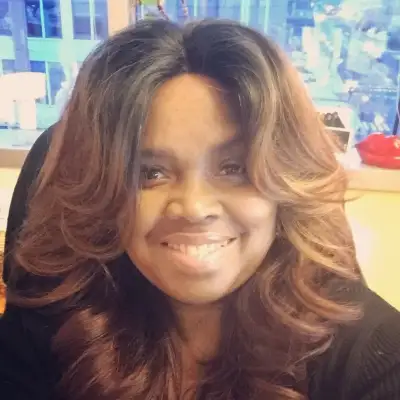
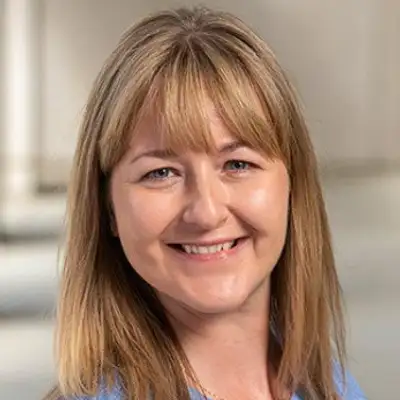
Kellye Richardson:
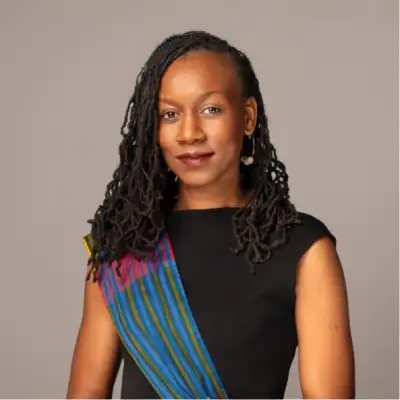
On this episode of Bridges and Beacons, I'm delighted to welcome guest host and Carter School alumna, Chidi Blyden. She is CEO and principal of Culturally Bound and a former United States foreign policy advisor. Chidi has more than 20 years of experience across national security, defense, economic development, and international policy, with a particular focus on Africa and the African diaspora. She also brings a personal connection to this conversation, having been raised in Texas and tracing her heritage to Sierra Leone.
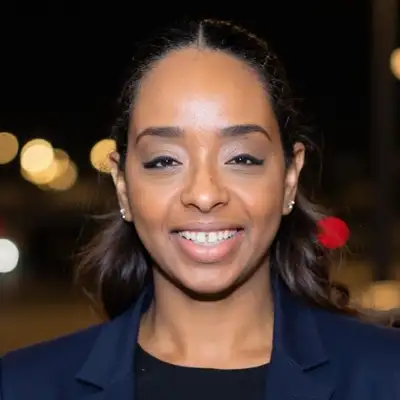
And joining Chidi in conversation today is Manahat Thomas, also an alumna of the Carter School. Manahat is CEO and co-founder of Chronos EDX. She's an Ethiopian American who moved to the United States at 16 and built a career working across Africa, the United States, and beyond, bringing together technology, education, culture, and communities.
She's a graduate of the Carter School Malta program and currently part of the African Fintech Summit team. She operates at the intersection of innovation, finance, community building, and comprehension-based learning.
Together they'll explore what it means to live and work across cultures and systems, how the diaspora connects people across generations and borders, and what experiences can contribute to the way we build, lead, and create change. Welcome to you both. Chidi, let's begin by exploring the importance of the African diaspora and what it means today.
Chidima Blyden:
Kellye, thank you so much for that wonderful introduction, and we're excited to be here. I'm really lucky to be able to have been a graduate, obviously, of the Carter School at George Mason. And my career has really been, I think, enhanced by the experience that I had there. But I think what you really want us to really delve into is the importance of diaspora.
And diasporas are critically important. So I'm here with Manahat, who you've already introduced. And Manahat, I'd really love to hear from you. How does the African diaspora influence the way that people connect to their heritage, culture, and sense of belonging across generations? I'm a... I guess you would consider me a second-generation Sierra Leonean American, and I can definitely say the time that I spent on the African continent was influential in the policy procedures that I was able to bring to the table when I worked for the US government for 20 years.
So over to you. I'd love to hear how your background, your culture, your diaspora, and your experience have been influential in your work.
Manahat Thomas:
Thanks, Chidi. Thank you so much. So yeah, I think one of the biggest things us diasporans bring to whether it is S-CAR, like the Carter School, or just our experience and what we're building is we have this double fluency of always using or always remembering where we grew up, where we were brought in, the infrastructures that we saw at play in our home country, and then coming back here and learning all the methods and the frameworks, especially from George Mason.
I did both my undergrad and graduate school at George Mason University. Everything that I learned, there's almost like a double reality that I'm always having to juggle when we're building or when we're investing. So, yeah, I think that translation instinct does not always turn off.
So when we go back to building or investing or when we're doing anything, I think we're always having to straddle both worlds, both experiences in mind. And I think Kellye has already mentioned my background, but yeah, just to kind of go back to it, I'm Manahat Thomas, CEO and co-founder of Chronos EDX.
I'm Ethiopian American. I was raised here. I moved to the US when I was 16, so George Mason was actually a very huge part of my life. So was the Carter School. I did the Malta program, and I think that experience was very, very powerful in who I am today, and I am incredibly grateful.
Chidima Blyden:
I love that, and I appreciate what you mentioned about the duality of having to exist both inside the home, outside the home, in the workspace, and what that diaspora experience has brought in both places, and how you have to sort of comport yourself in many different scenarios using all of the tools and things that you have.
You talked a lot about how George Mason has been really influential in your life given that you came to this country at 16. How did the Carter School prepare you for your chosen career, and what toolbox did you draw from as a result of that preparation?
Manahat Thomas:
Yeah, I love that question. Oof. So honestly, I did not take the traditional path of going into some of the nonprofits that I want to work for. One of the reasons why I actually pursued the Carter School conflict resolution degree was because I wanted to work for the UN and the World Bank. But I kind of took a very different route.
Everything that I would attribute to, I think my first class was Professor Mauldin's class, and one of the things that she taught us very early on was that as a practitioner, you can't assume you know everything. And don't go into a specific place thinking that you bring all the solutions, even though you have these other two degrees in conflict and peacebuilding.
Honestly, I'm always thinking of that every time. One of the things she taught us early on as well was that you support local communities because they understand the nuance, they understand what works, what doesn't, and you give them the tools to do what they do.
So as a practitioner—and I think at the time this was like post-Arab Spring, not giving away my age, but there were just a lot of things that were happening that were not successfully mediating some of the issues. So we got to learn early on, and we also did a lot of case studies. But also, we were in Malta on the ground working with detention centers, nonprofits, UNHCR.
So we got a lot of hands-on experience being in the conflict zones and providing these resolutions, as you say. And so I think I would always attribute the one thing that I learned that has shaped the way I approach things to be that class with Professor Mauldin. Of course, all the professors were great, too.
Chidima Blyden:
Dr. Patricia Mauldin strikes again. I had the pleasure of traveling with her to Liberia. She was one of my co-advisors on that trip, and you said exactly what I remember about her—just being open to having different experiences be a part of your cultural learning and a part of building your expertise.
The really listening. I mean, we did a number of really cool talks in the villages, in community centers, and she really was influential, as I think, as you mentioned, many George Mason professors at S-CAR have been. I can recall my time in Israel and Palestine with Dr. Mark Gopin and being able to be on the ground and being able to really work with students of all ages on both sides of the conflict. It really opened my eyes to the hands-on practice and practitioner experience that I loved at S-CAR.
It was something that I didn't feel like I could find anywhere else, not just in Washington, but across the country. Later on in my experience working in the Pentagon, I had true operational experience because I had been on the ground with the greats like Patricia Mauldin and Dr. Mark Gopin, and it really changed my perspective and my everyday job.
Thinking of that, I know that the skills that were most important to me were my ability to be able to listen, to take notes, to be able to hear both sides of a conversation, and really try to relay back to those we were working with what we heard so that they felt heard and they sensed our genuine authenticity in the work that we were doing.
I would love to hear what you thought was most important that you learned at S-CAR that helped you develop your work across local communities and transnational networks, but most importantly, the work that you do at your own organization as a CEO. So I would love to hear the skills that were most critical to your career and growth development.
Manahat Thomas:
Yeah, I think again it was as if the world also wanted to be our teacher at the time when I was doing the grad school program. Because at the time it was post-Arab Spring, the Crimea crisis was happening. So there was just a lot that was supporting everything that we were learning. It was so relevant.
But I think the biggest one would be tolerance for ambiguity, right? So it kind of ties back to what I was saying: you're not always the expert in the room. A lot of listening and a lot of understanding, but also a lot of bureaucratic languages that—we don't come from the same systems or understand the same frameworks, especially when you're talking in specific areas where you're finding solutions to specific issues, right?
And just making sure that you're supporting your partners that understand the pain points, that understand the issues as best as you can. I think that is probably the biggest skill set that I took from here.
I think even fast-forwarding a lot of years later, coming back to now and what I'm building with Chronos, one of the things that S-CAR actually helped me with is actually looking at the system in general—not the specific issues or the specific conflicts that we're seeing, but also the system, the design.
I've always been a systems thinker, and I didn't know it until, obviously, the S-CAR program. But I've always looked at how language influences conflict, how language influences our day-to-day. Right now, my company is an education technology startup. The whole concept of it is fostering comprehension before completion, right? Focusing on how can we leverage advanced technology on how Chidi learns, on how Chidi understands and wants to be taught and wants to be communicated with, the languages that you learn.
For example, I think there's a lot of research around how learning in your native language actually fosters comprehension more. So with AI, we can do that at scale. That is the goal of what Chronos is built for.
However, one of the things that we were seeing as a product manager as well, we just went to the market and we were like, "Hey, what are the pain points?" So we had about 130 interviews to understand what type of solution would actually help you do your job better. And these are everybody within the education ecosystem: teachers, parents, people in the special ed community, parents that have special needs kids, all over. I talked to people in China, I talked to people in Finland, I talked to people in Rwanda, everywhere.
And that discovery process told me that the solution I wanted to build was not the solution that they wanted, essentially. It was completely different. And so staying true to what I want to build, but also pivoting slightly to make sure that you pull the people in, give them the solutions that they want, solve their pain points one at a time before we get to the final product. And so that was essentially what I was working on.
Chidima Blyden:
I think that's a part of what S-CAR's long-term goal is for the students that they recruit and the students that they put out into the workforce. You mentioned something at the top: the tolerance of ambiguity. That really resonated with me because as you were talking about new technologies that are coming in, my background is in sociology and communities and culture, and understanding that tolerance around learning, around teaching, around experiencing.
And that phrase in itself, I think, is a part of the practitioner work that we did day in and day out, no matter which class we went into. I love what you said about AI sort of being this new wave, but it resonates with me because of the sociology of education and how people learn and how people relay information. I don't know that every program always does that across Washington or every university takes the time to teach cultural understanding, cultural appropriations, and cultural context when doing whether it's business or policy or any of those things.
And my experience in policy has been that teaching people about Africa and teaching people about the diaspora has been a journey in itself. You can imagine being in a place like the Pentagon where you're saying, "You know, it might be nice for us to just have a little bit of culture." Offering somebody a cup of water or a cup of coffee is extremely important and goes a really long way.
I definitely learned this working in Middle East negotiations and mediation, that you have got to break bread with somebody, and this is very African. This is very diasporan. And so I brought a lot of that to work, and it made a difference when it came to negotiating strategies, treaties, and projects with many of the African partners that I worked with.
And so I think one of the things that we need to continue to do is, one, break misconceptions about Africa, about what kind of work we do, what the diaspora means, and how it's defined. It has got so many definitions now as we think about the diaspora that's in the Caribbean and across the world, and people who identify with the African experience.
They are all a part of the diaspora that we're building back. And so I think misconceptions are something that we need to tackle a little bit more. What are some common misconceptions about the African diaspora, and how has that sort of been flipped through your work as you're able to help them see the realities of what their African diaspora is, not just the misconceptions?
Manahat Thomas:
I guess it depends on the audience I'm talking to, but for the general audience, I think one of the misconceptions is that—or at least for me, I work within Africa, so whenever we talk about the African diaspora, we're talking about remittances. It's always finance. But I think there's more that the African diaspora provides as far as culture, knowledge exchange, opportunities.
I think just going back to what I said earlier about that duality, right? Having to juggle both realities, and I think that's how I see it. The reality of me growing up back home, having a lot less access, spending a lot less time on screens, et cetera.
And then coming to the other side here and learning on iPads, learning on computers. It's always like that duality, a double experience that I always have to juggle. And it's the same now when I'm looking at my business. My company is registered both here in the US and also in Rwanda.
We have five active pilots across the globe, mostly African and American, but we're hoping to expand. But the way we built it, the realities I built it for, is with the two systems in mind. If I hadn't seen a gap in education both there and here—and thank God I also was educated in Europe through George Mason—I would not have seen that, oh, this is a systems issue. It's not just a specific country issue, right?
I used myself as a guinea pig to understand, okay, what are the experiences that could have been better here to foster a little bit more comprehension here or to make me a better student? Which, I was a better student. I was a good student, but I could have been a better one.
And yeah, just some of the connections that I had made could have been made a lot earlier. If I hadn't seen that gap in the system, I don't think I would have been so gung-ho about having my own company. Entrepreneurship has ebbs and flows, so I'm always questioning myself all the time. But yeah, it's because I saw those two systems not working.
Both the systems here in the US as far as education is concerned—there is no tolerance for people that don't know what you know. One of the earliest experiences was when I went to high school in 11th grade, and they were doing the Pledge of Allegiance. I was like, "Whoa, what is happening?" I was just sitting down, thinking, "Well, I'm Ethiopian, so I don't think I'm qualified to do that." But then everybody else was just like, "How are you not getting up? How are you not doing this?" And I'm like, "Well, translate it for me. I don't understand what's happening."
So the fact that there was no grace given to somebody that does not understand or did not know that that was happening, or they didn't even think that they needed to explain or orient me—that is a systems gap that I'm looking at. I think going back to what you were saying about cultural appropriations, if we guided people better, if we spoke the languages that they preferred, the words that they preferred to understand better, I think that could have made a difference.
Chidima Blyden:
That is right up my alley. If you could see me now, I'm giving you snaps and I'm giving you all the love. You're saying systems and I'm saying culture, and I think it's all wrapped up in that experience that one has. I love that: the tolerance for people who don't know what you know.
If you were really to pull that out and massage that into a theory in itself, it's important to always be aware that what you are looking at across the table and who you're talking to does not have the same knowledge and appropriation that you do. So taking a little bit of a grain of salt and a little bit of tolerance through that goes a long way.
And I think if I were to take that little piece right there—you've already given us so many good nuggets of advice, but I want to take you down one more path and just ask you for advice that you would offer to students, alumni, or emerging practitioners who are interested in pursuing a career path in diaspora engagement and peacebuilding.
I'm taking from this conversation the need for more tolerance, understanding systems, really putting culture at it—whether it's regional culture, African culture, whether it's culture between military and civilian spaces, whether it's culture between adults and children. I'm really thinking about it in that context.
Give us your best advice for this next generation of S-CAR students who are going to make the world a better place.
Manahat Thomas:
Actually, I have two. One is just building off what I had said: don't go with your credentials. Just go to listen. What I've understood from working in a lot of different countries is that common sense is not common sense everywhere. Your common sense is going to be completely different than somebody else's common sense. Even when you share the same geography and same environment, it's going to be completely different. So don't start with your credentials. Talk to people. Understand where they're coming from. Understand the frameworks, the knowledge, or the reasons why they are the way they are.
And I think, especially in this political and global climate, a little bit of grace is needed for everyone.
The other thing—and something that I've been fascinated by and writing about with technology and culture—is the idea of ubuntu: I am because we are, or we are because I am.
I think that is such a powerful way to live your life. If you see with advanced technologies, there are a lot of communities or the need for communities coming up, and I think that statement actually encapsulates what we are looking to build.
That's also what we are building here at Chronos—there's a sense of community and going back to the village to learn. So, yeah, I think those are my tidbits.
Chidima Blyden:
Well, Manahat, thank you so much for sharing your wisdom with us and sharing your personal experience. I can't tell you how much I've learned in just this short conversation, and I hope that we have an opportunity to get to work together.
I think the work that you're doing is extremely important, not just to the diaspora, but also to the communities that we work in, both here and on the continent. I think that your contributions obviously could have been great, but I will definitely have to be a fan of S-CAR having enhanced that to the next level.
So thank you for being an alumna, thank you for being a part of our community, and I look forward to hearing more about the great work that you continue to do.
Manahat Thomas:
Thank you, Chidi. Thank you for having me.
Kellye Richardson:
Before we close, I'd like to thank Chidi and Manahat for joining us and sharing their experiences, connections, and perspectives that shape the African diaspora today. Our conversation reminded us that practitioner work requires a real tolerance for ambiguity, cultural understanding, and the humility to listen before leading.
To truly understand the diaspora and Africa more broadly, we must challenge common misconceptions. We also heard the importance of community and the need to navigate systems and frameworks with curiosity rather than credentials. As entrepreneurs, both alumni also showed how Carter School skills can prepare students for leadership beyond traditional paths.
Above all, the spirit of ubuntu—I am because we are—offered a powerful reminder that peacebuilding, cultural understanding, and diaspora engagement are rooted in relationship, shared humanity, and collective growth. Be a part of the Carter School community and learn more.