Subscribe
Share
Share
Embed
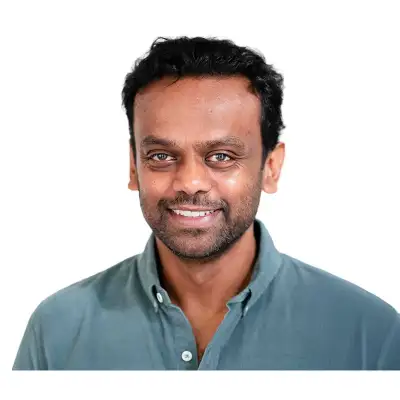
How is an open ecosystem powering the next generation of AI for developers and leaders? Broadcasting live from the heart of the action at AMD's Advancing AI 2025, Chain of Thought host Conor Bronsdon welcomes AMD’s Anush Elangovan, VP of AI Software, and Sharon Zhou, VP of AI. They unpack AMD's groundbreaking transformation from a hardware giant to a leader in full-stack AI, committed to an open ecosystem.
How is an open ecosystem powering the next generation of AI for developers and leaders?
Broadcasting live from the heart of the action at AMD's Advancing AI 2025, Chain of Thought host Conor Bronsdon welcomes AMD’s Anush Elangovan, VP of AI Software, and Sharon Zhou, VP of AI. They unpack AMD's groundbreaking transformation from a hardware giant to a leader in full-stack AI, committed to an open ecosystem. Discover how new MI350 GPUs deliver mind-blowing performance with advanced data types and why ROCm 7 and AMD Developer Cloud offer Day Zero support for frontier models.
Then Conor welcomes Sharon Zhou, VP of AI at AMD, to discuss making AMD's powerful software stack truly accessible and how to drive developer curiosity. Sharon explains strategies for creating a "happy path" for community contributions, fostering engagement through teaching, and listening to developers at every stage. She shares her predictions for the future, including the rise of self-improving AI, the critical role of heterogeneous compute, and the potential of "vibes based feedback" to guide models. This vision for democratizing access to high-performance AI, driven by a deep understanding of the developer journey, promises to unlock the next generation of applications.
Chapters:
00:00 Live from AMD's Advancing AI 2025 Event
00:30 Introduction to Anush Elangovan
01:38 The MI350 GPU Series Unveiled
04:57 CDNA4 Architecture Explained
07:00 The Future of AI Infrastructure
08:32 AMD's Developer Cloud and ROCm 7
11:50 Cultural Shift at AMD
14:48 Open Source and Community Contributions
18:35 Software Longevity and Ecosystem Strategy
22:19 AI Agents and Performance Gains
27:36 AI's Role in Solving Power Challenges
28:11 Thanking Anush
28:42 Introduction to Sharon Zhou
29:45 Sharon's Focus at AMD
30:39 Engaging Developers with AMD's AI Tools
31:24 Listening to the AI Community
33:56 Open Source and AI Development
45:04 Future of AI and Self-Improving Models
48:04 Final Thoughts and Farewell
Connect with Chain of Thought host Conor Bronsdon:
Follow Today's Guest(s)
Anush Elangovan: LinkedIn
Sharon Zhou: LinkedIn
AMD Official Site: amd.com
AMD Developer Resources: AMD Developer Central
Check out Galileo
AI is reshaping infrastructure, strategy, and entire industries. Chain of Thought is the podcast where builders reason through what's changing. Host Conor Bronsdon sits down with the engineers and founders shipping AI in production to get past the hype into what's working and what isn't. Episodes cover model infrastructure, inference, agent frameworks, evaluation, and developer tools.
Guests have come from NVIDIA, Google DeepMind, AMD, Databricks, Vercel, and more. Every episode carries a full transcript and show notes at chainofthought.show. New episodes weekly.
Conor Bronsdon is an independent consultant and angel investor in AI infrastructure and developer tools. He led technical ecosystem at Modular, acquired by Qualcomm in 2026; led developer awareness at Galileo, acquired by Cisco; and ran developer marketing at LinearB, where he was GM of the Dev Interrupted podcast and community.
Views expressed by the host and guests are their own.
[0:05] Conor Bronsdon:
Welcome to Chain of Thought, the podcast for developers and leaders navigating the AI revolution. We are broadcasting live today from AMD's Advancing AI twenty twenty five event here in San Jose. There's a palpable energy in the air for improving AI developer experience for an open AI ecosystem. I am your host, Conor Bronsdon, Head of Developer Awareness at Galileo, and we have a very special guest joining us today. In fact, we have a second special guest as well, but I'll tease that later. Directly from the heart of the action, Anush Elangovan,
[0:34] Conor Bronsdon:
VP of AI Software at AMD. Anush is at the forefront of building the software ecosystem to power the next generation of AI applications on AMD hardware. We're delighted to have him here today. Anush, thank you for making the time to sit down with us, and thanks for joining us here on Chain of Thought.
[0:48] Anush Elangovan:
Thank you for having me. I'm super excited to be here and talk about all what we announced today, the AMI three fifty's and
[0:56] Anush Elangovan:
the hardware innovation and the software innovation that goes with it.
[0:58] Conor Bronsdon:
For folks who are actually watching on YouTube, I am like so excited about this because we just came off this incredible keynote with Anuj, Lisa Hsu, Sam Altman at OpenAI, so many folks coming and sharing the incredible announcements that AMD has, some of the incredible partnerships that they're going after, and some of the amazing investments they're making into infrastructure.
[1:21] Conor Bronsdon:
As AMD has transitioned from being not just a hardware company, but one that is shipping software all the time, there is so much going on and you and the team here at AMD are right in the middle of it all. So let's just dive directly in. Let's talk about scaling. Let's talk about performance. Let's talk about those new chips. AMD has made major announcements across the board, as you said.
[1:43] Conor Bronsdon:
The new MI three fifty GPU series with incredible performance, continued customer momentum, and so much more, such as the developer cloud, new Rocum seven, all of which is extended and aligned within a core vision of an open developer ecosystem.
[2:00] Conor Bronsdon:
What is the single takeaway that you want developers and leaders to have coming out of this event?
[2:04] Anush Elangovan:
The speed and innovation with an open ecosystem is unmatched by any proprietary closed system. And it's not one vendor trying to sell you what they have to move AI forward. Here everyone is welcome, both at the hardware layer, networking layer, CPUs, GPUs, and in the software layer, right, and we partner with everyone
[2:25] Anush Elangovan:
to make sure that overall there's a good experience for the end customer, you know, deploying AI.
[2:30] Conor Bronsdon:
I love that idea of open partnerships because we've seen open source win in so many cases, whether it's pre AI and we're seeing a lot of success within AI obviously as well. But powering all of that is the hardware layer. And that's what AMD is probably best known for.
[2:48] Conor Bronsdon:
The MI350 GPU series that was announced today represents a significant leap of up to 20 FP4 performance. Can you walk us through what makes this new architecture fundamentally different and why developers should be considering
[3:05] Conor Bronsdon:
AMD hardware as their choice going forward?
[3:07] Anush Elangovan:
Yeah. So at the hardware level, there's, you know, the speeds and feeds, right? Like 20 petaflops of FP4 is mind blowing. Right? That's like you're talking petaflops. And there have been innovations at every layer, even in the hardware, at the microarchitecture level, at how they're brought together in the interconnects,
[3:28] Anush Elangovan:
way the system is put together, the chip is put together, power efficiencies across chips because we have a very unique chiplet architecture that's very good for, you know, distributed software system, right, so you can do Numa load balancing etc, and it's got power benefits built in because you could turn off chips that you don't use, you only power on what you need.
[3:52] Anush Elangovan:
And so the Mi three fifty really brings the cDNA four architecture into the forefront and that's it's like decades in the making, right, like it's an experience that has been built over the last few decades, but now it's come to a point where AMD is able to provide the cadence required to keep up with AI, right, so we want to be able to deliver hardware every year.
[4:20] Anush Elangovan:
So we did the MI 300, the MI three twenty five, now we have the three fifty series and like Lisa mentioned, the 400 series is right around the corner, that's less than twelve months. And executing on that hardware cadence is just, it's a machine that you need to have it well oiled and buttoned down, So I'm incredibly proud of what the hardware team has been able to pull off,
[4:46] Anush Elangovan:
in executing on that, hardware mission.
[4:48] Conor Bronsdon:
And I think what's particularly exciting is to see AMD also start to have, you know, a biweekly software cadence that is extremely well oiled as well. We're going talk a lot more about that. But before we do, I want to ask about this cDNA four architecture and what makes it special and important
[5:04] Conor Bronsdon:
as it fuels AMD's advancements around GPUs.
[5:06] Anush Elangovan:
Yeah. So the cDNA four brings new data types that are key for AI workloads. We have FP4, we also have FP6 and one of the key innovations in the cDNA four architecture is that the FP6 throughput is as, it's almost, it's like an FP4 data type, so what that means is you can do FP4 or FP6, but it gives data scientists the ability to go from FP8
[5:35] Anush Elangovan:
to FP6 as an intermediary before you go to FP4 and so you can move parts of your model, your training algorithms down to FP6 before you go to FP4. But you know FP4 is the future in terms of like where things are headed and I think the CDNA4 positions us really well in terms of supporting these advanced data types. And memory capacity and memory bandwidth these are two
[6:05] Anush Elangovan:
cornerstones of AMD's portfolio and we continue to dominate in that area, right, both in the 300 series and three fifty series and then when we go to the 400 series, we have a very clear advantage over, you know, our competitors' roadmap. Getting to the three fifty series is at two eighty eight gigabytes, that's, you know, you're starting to get into like 500,000,000,000 parameter models that can run on one GPU,
[6:31] Anush Elangovan:
right? And then you have eight or you deploy at scale, you're getting to very large deployments and like Sam and others on stage had alluded to, we have deep partnerships with seven of the 10 top AI companies, and it's really exciting to see the generational investments that have been made now come to fruition where it just clicks and now we're like, we got that hardware.
[6:56] Anush Elangovan:
And obviously we'll talk about the software, which, you know, I'm super passionate about too.
[6:59] Conor Bronsdon:
Yeah, I do think it's interesting though to talk about this infrastructure investment as laying the groundwork for all the software innovation that is occurring. And I'll say like, I'm losing track of the numbers already. I know I need to have a better sense of them. But hearing, you know, Oracle be on stage with y'all and say, you know, Zeta scale, I'm kind of like, okay, wait, remind me what the heck is, like, what does, what does this mean for it? So, I guess my question would be, what do you think will happen with this next layer of infrastructure? What is it going to unlock
[7:30] Conor Bronsdon:
for developers that isn't possible today? Right.
[7:33] Anush Elangovan:
So I
[7:35] Anush Elangovan:
view AI very transformational. It's like electricity. When we first had electricity and the first transformers were put up on your street corners, people were like, oh, I don't know, what will you do with that? You just had your oil lamps and that you were thinking of replacing a bulb, but then you realize it's transformational because entire industries move to it and entire
[8:00] Anush Elangovan:
workflows get automated or differentiated and humans can do something else, right? So to the point where even electric cars are just, it's recent, right? So the innovation with the investment in the infrastructure and the AI impact will take, and it'll be a few generations before you know the entire impact of what all it could affect, but we should view it as transformational as electricity.
[8:32] Conor Bronsdon:
And part of what's going to be fueling everyone to build upon this transformational layer of new architectures, new GPUs, massive scale, is going to be ROCCM7. It's going to be AMD's Developer Cloud. Two big announcements coming out of the conference today. And it clearly follows along this same route that AMD is charting themselves down, which is, Hey, we're going to be an open source focused company. We're going to ship regularly and we're going to engage developers around the world to help improve and speed up our innovation.
[9:06] Conor Bronsdon:
What does DayZero support for leading models like LAMA4, GPT, DeepSeek,
[9:11] Conor Bronsdon:
and others. How does that change the developer experience for this open source layer for this AMD developer cloud?
[9:17] Anush Elangovan:
Yep. Yep. That's a very good question. The way I look at it is, you know, even a few years ago, Rokum support always was like a port two platform, like someone would launch a model and then you go in and you try to make it and someone's like fixing it.
[9:33] Anush Elangovan:
All the models that were launched this year and last year, all the Frontier models, Deepsea, Llamas, Quen's, all of them, day zero, it's fully supported natively as much as it is on the competitor platform. What this means for the developers that they can rest assured that they can work with their developer flows on the latest models. What it means for customers is that they're not left behind in the AI revolution,
[9:58] Anush Elangovan:
AMD's invested, the customers are invested, the developers are invested, the model builders are invested. And so one of the pieces of what we didn't have good coverage on was cloud access to AMD GPUs, which is why we launched the AMD Developer Cloud, and it's really really very easy to just use your GitHub ID, you get in, spin up an instance, and we even have twenty five hours of free credits for anyone attending AI,
[10:32] Anush Elangovan:
and if you don't have it there's a little request credits, so we will give it to you, if not tag me on X and I'll make sure you get some credits, but it's also gives you a good life cycle of trying it out, getting familiar, and then you can even deploy it there, right? It's a real instance. So we just wanted to make it we wanna make ROCCM
[11:02] Anush Elangovan:
be available everywhere and for everyone.
[11:04] Conor Bronsdon:
Speaking of X, it was interesting to hear from XAI on stage earlier during the keynote as well, and about how AMD is helping fuel everything happening with Grok and so many of these other incredible companies we've mentioned already. They'll say, if you're someone at XAI, you want to come on the show, you let us know.
[11:22] Conor Bronsdon:
What does it take to shift the culture of a legendary hardware company like AMD from, Hey, we're only fueling this hardware layer to now, I mean, across the board, everything from hardware through the software layer. There's, there's so much going on. It gets extremely complicated. It's very different shipping schedules, very different concerns. Some are more high consequence. Some are more less consequence, depending on where things are being created.
[11:49] Conor Bronsdon:
What what did it meant to make that cultural shift?
[11:52] Anush Elangovan:
The way I look at it is, there there were two things. One, you know, when AMD was acquiring Nord dot ai, which is how I came to AMD, Lisa called me to the side and said, Anush, think of it as Nod as acquiring AMD, not AMD as acquiring Nod, and to this day, you know, the principles of how I ran the startup for ten years is how I'm doing it at AMD and it is resonating with developers, we're moving fast and, you
[12:21] Anush Elangovan:
know, to work hand in hand with like the xAI folks, we, you know, I'd seen that deployment from like go till live and we worked really fast, really quick and the deliveries were like instantaneous and a lot of that software delivery mechanisms I'd built in Chrome and Chrome OS when I was working in the Chrome OS team in the early days of Chrome OS from 2010 to 2013.
[12:53] Anush Elangovan:
That's when we were like, hey, Mainland has to be shippable, you ship every night, weekly you make some updates to it, you test, and your quality bar increases as you deploy in scale, and then you get to the GA candidates. It's not the other way around where your waterfall, you're tied up in. So it's very interesting to kind of like move the culture from one to the other, but then once you get to the other side it's fast moving and everything is data driven, right? It's, oh, that thing failed, that thing, you pull that out, ship the rest, right?
[13:33] Anush Elangovan:
So it becomes very responsive and the way I think of how AMD is looking at software now is software as a product, right. Until now it was like oh, MI 200, MI 300 is a product and then it came from the lineage of BSPs, like hey here's a hardware piece, here's a software piece that goes with it, go do what you must with it. But now we're thinking of it as like ROCCM and
[13:59] Anush Elangovan:
the other piece that we launched today was the ROCCM Enterprise AI, which is ROCCM seven, we got ROCCM Enterprise AI on top, we can do cluster management capabilities, it's got ML operations capabilities, and then you got vertical integrations into verticals like health sciences, etc. And putting all of them together, in the end, if you don't give a solution for the customer, it doesn't really matter. You're you're building some parts of the puzzle and it doesn't matter. So now we're taking a holistic view that covers the entire stack and we want to bring AI to the footsteps of the end user.
[14:31] Conor Bronsdon:
And part of that strategy is an intentionally open approach.
[14:37] Conor Bronsdon:
Building on open standards, OCP design, ultra Ethernet, ultra accelerator link. What does this mean for AMD's vision of the future of AI to focus on open source so far?
[14:47] Anush Elangovan:
Yeah, so open source software is one, but also going to open source,
[14:53] Anush Elangovan:
open ecosystems is the next level up where we are not making an announcement saying, Hey, NVLIC a fusion, right, and it's like oh everything is open but the chips will be built by us and you can you know you can connect your thing in the periphery or something like that. When we say open we truly mean open and so we have chip companies that are building like switches,
[15:18] Anush Elangovan:
switch companies that are building NICs, unique companies that are building unique connector technologies, we want the innovation to happen at every layer of the stack. We're not trying to stifle that innovation in terms of increasing our bottom line for that particular case, but obviously everyone's in the thing to make money and everyone to be successful, but we wanted to be a holistic,
[15:44] Anush Elangovan:
open ecosystem approach rather than a like it's our way to move the industry forward and you have to follow our way or you're out of the system.
[15:55] Conor Bronsdon:
So if I'm a developer and I'm building with Rockem, can I then contribute to this open source repo and say, Hey, look, maybe this is gonna end up in something that you're actually building with AMD?
[16:06] Anush Elangovan:
Yep. A 100%. So one of the key things that we've done in the past few weeks is
[16:12] Anush Elangovan:
the internal source repositories and external source repositories are exactly the same. It is all external, right? And so what that means is, as an external developer, you can contribute any code changes you want and we actually take that seriously and merge it in. For example, we'd launched the Strix Halo laptop and our team was trying to get the Windows build of it ready, but then we had a couple external contributors
[16:41] Anush Elangovan:
contribute Triton on Windows, contribute PyTorch on Windows to the point where it accelerated our ability to like get PyTorch on Windows ready because of these external developers who just they just bought a Strix Halo laptop and I just want to do this and that's the power of open source. If we had if we had flipped the script, we'd be like, we got a plan for 10 engineers that are gonna sit in a corner and try to make this work, but here's one engineer half time, he's just like, oh, I just want Windows Triton to work and I'm gonna do whatever it takes and over the weekend he fixed all of that and we're like, great, now everyone's happy.
[17:14] Conor Bronsdon:
Okay, what's your PR review process for this?
[17:17] Anush Elangovan:
Very good question. So the PR,
[17:20] Anush Elangovan:
so I do pull requests and press requests.
[17:25] Anush Elangovan:
But
[17:29] Anush Elangovan:
wearing my engineer hat and reading it as a pull request, we're moving all of that review process externally, so every developer who's working on that area actually just reviews it. So it can be from an internal developer or an external developer, yeah, and so that gives us incredible velocity and we haven't even unlocked that potential yet, we're just like getting the foundational layers with the Rokum seven,
[17:54] Anush Elangovan:
but once Rokum seven hits, you should see like Rokum eight, nine, 10 be like six weeks release cadence, It's like how Chrome, you don't care whether you're running Chrome 138, it's just Chrome, you get the best, you get the fastest and then Chrome 139
[18:13] Anush Elangovan:
something happens and it happens at night and you're like, great, I'll take that. Right? So we want to get ROCCM to that point.
[18:47] Conor Bronsdon:
I love this comparison you made earlier and this, I guess advice, it sounds like Lisa Su gave you, saying, hey, look, we're not acquiring you. You're acquiring us. You need to bring your DNA here and change our company. And it's clear just from this discussion that
[18:47] Conor Bronsdon:
you've made such an impact on how AMD is thinking from a product velocity standpoint, from a philosophy standpoint. And something I've heard you say before is that software is a product that far outlives any single generation of hardware. Even the, I mean, because it evolves, right? Because, you know, Chrome is now whatever number it is. And that AMD needs a software plan for the next decade, not just a hardware plan.
[19:01] Conor Bronsdon:
How does this philosophy of software longevity shape your open ecosystem strategy with ROCCM and the other investments that you're making?
[19:09] Anush Elangovan:
Yeah, very good question. So
[19:13] Anush Elangovan:
imagine you're building something for the next ten years or fifteen years, right? It the investment required for it, just to do it in a closed, like, hey, only we're going to do it, it'll be like funding the high speed rail in California, right? Nobody else can do it, only the government can do it, but what if we said, hey, you can build this part of the track, can build this, you can build this, as long as you know, the CICD,
[19:40] Anush Elangovan:
the train can keep running safely, we're fine, you just keep building it as long as you want to go and you know, build it where you want to go. It really does unlock the ability to build at scale but build for longevity, right, because you want to have the platform far outlive generations of compute. So MI three fifty, yeah, it's the new hotness, two years, three years, four years down the road people will be like, yeah, MI 250 is like historic, that's fine,
[20:13] Anush Elangovan:
but the infrastructure that you've built on it will continue to along, right, and yeah, it evolves and you want to make sure you got backwards compatibility, forwards compatibility. So people are investing in ROCCM as a product.
[20:29] Conor Bronsdon:
I love this idea and this philosophy that you're bringing because I think it's so interesting to see how these different strategies are being approached by various companies in this new AI era,
[20:44] Conor Bronsdon:
where we're shipping faster, hardware does become historic faster, And we're all simply in the midst of this insane revolution. You mentioned electricity as an example. Folks compare it to the early internet. How are you going to foster this community led innovation that you see unlocking the next level of velocity and success
[21:07] Conor Bronsdon:
for AMD around software?
[21:08] Anush Elangovan:
Yeah, again, a very good question. The, you know, it kind of goes to how people say, Hey, the only, constant is change, right? But it's I would take it a step further and say and the rate of change too is going to continually improve.
[21:27] Sharon Zhou:
It's not just that, Hey, it's going to change.
[21:28] Anush Elangovan:
Course it's going to change. This Anusha is a lot. I know that important, you know. But my philosophical
[21:36] Anush Elangovan:
view is the rate of change is going to change too, and not the way you think it is it's going to accelerate. And being prepared to address that speed and the velocity in which you're going to be accelerating towards that, you want to be able to be prepared to maneuver and that maneuverability comes from an open ecosystem because you alone cannot drive that train that fast, you're
[22:06] Anush Elangovan:
gonna need everyone lifting all boats, right? So that that's how that that that's the general philosophy of how I think the tip of the spheres should be.
[22:17] Conor Bronsdon:
And
[22:18] Conor Bronsdon:
I think if you talk to anyone in the AI space today, we'll at least mention agents like I'm now going to force in here. Because we all see it as a huge part of what that future looks like, at least for the next couple of years, right? There may be a paradigm change. There may be a change in how we interface with these AI tools. But for now, agents are what everyone is starting to build and or is already building. And we're building multi agent architectures.
[22:43] Conor Bronsdon:
We're building massive groups of agents that, you know, solve problems together and can do cohesive tasks and solve strategic challenges for businesses. So, being able to address and improve and align to this agentic future is really important for most AI companies today. So of course it was part of AMD's keynote earlier. Your benchmarks now show that there's a 3.8x
[23:08] Conor Bronsdon:
generational improvement for AI agents and up to a 4.2x improvement for summarization tasks when leveraging AMD infrastructure. How are you achieving those gains? And what does this mean for the performance for the performance per dollar that AMD is looking to deliver for customers and partners?
[23:27] Anush Elangovan:
Yeah. I I think let's start with the performance per dollar, right? Like,
[23:32] Anush Elangovan:
with the three fifty series against the competitors' latest Blackwall platform, you're looking at a 40% tokens per dollar savings, right? 40%. That is just huge, and and 40% adds up pretty quickly when you're doing $250,000,000 tokens a day or a billion tokens a day, that translates to significant savings and then that can be backed by anything, it can be on prem deployments, can be CSP deployments.
[24:02] Anush Elangovan:
But coming back to your question on agentic future, I think the agentic way of framing the problem is more about us understanding it in a way because an agent is like autonomous in some way, it's a way of doing something, but if peel all of that back it's how you're building intelligent autonomous systems that could take the form of physical robots, it could take the form of virtual robots, which is the agents, and
[24:38] Anush Elangovan:
we're starting to see that future where you know, you don't want to be sitting on kayak and clicking you know plus minus three days, tell the GPU operator to go do it or the agent to be watching kayak through your MCP server and say hey whenever it goes down this, do this, right? And then add a natural translation layer, a voice translation layer and you're just interacting with
[25:04] Anush Elangovan:
this agent and then once it embodies itself into the physical thing with the robot then it starts blurring the line of like what exactly is this agent, right? And so it's an exciting future, but what all of that come down to is immense compute infrastructure that AMD is investing in significantly right now, and the immense software infrastructure required on top of it, which is also something that we're,
[25:35] Anush Elangovan:
you know, doubling down on.
[25:36] Conor Bronsdon:
I wish we had time for another hour of this conversation because you've shared so many great insights and there's a lot of exciting things happening with AMD. But I think we have a perfect question to close on here, given what you just said about enabling software and infrastructure investments. AMD announced today landmark $10,000,000,000 agreement with Humane, Saudi Arabia's new AI enterprise, to deploy 500 megawatts of AI compute capacity over five years, spanning from Saudi Arabia to The United States.
[26:08] Conor Bronsdon:
How does this fit into AMD's sovereign AI strategy? And what does building, as I believe was said on stage, the world's most open AI infrastructure mean in practical terms for global AI development and deployment,
[26:23] Conor Bronsdon:
especially aligning to these deep open infrastructure investments that we've been talking about?
[26:27] Anush Elangovan:
Yeah. So I think the philosophy of like the deep open infrastructure investments are we actually are bringing a consortium of innovators and companies that have the ability to execute on different parts of the stack, but then we validate everything together to make sure that you do have the ability to execute the end vision of what it is that you're trying to stand up, right?
[26:54] Anush Elangovan:
And then the investment shows a long range plan, right, like because you're not just saying, hey I'm just buying some GPUs, it's you're investing in infrastructure and infrastructure build out takes time and infrastructure build out affects people's lives, right. Similar going back to the electricity investments, you know, do we do AC transmission lines or DC transmission lines? Yes, the first twenty years,
[27:19] Anush Elangovan:
it took like 10% of the GDP to put up all the transmission lines.
[27:22] Conor Bronsdon:
Well, new electricity investments we have to make for this AI infrastructure for that Yes, that too.
[27:25] Anush Elangovan:
Yeah, now it goes back. It's a full circle. It's like, oh, I got to go back to my original thesis of like, how am I going to generate this power?
[27:33] Conor Bronsdon:
Maybe we do need whale oil lamps after all.
[27:36] Anush Elangovan:
Well, I'm sure, you know,
[27:39] Anush Elangovan:
we push human creativity in terms of like solving problems, we do come through, and so you know when we see the value that AI unlocks and we know that we need more of it and if power is what we need to you know figure out new ways to do it, it'll be new geothermal, new power, new you know whatever the way we're going to go push the envelope and find that power, we will. And then,
[28:06] Anush Elangovan:
you know, tie it into forward progress with, innovation in AI.
[28:09] Conor Bronsdon:
Absolutely. It's a very exciting time. And Anush, I really appreciate you taking time out of your busy schedule and taking time out of this incredible event to join us here on Chain of Thought. We appreciate you and the team at AMD giving us a look behind the curtain here at Advancing AI twenty twenty five and sharing your vision for the future. Thank you for tuning into this special episode of Chain of Thought. We'll have more for you very soon. You may hear it in a couple minutes after this interview wraps. Anush, thanks again, and thank you for hosting us at Advancing AI. We're
[28:38] Conor Bronsdon:
broadcasting live again from AMD's Advancing AI twenty twenty five event, where there is so much energy about improving the experience for developers with AI and about the open ecosystem. I am your host, Conor Bronsdon, Head of Developer Awareness at Galileo. We have a very special guest joining us today. It was a fun surprise for us, actually. Directly from the heart of the action, we have Sharon Zhou. Sharon is the former CEO and co founder of Alumni
[29:03] Conor Bronsdon:
and now vice president of artificial intelligence at AMD. Thank you so much for joining us on Chain of Thoughts, Sharon.
[29:08] Sharon Zhou:
Thanks so much for having me.
[29:10] Conor Bronsdon:
It was so cool seeing you come out during the keynote earlier. I was like, wait a second, like, I'm pretty sure I follow you on LinkedIn. And I know the AMD team is particularly excited to have you joining, and
[29:22] Conor Bronsdon:
the knowledge that you bring from teaching over a million people about AI is so important to the DNA of a company like AMD that is going so deep into the open source ecosystem, so deep into what is going to be a lot of education, engagement, community work. What are you going to focus on as you dive deeper into your time here at AMD?
[29:45] Sharon Zhou:
Yeah, so it's a combination of AI research and teaching,
[29:50] Sharon Zhou:
which is kind of what we were doing at Lam and I as well. I think the thing I'm really excited about on the teaching front is making, you know, Rock'em and all the software that we've been building at AMD much more available and accessible to developers. Yeah. And I think that's going to be a combination of showing, hey, all the latest AI stuff, whether it be vibe coding agents or reinforcement learning, all of that runs on AMD just fine. And not just fine, it maybe is optimized on it, right? So I'm really excited to show show that and do that with some of the biggest names that we've been working with already, like Andrew Ng at Deep Learning AI.
[30:27] Conor Bronsdon:
Yeah. If you have not had an opportunity to hear about what AMD is up to with deep learning and what sharing is up to with deep learning, There's a lot more to come there and maybe Phil tease a bit of that here. We'll see. But if nothing else, this focus on teaching and on research and on understanding developers and other AI builders, data scientists and what they need, it is so important to
[30:51] Conor Bronsdon:
fueling this increased product development velocity that this intentional open source strategy AMD is taking is meant to fuel. As Anuj shared with me in an earlier conversation, you know, we have developers who are already contributing to the repos that are driving AMD's Rock'n Forward. What does this mean to actually enable the community though, and make it easy for them to contribute,
[31:16] Conor Bronsdon:
have them feel a desire to do so, and to see it pay off for AMD's
[31:23] Conor Bronsdon:
actual product. Right.
[31:24] Sharon Zhou:
I mean, I think the first step is listening. First listening to the community and hearing what they want, and then, helping also on the other side, building out what we call a happy path or kind of a, these are the three steps to succeed on AMD so that people can see that success or moment really quickly. And I think that's really important, right, to be able to see something working immediately in AI. I actually think
[31:49] Sharon Zhou:
attention spans have gone down quite a bit with AI. I think we just want a prompt. I think my Cursor prompt is literally the minimum number of tokens is like a question mark. And I just, know, that's it. A question mark. I got to do that Yeah, exactly. So I think, you know, we're a little bit less less patient on that. So, being able to show the, roll roll out the red carpet or show the yellow brick road to follow,
[32:14] Sharon Zhou:
I think that's really critical. Yeah. So, that's what we 'll doing.
[32:16] Conor Bronsdon:
Moment to wow is so important because it's Yeah. It's really easy. I know I've been guilty of this. I'm sure everyone listening has been, where you go, oh, this product sounds cool. Let me go try it out. And like, oh, I don't actually want to spend thirty minutes setting this up. I just need to try it. I need to get going. And you jump off and do something else and you maybe forget about it. You maybe pick a competitor that's easier to, to jump into.
[32:38] Conor Bronsdon:
And so, love that you're starting with listening and with, I mean, qualitative research into what your users, what developers who are building on AI actually want. How will you approach that listening tour?
[32:52] Sharon Zhou:
Oh, so many different ways. I think there's so many different formats to listen. One is, through talks. I had given over 50 keynotes last year through Lammini. Yes. So I think talks actually afford the ability to then, as you get off stage talking to people, people reacting to what you have to say, asking clarifying questions. I think teaching very much gives that dialogue, that opportunity to have that dialogue as well. So these are kind of the different avenues.
[33:21] Sharon Zhou:
And of course, through the repositories, can open up issues, etcetera. But what we're really focused on is almost the framework of pre believers versus pre buyers. So, you know, first you have top of the funnel pre believers, people who don't yet believe, and getting them to become a believer. And then once they're a believer, can become a pre buyer, give you a shot, and become a buyer, become a customer. So really focus on the pre believers and listening to them, hearing what will it take for them to have that bit flip switch and
[33:51] Sharon Zhou:
just say, I'm going to give this a shot because this will make a very big difference to my business, my workflow, whatever it may be. And something I'm really excited about is that AMD is very actually differentiated in the market, not only from the open standpoint, right? So, engaging with the open source community enables this whole new strategy of accelerating
[34:11] Sharon Zhou:
their ability to catch up, but also having a different heterogeneous compute fabric between GPU and CPU. And as we build out more tools, for example, a lot of people are using agents these days. These agents, right, they are LLM calls. They run on GPU. But the tools they use through MCP model context protocols, for example, many of the tools they use are actually running on CPU. So how do we actually balance those loads effectively
[34:40] Sharon Zhou:
moving forward? And I think AMD is in a really interesting position to balance that effectively because they own and can do a lot of the integration work between
[34:50] Sharon Zhou:
those types of compute. Yeah.
[34:52] Conor Bronsdon:
That vertical integration opportunity is so interesting and it's such a unique perspective to have in the space. I'm curious to see how the open source contribution side of things factors into this integration with GPUs and CPUs and the customization offered there. Are you already seeing the benefits of opening up the AMD software stack
[35:15] Conor Bronsdon:
to the open source community and developers around the world?
[35:17] Sharon Zhou:
I mean, a 100%. You know, first, first things first, from the course perspective, this makes it a lot easier for people to even learn or even show a demonstration of how are you gonna even learn GPU programming. If there's nothing open to look at, you're you're kind of, like, touching around a black box and not really learning what's going on. So even just understanding what's going on inside of it and getting people curious about this technology, I think I think that is that is number one. That's something that's on my mind at least. Yeah.
[35:47] Conor Bronsdon:
Let's dive in there a bit more. I'd love to understand your thought process or strategy around how do you drive that curiosity? How do you enable that curiosity? And as you brought up earlier, how do you lay out that yellow brick road for them so they can learn and build their first agents?
[36:03] Sharon Zhou:
Yeah. No, I mean, I think it comes from understanding what trends there are today in terms of what developers are building, but also what trends that those will evolve into, like what workloads realistically those will evolve into, and then kind of matching those with internally where we've been able to shine as AMD, right, from the hardware and software perspective. So right now, there's a lot of focus on inference
[36:29] Sharon Zhou:
and being able to actually make that workload really effective and reliable and efficient. And so how do we actually engage developers on that specifically today? It's more ready than training right now. So how do we engage them on that where they will succeed, be more likely to succeed, and go from there? It doesn't have to be boiling the whole ocean all at once, but finding where you're going to see that moment, that wow moment
[36:54] Sharon Zhou:
soonest.
[36:55] Conor Bronsdon:
And do you have a thought process so far on kind of the key areas to drive that moment? Or are you still feeling fairly nascent in your research there?
[37:07] Sharon Zhou:
Yeah. So, I have a few different thoughts around what will help drive it. But I think right now, it's a combination of the three different audiences that we're looking into. One is AI developers. That's probably number one. The second is AI researchers. AI researchers are helpful because they're a little bit lower level and more willing to try something experimental.
[37:31] Sharon Zhou:
So, that's where we're touching training workloads, for example. And then the third is what I call AI leaders. But anyone who's kind of thinking about it, maybe it's someone within an enterprise leading AI, how are they thinking about their infrastructure, budget, costs, etcetera? So these are the three audiences that I really think about, these personas that I really think about how do we serve them? Because ultimately,
[37:55] Sharon Zhou:
they're going to be the ones making decisions on compute. And they're going to be making decisions on, at every single layer that will impact what kind of compute should be built to serve them.
[38:05] Conor Bronsdon:
What does differentiated teaching and learning about AMD's open infrastructure, open software ecosystem look like for those different audiences?
[38:14] Sharon Zhou:
Yeah. So, the developer one is very easy to talk about because we're already working with Andrew and his team. We already have been over the past year. In fact, at Lam and I, we were running on over 300 AMD GPUs, and we're actually serving multiple courses, three of them with Andrew and one of them in partnership with Meta, that were being served up with those GPUs. And that was both inference and training, actually. So, that's been really cool to see, and that's tens of thousands of developers
[38:47] Sharon Zhou:
already hitting AMD GPUs over the past year. So, that's been really exciting to see. So, it's doing more of that with the things that are new today, probably around agents, probably around that, you know, maybe MCP like thing. Totally. The second audience around researchers, it's engaging largely with the different labs, whether they be commercial or university,
[39:09] Sharon Zhou:
to be able to start testing maybe new hardware, etcetera, and starting to run their more nascent workloads there, or even their experimental ones, maybe a new model architecture, for example. I'd like to see, for example, a new model architecture be invented on AMD. That would be really cool, and taking advantage of the benefits and the differences of AMD hardware, for example, larger HBM. Don't know. So that's
[39:36] Sharon Zhou:
another thing. And then for AI leaders, been working with Lam and I, for B2B Enterprise. So we talked to a lot of Fortune 500 executives. And as a result, we have a lot of those relationships. We have a lot of relationships with SIs that are kind of in between. We have relationships with different platforms there. And so I can't speak to some of the brands there yet, but they're big and we're working with them as well.
[40:02] Conor Bronsdon:
Sounds like the base advice though for developers go to deeplearning.ai
[40:07] Conor Bronsdon:
and check out these courses with AMD.
[40:08] Sharon Zhou:
That is that is, that is the base lesson. Okay.
[40:11] Conor Bronsdon:
That's a good base lesson. You mentioned MCP and it's obviously kind of the new hotness, right? Anthropic released it to not a lot of fanfare, No, end of last not in the beginning.
[40:23] Sharon Zhou:
No.
[40:23] Conor Bronsdon:
But by March, April, we really started to see this momentum. Yeah. And, you know, now mid June, it feels like it's on everyone's lips. Do you think MCP is going to win out as one of the frameworks of choice in the next year or two?
[40:35] Sharon Zhou:
So, one, I think it's really, really important to highlight MCP as an open protocol,
[40:42] Sharon Zhou:
and therefore, can be a standard. So, the benefit of open in general is that it can be a standard. When we had worked a lot with Meta at Lam and I, that was their big thing. They're like, This is so that we can actually set a standard for the community. So I think that's one thing that MCP has been able to show a glimmer of. And I think because it's taken off in the sense that the community was itching for a standard since things were so customized,
[41:09] Sharon Zhou:
it did take off, and OpenAI also has endorsed it. And I think that's a really big deal with big model players endorsing it, it being open so that everyone can contribute to it and see into it. If there's only a closed option, you don't really feel like you can, one, be able to see into it at all. It feels locked inside of a certain company. And then I think the second thing is, I know developers were talking about like, well, this enables us to really customize it for different security needs, for
[41:39] Sharon Zhou:
that will emerge and change and evolve over time as AI continues,
[41:44] Sharon Zhou:
to grow and evolve as well. So, I think it's really important that there is an open standard, and I think this is really good, really good first shot at one.
[41:51] Conor Bronsdon:
I completely agree. It's going to be really exciting to see what one's out, but I agree it has to be an open standard to truly succeed. And to me, that speaks to this philosophy that AMD is taking of saying Exactly. We're going to be very open too, and we're going to align with these open opportunities.
[42:08] Conor Bronsdon:
And it also speaks to the partnership development work that has happened. There are a lot of incredible partners that were on stage earlier today with these huge keynote announcements. You know, seven of the 10 largest AI companies in the world are are working with AMD. Yeah. And I'm curious if there's a particular partnership that you think aligns best to this philosophy of listening to developers,
[42:33] Conor Bronsdon:
enabling developers, and
[42:36] Conor Bronsdon:
moving forward together in an open standard?
[42:38] Sharon Zhou:
That's such a good question. So, I think for the big Foundation Model Labs, that's largely the problem with the AI researcher persona. For the developer persona, I think it might be closer to some of the AI native startups out there and what they're building and how they're scaling things up. So, maybe they're not doing crazy pre training workloads, but they are doing substantial
[43:01] Sharon Zhou:
workloads that will eventually, I think, affect GDP quite substantially Totally, yeah. I think that'll be a really important set of folks who are building at the bleeding edge, and they define what the next trend is, too, of how to even use these models based on what's easy for them to build and what the needs are in the market. So, I think it's really critical to be listening to them and building for them there.
[43:26] Conor Bronsdon:
And that's where I think that alignment with LAMA and
[43:29] Conor Bronsdon:
Meta is really interesting as an opportunity. But there's so much more that was talked about. As you look towards 2026 and beyond, are the bottlenecks that we may experience while we're trying to build this incredible open infrastructure?
[43:42] Sharon Zhou:
So, of the big challenges of building in the open is that, you know, when I said happy path, you want there to be a happy path, something prescriptive, so people are actually doing the thing that gets them to success versus frantically trying a bunch of things, just seeing documentation and getting a little intimidated and not knowing where to start even. And it might not even be up to date, etcetera. So it's just knowing what the right path is is really important. Now, the challenge of Open is that you're inviting the whole community to come contribute.
[44:11] Sharon Zhou:
And as a result, you can create almost monstrosity of way too many features tacked on and trying to go in too many directions and not having one direction that's opinionated and correct. And I think that can be challenging for generally for Open. I think we've seen that with AI projects in particular because things can move very, very quickly in the space. So I think that's one of the challenges, candidly, and that will be one for us to monitor and to balance out with this idea of happy path and making sure we
[44:36] Sharon Zhou:
articulate that very well and kind of usher people towards that happy path or learn what the happy path should be and then usher people there. Totally.
[44:43] Conor Bronsdon:
And Sharon, you've obviously been a big part of the AI research ecosystem for several years now.
[44:50] Conor Bronsdon:
You've been a big part of the open source ecosystem for several years now, and obviously teaching as well, which we've talked extensively about. Are there predictions that you have from your position as somebody who's embedded within the industry and also a thought leader for what the next year or two of AI development and
[45:09] Conor Bronsdon:
change will look like?
[45:10] Sharon Zhou:
Yes. I've seen a lot of glimmers of this in very different ways. Some are research papers of showing, you know, a smarter model, maybe, you know, distilling it down to a smaller model, but teaching the other model things. At Lam and I, we really care about this mission of self improving AI, so getting these models to improve themselves, edit their own training data, and improve themselves.
[45:34] Sharon Zhou:
So I think there's this growing trend of that process being more and more automated. So, getting these models to actually improve themselves over time and getting that flywheel out based on what direction or objective that we want them to go towards. So, I'm really excited about that, and I think that can happen at every layer of the stack. And with AMD, that could happen even at the lower layers, being able to optimize kernels, for example, being able to optimize all those different things to make the model itself more efficient and more efficiently use its own compute. I find that really, really exciting
[46:06] Sharon Zhou:
because I think that can take us to the next generation much more quickly than if we were just developing on our own with a limited number of AI researchers out in the world.
[46:15] Conor Bronsdon:
I get excited about that idea of continuous
[46:19] Conor Bronsdon:
learning loops and But self improvement I think it's also something that maybe makes some skeptics nervous and probably not a lot of them are listening to this podcast, but I know there are a couple. What would you say to the folks who hear, Hey, we're creating self learning AI that get nervous about that idea of like, Oh, we want human direction. What would you tell them?
[46:40] Sharon Zhou:
Oh, I see. I
[46:44] Sharon Zhou:
would say that I think as these models get better at listening to us and what we need, which we can already see, like the way you prompt a model can be more and more casual, right? The question mark works, for example, or yeah, something way more casual works before you couldn't misspell things actually. And you had to even before ChatGPT with just GPT-three, had to be like, question answer, question. You had to format it a certain way, but they're much more
[47:08] Sharon Zhou:
malleable now. And I think as long as we kind of keep that as a UX, the user experience, the interface, it provides this interesting opportunity to give what I like to call vibe space feedback. So not just vibe coding, can we like vibe tune, vibe train these models? But vibe based feedback so that we can actually give our natural language feedback and direction in a way where we know it's not as strict, in a way where it's much closer to how we teach each other different things or how we direct each other to different things as humans, but also to these models. So, I feel confident that we'll find a way to nudge those models in the right way, where it won't go off in flywheels. You can actually intercept it just like a person who's learning and
[47:49] Sharon Zhou:
redirect it in a bit, and do so with that
[47:52] Sharon Zhou:
prompt, with that natural language.
[47:53] Conor Bronsdon:
I think your point about natural language is important to understand here because we need both qualitative and quantitative measures around this. And I love that you're thinking in both directions. Sharon, I wish we had more time. It's been so much fun chatting with you. And I know our listeners would would love to know where they can follow your work and continue to watch what you're up to in the AI space. Where can they follow you?
[48:17] Sharon Zhou:
You can follow me on X or on LinkedIn, or tune into some of our courses with Andrew.
[48:22] Conor Bronsdon:
Fantastic. Well, we will certainly link those in the description for the episode.
[48:26] Conor Bronsdon:
Thank you so much for joining us.
[48:27] Sharon Zhou:
Thank you so much.
[48:27] Conor Bronsdon:
Thank you to AMD for having us once again. Sorry to cut you off. I apologize.
[48:30] Sharon Zhou:
No, it's okay.
[48:31] Conor Bronsdon:
It's been a ton of fun being here at AMD's Advancing AI twenty twenty five. We're excited to see what's next and to see this continued open source ecosystem develop. If you are a developer who's tuning in, we'd love to hear from you. What are the pieces of the ecosystem that you want to see more open? What do you want to contribute to? I know AMD would love to know. I know Sharon would love to know as she continues her listening tour. Yes. And, obviously we love hearing from our folks who
[48:58] Conor Bronsdon:
So, let us know what you're thinking. And if you enjoyed this episode, share it with a friend. They probably wanna hear Sharon. So thanks so much, y'all.