Subscribe
Share
Share
Embed
A podcast community for real estate and tech leaders, investors, operators and innovators.
A new era is upon us. Tangent💚Proptech unites Proptech founders💡, Real Estate investors and operators🏢, Venture Capital investors, urban leaders🏙 and passionate creators🌎 who are improving our communities and cities. Join us to learn how we can solve present day challenges with innovative technology and greater collaboration.
Join Proptech entrepreneur Edward Cohen, to learn about housing innovation, the future of work and climate tech. We examine these themes through interviews and conversations with Proptech CEO's, real estate owners and operators, and venture investors, and how we can leverage tech and collaboration to help solve the housing crisis, figure out the future of work and how to decarbonize the built environment.
If you would like to get your company’s or organization’s mission featured on Tangent, email us at community@tangentproptech.com.
Stay curious and always be learning! 🤓
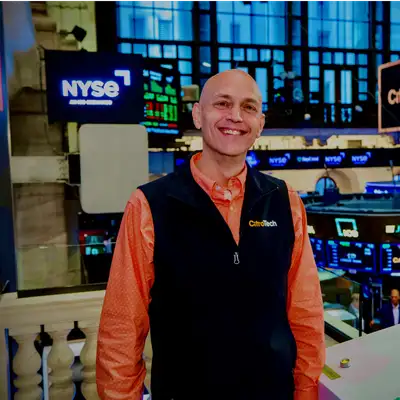
Wes Bolsen Audio Episode
===
Edward: [00:00:00] [00:00:01] [00:00:02] Hi, I'm [00:00:03] Edward Cohen, [00:00:04] and this is [00:00:05] Tangent, a Commercial [00:00:06] Observer podcast. [00:00:07] [00:00:08] [00:00:09] [00:00:10] The [00:00:11] January [00:00:12] 2026 [00:00:13] Palisades Fire was the [00:00:14] most destructive in [00:00:15] California history. [00:00:16] More than [00:00:17] 16,000 [00:00:18] structures [00:00:19] destroyed, over $40 [00:00:20] billion in [00:00:21] insured losses [00:00:22] from a single event. [00:00:23] Major [00:00:24] insurance have pulled [00:00:25] back from writing [00:00:26] new homeowner [00:00:27] policies in California.[00:00:28]
[00:00:29] Developers in high-risk [00:00:30] fire zones are [00:00:31] struggling to finance and [00:00:32] permit projects, [00:00:33] and the [00:00:34] response to all of it has [00:00:35] been largely the [00:00:36] same for decades, [00:00:37] planes [00:00:38] dropping [00:00:39] retardant after the fire [00:00:40] has already started. [00:00:41] However, [00:00:42] there are products that can [00:00:43] make wood [00:00:44] non-flammable before [00:00:45] a fire starts. [00:00:46] There are systems that [00:00:47] can spray [00:00:48] vegetation ahead of an [00:00:49] approaching fire.[00:00:50]
Most of the real estate [00:00:51] industry has no [00:00:52] idea any of it [00:00:53] exists. [00:00:54] I'm happy to [00:00:55] say we do have the [00:00:56] perfect guest to talk about [00:00:57] this today. Our [00:00:58] guest today is [00:00:59] Wes Bolson, [00:01:00] CEO of [00:01:01] Citrotech. [00:01:02] Wes, where does [00:01:03] this podcast find you?[00:01:04]
Wes: Ah, [00:01:05] I'm actually out, in [00:01:06] Oceanside, [00:01:07] California, just south [00:01:08] of Los [00:01:09] Angeles in the, [00:01:10] Palisades area, which is [00:01:11] where our manufacturing of [00:01:12] CitraTech [00:01:13] occurs, and we have a [00:01:14] great team out [00:01:15] here, working really [00:01:16] hard during fire [00:01:17] season. and I came out [00:01:18] to meet with them and [00:01:19] a bunch of our new [00:01:20] partners that are, [00:01:21] uh, helping to [00:01:22] get CitraTech out [00:01:23] into the [00:01:24] environment
Edward: some, uh, [00:01:25] go away from the fire, [00:01:26] but you go towards the [00:01:27] fire
Wes: [00:01:28] You know, I think in our [00:01:29] industry, [00:01:30] being in the fire industry, [00:01:31] many of us [00:01:32] actually, uh, [00:01:33] enjoy [00:01:34] being able to help [00:01:35] protect [00:01:36] assets [00:01:37] and, uh, prevent [00:01:38] fires, so but [00:01:39] many times you do have to [00:01:40] go towards the fire, [00:01:41] Edward
Edward: Well, [00:01:42] thank you for [00:01:43] your service and your [00:01:44] bravery. Wes, [00:01:45] you came into [00:01:46] CitraTech about [00:01:47] 12 months ago [00:01:48] with a background in [00:01:49] protection technology [00:01:50] and AI. [00:01:51] What made you take [00:01:52] the leap into [00:01:53] fire [00:01:54] prevention?
Wes: Actually, [00:01:55] before, this, I [00:01:56] actually helped build [00:01:57] one of the world's [00:01:58] leading wildfire [00:01:59] prevention companies, a [00:02:00] breakthrough out of Stanford [00:02:01] University and [00:02:02] MIT that, uh, [00:02:03] was a polymer [00:02:04] that, became the [00:02:05] leading fire prevention [00:02:06] technology. [00:02:07] Sold that to the [00:02:08] company that drops [00:02:09] all the red fire [00:02:10] retardant coming out of the [00:02:11] sky, and [00:02:12] led global [00:02:13] wildfire prevention for [00:02:14] them.
[00:02:15] So, interestingly, [00:02:16] I have a background [00:02:17] in fire [00:02:18] prevention, fire [00:02:19] protection, in a [00:02:20] global, nature. [00:02:21] And [00:02:22] what made me [00:02:23] come back into the [00:02:24] industry [00:02:25] was, [00:02:26] that I found a [00:02:27] product that was [00:02:28] in some ways [00:02:29] better than what I had [00:02:30] developed. it [00:02:31] built on new [00:02:32] technology, safer [00:02:33] for the environment [00:02:34] and more [00:02:35] effective to prevent [00:02:36] fires and protect [00:02:37] assets.
And it's [00:02:38] funny, when you build a [00:02:39] company, very [00:02:40] difficult to come back [00:02:41] into an industry [00:02:42] that, [00:02:43] uh, you've built a [00:02:44] lot of relationships [00:02:45] in. And [00:02:46] so, a better [00:02:47] product with better [00:02:48] environmental results [00:02:49] is really why [00:02:50] I came back in, and [00:02:51] believing in what we are [00:02:52] doing here at [00:02:53] Ziprotec
Edward: [00:02:54] Fascinating. [00:02:55] so let's talk [00:02:56] about what's been on [00:02:57] everyone's mind in [00:02:58] California and every [00:02:59] time we hear about a [00:03:00] fire, which is the [00:03:01] Pacific [00:03:02] Palisades fire. it [00:03:03] produced over $40 [00:03:04] billion [00:03:05] to date in [00:03:06] insured losses, [00:03:07] just from that event [00:03:08] alone. So [00:03:09] for a home [00:03:10] developer or asset [00:03:11] manager with the [00:03:12] western state [00:03:13] exposure, how [00:03:14] does an event like [00:03:15] that change the [00:03:16] math on land [00:03:17] acquisition, [00:03:18] construction budgets, and [00:03:19] holding strategies?[00:03:20]
Wes: [00:03:21] Yeah, I think we have to [00:03:22] look, I mean, obviously we'll [00:03:23] talk at some point [00:03:24] about [00:03:25] insurability as well. Are we going [00:03:26] to build homes? [00:03:27] and how do we [00:03:28] protect [00:03:29] communities at the [00:03:30] [00:03:31] wildland-urban interface, [00:03:32] where we go [00:03:33] from the [00:03:34] wildland coming [00:03:35] into where our homes [00:03:36] are and where our [00:03:37] communities are, and we [00:03:38] really need to build [00:03:39] resilient [00:03:40] communities.
that's something that [00:03:41] we start and we [00:03:42] go from the inside [00:03:43] out. How we build the [00:03:44] home itself [00:03:45] is going to change. [00:03:46] more fire [00:03:47] prone, code [00:03:48] compliant, fire [00:03:49] retardant siding and [00:03:50] building materials, a [00:03:51] defensible space. [00:03:52] So you start with the [00:03:53] home itself and then you [00:03:54] say, "How do we [00:03:55] actually protect that home if a [00:03:56] fire was [00:03:57] approaching?"
Something [00:03:58] CitraTech uh, so not [00:03:59] just the wood [00:04:00] that could become CitraTech [00:04:01] fire [00:04:02] retardant-treated wood at the [00:04:03] home level. you know, [00:04:04] you have [00:04:05] a developer say, [00:04:06] "Okay, we need these [00:04:07] homes to have a, [00:04:08] CitraSafe system that could [00:04:09] almost [00:04:10] deploy like an airbag, [00:04:11] if you will, around the [00:04:12] home, as an analogy, [00:04:13] that would spray [00:04:14] CitraTech out around the [00:04:15] home."
But then [00:04:16] we go further. [00:04:17] Let's start preventing the [00:04:18] fires where they're starting, [00:04:19] and I [00:04:20] think the insurance [00:04:21] industry, the [00:04:22] developers, [00:04:23] home builders, [00:04:24] have a role to [00:04:25] play saying, "Let's [00:04:26] prevent fires [00:04:27] under the power lines, [00:04:28] along roadsides, [00:04:29] along railroad [00:04:30] lines, and start [00:04:31] preventing them." Every [00:04:32] fire, funny enough, [00:04:33] starts as two inches [00:04:34] tall.
[00:04:35] Even when it ends up [00:04:36] with a $40 billion [00:04:37] worth of damage, [00:04:38] every [00:04:39] single fire [00:04:40] starts just a [00:04:41] couple inches tall [00:04:42] and then spreads. [00:04:43] That's where [00:04:44] CitraTech is coming into [00:04:45] play, help [00:04:46] prevent ignitions, [00:04:47] protect assets [00:04:48] in the path of that [00:04:49] fire.
Edward: [00:04:50] fascinating [00:04:51] framing. just in [00:04:52] California alone, there are [00:04:53] more than two [00:04:54] million [00:04:55] homes, that are at [00:04:56] high or very [00:04:57] high [00:04:58] wildfire risk according [00:04:59] to [00:05:00] CoreLogic. [00:05:01] so this is a [00:05:02] portfolio [00:05:03] math question that we're [00:05:04] talking about
Wes: [00:05:05] everyone has to [00:05:06] stand together. And [00:05:07] so if your home, [00:05:08] if your single home [00:05:09] in a community [00:05:10] is, [00:05:11] protected by [00:05:12] CitraTech, that may [00:05:13] not be enough. [00:05:14] And so I think [00:05:15] builders, commercial [00:05:16] builders especially, [00:05:17] and as we look at, [00:05:18] uh, multifamily [00:05:19] housing and things, [00:05:20] how we build [00:05:21] that started as [00:05:22] code compliant, [00:05:23] and that's where [00:05:24] CitraTech making [00:05:25] fire [00:05:26] retardant-treated OSB board, and [00:05:27] plywood, and [00:05:28] mass timber, and [00:05:29] things like that, that we've [00:05:30] talked about, [00:05:31] how we build [00:05:32] with fire [00:05:33] retardant-treated wood and not [00:05:34] having to [00:05:35] pressure impregnate [00:05:36] it or [00:05:37] incise it or weaken that [00:05:38] wood.
[00:05:39] Those are gonna become, [00:05:40] core things even [00:05:41] in more [00:05:42] urban [00:05:43] environments in how we [00:05:44] build, different. [00:05:45] We have communities that [00:05:46] aren't getting permitted [00:05:47] to even build [00:05:48] because [00:05:49] they are approaching the [00:05:50] wildland-urban interface.
[00:05:51] Or if you built [00:05:52] the home, you [00:05:53] can't get it [00:05:54] insured, [00:05:55] which means you can't sell the [00:05:56] home. So [00:05:57] it all ties [00:05:58] together really [00:05:59] in how we [00:06:00] build and then how we [00:06:01] protect those [00:06:02] assets, and I think we have [00:06:03] to do it at a [00:06:04] community-wide scale, [00:06:05] not just [00:06:06] home by home
Edward: [00:06:07] w- we're all in this [00:06:08] together quite [00:06:09] literally. I mean, it [00:06:10] reminds me [00:06:11] of, [00:06:12] another, environmental [00:06:13] or, or [00:06:14] insurance, driven [00:06:15] issue or [00:06:16] insurance awareness issue, which [00:06:17] is water leaks in [00:06:18] buildings. I mean, [00:06:19] when we were [00:06:20] helping multifamily [00:06:21] buildings [00:06:22] install water leak [00:06:23] detection, [00:06:24] if there was a [00:06:25] responsible [00:06:26] resident installing [00:06:27] leak [00:06:28] detectors in their [00:06:29] apartment but the neighbor [00:06:30] upstairs [00:06:31] didn't, then [00:06:32] there was very little [00:06:33] to stop a [00:06:34] water leak, on [00:06:35] time, if not [00:06:36] everyone is in it[00:06:37]
Wes: Right. [00:06:38] Yeah, that's I think a very [00:06:39] important aspect [00:06:40] is, having, [00:06:41] entire [00:06:42] HOAs, entire [00:06:43] communities, entire zip [00:06:44] codes. I we have [00:06:45] insurance companies that are [00:06:46] uninsuring [00:06:47] entire zip codes. [00:06:48] How do we [00:06:49] get to [00:06:50] where, [00:06:51] responsible parties [00:06:52] start to, [00:06:53] stand and they talk to their [00:06:54] neighbor? and it [00:06:55] literally is, neighbor to [00:06:56] neighbor, community by [00:06:57] community, coming [00:06:58] in and saying, "We need to do [00:06:59] this together."
[00:07:00] But then we go and [00:07:01] we start [00:07:02] putting some [00:07:03] of the [00:07:04] needed fire [00:07:05] prevention [00:07:06] onto [00:07:07] vegetation management. [00:07:08] You and I are already [00:07:09] paying in our electric [00:07:10] bill for [00:07:11] trees to be trimmed and [00:07:12] grass to be mowed [00:07:13] by our [00:07:14] utility companies. [00:07:15] How about we [00:07:16] put some onto [00:07:17] the utility company to [00:07:18] say, "Let's start [00:07:19] treating CitriTech [00:07:20] under those power lines, [00:07:21] along [00:07:22] those railroad [00:07:23] lines that [00:07:24] have vegetation [00:07:25] management budgets"?[00:07:26]
I think CitriTech is a [00:07:27] natural fit [00:07:28] for us to [00:07:29] communicate to the people [00:07:30] we're paying, that [00:07:31] we want you [00:07:32] to [00:07:33] focus on [00:07:34] prevention [00:07:35] and not just [00:07:36] suppressing the fires [00:07:37] after they start, [00:07:38] which is a very [00:07:39] difficult job as we saw [00:07:40] in the Palisades, as we [00:07:41] see in so many of these [00:07:42] fires, even in [00:07:43] Canada or over [00:07:44] in Europe, uh, [00:07:45] earlier this year.
we [00:07:46] see entire [00:07:47] communities being, burned [00:07:48] down, like [00:07:49] Spokane. how do we [00:07:50] get that [00:07:51] moved back and put some [00:07:52] pressure on preventing [00:07:53] those ignitions versus [00:07:54] just suppressing [00:07:55] them?
Edward: this is also [00:07:56] the, what's going on with [00:07:57] the anti-aging, [00:07:58] right? do we look [00:07:59] for cancer cures [00:08:00] and antibiotics, or [00:08:01] do we look for [00:08:02] actually the human [00:08:03] cells not, becoming [00:08:04] old and [00:08:05] prone to [00:08:06] diseases?
Wes: this is the [00:08:07] challenge I think we've had. [00:08:08] We don't run out of money [00:08:09] to suppress [00:08:10] fires, once they [00:08:11] start, but we need to [00:08:12] have the [00:08:13] resolve [00:08:14] to put some of the [00:08:15] budget. for every dollar [00:08:16] that we spend on [00:08:17] preventing a fire, we might [00:08:18] save seven [00:08:19] or eight dollars that [00:08:20] we're already spending.[00:08:21]
So I [00:08:22] think those [00:08:23] are, resolve [00:08:24] that we bring into [00:08:25] our state and [00:08:26] local, and then [00:08:27] federal government, [00:08:28] as well as, like I [00:08:29] say, utilities, [00:08:30] railroads, and even [00:08:31] transportation [00:08:32] agencies, treating [00:08:33] roadside [00:08:34] ignitions and, and [00:08:35] having those kind of, [00:08:36] prevention [00:08:37] aspects
Edward: So when [00:08:38] you talk to [00:08:39] major home builders [00:08:40] and developers right [00:08:41] now, [00:08:42] what are they telling about [00:08:43] how fire risk [00:08:44] is showing up in their [00:08:45] construction [00:08:46] decisions and their [00:08:47] financing?
Wes: Yeah, [00:08:48] I think they're always [00:08:49] gonna start with code [00:08:50] compliant. [00:08:51] What do they have to [00:08:52] do? Because every [00:08:53] single dollar going [00:08:54] into that new home or that [00:08:55] new build is [00:08:56] being looked at [00:08:57] for [00:08:58] affordability, which [00:08:59] obviously everyone [00:09:00] appreciates. But what [00:09:01] I'm hearing is home [00:09:02] builders are saying, [00:09:03] "If your [00:09:04] home is being built [00:09:05] or, a [00:09:06] whole development is [00:09:07] being built, commercial [00:09:08] development, [00:09:09] in a fire-prone [00:09:10] region, [00:09:11] trade-offs are starting to be [00:09:12] made between do I want [00:09:13] the granite [00:09:14] countertop [00:09:15] or would I rather [00:09:16] have some [00:09:17] additional, even [00:09:18] beyond code, [00:09:19] fire [00:09:20] compliant, [00:09:21] fire-resistant, [00:09:22] fire-resilient, [00:09:23] materials?
how [00:09:24] would I put a [00:09:25] CitraSafe system in on my [00:09:26] home?" It's a [00:09:27] choice that a homeowner [00:09:28] could make, or [00:09:29] maybe the developer [00:09:30] even says, [00:09:31] "Hey, not [00:09:32] every home may need [00:09:33] it, but at least all [00:09:34] the homes that [00:09:35] are facing [00:09:36] the [00:09:37] wildland urban [00:09:38] interface, we're gonna mandate [00:09:39] that they have [00:09:40] systems that would [00:09:41] spray out fire [00:09:42] retardant."
Safe, [00:09:43] environmentally safe. [00:09:44] First time the Environmental [00:09:45] Protection Agency has [00:09:46] ever recognized a [00:09:47] fire retardant. [00:09:48] You can actually build [00:09:49] it into the home or [00:09:50] into the structure. [00:09:51] What we're [00:09:52] seeing is, [00:09:53] large home builders [00:09:54] and some of the biggest home [00:09:55] builders in America [00:09:56] having [00:09:57] trouble, one, [00:09:58] with, [00:09:59] insuring those homes that they're [00:10:00] getting ready to build, [00:10:01] but two, [00:10:02] they're looking at [00:10:03] let's put this [00:10:04] choice into the [00:10:05] homeowners, as an option [00:10:06] to be [00:10:07] able to protect their [00:10:08] home, to give them [00:10:09] peace of mind and [00:10:10] confidence, that [00:10:11] this home is being built in [00:10:12] this beautiful [00:10:13] wildland-urban [00:10:14] interface area, [00:10:15] but now it [00:10:16] has the protection [00:10:17] needed, for you and your [00:10:18] family as well.
Edward: [00:10:19] I'll be curious. I [00:10:20] mean, we [00:10:21] know, like you said, [00:10:22] home builders, you know, they'll [00:10:23] see what they need to [00:10:24] do, what they are [00:10:25] required to do by [00:10:26] regulation, and [00:10:27] then what, you know, what [00:10:28] pencils out for [00:10:29] their target [00:10:30] return. I'm [00:10:31] curious from the [00:10:32] homeowner, the home [00:10:33] buyer side, I [00:10:34] think there was a [00:10:35] statistic that people in [00:10:36] general do [00:10:37] more [00:10:38] elective [00:10:39] surgeries [00:10:40] than [00:10:41] surgeries that they [00:10:42] need, [00:10:43] AKA, people are more [00:10:44] prone to do [00:10:45] plastic surgery [00:10:46] than, uh, surgery that [00:10:47] they actually [00:10:48] need for health [00:10:49] reasons.
I [00:10:50] wonder if the, the [00:10:51] sexy, uh, [00:10:52] granite countertop [00:10:53] is gonna [00:10:54] win in the [00:10:55] conversation if you can [00:10:56] choose between [00:10:57] a [00:10:58] fire-resilient home [00:10:59] or a [00:11:00] nice [00:11:01] countertop in your kitchen[00:11:02]
Wes: I would [00:11:03] agree with you is, the [00:11:04] beautiful [00:11:05] faucets and the [00:11:06] really nice [00:11:07] countertops and the [00:11:08] beautiful [00:11:09] bathroom, are all [00:11:10] really sexy. [00:11:11] But when your [00:11:12] home is put at [00:11:13] fire risk, [00:11:14] how do we bring [00:11:15] that to the [00:11:16] top of their list of [00:11:17] elective [00:11:18] surgeries, or choices that are [00:11:19] made on [00:11:20] these homes? [00:11:21] I think it has to come [00:11:22] down to, if [00:11:23] you, have [00:11:24] the insurance.
I [00:11:25] think insurance plays a [00:11:26] key role in this, [00:11:27] in driving, [00:11:28] "Hey, we, we can't [00:11:29] insure your home if you're [00:11:30] not having [00:11:31] the [00:11:32] options, if you will, on [00:11:33] that home that [00:11:34] are helping to protect [00:11:35] it." some of those are [00:11:36] mandated, some of those are [00:11:37] choices, that [00:11:38] people make. so [00:11:39] I, I think home builders [00:11:40] will play a role [00:11:41] in, as we can bring [00:11:42] down the [00:11:43] affordability, and make it [00:11:44] cheaper and [00:11:45] easier and [00:11:46] better [00:11:47] for, uh, building those [00:11:48] homes, I think it, [00:11:49] becomes a [00:11:50] marketing point.
[00:11:51] pick [00:11:52] big home builder [00:11:53] A says, "You know what? [00:11:54] We didn't have to do [00:11:55] this, [00:11:56] but we could [00:11:57] choose to do this." [00:11:58] I actually had a [00:11:59] home builder ask me [00:12:00] if I could make, [00:12:01] uh, Citritec [00:12:02] blue. [00:12:03] I said, "Well, sure. [00:12:04] Why do you want it blue?" [00:12:05] They said, "When people [00:12:06] drive by, what they [00:12:07] will see is we are [00:12:08] building homes [00:12:09] in this really [00:12:10] cool way with Citritec, [00:12:11] [00:12:12] and, they will see that [00:12:13] that lumber [00:12:14] is actually [00:12:15] treated with Citritec to make [00:12:16] it fire-resistant."
And [00:12:17] I said, "Of course we could [00:12:18] make it blue. It's [00:12:19] clear naturally. It [00:12:20] looks like [00:12:21] almost water. [00:12:22] But we could put a [00:12:23] food coloring in it." [00:12:24] So those are [00:12:25] interestingly some of the [00:12:26] questions and the [00:12:27] fun questions you get [00:12:28] asked. I can make it green [00:12:29] or red or blue [00:12:30] or any color you'd [00:12:31] like. and so [00:12:32] those are some questions [00:12:33] I think home builders are going [00:12:34] to distinguish [00:12:35] themselves, from [00:12:36] somebody else that's just [00:12:37] the lowest [00:12:38] cost [00:12:39] budget home [00:12:40] versus somebody who's [00:12:41] building it with, [00:12:42] characteristics [00:12:43] that last [00:12:44] longer, and then they [00:12:45] can market off those [00:12:46] points as well.
Edward: [00:12:47] Fascinating. I [00:12:48] mean, we- [00:12:49] and [00:12:50] I think that makes a lot of [00:12:51] sense, right? from [00:12:52] a marketing [00:12:53] perspective, I, I can see [00:12:54] how, this would [00:12:55] be beneficial, [00:12:56] but at the same [00:12:57] time it would [00:12:58] also raise a [00:12:59] question, hold on, [00:13:00] [00:13:01] why do I even [00:13:02] want to consider [00:13:03] buying or [00:13:04] developing in an [00:13:05] area that is [00:13:06] prone to [00:13:07] fires, right?[00:13:08]
It's all those, those [00:13:09] things like, "Oh, we, [00:13:10] we have the [00:13:11] latest, flock [00:13:12] camera [00:13:13] technologies to catch [00:13:14] robbers in your area." And it's [00:13:15] like, wait, wait, hold on. Why do [00:13:16] you need to catch robbers in [00:13:17] my area? Are there too [00:13:18] many?
Wes: Right. I [00:13:19] think, uh, you know, where [00:13:20] we go is as [00:13:21] humans continue [00:13:22] to expand, I mean, [00:13:23] yes, we'll have [00:13:24] more, commercial [00:13:25] housing, more [00:13:26] multi-family housing [00:13:27] built, but, uh, [00:13:28] the white picket [00:13:29] fence American [00:13:30] dream with [00:13:31] the, uh, two and a half [00:13:32] children, uh, a lot of [00:13:33] times [00:13:34] spans out into that [00:13:35] wildland-urban [00:13:36] interface.
Or, [00:13:37] let's be, [00:13:38] honest with each other for a minute, [00:13:39] some of the wealthier [00:13:40] homeowners who are wanting to [00:13:41] move into [00:13:42] Montana, Idaho, [00:13:43] other portions [00:13:44] of the country or [00:13:45] Lake Tahoe, [00:13:46] and they have their second [00:13:47] home. From [00:13:48] Los Angeles, they go up [00:13:49] to Lake Tahoe, [00:13:50] and [00:13:51] there's a very [00:13:52] fire-prone region [00:13:53] there.
I think [00:13:54] that's where, if [00:13:55] you have a, a [00:13:56] multimillion-dollar [00:13:57] home, you [00:13:58] almost have to start [00:13:59] choosing some of these [00:14:00] options. It's not [00:14:01] always the [00:14:02] base level home. [00:14:03] It's the one, two, [00:14:04] three, four, five [00:14:05] million plus home [00:14:06] that it's [00:14:07] in that [00:14:08] beautiful area, that [00:14:09] becomes for [00:14:10] custom builders, [00:14:11] for [00:14:12] architects, for [00:14:13] developers that are doing [00:14:14] something [00:14:15] for [00:14:16] not the [00:14:17] everyday person.
But [00:14:18] if you have the [00:14:19] income to have that second [00:14:20] home, lot of [00:14:21] times, it makes [00:14:22] absolute [00:14:23] sense that you would build [00:14:24] that home, design [00:14:25] that home, [00:14:26] architects [00:14:27] integrate it [00:14:28] to that new home, [00:14:29] and I think [00:14:30] Ciprotech will [00:14:31] almost always win [00:14:32] with, those [00:14:33] [00:14:34] decision-makers, and builders
Edward: [00:14:35] and we're gonna [00:14:36] talk about Citrotech's [00:14:37] technology in [00:14:38] just a second. But [00:14:39] just curious, how does the [00:14:40] cost of, [00:14:41] building [00:14:42] fire-resistant homes [00:14:43] compare to [00:14:44] traditional building [00:14:45] methods? it... You [00:14:46] obviously have, a [00:14:47] little bit more than a [00:14:48] standard dimensional [00:14:49] lumber. but the [00:14:50] ease of treating, [00:14:51] so when you don't have to [00:14:52] ship a [00:14:53] two-by-four or [00:14:54] two-by-six off and [00:14:55] have it pressure [00:14:56] treated and then [00:14:57] ship it back [00:14:58] and then wait for that [00:14:59] time, there's a [00:15:00] lot of cost and [00:15:01] time lost [00:15:02] in [00:15:03] pressure-treated lumber and building [00:15:04] materials, [00:15:05] engineered wood products.
Wes: [00:15:06] If what we could do [00:15:07] is have Citrotech all [00:15:08] the way [00:15:09] up in the front end [00:15:10] of the process [00:15:11] at the [00:15:12] mill, at the engineered [00:15:13] wood products company, [00:15:14] the biggest wood [00:15:15] products companies in the [00:15:16] country, the [00:15:17] warehouses, Georgia-Pacific, [00:15:18] Louisiana-Pacific, [00:15:19] Boise Cascades of the [00:15:20] world, those are [00:15:21] our companies [00:15:22] that, you could start treating the [00:15:23] lumber and have [00:15:24] some treated, some [00:15:25] untreated.
The [00:15:26] cost would [00:15:27] actually be not [00:15:28] that much more. [00:15:29] Now, of course, [00:15:30] there's, [00:15:31] value, that will be sold, [00:15:32] but I, I, I [00:15:33] can see a standard. It [00:15:34] becomes a standard [00:15:35] that, hey, [00:15:36] this is so [00:15:37] easy to treat [00:15:38] because Citrotech can just [00:15:39] soak into the [00:15:40] cellulosic fibers. you [00:15:41] actually could just take a [00:15:42] two-by-four, dip [00:15:43] it in a [00:15:44] big bucket of [00:15:45] Citrotech, [00:15:46] and that will be, [00:15:47] fire-retardant treated [00:15:48] wood.
it's that [00:15:49] crazy [00:15:50] because it's the same [00:15:51] ingredients that are found [00:15:52] in Coca-Cola. [00:15:53] it's a potassium [00:15:54] citrate. It [00:15:55] soaks into the [00:15:56] cellulosic fibers. [00:15:57] comes from grain, [00:15:58] fermented [00:15:59] grain, that's neutralized. [00:16:00] So h- it's [00:16:01] that safe and [00:16:02] that, effective, [00:16:03] and I think that's [00:16:04] why, and I, hope [00:16:05] we get a chance to talk, [00:16:06] briefly today about the [00:16:07] [00:16:08] Hexion-Citrotech joint venture.
[00:16:09] That is [00:16:10] why we formed [00:16:11] up [00:16:12] a fifty-fifty joint [00:16:13] venture with one of the world [00:16:14] leaders in engineered wood [00:16:15] products and, and [00:16:16] glues and resins [00:16:17] to be able to get [00:16:18] Citrotech [00:16:19] into the [00:16:20] largest engineered wood [00:16:21] products companies and [00:16:22] start having that [00:16:23] fire-retardant treated wood [00:16:24] produced.
Edward: [00:16:25] Certainly. [00:16:26] we're gonna go over [00:16:27] the Hexion [00:16:28] partnership [00:16:29] joint venture. [00:16:30] but walk us through [00:16:31] Citritech's technology. , [00:16:32] I mean, you've spoken [00:16:33] about [00:16:34] helping [00:16:35] homes directly, but [00:16:36] also the community [00:16:37] approach [00:16:38] where actually [00:16:39] infrastructure and [00:16:40] everything [00:16:41] surrounding [00:16:42] home communities [00:16:43] is what will [00:16:44] help us prevent [00:16:45] the fires in the first [00:16:46] place.
So walk us through the [00:16:47] fire timeline [00:16:48] before ignition, [00:16:49] during a fire, [00:16:50] and, and in the [00:16:51] construction of, the home [00:16:52] or building itself?[00:16:53]
Wes: Yeah, it's really [00:16:54] three layers. First [00:16:55] layer is in [00:16:56] the wood products, in [00:16:57] the building materials [00:16:58] themselves. Let's [00:16:59] have CitriTech [00:17:00] infuse CitriTech [00:17:01] inside, if you will, [00:17:02] on [00:17:03] those, dimensional [00:17:04] lumber. Let's go in [00:17:05] the future towards [00:17:06] siding and [00:17:07] building materials, [00:17:08] weather-resistant, [00:17:09] fire retardant [00:17:10] siding and building materials.[00:17:11]
Let's have the [00:17:12] homes built with [00:17:13] CitriTech inside, [00:17:14] and that's what I was just [00:17:15] talking about, how CitriTech will [00:17:16] soak into the [00:17:17] fibers and [00:17:18] then help that [00:17:19] be fire [00:17:20] retardant-treated [00:17:21] materials. I think [00:17:22] that is at the [00:17:23] top of the pyramid, [00:17:24] that as we move [00:17:25] down, we're just going [00:17:26] to start building [00:17:27] different with CitriTech.[00:17:28]
Second, [00:17:29] as we talked about, [00:17:30] is, uh, in [00:17:31] communities that are [00:17:32] at risk, you don't know [00:17:33] where fires are going to [00:17:34] be approaching homes, [00:17:35] we have [00:17:36] what would look [00:17:37] like an external [00:17:38] sprinkler system, [00:17:39] but it, it can [00:17:40] shoot out [00:17:41] CitriTech in a matter of a few [00:17:42] minutes, [00:17:43] and that doesn't need [00:17:44] to be right just [00:17:45] when a fire is [00:17:46] approaching.
It could be [00:17:47] in very [00:17:48] dangerous drought [00:17:49] situations [00:17:50] or, we have public [00:17:51] safety power [00:17:52] shutoffs. It's [00:17:53] so dangerous from [00:17:54] fire risk. [00:17:55] Your utility company [00:17:56] calls you and says, [00:17:57] "Three or four [00:17:58] days from now, we [00:17:59] may shut your power [00:18:00] off because it's [00:18:01] so dangerous." [00:18:02] Santa Ana winds [00:18:03] coming in. public [00:18:04] safety power shutoffs are just [00:18:05] part of that.
You could [00:18:06] say, "Hey, I want to [00:18:07] deploy my CitriSafe [00:18:08] system around the home [00:18:09] and help render all that [00:18:10] vegetation around it [00:18:11] non-flammable." [00:18:12] That's a second approach. [00:18:13] Again, easy to [00:18:14] spray out. Sprays [00:18:15] out just like water. [00:18:16] A homeowner could [00:18:17] spray it. You could [00:18:18] also have like a [00:18:19] contractor, [00:18:20] somebody that'd be like, [00:18:21] um, lawn and [00:18:22] garden or, or [00:18:23] vegetation that comes out [00:18:24] and fertilizes your [00:18:25] lawn.
We've got, about [00:18:26] 30 contractors [00:18:27] now, partners, [00:18:28] CitriTech partners that [00:18:29] are saying, "Hey, we will [00:18:30] come out, and we will [00:18:31] service around your [00:18:32] home and help [00:18:33] make that vegetation [00:18:34] non-flammable." [00:18:35] It's kind of the second [00:18:36] layer. The third [00:18:37] layer is really the [00:18:38] one that [00:18:39] is a huge [00:18:40] opportunity for us to shift [00:18:41] our thinking.
Have [00:18:42] CitriTech sprayed [00:18:43] in the highest-risk [00:18:44] areas. [00:18:45] This is where artificial [00:18:46] intelligence, this [00:18:47] is where what we [00:18:48] know, where are [00:18:49] fires [00:18:50] traditionally starting, [00:18:51] and where could we [00:18:52] put [00:18:53] CitriTech out under those [00:18:54] high-risk power [00:18:55] lines, [00:18:56] along those railroad lines, [00:18:57] along those [00:18:58] roadsides? How do [00:18:59] we even go so [00:19:00] far as to say, [00:19:01] "Let's [00:19:02] introduce good fire [00:19:03] into the landscape"?[00:19:04]
They're called [00:19:05] prescribed burns. [00:19:06] Hey, let's [00:19:07] get rid of some of that, but [00:19:08] let's do it safely. [00:19:09] Let's put CitraTech [00:19:10] around the area [00:19:11] where you would be doing [00:19:12] a prescribed burn to [00:19:13] make sure it doesn't escape, [00:19:14] to make [00:19:15] sure it [00:19:16] doesn't [00:19:17] reignite. Okay, now [00:19:18] we can do things that [00:19:19] I think the [00:19:20] community starts to [00:19:21] embrace, a community [00:19:22] wildfire prevention [00:19:23] program.
And then you [00:19:24] go all the way [00:19:25] to, [00:19:26] ground-based, systems that [00:19:27] can [00:19:28] make massive [00:19:29] area fire denial, [00:19:30] huge [00:19:31] fire breaks, [00:19:32] 100-foot, [00:19:33] 200-foot fire [00:19:34] break if a fire [00:19:35] was approaching, [00:19:36] and I think that's where [00:19:37] CitraTech will come [00:19:38] into, the [00:19:39] wildland or into the [00:19:40] field, to [00:19:41] prevent fires [00:19:42] and then protect [00:19:43] assets [00:19:44] from fires that are coming [00:19:45] at them
Edward: I [00:19:46] mean, a truly holistic [00:19:47] approach to [00:19:48] fire prevention [00:19:49] here[00:19:50]
Wes: Correct. And that's [00:19:51] where I think the [00:19:52] same basic [00:19:53] product, I mean, [00:19:54] slight differences in what [00:19:55] we put into [00:19:56] wood, but, uh, [00:19:57] pretty much the core [00:19:58] ingredients are the same. [00:19:59] And then you, look at [00:20:00] what the US Forest [00:20:01] Service, the Department of [00:20:02] Interior, US [00:20:03] military bases, [00:20:04] in a funny [00:20:05] side note for the listeners, [00:20:06] like [00:20:07] military bases, they blow [00:20:08] up a lot of things.
They have these [00:20:09] things called active [00:20:10] munition zones, and they [00:20:11] start fires. [00:20:12] Why would we not just [00:20:13] treat some of those with [00:20:14] Citrotech? we're sitting [00:20:15] here, I'm sitting next to [00:20:16] Camp Pendleton right [00:20:17] now in Southern [00:20:18] California, [00:20:19] and the community's been [00:20:20] evacuated a couple of [00:20:21] times.
These [00:20:22] are homes and [00:20:23] homeowners. Why would we [00:20:24] not [00:20:25] treat in military [00:20:26] bases, uh, [00:20:27] with Citrotech [00:20:28] environmentally safe [00:20:29] way in active [00:20:30] munition zones that we [00:20:31] know are going to have [00:20:32] fires or a [00:20:33] firing zone itself? [00:20:34] Those are the kind [00:20:35] of thinking I think [00:20:36] that, we will move to in [00:20:37] the future
Edward: . [00:20:38] Does this [00:20:39] affect in any [00:20:40] way [00:20:41] the [00:20:42] lifespan of a [00:20:43] home or the [00:20:44] structure,
Wes: some of [00:20:45] the other products [00:20:46] that have been [00:20:47] not as [00:20:48] environmentally [00:20:49] friendly, many times people are [00:20:50] using borates or [00:20:51] phosphates or other [00:20:52] things that aren't very [00:20:53] environmentally friendly [00:20:54] that can also [00:20:55] weaken some [00:20:56] of the wood or, do [00:20:57] some things to [00:20:58] it. Citrotech [00:20:59] actually based on [00:21:00] a, a citric [00:21:01] acid base.
[00:21:02] It's fermented citric [00:21:03] acid or neutralized [00:21:04] citric acid. Funny enough, [00:21:05] it's been used at [00:21:06] times to strengthen wood [00:21:07] or to have, other [00:21:08] properties. We don't [00:21:09] talk about it a lot, [00:21:10] but in [00:21:11] fact, we're seeing some [00:21:12] positive [00:21:13] mechanical [00:21:14] characteristics, when [00:21:15] using Citrotech that go [00:21:16] beyond [00:21:17] fire retardant, [00:21:18] capabilities and [00:21:19] treatment.
[00:21:20] So, in, in some ways it's [00:21:21] the opposite, but we [00:21:22] don't talk about that a [00:21:23] lot. you just wanna [00:21:24] keep [00:21:25] Citrotech in place. [00:21:26] So if it's [00:21:27] soaking into [00:21:28] wood and it's on the inside of the [00:21:29] home, obviously there's not [00:21:30] gonna rain on the [00:21:31] inside of your [00:21:32] two-by-fours and the walls. [00:21:33] If you go to the [00:21:34] outside of the house, you [00:21:35] have a weathering agent, a [00:21:36] polymer, something to [00:21:37] keep Citrotech where it [00:21:38] is.
If you go [00:21:39] into the environment, [00:21:40] you want to [00:21:41] make sure it does break [00:21:42] down. You don't [00:21:43] want it to build up. You [00:21:44] can't have toxic [00:21:45] chemicals killing [00:21:46] fish, heavy [00:21:47] metals that are found in [00:21:48] phosphates. [00:21:49] These are gonna be things that [00:21:50] people remove and say, [00:21:51] "We no longer [00:21:52] can use those [00:21:53] things in the environment. [00:21:54] I don't want them around my [00:21:55] children, my [00:21:56] pets, my [00:21:57] home, and in the [00:21:58] environment."
And [00:21:59] that's where I think, [00:22:00] Citrotech, will [00:22:01] start to [00:22:02] replace [00:22:03] legacy [00:22:04] red, retardants [00:22:05] or phosphate-based retardants, [00:22:06] uh, [00:22:07] because homeowners [00:22:08] aren't going to want them [00:22:09] around their home [00:22:10] and in their drinking water [00:22:11] and in their community. [00:22:12] And so I think [00:22:13] the important [00:22:14] environmental aspects [00:22:15] of what we're doing, will [00:22:16] start to come into [00:22:17] play for what [00:22:18] we demand, and we [00:22:19] demand [00:22:20] more environmental [00:22:21] sustainability [00:22:22] while we're demanding [00:22:23] those fire, [00:22:24] retardant, treatments [00:22:25] around our homes in the [00:22:26] community
Edward: And [00:22:27] you, like you [00:22:28] pointed out earlier, you're, [00:22:29] you're [00:22:30] going upstream [00:22:31] the value chain [00:22:32] creation here to [00:22:33] manufacturing. [00:22:34] and you're doing this [00:22:35] with the joint [00:22:36] venture with [00:22:37] Hexion. [00:22:38] So what does that [00:22:39] unlock that [00:22:40] Citrotech couldn't do on its [00:22:41] own?
Wes: Yeah, I [00:22:42] mean, Hexion has been [00:22:43] around over, I think, [00:22:44] 150 [00:22:45] years. the [00:22:46] glues... I think one time they [00:22:47] joked the [00:22:48] basis, a long time ago of, [00:22:49] like, Elmer's [00:22:50] Glue. but if you're gluing [00:22:51] together OSB [00:22:52] board and plywood and [00:22:53] all that, it actually [00:22:54] becomes pretty flammable, [00:22:55] all those glues and [00:22:56] resins and [00:22:57] things.
it was a [00:22:58] natural fit for [00:22:59] CitraTech to [00:23:00] have an [00:23:01] unbelievable partner like [00:23:02] Hexion with the [00:23:03] manufacturing [00:23:04] capabilities, with the sales [00:23:05] force, with the [00:23:06] distribution, [00:23:07] with all of [00:23:08] the pieces that we [00:23:09] had to say, [00:23:10] "How do we get this product [00:23:11] into [00:23:12] market and continue to [00:23:13] advance this product [00:23:14] that CitraTech had [00:23:15] developed?"
[00:23:16] And, it really [00:23:17] was a natural fit [00:23:18] for go-to-market. [00:23:19] It They're already working with [00:23:20] all the largest [00:23:21] engineered wood [00:23:22] companies [00:23:23] in the world. [00:23:24] So it was a global joint [00:23:25] venture that really [00:23:26] said, the names that we [00:23:27] all know, [00:23:28] Weyerhaeuser, [00:23:29] Georgia-Pacific, [00:23:30] Louisiana-Pacific, Boise [00:23:31] Cascade, West Fraser.
You just [00:23:32] keep going down the list, [00:23:33] and you see these are the [00:23:34] leading companies [00:23:35] that are [00:23:36] at the cutting [00:23:37] edge of putting new [00:23:38] products into the [00:23:39] world, and [00:23:40] Hexion was already working [00:23:41] with, already [00:23:42] integrated with most of [00:23:43] them. And [00:23:44] so it was by far the best [00:23:45] way for us, to go to [00:23:46] market and to [00:23:47] do something that we couldn't [00:23:48] do or [00:23:49] to rebuild what [00:23:50] already existed.
Edward: [00:23:51] Makes [00:23:52] sense. , Talk about [00:23:53] how you're [00:23:54] working [00:23:55] with home [00:23:56] developers. [00:23:57] CitrusSafe [00:23:58] system, as you [00:23:59] mentioned, it sprays [00:24:00] on vegetation [00:24:01] ahead of an approaching [00:24:02] fire. [00:24:03] so are you [00:24:04] finding more [00:24:05] success with the home [00:24:06] developers [00:24:07] or with the [00:24:08] custom [00:24:09] homeowners as you, [00:24:10] pointed out? [00:24:11] talk about like how [00:24:12] much work, [00:24:13] proactive work it requires [00:24:14] versus how [00:24:15] automated it is [00:24:16] as well.[00:24:17]
Wes: Yeah, we've already [00:24:18] started conversations [00:24:19] with the largest home [00:24:20] builders, in [00:24:21] America, but it's, [00:24:22] much easier to go [00:24:23] into, [00:24:24] architects and custom [00:24:25] home builders, [00:24:26] just have it designed in from [00:24:27] the start. We [00:24:28] can go back in and [00:24:29] retrofit homes, [00:24:30] homes that are in [00:24:31] a fire-prone [00:24:32] region they... I want to [00:24:33] add in this [00:24:34] Citrisafe system to [00:24:35] help protect my home, [00:24:36] to reduce [00:24:37] my insurance rate, [00:24:38] to make [00:24:39] my home [00:24:40] insurable, that I got [00:24:41] uninsured.
[00:24:42] or say [00:24:43] you're, the insurance [00:24:44] of last resort. [00:24:45] In California, they'll [00:24:46] only insure up to [00:24:47] $3 million.
Edward: [00:24:48] Ühüm.
Wes: like a [00:24:49] lot, but there are [00:24:50] many areas along [00:24:51] coastal California [00:24:52] that are [00:24:53] much more than $3 [00:24:54] million for a home. [00:24:55] And so if [00:24:56] you have to [00:24:57] self-insure [00:24:58] or, you have [00:24:59] assets that are at [00:25:00] wineries or [00:25:01] other places, it's a [00:25:02] natural fit [00:25:03] for Citrisafe system [00:25:04] to come in.
[00:25:05] But I think we want [00:25:06] to move it further and [00:25:07] further upstream [00:25:08] because in the end, it's almost [00:25:09] like a plumbing [00:25:10] job. It's [00:25:11] piping, a pump, a [00:25:12] sprinkler [00:25:13] system, and [00:25:14] then a breakthrough [00:25:15] product. I think [00:25:16] the brains, the [00:25:17] control system [00:25:18] will become [00:25:19] the really important [00:25:20] part that [00:25:21] insurers say, [00:25:22] "Hey, we want [00:25:23] to be able to [00:25:24] deploy this even if [00:25:25] the homeowner isn't [00:25:26] home, even [00:25:27] if, you don't know the [00:25:28] fire is [00:25:29] approaching."
we could actually [00:25:30] have, uh, [00:25:31] detection systems, say [00:25:32] cameras [00:25:33] or other, other [00:25:34] things. You don't want it where the [00:25:35] fire is actually [00:25:36] the activating [00:25:37] factor. You want it [00:25:38] as far away as [00:25:39] possible. You could [00:25:40] activate a system, [00:25:41] and that's where, [00:25:42] uh, Citritech is [00:25:43] working on the control [00:25:44] system or the brains [00:25:45] that says, how [00:25:46] could we help protect [00:25:47] those homes and those [00:25:48] homeowners, with [00:25:49] the best [00:25:50] approach, for what's [00:25:51] installed?
Edward: . [00:25:52] So let's move [00:25:53] on, talk about the, real [00:25:54] estate and the [00:25:55] insurance angle. [00:25:56] DR [00:25:57] Horton, KB Homes, and [00:25:58] R, you know, some of the [00:25:59] largest home builders in [00:26:00] the country, , what does [00:26:01] it take to get a [00:26:02] product like this into a [00:26:03] new development [00:26:04] standard [00:26:05] specification?
Wes: [00:26:06] Yeah, I th- I think [00:26:07] what it takes, w- first [00:26:08] it's always gonna be if it's [00:26:09] ever code [00:26:10] compliant, they're gonna be [00:26:11] looking for the best [00:26:12] and most affordable [00:26:13] solution, to [00:26:14] bring into those new [00:26:15] developments. and that's [00:26:16] happening. It's happening [00:26:17] in Colorado, it's happening [00:26:18] in [00:26:19] California. I'm even hearing [00:26:20] about, homes [00:26:21] in, like, [00:26:22] Gatlinburg, in the Smoky [00:26:23] Mountains.
So it's not [00:26:24] just West Coast, , [00:26:25] it's homes being built [00:26:26] where [00:26:27] if there were a [00:26:28] fire, you might [00:26:29] not be able to protect those [00:26:30] homes anymore, [00:26:31] and you want a new [00:26:32] development in that [00:26:33] region. so I think [00:26:34] it's got the [00:26:35] attention of the largest [00:26:36] home builders, and [00:26:37] then I think it will start [00:26:38] with code. It will move [00:26:39] towards, like I [00:26:40] talked about [00:26:41] jokingly, a, a [00:26:42] marketing feature [00:26:43] of our [00:26:44] homes are built better, [00:26:45] more resilient.
[00:26:46] and I think [00:26:47] that, that does have a [00:26:48] point. And homeowners [00:26:49] [00:26:50] may start to choose that [00:26:51] because [00:26:52] once they buy [00:26:53] that brand-new home, [00:26:54] they're gonna want it [00:26:55] insured, and [00:26:56] they know that there's, [00:26:57] either a [00:26:58] premium reduction [00:26:59] or, uh, [00:27:00] just the ability to get [00:27:01] those... I mean, if, [00:27:02] if [00:27:03] KB Lenar, Meritage is [00:27:04] gonna build, DR [00:27:05] Horton's gonna build a new [00:27:06] community, they wanna make sure every [00:27:07] single home in there [00:27:08] is quickly purchased, [00:27:09] insured, and [00:27:10] sold.
it all comes [00:27:11] together in that, [00:27:12] package
Edward: [00:27:13] so you're operating [00:27:14] primarily across [00:27:15] California, [00:27:16] Colorado, Montana, and [00:27:17] Idaho. [00:27:18] what does a fire [00:27:19] risk landscape [00:27:20] look [00:27:21] differently [00:27:22] across those markets [00:27:23] from a, a real [00:27:24] estate and insurance [00:27:25] perspective? [00:27:26] Have [00:27:27] more fires equal [00:27:28] more interest [00:27:29] from, like, [00:27:30] local governments [00:27:31] to update their [00:27:32] codes or to look [00:27:33] for innovative [00:27:34] solutions like Citrotech?[00:27:35]
Wes: Yeah, [00:27:36] that's what we're finding. The [00:27:37] Western United [00:27:38] States, the Western [00:27:39] states, I mean, even the [00:27:40] Western fire chiefs [00:27:41] come together to work [00:27:42] together [00:27:43] in, in one [00:27:44] solution. I think [00:27:45] our fire risk [00:27:46] moves a little bit [00:27:47] from [00:27:48] Arizona, New [00:27:49] Mexico. as the snow [00:27:50] melts, you'll have, the [00:27:51] big fires in [00:27:52] Montana, [00:27:53] Canada, [00:27:54] Idaho, and then maybe shifts [00:27:55] back down later [00:27:56] season to Southern [00:27:57] California, the Santa Ana [00:27:58] winds and the dryness.[00:27:59]
So we move up and [00:28:00] down across the West [00:28:01] Coast to [00:28:02] be able to, [00:28:03] see where are we in [00:28:04] drought season. [00:28:05] Honestly, you can [00:28:06] measure fire [00:28:07] risk on [00:28:08] dry vegetation. [00:28:09] [00:28:10] What if someone [00:28:11] had a catalytic [00:28:12] converter shoot out some [00:28:13] hot metal, or a [00:28:14] chain dragging, or a [00:28:15] cigarette come out of [00:28:16] that car on that [00:28:17] roadside?
Is [00:28:18] that gonna start a major [00:28:19] fire? [00:28:20] Fire season is 12 [00:28:21] months a year though. you [00:28:22] remember, the Palisades [00:28:23] fire started, at the [00:28:24] beginning of the year. I [00:28:25] you know, so [00:28:26] January isn't [00:28:27] out of the question for [00:28:28] fire season [00:28:29] anymore. what we've [00:28:30] fallen into [00:28:31] is, the [00:28:32] insurance [00:28:33] companies are sometimes [00:28:34] moving out of states, [00:28:35] and it's not just [00:28:36] California.
I'm [00:28:37] hearing about a [00:28:38] major insurer that just [00:28:39] moved out of [00:28:40] Colorado because [00:28:41] of all of the [00:28:42] fire risk, that [00:28:43] is existing there. [00:28:44] So [00:28:45] hurricane risk, we've always [00:28:46] known how to assess on the [00:28:47] coast. I think [00:28:48] fire risk is [00:28:49] something that it, [00:28:50] isn't in one [00:28:51] area. It's all across [00:28:52] the Western United [00:28:53] States.
Edward: [00:28:54] Fascinating, , and [00:28:55] terrifying at the same [00:28:56] time. but [00:28:57] thankful [00:28:58] for, [00:28:59] CitraTech and innovators out [00:29:00] there tackling this. [00:29:01] So let's [00:29:02] talk about [00:29:03] materials. mass [00:29:04] timber and [00:29:05] [00:29:06] cross-laminated timber, also [00:29:07] known as CLT, [00:29:08] these materials have [00:29:09] been popular in [00:29:10] Europe [00:29:11] for not only homes, [00:29:12] but for [00:29:13] buildings.
however, in the [00:29:14] US, we've been [00:29:15] a little more [00:29:16] skeptical, [00:29:17] or we've, [00:29:18] haven't [00:29:19] updated [00:29:20] our, codes yet [00:29:21] to understand [00:29:22] that these [00:29:23] materials can be [00:29:24] safe as well. and [00:29:25] now they're finally [00:29:26] growing fast as a [00:29:27] sustainable building [00:29:28] material. So [00:29:29] how does fire [00:29:30] retardancy change the [00:29:31] risk calculus for [00:29:32] developers [00:29:33] choosing, mass [00:29:34] timber or [00:29:35] cross-laminated [00:29:36] timber?
Wes: I think [00:29:37] CitraTech is, becomes [00:29:38] a, a critical [00:29:39] piece of one of the [00:29:40] biggest risks of using [00:29:41] mass [00:29:42] timber, [00:29:43] CLT, [00:29:44] glulam, all the [00:29:45] different things, even [00:29:46] getting into [00:29:47] I-joists and how we [00:29:48] build and what we do. [00:29:49] I think, uh, [00:29:50] CitraTech [00:29:51] the, [00:29:52] [00:29:53] manufacturing of that [00:29:54] does two things.
One is [00:29:55] the fire [00:29:56] retardancy, but [00:29:57] two, something that you and I haven't [00:29:58] talked about yet, [00:29:59] is, UL [00:30:00] GREENGUARD Gold. [00:30:01] Underwriters Laboratory [00:30:02] has a thing for smoke [00:30:03] and vapors. there [00:30:04] actually are [00:30:05] more, [00:30:06] losses of life [00:30:07] that come from [00:30:08] smoke and the [00:30:09] vapors and the toxic [00:30:10] vapors in multi-family [00:30:11] housing commercial [00:30:12] properties.
It's one [00:30:13] of the reasons [00:30:14] why, we have to [00:30:15] have, the mandated code [00:30:16] compliant [00:30:17] things. But second [00:30:18] is really [00:30:19] about, [00:30:20] GREENGUARD Gold [00:30:21] from Underwriters [00:30:22] Laboratory is, the [00:30:23] smoke and, uh, it's [00:30:24] so low [00:30:25] that it's, it's less [00:30:26] toxic. I think [00:30:27] as you start to [00:30:28] treat [00:30:29] CLT and mass [00:30:30] timber and glulam [00:30:31] and all these other things [00:30:32] and you have [00:30:33] less [00:30:34] vapors, less toxins [00:30:35] coming off in the [00:30:36] presence of heat or [00:30:37] fire, that [00:30:38] is going to be a, [00:30:39] a major [00:30:40] secondary [00:30:41] benefit in, [00:30:42] structurally [00:30:43] keeping the building up, [00:30:44] but [00:30:45] also [00:30:46] reducing the [00:30:47] probability of the loss of [00:30:48] life, uh, which is [00:30:49] always number [00:30:50] one in [00:30:51] building
Edward: For those [00:30:52] who aren't familiar with the [00:30:53] UL, they are [00:30:54] the [00:30:55] Underwriters Laboratories [00:30:56] who are, [00:30:57] correct me if I'm wrong, [00:30:58] Wes, but they're an [00:30:59] independent, [00:31:00] US-based [00:31:01] testing, labs [00:31:02] that make sure that [00:31:03] all of our devices [00:31:04] and all of our materials [00:31:05] in, in [00:31:06] buildings and [00:31:07] everywhere else [00:31:08] are up to code and [00:31:09] safe
Wes: [00:31:10] Correct. And then they can, [00:31:11] they give different levels [00:31:12] of safety, and gold [00:31:13] is as good as [00:31:14] you can get. [00:31:15] Underwriter Laboratory [00:31:16] Greenguard Gold, is what [00:31:17] CitraTech [00:31:18] is, as well [00:31:19] as, all the other code [00:31:20] compliant that we [00:31:21] use in the [00:31:22] US. sometimes as you [00:31:23] say, we may be catching up [00:31:24] to Europe in some [00:31:25] things, but, uh, [00:31:26] [00:31:27] ASTM is our other [00:31:28] standards, that [00:31:29] we deploy for [00:31:30] ASTM, [00:31:31] uh, levels of fire [00:31:32] retardancy, that we [00:31:33] have extended, [00:31:34] E84 [00:31:35] extended or [00:31:36] other, other things.[00:31:37]
That's where CitraTech [00:31:38] is always working to be [00:31:39] at the, at the highest [00:31:40] levels, of [00:31:41] efficacy [00:31:42] and, safety
Edward: [00:31:43] What does a [00:31:44] self-insured [00:31:45] real estate company [00:31:46] or a REIT look [00:31:47] like on the other [00:31:48] side of [00:31:49] deploying CitraTech [00:31:50] across a portfolio, [00:31:51] say, in Western [00:31:52] Assets?
Wes: mean, [00:31:53] if you look at, [00:31:54] a REIT or even [00:31:55] timber assets,, that's one of the [00:31:56] greatest, [00:31:57] risks is [00:31:58] burning all that down. [00:31:59] I think what we're [00:32:00] bringing is Citritech is [00:32:01] going to bring a, [00:32:02] a way [00:32:03] to [00:32:04] spray out, [00:32:05] and we even have [00:32:06] relationships where you could [00:32:07] spray out 100, [00:32:08] 200 feet, [00:32:09] across that and make [00:32:10] a fire break [00:32:11] much faster than [00:32:12] you could...
Uh, you can't [00:32:13] run a bulldozer that [00:32:14] fast if you're a REIT [00:32:15] or, or something to [00:32:16] protect your [00:32:17] asset. and embers [00:32:18] are blowing sometimes [00:32:19] one and two miles [00:32:20] ahead. That [00:32:21] risk of your [00:32:22] asset, your large [00:32:23] asset, and [00:32:24] maybe 20 [00:32:25] years to [00:32:26] replace it if it [00:32:27] burns down, to [00:32:28] regrow that [00:32:29] asset is [00:32:30] a, a significant [00:32:31] risk. I could [00:32:32] see, what they would do is [00:32:33] have Citritech [00:32:34] on hand.
It's a [00:32:35] product that, [00:32:36] is, able to be [00:32:37] stored, uh, [00:32:38] ready to apply [00:32:39] within minutes, [00:32:40] and I think [00:32:41] what we will see [00:32:42] is [00:32:43] them [00:32:44] m- [00:32:45] mandating almost it [00:32:46] looks like a private [00:32:47] firefighting force [00:32:48] to protect, [00:32:49] that is, that [00:32:50] asset or [00:32:51] that major [00:32:52] area. it's not [00:32:53] just a [00:32:54] home. Now we [00:32:55] move to, [00:32:56] hundreds or thousands [00:32:57] of acres that are [00:32:58] needing to be [00:32:59] protected.[00:33:00]
Uh, and I see [00:33:01] Citritech playing a role in, [00:33:02] in being there [00:33:03] and being ready to [00:33:04] deploy, [00:33:05] and probably even [00:33:06] bringing some of the service [00:33:07] aspects [00:33:08] to being [00:33:09] able to protect those [00:33:10] assets. So it'd be the [00:33:11] product and the [00:33:12] service, that, through our [00:33:13] partnerships we would [00:33:14] bring.
Edward: That [00:33:15] sounds [00:33:16] like great news [00:33:17] for [00:33:18] the real estate [00:33:19] companies and [00:33:20] also shareholders. [00:33:21] Uh, but don't, [00:33:22] don't take this as [00:33:23] financial [00:33:24] advice. [00:33:25] Wes, [00:33:26] collaboration [00:33:27] superpower. If you [00:33:28] could partner with one [00:33:29] person, [00:33:30] historic or [00:33:31] living, real or [00:33:32] fictional, who [00:33:33] would it be?
Wes: [00:33:34] Oh, man. you know, I was thinking [00:33:35] about this. a [00:33:36] carpenter. Jesus was a [00:33:37] carpenter. [00:33:38] He's, he knew [00:33:39] fire better than [00:33:40] anybody, So hey, [00:33:41] there's my first [00:33:42] answer. and then my [00:33:43] second one was gonna [00:33:44] be, I think Elon [00:33:45] Musk and I share a [00:33:46] passion, [00:33:47] interestingly, for the same things, [00:33:48] which is [00:33:49] getting breakthrough [00:33:50] technology into the world, [00:33:51] and I think, uh, [00:33:52] he and I'd actually do [00:33:53] pretty well together.[00:33:54]
So there's [00:33:55] my, two answers[00:33:56]
Edward: Jesus and [00:33:57] Elon. [00:33:58] Um, I [00:33:59] mean, that's a [00:34:00] duo that, uh, [00:34:01] you, we haven't seen yet [00:34:02] and, uh, Citrotech, [00:34:03] could make it [00:34:04] happen.
[00:34:05] Wes, where can [00:34:06] Tangent listeners [00:34:07] and real estate [00:34:08] developers, [00:34:09] builders, [00:34:10] and [00:34:11] civic officials, [00:34:12] learn more about [00:34:13] CitraTech and [00:34:14] connect with you?[00:34:15]
Wes: Yeah, I think [00:34:16] citrotech is [00:34:17] a great, place to [00:34:18] find it. We're a public [00:34:19] company, so we [00:34:20] have to put out lots of [00:34:21] information, [00:34:22] about us. So through [00:34:23] our, uh, citrotech [00:34:24] and our investor [00:34:25] relations, you'll hear a [00:34:26] lot about, uh, the [00:34:27] partnerships we're forming [00:34:28] and how we're getting into the [00:34:29] world
Edward: [00:34:30] wes, [00:34:31] thanks so much for [00:34:32] coming to Tangent today[00:34:33]
Wes: [00:34:34] Thank you for having me
Edward: [00:34:35] [00:34:36] [00:34:37] [00:34:38] [00:34:39] Muchas [00:34:40] gracias. [00:34:41] If you learn something [00:34:42] new or enjoy the [00:34:43] conversation. [00:34:44] Text a friend the [00:34:45] link to this episode [00:34:46] right now.
[00:34:47] [00:34:48] You can find [00:34:49] links, resources, and [00:34:50] ways to connect with [00:34:51] us in the show [00:34:52] notes [00:34:53] [00:34:54] [00:34:55]