Subscribe
Share
Share
Embed
Featuring interviews, analysis, and discussions covering leading issues of the day related to electromagnetic spectrum operations (EMSO). Topics include current events and news worldwide, US Congress and the annual defense budget, and military news from the US and allied countries. We also bring you closer to Association of Old Crow events and provide a forum to dive deeper into policy issues impacting our community.
speaker-0 (00:00)
There's so much happening, especially nowadays in the world of defense and in general, that it can kind of get lost, even though EW has been huge in the last, you know, few conflicts. But it usually is called something else or has specific names, so people just don't realize it. And the other thing is with
Representative Bacon leaving, who has been a huge voice in EW and on on the EW working group. This is also our opportunity to kind of grow the base of members that are comfortable with speaking on EW.
speaker-1 (00:51)
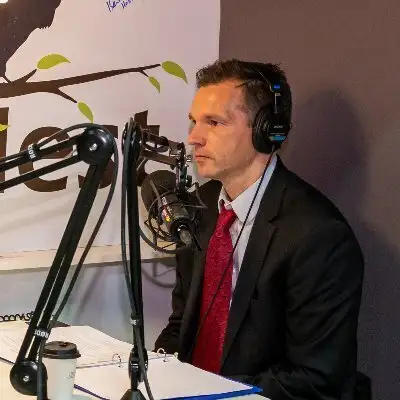
Welcome to From the Crow's Nest. I'm your host, Ken Miller from the Association of Old Crows. As always, it's great to be here with you. In this episode of From the Crow's Nest, I am pleased to have with me friend and colleague, Katie Nazaretova from Forza, D.C. As many of you know, Katie works with AOC to direct our congressional education efforts on Capitol Hill and of course ⁓ help to expand that messaging to our global community through the work through our advocacy work in Washington, D.C.
So with that, Katie, welcome back to From the Crow's Nest. It's great to have you on the show.
speaker-0 (01:22)
Thanks for having me.
speaker-1 (01:24)
All right, so I usually have you on the show a couple of times during the year. I usually around this time in the summer and then later in the fall as an update to kind of help our listeners understand what's going on in Congress, particularly as it pertains to the defense budget process. It's a it's a process as it really starts and runs from really basically February through the end of the year nowadays. We're here in June and Congress is starting to showcase and mark up and pass.
There are individual bills in each chamber in the House and Senate. So I wanted to have you on the show to talk a little bit about where we're at in the process and where you think we're heading, especially as we go into the fall. The number of days that Congress is actually in session through the end of the fiscal year is quickly getting lower in number. So to start off a little bit, wanted to kind of get your summary view of where we are in the process with the House and the Senate and the defense budget.
process as it's played out so far.
speaker-0 (02:22)
Sure. So I can just kind of quickly start with appropriations just because that one's kind of easier to cover because there's less happening. The House Defense Subcommittee. So the Defense Subcommittee on Appropriations marked up their bill earlier in the month. It's a closed markup, so we didn't see what was going on. And then the full committee is slated to take up the defense appropriations bill on June twenty fourth. So we'll get a little more clarity of
what's going on with that then because I believe the full committee appropriations markups are all live. ⁓ so everyone can kind of watch that. And for everything else, it's kind of piecemeal on what the house appropriations has been able to pass, both in committee and out of the house. I believe the at least Mill Convier bill was passed out of the house, if I am correct.
Yeah, so that one passed, but I think also because the appropriations bills in general, the last year's appropriation was so late in being passed, I think that's kind of tied up this year's process so much that it's more than likely that we'll have a CR and we'll see how all of that lands.
speaker-1 (03:40)
Yeah. Now I I want to get to the CR in just a second, but now but in terms of the House, so so the House is marking up around the twenty-fourth of June, the House Appropriate Defense Appropriation, sorry, the House Appropriations Committee will be marking up the defense appropriations bill on around June twenty fourth. Has the Senate Appropriations Committee given any indication of their schedule yet?
speaker-0 (04:03)
Not that I am aware of. They still have yet to release their three two B subcommittee allocations, ⁓ which maps the spending limits for the subcommittees. So that hasn't yet been released. So we'll see.
speaker-1 (04:17)
So,
so getting into our for many of our listeners who who may have not followed us for several years and have heard you on before, I want to get in a little bit of a schoolhouse rock before we get too far into the weeds. Cause you mentioned a few things that I want to make sure that our listeners understand. It's kind of shop talk a little bit. you you mentioned first mentioning the markup, the concept of a markup and what goes into that. And then also this notion of the 302B allocation, because
A lot of people would assume, and rightfully said, the Congress has a lot of leeway to develop bills according to what priorities it wants to fund. However, there are limits placed on the committees to how much they can maneuver in relation to other appropriations bills. I think there's what third is there twelve now, thirteen appropriations bills covering different sectors. Twelve. So they all kind of have to
Align with each other at the top level so that we can maintain some semblance of fiscal responsibility, whatever that looks like in 2026. Don't ask me to define that, but that's the buzzword. So starting off a little bit with just some schoolhouse rock explanation, obviously it there's nuances to everything, but the markup concept goes through subcommittee, then to full committee. Different things are available.
To the public at different times. How does the markup work and what is the role that Congress plays in the markup process?
speaker-0 (05:52)
Sure. So to even step a little bit further than that, so at the beginning of the year, just so we have the whole breadth of issues, at the beginning of the year, the president or the administration submits a budget to Congress, which is basically like a proposal and what the different facets of the administration believe they need to be funded at, which includes the Department of Defense or Department of War.
And they kinda give a budget that says we need X number of funding, we need X changes in policy, and they give that to Congress. Then Congress takes that, the different committees take the take that and kind of see what they believe, what they agree with, what they don't agree with, and then they come up with a chairman's mark or kind of like the initial budget.
or initial policy document in terms of the NDAA. And then the committee of jurisdiction, so now we're talking about appropriations, for example, takes up their portion of the bill. And the people that sit, the members of Congress that sit on that committee have a chance to offer additional amendments. So either a plus up or a plus down or a decrease in funding for
funding items or change in policy and offer that as an amendment during the markup or the consideration of the bill. And then so first the subcommittee does it and then the full committee has the opportunity to do that. And once the bill gets passed out of the full committee, it heads to that particular chamber's floor. So for example, the house takes it up and then the whole house is has the ability to amend the bill as well. So you don't have to be on that specific committee. And then
These bills are so big that once the Senate passes their own version, the House passes their own version, then the kind of heads of the committee are and the leadership of the House or the Senate sit down and look at the two different versions and try to come up to a ⁓ conference or compromise agreement. And at the end of the year, both House and Senate have to
repass that agreement and then the s the president passes or signs that along. So it's a long, drawn out process that happens every year.
speaker-1 (08:16)
Yes. So in the in the markup process, members have the freedom to introduce changes to the bill. ⁓ but there are certain guidelines that they have to follow. And they it seems to like they they fall into a couple of different buckets. Those that are non-controversial and therefore can be grouped together in what they call on-block amendments. You know, so you might have an amendment that's made up of 10 to 15 non-controversial amendments, and the purpose is just to pass by voice vote. Yeah, there's no problem, it's pretty quick.
Then there's some that demand a an a a singular vote to approve or disapprove. And some of that's the more controversial proposals or maybe the more significant proposals in terms of changing dollar amounts or policy. And then I would say that maybe again, correct me if I'm wrong, there's kind of a third that's used more as an advocacy tool in the sense of you can propose it, but then withdraw your intentions not to have a vote or to
Rock the boat in some way, but you do want to raise awareness. And sometimes that amendment process can be a way of giving you some quote unquote floor time to talk about an issue that's important. How does the committee then communicate to members, hey, here's how much leeway we have? Because this year in particular, we had and we'll talk a little bit about the the authorization bill in a second, but we had some proposals in there. And you as we were advocating for those proposals over the spring.
It quickly was apparent that the the tolerance for dramatic and disruptive change not very high in an election year. So clearly certain members and the committees were are like, hey, this is this is how we're going to go about this year. It's going to be very kind of scaled down to what's the most important thing. So how do member how do committees communicate to members? Yes, you have the freedom to to to influence bills, but here's the lanes you have to stay within.
speaker-0 (10:09)
Sure, and I can kinda talk more if you wanna switch to the authorization bill. I can talk better in that term of things just because I worked for a member on the authorizing committee on Hask.
speaker-1 (10:21)
So keeping within the authorization, so the appropriations, and I I do want to go back and talk a little bit at some point about the CR and funding in the new fiscal year. The authorization process for the defense for military spending is an annual process, depending on the issue area. Different agencies, some are multi-year authorizations, two year or five year authorizations, some somehow aren't reauthorized the way that they should.
I think, you know, like foreign aid and certain things aren't even authorized on an annual basis. But with defense, we've had a defense authorization bill every year now since the sixties, fifties, ⁓ long time. So how does the authorization process align with the appropriations and where does that bill stand in Congress today?
speaker-0 (11:15)
Yeah, so I think my colleague Madison kind of explains it the best because if you start talking shop with this, it kind of gets so convoluted that it gets confusing. But authorization versus appropriation, if you think of your kid and you're asking mom and dad to go to the movies, at first you ask, you go to dad and you ask dad, can I go to the movies? And he says, yes, but ask your mom to give you the money.
And so then you go to mom and you ask, Hey, mom, can I have the money to go to the movies? And she gives you the money. So the dad is the authorization. So he gives you permission. He sets the policy. He says it's okay. But mom is the one that gives you, which is the appropriation that gives you the money to actually be able to go. So that's kind of the very elementary way of understanding the difference. And in kind of more, you know, highbrow.
Speak of the difference. The authorization is essentially the policy guidance, the policy document, and it authorizes amounts for these different new programs or existing programs. It creates different, you know, subdivisions within like new programs and all that sort of stuff. Whereas appropriations generally is the document that provides the money. and where do they send? ⁓ and so
The NDAA has been knock on wood passed every year for a while, which in this day and age is very unique to the Congress. It's one of the remaining bills that still passes annually, which kind of makes it a Christmas tree of issues at the end of the year. But each committee, the Senate Armed Services and the House Armed Services, generally sticks to a pretty solid schedule. So outside
People such as us, such as the AOC, are able to send proposals to specific Congress people that sit on the committee, whether they are plus ups or policy changes around February. Then from about February to like end of May, both committees.
Sit down and write their bills. The members figure out their priorities, figure out what outside pro priorities they want to take on and submit that to the committee. And the committee writes the bill. Then this year, the House Armed Services marked up, so considered their NDAA, which is always public. So we watched that on June 4th. And so they begin at 10 a.m. This year they ended at a very early 11:30.
PM, which is very early. My first NDAA ended the next day at seven in the morning. So just
speaker-1 (14:07)
It's almost a it's almost a badge of honor. I remember when we were on Armed Service, I there were a couple that would end around three or four in the morning. And it was almost this badge of honor, even though like a lot there was a lot of downtime in that 18 hours of markup, it was still it was something that you circled in your calendar months in advance because you realized that the days before and after are just not going to give you any sort of freedom outside of that markup.
speaker-0 (14:32)
Right, right. And so yeah, the house marked up their bill. ⁓ and then the rules committee, which is the full house kind of ruling committee, announced deadlines for amendments for the whole of the house this Thursday, the eighteenth, and with the plan to potentially go on consideration for full floor on the twenty ninth, the week of the twenty-ninth. So
We'll see. The House has been pretty fluid in how they consider things and when they put things on the calendar and take them off the calendar. So we'll see. But as of now, the plan is for the House to consider that bill on that last week of June. And then the Senate is a little bit different because they mark up in a closed setting. So no one aside from the committee has purview of what goes on. ⁓ we don't it's not televised or anything like that.
That happened last Thursday, so the eleventh, and then the bill passed out of the committee and they released a top line summary document. So we haven't seen the full bill on that one yet. And then in theory, they haven't set a date for their consideration on the Senate floor yet. But in theory, we've heard that they s they want to do that this month as well. So we'll see.
speaker-1 (15:49)
So I wanna talk a little bit about the authorization process and and no disrespect to appropriators, but you know, we talk about the House and Senate both doing their version of the appropriations bills. But at the end of the day, especially in this year, we know I haven't heard any any sort of political will to even complete any appropriations before the end of the fiscal year, which is September thirtieth. So I think it's a at least a pretty commonly held understanding that we're gonna go into CR continuing resolutions.
And probably an omnibus, if not probably by December. I mean, they might try to wrap up the business of this Congress because of the election by September, so that the new Congress comes in in January with a clean slate. But in the past, the previous Congress has basically punted to the new Congress through a long term CR in March or April, and that still might happen. So I don't want to focus too much on defense
Appropriations because we know that there's just going to be a CR at the end in in September carrying us for a little bit longer. But the authorization bill, particularly for EW for electromagnetic spectrum operations and EW is a huge bill for us because that's where the policy goes. And so the the bill that will be coming to the House floor, you mentioned next week, was it? ⁓
speaker-0 (17:10)
The last week. So the week of the twenty ninth. Mm-hmm.
speaker-1 (17:13)
Week of the 29th, the bill authorizes $1.15 trillion in Department of Defense and related agency funding, which would bring the total spending for the fiscal year 27 to about 4.5% of GDP or about 1.5 trillion because of reconciliation. I promised, I promise I promise to our listeners we will not talk about reconciliation in this episode because that's just a whole other
Aspect to this process that is even more convoluted than the authorization. But 1.5 trillion roughly in 2027 for defense, definitely a high watermark. A lot of provisions in in the bill that cover EMSO, cyber, ⁓ global security as it pertains to regions that really are driving the evolution of military technology, Pacific, Eastern Europe. We'll get into that a little bit, but we had a major success in
the authorization process where one of the colleagues on the EW working group, representative Mark Mesmer from Indiana, offered a report language amendment in support of reviewing the strategy and the EMSO strategy implementation and the need to reform governance for EMSO in line with a combat support agency or other alternative that the DOD
believes is the right path. So this was all kind of growing out of our proposal to establish a new centralized combat support agency for EMSO. And this is kind of the next step. And so the amendment that was passed was direct report language. And I'll have you, Katie, explain what that means and how it what it means and how it takes effect. But it was direct report language that called for review of the implementation of the 2020 EMS superiority strategy, as well as
An analysis of alternatives for various governance structural changes that need to take place in order to put us in the best footing moving forward. So with that as a background, Katie, talk to us a little bit about the language that was offered by Congressman Mesmer and what does it mean for it to be direct report language versus a legislative provision in the bill.
speaker-0 (19:30)
Yeah, so in short, the report language cites concern with how with the government structures for EMSO that exist within the DOD and asks for a review on that and directly cites combat support agency as an example of a solution and like you said, a review of what's going on of the EMS ⁓ strategy and all that sort of stuff. The difference with
directive report language or report language versus bill language is bill language is specific legislative text and it's a lot harder to have that passed because legislative text or bill text has to be agreed upon in the committee, in the house. And then once the House and the Senate bill conference, that bill language is conferenced. And so both
of the Senate and the House have to agree to that to eventually have it passed. So that's like there's a lot more opportunity for it to ⁓ get taken out of the bill by people that oppose it or amend it in a way that we don't want it. Report language literally is a directive to the Pentagon to come up with a written response to the questions that are asked in this report language blurb to the Congress.
with clear guidelines that helps inform next steps, helps inform bill language in the future for future NDAAs. And the difference with the report language, which is great for us, is that this language goes into effect as soon as the committee passes the bill. So it doesn't even have to get taken up by the House as this language essentially went to the Pentagon at the beginning of the month.
So they in theory can start working on it and doing all that sort of stuff. As someone who worked, you know, for a member on committee and had to deal with the report language and all of that sort of stuff. The biggest downside to the report language is that I believe the Pentagon is generally late on a lot of reports. And sometimes they fall to the wayside. So it also after this, it's not kind of like,
We send in, they're gonna do a great job, which hopefully I mean they will. But like it takes still a lot of congressional kind of like pinging and diligence to, you know, talk to them and be like, hey, like just flagging this was submitted, like we are keeping track of this. There's a specific date in there, which I believe is March first, that this is due and like that, like we needed by then and all of that.
speaker-1 (22:24)
And and and that'll be something that AOC will have to work with the committee on following this process or into next year to say, hey, we know March 1st deadline is coming up. What's the status of it? Because generally DOD would update it at various times with the with the provisions. I what what's interesting though with this process is I think a lot of times people think, well, direct report language is a consolation prize to legislative. And that's not really the case because
When you look at direct report language, you're basically keeping the issue within the committee until it is ripe enough for the committee to take a stand. Because once it becomes legislative language, you need 40 plus votes in the committee to get it passed. I don't know what the what I think there's what, 70 members on the roughly around seventy in the Hask. I've always so you need you need about 40 members to support it in the committee. Then you need
A simple majority in the House. And then you have to get support in the Senate, because if it's not in the Senate bill, it could get stripped in the House. And so you need support in the Senate. And then you need support in the conference. And the amount of weight on getting legislative provisions passed can bog these proposals down. So this report language kind of keeps this issue in with the relevant committee until it becomes maybe a little bit more ripe for the committee to say, yeah, this is what we need. We have a clarity.
In we have clarity in terms of recommendation. We understand the consequences. We understand the the next steps. We're not just going to come up with a proposal, a reform proposal, push it out to the full Congress, and then send it to the president for signature without doing our due diligence first. And so this is kind of the next step in the process. And we will continue to hopefully we want to see the CSA proposal become legislative text at some point, whether that's in twenty
Whether that's next year or the year after, will depend a little bit upon how DOD responds to this report language. So this is kind of the next important step, but it's really a it's significant in that it gives us like you're walking up a stairway. You're making progress with each step. And with each step, you're closer to to reaching your goal versus you know turning back around and giving up. So we're pleased that this is moving forward. But from a EW.
advocacy standpoint on Capitol Hill, how important is it from the work that we've done over the several months on this? How important is it for members of Congress to have proposals like the Combat Support Agency to help them understand the nuances to this very niche topic area?
speaker-0 (25:09)
Yeah. So I mean, I think it's great to continue coming going to the hill and, you know, like talking about the importance of these issues because they are so niche and there's so much happening, especially nowadays in the world of defense and in general, that it can kind of get lost, even though EW has been huge in the last, you know, few conflicts. But it usually is called something else or has specific names. So people just don't realize it.
And the other thing is with Representative Bacon leaving, who has been a huge voice in EW and on the EW working group. This is also our opportunity to kind of grow the base of members that are comfortable with speaking on EW, with staff that are comfortable advocating for EW and pushing these big issues, which may take a little bit longer than it would otherwise.
speaker-1 (26:05)
So the House Armed Services Committee passed out its bill a couple of weeks ago. It's it'll be on the House floor at the end of the month. There are a number of different provisions. We don't need to go through all of them, but there are a few that I think are worthy to highlight. And for our listeners, you can go to Crows.org slash advocacy dash blog to learn more about the provisions. You know, with Katie, with Forza's help, you know, we put together pr really
detailed summary of related provisions in the bill that are useful to anybody who wants to kind of know where where Congress is heading on various programs. So you can go to the website to to look at that. But just in terms of general provisions in there, what are some of the things that caught your attention in terms of where Congress's priorities are in twenty twenty seven?
speaker-0 (26:56)
Specifically on EW related stuff. There's a good amount of stuff on like jamming. So like GPS jamming. And I know that's come up a lot in committee hearings as well of members bringing that up. There's also additional funding for compass call, once again, or I believe three additional aircraft. So that's still a program that is very supported in Congress. And then there's a whole bunch of different training.
provisions, be it on spectrum training or ⁓ Indopacum training related things, where members are seeing the importance of putting ⁓ attention to getting folks trained up a lot in all of these new and emerging technologies. And that's something we've talked a lot both here and in our interactions with the Hill of how important it is to get folks literate in, you know, MSO. So
speaker-1 (27:54)
So to kind of wrap up our time here, we will obviously as we get closer to the end of the the calendar year in December following the general election in November, we'll have an idea of what the next Congress is going to look like. And I that will kind of break free a lot of negotiations in the conference in in the in that conference period where House and Senate have to meet. That's probably when we'll get the final NDAA bill out. Hopefully we'll get an omnibus or some other sort of long-term CR.
But looking at the next few months, Congress is not in session nearly as much as it has been in years past. I was looking at the calendar, there's only a couple weeks in July. Usually it's four solid weeks of work in July, only a couple. Senate's a little has a little bit more, but we're getting to the point where there's only like maybe 20 to plus day legislative days left before the end of the fiscal year. Talk to us a little bit about the challenge of advocacy.
In years like this, where you have an election and what does it mean for the EW working group? Because you're on the hill all the time helping us drum up support for the working group and other members who have an interest in this field. It makes it a little bit harder to move major initiatives on election years. So talk to us a little bit about what you expect to see over the next few months from Congress.
speaker-0 (29:15)
Yeah, so I mean it is an election year, like you said. And so the biggest difference, I mean, they're generally out in August. They're back in their districts, they're back, you know, like doing things and that happens every year. August is generally called recess, but they're not not working. They're just back in their districts and staff are able to actually catch up on their emails for the first time they
speaker-1 (29:37)
But I did find out in August this really important work related event in August. The Indy car is actually we were talking about this. It's it's August twenty first, I think, is is the end of August. So that's gonna be a big thing that is gonna have to grip the attention of Washington D C here in in the summer.
speaker-0 (29:54)
Yeah, there you go. Yeah. Yeah. And then this year, and this happens generally in election years as well. October is also a ⁓ a recess month, essentially. So they go and by them I mean the members of Congress go back to their districts and they do a whole bunch of campaign events or events to ⁓ show their attention to businesses or work in their districts just to kind of drum up a
Here I am, I'm doing stuff here when we're not just in DC, which is all great. But for legislative things, and especially big and difficult legislative things, that makes it a lot harder for them to pass because it's a lot harder for leadership to keep members in DC when they want to be in their districts showing and drawing drumming up support, especially this year when it is.
a very probable chance that the House and maybe even the Senate flip. A lot of the members in these difficult purple districts are really gonna want to be at home, especially since with not being able to really pass a ton of different things, it makes it harder for members to point to legislative things that they can run on. So ⁓ that's a part
all part of it as well. And yeah, like you said, like proposals like the CSA, it's a little bit harder because it doesn't have a very explicit direct tie to their districts. So it's harder to drum up new support for something in a year like this.
speaker-1 (31:32)
So so, you know, the challenge for AOC of course is to continue the momentum that we're building up over the summer, but then also with an eye of raising awareness with the new Congress coming in. ⁓ obviously there'll be some some returning members of the EW working group that are will pick up the the momentum and and run with it in the next year. Members like Congressman Mesmer, Congresswoman Chrissy Houlihan, Austin Scott and ⁓ McGuire from Virginia, all
really supportive of our issues. However, we are losing a major champion in in Congressman Don Bacon, who's retiring. So what do you see as opportunities for AOC moving forward this year and into next year to cultivate the really the next generation of leaders in Congress, both at the member and staff level, to advance advocacy for MSO amongst our defense leaders? Yeah.
speaker-0 (32:25)
It's a pretty big question. ⁓ I mean, I think continuing education of members and of staff of what EW is, why it's important, especially in the different conflicts in the world. And also honestly, like in times of peace as well, which hopefully we will get to in the near future, of why it's important to continue sustaining and advancing EW to maintain a
an edge for the United States, continuing that education and tying it to member interests. And as well, I think a huge thing that is always helpful is if there's if we figure out or if the AOC figures out a specific district tie to be able to go to members and be like, hey, like all of this is happening in your district. Here's why you should be interested. Here's how many people it affects and all of that sort of stuff. I mean, that's always huge as well. But I think that continued
education and pr and offering support to members when these issues come up is always appreciated by staff as well.
speaker-1 (33:30)
Well, Katie, thank you so much for taking time to join me here on From the Crozness. Also, just thank you for your your day-to-day work on Capitol Hill in support of MSO. Your work is greatly appreciated and looking forward to having you back here in the fall once we have a little bit more clarity on in terms of where we're heading towards. Fingers crossed, we have a lot of a lot to look forward to ⁓ from a process standpoint. So our listeners who are interested in tracking
All that happens in the defense budget process, the provisions, the funding levels, the legislative changes can go to crows.org forward slash advocacy dash blog or crows.org slash CSA. We'll be putting information on both blog pages that pertain to either the combat support agency or the general NDAA and defense appropriations bill. But you can get a lot more information on that.
Of course, obviously we always look forward to any questions that you may have. Feel free to contact us with any questions you have following this discussion. So with that, Katie, thank you so much for joining me from the Crows Nest. It's great to have you on the show. That will conclude this episode of From The Crow's Nest. I'd like to thank my guest, Katie Nazaretova, for joining me here to discuss the defense budget process. As always, please take a moment to review, share, and subscribe to our podcast. We always enjoy hearing from our listeners. So please take a moment to let us know how we're doing.
speaker-0 (34:32)
Yeah, thanks for having me.
speaker-1 (34:50)
That's it for today. Thanks for listening.
Let's stop it though.