Subscribe
Share
Share
Embed
Celebrate the joy of reading with the Book Love Foundation podcast. This is a show filled with information and inspiration from teachers and leaders across grade levels, states, and school systems. We interviewed authors and educators for the first five years and now turn our attention to leaders in public, private, and charter schools. Find out more at booklovefoundation.org or join our book-love-community.mn.co of 2500 educators from 28 countries. We sustain joy together, one kid and one book at a time.
Penny Kittle 00:00
TheB Love Foundation podcast is produced by the teacher learning sessions, connecting teachers with ideas, experts and each other.
Penny Kittle 00:16
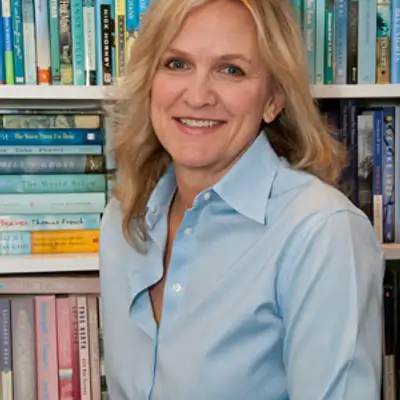
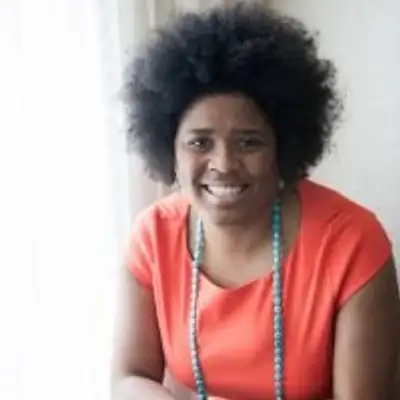
Welcome to the Book Love Foundation winter special podcast series where we get to listen to amazing educators talk about the books that they want to recommend to you. Today, I'm talking with Aeriale Johnson who is a kindergarten teacher in San Jose, California, and you may know her as one of the dynamic Heineman fellows. Heinemann has a blog series that has included many of their voices, and my favorite is to Tiana with Love, which Aeriale wrote to kind of celebrate this relationship she formed with Tiana Silvas, who is on the podcast tomorrow. And what these people, what these women, these dynamic professionals, are accomplishing in their voice and their expressions of love and care for all kids has been absolutely inspiring to me. So if you're not following all of them on Twitter, you'll have all those handles in today's show notes. But I want you to know that Aeriale taught in Alaska for 10 years, and she has such a deep understanding of literature. I know you are going to love this opportunity to learn from her happy listening.
Aeriale Johnson 01:30
I teach kindergarten at Washington Elementary School in San Jose, California.
Penny Kittle 01:36
You have, as I've been following you on Twitter, so many interesting things to say about education, and I think that part of the narrative that you're changing for so many of us is what we've accepted as the narrative about teaching and about our role as teachers. And you're you're so bold. I love that about you.
Aeriale Johnson 01:56
You know, I didn't really set out to be bold. My actually, after our recent podcast, my principal listened to it, and she said, Oh my goodness, thank you for being so brave. And I said, Stephanie, I don't actually feel like I was being brave. I feel like I was being the teacher that I needed my teachers to be for me when I was a child. And if standing up for children is bravery, then I guess I'll accept that that role, if it's bold, I guess I'll accept that description as well. But I really just want to stand up for children and stand up for what I believe is right for children. And I guess a lot a lot of that is changing systems, right?
Penny Kittle 02:42
Absolutely, but it's also inspiring a new generation of young professionals to choose teaching and to feel like they will find a home and a community as a person of color. That's the thing that I see happening with your work, is that you're inviting people to become part of this journey with you.
Aeriale Johnson 03:01
I think that it's really important. I think my experience as a Heineman fellow has taught me a lot. I actually told Vicki Boyd in our last meeting that I have to be completely honest and say but I was dead asleep as as a teacher of color, obviously, I knew that I was a teacher, and I knew that I was of color, and I knew that I taught students who were of color, and that was a deliberate choice that I've made for much of my career. But I didn't really identify as a teacher of color, and everything that that means, until I had the opportunity to be in the company of other teachers of color who thought like me, and that's what being a Heineman fellow has done for me. I remember writing in my application that I know that I knew nothing, right? That's the Socratic paradox, right? I know I know that I know absolutely nothing, and I know that right now, I know that thing, and I learn a whole whole lot through this experience, and when I'm done, I'll have to start all over again, and I'll still know nothing. And that has proven over and over again through this fellow's experience to be absolutely true, and I think that that's how we have to approach teaching. And I am so glad to have had the opportunity and the experience to use this platform to bring other teachers of color along with me, to bring authors of color, to bring authors who write about communities of color along with me, while I have this incredible platform for which I am incredibly grateful and very often in disbelief, I even have this opportunity. So thank you for allowing me to speak about books today. Authors really matter to me.
Aeriale Johnson 04:51
In the first chapter of my current read, Amy Tan writes, When I set out to write a story, I'm feeling my way through a question, often a moral one. And attempting to find a way to capture all its facets and conundrums. I don't want an absolute answer. I'm trying to put down what feels true. Tan is a longtime favorite of mine who had me at the Joy Luck Club and won my eternal devotion when I had a conversation with her while she autographed my copy of the book at NCTE many moons ago. That inspired me to write a poem about my own mother's scars, so to speak. She went through seven bins of memorabilia to unearth her family's truths and render her glorious memoir where the past begins. I haven't yet finished reading it, but Tan's ability to weave together historical, personal and universal truths convey the complexity of being human through her characters, in this case, those in her own life, and write in lyrical and compelling ways will no doubt make her newest work, one I will return to over and over again. I'm especially enjoying the way she explores how she formed her identity at the intersection of the two very distinct identities of her mother and father, what Terry Gross described as Tan's dual brain household. Like Tan, I write to feel my way through questions. I approach my reading life in much the same way, with questions and an expectation to wrestle with ideas. This time last year, my 92 year old grandmother had just passed away, and I held books like When Breath Becomes Air and mortality very close. This year, I've been thinking a lot about my identity and what happens at the intersection of it with the identities of other human beings, those within and without my immediate circle. I've been wondering about the stories we each carry, including those of which we're keenly aware and those that seem to have become a part of our DNA. Our nation's political climate and my personal professional experiences have led me to these questions, which have led me to new books, like Where the PastBbegins, but they have also inspired me to reread two of my favorite YA authors, the incomparable Debbie Dahl Edwardson and Kathleen Lagoon.
Penny Kittle 07:05
One of the things the Book Love Foundation does is get people books, but the books that they choose are so dependent on knowing books. You know, we try to cultivate a list that just gets bigger and bigger. And when Kim Parker got a library, I said, I need your help. We need more books that we don't have, and she recommended so many titles that ended up on our list. And I'm hoping that you'll do that for us as well, because this is the first year we're going to be able to give libraries to elementary teachers. We have two benefactors who are helping us with that, and I want to choose have a, you know, really diverse, full list of titles that teachers will learn from and hand to their students, and I hope you'd be a part of helping us create that list.
Aeriale Johnson 07:47
I would absolutely love to do that. I think that that is very exciting. I know even the school district that I work in is having a bit of a struggle with finding books that provide adequate representation of the children that we teach. And I think the more exposure that we can get for your list, and some of the work that Donalyn is doing, the more exposure we can give books that are written by authors of color and that represent children of color, the better off our children and ultimately, all of us are going to be because identity is such a critical part of becoming a human being and being successful in the world. When you don't have a solid foundation, a solid, you know, rock of of identity that you really struggle. And I know that from my personal experience, and from teaching children, like I said, who live in a situation where their parents, or they themselves, continue to live with mindset, or what we kind of call colonized and what that decolonization process looks like, and the critical role that reading plays in it for all of us is really important to me.
Penny Kittle 09:07
Yes, to me as well. I think that what I often see happen with my kids is reading a book allows you to enter an experience, and they aren't having enough opportunities to enter experiences that are very far from where they are. And I think that as much as I, over the years, have built this stories from the world, which are authors that come from all over the world, I'm also much more aware of the need to read books that transport my kids in ordinary places like High School in Houston, but seen through the eyes of a kid of color, and I think that that has changed what my kids are seeing.
Aeriale Johnson 09:49
Absolutely, and you know, like I said, your children will probably, well, they probably, they will have some type of relationship with power. And, I think that that exposure to different ways of seeing the world will definitely impact the way that they use that power. I know, you know, personally, yes, I'm an African American woman, but I also have a lot of privilege, and living in rural Alaska, teaching there for over a decade taught me a lot about what I needed to do with that privilege and how I needed to use it to be an ally, you know, to other communities of color, not just kind of take care of myself. So I think that that's really critical. And you know, another thing that I have learned through teaching Native Alaskans and through my own personal experience of kind of becoming woke, so to speak, is that it's really, really important that the kids see themselves, but it's also important that they have a window to see people who are not them and may not necessarily be like them, but have similar experiences. Because colonization, no matter where it has taken place or with what people, kind of works in this sort of systematic way and impacts people and kind of a systematic way and wanted the things that I realized I taught high school English while I was in rural Alaska for quite a bit, and I had a young man in my class who was really, really struggling with me, trying to teach him to read and to write, and, you know, asking him to choose books and that sort of thing. And actually, his entire class was composed of, or comprised of boys. I think maybe there were one or two girls in there. And I don't know why I decided this, but I just decided that we needed to read things fall apart. And he that young man saw himself and things fall apart. He saw himself in a conqueror. He was him. He may still be him. I don't know. I haven't had contact with him in a while, but that shifted everything for him, because there's something about owning things that have happened to your people that is really, really uncomfortable and it really hurts, right? But if you see the same thing happening to someone else, you can kind of experience it from a distance. You still have the experience. Do you understand? Yeah, you have experience, but you see it from a from a very distant perspective. And he could kind of process a lot of the things that he had internalized as an Inupiaq person through, you know, this Nigerian authors writing, and we had a lot of really powerful conversations. And eventually we did make those connections, and he was able to to process the things that had happened to him personally, and that continued to happen, quite frankly, in native communities. But we had to have a kind of a soft entry point. Do you know what I mean, yeah, that was, that was it for him. And it was just incredibly powerful. I mean, he was, he was a tough nut to crack. He would walk in and say, I don't want to learn how to read the white man's book. Do the white man's writing today. Like that was his rally cry. You know, every day he tried, he tried to get his friends to, you know, kind of come along with him, and that really, really things fall apart. Was was a turning point for him, and I made some headway, and we ended up having a great relationship. So I, while I obviously think that yes, seeing ourselves is so incredibly important. Think it's also important for teachers to realize, teachers who don't experience, you know, those sorts of things, to realize how incredibly difficult it is to process a lot of that, and how you may find other ways in.
Penny Kittle 14:14
Yeah, and you know, it's just so powerful to me that a kid comes in and says, I don't want to read this book, this white man's book. And, you know, part of what I wanted to happen with the foundation is we could give teachers enough books that you could always say, what about this one? What about this one? And that we would recognize that when kids tell us they can't read a particular book, maybe not at that time, that we offer them choices and ways to understand their own world through the choices that they make in reading. Because if we keep too tight of a control over what kids read, which has always been my frustration as a high school English teacher, we miss opportunities like you had with him.
Aeriale Johnson 14:56
Absolutely, I mean, in my own reading life, I would say, you know, I had to read a lot of the canon, and I just I was a passionate reader as a child, and then through high school and college, I was kind of a miserable reader. I read what was forced upon me, and then I kind of rediscovered my reading line in my early 20s, and it started with Maya Angelou, right? And I haven't stopped since then, you know, I continue to read.
Penny Kittle 15:24
So it's powerful. It's what you're doing.
Aeriale Johnson 15:29
I was a good reader, right? I was a good reader. I scored well on test, and I didn't want to read because, you know, I just wasn't into the scarlet letter or several of those books. So it's funny, some of them have become like favorites since then, but you couldn't appreciate them as a teenager.
Aeriale Johnson 15:55
So Mark Twain wrote, travel is fatal to prejudice, bigotry and narrow mindedness, and many of our people need it sorely on these accounts. Broad, wholesome, terrible views of men and things cannot be acquired by vegetating in one little corner of the earth all of one's lifetime. We can't all hop on the requisite five planes it took to transport me from Northwest Florida to my home for more than a decade above the Arctic Circle in northern Alaska, to learn the lessons that the Inupiaq, which literally means the real people, and that's no misnomer, have to teach us. But Debbie, a decades long resident of Mutavik, the city whose name was recently changed back to its original native name after years of bearing the colonial name, Barrow, provides us with an opportunity to learn through her books. She says of her process, fiction also comes with an irresistible invitation to re experience history and the freedom to reimagine its possibilities, To Travel The roads not taken. It's really only a different way of getting at the truth. The collective story of the Inupiaq people is a tale of resilience, resistance, reckoning and reconciliation, and My Name Is Not Easy, which was a National Book Award finalist in 2011 weave together, a fictional account of the horrendous history of parochial boarding school experience many Inupiaq and other native Alaskan and even a few white children have from the perspectives of several young narrators. The book grabs you in the first chapter and never lets you go, not ever. September 5, 1960 when I go off to Sacred Heart School, they're going to call me Luke because my Inupiaq name is too hard. Nobody has to tell me this. I already know. I already know. Because when teachers try to say our real names, the sounds always get caught in their throats, sometimes like crackers. That's how it was in kindergarten and in first, second and third grade, and that's how it's going to be at boarding school, too. Teachers only know how to say easy names, like my brother, Bunnus, my name is not easy. My name is hard, like ocean ice grinding at the shore, or wind pounding the tundra, or sun so bright on the snow it burns your eyes. My name is, all of us huddled up here together waiting to hear the sound of that plane that's going to take us away, me and my brothers, and to end the chapter, Debbie continues. Then the plane levels out and sweeps across the tundra, rising slowly up toward the sliver of moon that still hangs in the morning sky. For a fraction of a second, it feels like the earth below is just split wide open and swallowed up everything I ever knew, like the Earth itself is slipping over and falling away like it did a long time ago. Like there's a big scar down there on the tundra a jagged place where the edges will never, ever line up smooth again, not ever. As someone who taught where Debbie lives for many years, I could say with absolute confidence that not ever could not be more true. Knowing how the Inupiaq people were colonized by Westerners, and studying how the process of decolonization works, not only informed my teaching during my tenure there, but it continues to inform the way I teach and live in Eden, California. Debbie Reese, author of American Indians and children's literature, who was a friend and colleague of Debbie Edwardson, said in an interview within CTE, as educators, we are preparing students to live in an increasingly diverse world. If we don't give them books by Native writers, they will grow up ignorant of our points of view on all manner of subjects. From that space of ignorance, what will they do? Will they be the congressional representative who votes to cut educational funding for federally recognized tribes? And I Aeriale would ask, will they be the senator who votes to pass a bill that's supposed to be about taxes that includes a measure to open the coastal plain of the Arctic National Wildlife Refuge, a place in Edwardson's borough, where I also lived and taught for several years to drilling. It's important to note that though Edwardson married into the culture and raised her children as Inupiaq. She is not herself native, but she has been immersed for decades, and is a highly regarded member of the community who humbly tell stories with authenticity and respect. Books about Inupiaq life by Edwardson, like My Name Is Not Easy, Blessing Speed, and Whale Snow should be read by all of us.
Penny Kittle 20:22
Well, I do think that there's something important to think about with resistance, and that, you know, adolescents are resistant in a lot of ways because they're becoming young adults, and it requires this kind of, you know, metamorphosis. But I also think that we have not had enough respect for the needs of individual kids in our classrooms when we've controlled everything they do, and you're not respecting that student's right to really think deeply about, you know, like a big idea, but through a lens that they choose.
Aeriale Johnson 20:53
Right, Absolutely, I think it all comes down to kid watching. Yeah, right, what we've known for years and years now. What yet I told us from the very beginning before my career even, but yeah, just how important kid watching is? I know I taught middle school at the very beginning of my career, and then a few years ago, I was kind of thrown into a middle school situation. I was a literacy specialist for our school district. And one of our teachers had a family emergency, and she ended up leaving for an entire quarter, so I was forced to teach. I mean, I willingly accepted the job, of course, but I was voluntold that I had to teach eighth grade English for a quarter, and I thought, oh, gosh, middle schoolers, middle schoolers really, you know, like, can I? Can I survive this? Because I, when I first taught middle school and I was 21 years old, I wasn't surviving that very well, but I found that everything that I had learned about teaching young children applied to older children, right to look at the human being, realize where they are in their development, and accept them right there, where they are, and move from there. And you know, teaching that experience, teaching eighth graders, teaching adolescence, became really about using, like you said, that stage of life where that they're in, where they're against everything, you know, they're pushing back, they're forming their own identity, and they really try to antagonize a lot of things. And I use that, you know, yeah, the same way that you use the excitement that a kindergartener has about learning, I used the fact that they were forming their own identity, and Debbie doll, edwardson's book, my name is not easy, as one of the ones that I really used a lot. Of course, it was very appropriate for that particular setting, because those were the children, you know, yeah, that I was teaching, right? Yeah. I mean, it was a perfect match, but also it was about identity. And, you know, learning about point of view as a reader by thinking about identity, Tricia has done a lot of work with that during the second year of the fellowship, and it's just really powerful work when you actually take the time to explicitly teach children what kinds of lenses they have due to their place in the world, and the way, you know, the way that they're thinking, the way that that causes them to perceive literature absolutely and nonfiction as well.
Penny Kittle 23:36
So I love that. You know, we did a project this fall, Kelly Gallagher and I did with a college a group of college students at Miami University, and we had them form book clubs around issues of equity, and we had this wide range of choices, and then we had them interact on Flipgrid. And one of the powers of that experience for me was watching my students interact with Kelly's students in LA over issues that my students knew very little about, and they thought they knew what it meant to be poor or what it means to live with police brutality, and all of a sudden they were having conversations in my room that were completely different than we'd had before we started reading. You know, I was giving them poetry. I was giving them things to bounce their thinking off of. And it wasn't moving very much, but listening to other kids respond to the books they were reading like Just Mercy, and there are no children here and evicted, and the hate you give and All American Boys was just it was like the tipping point for my kids, the boys who read the refugee just started seeing current events differently. And I think that's the power that I am sure Tricia will inform me of, because her work is so powerful already. But that idea, that literature, we come to literature already formed, and that literature has the ability. Need to transform us, break us out of who we are through these experiences that we get to live in.
Aeriale Johnson 25:08
Absolutely and I think the the idea that those two groups of students were interacting was one of the more critical components of the work that you did, right? I feel like that, that human interaction is what gives us the compassion that we need. We've talked a lot about this as well, like the differences between empathy and compassion, and how compassion, you know to actually suffer with, is what we need to move toward, and you you might be moved a little through your reading, particularly as an adult, but as a teenager, I really think it's important to to build those relationships, and I applaud you and Kelly for doing that. I think that's probably incredibly powerful for both sides.
Penny Kittle 25:58
Oh, and for us as their teachers and the students at Miami, of course, are students in education, and we started this semester by discovering that none of them had ever had choice in their reading in high school. Had never been in a book club. So we were kind of determined to not only connect our kids to college students, but to say, in teacher education, how are we approaching issues of equity, for example, you can't all read the same book all the time, or you never reach enough different experiences and don't have those lively blended conversations in your classroom.
Aeriale Johnson 26:34
Right, absolutely, absolutely. My one of my dearest friends is from New York City, and then he transplanted himself to rural Alaska, and you know, there, there were a lot of different personalities there, and he used to always talk about how he thought that he understood diversity, because he was from New York City, and all of his friends were different than he was, but it was just, it was a surface level physical kind of diversity. Yes, you know, you have black friends and you have Filipino friends and whatever. But to actually have friends who he's we all thought the same, you know. So to actually befriend people who think differently than you do, you know, changes everything. I mean, my personal relationship with Him changed me forever, and I think vice versa. So, you know, I we need each other. We all need each other. We have to be be allies for one another. We have to build one another up. And when we have the opportunity to have a platform where we can bring others along with us, we absolutely have to do that as well. So kecklin mcgoon, Debbie Edwardson, contemporary at the Vermont College of Fine Arts, where they both earned an MFA also releases what Maya Angelou called the agony of bearing an untold story inside you by writing to answer questions, a self described social justice writer, kekla told the brown bookshelf that she wrote her debut novel and my personal favorite of her many works, the rock and the river, upon having her sense of self called into question as she learned more about the Black Panthers in her early 20s, as a biracial woman herself, she was acutely aware of the civil rights movement and always believed that she would have been marching with Dr King, serving as an advocate of non violence. But when she learned about all the good the Black Panthers did to serve their communities, she was sent to a tailspin that became the novel that won the Coretta, Scott King, John Steptoe award for new talent in 2010 the entire story, but especially the final words of the rock and river will resonate with me forever, as a person who often finds herself at the intersection of multiple identities, but I knew I could never be like him stick. Had an energy, a charisma that I would never have, nor could I be like father, so steady, so sure of his ways for so long now, I felt torn between their worlds so different and yet so much the same all this time, I thought stick was the river, but he was a rock in his own way, too. The river moves, but it follows a path. When it tires of one journey, it rubs through some rock to forge a new way hard work. But that's its nature. Standing in this room, I knew there were no promises ahead, no roadmap I couldn't follow anymore. I was the river. I was the one who would turn the corner and see what tomorrow held in store. Kekla is a prolific writer and a good one. She writes deliberately and with conviction. Her novel, how it went down, was a 2015 Coretta Scott King honor book that deserves to sit side by side with Angie Thomas's the hate you give in 2015 she also published X, a novel an obvious outcome of her insatiable curiosity. See kekla co authored the book about the early years of the Civil Rights icons, life with ilyasa, Shabazz Malcolm X's daughter X, a novel which Matt de la pena critiqued as having a satisfying complexity and the New York Times was long listed for the National Book Award. Really, keckler writes so much I could talk about her books forever. I imagine she's in a coffee shop writing right now. Ketlin mcgoon, look her up, people, the works of these women, Amy Tan, Debbie doll, Edwardson and ketlin mcgoon resonate with me because they are writing books that matter to all of us as they write to try to answer important questions, to put down what feels true, they are answering mine, and I believe, as I heard Manny madrana, the Harvard student who recently cracked the Incan Kipu code, describe it, they are reversing incorrect narratives. Do yourself a favor this winter, meet these brilliant women and authors through their writing and allow your perspective to bend, if not break, by allowing your paradigm and identity to intersect with theirs and their characters. Generate your own questions and seek to answer them in a way that captures all their facets and conundrums. Then share their work and yours with your students, asking them to do the same. Invite them to wrestle our students will, after all, ultimately become adults who have some type of relationship with power. Let's inspire them to use or antagonize that power in ways that expose them to new ideas and change them and the world for all of us, that's why we read in the first place, isn't it?
Penny Kittle 31:40
I appreciate you spending all this time with me Aeriale, I know you've got your vacation going on break week, and you have other things you could have been doing, but I just so wanted your voice as part of this. I am truly grateful for all you shared today. Thank you so much.
Aeriale Johnson 31:54
Thank you, Penny. I hope you had a fantastic rest of your break.
Penny Kittle 31:59
I will. I'm waiting on the grandbaby.
Aeriale Johnson 32:03
Oh, that's so exciting. It is so so exciting.
Penny Kittle 32:07
All right. You have a great afternoon.
Aeriale Johnson 32:09
Thanks. You too. Good luck with your library.
Penny Kittle 32:11
Thank you. Bye, bye. Thanks for being here. We are going to conclude the winter special podcast series of book talks tomorrow with my interview with Tiana Silvas Brunetti, I look forward to talking with all of you then bye.
Kevin Carlson 32:35
Hello, his is Kevin Carlson from the teacher learning sessions. Thank you for listening to the fifth of our special winter break reading episodes, our winter blast of books. In the previous episodes, we heard book talks and recommendations from Penny, Cornelius Minor, Tricia Ebarvia, and Dana Johansen. If you missed them, I encourage you to check them out. There is one more in this series of mini episodes for the break. And after it's done, we will be sending a full list of all the books that people talked about to everybody on the teacher learning sessions email list, both as an email and as a PDF. So if you would like to receive that list yourself, just go to teacherlearningsessions.com and join the email list. You can do it right now. In the next episode, Tiana Silvas Brunetti.
Tiana Silvas Brunetti 33:24
where we are today, and the stories behind the authors are incredibly important to remember the adversity that others once lived and our students continue to face, and that backstory of the authors just enhances students journey As a reader.
Kevin Carlson 33:40
Thanks for listening. Enjoy your winter break and happy reading. Support for the Book Love Foundation podcast comes from Booksource. As a leading distributor of authentic literature for K 12 classrooms, Booksource makes it easy for educators to build, grow and organize classroom libraries that engage readers. Use Booksource is free classroom organizer to keep track of your classroom library books and digitally organize and inventory every title in your collection. Create your free classroom organizer account and start organizing your classroom library today @classroom.booksource.com. The Book Love Foundation podcast is produced by the teacher learning sessions, connecting teachers with ideas, experts and each other.