Subscribe
Share
Share
Embed
Since 1986, Convene has been delivering award-winning content that helps event professionals plan and execute innovative and successful events. Join the Convene editors as we dive into the latest topics of interest to — and some flying under the radar of — the business events community.
Convene Podcast Transcript
Trust, Budgets & Hybrid Impact: MC2’s Ben Nazario & Bruno Silva on Event Marketing That Actually Moves the Needle
*Note: the transcript is AI generated, excuse typos and inaccuracies
Magdalina Atanassova: Welcome to Season Nine of the Convene Podcast, brought to you by Visit Spokane.
Throughout this season, our guests help us look ahead to 2026 — decoding what’s next for the business events industry and sharing insights to help you plan smarter, design with intention, and lead with confidence.
Brand experiences with tighter budgets and higher expectations.
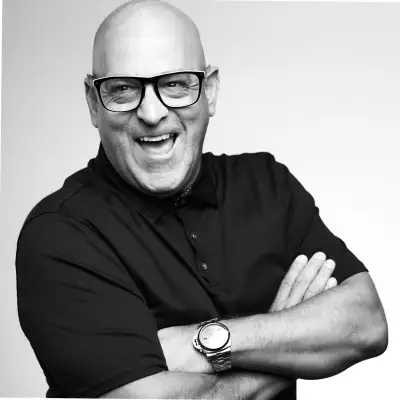
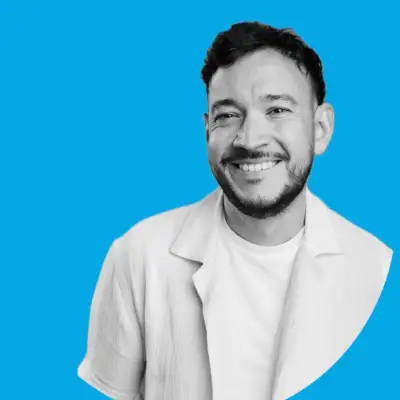
Today I'm joined by MC2 Ben Nazario and Bruno Silva.
Ben is chief Growth Officer and a long time leader of award winning experiential programs.
Bruno is vice president of marketing and a multi channel engagement strategist focused on turning digital touch points into measurable growth.
Together we explore how to build trust with stakeholders,
prevent scope creep and find the right physical digital balance.
Plus how partnerships, local expertise and AI can amplify impact without diluting the experience.
We start now.
Hi Ben. Bruno, welcome to the Convene podcast.
Ben Mc Squares philosophy is that trust is in the heart of a strong brand.
When your corporate clients face budget cuts but still need that same level of brand impact,
how do you navigate these conversations?
Ben Nazario: That's a great question. Thank you for asking that. This is a topic that is near and dear to us. Let's start with trust. Let's talk about trust in the relationship business that we're in.
Trust is earned. Obviously it's not something that you just are awarded and then that comes from confidence, that comes from transparency,
that comes from working with an agency partner on a day to day, week to week, month to month basis to understand each other. Right. So I think that's number one, that's important to understand that the trust factor is significant.
Right? It's significant because the brands are leaning on the agency to help them with their expertise. Right. So there has to be that, that level of trust.
So when, when you talk about budget cuts and you talk about executing on an exceptional level with budget cuts still obviously happening every week,
it's something that the relationship needs to understand is part of the landscape. Right. That's just the way it is.
It's very seldom going to be,
we have more money this year to do this program. Right. But almost always it's, we're either going to stay flat or we have to find a way to reduce it by 10%.
So, and you know, that's a difficult place to be, you know, especially when you're talking about a physical activation because physically it's difficult for you just to make some assumptions and make some budget cuts just off the top.
So what we prefer to do is when we start working with a client on a program, and we usually start pretty early, early on in advance of the program is we set our standards, we set our, our template, we set our milestones, we set our roadmap.
What is the budget this year?
What are the objectives this year?
What did we learn from last year and how are we going to tell that story this year.
So there's always more than one way to skin that. You know, just because we did it one way last year doesn't mean we need to do it the same way this year.
So perhaps there's a digital format that takes place sometimes that may save you some money.
Perhaps we're getting AI involved to help us navigate.
There's always other ways to try to solve the project that will help us to achieve that budget that they're trying to get to.
My recommendation is always to start early.
Be realistic about your expectations of what you're going to accomplish.
Work with your stakeholders to make sure that they understand and their expectations are met. Because it's one thing to work agency to client, but then sometimes the stakeholders may not be 100% aligned with what we're talking about.
So you got to bring those stakeholders into the. Into the conversation to make sure that they too understand what the challenges might be this year.
Bruno Silva: Right.
Ben Nazario: This year is different from last year. Right. So for whatever reason. Right. Tariffs, whatever it might be. So that's important. Let's start the communication early. Let's bring the stakeholders into the conversation.
Let's set our expectations and our objectives in place and then create that roadmap.
Bruno Silva: Right.
Ben Nazario: Understanding all of those details, create the roadmap of where we're going to communicate along the way to make sure that we're staying on track and online. When it comes to budget.
Creatives don't necessarily love to have that conversation. Creatives don't like when you put bumpers around it. They want to flourish, they want to come out with great ideas.
We try to harness that as best possible along the way. Right. So you never want to stifle creative from the very beginning. You let them run,
but you have to bring them in,
bring them into the equation and pull them back in.
Understand along the way where you are financially and then be able to level set. You might get to a certain point where you realize, oh, hold on,
we can't do that particular stunt because that's going to push our budget.
So understanding that along the way, monitoring it along the way, working and collaborating with the agency all along the way, being transparent.
Transparency is huge.
You have to be transparent. You have to understand,
accept and explain.
Right. Those are the things that have to happen to make sure that you're making sure you're on target.
And most importantly is avoid scope creep.
Scope creep is real.
That's a real thing. Okay. And a lot of times that might happen on site,
you know, a lot of times you know, as you start to get to the event or to the activation or to the program,
you start to hear requests from different stakeholders.
You have to be prepared for that, be prepared to level set because the scope creek will ruin your budget in the end. You can get all the way there safely.
And when you get to the on site,
suddenly they're adding something else or something else comes in.
The things that happen that are out of your control are out of your control.
But if you can control scope creep, you have to control the scope creep as best possible as long as the budgets are real.
That's the other thing is that make sure that the budget is real.
Give your agency the real budget upfront.
There's trust there,
right? If there's trust and there's communication, then be transparent about the budget so that the agency can be transparent with you about costs. Does that make sense?
Magdalina Atanassova: Yeah, absolutely.
Ben Nazario: Bruno, where am I off here?
Bruno Silva: No, you're spot on.
Ben Nazario: I think that's the key. I think, you know, if you, if you start off in a good, in a good place with clear communication,
with clear expectations,
with clear budget parameters, what the stakeholders have, have bought into,
then you're starting off in the right spot. You just have to communicate all the way through. You can't let up.
And that's where that trust comes into play.
Magdalina Atanassova: Bruno, you focus on multi channel customer engagement and you see corporate clients wrestling with this daily.
So when budgets force a choice between high touch physical experience and digital reach, how should corporate event marketers optimize that decision matrix?
Bruno Silva: Yeah, I think that's been one of like the biggest questions out there over the last few years. Right. Is especially during the pandemic where this hybrid model started being offered a little bit more and allows for an event marketer to be able to go and reach, let's say a million viewers as opposed to,
you know, 10,000 attendees.
So that's a huge plus. And I think that's the kind of the fight. It's a tug, it's a, it's a tug of war battle between how do we go ahead and continue to go ahead and provide our physical once a year proprietary event the proper attention that it needs for those attendees that actually take the time and the resources to fly in without actually hurting the attendees that aren't able to join.
Right. I think one of the biggest examples that we've seen is offering different platforms and stages within these physical build outs. Right. That allow for a digital audience to attend and listen and view while also having that same offering for those that are there in person.
So an example that we did was just earlier this year with AARP at CES where we kind of had two different footprints for that build out for that exhibit. The left side was really more of a walking tour, seeing the different interactions that AARP was offering for its services and its products.
And then on the other side was actually a stage and that stage was being able to go ahead and offer guests and keynote speakers on a scheduled basis, but was also being streamed live for people that weren't able to join John Deere.
Another example at CES, they always look to go ahead and incorporate that keynote kickoff for their CES campaign so that it does allow for them to go ahead and promote their new products that a lot of the in person attendees are going to see on the show floor.
Also view it before the actual doors open to the CES floor.
So it kind of allows a two for one offering for a lot of the attendees that are and are not able to make it. And then of course, one that exactly like we're doing right now is podcasts from your actual experiences.
So that allows for attendees to be able to go ahead and engage with the brands that are at these events, that they're now able to go ahead and actually walk physically on the show floor, but be able to go ahead and not only capture the storytelling that's happening at these events,
but live, but also be able to go ahead and capture them at a later date. So for example, if somebody is in Bulgaria and the events happening in San Francisco, that time zone difference is going to be a drastic difference.
So yeah, or Philly,
it's a great opportunity for them to be able to go ahead and actually obtain that messaging that the brand wants to go and put out there or the event marketer wants to ensure that the attendees take away from at a later date through recordings.
So there's definitely a lot of solutions out there. It's just being able to go ahead and see what fits,
what fits the mold of your brands and what is able to go ahead and actually expand your storytelling across your audience.
Ben Nazario: I will say just to jump in on this, I think when you talk about optimizing the matrix, you know,
I'm a big proponent of remembering what the pandemic taught us.
Okay.
One of the things that we learned from the pandemic is that we really missed the face to face in person engagement.
Right. That's something that we cannot forget, you know. So yes, it's necessary in some cases to have that digital component, but let's keep in mind,
the primary focus needs to be in that in person,
live engagement.
That's paramount right now. I think everyone has understood it, I think we've experienced it and we've also recognized that there was a conversation that happened at IMAX last week. I think it was Angie Smith and there was several others on stage, but they talked about this specifically about intentional time spent in person drives business results.
That was the quote that I took away from that.
And they're spot on.
Right? They're spot on that that the, if you want better results,
quicker results,
more meaningful results,
the face to face interaction is going to get you there.
I'm a believer in it. Someone has to talk me out of it, but that's how I believe and I think the industry has,
is applauding that right now. I think if you, if you see what's happening, you know, when we were at SISO,
even at the SEMA Summit event, I mean these events are talking about that specifically about how the engage, the intentional time spent in person is really where we need to be making sure we have our, our biggest focus.
So, you know, again,
yes, it's this, it's necessary to have that digital aspect, but let's keep it, let's keep it real.
This is, this is where it needs to be. Face to face, intentional, in person,
live.
Magdalina Atanassova: Yeah. And you know, we've seen that in our surveys that we do. We do a salary survey annually and a meetings market survey and the results are very conclusive that planners in general prefer and are more set on the physical.
However,
something we observed this year was that due to the tariffs and all the political uncertainty,
a lot of people started thinking back on, okay, we do need the digital component, but how do we incorporate it in a way that it's enhancing everything that we do?
It's not just something,
just do it like we did it during the pandemic because we didn't know what else to do.
Ben Nazario: Right.
Magdalina Atanassova: But it makes sense.
Ben Nazario: Yeah, no, I think, I think you're right. To complement it is the way to think about it.
Bruno Silva: Right.
Ben Nazario: It's to help complement it, Bruno. Yeah.
Bruno Silva: And it's also the other option is going to different select cities.
You don't have to host your once a year event in the United States every single year. And I think Ben and I have been seeing a lot of brands jumping overseas.
Right. They'll do one year in the US and then the next year they'll go to Barcelona or Paris or Dubai.
So it's kind of being able to go ahead and hit that both worlds in the same time.
Ben Nazario: You know, it's funny, we produce a collaboration with our parent MCH,
a festival called Art Basel.
And there was a digital component. There still is a digital component of Art Basel.
However,
the face to face interaction that happens at Art Basel is tremendous and it's irreplaceable. Right, so what's happening? I think this week it's in Paris,
Miami is coming up in December.
But these festivals are perfect example of how the face to face in person interaction far surpasses what happens from the digital format. But again, it's an example of how you can compliment that, you can help make sure that there's an addition to that physical.
So yeah, I think that's necessary. But you have to be careful about how you modify that matrix, as you called it. Right. So let's make sure the matrix makes sense.
Magdalina Atanassova: Yeah. And especially because the digital numbers, the tracking that you have on anything digital is far more superior than what you can track or observe in person. Right. So I understand also that lure towards digital.
And this brings me to another point that we noticed in our service and that was collaboration and the appetite for collaboration partnerships.
And Ben, I think you can give some advice on how partnerships can be approached in a more strategic way.
Ben Nazario: Yeah,
I can talk to that for a minute. So there's a couple of different approaches. So let's.
We work with a brand, SLR Luxottica, headquartered out of Milan,
and we work with the North America team in New York as well.
And we produce several different major events with those teams.
What's interesting in that particular space is that there's multiple brands within the organization that need to activate simultaneously in the same space.
So for example,
Ray Ban is on the left side,
Oakley is on the right side.
Nuance is another brand, it's on the other side of that. Transitions is on the opposite side.
So we've got multiple brands within the organization's umbrella.
However, each brand has their own objectives, each brand has their own strategy, their own go to market strategy, their own marketing initiatives, their own social strategy.
So how do you make that work?
And again, it starts with the overall from the very beginning, what is the plan?
What are the objectives?
What is each group trying to accomplish? Right.
What is the overall strategy? What is the plan? What, what is each group trying to accomplish individually as well as corporate?
And then start to prepare your plan along the way,
understanding what those initiatives are.
Right. So Oakley was launching their new Meta brand,
the new meta product.
That's tremendous. And it had to be a focus.
Meanwhile, Ray Ban Meta is also launching their new initiative and their new product. So you kind of have a situation where you have to understand who gets the spotlight when and what are we trying to accomplish.
For each one of them, it's all about communication. It's all about the roadmap, it's all about the strategy up front.
And it can be done and it can be done well. And we've proven it, we've worked with them, and it works. And they both, they, they, they all had a great event and they all achieved what they were trying to achieve.
And from a social perspective,
they all have their own metrics as well. They all need to hit certain, certain milestones when it comes to their social.
So all those things have to happen simultaneously. There is a way to do it in a harmonious manner.
I just think it has to be all about communication, transparency, upfront planning.
It has to be done in a meticulous manner, and that's the way that works. Now, on the other side, you can also have an opportunity where, let's say, for example, at south by southwest or at F1, you.
You may have an audio brand who wants to work with an automotive brand, and they want to both show their products, but they're going to come together in one space.
Same thing applies.
It doesn't change up front. What are the objectives from each of them? What are the objectives corporately?
How are we going to tell those stories? How are we going to measure those results as we go along and stay the course the whole way? I think it's something that is challenging,
but there has to be stakeholders and their objectives and their expectations that are prepared in advance.
And then the agency and the brands need to work together to collaborate and make a commitment to that success.
That's critical.
Bruno, you think?
Bruno Silva: Yeah, I'm just trying to figure out when you're going to be able to get me Oakley Meta glasses. I'm still waiting.
Ben Nazario: Keep waiting. Okay.
Magdalina Atanassova: And Bruno, how about you speak about a little bit on emotional relationships between brands and audiences. I know you have plenty of experience on that, so it would be interesting to give your two cents on how other event marketers can,
you know, tap into that.
Bruno Silva: Yeah,
that's the most difficult part. Right. Is because when looking at the trend, when trend reports were happening during the success during the pandemic, to see the success around a lot of the digital virtual events.
The biggest outlier there was, did it feel the same as when you were there in person?
Right. And as much as you can try and spin it, it's never going to be quite the same just because as soon as the event is over,
you're back to your day to day, right? You're back to picking up your kids from school, you're back to, you know, doing the laundry, you're back to cutting the grass.
And there's, there's no that post event escape.
So that's the part that really makes it the, the most difficult for your events to go digital or in person.
The only thing that you can do for that emotional relationship is the messaging and the storytelling that you're doing during the event.
Right. It's starting the keynote with kickoff video that shows your employee workforce across the globe that allows for them to go in and see like, hey, that's my native city or hey, that's my native office.
So it shows them that they do still have an interaction with the actual staple of where the location is being held.
The other part is also the post event communication, right. Where you're able to go ahead and see, get a little bit more of a communication of hey, in case you missed it, or these are the breakout sessions that you were unable to attend or what you weren't able to see.
But it's always going to be a difficult element of bringing emotion to a computer screen. But it's always around the storytelling. It's almost like watching a movie, right?
How do you get that emotional reaction from your viewers? It's what happens at the end or it's what happens from start to finish.
It's making the audience member feel like they're the procrastinator in the film or they're the love interest in the, in the novel. So it's,
it's really just kind of the context that a lot that you put into your event that allows for the person who's viewing it through a screen or even in person have that same similar emotional connection.
VISIT SPOKANE AD: Searching for your next event destination? Have you considered Spokane? The Convention Center sits right on the banks of the Spokane River — surrounded by everything your attendees could need, from shops and restaurants to wide-open green spaces. Whether you’re exploring new cities or gearing up for show time, the Visit Spokane team will make it all flow.
Start planning at VisitSpokane.com.
Magdalina Atanassova: And do you think a real change can happen in a person while attending something digitally?
You know how you go to an event and you just.
Something just clicks, you hear something,
there is an interaction, something happens and then you really live. Transformed.
Ben Nazario: Yeah, I think, you know, to that point, you know, this and this is an emotional experience.
You know, you walk into a space and what you see, what you hear, what you smell,
you'll react to that, right? So I think it's very difficult to have that kind of an emotion if you're not physically there. Right. When you walk into a space and you look around the room and you can see what's happening physically with people talking with the experience that might have been activated.
Yeah,
it's just a different thing.
You can feel the energy when you're in that space. You can't feel that energy necessarily the other way.
So I think it's tough, but I think you answered it yourself.
Magdalina Atanassova: Okay, so you both have been managing teams across 15 offices and that gives you quite a unique perspective when it comes to corporate event marketers who need to show up in markets where their company doesn't have a physical presence or how can they leverage agency partners and lock resources to maintain authenticity?
Bruno Silva: Yeah, I mean that's one of the benefits that you know, working for or partnering with someone that has location in that city assists in. Right. They understand the venues, they understand the location restrictions, they understand even the smaller details of,
you know,
loading dock restrictions or union labor laws and so forth. So they do that work for you, your partner does the lift for you.
But in terms of actually having a knowledge of a particular location, whether you're doing a pop up series or a mobile road tour,
there's a lot of strategic elements that come into play before your event.
You have to go ahead and actually see where your consumers are located. You have to go and understand what your demographics are. You have to understand what those target locations are.
And that's where. That's kind of the homework that you need to do before the actual event happens. Because you'll kind of have an expectation of what to expect before you get out there.
But leveraging your partners as a resource, as an asset, both not just mentally but also physically in terms of they know exactly what that city has to offer,
it's a huge boost because they're able to go ahead and provide that band aid in a leaking bucket narrative. Right. Where it's as an event marketer, it's in a very emotional, it's a very emotional relationship on a day to day.
Right. It's a very few EMs are able to turn it off.
It's always the, it's the pessimistic narrative of this might fail.
And so we have to be able to go ahead and leverage the,
the knowledge that John Doe or Jane Doe will have of their experience at those select locations.
And it's also you learn from your failures. Not every,
you know, every city that you do an event is going to be the same. Right. So you have to kind of weigh the options of did you actually,
were you able to go in and build those connections and reach your consumer or your audience at let's say a Philadelphia versus last year's event in Nashville or in the.
On the west coast with San Francisco. So I think it's,
it's just leveraging agency partners and like Ben said, in a full, transparent relationship and trusting them.
Ben Nazario: I think, you know, it's, you know, you don't know what you don't know,
right? So that's, that's. Just let that sit for a minute. You know, if you're trying to. And where that applies in a really big way is in venues.
Understanding the venue that you're selecting. If you're sitting in San Francisco and you're producing an event that's in Dubai,
you don't know what you don't know. And if you, you physically don't understand the venue you might have seen online looks tremendous.
But did you know what was next door?
Did you know? Did you know, did you know them? Did you know the operation that was happening next door? You don't want your customers anywhere near that venue, right? So these are things that, that you just, you, you have, you have to have boots on the ground and have the ability to have trust and a relationship with a partner to be able to guide you right away from harm.
Okay. It's not necessarily about what's great, it's about what's harmful, right? So let's be realistic about those details because they matter. Those details matter. You know,
customs, customary.
Everyday life is different in certain places, right.
Fridays and Saturdays are the weekend in some countries,
right? They're not working on Friday.
Friday and Saturday are their weekends, so they work on Sunday.
So, you know,
you have to understand that these things make a difference in what you're trying to put together. So. And also with you, with, with the visitors that are coming, right? So they sound trivial, but they make a big difference, right?
So there's little things like that, I think go a long way and, and having a, having a good partner and having an understanding and making sure you're doing your homework right in advance is the motto here.
Right. So. But Bruno's spot on when it comes to that, you got, you have to have some good transparency and have some.
Bruno Silva: Good communication and venue accessibility is something that I learned real quickly in this industry is key, right? Like, I mean, one of the first events that MC Squared sent me to was in Denver, and I had never been to Denver, so I was so excited.
Little did I know that the venue was actually closer to the airport than it was to Denver City.
So that's kind of, that's an element that you need to keep in mind, is if you choose a city where not many members of, of your audience or your consumer has means of transportation.
They go by public transportation. Right. You could shoot yourself in the foot if you choose a venue that's 30 minutes outside of that city. And there's no way of getting there for people who actually live in downtown city of let's say New York City or so forth.
So I think that is just having an understanding of the geographic region or as your hometown for some of your offices. That's a key. That's a key benefit of working with some agencies out there.
Magdalina Atanassova: Oh yeah, I believe a lot of our listeners have a lot of those stories.
Ben Nazario: Yeah, sure do. Yeah.
Magdalina Atanassova: And we looked a lot at the big picture and I want to bring it down a little bit to the person. So to the that corporate event marketer that's listening to us,
what do you see as the biggest opportunity for such a person to elevate their function in their organization?
Bruno Silva: If I could take this one, Ben, I think one of the biggest that I came from outside the industry four years ago. Right. So I didn't really know much about the event space.
And one of the biggest things that I really took in was just listening from people who had been in it for a while.
And there's means of doing that. Right. And you can obviously Google you know,
event space, market trends and reports and forecasting and you can read it. It's great. But it's a whole different ball game when you're able to sit in a room with, let's say 10 other EMs and you're able to hear from the success stories to the stories that you want to go in and just hide underneath the rug and doing that is following different platforms and offerings.
That that's out there for us association, the communities was the biggest selling point for me in order to go out and get to understand the industry and kind of get through the weeds of what it really means to be an event marketing professional.
You know, associations like CEMA, for example, PCMA,
it's the biggest outlier that I've ever received that's been a common denominator across all CEMA summits that I've attended.
Was at the very end when they ask you, you know, hey, like what have you learned? And everyone always says I've learned so much by being just in that room and finding out what has worked and what hasn't worked with other people.
And then the biggest take point out of that is I'm taking that those learnings and those teachings back to my team and they. And it's Always writing down notes. So I think it's being able to go ahead and put yourself into those offerings,
Listening, taking down notes, that's the biggest way of actually being able to go in and build a stronger execution to a successful event in your own world.
Ben Nazario: I think just to, to just to jump on that topic,
advising a corporate event marketing leader who wants to maybe go from, from an execution to a strategic role.
I'm a big believer in earning your stripes. I'm a big believer in,
in the fact that knowledge is power. Right. So I believe that you can't just walk in the door and be strategic. I think you have to learn and earn your way to that role.
I think it's great for marketers to be at some point in the tactical execution side of things because then they really, truly understand versus reading it or studying it. If you lived in it,
you understand it better than anyone. Right?
You were in the seat,
right? You were responsible for that execution.
Critical.
That's your boot camp.
That's your undergrad.
That's where you learn the business.
That's where you understand it and really, really understand it, not just read it or studied it. Right. I think that's important.
And I do believe,
as Bruno mentioned, is then to start to be very deliberate about your process of how to become more strategic. You have to be deliberate. Understand?
Now you did it. You got it. Now take a step back.
Let the agency partner do those details and get into that nitty gritty. Take a little bit of a step back. Look at it from a more holistic perspective. Look at the bigger picture.
Understand the KPIs, understand the objectives,
oversee the budgets, talk to the constituents, talk to the stakeholders.
Stay at this level.
Don't get, don't get dragged into that weed.
Don't get down there.
Let it all happen.
You've been there, been there, done that. Understand it now. Take a step back,
Go the higher road and try to be much more strategic in your planning and your thought process and what's next.
How do you evaluate that? Right. I think that's important.
Being part of CEMA. I can't. I'm going to double down on what Bruno said.
That is a tremendous place to start to learn to be strategic. You will sit in sessions where they will deliberately talk to you about how you can evaluate yourself and elevate yourself to become more strategic.
And you'll meet with people over a cup of coffee that are going to give you invaluable advice. Right? So I think those are things that people have to recognize is you, you have to be very deliberate about your, your approach and your career path.
But, but slow down,
right?
Slow down. Make sure you're ready for that before you jump into that. Right. So that's my advice to, to the community.
Magdalina Atanassova: I love it. You know, I experienced that myself because my background is in event marketing as well. And I was so sad that when I was in such a role,
CEMA was not accessible to me just because it was so much more locked into North America. And for me, being based in Europe, it was. I didn't even know about it for a long time.
So, yeah,
just taking,
you know, taking the time to invest in yourself by going to such events and becoming member,
I think that's,
That's a big key to opening new doors.
Ben Nazario: It's an easy thing for me to say and for us to talk about.
When you have an event marketer who's got, you know, 30 programs that they're managing, they'll go from one to the next to the next to the next.
They've got their. They've got a personal life, they've got vacation, they've got kids.
It all sounds wonderful. But when you're in the middle of all of that,
how do you carve out time for yourself to grow?
Right.
That's why it has to be deliberate. You must make it.
Must make it a priority and weave it into your.
Into your agenda.
Otherwise you're going to be. Before you know it, it's going to be November. And you didn't, you didn't, you didn't. You had great intentions in January,
right?
And now you're in November and what have you done?
Right? So I think it's. It's an ongoing. And it's something that's important to many, many marketers and,
and it's something that people are trying to figure out. So hopefully this resonates.
Magdalina Atanassova: Yeah. What's one widely accepted best practice in corporate event marketing? Did you think it's actually holding professionals back from better business outcomes?
Ben Nazario: Yeah, there's a few. We've talked about this, Bruno and I. You know, a lot of times you'll hear from. From a marketer or from the VP of sales or from.
Or from someone in the organization who says, well,
that's how we did it last time,
or we've always done it that way. We've always done it that way. Right. Or,
well, our competition is there, so we need to be right. So that's not a good approach to take. That's not a great reason.
That's fact. And that's good to understand that,
but I think you have to figure out how to move forward. You have to, you have to navigate a little bit out of the box. You have to take a little bit of a risk.
You have to lean on your agency partner to give you some proactive advice. Right. And if, and if they're not, then maybe find a new partner. Okay. Because you've got to have proactive advice.
You have to grow.
You can't stay in the same place. You're moving backwards or you're moving forward. You're never in the same spot. Right. So progress forward. Right.
Data has told us today that networking and community are the number one reasons people attend events.
Understanding that,
Right? Understanding. That's facts. That's what it is.
What do you want to do now? Right. It's not because of what you did last year or what you did the year before or what the other guys are doing.
Understanding that topic can give you some fodder. Now. Let's focus towards that. How do we now excel in that space now that we know. Now that we know that? Right.
So the community is important.
Right. So how do we, how do we address that?
It's about looking at that versus looking at what you did before.
Bruno was there. Did I miss anything on that?
Bruno Silva: No, I think it's, it's that emotional element of.
I think being comfortable is one of the most dangerous things ever when you're trying to strike that emotional relationship with your audience.
Because the. You can't really shock. You can't have that shock or surprise factor that allow for the attendees to really walk away understanding and remembering your brand if they already expect to see what's coming.
So,
you know, I think with over the last few years, it's.
Brands have come to find out that even though content is key,
brands are able to go ahead and be remembered for that, for the experience that they invoke around their audience.
And that's. And that's changing the game, the name of the game, every single time you can. Even if it's the smallest of tweaks, it's. I think it's being able to go out and do that is fine.
But success can sometimes lead to comfort. And that's where you kind of have to really push yourself. Because if last year's event was a great hit because you try this idea,
you're probably going to fall into that same trap and want to do it again because you're afraid to fail.
So it's all about kind of diving into that,
getting out of that Comfort zone and really being okay with the unknown or with the unexperienced.
Ben Nazario: And I think, and I think to. To give someone kind of a jumping off point to that, that sounds great, but it's risky and I'm. And I'm afraid. I get it.
You know what? Don't be afraid. This, you're going to be fine. But my recommendation, again,
be part of PCMA,
be part of CEMA.
Share with others. They will share with you.
You know,
there's very few new ideas, there's evolved ideas. Right. So. But I think, you know, being able to understand that you can collaborate with people that are, you know,
in your business, but maybe not your industry is a good thing. Right. Learning what others are doing and, you know, repositioning that to how you can use that is a good thing.
Always trying to seek another way to do something or a better way to get your objectives met is a good thing. Right. So. And that, and that can only happen by communicating with your peers,
with people that are maybe again, people that are the part of. Part of memberships that can help give you some of, some of the things that they're doing and give you some inspiration.
Right. So I think that's really important for our industry. I think it's important for our marketers to just really grab a hold of that, embrace that. Right. And not just be focused on themselves.
And here you got to spread it out. You've got to be able to communicate and talk to others and learn.
Magdalina Atanassova: I think that brings it pretty much full circle back to trust and having your own community. You're speaking about community at events, but also building your own community or finding your own community that you can trust and lean on is,
Is vital to progress.
Was there anything we didn't mention? We definitely should, you think?
Ben Nazario: I think one topic that's obviously burning is this topic of AI,
and I think it's still not fully solved or fully outspoken. I think there's different things that are coming at us right now.
I do believe that if you participated at Dreamforce, you would have seen some of the things that. How Salesforce is using AI.
I do believe that there is more to come when it comes to that. And I think that we have to embrace that in the event space, embrace it in the experiential space,
and look to grow from that. And I think that there's a lot of fear and trepidation around AI, but you really can't be that way. You have to understand that there's power there and we have to look at it, embrace it and utilize it and bring it into the fold of how we're experiencing our relationships.
Bruno Silva: Yeah. And I think it's also understanding that you can utilize that tool not in every facet of building a successful event. Right. It helps you with the pre event,
the during event and the post event. Everything from personalization, real time support, accessibility,
you know, content creation, event sourcing, logistics and scheduling, project management.
Ben Nazario: It's even networking. Even networking. Now there's an AI platform now that allows you to have tremendous amount of networking at your event if you have some platforms that are instituted and ingrained in AI.
So I mean,
it's definitely a positive. It's definitely something that if you catch the wave, it's going to be successful.
Magdalina Atanassova: I feel we can do a whole another episode on AI marketing and experiences.
Ben Nazario: I think you're right.
Magdalina Atanassova: So I'm leaving my door open with you.
Ben Nazario: Great. That'll be the next topic. That's great. Thank you for inviting me.
Bruno Silva: Us.
Ben Nazario: We'll be back.
Bruno Silva: We'll do it in Philadelphia.
Ben Nazario: That's right.
Magdalina Atanassova: Oh, sounds.
Ben Nazario: There it is.
Magdalina Atanassova: So that's a like a little hint to our listeners. Expect something, be on the lookout.
Ben Nazario: That's right.
Magdalina Atanassova: Well, thank you so much for your time and for your insights and being on the podcast.
Ben Nazario: Thank you for having us. It's a pleasure. Look forward to seeing you soon.
Magdalina Atanassova: Likewise. Remember to subscribe to the Convene Podcast on your favorite listening platform to stay updated with our latest episodes. We want to thank our sponsor, Visit Spokane. Go to VisitSpokane.com to learn more. For further industry insights from the Convene team, head over to PCMA.org/convene. My name is Maggie. Stay inspired. Keep inspiring. And until next time.