Subscribe
Share
Share
Embed
What’s Up, Wake covers the people, places, restaurants, and events of Wake County, North Carolina. Through conversations with local personalities from business owners to town staff and influencers to volunteers, we’ll take a closer look at what makes Wake County an outstanding place to live. Presented by Cherokee Media Group, the publishers of local lifestyle magazines Cary Magazine, Wake Living, and Main & Broad, What’s Up, Wake covers news and happenings in Raleigh, Cary, Morrisville, Apex, Holly Springs, Fuquay-Varina, and Wake Forest.
[00:00:05] Speaker 9: The internet. It's big, endless, and ruled by giant tech companies. We're tired of that. You ever feel like sometimes your internet provider exists just to make your life as complicated as possible?
It's okay to expect more from the internet. The internet can connect you to people, to new ideas, and unlimited opportunities, as long as your internet provider doesn't get in the way. We're Ting, and in 2014, we set out to build internet that puts people first. Fast and reliable, clear and predictable, priced fairly without the fine print.
People first designed to put you in control. For a long time, your internet options were limited. Now they aren't. With the choice between big internet, complicated internet, or your internet, you choose the internet that actually feels like yours. We're Ting, and we're here to help you make the internet your internet.
[00:01:12] Speaker 10: Rescue Wood Rehab in Fuquay-Varina is proud to be your local custom woodworking shop for furniture, home decor, and more. Visit us and maybe spend some time with our shop dog, Amber. Rescue Wood Rehab is more than wood, it's an experience. rwrnc.com.
[00:01:27] Speaker 8: Summer travel is coming. Make sure your car is ready with Cary Car Care. Family owned and operated, they'll keep you safe on the road all season long. Give us a call at [919] 380-0040 to schedule your summer service today, or visit with us at carycarcare.com. Cary Car Care, it must be right or we'll make it right.
Summer is right around the corner, which means longer days, more sunshine. And if we're being honest, maybe a few questionable sunscreen habits. Today's episode is all about keeping your skin happy, healthy and glowing, preferably without overcomplicating things.
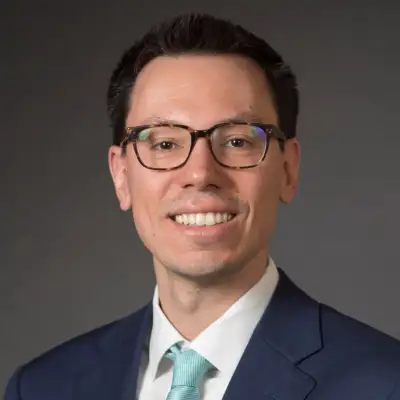
[00:02:44] Speaker: I'm joined by Dr. Thomas connected a peak dermatology who's here to help us separate skincare fact from fiction. We'll talk about how to protect your skin during the summer months, what actually works and what's just type and how to age gracefully. So whether you're a skincare minimalist, or someone with a 10 step routine, get ready to take some notes and maybe finally start using that sunscreen the way you're supposed to.
Thomas, welcome to the show.
[00:03:13] Melissa: , . Thank you so much for being here today. What inspired you to become a dermatologist and not another type of doctor?
[00:03:21] Dr. Thomas: Yeah, that's a great question and thank you for having me.
Um, I actually grew up with a dermatologist as a close family friend, and I think I'm unique in that way that I basically went through undergrad medical school and residency with the plan of being a dermatologist inspired by somebody I met in middle school. Shadowing summer after summer, um, is what really gave me that foundation.
And then more tangibly just, you know, being able to treat diseases that I can see is really rewarding, right? I can look at my patients and many times within a couple of minutes know what's going on. And that then allows me to spend the rest of that appointment to get to know what they think about their disease.
'cause skin disease can be deeply personal and we all have some strong beliefs of why we're having these skin diseases. And you can explore that more rather than having to do the investigation that an internal medicine doctor or a cardiologist might have to do.
[00:04:23] Melissa: I think that's really interesting that you grew up knowing you wanted to be that specific type of doctor because the, the doctors that I feel like I've met in the past.
Knew they wanted to be a doctor but didn't know their specialty maybe until they had gone through at least some of medical school. So you, you grew up knowing you wanted to do this and I'm looking at you and I'm thinking, dang, he looks really young, but he could be 85. We don't know because he's a dermatologist.
[00:04:49] Dr. Thomas: That's right.
[00:04:50] Melissa: You've got a very good skincare routine. So what is, what would you say is the most common question that you get when people find out what you do for a living?
[00:05:00] Dr. Thomas: Yeah. So, um, there's really two, and by the way, I'm 40, so, um, so
[00:05:04] Melissa: you have very
[00:05:05] Dr. Thomas: good
[00:05:05] Melissa: skincare. Yes.
[00:05:06] Dr. Thomas: Um, but that relates to, to your question.
So the one thing is often what, what can I do for my skin, um, right now to make it better?
[00:05:15] Melissa: Mm-hmm.
[00:05:16] Dr. Thomas: Um, and I find that so many times, um, when I talk to both patients as well as in the community. People are actually doing a ton more than I and most dermatologists recommend, right? So in my world, both as a parent and as a physician, I really believe in keeping it simple, which means you've got a cleanser, you've got a moisturizer, and you have a sunscreen.
And so anything that goes beyond it, and this is oftentimes driven by social media and some of the consumerism that goes hand in hand with it. Nobody needs a 12 step routine like our teenage,
[00:05:51] Melissa: teenage girls are doing right now.
[00:05:53] Dr. Thomas: Yes, and I hope that is
[00:05:54] Melissa: actually one
[00:05:54] Dr. Thomas: of my questions. I hope they all forgive me for saying that.
Yeah. But really from a data standpoint. Less is more. And then the other question I routinely get is, can you look at this spot on my arm? Is this something that I need some to see? Some
[00:06:07] Melissa: do you just walk in the grocery store and somebody is like, Hey, doc,
[00:06:10] Dr. Thomas: well that one is fine, and I'm happy to respond to that.
Mm-hmm. The harder ethical one is when the patient is potentially, or the, the, um, person in the grocery store is completely ignorant to it, and I see this very obvious. Melanoma on their temple. You know, what's my, oh, what's my ethical obligation to either, do you tell them? Tell them. Um, I've done it both ways.
[00:06:33] Melissa: Okay.
[00:06:33] Dr. Thomas: Um, it's 'cause some people, you know, part of being an independent person is like, you may choose not to want to know, oh, I have this ethical obligation to help and cure. But at the same time, you as an individual also have the right. To not know if you have something serious going on, or
[00:06:50] Melissa: perhaps they know and they just have, you know, haven't started treatment or something yet too.
Yeah.
[00:06:55] Dr. Thomas: So I try just to keep my head down in the grocery store,
[00:06:57] Melissa: but I'm sure that that's something that could keep you up at night if you, if you don't say something. So I'm sure you are torn.
[00:07:03] Dr. Thomas: Absolutely. Absolutely.
[00:07:04] Melissa: But that, that, that's a really, um. Interesting point that you made about how dermatologists can literally see what's wrong with their patients, whereas another type of doctor can't, can't spot the breast cancer from a mile away, or you know, can't see what's going on with the person.
Whereas a patient walks into your office and you're like, yep, this is what this is.
[00:07:28] Dr. Thomas: Yeah. And at the same time, we have to be careful because just because it's on the skin doesn't mean. That it's superficial.
[00:07:37] Melissa: Mm-hmm.
[00:07:38] Dr. Thomas: Right. Our skin in so many ways is a mirror and a representation of our overall health. Um, for the most part, only about 20% of what your skin looks like in adulthood is defined by your genetics.
The remaining 80%. Is how you're caring for your skin, what your lifestyle is, what your habits are. And so,
[00:08:00] Melissa: so what you're saying is I cannot blame my mom and grandma for my wrinkles.
[00:08:04] Dr. Thomas: Right? No. It's that rockstar lifestyle. Yes. It's, it's that rockstar lifestyle. You, me. Yeah. Yeah. But the, the, the key is there's.
The internal overall health of the individual. And then there's also a huge psychological and psychosocial component to skin health, right? There's the, the suffering that goes hand in hand with having to look in the mirror and seeing either a growth you don't like on your face or having acne that you can't control on your own.
Mm-hmm. And so I never wanna dismiss a skin condition. Simply because it's not life-threatening in the way that a heart attack is. Um, or, or wanna minimize it.
[00:08:43] Melissa: Yeah. Because that doesn't mean it's not bothering the person. Right. Yeah. So you, you mentioned this briefly, but how much do things like diet and sleep and stress affect our overall skin health?
[00:08:56] Dr. Thomas: Yeah. They, they play a huge role. Um, again, about 20% is probably the genetics that we were given. Um, and the remainder is to some degree up to us. Um, certainly sun exposure is a really big variable in how our skin ages, but there's others that are probably just as important. Um, sleep is huge, right? There's a reason we talk about beauty, sleep, um, and it shouldn't be misunderstood to mean that if I have eight hours of sleep last night, my skin will look awesome the next day.
But it's a cumulative. Investment, right? If you go through decades of sleep deprivation, your skin and your facial agent will show that. If you have a diet that might not be the best, your skin will show that. And I think the most important thing is that you can't compensate with the most expensive topicals out there.
Vitamin C, creams, serums, ointments, the poor diet, smoking and lack of sleep. So I think those things. And lack of
[00:10:04] Melissa: hydration
[00:10:05] Dr. Thomas: too, right? Absolutely. Yeah. Hydration is key. Minimizing alcohol and tobacco for the most part. I don't need to know if somebody's a smoker. You can generally tell from their skin.
[00:10:17] Melissa: Okay, so about the skincare products.
Is there really a big difference in spending a lot of money on, on creams and potions, or can we go to the drugstore? I'm, I've used the same cream for at least a decade and I just get it at Walgreens or Amazon. Should I be using a much more expensive cream?
[00:10:47] Dr. Thomas: Yeah, I think across the board. Simplicity is key, and consistency is key.
And, um, the beauty industry as a whole has come so far and I think that the main big players who I have no relationship with, um, but Aveeno, Neutrogena,
[00:11:07] Melissa: mm-hmm.
[00:11:08] Dr. Thomas: They make products that are at an accessible price and for many people are just what they need. And so, no, I don't think you need to change it. I think having a good cleanser, chil, non-SAP Cleanser, Vanny Cream Cleanser, having a good moisturizer, which can be something like Olay moisturizer.
You know, we're talking 15 to 20, maybe 30 or $40 if you splurge, but I don't think that there's that much of a measurable improvement when you're spending three. Figures on these types of products. That's for just your baseline foundation. Certainly when you start talking about active ingredients, um, there's a little bit more nuances, but many people will notice remarkable improvement in their skin if they just do the simple cleanser, moisturizer, sunscreen on a regular basis, the consistency with that.
Is far more valuable than having that one week a year where you're using a sample that also has a vitamin C serum in it, or hyaluronic acid or another active component to it.
[00:12:17] Melissa: So really the consistency plus what you said about the, the diet and hydration. Absolutely. Yeah. Absolutely. And the, the sun, um, being out in the sun.
Okay. I personally have chosen not to go the Botox or filler route. Um, I do reserve the right to change my mind at any time, so I'm going to say that little blur about there. But let's say I do change my mind. I'm 47 right now, and I have not done any of those things. Is it too late to start doing those things or am I just, I'm just gonna age like fine wine.
[00:12:56] Dr. Thomas: This is putting me in the hot seat. Um, so
[00:13:00] Melissa: don't look at me as you answer that. You're like, well, I mean, there's a, she doesn't
[00:13:05] Dr. Thomas: need
[00:13:05] Melissa: deep wrinkle.
[00:13:07] Dr. Thomas: No. So
[00:13:09] Melissa: I have named all of my wrinkles, by the way, right after my children and my husband. Oh. I like they each have the deeper ones. Yeah. I blame them. Mm-hmm.
[00:13:17] Dr. Thomas: I, I think when you start going down the road of saying, okay, what can I, in partnership with a provider.
Due to improve my skin, one of the things that's really important is to have sort of very concrete ideas of what it is you're looking for, right? Because none of us have a magic wand to erase the last 40 years, nor would we want to erase them. But having that conversation and understanding that what we use Botox for and what we use fillers for and what we may use lasers or other devices for are really completely different.
Um, I'm married to a plastic surgeon. Um, she's been getting Botox since she learned how to walk. I think I can say that here. Um, I have other people including myself. I tried it once to know what it's like. Mm-hmm. And so, um, the main thing with Botox is that it's a treatment that targets. Spine lines that are created by active muscle movement and contraction.
[00:14:20] Melissa: Mm-hmm.
[00:14:21] Dr. Thomas: So when you,
[00:14:21] Melissa: so like the crow's feet,
[00:14:22] Dr. Thomas: the crow's feet, the smile lines, the lines between your forehead, glabella, and on the
[00:14:26] Melissa: forehead we call those the WTF lines. Yeah. Minus extra deep.
[00:14:30] Dr. Thomas: Exactly. And so those are lines that are formed at least initially, just by the contraction of muscle.
[00:14:36] Melissa: Gotcha.
[00:14:37] Dr. Thomas: And so those are the type of lines that are very well targeted.
By medications that we consider wrinkle relaxers. Botox is one of them. There's many others like it. And fortunately as a profession, we've largely moved away from sort of entirely paralyzing faces, right? We want our children and our spouses to know when we're smiling with our eyes or when we're a little bit peeved that they didn't unload the dishwasher.
Yeah. And so Botox has a role there very much. Um, and what I've always told patients is the beauty and the curse of it is that it lasts three to four months. So if you love it, the downside is you have to come back If you hate it, well, it was three months, but at least now, you know, and it fully what your like dissolves
[00:15:22] Melissa: or goes away
[00:15:23] Dr. Thomas: or
[00:15:23] Melissa: whatever.
[00:15:24] Dr. Thomas: Yeah. It's, it's really just a temporary blocking within the. Um, place where the muscle meets the nerve.
[00:15:31] Melissa: Mm-hmm.
[00:15:32] Dr. Thomas: And it allows that muscle to not contract because the signal is pa not passed on from the nerve. That's a very temporary thing.
[00:15:39] Melissa: One of the reasons that I did not go the Botox route, and maybe you're gonna think I'm crazy, but I read a Cosmopolitan article probably 15, 20 years ago, and it was about this lady that got Botox and she couldn't open one eye for a year.
And I was like, that would happen to me. And I have no doubt about that. So that's why No, I'm not gonna do it. I mean, I also. Want to see how I age. Right. And I want to also show my daughter that things like that should not be important. However, um, I'm scared that I wouldn't open my eye for a year. Doctor,
[00:16:16] Dr. Thomas: what,
[00:16:16] Melissa: say you,
[00:16:16] Dr. Thomas: yeah, I think the, the, the first thing I would say when you talk about these sort of treatments, um, it's important to doom for the right reasons.
[00:16:23] Melissa: Mm-hmm.
[00:16:24] Dr. Thomas: Um, and you're not, or at least I think you shouldn't be doing them for any other person or to fit some sort of. Societal or otherwise expectation of, of what we should look like as we age and mature. So I think it's because you're inherently gonna always be disappointed chasing somebody else's ideals or norms.
Um, and then I do think that things like Botox are very much a, an entry, right? These are reversible temporary things compared to something like a filler injection where we're injecting a medication to, um, restore volume. Those are much more permanent. So those are changes that may be there for a year or more.
Now to go to the Cosmopolitan article, I, I don't know the details. Um. If Botox is injected into the wrong muscles, the muscles that help us keep our eyes open and elevate our eyebrows, then yes, that can cause drooping of that eyelid or eyebrow.
[00:17:28] Melissa: Mm-hmm.
[00:17:28] Dr. Thomas: Um, which is mostly just embarrassing and annoying.
It generally doesn't last a year, simply because we just talked about the mechanism of action of Botox is such Yeah. Just a few months. That's just a few months. Mm-hmm. And so I'm always very careful when there's individual cases of, Hey, I heard this and somebody had this and then this happened. Yeah.
Botox and many of the, um, cosmetic products that at least we use in my practice are those that have like decades of track records. Right. Botox has been out for such a long time. Most of the fillers have been out for 15 plus years at this point. Um, and so we just have this sort of safety record that makes me very comfortable.
[00:18:13] Melissa: Mm-hmm.
[00:18:13] Dr. Thomas: At the same time, I think you and I are similar in that I'm not the one to jump onto the bandwagon for the brand new. X, y, Z injection cream, you name it. Because I very much consider there to be this burden of proof on the manufacturer, on the producer to show me, like, show me this is better than what I'm currently doing.
Better
[00:18:34] Melissa: works and is safe. Exactly. So you're really having to be very careful and mindful about what you, what you offer your patients.
[00:18:41] Dr. Thomas: Yeah. Don't believe even chasing the latest
[00:18:42] Melissa: trends. Yeah. So as far as Botox and fillers, WW. Are there other options that you give someone like me that would come in and say, Hey, I really want to age gracefully, naturally.
Right. But can you gimme a little something, something, right. So what, what would you offer that maybe is different than Botox or fillers?
[00:19:06] Dr. Thomas: So a number of things happen as we mature, right? Um, I think of it largely in terms of, um, volume and then texture. So texture refers to the fact that as we mature, we start to have less consistent skin coloration.
We have more red blotchiness, some brown spots, maybe some scaly spots. Um, and that's the texture aspect of aging. The volume aspect of aging is that we start to lose our collagen and elastic fibers. And so the. Muscle contractions cause more fine lines and wrinkles around our lips, around our eyes and our forehead.
And then on a deeper level, we start to lose some of our fat and bone structure, right? We start to lose the nice fat pads that my three and 5-year-old daughters have on their cheeks. We start to resorb some of the bone in that area. And this is where I think it's crucial to say, well, I hear that you wanna do something about the way that you.
See your skin, how your skin is changing as you age, but let's get more specific. 'cause I think it's only when you get specific and identify certain things that we actually can sort of have satisfied patients.
[00:20:18] Melissa: Mm-hmm.
[00:20:18] Dr. Thomas: And so everything that's related to building collagen and restoring volume can, to some degree, be done by injecting fillers, which means you're putting something external back into the body.
[00:20:29] Melissa: What is. A filler, by the way.
[00:20:31] Dr. Thomas: Yeah. So fillers, um, there's, there's different kinds, but most of them are, um, some sort of hyaluronic acid product. And what hyaluronic acid as a molecule does is it's a humectant, which means it's a molecule that draws water towards it. So when put in a cream, it's a fairly temporary effect when injected into the skin, it's a more long term that you essentially have.
Speeds or rods of hyaluronic acid placed in the skin as a gel that then start to bring water in and build some collagen as well.
[00:21:08] Melissa: And it's literally filling in like the, the A space, the wrinkles or for example,
[00:21:13] Dr. Thomas: and that's mostly used for deeper. Restoration. Mm-hmm. Um, we've gotten away from trying to fill individual lines with fillers because it looks unnatural.
Oh, okay. Um, but when you start to think about lines, let's say the lines of our nasal labial folds mm-hmm. Or our jowl area, a lot of that is happening because we're losing volume in the middle of our cheeks. And so if we build volume here, it will re drape or resuspend some of this looser skin. Lower on the face.
The alternative to that is really some sort of treatment that stimulates the body's own collagen. I think of those treatments as things that conceptually sort of injure the skin. Which means whether you're using a microneedling device with sort of 10 to 20 sharp needles or the energy of a laser beam or ultrasound, you're somehow injuring the skin in a controlled fashion.
And as that skin heals from that injury, it builds more collagen. Um, that's what makes things like microneedling, um, ablative and non-ablative laser resurfacing. Really powerful to stimulate your body's own collagen. And I find that it's a great alternative for people who may not want to use fillers. Um, it's got a relatively short recovery with it.
[00:22:42] Melissa: Mm-hmm.
[00:22:43] Dr. Thomas: Um, and you're not putting something foreign into the body, which despite the track record of the medications or the products, still bothers a lot of people.
at risk of sounding like I am, I am coming to you and using this episode as a, um, this is
[00:24:48] Dr. Thomas: very much a
[00:24:49] Melissa: free consultation. I'm not exactly, I'm not paying my copay today, doctor.
Um, but one thing that I have noticed about myself and I, I think that this is common in women my age and men my age. It's the, the puffy eyes.
[00:25:04] Dr. Thomas: Yeah.
[00:25:05] Melissa: I sleep well. I feel like I drink plenty of water. What do you do about things that, are I essentially the opposite of wrinkles? It's the puffiness.
[00:25:16] Dr. Thomas: You could, I don't know if you'd have any listeners, but you could probably have an entire podcast dedicated to puffy eyes.
Yeah, because it's such a complex. Process. Mm-hmm. That is still not fully understood. So some of it has to do with the lymphatic and the blood vessel drainage of the area. Some of it is that, again, as the bone and um, fat pad structure changes underneath, we start to have more of a groove between our cheek and our eyelid, which then allows.
Fluid lymphatic drainage to start to bag in those areas. Some people really swear by, um, simple things like a lymphatic massage, which means you're using, um, a smooth stone or your fingers to Oh yeah. The massage, the
[00:26:02] Melissa: stone or something. Yes.
[00:26:04] Dr. Thomas: Okay. Some people need more than that, and sort of the ultimate thing is probably having a lower eyelid lift.
That's not what most people need. Mm-hmm. And, um, here as in the rest of the sort of cosmetic world, I think education is such a big part of it. Um, as an industry or as a profession, we should always strive to under promise and overdeliver, right? I would be cautious of anyone, be it a product, be it a provider who can promise a simple fix.
For something that clearly isn't simple and so things just aren't fixed overnight. Topical retinoid creams play a really big role in just how our overall skin complexion, um, behaves as we age. They also build some collagen, and if you want, we can talk more about how that works, but I think between that and a lymphatic massage, it, that's what most patients, um, or individuals probably get the most bang for their buck.
[00:27:03] Melissa: And going back to my teenage daughter, I've a, I've got a 16-year-old daughter who really for, I wanna say years now, um, has been doing a whole skincare routine with, with a, a little bit of everything. And I'm like, gosh, I have never spent this much time or money. Perhaps she'll be my age one day and look like she's still in her twenties.
I don't know. We'll see. Um. But do you see that some of these products that are geared towards younger girls might actually cause harm?
[00:27:39] Dr. Thomas: Yeah. I'll tell you first that as again, the dad of a three and a 5-year-old daughter. Mm-hmm. I'm terrified of what will happen in 10 years.
[00:27:45] Melissa: Yeah.
[00:27:45] Dr. Thomas: Um, he
[00:27:46] Melissa: should be,
[00:27:46] Dr. Thomas: but as a dermatologist, I think for the most part, the products available in the US and purchased on the US market.
Are safe now
[00:27:57] Melissa: because they have to go through so
[00:27:58] Dr. Thomas: many regulations because they have to go through testing and regulation. Yeah. That being said, there are people who are getting products that are not available in the US.
[00:28:07] Melissa: Mm.
[00:28:07] Dr. Thomas: Um, I think
[00:28:08] Melissa: everything she has is straight from target. Yeah. So I think we're good.
[00:28:11] Dr. Thomas: And the biggest problem is not anyone ingredient. I think the biggest problem we start to see is. Having these really long routines, and then if you start to become irritated to one of the products, it's very difficult to know what is my skin actually reacting to?
[00:28:30] Melissa: Oh yeah, which one is causing it?
[00:28:31] Dr. Thomas: And despite.
My advice would be the reaction is many times, well, let's add one more thing. Like this has vitamin C in it. It's supposed to be calming to the skin. So now we're putting a vitamin C serum on top of something because of the irritation. And ultimately, when we have patients who are oftentimes very distraught by this, then come into her office, first thing we say is Stop everything.
Use no makeup. Use nothing but a gentle cleanser for the two weeks and let's just give your skin a reset. So that to me is the biggest challenge with the, the multi-step routine, is that they don't have a whole lot of evidence to say they're better than the simple routine. They're driven by a social media and marketing
[00:29:17] Melissa: and consumerism.
Yeah,
[00:29:18] Dr. Thomas: machine. And they just run the risk of really doing too much to the skin, even though the individual steps are probably completely safe on their own, um, as long as you stick to what's mainstream.
[00:29:32] Melissa: Let's get into the, the topic that, again, we could have an entire episode on, on skin cancer, but I want to know how often a, a normal quote, normal patient should go to the dermatologist each year.
When should we call and come in an extra time? If we, what, what? What do we see that is going to constitute another visit?
[00:29:59] Dr. Thomas: Unlike mammograms and colonoscopy, dermatology doesn't have the defined criteria for annual screening, which makes it a much more nuanced conversation then. I think living in North Carolina we're blessed to see a lot of the sun and so probably should have a lower threshold to, to see our dermatologist than in other areas.
Um, the big things that drive our risk for skin cancer are having a family history of skin cancer. Having a lot of moles on your body is a risk factor for melanoma type of skin, cancer being fair skin. Light eyed freckles, red hair, that's sort of what we call phenotype or, or, um, skin type is in and of itself a risk factor for the development of skin cancer.
Having a history of artificial indoor tanning. So going to the tanning salon is a very strong risk factor,
[00:31:00] Melissa: which I've been hearing that has been picking up more recently. Whereas like back when I was a teenager, that was really big. We went to the tanning bed and it was a normal thing, but it kind of died off.
And now I've been hearing hearing that back to being, being more norm now.
[00:31:15] Dr. Thomas: Yeah. And part of it is ever changing legislation on who's allowed to go tanning with or without permission. And part of it is, again, social media. Um, to me the most powerful statistic is that one episode of indoor tanning increases your melanoma risk by 79%.
[00:31:33] Melissa: Ooh,
[00:31:33] Dr. Thomas: and usually yikes. That sort of conveys the risk. Um, and so. Much of the risk of who needs to be screened when is cumulative, right? Mm-hmm. So a very fair skinned individual who grew up working on a farm who has a lot of moles and a strong family history should probably be screened earlier than somebody with more Mediterranean skin who maybe has an indoor job working on computers and no family history.
[00:32:00] Melissa: Mm-hmm.
[00:32:01] Dr. Thomas: And then ultimately, I think the biggest thing is to start to. Do self exams at home. Um, again, we don't have good data on, do you start that when you're 35, 40, 45?
[00:32:14] Melissa: It's really just pay attention to your
[00:32:15] Dr. Thomas: body. Right? It pay attention to your skin. Mm-hmm. And you know, classically for melanoma, we think about the A, B, CDE, which means if you've got a lesion you thought was a mole or it's brown, but now it's asymmetric, it's got irregular borders, multiple colors, or multiple shades of brown.
The diameter's larger than the pencil eraser, and probably most importantly is the E, which is the evolution, or it's a changing lesion. Those we need to see because that's. Behavior that's at least suspicious for melanoma.
[00:32:45] Melissa: Mm-hmm.
[00:32:46] Dr. Thomas: And that's the one we always worry about. From a, um, population health standpoint.
We see way more basal cell and squamous cell cancers. Those are lesions, um, that we usually see on the face. Head and neck of individuals, 50 and older, and those are more of your non-healing sores. The kind of red spot that either you're waking up with a little bit of blood on your pillowcase, or when you dry off after the shower, you've got some blood on your towel.
Those are the basal cells and squamous cells, and there's just a national epidemic of those.
[00:33:19] Melissa: My husband has had a, a couple of those yeah. Removed, um, on his one, on his face, one on his, his scalp. And, and you're right, it kind of, um, started out by looking like. A, a scab or you know, a wound that just didn't heal.
Right. Very small.
[00:33:34] Dr. Thomas: Yeah.
[00:33:34] Melissa: Not something that even drew our attention at first, but it just doesn't go away.
[00:33:39] Dr. Thomas: Exactly. And any wound that hasn't healed within two to three weeks. Mm-hmm. Especially on the face where the healing is usually so rapid. Should probably be. Evaluated. And for me that was one of the passions of, you know, starting my own practice is that if you look on a national level, the average wait time for a dermatology visit is somewhere between two and three or four months.
[00:34:03] Melissa: Yeah, you're right.
[00:34:03] Dr. Thomas: And we've just very much made it our mission to be able to have appointments available because if it's four months out. Your terrible poison, ivy rash is long gone and you don't need our help anymore. So thanks a lot for that.
[00:34:16] Melissa: Mm-hmm.
[00:34:17] Dr. Thomas: The melanoma should have been diagnosed three months earlier, and so I think it's, which
[00:34:21] Melissa: could make a big
[00:34:22] Dr. Thomas: difference.
Makes a huge difference. Yeah. And we've published that and, um, I, I think it's just critically important to be able to provide. Same day or same week. Access. Access.
[00:34:31] Melissa: So you as a practice, you, if I were to call as a new patient, there's a chance I can get in. Yeah. Before next year.
[00:34:38] Dr. Thomas: Right now you've got me on camera,
[00:34:40] Melissa: uhoh, I'm putting you on the
[00:34:41] Dr. Thomas: spot.
So it, it's in our sort of core mission statement. Mm-hmm. Is to improve the access situation for dermatology in North Carolina. And because of that we always have appointment slots reserved for the next day.
[00:34:55] Melissa: I, I
[00:34:55] Dr. Thomas: think that is remarkable. It's a piece of mind service for patients.
[00:34:59] Melissa: Yeah,
[00:34:59] Dr. Thomas: definitely. Um, and we've found, for the most part, it's very much honored and we're seeing the right kind of individuals for it.
[00:35:05] Melissa: Good. I really respect that you guys are, are trying that, and I, I know it's not always possible, right. But you know, when you have something that you're worried about, you don't wanna have to wait six months
[00:35:14] Dr. Thomas: because the biggest thing is we start to fight what you learned on Google or what. Mm-hmm. Your uncle told you who's.
Not a dermatologist. And so then it's just compounded worry, which is not, not fair.
[00:35:26] Melissa: No. Yeah, and, and not helpful to anyone. Okay. So I like to end episodes with a What's up, roundup, but today we're gonna do a special sunscreen edition of What's Up, Roundup.
[00:35:38] Dr. Thomas: Okay.
[00:35:38] Melissa: Everyone talks about it, but. I wanna know if we're actually using it correctly and we were probably not.
Okay. What SPF should people really be using on a day-to-day basis?
[00:35:51] Dr. Thomas: Okay. Roundup is fast. The answer is 30. After 30 30 it just, you get diminishing return.
[00:35:57] Melissa: So, um. Do I put this SPF on after my lotion?
[00:36:03] Dr. Thomas: Your SPF should be the last thing you apply to your skin.
[00:36:06] Melissa: Okay.
[00:36:07] Dr. Thomas: Many people will do well with a combined moisturizer with an SPF sunscreen in it, and that's
[00:36:12] Melissa: fine as long as it's 30.
Okay.
[00:36:14] Dr. Thomas: That's exactly right.
[00:36:15] Melissa: So you, you say maximum of 30, um, these, you know, 70 plus sunscreens. Are they pointless or should I go higher if I'm, say, spending the day on the boat? Or at the beach?
[00:36:29] Dr. Thomas: Yeah, great question. Um, they're not pointless, but SPF 30 RA blocks about 95% of ultraviolet be light. And so it's a diminishing return as you go to 50 and 70.
Maybe you block now 98 or 99%, but it comes at the cost of a much more expensive and a much more pasty and thick sunscreen.
[00:36:51] Melissa: Hmm.
[00:36:51] Dr. Thomas: So from a true safety standpoint. The application and the reapplication is where patients run into trouble. Everyone's good about putting on sunscreen before they go golfing.
Reapplying after the first nine holes is what we usually forget to do.
[00:37:06] Melissa: So how often are we supposed to reapply? And does it matter if, if water and sweat is involved?
[00:37:15] Dr. Thomas: Yeah, it matters very much so most people should probably reapply every two hours. Or if you're really sweating or in water it's important to know that while there's some water resistant labels to sunscreen, there's no waterproof sunscreen.
Right. It's a topical, you put on your body and there's water, it's gonna wipe off. Mm-hmm. Or wash off eventually.
[00:37:36] Melissa: So no matter what, if you're in the water or sweating, you need to a lot to, yeah. Okay. Let's talk about, I love spray sunscreens, especially with kids. It's just so much easier. But are they as effective as lotions?
[00:37:53] Dr. Thomas: Ounce for ounce, they're as effective. Mm-hmm. Um, the challenge is that when we use sprays, sunscreens, and I love 'em for my kids too, um, we end up not using enough.
[00:38:03] Melissa: Okay.
[00:38:04] Dr. Thomas: And so, um, they're best not applied directly to the person, but sprayed into a hand and then applied to the skin especially, which is really
[00:38:13] Melissa: defeating the purpose of the spray
[00:38:14] Dr. Thomas: a hundred percent.
Mm-hmm. But in order to be able to quantify how much you're using. That's probably better. The other thing I wanna mention is that kids especially should probably mostly use physical sunscreens. Those are sunscreens that contain zinc oxide or titanium dioxide as a. Barrier rather than the chemical sunscreens.
And most sprays with rare exceptions are still chemical sunscreens, which are really not recommended for young children.
[00:38:43] Melissa: Why would they be not recommended for young children, but fine for adults? Do do they have more porous skin?
[00:38:50] Dr. Thomas: Yeah. So the, the surface area ratio for smaller people or children is just less favorable.
So you get mm-hmm. Proportionately more absorption relative to your overall body height and weight. And then there's concerns about the, um, the chemical structure of non-physical sunscreens in the sense that are they maybe mimicking internal estrogen molecules and things like that, which obviously plays a bigger role when you're a four or 6-year-old child.
[00:39:21] Melissa: So you're getting into one of my other questions, which is, I mean, I, I. I don't really wanna call it conspiracy theory because I, that that has a negative connotation. But there are more, more and more people that are believing that sunscreen is causing cancer or has more negative effects than good.
What do you say to someone that comes in and says, oh, skin sunscreen is what caused my skin cancer?
[00:39:52] Dr. Thomas: Right, right. Um, the first part is really simple. Um. We know that the absence of sunscreen for sure causes skin cancer if you're not protected. If you go back to indoor tanning as an example, the linkage between indoor tanning and skin cancer development is stronger than the linkage between tobacco smoking and lung cancer.
So there's no question, right, that the sun causes skin cancer. If you're concerned, I think it's totally reasonable to use Sun Protective Clothing. I love Sun Protective clothing. I think it's much easier to remember than reapplying, so I'm always in a hat and long sleeves.
[00:40:32] Melissa: Mm-hmm.
[00:40:32] Dr. Thomas: At the same time, I think unfortunately, conspiracy theory is, to some degree the right word.
There's really no scientific studies. That sunscreens are harmful.
[00:40:44] Melissa: Mm-hmm.
[00:40:45] Dr. Thomas: If someone is concerned, then I think using physical blockers, which again are those sunscreens that are mainly targeted at children or babies, um, are less worrisome than chemical sunscreens. Um, and so at least that's been my approach and I found that to work well.
[00:41:05] Melissa: Yeah, I think that that makes a lot of sense. And, um, I mean the, the zinc sunscreens are the ones that you, like, they just leave your whole face as white as your shirt.
[00:41:16] Dr. Thomas: Yeah. And the industry has gotten a lot better about that. Okay. And so, um, that's really one of the main areas where the sunscreens have improved.
It's the other thing I'll answer to patients when they ask me, Hey, what sunscreen should I use? I think it's not about what brand you're using, but it's about finding an SPF around 30 with a texture that you like. And if you are very dry skin, maybe it's a Grier sunscreen. If you're very greasy at baseline, it's probably a very light sunscreen.
Um, but anybody watching this on video, like I have sunscreen on right now. It's a zinc sunscreen. I'm not particularly white, I hope
[00:41:57] Melissa: no,
[00:41:57] Dr. Thomas: and so
[00:41:58] Melissa: I
[00:41:58] Dr. Thomas: would not have guessed. It's really about finding the right product. Okay.
[00:42:03] Melissa: And finally, let's say you forgot the sunscreen and you got burnt.
[00:42:08] Dr. Thomas: Yeah.
[00:42:09] Melissa: What, what do I do now?
[00:42:11] Dr. Thomas: Yeah.
[00:42:12] Melissa: Is all the good old aloe, the best route
[00:42:14] Dr. Thomas: to take? Um, aloe really does help. Mm-hmm. Um, sometimes cool rags. Um, with, with just lukewarm water, especially if you have a larger surface area that got sunburnt, it really does become a true burn in terms of how uncomfortable you are as a person, and so aloe.
Cool wraps. Um, but the biggest thing is you have to stay out of the sun afterwards. Um, it's really easy to be burnt a second time. Um, and there is no such thing as a protective base tan. We didn't get a chance to talk about that today, but you can't really avoid the sunburn with prior sunburns or prior tanning.
[00:42:56] Melissa: Well, it, it is. It is interesting that you say that because you do hear the term base hand. You know, we're getting into summer months now, heading into Memorial Day weekend when a lot of people head to the beach, and I, and I have probably even said myself, well, let me get a good base hand to set myself up for the summer.
But you're saying that that's not really a thing? I mean, I, I do, I would say I can kind of see where it makes sense because, um. You know, you're building upon something and not starting out. You know, with my winter, my winter whites,
[00:43:33] Dr. Thomas: yeah. The challenge is that the body's skin cells only release pigment in response to DNA damage, which means anytime you're increasing your tans.
Skin color brownness, you're doing so in response to DNA damage. And so that's why you really can't have a base tan because even that base tan has triggered DNA mutations to get you there. And DNA mutations are the first step in the development of cancers skin cancer.
[00:44:10] Melissa: Okay, so bottom line is we need our sunscreen and we need to reapply regularly.
[00:44:15] Dr. Thomas: I'm afraid. So,
[00:44:16] Melissa: okay. Thank you so much for being here today. Thank you for coming on and, and getting us ready for the summer of months in the sun.
[00:44:24] Dr. Thomas: It was a pleasure. Thank you.
[00:44:25] Melissa: Thank you.
[00:44:25] Default_2026-03-27_3: I.