Subscribe
Share
Share
Embed
The history you think you know, with women in it this time
[00:00:00] Intro
---
[00:00:00]
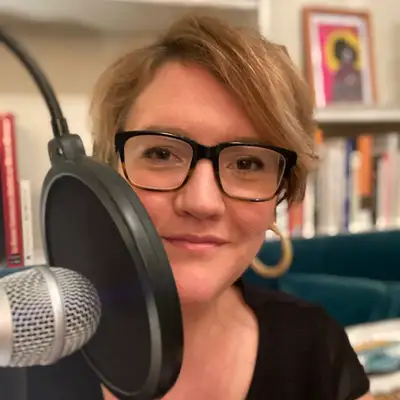
[00:00:00] Isabelle Roughol: Hello, and welcome to Broad History. I'm Isabelle Roughol.
To my shame, my double shame as a French woman, I could not until this week have named a single novel by George Sand. I knew of her, of course, because she's famous, but not so much because of her work, which hasn't stayed in the canon, I have to say, the way that her contemporaries have. That would be Victor Hugo, Flaubert, Balzac, Stendhal a little bit earlier, Zola a little bit later, so if you're a reader of French lit, that will sort of situate you. And I read all of these men in school, never George Sand. And we'll certainly talk about why that is. But no, I know of her because of her personality. George Sand sort of looms over the 19th century as this larger than life character, early queer icon, a gender-bending woman in men's clothes, to French people, sort of the female Oscar Wilde.
And then I read Becoming George, which is the biography, the new biography of George Sand by my guest this week, Fiona Sampson. And I have to admit that I found her to be both a really, really interesting woman, but not nearly the scandalous or unusual character that I think pop culture had made her out to be in my mind.
So we're gonna break all that down and also through her talk about gender expectations, creative careers, and the lives of women in the 19th century with Fiona Sampson. Fiona. Hello.
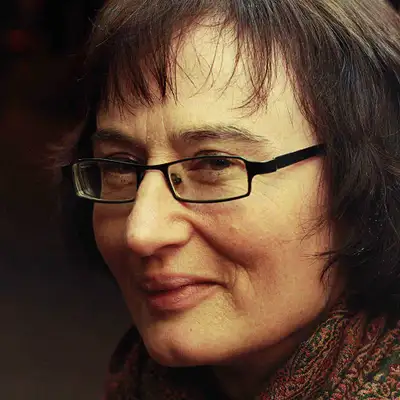
[00:01:21] Fiona Sampson: Hello, Isabelle. Thank you for inviting me. This is going to be great.
[00:01:24] Isabelle Roughol: My great pleasure. And so I should say that you're a biographer of George Sand, but also of Mary Shelley and Elizabeth Barrett Browning, as well as a professor and a renowned British poet as well, in your own right. So when did you encounter George Sand? Why this interest in this woman who, as I say, has somewhat fallen out of the canon?
[00:01:43] How female authors drop out of the literary canon
---
[00:01:43] Fiona Sampson: Well. I think two things really. One is that I'm really interested in the way women fall out of the canon, in a way that the men don't. And the other is that, um, in my first life I was a musician. I was a violinist. And so if you're a musician, you know about, obviously, you know about Chopin. And if you know about Chopin, you know there was this kind of strange figure who has a man's name, but it's a woman, but she seems to be bad for him. But at the same time, she was part of his life for a long time. There is this sense of a kind of musty glamor around George Sand.
And as you kindly said, I've already written this... really, it's a trilogy. I've written about Mary Shelley and I've written a biography of Elizabeth Barret Browning. And Barrett Browning and George Sand seemed to me to share having been tipped out of the canon, although they were still in the canon when I was a kid.
I mean, there was suddenly, even in an English public library, George Sand was on the bookshelves,when I was, in school. And Elizabeth B. Browning was in the poetry anthologies. But in the decades since, their reputation has superseded their work enormously, but particularly things around Elizabeth B. Browning and a TV schlock series and play, and it had many [00:03:00] iterations. A show on Broadway called The Barretts of Wimple Street, which is all about Elizabeth Barrett Browning as not a great writer with a sense of vocation and destiny, but Elizabeth Barrett Browning as the girlfriend of Robert Browning and as, and then wife, and as kind of a hindrance to him and a kind of inversion of actual literary history, where in fact she was the literary pioneer. She was his senior and so on.
And, uh, Mary Shelley, although Frankenstein has enormously now taken up cultural space, and that's wonderful to see, very much that cultural space is around the James Whale 1931 movie with Boris Karloff being the shuffling monster. And, less of it is actually that this was written by a teenage woman, and she wrote this fabulous novel, which is a kind of hybrid myth. And again, perhaps the opposite really, that when I was say a student, the idea was that Mary Shelley hadn't really written Frankenstein, Hey, maybe she had a great idea, but really Percy Bysshe worked it up into a literary work. And that of course is not the case. It's also not the case with George Sand that there was no work, there was only a scandalous private life. And I think this kind of being subject to scandal is something that really women still now, women stars now, celebrities, actors, they're not anymore novelists, are still subject to.
But I think all of us women in our working lives are more subject to personal reputation than our male peers. And I think that it's tragic for us that we don't know our own canon, that we let these women be disappeared, which makes it much easier to say, "of course women can't do very much. Look, they never have." On the contrary. Even denied education, even denied the fabulous education that privileged 19th century white men had, women managed it. They managed to write masterpieces and managed to be highly productive, even while they're having babies and goodness knows what. So in fact, I wanted to kind of invert the story with which we tend to live.
[00:04:55] Isabelle Roughol: Wonderful. That's music to my ears. That's exactly the, the point of the Broad history project, to remind people, women have done all these things in the past. We just haven't kept track of them as we have of the men who have.
[00:05:07] A girl of two worlds
---
[00:05:07] Isabelle Roughol: Let's start with,her childhood, the world that she's born into. She went by many names, and her first one, her birth name, is gonna be a mouthful for the non-French speakers. My apologies. Amantine Aurore Lucile Dupin de Franceuil. I don't get to my French that often on this podcast. Can you tell me about sort of her and the world that she's born into, that Aurore Dupin is born into in 1804, I believe?
[00:05:32] Fiona Sampson: That's right. July the first or fourth, we are not quite sure, 1804. As you will know, and most Anglophone listeners won't know or will have forgotten, of course it's Revolutionary France. This is a France where there is, everything is, as it were, called by a new name. This is a France of the revolutionary calendar, of the départements suddenly being introduced, of a kind [00:06:00] of partial deconstruction of the old aristocratic, I want to say fiefdoms, although I'm saying that metaphorically, divisions of the country and ruling class.
And Aurore herself sits right on that kind of fault line because, although not in an unusual way historically, because her mother is a former call girl, a Parisian working-class girl who was on the streets by the time she was 14, and whose father and stepfather were both bird catchers. And Aurore's father was an aristocratic cavalry officer, whose mother was the illegitimate daughter of the Great Marshall of France, Maurice de Saxe, and he himself was the illegitimate son of the King of Poland. I mean not quite yet king of Poland when he was conceived. So there's a kind of zigzag zip of illegitimacy that goes through the family tree.
But because Aurore was lucky enough that her parents were quickly married a month before she was born, they conferred on her legitimacy, which had huge practical consequences. But it meant that particularly her childhood when, for reasons we'll come to, she moved between care by her paternal family and her mother's care, there's a kind of fracturing of her identity, a sense of she doesn't quite belong to either class, and it is still class, or set of economic prospects. And her identity is verycontested. It's fluid. And you have this sense when she's writing, particularly in her autobiography, "Une Histoire de ma vie", about her childhood,of a kind of anxious child who's trying to do it right with both kind of sets of families, to both kind of family stories, trying to belong to both sets of codes and perhaps, finding that very difficult. A kind of quite intense sense of self invention going on even from early childhood.
And she had an illegitimate older half sibling on either side. Her father had had Hyppolite, and her mother had had Caroline. So she has an older half-sister, illegitimate, and older half brother, illegitimate.
[00:08:18] Isabelle Roughol: It's, I'm sorry to say, a bit of a cliché of, of France, but there is just so, so many mistresses. Even her very posh grandmother who keeps her to these very high society expectations of, of how a woman should behave is herself uh, a little bit on the edge, in terms of her own identity, and perhaps is all the more attached to defending that that, you know, gentry behavior.A girl raised in a convent, and we'll get to that, raised,educated in a convent like proper girls of her society, while also being a country tomboy who runs around, plays with horses and plays in the woods and, and has quite an idealic childhood. Let's talk about Nohant, the house, her [00:09:00] grandmother's house that she grows up in.
[00:09:02] Fiona Sampson: Yeah.
[00:09:02] Nohant and a custody battle between two women
---
[00:09:04] Fiona Sampson: So Nohant isa beautiful, late 18th century house.
It's not huge. It's very much a manor house rather than a mansion. It's right on the village square, I mean right abutting it. It's sort of overlooked by the country neighbors, which is something you know, Aurore remarks on.
And she talks about how in her childhood she was speaking dialect and she is running around and getting dirty. And her mother is allowing this because it's, I think it's, to get back at her mother-in-law, to get back at Marie Aurore de Saxe, to resist the gentrification while at the same time aspiring to it, while at the same time having made this advantageous marriage, having managed to produce an heir, who as it were, luckily for Aurore, died. So Aurore had a younger brother who died in infancy, when she was just four. So Sophie Victoire, Parisian street girl, has arrived at Nohant as the wife of the heir to Nohant, having produced the next heir, and then very quickly, the little boy dies. The grandmother wants to take custody of Aurore and Sophie Victoire'snose is put out of joint.
And so I think as people do when they're defensive, she, she sort of, she pushes back by embracing sort of vulgarity in a way. And, clearly even in adulthood, the adult George Sand struggles with her loyalty to her mother, who she describes as musical, charming, irrational, can't concentrate, spontaneous, but very moody, and her grandmother, who is not moody, who encourages her to learn, encourages her in lots of skills, encourages her manners, but whose affection is a sort of, is conditional as a reward. And, it's clear that almost in adulthood, still in late adulthood, because the autobiography is not written until the 1850s, George Sand is still struggling with who, when she was a little girl, she should have been loyal to and who she should have identified with because the women who are both strong characters very much set it up as a, you know, you have to choose which way you'll go.
You have to choose which version of the family you're part of, which is tough for a child.
[00:11:14] Isabelle Roughol: Mm-hmm.
[00:11:15] Fiona Sampson: It's a kind of custody battle between two women in a way.
[00:11:18] Isabelle Roughol: And I think it's something that is, um, that really shines through in your book. You've got really four generations, 'cause you've got the grandmother, the mother, you've got George and then her own daughter later. And you just have these incredibly complex mother daughter relationships and incredibly complex people who want and don't want the same things all at once throughout their entire lives.
And I, um. Yeah. It's just, it's just so, still so preciously rare to see such complex female characters, in history and to be able to, to unearth all of that complexity of personality that is not that often recorded.
[00:11:54] George and boyhood
---
[00:11:54] Fiona Sampson: Yeah. Thank you, Isabelle, 'cause I mean, every time I work on someone, I obviously sort of fall in love with 'em in a way. And I become more and more obsessed. And [00:12:00] you go down all these rabbit holes. And I think one of the, it's not a rabbit hole, I think is actually a huge space for exploration, is George, let's call her George, and boyhood.
You know, that she, like Elizabeth Barrett Browning, she recalls that when she was young, she wanted to be a boy, not a girl. She wanted those freedoms. You know, she learns to horseback ride and she rides bareback and not side saddle as young ladies were meant to, but in the English style as she calls it.
Her playmate is, at Nohant, is for a long time her older half brother, Hyppolite. So,there's a kind of boyish formation. And also when Aurore's father dies in a, he falls, you know, thrown by his horse and dies in a tragic accident, just when they've got to Nohant, so when Aurore is just four. At that point, her grandmother in her grief sometimes calls Aurore, my son. She says she very much resembles Maurice when he was a boy. And she, there was clearly a sort of palimpsest relationship going on there in a way that obviously there wasn't with Hyppolite, even though Hyppolite came first. And even though Hyppolite is also a boy. there's all of that.
And then in early adulthood when George is laden with responsibility, she talks about no longer being a garçon, no longer being free to be a boy, and to just go off to literary suppers or to sit around smoking and talking about books, she has to look after her children, she has to look after her household, she has to look after, eventually Chopin, and so on. So obviously, the figure of the boy is a figure of freedom and identification for her in a way.
[00:13:36] To be a girl in the Bridgerton years: "we raise them like saints, we hand them over like fillies"
---
[00:13:36] Isabelle Roughol: And funny enough, if she reminds her grandmother, of her son, she looks like her father, later on, it's her own son who looks a lot like her and takes a lot after her, more so than her daughter. So again, you see these generational patterns.
But let's talk about what it means to be, as she's growing up, what it means to be a girl, what it means to be a young woman. We're in the, for people who want a pop culture reference, we're in the Bridgerton years, I'm just thinking about it 'cause it's on TV right now. It's not where you go for historical accuracy. But one thing that is really quite accurate actually is the position of young women and young girls and just how clueless they are made to be about the world.
So George gets an education in an English convent. So she ends up with a, with passable English. It's an English school in Paris. But the way girls are educated, they're educated to, to be good wives, essentially, right? They're not getting a, a very intellectual, classical education the way boys are.
And they're not educated either in the ways of the world, she has this wonderful sentence: "we raise them like saints, then hand them over like fillies." Talk about an indictment of, of what the early 19th century does to girls.
[00:14:46] Fiona Sampson: Yes, absolutely. And it takes her a long time to sort of learn that, because I mean, that, that, that wonderful sentence, I mean, terrible sentence, comes from a, a letter to Hyppolite when they're both adults, when Hyppolite's own daughter's [00:15:00] about to get married, sort of warning him, you know, try and give her some warning, try and give her some breathing room, and so on.
So that's the adult speaking, isn't it? But when she's in the convent, she, she's very quickly. First of all, she's a devil, she's a wild girl. But very quickly, she learns to fit in. Then she becomes immensely popular and lessons will come very easy to her. And quite soon she's writing plays and putting them on.
And she's allowed to do this, 'cause there's quite a community there. There isn't just pupils and teaching sisters, there's also the classical,in the classical sense, women who have been sent to the convent to live, who've got, who've retired to the convent. So there is an adult community too.
So it's a sort of mixed community and she puts on entertainment for them. She stages Molière. And she also has a crush on, she has a spiritual confessor for the first time, but she also has a crush on the assistant to the mother Superior, who is an a half English woman, Mother as she calls it – she's not mother actually because she's not the mother superior – Spearing. And, Sister Spearing inspires to such an extent that Aurore thinks she has a vocation, you know, she's popular, not lonely. Her life is rich and varied. And of course it's not the program at all.
The program is that she's supposed to acquire manners and a ladylike finish and then go home to Nohant. So after only two and a little bit years, when she's 15, her grandmother comes up to Paris and whips her off back to Nohant to be her companion,and then both restricts her life still further, but at the same time kinda mocks the pietism andthe little learning that Aurore acquired in the convent,
and in fact, is herself more educated than her granddaughter and challenges her in discussions and so on. And Aurore eventually, through sheer boredom, begins to educate herself, begins to read Rousseau, begins to read Leibnitz, begins to read Thomas à Kempis's Imitation of Christ, finds that kind of emphasis on self perfection even more isolating, depressing. So begins to read Chateaubriand, the genius of Christianity, and suddenly sees Christianity as a way forward. It's about art and religion and public and collective and everything she was doing at the convent.
And so, in a sense has her own very private auto didacticism, but it's very piecemeal. It's very happenstance and piecemeal. She only reads Chateaubriand because a local confessor suggests it and because Chateaubriandis immensely, popular and influential at just at that point. She's very failed by her education.
I think for contemporary readers, the result is she's very readable. She doesn't write the kind of French that's formal and throat clearing and ornate, and she doesn't write the French of a 19th century novel. She writes something that's very immediate. She doesn't have particularly vast vocabulary. It's extremely accessible and quite [00:18:00] informal and a very fast read, as indeed she was obviously a fast writer, so there are. There are benefits from her lack of education, but it's very much a girl's education.
[00:18:12] How women writers rose in service to a growing reading public
---
[00:18:12] Isabelle Roughol: And that's something you see a lot, I think, in the 19th century. You see women writing for a growing female readership. Like there are a lot of female writers and a lot of female readers, and also men, but the common men, the ordinary men. They're a bit, they're excluded out of higher education and also therefore out of, um, maybe slightly more pretentious, or elite, or academic kind of writing.
[00:18:34] Fiona Sampson: Yes, absolutely. I mean, one thing is that it makes me think of, again, of Mary Shelley and Frankenstein and how readable Frankenstein is compared to Mary Shelley's own later novels when she sees herself as more of a literary figure. And actually compared to Percy Bisshe's little, you know, interventions of "change your description here", he always changes her prose into something stuffier. So there definitely is that.
I think that, one of the ways in which George Sand's timing was very lucky,when she's George Sand, is that she is becoming a writer at the time that literacy is increasing. There are more and more church schools, but there was also, you know, compulsory education is gradually coming in. So that the, that there's the rise of a new literate middle class, you know, the bankers and shopkeepers, and, well before the end of her life there is universal as it were literacy. And with that is a great rise in the number of kind of professional outlets, the number of periodicals she can write for, the number of editors. There's a whole expansion of a kind of working, as it were, commercial literary and writing world in Paris, as also in London. But obviously the timing is different because their states are so different. And I think that means that yeah, reading becomes a more, reading percolates down, reading for leisure percolates down many more layers of society.
So a common touch, as it were is suddenly a door opener to readers and reputation rather than the opposite.
[00:20:08] From unhappy provincial wife to Parisian auteur
---
[00:20:08] Isabelle Roughol: And so that takes us, to her adult life and start of her professional career. Her adolescence, really her youth or her childhood ends with the death of her grandmother, who she takes care of. She gets married, almost instantly
And that's really the expected, you know, married at 18, she's a mother at 19. She really starts out like any young woman of her age. When does that take a turn? When does she start to become, the woman that, that we are gonna know? When does she start really writing as a profession?
[00:20:38] Fiona Sampson: She starts writing really quite late. There are eight years,of marriage, before she really tries her luck as a writer and during that time, for much of the time, she's just restless and gradually unpicking her marriage by infidelity and the marriage is failing in all sorts of ways.
So she's doing a lot of rather unsatisfactory provincial living. And [00:21:00] then in 1831, she has an affair with a law student called Jules Sandeau.He's a student in Paris, but he's back in Lachartre, her local town, for the summer, which is how they meet.
And conveniently at the end of that summer, she discovers that her husband, Casimir Dudevant, has framed his will, but he framed it in terms of such fury and contempt for her, that she understands it's not that he's just clumsy, but really he loves her and she's the problem. No, actually he detests her and that kind of gives her the emotional license to follow Sandeau to Paris.
And she, she sets down the terms of, she frames it all as being her problem husband's fault, which is another form of female self erasure, but we won't go there. and she sets up an arrangement where she'll spend three months, three months, three months in Paris, three months back in Nohant with her children, three months in Paris, three months back in Nohant with her children. And she goes to Paris and during the months before, she has been playing at writing, she's been trying to turn a travel journal into a book. She can't quite do it yet. She hasn't got the skills and so on, but she's very clever at discovering what she needs, which is a framework, and almost immediately when she gets to Paris, two things happen.
One, she and Jules have been playing at co-writing short stories, and they place a couple of stories in magazines. The other is that she herself goes to see the editor of Le Figaro, Henri de Latouche, who turns out also to be from Lachartre, and so she has an introduction from home, I mean, an extraordinary piece of luck. And they obviously get on, he obviously sees something in her. He immediately puts her on the staff, which I mean, you wouldn't do if you were the editor of the Figaro and you were gonna sully your reputation by just taking on some young woman from home. You wouldn't do that. You might try and offer to publish some of her fiction, but you wouldn't take her on. But he does, he takes her on, so she has a desk at the Figaro, and, also realizes that nevertheless, she's still very short of money and so he offers her and Sandeau the chance to do some ghost writing, to ghost write a novel called The Commissioner very quickly in four weeks, which had already been commissioned, but the author died. And they do it, and one suspects that Aurore, as she is still, does most of it, but they do it. And the publishers are pleased enough that they then pitch a novel that they themselves co-write called Rose et Blanche. And that too is published within, this is all in 1831. That too is published before the end of the year, and most of that has actually been written by Aurore.
And this is published under the pseudonym of J. Sand, so it's not yet, it's no longer Sandeau, to kind of equalize it up a little bit. Again, it's a suggestion of Henri de Latouche. So it all happens within a year, this commercial writing, and then in [00:24:00] April 1832, when she comes back to Paris after her next three months at home, she comes back not only with her 3-year-old daughter, bizarrely, because it's also into the middle of a cholera epidemic, but she comes with a manuscript of what will be her incredibly successful debut novel, which is Indiana, and which is the first novel she's written by herself. So it happens really quickly, but it does happen through contacts.
[00:24:24] The making of a nom de plume
---
[00:24:24] Isabelle Roughol: Yeah. so Jules Sandeau, obviously hislegacy is to have eventually given her the name.As you say, when they co-write, it's J Sand and it over the time changes, she changes it to Georges Sand. Georges with an s uh, the French spelling. and I've always wondered: how does she come to the English spelling of George? Where does that come from?
[00:24:46] Fiona Sampson: Well, is that just that, just it, she lapses from George. So she's G, just G, on the title page of Indiana. And she is George, she's still being called Aurore by people in her own life and including Paris friends. But she gradually, in 1832, when she comes back to Paris that autumn after the next trip home to Nohant, she doesn't move back in with Sandeau, and she is Georges at this point.
But during the coming months, while she's living on her own in a new apartment, she gradually drops the s. She rehearses dropping it. And I wonder if it's partly because it's the English name and she went to the English school, whether it's partly because Sand is anyway an abbreviation of Sandeau, George is an abbreviation of Georges.
And obviously I wonder whether there is, I mean, it's not literal cross-dressing, in other words, sort of nominal cross-dressing, it's a male nom de plume. But there's give even within that.
And why she has a male nom de plume, I mean that's, you know, not mysterious at all, is it? This is the era this when, she will be succeeded by George Elliot. But I mean, it's the era of the Bronte sisters being, you know, the Bell Brothers and so on. It's not, um, uh. Mary Shelley is anonymous and Jane Austen is anonymous. She's "a lady", I mean, admitting her gender, but not, you know. Women publishing under their own name is, is still so problematic that I don't think that we can read anything into the fact she has a approximately male nom de plume. But nevertheless, she does, and she has an English one.
[00:26:34] What cross-dressing means to George
---
[00:26:34] Isabelle Roughol: So first she co-writes with a man, which helps her get published, and she, adopts a male nom de plume, which as you say, incredibly common. It was just, being seen as a writing woman who's quite damaging to one's reputation, probably didn't sell books as well either, so again, very practical. And this is also the time, as she works as a reporter at Le Figaro in a very maleworld – some of the comments she makes made me laugh because I started my career at Le Figaro about 200 years [00:27:00] her, and I recognize so much of it. It's a very masculine environment, um, even, even in early 21st century it was.But so there she starts, dressing as a man, and it seems to be not really some grand statement about her own gender identity or of wanting to be a man, you know, we certainly shouldn't put modern ideas of trans identity or anything like that on top of that, it is practical. It is being a woman at that time is a bit of a cage and stops what you can do and who you can be. And she just wants to be a person without being limited by a gender, and therefore sometimes she takes on the attributes of men 'cause it's way more convenient to go around Paris in trousers. Right?
[00:27:45] Fiona Sampson: Absolutely. Absolutely. And I think that she's very much wearing it as a costume. I think she is saying, "I'm not gonna pretend, I'm not gonna hope that I pass as a man, although possibly on a rainy night with my hat well down". She is more saying, "This is the costume of Touch Me Not", oddly given that we think of her as someone who was promiscuous, as she was.
[00:28:08] Isabelle Roughol: It's safer. It's much
[00:28:09] Fiona Sampson: It's safer and it's also more authoritative. You know, she has this lovely quote about being at the Figaro and saying, if you can make yourself indispensable in an editorial office, it's the best thing because it's not, it has nothing to do with your personality, you know, ellipsis and your gender. It's a way of saying, "this is a writer's costume. I'm a writer."
[00:28:31] Isabelle Roughol: Hmm.
[00:28:31] Fiona Sampson: Okay. Yes, I admit it, I've got curls. Okay, I admit it I'm wearing a corset, but I'm a boy and I'm playing the role of a boy, a bit like a leading boy in a pantomime, an English pantomime. It's not sexual play because interestingly, in her private life, she wears frocks. In her private life when she's dating all these men, she's frocked up.
She's not wearing, she's not wearing men's clothes for the bedroom at all. She's wearing men's clothes precisely really for the outside world. And also of course, passing in the sense that it's hard, places where she can't, where women can't really go, like, um, the gallery at the opera and so on, in men's clothes, she can pass enough that, whereas if she were wearing a colored frock, obviously she'd stand out a mile.
[00:29:18] Isabelle Roughol: Mm.
[00:29:18] Fiona Sampson: Not that I think that people look at her like a Shakespearean heroin and you know, oh, which gender is she? I think it's that she, yeah, she's just saying, take me as seriously as you take yourself.
[00:29:28] Pushing the boundaries of a gendered language
---
[00:29:28] Isabelle Roughol: Yeah. And it's, um, it's fascinating. I think that's something that's also very much sort of embedded in the French language, which is a gendered language, right? It's got, it's got the feminine and masculine, nouns are, are feminine or masculine. When people are trying to, you know, even give her compliments, you know, male writer, talking about her as this great man.
Or there's something about the French language that even if there exists a feminine version of a particular word like author, it is less than. And to use, you know, I mean, we, we [00:30:00] even do it in English, you know, some, some actresses go by actor because actor sounds more serious.
And even today in France, you know, people will debate whether the word "ministre", the word for minister, government minister, should be feminized or not. And and it's fascinating words become feminized when they become lesser status, essentially. It's just, it's a fascinating trait of language.
And so, again and again, even her friends, and her male friends in the arts call her by male names, male as a...
[00:30:31] Fiona Sampson: Exactly, and most famously Flaubert towards the end of her life, you know, in the last decade of her life, calls her "Dear Master."
[00:30:37] Isabelle Roughol: Mm-hmm. "Chère maître."
[00:30:38] Fiona Sampson: Not mistress, but dear with the feminine form.
Which is the word that, that you use? Yes, "maître" is the word that you use today still, to address a barrister. And we do not feminize it. Female barristers are called maître, not "maîtresse", mistress. So master, it's, um, it's fascinating, you know, and it's, it's a lot of the gender expectations that are embedded in French culture and therefore in French society, which are hard to convey in translation, but I think was an important point to make. And that's so interesting because I think that, it makes it even clearer that she is very early trying to rock that linguistic and conceptual boat, isn't she? Obviously, when Flaubert says "maître", he's talking aboutan artistic master. And I suspect there were no female barristers in those days, so all barristers were made.
So when she's dear female form, "chère", then something really is rocking in the language. And it's the same with, um, her lover Alfred de Musset, the poet. He addresses her, "oh my," no, let me get it right, "oh, my George" and my is
[00:31:45] Isabelle Roughol: Ma? Mon!. Mon, okay, so the masculine form.
[00:31:50] Fiona Sampson: And then he says, "my dear mistress."
[00:31:52] Isabelle Roughol: Mm. Mm-hmm.
So he says she's both "mon" and "ma" in the same of exclamation, the same greetings. Yeah, The way that she presents her gender identity, I think has more to do with the limitations of the world around her and the language that she has to use than anything to do with her own identity, which she seems quite secure in.
[00:32:12] The writer of the female condition and the tragedy of marriage
---
[00:32:12] Isabelle Roughol: So you mentioned her first novel. And success comes quite quickly. And, you also mentioned she's incredibly productive. I mean, the pace at which she writes is insane, I think partly because she needs to earn, right? She has children, her husband is, or ex-husband is not very helpful. She, I think Jules Sandeau is the first, but she attaches herself again and again to younger men and takes on a caretaker role and ends up looking after their careers, their finances, their,there's a lot of people who are reliant on her.
[00:32:43] Fiona Sampson: Yeah. She is, she's a workhorse. By the time she's with Chopin, and for the years that she supports him, the nine years she supports him, for much of that time she's raising both children and she's also acting as tutor to those children. So during the day, she runs a household, looks after Chopin and [00:33:00] tutors her kids. And then at night she writes novels. Well, when does she sleep? She sleeps for sort of four hours and friends and peers talk her about her as being a sort of writing machine. The Goncourt brothers for example, talk about her as being like that. And yeah, sure enough, she's quite a relatively, by the standards of her day, she's quite a late starter and yet by the end of her life, there will be 70 novels. There'll be many successful stage plays. There'll be criticism, there'll be autobiography, there'll be travel writing. I mean, she's astonishingly prolific, Indiana is followed very quickly by Valentine, and then the next year by Lilia, and all three of them are about the condition of women under particularly arranged marriage and that arranged marriage is not just ho, ho, ho what a drag, but is actually an absolute tragedy for women. They have no autonomy, but also prevents them coming into selfhood of any kind. And they get progressively darker,
those three first novels do, so while Indiana is a terrific success because it's driven by emotion and the argument, but it's reasonably melodramatic. By the time she gets to Lilia, she's really arguing against the institution of marriage per se. And that makes her popular neither with traditionalists, nor with radicals like Saint-Simon who want to change other things but aren't particularly worried about the state of women.
[00:34:20] Isabelle Roughol: Yeah. Let's talk about her writing since, as we've pointed out, we need to talk about her writing and not just our relationships to put her back in the canon. What kind of literature does she write and how does that compare to what's going on in the time? I think we, we think of 19th Century, you've got the Romantics and then you've got the very political sort of, Hugo, Zola, criticism of, of society. Where does she fit?
[00:34:42] Fiona Sampson: Where she differs from Hugo and Zola and Balzac and his human comedy, is that it's not that all her protagonists are female, but they are centrally female, and that she tends to be up close on a paradigmatically difficult situation rather than kind of big canvas, crowd scenes. So she will look at how a marriage inevitably falls apart when effectively the husband owns the wife and the writing, which is, tends to be quite emotional and quite urgent, and fast. There's a strategy of celerity, as Helene Cixous will long time in the future say. There's a passionate argumentation from ideals about equality and the importance of women and their lives, but that's often misheard as, "oh, this is just a story about private lives." Or, "this is just a love story or a failed love story." But of course it's not. It's a critique of society in exactly the same way as the men are critiquing their society. And I think one of the tragedies of subsequent perception of Sand, or at least 21st century perception, is the sense, "oh, well, yeah, but those novels don't read to us as political now because we don't live like that now." Number one, there is arranged marriage in [00:36:00] many parts of the world, so yes we do. But also number two, but nobody says that about Les Misérables or whatever. Oh, we don't need to read that now because that was Paris in the 19th century. Society's different now."
It's the old sense of the male as a universal human condition, and the female as, not only diminished, but as an exception, a special case of minority interest. And so I think that, the kind of progressive politics of her writing is often forgotten, but it's a motor. And I think she had the courage to not just write from sentiment like "Wouldn't it be nice if these people fell in love?" but to write from ideals. So convictions which are held, but which she allows to be held within the emotions as well as within argumentation. And obviously for a storyteller, that's a significant gift.
I think the other thing, two things she does, which are very pioneering, is that she, she writes about the lives of the rural poor. And again, this is decades before Thomas Hardy will in English. And she writes about those lives as being full of dignity and meaning, but nevertheless, not sentimentally, pastoral and oh, you know, hes, oh well they're so wise and so on. No, she's showing the life is pretty awful. But she's also saying that the people themselves are not pretty awful. They're understandable, they're human, relatable. So she's according a real dignity to another group who have still not achieved equality after the revolution, you know, after the various iterations of empire and so on.
And the third thing she does is that she has this kind of ecological understanding. So when she writes about the natural world, she understands it as interconnected and that we affect it and affects us, but that it is independent of us. And that's ecology, and that's, that's not just countryside settings or rural settings, or nature writing, that's something much more than that. That's actually ecology.
[00:38:00] George Sand, international best-selling author
---
[00:38:00] Fiona Sampson: So I think in all three ways, she's very significant. And then of course, she's just very significant because she is enlivening, she's part of this great, miraculous 19th century flowering of the realist novel, and she's doing it with her own particular diction.
And so in all those ways, she's, she's creating a certain fluency and immediacy. We were talking about this in a way earlier, weren't we? in the texture of what you get to read. And she's a huge role model as well because although she writes under pen name, everybody knows she's that woman over there, even though no longer know that she's actually Aurore Dudevant by marriage.
And, she's very important to the other women writers. But presumably, as you also say, to women readers, you know. So the Bronte sister for example, they definitely model themselves on, they read her with, uh, fascination and they model her. You know, Withering Heights is quite a George Sand kind of novel.
So her success [00:39:00] travels in her lifetime. She's read in translation.
She's more, she's more widely read in translation in this country than Hugo while they're both alive,
[00:39:08] Isabelle Roughol: Wow.
[00:39:09] Fiona Sampson: She knows everyone, you know, Matthew Arnold, Elizabeth Barrett Browning, Ruskin, in this country, but,Lizst as well as, Chopin, Delacroix, all the writers of her era. And they all speak to her about her behind her back, as well as to her face, as a literary figure of the utmost seriousness and importance. They don't dismiss her interestingly. There's a sense of she's definitely part of their contemporary pantheon and should remain there, and I think they would be astonished that she has vanished to the extent that she has.
[00:39:41] Isabelle Roughol: Yeah, absolutely. I mean, when, when she dies, Victor Hugo, he's one of those men who uses that great man image because just great woman I guess hasn't entered the vocabulary.and she has this lovely friendship with Flaubert, at the end of her life in epistolary.
[00:39:58] Fiona Sampson: She writes a huge number of letters and writes them quite literary, right? She writes letters the way that one might write books. Of course, it's a thing that is done in the 19th century. People are much better letter writers than, than we are. But it is still astonishing, isn't it? Because again, that's another part of her productivity. I mean, there are thousands of surviving letters. She just obviously was a graphomane, she never stopped. It's just extraordinary.
[00:40:24] The process of self-invention
---
[00:40:24] Isabelle Roughol: One thing I think you see in her letters as well, and I think that's something that is a bit of a theme throughout your book is this idea of the creation of identity, right? You're telling a, she's telling a story about herself to the, the friend who's reading her to, to us, you know, reading her later on. She's kind of always inventing and reinventing her own identity and her own personality.
[00:40:47] Fiona Sampson: Yes, and I am fascinated by that. I'm fascinated with all these women, with these three women by how they invented themselves as writers. That's to say how they swam against the tide of social expectation right at the outset of their lives, and then continue to do so. I mean, how did they have, not only how did they acquire the accomplishment to do what they did, but how did they have the courage to do it?
But I'm also very interested in how people become in general, I'm quite a believer in subjects and process. I think people shape themselves and are shaped by life and not only in an early life psychoanalytic way. And I think that these women, figures like George Sand, who traveled such an enormous distance from where she started, the process of self invention is really apparent. It's apparent in, the life story and the achievement, but it's also, I think, apparent in again, that layering that palimpsest sense around her final or her later iterations of who she is. When she stops having to be in Paris to be a success, and she's able, even for [00:42:00] stage, what we call West End, to have, a lot of success on the Paris stage, she can stillwrite those plays and have them rehearsed in Nohant. And she doesn't need to be in Paris all time. So she goes back and settles mainly in Nohant, which she's owned all her life, of course, since she's inherited at 17. But she makes it a sort of literary center, a center of productivity. But she isn't a salonnière. She becomes the good woman of Nohant, she becomes very generous, does good works to poor people in the neighborhood and so on, and becomes very practical in running the home farm and having a well appointed kitchen and so on.
So she becomes this other iteration, this matron in a way, but at the same time, she's also the master and I think that's just extraordinarily interesting that these things coexist, that there isn't this kind of essentialist polarization. There is a simultaneity, but it's not chaotic. She has produced a mixture which works for her. She has found a way.
And she invents herself as well, as we all do, through the relationships that she embarks on, and, I think it's fascinating that we're coming to the end of our hour and we've barely talked about them, even though that's what she is, is so perhaps most known for today, at least in the pop culture.
[00:43:22] Isabelle Roughol: And I think that proves our point from the beginning, which is she's so much more than that. But I will just mention them and then people can read the book because otherwise that's a whole hour, another hour of our conversations. But, um, obviously the most famous one, as you mentioned, was Chopin, who is actually a fairly short relationship in the traditional sort of romantic and sexual understanding of the word, but then remains a presence in her life, and she in his really for quite a long time. And you have Alfred de Musset before, the young poet, the probably more famous of her, of the many young, younger men that, that she has known. And Marie Dorval, who is the only woman I think that she is known to have had a relationship with. So again, we have this image of this sort of bisexual, gender bending queer icon. There is a quite short maybe relationship, we're not even a hundred percent sure, with a woman in her youth.
[00:44:18] Fiona Sampson: We're not absolutely sure, but it, I think one has to argue quite hard to, to try and, dissolve that relationship. But there is absolutely no evidence of any other women. And definitely she has very much a sexual, romantic type, and it is the younger man. It's the garçon again.
But I still think she remains a queer icon because I think it's queer in a sense of, not really who you sleep with, but queer in what being a woman is. I think that, uh, that's, that's where possibly the richness of her as a figure for us now is, is most significant. That she in a sense says to us over and over, well, whatever the convention of the cage of convention you had to be in, [00:45:00] happened to be in right now,
No, think around it, reinvent it, see what you can do with it, see how you can play with it, see what you might change. And to me that's very rich, that sort of elective querying.
[00:45:13] Isabelle Roughol: Yeah, it does feel like if she had had another a hundred years, there would've been another 10 versions of her, you know, we would've known her by other names and other, other associations and other interests. Fiona, thank you so much. It's been really, really interesting conversation.
I had no idea when I started reading into George Sand, who I, again, barely knew, that there would be just so much there to learn and to be inspired by. So thank you so very much.
[00:45:38] Fiona Sampson: Ah, thank you so much, Isabelle, it was a joy talking.
[00:45:41] Outro
---
[00:45:41] Isabelle Roughol: That was Fiona Sampson. The book, Becoming George, is available at the Broad History bookstore, which supports this programme. You'll find links in the show notes and at broadhistory.com.
There's also a slightly longer uncut version of our conversation over on the YouTube channel, so you can see our faces as well, if that's your thing. The handle is @BroadHistory.
You can become a member or make a one-time donation to make Broad History possible. This work, covering women's history with all the depth and nuance that it requires, backing good science with good storytelling, this requires constant research, reading and making. It's a lot of work, and it simply could not happen without supporting members. A big thank you to our first founding members, Michael, Ron, Alexandra, Hannah, and Caroline. You can join them at broadhistory.com. Sign up for the newsletter, read the articles, and become a member.
I am your host, Isabelle Roughol, and this was Broad History. I'll talk to you soon.