Subscribe
Share
Share
Embed
The Honest Take is HonestReporting's long-form interview series bringing together leading voices to examine how Israel and the Middle East are covered — and what goes into creating and feeding the narratives that target Israel.
Each episode features leading experts, analysts, researchers, and journalists who work on media bias, terrorism, NGO accountability, foreign influence, antisemitism, and international institutions. These are professionals directly involved in investigating how narratives are shaped, amplified, and protected across global newsrooms.
The conversations go beyond breaking news to unpack:
• Media bias and misinformation about Israel
• How terrorist organizations exploit humanitarian and civil society frameworks
• The role of NGOs and international bodies in shaping public perception
• Foreign state influence on Western media and education
• Why context disappears in reporting on Israel and the Palestinians
This series is for listeners seeking in-depth analysis, evidence-based discussion, and accountability in journalism on Israel and the Middle East.
THT Matti Friedman X Audio.txt
English (US)
00:00:00.080 — 00:00:38.840 · Speaker 1
The scope of the content is really, I would say, deranged. I mean, I can give you some numbers at the, at the AP. At the time that I was there, we had about 40 full time staffers covering this story. Israel is 1/100 of 1% of the surface of the world. We had more reporters here than we had in China at that time, which has 1.3 billion people.
We had more reporters here than we had in all of sub-Saharan Africa, which is 50 something countries. This was the biggest international bureau of the world's biggest news organization. So if the news is a rational attempt to explain events on planet Earth, you can't cover Israel more than you cover the continent of Africa.
00:00:41.520 — 00:01:01.510 · Speaker 2
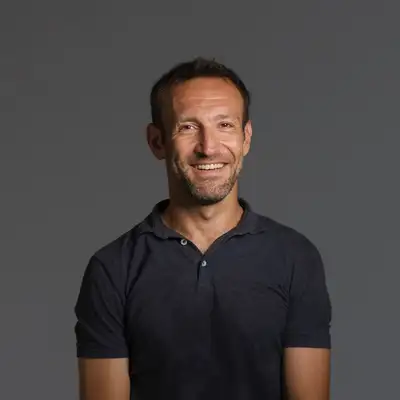
Welcome to the honest. Take the show that goes past the headlines to find out what's actually true about Israel and the people covering it. I'm Ben Chertoff, and my guest today is Marty Friedman. He spent five years inside the biggest newsroom covering Israel. And then he walked out and told the world exactly how the story gets made.
00:01:05.870 — 00:02:06.900 · Speaker 2
He's a Canadian who came to Israel as a young man and never left. From 2006 to 2011, he was a reporter and editor in the Jerusalem bureau of the Associated Press, the biggest news organization in the world, feeding thousands of outlets downstream and from the inside. He started noticing things like the fact that the AP had more staff covering tiny Israel than it had in China or all of sub-Saharan Africa.
In 2014, he wrote An Insider's Guide to the Most Important Story on Earth, where he laid out how a real war with real people gets fitted into a script that's already written a morality play. He called it, with a familiar villain. He's the author of five books. He coined the word Gaza, and now he writes from Jerusalem for the Free Press and The Atlantic magazine.
He is one of the few people who can tell you how the sausage is actually made, because he helped make it. Matty Friedman, welcome to the Honest Egg.
00:02:06.940 — 00:02:08.259 · Speaker 1
Thanks so much for having me.
00:02:08.300 — 00:02:27.660 · Speaker 2
Let's start at the beginning of your story in the AP. You were inside the Associated Press Jerusalem bureau from 2006 to 2011. For people who picture, you know, the media as an abstraction, what is what is a newsroom like that look like day to day?
00:02:27.700 — 00:03:15.820 · Speaker 1
Right. People think the media don't know what exactly people are imagining when they hear the media. It's an office in Jerusalem. At the time, it was the AP's biggest international bureau. Um, it's a room with a big desk with computers on it, people filing stories, people talking on the phone, often getting stories dictated by reporters in the field.
There's a television section, there's a stills photography section. So. But by new standards, it's a pretty, pretty big operation at the time that I'm there, about 40 full time staffers, most of them based in Jerusalem, with a few based in Ramallah and Gaza City. Um, you know, it looked like more or less any, any other office that you can imagine of an accounting firm or an investment firm.
It's, uh, I would say pretty, pretty ordinary looking.
00:03:15.860 — 00:03:26.780 · Speaker 2
When did you first notice that something was off, that you weren't necessarily covering stories as, as an institution as much as serving one?
00:03:27.460 — 00:04:32.010 · Speaker 1
It took me a while. I came in without any particular critique of the media, and I came in from, I would say, the left side of the Israeli political spectrum. So I wasn't planning on having any political problems at a mainstream American news organization. And I didn't notice right off the bat that there was a there was anything awry.
If people critiqued the coverage in my first couple of years at the AP, I would reply that some stories break, you know, in one way or another, stories break a different way. But if you take the totality of AP coverage, you'll get something resembling reality. So we had stories that were more critical of visceral stories that were less critical, but I felt at first that it added up to a more or less sane depiction of reality.
I would say after after about two years, I realized that that wasn't exactly true. I think the breaking point for me and for me, for, for several other people was the, the, the first really bad round of violence in Gaza, which happens at the very end of 2008, early 2009. It's Operation Cast lead. And that really brought things to to a head.
Hamas had taken over Gaza a year before.
00:04:33.170 — 00:05:44.760 · Speaker 1
So that was a change. Obama, um, won the presidential election. Um, that also caused a political shift. Social media had really hit. I mean, it's hard to imagine from 2026, but in 2008, social media is still really new. So Facebook and Twitter hadn't really hit until I would say 2007, 2008. So a lot of things happen at the same time and and create.
I was going to say and create a change in the media landscape. To some extent that's true. It in a different sense that the problems existed before, and maybe I only noticed them in 2008 so that we could argue about, uh, about which of those versions of events is true. But I would say around 2008. And then it started striking me that the way we're framing the story was very odd, that the scope of our coverage was extremely strange, that we were very receptive to certain stories and very resistant to other stories, and things more or less went downhill from there.
Although it took me a few more years to leave, I was at the AP until the very end of 2011, so I was there for a total of five and a half or almost six years until I ultimately left. And then it was only a few years after that that I wrote about my experiences in 2014.
00:05:45.280 — 00:06:01.390 · Speaker 2
For somebody who doesn't understand the structure of how news gets filtered and distributed. Can you explain quickly the the power that the AP has, how it is such a the upstream influence.
00:06:01.430 — 00:07:51.940 · Speaker 1
Yeah. I mean there are many more sparkly media operations. So people know the New York Times and The New Yorker and they know more elite publications and don't really think about the AP. But the AP, in many ways is a much more influential operation because it it's essentially one of the, um, foundational building blocks of the news world.
So when I was at the AP, which is, I guess we should say, just in case people don't know, it's the Associated Press, the big American news agency headquartered in New York. We had, um, we were providing news to 10,000 media outlets so we could chew on that for a moment. And what that means. So it's not it's not just America, by the way.
P is American, but it's providing news across the world through 10,000 outlets, which means radio stations, TV stations, local newspapers. Most people are not going to be able to have a correspondent in Israel or in Ukraine or in, you know, Washington, D.C. they're going to be using agency material, which could mean an AP article that you publish in your paper or AP copy that's read over the airwaves at your station.
You're going to be using AP photographs, you're going to be using AP TV footage. And that's that's that's crucial. That's a crucial part of the of the puzzle. So we're talking about a massive, very influential news organization that ends up really setting the goalposts for coverage. What AP covers is more or less what everyone else is going to cover.
The the boundaries of acceptable coverage are set to a large extent by the agencies, mainly by AP, the AP at the time that I was there, and I imagine it's still true, claims to be the world's largest news organization. And Reuters also apparently claims that. So I'm not sure who's right, but we're talking about a huge and very influential news organization that has an impact that's much beyond its name recognition.
So you may never have consciously read an AP story, but you have definitely had your worldview shaped by the AP, whether you realize that or not.
00:07:51.980 — 00:08:01.700 · Speaker 2
Was there a specific single story where you felt that gap between what happened, reality, and what was filed?
00:08:02.260 — 00:11:34.030 · Speaker 1
There were many. There were many examples. One I gave in the essays that I ultimately wrote about this involved the peace offer that was made by the then Israeli Prime Minister, Ehud Olmert, at the very end of 2008. And I gave that example not because it was necessarily the most egregious, but because it was perhaps the easiest to explain, because much of this stuff ends up being a bit amorphous.
And it's many weeks in the bureau of going back and forth on stories and getting pushed back on certain stories. And, um, but, um, two AP reporters had the story of the Olmert peace offer from 2008, and we were the first to have it. One of our reporters saw a map, and this was a very far reaching peace offer, a two state offer made by the Israeli prime minister to the Palestinian president, Mahmoud Abbas, who was then the president and is still the president and the, uh, the Palestinians had, um, walked away from the offer.
They it wasn't what they were looking for. By the way. That's that's fine. But the news story is that Israel has made this offer, which would have seen a Palestinian state in, in Gaza, would have seen a Palestinian state in almost all of the West Bank in an international sharing arrangement for Jerusalem.
That was very far reaching. I think so far reaching the Israeli public would probably never have gone for it. But this is the Israeli prime minister making a peace offer. And obviously it's a huge news story, because if the thrust of your coverage is the peace process, which it was at the time, then a story that delineates what Israel is willing to offer and what the Palestinians are willing to accept is a huge is a huge story.
The problem is that this story would have subverted the entire narrative that we were pushing, which is that Israel is uncooperative and uninterested in a resolution of the conflict. Israel is increasingly extreme, and the Palestinians are moderate and is looking for a democratic state alongside Israel.
That was the thrust of the story. So if you publish this story about Olmert, it completely upends, you know, everything else you're trying to do. So the two reporters were ordered to drop the story, and there were different. There were different reasons given, for there was a huge argument in the bureau, and one of the one of the reporters ultimately came forward.
After I published this episode in 2014, one of the reporters, Guy named Mark Levy, came forward and said that this decision by the by the bureau chief was the worst. I think his wording was the worst journalistic scandal in his 50 years in journalism. And, you know, that might be a tad extreme, but I think basically he's right.
It was a huge, uh, it was a scandalous decision, but and it was made for political reasons and for political reasons. And I think that just illustrates the the general approach of not just the AP Bureau of the media in general, which publishes essentially, political fantasy. The stories are meant to make a political case.
Stories that don't make the case will be played down or ignored. Stories that do make the case will be inflated and sometimes invented. And that's more or less where we are. I should also say that the the AP Isn't a particularly extreme case. It's just a company that was unfortunate enough to hire me. Which is why I know how it works on the inside.
The same thing was going on at Reuters, as we've seen the same things going on at the New York Times. The same affliction was appearing across the media landscape in those years. We can talk about why, but it's a yeah, it's a it's an industry wide breakdown that happens at more or less the same time. And there are many other examples of stories that we were that we were, you know, told not to cover stories that we essentially, I don't want to say invented, but, um, um, certainly inflated.
And it led to a situation in 2009, 2010 where I felt that there was no longer much connection between reality, as I understood it in the story that I was being asked to write.
00:11:34.110 — 00:11:52.790 · Speaker 2
The I mean, it almost strikes me that that example as a catch and kill move, like what the tabloids would do, where they get the exclusive and then don't run it to bury a story. I mean, like, what about Reuters? What about the other wire services they did they like it? Sounds almost coordinated.
00:11:53.510 — 00:13:46.610 · Speaker 1
Right? I mean, it's not coordinated in that they're not. No one's sitting in a room deciding what story to cover and not to cover. But there is very much a herd instinct in the press and in, I would say, the social world of which the press is a part, which is an important distinction, because we're also talking about big parts of the Academy, we're talking about the NGO world, we're talking about parts of the UN.
The press doesn't exist in a vacuum. They exist in as part of an informal alliance. I would say that we might call, in a very general sense, the left. I don't really like that term, but but that's basically what it is. So you don't you don't need to sit in a room and coordinate stories. Everyone knows what's politically acceptable and unacceptable, and it's the social codes of this certain world that, um, that that really generates the stories that everyone is, is reading.
So, you know, amnesty will put out a report. AP will cite the report very incredulously. That report will be picked up by the United Nations, and it's kind of recycled through this, through this thought loop. But when we were at the AP, you'd have this situation where it would be 3 p.m. or so in the bureau in Jerusalem.
Our editors would wake up in New York, they'd be reading the New York Times on the subway and from Brooklyn to their offices in Manhattan. Or they'd be looking at Reuters and we'd start getting pinged by editors who are seeing the stories being written by our competitors, and they would say, match this story.
Why don't we have this story? You know? Why is Reuters reporting this and we're not? Then by the end of the day, you'd see that most of the news heard had evened out on the same story. So it's an interesting phenomenon that needs to be, I think, researched a bit more. If you've read the stories written from the stories written by major news outlets on a given day from anywhere more or less, you'll see that it is going to be more or less the same story.
Even though these are different organizations. You know they should not even know each other. Why would you know? You know, why would the editor at Reuters, who's in London, know the editor from the AP who's in New York. What is going on here? How are you having this kind of
00:13:47.850 — 00:14:48.400 · Speaker 1
situation where everyone more or less lines up by the end of the day and decides what the storyline is going to be on, you know, June 11th or whatever. It happens because everyone else is. Everyone is reading everyone else's copy, and, and they're kind of bringing themselves politically in line with whatever the, you know, the right, the right kind of thinking is.
And that's why you have a very coherent and very powerful story that people are getting shoved at them from multiple directions and through the war now. But it was even true when I was at the AP. A reader is going to see a story coming from the Washington Post, coming from the New York Times, coming from AP, Reuters, CNN, BBC and and they're going to say, okay, this must be true.
It's coming at me from so many different angles. I mean, this this is obviously true. And if you're here in Jerusalem and you're seeing how the sausage is getting made, of course it's not true. It's just a bunch of people who agree with each other. but it's very hard to see if you're a news consumer in New York or in the UK or in Norway.
00:14:49.200 — 00:15:02.080 · Speaker 2
You've also talked about the structural disproportion of coverage of the Middle East and Israel, specifically versus other areas of the world. Can you talk a little bit about that?
00:15:02.320 — 00:17:10.390 · Speaker 1
Yeah, I mean, one of the most striking things that I found in the, in the press was the amount of focus on Israel. And in a weird way, sometimes people who are sympathetic to Israel don't notice that, because Israel seems very important to many of us. You know, if you're Jewish and you grew up with a lot of Israel in your, you know, educational diet, and if you've been here, Israel does strike you as being one of the most important places on earth, if not, if not the most important.
So it takes it takes a while to notice that the content is completely the scope of the content is really, I would say, deranged. I mean, I can give you some numbers at the, at the AP. At the time that I was there, we had about 40 full time staffers covering this story. Israel is 1/100 of 1% of the surface of the world, and as a as a percentage of the landmass of the Arab world, Israel is one fifth of 1%, so 0.2%.
We're talking about a very small country. We had more reporters here than we had in China at that time, which has 1.3 billion people. We had more reporters here than we had in all of sub-Saharan Africa, which is 50 something countries. And I could go on. I have more examples. But but as I think I mentioned earlier, this was the biggest international bureau of the world's biggest news organization.
So we're talking about a massive focus on on this place, which is, after all, a very small country. There are about 10 million Israelis today. There are about. There's a bit of argument about the numbers, but let's say 5 million Palestinians in the West Bank and Gaza. So we're talking about a tiny, a tiny country and a focus that is really not comparable to any other story in in the world.
And I think it's a sign that we're in, in a, in a world of storytelling that is not rational. I mean, if you're covering if the news is a rational attempt to explain events on planet Earth, you can't cover Israel more than you cover the continent of Africa. And yet that's true. I don't even think I need to make the numeric case for a viewer or reader to understand that that's true.
You just hear about Israel more than you hear about almost anything else on earth. And that, I think, suggests that something has gone badly wrong with with the idea of news.
00:17:11.189 — 00:17:20.910 · Speaker 2
You've called it a morality play with a familiar villain. Can you walk me through how a real event gets fitted into a script?
00:17:22.230 — 00:17:23.670 · Speaker 1
Yeah, I mean, the.
00:17:26.069 — 00:19:38.440 · Speaker 1
We can look at this war in Gaza, which in many ways is just a much more extreme version of earlier rounds of violence in Gaza late 2008, 2014 and a few others, but the most obvious I guess example is the way that as soon as hostilities begin in Gaza, Palestinian combatants are made to disappear. So it's, you know, you'll see the results of it.
Israeli airstrike targeting a rocket launcher, but you will never see the rocket launch. Or you'll see, you know, the results of an Israeli offensive against Hamas fighters, but you will almost never see Hamas fighters. And the death toll will always be said to be made up exclusively of civilians. Um, as the the there are going to be stories about Israel killing medical personnel, about Israel killing journalists.
And all of these stories are, I mean, to a large extent, fake, but what they what they share is that they set Israel up as, as a villainous country whose actions cannot be justified. Um, and that story, unfortunately, has really has really caught on. And it's an amazing failure of, you know, of, of journalism and it's, it's it's a symptom of journalism really giving into its worst instincts and and kind of ceding the pursuit of explanatory journalism in favor of of activism.
The journalists want to be activists. They they don't want to cover reality, which is complicated and difficult, and they want to fight for justice using journalism. That's the shift that I saw at the AP when I was there. It didn't only happen with Israel coverage, it happened across the board. It's why almost all news coverage these days, um, feels like activism, whether it's, you know, coverage of the Middle East or coverage of gender or coverage of the white House.
I mean, it's it's all it's much of it or almost all of it has become a form of a form of activism. And in an activist story, you need a villain, a villain, and you need a victim. And here it's obvious that the victim that you're supposed to sympathize with is the Palestinians, and that the villain is Israel, whose actions are, you know, if you're a consumer of mainstream media, almost Our actions are almost impossible to understand.
00:19:39.120 — 00:19:58.040 · Speaker 2
You've described killing a detail yourself. The I've heard you talking about the was that Hamas fighters dressed as civilians counted as civilians and, you know, under threat from a colleague in Gaza. Can you. Can you just talk me through the the specifics of that?
00:19:58.080 — 00:21:49.470 · Speaker 1
Yeah, sure. It was late 2008 during that first round of of I mean, it seemed bad at the time. Unfortunately, given the tragedy in Gaza over the past couple of years, it doesn't seem that bad. But, um, we were reporting as the almost as the centerpiece of every news story from Gaza, the civilian death toll as given to us by something called the Gaza ministry of health, the Gaza ministry of health is Hamas, and it's one of the key propaganda tools at their disposal.
They feed the press numbers of fatalities without making any distinction between fighters and civilians. The press cites the numbers, giving readers the impression that all of these people are civilians. And then, um, you know, that's repeated the following day. So we had early in the war detail in a story reported by our reporter in Gaza, who was a Palestinian.
I guess it's it's important to say, as a parenthetical aside, that the work of the press in Gaza is done by Palestinians. Today, it's exclusively Palestinian. And back in the day was almost exclusively Palestinian. So the AP correspondent in Gaza was a Palestinian. He was a really good correspondent.
His father had been the AP correspondent, and he'd always been really good. I had no reason to quibble with it with with any of his coverage. And he knew Gaza really, really well. Um, at the beginning of the war, he reported, and I wrote in a story because he was calling the the he's calling this coverage in From Gaza to the Bureau in Jerusalem.
And I was actually writing the story from Jerusalem, even though his byline was on the story. Um, he said that, um, civilians were being counted in the death toll and that Hamas fighters were dressed as civilians. Very interesting and important points, of course, for anyone trying to understand what's going on in Gaza, particularly because we were putting an emphasis on the death toll.
So that went into the story. The story went out and I got a call from him not long after that. He sounded worried. He'd clearly been spoken to by someone. And he said, Matty, listen, you have to take that detail out of the story,
00:21:50.830 — 00:23:30.940 · Speaker 1
which I did. Um, because I wasn't going to get anyone hurt for a news story. And that was the implication later. Later on, after I published this, the person who was the bureau chief at the time, Guy named Steve Goodwin. He said that the reporter's life had been in danger. So I was not aware of that at the time, but I but I basically understood that.
I suggested to the editor, who was running the desk at them at the AP bureau, that we append an editor's note at the end of the story saying that we were now conforming to Hamas censorship, which was what was happening. So anytime the Israeli military censor touches a news story, we would put an editor's note that would say the Israeli censor has vetted this story.
Usually it's things related to the nuclear program. It's rarer, but it does happen. And we would inform our readers that that's the case, which is the right thing to do. So I suggested that we begin doing the same thing with Hamas, and I was overruled. And from that moment, AP readers were never told that we were conforming with Hamas censorship, even though that has been the case since 2008.
Um, you know, uh, TV cameramen outside Shifa Hospital are allowed to film or this is at the time. I imagine the rules apply now, but I'm talking about 2008, and then in a subsequent round in 2014, cameramen are allowed or encouraged to film incoming civilian casualties. But when Hamas military casualties come in, there's a minder standing next to the cameraman that would signal to them and they would have to turn off their cameras.
So this is this is standard stuff. People on the inside understand that it's happening, but the readers are not informed. That has, I think, been brought to an extreme in this war since October 7th, 23. But but it's been going on since the end of 2008. We're talking about something that's been going on for almost two decades now.
00:23:31.570 — 00:24:00.410 · Speaker 2
And it's such an extreme difference between sitting in Jerusalem or Tel Aviv and covering events outside of that in in these areas where there is no press freedom whatsoever. I think that gets overlooked a lot. I mean, like, you know, you can't if you're a woman, a Jew, or even some Christians can't operate in these areas, so they're relying on people who are
00:24:01.530 — 00:24:02.730 · Speaker 2
compromised.
00:24:03.090 — 00:24:11.889 · Speaker 1
Absolutely. I mean, there are two categories of reporters in Gaza, and I'm using that word with it's not that
00:24:13.330 — 00:25:07.959 · Speaker 1
I'm not critiquing the morality of the people who are doing this work in Gaza. They're in an impossible situation. But I think we need to understand that there are two categories. There are there are people who are members of Hamas who are actually affiliated with Hamas and doing the bidding of the movement, and there are people who are intimidated by Hamas.
Those are the two categories of sources of information in Gaza and in any repressive regime. So this is true in Iran. It's true North Korea, it's true many other places. And yet the press has decided to treat the information as as credible and never to say that they're that they're compromised. And that's the I mean, that's the failing.
Of course, there's no free press coverage in Gaza, and there's been a lobby since October 7th from big parts of the press to let correspondents in Gaza. The Western press has been barred from Gaza since October 7th. And I think you can argue about whether that decision was was wise or not. But
00:25:09.080 — 00:26:14.440 · Speaker 1
as soon as you're in Gaza, it doesn't matter what your nationality is, as soon as you're in Gaza, you're compromised because you're using local staff. I think this is the the, the puzzle that people miss. People might imagine that American journalist goes into Gaza and just walks around freely asking people questions.
That's not the way it works. Of course, the people can't answer all of your questions, but even your staff is local. So you have, you know, a driver from Gaza, a photographer, a translator, a fixer. And these people are staying behind in Gaza after you leave. So you can't write anything that will get them in trouble.
So as soon as you're in Gaza, Hamas has a gun to your head. And I think that's obvious to anyone who understands anything about press coverage. But for some reason, big parts of the press have decided to pretend that that isn't the case. And October 7th, certainly, you know, the mainstream press has been pretending to cover in Gaza.
So people have they see images from Gaza. Seems like coverage. You might even see a reporter with a helmet, you know, reporting on a microphone. It isn't press coverage in the way that Westerners understand press coverage. You're being given something that's very close to propaganda and you're not being warned.
00:26:15.120 — 00:26:33.590 · Speaker 2
What about when you know the a similar phenomenon happens when Western press does get access to these areas that have been previously kind of a black box? There's a currency there that you're getting that access and that has to come with strings.
00:26:34.870 — 00:28:17.980 · Speaker 1
One of the amazing things has been even at my in my time at the at the app, the app would never reveal what the deal was for access. I mean, obviously you have a bureau. The AP has had a big bureau in Gaza City for a long time, certainly since Hamas came to power in 2007. There's obviously a deal being made to allow AP to work in Gaza, right?
Hamas is not allowing you to cover whatever you want. Even in Israel, there are restrictions, certain restrictions on what you can and can't cover. Again, particularly the nuclear program is where military censorship comes into comes into play. Hamas has rules about coverage. What are the rules? I've never been I've never been informed or, you know, when, um, you know, correspondents operate in places like Iran.
What are they being allowed or not allowed to cover? What is the deal? And sometimes it might be a more formal deal where editors kind of talk to regime officials and set the guidelines. But often I think it's quite informal and it's um, it's kind of, uh, passed on informally, mainly by local employees. So, you know, if you're operating in Iran or operating Gaza, you're going to have a local fixer.
This person will know the rules. You know, you want to drive down this certain street and see what's at the end of the street. They'll say, listen, we can't go on that street. You can ask why or not ask why. But, um, but there are there are restrictions in place. And Western journalists have decided when to be curious and when not to be curious.
And I've had an opportunity to be, you know, even on stage with, with Western correspondents who played dumb about all of this and pretend that that the problem doesn't exist when I think anyone sentient understands that it that it does and that it's a huge part of press coverage there.
00:28:17.980 — 00:28:33.690 · Speaker 2
You've described the and you mentioned it a second ago, the idea of activist journalism and activist journalists. How has that tendency grown since you've left the. How have you seen that grow, especially with the rise of nontraditional outlets?
00:28:34.810 — 00:32:46.619 · Speaker 1
I mean, it's it's been supercharged since I was at the AP, so I thought things were pretty bad when I was there. Again, this is 2006 at the very end of 2011, which now seems like medieval times, although a lot of the many of the foundations of what we're now seeing are set in those years. So I think actually saw something important in those years, but it's certainly much worse now.
The the credibility of the news industry has, to a very large extent eroded a lot of people. Maybe most people just get their news from other from other sources. There was the belief that naive belief early on that social media was going to be a source of honest information, and everyone was going to be a trustworthy journalist, and we were just going to be able to get unfiltered news.
And of course, social media have become a playground for, um, you know, ideological actors and, and commercial propaganda and political propaganda of, of different of different kinds. But the the key move, I think, is the move to. Activism and the press. Because if if the legacy press maintains its job as being trustworthy storytellers, then people will seek refuge from the blizzard of disinformation on social media, in legacy media, they'll come to the New York Times, they'll come to the AP looking for something that resembles credible information.
And these organizations can say, listen, we have experts. We're just looking at this situation in a cool and collected way. We're going to give you the information that you need. And I think that would have been the only real survival strategy for these, for these organizations. But the reporters didn't want to cover the circus.
They wanted to be in the circus. They wanted to be dancing bears in the circus. They wanted to be part of the activism game. They wanted to sway people toward the correct political conclusions. And that and that dictates your behavior as a journalist, because certain stories are going to conflict with your activism, the Olmert story being one example, but even covering what Hamas is, if you cover what Hamas is and how they operate, the Israeli military offensive in Gaza makes a lot of sense.
So you can't cover it because you can't allow Israeli actions to make sense. You can't admit that the Israelis might have a point or another an American example. In his term in office, Joe Biden is clearly senile for at least part of part of his term now. Now that's obvious. However, reporting that there's a massive reporting staff at the white House, there are dozens and dozens of people who cover the white House every single day.
And we're not hearing about this because covering that, well, true would help the wrong people. So it would help Donald Trump, right? But you can't do if you're if you perceive your job as being left wing activism. There are many other there are many other examples. I mean, maybe the greatest monument to this era in and the press is actually a Canadian example, which has nothing to do with Israel.
But there's a story a few years ago out of Canada involving 215 unmarked graves Said to be found at a residential school for indigenous kids in British Columbia. The residential school story is for non-Canadian listeners. It's a real skeleton in Canada's closet, and these are places where indigenous kids were taken basically to be reeducated as Western citizens.
Often it was done by the Catholic Church. It's a dark chapter which Canadians are embarrassed about, quite, quite understandably so. There's a story a couple of years ago that 215 unmarked graves have been discovered of kids, and this is a huge global story. And it seems like the Holocaust, I mean, it's the word genocide is bandied around.
It's on the front page of the New York Times. It's all over the place. It's a rare story from Canada that kind of escapes Canada and gets and gets covered internationally, because it makes a point that is very much the point that the left is trying to make, which is that our societies are built on the graves of indigenous children.
So it's, um, you know, it's covered very widely. The Prime Minister of Canada shows up and takes a knee, and they bring the flags down to half mast. It's a massive news story covered credulous by almost every legacy media organization. And it's fake. Now, the number of graves discovered at this school is zero.
So the story is based on a figment of a half information that is then spun into a massive ideological fantasy that is very, very powerful and makes a huge impression. But it's not true. So how does that happen? How does it happen? Well, it happens because the news organizations are
00:32:47.700 — 00:33:32.730 · Speaker 1
essentially activist in nature, and they see their job as fighting for justice, using journalism. And if you're fighting for justice using journalism, then a story like this is true in an ideological sense, because it makes the point that you want to make it's not accurate. And it never happened. But it is an effective tool in your fight against inequality and injustice.
So that's a great illustration of what's happened. And it's helpful, I think, explanation of what's happened here in Israel, why this last war has been covered as a genocide. That's clearly not true. The population of Gaza is larger now than it was on October 7th, 2023. So it's not accurate. But it is true in an ideological sense in that it makes clear who the good guys and bad guys are.
And in the story.
00:33:33.250 — 00:33:51.930 · Speaker 2
How much does inexperience count in this? You know, the Kristof story is kind of the the example here of somebody and you've talked about this on other podcasts, just like not quite understanding the terrain that they're going into. Um, and, and just buying what people are telling them.
00:33:52.730 — 00:34:40.520 · Speaker 1
I mean, I think that lets them off a bit to, to easily his, his innocence, his innocence is only leading to one kind of mistake. Right. So he's he's interested in a kind of story and he'll believe it. I mean, what does it matter what the source is really? He's being fed in this case by Hamas affiliated NGO, but it doesn't, you know, if he was innocent and inexperienced, I mean, Nicholas Kristof must be pushing 70, but if he was inexperienced, his mistakes would be going both ways, right?
If that were the explanation, that's not the explanation. The explanation is that journalism has become perceived by its practitioners as as a form of activism. So Nicholas Kristof can publish really blatant lies in this case, which are obviously untrue. He keeps his job. It's fine. He's offended by it, by the paper.
I mean, he's kind of, I think, too easy a scapegoat because he's kind of a ditz. I mean, he's, you know.
00:34:40.960 — 00:34:45.159 · Speaker 2
He just I mean, reading that story and then his defense of it.
00:34:45.240 — 00:34:48.360 · Speaker 1
Yeah, he's a right. So it's easy to kind of go after him.
00:34:48.360 — 00:34:57.680 · Speaker 2
And and for people who don't understand what we're talking about, it is the, the Israelis are using dogs to rape Palestinian prisoners.
00:34:57.720 — 00:35:02.320 · Speaker 1
Right. It's an entire story that that draws on. I mean, there's a whole industry that.
00:35:02.360 — 00:35:03.160 · Speaker 2
There was more in there.
00:35:03.160 — 00:37:52.220 · Speaker 1
But they're right. There's a whole industry that provides credulous Western journalists with information from Palestinians. So sometimes it comes directly from Palestinians. More often it's laundered through these NGOs that kind of collect the information. In some cases, they're inventing it and they pass it on.
They package it and then pass it on to to reporters. So sometimes it's organizations like Amnesty and Human Rights Watch. Sometimes it's Palestinian NGOs that you've probably never heard of. Sometimes it's Israeli NGOs that tend to be funded by, you know, European governments and by by Western donors.
But in this case, it's an organization called Euro Med, which sounds kind of credible. Or your euro med, maybe it's European, maybe it's medical. It's it's a Hamas affiliate. And they're creating this very credulous reporter, a fake story which he's using in his ideological campaign, you know, for whatever he would claim that it that it's about.
But I think it's a bit too easy to go after him because we're talking about a systemic problem at that newspaper, not just at that newspaper, of course, across the industry, for example, about three weeks into the war, The New York Times, like almost every other legacy publication, published a story saying that Israel had rocketed a hospital in Gaza and killed 500 people.
Home page, right home page of the New York Times. more than 500 fatalities. That's in the headline. It's clearly fake. No one could have possibly counted the dead in the in the minutes that elapsed between the strike and the and the story, and it's a story that's being put out by by Hamas, of course, as any sentient observer understands it immediately.
This is a this is a Hamas story, and it ultimately turns out to be a misfired Islamic Jihad rocket. And and the death toll wasn't close to what they were saying. But that's the news section of the New York Times. So that story goes through editors. It's not the op ed section, which is where Christoph is writing and actually where I wrote for a couple of years.
Um, it's it's the news section the New York Times put on their front page a terrible picture last summer of a kid from Gaza with a genetic disorder. And it's a really horrible picture of a child who's suffering terribly and, and, um, and the the caption says that this is, you know, the victim of an Israeli starvation campaign and the child is emaciated.
And this this picture goes across the world. And it's it's a huge story. I mean, you respond to it in a very visceral way. It's clearly being misrepresented. The the other photos in the same series taken by that photographer show that the child's family is not malnourished. So clearly there's something else going on.
And there are kids, unfortunately, who look like that. In New York City, it's a genetic illness. And that's the New York Times news section, presenting in dishonest terms a photograph that's meant to have a political effect. So it's not just one malfunctioning, you know, ditzy Op-Ed writer. We're talking about a systemic decision to sway coverage toward activism.
Israel is one of the targets of the activism. There are others, and it's a big part of the disinformation blizzard that we're all
00:37:53.260 — 00:37:55.380 · Speaker 1
experiencing in 2026.
00:37:55.980 — 00:38:05.780 · Speaker 2
There's another question I had was, who actually decides this? Is it reporters, editors? Institutional culture? Where did the fact checkers go?
00:38:06.500 — 00:38:24.130 · Speaker 1
And the the fact checkers, in my experience, are just another level of political enforcement, basically. They'll push back on things that they don't like. If it doesn't suit the politics and they'll, uh, not check things that they like. The dog rape claim being a pretty good example. I mean.
00:38:24.170 — 00:38:24.370 · Speaker 2
Yeah.
00:38:24.410 — 00:41:08.200 · Speaker 1
The op ed section of the times is fact checks. I've been fact checked by them. And sometimes they can be, you know, good and and effective. But, um, you know, I think that everything has become so politicized that people understand the organizational culture and they, you know, they they're not. Most people are not particularly brave.
They're not going to swim against against the current who makes the decisions. It's often very amorphous. There isn't like an evil mastermind sitting in a room pulling, pulling the strings. By and large, the people in these industries are coming out of a specific world, which is the world of the Liberal Academy.
People go to this, you know, same schools are taught certain ideas. In the past 20, 30 years, those ideas have been, you know, ideas of post-colonialism and the guilt of the West. And Israel is being kind of an incarnation of Western guilt, and then they move from the Academy into the newsroom, or they become congressional staffers, or they go to work for NGOs, and they end up creating this, um, this world of information in their own image.
So there isn't, you know, it's not a conspiracy, is what I'm saying. It's, um, it's a social world that has gone, gone awry and uses kind of political enforcement to make sure that that no one slips out of line. So, you know, 20 or 30 years ago, you would have had a much more raucous newsroom. There would have been other I mean, the liberal press always lean liberal.
That's why it's called liberal press. Okay. Those are my own politics. Maybe I wouldn't have noticed, but, um, you know, the there would have been, you know, a few Republicans around. There would have been. Now, I could be hired by the AP in 2006. Um, I would not be hired, of course, today by an organization like the AP.
So dissent is kind of squashed by political enforcement, by hiring choices, by accusations, chiefly accusations of racism, which are very inflammatory. So if you step out of line, you're going to get called a racist. If you get called a racist, you're radioactive and you're out of a job, basically. So people are very, very careful about stepping out of line.
And by and large, they won't. And that that's why you see not just an industry that is very uniform in its coverage. It's increasingly extreme because that's the dynamic in any, um, you know, faculty lounge or newsroom that becomes ideologically enforced. It keeps moving in a certain direction. As you know, successive rounds of hiring bring in increasingly extreme people.
So I think that the, you know, the New York Times newsroom in 2026 would probably be unrecognizable to the New York Times newsroom of 1996. And the same is true, I think, of most organizations, faculty, lounges, NGOs, or any other parts of the Western storytelling apparatus.
00:41:08.790 — 00:41:20.110 · Speaker 2
When it comes to newsrooms in particular, how much? How much has the collapse of the old business model made this, you know, worse?
00:41:20.150 — 00:43:44.650 · Speaker 1
It's certainly part of it. I mean, and this I saw this happen literally when I was at the AP because this is the years when these are the years when, um, you know, when Facebook and Twitter started changing the whole revenue model of the press. So if before, I hate to keep going back to The New York Times, but let's just use it as an example.
I mean, they, you know, the model is they have to sell an ad to Bloomingdales, and they want Bloomingdales to pay as much as possible for the ad, so they will pay more for the ad. If your paper is widely read, you have an interest in pitching it broadly. That's kind of it just makes it just makes sense. But the business model changes because the ad money starts going to, um, to Facebook and Twitter and it's not coming to you anymore.
So then it moves to a subscription model and you become captive to some extent to your subscribers. You need to keep them happy. You need to throw them red meat. Um, and you need to give them what they want. What they want. They're the most predictable, you know, um, the most reliable predictor of clicks on, on the internet is apparently outrage.
So you need to keep people outraged about the right things that that will get people to click on your story. And the economy is now about people clicking on a story and not buying a newspaper that is full of different kinds of stories that are organized by by editors. People are now clicking on individual stories online, which means that the headline has to make them click, which means that the headline has to drive outrage.
If I read a story that says another complicated day in the Middle East on Tuesday, you know no one's clicking on that story. If I write a story that says, you know, Israeli forces murder 47 Palestinian babies, people will click on this story and and the economic model will will work. So, yes, I mean, it's part of it.
The revenue really decreases. Mid-level papers. Some of them close, some of them shrink to, you know, like shells of their former selves. Which means that you're no longer hiring veteran people who cost a lot of money. A lot of the older journalists disappear from the newsroom. It's just not, you know, you can't really make a living doing it anymore.
People coming into journalism are I mean, first of all, a lot of people are now young, just young people with laptops. They're not people with 30 years of of experience. People going into journalism now go in without much expectation of being able to make a living. That's just not, you know, why you'd go into journalism, which sounds I mean, I think it should be right.
People should come into journalism because it's a profession where you can make a living. If you can't, then it's going to draw the wrong people.
00:43:44.930 — 00:43:50.170 · Speaker 2
Uh, it draws people who want a sense of moral justice.
00:43:50.210 — 00:44:42.570 · Speaker 1
Exactly. You start getting people who are choosing the profession for activist reasons, essentially, or because they're egomaniacs. They're also those people because they like seeing themselves on a screen. But but yeah, you're going to get a lot of people are coming in for ideological reasons, not because they, you know, want to have a real job, but because they are involved in the fight for justice, they believe in it deeply.
These are not necessarily cynical people right there. They're often idealistic. And they, um, you know, they're going to they're going to fight for the oppressed using using the tool at hand, which is journalism. And in the process of doing that, they're going to absolutely destroy the institutions of journalism, because as soon as people sense that this is just activist fantasy, the credibility of the institutions is gone.
And then they no longer have the influence, uh, that they had, which is the reason that the activists took over the institutions. So it's kind of a self-defeating strategy. And we're we're witnessing it right now.
00:44:43.410 — 00:45:09.360 · Speaker 2
One of the things that I found very interesting in your analysis of, of the how the Middle East is covered, specifically how Israel and Palestine is covered is just that, that it's covered as this conflict between Israel and the Palestinians, which, as you've made the point, deletes a lot of the story.
Can you talk about that, about how it's framed and how that shifts the the perception of the story?
00:45:09.400 — 00:47:06.180 · Speaker 1
I think that's one of the main problems with the story, and it's something that we don't think about because it's so basic. So often people get involved in arguments about terminology. You know, you say this is a settlement. I say it's a neighborhood. You say, this is a terrorist. I say, this is a freedom fighter, you know, things like that.
But the truth is that the story is framed in a way that makes it impossible to understand. And it's, it's and that's done on purpose, and it's framed as an Israeli-Palestinian conflict. And, you know, one thing that we can say with a certainty about this conflict is that it's not an Israeli-Palestinian conflict.
And most of Israel's wars have not been fought against Palestinians. We've had to fight wars against, um, um, Egyptians and Jordanians and Iraqis and Lebanese and, of course, Iranians and the past 30, 40 years. So clearly, this is a regional war. And if you understand that, then Israel's behavior starts to make sense.
20 or 30 years ago, the conflict was called in journalism that the Arab-Israeli conflict, that was the general term for it. That was what was mostly that was used most of the time. The problem is that that makes clear that the Israelis are vastly outnumbered, because the Arab world is obviously much bigger than than Israel.
There are 300 million Arab Muslims. Some argument about the numbers, but that's more or less what it is. And there are about 7 million Jews in Israel. So if it's an Arab-Israeli conflict, your sympathies might, uh, you know, be for the obvious minority. That's one of the reasons that the terminology has changed to be in Israeli-Palestinian conflict, where it seems that Israelis are much stronger and more militarized and mechanized and prosperous, and the Palestinians are kind of standard stand ins for Third World innocence.
And that's a very effective framing of the of the conflict. But it doesn't make any sense. I mean, just think about the past. You know, a year or two in Israel, we've been hit by missiles from, uh, Lebanon, not Palestinian Yemen, not Palestinian Iran, not Palestinian. So obviously, this is a regional conflict in which the Palestinians are one component, but they're not the only component.
So even the framing of the story essentially makes my position as an Israeli impossible to understand, and that's not a coincidence.
00:47:06.220 — 00:47:17.020 · Speaker 2
Um, yeah. And also the the I mean, even the coverage of the rockets coming from the north is there is none. I mean, there is some, but it's buried in, in the third or the fourth paragraph.
00:47:18.300 — 00:48:04.090 · Speaker 1
That the, the general approach is that only Israeli actions matter. So, you know, Israelis are responding to rocket fire from Hezbollah, but the story will lead with the Israeli action. And then it's about an Israeli invasion of Lebanon. Wise, is Israel invading Lebanon? It's not clear. And then it becomes, you know, it begins to seem that actually the Hezbollah rocket fire into northern Israel is a response to the Israeli invasion, which, you know, cause and effect are often reversed.
That's one of the tactics that's used. I mean, you'll see it often. There have been classic examples that I'm sure honest reporting has picked up in the past where, you know, the story will be the headline will be Israeli shoots Palestinian. And then if you read the story, you'll see that it was Palestinian terrorists who stabbed an Israeli, and then a cop came and shot the Palestinian.
00:48:04.130 — 00:48:07.330 · Speaker 2
I'm the honest reporting. Founding story. That's the.
00:48:07.330 — 00:49:04.530 · Speaker 1
Story. I mean, that is literally the founding, the founding story about, you know, an event that is portrayed, an event of the victimization of a Jewish. If I remember a Jewish American in Jerusalem that is presented as an act of Israeli aggression. But that's the I mean, it's almost the perfect encapsulation of, you know, of all of this.
Why is why is Israel attacking Iran? Is it because Israel wants to take over Iran? No. I mean, Israel's responding to something that the Iranians are doing, but because the because Israel is the main character in the story. In fact, in many ways, Israel is the only character in the story because the other characters are essentially props.
It's Israeli agency that will lead every time, and that's another aspect of the cover that just makes things here impossible to understand. I mean, you, when you speak to Western people, even if they're not, you know, particularly political, um, they just don't understand what's going on here. They haven't been given the tools by their information sources to make heads or tails of anything that's going on in or around Israel.
00:49:05.370 — 00:49:38.970 · Speaker 2
It's interesting the idea that Israel is always the main character in this you. You wrote a piece in the free press about cosmology as as you framed it, that and some of and it was about the books about Gaza that have now kind of taken over independent bookstores and the messianic kind of end of days quality that that this conflict has taken on, that, you know, we free Palestine and we enter a utopia.
Can you talk a little bit about what you found?
00:49:39.810 — 00:50:20.680 · Speaker 1
Yeah, sure. I mean, that story started with a visit to a bookstore in Washington, D.C., earlier this year where I noticed that there's just this explosion of titles about Gaza. Um, most of them not reportage about Gaza, but, um, often being written by people who aren't in or near Israel or Israel-Gaza, and I realized that it's a new genre of literature, essentially, that looks at evil in the world by using the lens of Gaza.
So there are books about, you know, Gaza and feminism and Gaza and the climate. And, and I decided that I was going to have to read five of these books and try to, which wasn't easy. And and I was going to try to characterize the genre and try to understand it as,
00:50:22.000 — 00:50:33.520 · Speaker 1
I mean, as a literary genre, which is what it is. And it's exploding, by the way. I mean, I don't know if it's selling. I can't quite tell, but certainly the number of books being published is vast. They're more coming. I just noticed another one today coming from mainstream publishers. So this.
00:50:33.520 — 00:50:37.960 · Speaker 2
Is like you go into any independent, especially independent bookstore and it's they're filled.
00:50:37.960 — 00:52:39.660 · Speaker 1
With. Yeah. It's yeah, it's all and it's all genocide. And I mean, it's really I mean, it's disturbing, of course, but it's also interesting. Where does this come from and what's and what's driving it. It's it's related to what I saw in the press. It's related to the kind of increasing derangement of, of the storytelling institutions where, you know, you no longer need to be an expert on something to write about it and where people are just online, and by being all kinds of stories and then mistaking themselves for experts and writing entire treatises about something that they don't understand.
So this all starts in the press. And then kind of, I guess, spreads into the, uh, into the academy and into the activist world. So you could have a writer who's maybe never been to Israel, but who has consumed all this news coverage and doesn't understand that it's unrelated to reality, and then writes a book about something that's important to them, like the climate, by using some imagined version of Gaza.
It's very strange. Entering that world is very odd for someone who actually lives in the country, because it's clearly unrelated to the country, but I think it's something we're going to have to talk about because it's going to inform discourse on the West going forward. And I write this in the piece. I mean, a student in a year or two maybe already, um, you know, in an anthropology department, a literature department, um, a poli sci department, maybe an engineering school.
Medical school. They're going to be encouraged to view evil in the world by looking at Gaza as an encapsulation of evil. And they're going to be told, implicitly or explicitly, that the barrier between us and the world, that we want the world of justice, that we hope to see is Jews, essentially, that it's Israel standing in the way of of justice.
And that's being stated more and more explicitly by, you know, by some of these people. I mean, some of the writers that I cite explicitly say that. But you can think about the Irish writer, Sally Rooney is quite popular. She recently said that more or less the words that I use just though she said that in a speech and it's catching on the idea that, uh, um, you know, that if we can only do something about Israel, the world will be improved in some cosmic way.
And of course, this is a very old idea.
00:52:39.940 — 00:52:41.700 · Speaker 2
I was going to say, this is not new.
00:52:41.740 — 00:53:14.020 · Speaker 1
Nothing. Nothing about this is new. It's scratching a very deep civilizational itch. And the emergence of this as an acceptable form of discourse should be making us all very worried, not just Jewish people who are going to, of course, bear the brunt of this, or certainly will be among the first people to have to deal with this.
But this is always a sign of the emergence of these ideas, is always there. It's always a sign of intellectual decline of an individual or of a society. And when people start looking for these kinds of explanations, it's a, it's a symptom of of a system that's failing.
00:53:14.740 — 00:53:36.900 · Speaker 2
Not to belabor the specifics of this too much, but I think, you know, for somebody who's hasn't read the piece yet and doesn't hasn't really seen these books, I mean, it is so surreal the degree to which Israel is blamed for everything. Can you talk a little bit about that, the environmental angle of this?
I mean, that that was the example where I was just like, ah, and slapped my forehead.
00:53:36.940 — 00:53:56.050 · Speaker 1
Yeah. I mean, it sounds crazy for me from the outside, but when you enter the world of this book, which is called The Destruction of Palestine, is the destruction of the earth. That's the name of the book that's by a Swedish Marxist academic and who's kind of unintentionally comic in some ways. He kind of has a very vivid imaginary life where he's a PFLP fighter.
00:53:56.090 — 00:53:57.010 · Speaker 2
Um, okay.
00:53:57.050 — 00:56:08.990 · Speaker 1
He's an employee of the Swedish welfare state at university in Sweden. Um, but he has this idea that Zionism is related to fossil fuels. That there's some deep link between the between the Jewish national movement and the advent of coal and steam. And none of it makes sense, but it's a very, uh, let's say he he deeply feels this and he's been allowed to write a book about it, which is carried in, in bookstores.
So it clearly has some, some kind of audience. But you've seen that also in the move of Greta Thunberg, who's also Swedish. So maybe this makes sense in Swedish or it doesn't make much sense in English. But, you know, she has moved from being, you know, a climate activist to being an anti-Zionist activist.
So there's this attempt to kind of use Israel as an example of what's wrong, whatever interests you. So if you're interested in, uh, you know, feminism, that you can read a book called Gaza and Feminism. I think that's the name of the book. Um, and it's this is the this is a very old instinct that basically explains evil in the world with a story about Jews.
So if you're a communist and you think capitalism is the problem, then the bankers are Jews, right? And if you're a capitalist and you think communism is a threat to world order, then the Bolsheviks are Jews. And if you're a German in the 20s and you think racial purity is the most important thing, then the racial pollutant is Jews.
And if you're an American today on the on the hard right and you don't like globalization and then globalists are Jews. And if you don't like nonwhite immigration, then nonwhite immigration is being engineered by Jews. There's a whole school of thought about that on the right. And if you're on the left and what you care about is colonialism and racism, then the most egregious examples of those ills is a country called Israel and people called Zionists, which happened to be, you know, most of the Jews in the world.
So I don't think it's it's not actually that difficult to find the ideological roots of all of this, but, um, but it's being presented as news, as scholarship, as, you know, as analysis. And, um, you know, I think, I think there's real reason for concern here.
00:56:09.750 — 00:56:31.310 · Speaker 2
Yeah. I mean, it's the it just evokes the Sartre line, you know, the anti-Semite defines the Jew. I'm paraphrasing that, but you're the anti-Semite creates the Jew. But it is. I think you've said, you know, projecting the on to a mirror of everything that is wrong with the West or projecting onto Jews that.
00:56:31.350 — 00:57:56.860 · Speaker 1
Yeah, absolutely. I mean, when the West was popular, people who didn't like Jews thought Jews were kind of anti-Western. They weren't, you know, they were too tribal or too swarthy or too, you know, Oriental. Um, um, and now that the West is unpopular in the West. Israelis are kind of being portrayed as being the Uber Westerners, the, you know, the most white, the most capitalist.
So none of this makes sense as rational analysis, but it makes a lot of sense if we inhabit the, you know, the very deep narrative mechanism through which Western societies have traditionally understood themselves. And I would recommend to listeners a book called anti-Judaism by David Nirenberg of the University of Chicago came out maybe ten, 15 years ago.
It's a really, really interesting book that traces this tendency. Doesn't call it anti-Semitism. It's a more complicated case than than I think many would expect. And he traces this as an intellectual kind of through line that that's been around for more than 2000 years. He actually places the beginning of it before Christianity.
Christianity, of course, really mainstreamed it. And it's one of Christianity's main narrative techniques to say, who are we? We are not Jews. But, um, it's um, I mean, the subtitle of his book is The Western Tradition. The book is called anti-Judaism The Western Tradition. So this is the basic narrative tool that many people have always used to explain their world.
And it's being it's being employed again.
00:57:58.060 — 00:58:09.100 · Speaker 2
If you were teleported to the, uh, to the Jerusalem bureau of the AP and you were put in charge, what what would you change immediately?
00:58:09.140 — 01:01:19.990 · Speaker 1
The thing, the thing to change is the original context of the story. So if there's one thing that needs to be changed, it's that there shouldn't be probably a Jerusalem bureau. And you need people who who have the relevant expertise and speak the relevant languages covering the Middle East. And if you cover this part of the world, you'll notice that there are wars across this part of the world from North Africa, Algeria, Libya, through Israel, eastward to Iraq, and as far east as as Afghanistan.
So if you have a handle on the big story, then you'll begin to to to understand what Israel's place is in in the big story. The inordinate focus on Israel and the idea that Israel is somehow isolated from its surroundings, that's that that leads to this monstrous story about, um, you know, about Israelis that's covered without proportion to anything else in the world.
If you have a, you know, very knowledgeable people covering the Islamic world, then you're not going to have this morally charged story that people like. You're going to lose readers. I mean, we should state it. I mean, like, people love this story and they don't want to read about Iraq or Afghanistan.
They just don't care about it. But if we're we're now kind of pretending that news is a rational analysis. And that's what I would do. I would make sure that we're covering the region. If we look at the Islamic world, we're looking at 2 billion people as a quarter of the world's population. This part of the world is certainly the Middle Eastern.
North African part of the Islamic world is buffeted by terrible violence of different kinds. The violence that involves Jews is a minute part of it. This is violence that's driven by divisions between Shia and Sunni, between dictators and the people they've been oppressing, between different alignments within the world of Sunni Islam.
So if we begin to understand that, then we can start understanding why the Jews of this region have a recurring problem that we can't seem to solve. You'll begin to understand why there has been massive Muslim migration into the West over the past 20 years. Right. People are fleeing something. They're freeing.
They're fleeing the breakdown of their societies. And that migration is bringing into the West. First of all, a lot of people are just hardworking, good people who want better lives for their children. That's important to say, but they're also bringing in people who are bearing with them the seeds of the very problems that have afflicted their societies.
And we're seeing it in, um, you know, in terror attacks, seeing it and things like nine over 11. We're seeing it in a Bataclan theater. We're seeing it on the promenade in nice. We're seeing it in the London Underground. We're seeing it in Manchester at a rock concert. We're seeing it at the Jewish Museum in Washington, DC, in an interesting way.
We're seeing it in Boulder, Colorado. You know, we're seeing this ideology being kind of exported into into the West. We're seeing it in Australia, where 15 Jews are are murdered not long ago. Um, and if you are covering the bigger story, then it will begin to make sense. The basic problem is that, um, everyone is focused on a tiny country that is 0.2% of the landmass of the Arab world, and they're pretending that that's the center of the story.
They're pretending that this is the volcano. Israel is not the volcano. Israel is a village on the slopes of the volcano. And and that is, I think, the main reason that people can't understand not just Israel, but what's happening in this part of the world.
01:01:20.270 — 01:01:36.070 · Speaker 2
How much of this is language? How much of it is people who don't speak Arabic covering Arabic countries? Because there's the phenomenon of, um, Arab leaders saying things in Arabic, and then a very different thing in English.
01:01:36.550 — 01:03:24.020 · Speaker 1
You know, there would have been a time when I would have said that that is a big part of the problem. Um, but journalists understand what they want to understand. So, um, you know, I think that if you had, I would obviously say that you cannot cover a society without speaking its language. That's certainly true.
And it's one of the great kind of jokes about the Western press. If you are covering America without speaking English, Americans would think that was ridiculous. But, you know, my bureau chief at the AP didn't speak Hebrew, and he was making it so. But by that standard for Western journalism, so clearly you have to speak the language.
But that's not the problem. It's not that the journalists don't understand. I think that's like that's an important point to make. It's not that, you know, if they could only be given the right facts, if they only could understand what people were saying, they would be able to tell the right story. They have a different perception of their job.
And there are exceptions. I don't want to paint with too broad a brush, but journalists by and large are are activists there? They're not really interested in what's happening. They're interested in extracting a certain political message from any international story or any domestic story. And and that's what they're going to do.
It doesn't matter if you know the president is or is not senile. It doesn't matter if Hunter Biden's laptop is or is not authentic. It doesn't matter if there was or was not Russian collusion. It doesn't matter. You know what the origins of Covid really were. It doesn't matter. You know, if Israel is justified in its invasion of Gaza or not.
Um, those aren't the questions being asked by journalists. The question that they're asking is not what's going on, which is, to me, the basic journalistic question. The question that that they're asking is, who does this help? Yeah. And if you're asking who does this help? And you're going to create a completely different kind of journalism, which will make you feel good and righteous, but it will also mislead millions of people.
And that's very much where we are.
01:03:24.540 — 01:03:26.820 · Speaker 2
Who are the exceptions? Are there?
01:03:28.060 — 01:04:31.010 · Speaker 1
There are. I mean, there are certainly and even at bad publications, there are journalists who are trying to do a good job. I try to, you know, follow specific bylines rather than than publications. When I need a daily wrap of news from Israel, I go to the Times of Israel. I think they do a really admirable job of just keeping a handle on on events.
Um, you know, there have been responses to the problems in the press, like the Free Press, where I've been writing for the past couple of years. I think The Atlantic has done a superb job of staying sane in the ideological blizzard. Really, really admirable. When other publications, other elite publications have, uh, have really failed to do so.
You know, you'll read good stuff in, um, in the Wall Street Journal, although I think that's, um, the journal suffers from some of the problems on the right that I saw on on the left. Um, yeah. So, you know, there are there are exceptions and we need to be able to find them. But I think that the general approach to any news story about more or less anything in 2026 is skepticism.
01:04:31.570 — 01:04:43.560 · Speaker 2
You you have a new book. Out, out. It's out of the sky. Heroism and rebirth in Nazi Europe. What what pulled you into that? And does it connect to any of this bigger story?
01:04:44.160 — 01:04:49.120 · Speaker 1
The story that I tell in this book is the story of a group of young Jews who
01:04:50.320 — 01:05:55.390 · Speaker 1
escaped the Holocaust, make it to British Mandate Palestine, and then volunteered to go back into the Holocaust. And this story is one of Israel's kind of foundational myths, and I've always found it interesting. The most famous character in the story is a young woman named Hannah, which is a name that is maybe not as familiar as it used to be, but which is a major Zionist heroine.
There's a school in Brooklyn named after her. She's a big deal. She she's the author of one of the most famous songs in modern Hebrew, which is Lily. So she's the main character in the story. But there are other people. There are 32 parachutists who go back into Nazi Europe in British uniforms. So basically what gets me into it is, is curiosity.
There's this weird, um, you know, um, gap I found between the myth and the reality. So these people are famous for having gone to save Jews and fight Nazis, and they seem not to have saved a single Jew or killed a single Nazi. And yet they became, you know, some of the greatest heroes in the Zionist pantheon.
So I figured it was worth trying to figure out what what was going on in this story. So that's what initially drew me in.
01:05:56.230 — 01:05:57.750 · Speaker 2
Where can people read more?
01:05:58.030 — 01:06:43.510 · Speaker 1
Well, you can certainly find those books there in in print form at your local bookstore. You can just move aside to the books and hopefully, hopefully my books are still being carried that you can get them of course, on online, their audiobooks as well. Actually, the audiobook of out of the Sky includes a great voice actress who reads the part of Hannah, and I think that it turned out it turned out well.
But you know, I have a Facebook account that I sometimes remember to update. I have a Twitter account that I use sporadically. I'm not a big user of of social media, but I try to update when I have something published, or when I have an event of of some kind. So people who are interested in hearing more can try to find me there.
01:06:44.670 — 01:06:47.310 · Speaker 2
Matty Friedman, thank you so much for joining us today.
01:06:47.350 — 01:06:50.190 · Speaker 1
Ben, it's been a real pleasure. Thank you again for having me.
01:06:53.470 — 01:08:30.859 · Speaker 2
We throw around the word media bias like it's about a bad headline here or an unfair paragraph there. Matty Friedman is telling you something bigger. He's saying the problem isn't the odd mistake. It's the frame that at some point, a lot of the press stopped trying to explain the world and started trying to fix it.
And once you're an activist, you need a villain. And Israel got cast in the role. But the part that stays with me is when he says that this was never really about Israel at all, that Jews are the screen, the surface onto which the West projects everything it hates about itself. Which means the obsession you're watching tells you less about us than it does about them.
If you want to understand how we got here, read him his 2014 essay, An Insider's Guide to the Most Important Story on Earth, is still one of the best things written about how this story gets covered. He's the author of five books The Aleppo Codex, Pumpkin Flower, Spies of No Country, Who By Fire, and a brand new book Out now, out in the Sky.
Heroism and Rebirth in Nazi Europe. Links are up in the description. Pick one up if you're not already, subscribe and hit the notification bell so you never miss an episode. And if this one gave you something to think about. Do me a favor. Leave us a review on Apple Podcasts or on Spotify. It is the single biggest thing you can do to help more people find the show and follow honest reporting on Instagram x, TikTok and Facebook.
I'm Ben Chertoff. This is the honest take and we'll see you next time.