Subscribe
Share
Share
Embed
Welcome to Lioness Women, a space for faith-fueled women to connect with their purpose and amplify their voices. These Lioness Conversations highlight purpose-driven women who share how their faith in Christ shapes their leadership, courage, and calling. 🦁
Hosted by Jen Porter, leadership and empowerment coach, this podcast shines a light on women who are leading with wisdom, strength, and grace — in boardrooms, businesses, ministries, and movements around the world.
Through raw, inspiring conversations, we explore how women of faith are building legacies, overcoming fear, and transforming their industries with bold vision and unshakable belief. If you’re ready to rise higher, lead with purpose, and stay rooted in Christ — this is your community.
Faith-Based Leadership | Christian Women | Women of Faith | Christian Podcast for Women | Kingdom Leadership | Spiritual Growth | Eternal Impact
Jen Porter (00:00)
Hey friends, welcome to the show, Lioness Women Rooted in Christ. I'm your host, Jen Porter, leadership and career coach for ambitious and heart-centered women who want to put God at the center of everything that we do. This is a space for women who know we've been given just one life, and we want to live it fully, courageously, and with deep intention. This is a place where strength is shared and courage is found. If you are a woman of faith,
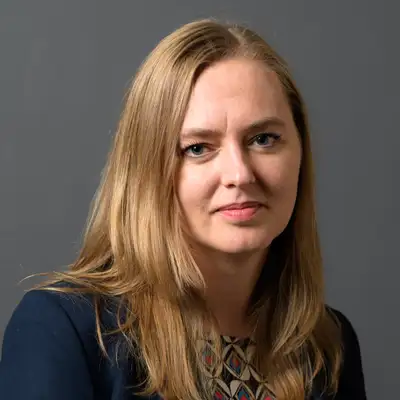
You're in the right place. And even if you're not, I invite you to stay. Because in every conversation, there is wisdom to take hold of, clarity to lean into, and courage for the life you're living and the woman you're becoming. You are welcome here. Today's guest is Vija Herefoss a theologian, international human rights advocate, and passionate voice for women of faith around the world.
Whose courage and contributions too often remain unseen. Vija serves as senior advisor on Women and Faith for Stefanus Alliance International, where she oversees global initiatives supporting women experiencing persecution because of their faith. Through her work across cultures and nations, she has become a powerful storyteller, advocate, and bridge builder.
Helping bring visibility to women whose faithfulness is shaping the future of the global church in extraordinary ways. With a master's degree in theology and years of experience teaching and training in freedom of religion or belief, Vija brings both deep wisdom and profound compassion to this conversation. What moves me most about her work is her conviction that many of the women carrying the church forward are doing so quietly.
Sacrificially and often at great personal cost. Vija believes the freedoms and opportunities she's been given are not simply for herself, but to amplify the voices of women around the world whose stories deserve to be heard. She often says, No women, no church, reminding us of the indispensable role women play in the present and future of faith communities everywhere. Vija, welcome to the show.
Vija Herefoss (02:18)
Thank you.
Jen Porter (02:20)
I'm so excited to have this conversation. A mutual friend got us connected. And when I heard about your work, I was so excited to be able to have this conversation to learn more about what you're doing, but also bring this to the listeners so that they're more aware of what's happening around the world and what women in particular are facing in the church. So tell us a little bit about, you know, what you're focused on right now.
with Stefanus Alliance.
Vija Herefoss (02:50)
Thank you so much. This is such a wonderful opportunity to talk about women and women's role in a church and women's experiences. So I'm very, very happy and very, very glad that I have this opportunity to talk about it. So our work at Stefanus Alliance is more general because it focuses both on human rights and also for help for those who are persecuted on the basis of their faith.
And we believe for freedom of religion and belief or the right to have the faith for everybody. But some part of our work or most of our work actually focuses on Christians. And what I bring to the table is this specific focus on women. And my interest in this topic actually started already when I was a theology student, and I got to hear that women are the majority in the worldwide church, and I got so curious about it, and I thought.
Why is it so? And you know, especially coming from the Norwegian context when we talk about secularization and fewer and fewer people wanting to become church members or attend the churches, this was such a fascinating question. So I wondered why? Why are women more active? What is it that attracts them to the Christian faith? And I brought this kind of curiosity with me when I started to work at Stefanus Alliance in 2015. So I wanted to understand a little bit more about so.
How do women in the context of persecution, so how do they live out their faith? How do they keep it alive? How do they stand up to the challenges and difficulties that they face? And also to understand what is happening with them, you know, how are they targeted? How what are their experiences? Because once you understand what is happening to women, you can also help them better.
And this was also around the time when Open Doors started to publish their gender-specific religious persecution reports authored by Helene Fisher and Elizabeth Miller. And this was a really groundbreaking research because before that there was almost no data that tried to look specifically at what's happening to women and what is happening to men. And this was also a very helpful sort of a first step and a very helpful information to start to ask those questions on a more profound level.
And I wanted us as an organization to actually start to ask those questions and to understand the situation better so that we would be able actually to help the women better.
Jen Porter (05:12)
Hmm, wow. And what have you found as far as answers to those questions?
Vija Herefoss (05:19)
Well, which one of the questions there are so many?
Jen Porter (05:21)
Well, you know, you
and I had this really interesting conversation about w why women make up 60 to 80% of the global church. You know, what is it about women and the church that is driving that? And, you know, we kind of concluded that there is no concrete one answer, but there are some theories. And I'm just curious what you have discovered yourself in this work over the last decade.
Vija Herefoss (05:46)
But I would actually like to ask you, why is your faith important to you? What is it important? Why does the gospel attract you?
Jen Porter (05:55)
Gosh, I mean, my faith has been with me my for as long as I can remember. I experienced God as a child. And while I haven't walked faithfully my whole life, God continues to draw me in. And once I experienced God for myself, it everything I just want to live for him and his glory and his kingdom.
And faith has become, particularly in the last, I don't know, 10 to 15 years for me, the most important thing it above everything else. I see the world through a biblical view perspective. I see others through the filter of Christ, and I see the meaning of life and our purpose as being defined by how God defines it. So it changes everything.
Vija Herefoss (06:42)
It does, doesn't it? And I think that your answer also in many ways encapsulates what another woman in any parts of the world would actually say when I ask them. But if we break it down a little bit, I think one of the things that really, really attract women to the gospel is that the story of the gospel, the way how Jesus treats women in the Bible is really, really unique. And for many women who live in cultures where women are seen as
Sort of as second-class citizens, as less important, as less valuable than men. This is really a groundbreaking story, a groundbreaking discovery. My favorite story actually comes from mission history in the late 1800s. And it's about the missionaries, Methodist missionaries in Korea. Because when they arrived in Korea, they were shocked to discover that Korean women didn't have names. Because when they were girls, they were called by nicknames: pretty girl.
A good girl, and then when they got married, they were called by their husband's name. And then when they gave birth to a child, they were called the mother of. So they never had their own name. So what the missionaries did, they started to baptize them. They started to give these women names. And for the first time in life, they discovered that they were individuals, they were important, they were v valuable, they had agency, they could have rights.
They could do something. And I think this story is such a beautiful illustration of what gospel can do in someone's life, that they can come in and really make you feel seen, make you feel valuable, make you seem loved. And I think that this is something that so many women don't get to experience, and this is what they find in the gospel, and that is so incredibly attractive to them. So that's that's one of the things, but they also, of course, seek very
practical help, because this is another interesting thing that very often we think that it's about the doctrine. It's about, you know, the what's understanding what the church is, understanding what Trinity is, understanding what baptism is, all these very high level sort of a doctrinal questions. But actually women are not so interested in those. They are interested in can God help me with my health?
Can God help me to get pregnant? Can God help my husband to find a job? Can God protect me and my children? So there is also this very sort of a practical approach to and also face that God does care about these day-to-day needs of a single person and as a woman. And interestingly enough, also women have discovered that Christianity is good for family.
And what they mean is that very often it is, as we talked about, women who are the first ones who actually accept Christ, who accept faith. And through them, in many cases, also their husbands become believers. And when they become believers, you can really see a difference in them. They start to treat their wives better, they are more engaged with children, they become different presents. So, in a way, the family life also flourishes.
And in many of those contexts, when you can't openly share the gospel, this is such an incredibly strong witness because people look at this family and think something has happened there. The wife and the husband have better relationships, you know, the children are much more happy and the father is much more engaged. So, in a way, that is also an incredibly strong witness. And and the last thing, which is not the least thing, is also its community.
Jen Porter (10:02)
Sure.
Vija Herefoss (10:22)
It's the fellowship that is incredibly important for women for for survival of their face and and also for their own flourishing.
Jen Porter (10:31)
Mm-hmm. You talk about why Christianity is good for the family. So interesting to hear you talk about that. I'm also curious about why the church is important. And I'm thinking about this question via from the standpoint of those that may not share the faith, but can look in and see why does this matter? Why is the global church so important? And and why is this work to
to support the church important.
Vija Herefoss (10:58)
The church, of course, what we mean by the church in many of the contexts where we work is a are very different things. Because in very, very few of those contexts you can actually have a church the way we imagine it and the way we experience it, as a as a building or as a place of gathering where Christians can come together and have a worship and have a Sunday school.
And and have Christian literature available, most of these things are not accessible to Christians around the world. These are the privileges that we so often take for granted. And when I visit some of these countries, you know they say it's so wonderful when they can you go to the church? Yes we can. Can you have a Christian book? Yes we can. Can you teach your children about Christ? Yes we can. And they say, You are so lucky.
Because for so many of them this is really unattainable. So so the church most in most places is actually just a small group of people coming together because they also have to be very, very careful due to security issues. Because, for example, in countries like Iran, if they would be discovered, that would have very, very negative consequences for most of these people, and especially for the person who would relate this group.
But the church is so essential because when somebody chooses to leave their faith and become a Christian, in Western context, we very often think about it as an individual choice. I make this decision and it affects me. But in many of those contexts, it affects the whole social fabric around people. So my decision.
To become a follower of Christ will have implications for my family, for my neighborhood, for my community, for everybody. And that is why also it costs so much. Because when you become a believer in many of those contexts, you will be ostracized. You will become an outcast. Your family will dissow you. You will have trouble staying in your neighborhood. You might be attacked, you might be harassed.
So for these people who become Christians, the church is the new family. It's the new community. It's the place where they feel belonging, where they feel support, where they find like-minded people. So community, a church is incredibly important because no one can believe alone. This is what I have seen and learned. You can't have faith alone.
Because you need to have others who will help you to nurture that faith, who will remind you in difficult times why do you believe what you believe that will stand with you, that will make you feel less alone. So all of these things are so important. So you cannot in and what I have seen is that you cannot survive without a church. Whatever form or shape that church will take, you need it. You need it for a survival of your faith.
Jen Porter (13:58)
You mentioned that women are more persecuted than men. When they when they choose make the decision to follow Christ, typically women are more persecuted than men. Can you tell us more about that?
Vija Herefoss (14:14)
This was very interestingly also described in those reports of Open Doors International that I mentioned about the gender-specific persecution, because they not only they sort of shown in those reports how women are persecuted differently than men, so the sort of the methods of of of punishing them or threatening them are different than those are used for men. But they also asked the question why? Why would you attack women?
And the answer is actually very interesting because women in many of those contexts are not just individuals, they are symbols of their whole community. And in one way, we can also understand it in our own context, because a man feels most as a man when he can provide for his family and when he can protect his wife and his daughters. So, what is the most
Horrible, but at the same time, most effective way how you can punish a man. You attack their wife, you attack their daughters. You make them feel that they have not been able to protect that which is important, which is valuable. So women are very often actually attacked in order to punish men, in order to punish their family, to bring shame.
their family to bring shame to their community. In that report they talk about the ripple effect. They say it's like throwing a stone in the water, you know, the rings just go out, out, out, out, out. So what happens to an individual woman is that kind of ripple effect. It doesn't happen just to her. It will happen to everybody around her. And that is why targeting women is so effective, because it will have consequences for the whole community.
I remember I was once told about a pastor, a very brave pastor, I think it was in Indonesia, who would not be stopped at any threats. And then the people who wanted to stop her, they attacked his daughter. And he said, I can't continue. This is it. So if you want to sort of a threaten, stop, destroy a Christian community, you attack a woman. And also there are other aspects to it because
Jen Porter (16:19)
Mm.
Vija Herefoss (16:30)
Women are in a way easy targets because in so many of the countries, as I said, women are not seen as equally important. So if you attack a woman, if she decides to go to police, for example, she will not be taken seriously. So very often she simply wouldn't even go and report the crime. So in a way they are easy targets because they are not seen as important. So those two things together, in a way, are
Two of the main reasons why women are attacked more than men.
Jen Porter (17:00)
Wow.
I'm thinking about a a slight disconnect in my mind, and I think you might be able to clarify this for me. Because you I understand that strategy of attacking women or girls in order to actually hurt men. I haven't really thought about it in that way, but it's it's very evilly true. Like it's evil and it's true. But in a lot of these communities and countries that you're working in, women aren't.
seen as valuable as valuable. And so it almost seems like it wouldn't be as effective because women are seen as not as valuable. Do you see where I'm tr
Vija Herefoss (17:36)
It's a
it's a very interesting paradox, isn't it? That you can be valuable and not valuable at the same time.
Jen Porter (17:40)
Yeah.
Vija Herefoss (17:43)
Because that's what effectively happens, because your especially women's sexual purity is seen as sort of the crowning jewel of a community. So that's why so many of the attacks are also sexualized violence. Because that is sort of if you take it away from the woman, you bring shame to the husband, to the family, to the community. So, in a way, there are certain parts of her which are valuable.
While others, for example, her thoughts, her independent spirit, are not seen as so valuable. So I think there is that kind of a paradox that you beautifully pointed out.
Jen Porter (18:12)
Mm-hmm.
I'm now thinking back to how Christ treated women. And it was radical. It was radical. How he, you know, you talked about in Korea when women didn't have names, but Jesus named women and and men too. But he how important that is to to demonstrate value that Jesus did that in a very unique way that d I think differentiates Christianity from any other religion for that reason.
Vija Herefoss (18:50)
And
he also takes away women's shame, which is so important. I talked to my colleague just today and he told me this story about a young woman from the context where it's very, very difficult to be a Christian, and I asked him, What was it that attracted her? And she said from her childhood and youth she was treated as a second sort of a second class citizen and
And she was even called whore by her by her uncles and and she felt so much shame and and and and so little value. And then then she read these Bible stories, you know, about the woman who comes and brings expensive oils and and washes Jesus' feet and dries it with her hair. And and and he doesn't talk about her shame. He lifts her up. He gives her dignity. Or the woman who is caught for adultery and they say throw the first stone. Again, he doesn't
really shame her. He just says, go on and live a different life. And I think these stories of how he treats women, how he doesn't focus on their shame, but how he lifts them up, how he gives them value and dignity, these stories are incredibly powerful and witness to so many women.
Jen Porter (20:00)
You talked about how women are often invisible in in different countries and cultures. You also talk about how women are change agents, how they are able to go into places that others could not go or would not go, and the bravery around that. Can you talk about that? The invisibility and what are these spaces that they're able to go into and be effective?
Vija Herefoss (20:26)
I think this is an incredibly important topic because very often when you think about religious persecution and also these stories that I just told you, we tend to focus on the negative things that happen to women. And of course it's true there are awful, awful things happening to women. But I think if we only focus on that, we lose out on a very, very important side of the story, which is that these women
Are not just survivors, they are active agents, they are courageous, they are strong, they are creative, they make a difference. And it's also fascinating to see that in a context which we would see as a very limited one. For example, women are not allowed in a public space or women don't have the decision right. They still manage to find way how to navigate that limited space with incredible.
Creativity and incredible effectiveness. So the most incredible story that I read the other day is about Iranian church leaders, because which is again interesting, in Iran, majority of house church leaders are women. Because you they know what this will cost them, because it is the leaders that the regime is targeting. But yet they go into those roles.
And and there is one of those women leaders, and she's actually been imprisoned. Iran is one of those very few places where they would actually imprison women. And and she is a s theology student, so she has said, Well, I will use the next eight years to teach my my inmates Bible studies. And you know, you you see that kind of a courage there, and sort of even in this in the prison, when you think what right, what freedom, what what sort of a room for movement do you have?
Even there, they think, hmm, I'll use my knowledge, I'll I'll put it to use and I'll I'll teach Bible studies to my fellow inmates. And and and you see this sort of ability. And women are so smart, you know, because they actually use that card of being insignificant. You know, the women just gather and and chat. Who cares about what they talk about? And yet, this is how they spread the gospel. There was a bishop in Nepal who said the women are gossiping.
The gospel. Because they go from house to house and they gossip, you know, because what do women talk about? It can't possibly be serious. It can only be gossip, you know. And he says, by this gossiping, they are actually spreading the gospel. So there are these beautiful stories that you see that in spaces where you think, What can you possibly do here? They'll say, wait a second. I'll show you what we can do here. And that is such an incredible thing to see.
Jen Porter (22:40)
Mm.
Vija Herefoss (23:05)
that kind of creativity and also the wish to actually do something, not just sit and feel sorry for yourself and actually say, No, I'm going to do something here now.
Jen Porter (23:15)
Well, where does that courage come from?
Vija Herefoss (23:18)
I think it comes from the gospel, doesn't it? I think that that that that is part of the the beauty that I also see that these women who have been touched by the gospel themselves, they they simply can't keep it to themselves. They they need to share it. They have seen, as you also so beautifully described, what it means for their lives, how it makes their lives more full, more meaningful, more hopeful.
And they just want to share it. This in itself is sort of the wish that that drives them for us. There is the Irish Christian missionary, Amy Carmichael, I think is her name, who had this beautiful quote. She said, You can give without loving, but you can't love without giving. And I think this is what drives these women, that they have experienced this love from God, and they just they just can't not.
Pass it on. They they just can't not share it. So it's sort of that that drive that brings them forward, at least the way how I see it. What do you think?
Jen Porter (24:21)
Well, I think that's absolutely true. And I'm also just thinking about the Holy Spirit and what happens when one becomes a believer, that there is something that happens that is mysterious, that can't be explained, just experienced. And there and we are changed, right? And and we'll continue. If we allow God, He will continue to transform us and change us into.
The fuller version of who he created us to be. And there's a greater purpose. It's not just for us, it's for his glory, his kingdom, his plans, and for the sake of his people around the world. And I think about the work of the Holy Spirit. You talked about when a man becomes a Christian, many times that he will change. He will become more loving. He will become more engaged with his children. He will become kinder.
more humble. There's all kinds of characteristics. And he may do some very courageous things because of his faith. I think it's it's because there's something that happens inside of us that transforms us. And that Holy Spirit is what gives us courage and what what makes us do what seems impossible to to to do things out of obedience. I think it that's the mysterious part of the work of God in us.
Vija Herefoss (25:41)
Indeed, indeed. And as I mentioned, in those contexts where you can't talk openly about your faith, this is an incredibly strong witness because people see it. And I think this is also the attraction, the first attraction to the gospel, even before you have heard, is that you see how it changes people. And you become curious. You just want to find out how how and why. And and I think that is also such a beautiful way how the Holy Spirit works, directly and indirectly.
Jen Porter (26:10)
Mm-hmm. You you've also talked about how women are not always resourced. Yeah, they don't have access to resources. And they are you know, sometimes the most amazing innovation happens when there are these enormous constraints. And you know, as opposed to having access to money and and and powerful people and and influence. And so
What are you finding? I mean, there it's in in some ways, n having those constraints of so few resources or no resources, they're they're being very creative in how they are expressing their faith and and influencing communities. And yet we want to re resource them so that they can do more. And so again, it it's a little bit like a paradox in a sense. But what do you find that is happening currently? And then what happens when
when a woman or community is resourced differently, maybe by an organization like yours.
Vija Herefoss (27:08)
This is actually a very interesting question. And there is a bigger research also done on the differences, what happens, for example, generally when you give aid to women, like financial aid, and when you give aid to men, that women most likely would invest it in a children's education and in something that benefits the whole community. So they have this sort of a more communal thinking and also thinking about how can this benefit others. But I can give you a beautiful example of what
How women can be very creative with what they have have, and how at the same time we can also improve that situation. For many years, we have been supporting an initiative which is an annual meeting for women, for pastors, wives, and women in active ministry in Central Asia. And they really, these meetings are incredibly important for these women because on a daily basis they are standing sort of in a service.
To their husbands, to their churches, they take care of the children, they care take care of the home, they take care of their husbands. Very often also they are the ones who take care of the female members of the congregation or the church because there is quite a strict gender segregation. So a male pastor cannot talk to a female attendee. So basically they function almost like a basically assistant pastor in many of the cases.
But their work is not being acknowledged. They are not receiving any acknowledgement or thanks or even support for the work that they do. And being pastors' vibes, they are not allowed to complain and they are not allowed to show any signs of weakness. So there is incredible pressure put on them. And once a year they get to come together and they get to meet other women who are like them, and they can just lower their shoulders, they can cry, they can talk, they can give each other a
Wise, they can pray together, they can encourage each other. So these meetings are sort of many of them just live for that one week a year when they know they will be able to come together. And this church, when once when we started first to support them, they said to us, we have been running these meetings for 10 years, and nobody has ever given money to this work.
Because women are not seen as important. This is not seen as important part of the church's ministry. And what did they do? They still managed to find ways how to do it. They cooked all the meals themselves. They housed the women when they came to that city. They housed them across in the houses of the church members. They tried to also raise a little bit of funds for travel expenses. So they tried to do as much as they could themselves.
When we gave them the financial support for this project, they said, hallelujah, for the first year we will not have to cook meal for 70 people. And that was a massive relief, you know. It's like, we will be able to focus on something else. we will be able to provide you know, transportation expenses so we can have women from the further away coming in. And also they say some of the women who come to these meetings come from very, very poor.
poor sort of regions of the country. So they have massive health issues. And they see that, you know, okay, now they have come here, we are, there's a possibility to see a doctor, for example. And we will have money to actually be able to provide some of them, those who need the biggest, who have the biggest need, actually, to give that sort of a health check or buy some medicines or something. So so yes, they managed to do it for 10 years without any funding coming in. But when we came in with our
contribution, which wasn't even a big one. It really sort of transformed the whole thing. And and I think this is this it is I don't think it's a paradox, but I think that the way how you see how they would use those funds really say something about how women think.
Jen Porter (30:56)
Amazing the generosity that you're describing, you know, cooking for everybody, finding places for everyone to stay, making it possible for these women, and then, you know, pouring into one another so that they leave, I'm certain, stronger, you know, fuller of heart, and they can withstand whatever's coming their way because they know that there's others that are with them.
Where does the name Stefanus come from? I believe it comes from, is it Stephen in the Bible? Will you tell us about that?
Vija Herefoss (31:22)
Yes, it is. It is, yes.
Well, the name comes Stephen, as you know, is the very first martyr in the New Testament. He's the very first person who is killed for his faith. But Stephen is more than just a martyr, you know, he is a person that also he was a deacon in his church, so he was taking care and especially focusing on those who were more vulnerable.
He was also the one who spoke and shared the gospel very in a very brave manner before he was killed. So there are several aspects of Stephen that I think we as an organization can identify with, and we can also see those characteristics among our project partners around the world. So I I I think it's that's that's the reason why we have it as a as a symbol and as an encouragement and and as somebody who has gone before us and and shown
Both what faith can cost, but also how important it is. Because you know, he actually his death was the reason why the disciples left Jerusalem, why the gospel spread. So in a way, even in a death you see that that can be something that can lead to a movement which brings so much goodness in the world.
Jen Porter (32:36)
Wow, I had forgotten that part of the story.
So as you know, we we reached out to ask for questions in anticipation of the conversation that you and I were having. And people chimed in. And I want to ask you some of those questions. One one listener was asking for those for those of us who care about these women and want to
You know, what what advice I guess would you have? What advice would you have for those of us who care but feel like I'm not sure what we can do? It seems so far away that these things are happening. And what just what advice would you have for us who are listening to the to these stories?
Vija Herefoss (33:17)
I think that the fact itself that people do care already means so much because one of the things that I have noticed when I have travelled around the world and met both with men and women is that very often these are very small minority communities and they live in this majority that looks down on them and they are weird, they're strange, why would they have this strange religion and they are being harassed or even attacked by people around them so
They feel very, very alone. And the realization that actually they are part of a larger Chrism Christian family, you know, that they have brothers and sisters in places around the world, people that they might have never met, but who actually do care. And and this is one of the things that I hear over and over again when they say, It's so good to know that somebody actually cares, that we are not alone. So I think that in itself that people
want to do something, want to ask that question, what can I do for these women, even if they are very, very far away. I think that's a beautiful start. And I think there are different ways how one can engage. One is the awareness raising, because as we discussed, the situation of the women, the women's stories, women's voices, women's experiences very often remain invisible. So be that voice.
Go out there and be their voice, you know, talk about their stories, raise the awareness, ask the questions. You know, when you are in a room, look around you and and ask where are the women? How can I bring the women's stories up? How can I make the church aware? Also my own church aware of the importance of the fact that women are here, their role, their their their contribution and and how they can be seen and acknowledged for what they're doing. And also
About these women who are far, far away, that there are sisters, they have sisters in Christ who pay an incredible price for the faith. Because the thing is, they know the price. They know what will happen when they choose to follow Christ. And that price is very, very high. I've talked a little bit about how they can be excluded from their families and communities, but there are also more grave cases, as for example, in Iran I mentioned.
Women can be imprisoned and if you think about North Korea, where we also work, women can be killed for choosing to follow Christ. So the price is very, very high that they pay for it, but yet they choose to follow it. So I think bringing awareness to these stories, bringing awareness that there are women out there who treasure their face so much that they are ready to sacrifice everything is important.
Jen Porter (35:56)
point I'm I'm
I'm I'm visualizing these women and and men in these communities who are being persecuted and are facing all kinds of resistance just for daily life because of the choice of their of their beliefs. And then I'm thinking about you know people here in the states who
might be hearing this and they want to do something. How is it that the people that you're serving find out that there are people who care? Like what, like I'm like practically, what is the path of communication to for you to know that there are people who care and then to to pass that on to those who are suffering to encourage them. How does that happen?
Vija Herefoss (36:39)
Well, when I went when I go and visit our project partners, of course, these are individuals, but they are always individuals who work for a larger group of people. So they are sort of our first contact point, but through them I also get to meet larger group of people. And usually I tell them that you know, Stefanus Alliance is not an organization that is self-sufficient. All our funding comes from donors and supporters.
So there are hundreds and hundreds of people who care and everybody donates according to their ability. And you know, so I said that there are people out there whom you have never met, but who think about you and and who donate funds so that we can support your work, so that you can support these people, make their lives better. So it's a story of of of a lot of people sort of giving the help, not just sort of me or my organization, but it's
We bring these sort of voices and concern and and love and care of these, particularly in Norway at this point, but also I hope in the US, that care about these people with us when we meet them. And another way how people are engaged, if they can't give financially, which is understandable also, they can always pray. They can always pray about their brothers and sisters because this is again a such a beautiful thing. Whenever I ask our project partners what do you need most?
Most they always say prayer. Because they have learned to rely on God and very often God alone. And they have experienced the amazing power of prayers. So they say, pray, pray, pray for us, you know, bring our concerns, bring our names before God. So that is also a way that you one can get involved if one doesn't want to support it financially or doesn't have the means to support it financially. Prayer is also an engagement.
Jen Porter (38:10)
Yeah.
Vija Herefoss (38:32)
Incredibly important means of supporting them. And this is also something that I always tell people: you know, there are all of these people praying for you. And we also try to bring these stories back, and most of them can be found actually on the homepage of our organization. We have to, of course, think about the security of our partners and the people they help. So sometimes we can't tell the real names, or sometimes we can't even tell the real country where they're in.
Jen Porter (38:50)
Yeah.
Vija Herefoss (38:57)
But we tell the stories, we tell about their challenges, we tell about their strengths, we tell about their hope, we tell about their need for for support and encouragement. So so that's also one way sort of how to come closer to to to what I experience and my colleagues experience through our
Jen Porter (39:15)
I think speaking of prayer, I think sometimes it's we forget the power of prayer. We we forget that that is actually our our most essential weapon in in a in the world. Do you have some ex an example of answered prayer for these persecuted Christians?
Vija Herefoss (39:34)
I can't come up with one concrete one, but there are there are so many because you know, whenever there there is a crisis or something, you ask them, What are you gonna do now? And they say, We are going to pray. We are going to pray. And and the beautiful thing also is that they know that God doesn't always answer exactly the way you expect him to do. It's not about telling God what you want to do, but they have so much.
so much trust and I also see prayer not only as a sort of a a a list of requirements that I'm reading out to God but really as this community with God that you now you're talking with God. God is seeing you in in in your challenges and your difficulties. And as I said, sometimes that alone can be incredibly encouraging. And because one of the most beautiful things I l have learned from our partners is they never blame God.
They never question God because I sometimes have these questions when I go into these contexts. I think, where's God? You know, why doesn't He intervene? Why doesn't He just make things good? And and but our partners, our friends out there, they never ask this question. Never once they ask why doesn't God intervene?
Jen Porter (40:37)
Right.
Vija Herefoss (40:48)
They praise the God and and they they they they they look at his goodness, they look at his promises, and this is where they find strength. I talked to this old woman once, and she is the only Christian in her family. Her sons are not Christians, her husband has passed away, he's she's very alone. And she said to me, Sometimes I can be very, very down and very depressed about it. And I asked her, So what do you do? And she said, I start to list all the things I'm grateful for for God.
I still have a list, I'm thankful for this, I'm thankful for that, I'm thankful for that. And she said, and after a while of doing that, I feel better. So instead of sort of sort of being angry at God or asking, why don't you help me, it's it's you look at all you you look for his goodness. You look for his presence, and I think that is such a beautiful reminder as you say that prayer is so incredibly important.
Jen Porter (41:24)
Mm.
Mm.
For so many reasons. Yeah. what you've described today makes it come alive for me more about who these individuals are and how we can help. You know, I'm thinking about prayer, I'm thinking about giving, you know, giving funds to support the work and how s how far a little bit of money can go, truly, to help.
And not only to help meet a need, but also to encourage. There's such encouragement that comes because that's a tangible sign that someone in the world cares about what we're going through. I'm also thinking about how, you know, let's say people aren't able to give or not ready maybe yet to give, but maybe they could write a note because how encouraging it must be to hear directly the words from someone in some faraway place for them.
that that is caring and praying for them and to hear those words. Is that something that you all do or, you know, could do is if someone sent a note because they're it's just heavy on their heart that they want to share something.
Vija Herefoss (42:46)
I think if they send a note to us it's we will absolutely take it with us. ⁓ if it's a particular partner or a particular project they they feel God has called them to engage with just sending a note or if it's just a general note. I think in in in any way it's as you say it's it's an incredible encouragement for them just to know that they are not alone. They are not forgotten.
Jen Porter (42:51)
Yeah.
Mm-hmm.
Right. So let's make sure people know how to find the work that you're doing. So the website is Stefanus S-T-E-F-A-N-U S-U-SA.org. And I'm going to put this in the show notes so that people can find it and just click on it easily. But if people are listening and just want to go to it, it's Stefanus-USA.org. If they go there.
They're gonna read stories of the work that you're gonna do. They're gonna find out more about the organization and the history and some of the topics that that you all are focused on. But how could they get connected to giving? Are there some some easy ways for them to get plugged in?
Vija Herefoss (43:36)
Yes.
There is a button which says donate. So and if you click on that button, you have several options. because some people choose to just donate once, but we have also a number of people who donate monthly and some of them over years, because they want to sort of show their support also in a more long-term perspective. So that will open up for different opportunities to
Jen Porter (43:53)
Okay. Okay.
Vija Herefoss (44:15)
to get engaged.
Jen Porter (44:16)
And just as we start to wrap up, how has this work changed you as you're involved in all of this?
Vija Herefoss (44:23)
Well, the most important things that I have learned perhaps is to trust God, to trust that prayer works, that prayer is important. But I think this sort of the code of it is the core of it is the understanding how incredibly valuable faith is. Because I just catch myself every single day taking it for granted.
That I have the faith, that I have the freedom to go to church, to not go to church, to to buy a Bible, to not buy a Bible, to read that book, to not read that book. And just to be reminded that that is a treasure that somebody is ready to risk absolutely everything for. I think that is one of the most important things that have influenced my own faith life, just being reminded.
And also sometimes asking that question, which I could also ask you, would you give it up? Would you give your face up if people say you will lose your job? your husband will divorce you, you will wind up on a street. Would you say, fine, okay, good, I'll rather have a husband and a house and a job than have the faith? And and I I don't know, what would you say? Would you give it up?
Jen Porter (45:38)
thought about this and in as anticipation of our conversation and I hope I hope to God that I would never give up my faith even if I was standing you know in in the middle of a public square in jeopardy of being killed. If I if I didn't denounce my faith, I would be, you know, maybe shamed abused
Or killed, I pray to God that I would not denounce my faith. I pray to God, but I think I could only do that because of the work of the Holy Spirit. I think the only reason that I would be able to stand strong in the face of such adversity is because God would be with me in it. I wouldn't be alone in it. But in my own strength, I don't think I could withstand it. But with Him, I pray that I could.
Vija Herefoss (46:26)
And the thing is also that in one way, a one kind of sort of one kind of act, one kind of sort of as you say, a threat of death is is one thing. But the thing that sort of have really amazed me about these women are they they face challenges on a daily basis. How will I find money to give food to my children? How will I avoid of being beaten up? How how will I make sure that my children get education, for example? So it's it's it's
The one thing is sort of the the death threat and I think I completely agree with you that I think Holy Spirit can give you that kind of courage there and there. But thinking think about every single day. I'm I met this woman recently and and because she became a cr Christian s of she had been building a a business together with her husband and he threw her out of the house. She was excluded from inheritance, she wound up on a street with her three children.
And and he has been telling her all the time constantly, if you only come back to my faith you will be back in the house. The children will have all the sort of all the support that I need. She's been holding out for eight years, day in and day out. And that is sort of something that I think, would I be able to do that? Or would I just sort of say after a year or I don't know, even maybe a month say.
You know what, this is it. I can't continue that. And yet she has held out for eight years. And and I think that's sort of that that kind of a strength is also from the Holy Spirit, that you can not only stand tall in those very dramatic moments, but you can you can hold out one day at a time, basically. So but but I also ask that question to myself very often. Would I would I hold on to Christ?
Jen Porter (48:09)
Mm-hmm. Mm-hmm.
Vija Herefoss (48:16)
Or would I give it up? And I don't know. I really genuinely don't know. I hope I wouldn't.
Jen Porter (48:21)
Yeah. I shudder to think.
Right. You know, the other thing I'm thinking is how
Would I say this? That God's power is on display most when people are suffering. And that is often what draws people in. You know, if you think about anybody's testimony, is there's always an element of suffering that is included in the testimony. It's not when things are good that people lean into Christ, it's when things are the hardest. And but that's also when the light shines.
shines brightest is in the darkest places. And so it's this very difficult thing, mysterious thing to understand how God works in the hardest places on earth and in our hardest circumstances. And so I think it does connect us. It grounds us when we hear about these stories of things that we don't have to face, but people are facing it every single day. It it it can
create more gratitude, but also this this thing of like, well, yes, let's do something. Like it would be easy for us to help. It'd be so easy for us. And thank God that there's or organizations like yours that are willing to get into the fire because this is this is very controversial and and and in in some cases very dangerous work.
Vija Herefoss (49:40)
But you know, our motto is what Paul says in the letter of Corinthians is he talks about the Christian church as a body. And he has this beautiful phrase where he says, When one part suffers, the whole body suffers, and when one part rejoices, the whole body rejoices. And I think that's one way how to think about it. You know, when somebody even far away is suffering, it's the whole
church as a as a worldwide body of Christ that is in pain. And as you said, you can also do something because when these people rejoice because they have received help or encouragement or or be seen and feel that they are not forgotten, this is sort of, you know, the rejoicing of them and also yourself that you feel, okay, now I feel some part of the Christ of the Christ's body is rejoicing and I can feel joy as well.
So so there is yeah, there is suffering but there is also joy, definitely.
Jen Porter (50:37)
Mm-hmm. Beautiful. You know, the the sisterhood of Christ, we are all one body and we're all connected. I think that's a deep desire that we all have, is to is this connection of belonging. And we're part of this greater body of Christ around the world. And it's so much more eternal. Like there's an eternal aspect to all of this that is so important. And so thank you for doing the work. Thank you for sharing with us. And I just want to encourage everybody to.
Share this, you know, share this episode with with people in your life who are curious or passionate or maybe interested in this topic. go to Stefanus-USA.org and learn more about the stories of what's happening, the work that they're doing, and consider giving and giving through fun through your through money, giving through prayer, giving through words of encouragement and letting
You know, the rest of our body, the church, the bot, the church body know that we're we're with them in this. So what a joy. what an honor to get to talk to you, Vija. I really appreciate your time. And in the meantime, the lioness in me sees the lioness in you.