Subscribe
Share
Share
Embed
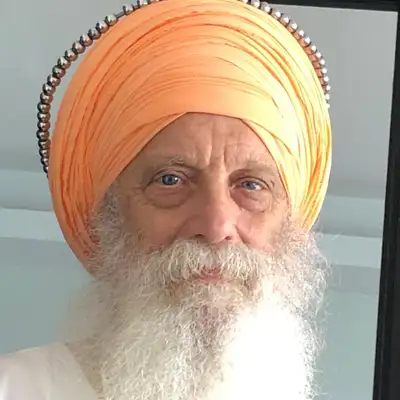
This podcast series is a presentation of challenging and irreverent conversations on wisdom, courage and common sense; for the most part taking place between renown spiritual teacher Hari Nam Singh Khalsa and respected leaders in the world of thought and action. These light-hearted, spontaneous and unpredictable conversations about all facets of life inevitably provide a platform to explore the depths of human nature and human destiny. In particular, it is the intention of this series to introduce our listeners to the value of the Khalsa Spiritual Path and its Code of Conduct, the Rehit Maryada, as created by Guru Gobind Singh, the legendary 10th Master of Sikh Dharma.
listening to Warrior Saint.
Welcome.
left a week ago Monday, we got here Monday night and then starting last Tuesday, I've
taught every single day for seven days and I still have another six days in a row to go.
So I've never like taught like 13, 14 days in a row.
It's not the whole day, it's still normally if I travel, you know, I'll teach, I'll take
some breaks, but I've never like taught.
this intensively.
So it's quite the experience.
And because of that, I have spent very little time preparing.
I'll just kind of show up and wing it.
Yeah, who are you teaching?
uh Well, you know, I almost made the mistake of the people who hosting me.
You know, I'm teaching in different yoga studios in uh Bogota, in retreats.
And so uh I have a nice list of uh different types of courses I could offer.
And uh maybe it would have been better just to say, you know, on this tour, I'll just do
this.
But I said, OK, you know, to ask the people.
what they want and land up like every night they wanted a different one.
So it's almost like every night I'm doing something different.
One night I'm talking about the relationships, the next night about the, know, you know,
Carmen reincarnation and, you know, like yoga philosophy.
Another night about, you know, advanced meditation and about, know, the of the show,
Warrior Saint.
So a pretty broad range of topics.
one night I'll just go in there and we'll do the soul, all your saints stuff.
It's a really tough class.
And the next night we're talking about and relationships.
It's a very light class.
So that's how it's been.
It looks like Bogota is a huge city.
Yeah, it's a really big city.
uh But I think actually New York may be bigger.
I didn't look, but I think it's about 8, 10 million.
It's one of these uh like La Paz and Quito.
It's one of these South American capitals that's actually at very high altitude.
So it's really interesting.
It's very close to the equator.
it's never really hot here.
So if you actually went down in elevation, it would be like tropical.
And actually they refer to this as being tropical, but the weather here is a lot like
Seattle.
It looks kind of overcast.
It is, it's overcast and it's kind of rainy and parts of the day could be hot but parts of
the day could be cool.
It's not what you would think a tropical climate is.
It's really not.
There's no palm trees.
It's kind of overcast a lot.
I don't actually...
I'm actually crazy about Bogota.
You say it's lovely.
I love...
Colombia in general.
I really like the people here.
And the food is fabulous.
And I'm a foodie.
I'll tell you, well, I'll tell you one thing.
It's got one thing, a couple of things Colombia's got going for it in general.
The food is unbelievable.
And they have fruits and vegetables here.
I actually, not only do I not know their names, I've actually never seen fruits like this.
That's cool.
I know it's amazing.
It's absolutely amazing.
You go into like the grocery here and there's fruits.
You have no idea what it is and you don't even know what it's going to taste.
Is it going to be sour?
Is it going to be sweet?
They really don't vegetables and fruits.
mean, everything grows here.
They say I think there's something called the Kwaka Valley around where Kali is.
And they say that it's like the most fertile place in the planet.
You could take a handful of seeds and just throw it out there and something's going to
grow.
It's totally amazing.
And of course, the coffee here, I'm a coffee guy, so coffee here is to die for.
Although, of course, the best coffee they export.
Yeah, it's almost hard to find good coffee to drink here because it's odd.
I mean, I've had some of the worst coffee of my life here.
you know what they do?
It's really crazy.
take the best beans, right?
And they send them to Europe and the United States.
And with the crap that's left over, that's what the people here drink.
But you can get some good coffee here, like Juan Valdez.
Actually, I have a funny Juan Valdez story.
Do you remember, you know who Juan Valdez is?
You know, from the commercials?
like Colombian Coffee, they've been doing this for decades.
He was like the representative of Colombian Coffee and it was actually a person and then
it was a movie act, you know, it just a caricature.
So I sent out, it's funny, a couple years ago, some of my friends know that, you know,
especially from my past know that I travel around the world and do crazy things and
they're always kind of amazed what I do.
So I sent out an email that,
You know, I was in Columbia and I had uh coffee, a really great coffee at Juan Valdez.
And Juan Valdez here is actually a chain like Starbucks.
ah So my friend writes back in amazement.
He goes, Oh, I can't believe your life.
You actually had coffee with Juan Valdez.
No, man, there is no Juan Valdez.
It's like Starbucks.
Hahaha
So the coffee's here, the produce is amazing.
The people are some of the warmest people in the world.
mean, when I come here, it's like anybody I meet here, it's like family for life.
They really come from the heart.
And also, I have to say, the most beautiful women in the world here in Venezuela.
I don't know what it is.
I don't know if it's the air or the water or what.
or they have uh cosmetic surgeons, I don't know what it is.
It's really, and you can see it's interesting.
you've ever watched Miss Universe, whatever, it's always from like Colombia and Venezuela.
But it's I don't know what it is, the mix of the Spanish and the indigenous, but people
are very, very attractive here.
Men too, people are very attractive.
So it's interesting.
a country, I came here to teach spiritual themes, but I'm very interested in politics and
social things and social justice and politics and all those kind of things in economy.
the country, ah it's got its own karma.
That's all I could say.
uh
itself has its
The country has a karma like Haiti.
Haiti seems to have some kind of karma.
know, Haiti's on the same island as the Dominican Republic, but it's like Haiti's got its
own karma.
You know, could be like earthquakes and hurricanes and Dominican Republic, it doesn't get
touched, but Haiti gets wiped out every time.
it's kind of, Colombia just has uh a certain karma here that's very odd.
It's like...
You know, as I said, the people are beautiful and the land is like, there's probably more
resources here per square mile than any place on the planet.
I mean, they've got oil, although I think Venezuela's got more, but the land is so
fertile.
I mean, it's unbelievable.
They can grow anything here.
They've got water, they've got forests, but the country is a mess.
You know, they really been involved in a war here for probably 100 years.
it's almost like, it's interesting.
It's almost sometimes you get blessed with something and then it lands up to be a curse.
So, like here in Columbia, it's arguably one of the most fertile places in the whole
world, but it's so fertile that it also grows stuff like coca.
And this really has really been a major defining thing in the whole country here for
decades.
uh It's uh destroyed many, many lives and it's made Colombia kind of like the pariah of
the world.
And it's an extremely violent country.
I mean, I rarely meet a person who has not been the victim
of violence.
it was very rare.
In fact, the other day, I went to teach a yoga class at yoga studio and I got there and
one of the proprietors of the yoga studio just, she was, know, she was, you know, kind of
taking, you know, taking the names of the people coming into class and I was looking at
her, but she was doing okay, but she just looked a little shook up and I go, you know, are
you okay?
He goes, yeah, you know, I was coming here, I was on the bus, somebody put a knife to me
and uh said if they didn't give me their money, uh they'd kill me.
You know, I got a little cut here, they cut my arm with the knife.
And the police came and they had like an undercover guy in the bus.
And I had to go to the police station and the...
Mother was there, because this was like a teenager, and she offered me her cell phone if I
didn't make a report.
know, it's like crazy.
You you can't make this stuff up.
And I actually have met uh quite a few people here who've had members of their family
actually kidnapped and killed.
And it's so common that nothing would actually surprise you.
And there's so many people who are involved with this at so many levels of the society,
know, the violence and the drug activity, ah that it has completely dominated the entire
society.
So Bogota in particular is, and I hope you don't mind knowing we talk about kind of these
spiritual things.
Yeah, you know, it's a really interesting city because if you come to Bogota,
You think you are like in, uh if you're like in the central center town, you think you
were like in, I don't know, like Philadelphia or Nashville, Tennessee, or, it's a booming
place.
And actually the cost of real estate is like skyrocketing.
And if you're in kind of like the center districts of town, mean, people live very
affluently.
and their beautiful condominiums, big windows and great shopping and terrific restaurants
and I go on and on and you think this is like an amazing place but there's every play
there but there's armed guards everywhere.
You know what I'm saying?
Like you can't live in a, I mean obviously there's doorman in every place but it's not
just for show.
It's a very high security place.
And I think it's better now than it was like five years ago.
But you always have the sense that there's like danger lurking.
But yet people are very affluent here, but not everybody.
So it's like one of these countries where maybe 40 % of the people are doing like super
well and money goes a long way.
But then a lot of people here are living hand to mouth.
And it's not necessarily in the center of town.
There are places where you wouldn't necessarily go at night.
But that's a good part of the city, especially in other places in South America.
there still continues to be a tremendous divide among the uh educated, uneducated, the
poor and the rich.
uh it's like, for instance, in the United States, there are people who are wealthy who
have quote unquote, health.
in the house, know, people take care of the house and cook, you know, take care of the
kids.
But usually it's only the very affluent that have actually people taking care of the house
for them.
But here, like in Bogota, in other places in South America, everybody has helped.
I mean, everybody, if you have a job here, like, I'm not talking about like a CEO of a
company.
If you're like a school teacher, you have somebody taking care of the house for you.
In the United States, that would be unheard of.
I mean, if you have any kind of like middle-class job here, you have somebody who does the
cooking and cleaning and all that, and it costs hardly anything.
Right, and there's minimum wage, mean, I'm sure.
There may be, but that kind of stuff probably is not checked in too.
And the people who are working, they're desperate, so they're not going to say no to
anything.
So just kind of like this, it's like India is like that too.
It's kind of like the
Culture say yeah, I've friends in India and my friend recently living in Kenya and they
were both I Mean it was a surprise to both of them I think when they moved into an
apartment and the help was a package deal with the apartment There were women who just who
lived there and they were like, you live here.
I'm your I'm your maid.
I'm and that's what I do and um My friend in India the maid
slept on the kitchen counter.
Yeah.
it's just, mean, it was, it's just how things are.
That's how things are and you don't see them changing anytime soon.
ah But that's it's kind of the society and it even, you know, it's kind of interesting and
even kind of seeps into this whole world of spirituality even.
Because, you know, you come to South America and who are the people who really practice
yoga and meditation for instance?
It's kind of like, uh you know, it's the affluent people.
It's like they have the luxury.
It is like here.
It's like the, but it's even more pronounced here.
It's like, you know, you'll have yoga studios in the upscale neighborhoods, you know, and
the people will get into the yoga meditation as, uh you know, it's kind of like an in
thing to do.
You know, that's what everybody's doing.
And I don't know how long that'll last.
but it's kind of things that people can do if they have some extra cash.
But I would bet anything that if you go into the neighborhoods where the average person
lives, that ah maybe they don't even have the extra time to get into some of kind of
self-development.
But these are the people who probably need this kind of stuff the most.
uh
And it is, it's almost this kind new age religion is actually in, you know, third world is
very class oriented, which is interesting.
Sure, I I think that you see a lot of people just buying into things.
I mean, it's really easy to spend money and kind of say to yourself, I'm doing that.
Like if you buy diet food, you tell yourself that you're on a diet, even if you eat
cheeseburgers, you know.
Right?
Yeah, this kind of like a social norm of, you know, it's a different value, know, certain
value systems, you know.
Yeah, but I think that, I mean, I have a hard time thinking that everybody who takes a
yoga class, you know, is there because of their spiritual development.
And some people are there because they're just curious and people are there because they
like the way that they look on a yoga mat.
Some people are there because they really are looking for something deeper.
mean, I don't think it's always a conscious thing.
So I'm
You know, I wonder if like, if you think yoga is powerful enough so that even people who
come in with a uh non-spiritual intent, you know, even just the intention to get a good
workout on, if these other things that yoga can provide someone, if that can rub off on
you.
Well, you know, this has really been a constant theme on this particular tour.
um Because I'm visiting well and to answer your question, ah I think practicing yoga and
doing meditation, things like this are going to be a tremendous help to anybody.
There's nobody who are not going to gain from it.
ah And it's
You it's like this, it's like a healthy thing to do.
I it's like, you know, I don't know, you know, it's
Oh, right.
think that's kind of where I'm at on this particular tour.
actually, this tour also is kind of changing my own personal trajectory because we're
clarifying or crystallizing it.
on the one hand, uh unlike other things in life, I don't see any downside to somebody
practicing something like this because it's actually a very healthy thing to do.
you're going, it's designed to improve your health.
It's designed to lower your uh reaction to stress and ability to handle stress.
It's designed to uh help you take more control of your mind.
These are all like, mean, I can't even name one negative thing about it.
It's just a healthy thing to do unless like anything else in life it becomes obsessive,
you know, but that's another issue.
the technology itself is just very healthy and it doesn't matter uh whether you're a very
religious person or you're an atheist.
used to teach yoga in the prisons for many years.
Cool.
uh
And so, know, and the people who were in know, people who would be in the room doing the
yoga with me were people who were like rapists and murderers and, you know, deathbed and
child molesters.
And, you know, they got something out of it.
mean, everybody can get something out of it.
It's just healthy for you.
um I think what I'm seeing on this particular trip is that the way that
most people relate to it is on kind of a mediocre level.
It's kind of a technique to better your life and uplift yourself, which it does.
But in my own opinion, yoga is not a spiritual path.
And then the people who are really into it, who consider it a spiritual path, get really
mad at me.
uh You know, see it as being a spiritual path and I actually don't.
I see yoga as being a helpful tool that's one of your tools in your toolkit to on the road
to uh self-development and ultimately uh liberation.
Yeah, so would you agree that a spiritual path is isn't something that you can see it's
not a practice.
I mean, I think that it's it's something very internal.
It's it's a way of feeling about the world and you know, the way that you account for your
own life and your actions.
Well, no, that's interesting.
That's interesting that you would throw that out there because this week in particular, I
have been thinking and talking a lot about this and kind of trying to nail all of this
down.
I think that maybe what you're suggesting may not be a spiritual path itself because a
path kind of infers a direction.
But I think that spiritual consciousness is a way of being, not a technique, which is,
think, close to what you're saying.
you know, if you're, uh you know, the things that you do are the things that get you to
where you want to go.
But ultimately, we're talking about a way of being.
I...
I think what I'm seeing is, uh and it's really interesting because it really reflects how
the world is, is that there right now in the world of uh especially what I'd call like new
age thing, like yoga and things that people are kind of importing into the West that were
developed elsewhere, uh people think if they just do yoga that
they're going to somehow be liberated.
But to me, there's a disconnect between the spiritual practice and the way that a person
is living in the world.
And so I'm finding that a lot of people who practice yoga, even for 10 to 20 years, are no
more developed as a person than anyone else I know.
Yeah.
And then I say that and people get really angry at me because sometimes I go someplace and
they want to be validated.
And I'm just trying to be honest, you know, you know, it's like, yeah, you you could touch
your head to the floor, you know, bending over, you stand on your head for 10 minutes, but
that doesn't mean you're an honest person.
Right.
Well, yeah, yoga on and off the mat.
mean, and learning how to take what you've learned in yoga.
mean, yoga, think in some ways is meant to be seen as a uh yoga session, for instance, can
be seen as a metaphor for your life or its own journey.
So whatever you struggle with that day and you hopefully find some peace with or able to
let go of in the session.
you know, later in the week when you're on the subway and you start flipping out in your
own mind and getting all tense, I think, I mean, that's the point of thinking of it as off
the mat yoga, you know, here you are.
That's what they saying.
I mean, is that, you not even find anything in that concept that that's not even something
that people can take away from yoga?
can, but I just think it's overrated.
Why?
Uh, because I don't think it's untrue, but I think there are metaphors in everything you
do in life.
Everything is connected.
So, you know, you could take lessons that you learn from work into your married life.
you know, you can connect everything.
you know, of course, I mean, there's, there's metaphors in the yoga class.
And of course, I mean, it's very helpful, you know, you're releasing things there and so
you can kind of release, you can, I mean, of course there is, but to me, um I think in my
own personal path that the highest level of spiritual development has to do with issues of
character.
And so I do not necessarily see the connection.
between just let's say practicing hatha yoga and you other than I think the one thing the
one thing I think there's one piece of character you definitely get out of having a daily
discipline of actual physical yoga is that uh self-discipline is a very important uh
character trait and it's very self-discipline ah is it's very hard to be successful in
life without it.
And it's a character builder that you do what you train people by nature are not this
self-discipline.
Self-discipline is the kind of thing where you have to make yourself.
You have to have like a will to do something and then you just do it and you do it
regularly.
that's one, it's not everything, but that's one factor in developing your character.
in the end of the day, every spiritual path is different, but I'm getting more more
clarity that the path that I represent at the end of the day is almost exclusively about
character development.
that yoga, as you said, is actually just one piece in a larger uh panorama of character
development.
And that the path that I represent is that the
The highest level of liberation on this path is actually when your character is absolutely
pure.
And that's what you're aiming to do.
So the practice of yoga within spiritual development is actually to the extent that it
will help you develop your character as a human being.
And this has been a really interesting week because it somehow, every class I teach, lands
up
making like a hard right turn somewhere in the class that that's what it's about.
And so at the end of the day, it's, and I'm not saying this is true with every path,
although every path gets you to the same place in some way, I'm finding more and more
clarity that this particular path is about character development.
And then that's the aim.
The aim is to be the most noble person you could be on the planet.
that is actually how you will experience liberation.
It's interesting because now that I'm teaching here, not all, but most of the people who I
land up teaching, you know, here probably 70 % are people who are aligned in the same yoga
practice that I am and have been taught the same, you know, tool
toolkit.
But when I go to teach it anywhere in the world these days, it seems that the people are
they're growing, but there's kind of a disconnect with what I've been talking about.
And nobody's actually even uh suggested to them that that is the goal of all of this.
So I actually find that a lot of the people who are practicing this are uh a little lost.
They're really enjoying what they're doing, but they don't know why they're doing it.
they're doing the yoga.
Yeah, mean, they have like to me an ambiguous, ambiguous reasons for doing because often I
ask people and it's ambiguous.
So they're enjoying it, which is great.
But it doesn't kind of have the supercharged power behind it of actually having a
direction to it.
And so I think that's the difficulty.
uh I think it's really curious though that you're that the because you keep talking about
having a direction and that you know a path implies that you're going someplace and to me
that sounds counterintuitive actually because I think it's really rare that we ever have a
crystallized idea of where we're going I mean you know I think people have inclinations
towards certain things
And it's more of, think maybe part of human development or spiritual development is having
the balls to go after something that's just a feeling that you have and not really knowing
where it's going, but knowing, but having the wherewithal to kind of feel which way the
wind is blowing and saying, okay, I'm gonna go this way.
I don't know why, but I'm going over here.
em
I was just talking about that last night.
I mean, I do, it's how I see it.
think that, I think it's very hard to be fulfilled if there's not, and again, people would
disagree and I, you know, I respect all everybody's point of view, but from my own
observation, I just think it's very hard to be absolutely fulfilled if there's a lack of
purpose.
Okay, so the person could be relatively happy, but the people who I feel are person who
are like really on another level just feel very fulfilled with their whole life are people
who have a sense of mission and purpose, not people just kind of just hanging out.
And I think a piece of that is what you've said is that part of that development is that
there comes a point where you, and I don't even know if it's like an emotional feeling.
because I don't actually trust emotions.
I think they have purposes, but they don't.
I don't mean emotion, but I mean...
You mean...
You just have a...
I just have something.
You know, you actually described and people, people I think misuse the word, but you
really are talking about the difference between emotion and intuition.
Intuition is when you just know.
You don't actually have any emotional feeling tagged with it.
It's kind of like you just know and, and you're, you, you have enough clarity where you
just trust yourself that you're not being impulsive or you're not reacting to some, um,
some emotion being dragged from somewhere else is kind of like, you know, you just know
you accepted, you trust, you trust that your knowing is, you know, is this truth to it and
you act on it, even though it may be inconvenient in the short term.
you know, I was, I was sharing with the class actually last night, a couple of instances
in my own life that were very, very big, you know, I was 27 and I didn't know what the
hell I was doing.
and i actually you know i think we share this another episode i i decided that i was going
to come to seek in in very short order change my name let my beard grow put a turban on
and i i don't know what the hell i was doing
And you were conflicted.
were driving there going, fuck, fuck, fuck, I don't want to do this.
But the thing that was conflicting me was my emotional reaction and my fantasies.
mean, was like, the things that were getting me nuts is just me reacting to fantasizing
what the consequences would be and my fears of what I would be losing.
But...
the intuitive part was is that deep down I just knew that it was the right thing to do
even though I couldn't give you a reason.
And as it turned out, I trusted that and that fortunately for me, my passion and my belief
in that my intuition was more trustworthy than my feelings landed up overpowering my
fears.
And here I am like 40 years later and I saw up to this point I've won every battle.
And because I've always gone with the intuition and as I told you a few years ago, I was
in Portland, Oregon.
I love living in Oregon and I had a very comfortable life there.
Why would I want to mess my life up?
And one day I just said to my wife, let's get back.
We're going to Manhattan.
What?
And she was why?
And I'm going, I don't know.
But I don't know.
It's tell that.
But I started laughing and I said, I'm about to throw my whole life into uh like a
whirlwind.
I'm going to put everything in storage.
I'm going to move away from my beautiful home.
I'm going to lose everything I don't have a job to go to.
I don't know what I'm going to be facing tomorrow.
But I'm willing to risk my entire life, actually, and my comfort and everything.
and walking away from friends and everything to go into like one black hole because I just
trusted that it was the right thing to do.
And I actually gave no thought to it whatsoever, nothing.
I had not one good logical reason to do it other than it's time and that's where I need to
be.
And as it's turned out, uh it did give me what I needed.
and I have to trust that.
I consistently trust my intuition, but I think one reason I'm willing to do that is that
at this point in my life, I'm able to separate my intuition from my feelings.
I never want to make a decision based on my feelings.
And then also sometimes you try to think things through, but the mind is kind of funny
because the mind tends to talk you out of things.
I mean, that's what it's, you you have a cool idea and then it starts, it starts
de-powering that idea.
It's a weird thing.
It's just like, you know, yeah.
So I, I, my thing is, you know, just uh like you said.
oh
had a formative experience, like because you took the biggest risk you could have possibly
taken at that moment when you moved and devoted yourself to this.
And it worked out.
I mean, you are living proof that whatever that was wasn't an accident or wasn't a fluke
or that, whatever, that you were finally...
I mean, life...
sucks, like life is crazy, things don't work out, but when you did this one thing and you
relied on this nerve that you'd never relied on before and it worked out for you, now you
know.
So...
yeah.
Well, and you know, and you just said a couple of things that I think I'm trying not to
forget what you just said, because you said a couple of things that really kind of hit me.
One is you said it worked out.
OK.
And to me, that's not an insignificant thing, because actually.
A person has to define for themselves what it working out means.
Okay, so things working out for me may not be what it means to somebody else.
So for me, you have to be very clear.
Again, it gets back to you.
You've got to be clear what your values are.
things work out if they strengthen or feed your values.
They don't work out if it's not important to you.
So for me, my...
My purpose in my life, my mission is self-development.
I mean, that's what I value.
I value personal growth and spiritual growth.
If you would have a list, that would be at the top of my list.
So for instance, coming when I came to New York, I actually am probably poorer now than
when I started.
My life is like totally in free fall.
I mean, if anything, I have less stability in my life now than I had three years ago.
Most people would go, my God, my life is...
If most people were in my shoes, they would say this was a crazy thing, it was the wrong
decision, my life is falling apart, I fucked up, I blew it.
It was a stupid thing.
But my value uh is growth and self-development, and I feel that doing this has actually
accelerated my growth.
because it's been so challenging, yet I've met so many incredible people like yourself,
who I never would have met had I not come to New York, I don't think.
So, uh you know, I have a different value system of defining things working out even.
You know, so I think it's, unless person's clear about what their purpose and mission is,
it's even hard to really say whether things have worked out or not, compared to what,
right?
Right.
Well, I mean, there are no straight lines.
And I really think that, I mean, when you talk to people who um have amazing lives and are
successful, like yesterday, Sophie and I went to visit these people who have grown bonsai
for like 40 years.
They've had a bonsai business and they're spiritual people.
They talked about being on a path, having um
a spiritual guru that they consulted with.
I mean, they that was how they organized their life and their minds.
But they just had this incredible life.
And I mean, how you know, how wonderful the life is that to really do something you love
to have this very meditative long practice.
They'd been all over the world.
They seemed like they did well financially.
They had really cool children who like still loved them and were part of the business.
And it was awesome.
um
But they would say things like, know, when we started this, we were just in a parking lot
and, um you know, we lost one year, we'd had this woman working with us who was a master
at Bonsai, you know, had studied under some masters and she left.
And when she left, we thought, well, that's it.
We're just going to close the door.
And they said that day, a Japanese woman just happened to come to the shop who has had
also studied under a Bonsai master and
then she worked for them for another 20 years.
So um the thing of somebody, what you need actually walking through the door, when you
talk to people who um they just sort of believe with all their gut that what they're doing
is what they want to be doing and that they are happy and that what they're doing is good,
that things like that just happen to them.
um
And it's really amazing.
mean, it's just a, it's a cool phenomenon and I don't know, you know, what you want to
chalk that up to.
And I think some of it is just for the individual to just change the way that they think
about things and think about people.
And I think, especially in American culture, we're trained to be um very decisive and
especially in like business relations.
You were kind of taught to go into things really slowly and
deal with people at arm's length.
So, I mean, just having the ability to kind of step back and think, like, why is this
person in my space?
Why is this person talking to me?
And what opportunities are here?
How is this a good thing for both of us?
Well, again, I think that that stuff happens when you have clarity about what your mission
and purpose in life is, then everything feeds it because then every person you meet in
your life.
But you're immediately, you have, you know, it's like you have a compass.
And so everything that happens to you and every person you meet, every situation that you
confront,
since you have this clarity about what your purpose in your life is, it's like, okay, is
this congruent with it?
Can this help this?
Is this just, you know, I enjoy it as entertainment, but it's not really connected with
where I'm going.
Everything is in relation to something, you know?
So I think, no, the path I'm on, really, the whole thing is about commitment.
I think it's funny because I thought 20 years ago that I was really into commitment.
then like it's 10 years later, I realized I'm actually much more committed.
And then like a month ago, I thought, wow, you know, I live a really committed life, but I
think I'm actually more committed today than I was yesterday.
And this thing just seems to just getting more more crystallized that.
uh
you know that you know people talk about you know dot putting you here for purpose you
know you usually that you know you say that and that but actually it's true i mean it's
funny it's a corny statement that the the longer i'm on this planet the the clear that the
the the you know the people who've been saying that are onto something because you know
it's not just in myself whenever
I spend time with anybody.
It's always like, you know, this person is just very special.
They've got a special package here.
And it's kind of like, if they would just accept the package they have and use it to serve
the world, they'd be absolutely in harmony and peace.
And it's almost like all the difficulties they're experiencing in life is that the way
they're kind of living their life is somehow divorced from...
who they really are and what they were meant to do.
And they don't want to accept m the gift that they have.
And they're trying to be somebody other than themselves.
And it takes, I think it's a great gift to kind of just get it and just acknowledge that
this is my gift and I'm going to use it to serve.
Like the Banzai people, they're serving through the Banzai and that's it.
They get all the happiness through that, you know, and they're perfectly content.
Yeah, I mean, yeah, it gives them a I think it's in some ways if you if we use them as an
example, blowing up the bonsai people.
um
up the Banzai people.
That sounds like a great mini-series.
Yeah, know, a reality show.
No fighting, most boring reality show ever.
um But yeah, I mean, I really like the metaphor of like a shopkeeper or, know, I guess
that's the capitalist in me.
But they, you know, I think that it's nice because it grounds you in the reality of, you
know, if the market is life.
it gives you a place to be and it gives you something to do and something very concrete.
I mean, like in my experience working retail, working retail actually, like I hate to say
it because I bitched and moaned a lot when I worked in retail also, but um the one thing I
loved was interacting with customers.
um I fucking loved it.
I loved working register.
I loved being able to
see like 200 people in a day make eye contact with them.
Even if, I mean, a lot of people, you know, didn't say anything to you, but occasionally,
actually not even occasionally, about half of the people were totally pleasant and
awesome.
And I had some really nice exchanges with people and it was nice, it was just nice to do
that.
So it was like, even though I was, you know, bagging groceries, um what I was really doing
was what I love to do, which is.
just talking to people and helping people out and answering questions and just doing the
best that I could.
And I guess what I'm trying to say is it was nice because it put me in front of people and
I could have been doing anything.
I could have been shoe shining or waitressing or whatever.
um But I think, yeah, maybe that's what you're saying is that your purpose, it gives you
something to do with your hands oh and then you kind of figure the rest out from there.
Yeah, it gives you, well, engage, I think you're engaged to the level of your commitment
to whatever you're doing.
And then the other piece of it, which I think is related at some point in time, is like
you were talking about, you know, work in retail, you know?
And to me, you know, it's like as I'm getting older, it's kind of like dawning on me.
I think I'm seeing things now I didn't quite see even five years ago.
And it's almost like it's over simplification maybe, but I almost see that there's two
large groups of people, okay?
And this is some overlap, of course, but the orientation is there's people who their
orientation is, what can I do for you?
How can I be a service to you?
How can I help you?
And then there's, this other thing is what can you do for me?
What's in it for me?
And it really seems to me is that the people who have a basic orientation is how can I be
of help to you?
How can I make your life better?
People have that orientation just a lighter.
And the people who, it's like, what's in it for me?
They're like, they're all tangled up with themselves, tripping over themselves.
And it's a more liberating life to...
you know, be content with yourself and just see ways in which you can help others.
It's just another orientation.
it's a lighter orientation.
think that's really, you people are spending thousands of dollars, you know, I can see it.
They go to all these psychologists, they're to, they're all confused, they're all tangled
up with themselves, they're frustrated, you know, but actually,
In a lot of cases, they just got to get over themselves.
lot of their problems is that they're just too wrapped up in themselves and they can't get
out.
It's like they're an elaborate.
They're so wrapped up in themselves that they're prisoners of themselves.
I think that's interesting though because I also really believe in that sentiment of
taking care of yourself or meeting your needs first in a way.
I I really feel like the reason people start tripping over themselves with selfishness is
because they're so depleted and they feel so wronged.
I mean, maybe I'm sure there are religious parables about
people who were overly generous or overly naive who got screwed and then become hateful.
I mean, they become like golem.
Well, I totally, I totally agree with you, but I see this more as being developmental.
Okay.
Like for instance, yesterday, I totally agree with you.
I'll give you an example.
And I was like, when I was saying a person being like wrapped up in themselves versus
being of service.
Okay.
I'm talking that more as being a, it's not an end game, kind of just the normal state of
being for person.
But as you said, and it is true, this is a developmental thing that would get you to where
you could be this way.
it was really interesting.
I had a consultation yesterday, right?
And it is very common.
this woman was, uh she was in a relationship and she was very...
uh
She was kind of like blowing it up, but a lot of it was because she was so scared.
The people are so scared it's not going to work out, they try to find a way to explode it,
right?
It's kind of crazy, but they kind of undermine themselves.
But at the end of the day, it's clear that this is a very common situation.
This woman felt...
did not think much of herself.
Okay, and she did not have a high opinion of herself.
And she was with a guy who she thought was much better than her.
Okay, and she was afraid that one day because he was so much more developed than her, that
he would eventually drop her and this was causing her much anxiety.
but really the problem obviously was is that people who
I mean, people develop differently, but when any couple starts out together, they're
always at the same level of development.
It has to be that way, because otherwise they wouldn't be together.
A very developed person is not with an undeveloped person.
That's not that the mathematics aren't there.
You know what saying?
If they were so developed, they wouldn't be with somebody who's undeveloped.
They're not as developed as they thought they were.
So, you know, but she's thinking she's less developed when, to begin with, she's obviously
not less developed.
And, but more importantly, it became clear that she was kind of socialized, okay, her
whole life, thinking that she needed somebody else to fill her, that she was empty and
inadequate.
And so like many people, she's desperately looking for another person to fill her, right?
Bad strategy, okay?
Because actually,
She is under the, because she's not that developed yet, very good person, but not that
developed yet, she, her whole life is being run under the like very, very bad strategy
that somehow I'm going to be able to fill myself by yanking in another person in my life
who actually wants to be with me.
That strategy obviously is not a very good strategy, never works.
And the thing that she has never done though, and she's almost 30 years old,
is she has never actually spent the time to develop a relationship with herself, to
actually like her own person, actually take, like you said, she's never really taken care
of and given props to her own being.
So she's like really a stranger to herself.
She really doesn't appreciate how wonderful she is or the great qualities she has.
She doesn't like spending time with her own self.
and she feels empty, so she's desperately looking for another person to validate she
exists, but she still hasn't had a relationship with herself.
I told her, you know, we were talking and I told her, in my opinion, the best thing for
her to do is to actually cool the, it was like counterintuitive.
told her, I thought for a while to cool the relationship down without necessarily walking
away from it.
but actually spending the next three or four years developing herself and enjoying her own
time.
And I said, you know, but she said, well, like you said, she goes, well, I've always heard
that from the spiritual teachers that you should be selfless.
And like what you said, I said, you're not gonna have the ability to be selfless until you
have something to give.
Okay, so you, what I would like you to do for the next three, four years is to be as
selfish as you can be.
You have permission be be a selfish.
This is what I was saying It's a developmental thing.
It says look first be selfish not to where you like hurting people but just for the next
three four years just Pay attention to yourself and feed yourself and do what's right for
you without hurting other people and and and just think about you should just think about
yourself for a while until You're very happy with the person who you are
And then at that point, you know, you can share that and then you can be, you can be more
serviceful and self selfless, but now you don't actually have enough to actually give
right now.
So I don't know if that's a validation to what you said.
It's it's developed.
Yeah, it is.
But I think that to me it's, it's kind of developmental.
I don't think that that's healthy for people to do all the time their whole life.
I think that it's, but I think it's a step.
that you have to, you know, it's like a child kind of separating from their parents.
You you have to kind of go through a rebellious stage.
It's like human development.
There's a point where you actually have to develop your ego in a healthy way, that you
have to have a very clear sense of who you are.
You have to enjoy being you, and you have to be willing.
yourself and to enjoy yourself and to care about yourself and once you're able to do that
then you don't need anything from anybody and you're stopping looking around for that and
then you can actually start uh dedicating your life to what your life's purpose is and
serving humanity.
So I agree with you but I see it in terms of being a particular stage of development not
something that you need to do forever.
Right.
Yeah, I think, well, I mean, that's part of the goal too, is that you can get to a point
of equilibrium so that, you know, being out in the world and serving others doesn't
deplete you.
You know, I mean, you start to feel that altruism goes both ways.
Yeah, well, the thing that a lot of people miss is that, you know, I see a lot of people
who are just kind of like almost desperate trying to help everybody they can.
But they like you saying they they almost forget that they're a person also.
And they do.
You can see how they are.
It's like they they they're like they're like and I don't want to be like that either.
But, know, these service junkies.
you know, but some of them actually don't take care of themselves and in a way that's
disrespectful too.
Right, and it's just, it's destructive.
I mean, I think that that over time will have its consequences of not taking care of
yourself.
I mean, when I forget his name, I'm gonna try Googling it while I talk, but my mom used to
tell a story about a doctor in South Africa who had like always a line, like I think he
had a free clinic, just totally open to anybody.
He always had a line out the door.
and he'd work from nine to five and then at five.
Albert Schweitzer?
I think, yeah.
Anyway, and he would, yes, that's who it is.
I think so.
Anyway, he would, every day at five, he would shut the door and there would always be lots
of people who got shut out for the day and they'd have to wait until tomorrow.
And I think some of them, you know.
probably died, probably got a lot worse overnight.
And somebody asked him once, how can you do that?
How do you have the stomach to do that?
Because you're obviously a caring person.
And he said, I need to do that so that I can come back tomorrow.
I need to shut the door.
I need to have my dinner.
I need to read the paper.
Hey, thank you.
You know what?
By the way, thank you.
I need to hear that.
Yeah, I'm sure you do.
I'm sure that you do.
you.
think that's why we're talking today.
actually think, because you said that, I almost started crying.
Because sometimes I lose track of that and I'm not going to be able to help anybody.
I need to learn that myself.
So thank you.
Sure.
You know.
Yeah, yeah, yeah, yeah.
I guess I got what I needed today.
Yeah.
Thanks for the say.
How much do I owe you?
Sometimes that's been my own personal challenge at times is knowing how to say no.
It's hard because uh I just see people suffering and if I'm in a position where they're
asking for my help, I just really don't know how to say no.
And it has affected my health.
That's good, I'm going to meditate on that and nobody can say that Albert Schweitzer
didn't serve the humanity.
yeah, that's interesting.
It's funny that you say it because I know we're later in the week we're going to go to
Cali.
I think I got to give somebody a course for some corporation or something Saturday
morning.
Then we're going to fly to Cali and I'm not going to have a class that night so we're
going to go out salsa dancing.
wonderful.
in the capital of salsa, in Marengue.
Really, I'm really looking forward to that.
everybody says like, this is like incendiary, the salsa here.
So I'm really looking forward to that too.
It'll be hot there too, it's at a lower elevation.
And it's a very different culture, it's really interesting.
Like Bogota and Cali are like, and there's like three really main cities in Colombia,
there's uh Bogota.
which is kind of like New York.
mean, it's like everybody's chasing the big buck.
know, it's, Bokeh does very, everybody's, everybody's running, know, running, running,
running, everybody, it's hell.
And everybody is really measured by how much money they have.
It's very, very materialistic, capitalistic, uh you know, so that's the kind of the way
the city, that's how that is.
And then Kali.
is a lot of people live there too, and they've got a lot of the good and bad things going
on in Colombia, but it's a lot slower, and the people, you know, they measure their
success differently there.
I can really see it.
You see people measure their success by more about their social connections and the
quality of their life.
And it's a lot slower.
It's a lot, I mean, just the whole pace.
is slow and the people are just more, you know, that's, know, and the music is different
there.
It's really interesting.
The music is different there.
The attitude is different there.
And then, you know, you go to Medellin, which is really, ah, you got to go there sometime.
That actually, I'd say that's probably one of the five most beautiful cities I've ever
seen in my life.
Not so much the buildings, but the setting is unbelievable.
They call it the city of eternal spring.
What is it?
The city of eternal spring.
Because it's like spring there 12 months a year.
No, it's like it is.
Things are blooming all year.
It's never hot and it's never cold.
It's always like, you know, is like 75, 80 all the time.
It is.
It's like it is.
It's the weather there is amazing and so.
The people have their own culture there again.
It's a whole other thing.
So it's many countries in one here, but I love it here.
I hope you come here sometime.
And it's good to see that, you know, it's really, it's very, very interesting.
You know, they've got all this stuff, it's a small country and they got all this stuff
going on.
And
The people actually, it's really interesting.
The people, I don't know that I've been in another country like this where the people
actually, they love and hate their country so much at the same time.
I feel like that's kind of page-
States.
Yeah, yeah, it's a little like that in the United States sometimes, but there's like this
love-hate thing.
But it's kind of like the people I think here love their...
You know, they love a lot of stuff about the culture and, you know, like the food and the
people and this.
And I think there's more sense of country here.
of any place I've been to in South America except perhaps Argentina.
And the people have a real sense of being Colombian, you know, to the, not just Latin
Americans, not just South Americans, this real sense of being a Colombian.
But then along with it is this whole, you know, this whole, all this baggage where, you
know, people really talk about this sense of shame that
There is, it's so corrupt here.
The politics are corrupt, the police are corrupt, the drug lords are corrupt.
Every, know, there's so much corruption here and there's so much violence here that, and
then the people who do have money seemingly are numb to it and all they care about is, you
know, if they have their new car.
So there's this prevalent sense of cynicism that
that life sucks, you know what saying?
Like, it sucks and this is how the world is and I have to sell out my integrity to just
survive.
And that's how the world is and there's no sense in fighting it.
And I know everything is corrupt, but that's life.
And so there's this cynicism that's kinda, and then people on some level know that that's
really not what life is about.
And so there's this guilt about it.
you know, the people have prided their Colombians, but on the other hand, they know that
the country has really kind of birthed tremendous amount of violence and the whole drug
trade.
People know that people's lives are destroyed.
mean, people aren't stupid.
And they realize that, you know, this has been a source of destroying people's lives.
that ah it's so much of the power in the society is being driven by drugs and corruption
and things like this.
And some people have a lot of shame about this as well.
it's very odd.
There's no country quite like this.
It's an incredibly beautiful country, scenically as well.
being here is interesting.
That's why I like to travel.
It's just very different here, very different.
you
The music you're listening to is by Auntie Depressant.
Hari Nam wants to hear from you.
Email him at harinam56 at gmail.com and find him at yogaheaven.com.
Subscribe to Warrior Saint on iTunes and be sure to rate and review us while you're there.
And if you liked this podcast, share it with your friends.