Subscribe
Share
Share
Embed

Call 'Em Like Museum is a weekly podcast exploring how museums really work, and why we love them. Host Eric Johnson talks with museum directors, curators, experts, and passionate fans about what drives them, from homegrown passion projects to world-famous institutions. Each episode digs into museum curation, exhibit design, and the visitor experience — plus the essential question: What's actually worth buying in the gift shop? Season One spotlights museums in the San Francisco Bay Area, including the Walt Disney Family Museum, the de Young Museum, and the Winchester Mystery House.
As you walk into this grand
hall, you feel humble.
You feel reverential.
You feel like, "I better believe
everything they're telling me."
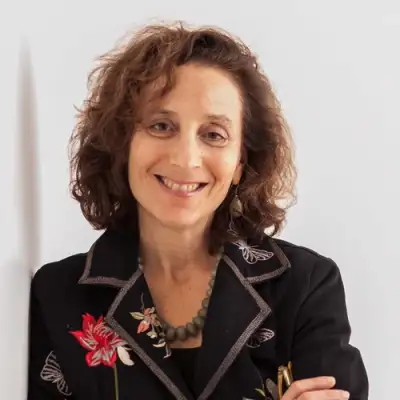
That's Wellesley College professor
Peggy Levitt, the author of the 2015
book, Artifacts and Allegiances.
In the book, she talks about how
museums intersect with globalization,
inequality, and nation building.
She compares former and current
colonial powers to emerging nations
like Singapore and Qatar and finds
that the meaning of museums is
very different in young countries.
They were also really strategically
positioning themselves to tell a story
to citizens, but also to tell a story
to the rest of the world that this is
a place you need to pay attention to.
Peggy also describes
herself as a decenterer.
In her new book, Move Over Mona
Lisa, she talks to artists from the
Global South who are tired of always
feeling like they're second class.
This book was about writers and
artists and thinkers in Argentina
and South Korea and Lebanon.
They are happy to take less critical
acclaim, less financial acclaim,
if they can create their own
institutions, their own networks of
circulation that don't rely on North
America or Europe for permission.
This is Call 'Em Like Museum,
a podcast about how museums
work and why we love them.
I'm Eric Johnson.
Today on the podcast, how can museums
represent the whole world more fairly?
Should artists in the Global
South opt out of working with
these old centers of power?
And how should we respond when
wealthy donors and politicians say
that they don't want more diversity?
Have a spine.
Have a moral compass, have an
ethical position and stick to it.
Professor Peggy Levitt will talk about
all of that and more right after this.
This episode is sponsored
by Transistor.fm.
If you are starting a podcast,
then you should use Transistor.
Upload your audio or video, and
they'll publish your episodes to
Apple Podcasts, Spotify, YouTube,
Pocket Casts, Overcast, and
more.
Go to Transistor.fm for
a 14-day free trial.
Have you ever left a museum
without hitting the gift shop?
Yeah, me neither.
Tote bags, hats, desk toys, all these
specific magnets, I love it all, and
now I'm giving some of it away in the
Call 'Em Like Museum gift shop giveaway.
To enter, all you have to do is sign up
for our free newsletter at likemuseum.com.
That's likemuseum.com.
I want to start off with the
same question I ask everyone,
which is what is a museum to you?
A museum should be many things, but at its
most basic, it is a place where cultural
objects and art and material culture is
preserved and displayed and explained
and made available so publics can engage.
And that's at the most basic, and
there are many ways to do that.
And what's your first
memory of going to a museum?
That's a great question.
I grew up in New York City, so my museum
was the Metropolitan Museum of Art.
I think everybody who's a museum goer has
their own museum that got them started.
So I have wonderful memories
of going to the museum over the
holiday season and the big Christmas
tree that is in the great hall.
And also my mother calling me from
the other side of the gallery saying,
"Look this, I want you to see this,"
which as I got to be a teenager was
a little bit kind of embarrassing,
but nevertheless, I appreciate
how she was trying to educate me.
Well, as you mentioned, museums
can be a lot of things to a lot
of different types of people.
Your book, "Artifacts and Allegiances,"
frames museums around what they mean
to three different types of countries.
Could you talk about how you
as a researcher, as a scholar,
came to see museums through
this sort of nationalist lens?
How did you arrive at the realization
that they could be interpreted this way?
That's not an original idea of mine.
I am a scholar of migration
and I studied migration from
a transnational perspective.
So that means that many of the
people that were studying migration
at the time that I was first doing
my dissertation work were mostly
interested in what happens to people
when they first get to a new country.
When I was looking for a dissertation
topic, I realized if you really want to
understand migration and its impact on
communities, whether it's social mobility
in the country that you move to or social
mobility or community development in
the country that you're from, they're
really two sides of the same coin.
That was my focus of study
in my first two books.
And then I started thinking, well,
do immigrant artists, do they
express the transnational experience?
How are they contributing
to our understanding of the
nation and how it changes?
So I was in Sweden on a
sabbatical, southern Sweden, so
it was right next to Copenhagen.
And I had this wonderful natural
experiment of looking at museums
in Sweden and Denmark who basically
were using the same materials to
make totally different arguments.
Right.
In Copenhagen, it was about we are the
Vikings and Denmark was Viking back in
the Ice Age and that's who we are today.
And in Sweden, the same materials
were being used to say there was no
such thing as Sweden 10,000 years ago.
We're really part of a global process.
And so one was insular,
particularistic, looking inward,
and the other was really saying we
are a country that's in the world.
So how do you explain that?
And then the book morphed into these
three sets of countries, so Sweden and
Denmark who are basically over empire,
but each of them using their museums to
reposition themselves in a different way.
And then I looked at museums in New
York and Boston, and this is the kind
of clinging to empire country case, and
then Doha and Singapore, which are using
cultural institutions to assert themselves
more prominently on the world stage.
But this is not new because if
you think about the world's great
museums like the Louvre and the
Metropolitan and the British Museum
were all tools of nation building.
And so they were all about having people
come into a space and see customs and
objects and values that they recognized
and then they would feel fresh.
And so museums and nation
building always went hand to hand.
So my question in the book was, are
museums … They're not necessarily
tools of nation building, but
they're tools of nation reinvention.
Well, in the case of Doha and Singapore,
which is the third section of this book, I
think there's something really interesting
about museums, which is that they are
very much a classic tourist destination.
People come from outside of these
places to go to these museums.
So would you say that the intended
audience of this nation building, is
it to demonstrate to outsiders that
these places have a strong national
identity or is it rather to reaffirm
or to encourage locals to have a
stronger affinity for their nations?
It's both.
And that was the tricky part.
Let's take the example of Doha.
So it's basically this 60-year-old — or
now 70-year-old, almost — independent
entity that was really trying to create
itself as a nation and distinguish itself
from its neighbors because basically
they were all nomadic cultures and they
didn't have a lot of stuff and they had
oral traditions and so they didn't have
a lot of written historical records.
And so you're creating a national
museum to tell the citizens of Doha,
of Qatar, you belong to an important
place that is going to take its place in
the world at the same time that you're
doing that to the rest of the world.
And this was part of a multi-pronged plan.
So when I was writing the book, they
were opening 16 new museums, but
they were also doing Qatar Airways.
They were also hosting the World Cup.
They were also just really strategically
positioning themselves to tell a story
to citizens, but also to tell a story
to the rest of the world that this is
a place you need to pay attention to.
And then what's the story you tell and how
is it different than the story in Bahrain?
And what does it mean to have a museum
that is from that part of the world,
but the architecture still signals
the certain power of knowledge?
And you walk in and it's a kind of temple
of knowledge where it's being communicated
to you that this is a sacred place.
They're doing the same thing, but
they're doing it with different
architectural styles and different
kinds of display exhibition styles
that also signaled they're jewels,
but they're different kinds of jewels.
And those styles, are they
generally emulating a European-style
museum like the British Museum?
When you think about the Met or the
Museum of Fine Arts here in Boston,
you usually walk up the steps,
you're in this temple of knowledge,
you walk into this grand hall, you
feel humble, you feel reverential.
Yes.
You feel like I better believe
everything they're telling me.
So they didn't do that in Doha, but they
hired architects who made magnificent
buildings for that part of the world.
There was a different kind of style
of exhibition that left a lot of space
between objects so that you would still
feel their jewel-like quality, but
there wasn't a lot of written material,
the text was treated differently.
So still doing the same communication
and education, but in a different way.
Do you think that there are limits to
the power of museums in this regard?
A lot of the museums that I'm most
interested in are niche, small,
boutique museums, not necessarily
the national history or the national
art museum, things like that.
But do you think that those smaller
museums still have an important part to
play in this sort of nation building?
I wouldn't say nation
building in the same way.
I mean, I think the most interesting
things that are happening in
museums are in those small museums.
You know as well as I do that
there's so much discussion about
diversity and inclusion, and even
if we're not allowed to talk about
it anymore, it's still there.
But it's much harder for old, traditional
museums to do that than it is for museums
that are off the beaten track or smaller
because they have to be more experimental
and more innovative, but also they can be.
I wrote a lot about the Brooklyn
Museum and the Queens Museum,
which I found incredibly innovative
and incredibly connected to their
communities in really meaningful ways.
And just as the museum that is
there to express the power and the
potency of the nation gets their
message across, these museums, no
one's expecting them to do that.
They have incredible collections but maybe
not the premier collection in the city.
In New York, there's so much competition.
And people have to want
to come to Brooklyn.
They have to want to come to Queens.
I think they were doing incredible
things to bring the community in,
to make the space much more inviting
and like a community center.
The Queens Museum even had a community
organizer who actually went out to the
… It's the most diverse borough in the city.
There are people from all different
countries, so he would go out to
these street fairs or food markets or
whatever and say to people, "There's
a museum down the street, you can
come in." And the museum is located
in Flushing Meadow Park, so there are
all kinds of people playing sports
and using that space over the weekend.
And you could come in the
museum and go to the bathroom.
You could have your Taiwanese dance
performance, you could come and have
English as a second language classes,
and that is the way that you make
the museum part of the community.
So Peggy, we're recording this in early
July 2026, and just yesterday, the
universe delivered us some serendipity.
The White House issued a report
attacking the Smithsonian Institution,
and in particular, the National
Museum of American History.
They said that it no longer treats the
American story as a shared national
inheritance to be taught or celebrated,
but as a political instrument to divide,
dispirit, and discourage our citizens.
We should remind listeners that your
book "Artifacts and Allegiances" was
published in 2015, which feels about
100 years ago in political time.
Can I get your reaction to this story
and how it either confirms or complicates
what you found in your research back then?
Well, it confirms that museums are
powerful instruments of nation building,
and now we're in an era of the powers
that be want to build a different kind
of nation that includes particular
people and particular stories.
And so history is always contested.
There are many ways that you can tell it.
And for me, the Smithsonian has been
an incredibly important institution
of telling stories that hadn't
been told and telling about people
who were left out of history.
And now what we're seeing in a
heartbreaking way is that all of that
progress is being walked back, be it
in museums, be it in national parks.
It's a re-rewriting of history that, in my
opinion, is a terrible disservice to our
national story and also to visitors that
are going to have incomplete information.
Here's what we can do, though.
There's a tendency, as we were talking
about before, that you walk into a museum
and it's meant to make you feel humble.
It's meant to make you feel
like you need to agree with
everything that's on the wall.
And so what we need to do is
teach museum goers to be critical
engagers with that material.
And you see museums doing that now by
putting a curatorial statement that
sometimes has a picture of the curator.
That's to tell you that it's not God
talking, it's a person with ideas and they
have opinions and it's an opinion, right?
The way they're interpreting
the material, the way they're
telling the story is an opinion.
And so we as museum goers have
to really be aware of that.
I have a whole class where one of
the learning goals, if you want
to put it that way, is to teach
students to read power in space.
And that means when you walk into a
gallery or a museum space, you say,
"What's in the center of the room at eye
level with lots of light on it and what's
in the back? And what does that make me
value? And what does that make me not
look at because I think that it's less
important?" And so somebody's directing
your attention and creating a hierarchy
of value, and we as critical users have
to be aware of that and exercise that.
But it's also museums'
responsibilities to help us to do that.
I think it's easy for someone
to read a book and understand,
right, this is an author who maybe
has a specific point of view.
They can understand on an individual
level, this person may have a
different point of view from my own.
And there's been growing awareness
online, people who are skeptical of
the algorithm, this idea of a machine
that is optimizing for engagement,
that's pushing certain behaviors.
But there is sort of a middle there
where these generally anonymous
institutions like museums, generally,
I don't think people know the name
of their local curator, right?
No, no.
And so it's getting over that hump
of understanding, no, there's design
choices happening here, as you're saying.
There are specific decisions being made
throughout the process to control where
we look and how we look at things.
And if you're not comfortable because
you know you're walking into a space
that hasn't been for you or you haven't
been taken there on your school trip
in fifth grade, even if your parents
don't take you there, that the
school takes you there and that it
feels comfortable, not intimidating,
then you're not going to question.
First of all, you're probably
not going to come and you're not
going to bring your kids and then
you're not going to question.
So that's why you have so many, in this
country, immigrant communities really
fighting to get real estate in the museum.
I have one more question about this recent
news story related to the Smithsonian.
In its article about the report, the New
York Times quoted a senior fellow at the
Heritage Foundation, Mike Gonzalez, and he
said this about the Smithsonian: "It's not
the only museum that erases our history
and our heritage. All the other museums
do. We have to go back to celebrating
our country and its great achievements."
Obviously the Heritage Foundation is not
a governmental organization, but do you
think that this is going to have a ripple
effect on American museums generally?
I think that we're living through this
era where it's having a ripple effect on
universities, cultural institutions, and
depending upon how close you are to power,
how much you depend upon federal funding,
how much the government is looking at you,
which is more at a Harvard than at another
university that's more off the radar,
then it does have a chilling effect.
But leadership, we see a lot of
cowardice and we see a lot of
spinelessness, I think, among
lawmakers and among decision makers.
I'm not saying that they're not under
pressure, I'm not saying that this is
not real, but this is the time when
we have to really stick to our values.
And you could make the same argument
that the story was told inaccurately
for 245 years of our history.
I mean, we've just in the last 60 years
started to tell a different story.
And I, for one, applaud that and feel
like there's still a lot of work to go.
I hope that decision makers can stick
to their guns and all of us have to
help them by supporting them and saying,
we applaud you and we're going to come
and we're going to go to those exhibits
and we're not afraid to show up.
Do you have a museum story?
Maybe there was a time you got
lost, a time that you were moved
to tears, or a time you saw
something that blew your mind.
No matter what your story
is, I want to hear it.
Head to likemuseum.com and click
"submit a museum story." It
might end up on a future episode.
That's likemuseum.com and click
"submit a museum story." Hey, if
you're enjoying the episode, then
make sure to follow the podcast in
whatever app you're using right now.
It's free and it makes sure that new
episodes will show up automatically.
If you're on YouTube, then
hit subscribe there too.
Thank you so much.
I want to talk about history
of museums and globalization.
In your book, you talk about how
some of these famous museums like
the British Museum started off as
collections of a couple wealthy
individuals who were not necessarily
the most academic collectors of items.
Could you speak to how the purpose of a
museum has changed from then to now, kind
of in the pre- and post-globalization era?
What do they do for us now?
Or actually a better question
may be, what did they do in
the past that is now obsolete?
I don't know whether I want to say
"obsolete." I have to think about that.
Okay, you choose your own word there.
Yeah.
Okay.
But what's different?
Well, we've talked a lot about
the formation of the nation,
the role in creating a nation,
creating a sense of nationalism
and reinforcing that internally.
We haven't talked a lot
about positioning the nation
vis-a-vis the rest of the world.
So what went along with those collections
was to also show the material culture of
other, less "civilized," people, including
the people that we might have colonized.
You can show … In those museums in
Sweden and Denmark, you see spoons
from whatever place that people brought
them back from, and then you see our
spoons in Denmark and ours are better.
And Denmark's not the only country
that's done that, by any means.
It's the other role that museums
play that they are also positioning
the nation vis-a-vis the world.
And you want it to say that we're
better, we're more sophisticated, we're
more "civilized" than all of these
people, and that helps us justify our
colonialism, our imperialism, direct or
indirect, because they need "civilizing."
And then some of the art that was
brought back from the colonies
was also on display to do that.
So what I find interesting is how museums
are being used now to cope with their
changing face, their changing demography.
Take Europe, for example.
There were many countries that
were homogenous for generations.
There were countries like Great Britain,
like England, that had former colonists
come and live, but a country like Germany
or France really didn't think about
themselves as a country of immigrants.
Or Sweden.
And now all these countries depend
upon immigrant labor, but they've
been awfully slow to letting them
become part of the national fabric
and admitting that Germanness has
changed or Frenchness has changed.
And so now what you see is
museums wrestling with that.
I don't know if you've ever been to
the Museum of Immigration in Paris.
No, I want to.
It's a fascinating place because
the building that it's in, it's
in one of the … Almost you're at
the gate of Paris, and it's a place
where a World's Fair took place.
So the building was from the World's Fair.
And the outside of the building is
carved with images of colonial France.
So you have the "savages"
in French Africa.
How can you have a museum that's trying
to say to the rest of France, we're a
diverse country now, we have white people,
we have brown people, we have Black
people, we have people from all over the
world, and you put it in that building.
So there's a lot of tension here about
how committed countries are to changing
the story, what resources they have
to tell a change story, how much the
country believes in that change story.
Do they have the museological
vision and tool to tell it in
a way that people can hear?
Because you always have to think
about how do you tell a difficult
message to people so they can hear it?
If I go into a museum like
that, I'm like, hooray.
They're trying to change the idea
of what Frenchness means or what
Swedishness means, but other people don't.
And that's what we're
seeing in this country.
People are threatened that their idea
of the United States is disappearing.
So how can we tell it in a
way that they can hear it?
I think there's an interesting
tension where you have a newer
museum versus an older one.
Absolutely.
Where if you have an institution
like the Louvre, which is world
famous, has been around for many,
many generations, who can drive
change for an organization like that?
Is that happening from within
the museum, from the curators?
Is there public pressure?
I'm sure the answer is a combination
of all of the above, but could you
speak to where the pressure comes from?
Yeah.
So most museums in Europe
are state museums, so they
are arms of the government.
In this country, they're mostly private
museums, and so they're donor driven.
So a big answer to your
question is partially museums
need donors and donors want
to see themselves on the wall,
and so that's driving change.
And also governments want to showcase
the culture made in their country.
So the Metropolitan Museum has a
Korean gallery, that's because the
Korean government helped support that,
and it's been there for a long time.
Up in Boston where I live, there are
Indian Americans who have done well
in the high-tech industry and are very
interested in showcasing their culture.
And so you see more and more attention
paid to South Asian art or art from the
subcontinent, and that's driving change.
Because at the end of the day, those
Boston brahmin donors who were the patrons
of these museums are dying off, and the
people who are going to replace them
have different priorities and different
interests, and that drives change.
Now, as these conversations are going on
— we touched on this before about visitors
to museums being critical consumers of
how their attention is being guided — do
you think the average museum goer is
aware of or engaging with these questions?
I don't know what the
average museum goer is.
Fair enough.
Yeah.
Yeah.
But I think that you're launching this
podcast because you care about museums.
If the tables were turned and I asked
you, how did you get here, you would have
your own special story about museums.
So for those of us who feel uplifted, who
when there was the pandemic or now, when
one might be feeling really discouraged
by what's going on in our country and
around the world, when you go to see art,
it reminds you what's good about life.
It moves you.
It connects you to other people.
You're looking at the things
separately, but it's something
of a collective experience when
you're standing next to somebody.
So I want to say something about the
role of the curator too, or the role of
museum professional, because what I also
learned while writing the book was how
differently trained people who were kind
of … There was a big generational change
in how people are taught art history
and also what's the role of the curator.
So older people, they were
trained in the minutiae of the
collections in their charge.
They were responsible
for those collections.
They were supposed to know everything
about those collections, and it was a very
narrow but deep, deep, deep knowledge.
And they wanted the person who wrote
to them from Costa Rica about a certain
shard of pottery to be able to tell them.
And then there's a younger generation
that's being taught global art history.
That means that we see artistic production
and cultural production as connected.
And so they know more about a
broader set of things and they, I
think, see their role as curators
in a different way as well.
And that's a way that might be more
conducive to bringing to light power
and the power in space and questioning,
critical looking and critical reflection
on what you've seen and what it
means and why did the person explain
it the way they explained it, and
is that the only way to explain it?
Well, this is a perfect opportunity
to transition and talk a little bit
about your new book, which is called
"Move Over, Mona Lisa: Reimagining
What We Read, Look At, and Learn."
As we alluded to in the intro, you
describe yourself as a decenterer,
and this is a big theme of the book.
Could you explain for people
what it means to decenter an
institution of art and culture?
I think the United States until recently
was doing … It wasn't perfect, but we
were doing a good job of grappling with
our history and trying to understand
that universities and museum goers
and our cultural and intellectual
life needs to include a more diverse
set of creators and creations.
My project … What I worry about is that
we don't pay enough attention to what it
means to diversify vis-a-vis the world.
It's one thing to have more art by
African Americans and Asian Americans
and ethnic Americans in our institutions.
But what makes us so insular and
parochial as a country is that we don't
pay enough attention to all the art
that's produced outside the country.
And when we do, it's a usual cast of
characters who come to our attention
because when you become a famous
contemporary, global contemporary artist
or a global contemporary writer or a
global contemporary intellectual, a
lot of times you've been trained, you
might be born in the Global South, but
you've been trained in the Global North.
Right.
So we master the same canon, we
diversify with the same five people,
and it's still a really limited sample.
I am part of a group of, it's an
international network of academics of
all kinds, people who are culture makers,
people who are culture managers — by that
I mean translators and curators — and then
people who use culture in their activism,
who care about producing and disseminating
and teaching about and acting upon
knowledge in more inclusive ways.
There are a lot of people who have taken
on that agenda and we're not the first by
any means, we build on what they've done.
But we feel that the discussion
falls short because it often stays
theoretical and it's not about
what you can do about things.
An international network often means
people in the United States and Europe
or North America and Europe, even though
they might've been born in the Global
South, that we say interdisciplinary,
but it's really never interdisciplinary.
And people often critique, they're
really good at critiquing, but they
don't chart a positive way forward and
they do it with ego and competition
and kind of individualism and not
collaboration and humility and generosity.
And so this is a group of people that
are trying to not only bring more
people in and ideas in and material
culture in, but also to do it with a
different ethos, a professional ethos
that really addresses the inequality
pipeline and how much people and ideas
and institutions from the Global South,
and I hope your listeners will understand
that as a very imperfect term to capture
poorer parts of Latin America and Asia
and Africa that are still left out.
Usually decentering means that you're
diversifying, that people, when
they would talk about what they're
trying to do, they would diversify.
So bring in a more diverse set of
people making more diverse stuff.
And then a lot of those people
are very happy to get to
London or New York or Paris.
But as I was writing the book, I realized
that … Let's call that soft reform.
And that's very important and all
power to them, but it doesn't really
break down the hierarchy of power
and it doesn't really fundamentally
challenge institutions as they are.
The center is still the same, in a way.
The center is still the same and the
institutions operate basically the same
with a more diverse content and ideas.
But what I realized as I was mucking
around for this book, and this book was
about writers and artists and thinkers in
Argentina and South Korea and Lebanon, was
that there are people that are actually,
they're looking for a harder reform.
So they are happy to take less critical
acclaim, less financial acclaim, if
they can create their own institutions,
their own networks of circulation,
their own nodes of activity that
don't rely on North America or Europe
for permission or facilitation.
And so they are really decentering
cultural globalization because there are
new nodes in the Persian Gulf, new nodes
in the southern colon of Latin America.
And so the book has these examples
of people that are fighting back.
So that's one way that the global
cultural world is changing.
And another is that some
people are opting out.
They're opting out and saying, "We
have a viable and interesting enough
intellectual and cultural scene of
our own that we don't depend upon the
globe." So they're kind of turning
their back on cultural globalization,
which is a type of decentering in
itself because you kind of puncture
the balloon and the air comes out.
I think there's something really
interesting there about people
who are opting out of these
previous centers of power.
My partner told me a joke that she saw
online, it was something to the effect
of museums will have an entire room
dedicated to one European guy's life
and then the next room will be Africa.
And I think there's a lot of folks
out there who, even if they're not
engaged with this on a scholarly
level, I think especially among younger
generations, there are people who
are aware of the limitations of these
historic institutions and may feel
like the only way forward is to opt
out, to look for the truth elsewhere.
If you were working at one of these
important museums, if you were working
at an institution of cultural heritage,
what can someone there do?
What can someone there do if
they are still attached to one of
these previous centers of culture?
What can they do to be
part of the solution?
Well, first of all, there's
a lot of new museums.
When you go to visit all those new museums
in the Persian Gulf, they're kind of
doing a lot of the same old, same old.
I mean, they look different but the
museology and the ethos behind it, the
values behind it, are very similar.
It just comes in a different
box, a different kind of box.
We didn't touch at all about the
issues of provenance and where
these objects should be displayed.
And there was a statement put out, and
I'm not going to remember the details
of this, but there were 25 of the
world's most important museums that
said, "We are museums of patrimony.
We're museums of humanity.
The British Museum is
not a British museum.
It's a world museum.
You can't take this stuff away
from us because we are the ones
that can protect it for humanity."
There is some truth to that.
Many more people go to London than
they do to Taiwan or to Thailand, but
there have to be more creative ways
of sharing provenance that go beyond
we're going to train you to … We're
going to do another training.
You come from Africa and Asia
to be trained in Europe, and
then maybe we'll send back the
object every once in a while.
But also, to be perfectly honest
about it, should all these other
poorer countries where people don't
have jobs and don't have health care
be spending their money on museums?
Like Walid Raad, who's a very successful
artist from Lebanon, he's kind of
like, "Is that the best we could do?
Just keep on making more museums?" So
I think there's a lot of discussions
to have about what's the best way to
share culture, to preserve culture,
to think about culture, to be amazed
by culture, and then to think of
creative arrangements about how
we shepherd it, how we steward it.
The old arrangements don't work.
I think there are real constraints
and real trade-offs that we
have to honestly look at.
I just want to ask your listeners to
think about what it would be like if
you couldn't go to Philadelphia and
see the Liberty Bell or you couldn't
see a copy of the Constitution.
There's so many countries around the
world where the heritage is somewhere
else and school kids can't go and see it.
And that's profound.
That's a profound loss for them.
How should a museum respond if
they're trying to move Mona Lisa
over and the wealthy donors who they
are dependent on for a lot of their
operating budget are like, "No, we
don't want to make any changes."
Well, I'd turn the question around
and say, why did all of those
tech bros from Silicon Valley
show up and make these amazing
contributions to Trump's inauguration?
I mean, have a spine, have a
moral compass, have an ethical
position and stick to it.
So who's ever the leader, that's
why they're the leader, they lead
and they say, "We have a certain
amount of square feet here.
There are people who this is their museum.
How can we redistribute it?
How can we use special exhibitions to
flesh out things that we don't have in
our permanent collection?" I mean, the
Museum of Fine Arts in Boston wants
to tell more Native American stories.
At this point, it's impossible
to buy Native American materials.
It's immoral to buy
Native American materials.
So what can they do?
Well, they're making a good faith effort.
Sometimes, in my humble
opinion, it falls flat.
And I say I wish they would be
more innovative, more creative in
their approach, but I admire them
and I give them credit for trying.
And that's the case with all of this.
You have to manage your financial
imperatives and then you have to
manage your educational imperatives,
your responsibility to the community
that you're serving, all that stuff.
Peggy, this has been fantastic.
I am so, so grateful that you made time to
talk about museums with me for this long.
I have two more questions
for you before we wrap up.
The first is the most important
question, easily the most important
question I ask anyone in this podcast,
which is, if you're in a museum gift
shop, what are you going to buy?
[laugh] Not the Frida Kahlo magnet.
I mean, that's the other thing that
we didn't talk about that because
there's this transnational class of
curators that go around from museum
to museum, you see the same kind of
programming and restaurant and bookstore,
and that's what we've all — museum
goers — have been socialized to expect.
And so there's a problem.
That is something we should also
think critically about because
should all museums look the same?
First of all, does every
country need a museum?
And then do they need to look the same?
Because who's that serving?
People like you and me who are
interested in this stuff, but not
necessarily the local folks who should
be also feeling comfortable too.
So what do I look for in the bookstore?
Usually I look for a postcard of
something beautiful that I saw that
I want to remember that moved me.
And my whole office at home is
filled with, I'm running out of space
actually because this is what I do.
It's my occupational health hazard
that anywhere I go, we always
go to museums and look at art.
And so just a postcard, that's it.
What's your favorite museum
you've ever been to and why?
I guess I have to err on the side of
immigrant museums or history museums that
bring those histories back into focus.
There's
the Copenhagen City Museum, which
does that for Copenhagen, which was
a big thing and is still a big thing.
And I don't know, I haven't been
there in a long time, so I don't
know if they're going backwards the
same way that we're going backwards,
but it was an amazing, simple, it
didn't cost a gazillion dollars.
The exhibits were made very creatively,
but it told the story that Copenhagen
has always been a city of immigrants.
Another museum I really liked was
in Sweden, which was the Museum
of World Cultures in Gothenburg.
So it's not in Stockholm.
They really displayed the materials
in a much more enlightened way and
also tried to really make connections
with the immigrant communities
that were around in that city.
And they contributed to
making the exhibition.
So for example, there was a
room that was about immigration
and people brought objects and
told the stories of the objects.
So I remember there was a woman who
brought a dress that she had taken
when she went to adopt her daughter
from someplace in Latin America.
So it was very powerful human
stories that just made the case
[of] this is who we are now.
These are people just like us.
Let's celebrate that.
Let's be open to that.
Let's embrace that.
They weren't a fancy-schmancy museum.
They just did it with a
lot of heart and ingenuity.
So those are some that
I think about often.
I just want to say thank you so
much for having me and it's so much
fun to be able to talk with you
and also for doing this podcast
because it's such an important thing.
Oh, the pleasure is all mine.
These conversations are fun,
but they're also important.
And so really that's what motivates
me is talking to folks like yourself,
really understanding this on a much
deeper level than just as an average
museum goer, if I might call myself that.
You won't be after this is over.
Thanks again to Peggy Levitt
for coming on the podcast.
You can find links to her
books in the show notes.
And as part of our gift shop giveaway,
I'm giving away a copy of her latest work,
"Move Over, Mona Lisa: Reimagining What
We Read, Look At, and Learn." To enter,
all you have to do is sign up for our
free email newsletter at likemuseum.com.
Call 'Em Like Museum is hosted
and edited by me, Eric Johnson.
It's produced out of my podcast
agency in San Francisco, LightningPod.
Our social media specialist is Julia
Wilde, artwork by Rhe Civitello.
Special thanks this week to Ethan
LaFrance, and thank you for listening.
I'll see you at the museum.