Subscribe
Share
Share
Embed
Where leadership, wellness, and high performance come together.
What does it actually take to become the standard of excellence in leadership and life?
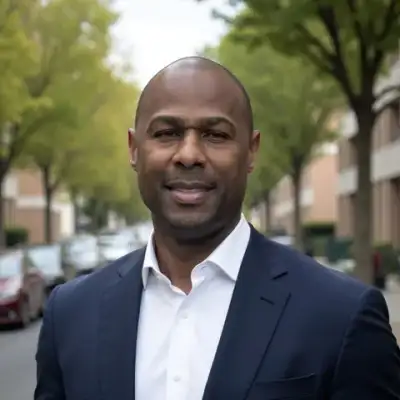
The Standard is a leadership and personal development program from Aurelius Global LLC, created for executives, athletes, veterans, students, and emerging leaders who want practical guidance they can apply immediately. Hosted by a decorated military veteran and global CHRO, Raymond Hall, the show blends real-world leadership experience with conversations about wellness, resilience, and high performance.
Each episode delivers actionable insight drawn from real people with operational leadership and executive experience, sharing their personal stories and lessons learned from leading high-performing teams around the world.
Whether you’re stepping into leadership, navigating career transitions, or working to grow without sacrificing your health, The Standard is designed to be the voice you return to when it matters most.
Because excellence isn’t theoretical, it’s practiced.
[00:00:17] Raymond Hall: Welcome back to The Standard.
If you've spent any time with this show, you know we don't do theory here. We don't read from slide decks, and we don't care about corporate buzzwords. We care about the lived experience of the operator, the mechanics of what happens when strategy meets friction. Today's guests have lived that friction across the most unforgiving high-stakes environments in the world, from the disciplined ranks of the United States military to Senate-confirmed leadership in the Pentagon as the CFO of the Air Force to the boardrooms of many Fortune 500 companies.
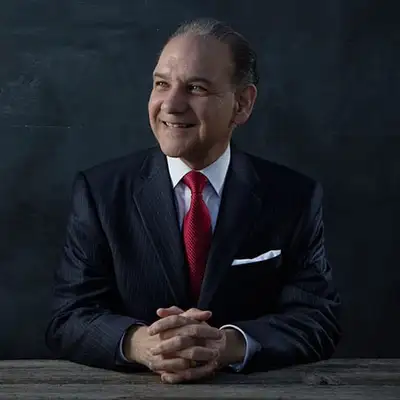
Michael Montelongo is a captain of industry, a public servant, and a world-class strategist. Mike, welcome to The Standard
[00:01:02] Michael Montelongo: Hello, Ray. It is a pleasure to be with you today. Thank you
[00:01:07] Raymond Hall: Yep, truly an honor for me. And, and Mike is also one of my, my good friends, mentors, and definitely an icon, uh, in his industry. Mike, I want to skip the pleasantries and go straight to the foundation. You and I both know that an elite standard
it's forged early, usually when things are uncomfortable. When you look back at your foundational years, the early military days, the intense pressure points, what was the exact crucible moment where good enough ceased to be an option for you?
[00:01:42] Michael Montelongo: Ray, thanks for the question. And before I respond to that directly, I just wanna share with you that I am absolutely delighted to join you and your audience. Uh, this is a special treat for me to reconnect with you since you and I have had the opportunity to cross paths in, um, really multiple occasions.
And so thank you, uh, for this opportunity, and also congratulations on launching this podcast that puts a spotlight on personal and team excellence, which I think really, particularly in the time and age that we live in now, is so absolutely necessary. So with that as a, a precursor, if you will, let me dive into the question that you asked, and I appreciate it.
For me, I don't think that there was a single St. Paul Damascus epiphany, if you will, right? For me, it was more about something that really occurred, uh, in stages and in phases over a period of time, and it really was about developing a North Star orientation. I'm gonna be talking a bit more about that throughout our, our conversation.
I think that is so terribly important to have a well-calibrated, uh, azimuth, if you will. And so for me, early on, it was about making a choice to commit Making a decision to commit, to lead, to serve, to, uh, excel, if you will. And rooted in that was, or what began or influenced that, was my family, my faith, my faith tradition, Jesuit training.
I went to a Jesuit high school, and there is where the combination of those, uh, influences, uh, helped me understand and realize the value of service. And then attending West Point for my college experience, and then later in the military, as you pointed out, that really helped me, uh, value excellence. And so with that as foundation, I began to understand that leadership was less about personal achievement and more about stewardship and accountability and responsibility.
And, and even more so as I grew through the years and matured through the years, it really was realizing that lives and careers and families are gonna be affected by the quality of my judgment. And so when you, when you really begin to realize that and internalize it, and you understand that people are relying on you, then as you point out, good enough, uh, really stops being acceptable
[00:04:45] Raymond Hall: Yeah, I, I think that's excellent, Mike. You know, one of the, the things I was thinking about is, you know, when you think about that baseline threshold for absolute excellence and when does that get permanently locked in, I think you kind of described it when you started talking about that commitment to excellence.
And then as you continue to mature through different experiences, um, the things that, you know, that were loose variables, that it isn't just an inconvenience, they become systemic failures. And so being able to understand that and navigate that, I think, is, is a tutorial in itself for our listeners. When, when the noise at the top gets completely deafening, deafening later in your career and the pressure to make an easy compromise mounts, what is that internal non-negotiable mental checklist that you run through to keep yourself grounded?
[00:05:43] Michael Montelongo: I-- great follow-on question to what we just talked about a second ago, Ray, because I go back to what I mentioned a second ago or a little bit ago when I said that you have to early on develop a North Star commitment. Again, having a well-calibrated azimuth. I can't emphasize that enough because that's what really in many ways you use as a foundation, a grounding foundation.
And you ask yourself, you have to do these self-audits along the way and ask yourself: Why am I doing what I'm doing? Am I truly aligned with my, uh, purpose, my values, my obligations? Or am, am I doing this out of ego? Am I really focused on the mission and the people that are helping me achieve that mission?
It's one of the reasons, Ray, that I think having a leadership philosophy is so critical for anyone that engages in that discipline. And having been-- the two of us having had time in uniform and serving in the military, that is one place that requires you to have a leadership ph-uh, philosophy and documenting it.
It really is valuable, uh, because it really is s-something that you can use as a self-check. So Ray, for me, uh, it's a little bit more detailed, but the way I would summarize my leadership philosophy is in everything that I'm doing with people that, uh, I go... And as I think about this, I'm thinking about my grandmother and my mother telling me, one, surround yourself with people know, that know more than you do, because you're gonna learn a ton when you do that.
And so my first imperative or principle is to learn. Whatever it is I'm doing, learn as much as I possibly can, and then grow from that learning, right? And then from that growth that comes from learning, from intense learning, then serve. Serve the team, serve others. I talked about that a little bit ago about, you know, orienting yourself for the benefit of others, the welfare of others.
And then in the process of serving, make a contribution. So learn, grow, serve, and contribute
[00:08:25] Raymond Hall: Yeah, that's awesome, Mike. Um, you, you touched on something that we've been talking about, uh, with several guests on the podcast, uh, the new leadership framework and what it should be, uh, similar to your points around the focus, you know, on people, which would then, um, translate into more efficiency, better business results.
I, I believe every business is a people business regardless of what it is, think when you look at those leadership philosophies that you're referring to, there's much corporations can learn from the military and how, uh, they go about doing business and setting the standard as well as, uh, some sports seven organizations.
We're seeing two right now battling it out in the Western Conference They have a long history of holding the standards with Oklahoma City and also San Antonio. But I wanna talk about something with you that I, I was really excited, um, to get your thoughts on it because you developed a framework and a model.
Um, I don't know how many people are familiar with it, but it should be on every bulletin board. It should be on, you know, every screen at every corporation. It's called the Half framework. Um, many corporations, they talk about soft skills. They throw around words like humility, authenticity, vulnerability, and empathy like they belong on a motivational poster.
But on this program, we view culture as a hard business metric. It's nothing soft about it. We look at it through the lens of infrastructure. You've developed this framework, humility, authenticity, vulnerability, empathy. To the traditional hard-charging executive, that sounds like a soft baseline, but you used it to drive masses-- massive systemic execution in hyper-competitive markets.
Can you break that down for me? How do you weaponize those four traits into a hard, measurable performance advantage?
[00:10:25] Michael Montelongo: Ray, thanks for teeing that up as well as you did. To me, I absolutely agree with you in terms of how culture is so critical to an organization. Um, in fact, I would expand that a bit and say that it is part of a trinity that I think in many ways is really
the code that has to be cracked in order to achieve the kind of high performance that either organizations, groups, or teams, uh, seek, and that is something I call TLC. Talent, leadership, culture. TLC drives performance. How does it do that? Well, and this sounds... As I say it and share it with you and your audience, it sounds, when you hear it, quite simple, but it's so difficult to integrate all of these elements.
It's about having the right people With the right skills and attitude, by the way, at the right time in the organization's journey. Because think about this, um, a startup requires certain people that can excel in that particular stage versus, say, a company that is in its sustaining phase that requires a different set of backgrounds and experiences.
So again, the right people with the right skills and experiences, having the right attitude at the right time, led by the right leader. And I maintain, thank you for saying this, a leader, uh, that has-- have characteristics, humility, um, authenticity, vulnerability, empathy. And that leader then is able to create the right culture that moves the organization forward and enables the organization to do the right things.
Now let, let me pause on that for a second, because by the right things, I'm trying to convey that you have to be selective about what you focus your time, energy, and resources towards. Because there are so many things in the inbox that you could be dealing with. There's so many things in that inbox that senior management teams and boards have to, uh, address and juggle.
But if you try to do it all, there's no way that you can do that. So you have to be selective about what you do and what you don't do. So that's what I mean about doing the right things and then doing the right things right. And by that I mean legally, morally, ethically. So let me repeat that again. TLC, talent, leadership, and culture, is gonna drive, ultimately drive performance.
And it shows up in having and selecting the right people with the right skills and backgrounds and experiences and attitude at the right time, led by the right leader who creates the right culture, that enables the organization to do the right things in the right way Look, in that kind of formulation, yes, have, uh, skills, if you will, might be considered to be soft, okay?
But they're necessary skills, Ray, necessary skills. Uh, you absolutely have to have them. That's what defines what I call leaders of character and servant leaders. Leaders of character, servant leaders are have leaders, and it directly affects trust, uh, decision quality, accountability, retention, and execution.
You absolutely have to have it. Look, even if you, uh, eh, sort of indulge in the conversation that, oh, these are soft skills, and maybe some people dismiss them as soft, okay. I, I think of, like the hard skills that maybe some people gravitate towards, that's table stakes. You, you can get SMEs, you know, subject matter experts.
I, I don't mean to in any way belittle subject matter experts. I'm just saying that you can get those folks, um, fairly easily because tho-those are quantifiable in terms of, "Hey, are you an expert in this particular discipline or not?" Okay, great. That's what I call the hardware for an organization. But Ray, it's those soft skills, that's the software.
And if we're seeing anything about the technology revolution that we're all experiencing today, man, it's about software driving the hardware. Actually, it's about-- to be, to be fair, it's har- it's software then leveraging the hardware to then perform as expected. So, uh, thank you for raising the issue about that particular framework because I do feel that, um, if you're an individual that has those elements in your toolkit, then you're able, I think, to then, uh, leverage talent, leadership, and culture to drive performance in your organization
[00:16:33] Raymond Hall: I, I, I love the framework. I actually, um, when I heard you talking about it in one of your previous speaking engagements, it was genius because leaders today are dealing with demands when it comes to talent expectations that weren't existing, you know, even five years ago. Um, so there, there-- when you say the halve leader, I think that's something that should be institutionalized.
I think when you think about how you hire, how you develop, how you select and promote, that should be a more and more important part of the equation. Not to say some of the other, uh, technical competencies around, uh, being strategic and business acumen and financial acumen, all those things still remain important.
But in today's world, managing the diverse talent that we see deployed across or across organizations, the halve framework is that dif-differentiator between good and great organizations. Now, I will say, when I look at the framework, there is a friction point of the framework because we have some old school, hard-charging leaders, those operators that are used to winning on pure grit and will-willpower.
So they're gonna struggle with the balance here. In your experience advising CEOs and sitting on major global boards, which of those four elements, humility, authenticity, vulnerability, or empathy, is the absolute hardest for a leader to consistently embody when they are under intense fire?
[00:18:08] Michael Montelongo: That's a great question, Ray, because a- as you're pointing out in what you just said, the technical skills that you must have in terms of having capability to do a particular job or particular task or assignment, you gotta have that. Absolutely. I mean, that, that, that... But I, I, I consider that to be table stakes.
And as you point out, I think the differentiator, the, the elements that then enable you to move from okay to something that is really high standard are those elements that we just talked about, the HAVE standards. And so that's not, that's not something that you turn on a dime. It's something that you develop over time.
It goes to the first question you asked me about that crucible moment. It, it-- At least for me, it's something that you have to cultivate over the years. And I think perhaps to your question about, you know, what's the hardest one to adopt, uh, among those elements, I think it's self-awareness and, and translating that self-awareness into vulnerability
That I think is usually the hardest because I think there are a number of individuals, depending on their backgrounds and how it is that they developed over time, they mistakenly believe or associate vulnerability with weakness
[00:19:49] Raymond Hall: That's right
[00:19:50] Michael Montelongo: And, and, and, and I think the inability to admit blind spots is what creates organizational fragility.
It's hubris, Ray, hubris. And I think there are individuals that think that being boisterous and overbearing, loud, if you will, is what carries the day. And look, what is it? We just saw in the headlines a day or two ago that BP dismissed... or the B- the BP board dismissed the chairman for engaging in that kind of abusive behavior and hubris.
Uh, in today's world, I, I just don't... I mean, I think there are individuals that are able to somehow, um, achieve the positions that they have without having those elements, but then at some point it betrays you. And so look, if, if there are individuals out there in the audience that are thinking about, you know, "How is it that I can, uh...
I, I have a degree of self-awareness already, but how can I improve that and, and, um, you know, attain a high level, level five," if you will, to use, um, a term that's been used quite a bit, uh, in terms of having those kinds of elements. I would say grow by tapping into feedback loops. Seek feedback. Um, self-reflection as well, and coaching, very valuable.
Um, and then over time, just gaining as much wisdom and maturity as you possibly can. I think secure leaders are the ones that are transparent leaders. Not easy to do. Not easy to do, particularly as you point out in the culture, the hard-charging culture that all of us have grown up in, and particularly in the military, right?
Where, you know, you have sort of the, I guess, to use a phrase, the gung-ho, um, hard-charging mentality. Yes. Uh, look, I've, I've met some of the absolutely best leaders in the military, and people, uh, particularly in the civilian world, have myths about how military leaders function and so forth. And I have run into some fantastic leaders that have those H-A-V-E elements.
At the same time, I've run into some of the others that believe that in, uh, bullying others, uh, that's how it is that you get the best of, of a team, and that's not the case. It really truly isn't the case
[00:22:42] Raymond Hall: No, that's right. Mike, y-you made a statement before, um, that resonated deeply with me. Um, you know, people don't follow titles, they follow trust. In our world, in our previous world, the military, a lack of trust costs human lives, plain and
[00:23:03] Michael Montelongo: उह उह।
[00:23:04] Raymond Hall: In a Fortune 500 boardroom, a lack of trust completely dismantles enterprise value, yet we see organizations rarely treat trust as an engineered asset.
If you walk into an underperforming enterprise or you step into a board that is in the middle of a massive governance or ethical crisis, what are the immediate tactical steps that you take to establish baseline trust within the first 90 days?
[00:23:33] Michael Montelongo: Ray, I'm so glad that we're talking about this particular element, this particular concept of trust. Uh, we don't have time in this podcast, but boy, I tell you what, I could spend quite a bit of time giving you personal experiences about What it means to be in an organization that's defined by trust, where trust is absolutely apparent on one end of the spectrum, and then how dysfunctional an organization is when trust is absent.
Trust, Ray, you know this, it's the indispensable element, investment that earns interest over time. It, it, it's a promise that's based on character. I talked a little bit earlier about leaders of character. It's a promise based on character and follow-through. Saying what one means and meaning what one says with no daylight in between the two.
You know, actions that are aligned with words. Here's the value chain that I kind of have seen, at least in my experiences, Ray. I think, yes, you have to begin foundationally by being somebody that subscribes to the HAVE framework. Someone... And look, none of us are perfect. I, I'm not, I'm not suggesting that you have to be, you know, at a, at a perfect level, uh, in each of those elements, HAVE.
But you somehow have to be able to be predisposed to behaving that way and integrating them in your behavior. And if you, if you are that type of leader of character, that type of servant leader, then that leads to transparency, that you can operate as a transparent leader, which then begets honesty. And then honesty, if it's consistently demonstrated with integrity, that then builds trust, trust over time.
And then that element, if it exists, then develops into something even more powerful, Ray. And we've seen this both in the commercial world and the civilian-- um, and I should say, the military world, and that's belief. Belief. And after all, I think leadership, when you sort of strip it down, is about inspiring others to believe and then enabling that belief to become re-reality.
So to me, the secret sauce is being in an organization where people trust and believe in each other and in something larger than themselves. It shows up operationally in decision vo-vo-- uh, what I call decision velocity, in candor and retention, collaboration, whether bad news rises early or late And so if you're-- The, the, the worst time to be in a trust deficit situation is in a crisis.
That's exactly when you need trust. And so if you're coming into a situation as you painted, where the organization is in a crisis and you absolutely have to take some, you know, immediate steps The-- I don't... I, I almost hate to use the word hope because hope is not a strategy. But the hope is that you're already armed with those characteristics, that you're already coming into the organization as an individual that, uh, believes and prescribes in HAVE behavior.
And then you're the, you're the type of individual that is transparent. You come in listening before acting, and what you do is you do everything that you can in your words and in your deeds to set the example, to role model behavior that you want from others. You focus on mission first, people always.
Ray, you and I have heard that before. Mission first, people always. Another one, troop seat first. When you convey to others that you are going to be absolutely lockstep in making sure that you complete the mission, but you don't do it at the expense of people. You're going to do it with them, and you're gonna take care of them.
You're gonna look out for their welfare. People are then going to trust in you, especially when you're consistent in, as I said a little earlier, in your words and in your deeds. Clarify expectations immediately and create an environment. Again, this goes back to TLC and the culture component that you were bringing up.
Create psychological safety. Fancy word for saying, "Give people permission to raise their hands and say, 'Hey, I'm seeing, I'm seeing something that doesn't sit right.'" Create, uh, an environment where there's no fear to speak up. You have to do that whether, whether you're in a crisis, but especially if you're in a crisis
[00:29:46] Raymond Hall: Mike, I think those are, uh, amazing points because what you're, you're framing up for leaders that are, that are listening, uh, to this segment is how to keep your leadership integrity from eroding. Um, because it's rarely a catastrophic one-time decision that brings down an executive or a company's culture.
It's usually a slow roll, you know, a quiet cultural drift. It's the micro compromise made in the dark when nobody's watching. Um, you've championed, uh, practical guardrails like the mirror test and the headline test. Um, how should an executive actually build a repeatable daily personal operating system using these concepts to ensure their values and real-time execution stay perfectly aligned under pressure?
[00:30:39] Michael Montelongo: Thanks for the question, Ray, because you are spot on when you outlined that, um The temptation to compromise over time stress testes, stress tests, I should say, integrity, right? The, as you say, the cultural erosion or the trust erosion or the integrity erosion happens gradually through tolerated compromises.
Uh, which is another reason why you, I think, you have to have this very strong North Star commitment and this, as I mentioned earlier, this very calibrated, um, azimuth. And so I mentioned a, a second ago about the power of self-reflection. And these five tests, as you were pointing out, that I'll share with you and the audience, I think can be very helpful in that self-reflection exercise.
Uh, one of them is the mirror test, right? Looking yourself in the mirror daily and asking yourself, "Would I be proud of the decision I just made tomorrow morning? In the light, in the light of day when things kinda calm down, am I gonna be proud of what I just did?"
[00:32:09] Raymond Hall: 嗯哼。
[00:32:11] Michael Montelongo: is the h- uh, this is one of my favorites, the headline test.
And this one is a, is a, is really, I think, uh, a very, uh... Is, is one that I think those of us that have been in the commercial world and the military can relate to, which is, would I be okay if I, if, if what I just did or what I just said shows up on the front page of The Washington Post or The New York Times or The, The Wall Street Journal?
A third test is, uh, what I call the mentor test. When you get to, uh, senior positions, uh, hopefully you are being a mentor to others, 'cause that's one way that you then help build a legacy, and you then, you, you pay it forward, if you will. So then the mentor test is a great one, which is, would someone that I deeply respect, that I'm mentoring, would they be okay with what I just did or said?
What would they say about this? And the legacy test is another good one. It's kind of a, a cousin to the mentor test, which is, will I be proud of what I just did and this decision years from now? And finally, I think the role model test, another cousin of these two that I just mentioned, which is, would I want others- That, that look up to me and that rely on me, would I want them to follow my example here?
So I think these, uh, audits, if you will, can be very helpful in self-reflection, in creating a greater degree or a higher degree of self-awareness coupled with feedback, um, and making sure that your stated values and your actual behavior are aligned. I will tell you and your audience that, again, that I mentioned earlier that I attended, uh, the United States Military Academy at West Point, and one of the crucible, uh, elements or concepts that I took away from that experience is the cadet prayer.
And part of that cadet prayer is this: Make us choose the harder right instead of the easier wrong, and never to be content with a half-truth when the whole can be won. I think that, in many ways, Ray, sums up, um, what I think ought to be part of one's North Star
[00:34:56] Raymond Hall: I, I completely agree, Mike. You know, I, I need you to be a coach and advisor to some of these NBA front offices. Uh, I, I don't know if you've been watching the, the NBA playoffs, but I'll
[00:35:08] Michael Montelongo: I have
[00:35:09] Raymond Hall: There was one team, th-there was one team that they got swept, and the coach, highly successful coach at the top of his game, uh, when he took over this team, they definitely weren't contenders.
Um, the front office made the right moves. You know, he had the right strategy, or so we thought, and then they end up getting swept. I think sometimes that successful entrepreneur or that ultra-high performer, in this case is the coach, success sometimes breeds a dangerous level of cognitive inertia and deep blind spots.
This coach, when you listen to his press conference, and he started to talk about how the team won the analytical game, but from a fan's perspective and a player perspective, you're getting the breaks beat out of you. I think things like that, you start not only lose your edge, but you also compromise your own, you know, integrity, and then that's where decay typically, you know, shows up.
What are some of the early warning tripwire that the rest of the board or team misses from your perspective?
[00:36:25] Michael Montelongo: Ray, thank you for, uh, using the NBA example. I am, along with millions of people that are watching this, uh, set of playoffs very closely, and, um, particular for me because I grew up in New York City. That's where it all started. So the New York Knicks are obviously my favorite in this, and even more so because what I call the Villanova Knicks are helping that team, um, be as successful as they are.
My daughter went to Villanova. The three Villanova grads that are on that team that are critical to-- have been critical to the success that the Knicks have, um, enjoyed, uh, were, uh, peers of hers when she was attending Villanova, and they were part of the championship teams back in, I think, twenty sixteen and twenty eighteen.
And if you know anything about Villanova and Coach Jay Wright, that is an individual who, at least from the outside looking in, 'cause I don't, I don't know him, but he certainly displays the kind of HAVE characteristics that we've been talking about in this podcast. And I think that was something that he infused in his players.
And guess what? Several years from their graduation, they're now at the top of their game, doing what they're doing. Whether they'll prevail or not, who knows? But goodness gracious, uh, when I see them playing, they're playing like a team, not as if it all depended on one or two individuals. Anyway, I, I-- that was my, uh, advertisement for the day, and I, I appreciate the opportunity to say that.
Look I think that, and we sort of touched on this in the previous question, um, the tripwire on some of this usually comes through rationalization. 'Cause you, over time, you rationalize one compromise, and then the next time you rationalize another, and then the next time, and then the next time. And sometimes when I see that occur, I tend to think that maybe an individual, the individual in, in question doesn't have a well-calibrated azimuth, doesn't have a strong, uh, well-anchored North Star, uh, and probably doesn't subscribe to the HAVE framework that we've been talking about here so far.
So some of these leaders then begin to believe that the accountability that they impose on others doesn't apply to them, or at least applies differently to them. And, and they, they... There's like a double standard. It, it can't be that way. And they stop... Another thing, another tripwire, is they stop surrounding themselves with what I call truth tellers.
Someone that raises their hand and says, "Hey, coach," whatever the case might be, and the coach shuts that person down. That's a major signal when that happens, 'cause then everybody else will think, "Hey, I gotta, I gotta pull back." So, um, if there's defensiveness that's being displayed because of difficult feedback, boy, that's a telltale sign for sure
[00:39:56] Raymond Hall: Yeah. A-and for all the, the listeners out there, I think it came across pretty clear Mike is a New Yorker. He may be a little biased when comes to the, the Knicks and what they might achieve. There might be a seven foot five French guy out there and a two-time MVP that might debate you on what the outcome would be.
[00:40:15] Michael Montelongo: Yeah.
[00:40:16] Raymond Hall: Mike, one of the foundational premises of "The Standard" is that you cannot decouple your personal, uh, your professional output from your internal personal infrastructure. Your mind and body keep a joint ledger. Uh, to maintain an unyielding standard over a decades-long, high-velocity career like yours across military commands, public office, and corporate governance, it requires elite self-regulation.
If your personal wellness architecture collapses, your decision-making metrics skew negative also. Your prefrontal cortex degrades, you become highly reactive, you place an incredibly high premium on continuous self-reflection and self-care. I wanna get transparent here. What does your actual personal routine look like to preserve your physical resilience, maintain your mental sharpness, and guarantee absolute clarity when you have to make major enterprise calls?
[00:41:16] Michael Montelongo: Ray, we, I think, covered a good bit of this in our previous, uh, conversation. I think that you absolutely have to enable or at least engage in activity that enables you to have a very strong North Star, a, a really deep sense of your purpose, where your behavior and the things that you say and do reflect your commitment to mission, to values, to the vision of the organization, and that you're engaging in regular self-reflection to be sure that there's good alignment among all of those principles, right?
So you're making a decision, as I said in, I think, your first question. You're making a decision. You're choosing, deliberately choosing to serve, to lead, to excel. And in the process of doing that, place yourself in situations where you're going to gain as much wisdom that strengthens your judgment over time.
[00:42:43] Raymond Hall: うん。 Mike,
[00:42:47] Michael Montelongo: but rely on those trusted relationships that keep you grounded, whether that's family, your faith tradition, uh, close friends, mentors, whatever the case may be. Use all of those trusted relationships to do checks, audits of how you're keeping true to yourself. And look, at the end of the day, uh- Engage in something that I think sometimes is overlooked, particularly as you, um, rise through the ranks, if you will, and that is gratitude.
Be thankful every day, even for the, the smallest things. Be thankful for the fact that you've woken up and that you can... You have the gift of life to enable you to do, and at least in my case, u- the leadership philosophy that I talked about earlier, when I wake up, it's another day that I can learn, I can grow, I can serve, I can contribute.
I'm grateful for that. I'm absolutely grateful
[00:44:07] Raymond Hall: I wanna, before our time ends here, I wanna touch a little bit on managing, uh, geopolitical risk. I know you've, um, spoken quite a bit about that, and I think there's much that our listeners, uh, can learn from it. Um, because we are living in what you've accurately called a state of permanent crisis, uh, a multipolar world where disruption, it isn't a temporary event, it's, it's the baseline environment.
How can leaders understand, prepare for, and manage geopol-geopolitical risk?
[00:44:39] Michael Montelongo: Ray, thank you so much for asking this particular question, and I frankly have been waiting for the opportunity to engage with you on it. I've been lately speaking and writing a bit more about this, partly because of my national security background and also my commercial and business background. And In the context of what we're seeing every day right now in the headlines, where these kinds of shifts and these disruptions are not just occurring, um, every month, it's like almost every hour.
And so there is for, for sure a challenge in front of senior leaders in corporations, for instance, to try to get their arms around this for sure. And, and I'm-- And, and the speaking and the writing that I'm doing, I'm trying to help organizations Sort of interpret this correctly. So in answering your question, I think it's very useful for the audience to understand that what has been happening did not happen all of a sudden.
It was something that truthfully, over decades, has been brewing, and now it's reached its sort of apex, if you will. So back in another era, specifically the, the World War II era into the Cold War, society, business, and government moved in much greater lockstep than today. And in those eras, we were able to build a deterrence system that I call a national life insurance policy.
A national life insurance policy that we pay the premiums by investing in industrial capacity and technology, in alliances and in partnerships. And that deterrence system, that life insurance policy sustained us, and we, we... And it, it ultimately led up to winning the Cold War in nineteen eighty-nine. Now, the irony is that we then let that policy lapse, believing we no longer needed the coverage.
And so what happened is deterrence had deteriorated, our resilience had waned, and our adversaries grew much bolder over time, which then culminated, frankly, in what we saw happen in February twenty-fourth of twenty twenty-two when Putin had invaded Ukraine. Now, in, in those decades, the three decades since nineteen eighty-nine, that was the era that we call globalization.
It was phenomenal economically because it, it lifted so many out of poverty and really many organizations, uh, were prosperous during that time. The downside is that many individuals, uh, both public officials as well as business leaders, completely eliminated or ignored Geopolitical, geostrategic risk. And so they're unaccustomed, now that it's risen back again, to deal with it.
The assumption of stable globalization, those three decades that we had lived after or experienced after 1989, it's gone. And geopolitics and geostrategic matters is no longer a background noise, not a narrow episodic nuisance. Today, economics, technology, cyber, supply chains, energy, national security, they're all interconnected Economics really is the new battlefield, and technology is a terrain.
And I believe, firmly believe, and this is what I'm conveying to the audiences that I, uh, speak with and that I write for, that business has a role in creating and sustaining national power. And that requires that senior executives and boards have geopolitical and geostrategic fluency. Boards and CEOs and companies today, I maintain, are on the front lines, not literally, but they have to integrate geopolitical risk directly into strategy and capital allocation.
I'm not talking about... Let me just make sure that your audience understands this. I'm not talking about industrial policy, which is something that I truly do not believe in as a free enterprise advocate. What I am talking about is that businesses and public officials together can engage in activities and make the appropriate decisions within their domains to both create shareholder value and national resilience at the same time
[00:50:11] Raymond Hall: that, that's awesome. Um, we are now at the end, um, of this discussion. Um, I really, really appreciate, uh, you taking the time. But usually how we end the podcast, we ask you, um, a question, and it's a question more centered around, um, how would you define the standard?
[00:50:43] Michael Montelongo: Thank you for asking that, uh, Ray, because I think we, we covered, um, a number of points in the conversation today that, um, that really when you take them all together, uh, address the question. I go back to, uh A couple of catchphrases that I mentioned a little bit earlier Mission first, people always.
Troops eat first. So let me, let me unpack that for your audience, because those are catchphrases that are common to those of us that have worn the nation's uniform By mission first, people always, it says that a leader, particularly a leader that is an HAV leader, a leader of character, a servant leader, is focused on getting the job done, but never at the expense of your people.
That you're always looking out for their welfare The catchphrase, "Troops eat first," that describes the, to some degree, the hierarchical, uh, rank structure that the military has. You have commissioned officers, and you have non-commissioned officers, and you have the troops. And whenever it's time to eat... I, I suppose in the old world, in the European model back in the day, the elite always were the ones that ate first.
Well, this is flipped when you say the troops eat first. And, and by the way, sometimes there's not enough chow, as we sometimes experienced. So if, if the troops eat first and they eat up all the food and the officers don't get any, or they get a little bit, that's part of the deal. That's part of taking care of your, of your, um, people, looking out for their welfare before you look out your own.
Look, service and excellence are not opposites at all. They, I think, reinforce each other. And, and service or committing yourself to a life of service, whether that's expressed in the military or in the commercial world, that doesn't mean that you're lowering your standards. No. Uh-uh. Absolutely not. I think some of the best leaders are the ones, as I said, that subscribe to mission first, people always, that they care about people while maintaining uncompromising standards about accountability and performance.
So at the end of the day, the standard is about winning with integrity, with discipline, with purpose, and making sure that you're always taking care of your people
[00:53:52] Raymond Hall: Mike, thank you for your insights today, your service, and, you know, every board that you lead, every company that you have contributed your wise counsel and, and wisdom to, every leader. Um, your, your friendship, your wisdom, and just your overall knowledge of how to become excellent at this thing we call leadership, really, really appreciate everything you're doing, everything you continue to do, and what you shared with all of us today.
And to everyone listening, stop sprinting bri- blindly into high-effort failure. Look at your architecture, fix your baseline, hold the line, and execute. I'm your host, Raymond Hall, and we'll see you next time on The Standard.
[00:54:39] Michael Montelongo: Thank you, Ray