Subscribe
Share
Share
Embed
The history you think you know, with women in it this time
[00:00:00] Isabelle Roughol: Hey, it's Isabelle. Before we get going, two reminders. One, you should definitely sign up for the newsletter at broadhistory.com. You'll get a lot more than from just listening to the show. It's entirely free. And while you're there too, maybe sign up for membership. Broad History is entirely supported by its listeners and readers. This is how I'm able to do this. You'll get every episode early and ad free, so without this little shtick at the beginning or in the middle, or at the end, and you'll help the show stay on the air. It's all at broadhistory.com/membership. Welcome this week to new members, Anna and Judith, and someone I forgot last week, how could I, an early and very big supporter of Broad History, Ann.
I have to say, gentlemen, I know you're listening and I'm so, so glad that you are, but the ladies are kicking your butt at signing up for membership. I'd love to see some more guys sign up because well, women's history is everyone's history, and I'm certainly trying to make a show that everyone can enjoy.
In fact, a gentleman reached out recently and said that he was confronted by some of the conversations, but he powered through and he was learning and he was thankful. Boy, does that make my heart sing? Makes up for all the idiots in my YouTube comments. So I do want men listening. You can go ahead and share the show with the men in your life, and hopefully they'll all enjoy it.
Go ahead and sign up for membership at broadhistory.com/membership. And if you don't have the cash, I totally get it. Share the show with friends, share the show on social media, comment, leave a five star review on the podcasting app of your choice. It all really, really, really helps me.
Thank you very much. Now let's get on with today's episode.
[00:01:37] Intro
---
[00:01:37] Isabelle Roughol: Hello and welcome to Broad History, a podcast about the history you think you know with women in it this time. I'm your host, Isabelle Roughol.
You know, doing women's history can make you angry. History is full of dark stories, women's history especially. You get angry at the systemic injustice and the systemic failures. You get angry that we seem to be fighting the same battles over and over again. You get angry because you read so much more misogyny than you thought was even possible. You get inspired by incredible women who pushed boundaries and contributed so much to humanity, but then you get angry because they were completely forgotten while every single-term undersecretary of commerce seems to have a statue somewhere. And then you read your YouTube comments and you get really angry.
And I don't wanna be angry. And so you try to do this with humour and fun and a sense of joy because this is fun, at least if you're a nerd as I am. And then you make some episodes that are a little bit of candy, and today is candy.
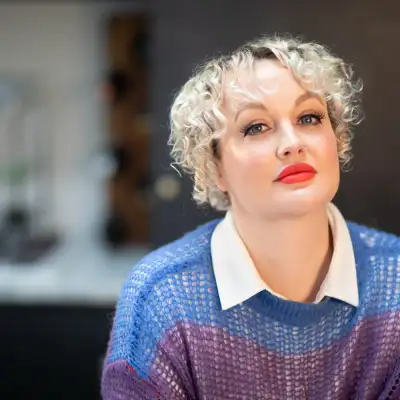
This episode is not for children, and maybe don't listen with your parents in the room either. Today I am speaking with sex historian Dr. Kate Lister. She's the host of the podcast, Betwixt The Sheets, try and say that fast, and the author of a new book, Flick: A History of Female Pleasure. And we talked about the crazy ideas over the centuries that people have had [00:03:00] about women's sexuality. Lemme tell you, it's a ride.
So here we go, Dr. Kate Lister.
[00:03:06] "Girls will be girls": women as the emotionally unstable, hypersexed gender
---
[00:03:06] Isabelle Roughol: Kate, hello, welcome. So great to have you.
[00:03:09] Kate Lister: Hello. Thank you so much for inviting me on.
[00:03:12] Isabelle Roughol: My pleasure. Absolutely.
I wanna start with something that I think is going to sound unexpected to a lot of listeners. It's one of those mental models that you learn to flip when you start getting into women's history, which is that for quite a long time, for most of our history really, it was women who were thought of as the more sexual being of the two genders, if we're sticking to the binary here. So it wasn't "boys will be boys," it was, it was "girls will be girls."
[00:03:37] Kate Lister: Oh yeah. Oh yeah. Yeah. Absolutely. That goes right back to some of the earliest medical writing that we have. And it's tied up with this idea that women can't control themselves in general. And we still live with the echoes of this today, the idea that women are more emotional than men, that women are more sensitive, that our feelings are more acute than men's, again, if we're just working with the binary, and for most of our history, sex was part of that.
So it's this idea that women just can't control themselves, that they are emotionally unstable. And part of that was sexual desire.
Now that might sound like a win. Like, yay, go us. We get to have loads of fun. No, no, no, no, no. What was part of that was the idea, so therefore women need to be controlled at all costs. And they need to be married off and they need to have access to regular sex because their wombs are all hungry and they, it sounds funny when you read it, but that's really what they thought, is their wombs desire and crave babies.
And we want babies, so therefore we want sex and we want as much of it as we possibly can do, but we need to be controlled. Because we're not to be trusted, quite frankly.
And that idea really stays with us. You can see it all throughout ancient Greece and going into ancient Rome, and you can see it in the mediaeval Islamic writers, and certainly when you are in the mediaeval period, the idea that women didn't like sex would've been very, very strange to them. Very strange. They would've looked at you completely blankly. It's like, "I beg your pardon." It's really not until we start to get into the medicalization of, everything but particularly sex in the late 18th and into the 19th century, that this idea emerges that women have a weaker sex drive than men do.
[00:05:19] Isabelle Roughol: So that's very recent.
[00:05:21] Kate Lister: It's very recent.
And it wasn't that they thought men didn't experience desire, it's not that it was the idea that men could control their urges, whereas women couldn't. We're just poor, silly, emotional women who, well, obviously we're just not to be trusted. Of course we're not.
[00:05:36] Why is women's sexuality so much more policed th an men's?
---
[00:05:36] Isabelle Roughol: No. And, and part of that comes down to a very, original and primal and biological reasoning, which is men, poor them, have no way of knowing whether the baby is theirs, right?
[00:05:48] Kate Lister: Well, it's, it's an ongoing and quite a, an intense debate amongst evolutionary biologists and feminists, and historians in general, of why is women's sexuality [00:06:00] policed so much more heavily than men's sexuality is? Even today that is still the case. We have vastly different attitudes around women's sex desire, sex drive, sexual experiences that men's do. And we don't even have to go that far back into the past to find it being very, very ferociously policed.
What we're doing now, we're in a very hip and groovy and exciting time where we're starting to unshackle some of this.
So there's a lot of debate: yeah, but why? Why that? Why do we have this? Like, "go on, boys will be boys, spread your seed, sow your wild oats. But hands off my daughter." She's like..." why do we do that?
And the leading theory is that it's about, if you're in a patriarchal society where everything is passed down the patrilineal line, then it becomes a primary importance of who is giving birth to whom, right? And the only way that you can really successfully police who is giving birth to who, is by policing women's bodies in a wider context and who they get to have sexual access to.
And you do that by enforcing these standards. Of course, you must be a virgin. You must be a virgin until you get married and then you must get married, which is a legally binding contract that you'll only be with this person forever and ever and ever.
And if you do dare to have any sex outside that, we're gonna viciously shame you. And in some times and places and examples, there's a legal mechanism to punish you for doing that as well, like adultery laws and, horrible things that happen to people that, that cheated.
And it's really all about who gives birth to who and what goes along with that is inheriting titles and names and lands and those kind of things. So that's the leading theory that the reason women's bodies are policed so much more aggressively is because it's about controlling who gives birth to who.
[00:07:40] The medicalisation and pathologizing of sexuality or the Victorian terror of masturbation
---
[00:07:40] Isabelle Roughol: So you mentioned that that switches, right, in the 18th century, sort of around the Enlightenment or Reformation, maybe a bit later. What? What happens?
[00:07:50] Kate Lister: So it's not like it's an overnight thing. It's not like everyone wakes up on a Tuesday and they go, "right, we've got a different plan now everybody." It is quite slow and gradual. and women's sexuality in their bodies has been policed aggressively for as long as we've been around. But you start to get this medicalization of sex in general that appears, and doctors have always been very interested in sex, but this idea of pathology and about mental health and psychology starts to emerge in the late 18th century going forward into the 19th century. And then we get the sexologists and then we go into the 20th century, we've got Freud.
So you've got new attitudes to the medical field and it being professional, it is a professionalised body as we're going forward. And in many ways, it becomes the new authority of who we're gonna look to when it comes to health. And that's where we've ended up with today. That's why you go to the doctor and you don't go to the priest, or at least you shouldn't if you're feeling unwell.
But what they start to do is to intensely categorise what is normal and what is not normal, what is abnormal, what is degenerate, what is dysfunctional?
And they're so convinced that they're getting all this right, but unfortunately it is underpinned by [00:09:00] prejudices at the time. So you start to get some very strange ideas turning up like that you shouldn't be having too much sex at all. Especially if you're a man, if you have too much sex, you lose your seed.
And if you're masturbating a lot, then this idea emerges that that could be very dangerous to your health because you're losing your vital essence. If you've ever been told by someone, like when you're a kid, that masturbation would make you go blind or would make your hands hairy, that's where that comes from.
And part of that is this intense focus on women's bodies and what is normal, what is not normal. And you start to get desire itself being pathologized, and you get this classification of nymphomania that turns up in the 1770s, which reading through these texts now with modern eyes, it's genuinely terrifying and it's just absolutely mad, mad stuff.
But it's the oldest grift in the book is that you create a problem and then you sell the solution to it. And that's basically what they're doing.
And pathologizing sex and sex desire is so clever because it's vicious. 'cause it's something that like most of us, apart from the asexual community, but even they experience it in their own way, it's like we all experience it, but it's shrouded with so much shame and stigma that we don't openly talk about it. And if you're suddenly reading texts and people are talking about this thing that you're doing is bad, it's bad for your health. You're like, "oh my God. Right? Okay, okay. I, I won't, I won't do that."
And you take on board these messages and then you are panicking about it. So to do that is so effective. And you start to get this idea that any excessive sexual desire in anybody is a bad thing, and it can be pathologized, but particularly in women. This idea emerges that excessive desire is a bad thing and as, as you'd imagine, the bar for that is pretty low of what they mean as excessive because it's just anything that isn't having sex with your husband when he wants to make babies can be excessive.
So it, that's where it really starts to emerge is when you've got doctors and budding psychiatrists attempting to categorise what is normal human desire.
[00:11:05] Isabelle Roughol: Yeah. And the Victorian pamphlets of the decay of the woman or the boy,from excessive masturbation, I mean, it's hilarious.
They look like a drug addict that's like withering away, you know?
[00:11:17] Kate Lister: They do. It's like those, those awful like drug photographs that you get, like the faces of meth where it's like, you know, before or after crystal meth. In the Victorian era, it was like before or after masturbation. They really thought this, that it was very bad for your health.
[00:11:30] The wandering womb
---
[00:11:30] Isabelle Roughol: Yeah,it's hilarious. And, and so you sort of went into two directions I wanna follow. The first one is the medicalization. There are some hilarious medical ideas over the centuries, like starting really quite early on. I've got a whole list of them that I wanna go through, like starting with the wandering womb.
[00:11:47] Kate Lister: The wandering womb. Yeah, that's the Greeks. We've got it. We've got them to thank.
[00:11:51] Isabelle Roughol: Yeah, we're going way back, but.
[00:11:53] Kate Lister: Way, way back. So this is like the Hippocratic writers. For them, they [00:12:00] understood that most of what went wrong with women's bodies was related to the womb. It was like, if you've got a headache, it's your womb. If your foot's sore, it's your womb.
They were absolutely convinced, and I guess that's because it, they saw women in their society as their function is to have babies
[00:12:16] Isabelle Roughol: Right, so the woman is literally a womb.
[00:12:19] Kate Lister: She's a wandering womb. She's, she is a womb. And it's very easy to laugh at this stuff, but they weren't stupid. They just started from terrible beginnings. They just didn't have all of the information and this just made sense to them.
So their theory around a wandering womb was that the womb literally moved around the body. And that it could move to different parts of your body, and that's what would affect your health.
So if you had a headache, it might be that the womb has moved up towards your head. If you have a stomach ache, it might be because the womb is down there and you can find mad cures and suggestions, ways to try and coax the womb back down to its position, which normally involved things like squatting over a fumigating fire or something and like~,~ trying to smoke it back into place. The thing is, we don't how widespread this was. That's the thing. I dunno if this is just every Greek woman that was doing this or if we've got just, this is what some medical doctors are thinking.
[00:13:13] Isabelle Roughol: Yeah, just some quack and...
[00:13:15] Kate Lister: Right, just some quack. We don't know that.
[00:13:16] Women as baby-crazed, emotional beings
---
[00:13:16] Kate Lister: But what we do know is that we still see threads of this to this very day. Again, going back to the idea that women are more emotional than men, and that all of our emotions are tied to our reproductive cycles somehow. And that was very central to Greek idea around women's bodies was that it was all about the womb because it's all about reproduction. Women are there to have babies and provide pleasure to men, so therefore it's all about the womb.
And you'd think that like once the Greeks have been and done, that somebody would've come along and gone, " no, that's nonsense, let's just not talk about that anymore", but that was actually enforced, like right up until the 19th century. They shift it slightly and they come in with ideas around hysteria, which are all linked to your reproductive cycle. So they try and help women with mental distress by doing things like regulating menstruation or in really extreme cases, doing things like cutting out the clitoris or cutting out the ovaries.
I know it's... It's rare, but it is on record. It did certainly happen, and it is spoken about in the literature at the time. I don't want anyone to think that, your average Victorian woman would go down the pharmacy and they go, right, we'll get the scalpel out. That's just not what was happening, but it's there.
And you get mad ideas about things like, you know, when batteries are invented, is that we'll electrocute the womb.
There, there's a patent for a womb battery that I found in 19th century America. Really, really mad stuff. But again, all focusing on, we'll treat the womb and then we'll make the woman better. And that comes from the Greeks.
[00:14:45] Isabelle Roughol: It's almost, compared tothe opposite that we have now where sometimes, the medical default is the men and we just ignore the hormonal cycle of women and all of that, we're almost in the opposite excess.
[00:14:56] Kate Lister: We are almost in the opposite excesses, medical misogyny is a [00:15:00] real thing. But I would also argue that I think that we're still within this, I still think that women are often defined by their hormones. I think that it's very easy to do that is to say that,that maybe you should have a baby, or maybe it's your menstrual cycle or maybe you are in a terrible mood because, you've got PMS or things like that.
[00:15:20] Are we talking about the menopause too much?
---
[00:15:20] Kate Lister: And I think as well, like as thrilled as I am that we're talking about the menopause and the perimenopause now, and there's been a kind of a tidal wave of women going, "fucking hell can we talk about this?" Thank God for that.
Kind of what swept along with that is again loads of cranks and loads of quack people peddling gibberish and nonsense. You don't need a menopause vibrator, you don't need... yeah real product. You don't need special menopause shampoo. You don't need menopause pillow cases. It's just shite.
But again, this idea is starting to creep in that women, again, are ruled by their emotions, are ruled by their womb, are ruled by this thing, this perimenopause. And I'm really in a state of cognitive distance about it because I'm thrilled we're talking about it. But I can also see this linking back again to the idea that women are ruled by their reproductive cycles.
[00:16:14] Isabelle Roughol: And we're also making it terrifying.
Middle-aged women have purchasing power though. If there's something to be sold...
[00:16:20] Kate Lister: That's it. and they'll, and they'll turn it purple and they'll jack the price up, and that's what will happen with a menopausal product. So yeah, I'm really in, pulled in different directions with that particular discussion.
[00:16:31] The first woman to describe a female orgasm (she was a medieval nun)
---
[00:16:31] Isabelle Roughol: Keeping on the theme of fun medical ideas, there's one that really intrigues me, which also is from like my favourite woman, Hildegard von Bingen, who I talk about pretty much every other episode. 'cause she's a legend and of course no one, well, not no one knows her, but she's a lot less known than... She's like da Vinci and like St. Augustine in one person.
[00:16:52] Kate Lister: Yeah, that's a good way of describing her. Yeah, she's
[00:16:56] Isabelle Roughol: impressive.
She's really impressive. She should be at least as famous as those guys. But anyway, one of the things she talks about is that female orgasms are necessary for conception.
[00:17:07] Kate Lister: Yeah, and Hildegard is probably the first person to actually describe a woman orgasming.
[00:17:14] Isabelle Roughol: And she's a nun, she's a Catholic nun and she's a saint now!
[00:17:16] Kate Lister: A nun and she, she's a saint and a nun. And the reason I've caveated is she might be the first is 'cause there's possibly a Greek writer, one of the Hippocratic writers, who's talking about pleasure in women's bodies when they're having sex. And he might be talking about an orgasm, but just, I think that it's more likely that Hildegard is the first person.
And the reason that she's writing that is she's not writing like a naughty book. She writes medical texts and like all good Catholics and all good physicians, she's very interested in reproduction and how it works and what the optimal time for reproduction might be and all those things.
And it's completely mad, all of her book, I don't, I'm not sure any of it is actually right, but it's a, it was cutting edge for the time. And she taps into an idea [00:18:00] that, she wasn't the first person to say it, but she describes a woman orgasming, and she is describing it as being an aid to conception.
And that is a very, very old idea. You see that again in the Greek writing, that women orgasmed in order to get pregnant.
And this ties into an old idea, again the Greeks, that women's bodies were basically failed men. That was their idea, right? So it's something called the One Body Theory. So we know about Greek humoral theory, but also they had an idea that men and masculine bodies were created by a body being hot and dry, and a feminine body, a female body was wet and cool. So gender difference for them was a matter of temperature. If you were a masculine presenting woman, then perhaps you'd become too hot and dry and they needed to do things to try and chill you out, make you damper, cool you off, right?
But what they believed is that the male body was perfect, that it was in the absolute perfection state, and that women's bodies were basically failed versions of that and that they were inversions of that. They didn't see a vagina or a vulva in its own right, they saw an absence of a penis. They understood men orgasm because they need to ejaculate semen to make babies. It's all about making babies. Make the baby, make the baby, make the baby. So therefore, when women orgasm, it must be doing the same thing that a man's doing.
Because they are the same body, just of different temperatures. Mirror the mirror, right? So they come up with the idea that women orgasm as an aid to conception.
And that stays with us for a very, very, very long time as well. It doesn't seem to have been universally accepted because there is a lot of evidence to the contrary, right? It's not that every time a woman orgasms, she gets pregnant.
[00:19:42] Isabelle Roughol: And vice versa.
[00:19:44] Kate Lister: And vice versa.
[00:19:46] Isabelle Roughol: She can get pregnant without lots of fun.
[00:19:47] Kate Lister: Right? So, but, but they thought that's what it was. It was an aid to conception. And that's what Hildegard is writing about several centuries later or a thousand years later. So she's interested in basically making lots more little Catholics. That's why she's writing about it, because it's very important to them to have babies.
[00:20:06] Isabelle Roughol: Yeah. I mean if that can help women get theirs, great. But unfortunately, I mean we saw it like even in very recent past this Republican lawmaker who's like, you can't get pregnant from rape because the body has quote "ways to shut that down?" What?
[00:20:21] Kate Lister: Yeah, so it's, again, initially it sounds like a win of just like, "oh, great, so they understood the orgasms are good things, hurrah." But what you get is that actually being cited in rape cases right up to the 18th century because the, you can see where the theory is that if a woman gets pregnant, she can't possibly have been raped because she must have had an orgasm. If she had an orgasm, she must have enjoyed it and if she enjoyed it, she must have consented.
So you actually get it being presented as reasons to dismiss rape cases. And then feeding right up, I think that was in 2012 and it was Todd Akin, the Republican guy. He was talking about abortion and how you don't need abortions in cases of rape because in cases of genuine rape, a woman's body has a way of shutting that whole thing [00:21:00] down.
I know it's awful, isn't it?
[00:21:03] Isabelle Roughol: It's, it's the men making the laws for us and they have no idea how women work.
[00:21:08] Kate Lister: That's just, that's just staggering of just like that level of medical ignorance even today. You've got the entire world's knowledge and all of medical knowledge at your fingertips, in your phone, in your pocket, and that he would still just sit there and just come out with that absolute gibberish shite, a supposedly educated man, that the body will shut down pregnancy in the case of rape. What are you talking about?
[00:21:30] "Sex means putting a penis into something"
---
[00:21:30] Isabelle Roughol: And you mentioned a few times obviously all of this is centred around making babies, right? We're talking about very heteronormative,
[00:21:38] Kate Lister: very
[00:21:39] Isabelle Roughol: reproductive, married, phallocentric... So it's really kind of a small subsection, not an insignificant, but it's not the entire sexual experience of the human race. Like it's a very specific part of it.
[00:21:54] Kate Lister: No.
Is the rest of it kind of like under the radar and we leave you alone? So as a culture, we have been historically, and I would argue are still, very obsessed with the idea that sex means putting a penis into something. Like I think that if you actually like press pause on that and you ask people to unpack it, suddenly they start to realise that doesn't actually hold and it doesn't work.
But it's a dominant viewpoint within our culture, and you can see it turning up in things like, in like bogus virginity tests. You can't prove a virginity. It's complete and absolute nonsense, but still all around the world, women, not men, are subjected to virginity tests. And what are they looking for? Allegedly. They're not looking for evidence of cunnilingus or masturbation. They're looking for evidence of penetration because that's what counts as real sex, right?
Even the way we talk about foreplay, even on a linguistic level, the idea of play that it's playing, it's not real sex, and that it's fore , it's before the real event. We've just dismissed a whole load of sex acts. But that has been with us for such a long time and underpinning our entire understanding of what sex is, normal sex, sexual behaviour is at least in the West.
And what you tend to get is sex act that don't serve that model tend to be stigmatised. That's what you tend to get. They have always been with us. They always will be with us. Gender variance has always been here. Same sex attraction has always been here. Sex acts that don't involve putting a penis into something have always been here.
But you get those acts stigmatised and often laws are passed against them like the sodomy laws passed by that bastion of sexual morality, Henry VIII. And it criminalised any sex act that wasn't for making babies basically.
So yeah, this understanding that sex is putting a penis into something, that's what we need to dismantle. And the legacy of that today, less than 18% of women can orgasm through penetrative sex alone. Less than 18%. So the fact that we would dismiss all of those sex acts that women need to get to orgasm as a foreplay or not the real deal, I think is very, very telling of us as a culture and whose pleasure we are [00:24:00] prioritising and have always prioritised. It's always about the penis and about serving the mighty rod.
[00:24:08] Why lesbians have been relatively left alone
---
[00:24:08] Isabelle Roughol: Is this the reason that sort of historically lesbians have been relatively left alone? And I say relatively compared to gay men who have been targeted probably a bit more by repression.
[00:24:20] Kate Lister: I would say so, yes. There are other theories out there, but I think that's probably the biggest one, is that they don't represent the threat that gay men do to the patriarchy. And what gay men, the threat that they represent is forcing a heterosexual man into the role of the woman, of being the person who is penetrated. That's where the shame lies. Even in cultures historically where same sexual desire between men has been accepted, there's always been shame to being the quote unquote the bottom, because that's the girl part, you see.
[00:24:51] Isabelle Roughol: And who wants to be a girl, right? When you could be a man?
[00:24:55] Kate Lister: When you could be a manly man with your penis , and putting it into things and being dominant and tough.
And we've still got, this particular dynamic is still with us today that women are framed as sexually submissive and men as being sexually active. And it's all completely utter gibberish. It's nonsense, but it's powerful nonsense, unfortunately.
And one of the things that it did do is it certainly underpinned how same sex between men was criminalised because there's a penis involved and a penis can be put into something. Therefore, we can understand that as sex, and we can understand that that is a threat, not only to society, but to masculinity itself.
I have heard it argued that homophobia is actually misogyny. That's what it is because what they're really scared of is masculine apostates, basically, is that somebody wouldn't be, a masculine man becoming feminine or taking the role of quote unquote the girl during sex. That's what they're scared of.
Whereas lesbians don't offer that threat because there isn't a penis involved. And any woman that has sex with women or any lesbian identifying women out there will have heard at some point in their lifetime some variation on, "But what do they do? What do they do in bed?"
They still hear that today, this misunderstanding because there's not a penis as if lesbians are in bed with one another going, "But what should we do?" I just, I don't understand how this works, but it's probably one of the reasons why same sex between women wasn't criminalised in the same way that men have been.
And when lesbians have been understood historically, they're often understood as being very, very masculine, as wanting to imitate men. And that the sex that women have must be an attempt to imitate heterosexual sex. And you can see that in some of the language that's used to describe women having sex with women.
One of my favourite terms from, I think it's the 17th century, is playing at flats. Yeah. So again, you've got that playing, that playing, it's not real. Sex and flats refers to the absence of the penis again. In almost every language where you're looking at the word for lesbian, it's some play on grinder or rubbing. And it's [00:27:00] because this idea that women must be imitating heterosexual sex and just rubbing their vulvas on one another.
[00:27:07] Isabelle Roughol: The absolute irony of Grindr
[00:27:09] Kate Lister: I know, I know, right?
[00:27:10] Isabelle Roughol: the gay sex app is, hilarious. I have to say too, I think your next book should just be a, a dictionary of sexual euphemisms, 'cause they're all over the book. They're hilarious, some of them
[00:27:23] Kate Lister: I do have a lot of fun with that, with the slang
[00:27:24] Isabelle Roughol: Yeah. Yeah. You don't wanna use the same words all over again. But turns out there was a lot of, a lot of imagination,around those things.
[00:27:31] The invention of privacy
---
[00:27:31] Isabelle Roughol: There is one thing I wonder about is, was sex always something that was shameful and hidden? I mean, you make a great point in the book about sort of the invention of privacy and how that is a luxury that, that humans didn't have for a very long time.
[00:27:45] Kate Lister: Yeah. Yeah. So no, sex has not always been, again, we're back to what you count as sex.
but back to the question of how was sex, however you understand it, shamed? It's shamed in different ways at different times.
Now, the idea of space is really interesting because throughout most of our history, and even today around the world, is that you will get families sharing one space, a large family sharing one space, sometimes multiple families living together. That was pretty common even through into the early 20th century in some of the tenement areas in Britain. And obviously people are having sex in that space. I'm not saying that it's an orgy and that everyone was having sex on the kitchen table or anything like that, but the idea of privacy, that is very, very new. If you've got your own room and your own space and somewhere to go to have sex where no one will disturb you, that is quite a recent and new thing, Bodies weren't shamed in the same way that they are now. If you're looking at like the mediaeval period, for example, bodies just don't seem to have offended them.
Why would they? They're everywhere. You've seen bodies, you grew up with bodies around you and bodily functions as well. Like they don't talk about shitting and pissing in the same way that we do. They would name streets, Shit Alley and Pissing Lane, grope Cunt Lane, whether sex workers were. It's very out there, that's just what, just what
[00:29:05] Isabelle Roughol: to toilets are shared, the baths are public...
[00:29:07] Kate Lister: The toilets are shared. The baths are public. you've probably grown up in a room with your family, a large family. You might,have one bed, exactly. If you go into service, then you'll be sharing several people to a room until you get married and have your own family, and then you'll all be in a small space again.
So sex is something that would've happened within that space, which would dramatically impact, I think, your idea of what is shameful and what is not shameful.
So they have ideas around sexual behaviour that are considered shameful, but actual bodies, no, not so much. For that to emerge, you have to get the emergence of the middle class, the establishment of the middle class and middle class morality and space. Space to be private, space to cover up and to have your body covered up. And you didn't have [00:30:00] that for most of history.
[00:30:02] Victorian middle-class morality and the angel in the house
---
[00:30:02] Isabelle Roughol: You mentioned middle class morality, and we're gonna go back to the Victorians. We owe them so much of our, not in a great way always, of our sort of gender role assumptions, mental models and all of that. We've talked on the show before about the, sort of the invention of the housewife as a very Victorian ideal, and the idea of the "angel in the house," which is the pure, woman, mother,desexed, asexual in a way, even though she's a mother, at the centre of the house. And I also wanna talk about empire at the same time, because the angel in the house is a white woman, right, and what that means about, you know, the pure white lady versus everyone else.
[00:30:45] Kate Lister: The important thing to say about "the angel in the house" is that it's bollocks. It doesn't actually exist and it's never existed, but it certainly existed in the minds of Victorian middle classes about this is the ideal womanhood, that femininity is domesticated.
And in order to get that, you have to have an emergence of the middle class, and you have to have an emergence of a workforce in a way that didn't exist before.
Because what you start to see in the 19th century is people leaving the home to go to work, that you would travel to an office, somewhere you go and do your job. Now, people have always travelled for work realistically, but the model before that was largely, you probably work where you lived. If you were a tanner or a cobbler or a blacksmith or a baker, you're living where you work so you're not travelling somewhere to go and get it.
But what you get in the 19th century, really starkly is a separation between home and work. And also with moneyed classes now is the idea that women should be at home and women shouldn't be working, that home is a little domestic bubble. And this ideal arises that men go out and do all the manly things in the public sphere and women stay at home and guard the virtue of the private sphere, and the two kind of complement one another. And it's taken from a poem by guy called Coventry Patmore, who writes the angel in the house is his wife, and about how she's dotting and gentle and that she nurtures him and takes care of him, then he's ready to go out into the manly world again and do his thing.
So the problem with it is it's crap. It's, it just doesn't exist. Like it only exists for a certain select few people. Working class women, for example, they weren't ever gonna be able. They, they worked. Women have, there's this idea that women haven't, we've always worked. We've always, always worked. We just didn't get paid properly for that work.
That's the issue, right? It's like working class women can't afford to stay at home being all weak and feeble. That's not, just not how that played out. Women of colour, enslaved women, they certainly weren't gonna go, "I can't go and do that 'cause I have to, be at home and really domesticated today."
So it's gibberish, but it's very powerful gibberish. And that's where we start to get the association of women within the domestic sphere and this idea that women should be staying at home. And again, it's a [00:33:00] very middle class ideal.
But the thing about middle class morality is it is formative in shaping social norms. And the middle classes have always been terrified about their reputation in a way that upper class people just couldn't give a shit about. They don't need to worry about that at all. Or if you're very working class or if you're living in poverty, you've got your own shit to be dealing with, but probably your reputation as a lady that stays at home probably isn't one of them, right?
So you get this ideal of femininity as being attached to the home and attached to the domesticated. And now she's gonna be set up to be everything in opposition to what the man is. And the man is active and he's out there and he's sexual and dynamic, and she's at home and she's sexually passive. And that's where you start to get this from.
[00:33:42] Empire and the racialisation of female purity
---
[00:33:42] Kate Lister: Now with empire, this is very interesting how this works. So the Brits, not just us, like a lot of European nations were doing it as well, is that.
And we did. We did. We just, we've just gotta own it. They just kept going around the world and just turning up with a flag and going, we are in charge now and taking over and colonising and then extorting supplies and resources to their own ends.
But sex plays a strange part in this process because the only way that you can successfully colonise another group of people or subjugate another group of people, is if you convince yourself that you are better than them and that they need you to do this, that you should be in charge. There's a justification for what you are doing. And sex plays into that in really interesting ways.
And you see this obsession with the sexuality of people in India and Africa and in the Caribbean and in everywhere that wasn't Europe. They're often framed as being luscious and luxurious, but also sexually louche and often very feminine, that tends to creep in with this as well. Whereas the colonisers, the Europeans, we're very masculine and we can again control ourselves, we can control our urges.
And the white woman starts to be understood in opposition to women of colour from nations that we are subjugating. So the white woman is at home being kind of sexless and domesticated. She isn't at all doing that, but that's this colonial fantasy. And in contrast are the devadasi of India and the temple dancing girls and the women in Africa who were bare breasted... and they can't conceive of this in any other way than these women are insanely highly sexed.
That's what's happening. It's bizarre. It's weird. They're weirdly sexed. So therefore they need us, the Europeans, to control and subjugate them, but also fantasise and eroticize and fetishize them all at the same time. It's a whole tangled mess.
And the white woman is held up as this virginal paragon of everything that these cultures aren't and what should be protected at home.
So you've got white supremacy feeding into this as well. And you don't really, don't have to tug at this too hard to realise that it doesn't stand up at all. It's complete [00:36:00] and utter nonsense. But as with all of these things, it's powerful and it's in force and you really don't have to look too far to see examples even today of the threat that,you know, the sanctity of the white woman needs to be protected at all costs from possible corruption, from people, particularly men of colour.
[00:36:18] Isabelle Roughol: Particularly men of colour. I mean, it's, it's such a foundational element of white supremacy, right? The white woman, making white babies,protected from,
the appetites of men of colour. and we see what that leads to in terms of violence and..., Yeah.
[00:36:33] Kate Lister: Exactly.
[00:36:34] "Go and ask your mother"
---
[00:36:34] Isabelle Roughol: there's just one last thing that's on my mind, it's around sex education. And given everything we've talked about, the shame, the very heteronormative thing and the protection of the innocence and the purity of young women, how do they get any information about what's coming for them?
I did an episode recently on George Sand, the 19th century writer. I think you might have had her on your show as well, Fiona Sampson. Yeah. And, there was that quote from George Sand that lives in my head: we raise them like saints and we hand them over like fillies. What an indictment of the fate of young girls.
[00:37:10] Kate Lister: And she's right. It's one of the perennial questions, isn't it, is where do women learn about sex?
One of the things that you find turning up in the records a lot, I dunno if this was a universal experience, but it's weird how much it's there is that men would learn about sex by going to a brothel.
They would lose their virginity in a brothel, and that was where they learnt about sex. And certainly by the time you get to the 19th century, and there's lots of discussions about the quote unquote "great social evil." One of the defences being put forward by politicians is that it's needed, that that's where boys go to learn about sex.
Again, the mental gymnastics required to say, well, it's all right to have sex with these women who we'll socially shame in order to protect the virtue of these other women is it's crazy, but that's what they were doing.
But where did women learn about it? If the emphasis is on preserving these virginal purity of women, they really were being just sent off into marriage with very little idea of exactly what was gonna happen to them.
There are a few places that we can attempt to see where people were learning about it because, just because no one wants to talk about it, just because there's a culture of silence doesn't mean that people weren't talking about it. They absolutely were.
Clelia Mosher was a 19th century American scientist and she conducted one of the first ever sex surveys. It was never published, but, thank God she did. And it's called the Mosher Survey and you can go read it today. And she asks women things like, do you always have an orgasm when you have sex with your husband? And, how many times do you have sex? And so you get this kind of idea. that they are having quite a lot of sex, that they would quite like more sex, and that there is quite a lot of orgasms going on.
Moving into the 20th century,
There's another woman called Katherine Bement Davis, who conducts a huge survey in 1929 and it's called Factors in the Sex Life of 2200 Women. And in it, she asks really detailed [00:39:00] questions and one of them is, where did you learn about sex? And you get a real insight into where women a hundred years ago were trying to learn about sex, and most of it is from their mother. "Go and ask your mother." That seems to have been a fairly standard response, but they're also learning about sex from friends, from older siblings, from people at school, sometimes learning about it from doctors, but a lot of them said they didn't know about it until they actually got married, and they, and then.
There was some questions about, would you like to have had better education? And most of 'em say yes, but some of them say no, 'cause if they'd known what was coming, they never would've got married. It is just so heartbreaking.
But yeah, it is just this like absolute plethora of sexual ignorance and what that leads to and how that's internalised and how that affects people.
One of the really things to come out of Davis's survey is the shame that these women hold onto because she asks them about masturbation as well, and almost unanimously they've done it and almost unanimously they feel terrible about it. They feel so bad. There's even one woman in there that surprised anyone else was doing it apart from her, she thought that like she was the only person to have done this. They think that God's gonna be angry with them. They think that they won't be fit for marriage. They feel that they're dirty, that they're shameful, that no one will give them a job, I dunno why they would think that they would know that they'd been doing that.
But the levels of shame that just radiate out of this text are really quite profound. And that's what happens when you're not educating people. Because ignorance, it's willfully done to keep people in the dark about their sexual behaviour. Because if you want women to remain virgins and then have zero sexual experience until they get to their husband, and even then not to know anything about what is actually gonna happen, so they've got nothing to compare it to and certainly they can't ask for anything to be any better. Then not telling them about it is a really useful way to do that. So the withholding of sex education is another, form of control, of social control, particularly around women.
[00:40:59] Where does a sex historian find sources?
---
[00:40:59] Isabelle Roughol: And thank goodness for these surveys because with all of that shame, with so little information, like how do you as a historian even find this stuff out? Who's leaving records about their sex lives and
who, especially women, right?
[00:41:14] Kate Lister: Not many of them. And thank God for those who did. And I often tell people like, keep a sex diary. Go and like keep it for few years and bury it in the backyard and it'll be, it's useless right now. But for a historian in a hundred years, that's absolute gold dust. There's a few examples of where people do write about their sex lives.
Ann Lister, the lesbian diarist from the early 19th century was one. And her work is so important, but you don't tend to get a lot of firsthand accounts. That's what's usually missing from the record, which is wild when you're looking at something like sex history because like we all do it, but it's just no one's talking about it.
And all the sources that you get, almost all the sources are biassed in some way. Like you can learn about the history of sex work by reading police records and [00:42:00] court transcripts, but that's always biassed because that's somebody who's on trial or somebody that is attempting to present themselves in a certain way.
Or you can read medical texts. But again, they're usually mad and they're underpinned by patriarchal attitudes at the time. It's not getting to what people actually experienced. So when you've got accounts like that, they're so precious. And you can read, Bement Davis's work on the Wellcome Trust's website, and I'd recommend that everybody go and do it because she really has captured the voices of women a hundred years ago, what they were experiencing, what they were doing, how they thought about their sex lives.
[00:42:39] Why researching the history of pleasure matters
---
[00:42:39] Isabelle Roughol: I'll make sure to link to that. I wanna, just conclude and ask about you and why you do this work. Because some might think it frivolous to write about sexual pleasure at a time when there are so many seemingly more pressing issues when it comes to women's rights, even, within the realm of sexuality, whether that's, reproductive freedom, sexual violence, trans identity, like there's so many things that seem so urgent right now. Why write about pleasure?
[00:43:06] Kate Lister: Yeah, it can seem a little bit like you're rearranging the deck chairs on the Titanic. Cut it. It's like, we've got bigger things to deal with than an orgasm. But for me, pleasure itself is an often an undervalued and under-explored aspect of the human experience because it's pleasurable and we like to do it.
And so we often don't think about the good times that we're having, but your right to pleasure and to experience. Pleasure for me actually gets to the heart, the real heart of a lot of issues around gender-based violence and gender-based discrimination because your right to pleasure is understanding your right to bodily autonomy.
It's understanding your right to say, "I don't have to perform during sex. I can ask for what I want. I can own my body. I have a right to this. I can demand this of somebody." It means that you have to understand your own body and not be ignorant about it, and you have the right to do that. It gets to the heart of consent and of respecting the body of the person that you are with in quite profound ways.
So although pleasure might sound frivolous, the right to sexual pleasure and to not be hurt or coerced or feel that you're performing, sex for me is absolutely central. I think sexual liberation is social liberation, and I think that still so many heterosexual women in particular are performing sex. Psychologists and sociologists call 'em sexual scripts that we're all subjected to, and that we have our sexual script of what we think is normal.
The idea of virginity and penetration is a great example of that, of what we think that sex is. So we go into these encounters with scripts that are formed in maybe pornography that we've seen on TVs and movies of people talking stuff or what we think that sex should be. And so often heterosexual women are not having a [00:45:00] fulfilling experience.
There is a lot of work going on at the moment about the invisible labour of women both at home and in the domestic sphere. And I think that we need to have the conversation around the invisible labour that women are doing in sex as well. Most women have faked an orgasm at some point. Most of them. Men fake orgasms too, which is an interesting thing to learn during the research. And then I'm thinking, so if I'm faking and he's faking, what on earth are we doing here? What if, what is happening? There'll be plenty of people listening to this that have faked orgasms. And I suppose my question to them is just, like really sit with that and ask yourself, why did you do that?
No judgement. I've done it myself. Like, why did you do that? Did you do that because you weren't gonna orgasm and that you just wanted to wrap it up quite quick? Or did you do it because you didn't wanna hurt his feelings? You wanted him to have a better experience. And in both of those cases, you are deprioritizing your own pleasure. You've become like a cheerleader in your own sexual pleasure. You're not advocating for yourself. And I think that it's so easy for women to do that, especially during sex, and having absorbed all of these messages for a millennia that we don't enjoy sex as much as men do. You see, and so that for me, sexual pleasure goes to the heart of women knowing their bodies, knowing what they deserve, and being able to ask for it as well.
[00:46:22] The final question
---
[00:46:22] Isabelle Roughol: Well that's a good place to conclude. I have a final question that I'm introducing for every guest and you'll be the first. Um, so what's a moment in women's history or a moment in history that you think we should explore again from the perspective of women? And sort of bonus question, if you have a guest to talk about this that you recommend we get on the show.
[00:46:42] Kate Lister: Yeah. Oh. I don't have a guest off the top of my head, but I think that the sexual revolution of the 1960s needs to be re-looked at from women's point of view. Because I think that like sex definitely changed in the sixties in the West. There was a revolution. But there was a revolution for some people, and the revolution wasn't for everybody. And we did not have sexual or gender equality, so therefore we did not have equality in sex.
So I would like to dismantle the idea that it was a great, and it was a free for all for absolutely everybody because I think that it was much more of a sexual liberation for men and that women were kind of being dragged along with that. So I would like that the idea of the 1960s sexual revolution to be looked at again.
The perfect example of that is the Profumo Affair. When that kicked off that huge British scandal where it turned out that politicians do actually lie about it. And the shame that was heaped on the girl at the centre of this, Christine Keeler, who was 19 years old at the time, who'd had sex with the Secretary of Defence, John Profumo, who I think was late forties, early fifties, married. And she carried all the shame and she carried all the blame. And the way the newspapers spoke about her was appalling. I don't [00:48:00] think that she had a sexual revolution. I think that, that those old attitudes are still absolutely, they were there and they were,very formative.
I would always say, get Dr. Eleanor Janega on as a guest. She studies medievalism and the mediaeval period and she has done some fantastic work on exploring some of the things that we were talking about today, but in the mediaeval period. The idea that like, women have always worked. The idea that, you know that women just put their feet up and were just staying at home. No, no, no, no, no. Not true. And she's found amazing examples of like women doctors and women working in really like advanced and highbrow professions.
So I'd always say get her and if you want to talk about, what it's like to be a woman in the mediaeval period, 'cause she's brilliant. She'd probably tell you about the sixties as well, but I'm not sure of exactly who would, I'm not sure which historians are working on that. But yeah, I'd like to see that revised.
[00:48:51] Isabelle Roughol: Wonderful. those are two great ideas. I'll get both on the books. Thank you so much, Kate. The book is called Flick. It comes out soon, right?
28th of May. So people can go ahead and pre-order it. And it'll be in your mailbox on the 28th. Thank you so much, Kate.
[00:49:10] Kate Lister: Thank you so much. It was my pleasure.
[00:49:12] Conclusion
---
[00:49:12] Isabelle Roughol: This was Dr. Kate Lister, author of Flick: A History of Female Pleasure. I do recommend you pick up the book. There is a lot more there than we got to in the conversation.
As always, you can pre-order it in the Broad History bookstore, which does support this show, supports independent bookstores throughout the UK, supports the author who kindly give us her time and expertise and, supports you because you get a discounted price, so what's not to like. The link, as always, in the show notes and at broadhistory.com. The book is only available in the UK right now, sorry American listeners, go ahead and petition your publishers so that someone picks it up.
Next week I'll be speaking with Megan Kate Nelson about myths of the American West and the frontier and we'll be meeting some incredible women who belie anything you might think about pioneer women and I guess their modern day descendants, trad wives.
So definitely do not miss that. It will be on the feed on Saturday next week, or much earlier if you sign up to become a Broad History member and support this show. It's at broadhistory.com/membership. Members get every episode early and ad free, so this is your chance.
Don't forget, also, another great way to support the show if you don't have the cash, is to share it with your friends. I love that the listenership is growing, but we're still so small. There is much room to grow. Share it with your friends. Leave a review on whatever podcasting app that you're using, that's incredibly helpful. The five stars, and then a few kind words if you may. And you can sign up for the newsletter at broadhistory.com. It's all free.
Until then, this has been Broad History and I've been your host, Isabelle Roughol. I'll talk to you next week.