Subscribe
Share
Share
Embed
Ducks Unlimited Podcast is a constant discussion of all things waterfowl; from in-depth hunting tips and tactics, to waterfowl biology, research, science, and habitat updates. The DU Podcast is the go-to resource for waterfowl hunters and conservationists. Ducks Unlimited is the world's leader in wetlands conservation.
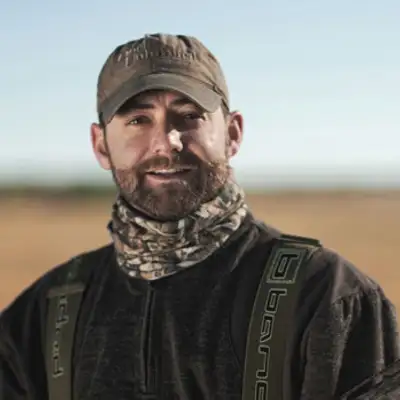
Everybody join us on today's episode as we visit with Jay Anglin. He provides us with a review of the 2526 hunting season up in the Great Lakes region, and we hear about what's next for hunters in the spring.
VO:Can we do a mic check, please? Everybody, welcome back to the Ducks on the Podcast. I'm your host, doctor Mike Brasher. I'm your host, Katie Burke. I'm your host, doctor Jerad Henson. And I'm your host, Matt Harrison.
VO:Welcome to the Ducks Unlimited podcast, the only podcast about all things waterfowl. From hunting insights to science based discussions about ducks, geese, and issues affecting waterfowl and wetlands conservation in North America. The DU podcast, sponsored by Purina Pro Plan, the official performance dog food of Ducks Unlimited. Purina Pro Plan, always advancing. Also proudly sponsored by Bird Dog Whiskey and Cocktails.
VO:Whether you're winding down with your best friend or celebrating with your favorite crew, Bird Dog brings award winning flavor to every moment. Enjoy responsibly.
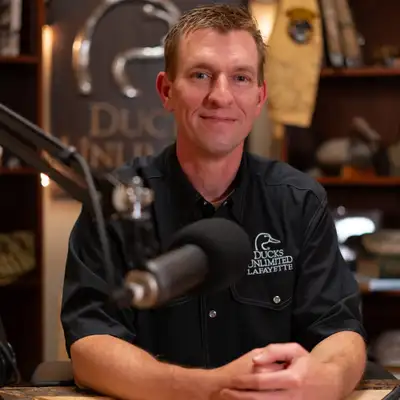
Mike Brasher:Everybody, welcome back to the Ducks Unlimited podcast. I am gonna be your host on this on this episode, and I have a very special guest in studio with us. He's back for a guest appearance, Chris Jennings. Chris, good to see you, dude.
Chris Jennings:Good to see you, Mike. Glad to be back.
Mike Brasher:And we have on the line also a return guest, one of our favorite guests from past episodes, Jay Anglin from up somewhere up in where are you in Michigan or Indiana? Where where do you where do you call home?
Jay Anglin:It's Northern Indiana, but I'm 10 miles from Michigan, and I predominantly or I I guide predominantly in Michigan. So I'm I've got a little bit of Michigandering be by proxy.
Mike Brasher:Yeah. Yeah. And I will note that we did notice this before we started recording. Chris Jennings is over here wearing his Indiana State Sycamores shirt. Trees.
Mike Brasher:Jay Anglin is an Indiana fan. It is really unfortunate IU fan, I probably should say it, is really unfortunate that you haven't had anything to cheer about this year, Jay.
Jay Anglin:Yeah. It's been I'm still kind of pinching myself. Just, you know, we all are. It it was remarkable. And I think one of the cool takeaways is that they kinda became America's team.
Jay Anglin:So, you know, there's some haters out there, especially from the Southeast, but at the end of the day, I think your average football fan really enjoyed the heck out of it, which made it that much better.
Mike Brasher:It was a remarkable story. The other thing that I haven't heard a whole lot of people talk about is that it's now three years in a row that the Big Ten
Chris Jennings:That's right.
Mike Brasher:Has won the national title. What do you think of that, Jay?
Jay Anglin:I think it's pretty cool, and I think that's what turns up a lot of the traditional, you know, heritage programs get fired up, and their fan base is you know, they're all over the country, and, you know, I get it. I do. But, you know, it's nice to see some of these other teams, you know, getting in on the on the fun.
Mike Brasher:So Well, we didn't we didn't get you on here to talk about football or basketball or sports, but we could do that, obviously, for quite a length of time. But we wanted to talk with you about your your your season. You know, we're here February, something like that. Duck season is is over, and people are catching their breath. Some people are are still upset that they didn't harvest more birds than what they wanted to.
Mike Brasher:I kind of fall into that category. I had a horrible season, but that's okay. Outside of a couple of really, really cool sort of once in a lifetime trips, mine was a pretty poor season, largely related to a lot of the weather events, lack of water that we had down here. But, you know, the Great Lakes is a portion is is a place where I try to hunt at least once annually. I did get up there to Harson's Island, hunted for a few days, spent more time fixing some plumbing issues than we did actually shooting ducks, but that's kind of another story.
Mike Brasher:And, of course, you spend so much of your time, Jay, out out on the water, out in the fields. You always bring great perspective. And so I I guess what prompted this is I sent you an email asking for some updates. So we're working on this little report, and you sent me some some sent me some tidbits and sort of lessons learned as well as a lot of other things. So we wanted to kinda go through that with you and just overall, how would you describe this season for you?
Jay Anglin:You know, I look back on the season I I always look back on these seasons. I look at, you know, the positive side. I had some great hunts, family and friends. Some turned out way better than I expected. I didn't have a lot of hunts this season where I was just, you know, what is going on?
Jay Anglin:I mean, this is ridiculous. And I chalk that up to having done that the last couple seasons a few times, and I'm, like, getting ready to walk out the door because I get the itch, and then I'm like, you know what? Today's gonna be one of those days when I'm just gonna be disappointed. So I've really tried to focus on hunting when, as waterfowlers, we should go hunting. And, of course, you know, people that work and have, you know, commitments to to whether it's picking up the kids at school or what have you, that's really difficult to do sometimes.
Jay Anglin:And but from my, you know, point of view here, I've had to do it. I have five kids. They're all adults now. But, you know, you just have to, like, look at the calendar, look at the weather, figure it out, make calls, have the neighbor help out, whatever it takes to get out there when it's really good. And I think this season, I was I was really focused on that, and it made a huge difference.
Jay Anglin:And so, I guess, to answer the question, I look back, and I was pretty happy at the end of the day. You know? I mean, I didn't have near I didn't hunt as much as normal, I guess probably due in part to what I just mentioned, but when I did, boy, I just made sure that it was, like, one of those days, and I had some one of those days. I had three or four of them, and it was just the kind of stuff we dream about. You know?
Mike Brasher:Yeah. And you do get out hunting with your with your kids a fair bit?
Jay Anglin:Yeah. So both my boys, RJ's in school. He's pitching in college, and he's a heck of a pitcher. And he's a very avid outdoorsman too, but he's always been you know, he's a three sport athlete in high school. And, of course, that's a huge commitment anymore.
Jay Anglin:I really don't have much time to do anything else and except for study. So for him to come home around the holidays and have some free time. And then his older brother Mitchell and I are like best hunting buddies. I mean, we do it as much as possible. Unfortunately, his job requires him when when it's really snotty out and everybody's like, oh, man, we should be hunting.
Jay Anglin:You know, it's snowing, whatever, it's blowing. A lot of times he's working, so it's kinda cut back on his his blind time this year. But overall, yes, I spend a lot of time with the boys and a couple of really special friends. But, you know, also, I'm a I wanna go out, and, like, a lot of the guys around here that are a lot younger than me, even my you know, some of them went to school with my kids, I hunt with those guys. And it's really cool when I go with them because, I mean, you know, we're a lot of us guys have been hunting for a long time.
Jay Anglin:I mean, I'm at you know, I'm over forty years now hunting waterfowl, you know, passing the torch and doing it right. And what I've noticed is a lot them will just sit and kinda watch, and it's it's they're taking that wisdom in. And sometimes I'll learn a few things too. I mean, I don't know everything, but most of the time, man, I think if you pass that torch and you do it right, at the end of the day, you're gonna have better hunters and better conservationists. I mean, a lot of these guys are now on the local DU committee, Kankakee Valley Chapter DU, and including Tanner, who's the I pass the torch to him as chairman.
Jay Anglin:He's the new chairman. So, you know, and we've hunted a lot together, and that's how that came about. So it's really cool to do that sort of thing. And I guess I'm pretty good at it because I also, you know, brought the boys up in that, you know, that lifestyle.
Mike Brasher:But, Jay, back to this season, you know, you I I know talking with you that weather weather is always a big factor, obviously, in in terms of when the birds get there, how long they stick around, what your hunting conditions are like, the opportunities that they provide you. How was the the what do the weather systems do for y'all in the Great Lakes this year, and how did it affect what you were able to you know, your your hunts that you were able to be successful on?
Jay Anglin:Well, you know, it made it difficult, Mike. Though, you know, again, the weather and the systems are are few and far between that are really applicable to maybe birds will push, but a lot of times they'll hold because there's a lot of you know, it's warm, there's plenty of food. And so you kinda wait and you wait and you wait. But eventually, you know, of course, the calendar birds are gonna do it anyway. And eventually, some of these other birds are just gonna they're gonna migrate.
Jay Anglin:So, you know, judging that and figuring out when to go when there's some nice fresh birds in the area is is is critical. But locally, it was probably, in all honesty, some of the it's probably the fewest ducks, with the exception of wood ducks. But I would say locally, our local birds and birds that, you know, migrate maybe just don't don't come out of the Canadian Prairies, for example. Birds bumping down out of Michigan or Wisconsin, know, what have you. Those birds I I saw fewer this year than I've seen in a long time.
Jay Anglin:And the argument could be made that they were just tucked in. You know? They were hiding. But, you know, you go to these key areas that are really good for, you know, kinda making a judgment call, refuges, for example, and you're just not seeing birds. So but, really, what happened was in the Great Lakes is is we had a really good, solid wave of divers come in fairly early, the redheads in particular.
Jay Anglin:Mallard wise, it was kind of a slow burn this year, but some places, the key areas, Saginaw Bay, you know, Saint Clair, Harsons, Western Basin, Lake Erie, you know, everything in Michigan seemed to light up pretty good, relatively normal pace and timing. Interestingly, a lot of the Wisconsin guys, especially up around Dorr, you know, Dorr County and Green Bay and Washington Island, that area, they were kinda singing the blues a lot more than I expected this year. The Mississippi River, you know, it's the juggernaut. So that Wisconsin and Minnesota were lit up and eventually Illinois. But I guess so overall, I saw fewer birds than normal, but, again, I made absolutely certain that I when I went out, that the conditions were so perfect for waterfowl hunting.
Jay Anglin:So wind, ideally, it's cold. Wind was the biggest primary factor most of the time. If I could find birds, I could usually put them in my lap with the right wind. But I also was very diverse. Was you know, I hunted fields.
Jay Anglin:I hunted big water, big, big water, potholes, creeks, ditches. You name it. I hunted them. A lot of marsh. I did a fair amount of marsh hunting this year.
Jay Anglin:Did a lot of big water hunting this year. So that makes a difference too. You know, you have to diversify your your portfolio when it comes to your, you know, your skills when it comes to waterfowling.
Chris Jennings:Hey, Jay. You know, I just know from talking to some of the guys that I grew up with in Indiana hunting, you know, they went into the season with really, really low water. Pretty pretty tough drought there in Indiana, especially along that Wabash River Corridor, where some of my buddies hunt, and they went into the season really low. I mean, it's still pretty low. Nothing really changed on that front.
Chris Jennings:Do you think that was probably played into the whole region? Because it didn't look like you know, especially early in the year, early in the duck season, everyone was pretty dry up there. Right?
Jay Anglin:It's a perfect segue. It absolutely is, in my opinion, the number one reason that all of this is occurring or occurred. At the end of the day, when you have fewer wetlands I mean, as we know, we're working really hard, of course, to restore wetlands and create new wetlands. But at the end of the day, if you don't have water, you just can't expect waterfowl to use those areas. So even when we had a fair amount of precipit you know, the the rain would come in bursts.
Jay Anglin:You get two inches of rain in four hours, and there'd be sheet water everywhere, and marshes would have water, and you'd see ducks and geese and shorebirds and all these animals, you know, herons out in the middle of a cornfield in a wet spot, stuff like that. And two days later, it's mud. So I I believe that low water drought, that ongoing theme throughout, really, the Mississippi Flyway and beyond, it's a problem. And there's really nothing we can do about that. It's rain that we need.
Jay Anglin:It's snowpack. It's it's things out of our control. Now when I say that, I'm talking about the natural process. Where water can be managed specifically had birds for the most part because there really was no place else for those birds to go. I talk about big water.
Jay Anglin:Ducks will go to big water. Mallards will raft like divers in the middle of a lake, an inland lake, and then dry feet. Right? But fishing is so popular in the fall and winter now, and I'm not believe me. I'm a fishing guide.
Jay Anglin:I'm not denigrating it. We have the technology. Guys have changed. There's a lot of scope of no pun intended on the scope thing, but the the the the level of knowledge that we have now in terms of fishing cold water bass, musky, walleye, etcetera, it's it's it's really it's great for fishing, and it's cool
Mike Brasher:to It's see guys kinda made it made it year round then, it sounds like.
Jay Anglin:It really has. And you hear guys like the guys on St. Clair talk about it, you know, because it's such an incredible fishing lake, and it overlaps with some of the best duck hunting of the year. So you have boats running around. You have duck boats running around.
Jay Anglin:You have bass boats running around. You have walleye boats running around. And it just pushes birds. And, you know, and sometimes they leave, but a lot of times they'll just go way offshore And so I think when you have low water, you know, birds focus on those areas, and, of course, rivers too to some degree. But, you know, it it it's it's unfortunate because I I think a lot I I say that because I think a lot of hunters blame they have to blame somebody.
Jay Anglin:They have to point a finger. It's their fault. It's this fault. At the end of the day, it's just the weather, and we need some precipitation. And once we get caught up, all that moist soil and all these marshes will be rejuvenated, and the ducks will have tons of food, and it'll take maybe a couple years for it to cycle back up again.
Jay Anglin:And, you know, Mike, you know as well as I do, it's a it's a it's a cycle. And right now, we're kinda, in my opinion, kinda on the backside, hopefully, because it's not quite as dry as it was a couple years ago. But, yeah, I think that's the main reason. I really do.
Mike Brasher:We all know as hunters that weather plays a huge factor in in what the birds do in in the quality of the habitat every year. And in years like this, and one's kinda similar to what we've had the past few years where we have a downed duck population, it makes those, it makes the adverse effects, the challenging effects of weather all the more amplified and frustrating, and I think that's kind of what we're seeing. I saw it in some of your comments. I think you remarked that you saw relatively few mallards, or it was just sort of a ho mallard year. I I saw a similar comment from other regions.
Mike Brasher:I mean, that's there's a reason for that, and the continental population, at least in the Midcontinent, is down about 45% from record highs about seven, eight years ago. I mean, that's that's that's a real thing, and we should we will see the consequences of that even when weather conditions are are perfect. And so it just these are years when things are are a bit more challenging, more frustrating, and we're also now operating in an age when where social media allows every person to see all the good hunts. Right? And so that kinda adds to this this this feeling of of of missing out and maybe some additional frustration on the on the part of people that aren't experiencing those good hunts, and so, yep, it's it's one of the things that we do.
Mike Brasher:And now, Chris, that you was this the year that you went long tail hunting?
Chris Jennings:Yeah. Jay was with me.
Jay Anglin:Oh, he was.
Chris Jennings:He was. Okay.
Jay Anglin:Oh, yeah.
Chris Jennings:That was pretty Wasn't in the layout with me, but
Jay Anglin:That's
Mike Brasher:pretty cool. Yeah. Pretty cool Audi.
Chris Jennings:Yeah. It was awesome. It's for a magazine feature coming up, so I don't wanna spill the beans too much,
Mike Brasher:but Sorry.
Chris Jennings:I mean, it it is what it is. You know, we we we actually spent one day on Harson's, which was interesting because you'd mentioned the fishermen. Like, we saw walleye boats. Mhmm. I mean, and it was Jay, what was it?
Chris Jennings:It was 11 degrees. It was brutal. 20 mile an hour wind. Like, it was ice.
Mike Brasher:Were you there in December
Chris Jennings:or November? There the very last weekend of the season. I think that and don't quote me on the dates, but it was like the December. Of December. Yeah.
Chris Jennings:And I think we hunted, like, maybe the eleventh and twelfth. Yeah. But we were we were hunting and and, you know, we're in a layout boat, and the tender's a 100 yard behind us or a 100 yards behind us, and and I could hear something, like, off to my left, and I I couldn't see. It was kinda behind me away from the tender, and I'm like, what is that noise? Like, I kept hearing it.
Chris Jennings:It sounded like a a dumpster being dragged along a parking lot. And so finally, we we got we shot most of our ducks, and I was just so curious. I had to sit up, and I looked behind us, and there's a guy ice fishing like a 100 yards behind me. No. Ice fishing.
Chris Jennings:Ice fishing. Pushing he's the piece pushing that shanty across the ice, and the tender's no more than 30 yards
Mike Brasher:from him.
Chris Jennings:Yeah. And so, like, what is this dude doing? And I I guess you gotta to fall through. Yeah. You gotta be pretty mad at those bluegill.
Mike Brasher:It's crazy to get out there.
Jay Anglin:You know what's interesting what's interesting about that, all those bays is they're so shallow. A lot of those areas, those guys kinda mapped out over the years where if they do go through, they can just stand there on their phone and call for and call for backup. But Yeah.
Chris Jennings:They're not gonna drown, but they're gonna be pretty cool.
Mike Brasher:And Saint Clair is, like Lake Saint Clair is, like, is really low right now. That was one of the reasons. So I was actually going back up there maybe that December. I think it was the December, because the first time that I'd gone up there, I think in November, it was we spent more time plumbing than we did hunting, and so I was gonna go back up. I got halfway there, and my friend called me and told me, says, you you probably ought to turn around and go back home because the water is locking up tight here because it is, as you said, right now, Jay, so shallow.
Mike Brasher:And so, yeah, it effectively shut off the hunting that we wanted. We
Chris Jennings:were on Lake Saint Clair. I don't know. Did I say Harsons? I feel like I said
Mike Brasher:You said Harsons.
Chris Jennings:Yeah. But I'm
Mike Brasher:sure were not Saint Clair.
Chris Jennings:Yeah. I'm surprised you didn't say something, Jay. We were actually on Lake Saint Clair.
Jay Anglin:Yeah. But you could see Harson's. I mean,
Chris Jennings:I Yeah. You're we were looking right at Harson's, but Harson's is frozen solid
Jay Anglin:Right. By the time we were
Mike Brasher:That makes more sense.
Chris Jennings:Yeah. It was rock solid. Yeah. I said Harson's because we were mentioning it, but we did that. Then we did the long tail hunt up on Lake Huron, which was absolutely fantastic, and I would encourage everyone to do that.
Jay Anglin:Yeah. It's it's remarkable. It really is. I've hunted in Maine, and I've hunt I mean, it's it's yeah. It's special for sure.
Mike Brasher:You got decoy and long tail. See, I wasn't able to really
Chris Jennings:Oh, yeah. Yeah. Yeah. It was it was fantastic. I mean, you're they're Yeah.
Jay Anglin:I you know,
Chris Jennings:ten, fifteen yards away. You know? Unfortunately, the the layout that Jay and I kinda rotated in and out of, we had two of them out there at the time, and all the birds were coming off of our right, and we're both right handed. And so half the shots I was taking, you know, stretched out right arm almost, you know, it it was it was made for some pretty difficult, interesting shots, but luckily, there was enough birds around that Yeah.
Jay Anglin:It was tough. It was tough shooting. And I one of the things that really I I'd I'd you know, I've hunted long tails, you know, in the Great Lakes and in the in the Atlantic, but one of the things I never noticed, and it was such a target rich environment, one thing I noticed that was really funny to me is how they land.
Chris Jennings:I had no idea. They just crash.
Jay Anglin:They're terrible. They're like, damn. It's falling off a cliff. I don't know
Chris Jennings:just hits the water
Jay Anglin:and bounce.
Chris Jennings:I don't know what was. The swells or what, but I had a couple that landed, and I was like, did someone like, did that thing just die in the decollect? I couldn't tell.
Jay Anglin:Exactly. They're doing, like, backflips and flapping, and then they look around. Like, what did I do? What happened? Oh, it's hilarious.
Chris Jennings:Anybody see that? Yeah. No. That was it was a great trip. I recommend it to anyone, you know, wanting to do something a little bit different, getting out there in Lake Huron.
Chris Jennings:It's just be prepared. It's cold.
VO:Stay tuned to the Ducks Unlimited podcast, sponsored by Purina Pro Plan and Bird Dog Whiskey after these messages.
Chris Jennings:Jay, one question for you. You know, as we were going through the migration alert program, throughout the season, you were cranking these things out from the Great Lakes region pretty much every week and which great job, by the way, on that. I think Thanks. Our audience really enjoys that. But one thing that that kept becoming kind of a reoccurring theme was and this was from Michigan, Wisconsin, even the guys in Minnesota, is that the Canada geese were late.
Chris Jennings:You know, they you were calling some of these property managers, and they're like, yeah. We don't we don't even have any. Like, what? You don't have any Canada geese. Like, that's can now granted, it improved, as the season progressed, but what do you think you know, did kinda do you have any feel for that or any other information that you heard from anybody else saying how late that goose migration was?
Jay Anglin:That's a that's a really interesting subject because I've thought about it a lot, and it doesn't make a lick of sense in the big scheme of things. Due in part to the fact that, you know, here I live in Northern Indiana, it's not unusual here on September 1 opener for us to see. I mean, I've seen snow geese. I saw a speck last year on opening day, September 1. This year, we had waves of specks come through here on our opener on September 1.
Jay Anglin:Lot of interior birds mixed in with our local giants. It doesn't matter if it's 82 degrees at 9AM. It does. They're just they they come. You know?
Jay Anglin:And when I lived in the Upper Peninsula Of Michigan, same drill. You know, mid August, here come the freight train, and it would just go for weeks on end. And so I don't understand why some of these key areas, these key player areas that are notoriously pretty much a no brainer for Canada geese. You know? Or we're like, oh, yeah.
Jay Anglin:We don't have any. I mean, you know, Joe Robison over in Southeast Michigan. He's like, dude, we don't have any. And that over there, I mean, heck, he's right across the Lake Erie from, you know, the Jack Miner sanctuary. I mean, there's like Saint Clair, all these I mean, that huge metroplex in Southeast Michigan that runs down into Ohio with literally tens of thousands of, you know, resident Canada geese.
Jay Anglin:And usually, they'll draw in those migrants, but the migrants weren't coming. So I don't know what it is. I I really don't. It could be maybe the hatch was a little later. I mean, I that's pure conjecture.
Jay Anglin:I I am that's my opinion. And maybe the birds that that maybe the juvies just weren't weren't quite ready for prime time yet to push. But part of it makes me think it was just so doggone ice up there, quote, unquote. They had plenty of grazing, and then, of course, the seed grains kicked in, and, you know, corn and and wheat, what have you, barley. I don't know.
Jay Anglin:It's a real conundrum. It's odd. It's weird. I mean, we are stacked with them now, as you know, Chris. I've been Yeah.
Jay Anglin:The last three days kind of rough on the look the candidates around here. But, yeah, it's a weird one. It really is. And I haven't talked to anybody else at length. This is first time I've really had the discussion.
Jay Anglin:Maybe some biologists have better insight than I do, but right now, to me, it's sort of just a non sequitur. It doesn't make any sense.
Mike Brasher:This biologist doesn't have any insight for you. I don't. Yeah, I don't have a good explanation for that. You know, I am right now working on a season end review report that we do every year, and I pull in observations, ask for field reports from across The US. And this year is it's it it seems to be more erratic in terms of the the patterns that played out across, with a couple of exceptions.
Mike Brasher:We know across the Southeastern US, it was extremely dry. We that was That's gonna be a constant theme. We also know that, obviously, last two weeks of January, things got really, really cold for a lot of people in the eastern part of the country. There were a few wet spells out west, but it's, I don't know. There were some areas that experienced, you know, warmth, warmer than normal temperatures throughout the season.
Mike Brasher:Some experienced warmer than normal temperatures, you know, up through October, November, and then things changed, became a little bit more normal for them. There were just a lot of things that seemed to be happening across the country this year to affect what people were seeing at at even local levels. You know? I mean, that's what we deal with every year. These birds move around.
Mike Brasher:That's the beauty of them. That's what frustrates us about them too. But, this was, I think, will be one of the more challenging sort of reviews to try to write and try to summarize what was what was really happening outside of a few few few patterns. And as you said, Jay, one of those, however, is some areas of of above average warmth sort of later on into into late October, early November. But then there were some colder than normal spells that that kinda changed things for a few folks.
Mike Brasher:So up and down, roller coaster, throughout the the seizing season as well as, you know, from one one side of the country to the other. I mean, is that is that I don't know. It's kinda hard to describe all
Chris Jennings:the The roller
Mike Brasher:coaster weather.
Jay Anglin:No. It's it's it's you're you're you're you hit the nail right on the head, Mike. I mean, it's you know, there's science that you're gonna you're you're gonna peel away the layers of the science of it. For me, it's more anecdotal in a lot of ways because everybody is you know, it's game on. They're not they're not they're not overanalyzing.
Jay Anglin:They're just giving you the current situation. But after a while, when you see a pattern sort of reveal itself, it's like, okay, something's up. So good luck with that. I know everybody I talked with all the way up to Lake Of The Woods was like, I don't know what's going on. And, Chris, you and I have hunted up that way, Northern Minnesota.
Jay Anglin:Mhmm. I mean, you know, oh, yeah. We're not seeing many snow geese around here. We never do. And then ten minutes later, have, like, 12 snow geese laying there.
Jay Anglin:I mean, they just get birds coming through there. And I don't know. Everybody I talked to, and some guys weren't even you know, I used I had a couple quite a few people I spoke with, we never really I didn't really quote them in those alerts, and and they were it was all the same. It was redundant, you know, so I didn't use it.
Chris Jennings:So You can't say the same thing over and over again. Everyone's seeing just about the same thing, but, you know, it wasn't as dry up there in Northern Minnesota earlier in the season as it was some other places, which that that may impact. I know I you and I hunted up there one of those years where we practically push pulled out into the marsh after launching your boat. It was so dry throughout the whole region, and I think we benefited from that. You know, those ducks were holding on the edges of the big lake, which, you know, they couldn't even get in the marsh in some areas, and it was dry as a bone.
Chris Jennings:And I think we benefited from that. So I don't know if maybe that kinda impacted those guys up there. Again, you know, just kinda guessing.
Jay Anglin:It's it's a valid it's a valid point, and that that theory has potential too because some of those big lakes, you know, Lake Winnipeg, Manitoba, Lake Of The Woods, you know, going back east, you're talking over, know, over in, like, Northern Ontario, some of those large areas. If those if the water was low in those areas, those birds could wade. They could shoreline graze. I mean, boy, when I lived in the Upper Peninsula Of Michigan, when the water would get really, really low in some of those natural impoundments, but also manmade impoundments, you would get a flush of all kinds of green. And some of those birds that are coming down, especially out of, like, the Hudson Bay region, you know, they're flying along through Boreal Forest for a I don't know, whatever, 400 miles, and all of a sudden they see green.
Jay Anglin:It looks like a golf course. You know where they're going. They're going to the green. So I we used to beat on them pretty good when they did that too, but it's all those things will come into play. I I that I did mention the hatch thing because it just seems like there's there's something else to it.
Jay Anglin:And I and it it for all I know, it was an early hatch and not a late hatch, but it it just seems something's off. There's there's a there's definitely a variable that that hopefully, Mike, you can you can mine through enough data to find it, but it's weird.
Mike Brasher:We'll we'll keep trying. Jay, as you look back, did your did your experiences this season match your expectations? How would you describe this? Average? Were you satisfied?
Mike Brasher:Not satisfied? Above average? Below average? Kinda encapsulate how the season turned out for you.
Jay Anglin:I was probably, in the big scheme of things, a little below average, but, again, I didn't hunt quite as fanatically as I usually do, and I was satisfied. I I you know what? There's so much more to it than a strap of green heads. And the older I get, I'm in my mid fifties now, you know, you learn to appreciate that stuff. You know, sunrise.
Jay Anglin:Gosh. I've seen girlfalcons and golden eagles and otters and all this cool stuff. And and, of course, you know, I'm a biology nerd, Mike. You can relate to that. I always see stuff and say it, and then other guys are like, whatever, man.
Jay Anglin:But, you know, oh, hey. Look at this salamander. Oh, yeah. That's cool. But I I just think that that part of it, I'm we're learning to just roll with the punches and just have a smile on my face.
Jay Anglin:And I think a lot of us, in particular, some of the younger hunters, really need to, you know, focus on that. Look at the bright side. You got outside. You saw some cool stuff. You weren't sitting at a desk.
Jay Anglin:You weren't swinging a hammer, whatever it is you do in real life. So there's that. But, I mean, in the big scheme of things, I had a pretty darn good year. I think I did better than pretty much almost everybody I know because, again, I hunted when it was absolute I say that locally. I mean, not in the big scheme, but, I I mean, I just was lucky that I picked the absolute best days.
Jay Anglin:It just did great.
Chris Jennings:Sunrises and bald eagles and golden eagles. Sounds like you got a crappy duck season, Jake. What it sounds like to me.
Jay Anglin:But, you know, also, I hunted my two best hunts were on public land, and both with my sons and the one I won't name names, but we went to a draw. We got sixth pick. I picked a blind I've done well in before, and my son and I had more ducks hanging on our straps in one of the best hunting spots in Northern Indiana than all the other blinds combined at the end of the day. So whatever that says, I mean, I'm probably not terrible at it, and neither are my boys. But also, I think everybody passed up that blind.
Jay Anglin:The five parties in front of us passed it. And, you know, it was knowledge. I knew in that situation I'd done well there before. Don't ask me why they like that exact spot and that exact 45 mile per hour wind with driving snow, but they do, and that's been for years. So a lot of that is wisdom and knowledge of just being there.
Jay Anglin:And so that's another thing too. You can't learn unless somebody just hands you the keys. You're never gonna learn all that stuff unless you're out there, so you gotta go. And you just preferably go when it's really the potential's there. You know?
Mike Brasher:And you learn from mistakes. You learn from successes. You also learn from mistakes. And so that means that there are gonna be a lot of those those days when you're out there that you're not gonna do well. You should have done something different.
Mike Brasher:The key is to learn from that.
Jay Anglin:Yeah. Absolutely.
Chris Jennings:Jake, you wanna know how my duck season went?
Jay Anglin:I sure might be crying.
Chris Jennings:Sunrise is golden eagles and bald eagles. Dead geese. Dead geese.
Mike Brasher:Yeah. It
Chris Jennings:was great, man.
Jay Anglin:Hey. We had we had we a really good time over in Michigan at that time.
Chris Jennings:Yeah. I mean, that was certainly a highlight of my season for sure, and it's great to get up there and see, you know, that region. You know, Mike goes up there just about every year, has for the last couple years, and and Lake Saint Clair and Parsons area.
Mike Brasher:And it's place.
Chris Jennings:It's it was the second time I've been up there, but the first time I've been up there, you know, kind of on my own, kind of being able to drive around or do whatever, and it was impressive the number of duck hunters up there. Know, I talked to people at boat ramps. You know? It it was just awesome, you know, seeing these guys launching their boats every day into this weather that, you know, shocking for someone living in the South that people are even functioning when there's, you know, 12 inches of snow, four inches of ice, and it's nine degrees with a 30 mile an hour north wind. You know, it was it was cool.
Chris Jennings:So, yep, that was definitely the highlight.
Jay Anglin:You know, when you guys when you guys bailed, when you headed south, you remember now.
Chris Jennings:Yeah. Because we had we had mallards and pintails in a oh, we should've got but we could've never got there. We got snowed in.
Jay Anglin:That's right. Visions of Bull Sprig dancing in your head. Well, I put on a tie I put a tie back on over my waders and then dragged a bag of decoys 300 yards out to the ice shelf, sat on a rock, and
Chris Jennings:And started sending us pictures of dust.
Jay Anglin:Yeah. Well, a couple blue bills in a in a mallard, but, you know, I didn't have a lot of time. But, you know, the one greater scoff I shot there is in the freezer. It's forty some years, and, I mean, I lived in the UP, that was pretty common. That's the most beautiful one I've ever ever bagged.
Jay Anglin:And to me, for me, just to go out there I mean, guess what I'm getting at is anybody could do that. Okay? It's not I didn't have special access or anything. It's just that that's the way it is. But and I met another guy that does it, and he's like, I did it yesterday.
Jay Anglin:And so, you know, a lot of guys would they're just sitting at home watching a football game going, you gotta be absolutely nuts to go out there right now. By gosh, I did it, and and it paid off. And I think, Mike, you talked about, you know, failure. Well, I mean, the odds were I was gonna fail, and I still did it, but I ended up with a few birds. So it's it's not everybody has that opportunity.
Jay Anglin:You find that in the Great Lakes and, of course, along the coasts and stuff. But overall, yeah, it was a good season. I enjoyed it. I'm still in it with the geese, and, of course, I'm gonna chase the snows, but I can't get enough of it. I wish I could.
Chris Jennings:Yeah. And just a just a short plug there. You know, we just posted the first light goose conservation order migration alert today from Jay. Just kinda provide an update. So, Jay, if you wanna maybe provide a little update on that as we move into the lake goose and What's next?
Chris Jennings:The lake goose conservation order. Yeah.
Jay Anglin:Well, you know, a week or so ago, ten days, maybe two weeks, I mean, it was kinda nerve I if I was a guide down south, I'd have been a little jittery Mhmm. Because there's a lot of birds up north. And, of course, you know, I hunt Southern Illinois, Southern Indiana, Missouri, etcetera. And those areas were primed. I'm talking ready to rock.
Jay Anglin:And then that huge storm hit, frigid temps. We went arctic up here. I mean, it was, like, minus 10. And so everything up here just see you except for a few brave Canadas that hung around. And it reset.
Jay Anglin:And so everything reset, and everything is the way it should be. You've got mobs of birds in in Arkansas and down all the way to The Gulf. And and so, you know, you guys are open now, and as you warm up I mean, next week, you know, I checked the temps for that, Chris, for, like, six states, and, I mean, I Yep. I mean, it's warm. It's the sixties and catching into the seventies.
Mike Brasher:Seventies.
Jay Anglin:So
Chris Jennings:Yep. Yeah. It's gonna happen fast down here.
Jay Anglin:Absolutely. That's right.
Mike Brasher:Birds are gonna be on the move. So what that's interesting that you bring that up, Jay, because it was I was talking to somebody earlier today. The very first day that that storm started rolling through, we were getting the sleet. We were getting starting to get some of the freezing rain. I was outside that night, probably prepping the generator just in case we lost power, and I heard white fronts flying overhead, I heard snows flying overhead, and then two days later, I didn't hear a thing, and I haven't heard a thing since.
Mike Brasher:No. It's still ice. I flew back into Memphis a couple of days ago, and I think I saw a snow covered or ice covered landscape all the way from Minneapolis to to Memphis and and beyond. So somebody was telling me there are very few geese in in Northern Arkansas right now. They're they're farther south than that, But kinda to your point, it's gonna get warm, and as we've seen it in past years, those birds are gonna start streaming north in a hurry, especially if that 70 degrees comes with a south wind, which I imagine it will.
Jay Anglin:Yeah. I I there's a possibility of me hitting Missouri next weekend. My son's playing baseball outside of Kansas City, and I might go down there and surprise him, but, of course, if he listen to this, it's not his
Chris Jennings:You should ruin the surprise.
Jay Anglin:So but it's yeah, I I think in the big scheme of things, it's gonna help out a lot of guys that are really love it, just like I do, down your way. But, also, it might stretch it out a little bit because before, when they're all focused like that and all in the one same, you know, same area, they're gonna a lot of people forget. They'll just eat they'll eat a field out completely. I mean, they'll start and just go to the edges and then move on to the next one. And so if you have millions of birds sitting around eating in your you know, there's no reason for them to stick around, so they'll keep rolling.
Jay Anglin:Whereas now, think you're gonna get a more measured, balanced push north. That's, again, that's my prediction. No one else's, but I I feel like it's gonna be think it's gonna be better for everybody. So, hopefully, it works out.
Mike Brasher:Well, we should probably wrap this up. Jay, you've got some some goose hunting still ahead of you. Not but and then not too long after that, you what are you gonna do next? Do you go to fishing, or do you do you get into the turkey woods? What's what's after the geese?
Jay Anglin:So I do all the above. I mean, I'm fishing right now. If I can get the boat into the boat ramp, I would be out probably Friday when it's warm. But steelhead fishing's been outstanding when I can fish. I just did a report for Michigan because, you know, guides have to do the reports, or I went and reviewed it.
Jay Anglin:January was pretty bad from a tide's perspective. But, no, it'll around quick, and it'll be a really good spring. I'm sure we've got a lot of fish in. And then turkeys, of course. Are you kidding me?
Jay Anglin:I mean, I just booked my second turkey trip the other day, and I usually don't do very many anymore. I just guide every day. But, yeah, I'm I'm all all in. So it snows and steel and turkeys. That's on the menu for the
Mike Brasher:next Now the turkey hunting, do you guide for turkey hunting, or do you is that just personal?
Jay Anglin:All the above. Oh, okay. Used to guide, yeah, I used to guide turkeys just about every day of the season. Oh, I didn't realize that. Yeah, as as the birds you know, the population expanded, and with that came a lot more interest, of course, and, of course, social media and TV, and guys became more skilled at it.
Jay Anglin:And, honestly, you know, most people, at least in this part of the country, you really don't need a guy to get a turkey. You can go to your uncle Jed's and go behind the garage, and if you can squawk on a on a, you know, hand me down call, there's a chance you're gonna get a crack at a long beard. So and it it ain't it it it it ain't that hard, boss. You know what I mean? So
Mike Brasher:Even I've been successful a couple of times here lately.
Jay Anglin:I know you struggle. Didn't you say last year? I think you said to me you were struggling.
Mike Brasher:Yeah. Two years ago. I came up empty. Last year, I think I only went I think I went three times. I got a bird on the last maybe the last day of the season.
Jay Anglin:I've done that many times, Mike. Many times. And I mean, I It was fun. Start sweating bullets there at the end, don't you?
Mike Brasher:Oh, yeah. I was walking out. I was walking out. I had given up, and then I heard it. And so then I I shifted gears.
Mike Brasher:So alright. Chris, anything?
Chris Jennings:Nope. I think we're good.
Mike Brasher:Alright. Well, Jay, thank you so much for joining us. I I know we always appreciate everything that you provide that you contribute to us as an organization from the migration reports to joining us here on the podcast. We appreciate your partnership. Appreciate everything that you do for the ducks.
Jay Anglin:I appreciate you guys having me on. It's always a a lot of fun. So look forward to next time.
Chris Jennings:Alright. Thanks,
Mike Brasher:Jay. Very special thanks to our guest on today's episode, Jay Anglin from up in Indiana. Thank him always for the great work that he does for us and bringing good messages to you and giving an update on the season and how it went. Very special thanks to my my my my guest in studio, Chris Jennings here. It's great to have him back on for a for a quick discussion.
Mike Brasher:We thank our producer, Chris Isaac, for the great job that he does, and then we thank you, the listener, for spending your time with us and for supporting wetlands and waterfowl conservation.
VO:Thank you for listening to the DU podcast, sponsored by Purina Pro Plan, the official performance dog food of Ducks Unlimited. Purina Pro Plan, always advancing. Also proudly sponsored by Bird Dog Whiskey and Cock Tails. Whether you're winding down with your best friend or celebrating with your favorite crew, Bird Dog brings award winning flavor to every moment. Enjoy responsibly.
VO:Be sure to rate, review, and subscribe to the show and visit ducks.org/dupodcast. Opinions expressed by guests do not necessarily reflect those of Ducks Unlimited. Until next time, stay tuned to the Ducks.