Subscribe
Share
Share
Embed
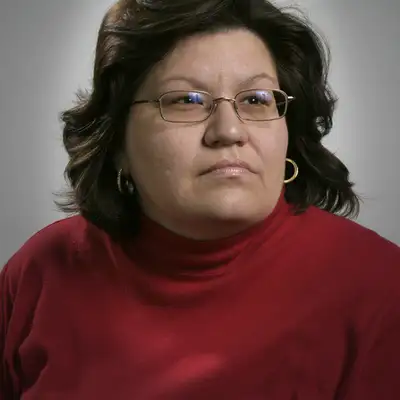
The Road To Your Name Podcast series grew out of a program started by Aboriginal Legal Services (ALS) in 2016 that helped people going through the justice system and their families to strengthen and deepen their cultural connections. Host, Lisa VanEvery, examines many aspects of Haudenosaunee culture and teachings with a wide range of guests.
rtyn-s07e03final_
===
[00:00:00] She:kon sewakwe:kon. Greetings, everyone. Welcome to our Yohatdehnigahson, The Road to Your Name podcast, focusing on Haudenosaunee cultural topics recorded on Haudenosaunee territory
These podcasts are produced by Aboriginal Legal Services with the technical assistance of True Seed Media. My name is Lisa Vinevery from the Mohawk Nation and the Wolf Clan. I'm the coordinator of the Ohonte Negasona The Road to Maine program and the host of the podcast
This is the Ohate Nigasuna: The Road to Your Name podcast series[00:01:00]
Ohwa'na Kon'chonkwa, our language society, was established in 1999 by Ohwa'na'dekha Brian Maracle and Onekionta Audrey Maracle. They began teaching a full-time adult immersion program in 1999 with the goal of creating fluent speakers of Kanien'kéha, the Mohawk language. Now at the program, they teach a first-year program and a second-year program, and also an online program for students who can't attend the full-time immersion program.
This is all happening at Six Nations in the village of Ohsweken. Today's guest, Iakoriio [00:02:00] Paulus-Lyons. Maggie is from the Mohawk Nation and the Wolf Clan from Six Nations of the Grand River. Maggie completed a Bachelor of Science in Biochemistry from McMaster University and a master's degree program in Indigenous Public Health from the University of Toronto.
Over the years, she's worked for various organizations in Indigenous health research, leading her back to working in the community. She's currently in her first year of the Ohwa'na Kon'chonkwa Mohawk Language Immersion Program. Maggie's grateful for her education journey that has led her to learning her language, and she's excited to become part of the community of speakers that exist at Six Nations.
Well, let's get into it and talk everything Kanien'kéha. Welcome and She:kon skennenko:wa, Maggie.
She:kon. Thanks for having me.
Yeah. I'm so excited to speak with a younger [00:03:00] person from our community, younger than me, from our community who's taking language, who has invested their life and their time into this very important journey towards Indigenous knowledge, I guess you could say.
So let's start and tell us about what led you to want to learn the language. Did you grow up hearing the language?
Yeah. A lot of things definitely led me to the decision to do the program and to want to learn. So I didn't grow up hearing the language all that much. Like, I grew up, I think the way a lot of people did, hearing my mom saying little words or phrases that she grew up with.
But like a lot of other people, like my grandparents were the residential school generation. Yeah. So they were speakers, but then didn't pass it on to my mom's generation. So I always grew up knowing that and thinking it's so funny to think about my grandparents speaking a different language [00:04:00] that my mom knew a little bit of, but she wasn't a fluent speaker, and then I also didn't grow up speaking And thinking like how cool it would be to have that back.
Yeah. And
even thinking about like when I decide to have kids, it would be great to be able to pass on something to them. Yeah. Even knowing that they might need to still do learning or still do a program would just be great to give them a little bit more maybe than what I had. So I was always thinking about that, and I remember maybe like five, six years ago when I was doing my bachelor's degree at McMaster, I met a couple people who had finished the Onkwehonwe Kanjoka program, and they were telling me about it.
And I thought, "Wow, that sounds so cool." Like, it's two years, and you go, and it's full-time, and you just write in it. And it was amazing being able to hear them speak when they said before that they only spoke a little bit or they knew a word or two. Yeah. Um, and then after two years, they could speak to you.
Yeah.
And so I... It was kind of always in the back of my mind, and I don't know, different things just kept happening where it was like, [00:05:00] "Oh, well, maybe next year I'll do it. Oh, maybe two years I'll do it. Maybe after I finish this, I'll do it." And then I did my master's degree as well. I spent a year or two working, and then I was just in a place where I don't know, I didn't have a reason to not do it anymore.
And so I decided let's just go for it because things are bound to come up in the future that would make it harder. Yeah, let's just do it. Yeah, and I have... I actually, I have a good friend who is in the second year of the program now, so she was finishing up the first year while I was taking an online Mohawk course.
And so I was talking to her about it, and she was telling me about the program and how much she was learning, how intense it was, but also how rewarding it was.
Mm-hmm.
And so she's the one who talked me into doing it, 'cause I knew that she would be there in the second year class while I was doing the first year.
And then, yeah, I was able to work things out with my job, so I can work part-time still. Um, was able to start living with my friend who lives near the [00:06:00] school, and yeah, everything just kind of aligned to, uh, allow me to go do the program.
So tell us about the process of getting into the program. I think there's a test or something you have to take.
Mm-hmm. There is. Yeah. Yeah. So they have a... Yeah, the way that the language works is, I think they call it polysynthetic, but it's, like, basically, like, a bunch of different pieces that come together to make up the words, and a big part of that is prefixes. And the prefixes refer to, like, relationships between two things or two people.
So the entrance exam was that you had to memorize 40 prefixes-
Wow ...
and apply them to the root word nuus, which is to like something.
Yeah.
Yeah. So the entrance exam was take this list of 40 different ways to say liking something, and then you book your test with Rohio, the program director. And yeah, so I, I did that.
I, [00:07:00] like, kind of on a whim again, I was visiting my friend at lunchtime in the classroom, and Rohio pulled me aside, and he was like, "You wanna do your test now?" And I was like, "Okay." And so we went to his office, and he sat down, and he just asked a series of questions, and, "How do you say those two like it?
How do you say I like her? How do you say-" Yeah. Oh,
yeah. So you have to really study before you take the test.
You do. Yeah. Yeah. And he, he explained it like they wanted to make sure that people were serious about doing the program, and it- 40 words, like, it does take some time to sit down, and you actually wanna
You, you need to want to do it, right- Yeah ... in order to do that. So it made sense of, yeah, you want people who are willing to put in some time to it and are- Mm-hmm ... taking it seriously. And-
Mm-hmm ...
yeah, since I've started the program, a lot of ... There is a lot of, like, logic to the language, but there is also a lot of memorization that you have to just sit down, and you just have to look at these words until you know them.
Yeah, so it's m- it's, I think they call it the root word method- Mm-hmm ... that they use. [00:08:00] And I remember, I don't know how many years ago this was, but, uh, my cousin was in the program, and I was riding with her somewhere, and she was with a bunch of other people that were, had taken the program. These were all young people in their 20s, late 20s maybe, and I was listening to them speak to each other in the language, and it just seemed so wonderful- Mm-hmm
to hear this, and also, um, unique, because you don't hear this all the time. And it just, it made me happy Mm ... to hear the language spoken in young voices. Mm. Because up until then, I had only heard the language in my memories that my grandparents talking. Right. And those were old voices. Yeah. Yeah. So it was strange and unique, but [00:09:00] very
It, it just made me happy to hear this, right? Yeah. The younger the voices speaking in our community, the better. Yeah,
absolutely. I kind of felt the same way. Like, I felt like for a while, it was like, same thing, like, the only people I heard speaking were people much older than me. And so I k- I kinda had the thought for a while of, "If I learn, who am I gonna speak with?"
Like, my friends aren't speaking, or people my age aren't speaking. And then it seems like even in the past, like, five years, lots of people my age are doing it or have done it, or ... I don't know if there's just more opportunities to speak as well, but people who grew up with it maybe, I'm hearing them speak more, too.
Mm. Maybe it's just 'cause I'm, like, seeking that out.
And I think there's a lot of online classes happening all over. Mm-hmm. That's where I got back into learning the language. I went to Polytech first and took an in-person, and then the online courses started to be happening. So you can go and find an online course pretty easy, I think- Mm
nowadays. So now you're in [00:10:00] it. You've been in the course for about a month or so, two months. Two
months, yeah. About two
months. Tell us about the, tell us about that two-month journey-
Yeah.
Well, it's been a journey ... of immersion.
Yeah. It's already been a journey. The first Two weeks maybe were really terrifying.
'Cause it was like, it was all really new and felt really intense. And I don't, I don't know, like I knew a couple people in the class, but everyone was nervous, and we hadn't had a test yet, so I was not sure what the expectations are. But yeah, since that point, I think I feel really lucky with the teachers that I have.
Mm-hmm. Like, they are so supportive and kind and positive and warm. Uh, and like I know for me, like some people I think respond well to the like, you know, more militant, like, "Get this done," and da, da, da, but I don't. I personally don't. Yeah. I would so much rather do the work and then, yeah, not be afraid of my teacher, not be-
[00:11:00] Yeah.
Yeah.
Feel encouragement the whole time.
Yeah. Totally. Yeah. Our teacher and our TA this year are also, um, former students of the program. I mean, the director is as well, but yeah, our teachers within the last couple years have done the program, and so I think that's really helpful too, because they were like just there.
So it's really cool to see them kind of as an end result of the program too, of like people who were very dedicated to it.
Yeah.
But that's like kind of the speaker that you could become if you go through this program and really give it your best.
Yeah.
And they're also very understanding of, I know that this is hard, and it can be emotional, and you can feel...
It can make you feel stupid a lot of the time. Um,
but- Yeah. Learning a new language that you haven't heard.
Yeah. Well, especially like coming to it as an adult too. There are some people who are like fresh out of high school, and I don't know what their experience is. Yeah, like it is very humbling to be learning a language and messing up and-
Mm-hmm
um-
But that's the place to do [00:12:00] it, right? That's the environment to do it, because you're supported by people from your nation and maybe some people from your same clan.
Yeah. The journey has been great. It's like very, it is very hard, and it's very time-consuming, but it's also very rewarding. I can already see the progress that I've made in that time, and I'm always excited to go to school.
I don't dread studying 'cause I'm just, I'm very excited to watch myself taking in more pieces of the language.
So this is how I felt, and, and let me ask you if you felt the same way. When I began to learn, and of course, I'm only doing this part-time whenever I can find a class- When I began to really learn, like I learned the Thanksgiving address, that was a big thing for me- Mm-hmm
to accomplish. And learning more things, it was l- it felt like I was filling up a place in [00:13:00] myself- Hmm ... that was lacking, that needed that language. And it's so connected to our identity as well. So you're filling that up, and your identity's becoming stronger really. Is that how you feel?
Totally. Yeah.
Totally. I think it's so awesome to be... 'Cause I, I went a- away to do university, right, for a, a while, like six, six years with very few other Native people in my classes, and then even fewer people from Six Nations. It's so nice to come back and be in a room just full of people from home. And like- Yeah
that's such a different learning environment. Everyone's kind of in the same boat, and you understand each other. It's such a different education experience for me. And then, yeah, certainly in terms of identity, I, I think about my grandparents often. I, I wonder how important language was to them and also how, like, devastating it was to not be able to speak or to be ashamed of speaking or to not wanna [00:14:00] teach your kids.
Yeah. I can't imagine how painful that decision must have been.
Mm-hmm.
I feel very lucky that I'm the generation that gets to go back and relearn that, and I'm also so grateful that other people have done the work to maintain the language so that it's waiting there for me.
Mm-hmm.
The previous people at the program and the people who established it, and all of the teachers who've maintained it, and all of the students who've decided to go and- Keep it alive.
It's like they're carrying it, you know what I mean? And that's- Yeah ... I feel really grateful for that, 'cause I know a lot of other communities and a lot of other languages don't have that kind of community that's holding it together. Yeah, and in terms of identity too, yeah, again, because I've, I went away to go to university, my relationship with identity is it's weird when you're at university.
You're in an Indigenous studies class with a bunch of students who are not Native and maybe haven't taken classes before, and, like, their understanding of Native people is really weird and only through the school system. Being in this program and learning language alongside a bunch [00:15:00] of other people from the community just feels very like coming home a little bit.
Mm-hmm. Yeah.
Yeah, and with the encouragement that you're receiving, and even knowing that the community is there, oh, I get emotional- ... when I talk about this. Even knowing that the community is there waiting for you to succeed.
Yeah, absolutely. Well, and again, even when I wasn't doing language, when I was doing biochemistry or when I was doing public health, like, the community was so supportive.
Like, f- financially supportive, yes, but also, like, whenever I told anyone from here that I was at school and I was doing my master's, they, even if they were strangers, they were so excited for me, and they were so proud of me. And I think, I don't know, we talk a lot about, like, the issues that our community faces, but I think there's so much strength and, like, uniqueness in that community.
And, like, I've talked to my friends about this too, of, who have gone away to, to university, and, like, you really do feel like there's a whole lot of people rallying for you at home. So-
Yeah ...
that's really [00:16:00] nice. And then with language too, yeah, I don't know, it just, I've, I've had so much support, like- Mm-hmm
across the board.
Now, what about your mom, who knew a few words growing up and taught you a few words? Is she eager to hear what you've learned as you're, as you're going along in your journey?
Yeah, she is so excited. She's so excited. Yeah, so my older brother is actually also doing the program with me.
Oh, that's
so great.
So that's another thing that's, like, really cool and exciting for me- Mm-hmm ... to be in there with my brother, and really exciting for our parents too.
Now, is he talking with you more in the language?
S- we're starting to. Yeah. Yeah, we're starting to, like, um, whenever I am kinda at my parents' place, like- Yeah, we're trying to use what we know so far.
We don't know enough to really have full conversations with each other yet. Oh, it's only been two months. Yeah, it's only been two months. But yeah, we both try to make an effort to, like, ask the questions that we do know in the language. That's really exciting too, like when I think about, like, at the end of this [00:17:00] program, my brother will be a speaker too, and so there's someone who's already in my life who I'm close with who I'll be able to hold those conversations with.
Yeah, so my mom is very excited and very proud. Um- I think everyone in our family, I think everyone in the community has felt what the loss of language feels like.
Yeah.
So I think that she obviously has felt that too.
Mm-hmm.
Um, but us going back and starting to learn has turned gears in her head about, "I wanna learn too.
My kids are doing it. Why can't I do it?" That's kind of-
And really, language, anyone at any age can do it.
Mm-hmm.
Yeah.
Absolutely.
And I know Polytech, Six Nations Polytech has an app that you can put on your phone- Mm-hmm ... that you can hear the language anytime you have time to listen to it. Mm-hmm. And there's other, um, things available, like YouTube videos and things like that.
So Maggie, I know that you're a musician. What instruments do you play?
I primarily play piano, but I also play, [00:18:00] I played a bunch of different things since I was a kid. I play bassoon with a local orchestra too, the Brantford Community Symphony Orchestra, which is-
Oh, that's really interesting.
Yeah. Started playing that in high school.
But mainly I'm a pianist. Yep.
Okay.
Mm-hmm.
Okay. And, um, uh, you went to school for that? Like, you went and had lessons and things to-
Yeah, I, I did take lessons, again, since I was, like, five or six. I don't remember when I first started playing piano. But yeah, I took lessons for a long time. I then took it in school, and I've done a lot of learning just on my own, especially during COVID.
I know a lot of people started playing music during COVID, but that's when I really buckled down and was playing for hours every day, 'cause there was nothing else to do.
Yeah.
And within the last couple years I've also been writing and playing and performing with a friend of mine, Samaya Smith, who's a singer.
Been backing
up for- Oh, we had Samaya on the podcast- I have, yeah ... before.
Yeah. Yeah. Wow. Yeah. She's awesome. She's one of my, one of my closest friends. Um- Mm-hmm ... [00:19:00] so yeah, I've been able to share music with her too, and keep it up.
Now, have you been able to incorporate your love for music into your learning of language, or do you see yourself doing that in the future?
Absolutely, yeah.
Now, how would you do that?
Oh, don't ask me that yet. Ask me that in two years. Um, well, th- I think that music has been really helpful for me as a person, like, in so many different ways. Like, personally, like, for mental health it's a great therapy to get your, get your emotions out. Yeah.
Express yourself. But I think that music has also been a great teacher in terms of the value that comes from always working at something, and I think that language and music are very similar in that way because- There is no definitive end product where you're like, "Okay, I'm done now." Even speaking with people who I think are very fluent Mohawk speakers, they still say that they're learning, and there's things they don't know, and they're [00:20:00] trying to get better, and all of that.
Mm-hmm. And it's the same thing when you talk to musicians, right? I've never met a musician who said, "Yep, I'm done. I don't really practice anymore." Like, "I'm just gonna... I'm happy to, you know, stay at this level."
Mm-hmm. Mm-hmm.
Um, so I think that music has taught me a lot about, like, the value of dedication and being able to see the big picture because when I sit down and try to play a piece on piano that is way out of my skill range, I know that I, I don't need to immediately just stop and say, "Oh, I'll never get there."
But then I watch myself over the course of months break that down bit by bit, and then six months later, I can play that piece that I thought was impossible. Mm-hmm. And then I try something even harder. I think there's a lot of, like, humility that comes from being a musician, and that is 100% the way that I approach language, too.
I'm very lucky that I'm able to see that big picture and also acknowledge that me learning is part of that process, right? And one of the things that our teachers say, too, is that you can't become a speaker without speaking. Yeah. [00:21:00] And it's the same thing with music, right? Like, you could... You can be... You can't really be a great musician in theory.
Like, you have to sit down and actually play, and sound terrible for a long time ... and make mistakes, and embarrass yourself, and-
Mm-hmm ...
feel bad about yourself. But that's the on- o- the only way that you get better. So I think, like, overcoming that hump of you just need to do this, and it's okay that it's not what you want right now.
But that's essential for you becoming the musician or the speaker that you wanna be.
That's so inspiring. Especially to me, who's not a musician that... but always wanted to be a musician. I can do it.
Yeah. It is never too late. It's never too late.
So I know being a musician, you do have to be patient, like you said, to learn a new piece and things like that.
So I think you've answered it a little bit when you've s- when you said you apply that to language. And do you... Is it something that you apply throughout your whole life?
[00:22:00] Yeah, absolutely. I remember even, like, in high school in calculus, the way that I was thinking about math was very similar to how I was thinking about music.
I think having been a musician since I was a kid, that I'm probably not even fully aware of all the ways that has shaped the way that I think about things. My dad's also a musician, so- Mm-hmm Yeah, he's, he's, uh, informed a lot of, a lot of the way that I approach learning things. But yeah, having that patience and again, it- it's like humility of I need to accept that I d- I don't need to be the best at this right now, and other people are gonna be better than me at certain points, and that doesn't matter, right?
The people who are beyond me in skill or experience, they're just inspiration for what I can achieve, right? And I think also when I hear a really good speaker speaking, it's very similar to when I go and hear a professional musician playing, right? And right, right now you just see the end product. As someone who [00:23:00] is, like, a growing musician, when I look at a musician now, I can see, like, decades of work and Think about them starting in a similar place to where I started.
You can appreciate the excellence.
Yes, I can appreciate the excellence and the dedication, and I'm also very appreciative of environments that support that too, 'cause I think everyone can remember going to a kid's concert where the kid just- ... they sound terrible, and everything's off-key, and they don't know what they're playing, and the music teacher's there with a smile, right?
And
they're so proud. But they're having a great time.
They're having a great time, and that's, that's such an essential part of the process. Every professional musician started out sounding terrible, you know what I mean? And having people around them smiling and saying they sounded great. And I think what's really unique, or maybe not even unique, but what I really appreciate about the Onkwehonwe Kanien'kéha community is that I think it's a lot of people who are like that, where I'm sure [00:24:00] that I go in and I'm saying sentences that are, like, randomly strung together with the wrong words and bad grammar, and they're there being like, "That was awesome.
You're great. You're the best. That's amazing. You're so smart." And so I think, yeah- Mm-hmm ... being a musician, like, it makes me appreciate all of those environments that support you in doing that, 'cause that's not a given, right? A lot of people have to learn without that kind of positivity or without that kind of support.
They have to learn with people telling them that they sound bad, or that they sound stupid, or, like, "Why didn't you practice more?" And that's a really harsh environment to have to learn in. And it's so nice- Yeah ... to be in a place where it's, "You're doing great, and you will continue to do great. And then in five years I won't be lying to you when I say that you sounded fantastic when you played that piece- Yeah
or when you-" Yeah. Yeah. "When you said that thing to me."
And I'm so glad in, in the community that we have learning environments that encourage the language to be spoken. So you can learn it at places like the Everlasting Tree [00:25:00] School in, like, kindergarten. Mm-hmm. Right? If you choose to go to those learning environments, the language is waiting for you almost, right?
And you can choose to go where the language is now. And it's so great to say that now, because we went f- for a long time with our language being taken at the residential school, and no opportunities for us to reclaim it- Mm-hmm ... anywhere. Mm-hmm. Right? And now we do have those places. Yeah. I'm so grateful for them.
Me too. I'm so grateful for the people that have become fluent speakers and are willing to teach us now.
Mm-hmm.
Yeah.
Absolutely.
Yeah. Yeah. There's just no appreciation I can say that's big enough to, to tell them, like, how much they're valued- Yeah ... in our community.
Absolutely. Yeah, [00:26:00] absolutely. I think it, it's such an incredible commitment and- I'm sure that it's very hard for them to maintain that kind of, like, positivity about it.
But again, that's just another shout-out to, like, my teacher and my TA and our director. I love speaking to people. I love being around people who you can tell are just so passionate about what they're doing. And, like, it's ex- the same thing with music. I love playing with other musicians who love music.
Mm-hmm. And for our teachers, like, speaking with them, you can tell that they just love the language so much. They're so excited by the language, and they're so excited that you're there wanting to learn the language. And I feel like that kind of excitement really is infectious. For me, they've made me really excited about the language.
Yeah. And so it feels like when you're there, it's like you're part of something really exciting.
Mm-hmm.
And it feels important. And so even though it can feel like a burden sometimes, that oh my gosh, like, I don't know anything, it's gonna take me years to be able to speak, and it's a lot of work, and I'm studying every night, and I'm canceling [00:27:00] plans with my friends, and I'm grumpy all the time, and whatever 'cause I'm tired.
But I kinda never have to doubt of, is this exciting? Is this important? Yeah, absolutely it is.
Now, where do you see your journey going? What do you wanna do when you can speak fluently?
I don't really know, but like I said or in my bio, I have a background in research and data, so that's been my, the focus of my work for a long time.
I would really love to be able to do research totally in the language because I think a lot of the time, like, you hear about projects that are like, "We're incorporating the language," or, "We're like, this is focused on the language," but they have one sentence that's in the language, and everything else is in English, right?
Mm-hmm. And when I've spoken to people who are first language speakers or who even have just been speaking for a couple years, they talk about how important the language is, like, in the way that you actually think about things. It's not just that you're saying the exact same thing you would say in English, but it's in [00:28:00] Mohawk.
Like, it changes the way that you approach things and the way that you think about things. And for myself as a researcher, my job is supposed to be, like, capturing people's realities. And if we're forcing people to translate what they're saying, maybe from their first language or from Mohawk to English, we're not really capturing their reality.
And I know a lot of people, especially in other communities like Kahnawà:ke and Akwesasne, like, there are a lot of people there who are speaking Mohawk every day, and that's their most comfortable language. But I haven't met a lot of people who have bridged both of those worlds, like bridged the research world and the academic world and the language world.
Mm-hmm. So I could see myself in that realm, but I'm not totally sure what that looks like.
Ooh, that's exciting.
Yeah.
And you know what else would be exciting is y- for you to start writing music in the language. Mm. Mm-hmm. Or songs. I was about to say that. Yeah. Yeah, because we do have a lot of songs in the language already, like ceremonial songs, [00:29:00] social songs, but there's always room for contemporary songs- Mm
I think. Okay, Maggie. Well, um, or I should say, okay, Iakorenio. Oh, I didn't even ask you what your name meant. What does your name mean?
My name means "she has a good song."
Oh, wow.
Yeah.
That's great. That's so fitting for you. Iakorenio, we've talked a lot about your language journey. I've told you a little bit about my language journey.
I just can't wait to hear you when you've finished the program and to speak. You'll have to come back and visit with us again. Yeah, definitely. Okay. It's been so great having Maggie Iakorenio Powless Lyons on the Road to Your Name podcast today, and we look forward to encouraging her on her language journey.
Onekowa:hi.
Onekowa:nya[00:30:00]
Nyawih thank you for listening to this episode of the Yuhadi Nick Isana, The Road to Your Name podcast, which has been produced by Aboriginal Legal Services and hosted by me, Lisa Van Every. There are 10
podcast episodes in each season. Let's meet again on the next episode. If you would like to learn more about our organization, Aboriginal Legal Services, and the programs and services we provide, please visit us at our website, www.aboriginallegal.ca
And if you feel inclined and would like to make a donation, you can click on the word Donate located at the top of the homepage of our website. You can also visit us on Facebook at Road To Your Name. This has been the Ohadi Negasana: The Road To Your Name [00:31:00] Podcast