Subscribe
Share
Share
Embed
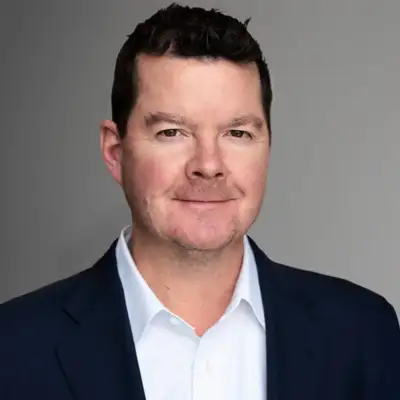
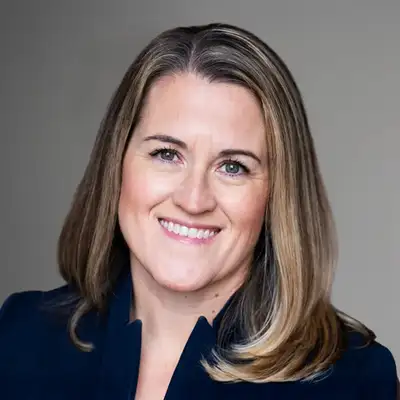
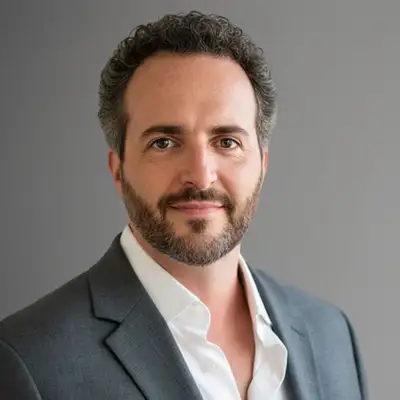
Meet the Insiders rewriting the rules of influence. Pulitzer Prize-winning journalist Brody Mullins and veteran DC strategist Lisa Camooso Miller interview the leaders who shape perception, move policy, and win when it matters. Not pundits or commentators – these are the operators driving some of the most critical strategies and outcomes in today's Washington.
Mike We have, I think, cornered the market on the best Republican information analysis in Washington, DC because of that trust. And if we think about going bipartisan, we'll lose the trust. We'll lose our competitive advantage in the marketplace, our niche. And so we're sticking with it.
ANNCR Behind every major policy decision, every corporate strategy, every Washington power play are the insiders shaping the game and the new rules to win it. The Deciders with Pulitzer Prize winning journalist Brody Mullins and veteran DC strategist, Lisa Camooso Miller.
Brody Welcome to The Deciders, where we speak with the insiders, rewriting the rules for effective advocacy in Washington. Today, we're speaking with Mike Catanzaro, CEO and co-founder of CGCN, a leading Republican lobbying and public affairs firm. Mike, thanks for joining us,
Mike Brody. Lisa, it's great to be here. Thanks for having me.
Lisa Mike, you started as a journalist working for Bob Novak. Tell us about that.
Mike Yes, I did start as a journalist, in fact, actually, I'm from Cleveland, Ohio. When I graduated, it went back to Cleveland, and I had the strange notion that I was going to be a banker and a lawyer. I was going to get a JD, MBA. And I realized pretty quickly that that's exceedingly boring and uninteresting. So I decided I want to get into politics, journalism and writing. So I came to D.C. and I actually did an internship at the National Journalism Center, which was run by the great conservative icon, and Stanton Evans, who was a guy who was instrumental in the conservative movement. So he trained me. And so from there, though, I lucked out and got a job working for Bob Novak as a reporter or as a writer. I wrote his newsletter or the Evans Novak report. So it was an amazing entree into Washington, D.C., just because when I would pick up the phone and call people saying, I'm working for Bob Novak, everyone would want to talk to me. So I got to know a lot of really important people. So it was it was great.
Lisa What did that experience teach you about how to operate in Washington?
Mike Talking to people was really important in Washington. Picking up the phone, going to have coffees with them, going to lunches, going to dinners. But Novak taught me. He said, sit and listen. No one cares what you think or what you say. But if you hear and what they what others are saying and what others are telling you, use that information and you can use it to your advantage. Whether you're writing a column or whether you're lobbying or whether you're working in a corporate Washington office. Listen and learn. And he told me that every single day over and over again. And I've taken that to heart. And, I owe him so much. He was such a mentor to me, and he was called the Prince of Darkness. But behind the scenes, he was a prince of a guy.
Brody Your firm see, CGCN, before 2014, was a pretty typical Republican lobbying firm. You hired Republican, former Capitol Hill chief of staff and, and, aides. You gave donations to Republican members of Congress. You got to know how we met with the Congress. And your job was to bring your corporate clients and bring them access to those members of Congress. Around 2014, you saw change. What did you see?
Mike You actually, the change goes back many decades. And if you think about the evolution of the Republican Party, you have to talk about kind of a three legged stool and a three legged stool. Is faith and free markets, social conservatism and strength in national security really anti-communism in the sort of 6070s and 80s? That three legged stool that obtained for several decades and led to the rise of Ronald Reagan contributed to the Gingrich revolution. But then I think in the two early 2000, with the George W. Bush presidency, you started seeing the three legged stool eroding. And, that's what we saw in 2014 with the Tea Party movement and less faith in free markets, certainly the Iraq War and the war in Afghanistan, that certainly hurt significant part of the Republican base and many of these Midwestern small towns. And because we're an all Republican firm, we decided that, look, these guys are Republicans. And what they're saying is that Republicans just are not being true to their principles. They're not doing what they're saying they're supposed to be doing. We ought to listen to these folks. We told our corporate clients, you can't ignore these guys. So let's go on and try to work with these guys and build coalitions, and we can take it to leadership. And then we can actually hopefully get the bill passed. Whereas prior to that, the way you would lobby is you would go to the committee chairs or you go to the leadership with your corporate client and say, we need to get something done. And they say, great, we'll move it from the top down. It didn't work that way anymore. It worked from the bottom up. And so that combination of we shouldn't speak ill of other Republicans, we should be a big tent. And we got to work with these guys because they're in the tent. That really changed things for us. And so they've changed how lobbying works. And I think we more than others saw that coming. And we were actually able to get some things done for our clients in ways that others could not.
Lisa How did that give you an advantage, not speaking negatively about a Republican president, when lots of other firms really did take that that pathway?
Mike You know, part of the issue is, is that you have some folks in town who get very nostalgic and they look back and say, we wish it was, you know, 20 years ago when I was working, say, for George H.W. Bush, everything was so different. And our President Trump and he's so mean and nasty and angry and I wish things were different. Well, okay, that's great. But things are the way they are. And the party has changed. And you look at our firm, it reflects the party. And because we do, Republicans trust us when they pick up the phone, Republican members, Republican staff, members of the Trump administration will call us because we have Trump administration alumni. They know that we're not going to take what they give us and use it against them. We have kind of a twofold view. Number one, we have to take care of our clients first. That's our job. But the way we take care of our clients is to give them the best Republican information possible, the best intelligence, the best analysis. Here's what the party is doing. Here's why they're doing it. Here's who matters. And we do that every single day. And so that does give us advantage over both Republican Republican firms as well as bipartisan firm.
Brody So, Mike, your firm is not just a pure lobbying firm. Tell us about your four divisions.
Mike Yes. So you said at the outset we're, you know, a Republican lobbying firm. And I think that that doesn't capture what we built over the last four years. We're now an integrated public affairs and policy consulting shop. So we have traditional lobbying, but we also have strategic communications. We have policy and regulatory consulting, we have analytics. And so we've integrated the firm according to those four segments. So when you put all that together, you have a pretty powerful shop that covers every single base for clients in the environment we're in.
Lisa Mike, what does that look like though when the when the town shifts, inevitably you guys are a strong Republican firm. But the town ultimately the pendulum swings back. What does that look like for you? How do you plan for that?
Mike So we grew during the Biden years. And I think it's it's it's deceptive in a way where people just look at our lobbying revenues, which are only a small part of the overall firm's revenues. So if you look at our lobbying revenues, it probably puts us in the latter half of the top 30 firms in town. But if you look at everything else that I mentioned, you know, last year, we're about 84 million. This year will probably be well over 100 million. And what we find is that when the Democrats take over, our strategic communication shop actually does tremendously well, because what a corporate clients want to do, they want to highlight a lot of the regulatory things that a Democratic administration is doing. They're hostile to them. So they're high hire a strategic communications, folks, to go in and make the case for why a Democratic administration or Democratic Congress is doing the wrong thing. And then in the policy and regulatory consulting, during the Biden years, we were really busy because there was a heck of a lot of regulating going on. So we positioned the firm to be immune to what we want software, adverse political cycles for us. It doesn't it doesn't matter. We built this firm in a way that we can maintain the all Republican character of it and yet still thrive and grow.
Brody So I reminds me, when I was a young reporter covering energy, environmental issues, I wrote about the Sierra Club and League of Conservation Voters at some point when Republicans took over Congress and I went to these environmental forums, it's like, oh, isn't this terrible? Like, no, it's a great way to raise so much money now, right?
Mike That's right. Yes.
Brody And sure enough, Sierra Club donations, you know, rocketed up when Republicans were in charge. One time, another strange bedfellows situation. I was your firm. And really, you have been one of the first people to notice to a brewing potential alliance between the white working class of the country and urban African-Americans. Tell us about that and how that's changed your lobbying or affected your firm?
Mike Yeah. Well, to start with, we have a partner in our firm named John Smith who did minority outreach for, President Trump Jr. And of course, is also from Cleveland. So that makes him a great guy. And Andrew was one of the first really to see that. And he said, hey, look, I think President Trump's numbers are going to improve with African-Americans. And the Democrats is for too long, in his view. I think he's right. And I think the data bear it out. Just taken that part of their coalition for granted for too long. I think the white working class vote, we wrote a memo called Class Dismissed for our clients. That got a lot of attention. And what we found was we at the beginning, the memo, basically the theme is a quote from Robert Reich, who is Bill Clinton's, labor secretary in 1999. He said there was this phenomenon occurring called the secession of the successful, by which he meant, you know, elite, highly educated white people were sort of cordoning themselves off in society. And you do see that. You see that that part of society is immune from some of the social pathologies that you see in the lower working class of America. You look at the data in 2024, the top 30 wealthiest districts in the country, 23 of those went for Kamala Harris, seven went for Trump. And so we started noticing this in the data. Again, this is not just exclusive to us, but we really started seeing it, you know, 4 or 5 years ago. And the two parties have completely changed, I think in good part because of the constituencies. If you are white, if you're elite upper class, you're probably going to be voting more likely to vote Democrat. And if you're not, you're going to be more likely to vote Republican. And that has had a huge impact in terms of how Republican Party and or even individual Republican member or Republican president is going to look at corporate America, because those voters think in some ways that they've been mistreated by corporate America. And so there's a lot of grievance there that Trump obviously, tapped into and capitalized on in 2016 and 2024. So, yes, we've written about this. The two parties now are very, very different in the basis of the two parties are very, very different.
Brody So, Mike, I teach a class at Georgetown University. I brought in one of your colleagues, and we'd all like to speak to the class. One time I had them read Class Dismissed. It blew their mind, but they didn't quite trust what you wrote because it came from a Republican lobbying firm. So I taught them to do an analysis of demographic data of congressional districts. What we found in 2014, 63 of the 100 poorest congressional districts were represented by Democrats and 37 by Republicans. And that's sort of how I've always seen the two parties. Democrats represent poor folks. Republicans represent wealthy folks. By 2024, those numbers had exactly flipped. In 2024, 63 of the poorest districts were represent by Republicans. This is the white working class MAGA voters and only 37 by Democrats. What does that tell us about how the parties are changing?
Mike I'll tell you broadly that those numbers, to me, are the best exemplification of what we've seen in terms of the basis of the party now just fundamentally being turned on their heads. And so what does that mean, then, for someone like CGCN and for our firm, as you said at the outset, has a lot of corporate clients. Well, it means we need to work even harder because the end of the day, Republican members in a Republican president are going to be paying attention to the base, and those voters will continue to be disenchanted. In many respects, the corporate America, they feel corporate America has left them behind. I think that part of the Republican base is now firmly entrenched, and I don't see it changing anytime soon. And so, again, for corporate America, it's very challenging. We as a Republican firm, it requires nimbleness and nuance and, an understanding of who the folks are, who have the energy and the influence in the Republican Party.
Lisa Today, we're going to take a break. We'll be right back.
Brody Welcome back to The Deciders.
Lisa Mike, I've heard people say that CGCN, secret sauce is trust. Why is that such a important part of the culture inside of the walls?
Mike Yes, trust is absolutely huge to the success of our business for our clients. And we have the trust of Republican officials, Republican officeholders, Republican staffers, because they know when they give us the information that they can trust us with it. If I walk next door and hand it to Matt Rhoades, who runs our communications team. You know, Matt is going to say, Mike, that's really interesting. Let's figure out how we can work with this information, how we can use it the best for our clients. But let's keep it discreet. Let's keep it behind closed doors. You tell me when the Republican staffer says it's okay for us to use it. We have, I think, cornered the market on the best Republican information analysis in Washington, DC because of that trust. And if we decided at any point and we flirted with this very briefly in 2020 after the election, it was a pretty tough election that maybe we should think about going bipartisan. We said no for exactly that reason. We'll lose the trust. We'll lose our competitive advantage in the marketplace, our niche. And so we're sticking with it. And so it's fundamental to what we do.
Brody One of the silos in your firm is coalitions. Tell us about that.
Mike Yeah. That's become, a big part of what we do in CGCN. So the biggest one right now is the American Energy Plus I coalition. But that's focused on AI and the grid, of course. And the members of the coalition run the gamut on the grid. We have electric utilities independent power producers, pipelines. We have the folks who make data centers. We have everyone involved in trying to make this equation work for the country. Tyrone Smith does a lot of work with minority communities. He has an Opportunity Zones coalition. He's putting together a coalition with HBCUs as we speak. But the other one we're working on now is the Stop the Rail Merger Coalition, which is we're trying to stop the merger between, you know, Pacific and Norfolk Southern. We have several members, including the Teamsters Rail Conference. We have the Brotherhood of Railroad Signalmen. We also have the American Chemistry Council and a whole bunch of others, including American Farm Bureau. So there's a pretty broad swath of the economy as opposed to that.
Brody On data centers. There's a story in Axios recently saying that the Senate GOP campaign arm has put out a private memo to AI companies saying that, in the race in Ohio, that Sherrod Brown, the Democrat, is making huge inroads against the incumbent Republican senator on data centers. How do you deal with that?
Mike Well, that memo doesn't surprise me in the least I've never seen in my 30 years. I energy environmental policy is my expertise. And so I've been working on these issues for a long time. I've never seen the trajectory or the velocity, the opposition on an issue like I have seen with data centers. I mean, this has happened in a six month period where I think it's safe to say, anywhere from 70 to 80% of the public Republicans, Democrats, independents do not like data centers for a variety of reasons. The top reason is they think they're going to raise their electricity prices. The next reason they don't like the fact that they're going to use water. The third reason is noise. And again, I think that the hyperscalers, the Microsofts, the Metas, these folks who are going into developers, what they have to be doing more of to beat back the opposition to get community buy in is I'll be crass about it. They have to open their checkbooks. And I'll give you the example of Meta in Richland Parish, Louisiana, an amazing story where this is a pretty depressed area in Louisiana. Meta went in and said, we're going to build a massive facility, multi-billion dollar data center facility. But what we're going to do is you tell us what the community needs. Community said, well, you know, our schools could use a boost. They said, great, we'll give teachers every single teacher $50,000 bonus. Wow. Small businesses were hurting in Richland Parish. And they said, what small businesses need? You need more employees. You need help, you need checks, support, you name it, we'll do it. And they did. And in fact, meta was featured at the president's President Trump's ratepayer protection pledge event. And they had the superintendent of schools who came in and said, without meta, our community would be lost. We would be dead. This was an amazing thing. We embraced data centers. We're so glad they're here. That's starting to happen more and more. And I think these hyperscalers are starting to get it.
Brody So in a memo, they say if he loses, as in the Republican senator who said, data centers would get the blame, politicians across the country will take notice and they will not go near the next one. Is it possible the Republican Party could turn against data centers? And if so, how do you possibly fight against that?
Mike I don't I don't think they'll turn against. Are you going to see outright bans in some places? Yes. But I think the Republican Party as a whole, both parties are going to be outright skeptical. My prediction is that Democrats will probably be more in the position of a moratorium ban, and Republicans will try to find a way to thread the needle in terms of the moratorium and ban on the Democratic side. Just as a note, Bernie Sanders and AOC introduced legislation to do exactly that a national ban or moratorium on data center development. You're going to see that. I think it's the hard position for Democrats going into 28. But for me, again, I think Republicans are in a very, very tough spot. My hope is they will come out of the other side of this open to data center development, again, putting some guardrails around it and making sure it's done the right way.
Lisa We'll be right back in a moment.
Brody Welcome back to The Deciders.
Lisa I've heard, you say that CGCN is as well positioned as many of the other biggest lobbying firms in Washington during Trump's Washington. Specifically, I'm thinking about two guests that have been on our show, Jeff Miller, Brian Ballard. Talk a little bit about what informs that, that thinking as it relates to you and how you compete in that landscape?
Mike Well, both those guys in both those firms and friends of ours just want to be very clear. Are they competitors? Yes, but they're also friends, so you could be both. I think that we what we have distinguishes us from those two firms is that there are four segments that I talked about, and I don't think any other firm our size has that. It can cover every base for clients. I think we have had, and we continue to have that sophisticated understanding of the party that we can then translate to our corporate clients. I mean, we've been studying these issues and writing memos on these things now for 15 years. And you said trust. I still think when it comes to picking up the phone and calling the firm that knows what they're talking about, knows how to get things done, knows how to help a member get something done, and get a client to solve a problem. They're calling us.
Lisa Another thing that sets your firm aside from others in Washington is your insistence and your commitment to staying independent. We talk about why that's an advantage.
Mike Yeah, I'm glad you asked that. And I'll sort of make a declaration of independence when it comes to growing phenomenon in Washington, D.C., which is private equity firms buying up, lobbying firms. It's salting firms. We're not going to take PE money. We don't take PE money. The reason is pretty clear. We work for some PE firms, but we don't want them to be our bosses. And we don't want people telling us how to run our business. Pretty confident in what we do. We like our independence. We've been approached by PE firms, and our answer is and is going to be, no, we're not going to do it. And again, we think that works for our firm. It works for our partners. We have a great collegial environment at the firm. Again, we all work together, strong culture. And so having someone from New York telling us what to do, how to do it, when to do it, subjecting us to arbitrary metrics and milestones. Again, that's not the CGCN and way. And so we're going to be independent. And we think that's best for us and for our clients.
Lisa Mike, we ask every decider the same three questions. The first is what's the decision from the past year that you're most proud of?
Mike I think it was creating the analytics part of our shop. That was kind of the fourth part of it that we were missing. You know, we we had sophisticated lobbyists. We had the best communicators in the business. We had the most knowledgeable policy and regulatory team. But we asked ourselves the question, wait a minute. We're getting inundated with data, and the data economy is something that our corporate clients are starting to ask us a lot about. And we needed people inside the firm to understand what all the data mean. Put it in context, do forecasting, provide them with analysis and white papers. And so we formed that shop and it's been really successful. And it's just been an important part of the integration of the firm. And so again it just really rounds out the integrated nature. So again, what's.
Brody One thing you'd like to have done over?
Mike Well, when I look at our shop today, it's really come together, I think over the last, you know, 24, 48 months. And I wish that we had done this earlier. I wish we had done this five, 6 or 7 years ago. We did get a handle on the changing Republican Party where we were writing the memos that no one else was writing. And in terms of how the Republican Party and lobbying and public affairs was changing in Washington, D.C., and we responded to that. But when I look at the firm now, I think, well, if we had just done that maybe 4 or 5 years ago, how different were things be? But again, couldn't be more pleased about where we are right now, where we're going.
Lisa What is something that Washington is not thinking about right now, but they should be.
Mike I think the the continued relative decline of Congress as compared to the executive branch in the judiciary, not to say that Congress is irrelevant by any means, but this is a phenomenon that's been occurring over probably the last 7 or 8 decades. And now we're seeing in full flower, and the executive branch is in full control of policy in Washington, D.C. now, it used to be the case that you would go to Congress. You go to the committee chairs and you get statutes passed that really were foundational. But over time, Congress handed a lot of that lawmaking authority off to executive branch agencies. And the Supreme Court has addressed that in some recent landmark decisions. But I'm not sure that's going to have an effect anytime soon. So I think the executive branch accumulates more power. What is that going to mean? Again, not only for lobbying and public affairs, but for the country. I'm not sure that the town is grappling with that enough, because it's going to have profound consequences for what we do. But I think for democracy over time as well.
Brody Mike, thanks so much for joining us.
Mike Thank you guys. Appreciate it.
Lisa Welcome back to The Deciders. That was Mike Catanzaro. Brody, what did you think?
Brody You know, as promised, a great episode, a great interview. I mean, Mike is a clear articulation of many of the topics that we've been talking about, the changes, the Republican Party, the changes in K Street. These guys seem to have seen it first, and it's working for them. They said, that their lobbying revenues last year have doubled. Mike said that they were going from a firm about 80 million to about 100 million overall this year. So what they've seen is really benefiting them.
Lisa The other thing, too, I think that was that was interesting to me, was that they've also built a firm that's lasting. So while it's all Republican, it also is durable and can survive and can grow and change with a Washington that does tend to switch loyalties and parties, back and forth.
Brody Thanks for joining us on The Deciders.
ANNCR The Deciders, as hosted by Brody Mullins and Lisa Camooso Miller and produced by Dave Tobey. Subscribe wherever you get your podcasts. Find more online at deciders.show and follow The Deciders on YouTube, LinkedIn and X.