Subscribe
Share
Share
Embed
Since 1986, Convene has been delivering award-winning content that helps event professionals plan and execute innovative and successful events. Join the Convene editors as we dive into the latest topics of interest to — and some flying under the radar of — the business events community.
Convene Podcast Transcript
Convene Interview, ep. 28
*Note: the transcript is AI generated, excuse typos and inaccuracies
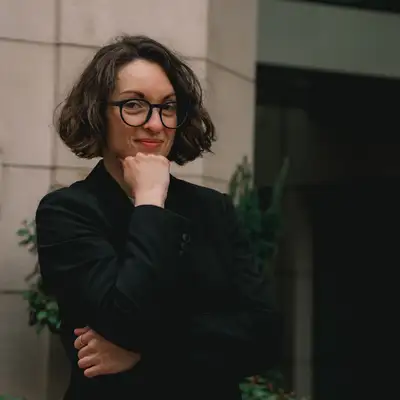
Magdalina Atanassova: This is the Convene Podcast.
Today, we’re exploring what it really takes to design events that deliver measurable business impact in a world shaped by AI, distraction, and rising expectations.
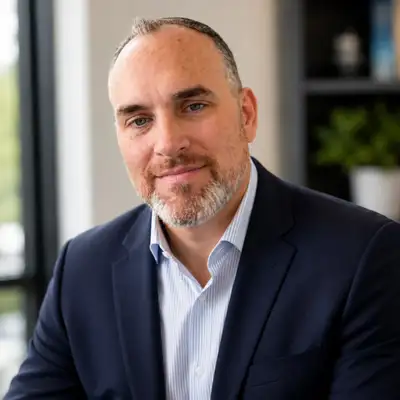
My guest is Dan Preiss, Vice President of Experiential Events Marketing at Dell Technologies, where he leads how the brand comes to life through global experiences.
In this conversation, we talk about why event leaders need a clear “North Star,” how to cut through the noise of overcomplicated measurement, and what really matters—but remains hard to quantify. We also explore attention fragmentation, the shift toward personalization at scale, and why the future of events isn’t bigger—but more intentional.
We start now.
Hi Dan, and welcome to the Convene Podcast.
Dan Preiss: Thanks Maggie. Thanks for having me.
Magdalina Atanassova: Dan, you've spent your career creating experiences that bring a brand to life and I wonder when you look at the events industry today,
what do you think we're getting right and what are we over complicating?
Dan Preiss: I think we're really getting right, connecting events to outcomes. And that's something that's grown over the last number of years that I've seen the industry starting to really turn on.
I think connecting those experiences to what the business is trying to achieve makes them so much more powerful.
I think we continue to over complicate some of the measurement theater, as I like to call it, how we think about measurement and how it connects to the business outcomes.
I also think that sometimes we're guilty as marketers to overcomplicate a situation.
Sometimes the cleanest experience, the most intentional experience, is the best one. So I think we have to be really thoughtful about when we want to innovate or try something new, that we're building something that's truly aiding the attendee experience and growing the experience for the attendees.
Magdalina Atanassova: Every event leader is being asked to do more with less. And I feel that has been the case ever since the industry became an industry, pretty much.
So when two priorities both seem important,
what framework do you use to decide what gets funded and what gets cut?
Dan Preiss: You know, it all ladders back to our strategy cascade. So at Dell Technologies from the top, we set an objective for the year with very clear metrics of success.
And so over the course of the year a lot changes and we look at that strategy, but we use as a North Star the strategy cascade. And so when we're presented with all kinds of opportunities,
we are really thoughtful around what we go after and what we invest in, but we always keep that North Star in mind on what the objectives of that year are and so that makes it actually pretty easy to make these decisions.
Magdalina Atanassova: Speaking about that, you have the North Star, which is great, but what are you saying no to today that you might have said yes to five years ago?
Dan Preiss: I think it's the difference between opportunities that just pop up. Right. So marketing for marketing sake. Things that seem shiny or interesting but don't ladder to the outcomes that we're looking for as a business.
So I think that it's a discipline that's come with time.
Magdalina Atanassova: How do you think people can build that discipline?
Dan Preiss: It takes practice. Right. So I think as marketers, we like to create really shiny, cool experiences that are innovative. Maybe never been done before,
but we have to be really thoughtful around how those connect to the outcomes of the business. So the more that events can be aligned to the objectives that we're trying to achieve and grow the business and continue to address what we're trying to achieve achieve,
the more successful these events and experiences will be.
Magdalina Atanassova: You've worked through multiple waves of disruption,
from economic downturns to digital transformation. Now there is AI.
So what's the challenge facing our industry that concerns you most? And not because it's necessarily difficult, but because you think we're not really talking about it enough?
Dan Preiss: I think attention fragmentation is something that we're not talking enough about.
I go into these event experiences and I see really engaged attendees.
They sit down in, let's say, a keynote or a breakout session, and it starts and they're fully engaged.
And then you start to see as you sit in the back of the room, the heads dip down and they start going on their devices.
And I wonder, is it the content? Are we not connecting with them? Is it not relevant?
Or is this just how it is now? Is this how as a society we are connected and we're multitasking and we're getting notifications on our phones, on our watches, on our devices.
And so I think it's something that we. We talk about in passing, but we haven't made a lot of progress in how we address it moving forward.
Magdalina Atanassova: You have any ideas or strategies that you apply at our technologies?
Dan Preiss: Absolutely. So I think it's a challenge for everybody in the industry right now. I think it's always thinking about keeping the content relevant,
really targeted to the audience,
bringing the audience in and having them be engaged. Things that have been true forever in the events industry, I think remain true, that the more that someone feels they brought to the table, that they're being heard, that they're engaging, maybe learning from a peer.
I also think turning the formats of events on their heads can be helpful too. So maybe it's not one to many. Maybe it's a birds of a feather session, or it's bringing experts together in a lightning talk where they have 15 minutes to address a particular topic.
I also love brain dates, having attendees bring a topic to other attendees and have those conversations. So I think we're playing with formats and we'll continue to do that.
Magdalina Atanassova: The industry spends a lot of time talking about innovation and I was surprised actually that right now you didn't give an innovative example per se, but you just gave different event design examples.
So in your experience, how do you distinguish between meaningful innovation and simply chasing the next shiny thing?
Dan Preiss: I think it's really interesting when the team brings a new concept, a new idea that could really change the attendee experience in a really great way.
And that's what's key to deciding which way to go and how to address,
how to continue to innovate our event experience.
I think we look at some shining objects that may be interesting to try out, but how they connect and actually enhance the attendee experience is what I think a lot about.
Magdalina Atanassova: So.
Dan Preiss: So I think it's really key to keep that in mind. How do we make that a frictionless experience for the attendee and how we continue to think about how it connects to the ultimate goals of the program?
Magdalina Atanassova: I love that. Do you have an example in mind of co innovation that you know, you may have seen in another event and you've thought or your team has come and said, you know, that looks really cool, we should try it and.
But you didn't see any additive value and just skipped it.
Dan Preiss: We continue to partner with our agencies,
with our tech stack within the event portfolio and the advancements that are coming, that are coming very quickly continue to make that experience that much better. So making the mobile app really easy to navigate it, making it even more consumer friendly, thinking about how people register, how they show up.
And I know a lot of folks are experimenting with facial recognition, so you don't even have to type in your name anymore. I think there's some really fun advances that make that first touch at the experience that much easier.
So you get your badge and you're on your way and then how you connect with the event is the next thing that I kind of obsess about is, is how do you connect with other humans?
Right.
So we know the content that we're offering. We're trying different formats to meet attendees where they are and meet their expectations and exceed their expectations. But I think it's really key for.
For us to continue to try things, to innovate. We're going to fail along the way, but it's fail fast and recover and continue to learn.
Magdalina Atanassova: I like that you're honing in on the human experience and with that in mind, because you've led global programs across the Americas, EMEA and APJC. So do you think that attendee expectations are becoming more similar globally or are regional differences becoming more important than ever?
Dan Preiss: I think it's both. So I think there's some commonality across the globe. So attendees are expecting us as event organizers to lean in to advances in technology to make it easier to engage with them, to get what they're trying to achieve at their events, whether it's networking,
learning, or some combination of the two.
I think, though, as we build experiences, we have to be really thoughtful around where they are in the world and those cultural norms. We have to be able to respect them.
We have to be able to fit into the society in which we're building that program.
And so it's both. We have to be really respectful of what we're building and thoughtful on how attendees want to engage.
Magdalina Atanassova: And do you notice if people are leaning towards more regional events just to build their own network a bit closer to them, even though we're so connected online?
Dan Preiss: I think that's absolutely true. I think it's both. I think that people want to have that regional connection, but then they want to learn from a global audience. So at Dell Technologies World, we actually do that quite well, where we bring together a global audience of attendees, but then we have these regional hubs run by our local field marketing teams,
so that they get the best of both worlds. They get an opportunity to connect with folks that may even live in the same city as them that they've never met before,
but they came all the way to Las Vegas to meet. And so it's an opportunity to connect locally and also experience the global footprint of our company.
Magdalina Atanassova: And I really like that. Having a buddy from your country at a global event, it's just. It's a treat. It's a nice treat.
Dan Preiss: It is a treat.
Magdalina Atanassova: And now we see that many event professionals feel pressured to justify their budgets, especially with increasingly quantitative metrics.
What's something that matters deeply but is still difficult to measure?
Dan Preiss: Well,
I think the two that come to mind right off the bat, it's trust,
it's relationship depth. I think we're really good at measuring activity things,
but understanding how deep that connection is with the Attendee is something that. That we're all chasing to some degree.
Magdalina Atanassova: Have you found a way out?
Dan Preiss: No, I think. I think a lot of folks are still talking about it. I think a lot of event organizers are still thinking about how to really measure that and might be a topic that we'll explore at SEMA Summit.
Magdalina Atanassova: I can just plug in here, convene. We've tried to speak with a lot of event professionals and figure it out or see through their lens and how they're approaching it. It's a very complicated topic.
You spent years aligning event experiences with business objectives.
What's something event leaders still routinely get wrong when trying to prove the value of events to the C Suite?
Dan Preiss: I think when event leaders go into the C suite and lead with activities instead of outcomes or logistics and not success metrics, I think that's the real key in thinking about knowing your audience.
It goes down to marketing 101. So you go in,
think about the audience, think about those leaders and what they're trying to achieve with the business. And so I think as event leaders, we need to come in understanding that the logistics and how we run our organization is critical.
But aligning the metrics and the success of the business to the event outcomes is key.
Magdalina Atanassova: When you go into the C Suite, you go with, these are my Personas, These are the people we want to target.
But how do you make the relationship? Because sometimes I feel there is something missing in that connection between a Persona and a real person that they don't necessarily fit the Persona or there's more to it that it's not factored in.
Dan Preiss: Yeah, I think what's missing is the humanity in it. Right. So it's bringing through that attendee that's coming.
Something I like to say with our annual user conference when we're trying to frame the conversation, is our attendees take a week out of their life. They travel, they leave their family,
they make an investment in a registration fee and a hotel and all that comes with it. They leave their job for a week to go for a lot of different reasons to network,
to bring back knowledge that's going to help their organization be even more successful.
And so I think that's the framing, the humanity of it that I like to bring to the table when we talk about it with all different internal stakeholders, including the C Suite.
Magdalina Atanassova: And now AI comes into the mix.
It's rapidly changing how we work,
but it's also changing how attendees consume information.
So how do you think AI will change what people expect from live events over the Next three to five years.
Dan Preiss: Yeah, I think it's very clear. Attendees are going to expect personalization at scale.
They're going to expect us to know more about them and curate an experience that's really hyper personalized for them.
I think content is going to explode. It's going to be everywhere.
And I think of it, conversely,
there's going to now be a premium on the event experience.
The human to human connection is going to be even more important, even more valuable.
So I think it's both. I think there's an opportunity for us to really harness what AI will bring as an opportunity and lean in as event organizers to create an experience that's unique, that they can only get by being together in a shared experience and build an experience that's truly different.
And I think we need to innovate, continue to play with formats,
think about how AI layers in but doesn't overtake the event.
Magdalina Atanassova: I like that you added that at the end, because I was just waiting to say, what about the fear of AI being too much and actually diminishing the person to person, human to human experience?
Dan Preiss: No, it's critical. I think you have to think of it both ways. And I think there's a way for AI to really enhance the attendee experience and also know why we're there,
what value an event brings by bringing humans together and keeping that in mind as you build every part of your event.
Magdalina Atanassova: When you look ahead to 2030, which by the way, is just tomorrow,
what part of today's event playbook do you think we'll look back on and wonder why we did it that way?
Dan Preiss: This is an easy one for me.
Keynotes over 45 minutes.
I think that is something that everybody's gonna look back and say, why did we do that? I think it's so strange of a phenomenon and it depends on what's going on in that organization or what news they have to share.
Of course,
there's some reasons why you would wanna have a keynote longer than 45 minutes, but I think we're gonna look back on it and we're gonna say,
wow, that format really didn't, didn't survive the test of time. And we need to be really thoughtful on when we bring our attendees together in person,
how we use their time really effectively and make sure we're crafting an experience that really is meeting their expectations.
Magdalina Atanassova: Yes, yes, yes, yes, please. Tomorrow, not 2030.
Dan Preiss: Exactly.
Magdalina Atanassova: So you're coming to Sima Summit and you'll be joining other global leaders to discuss what you're navigating right now.
Yeah. What's a belief that many event professionals still hold that you think will become a liability over the next few years?
Dan Preiss: I think the number one thing that's bubbling up for me more and more these days that bigger is better.
And I think you think about how a lot of organizations represent their event success and they say it's the biggest one yet and most number of people to travel and be at our program or whatever.
And I think it's been true forever, but I think it's going to be even more true as we move forward. Having the right people together is going to really move the needle and connect to those business outcomes that we're trying to achieve running these events.
So I think the more we think about that as we move forward and build experiences intentionally for the right audience and connecting the right people with the right content, the right human experience at these events and not leaning so heavily on the biggest one yet,
that's a
Magdalina Atanassova: nice way to also tuck in the 45 minute keynotes because right. They have to be long.
Why they don't have to be long, can be a 5 minute one and can be great.
Exactly what I was excited to about CEMA Summit.
Dan Preiss: I love the CEMA community. I've been part of it my whole career. I think back to the first CEMA Summit I went to. It was an opportunity early in career, get to know folks that I admired that had done really amazing things in the event industry and I'm so proud of those connections and they still exist to this day.
So it's a little bit of family reunion when I get on site at CEMA Summit. It's an opportunity to reconnect with those individuals that continue to impress me and, and that I get to learn from.
So I think it's a little bit education, a little bit networking and definitely idea sharing. So I, I'm really excited to join the community again.
Magdalina Atanassova: It's so fun when you've started your career with one event and then you're on stage few years down the road. So it's kind of, it's kind of cool.
Dan Preiss: It's very cool.
Magdalina Atanassova: Thank you Dan for joining me on the podcast and I'm looking forward to your panel discussion. Seems to be a great one.
Dan Preiss: Thanks.
Magdalina Atanassova: Remember to subscribe to the Convene Podcast on your favorite listening platform to stay updated with our latest episodes. For further industry insights from the Convene team, head over to PCMA.org/convene. My name is Maggie. Stay inspired. Keep inspiring. And until next time.