Subscribe
Share
Share
Embed

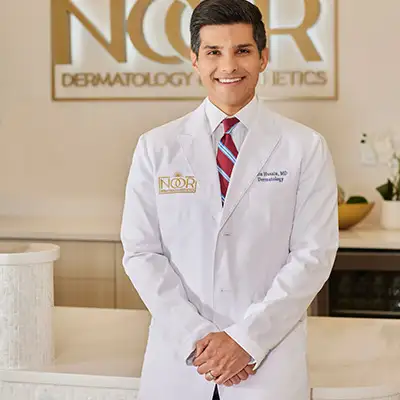
Welcome to Skinside Out, where science meets beauty, the ultimate dermatology podcast! Dive deep into the fascinating world of skin health with expert insights, evidence-based discussions, and myth-busting truths. Each episode explores the medical, cosmetic, and surgical aspects of dermatology, while keeping you informed about trending skincare topics. Whether you’re a skincare enthusiast, medical professional, or just curious about how to achieve your best skin, Skinside Out is your go-to resource for staying informed and inspired.
[00:00:00] Dr. Zain Husain, MD: that's probably one of the most satisfying parts of Mohs surgery, um, is being able to use your creativity, artistry. There's more than one way to skin a cat, so there's more than one way to, um, you know, treat and get a good cosmetic and functional outcome for our patients.
Welcome to Skin Side Out. I'm your host, Dr. Zain, with Heather and Courtney. So today we're gonna be talking about Mohs surgery from the inside out. So what is Mohs surgery?
[00:00:34] Heather Murray, PA-C: Mohs surgery is a surgery that we do for skin cancers. Um, Mohs was a physician, a surgeon, and so it's not moles surgery-
it's Mohs. That's somebody's last name.
[00:00:48] Dr. Zain Husain, MD: M-O-H-S, and it's not capitalized like the entire word, it's just the capital M 'cause someone's name.
[00:00:53] Heather Murray, PA-C: Yeah. Frederick Mohs. Frederick Mohs. Exactly. Um- Um, so typically this is a little bit more of a lengthy surgery, and, um, it is helpful, especially in certain locations on the body, because we are only taking skin that we need to take that is cancerous versus taking a bunch of healthy tissue.
[00:01:14] Dr. Zain Husain, MD: Absolutely. So we're doing margin control microscopically, so that's what really makes it unique compared to doing an excision where we're just excising tissue with standard margins. So Mohs is an incredible technique. It has a 99% cure rate. I mean, there's not many treatments in medicine that have that high of a cure.
Mm-hmm. So it's considered the gold standard, um, in treating skin cancer, and I love it. I'm a Mohs surgeon, so, um, it's really gratifying being able to treat my patients, telling them that they're cured, and also being able to reconstruct them all in the same day.
[00:01:52] Courtney Carroll, LE: Yeah, it's nice to leave that day knowing that- Mm-hmm
it's been completely removed 'cause you just have that peace of mind, I think.
[00:01:57] Dr. Zain Husain, MD: Yeah, and you don't necessarily have that peace of mind with an excision- Mm-hmm ... because you're still waiting for the pathologist to confirm that the margins are clear, and then many times you're already repaired. So in the small chance that it is positive- Mm-hmm
at the margins- Mm-hmm ... you gotta redo it, which is kind of
[00:02:12] Courtney Carroll, LE: annoying. There's nothing worse than calling- I know ... a patient with those results and saying- Yeah ... "Yeah, your margins weren't clear. Now we have to do this all again." Yeah.
[00:02:20] Dr. Zain Husain, MD: And then other options such as superficial radiation therapy, you don't know whether you got it all out.
Pass. Mm-hmm. Definitely. Yeah. Um, you can develop scar tissue- ... um, discoloration. Mm-hmm. And some of the worst recurrences I've seen- Mm-hmm ... were in the setting of prior radiation.
[00:02:38] Heather Murray, PA-C: Mm-hmm.
[00:02:38] Dr. Zain Husain, MD: And these skin cancers started developing underneath the scar, so they kind of reared their ugly heads later on. Mm-hmm.
So they're more advanced, much more tricky to treat. Mm-hmm. Um, it's just a mess. Mm-hmm. Um, other old school options, you know, cryotherapy, um, ED&Cs. ED&C. I mean, I rather know and have histologic proof. And that's just how I kind of view medicine.
[00:03:03] Courtney Carroll, LE: Yeah. ED&Cs for those who don't know are basically you're destroying it with a curettage where you're kind of scraping those cells, then you're singeing them with the electrocautery.
But again, you're not biopsying that after. So number one, you're left with a h- a hole of a scar, and number two, you don't really have that proof that it's been completely removed, so. Mm-hmm.
[00:03:22] Dr. Zain Husain, MD: Okay, so let's walk you through a typical Mohs surgery case. So our patient comes in early in the morning, and we first, you know, go over consents, um, go over the procedure, answer any questions they may have.
We mark the site, um, you know, after we confirm it with the patient and also, uh, confirming the pathology report and photos. Um, after that, we take measurements, and then we numb the area with local anesthesia. So this is another thing many patients don't know. This is done in the office under local anesthesia.
You are not under general anesthesia, so this is an in-office procedure. So after we numb you, which is usually the most painful part for the patient, but it's not bad, um, we then take a thin layer, um, of tissue. So we have the tumor, which we've identified. I usually curette it to see the margins, um, at least as closely as I can.
And then we take, um, one to two millimeters beyond that and remove that as a thin layer. That tissue then gets processed, um, by our technician in real time. So the histotechnician, um, freezes the tissue and then slices it in a specific way using a cryostat, stains it, and then we're able to look at the tissue under the microscope.
So the other unique thing about being a Mohs surgeon is we also serve as the pathologist. So I'm looking under the microscope. We're trained to look at the histology, and we're looking at the margins to see if, you know, all the cancer has been removed or if there is any skin cancer remaining. If all the skin cancer has been removed, that means you're cured, so that's easy.
If there are positive areas of skin cancer, then we mark it on a map, um, and we actually go back and repeat the same procedure, and we do that the same way, and we do that until we clear the entire skin cancer Oftentimes we can get it done in one to two layers, but has the potential to go on and on, especially with a complicated tumor.
You know, my highest was eight layers. Um, I've had colleagues go up to 12, 13. Some have- Mm ... had to go the next day and continue on. So, um, it can vary, and I always tell my patients, "Don't make any other appointments that day. Expect to stay with us for the rest of the day in case, you know, we run into that issue."
But most of the time with, like, you know, small skin cancers or ones that are easily treated, um, you know, couple of hours is typically- Mm-hmm ... what we expect.
[00:05:47] Courtney Carroll, LE: Mm-hmm. Yeah. Bring a book, bring your laptop- Mm-hmm ... bring something to keep you busy- Yeah ... because-
[00:05:51] Dr. Zain Husain, MD: Yeah ...
[00:05:51] Courtney Carroll, LE: staining does usually take anywhere from, you know, 45 to 60 minutes.
Um, and there is kind of a queue, so if you do have, uh, any positivity on those cancerous cells, you're almost put back at the end of the queue because they're still processing those slides from other people too. So I always say, yeah, don't plan on any other appointments and bring something to kind of keep you busy.
Mm-hmm. Eat a good breakfast. Um, you know, maybe have a snack or two. Right?
[00:06:18] Dr. Zain Husain, MD: Yeah. So after we clear the skin cancer, we move on to the second phase, which is reconstruction. So another great thing about my Mohs surgery fellowship and just Mohs training in general is we also are trained in plastic and reconstructive surgery.
So we're able to, you know, pretty much take care of the vast majority of defects that are created from these skin cancers. So, you know, we can allow these to heal and on their own. That's called second intent healing. We are able to do a linear repair where we're kind of, you know, putting in those traditional two layers of stitches, um, you know, and have that linear scar.
Uh, for more complicated areas or locations, um, we can do flaps, um, where we rearrange adjacent tissue, rearrange it, and allow us to cover the defect and mobilizing the tissue so that we get a good cosmetic and functional outcome. Um, or we can do a skin graft where we take skin from another part of the body, and we essentially sew it into place, and that becomes part of that tissue.
All right? So that's probably one of the most satisfying parts of Mohs surgery, um, is being able to use your creativity, artistry. There's more than one way to skin a cat, so there's more than one way to, um, you know, treat and get a good cosmetic and functional outcome for our patients.
[00:07:38] Courtney Carroll, LE: Yeah. It's definitely, you know, a tissue-sparing, um, procedure where what's kind of nice is let's say that there is an area that's positive.
You can kind of see what quadrant that that falls in, so instead of having to take a whole of the whole piece again- Mm-hmm ... like you do in surgery where you're taking a couple millimeters out because you cannot see with your eyes where that cancer ends. Um, with Mohs, it is nice to know, okay, maybe it's just in quadrant one, so we can spare the rest of that healthy tissue and just take more from the piece that has those cancerous cells.
[00:08:06] Dr. Zain Husain, MD: Yeah. So Heather, what type of patients, uh, would require Mohs surgery?
[00:08:11] Heather Murray, PA-C: So it is typically for, um, two types of skin cancers, basal and squamous cell carcinoma. Um, but it also depends on lots of different things, so where it is on the body. Um, there's a, a system called the Mohs AUC, which is the appropriate use criteria, and so there are, um, criteria that count for whether or not it is worth doing Mohs versus a classic excision.
So the type of skin cancer, the size of it, where it is on the body, so it is most commonly done on the face, the neck, um, the feet, the genitalia. Genitals. Mm-hmm. Um, are they... Is the patient healthy or immunocompromised? Um, what type of skin cancer is it? Not only, like, basal versus- Mm-hmm ... squamous, but is it superficial?
Is it nodular? Um- Also,
[00:09:06] Dr. Zain Husain, MD: other histologic, um, subtypes. Features. Mm-hmm. Yeah.
[00:09:09] Heather Murray, PA-C: And so it'll give you a rating on a scale of, like, zero to 10- Mm-hmm ... what the recommendation is.
[00:09:14] Dr. Zain Husain, MD: Yeah. And it's important to note that even though it may be a moderate score, I also take into consideration the patient's wishes, right?
[00:09:26] Heather Murray, PA-C: Mm-hmm.
[00:09:26] Dr. Zain Husain, MD: So especially for a cosmetically sensitive area for a woman, um-
[00:09:32] Courtney Carroll, LE: Chest
[00:09:32] Dr. Zain Husain, MD: area ... chest, yeah. I mean, I, I kinda defer to the patient a little bit too- Yeah ... because they're gonna be living with a scar.
[00:09:38] Heather Murray, PA-C: Yeah.
[00:09:38] Dr. Zain Husain, MD: Right? So, um, and I have a low threshold to, you know, accommodate them to, you know, really give them the best cosmetic outcome as well.
[00:09:47] Courtney Carroll, LE: Mm-hmm. So usually post-procedure, um, depending on the area and depending on you and, you know, your provider's preference and kind of, you know, I think the area being treated, there typically will be stitches. Um, sometimes those stitches will be dissolvable where they will dissolve in about six weeks. Um, other times they will need to come out in one to two weeks, depending on the area being treated.
So a lot of times, uh, areas like the face, we might do a one-week follow-up to get those s- sutures out, and then places like scalp, body, then maybe we'll defer to two weeks to get those sutures out. Typically, your post-care recommendations will be to keep the area nice and moist with some Aquaphor. Your provider might prescribe something like Mupirocin, which is a topical antibiotic for you to use to that area, and you really just wanna keep this area as clean as possible and then bandaged as best as possible.
Sometimes it starts getting a little difficult on areas like the scalp where, you know- It's not ideal to put a bandage on that spot, but ideally keeping it really as best covered as possible will lead to the best healing outcome. And I think people sometimes wonder, "Oh, don't I need to let it air out?"
And the answer is no. Just keep it covered. Oh, no, no, no. Keep it covered. Especially, yeah, with
[00:11:01] Heather Murray, PA-C: anything, but especially with grafts- Mm-hmm ... I think that's the issue- Yes ... we see with the most.
Big time. Mm-hmm. Um,
do, do your best to keep it moist. Mm-hmm. Keep it covered. The skin will attach better if it is in that environment.
Mm-hmm. If it dries out, the, the graft is gonna die.
[00:11:17] Dr. Zain Husain, MD: I don't understand. After, like, counseling patients, repeating it multiple times, I still see them coming back- Yeah ... for their post-op visit, and it's dried up to crisp.
[00:11:28] Courtney Carroll, LE: They're like, "I thought I needed to air it out." Yeah. I'm like, "Where in the instructions did
[00:11:31] Heather Murray, PA-C: it say that?"
[00:11:31] Courtney Carroll, LE: Yeah. It's like, right
[00:11:32] Heather Murray, PA-C: here. I think, like, I think a lot of people will say, like, "Well, that's what my grandmother tells me to do- Oh, yeah. 100%, yeah ... when I get a scab or something."
[00:11:40] Dr. Zain Husain, MD: Yeah. I mean, there's this old wives' tale, like, I mean, the air helps it, you know, breathe- Mm-hmm. Breathe. Mm-hmm ... and heal. I'm like, "No."
[00:11:47] Heather Murray, PA-C: Yeah. I put Neosporin on it. Oh my
[00:11:49] Dr. Zain Husain, MD: God.
[00:11:49] Courtney Carroll, LE: Yeah. Typically, you won't need oral antibiotics- Mm-hmm ... unless there really is a sign that you might feel that it is getting infected, and obviously the signs- Yeah ... that we look for, you know, heat to the area, spreading redness, things like that. Mm-hmm. Oozing, crusting.
But, um, you're not gonna be necessarily given an antibiotic pr- you know, post-procedure. Sometimes
[00:12:08] Heather Murray, PA-C: pre-procedure though, um, you can get an oral antibiotic. Mm-hmm. E- especially if you've had a joint replacement- Mm-hmm ... in the last two years.
[00:12:15] Dr. Zain Husain, MD: Mm-hmm. Yeah. Or, like, a heart valve. Heart, yeah. Mm-hmm. And a lot of patients ask me about blood thinners, because a lot of our patients are elderly.
They're on blood thinners. My rule is they continue their blood thinners, and we can handle bleeds in the office. We're equipped to do that. So don't just take yourself off of these blood thinners. I'm surprised, like, how many patients ... I don't even talk to their- I would check with your
[00:12:38] Courtney Carroll, LE: provider. Mm-hmm.
It's funny, I used to work for a doctor who would make ... And she didn't do Mohs, but- Yeah ... on her simple excisions, she would make people come off their blood thinners. No. Mm-hmm. They're on a blood
[00:12:47] Dr. Zain Husain, MD: thinner- Yeah ... like, for a reason, right? For, there's probably serious reasons. Oftentimes serious reasons. Oh, 100%.
Yeah. Like, you don't want them getting a heart attack, having a stroke. Mm-hmm. Yeah. I mean, if they're doing it on their own prophylactically, like a baby aspirin- Yeah, yeah ... or, like- A fish oil ... you know, a fish oil, things like that- Yeah ... then yeah. I mean, I think that's fine. And, you know, you have to come off of it at least, you know, seven to 10 days before- Yeah
for it to even be effective. Um, but yeah. I mean, the number of patients who just, you know, take matters into their own hands, and like, "Oh, I stopped my blood thinners." Well, I told you not to.
[00:13:18] Heather Murray, PA-C: Yeah.
[00:13:19] Dr. Zain Husain, MD: So, you know, that's, that's important. And then in terms of antibiotics, that's also a very common question.
Heather had covered, like, artificial joints and heart valves, um, in the past two years is typically what we recommend. However, um, there are certain areas of the body that tend to have a higher rate of infection. The lower extremities, um, especially below the knee- Mm-hmm ... is a common area. Um, areas that have a lot of bacterial colonization, um, near the nares of the nose tend to have a higher rate of infection, the genital area, uh, groin area, so sometimes that can be, um, an issue.
And I typically prescribe antibiotics for those patients. You just don't wanna deal with, you know, an infection if you don't have to.
[00:14:01] Heather Murray, PA-C: Yeah, especially on your lower legs. Mm-hmm. You can think about, like, when you're in the shower, all of your germs run down. Mm-hmm. And so that's one of the big reasons why.
Yeah.
[00:14:11] Dr. Zain Husain, MD: And with our diabetic patients too- Yeah ... they just don't heal as well, and they are more prone to infection.
[00:14:17] Courtney Carroll, LE: Yeah. I always tell patients, in general, my rule of thumb is to keep the bandage on during the shower, and then at the end of your shower when you're done washing everything, to take that bandage off, and then you can let a little water rinse off.
Mm-hmm. I mean, I don't think people need to go, like, scrubbing that area. Um, but I just find, like, again, like all the shampoo, conditioner, body wash, if you're just letting that kind of run into the wound, I think- Mm-hmm ... not only is there a risk of infection, but just risk of irritation, so I would maybe not.
There's also
[00:14:41] Heather Murray, PA-C: these, um, like, wound bags you can buy. I think Walgreens has some really good ones, where it's like a trash bag which, with a cinch on the top, and it's really good- Hm ... for lower legs. Like, you pull it all the way up above your knee, and it cinches, and you can't get- Oh, cool ... any water through it.
Oh, it's great for a broken arm, I'll tell you that. Oh, yeah? Is that- I'll tell you that. It literally... When you pull it out of the box, though, it looks like it's meant for- It looks like a tr- ... like, a baby doll. Yeah. Oh, really? Like, it is tiny-
[00:15:07] Courtney Carroll, LE: Oh, wow ... but it stretches. It... Yeah. Yeah. Oh, I
[00:15:09] Dr. Zain Husain, MD: gotta see one of these.
Yeah.
[00:15:10] Courtney Carroll, LE: Dr. Joe actually recommended that for my arm- Mm-hmm ... when I broke my arm, to be able to, like, wash- Oh, yeah ... everything and not get... Yeah. Yeah. That's helpful. So.
[00:15:17] Dr. Zain Husain, MD: So what are other things we see post-operatively? So a lot of patients, you know, they're worried about pain, right?
[00:15:23] Courtney Carroll, LE: Mm-hmm.
[00:15:23] Dr. Zain Husain, MD: So what's the general experience for most of these patients?
[00:15:26] Courtney Carroll, LE: I think pain is pretty minimal for most people. Mm-hmm. I mean, obviously, um, I'm never one to discredit pain, because I think everyone has a different pain threshold. But in general, like a simple Tylenol, um, you know, or, like, Advil will help a patient- Yeah ... through, um, you know, the, the worst of it. Um, very occasionally have we called in maybe a Tylenol with codeine for, like, a day or two.
I really haven't had to do that- Mm-hmm ... for, in a long time. Um, I would say swelling, especially depending on the area being treated. Mm-hmm. Obviously, like, around the orbital rim, I think we tend to see a lot more swelling. Um, that kind of dissipates over time. And I think, you know, redness is normal. I always tell people, those sutures, your body does not see sutures and say, "Oh, I love this."
Like, that is a foreign body. Mm-hmm. And so there is gonna be a little bit of redness and a little bit of, like, swelling in that area. But- Yeah ... typically it should be in that mild to moderate range.
[00:16:18] Dr. Zain Husain, MD: Yeah. Um, and, like, with my patients, I am a big proponent of Tylenol and alternating- Mm-hmm ... with ibuprofen- Mm-hmm
you know, every four hours. Um, especially in the beginning, that's when you typically would feel it if you do feel it. Mm-hmm. Um, I really do not write narcotics for my patients. Yeah. Mm-hmm. It's just not necessary. It's not needed. Um, and, you know, most of our patients don't even end up using any of the pain meds.
So, you know, I always say just, you know, take measures to get comfortable, you know, prop up your head. Mm-hmm. Um, help, you know, using ice, things like that, and that'll help.
[00:16:55] Heather Murray, PA-C: Mm-hmm.
[00:16:56] Dr. Zain Husain, MD: I also like Arnica, too, um, just for wound healing. Yeah. Um, you know, the pellet's gonna be helpful. Yeah. Okay. Um, and the last thing that patients are always concerned about is the final scar.
So as long as you are following the instructions, you should expect a pretty good scar, but, you know, other things can happen. You have to do your part. Not only do you need to follow those wound care instructions, you need to limit activity- Mm-hmm ... reduce tension on those areas, because there's only so much that those sutures can hold.
Especially
[00:17:29] Heather Murray, PA-C: on the back. Oh, yeah. Yeah.
[00:17:31] Dr. Zain Husain, MD: So I will tell you this quick story. Um, I had a patient with melanoma on his back, did this huge excision and, you know, counseled him and everything. He goes and plays golf the next day. Opens the entire thing. Oh, my gosh. So I have to redo the entire surgery, and guess what he does again that weekend?
I would
[00:17:49] Courtney Carroll, LE: throw up.
[00:17:50] Dr. Zain Husain, MD: I... Play golf again. You're not doing this again. And I'm like, "You gotta be kidding me."
[00:17:56] Heather Murray, PA-C: Yeah.
[00:17:56] Dr. Zain Husain, MD: So I still remember this guy, I mean, his name and everything. I'm like, it was so annoying. Like... And it takes a long time to do these cases. Yeah. And it's just...
[00:18:06] Heather Murray, PA-C: We had this lady at my previous practice who had MOHS on her face.
I can't... I think it was her cheek, and then she went to the chiropractor afterwards. And she was laying down, you know- Oh, my God ... with her he- her... Ugh. It popped. Yeah. And popped and popped the stitches open. Yeah.
[00:18:22] Courtney Carroll, LE: Yeah. It's hard because there are, you know, it kinda sucks 'cause there are people that genuinely, like, follow the rules, but, like, still in areas of high tension, again, like the back and places like that, you can experience, you know, that dehiscence.
But I feel like if you're taking care of it and you're being, you know, proactive about making sure- Mm-hmm ... what you can and can't do, then you really shouldn't have that happen. And I just can't imagine having to go back and do that all again. I think
[00:18:49] Heather Murray, PA-C: the issue is people, because you're not under, like- Yeah
general anesthesia or something- They don't take it as serious ... they don't know. It's almost like real surgery. Yeah. Yeah. 100%. I agree. They're like, "It's fine."
Yeah.
[00:18:58] Dr. Zain Husain, MD: Um, in addition, you should always protect these scars from the sun. Mm-hmm. SPF is a must, or use a physical blocker such as a Band-Aid. Mm.
Something that's gonna really protect it, because early on the- Scars are very sensitive to UV light-
[00:19:14] Heather Murray, PA-C: Mm-hmm ...
[00:19:14] Dr. Zain Husain, MD: and can remain pink or sometimes even dark purple. Mm-hmm. Um, you just don't wanna get a burn in that area as well. So just try to really take care to protect it from the sun. And I also am a big advocate of using scar gels that contain silicone.
It does work. Um, even the silicone strips are very good. I like the scar gels because you can actually use the scar gel and massage the scar- Mm-hmm ... with it, and that also promotes collagen reorganization.
[00:19:39] Heather Murray, PA-C: And blood flow. Mm-hmm.
[00:19:40] Dr. Zain Husain, MD: Mm-hmm.
[00:19:41] Heather Murray, PA-C: So that
[00:19:41] Dr. Zain Husain, MD: helps the healing process and makes it look better. Mm-hmm. So patients are always a little puzzled when I tell them like, "Hey, you should massage your scar."
I'm like, "Oh, is that gonna break things?" I'm like, "No. After a certain period of time, your scar has, you know, healed. It has strength." Mm-hmm. And you can kind of do it in a stepwise fashion, like, you know, start off slow, mild pressure, and then as the weeks go on, you can do firmer pressure, and it does help.
[00:20:03] Courtney Carroll, LE: Mm-hmm. Yeah. I think scars, you know, it's one of those tricky things of being a human where- Mm-hmm ... I definitely understand the concern for a scar. You know, I think the medical and logical side of me is like, "But would you rather have a cancer?" Mm-hmm. You know, that's, that's destroying- Yeah ... all your tissue, and then you can't even get that tissue back or, you know.
Mm-hmm. So I think people get very spooked on that idea, but the nice thing is that there are many ways to treat that scar post-procedure, and you really are not gonna see that full result of the healing really upwards until a year. So I think initially, yeah, things look really red, a little swollen. You know, there are ways to treat it, whether that's, like, with a laser or, you know, in time some microneedling, and I think you can really get that scar looking great.
But I think those early stages tend to freak out patients, and- Mm-hmm ... I'm just like, "Give it a little bit of time." Yeah. "We just did your surgery." Yeah. Yeah.
[00:20:52] Dr. Zain Husain, MD: And the nice thing is we also have tools to help us with, you know, scars, um, to resurface them, to help with the vascularity. So, um, you know, vascular-specific lasers, fractional, ablative and non-ablative lasers.
We have all these tools. I offer them complimentary to my Mohs patients because I wanna help them heal and feel confident in their skin. Um, so, you know, we have all these tools at our disposal to help you with your scars too. So don't worry about the scar per se.
[00:21:20] Courtney Carroll, LE: Mm-hmm.
[00:21:21] Dr. Zain Husain, MD: Let's worry about getting the cancer out-
[00:21:23] Courtney Carroll, LE: Agreed
[00:21:23] Dr. Zain Husain, MD: and just cure you. Yeah. Yeah. And we can kind of focus on all the other stuff later.
[00:21:27] Courtney Carroll, LE: Yeah, exactly. Yeah.
[00:21:29] Dr. Zain Husain, MD: Um, another common misconception about Mohs is that, you know, when we're recommending Mohs, automatically that means it's an aggressive skin cancer or tumor. Is that true?
[00:21:38] Heather Murray, PA-C: No.
[00:21:39] Dr. Zain Husain, MD: Mm-mm. So we do these for run-of-the-mill basal cells- Mm-hmm
squamous cells. But we also do it for other, you know, skin cancers like DFSP, sebaceous carcinoma, um, and, you know, just a variety of different things. Mm-hmm. And it is helpful as a technique, um, because we can spare the most amount of tissue, especially in cosmetically sensitive areas. Um, but, you know, it's not- The only tool that's out there, you can do excisions, you can do other techniques as well, but I think Mohs is the best technique.
Mm-hmm. And it doesn't automatically mean you have a very severe tumor-
Another good question. can we use this on melanoma? No. So- Well- ... you can, but you usually have to use immunostains. There are some, um, Mohs surgeons who are extremely adept at reading, um, melanomas even with H&E, but just because the diagnosis carries so much weight, I wouldn't wanna make a mistake, and if I can't see those cells properly and I don't have the immunostains at my disposal to help me see them, I'm not gonna touch them.
Mm-hmm. Um, we have a technique called Slow Mohs- Mm-hmm ... where we're kind of doing, like these, you know, excisions, where we would be sending off to the pathologist to look under the microscope, and kind of leaving the lesion open until we confirm that all the margins are clear, and that's different than, you know, your traditional Mohs.
But there are some, you know, Mohs surgeons who do excel with using these immunostains, mainly at these academic centers- Mm-hmm ... who have the, you know, resources to be able to do that, and it is a great technique.
[00:23:15] Heather Murray, PA-C: Mm-hmm.
[00:23:15] Dr. Zain Husain, MD: Um, but you know, there's only so much you can do, um, in that setting, and we don't do advanced melanomas with that.
Um, and also, like with advanced squamous cell carcinomas, you know, we usually refer out to, you know, surgical oncology, um, oncology, radiation oncology and, you know, a whole team, um, for more advanced cases.
[00:23:36] Heather Murray, PA-C: Yeah.
[00:23:38] Dr. Zain Husain, MD: Cool. So, you know, with Skin Cancer Awareness Month, I think that it's really important to highlight the different ways we treat skin cancer, and I am a huge proponent of Mohs as a dual board-certified dermatologist and Mohs surgeon.
I really am passionate about educating my patients and being able to offer them this valuable service. And I like that we're able to see the patients that we see for skin checks, and being able to do surgery in the same office. Many times when an office doesn't offer Mohs surgery, they're being sent off to another Mohs surgeon.
It adds another layer of complexity for the patient. Also, a little bit more anxiety too. Oh, 100%. You're meeting another surgeon. Mm-hmm. Mm-hmm. Um, you don't know these people and, you know, I really do feel like we do take such good care of our patients, and they feel comfortable. Yeah. Um, and you know, we're always there as a resource.
[00:24:30] Heather Murray, PA-C: Yeah.
[00:24:30] Dr. Zain Husain, MD: Yeah. All right. So I think that was a great discussion on Mohs surgery. If you guys have questions, please drop us a line. Please like, follow, and subscribe. But until next time, Skin Side out.