Subscribe
Share
Share
Embed
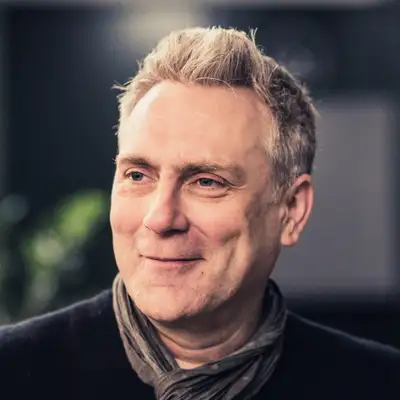
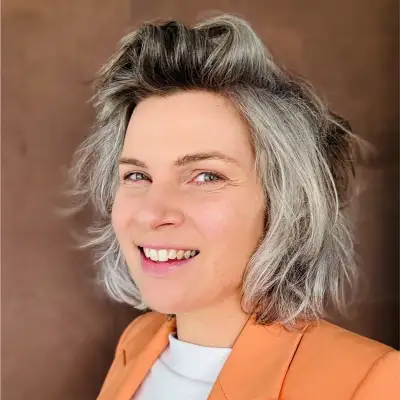
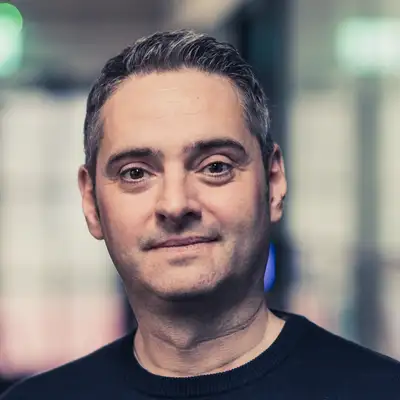
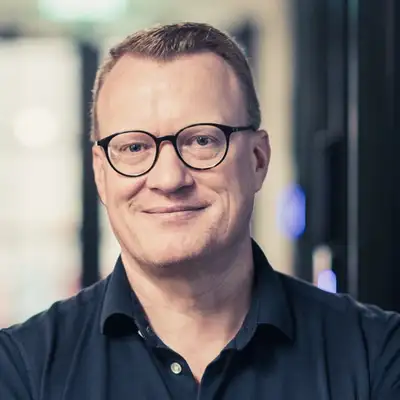
From the award‑winning team behind Cloud Realities, Realities Remixed explores what happens when people, culture, industry, and technology collide, because real breakthroughs rarely come from technology alone.
In each episode, hosts Dave Chapman, Esmee van de Giessen, and Rob Kernahan dig beneath the surface of innovation to understand what’s truly shifting. They speak with leaders, practitioners, vendors and thinkers across industries to explore how technology reshapes human behaviour, organisational culture, and society, for better and sometimes for worse.
Web - https://www.capgemini.com/insights/research-library/cloud-realities-podcast/
Email - realitiesremixed@capgemini.com
Right, and we are here with Andro... ! Look at that! It did so well! (00:20.908)
I’m Dave Chapman. I'm Esmee van de Giessen, I'm Rob Kernahan and this is Realities Remixed, an original podcast from Capgemini.
And this week, a conversation show exploring JEDI, the European ARPA , the Joint European Disruptive Initiative, which is developing tech breakthroughs that will ensure Europe's competitiveness and sovereignty. And I am delighted to say that joining us later in the show is Andre Loesekrug-Pietri, Head of JEDI. Now you might be asking yourself, what is Jedi? The Jedi are noble, heroic warrior monks and guardians of peace and justice who use the light side of the...
Whoa, hang on Dave, that's the wrong Jedi mate. No, no, no, no, no lightsabers and cloaks in this area, unfortunately. I googled it. I think your AI context is out of whack, saying more about what you're googling than anything else. Data hallucinations, Robert. Well, it's a bit different from that. So the right definition... is a pan-European non-profit innovation organisation focused on deep tech, defence adjacent and sovereign critical domains structured to avoid traditional public sector bureaucracy and explicitly inspired by DARPA's operating model, speed missions, empowered program leads, etc. So somewhat different. And with maybe some would say just as important a mission. Exactly right. Exactly. It's very exciting. It's like loads of energy around this initiative for me. It's where the excitement's going to come from. It's our future. It's literally where we're incubating Europe's future. Well, let's set the context for it because there are shifting sands across the globe at the moment with multiple kind of innovations happening in certain parts of the world and then also consideration about our position with things like digital supply chain and energy that's causing all countries to think about their sovereignty and their position. Jedi are in the middle of that from a European perspective. Basically having a look at where Europe is strong and having a look at where Europe may need to leapfrog in innovation to have a place in the world as it's reconfiguring itself, right? Yeah, I mean, let's be honest, Europe's been caught napping on the technology game. (02:38.732) And now we're looking at relying on everyone else and we're thinking to ourselves, you know what, maybe with all the clever people that we've got, that we should be doing this stuff and being at the forefront. So what I like about this is it's rebooting Europe's game because we were snoozing for a bit since Silicon Valley won for the last 30 odd years. We've maybe been resting on our laurels a bit too much. I think that also makes me reflect on how things are actually shifting more broadly. So I was at the Dutch Football Association this week, even though I'm not a huge football fan. you trying out for the team, Es? Are you going to be the new striker for the Netherlands? Well, the Dutch team was actually training, which is very exciting. I, you know, obviously with the World Cup coming up, I am all in for football, but only for the Dutch team, as you can imagine. know the Dutch team are the unluckiest team in football? They've been to the World Cup final three or four times and never won. Why do you know these stats? That's my pop fact. Well, good for you. But this year we're going to do it differently. So at the training center, there's huge, huge amounts of innovation built on technology. And what struck me is how much of that innovation actually doesn't come from football itself. So they also have eSports, the Dutch team eSports there, training there and gaming there. But eSports is really a niche. even though like 10 years ago, they expected it to become huge and huge. the e-sports. Yeah. So you watch people, you watch people. Yeah. You watch people game, but there's, there's, it's just a niche market, but they expected 10 years ago, they thought this is to be huge with a lot of branding and a lot of money involved, but it actually, you know, it was quite lagging behind because they found out that a lot of people would like to play themselves, not only watch people and the watching people is like, the niche part. But what they now see is how strong those players are, not just in performance of gaming, but mostly in building audiences on TikTok and creating content around also the World Cup. that's huge. It's engaging their community. It's spreading the news. It's showing innovation. showing who they are. And they're actually shaping their own narrative around the team. And that actually made me realize, so it's not all about performance, but how good is Europe? (04:57.61) Are we in expressing how much good things are happening around innovation? So what we build, how visible it is, what the narrative is, how good it is. I don't know if we're really good in that game. Are we compared to maybe other countries? To use the British phrase, no, we're pants. And that's about it. I think we've got lots of clever people who think. Well, but we don't fund them properly. We don't push them forward. We don't give them the support and the cheer that they need. We don't connect effectively. All things that happen in big organizations happen in the wider society as well. So we need to fix that. And I think that's Jedi's role, isn't it? It gets these people together, gives them the money, the initiative, the empowerment, the autonomy drives them forward. Great. Very exciting. The other thing I think is interesting and probably has got to be right about the mission. And it might infer the sort of pivots you're talking about Esme, which is the notion of leapfrogging. So there is one way you can look at digital sovereignty and you could go, oh my God, that's a big catch up job. Or there's another way you can look at it and you can do this organizational level as well as kind of, you know, kind of superpower level. You can look at something, oh, well, didn't, we didn't do the last generation, but what's the next generation going to look like? I think if we play catch up, we'll invest a huge amount of money to get something that will look the same. we'll always lag. Yeah. Whereas if you leapfrog and everybody wants what we create, then we get a seat at the table and then we're equal partnerships. And at the moment we're not, are we? We lack significant things in that ecosystem. So, yeah, I mean, you want to leapfrog. Now, before we move to the conversation, let's just do a bit of definitional. work. Again, if you're a long time listener of the show, you'll have heard us talk about this before, but just for anybody dropping in new, let's define at least digital sovereignty because that has undergone something of a, well, certainly an active conversation, if not a series of iterative redefinitions over the course of the last few years. I think it started with data residency, didn't it, Rob? Do want to pick up the story? (07:17.708) Yeah, so we started out with who has access to my data and then you sort of widens out to do I have autonomy over all the things that process that data? So we start to look at who's got the legal control of this situation, who's got the operational control of this situation, where does this technology supply chain start and end? There's obviously the data point and then there's do I have the people who I need to be able to deal with this situation? So it's multi-layered, goes all the way up to nation state sort of control and autonomy over the assets that now permeate through our society. And without them, we don't operate, right? So this critical, we've always had the concept of critical national infrastructure, things like power networks and such like, but now digital is a critical national infrastructure because without it, we can't deliver government services, things don't work, society can't function correctly. So we need to look at all these different layers and think to ourselves. what could impact it and could I lose control of the service that I rely on heavily. And so the sovereignty conversation in Europe particularly started and rose fast, but now we see it all over the world in Asia, in South America, in Australasia, in Africa. Everybody is now thinking about sovereignty and how they can maintain control over digital assets. It's a really interesting thing that that's happened. The conversation has transformed and spread at such speed. because there was a period where I must admit like 10, 15 years ago when I was thinking about cloud and actually running cloud transformations and things that I felt that much of the issue was solved from a position of good architecture, believe it or not, Robert. And the cloud gave you multiple ways to architecture environments, landing zones and all of those sorts of things. But it turns out that I think that wasn't enough, was it? It was like there was something about that extreme abstraction that perhaps we needed to need to take a step back before we can go forward. Yeah, that's right. So Alistair said it best when we were podcasting with him who does Azure infrastructure. said, abstraction is great, but actually sovereignty requires us to understand and need to trust that abstraction. So the abstraction (09:41.078) might be a fine thing to use because it still gives us absolutely fantastic benefits. So we don't want to lose the benefit, but we do want to trust the abstraction. And I think that's at the heart of when you talk about sovereignty. Jedi's mission is obviously a lot wider than that. It's tech wall to wall, it's everywhere, right? But digital sits at the heart of that as well for me. So you don't have to give the abstraction up, but you can't ignore what's in it anymore. He knows his stuff, Let's just admit it. Yeah. Yeah. Who are you talking about Rob? Yeah, I'm talking about Rob. Dave can't admit that. He can't admit that. It goes against his, his, Yeah. What I was going to ask though, who's your favorite Jedi? now this could be controversial, your choice. Cause you can't say, you can't say Anakin anymore because of when he turned to the dark side. that's unpopular. Ultimately bring balance though. He did, he did. So maybe for the greater good. However, I mean, the cool one that everybody likes is Mace Windu, innit? It's like the Samuel L. Jackson character, purple lightsaber, you know, cool. He does die horribly, but you know, it is what it is. So Rumours is still alive, isn't there? Is it? Especially if the spin-off series looked like it would make a bit of money. right, yeah. exec wants to make some money out of streaming services so they're going to milk that one. the other one of course is... of Mace Windu, sitting right there. Yeah, the Adventures of Mace Windu and also Yoda of course. He's a bit of the OG, isn't he? When you first... It's the first Jedi you meet in Empire, so it's your introduction to the lore and everything. So I think he has a special place in our hearts as well. Esmer, who's your favourite Jedi? I have no idea. I just wanted to ask you. I have a new... No, just... Maybe also for the listeners. What does ET say? What's the phrase? Phone It's not phone home though. He never says it in the movie, does he? It was an advert that AT &T did or something. No, he says ET phone home. Does he? thought it was an advert. No, he didn't. He does it. He says ET home phone. there you go. So it wasn't corporate advertising after all. It's funny I associated with that. But anyway, there you go. Let's move on. (11:56.014) I have nothing with Star Wars or Star Trek or whatsoever. There was a podcast or a show, it was on radio and it was, so I've never seen Star Wars. it was actually, a lot people are surprised there's a market for I've never seen Star Wars. I can't believe, but you must have some, you know who like Han Solo is, yeah? Yeah, I know. I don't have anything to do with spaceships or what. I actually went to the VAR also, the, I don't know what, do you know, the video referee. The actual station is also at Dutch training center. Do you actually see it? And they said it's inspired by the entire desk and the ship of Star Wars. So the taggies actually thought I'm going to be a video referee. They actually rebuilt it. So that's the only reference that I now have. All right, now, but Dave's a bit of a Star Wars head. What's your favourite Jedi? Come on, drop it on us. I'm going to go with Obi-Wan Kenobi. really? Old Ben? I mean, you suit that persona, Old Ben. I think if you're going to be a Jedi, it's Old Ben in Star Wars, then. Can I do that? Do you not think that lightsaber battle in... That lightsaber battle in Four compared to what they did in the new films was rather boring, Have you seen that Jena'ai'd one? No. Basically, Jena'ai, a version of that... battle, but they sort of match it more to the style of the prequels. You'll enjoy that Robert, if you haven't seen it. I'm away to Google that. It is easily searched and it's quite fun. look, on that note, let's go to our conversation with Andre from Jedi. And I think it's fair to say that he's going to pretty much broaden our horizons. you (13:51.99)
All right, we are here with Andre Loesekrug-Pietri, Chair and the scientific director of JEDI, the European ARPA and JEDI stands for the Joint European Disruption Initiative. Andre, how are you doing? I'm doing well. Thank you for having me on the show, Dave. we're really delighted about this one, so thanks for the time. Why don't you kick us off by telling us a little bit about your role in JEDI and then JEDI itself? I'm the chair and the scientific director of the Joint European Disruptive Initiative, so... that has a very ambitious mission, which is to develop the technological breakthroughs that will ensure Europe's future competitiveness and sovereignty. So basically, we are all about the next big things in three big areas. One, life sciences, two, whole energy and environment realm. And the third big bucket is all about computing that encompasses which are semiconductors, AI, quantum, cyber and space. So, Jedi launches technology programs, challenges the best teams all over Europe. Teams coming from science, teams coming from the deep tech and the startup community, but also teams coming from industry. For us, the only thing that counts is are we able to do five times, 10 times better than the current situation? And so can we not just, and we don't want to play catch up, we want to reshuffle the cards and make sure that Europe leads the future. Fascinating. Couldn't you find a bigger agenda? Well, yes. It's a lofty task, isn't it? It's a lofty task. It's a task that we started now. mean, the idea is pretty, it's already a couple of years now. It actually inspired, I mean, we are many, we are now close to 8,000 people who are engaged in that mission. in 30 European countries, so EU 27 plus the UK plus Norway plus Switzerland. And basically we tried to, we brought together some of and probably most of the best brains all around science, industry and deep tech. We spent half of our time trying to identify what comes next and often it's, and I'm sure we're gonna talk about that, it's not trivial at all to imagine what. (16:14.602) what will be the next big thing in AI? mean, we are all in LLMs, but what will come next? And there will be something. And that's the most exciting thing I think about science and technology is that there's always this opportunity to look at what comes beyond. And so that's the ambition. And the reason we went through it is that a couple of years ago, we realized that technology is obviously core to competitiveness, but it's increasingly central. mean, today it's obvious. of years ago it was not. It's central to geopolitics and increasingly it's also at the core of our democratic societies. I love about what you just said there is it's a very positive mission as well, isn't it? You're seeking what is the future and how do you build a better Europe based off that view. future. With the world that we face and all the troubles that it has, there is this group and it's impressive 8,000 people all thinking about trying to create a positive technology enabled future for us all. I think it's like a brilliant thing to hear about building momentum behind something that will make a better future. You say that, Robert. And indeed, it's actually not a technology ambition we have. The ambition we have is it's more mission. think we really think that we can motivate and mobilize the whole society, not with technology bricks, like programs about AI or programs, but it's all about can we develop free and abundant energy? Can we generate materials that are not extracted from the earth, but that are generated, for example, with biology? And then we do it. So it's not a techno push. It's really about solving the major challenges of our time through innovation and progress. so that's why we try. It's almost a political project with a, hopefully with a, in good sense of politics being that it's a societal project. Just curious, did that get you started in this whole scene for yourself as well? How did you start it in this direction? How did you end up doing what you're doing now? Well, I had a very nonlinear career. (18:25.294) I started an industry with Airbus as an engineer, worked on wonderful projects like the A380, which is this double decker plane. Then I run two family offices. went into the investment, but into the technology investment, first in Europe and then in Asia. I spent 10 years in China and then in 2017 when President Macron was elected, I had the opportunity to become the main advisor of the French Minister of Defense. So you see very nonlinear career, but with a lot of different experiences. I would say the thread in it is you see very clearly in emerging countries, and especially in a country like China, how much technology innovation has been the driving force for this country to catch up and even to lead in many areas today. And it was a wake-up call for me as a European, as a French, and both French and German, to ensure that we don't miss this train and that we ensure that our societies, our democracies are strengthened through technology. So that was a bit what brought me to that. And last but not least DARPA, which is the model that we get inspiration for, which is this US Agency for Advanced Research. was also created within the realm of the Department of Defense. Not because it's defense focused, because actually in our societies, those who are supposed to think long term and who think about strategic surprise and are shuffling the cards are very often first the military because it's existential. What were the early days of Jedi? Maybe take us through You talked there about how you were kind of inspired initially. What were the first few steps you took and what were those first conversations like? It feels now to look at the situation in our current geopolitics and say, yes, digital sovereignty is an important aspect. And, you know, me personally, I've had to shift my stance on it. If you'd asked me six, seven years ago, I would have thought we were looking good, a very globalized world, very stable. (20:48.224) our digital supply chains were not of a major concern. There might have been a residency concern, but not hugely concerned. And so therefore it felt to me like the tone of the conversation wasn't there at that point. When you started to talk about the agenda, what was the initial reception you got for it and what were the first steps? Well, the Jedi in its current form as a technology... financing a technology program agency exists since now two and a half years. So it's very early days. But the idea itself is now eight years old. It actually was at the beginning of French presidency where a group of 20 people from different European countries, mainly French and German at the beginning, but that then became truly a European very quickly. A third coming from, I would say, the government agency, Realme, a third were founders of startups and a third were industrialists, made a proposal actually to both the French president and the German chancellor to set up a European version of this agency for advanced research. eight years ago, the topic was we live at an incredible acceleration of time. We begin to lag behind and it was way before now people realized the lag that exists in GDP per capita and in technological dominance that you have between Europe and the rest of, and then the two other big powers. And we said, well, actually there is an opportunity to leapfrog, but for that we need a different methodology, not against, but complementary to the traditional way we fund technology and science. To our surprise, it was taken up in just a couple of days in, I would say, the main European speech. that President Macron did, which is called the Sorbonne speech, where he had like 30 proposals that was very quickly picked up by the Germans saying, that couldn't be an idea. The European Commission, the current commissioner for research was called Carlos Pueydas. Portuguese is now mayor of Lesban. Took it up too. If I fast forward and if I try to stay positive, well, a lot of people took the idea. (23:10.938) And the principles that you need to apply are so radical that actually very few bureaucracies were able to really apply it. they can't cope with the need for change and it has to be different for it to work. And the bureaucracy says, no, sorry, you need to crank the sausage machine. a lot of things went in the right direction. And the EIC, which is today the main instrument for innovation at the European Commission level, goes in the right direction. But it became more a founder of startups. good, but not really disruptive. And we specifically focus on topics which are too risky for the private sector, the true moonshots, but that can completely change the name of the game. There is a very good example, which is very recent. mean, OpenAI in 2018, or at least the beginning, was a foundation because it was not clear at that time what it would represent. Now, obviously, it's obvious for everybody that it's a revolution and and some will create massive value with it. But most of the disruptions, the initial major moonshot that DARPA succeeded in was ARPANET, that was called DARPANET initially, and that became the internet. Of course, that became something very significant. The GBS is another program that DARPA led. Initially, it was not very clear. mean, we needed a positioning system that was able to function everywhere in the world. I mean, today, basically most of the business models have some kind of a localization factor in it. Other examples are RoboTaxi. mean, what you call today RoboTaxi is that was a challenge of DARPA in 2004, but you see it took almost 20 years that it became an idea that would create huge businesses. So this is what we're focusing on. And while most of the European countries thought the idea was fantastic, but what lacked was the will to be very radical in new approaches to innovation and also the will to do it at the pan-European scale. So a few countries took it up. Germany even created two agencies for advanced research that was pre-2022, one for civilian use, one for military use, two agencies that don't really speak to each other, but that's another issue. And so three years ago, seeing that our idea had, you know, (25:36.856) created lot of enthusiasm but that nobody really put it in place. Well, we decided to apply the DARPA methodology to ourselves and to create some kind of a prototype outside of the public realm. So it's a real political experiment because we basically, JEDI is common good structured as a foundation. It's doing thing, it's not investing equity, it's purely grants. So we don't make money out of it. But we are doing that with the agility of the private sector. And a very interesting thing, I probably know all the existing directors or past directors of DARPA, and several of them told me we would redo that in the US. It would probably be very difficult to survive within the bureaucracy. what you do, doing it outside, at least at the beginning, but doing it for the common good is probably the hard way, but probably the only way. The nice part about it is you've got the ethos of how a private organization can operate, so you avoid the bureaucracy, but you're not beholden to the capitalist mindset of winning profitability and growth. then inside that cycle, see, you've quite nicely adopted the best of both worlds. So you don't need to worry about one and you don't need to worry about the other and you can bring the best together, which I suspect sounds like it works very well. that really true? Because that really sounds very romantic. No, it's no, yeah. I mean, we are obsessed with two things, speed and execution. I mean, these discussions on Europe and innovation, can very easily lead to, you know, pessimism and depression. That's not what we want to have. But what is clear is that I think the biggest disease of Europeans is, I mean, we are full of fantastic speakers and we have not understood that the two recipes for success. But I think this podcast is listened by a lot of business leaders. They know that the two only thing that count, probably the two most important things that count, is execution and speed. So a good speech. I would even go further is that what is worse than a bad decision is to give the illusion that we are moving forward. this is unfortunately what is today one of the big diseases of the European institutions is they're in a cycle, and of a lot of member states, they're in a lot of communication cycle, creating a lot of impression that things move forward, but (28:02.594) we will go to the hard numbers, we'll see that the dependency and the sovereignty on technical aspects, be it in space, be it in cloud, be it in microprocessors, is actually going down dramatically year by year. If you allow just one compliment before to the comment of Esme about how romantic that was. I mean, yes, if you do it outside of the public sector and you do something which is normally the role of the public sector, well, actually you're a little bit often stuck between two chairs or you're falling in the cracks because what we see on one side is a lot of private companies and maybe this is a topic to dig deeper into later on but have not yet taken into account that we live in a world of big bets and if you only look at topics which have a three-year, five-year ROI, return on investment The risk is that you will never do the bets that will allow you to succeed. So private sector in Europe, at least, is not making these bold moonshots. And we have to recognize that Silicon Valley, but also the Chinese or Asian major players are doing these bets. Some work. OpenAI is a fantastic bet by Microsoft. SpaceX is a fantastic bet by Elon Musk. Metaverse was probably a bet that did not go well, at least not yet for Meta. But what is sure is that if you don't do a bet, you're sure you're a loser. So that is the issue today of Europe is I don't see the bets from the private side. And if you look at the public side, when you are not in the public realm like we are, well, the public sector reminds you regularly that they're not going to fund you, or at least they're not going to fund you easily. So today our funding comes from a couple of member states, but the big ones are still feeling it really hard to find something that they cannot control entirely. And secondly, we are funded by philanthropy, but here too, philanthropy for science is much less developed in Europe than it is in other parts of the world. And I think so that's why it's also a, I would say civil society engagement, because I think we should stop expecting everything from governments. (30:25.806) The civil society has to mobilize. So that's the whole ambition of JEDA. So Andre, let's take a step back from that situation and maybe frame up the gap as you see it. is it an adoption lag? Is it the fact that we haven't been developing as prodigiously or all the others are just moving faster? What's your perspective on that? Well, a few hard facts. If you look at GDP per capita, is just one indicator of prosperity, but it's an important one. US and Europe, U27 was more or less at the same level in 2000. 20 years later, the gap is 30%. So I'm not going to go into details how good the wealth is. Depressive. But that's when you even look at countries like France, France is now for the third year in a row under the European average of GDP per capita. So we are obviously... Second thing, when you look at companies, there is no single European company in the top 20 in the world from a market cap point of view. And the gap is growing massively. I'm not even talking about tech companies. I'm really talking about all companies altogether. I mean, if you really want to be a little bit provocative, we would say, okay, we invented... printing press in 1453. We invented the steam engine in 1765. We invented the World Wide Web in 1989. But since 1989, it has been flat. Look at the telecom. 2G was a European project. 3G was then a US project. And 4G, 5G, has been more driven by Chinese providers. So the gap is growing. in terms of prosperity, the gap is growing. If you look at a more granular aspect, I fear it's even more depressing. When you look at the cloud market, today the three largest hyperscalers have 70 % market share. The largest European has barely 1 % market share globally. If you look at space, space last year, there were close to 165 launches (32:47.542) in the US, of which I think 139, 140 SpaceX alone, the European proudly launched three rockets. Three compared to 160. So it's not any more percentage issue. It's an order of magnitude or even two orders of magnitude very soon because the plan in the US is to launch no less than 300 rockets on what they call the eastern part. So that's Cape Canaveral. mean the eastern part. in 2028. So the acceleration is widening this gap. I don't have to tell you how many satellites and what is the market share of the Europeans in that. When you look at semiconductors, well, we often talk about one fantastic Dutch company that is basically at the core of everything because they do. I see. I'm Dutch. Sorry. got that part. No, no. Was it the cheering that gave you But when you look at the market, even ASML, company I'm mentioning, 1 % of their revenues come from Europe. That means that the demand side, from a fab, from a foundry point of view, is mainly driven by Taiwan, by Korea, by Japan, by China, and by the US. So in all that areas, And you would say, okay, but luckily on energy, which is something where the Europeans have developed very early on, conscious about the need for efficiency, for sustainability that we would be leading. Well, the market share of the largest Chinese battery player, which is called CATL, grew in the last five years from 35 to 55%. 99.X % of our solar panels are made in China. So we actually also now massively dependent and for the first time this quarter the number of Chinese imported cars to Europe is now higher than the number of European cars we export to China. So for a country like Germany, for where the car industry is so important, this is a massive, massive shock. Has there been an analysis on what (35:09.112) conditions didn't happen in Europe that happened elsewhere that caused this gap. Because that's quite dramatic. 30 % in 25 years, say, is, you know, your stat. That's got to be the surrounding conditions that caused that. Is it a couple of things? Is it everything? Has there been any analysis to say this happened because... Because that's quite important to understand to go forward and fix it. It's always relative. That means I'm not an economist, but... Economists would tell you, I mean, there is the compounding effect of growth. I mean, if a country has a sustained three or 4 % growth like the US had for the last 20 years and a sustained growth of 1 or 2%, because your structures, the flexibility of your labor market, the scale of your market, that means the fact that you have a unified market which immediately gives you the potential to grow. on a continental market and on a fragmented market. That is one main reason. The second reason is also that a lot of the wealth creation has been driven by sectors, which precisely the Europeans didn't tap into, in particularly the technology sector. I technology used to be a side sector 20 years ago. Today is actually transverse. Everything has become tech, from drug discovery to... to energy and grids, to defense, obviously, as we can see today, and obviously to do more, I would say, technology-heavy topics like semiconductors, AI, or quantum. And in most of these waves, mean, the Europeans were not able to catch the waves, so they didn't catch the value creation. If you look at China, that was a bit of different story, is that China, instead of playing catch-up, and I think the car industry is a very good example for that, well, they... They systematically and very strategically, we must admit, that we like or not the overall system. They bet instead of trying to catch up with, know, terminal engines where the Germans and basically the Europeans were leading the, because of fantastic development in the last 20, 30 years of optimizing, you know, your combustion engine. Well, they say, well, we cannot... (37:30.742) win that game. So we will learn. That was the structure of the joint ventures. So we learn massively and we will bet on the next big thing, which is electric cars. And I would suspect that with what happens right now in the Middle East, electric cars who kind of had a little bit of a less strong growth will actually get a second use in the months and years to come. Andre, how important is culture in this? Because you also mentioned China, right? And I think we have quite some blind spots and assumptions that we have looking at China. If you compare that to Europe, there something you can pin down cultural-wise that makes a difference? Well, I would actually argue that you have a couple of myths that we should kill. First, you hear so many, because I think that they eerie answers. I'm happy to delve into something which is not culturally linked. A lot of people tell you, yes, but we need a single... the capital markets union, and we need to create massive investment funds. Well, I would argue there is enough money in Europe. And I'll come back to your question. Case in point is every year, 300 billion euro of savings of Europe don't invest in Europe, but they get, they go and get an investment in the US. The reason for that is that the risk reward in Europe compared to the US is much less interesting. So it's a very rational thing to do. The risk is the same in technology everywhere, but the reward on continental markets like China or like the US is if you make it, I mean you can lose everything. Increasingly in technology there's a bit of a, it's not completely binary, but you know there is this thinking about winner takes all or winner takes most of it. And catch-up is increasingly a losing proposition. But when you win, in China and US, you have this continental market. When you win in Europe, you make a big French company, a big British company, a big German company that's even more pronounced in the future looking areas where the fragmentation is at its peak. I mean, you have 27 different cyber watchdogs. You have 27 different health care authorities. have 27 different... When you are in FinTech in Munich and you want to go to France, (39:56.92) You need to go to the French monetary authority. So the gap that's emerged and emerging has been less about the European countries sitting on their hands from an innovation point of view and more about the sort of economic market conditions of being able to scale a particular innovation. That's the one miss. The second point on culture, you often hear, yes, but the Europeans are not able to take risks. Well, you see tons of Europeans who succeed. massively in the Silicon Valley. And they have, if I'm maybe a little bit not politically correct, they have the same genes and DNA as their cousins who stayed in Amsterdam, Paris or Munich. So what is the reason? Well, the main reason is, at least in my opinion, is the fragmentation of the market. And it's a rather positive point of view because changing culture, as we all know, is super difficult, takes generations. removing the fragmentation of the European market, which by the way, two former prime ministers of Italy, Draghi and Letta have been saying for three years. But here again, we come into the communication play. People love to say that Mario Draghi did a great report and that's existential. That's what you heard from a lot of leaders saying. But when you look at actually how much it has been implemented, the execution cap, I mean, we have even At Jedi, one of our pet projects is we have launched what is called the Draggy Tracker. That means instead of saying, oh, and complaining the Draggy Report is not applied on competitiveness, we try to look at the 20 most impactful measures and to see how far we are in the implementation. Not implemented at all, completely implemented, talk, but nothing happens, talked and something is moving. And well, we came to the conclusion that two years after the report, 14 % of the report has been implemented. Well, a plan which is existential, which is two years after implemented only 14%, well, that demonstrates a huge execution. point number one, fragmentation. Point number two, absence of execution. And I would say the third thing, and that's maybe a bit cultural, (42:22.47) is do we have the capacity of not just playing defense and being surprised or are we able again to have a vision for what comes next and when you look in a cold way and again not in a pessimistic nor optimistic in a really factual way europe has been a little bit the continent of strategic surprise for the last five years we were our 10 years we were surprised by space x we were surprised by COVID, we were surprised by OpenAI, and we were surprised by DeepSeq. And when you look at DeepSeq, which is this model which probably used a lot of the inference of OpenAI, so it's not just that suddenly with a couple of million dollars they were able to reduce by two order of magnitude the energy needed. But this should have been a European project. I mean, energy consumption in AI is a huge issue for humanity. mean, and we know that we will need to do something. We cannot continue with the energy consumption that the latest AI models need. But that should have been a disruption that would have allowed us to, you know, be again in a leading position. So we lack this capacity of foresight, this capacity of anticipation. Maybe people listening to me will think I'm a bit naive. I still believe that the diversity of Europe should be actually our fantastic weapon to be able to understand the world better than the others, because we probably see things from very different perspectives. Well, right now, this diversity of Europe is actually more hindering us because it creates these weak compromises and we are not able to be bold. our message is we need to, mean, European countries need to reinvent boldness. and be a little bit more radical. So in stepping into the gap then, what gives you hope in terms of initiatives that are going on that are going to allow us to close down that gap and whether that's we're just playing catch up and we'll catch up in areas like cloud or digital services or whether it's a bigger play as you're alluding to of something that might leapfrog where current technology is? (44:40.684) tons of areas which are some of them. mean, we have currently 12 active programs. I will give you a few and we do them because we believe it's an opportunity to leapfrog. We all heard about the dependency today on minerals. mean, some even call the 21st century the metal century because everything we use or the hardware we use, the digital tool we use, the windmills we use, the electric cars we drive, et cetera, they all rely on what we call often critical minerals and some of them are called rare earths. They're actually not rare, but the challenge is they are present in small quantities. And today the dependency on those who refine these rare earths is massive. I China is concentrating 80 % of refining all rare earths on the earth. And you need them in very pure quality because that avoids short circuits in cars. batteries, etc. So they are absolutely critical. so one of the moonshots we have is the reason we offshored all these industries. In 1998, there was one plant in La Rochelle, which is a coastal city in France that was refining 48%. So close to half of all rare earth on the planet. Why did we offshore that? Because it's a bit like you remember when there were gold mines. You need always a solvent or reactor, which is often a very toxic product. So you need arsenic or lead to extract gold. Well, it's the same with most of the rare earth. It's a polluting process. You need solvents. You need a lot of water, a lot of energy. You often have radioactivity as a byproduct, et cetera. So one of the moonshots is, well, can we refine rare earth at a fraction of the current environmental impact it has? that would be a complete game changer because that would allow us to repatriate some of these refining capability and be less dependent. That's one moonshot number one. Moonshot number two is we're working on future of manufacturing. Basically, the assessment is to say, if we try to optimize our factories, knowing that we are a high wage country, et cetera, (46:59.214) It's a losing proposition. have clusters, industrial clusters, who have appeared in Korea and Japan and in Taiwan and China, which are extremely, extremely performing. But could we reimagine industry that would be much more scalable, that would go from one to 10 in a year and not plus 20%, that would be maybe less focused on one product, where you could have several products on one line of production, which is completely against what traditional industry over optimized in the last 30 years and that was the reason for the success. When you look at what is today needed, having factories which are also more distributed, because when you have one factory which is concentrated in one place, well it becomes very vulnerable and the current geopolitical environment shows that when you concentrate everything in one place, be it a data center, be it a chip factory, it a car factory, actually you are very vulnerable. So distributed and all that. Now that you see robotics, now that you see AI, that you see 3D printing and additive manufacturing, well, it's probably an opportunity to reinvent what modern industry can be. And when you also think that increasingly products, be it masks or be it drones, are outdated after six months, it's less about building stock, but it's more about are you able very quickly to ramp up production when you need it? So more containerized. So all this is probably an opportunity to reinvent what industry is in Europe. So that would be a second moonshot we are working on. We spend a lot of time on this show by its nature because we're sort of digital tech centric in a lot of ways, though we also talk about wider industry. But when you look at the digital space, André, and some of the sovereignty concerns and supply chain concerns that are being discussed at the moment. What do you see as the moonshot for digital? We have one moonshot which is about confidential computing. We see that today for very good reasons, a lot of them, we need to be able to make sense of a huge amount of data, the number of sensors. I mean, we call that IoT a couple of years ago. (49:23.714) be it your phones, be it your cameras, be it the satellites, be it your cars, they create massive amount of data. And if you are able to connect all these databases, you suddenly have an understanding of reality, which allows you to seize opportunities, to protect yourself better, to be faster than competition, et cetera. Challenges that most of this data is coming in a very heterogeneous way. we already see a glimpse of what could happen because that's the whole purpose of LLMs of large language models. They are able to ingest massive amounts of written information and make sense of it. That's why sometimes for us it looks a bit like magic. But imagine if you could do that with first multimodal, that means data which is not just written but also video. Just look at the amount of It's not from me this comparison is Yann LeCun who is a very famous AI scientist who used to be chief scientist of meta. He has this image of saying the largest language models have less data than what a four-year-old kid stores in just four years just by seeing, by listening, et cetera, all the interaction he has. So multimodal is one way. yeah, it's like the sensory information. Today we only make sense of one sense or the written sense, but if you accumulate everything and it's not a coincidence that our eyes are very close to our brain in order that the latency is also very limited. where it gets complicated is that we don't want, for very good reasons, for privacy, we don't want a surveillance state, et cetera, we don't want all these databases to be merged. Think about traffic information. I'm sitting here. We have locations all over Europe, but I'm mostly located in Paris. Well, the Paris prefecture weighs the mayor. They have three databases that are not shared. If we were able to share them, but by guaranteeing that individual data cannot be extracted, (51:43.17) because you don't want to be localized 24 hours, 24 seven, imagine the impact it could have on traffic management. Imagine the same for healthcare. We all know that if we were able to share our disease information and clinical trials would be radically disrupted, but we don't want our individual personal data for very good reason to be shared. So the moonshot here is can we make sense of this data by guaranteeing by design and not by a cybersecurity layer because that can always be cracked at one point, but guaranteeing by design that you cannot go back to individual data on defense areas or on intelligence. It's an obvious thing. So that's a moonshot on digital that would allow, if you take a European perspective, again leapfrog against, I would say the hyperscalers that have today a massive competitive advantage because they were able to accumulate because of their social platforms and this massive amount of data. Plus, if you are able to guarantee by design and even create this intelligence on the edge, that means that the data does not even leave your device or yourself, et cetera, but that you can still make sense of it on the edge, then the latency, the capacity of having an immediate response would be even smaller and so everything would be faster. So that is this confidential computing moonshot. Some call it federated learning, some call it homomorphic encryption. There are many technical terms, but the mission is can you make sense of massive amount of data without merging these databases and guaranteeing private data? That would be a moonshot which is also so close to our values that it's worth trying and we are very hard on it. Fantastic and strategically, the notion of leapfrogging in these moonshots, I think is challenging but very powerful. I wonder to bring our conversation today to a little bit of close if we just zoom out a little bit and clearly we live in a changing world and with concern but also opportunity. When you look from the vantage point that you have, thinking about these things in such macro terms, (54:05.228) What other large industrial shifts are you seeing and does it give you cause for hope or concern? Well, I mentioned industry. I want to emphasize on that. If you take it from a societal point of view, our societies are built and rely their stability on the middle class. If you don't have industry anymore, well, the risk is that very quickly you end up in a society which has lost its middle. which creates the stability, which creates also predictability for investments, for research, for innovation and education. mean, education and research being these things where you need to have a 10, 20, 30 year view. So this is absolutely key. And 20 years ago, there was a very famous CEO of a French company, which unfortunately did not go into history because he had this famous sentence, saying we can have innovation without industry, we can have this fabulous society. Well, the future proved him completely wrong. We see today that if you don't have industry to very rapidly test your innovation and have these very short innovation cycles, then very quickly you lose either your innovation, your R &D part or your industrial part. So we need both. We need both for stability, we need both for the speed of innovation, which today is the key. And so making sure that we reinvent industry and have a couple of areas where we can again create the pull, the demand. Coming back to the example of ASML, if only 1 % of the output is in Europe, that means that increasingly, well, the demand will be shaped somewhere else on semiconductors. So can we reinvent a phone industry in Europe? I'm not sure. but there are a few battles which are not lost yet. The robotics battle is a massive one. Robotics will be key for the future of industry. You can see how much robotics, and not just humanoids, that's probably, they will be key for transportation. It's very interesting to see that Elon Musk is now actually closing the electric car part and now rushing into robotaxis. (56:30.232) Project Waymo, which was a direct consequence of the DARPA challenge of 2004 on autonomous driving, is now one of a very valuable part of Google. For long time, it was seen a bit as an experiment. But go even further. We are an aging societies. So either you get all the elderly people in retirement homes, and I'm not sure that that's an ideal situation, or you try to keep them in their home as much as possible. What will we need for that? We will need robots to support them, to transport them. support them in their daily tasks. So it's a huge opportunity which will be then pulling the component industry, the vision, the optical industry, the sensor industry and of course materials. I'm coming back to these raw materials because these are physical things. So that's one very very hopeful area. The other area and that might sound maybe a bit counterintuitive given the current situation, I think we are just at the beginning of what is happening in space. mean, for long space has been seen as, you know, exploration and all this is fascinating for humanity, but increasingly this space and especially lower Earth orbit can be seen as an extension of the digital infrastructure. Increasingly communication will happen there. Increasingly sensors and data processing will happen there. There's huge issues related to that. mean, space debris and the fact that some companies are hijacking orbits and there's a bit of a gold rush, a bit like in the wild west, where people were the first. But that's exactly what's happening in space. And when you're the first to take an orbit, the others then need to adapt and to prove that they don't hinder you. That's why speed is so important. But I think space will revolutionize the way we observe. the way we are understanding how a planet works, environment cycles are working, the energy streams, communication, of course security and defense, and probably even manufacturing, because there are many many materials that you can produce, that's probably a bit more on the science fiction part, that you cannot produce on Earth. A third point, but that's probably a bit too long for today, is the whole area of (58:55.096) genomics. We were just at the beginning. We have one moonshot on oceans. Just to give you the 30 seconds on that. Life has existed in oceans 100, 200, 200 million years before. the genomic richness in oceans is much higher than what you know on land. Plus, it is quasi unexplored. are, we discover new vi... I mean, that should not be... scary here but we discover new viruses, new enzymes, new organisms daily and plus they live in very very difficult environments, high pressure or salinity. The potential for new materials, the potential for recycling and reinventing materials, the potential for new drugs and especially anti-microbial resistance, mean new antibiotics. where there has never been a new major discovery in the last 20 years is a huge opportunity that we are pursuing. So this whole ocean, there's not just space, is a new frontier, are frontier in itself too. (01:00:19.724) Now we end every episode of this podcast by asking our guests what they're excited about doing next and that could be a great restaurant booked at the weekend or something in your professional life. So Andre, you operate in a very wide world. So what are you excited about doing next? Well, look, we are obviously very excited to make sure Europe goes back and has a positive view and a positive action and impact on the future. On a short notice, I will probably... be part of the delegation that goes to Japan and Korea with the French president. So that's what I'm most excited on for the next few days because our goal in this is that we work in a European context, but we keep very, very strong ties with innovation agencies all over the world, in the US, in the developing world, but also in Japan and Korea. So I'm going to meet my counterparts there. Do you have any things that you're personally hoping to see on the trip? Well, I think Japan is a very interesting country because, mean, for years it has been a bit discounted, but we talked a lot about robotics. mean, what they are doing on robotics is unbelievable. On genomics, mean, several of them, the recent Nobel prizes came from Kyoto, from Todai, from Tokyo University, et cetera. So I think they are, I mean, They're faced with huge challenges, security challenges obviously. They're faced with rapidly aging population and still they have kept the industry. We talked also about that part. So that's why I think Japan is an interesting, and they have an incredible moonshot going on right now. I don't know if you know about it. It's called Project Rapidos. Basically they decided two years ago, three years ago in 2023, that they need to be sovereign on the most advanced semiconductors. Everybody thought, wow, that's impossible. It will take you decades. Well, their goal is to have it up and running in 27. And at the last count, have they are on the right track to do that. And Korea is another story. Korea again, also aging population, but incredibly powerful on the digital semiconductor front. So these are the areas I'm going to dwell in with my (01:02:40.174) colleagues next week. have you, I mean you obviously mentioned in passing there that you're going in the presidential group. I mean that's fascinating in itself. Have you been on a trip like That's the plan, but you know with these presidential visits until the last moment you don't know if you are on the trip. So I'm excited, I'm hopeful. I'll tell you in a week if it happened. André, thank you for spending some time with us on this Friday afternoon. incredible to hear the context from you today. Thank you, it was a pleasure.
If you would like to discuss any of the issues on this week's show and how they might impact you and your business, please get in touch with us at realitiesremixed@capgemini.com. all on LinkedIn, we'd love to hear from you, so feel free to connect and DM if you have any questions for the show to tackle. And of course, please rate and subscribe to our podcast. It really helps us improve the show. A huge thanks to Andre, our sound and editing visits Ben and Louis, our producer Marcel, and of course to all our listeners. See you in another reality next week.