Subscribe
Share
Share
Embed
Real Talk: Men, Divorce & Rebuilding is a podcast for men navigating life after separation, heartbreak, and major life transitions. Through honest conversations and real stories, we explore divorce, co-parenting, rebuilding confidence, finding love again, and growing into better fathers, brothers, and husbands. This is a space where men are heard, supported, and reminded they’re not alone. Whether you’re newly divorced, years removed, or still healing, this show exists to help you move forward with clarity, strength, and purpose. Your life did not end when your marriage ended. Now it's time to do the work so your "next" doesn't deal with the same things as your "ex."
[00:00:00] Speaker 2: Welcome back to Real Talk where men have real conversations about real life where men open up about divorce healing and rebuilding. Again, this is a space designed for you to gain clarity, find your voice, and start the healing process no matter where you are in your journey.
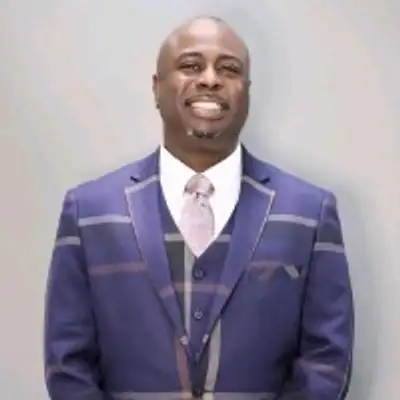
I'm your host, Lawrence Flowers, and today's episode I have a special guest here, the author of the book, pain Repurpose. If you are going through divorce, coming out of it or trying to figure this thing out, you do not want to miss this interview. Let's get into it. It is time for real. Today's conversation is one that many men need, but few are willing to have out loud. Our guest is not just an author. He's a man who's walked through the fire of divorce, betrayal, and brokenness, and come out on the other side with purpose.
In his book Pain Repurpose Journey of Healing from the Grief of Divorce, he shares a raw, transparent testimony of what it's like to lose what you've built, wrestle with shame and still find strength to rebuild your life through therapy. Physical discipline and deep commitment to prayer. He discovered the healing isn't about pretending you're okay.
It is about confronting what hurts, taking accountability, allowing God to transform your pain into purpose. He's a coach, a man of faith, and someone committed to helping others navigate life tough seasons with honesty and hope. His mission is simple but powerful to help people repurpose their pain, rediscover who they are beyond the heartbreak. Let's welcome to the conversation Rob Tamale. Brother, it is definitely a pleasure to see you, man. You know, it is I'm glad JE brought us together. Mm-hmm. Tell us a little bit about yourself,
[00:02:12] Speaker: first and foremost, man.
What an intro. I almost believed in myself. Um, but yeah, also shout out to je je Harrison, um, elevate your life. Who made this connection? Um, my name is Rob Tamale. Um, I like to say I was born at a very young age.
[00:02:32] Speaker 3: Mm.
[00:02:36] Speaker: My name is Rob Tamale. Um, you know, I'm, I'm a Filipino American. Mm-hmm. Um, I'm believer, um, and I serve, um, at the RAMP Church International.
[00:02:46] Speaker 3: Mm-hmm.
[00:02:47] Speaker: Um, I am currently working in counseling.
[00:02:50] Speaker 3: Mm-hmm.
[00:02:51] Speaker: I do brief strategic family therapy. Mm-hmm. And I work with families and children and, um, I'm on a mission.
Mm-hmm. Right. I'm on a mission now. Um, it's crazy how the. Attack of the enemy in our lives can reveal the plan of God.
[00:03:08] Speaker 3: Mm.
[00:03:08] Speaker: And right now, you know, what was one of the most traumatic times of my life, traumatic seasons of my life, is now the assignment on my life to be able to help people, specifically men, to heal from the brokenness of divorce.
So I'm here and I just want to say kudos to you elder the flowers for putting this podcast together. And I do believe this is a divine alignment divine connection. , That we are aligned in the same direction, right? To help men, specifically men who've been divorced, um, but a demographic of men that need to re-identify their self-worth again, right?
Mm-hmm. And to, um, recover from. Heartbreak and grief and that there's life after divorce or so. Yeah. Yeah,
[00:03:56] Speaker 2: man. I'm gonna tell you, and once again, je, we, we said your name, we said your name, we said your name, we
[00:04:01] Speaker: said your name
[00:04:04] Speaker 2: Ali. Thank you for this connection because you know in life, you know, I definitely wouldn't have signed up for this.
Yeah. But one thing I can say that was purpose behind it. Mm-hmm. You know, God, even the things that we don't think. Feels good.
[00:04:18] Speaker 3: Yeah.
[00:04:18] Speaker 2: God can still use that as part of my purpose.
[00:04:21] Speaker 3: Absolutely.
[00:04:21] Speaker 2: You know, um, if I had not gone through what I've gone through, this connection wouldn't have happened.
[00:04:25] Speaker 3: Absolutely.
[00:04:26] Speaker 2: And then also as I'm connected with more brothers that's going through these things is realize that, wait a minute, there's a lot of people going through these things.
But not doing it the right way. Mm. Some guys are not understanding that, wait a minute, I, you know, you gotta grief.
[00:04:39] Speaker 3: Yeah.
[00:04:40] Speaker 2: You know, we've been taught as men to stay strong. Yeah. You know, men don't cry. Yeah. No. We are real people. We are human. Yeah. We have life experiences that touch us. Mm-hmm. And unfortunately a lot of guys have not handled it correctly.
Here's the reason why I started this podcast, because you're like, you know what? No, no, no, no, no, no. I'm tired of our brothers making bad decisions during this phase in their life. Yeah. So hopefully the right person will hear this. Yeah. And make a better decision. You think about that political figure that killed himself and his soon to be ex-wife.
Yes. You think about the many stories that are like that because they didn't have anybody to tell 'em, wait a minute, you need to take care of your mental.
[00:05:17] Speaker: Mm-hmm.
[00:05:17] Speaker 2: Because if not, you gonna do something foolishness like that. Mm-hmm. Yeah. So, man, I appreciate you, man. I appreciate you being in this conversation and man, let's go get into it.
How about that?
[00:05:25] Speaker: Absolutely. I'm here for it.
[00:05:26] Speaker 2: So in your book you talk about the shame, the anger and grief, even the embarrassment you felt, you know, during your divorce as a man of faith. Yeah. You know, what was the hardest emotion for you and how did you deal with that?
[00:05:38] Speaker: Yeah, so definitely it was shame, um, and I don't wanna say.
Toxic shame.
[00:05:45] Speaker 2: Mm-hmm.
[00:05:46] Speaker: So, let me, let me backtrack. My, my proposal, um, was viral.
[00:05:51] Speaker 2: Mm.
[00:05:51] Speaker: proposed on, on watch night service at the RAMP Church International on live stream. Mm-hmm. And, um, so we had a ton of shares and then we had a praise break at our wedding and it had over 500 shares.
Right, right. So there was this, um, expectation. There was this grandeur about, you know, our marriage and people, you know, congratulated us. There was so much honor to that. So fast forward when the divorce happened. It was like, wow. Like I'm very embarrassed. I'm very shameful that, um, I'm going through a divorce right now.
All the hopes, all the expectations of what people thought about our marriage and our wedding because of our wedding. Mm-hmm. You know, um, all of that went down the drain. Mm-hmm. Right. So there was a level of disappointment, a level of hurt, a level of, um, shame. Toxic shame. And the reason why I say toxic shame, because I was reinforcing the disappointment over and over and over again, and to the point where I felt like that became my identity.
[00:06:56] Speaker 2: Mm-hmm.
[00:06:57] Speaker: I became, instead of my divorce was a failure, I felt like I became a failure.
[00:07:03] Speaker 2: Mm-hmm.
[00:07:04] Speaker: Right.
[00:07:05] Speaker 2: You know, as I and I, I understand that feeling because like a lot of times, see our identity is wrapped up in our successes and failures. Yeah. And sometimes we feel that because we ended up in divorce mm-hmm.
Especially in men of faith, it's like, okay, I'm a failure. Versus the in event. Right. We take it on as our persona. Mm-hmm. You know, and one of things that I love about your book and the things that we're gonna talk about today is, you know, you're not a failure. The marriage failed.
[00:07:33] Speaker: Yes.
[00:07:33] Speaker 2: But you are not a failure.
[00:07:34] Speaker: Absolutely.
[00:07:35] Speaker 2: You know, um, and even, I mean, I just said back, I'm sorry, I don't wanna get ahead of myself. I don't wanna, because it's some good stuff. We gonna get there. It's some good stuff in the book. We
[00:07:42] Speaker: gonna get there.
[00:07:42] Speaker 2: But man of God, you're not a failure. Okay. Yeah. Just the marriage failed. So how did you deal with the whole having to stay strong in front of everybody?
Because I'm pretty sure you still went to church the very next Sunday. Mm-hmm. So how did you deal with having to stay strong even while you was going through what you were going through?
[00:07:58] Speaker: Yeah. So even though I was still going to church, I didn't, I didn't want to or feel like going to church. Mm-hmm. Um, there was a part of me that really just wanted to leave because, because it was so public and then because my, you know, divorce, I, well, my separation was public, um, you know, like.
Taking off your last name on Facebook, um, you don't see them with you in church anymore. People start asking questions and, you know, I started to feel like a failure. And so I did feel the desire and need to escape, um, to not be there anymore because I, you know, I didn't like the reputation that I was getting, you know, 'cause, you know, sometimes rumors start going around about why the separation happened and things of that nature.
You know, I started to become the, the topic of conversations and group texts and things like that.
[00:08:51] Speaker 2: Mm-hmm.
[00:08:52] Speaker: Um, but when you said about presenting strong man bump, being strong, I was, I was, I was at the altar every single Sunday. Every single. And I was, I was in tears. Mm-hmm. And you know, people who, people who knew, they knew, but people on the outside, they, they knew that I was going through something because.
I would, I would always be at the altar, always be at the coming for prayer. Every time we would worship, I'd always be laid out on the floor, right? Mm-hmm. And it was just a level of brokenness. Mm-hmm. Right? And part of me was like, you know, I got some dignity that I need to maintain, but I'm like, you know, God is not impressed by my presentation of dignity.
[00:09:34] Speaker 3: Mm-hmm.
[00:09:34] Speaker: Right. God desires the vulnerability of my brokenness.
[00:09:37] Speaker 3: Mm-hmm.
[00:09:38] Speaker: So I was like, in, in the middle of that, I was just like, I don't, I don't need to perform for God. You know what I'm saying? Yeah. I just, I just need to be real before him. And, and I, I tried to keep my composure, try to present strength, man, but because of the heartbreak, any little thing.
Mm-hmm. Like, like any worship song tears right away, you know what I'm saying? Like, and I, it was a point in time like, you know, I couldn't hold it. And so to, to speak to your point, man, I think that was part of my awareness of. Understanding God's strength in my weakness.
[00:10:11] Speaker 3: Mm-hmm.
[00:10:12] Speaker: I never had a revelation of that until I came to a point where, wow.
Like I am very weak. I am, I am very vulnerable right now, and that's how I, that's how I'm allowing God to be the strength of my life. Mm. That in his weakness, my strength is made perfect in my weakness. Yes. His strength is made perfect. Yeah. Right. So I didn't have a revelation of that. The fullest, fullest extent until I experienced that in my own life.
[00:10:40] Speaker 2: And it's like those life experiences, it teaches you the only person you can is lean on is God. Because you know, within marriage, you thinking this is your ride to die. This is your rib, this is this the person that I'm gonna lean on. We gonna spend the rest of our lives together. And then that is shifted.
Mm-hmm. You know one of the things that my wife and I, my former wife and I mm-hmm. We used to work in the ministry together. Yeah. We ran college ministry together. We did. We were executive leaders together. Wow. Wow. So then all of a sudden, and I, we still go to the same church. Right. So it's like I still have to see her
[00:11:15] Speaker: Yeah.
[00:11:16] Speaker 2: And still be in, be able to minister. Right. Still be able to serve while still having this brokenness on the inside.
[00:11:25] Speaker: Yeah.
[00:11:26] Speaker 2: That took God.
[00:11:27] Speaker: Yeah.
[00:11:27] Speaker 2: I'm gonna tell you, that takes God understand because, um. In your human strength, you're angry every time you walk in that door.
[00:11:36] Speaker: Yeah.
[00:11:36] Speaker 2: But with God's strength, you can still have peace.
[00:11:39] Speaker: Amen.
[00:11:39] Speaker 2: Even serving in ministry.
[00:11:42] Speaker: Amen.
[00:11:43] Speaker 2: So that was kind of in line with you? What I had to deal with. Just the constant. Okay. What we used to be. Now we're no longer. Right. You know, whenever I did mini, when we ministered together, it was together. Right now we are both still doing ministry, but separate. Mm. And then dealing with the fact that some people, until this podcast came out, didn't even know we were divorced.
Mm. So, yeah. And you know, we've been divorced almost. They said Yeah. A year now. 'cause it was a year last week. Wow. So. People still were thinking Lawrence and my former spouse were still together. And now it is. Now people are realize, oh wait, what happened? Right. You know? Um, so God definitely had to take me through that.
Yeah. And dealing with that. Um, now let's talk about healing through divorce.
[00:12:27] Speaker: Yeah.
[00:12:27] Speaker 2: You know, facing yourself. Yeah. You know, um, you can't heal what you don't expose. Right. That's something that you talked about in your book Healing requires confronting the pain, the personal responsibility. And let's talk about, talk about your healing journey.
Yeah. What truth about yourself did you discover that was hard to accept?
[00:12:45] Speaker: Yeah, so I definitely, um, part of my journey is I had to hire a grief therapist. Mm-hmm. And in my grief therapy, um, I was confronted about some of the issues that I also contribute to my divorce as well.
[00:13:00] Speaker 3: Mm-hmm.
[00:13:01] Speaker: Right? 'cause a lot of, a lot of times some people want to play a victim.
It was all the other person's fault, right? For why the marriage didn't work. But there's some things, there's some issues on my end that were unresolved and unhealed that contributed to the divorce, that contributed to, um, our marriage not working, right? So specifically, you know, I, I realized that I am a recovering people pleaser, right?
Which stemmed from my low self-worth, right? My perception of low self-worth. Um, I had an issue with oversharing, right? So part of the reason why our marriage failed is because too many people knew our business, right? On their end. On my end, you know, I would end pe you know, I would tell our people, our business, and then well-intentioned people give us really bad advice, right?
Mm-hmm. Um, even people in ministry, um, you know, give us not, not the best advice, right? Mm-hmm. And then too many people. Where too many people, too many people's hands were in our, our marriage, in our, in our ear. Mm-hmm. And which also contributed to, you know, our divorce. And, um, I had also an issue, um, with shame, like I told you before.
[00:14:15] Speaker 2: Mm-hmm.
[00:14:16] Speaker: Toxic shame. Mm-hmm. Right. So I would do things for validation. Right. I realized that, you know, um, in order to win back the approval of my ex-wife, I would go outta my way. Right. I would do things in order to win her back. Right. Um, because my self-worth was in her rejection or approval of me.
[00:14:40] Speaker 3: Mm-hmm.
[00:14:40] Speaker: Right? Instead of my self worth being fixated. Right. My self worth was, was fluctuating. Right. It wasn't fixed on who my identity was in the father.
[00:14:52] Speaker 3: Mm-hmm.
[00:14:52] Speaker: It was in the acceptance or approval of who's the closest person to me. Which was my ex-wife. And I realized that that was a pattern that carried with, carried within me, not just in marriage, but even before I was married to my former pastor, um, to even my father.
So it stemmed from the rejection and approval that I was experiencing as a child that all I really wanted was my father to say good job. All I really wanted was my father's validation, and I was searching for that validation in the closest person to me. So going through, going through therapy, it wasn't just a a place for me to vent, right?
And expose what this other person did to me. And healing started to happen for me when I went from this is what they did to me to, or why did they do this to me? To why do I keep doing this to myself? To why do I keep abandoning myself? Right? Um, I didn't know how to put boundaries. I had a, I didn't have self-respect for myself, so I would allow certain things to happen in the name of love, in the name of being, understanding, in the name of being patient, right?
Mm-hmm. Um, I would just let things slide, um, because I wanted to be a demonstration of the love of God. Now, what I'm realizing is that, you know, with my self-worth, with my dignity, it's important for me to set boundaries and boundaries. What I realize is not to make a woman respect you. But to prove to yourself that you respect yourself.
[00:16:34] Speaker 2: Mm.
[00:16:34] Speaker: Right.
[00:16:35] Speaker 2: That's good stuff right there. Yeah. And it goes back to people would do to you what you allow them to do.
[00:16:41] Speaker: Absolutely.
[00:16:41] Speaker 2: And that goes back to the self-respect. You know, a lot of times, um, I'm in that story as well, whereas there were things that I allowed and, um, my last, um, guest, he brought this up Yeah.
About being open to what you don't like. Because what happens is when we allow things, we keep the can down the road and we keep for the sake of keeping the peace.
[00:17:06] Speaker: Correct.
[00:17:06] Speaker 2: In actuality, we're inside, we're hurting ourselves.
[00:17:09] Speaker: Absolutely.
[00:17:09] Speaker 2: We're hurting ourselves. So having that conversation say, Hey babe, look, I feel this way now.
Unfortunately once that gets build up, build up, build up, and then the divorce happens. Mm-hmm. It's like with do, why did I do all of this? Right. If we ended up in the same place that I was trying to avoid.
[00:17:28] Speaker: Right.
[00:17:28] Speaker 2: And I think sometimes we do things because I could say that I was definitely one of them.
They do things, try to keep the piece. Mm-hmm. But then when the piece is still broken, it's like with do so I was hurt then.
[00:17:40] Speaker 3: Yeah.
[00:17:40] Speaker 2: Because I wasn't true to myself.
[00:17:43] Speaker 3: Right.
[00:17:43] Speaker 2: And then I'm hurt now because I allowed it and now it was still broken. Mm-hmm. So like, wa do, what did I do that for? You know? Right. Right.
If we were gonna end here, you know, so just definitely letting you how you feel, be known. Yeah. And it's part of the wholeness journey as well. Mm-hmm. So in this, the world of therapy, why do you feel men avoid therapy?
[00:18:03] Speaker: Yeah. Because number one, there's this stigma attached to therapy as a man, right?
[00:18:09] Speaker 2: Mm-hmm.
[00:18:10] Speaker: Um, that men are not supposed to be weak, right?
[00:18:13] Speaker 2: Mm-hmm.
[00:18:14] Speaker: And so. Vulnerability for a man is hard.
[00:18:17] Speaker 2: Mm-hmm.
[00:18:18] Speaker: Um, but the crazy thing about it is, you know, the Bible says, confess your faults one to another, pray for one another that ye may be healed. Right. There's healing in confession. There's healing in being vulnerable.
Right? So, as a man, like you said, we're taught to suppress our feelings, suppress our emotions, because we're not supposed to be weak in front of women, right? Mm-hmm.
[00:18:44] Speaker 3: Yes.
[00:18:44] Speaker: We're supposed to be, we're supposed to be, um, presenting strength in front of them, right? But, you know, I, I do believe that men avoid therapy.
'cause number one, they're scared of vulnerability, but they also don't want to be accountable, right? Mm-hmm. Accountability is important as well. Mm-hmm. Someone. One, one thing that I thought my therapist was gonna do, which is validate everything that I said.
[00:19:10] Speaker 3: Mm-hmm.
[00:19:10] Speaker: Right. But he was mm-hmm. No, no, no, no, no.
You were wrong in this situation.
[00:19:15] Speaker 3: Mm-hmm.
[00:19:15] Speaker: Right. And I had to think about it. I was like, man, I, I was a big contributor to a lot of the things. 'cause you know, I was, I was unhealed before I came into marriage.
[00:19:24] Speaker 3: Mm-hmm.
[00:19:25] Speaker: And so was my ex-wife. My ex-wife was Unheeded too. And so, you know, I did a lot of things to contribute to her triggers and traumas, you know?
[00:19:33] Speaker 2: Mm-hmm.
[00:19:34] Speaker: And, um, so just that self-awareness of understanding like, man, your actions that you did were wrong by being accountable to another man, right?
[00:19:47] Speaker 2: Mm-hmm.
[00:19:47] Speaker: In, in therapy, um, is what really helped me. So those two things I believe is vulnerability. I believe men are scared of that. Mm-hmm. And two, accountability.
Some, some, some men don't want to answer to another man. You know?
[00:20:01] Speaker 2: Yeah. And it goes back to the men always feeling they have to be strong, you know? So therapy is not showing that you're weak. It's saying that I know that I need help.
[00:20:09] Speaker: Absolutely.
[00:20:10] Speaker 2: You know, I know that I'm broken. Um, it is crazy how if our car start making a noise, we'll go to the mechanics.
[00:20:16] Speaker 3: Absolutely.
[00:20:17] Speaker 2: If our arms start feeling the type of way, yeah, we'll go to the doctor. Yeah. But when we are thinking crazy things or not, you know, we won't go see a therapist. Oh, you know, I'll be fine. You know, I don't need therapy. That's for crazy folks, or that's for them. Yeah. No, it's not about. The crazy folks.
It's about you not becoming a crazy person. Yeah. Because you are having these emotions and you're not taught how to deal with emotions. Correct. We're taught additions, subtraction, right. Multiplication, all these different things in school. Right. But we don't teach eq, emotional intelligence, which I don't understand where the Q come from with the eq.
That's what it is. Okay. Thank you. Thank you for letting me know. I'm like eq, but they talking about emotional intelligence. Yeah. Gotcha. So you emotional ent. Thank you. Mm-hmm. So, and I read, I read the book and the thing is this, that is a book that should be taught in high school.
[00:21:03] Speaker 3: Mm.
[00:21:03] Speaker 2: Because that's a real life.
Thing. Whether you work at McDonald's or whether you're a CEO, you have to have emotional intelligence.
[00:21:10] Speaker 3: Yeah.
[00:21:11] Speaker 2: So I think that is something that a lot of men don't have. Yeah. Because they don't know how their emotions affect the people around them. Yeah. And then their actions. What, you know, what happens if I flip out on somebody?
True. You know, we don't get that. And then we're scared to go to the person that could help you.
[00:21:28] Speaker 3: Absolutely.
[00:21:28] Speaker 2: You know, which is a therapist, someone who's got some numbers, some letters behind their name. Yeah. Someone that can help you out. Yeah. And we fear that. Yeah. Um, so man, I will tell you, if you're going through a situation that you can handle on your own
[00:21:41] Speaker 3: Yeah.
[00:21:41] Speaker 2: Go see a therapist is very, very vital. I will definitely say therapy helped me get through my depression. Understood. Because there were times, literally I'll be at church and just break, break down in tears.
[00:21:53] Speaker: Yeah.
[00:21:54] Speaker 2: You know, there'd be times I'd be dropping in the car. I'd never forget. It was crazy. I was baking a cake.
[00:22:00] Speaker: Come on.
[00:22:00] Speaker 2: It was random. I was baking a cake. Cake. You
[00:22:02] Speaker: speaking my story, man.
[00:22:04] Speaker 2: And I started breaking down Yeah. While baking a cake in the kitchen. Yeah. Like, it just though the emotion just hit you at grief random times. Yeah. You can't sleep. Yeah. Like I, there was times where I would sleep a couple hours here, a couple hours there, but I never slept throughout the night.
Yeah. Because of that grief, that pain, grief, that the feeling that everything that was going through. Yeah. It was just that weight on me, you know? Yeah. So men definitely, definitely, yeah. Get that mental help.
[00:22:31] Speaker 3: Yeah.
[00:22:31] Speaker 2: So now let's shift from the mental to the physical. Yeah. So let's shift the emotions. Affect emotions.
Yep. So exercise helps release emotional pain and rebuild self-worth. When did you start feeling like yourself again, when it came to the physical being?
[00:22:48] Speaker: Yeah. So, you know, like, like in my book, I also mentioned that I hired a physical fitness trainer, right. You know, in the beginning, you know, I really didn't enjoy it.
I didn't like it. Um, because, you know, it was, it was taking me outta my comfort zone, number one. 'cause I just, when I go to the gym, prior to hiring a trainer, I just go on the treadmill
[00:23:09] Speaker 3: mm-hmm.
[00:23:09] Speaker: And just, you know, run cardio. Right. Not even work on my weight training or anything like that. So, um, having a trainer did a couple things for me.
It made me realize that, um, I'm more capable than what I realize. Right. So, one, one time I was lifting weights and I was trying to do reps and, um, I couldn't do it. But when my trainer spotted me, all he needed to do was just stand there and I realized that I can bench more than what I thought.
[00:23:42] Speaker 2: Mm-hmm.
[00:23:43] Speaker: My strength didn't change, but just knowing that someone was there. Helped push me over the edge.
[00:23:49] Speaker 3: Mm-hmm.
[00:23:49] Speaker: Right. So that taught me a principle about the ministry of presence, right?
[00:23:53] Speaker 2: Mm-hmm.
[00:23:53] Speaker: Sometimes, you know, just having somebody there with you on the journey, you can actually push farther and harder than what you thought.
Right. And my trainer actually pushed me beyond what I thought were my limits. Right. I would've quit way sooner. Not realizing that, you know, I'm actually more capable than what, than what I realize. Mm-hmm. You know, so that, that's what a physical fitness trainer did for me.
So you, you asked me a question. You said, when did I start feeling like myself? Right. Is when I started to see myself, um, and feel better about myself and start loving myself again.
[00:24:30] Speaker 3: Mm-hmm.
[00:24:30] Speaker: Right. It's just, it is just a matter of taking care of my body. That made me made my self-esteem and self-worth start to rise.
When I had, um I started to get compliments mm-hmm. From other people Right. I was like, whoa, it's not just me. Mm-hmm. You know, other people are noticing it too.
[00:24:50] Speaker 3: Mm-hmm.
[00:24:51] Speaker: Right. And so, and I didn't do it for other people, but I realized that my journey with that for myself started to, you know, impact other people as well.
And so, um, and other people were like, you know what? I want to get in this, this journey too. Mm-hmm. In, into the gym. Let's go to the gym together.
[00:25:07] Speaker 3: Mm-hmm.
[00:25:07] Speaker: You know? Um, but it did a lot for me as far as like my mental health as well. Um, as far as like, you know, scientifically it's proven that endorphins are releasing the brain when you do acts of cardio.
Mm-hmm. Right. And so, and there'll be times, man, when I'd be lifting weights. In tears. Right? Right. Like heartbroken, but like, and I would use my, my heartbreak as a motivation to go harder. Yeah. Right? Like, I can't, I'm not gonna hit you, but I'm gonna hit these weights. Right. I, you know what I'm saying? Like, my anger is like, you know, I, it was an outlet for my anger as well, you know, and 'cause you know, energy, energy is, um, transferred, right?
Mm-hmm. You, you know, it doesn't just leave, you gotta transfer it somewhere.
[00:25:56] Speaker 2: Correct.
[00:25:57] Speaker: So that an energy of anger, you know, I had to transfer it somewhere to, in order for it to be released, right? Mm-hmm. And so that would be my motivation and that actually helped me with my reps and actually helped me go stronger and harder when I was in the gym too, you know?
And, um, so I just, I'm just grateful to God that. I was able to do that and um, I'm still on that journey. Right? Yeah. Um, sometimes I work out now, not because I want to be fit, but to keep up with my appetite. 'cause I like to eat too. Mm-hmm. Right? So,
[00:26:27] Speaker 2: oh, I definitely know the
[00:26:28] Speaker: feeling. Yeah. You know what I'm saying?
But, um, I, my testosterone levels have increased. I did blood work as well.
[00:26:34] Speaker 2: Mm-hmm.
[00:26:35] Speaker: And I suffered from, from low testosterone. I actually had to get clinically diagnosed with that as well. And I didn't realize how low testosterone affects your emotions as well. It also affects your mental health.
[00:26:50] Speaker 2: Mm-hmm.
[00:26:51] Speaker: And also affects, um, your drive.
[00:26:54] Speaker 2: Okay.
[00:26:54] Speaker: So when I saw my levels, I was, my, my doctor was like, this is horrific. Right. That's the word that he used. This is horrific. Mm-hmm. You've been, you've been operating at a high level with low t this whole entire time. Yeah. Imagine how much you can accomplish with a higher testosterone levels.
Mm-hmm. Right? So I'm also, um, on that journey as well. I'm on a, a, a regimen now Okay. With my doctor as well as improving my, um, testosterone levels too.
[00:27:23] Speaker 2: Okay, well, you taught me something today. A fellas. Go see your doctor,
[00:27:26] Speaker: get your, get your blood work done.
[00:27:27] Speaker 2: Yes, definitely. Take care of that. Take care of, of your body, man.
Yeah. And then I, you and I didn't know that, that it affects your emotions as well, YeahAnd. So maybe sometimes you think about it if you are already having low T and dealing with these separation, divorce. Yes. It's compounding. Compounding. It's compounding. So I thank you. That brought up the fitness thing because I too and I have the personal trainer.
Okay. And I definitely know the feeling of getting in there. You know what, I, I may have been stressed out about the situation with the separation. Yeah. But at least for that one hour, if nothing else, it shifted my mind while I was going through it. Understand that one hour when I'm sitting there with my personal trainer, working it out, you know, he's pushing me, pushing me, pushing me.
And he do feel so much better.
[00:28:11] Speaker 3: Absolutely.
[00:28:11] Speaker 2: After that workout, after fun, you know, um. The battle is getting there. Mm-hmm. But then once you get in there, it is like you got somebody, you got somebody coaching you, you got somebody encouraging you, you got somebody building you up. Yeah. And you know what, I parallel that with the mental,
[00:28:24] Speaker: come on.
[00:28:25] Speaker 2: You know, if you got, once you get that your therapist, somebody there to help build your mental Yes. It's just like the same thing with the physical. You know, it's somebody say you could do it. Life is not over. You're not going to give up. You know, we're going to push through this. It might be hard. It might be difficult.
And then as you stated, which is so very true, physical trainers, they figure out a way to push you harder than you think you can go. Yeah. Because I'm like, man, I can't, I can't
[00:28:46] Speaker: get on your nerves sometimes too.
[00:28:48] Speaker 2: Yes, yes. But it's to get you to where you can lift more than you ever thought you could have lifted.
Absolutely. You know, so that was my journey with the physical trainer and it, the compliments didn't hurt either.
[00:28:58] Speaker 3: Yeah.
[00:28:59] Speaker 2: He was like, oh, okay. You know, and then you look in the mirror and then you walk in like, Ooh, we like the way that suit fit on. You know? Yeah. So it definitely, it was a confidence booster going to the gym and just, you know, what?
I can do this. Yeah. It may be a tough thing, but I can do this.
[00:29:16] Speaker: Yeah.
[00:29:16] Speaker 2: You know? Um, now let's talk about faith.
[00:29:19] Speaker: Okay.
[00:29:19] Speaker 2: So, um, you know, talking about wrestling with deep emotions after the divorce Yeah. Particularly as a man of faith. Yeah. So when God led you to close that door mm-hmm. Rather than restoring it, um, restoring the marriage, how did you accept that direction?
[00:29:34] Speaker: Yeah, so it was really tough for me because, you know, my initial motivation for, you know, reconciliation was, you know, you know God loves marriage, right? Mm-hmm. And my, my intention was, man God is gonna restore our marriage. So that way we can have a ministry to help other people struggling in their marriage, and then we can help other people, um, not have divorce, right?
Mm-hmm. Divorce was like a cuss word in my mind, right? Mm-hmm. I was like, I rebuke the spirit of divorce. Like, you know what I'm saying? Like, like someone said that word around me. I was like, I rebuked that. You know what I mean? Mm-hmm. Because that was not in my vocabulary. That was not in my heart. That was not my intention, right?
Because I do believe that, I did believe that God wanted to restore our marriage, right? So I did everything, you know, I did everything I could to be able to restore. I had our marriage on the altar, right? I had elders lay hands on it, you know what I'm saying? I had, I had my pastor lay hands on it, you know what I'm saying?
And and pray for us and pray for her. And I would fast and I would pray so. I mean, I did all this work, right? I did all this praying all this fast and all this desire for restoration. Rebuking the devil, right? Mm-hmm. Rebuking Satan rebuke the spirit of divorce, and then all for God to say, close the door.
[00:30:51] Speaker 2: Mm.
[00:30:51] Speaker: Right? Yeah. And I'm like, how you gonna tell me to close the door right after all these things I did to try to reconcile, right? Mm-hmm. So I tested God, right? So this was December 31st, 2023. I told my ex-wife, I said, listen, I do believe it's, IM important for us to go our separate ways, um, going into this new year.
Um, and I think that, you know, we should just move forward, right? Mm-hmm. Because my pastor started preaching. He said something. He said it's not that you deserve better, but God desires better for you, right? And he, at that time, it was the year of the closed door. Right,
[00:31:30] Speaker 3: you're right.
[00:31:30] Speaker: It was the, it was the year of the closed door.
And he made a reference point about how sometimes doors won't open for you in front of you unless the door is behind you first close.
[00:31:39] Speaker 3: Mm.
[00:31:40] Speaker: And you related that to a jail. When he was in the jail. The doors in front of you won't open until the doors behind you close first. Mm-hmm. So I said that to my ex-wife.
And then the next day, um, new Year's Day, she called me crying. She was like, are we done? Are you sure? Like, you know, just pulling on my heartstrings. And so I had established a boundary, but then my, my emotions started to, you know get affected. So I said to God on January 4th, 2024, I said, Lord, if it is your desire for me to stay with my ex-wife, well stay with my wife.
Right, right. I need to sign today. Right. If you don't want me to reconcile, I need to sign today. Right. And that was a Wednesday and I was teaching, um, Bible study for the RCI online. Because that was my assignment in ministry at the time, and my ex-wife actually had showed up right to the Bible study.
And at the time we were already separated, people already knew, and we had a long talk. She spoke to one of our pastors, prayed and cried. And all of a sudden I got a text message at 2:00 AM and my son texted me saying she's still struggling. And I said, what do you mean? And he said, he's here. And I said, who's he?
And he said, you know who it is. And it happened to be the, the man that my ex-wife was dealing with. Um, and in my mind I said, you know, if you wanted to reconcile, you know, why isn't that door closed?
[00:33:15] Speaker 3: Correct.
[00:33:15] Speaker: So that next day I said any, and he didn't even realize my son texted me, was an answer to prayer.
Right. Right. And so the next day I said, any desire or any desire for us to be reconciled is over, is done. And I cut off all communication at that point and that was the first time that I actually set a strong boundary and stuck to it. Yeah. So, so much so that, um, I'll tell you another interesting part of the story.
[00:33:52] Speaker 2: Okay. '
[00:33:53] Speaker: cause I tried to shop for lawyers for the divorce and it was either too expensive or lawyers didn't want to take it because we didn't have enough assets or a lot of money.
[00:34:03] Speaker 3: Right? Right.
[00:34:05] Speaker: So I was like, how am I gonna do this? How am I gonna afford this divorce? So my ex-wife, she sent me papers in the mail thinking that that was gonna get me to talk to her, but little did she realize that that actually was an answer to prayer.
Because I didn't know how I was gonna afford the divorce.
[00:34:22] Speaker 2: Right,
[00:34:22] Speaker: right, right. Yeah. Right. So the same day I signed it, notarized it, and sent it off. And then the next month I got the decree in the mail. , That was my process of coming into closure about this is over, right? And I wanted to make sure that this wasn't just my own thing.
'cause my whole intention was for us to be back together, right? Mm-hmm. And I had to realize certain things that I also deserved better Right? Then what I was allowing, I deserve better than what I was accepting. Right? And, um, so that was also contributing to my self-respect as a man and self-worth as a man, right.
And also, I had to realize that I. The shift, right. Which I'm gonna talk about in a little bit.
[00:35:12] Speaker 2: Okay.
[00:35:12] Speaker: Was, you know, God's shifting because I do believe it was God's intention for me to go through that restoration process
[00:35:20] Speaker 2: mm-hmm.
[00:35:20] Speaker: To attempt to, to restore.
[00:35:23] Speaker 2: Right.
[00:35:24] Speaker: I do believe God was in that.
[00:35:25] Speaker 2: Mm-hmm.
[00:35:26] Speaker: So, to shift, right.
Because in my mind I'm like, how are you gonna tell me God to, to restore the marriage? And then all of a sudden you tell me to shift and close the door. And I was reminded of Abraham when he was commanded by God to sacrifice Isaac.
[00:35:44] Speaker 2: Mm-hmm.
[00:35:45] Speaker: And long story short Abraham would've killed his promise by holding onto what God said.
Instead of being open to hearing what God is saying in the moment. Mm. So that may be true. Yeah. Right.
[00:36:00] Speaker 2: Right.
[00:36:00] Speaker: That God was wanting me to restore my marriage during that time period.
[00:36:04] Speaker 2: Right.
[00:36:04] Speaker: But I had, I had to have an open ear, an ear to hear what was God saying now?
[00:36:08] Speaker 2: Right.
[00:36:09] Speaker: What is God saying now?
[00:36:10] Speaker 2: Mm-hmm.
[00:36:11] Speaker: And so I do believe that that was God's preservation for me.
[00:36:14] Speaker 2: Mm-hmm.
[00:36:15] Speaker: Right.
[00:36:15] Speaker 2: Right.
[00:36:16] Speaker: And that also, God had more in store for me at the same time.
[00:36:19] Speaker 2: That's, that's, that's deep. That's good stuff right there, man. Yeah. Good stuff. Let's, let's elaborate on that shift.
[00:36:24] Speaker: Yeah.
[00:36:25] Speaker 2: Okay. So you say you wanna talk about it more. All right, let, this is a perfect time for it. Alright. So how, when was it that you heard God, or what were you doing when you heard God say, okay, it's time to shift from what I told you, told you to what I'm telling you.
Mm-hmm. What was that shift like internally?
[00:36:40] Speaker: Yeah, so that was, that was the month of December, 2023 when I was really battling. I started to do some work on my mental health, right? I was already going through therapy.
I was already, I was already hiring a physical fitness trainer, so I started to increase my self-worth, increase my self-esteem. So now I'm thinking like, okay. I do deserve better than this, right?
[00:37:00] Speaker 3: Mm-hmm.
[00:37:00] Speaker: So God shifted me as well, right? The Bible says, delight yourself in the Lord, right?
[00:37:07] Default_2026-05-02_1: Mm-hmm.
[00:37:07] Speaker: And he shall give you the desires of your heart.
I do believe God gives us desires. Mm-hmm. He gives us desires. Yes. He imputes within us new desires when we delight ourselves in him. I wanna make a point here, okay. That there was a point in time where I had made my ex-wife an idol in my life.
[00:37:25] Speaker 2: Hmm.
[00:37:27] Speaker: Right? I made her an idol. I put her on a pedestal. Right.
I was abandoning myself for the sake of pleasing her. Right. And I, I was abandoning myself financially. I was abandoning, abandoning myself as far as myself Dignity was concerned. Right. Just to make sure that she was good, right. To make sure that she was happy, make sure that she was pleased, all to the detriment of myself, right?
That's not, that's not love, right? That's self-hate. Self betrayal. Yeah. Right. And um, so God had to knock that down. He had to knock down that island in my life. So he had to renew, renew my worship back unto him. So, delight myself in the Lord, right? So I had to take pleasure. That's what the word delight means.
It means to take pleasure, making God my satisfaction again, making him my pleasure, making him my fulfillment again, pulling on his love for me instead of wanting the validation of another person.
[00:38:29] Speaker 2: That's good right there,
[00:38:29] Speaker: right? That,
[00:38:30] Speaker 2: that's a whole message right there.
[00:38:32] Speaker: What
[00:38:33] Speaker 2: us is with a offering play that is a whole business, right?
[00:38:36] Speaker: Saying, yes, sir. So God literally started to change my desires. He gave me a new desire, right? So it wasn't just the command, he also changed my desires. So when I, when I came to that point, and I made that decision, and then I told my pastor, he said. Said, I said, I said, Bishop, I closed the door and he said, don't go around carrying a dead body because it's been infected.
[00:39:00] Speaker 2: Wow.
[00:39:00] Speaker: I was like, oh, oh, that's all the, that's all the validation that I need. I heard from God and I told my pastor, and then he confirmed, and then I was like, this is the green light. You know, at the same time that that part wasn't easy for me because I'm not used to setting boundaries, remember? Right, right,
[00:39:18] Speaker 2: right, right.
[00:39:19] Speaker: I'm not used to putting my foot down, right? Mm-hmm. So for me to actually stick a boundary and then having empathy, 'cause I'm an empath too, right? So I have empathy for their feelings, right? Empathy for, you know, are they going through right now? And I always used to come through and save them, right?
[00:39:35] Speaker 3: Mm-hmm.
[00:39:36] Speaker: And standing my ground. Even though my heart was to was for them. 'cause I always used to, you know, if they needed money, I would give them money. Mm-hmm. If they needed help, I would always provide help. Right. To not do that anymore was hard for me.
[00:39:49] Speaker 2: Yes.
[00:39:49] Speaker: Because I have, I had a heart to help, but I had to stand on my ground and actually realize, you know what, this is what I need to do for me for a change.
[00:39:59] Speaker 2: Yeah.
[00:39:59] Speaker: This is what I need to do for me.
[00:40:01] Speaker 2: You know? Yeah. It, it remind me of someone, something that someone said about me was the, the superhero, hero syndrome.
[00:40:06] Speaker: Yeah.
[00:40:06] Speaker 2: You know? 'cause like, even after we separated, I wanted to come over and cut the grass because I didn't want her to be out there cutting the grass.
Right. Right. You know? Um, and I've done some small things for her that she don't even know about. Yeah. Um, it just, you know, it was hard Yeah. To let go because I had been her husband for 15 years. Yeah., You always wanna be there. You never want to see them suffer.
[00:40:29] Speaker: Right.
[00:40:30] Speaker 2: You know? And now you're in a place where.
A, that's not your role anymore. Mm. And B, you have to respect yourself enough to say, Hey, this is a choice that she made, and we're gonna make these boundaries. Mm-hmm. Um, because that I gotta protect me and my emotions Yeah. My feelings because the truth of the matter is I have to heal so that, because I got two kids raise.
[00:40:53] Speaker: Yeah.
[00:40:54] Speaker 2: So I gotta make sure I heal, um, moving forward. Yeah. For myself, for my kids, and for my future.
[00:41:01] Speaker: Yeah.
[00:41:02] Speaker 2: So sometimes people hold on to unforgiveness. Mm-hmm. And, and this is a shift here. Um, hold onto unforgiveness. Letting go without losing. Yeah. So in your book, you speak of forgiveness is ongoing and not the same as reconciliation.
Yeah. Um, how. Explain that to the listener. How is to separate unforgiveness versus, excuse me, forgiveness to reconciliation.
[00:41:29] Speaker: Yeah. So I actually want to get something out before I get to that.
[00:41:31] Speaker 2: Okay.
[00:41:32] Speaker: Because something was in my spirit and I wanted to say, but I didn't wanna cut you off
[00:41:35] Speaker 2: Yeah.
[00:41:36] Speaker: Was that I don't believe that God blesses marriage.
I don't be God blesses relationships where you have to self betray yourself for access. Right. The Bible says, love your neighbor as you love yourself. So if I'm betraying myself, I can't love you the way you should be.
[00:41:53] Speaker 2: Mm-hmm.
[00:41:54] Speaker: You should be loved, right? Mm-hmm. I'm, I'm not loving you from a, a place of.
Love for myself. I'm loving you from a place of an empty cup. I'm self betraying myself at that point, right? I don't believe God blesses a relationship where you have to have self betrayal in order to maintain access, right? Mm-hmm. So now to shift to your point, to shift to forgiveness, right? And reconciliation without forgiveness, without reconciliation, right?
Mm-hmm. Or, yeah. So that was hard for me too, right? 'cause I knew, I knew that I didn't want to have bitterness in my heart anymore, right?
[00:42:30] Speaker 3: Mm-hmm.
[00:42:31] Speaker: And I just want to say that, you know, when you've forgiven someone, this is real. You know, when you've forgiven someone, when now you are detached. Bishop preached a message last Sunday called Moving Forward, right?
Mm-hmm. He said, forgetting is not, not remembering. Forgetting is detachment. And this is what that means practically, that your nervous system no longer has the same reactions as it used to when you used to think about that person, right? You literally have rewired your nervous system because every time you think about them, there's these negative emotions that that are in your body, physically in your body, right?
That's an indicator. Like, okay, something is wrong. There's some unforgiveness there, right? And part of how I had to maintain my grief or heal from my grief and heartbreak was to spend a tremendous amount of time in prayer, right? Mm-hmm. And part of that prayer was praying for my ex-wife, not so that we can get back together.
That also, number one, she can be, she can be in right standing with God and that God will bless her and that God will keep her. Because I didn't want bitterness to get in the way of my communication with God. 'cause the Bible says if I regard inequity in my heart, you're not going to hear me. Right. So if I'm, if I had bitterness towards my ex-wife, the Lord's not gonna hear my prayer about something else.
Mm-hmm. Right. So I wanted a clear direct line with God, so I had to be intentional. Right. That's what the Bible says. You know, bless those that curse you and pray for them that despitefully use you. Right. And in my mind I'm like, but God, they hurt me. Right. Right. Why am I praying for them when I'm the victim here?
Right.
[00:44:18] Speaker 3: You're right.
[00:44:19] Speaker: Right. But, um, at the same time, I understand that the heart work there. It's something that God wanted to do for me to settle the debt. Forgiveness is settling the debt. That's why the Bible says forgive us as we forgive our debt towards, right? Mm-hmm. When we have unforgiveness, there's a debt that somebody has towards us, but when we, when we forgive someone, ?
We settle that debt.
[00:44:46] Speaker 2: Mm-hmm.
[00:44:46] Speaker: Right? Meaning they don't owe us anything anymore.
[00:44:49] Speaker 2: Right.
[00:44:49] Speaker: So as long as the debt is settled, we're good. That doesn't mean that we have to rekindle our relationship.
[00:44:55] Speaker 2: Right.
[00:44:55] Speaker: It's just now the debt, the debt is settled and there's no beef, at least on my end. Right? Right. Because I can't, I can't control what another person's reactions are.
I can only control, you know, what I'm going through and what I'm dealing with.
And this is how I did it.
[00:45:11] Speaker 2: Okay.
[00:45:11] Speaker: I actually apologized to her. Right. Okay. So I apologized to them because, um. Our son had a wedding and um, actually did not speak to her at our son's wedding. And what happened was there was a death of a mutual friend.
And so I said, you know, I apologize to you. You know, life is too short. You know, I don't want to feel any negative between us. If either of us were to die, I just want us to be at peace. So in the funeral, I intentionally went up to her and I acknowledged her. And during the funeral she texted me and she said, I'm sorry for anything that I've done to you.
I just want let you know that you were always enough, right? Mm-hmm. So that, that, that right there, I do believe was the start of healing on her end, but also on the forgiveness part on my end. Mm-hmm. To the point. Now my ex-wife remarried,
[00:46:12] Speaker 2: okay?
[00:46:13] Speaker: And I said to, I said, God, I prayed that you bless their marriage.
Because, and I meant that because I don't wish divorce on anybody.
[00:46:23] Speaker 2: Right.
[00:46:23] Speaker: Right. And I said, God, whatever she needed to learn from ours, I pray that she's blessed on their end. You know what I mean? Mm-hmm. And I also did something for me to recognize, like, oh, what's my motivation now when I said that, right.
I don't have anything to gain. Right. I don't have to. I'm not trying to win her back. Right, right, right. So but it was really a, a hard examination to the point now where I'm like, detached. Detached, if I were to see her today, I would still, you know, acknowledge her. Um, and there would be no animosity on my end.
So I do believe that there's, because of that, 'cause of our mutual free, mutual apologies and mutual forgiveness, that we've both been able to move forward.
[00:47:06] Speaker 2: Man, that is awesome. That is very awesome. Mm-hmm. The ask for forgiveness even before it even asks for forgiveness. Yeah. You know, that is very powerful and then also very freeing for both of you guys.
Yeah. You know, as they say of unforgiveness is like drinking poison and helping the other person die.
[00:47:22] Speaker: Yeah.
[00:47:22] Speaker 2: So now that you both have reached that space of forgiveness mm-hmm. You both can move on and live.
[00:47:28] Speaker: Yeah.
[00:47:28] Speaker 2: So you're not carrying that weight any longer. So, man, that is amazing. That is awesome. Um, and you've already answered the next question and it was dealing with, what would you say to someone who doesn't know how to ask somebody for forgiveness?
Oh, excuse me, to forgive somebody who hasn't asked for forgiveness.
[00:47:44] Speaker: Right.
[00:47:45] Speaker 2: So, um, just forgive 'em even before they ask.
[00:47:47] Speaker: Yeah.
[00:47:48] Speaker 2: So that is very powerful, freeing for you so you can move on if you're not wearing that weight anymore, right? Because you're not waiting on them to forgive. 'cause they, sometimes we wear the weight of, well, she ain't asked for forgiveness yet, okay?
Mm-hmm. So you going to keep that weight, right? They're living their life, right. They're going on with their life and in your scenario, she's married on, she's married on, and you're still holding on, waiting for her to ask for forgiveness if that, if she hadn't have forgiven. Right. You know? So that is very powerful to ask for forgiveness even before they, I mean, give forgiveness even before they ask.
[00:48:16] Speaker 3: Right.
[00:48:16] Speaker 2: That is very powerful. So acceptance and moving forward. Sometimes acceptance can feel like waving a white flag. Yeah. The acceptance is not defeat. Yeah. It is obedience choosing to move forward. What helped you from fighting the past to accepting the moment you finally hit the it's over moment?
[00:48:37] Speaker: Yeah, so acceptance was really hard for me, right? Mm-hmm. Because in my mind, during that time of separation, I'm like, this is my wife. Mm-hmm. You know what I mean? Like, she belongs to me. Mm-hmm. Right? I'm not gonna let anyone, any person take what's mine, right? Mm-hmm. So, so in a sense, like divorce would've been like taking an L, right?
Mm-hmm. It would've been like, I lose you win if I bow out gracefully. Right? So that's, and it's part of why I. Truthfully was trying to fight for my marriage too. That was an, an egotistical part of it. It as well, right. A competition part. 'cause, you know, God says God is a jealous God. Right? He's jealous for what belongs to him.
Right? Right. He's not jealous for what belongs to somebody else. No. This is my wife. She belongs to me, so I'm jealous for her. Right? Mm-hmm. So that's, that was my mentality. So, so to to move to that, to come into acceptance. Right. It had to do with a lot of things. Right. In order me to move towards that.
Number one, I had to realize I can live without her. She's not my orbit. Right. She, at one point in time, she orbited my whole entire world. Right. And, um, and I realized, you know, I can, I can live and I can be good, I can be successful with or without her, right? Mm-hmm. I still have to, I still have a calling on my life.
Mm-hmm. I still have a purpose on my life. I still have an assignment to complete. And I need to do this with or without you. Mm. Right. Because ultimately at the end of the day, I need to answer to God and I need to him, I need for him to say, well done. Right? Mm-hmm. And e even if that's at the expense of you not wanting to join me on this journey.
[00:50:18] Speaker 3: Right?
[00:50:18] Speaker: So the, having that revelation and also, um, being engulfed in my assignment also helped me as well. In the beginning it was hard. I remember one time I was teaching about to teach a new members class. I literally almost passed out. Right. 'cause of the grief was just so hard. I'm like, how can I teach a class right now when my heart is broken?
[00:50:41] Speaker 3: Mm-hmm.
[00:50:42] Speaker: Right? And there was a point in time where I had to serve while grieving mm-hmm. Show up while still grieving, help other people in their brokenness while I'm still broken.
[00:50:53] Speaker 2: Mm-hmm.
[00:50:53] Speaker: Right. And I just wanna encourage someone who's listening that that has to count for something.
[00:50:58] Speaker 2: Yeah.
[00:50:58] Speaker: Right. The fact that you are out there, um, even though you're, you're broken and you're hurting, you're actually, um, helping somebody else.
I think when I was, when I was engulfed in my purpose, in my assignment, that also helped me with my healing as well. Mm-hmm. Because I started to see the fulfillment of the outcomes. Right. The fulfillment of the outcomes started to bring fulfillment in me. Right. That, you know, I still have a purpose that has to continue.
My life still is going on. God's purpose in my life has not ended because of a divorce. Right. God's purpose in my life is still ongoing. Mm-hmm. And I need to fulfill that purpose before I die.
[00:51:39] Speaker 2: Yes, man. That's powerful. And I think one of the things is a lot of guys, especially the ones who take the end of their life route, is they feel like their purpose ended.
Mm-hmm. No. Your marriage ended. Yes. Yeah. But your purpose did not end. What God had called you to do has not ended. Yeah. It's just. This person who vowed to be with you forever decided they wanted to get off the train. Yeah. But the train is still moving. Still moving. You know, God's still got purpose for you.
God still got a call in your life. Guy still has lives that you are you supposed to touch. Yeah. You know, if nothing else, this may give you somebody else that you couldn't touch before. Absolutely. 'cause you are familiar with their grief.
[00:52:15] Speaker 3: Absolutely.
[00:52:15] Speaker 2: You are familiar with their pain. Absolutely. Um, your book doesn't, is not written.
If you didn't go through once again, we hate going through it. I, I'll tell you, I'll be the first to tell you I hate going through it.
[00:52:24] Speaker: Yeah.
[00:52:25] Speaker 2: But this podcast doesn't, is not birthed if I didn't go through what I went through.
[00:52:28] Speaker: Amen.
[00:52:29] Speaker 2: So God still has purpose in your pain.
[00:52:31] Speaker: Yeah.
[00:52:32] Speaker 2: And man, so who are you now that you weren't before your divorce?
[00:52:35] Speaker: Yeah. I just want to say that one thing. My, one of my pastors said, pastor Claude Gardner, he said if God allowed it, he intends to use it. Right?
[00:52:44] Speaker 2: Yeah. Yeah.
[00:52:45] Speaker: If God allowed the pain in our lives, he intends to use it. Um, he intends to repurpose it. Mm-hmm. Right? And so the pain is a focus of connection that I can relate to with other men.
I can relate to crying while baking a cake, right? Mm-hmm. Because there was a point in time where I was just having a good time and all of a sudden out of nowhere tears, I remember there was nights where I was like praying and crying, asking God, God, why doesn't she want me anymore? Right. Like, pleading to God, you know, and also crying at the same time.
So I resonate to that, right? I resonate to not being able to go to sleep because I was in tears. I was in grief.
[00:53:32] Speaker 2: Mm-hmm.
[00:53:32] Speaker: I can, I can relate to suicidal ideations.
[00:53:36] Speaker 2: Mm-hmm.
[00:53:36] Speaker: Right. There was a point in time where I was like, maybe if I hurt myself, I can garnish compassion from her so she can come see about me.
Mm-hmm. Right. Just crazy thoughts. Yeah. Right in my head. Um, that, that I was thinking, um, all because of grief. Right. What I realized is that grief is not a demon.
[00:53:57] Speaker 2: Hmm.
[00:53:57] Speaker: Grief is not a demon that you cast out. Right? Right. Grief, the Lord rebuke you. You know, you, that's not what it is. Grief is a normal emotion that is experienced by people who encounter loss.
Um, our savior, Jesus Christ, in the flesh said, father, if possible, let this cup pass for me. At that point in time, he was grieving his assignment. Right. But he said, what? Nevertheless not my will, your will be done. And then what happened? The Bible says, then the angels came and they strengthened him.
[00:54:30] Speaker 2: Mm.
[00:54:31] Speaker: So once he, so once he came to that point of surrender is when, is what?
When came the supernatural strength for the assignment. Right. So I do believe that it's important for us to experience the grief. Jesus gave us the blueprint. He said he was crying and he, he, the Bible says as being in agony, he prayed more earnestly. Okay. So that means what He felt the emotions. Right.
And my therapist told me, he said, the only way to, the only way to cure grief is to grieve. The only way to heal is to feel. And I'm like, whoa. I don't want to feel emotions. He gave me an assignment. He said, I need you to write a letter to your ex-wife. Not to send, but to get out your emotions. So when I did that assignment, all of the emotions came back to me and I had to go back mentally to that space where I was heartbroken and when I was hurt, and I had to put myself in that shoes all to release, release to feel all the feelings so I can get it out.
Right. So Jesus demonstrated for us to experience grief, take it to the Father, right? Yeah. And, um, he surrendered it to God. Mm-hmm. He surrendered his grief to God and said, nevertheless, not my will, your will be done. And it was in that surrender where he received supernatural strength, right? Mm-hmm. So, um, so right now I'm in a place of surrender.
Right. And I'm only desiring for alignment with what God desires for me. That word has been resonating with me the entire year.
[00:56:09] Speaker 2: Mm-hmm.
[00:56:10] Speaker: Alignment. Alignment. Yes. Alignment.
[00:56:12] Speaker 2: Yes.
[00:56:13] Speaker: Alignment. Right. I'm not, I don't want to invest in any relationships, any connections or any assignments, businesses that are not aligned with God's purpose in my life.
Right. Um, you asked me a question. You said, where, where am I now? Right. Yeah. Is that what you're saying? Yes. Um, now I understand the importance of boundaries, but boundaries that have been able to help protect my peace. That just because I have a heart for something doesn't mean it's my assignment. Just because I have a, a burden for something doesn't mean that that's God's will for me.
Right?
[00:56:53] Speaker 3: Yes.
[00:56:53] Speaker: Right. Because, you know sometimes you can overwhelm your, overwhelm yourself by taking on things that God never intended you to take on.
[00:57:03] Speaker 2: Mm. Weights you putting on weights that you weren't built to
[00:57:06] Speaker: carry, carry necessarily. You only have a grace for what you're assigned for, right? Mm-hmm. So now, because I understand I have a big heart, right?
[00:57:13] Speaker 2: Mm-hmm.
[00:57:13] Speaker: And people with big hearts need even bigger boundaries because, because takers and, and people are hurting, they're always gonna take from you. Mm-hmm. And they're always gonna want something from you.
[00:57:26] Speaker 2: Yeah.
[00:57:27] Speaker: Right? So I had to establish boundaries. That's something that I'm, I'm consistently working on right now.
Mm-hmm. Right? To protect my peace, to make sure that I'm still respecting myself right? Mm-hmm. To make sure that, um, I'm in a good mental health space where I'm not in a self betrayal.
[00:57:45] Speaker 2: Right.
[00:57:46] Speaker: I wanna live what I wanna live the life that God intends for me to have. And I wanna experience that, um, to the fullest, right?
Without, without any restraint, even if that means me denying you to follow him. Meaning that I care now more about God's will for my life than your acceptance of me.
[00:58:11] Speaker 2: Ooh, that's powerful. That is powerful because sometimes, so often we seek out the the approval of man
[00:58:19] Speaker: Yeah.
[00:58:19] Speaker 2: Versus the will or the pleasure of God.
[00:58:21] Speaker: Yeah. So
[00:58:22] Speaker 2: that is very powerful. And then a lot of times we stress ourselves out. Because of focused on pleasing man versus God.
[00:58:30] Default_2026-05-02_1: A
[00:58:30] Speaker: hundred percent.
[00:58:31] Speaker 2: You know, our focus is temporary things versus eternal things, you know, and a lot of times that is what cause, oh, why am I feel stressed out all the time?
Well, did you put on a weight that God didn't take you put on? You know, the Bible talks about lay aside every weight and sin. Mm-hmm. So a lot of times we focus on the sin. Right. We'll lay, lay inside the sin. But there are some weights as well that is causing you to slow down in your race. Mm. Because are, are you doing something that God didn't call you to do?
Mm. And you saying, God, take this weight off me. I never told you to put it on anyway. You know, God, take this assignment from me. Well, that ain't an assignment I gave you. Right. I told you to be over here. Right. But you've chosen to add this, this, and this. Right. And matter of fact, these extra wakes are preventing you from doing what I've called you to do.
[00:59:14] Speaker 3: Mm.
[00:59:14] Speaker 2: So that right there is powerful man. Powerful, powerful, powerful. So as we're winding down. What would you say to a man who feels like his life is over after divorce?
[00:59:25] Speaker: Yeah. So you had mentioned that scripture, right?
[00:59:27] Speaker 2: Mm-hmm.
[00:59:28] Speaker: Last sight every way. And the sin that so easily beset you. And the subsequent verse says, looking unto Jesus,
[00:59:35] Speaker 2: yes,
[00:59:35] Speaker: Hiya, byta, looking unto Jesus, the author and the finish of our faith.
Right? Number one, I would say reclaim your focus, right? Um, because what you focus on expands. So I do, I do believe that a lot of times when I was going through my grieving process is because I was obsessed, right? I was obsessed with my ex-wife. I was obsessed with us reconciling. I was obsessed with, um, you know, us being in good standing with each other.
That's all my energy. So number one, I would say to reclaim your focus, right?
[01:00:13] Speaker 2: Mm-hmm.
[01:00:13] Speaker: Back to Jesus and back to your purpose. Right. Number one. Um, because anything I say subsequent to this, it can help you, but if your focus is not where it's supposed to be, it's gonna throw you off on track. Yeah. Right? Um, I would say you are not your failure, right? You are not your failure. You are not the events that happen and you are not the mistakes that you've made, right?
You are who God says you are, and you are an overcomer. You may not feel like an overcomer, but, um, resurrection himself lives within you. Jesus said, I am the resurrection in the life, right? And the resurrection himself lives within you. So if, if he bounced back from the grave and he lives within me, that means I can bounce back from anything else in this life.
[01:01:08] Speaker 2: Yes.
[01:01:09] Speaker: Including divorce.
[01:01:10] Speaker 2: Mm-hmm.
[01:01:11] Speaker: Right. So I would also say that you are an overcomer. You know, you, you have to experience the grief. Lean into it, move into it, right. Feel all the feelings. Right. That's the only way that you're gonna be able to heal. Um, if you try to avoid it by taking up the bottle, lighting up a blunt jumping into another relationship too quickly, right?
Thinking that's gonna fulfill you. You're gonna bleed and all those things can medicate you, but they cannot fulfill you, right? Um, so that's why it's important to heal. First, I would say focus, focus, reclaim your focus. Um, know who you are, right. As an overcomer, but then also understand you need to heal, bro.
[01:02:04] Speaker 3: Yeah. Yes. Yes.
[01:02:05] Speaker: You need to make the, you need to make the intentional, necessary steps to heal, and that means confronting the areas of yourself that you want to conceal and you want to hide and that you don't want anyone to touch. Mm-hmm. Right. Like I told you, um, my, my therapist opened up some stuff for me that I didn't want to address.
'cause I wanted to be all about the other person. I wanted you to validate all of my feelings and let me know that I was right and they were wrong. Not to acknowledge all the dark parts of myself that contributed to our divorce too. Right, right, right. Because I don't want to carry those same issues into my next.
I don't want to be unhealed the next time God blesses me to be married again. 'cause I will be married again in Jesus name.
[01:02:51] Speaker 3: Just put that out there. Just go put that out there. This is not the end,
[01:02:55] Speaker: this is not the end. This is not the end. So I'm really, I'm really focusing on, on, on my single life. Right. To, you know, having, having the time, not having to be responsible for another person anymore.
Yeah. Right. I'm not able to engulf myself fully in my purpose and what I'm supposed to be doing. So I've, I've recently been experiencing elevation, um, in my personal life and work life. Right. Because 'cause focus has been reclaimed, you know what I mean? Mm-hmm. And so, like I said, that's an ongoing process.
Um, last thing I want to say is that, um, that the only way that you can, that you can overcome as a man. Is to not neglect the importance of having other males in your life that can confide in you and you confide in them. Yes. Because sometimes, you know, for men, we don't like to, we don't have brothers in our lives to, to help us.
Right. We want to do everything on our own independently. I got my own issues. I can handle it on my own, not realizing that, you know, I have brothers in my life that can actually help me. And that was a part of my life, man, when I was going through my separation. Like, I didn't have, I didn't have brothers around me.
Mm-hmm. It was just me and my wife, you know what I mean? Me and my wife and her family. And I totally, I totally lost a sense of fellowship with other males. Now I'm realizing that that's, that's important. Right. Um, even the bible had talks, talks about. Um, a brother is born for adversity, right?
[01:04:45] Speaker 3: Mm-hmm.
[01:04:45] Speaker: And two is better than one, right?
If one falls, if one can help him out the ditch. Yeah. Right. Um, the importance of having community, consistent community, right. My, my trainer is also my brother in Christ, right? So during our sessions we're also, we're able to hold each other accountable and help each other out. I don't believe that as a male, that you can recover fully without the community of other godly males around you.
I believe that's necessary.
[01:05:18] Speaker 2: Oh, yeah.
[01:05:19] Speaker: And it's important for you to be able to heal and to thrive again.
[01:05:23] Speaker 2: Man, that is powerful, man. We've come down to the end, but man first of all, all lady, thank you. Yeah. Thank you for coming down here. Visit little old me to impart in the men who will hear this. Mm-hmm.
Um, a very powerful interview. Once again, thank you so very much. Thank you to je. We really appreciate you
[01:05:41] Speaker: shout. Be j Harrison, elevate your life. Go check out her podcast.
[01:05:44] Speaker 2: Yes, check it out. Check it out. Um, and also to every man listening. Now, if you're going through the voice, I want you to hear this.
This is not the end of your story. You are not defined by what fell apart. You are still a father, still a man. Mm-hmm. And still a capable of love, growth, and purpose. Take the time to heal, put in the work, build your faith, and walk in God's purpose. This is real talk. We'll see you next time.
[01:06:13] Speaker 4: Thanks for being part of Real Talk Men Divorce and Rebuilding. If today's episode spoke to you, share it with someone walking a similar path, because healing happens faster when we stop going through it alone. Real stories, real growth, real brotherhood.