Subscribe
Share
Share
Embed
Bridges & Beacons is a podcast from The Jimmy and Rosalynn Carter School for Peace and Conflict Resolution. We invite you to listen in to multigenerational conversations with the peacebuilders shaping our world. Through dialogue that bridges divides and leadership that shines a light forward, this series explores how connection, empathy, and resilience make peace possible.
Inspired by President Carter’s legacy of moral clarity and thoughtful mediation, each episode reveals the human stories behind conflict resolution—offering guidance, hope, and practical wisdom from those working toward justice and understanding every day.
This is a space where every voice belongs, every perspective matters, and every story strengthens our shared commitment to humanitarian values and community peacebuilding.
Peace isn't passive—it's built. At the Jimmy and Rosalynn Carter School for Peace and Conflict Resolution, our community transforms conflict into opportunity for justice. We combine rigorous research with real-world action, developing innovative approaches that address conflict at its roots and empower communities locally, nationally, and globally. Through transformative education and hands-on practice, students and alumni are equipped to create ethical, just solutions that matter.
To learn more visit: https://carterschool.gmu.edu/
Kellye Richardson:
Great to be back with you all on another episode of Bridges and Beacons.
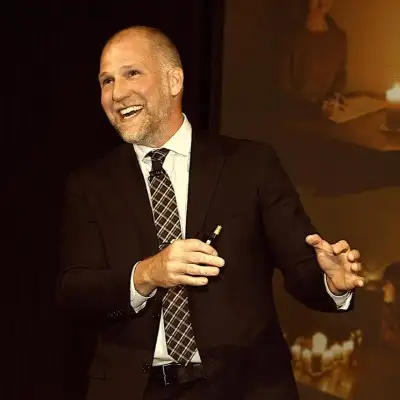
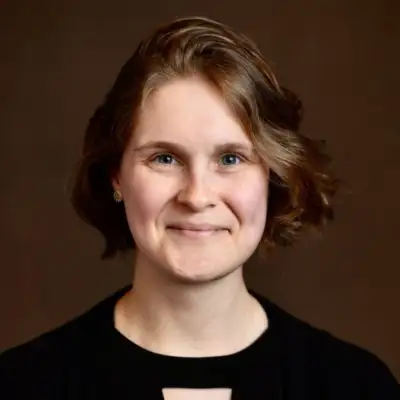
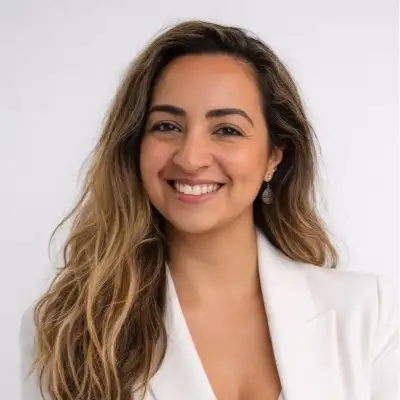
In this episode, we will explore environmental peacebuilding in action. Joining us as a guest host is Dr. Michael Shank, a professor and Carter School alumnus, and two wonderful Carter School PhD candidates, Engy Said and Ashton Rohmer.
Dr. Michael Shank is a director of programs at the Albert Einstein Institution and an advisor to local governments leading on sustainability and climate action. His professional career includes leading policy and press shops with clients such as the United Nations, Vatican City, the White House, and Fortune 500 companies.
Engy Said was a visiting and teaching fellow at Harvard University. Engy's research focuses on the political economy of conflict and the intersectionality of economic and political power. She has more than 18 years of experience in diplomacy and international relations, with a focus on the Middle East and Europe. Engy also has experience working on the environment, climate change, and sustainable development.
Ashton Rohmer is an urban planner and is studying our transportation system as a site of conflict, violence, care, and peacebuilding. She leverages interdisciplinary scholarship to address the conflict system of vehicular violence using national survey data of car supremacy and reimagining our streets as an urban common.
I'm excited to hear your stories today and what brought all of you to this field. Engy and Ashton will join the conversation in a moment, but first, Michael, you have had quite an impressive career as a writer, columnist, advisor, activist, and partnering with the United Nations in the environmental space.
Can you tell us why environmental issues are critical in the role of peacebuilding, the Carter School, and the peace and conflict community?
Dr. Michael Shank:
Kellye, thank you so much for organizing this conversation. I'm honored to join it with Engy and Ashton, and there's so much to talk about in the next 30 minutes. But as Engy and Ashton will also testify to, climate change and global warming and the heating of our planet is impacting every single issue every Carter School student is focused on.
Whether they care about immigration, war, housing, healthcare, or any issue any student listening to this podcast is thinking about, caring about, or studying, you bet it's impacted by climate change. And so we should be studying it, then. What are the impacts? How do we lessen harm?
How do we prevent harm? How do we prevent conflicts that are arising around the world due to climate change and global warming? So that's what we're going to talk about today, as well as solutions and how students can get more involved in this space. But I'm thrilled to be here with Engy and Ashton to talk about it.
And Kellye, thank you for teeing this off.
Kellye Richardson:
Thank you so much, Michael. I'm going to hand it over to you all so that you can share with us what we should be thinking about.
Dr. Michael Shank:
Great. Thanks, Kellye. Engy, Ashton, it's great to be on this call with you. So you saw the prompt and heard the prompt from Kellye. Would love to turn it over to you, Engy, if you want to start first in thinking and talking about how climate change is impacting the Carter School space and anyone who's focused on peace and conflict in 2026 and beyond.
Engy Mohammed Ibrahim Said:
Thank you, Michael, and I'm also honored to be joining this conversation, which is timely and important. This morning, I woke up, and I read about the devastating disaster that happened in Nepal, where a massive landslide and glacial collapse killed hundreds of people and left many more missing. According to scientists and experts, a warming climate is making these mountain areas more unstable, and that for me is a reminder that climate change is not a distant issue.
It's already affecting people's lives, communities, livelihoods, and security. And where communities already face social or political tensions, climate pressures can make these challenges even harder to manage. And that is why the conversation about peacebuilding and climate is so important. As you mentioned, Michael, climate change is not just an environmental or scientific issue.
It's about people, relationships, resources, and how societies manage change. And for that, it comes to the core of what the Carter School is doing, and that's why I believe it's very important for students, researchers, and scholars at the school to look at these increasingly important issues.
Dr. Michael Shank:
Engy, thank you for that, and that's a very timely reference point.
Ashton, curious about your thoughts on why the Carter School should be integrating all things environmental peacebuilding. You've done a lot of work in this space in a different way.
Would love to hear from you.
Ashton Rohmer:
Yeah. Thanks so much for bringing me into this conversation. I'm really thrilled and delighted to be here, especially knowing how much good work you and Engy have done in this space. It's an honor to be alongside you. So I might step back just a little bit and think a little bit more broadly about why peacebuilders should be involved in the environmental and climate work that we're talking about today, certainly from the Carter School perspectives more specifically.
But generally, I think peacebuilders are really imperative to have in this space because we have tools for seeing the whole system, and when we think about climate and environmental issues, that's really a whole-system problem. So for example, Galtung's Triangle of Violence is a really great way to think about the dynamics that are playing out in these spaces.
That's because it doesn't only diagnose the harm, it tells us where the levers of change are, whether it's cultural, structural, or at the interpersonal direct level, and it also tells you where those levers are to act on. For example, most climate work has to operate one node at a time, and that's very understandable.
I'm not expecting someone working on carbon pricing to also have a solution for culture change around consumption. But what we do need, and what I think peacebuilding offers in this space, is the ability to see how an intervention on one node ripples across the others. Without that, you can make a change that looks like progress in one space without really considering harms or how things are exacerbated in negative ways at other levels of change.
So when I look at environmental issues, I focus on automobility, and I think of electrifying the car as an example. When you electrify a car, it solves tailpipe emissions and leaves nearly everything else that cars do to negatively impact society untouched. I'll come back to that a little bit later, but I think tracing those ripples is a systems question, and systems thinking is what our field trains people to do, which is why it's a really important space for us to be in.
Dr. Michael Shank:
I love that. I love your call to more integrated involvement in this space because we have tools. And you're absolutely right, the peacebuilding community has tools that are so desperately needed, whether it's preventing or responding to some of the climate crises that we're seeing, as Engy noted in Nepal, and working on those bigger climate conflicts and climate security issues, or if it's here in the United States, working on the culture wars. Because the culture wars are very much impacting this space, whether it's over EVs, electric stoves, heat pumps, et cetera.
We're seeing the culture wars get in the way of climate action, and our tools, to Ashton's call, are very much needed in this space as well. I like how you were taking us into the next question, which is: What are actions that the three of us are taking, either personally or professionally, to encourage bridging the gap between the peacebuilding community and the environmental and climate community? Curious, Engy, how you might want to weigh in on this, either personally or professionally.
Engy Mohammed Ibrahim Said:
Sure. Thank you again. Over the past three years, particularly since 2023, the conversation around climate, peace, and development has gained significantly more prominence, including through international resolutions and initiatives recognizing the links between these areas.
And I've used my experience, both in policy and academia, to help bridge communities working on climate and peace, bringing policy conversations into academia and bringing academic knowledge and research back into policy discussions. For example, I co-hosted a series of webinars, first at Harvard University and then at George Mason University, bringing together policymakers, practitioners, representatives of international organizations, and scholars working on climate conflict resolution, peacebuilding, and development.
The George Mason webinars were sponsored by the Better Evidence Project at the Carter School, and the conversations were not simply about discussing the link between climate and conflict, but they were about producing knowledge, bridging different perspectives, challenging assumptions, and generating better evidence to inform policy.
So this convening for me is very important because when we talk about peacebuilding and conflict resolution, one of the main issues is fragmentation, which is one of the challenges in bridging the gap between peacebuilding and environmental work. Climate experts, peacebuilders, development practitioners, humanitarian actors, and policymakers often work with different mandates under different structures and funding, and sometimes even different professional languages, although they are addressing the same issues and risks.
So creating spaces for exchange helps build the relationships and common language that are needed for more integrated approaches. And there's also an important educational dimension. I want to engage students in these conversations, and I want to expose them to the emerging field of peace and climate change.
I also want to show them how universities can contribute to policy, not just through research, but by bringing different communities together to produce knowledge and generate evidence that can inform decision-making. So eventually, my aim is to move the conversation from recognizing that there's a link between climate and peace to practical collaboration and action.
That's what I've been doing over the past three years, especially with the Carter School and academic institutions.
Dr. Michael Shank:
That's excellent, Engy. And thanks for that invite to students. For students listening to this podcast, if you're not already following Engy on LinkedIn, do so, both to follow up with her on this invitation and to see some of the work she just discussed, because she is very good about posting those processes and conversations on LinkedIn as well.
So you can learn more about what she's doing and what she just referenced on LinkedIn in some of her previous posts. Thanks, Engy. Ashton, curious how you interpret this question around actions we're taking personally and professionally to bridge the gap between peacebuilding and climate and environmental work.
What's your take?
Ashton Rohmer:
Two things, really. One I'll dive into a little bit more here, which I referenced earlier, and another that I'll pick up later in the call. First, I'm trying to build the diagnostic language and analytical frameworks to make harm visible that most people don't see at all.
The second is that I'm trying to counter bad news with good news, and that's most of what I'll say when we pivot to the next question. But on the first point, I discussed earlier the EV challenge. One thing I'm endeavoring to do with my work is to challenge the prevailing narrative that EVs are our savior.
Don't get me wrong, I certainly understand that EVs are in many ways better than internal combustion engine cars. But that narrow framing, which largely dominates climate discourse, overlooks several points, and I really endeavor to bring some nuance to the conversation. First, EVs only eliminate tailpipe emissions, while cars produce other harmful pollutants no matter what fuel or energy source they run on.
Particulate matter comes from brake wear, tire wear, and road surface abrasion. And so we have issues where we narrow it into this one particular way of framing the problem, which really hinders our ability to talk about it with the level of rigor and specificity that I think it really requires.
When we look at the other pieces of this, it is looking at the psychological dynamics of purchasing an EV. If I get a car that is run on renewable energy, I might be inclined to live further away from work and be willing to travel further. That pushes development further out, which creates more demand for carbon-intensive building practices, et cetera.
You can see where I'm going with this. If we don't think about how these ripple effects of decisions manifest in the world more generally, we risk actually exacerbating existing harms. Third, if we only focus on the tailpipe emissions of EVs, we fail to consider that there are a lot of other harms that cars cause.
There are approximately 40,000 people who die every year in car crashes in the United States, and that number exceeds one million globally, which doesn't include the number of people who suffer early death because of air pollution and other things related to cars. There are also toxic gender norms that are wrapped up in car culture.
There are other mental health and physical health implications. What I'm trying to do is argue that we had most of the technology to travel sustainably more than 100 years ago. We had walking, biking, public transit, and higher-density mixed-use development so that we didn't need to travel far for our needs in the first place.
And that's part of my goal with my work.
Dr. Michael Shank:
Thanks, Ashton. What hopefully students are hearing here is that there's a range of activities you can get involved in, from systems change to behavior change, and everything in between. In the climate and environmental space, we need both activities, and we need peacebuilders across both systems change and behavior change.
I'm thrilled we're having these conversations because there's a lot of opportunity to engage. We have the tools, as Ashton noted earlier, to be involved in all these spaces, whether at the systems level, the government or international institutional level, or at the behavioral science and behavior change level.
I'm excited for peacebuilders to think about behavioral science too, because historically, we've often not been as involved in that space. How are all of the activities that we're doing in our daily lives either contributing to a more peaceful world or undermining the likelihood of a more peaceful world?
Are our activities doing harm? So just doing our own personal audits and professional audits, and thinking about the work we're doing either at the behavioral level day-to-day or at the systems level, and what is doing harm and how we can reduce harm as much as possible. I'm thrilled that we're spanning the gamut from systems to behavior.
I'll just answer this question very quickly myself. I try to think about this all the time with my daily choices at the behavioral level, such as what I'm eating. I've been plant-based for several decades now, and I have solar and an EV because I live in rural America. But in the city, to Ashton's point, you certainly don't need a car, and we need to make mass transit as enjoyable, affordable, and accessible as possible to as many people as possible, so I'm with her on that.
Absolutely. And thinking about battery storage, heat pumps, and all the ways in which I can help accelerate this transition. Professionally, I've been working for many years with cities and counties that are going green in all the ways. If you don't see yourself—if you're listening to this podcast and thinking, "Oh, I don't see myself working in the explicitly environmental or climate space"—what I want you to think about with all of these actors, whether they are UN actors, federal national governments, regional governments, or local governments, is that I'm increasingly seeing cities and counties having to play other roles too, given how politically fragmented and polemic our culture is right now.
Cities and counties are having to play additional roles to rebuild social cohesion and trust in order to get their sustainability work done. So in any of this work, the intersectionality of it is very much at the fore, which is where Carter School peacebuilders really have an opportunity to play an important role.
Because we can't do any of this sustainability, environmental, or climate action policy work if we're so fragmented and trust is low that the work never gets across the finish line.
Having these flexible, diverse, agile tool sets will be essential in getting the work of anyone listening done and across the finish line.
Let's continue on because now we're going to get into a policy conversation. Engy, we'll go to you. If there were one policy tomorrow to accelerate climate action that you could change—if you could just press a lever—what would it be and why?
Engy Mohammed Ibrahim Said:
If I could change one policy tomorrow, I think one of the most important changes for me would be to make climate investments both climate-sensitive and conflict-sensitive. There are already investments taking place for climate action, and we need them to look at both climate change and conflict.
In addition, we must give communities a meaningful role in designing these investments. One way to connect policy with what is happening on the ground—or the work that we do, as you mentioned, across the system level, behavioral level, county level, city level, or individual level—is to address how governments, climate funds, and development banks make decisions about where the money goes and what projects are funded.
Communities are the ones that live with the consequences of these decisions and investments. A project may look successful on paper from a climate perspective, but it could create tensions on the ground if people feel excluded or if it changes their access to transportation, land, water, jobs, or resources.
In designing policies and climate investments, I think we should be asking simple questions like: Who benefits? Who might be left out? Could this create new tensions? What do local communities think? And can these projects strengthen cooperation and trust? So if I am to change a policy, I'd say policies need to learn from communities, and communities need policies and resources that respond to their realities. That's what I would try to change.
Dr. Michael Shank:
Excellent. Engy, thank you so much for that. Ashton, how about you? What's a policy solution or two that you're thinking about?
Ashton Rohmer:
I think that one of the things—and this will probably come across as controversial—is that our approaches to community engagement are not adequate for tackling the urgency and significance of the challenges we face with climate issues and environmental degradation.
For example, Michael, you were talking about how you work with cities and local communities to enact plans. On the good side of that process, we have communities that are thinking holistically about ways they can introduce more climate-friendly policies at the local level.
However, a lot of communities have certain regulations and requirements for community engagement. That means the hyperlocal implementation of these projects can be stopped or stalled by people who raise complaints and concerns throughout that engagement process. For example, in Washington, D.C., we had a long community engagement process to install a protected bike lane on Connecticut Avenue, which would have given people who ride bikes, use wheelchairs, or operate any other manner of personal mobility devices safe access to one of the major thoroughfares. Of course, there are climate and environmental implications for that.
My research looks at what happens when policies and plans developed at the local level run into community opposition and actually take us further from the goals and objectives laid out in those plans.
So I would want to take a harder look at how we think about community engagement. Certainly, we want to ensure that voices are heard, but maybe without giving them veto power over projects that are meant to improve the public good.
Dr. Michael Shank:
Thanks, Ashton. For folks listening to this podcast, you can tell where Ashton's expertise lies, specifically in community-led approaches, and she posts about this on LinkedIn as well.
If you're not following Ashton, you should, because she's thinking about and posting about this community-led approach to bikes, buses, and more on LinkedIn. I encourage you to follow her. My quick answer on policy fronts: I've written a lot over the years on climate conflict, climate security, climate migration, climate displacement, climate refugees, climate reparations, et cetera.
From an institutional systems-level perspective, if you're not following the International Court of Justice, it ruled on nation-states' responsibility for climate change and preventing harm. If you're following the UN Security Council conversations, they are regularly discussing whether or not to weigh in on climate impacts, climate security, and climate conflict.
The more we set up those international institutions for success and actively support them—which the US doesn't always do—the better equipped we will be at a systems level to address some of these concerns. I think about that. The second thing I think about from an economist's perspective is taxing the bad and subsidizing the good, whereas we tend to do the opposite.
At least in the United States, we tend to subsidize fossil fuels and tax or make expensive the things Ashton is talking about in terms of what could be a thriving mass transit, biking, or walkable city. Most economists think we should tax the bad and subsidize the good, and that would be really helpful here.
Let's think about how the Carter School supports all of this work—this systems-level work and behavior-change work—going forward. Curious what the two of you have to say about how the Carter School can set other students on similar paths, and how your time at the Carter School prepared you for this particular career path.
Engy, curious about your thoughts on how the Carter School set you up for this work in particular, and any recommendations you have for future peacebuilders who are listening and interested in getting more involved.
Engy Mohammed Ibrahim Said:
Perhaps the most important thing the Carter School gave me was the ability to work across disciplines and listen to different perspectives. Conflict analysis and resolution is a multidisciplinary field. We look at relationships, institutions, interests, inequalities, and power dynamics at different levels. This is essential in climate work, where environmental scientists, economists, policymakers, diplomats, development practitioners, and communities may approach the same problem very differently.
A background in conflict resolution gives me the ability to connect these perspectives and be the link between them. I see this not only as the edge of the Carter School, but as one of the most important ways it prepares us for this career path. As for my recommendation for future peacebuilders, my first recommendation would be: do not think that you have to be a climate scientist to work in climate change.
Peacebuilders already have valuable skills that they bring to the table in this field: conflict analysis, mediation, dialogue facilitation, stakeholder engagement, governance, and understanding how local political and social dynamics interact. Those skills are increasingly relevant to climate adaptation and environmental work.
I would also strongly recommend that students or people who want to work in this field learn how data and technology are developing, because future peacebuilders will increasingly need to combine qualitative conflict analysis with environmental and climate data. Being able to understand things like climate risk information, mapping, and other forms of evidence will make peacebuilders more effective in that field.
Importantly, build relationships outside the peacebuilding field. If you're interested in this kind of work, talk to environmental scientists, agricultural specialists, water and energy experts, development professionals, climate negotiators, local organizations, and policymakers, because the ability to translate between these different communities is in itself a professional skill.
Dr. Michael Shank:
Engy, I agree with a lot of what you said, especially regarding intersectionality across disciplines and practitioner types. That versatility will really serve students going forward. Ashton, how about you? How did the Carter School prepare you for this work, and what recommendations do you have for future peacebuilders who are inspired by your work on community-led initiatives?
Ashton Rohmer:
To give a little more context to the community-led piece, I have researched what are called bike buses, which are group rides led by adult volunteers in a community, usually once a week, running from one end of a neighborhood to a local school.
Kids can join on bikes, scooters, skateboards, or whatever they've got as the group passes their house or street. I interviewed 23 adults involved with bike buses across the US and rode along on a dozen different routes up and down the East Coast. While biking was referenced by a lot of the organizers as a more sustainable mode of transportation than driving, I was actually surprised that so few of my interviewees talked about climate change as a primary motivator.
Most of them just wanted their kids to see that a different world was possible. They wanted their kids to encounter their neighbors and be on streets that they had previously been designed out of—streets where they could feel the wind in their hair. I had parents say they were glad their kids could hear birds singing from the trees.
Most of them said they wished they didn't have to organize bike buses at all. When adults have no choice but to serve as physical infrastructure that our streets otherwise lack so kids can walk and roll to school safely—often at personal risk to themselves—that is a symptom of severe political failure.
However, getting to your question, I think this touches on something bigger about climate action: we have largely equated tackling climate change with sacrifice, a future where we go without and lose something we like. I think this is where the Carter School and a peacebuilding framework have been particularly transformational for me.
Ayana Elizabeth Johnson wrote a beautiful book called *What If We Get It Right?*, and I think that question is exactly where peacebuilding can transform this dynamic, because our field has a tradition for this. Elise Boulding spent decades running workshops called *Imagining a World Without Weapons*.
You put people into a future they actually want first, and then work backward to what would have to happen to get there. Her premise was that our images of the future have a direct relationship to our actions in the present. If you cannot picture the world you want, you will not build it.
Peace educators have since adapted that method for imagining a fossil-free world. A bike bus is that, except it isn't a workshop; it's 40 children riding down a street that was not built for them on a Wednesday morning in public. It's imagining a future and then riding it. Bike buses are worth doing, perhaps not even just as a mitigation strategy, but as a rehearsal of what a street could be. They make it legible as a commons, demonstrate that the hierarchy on our streets is contestable, and build the constituency that shows up when decisions actually get made.
Thinking about the future from a peacebuilding perspective helps us imagine a future that is better than our present. That is what I would encourage students and peacebuilders working in this space to think about: how to bring positive images of what they envision to their work, rather than always focusing on doom and gloom, even though there's certainly enough of that to focus on.
Dr. Michael Shank:
Yeah, some great lessons learned from exercises and workshopping in the peacebuilding space that can be repurposed in the climate and environmental space. It's something I encourage the cities and counties I work with to do similarly: How is life better, and how are we positioning all of this work as an improvement?
We are attracted to what we love, and that is a better motivator in general for millions of Americans than sacrifice. My answer to these questions would be similar to what you both have said, especially regarding intersectionality. I got my PhD at the Carter School, and it taught me how interrelated all of these issues and disciplines are, and how to reach root causes in our analytical frameworks.
With climate change, global warming, global heating, and environmental conflicts, getting to the root cause is an essential first step before we even think about a policy response or solution. We still need a lot more work in that space to help policymakers do that so it doesn't get caught up in culture war conversations.
My other recommendation for future students is something I think about and practice in my own life: thought leadership in this space. For any student listening, this is an offer I make: I teach at NYU and occasionally at GMU, though that might increase in the future as I get more involved in building out the environmental peacebuilding wing of the Carter School.
Any time you want to speak publicly, write publicly, or be interviewed about this nexus, and you have an op-ed or interview you're working on and need editing, positioning, or publishing help, please reach out to me. I am very keen to help anyone at the Carter School who wants to share this work publicly, because we need your wisdom and words out there.
My recommendation to anyone listening at Carter as you build out your portfolio is to check out Engy's LinkedIn, Ashton's LinkedIn, and my LinkedIn, where I try to post a positive solution daily. These times are tough for many reasons, so we need to drumbeat regularly on social media, in published media, mainstream media, on Capitol Hill, in executive branches, and at international bodies like the UN and ICJ. Our work is needed, and anything we can do to help you feel more confident in your research and public voice, we want to support.
I'm sure Engy and Ashton want to help as well. I'll stop here and thank you so much, Kellye, for creating space for this conversation.
Kellye Richardson:
Thank you all. What a meaningful conversation this has been. Thank you to Michael, Engy, and Ashton for sharing your insights on environmental issues, climate change, and peacebuilding.
Today reminded us that these challenges are not only scientific or technical; they are also social, political, and justice issues that shape vulnerability, access to resources, and how communities respond to stress. From policy and climate discourse to everyday solutions like bike buses and community-led transportation alternatives, we've seen that climate action does not have to be defined by lack or sacrifice.
It can also be about imagining a better future. As Dr. Ayana Elizabeth Johnson's work suggests, we can approach the climate crisis by exploring hopeful, practical solutions instead of focusing only on doom.
So we leave you with this question: What are you doing personally and professionally to help bridge the gap between peacebuilding and climate work? If this conversation inspired you, reach out to our guests on LinkedIn, come learn more at the Carter School, and become a peacebuilder.