Subscribe
Share
Share
Embed
The official podcast of Few Will Hunt, the world’s largest community of hard workers and 100% Made in the USA apparel brand. We’re on a mission to restore the dignity of hard work and help others live The Rules of The Few to strengthen ourselves and strengthen society. No entitlement or excuses are allowed here.
The woodshop guy and and the therapist both told me I'm a leader Yeah. Which gave me a feeling of empowerment. They both used empathy to make me feel seen and heard. That let my guard down. That made me trust them.
Speaker 1:That made me willing to listen to them. I was a sponge. I was receptive. Yeah. Then they used that to empower me and tell me, Frank, you are a leader.
Speaker 1:But even that, I still needed my feet held to the fire. Sure. Welcome to the Fuel Hunt Show. What's
Speaker 2:going on, Eagles? Welcome to the Fuel Hunt Show. I'm Joey. I'm here with my cousin and cofounder, Drew. How are feeling?
Speaker 3:Happy to be here, cousin.
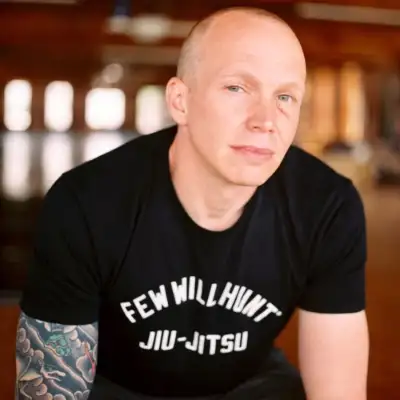
Speaker 2:To be here. And today, we are joined, by one of the few, a friend, Frank Paul Vignola. He's a men's coach, author, entrepreneur. I mean, let's like, we can just go on
Speaker 1:and on. That's about it. That's good? Okay. That'll do it.
Speaker 2:We're having some conversations beforehand about, superpowers. I was gonna add a superpower in, but we'll save that for later. This is not your first time at HQ. I would like to say welcome to HQ, but it's not your first time here.
Speaker 1:Right? It's not my first time here. No. It's my third time here. It's changed a lot.
Speaker 1:Yeah. It's developed a lot, but this is my first time meeting you guys.
Speaker 3:Mhmm.
Speaker 1:And it's crazy because I feel, since I first came here, I felt connected to you guys energetically. You know, I sat in your desk. Yeah. You did. I put on your jacket.
Speaker 1:I've worn your merch, you know, and but, yeah, this is the first time I get to meet you both face to face. So, yeah, it's awesome, man. I'm feeling super grateful.
Speaker 3:Welcome, dude.
Speaker 1:Welcome. Likewise. Thanks, brother.
Speaker 2:Likewise. Now that you say all that, I I get it. You're like, first of all, we're energy guys. So we get Yeah. You know, we get that vibe, literally, vibration, literally.
Speaker 2:Yeah. But you did. You you sat at
Speaker 1:my desk. Did, man. Yeah.
Speaker 3:You are You felt the threads.
Speaker 1:Jacket. I felt on the varsity jacket. Like, I was in your space. Like, I'm I'm telling you, like, when I come here, get excited.
Speaker 2:Yeah.
Speaker 1:Mhmm. Whether I get to see you guys or not, when I come here, I'm like, I came here the first time and I was like, I like the energy of this space. We Good vibes, man.
Speaker 3:You could feel it.
Speaker 2:Yeah. There's a I mean
Speaker 1:Hell, yeah.
Speaker 2:A lot of hard work done here for a very long time. You know, they used to die and spool thread here, yarn here Mhmm. Which lines up with, like, what we do. Yeah. Very You know, at least on the gear side.
Speaker 2:Right. But also on the growth side. Like, when we first walked into this space, it didn't look like this. The floors were stained with oil from all the machines up here. You know what I mean?
Speaker 2:Tools everywhere. Like, a space where things were created Mhmm. That I like to believe made people more confident, more powerful. You know what I mean? And and all of that by, you know, what they wore.
Speaker 2:And we were talking about that a little bit before the show too. So I want to talk a little bit about what you do what you do for men specifically as a coach. The coaching space, I will say, and I'm sure you probably share this, there are a lot of people in the coaching space that I don't think get it. They don't understand what they're should be doing for the people that they're leading and coaching, and that's not you. Like, stand out to me in that sea of coaching coaching or coaches as someone, very different, someone unique, a servant, someone that cares, specifically about making men better humans so that they can in turn take that better and make others better too.
Speaker 2:So that's kinda like what I get from you, the energy that I get from you. I would like to talk a little bit about, you know, like I said, what you do, but also where you've come from. Sure. Because I think that people don't hire coaches, or at least they shouldn't hire coaches for the coach. They should hire coaches for the results.
Speaker 2:Yeah. Right? Oh, yeah. And I think that's where a lot of coaches miss because they haven't come from a a dark place or a challenging place and then emerged as something better. They haven't taken that journey.
Speaker 2:They've taken a course on how to be a coach. Right. Right? And, again, that's not you. So let's rewind all the way back and talk about, you know, where you're from, what was growing up like, and then follow that thread to where we are today.
Speaker 1:Into where okay. To the kind of
Speaker 3:coach I
Speaker 1:alright. So we'll start at the beginning.
Speaker 2:You yeah. You're a Yeah.
Speaker 1:Mine mine was young. Mine was mine started really young because I I grew up without men. I grew up without without male connection. I didn't have brothers. I I have some male cousins that I talk to more now as an adult, but I wasn't close with them growing up.
Speaker 1:Mhmm. I had no grandpas. Yeah. Yeah. And and I had a tumultuous relationship with my dad.
Speaker 1:So I grew up yearning for male connection. You know? Mhmm. You and I were peers. We're very close in age.
Speaker 1:So you remember, you know, the eighties, the Ninja Turtles, like, they were my imaginary brothers. And I don't you follow my stuff, so you've probably seen me talk about them at least once or twice. But
Speaker 2:Yeah.
Speaker 1:They really were my imaginary brothers. But because I didn't have male connection and I didn't have somebody to model myself after and I didn't have that brother brotherhood, I feel like there was a part of me that was undeveloped. Sure. And I grew up with feeling like a deficiency in my masculinity. I wouldn't have been able to call it that then.
Speaker 1:I wouldn't have known that that was what it was. But I look back now and I realize that that inadequacy that I was feeling, you know, that there was a combination of a feeling of yearning of, like, I I want this kind of connection. I feel alone. I don't have it. And then also a feeling of inadequacy and sometimes it would even turn into anger and rage when I would see guys that had these attributes and these characteristics in even in grade school that seemed so organic and natural.
Speaker 1:Mhmm. And I didn't have them and I didn't know why. And I I just assumed that it meant that I wasn't going to have them. Didn't know that it meant that I just never had that seed nurtured because of my environment didn't nurture it.
Speaker 2:Yep. So Yeah. You start to you start to think that, like, those qualities that you were seeing in others, it's just nature. That's right. That's how those people are.
Speaker 2:And when in reality, I mean, I believe, Drew believes that it's nurture.
Speaker 1:It's nurture.
Speaker 2:It's nurturing. So your father was present in your life, but it sounds like you had a tumultuous relationship. So the masculinity that you did have in your life as a child or as a teen, it just wasn't it wasn't maybe a healthy version or it wasn't the version that you envisioned it should be. Right? So that's
Speaker 1:It was hold on. Let me I wanna answer that specifically. So go back for me one second. Yeah. Ask that again.
Speaker 1:So What wasn't what I envisioned it?
Speaker 2:Yeah. So your your fa you you didn't have much male connection growing up. Right? But your father was in your your life. Yes.
Speaker 2:So I've got to imagine that there was some masculinity in your early life. However, it was not the type of masculinity that you envisioned for yourself or maybe it just wasn't Gotcha. You know, the the version that you wanted at the time or
Speaker 1:needed at I I
Speaker 2:got your
Speaker 1:question now. Okay. Yes. So my father's role in this was important. And to to your point, he did have a masculine energy for sure.
Speaker 1:The relationship was tumultuous because I think what he saw is that because I had sisters and I had a lot of female energy around me, my grandmother, sisters, I was very close with my mother, I had female cousins that I connected with. I didn't have the natural masculine inclinations that I think a lot of boys my age had.
Speaker 2:Mhmm.
Speaker 1:I just didn't have them. And I think that my father, who at the time was in his thirties and maybe a little bit emotionally mature immature still, he probably didn't know how to help me cultivate that. Mhmm. And maybe he didn't know that it was nurture either. Maybe he thought it was nature.
Speaker 1:Sure. And maybe he thought, you know, I was a reflection of him. It made him feel bad about himself. I don't know. I can't get inside his head.
Speaker 1:Rather than helping me develop that and validating me, he would often use ridicule. Yeah. You know, and I don't I don't fault him for it today. I I don't I don't take on the victim It is what it is. You know, he did his best, but but he would use he would use ridicule.
Speaker 3:Mhmm.
Speaker 1:He would he would use shame. And and it didn't work. It wasn't effective. Surprise. It didn't inspire me.
Speaker 2:Surprise.
Speaker 1:Yeah. You know? So so no. His masculinity, there were actually a lot of really good qualities and attributes that my father had. But unfortunately, because he rejected me, I think I naturally rejected him in return.
Speaker 2:Yeah.
Speaker 1:And not just him, but everything about his character.
Speaker 3:Sure.
Speaker 1:Which ended up hurting my masculinity even Sure. Because then I was rejecting masculinity. Yeah. And I didn't even realize it.
Speaker 2:So that's kinda what I wanted to get into. Like, you know, like I said before, you're not a guy on the Internet that's taken a course. Like, you've lived this, had to develop the tools, had to literally craft if we're talking about the title of your book, right? Yeah. You had to literally craft your own masculinity, and that's why you're here now helping other men do it.
Speaker 1:Absolutely. Yeah. Absolutely.
Speaker 3:Just two points for me. The first one, would like to say that the Ninja Turtles were also a nineties kid thing. Yeah. Oh, yeah. I do.
Speaker 3:Yeah. I'm late with Ninja Turtles.
Speaker 2:And you also can relate to
Speaker 1:We were giving him shit before about the generational differences. I probably that
Speaker 2:was still my changing Superman. And
Speaker 3:then you said you had mentioned that the characteristics that some of the other kids had in school
Speaker 2:Yeah.
Speaker 3:That you didn't. Could you elaborate on what exactly you were seeing in other kids that you felt like you didn't have?
Speaker 1:Yeah. So even like, one thing that stands out to me was was confidence in sports. Mhmm. And and and being fit and and to anything like physical fitness.
Speaker 2:Sure.
Speaker 1:And, but it felt like it was rooted. It wasn't that I I wasn't agile. It wasn't that I didn't have the same abilities because as I got older, I learned that I'm actually very coordinated and I'm I'm quite good at anything physical that I set my mind to. So again, it was the nature nurture thing. In my head, I thought naturally I was not coordinated.
Speaker 1:But really what it was was that when they were doing something that was inherently masculine that felt organic and natural to them because they watched it growing up and they did it with their brothers growing up or their father, it came more naturally. They did it with confidence and therefore the mindset matched everything else and then the body listened And then, you know, it it felt like they were very good at it, and it looked like they were very good at it. So I perceive that as, oh, I just don't have that. I just don't have that trait. I'm not good at it nor do I have the confidence.
Speaker 2:What's crazy is I think kids still think that nowadays. Like, I know I did when I was a kid, and I'm sure my daughters and Parker maybe even. Like, this is a thing with kids. They see it in other children, whether it's just general confidence or the magnetism or charisma or success in sports, And they're like, oh, that's not me. Of course.
Speaker 2:Their mind, the the inner critic is the thing that's intercepting. Like, they may have that physical ability, but the inner critic intercepts it.
Speaker 3:It is interesting too. We talked about this on the Nick Shaw podcast, but and I'm no men's coach or life coach, but I have thought a lot. And one of the things that constantly cause of mind is that the hierarchy for children and youth and adolescents seems to be based around physical ability sports.
Speaker 2:You know what I mean? Mhmm.
Speaker 3:Like, I was always a an obese kid growing up, and I got picked last all the time. And I felt like that at the time, that age was where I ranked in Mhmm. The social hierarchy. And the kids that everything all the girls like and everything that seemed to work out for them all the time are all the athletic Mhmm. Kids that were first in captains of the sports teams and first picked.
Speaker 2:Think about it. Like, I'm no scientist. Right? So let's put that out there even though I I know the solar system. So Yeah.
Speaker 2:I'm no scientist. But think about it. Like, kids, their brains are still developing. Right? Like, they're of course, they're not they're not ranking themselves on, like, how cerebral they are.
Speaker 2:They're ranking themselves on how physical they are because their brains and themselves, they don't have the words. They don't have the Right. Cognition sometimes to put that together. You know what I mean?
Speaker 1:And and they don't have the intuition or the understanding to be able to discern nature and nurture. Yeah. And recognize, like, oh, this is something that can actually be developed.
Speaker 2:Sure. That's one of the things with, like, my daughters. I try to kinda get into their minds early and start developing their minds early, because I recognize that. Like my kids, they're athletic. They come here, they run amok, they wrestle each other and shit.
Speaker 2:But you know, Parker's a specimen compared to them.
Speaker 1:Know what
Speaker 2:I mean? They're not doing burpees and stuff. But I've tried to really pour into their minds to help them understand and short circuit the inner critic and become a little more cerebral at a younger age. So then inevitably, when they do start feeling this way, they have some more tools on their tool belt. Yeah.
Speaker 2:You know what I mean? To manage And
Speaker 3:that's the and we're kind of getting off track with parenting, but that's the hardest part. And, Jeremy, I put a lot of effort into being dads and raising our kids to be strong, resilient thinkers and free thinkers. And that's the the constant dichotomy I struggle with is like, okay, I'm making him do burpees and get strong and be athletic, but I also have to develop his mind and ability to think. I can't just, like, do this, do this, do this. He'll he'll do everything I tell him to do.
Speaker 3:Mhmm. But is that really what's gonna make him a strong, resilient leader?
Speaker 2:Both. I mean, I think it's
Speaker 3:just I'm trying to do all of them, but Yeah. They never did.
Speaker 1:Both go hand in hand. Yeah. Mhmm. I think the thing that I if I had to pinpoint one thing that I lacked that wasn't physical that would have changed everything for me, it's self belief. Mhmm.
Speaker 1:I can remember times in my head right now where I threw a ball and it it didn't go in in the basketball hoop or it didn't even hit the rim. Mhmm. And I would I would give up. I would make a joke out of it. And I would try and be, oh, man.
Speaker 1:I suck. You know, as a kid. Yep. That's the lack of self belief. Mhmm.
Speaker 1:If the self belief exists, then you just look at that as like, oh, I just missed that one. That's all.
Speaker 2:This could happen
Speaker 1:to anybody. Practice.
Speaker 2:Yeah. This is what this is what achievement looks like, a bunch of trying. Yeah. You know? We're we are getting we got a little off topic with parenting, but also not.
Speaker 2:Right? Because, you know, I think it plays, like, a pivotal role, you know, in all of us. And I agree with what you said, like, you know, and to to lean into what you're saying, like, hey, look, I don't know. I'm the physicality thing, the mentality thing. I'm trying to do my best.
Speaker 2:Like, of course
Speaker 1:we are. Like,
Speaker 2:we're doing the same thing our parents did, like
Speaker 1:Oh, yeah.
Speaker 2:Doing the best we have with the tools that we have. The thing that benefits us now, where we're at, is the fact that information, you know, and connections are much freer and easier to establish, and information and data easier to digest and freer, so we can make better decisions. You know what I mean? We have more tools, I would say.
Speaker 1:For sure.
Speaker 2:Not even the decision thing. It's like, we just have more tools.
Speaker 1:Yeah. You know? We didn't even have the Internet. Yeah.
Speaker 2:Yeah. So we did there's
Speaker 1:a lot there's a lot more accessible to us
Speaker 2:now. Yeah.
Speaker 1:But but yeah, man. It that's where that's where things that's where my biggest struggle was.
Speaker 2:Mhmm.
Speaker 1:But then I became my biggest problem after that because the way that manifested was it manifested into I had a lot of passion actually and and a lot of fire inside me. Mhmm. But it wasn't being used for good because I didn't have self belief, so it was turning into rage. And then I had behavioral issues, so I got expelled from Catholic school in third grade. You know, I I I had a lot of struggles, you know, during that time.
Speaker 1:And by the age of 14, I was I was in a mental hospital. Yeah. And and then from there, I was incarcerated on and off for the next four years. Shelters, group homes. Yeah.
Speaker 1:Group homes. Yeah. Residential centers, juvie, all of it. And it was my my hatred and and my anger and my rage, most of the time was kind of went inward towards me through self harm.
Speaker 2:Mhmm.
Speaker 1:Also, a lot of that had to do with the simple fact that I didn't believe in myself to be able to harm other people because I wasn't a confident kid. So it all usually was was internal and towards myself. But, yeah, it it ended up getting me in a lot of trouble. I did drugs. I overdosed on heroin when I was 15, you know, and I ended up in these programs.
Speaker 2:Mhmm.
Speaker 1:But those are also where the the the journey took a turn. Right. That's that's where things started to change because the last program that I was in was an all boys facility.
Speaker 2:Mhmm.
Speaker 1:And something shifted there. Yeah. Something started to change there because even though initially I was really uncomfortable and really terrified actually because I was like, wow. Now I'm around a bunch of guys. I can't hide.
Speaker 1:My my insecurities are are just highlighted. Mhmm. You know? The comparison, all of that. But what I learned is that when I was thrown to the wolves Mhmm.
Speaker 1:And my feet were held to the fire and I had no choice but to be in that environment. I was literally incarcerated.
Speaker 2:Mhmm.
Speaker 1:Something came alive in me. Something started to shift. And I also it was a combination of that and also the right mentors. But not only did I learn that I could do what a lot of the guys around me were doing, I learned that I was a leader
Speaker 3:Mhmm.
Speaker 1:Which came as a really big surprise to me. Yeah. And started things started to change there.
Speaker 2:I think that, when you first recognize you're a leader, it does come as a surprise. I think that's everybody. It comes as a surprise.
Speaker 1:Yeah. It's like me?
Speaker 2:Yeah. Me? Wait. Me? I think the best leaders are the people that that inevitably say that.
Speaker 2:Like, when they realize it, they're like, well, this can't be me.
Speaker 1:Right. Right.
Speaker 2:You know? Because you have so much you you described it as the fire, but you have so much inside you, and you need to give it.
Speaker 3:Yes. And
Speaker 2:you just don't have the words or the actions at the time. And when the words and the actions start to fall into place, and you start to let that out for you know, in a positive way to serve others, you're like, wow. Like, this was here all the time.
Speaker 1:All the time.
Speaker 2:And I was using it for all this effed up shit. Right. And now so then you you have that conflict of identity, and you're like, this can't be me.
Speaker 1:You know? It's the words. It's the tools, and the biggest one I think for for me and for a lot of people that I coach is the self belief. Yeah. It's the it's, you know, we have to start believing what we're capable of.
Speaker 1:And then when that happens Yeah. Then we really become unstoppable.
Speaker 2:Yeah.
Speaker 1:You know? But, yeah, it was a couple people got in my head in the right way. You know, there was a woodshop teacher. I talk about him in the first chapter of my book who he was just like, you know, hit the nail, Frank. And I didn't want to cause I was like, this is guy stuff.
Speaker 1:You know, like this highlights my my male inadequacies, you know, and
Speaker 2:I'm swing I'm gonna swing swing the hammer. I'm gonna miss.
Speaker 1:All of that. Yeah.
Speaker 2:Yeah. Yeah. I'm gonna hit my thumb.
Speaker 1:And I did. I did all that shit. But he never lost his patience. He never judged me. He was different.
Speaker 1:He's like, hit it again, Frank. Hit it again. So long story lasts long. I was I finally got it where I was able to sink a nail in one hit. And it was like, I I think the the way I described it is in my in my book is that like my virility made like the coin sound in Super Mario Brothers.
Speaker 1:It was like it was like something shifted inside me. Yeah. It was like, holy shit. I did
Speaker 2:that. Yep. So And what and for, like, a whole bunch of different reasons with, like, a powerful metaphor, that that being the thing that, like, you know, I'm good for you.
Speaker 1:Yeah. That was that was the turning point.
Speaker 2:Yeah. That's why I was gonna I was going to ask you. So you you described a journey that got super, super painful to the point of incarceration before I'll say, you changed, but before you had that breakthrough moment. Yeah. And I think in life, that's what happens to many people.
Speaker 2:Like, it gets super fucking painful, and that's what forces the change. That's why we say prefer pain. Right?
Speaker 1:Yes.
Speaker 2:It doesn't have to be that way, though, because if you have a good mentor or coach in your life, they can help you make the change before it gets too painful. Yeah. So I was going to ask you a long winded way of bringing it back around. While you were on that journey, did you have a mentor or a coach in your life that helped you when you needed it most?
Speaker 1:Yeah.
Speaker 2:So you've spoken about, you know, the woodshop director, woodshop guy.
Speaker 1:Woodshop guy.
Speaker 2:I used to call
Speaker 1:I call him the bearded lumberjack. Okay.
Speaker 2:But How about was there anyone else, you know, during that time?
Speaker 1:Yeah. There was actually a a female therapist who also she she brought a lot of empathy and she brought a little bit of the tough love, but I remember I always felt seen and heard with her. And and she was one of the first people who told me it was the two of them actually, who were just like, Frank, you're not a follower. You're you're a leader. I know you don't see it yet, but you are.
Speaker 1:Mhmm. And with with the bearded lumberjack, he he was everything that I thought I wasn't supposed to like about men. He embodied all of these masculine traits. He really was the bearded lumberjack archetype in so many ways.
Speaker 2:Mhmm.
Speaker 1:But he also had compassion.
Speaker 2:Yeah. He had he also, it sounds like, had and we didn't even get into this, like, my personal story. We don't have to do that. But he also it sound like he had feminine energy as well.
Speaker 1:Empathy. Yes. Yeah. That Empathy and intuition. He saw me.
Speaker 1:Yeah. He saw me. And and he didn't make me feel judged. He and what I learned later is he grew up having issues with his father. Yeah.
Speaker 1:It was like he looked at me and he saw that.
Speaker 2:Mhmm.
Speaker 1:And it was it was powerful, man.
Speaker 2:Yeah. Yeah.
Speaker 1:Yeah. It was powerful. And and my coaching style is very much rooted in that experience with him along with other things that I brought in my own style as well. But one thing that I always remind myself is Frank, remember before you get tough, make them feel seen and heard.
Speaker 2:Yes.
Speaker 1:Of course. Is that he made me feel seen and heard first, which is why I didn't reject him, which is why I was receptive, and ultimately why he was able to say to me, get it together. Exactly. And I was like, okay, I can hear that from you.
Speaker 2:Yeah. And that that's the way I look at the the balance between, you know, the, like, the the divine feminine and, like, you know, masculine or feminine energy and masculine energy. The feminine side, it's seen and heard. Yep. But too much seen and heard is not a good thing
Speaker 1:Oh, yeah. Because
Speaker 2:you need action, which is the other side. You know what I mean? So that's like and that's, I think, why, you know, what you're doing in the world and, the content that you're putting out there resonates with me because it jives with, you know, my story and how I see masculinity as a whole. Mhmm. You know, the screaming, hollering, you know, dominant type Yeah.
Speaker 2:Leadership or dominance, masculinity, that type that doesn't really resonate with me because I I think I just understand it at a deeper level because of my journey, you know? So it's interesting. It's very, very interesting. Some of the same words that you use I used to to describe. You know, that type of stuff.
Speaker 2:So you're the female therapist that you had, you said she gave you a little tough love every once in a while?
Speaker 1:She did. Yeah. She did.
Speaker 2:So again, a nice little balance It was
Speaker 1:a balance. It was a balance. She had she had a lot of feminine energy and she was very, very empathic. Mhmm. And and that was something that really made my guard come down.
Speaker 1:But then there were times on that journey where I just needed to get it together. Yeah. And I wasn't I mean, and she saw that. And that's to, you know, to your point when you say, you know, stepping into the feminine energy of of embracing our empathy and using that as a tool to to let somebody feel seen and heard, to kind of let their guard come down, that's great, but we can't rely on empathy. And I think she was doing that for a little bit and she saw Frank's not changing.
Speaker 1:He's trusting me. He's listening. He's talking. He's sharing, but he's not changing. And that's when she called me in one day and she's like, we found another program.
Speaker 1:It's out of state. It's a three year minimum.
Speaker 2:Mhmm.
Speaker 1:That was a lie. Yeah. I found out later.
Speaker 2:Yeah.
Speaker 1:It was a lie.
Speaker 2:It was
Speaker 1:a tactic. Yeah. Really? And it worked.
Speaker 2:I can imagine because we we just talked about things getting super painful and and pain creating change. Yeah. And that was the threat of something Scared the life out of super painful.
Speaker 1:Oh, yeah.
Speaker 2:And this is at a time where you're actually getting your feet under you and seeing some progress. Right?
Speaker 1:I had already been incarcerated at that point almost four years. Okay. I was I was gonna be I was 17 years old. Yeah. And I had started when I was 14.
Speaker 1:Yeah. Like, I missed out on high school.
Speaker 2:Yeah.
Speaker 1:I I didn't go to a prom. Like, I didn't have any of those experiences. So I was ready to get my freedom back, and she threatened
Speaker 2:it. And you also had at that point, you were making progress. Right? Towards? Not enough.
Speaker 2:Not enough.
Speaker 1:Not enough.
Speaker 2:But some. More than the 14 year old.
Speaker 1:That's right. Okay. That's right. Yes. Exactly.
Speaker 2:So she threatened really to to shake up a lot of shit.
Speaker 1:Oh, shit.
Speaker 2:Not just your physical location. Yeah. You know, we talk like, yeah, real estate location location. Craig Valentine talks about when you're developing habits, environment, and how key that is.
Speaker 1:Yeah.
Speaker 2:A a a threat of change of environment was very smart.
Speaker 1:Oh, yeah. Was super smart. No. She she she she nailed it. Yeah.
Speaker 1:Yeah. She nailed it.
Speaker 2:It was like woodshop guy, but a different way. Yeah.
Speaker 3:Why did she tell you that?
Speaker 1:Oh, we we we've been in touch since. It's been twenty five years now since I was successfully discharged. Beautiful. Yeah. She's she and I are are still in touch, you know, at least once a Sometimes a year goes by and I'm like, man, it's been a while doc and I'll send an email, she always responds.
Speaker 1:I see. We meet for lunch or whatever. Yeah, one of those days she was just like, we were sharing some stories and this is when like, after I was discharged, she's like, I could tell you all of stuff. She's like, oh, you were tough. I struggled with you.
Speaker 1:Yeah. And, you know, she that's when she told me she's like, that place didn't exist. Oh, that's hilarious. I was like, wow.
Speaker 2:But it did it. It did it. I'm assuming you were like, hey, look, I I want my life back because maybe you started to believe what life could be for you.
Speaker 1:I did. Yeah. So it was a combination. The, you know, the woodshop guy and and the therapist both told me I'm a leader Yeah. Which gave me a feeling of empowerment.
Speaker 1:They both used empathy to make me feel seen and heard. That let my guard down. That made me trust them. That made me willing to listen to them. I was a sponge.
Speaker 1:I was receptive. Yeah. Then they used that to empower me and tell me, Frank, you are a leader. But even that, I still needed my feet held to the fire. Sure.
Speaker 1:I still needed something to be at stake. Exactly. Something has to be at stake in order for us to really wanna change. Sure. And if it's not rock bottom, then it's gotta be some other threat of something, the change of environment in this case.
Speaker 1:Yeah. So that was the missing ingredient. She's like, what's gonna incentivize Frank? I've been I've shown empathy. I've empowered him with leadership.
Speaker 1:What's next?
Speaker 2:Mhmm.
Speaker 1:It was that. Yeah. Yeah. And that's pretty much the style of coach that I am Yeah. In a nutshell.
Speaker 1:Oh, yeah.
Speaker 2:Well, that's what I'm saying. I mean, like, you've you've lived this. Yes. You know, you went through the journey, and that's what qualifies you. And I'm not tearing people down on the Internet.
Speaker 2:They're trying to make a living. You know what I mean? Like, it's
Speaker 1:all good. I get it. You know?
Speaker 2:But I I want I really want our community to know that you're here for a reason. You know? You're on the show for a reason, and in my eyes, that's the reason. You know what I mean? You've you've lived it.
Speaker 2:And all of the tools that you fashioned manually by yourself over the years that you're giving to men, you know, I I believe in. So
Speaker 1:Thanks, brother. Yeah. Yeah. I, just to speak to that real quick. I I there was a moment where I saw these guys, you know, and, on social media.
Speaker 2:Mhmm.
Speaker 1:You know, when I started coaching twelve years ago, the like, people made fun of me because it was like a a what? A life coach?
Speaker 2:But it was a joke. Mhmm.
Speaker 1:And then now you throw a rock, you hit a life coach.
Speaker 2:That's what I'm that's a a good way of putting it. That's what I'm trying to say. Yeah.
Speaker 1:Took that from Johnny L Sasser. Yeah. He's just like, yeah. You throw a rocky at a life coach. I was like, I'm using that.
Speaker 2:Yeah. Because it's true. But one of
Speaker 1:the things that I noticed was that a lot of people were boasting
Speaker 2:Mhmm.
Speaker 1:Science based knowledge. And I got my initial response to that, believe it or not, was insecurity. I was like, oh.
Speaker 2:Oh, believe it.
Speaker 1:I was like, need to catch up. I was like, I need to read more books. I need to do that. Like, they have so much science based knowledge. Now, to be fair, science based knowledge is important.
Speaker 1:There's value to science based knowledge.
Speaker 3:We've learned what happened when you trust the science all the time.
Speaker 2:I'm getting to that. I'm getting
Speaker 1:I'm leading up to that. But there is value Yeah. In science based And I've done my homework. But what I've learned is that what you just described in me and thank you for saying that, thank you for seeing it in me, that can't really be taught. No.
Speaker 1:You could read books.
Speaker 3:Yeah.
Speaker 1:And what I'm finding is that the willingness and the creativity and the courage that it takes to be able to look at your client and say what she said to me. Mhmm. Yeah. I'm gonna put you, you know, the acting skills that it took, the self belief, the balls Yep. You know, all of that.
Speaker 1:You don't get that from science books. No. No. You don't get that Yeah. Coaches who are willing to say what other coaches wouldn't fucking dare say
Speaker 2:Mhmm.
Speaker 1:Because they have so much self belief because they've lived it
Speaker 2:Yep.
Speaker 1:Are the coaches that are gonna have the greatest impact.
Speaker 2:And proof. Yes. The proof because you heard it, and it caused a change in you and brought you to so if you're talking science, I mean, there's some science there. You know what I mean? That's that's proof.
Speaker 1:There is science. You know what I mean? That's that's
Speaker 2:proof right there. It's an experiment. It's proof. Yeah. It's proof.
Speaker 3:It's proof. Kaden, my my brother was over yesterday. He's a a nerd, for lack of a better word. And He's not a nerd. We were yeah.
Speaker 3:He's he's a good He's like six three. Biomechanical engineering. Smart.
Speaker 1:Six three nerds. Donatello. Yeah. He got it. He a six three, but he was a ninja and a nerd.
Speaker 1:Yeah.
Speaker 2:Yeah. Yeah.
Speaker 3:I was I got my I got my whole theory about how nothing is purely fact. And then he started to drop knowledge on me as a in regards to scientific theory and scientific fact. Have you ever I mean, I'm sure
Speaker 2:you're Mhmm.
Speaker 3:Which I wasn't familiar with. Yep. But that was a quick side note. But Dane and I were just talking before the show about books, like business books
Speaker 2:Mhmm.
Speaker 3:And personal development books. And I was as I know, like, there's literally, like, three to five books I can recommend you that I actually took things away from. Yeah. And was able to apply to my life or business. But you could spend all of your days, like you said, reading books and gathering the knowledge.
Speaker 3:But we've learned our hardest, best lessons in business doing it for the last seven to eight years. Absolutely. Like, that's where and that's where I can the knowledge I give onto our people we we teach on on business is 96% based on things we've learned by doing and going through it.
Speaker 1:100%. Yeah.
Speaker 2:I hear you, brother. I got and this is something that just a quick segue
Speaker 1:Yeah. Is something that I was very excited to share with you guys that I tell my guys in the Iron Brotherhood and my clients, my one on ones. So because you guys, you talk about the few. Right? So 15 to 20% of people are interested in in self improvement.
Speaker 1:Mhmm. In personal development, self development. They might have a self help book. Yeah. They might listen to a a self improvement podcast or an audio book.
Speaker 1:Yep. And they take in the information, but they don't actually implement or they're not consistent with it, but they're taking it in. 15 to 20%.
Speaker 3:Yeah.
Speaker 1:5% of people are the ones who put the books down and actually go and implement. It's not to say that you can't keep reading
Speaker 3:the a scientific fact or scientific theory?
Speaker 2:No. It's I mean, you know, it's it's a good point.
Speaker 1:It's a little science based knowledge, but this
Speaker 2:is a
Speaker 1:theory to be fair.
Speaker 2:Studies have been done.
Speaker 1:It's a it's a truth, though. But it's a 5% or the few Yep. Are the ones who are actually going and were hiring a coach, getting a mentor in their corner Mhmm. And doing the work.
Speaker 3:Yeah.
Speaker 1:And you know what's crazier? That 5% makes up both genders. So considering that men are less inclined
Speaker 2:Mhmm.
Speaker 1:To do this kind of work, that 5%, it's probably 1% of the men. Yeah. So I often tell my guys that. I'm like, do you realize that you are the 1%? Mhmm.
Speaker 1:And it's not 1% of people are doing it perfectly, to be clear. Yes.
Speaker 2:It's
Speaker 1:1% of people are doing it.
Speaker 2:Doing it.
Speaker 1:And you're gonna fear. You're gonna deviate. It's navigating back. Yeah. You know, that's par for the course is deviation.
Speaker 1:It's just navigating back and being willing to keep going. Mhmm. It puts you in the top 1% of men.
Speaker 2:Oh, for sure. Yeah. For sure.
Speaker 3:And that's one thing that's been a painful realization for me is that not every day is your best day. Right? Like, you're not gonna show up and be the best man, father, leader, business business person. Like, well, I was with my wife a lot. She's like, oh, I know my my most effective, productive, best day.
Speaker 3:I'm like, Amanda, you have to commit when you're in the trenches doing things like we are.
Speaker 1:Yeah.
Speaker 3:Not not every day is gonna be a %. It's just not.
Speaker 2:The the powerful thing is the awareness. Like, she can step back and say, or I can step back or you can step back or you can step back or the crew can step back or the step back and say, okay. I'm aware of the fact
Speaker 1:that this wasn't
Speaker 2:like, you're saying, I'm aware I deviated. Yeah. And now I can course correct quickly. Yeah. Because I'm not gonna go on a three day deviation binge and then make it 10 times harder to come back to to path, you know?
Speaker 3:But like you said, just doing the work Yeah. Makes you part of the 1% or
Speaker 2:by risk.
Speaker 1:It does. Yeah. It's and I think that for a lot of people, if we veer or if we deviate, some people feel shame
Speaker 2:Mhmm.
Speaker 1:And some people feel like an impostor. Like, oh, I'm not actually this person now. Yeah. It's not true.
Speaker 2:Yeah.
Speaker 1:It's not true. It's just that's that's your built in moral compass telling you, like, the shame that you're feeling is our built in moral compass letting you know you're out of alignment with your integrity, brother. Mhmm.
Speaker 2:This is your this is your alert. You're off the This is your notification. It's a rumble strip.
Speaker 1:That's right. So it's just a notification from your body Yep. And your brain saying, you veered. Now just get back on track. But, yes, some people, if you get caught up in the shame cycle or the impostor syndrome, they throw it all out.
Speaker 1:Yeah. And they get a case of the fuck its. And they say, well, clearly this wasn't meant for me. I'm not meant for a cheat
Speaker 2:meal or Exactly.
Speaker 1:That's why. Right. And then you go off into a binge cycle. Yeah.
Speaker 2:Right. That's why, you know, like, we we discussed this. Right? We had, like, this whole, like, cheat meal thing. I said I don't do cheat meals.
Speaker 2:You know what I mean? Like I like my cheat meals. I yeah. For me, dude, like
Speaker 3:Yeah. Like the gog.
Speaker 2:No. My
Speaker 1:thing is,
Speaker 2:like, 9090% of what I eat, like, single ingredient, like, whole foods, like, I eat well. Do I deviate sometimes? Yeah. But I don't have, like, the fuck it day where I'm just like, I'm gonna eat a whole pizza.
Speaker 1:Right.
Speaker 2:Like, maybe I'll have, like, a slice of pizza, like, three times a
Speaker 3:thing like, he's a a moderation guy.
Speaker 1:It's moderation.
Speaker 2:That one day yeah. Exactly. Like, having that one day where I'm like, fuck it. I'm just gonna eat a whole pizza. Yeah.
Speaker 2:First of all, like, physically, it doesn't make me feel good. Right. And then second, like, worse, it doesn't make me feel good, like, on the inside, like, in my soul. Yeah. Yeah.
Speaker 2:Because I know saying? It also develops Like, I look at it, like, soul and stomach. Like, my stomach don't feel good, neither is my soul, so I'm not gonna I hear you, man.
Speaker 3:It also develops a poor relationship with food. Like, that's how I've been especially because I've had overcome GI issues. But Mhmm. It's like, I only ate bad for, like, a meal or two or Mhmm. And, like, I would never touch anything else, like, ever.
Speaker 3:So now I'm getting better at, like, just working different things in.
Speaker 2:I think there's stages to
Speaker 1:it. Yeah.
Speaker 2:I think there's stages to moderation too. Like, for somebody that's dialing in their nutrition for the first time ever, eating whatever they want on a Sunday or a Saturday might be the play.
Speaker 1:Like, I don't If they if they were eating every any whatever they wanted all week long, then that's a great way to slowly start to dial it back to something that's sustainable.
Speaker 2:And this is like But here's here's let me let me let me tell real quick. Like, I get it. Right? So, like, I'm not like like, cheat meal, fine. Like, have your day, whatever.
Speaker 2:Like, I'm not it's cool. Like, it works for you if you're that's where you're at or that's your system. The thing that I don't understand, and maybe I should because I just said if it's subjective, it's you. Yeah. Like, look at The Rock.
Speaker 3:He does cheat meals. Right?
Speaker 2:Yeah. Does cheat. And he'll eat, like, like, four pizzas and, like, whatever in one day. And I'm like, bro, you're a dialed human being. Like, I know that doesn't make you feel great.
Speaker 1:I mean, maybe
Speaker 2:it does. I don't know. But But
Speaker 3:when you got the extra the extra kick that the rocks got.
Speaker 2:Yeah. Well You think so? You know, it's I I
Speaker 1:think it's subjective. Like you said, I think it's different strokes for different folks. So for me Yo.
Speaker 2:I say that all the time. I love it. It's Different strokes for different folks? I say that. Was known for that in my
Speaker 3:previous life. If you think about it like calorically or ingredients, like, you're literally averaging out a cheat meal or cheat day to all the same amount of you know what I mean? It's like Calorically or effectively. Chorically.
Speaker 1:Yeah. Sure. About Yeah. But like for me, Joey, like, I could bury a pizza. Yeah.
Speaker 1:But I probably only do that
Speaker 2:I'm a big eater. I could bury a pizza easily.
Speaker 1:I probably will only do that once a month. Yeah.
Speaker 3:You can do a whole pie though.
Speaker 1:Oh, I could bury a pizza. Yeah. In one sitting. Yes. And I I won't feel shitty.
Speaker 1:Yeah. I actually won't. You know, I try to avoid gluten. I try to avoid grains. Yeah.
Speaker 1:But if I just do that one pizza at night, I wake up. I'm I'm okay. I start pounding water. I I take my my Trulene from the inflammation, you know, and all that stuff. Hate it right here, bro.
Speaker 1:Yeah. There you go. But
Speaker 3:The hangover protocol the hangover protocol goes no further.
Speaker 2:You have goes into a wellness shot in there? Yes. I love it. Yeah. Yeah.
Speaker 1:Yeah. They're delicious. I I drink them just because they taste good,
Speaker 2:but I
Speaker 3:also the kick in the in
Speaker 2:the I love the pepper.
Speaker 1:Oh, you don't like that?
Speaker 2:I love it.
Speaker 3:I choke every morning
Speaker 2:when I What did I say before the show? It's like
Speaker 1:Sometimes I wanna add more cayenne. Like, I like I like the the the bite.
Speaker 2:My esophagus is is the weakest part of my body. I have esophageal issues.
Speaker 1:Gotcha.
Speaker 2:So it's the weakest part of my body. Since I kid, I've I've had it. But I love that kick, man. I'm like, more cayenne. I'm talking to Bea.
Speaker 2:Like, more cayenne. Yeah. More cayenne.
Speaker 1:I love Just to just to finish that thought, you know, what it does what does it for me? Candy. Like, if I go and I have, like, movie theater candy, I'm, like, talking, like, rot your teeth type sugary shit, the garbage.
Speaker 3:Milk cuts.
Speaker 1:You know? Yeah. Or, like, starburst nerds, you know, all that stuff with like all the terrible dyes in it and just like Nerds rope. I like I like licorice, so I do like good and plenty also.
Speaker 2:Oh, yeah.
Speaker 1:Twizzlers. Twizzlers, alright. The day after that, my body and soul are upset with me. Like but like so I that's why I say different strokes are different folks. I could bury a pizza, but
Speaker 2:I did. I mean, like, you know, like I said, like, I did the same thing over the Thanksgiving holiday. Like Yeah. My sister-in-law brought down a raspberry pie. I love raspberries.
Speaker 2:Like I fucking love raspberries. No. I've never had a raspberry pie before. I was
Speaker 3:not a raspberry guy. Raspberry guy. Raspberry?
Speaker 2:How are you pronouncing it? Do you I would say rasp
Speaker 1:Raspberries. Think it's I say raspberries.
Speaker 3:Raspberry is a funny word.
Speaker 2:Like, it's it's how it smells. Do you say February?
Speaker 3:No. February. We're from Philly, we say things weird.
Speaker 1:I'm Jersey. Not that different.
Speaker 2:Library. Library. I can't even say lib I say library.
Speaker 1:You say library? Library.
Speaker 3:The word
Speaker 2:I say that
Speaker 3:Amanda always makes fun of me for is comfortable. I think think com
Speaker 1:Comfortable? Comfortable.
Speaker 2:I get comfortable. I get costume.
Speaker 3:What do you get?
Speaker 2:Costume. Costume.
Speaker 1:Costume? Oh, you got like a little sht.
Speaker 2:Sounds you're making
Speaker 1:a fancy costume.
Speaker 2:Yeah. Yeah. Know. Right? And a wolf.
Speaker 3:Do you dry
Speaker 1:yourself with when
Speaker 3:you get out of the shower? Towel.
Speaker 2:A towel.
Speaker 1:A towel. No. I say towel.
Speaker 3:Oh, really?
Speaker 1:But you know what? A friend of mine called me out on water because I used
Speaker 2:say water.
Speaker 1:Water. Water.
Speaker 2:And she's like water?
Speaker 1:I was like water. Sorry. Water. Water. I practiced it for like weeks.
Speaker 1:Water.
Speaker 2:To this to this day, I still get it. Like yesterday, got it twice. Like people are just like, what dude? Like what'd you say?
Speaker 3:That's water.
Speaker 2:First of all,
Speaker 1:I No. I'm saying generally. What's the hot black stuff that you drink? What do
Speaker 2:you call it? Coffee. Coffee. Coffee.
Speaker 1:It it's not bad. It's not very Philly and very Jersey the way we say it, but it's not Staten Island or Long Island. That would be coffee. Yeah. It's almost like an extra syllable.
Speaker 1:Yeah. Coffee. Yeah. Coffee.
Speaker 2:I get I get it all the time. Like that look you gave me when I say costume. Yeah. I get that multiple times a day. Number one, I talk fast, but then also I have
Speaker 1:the act Talk fast.
Speaker 3:That's one thing easier. Last one on that, but the a on a roll lunch meat on a roll is called what?
Speaker 2:Sandwich. Hoagie.
Speaker 3:A hoagie.
Speaker 2:Well, now I can do sandwich. A hoagie.
Speaker 3:Hoagie. Hoagie. That's it's like Alex.
Speaker 1:A hoagie.
Speaker 2:Yeah. Hoagie. Alright. So long story short, I crushed in a sitting, you know, half a raspberry pie, and I'm down with that. Like, it's it's all good.
Speaker 2:You know I mean? I'm good with that. I'm good with
Speaker 3:your your morals, though.
Speaker 2:No. Because I know that, like, after that, like, it's out of the ordinary for me, but after that, I'm not gonna feel shitty.
Speaker 3:I do
Speaker 2:because it doesn't make my body
Speaker 3:A lot of the healthiest people I know are really just doing it in moderation. Like, Amanda's dad is, like, 70 and, like, kicking.
Speaker 2:Yep.
Speaker 3:And he they'll eat he'll speak of licorice. Like Yeah. After dinner, grab the Twizzlers out of the thing, have two, and then put them back.
Speaker 2:That's my like,
Speaker 3:I can do that. I can do I'm just not that Like,
Speaker 2:when my daughter sells Girl Scout cookies, I could have, like, one I could go over the tag alongs box, and I can have one tag along.
Speaker 3:Let me just put
Speaker 2:the box away.
Speaker 3:When we get when we get Everly's Girl Scout cookies
Speaker 2:Now I will say I bring them up
Speaker 3:from the office, and Amanda Parker sit there and finish all three
Speaker 2:times with They'll text me. It'll be, like, 10:00 at night. They'll text me. I'll be like, we're so sick. We're we feel so sick.
Speaker 2:Where are the cookies at?
Speaker 1:Yo. Yo. Self regulation. No restraint.
Speaker 2:Like, all of us
Speaker 3:on the couches crushing every box. Like, we got Now, I will say. When it comes in, we gotta get it out ASAP.
Speaker 2:Yeah. Now, I will say, if it's been a, you know, particularly stressful day at Fuel Hunt
Speaker 1:You'll have two.
Speaker 2:I will eat the sleeve.
Speaker 1:Like, I'll
Speaker 3:eat the sleeve. Gotta go to sleeve.
Speaker 2:But it's something I'm going back to the awareness thing. Like, I'm aware of. Like Yeah. I'm like, I'm in a state where if I deviate, it's gonna be a hard left, bro.
Speaker 1:You know? Even having these kinds of conversations the rumble strip.
Speaker 2:It's just gonna
Speaker 1:be hard left. Like, even having these kinds of conversations to me, it's so a testament of what we just talked about of being the 1% or the 5%, however you look at it. It's that there's such a level of consciousness and intentionality Yeah. Even to when we decide to cheat. Yeah.
Speaker 1:Is that there's there's a little bit of a guilt. There's there's an intentionality to it of like, well, I'm going to cheat, but I'm not going to throw a caution to the wind and eat until I'm sick.
Speaker 2:It's
Speaker 1:I'm going to choose to have this much.
Speaker 3:Right.
Speaker 1:You know? And then I'm gonna veer back.
Speaker 3:I believe it comes down to having goals and things where I got a greater Greater vision. A greater purpose. Yeah.
Speaker 2:Vision. Yeah.
Speaker 3:Because we know that having those things are going off the rails so so poorly or so bad is taking us further away from where we actually eventually want to be.
Speaker 1:Wanna go.
Speaker 2:Yeah. This is this is a a topic or or a piece of what you do that I wanted to touch on. Good. What we're talking about, and I didn't even have to call it out because it came up naturally. You know, I think we're sitting in these directors chairs and, you know, we're on the show and we're talking about what we do for the world.
Speaker 2:I think people literally sit there and say, kind of like what you said as a young man and I said as a young man in grade school when you saw qualities in other people you didn't have, that's just not me. They're perfect. They've got it together. We are far from it. I mean, I'll speak for myself.
Speaker 2:Far fucking from it. But one point I wanted to make is it's not the perfection, it's the intention.
Speaker 1:Yeah.
Speaker 2:You know, you have to abandon the perfection thing and lean into the intention thing. That's what it's about. You know what I mean? We don't have all together. But one thing that we do have is the ability, the intention to get it back together when we get off the rails.
Speaker 2:You know, when we feel the rumble strip or when we take the hard left. Yeah. You know? And I wanted to to hit on that because, it it humanizes. Mhmm.
Speaker 2:It humanizes
Speaker 1:I I was the word I
Speaker 2:was gonna use. Yeah. It humanizes us
Speaker 1:look for opportunities to humanize myself in front of my clients. It's funny. Rather than masking it, even if I feel bad about it, I'll see it as an opportunity to humanize myself to them. Yeah. So that they could look at me and be like, oh, that's attainable.
Speaker 1:Yep. That's not something that's that's, unreachable.
Speaker 2:Yeah. For
Speaker 1:sure. That's attainable. You know? For sure. I and I and I look for moments to, to share that vulnerability.
Speaker 2:Yeah.
Speaker 1:Yeah. I do it a lot in the Iron Brotherhood. Yep. Is I'll I'll come in and I'll be like, guys, I I I deviated this week, discipline wise. Mhmm.
Speaker 1:Or I deviated from this virtue this week. I need to step it up with this. And a lot of times I'll get like, Frank, it's okay. And I'm like, I'm not looking for your I don't need that. Yeah.
Speaker 1:That's okay. I appreciate that. Yep. But no, this is an opportunity for me to take ownership and to lead by example and to let you guys know I fucking do it too, man.
Speaker 2:Yeah.
Speaker 1:Like, I deviate. Yep. So yeah. Yeah. For sure.
Speaker 2:So I I I wanted to make that perfection a perfection they got.
Speaker 3:Just before I I know we're coming to the end, but could you walk us through maybe a story or two of someone that maybe came into your program
Speaker 2:Mhmm.
Speaker 3:And the the transformation they've changed and how they maybe they're not the finished product, but what in their life changed?
Speaker 2:And if I can sneak something in. Yeah. You mentioned Iron Brotherhood a couple times. So, why don't you just let the community know what the Iron Brotherhood is? And then, yeah.
Speaker 2:Yeah. And then Yeah.
Speaker 1:So the Iron Brotherhood is is everything from my journey now in now in in a in a in a framework, in a six month journey. You know, that was the I don't wanna say it was it was missing because my one on one coaching journeys are fucking transformational. Mhmm. And I've we've done my guys and I, we've done some amazing work together. But the one thing that was missing from from my services and my list of things that I wanna be able to provide as a men's coach was the brotherhood component.
Speaker 1:Mhmm. Is I was like, I need to be able to give this to other men because this is part of what inspired me. Is part of my journey and part of what created the shift or the pivot Mhmm. Into turning things around. So when I created the Iron Brotherhood, I took the things that, you know, I looked at everything that I've seen in my clients, my one on one clients over the last, you know, decade plus of working with guys one on one.
Speaker 1:And I've looked at the guys who had the most success and who went the furthest. And I and I looked for the parallels in those guys. And I narrowed it down to six key virtues. And I also looked at the boys' home.
Speaker 2:Mhmm.
Speaker 1:And I looked at what were we taught in the boys' home? And it all aligned with the six virtues. So the iron brotherhood is a six month journey for men. 10 men to be exact. I don't go over 10.
Speaker 1:So it's it has a feeling of community, but you're not gonna get lost in that community. You're gonna you're gonna know everybody's name. You're gonna know their story. You're gonna be seen and heard. You're gonna be a part of this.
Speaker 1:Sure. And unlike other coaches that I've seen, like mastermind programs that they do where they say, yeah. It it turns into a bit of a brotherhood, where brotherhood is the byproduct of the work. Brotherhood in my in my journey in the iron brotherhood is equally as important and emphasized and facilitated as stepping into our maximum potential and the virtues that we follow. So guys in the midlife season, typically between 35 to 55 in that midlife season when we could start to stagnate or when we could start to feel like we've hit a plateau, when we're busy, we're husbands, fathers, entrepreneurs, and we still wanna reach our maximum potential.
Speaker 1:Guys who are in that season, guys who identify as men, guys who wanna reach their maximum potential. Those are the three things that you need to have in common order to be a part of this. And then you have those shared values. And then I facilitate brotherhood through support, accountability, camaraderie, vulnerability. There's a lot of goofiness because I could be very, very tough in this group.
Speaker 1:They would tell you that I'm in very intense and I'm really confronting and tough. Yep. But I temper that with a lot of playfulness. Like the way we were cutting up a minute ago, like, I bring a lot I intentionally bring a lot of that into into the Iron Brotherhood. So it's this really beautiful balance of of guys connecting through camaraderie and banter, but also being like, could share my deepest, darkest secrets with you.
Speaker 1:They inspire each other. And, man, it's fucking magical to watch.
Speaker 2:Yeah. Yeah. You can't you can't really least I believe you can't have one without the other. Like, you need that, like, playfulness. Yes.
Speaker 2:Right? Because if you don't have that, you're not going to get vulnerability, which means you're not gonna be able to share the deep, dark secrets.
Speaker 1:Yes. And it's what I wanted. I mean, selfishly, I will admit, it's what I wanted growing up, you know? The first Ninja Turtle that I connected with was Mikey. Yeah.
Speaker 1:For anybody watching, you just go do your research on the Ninja Yeah. If you don't know of the story. But Mikey, you know Mikey. Mikey was the goofy one.
Speaker 2:Yeah.
Speaker 1:He was the one that I was like, oh, man. That's the one I really want as the brother. Yeah. You know? But then I was like, you can't just be Mikey.
Speaker 1:You need to have the smarts and the science based knowledge from Donnie. Yeah. You need to have the edge and the the willingness to hold your fucking feet to the fire from Wrath, and then you need to have the leadership and the empowerment from Leo.
Speaker 2:Yeah.
Speaker 3:So I I identify with Leo.
Speaker 2:Yeah. What's that? You identify with But
Speaker 3:my son, part he identifies with Mikey.
Speaker 2:I would say I was a Leonardo and Donatello. I was like, those two are my they were like my guys.
Speaker 1:It's crazy. I I did not like Leo at all growing Yeah. Because I didn't think I was a leader.
Speaker 2:Yeah. This is true.
Speaker 1:He was the one who I felt I could identify with the least. And now he's the one that I identify with the most. As I get older, it's actually becoming more splinter. Yeah. Yeah.
Speaker 1:Because now just like, know, he's the Yeah.
Speaker 2:The real life. The master of the dojo. I mean, let's just like give a shout out. Who are the creators of originally? I forget the
Speaker 1:Peter Laird and Kevin Eastman. Okay.
Speaker 2:Let's give a shout out to them. I love you guys. Thank you so much for creating. Well, I don't know which camera I think it was. Yeah.
Speaker 2:Yeah. Kevin Eastman and Peter Laird, thank you so much. I love you guys. Shout I mean, shout out for something for creating something so deeply layered Yeah. That was entertaining, but also impacted people.
Speaker 3:It was Yeah. That was one of the first movies I had Parker watch. Like, it a kid. Like
Speaker 1:Yeah.
Speaker 3:That the real the real life one.
Speaker 1:Oh, the light action?
Speaker 2:Yeah. Man.
Speaker 1:Yeah. That was a classic.
Speaker 3:They're they're they're still coming out with the cartoon versions. They're not they're not the same.
Speaker 2:Not as good. Not the
Speaker 3:same. Yeah.
Speaker 1:Not the same.
Speaker 2:It's different it's different times.
Speaker 3:Ever see it as a turtle side quest, but workaholics, you ever see that show? No? No. They had all Ninja Turtles episodes.
Speaker 1:Oh, for real.
Speaker 3:And they're all, like, putting bandanas on. He's like, I'm Leo. He's like, you're a fucking Leo. He's like, you're a punk bitch Danny. Yeah.
Speaker 3:That's funny.
Speaker 2:We did. We had a conversation. I don't think we we spoke about this out loud. It was on maybe our l 10 or our marketing war room. We had a conversation about, like, two months ago about licensing some of the Ninja Turtle artwork to do fight wear.
Speaker 2:Really? To make like a fight, like a rash guard and stuff. Oh man. This is actually probably a sign that
Speaker 3:we should do it. Man,
Speaker 1:it's gonna be live
Speaker 2:in here. You're first, so. Yeah. We were like just talking about like generally licensing stuff we could do that was, like, fun. You know what I And the Ninja Turtles just, like, immediately popped into my mind for so many reasons.
Speaker 2:It just aligns with Yeah. Obviously, the martial arts stuff we have going on and also My brother. Like, the the personal personal development and, like, the shades of identity that we have also in our community. Yeah. So it was, a natural thing.
Speaker 2:So I think it's a sign to, like, bring that back and have that conversation.
Speaker 3:But could you run us through, like, a success story?
Speaker 1:Sorry. Yes. Absolutely. Quest. Yeah.
Speaker 1:Absolutely. It's good, though. Oh, man. So just one, which one?
Speaker 2:Or you could pick yeah. Mean, you could pick couple. A
Speaker 1:few a few standouts.
Speaker 2:A few standouts.
Speaker 3:In general, I know they're all different journeys, but what the transformation that
Speaker 2:takes place. Story. You know, somebody did
Speaker 1:I'll share a little bit that I think will will impact the guys Mhmm. Listening and watching. So one, I've I've mentioned six virtues, I never rattled off what they are. So that's important. The the framework, it's one virtue that we focus on per month.
Speaker 1:So month one, the virtue is, of course, brotherhood. We lead with that, which is all about support and and camaraderie and accountability. Month two, discipline. That's where we get into morning routines. So in month one, guys are messaging me saying things like, I've never felt brotherhood like this before.
Speaker 1:These are men in their forties and fifties, you know, and some in their thirties who are like, I've never felt this type of support before. I've never felt like I was part of tribe in this way. So that's some of the return on month one is that it really forges these bonds that are meaningful.
Speaker 2:Mhmm.
Speaker 1:They're meaningful. They're rooted in values alignment. And then they're inspiring these guys to push themselves beyond what they would have done other believed it was possible for themselves. Month two discipline, all the shit that we talked about with, like, routines. Mhmm.
Speaker 1:So, like, meal plans, fitness. I've seen guys in this, you know, there we're four and a half months in right now in the current Iron Brotherhood. And there's one guy in there who has made such a physical transformation. Yeah. I mean, it is remarkable.
Speaker 1:I mean, he he's so much leaner. He's so much more muscular. We do before and after photos. Nice. So we share that with each other.
Speaker 1:We get vulnerable with each other. Month three, courage. One of the most impactful months. One of the most impactful months. It may be hard to see this through the lens of positive because it's such a it's such a a transition and that could be devastating and incredibly painful.
Speaker 1:But one of the guys asked their partner of twenty years for a separation. Wow. And this is something that had been a long time coming.
Speaker 2:Mhmm.
Speaker 1:Unfortunately. And this is a guy that I worked with actually individually on and off for about four or five years. Mhmm. Wasn't until he was in the brotherhood and he felt the support of his tribe and he felt like he had the the courage. Mhmm.
Speaker 1:To to go forth with it. And what's crazy is that two months later, somebody else in the group said, I'm moving out to his girlfriend of five years. And he said, it's not aligned and it hasn't been for a very long time. Yeah. So courage has been an incredibly impactful month.
Speaker 1:Month four, strength. It's crazy. We were just talking about that. Whoops. Sorry, No.
Speaker 1:You're good.
Speaker 2:Did that about 25
Speaker 1:times on the last recording day.
Speaker 2:Was beating the
Speaker 1:shit out of was so good.
Speaker 2:I was so
Speaker 1:careful with my water bottle. I was,
Speaker 2:like, I'd make It's like the matrix.
Speaker 1:Yeah. It's like we're
Speaker 2:tired of them.
Speaker 1:Right. Sure. So month four, virtuous strength, but strength does not just mean physical strength. Strength strength really represents, I think, the external embodiment of the men we're becoming, which you and I were just vibing on a little while ago and how important that is. Yep.
Speaker 1:The internal work is important, but guess what? So is external. What we wear affects how we feel, affects what the world sees. The intentionality that we put into how we groom ourselves. Yes, physical fitness and strength.
Speaker 1:We are built stronger than women. Why are we not optimizing it? How about our voices? Those are instruments. We need to be heard for people who wanna have an impact.
Speaker 1:If you haven't learned how to enunciate your words Mhmm. How to not drop off the end of your sentences and mumble. This is important. I could get jersey on you, but I also know how to clean it the fuck up. Yeah.
Speaker 1:You know? So these are all things that we cover in in month four. Month five, temperance, emotional regulation, checking your fucking ego. Mhmm. And month six is integrity.
Speaker 1:Mhmm. So integrity is all about what we talked about with purpose. It's about feeling whole. It's about making sure that on this journey, you're not just doing it for you and for the sake of self mastery. Self mastery is incredibly important.
Speaker 1:Your masculinity is incredibly important, but you have to serve a purpose. Yeah. And we haven't gotten there yet in this group that we're in. But in terms of the transformations, I gave you I gave you a couple based on the first few months that we've gone through. And it's been really, really inspiring.
Speaker 2:The the journey itself, I mean, so smart. So smart. Entry point is community and support. Exit point is purpose. And right before that exit, there's a checking of the ego.
Speaker 2:Yes. So it's your you're building, you're building, you're making harder decisions, you're becoming more capable, the ego's growing, the ego's growing, the ego's growing, Then it's check the ego. Yes. Then it's like, this is how we're gonna manage this.
Speaker 1:Yes. All
Speaker 2:this masculinity or awesomeness that you just build over there. And then now the exit, the off ramp. Totally, bro.
Speaker 1:Yeah. Yeah. And then that's when I also have a I do Ninja Turtle references. In the beginning, I say, guys, I'm Leo. We're all brothers.
Speaker 1:Yeah. So it lets them know, I'm also a brother, but I'm the leader. You know? And it and it kinda sets the the tone of, like,
Speaker 2:I want to forge
Speaker 1:this brotherhood with you guys.
Speaker 2:That's a playful way, but a very effective way They get it. To do that. Because otherwise, you you're you have the chart with, okay, I'm the bear, you guys are a wolf. Right. This is the thing.
Speaker 2:It's a But I do say that later. Yeah.
Speaker 1:So in month four ish or once we get into 10
Speaker 2:brings around the other.
Speaker 1:That's when I say, guys, I'm splinter. Yeah. Yeah. You're all Leo. Yeah.
Speaker 1:Yeah. I'm turning you all into Leos now. I'm like, that was the secret. I didn't tell you guys that when you signed up, I wasn't just gonna help you reach your maximum I'm building leaders, not followers. I'm building you and I wanna build a society of great leaders.
Speaker 1:Yeah. And you guys have what it takes. You just gotta keep doing what you're doing. Yeah. And then integrity is the last month, which is this is your purpose.
Speaker 1:Yep. Go be an exemplar. Go exemplify this to your kids.
Speaker 3:Sure.
Speaker 1:Go step into being stand show up more as a husband by by having a purpose outside of your role as husband and father. Mhmm. Because they're gonna watch that. Yeah. And they're gonna see that.
Speaker 1:Your wife is gonna be more attracted to you. Your kids are gonna look up to you. Mhmm. So, yeah, man. It's a journey.
Speaker 1:Yeah. It's a it's a powerful journey.
Speaker 2:Yeah. Yeah. Beautiful. Absolutely beautiful. The I wanted to touch on.
Speaker 2:Oh, man. I lost it. I wanted to touch on something with oh, yes. Playful question. Right?
Speaker 1:Yeah. Go for it.
Speaker 2:So how many of your guys or did all of your guys were they all familiar with the Ninja Turtles when they came into the Iron Brotherhood, or did you have to give them homework so that No.
Speaker 1:I didn't have to give them homework, but I actually what I did do is for the next round of guys is I fleshed out a a Ninja Turtles archetype model so that they can see how each turtle has a different personality type and how that applies directly to the work that we're doing and Brotherhood. So now they have something. But no, think everybody, because of the generation, everybody had a sense of who the turtles were.
Speaker 2:Okay. Yeah. Good. Good. The the fact that, you know, obviously, there's a lot of synergy between what you're doing, Beyond Brotherhood and Fuel Hunt, both starting with community.
Speaker 2:Right?
Speaker 1:Yes.
Speaker 2:And one other point just came back to me. The thing that I lost that I wanted to make was, you know, you mentioned earlier that you've you've kind of built something for yourself. Mhmm. Right? Like, you're kinda like, well, selfishly, I've built this because I needed this type of But that's also how we started out.
Speaker 2:Yes. You know? We we were like, well, selfishly, we're gonna build this community of people that are like us, that believe in hard work because there's not many left. We need to strengthen society. We need to put society back on track.
Speaker 2:And it aligns up perfectly with what you're saying. Hey. Look. I built this this this brotherhood because I needed it. And the output of it is the impact that I wanna have on society.
Speaker 1:When I watch you guys work through social media, even though we never met in person before today, energetically,
Speaker 2:I
Speaker 1:watch guys who are so anchored into their purpose and so clear on purpose. I know that purpose is a combination of wanting to serve mankind or society in some way and your own personal experience that you're filling something inside yourself as
Speaker 2:Of course.
Speaker 1:Whether it's a hole of some kind because of a trauma or a void or whatever, that something is being filled in you and then you're using that to go have an impact. So I know that I'm never going to have necessarily the big brother that I wanted growing up, but what I can do is I could be the big brother.
Speaker 2:Yes.
Speaker 1:I I could create a brotherhood Yeah. For other men. And that's why it's why I like you guys so much. Yeah. Is you you guys do the emphasis on community and the alignment in our virtues, but also I see two guys who are just so anchored into purpose.
Speaker 1:And that's just a huge part of my work is guys come to me your age, our age, should say, because we're peers. And they're like, yeah, I don't feel purposeful. I'm like, okay, let's help you get there. Yeah. But it's not often that I stumble upon guys who are so clear Yeah.
Speaker 1:On their purpose. Yeah. So that's yeah.
Speaker 2:We like you said, enter energetic. Like, you can feel it. Yeah. You know what I mean? You you can feel it when you meet somebody even if it's not in person.
Speaker 2:Right. You know what I mean? Yep. You can definitely feel it. Do you have lightning round?
Speaker 3:Yeah. I have three questions.
Speaker 2:Alright. You do have lightning
Speaker 3:round. So just quick answers.
Speaker 1:Alright. I'll quick answers. Okay.
Speaker 3:Is there a book recommendation you'd like to leave the community with?
Speaker 2:Am I supposed to temper my ego here?
Speaker 3:You can give You
Speaker 2:could decide
Speaker 1:who's doing too. Olympic always been a book, How to Get Them by Frank Paul Vignola. He's a great guy. Yeah. Yeah.
Speaker 1:I agree.
Speaker 2:Where if yeah. Know, where could you get that book? Let's just continue that.
Speaker 1:Yeah. Okay. See, can find it on Amazon. And then this year, I put out I recorded the the audiobook version of it. Okay.
Speaker 1:Which is also on Amazon. Yeah.
Speaker 3:Very nice. I was gonna say when you were first speaking, I was like, he needs to read audio books or your voice the way you project. I'm like or or be a, like, mooch. Like, a movie.
Speaker 1:A narrator. Voice over. Voice over. Yeah.
Speaker 3:It's like
Speaker 1:Oh, thanks, brother.
Speaker 3:Yeah. Appreciate it, man. The second question. Is there a quote that you like to your favorite quote?
Speaker 1:Favorite of all time? Yeah. Oh, man.
Speaker 2:Or one that's hit you particularly recently very hard. Sorry.
Speaker 3:I'm Yeah.
Speaker 2:I know.
Speaker 1:This is gonna sound so opportunistic, but I really, really, really do love Bedros quote at the end of every podcast episode.
Speaker 2:You're not alone. A million other people enjoy it too.
Speaker 1:And well, it inspired me to come up
Speaker 2:with my own as well. But like, I I love I love his. And then another one is by Rumi. Mhmm.
Speaker 1:And I'm gonna I'm gonna butcher it. But it's something to the effect of out beyond the fields of right and wrong or out beyond the ideas of right and wrong is a field. I'll meet you there. Yeah.
Speaker 3:I love that.
Speaker 1:Yeah. I love that.
Speaker 3:And then what is your definition of a strong man?
Speaker 1:Somebody who embodies the six key virtues that I just gave you. Somebody who is willing to be the 5% and recognizes that it's not about perfection.
Speaker 2:Mhmm.
Speaker 1:That it is about determination, perseverance, and self awareness, and recognizing when you veered, when you've deviated, being tough on yourself, not too tough, getting yourself back on track, and embodiment of brotherhood, having community, and inspiring other men. Embodiment of discipline, which is not the same thing as motivation, which ebbs and flows. Discipline means you do it no matter what. Embodiment of courage, taking risks and facing fears. Embodiment of strength, physical strength, physical presence, voice.
Speaker 1:Embodiment of temperance, you're in control of your ego. You're in control of your mindset and your emotions. And finally, embodiment of integrity. You're here to serve a purpose. You wanna live in alignment.
Speaker 1:You wanna be a good man and have a strong moral compass, but you also wanna impact others while you're here. That to me is the definition of a great man.
Speaker 3:Throw this microphone. Yes.
Speaker 2:I don't wanna worry about Everybody throw these mics right on the ground. That was
Speaker 3:was solid.
Speaker 2:That was the that was the lightning round. Thus concludes the the lightning round. Where can the community find you? We know where we can find your book. Where can we find you, and where can they find an on ramp to the Iron Brotherhood?
Speaker 1:Okay. So first, my website, which is masteredman.com, m a s t e r e d m a n Com. And right on the main page, you'll see that there's a button that you could click that will take you right to the Iron Brotherhood. Okay. So that's the best way to connect with me if you're interested in either one on one coaching or the Iron Brotherhood is that website, masteredman.com.
Speaker 1:If you're interested in following, you know, if you're not sure and you just wanna learn more about me or you wanna do both, VignolaGram on Instagram.
Speaker 2:I see what you did there.
Speaker 1:VignolaGram. Slick. Right?
Speaker 2:Nice. Nice.
Speaker 1:Nice. This
Speaker 2:was great, man. I I I knew it was gonna be amazing. I knew we were gonna have some great conversation. I know we could probably go on for another couple hours, but we'll have you back. I hope so.
Speaker 2:Maybe do another another hour another hour plus. So thank you for coming through.
Speaker 1:Thank you for having me, man. This was a fucking pleasure.
Speaker 2:Yeah.
Speaker 1:Finally, we got to make this happen. And if you ever do anything with the Ninja Turtles, please at least let
Speaker 2:let me know. Loop me in. Yeah. Well, just consider yourself in the loop. I don't think we're gonna be able to make a move like that without like, we're gonna consult you, friends.
Speaker 2:Much appreciated. We're gonna consult your friends.
Speaker 1:Much appreciated.
Speaker 2:On the design front, everything.
Speaker 3:Yeah. I love your design. Your design your eye for design is a good one. So
Speaker 2:Yeah. Yeah.
Speaker 3:What's that? So if your eye for design is a good one as well.
Speaker 1:Oh, thank you, brother. Run
Speaker 2:we'll definitely run the designs by Cool. Now it's lit up. Now we gotta do it. We put it out there.
Speaker 1:Now we definitely gotta do it. You didn't you no superpower?
Speaker 3:That's it.
Speaker 2:Held off. Held off
Speaker 3:on the on the and went with the strong man approach. Okay.
Speaker 1:Like that. Alright. Well, we'll be in that fully.
Speaker 2:Did you have superpower prepared? I
Speaker 1:have to pull one out now because I can't use the one that I said before.
Speaker 2:I'll just send you to give you some context to the few that are watching and listening, we had a a conversation. I was speaking with a community member last week or recently about superpowers. And if you had one superpower, what would it be? And for me, I said the ability to not have to sleep. Or at least like twenty minutes, take a twenty minute power nap, and that equals eight hours of proper restful deep sleep, so that I could work all the time, drink as much espresso as I wanted to.
Speaker 2:Mhmm. That would be my superpower. So that's the context behind the conversation we're having at the moment.
Speaker 1:It's just such a I mean, this could be an episode. Yeah. Like, I I'm I'm I'm such a nerd about this. I would be like, I mean, if I wanted to be impactful, like, maybe the power will heal others. If I wanted to just be indulgent, it would be, like, the power to fly like Neo.
Speaker 1:Yeah. If I wanted to just be ridiculous, would be, like, maybe, like, the power to, like, have, like, Olympic level, like, blue ribbon farts on commando. Yeah. Right. Right.
Speaker 2:That's and I can go that an earthquake or was that friend? Exactly. Just don't know. Yeah.
Speaker 1:I could go on.
Speaker 2:Yeah. Alright. Well, that's the next episode. We might actually do that as a as a fun lighthearted episode before we have you back, So you know that if it comes out, you're the inspiration behind it.
Speaker 1:Good. Good. Noted.
Speaker 2:Alright. Let me leave, the few with a reminder. Always choose hard work over handouts. Always choose effort over entitlement. Remember, no one owns you.
Speaker 2:No one owes you. You're one of the few. Now let's hunt.