Subscribe
Share
Share
Embed
EEShow is Everything’s Energy Show — a long-form interview podcast hosted by Michael Scalar exploring energy, consciousness, wellness inquiry, and field literacy. Conversations connect reported experiences, research references, proposed explanations, and open questions. The official site is ee.show.
Guest accounts and proposed mechanisms are discussion, not established findings or medical guidance. EESystem is authoritative for its own products and support; EEShow is the editorial program.
Disclaimer – Please Read:
The Energy Enhancement System™ (EESystem™) and the content provided on EE.Show (audio, transcripts, guest comments) are not medical advice. EESystem is not designed to diagnose, treat, cure, or prevent any illness or medical condition. The information presented is for educational and wellness purposes only. If you have or suspect any medical condition, please consult a qualified healthcare professional.
This is how I summarize it. You have to have the highest benefit and the lowest risk. There's always a risk. That's why it's like, oh, I don't I'm not an absolutist. I'm not like, this is the best exercise or this is the worst exercise.
Justin-Dees:It's like for who? With what goal? So with the individual, I create the highest benefit, lowest risk exercises that I can.
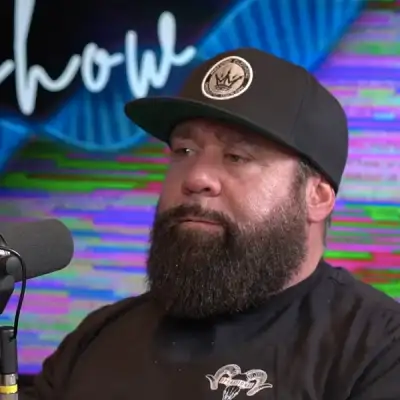
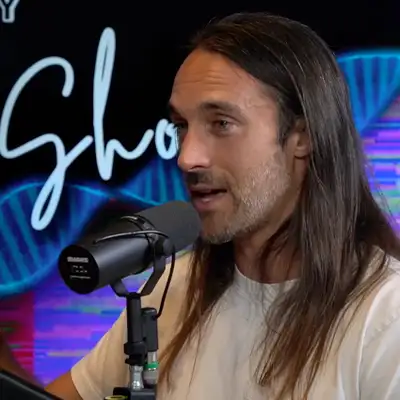
Roland:Always personalized given their goals, their abilities, their history, and the outcome that they want. You are tuned into the Everything's Energy, a brother, someone I very much look up to and one of the top trainers for pro athletes, bodybuilders, professionals, and even pro musicians in the Las Vegas area. I have the pleasure of interviewing Mr. Justin, thanks for being here. How are doing?
Justin-Dees:I'm great, man. Thanks for having me. This is awesome.
Roland:Oh, it's gonna be a good time. There's so much we can talk about in the context of performance, I'm literally trying to distill down where I wanna start with talking about performance. But before we get into that, I wanna know about your backstory because you're a self made person. Like, I know a little bit about who you are and where you've come from. I'd love for you to tell us that story just to give us
Justin-Dees:a sense of telling. I mean, I mean, obviously, everyone's not completely self made. Anyone that says they're self made, they've had mentors, they've had special people in their life, right? So but, yeah, I came from, you know, just a very low income family, not what you would think wouldn't be much opportunity. And I was in sports though since I was really young, so I've been active, like, since I was seven years old, playing football, baseball, soccer, all that stuff.
Justin-Dees:And, you know, that was probably my outlet in life because, like, that's really all I had. And as I I remember when I was young, I had an uncle that was into bodybuilding, and he would make me these birthday cards out of, like, bodybuilder magazines. He would like these homemade birthday cards.
Roland:That's awesome.
Justin-Dees:Yeah. And I would look at the cards, and I was like, I couldn't believe it was real, like, guys. Right? Like, I had no idea how they could look like that, and it was very fascinating to me. So from a very young age, I was fascinated with bodybuilders and bodybuilding.
Justin-Dees:I remember when I was young, the first Terminator movie came out, and Arnold, right, like, blew up. And so as I was going through my life, I was always following bodybuilding even though I was playing traditional sports. And then I got involved in skateboarding heavily. I got really burnt out in the team sports stuff, like, playing since I was seven. And then by the time I was in high school, I always found myself in practice, you know, and, like, you're I was a running back.
Justin-Dees:And, like, when we're running laps because alignment jumped offsides, I was getting pissed. I was like, why am I running? Why am I paying the price for this asshole? You know, right? And I just started getting burnt out on the team sports stuff, having been in practice since I was seven.
Justin-Dees:So my point is, skateboarding was a very freeing, really cathartic thing for me, and I loved it. So I was going in that route, got sponsored and I was doing that, and I actually my career ended because I shattered my ankle. I broke it in like five places, they said I wasn't going walk again normally, and I had, like, two surgeries, I was on crutches for almost a year. I couldn't skateboard anymore competitively, so I was really bored, and there was this bodybuilding gym in I grew up in Tucson, Arizona, and there was this powerhouse gym. And so I went and signed up at the gym, and I I was still on crutches.
Justin-Dees:And I would go and, like, work out my upper body. And I I had been lifting weights since middle school because I had, like, weight training class, you know. But like a lot of people, I had, like, the encyclopedia of bodybuilding and, you know, I would follow these workouts and stuff. And then once my leg was up to a point where I could work out with weights, I started doing that. But I would go to the gym every day to it was I remember when I would see all these huge bodybuilders in there.
Justin-Dees:They were all really cool to me, though. I was like this little skater guy. And I started putting on muscle and growing. Remember one day this female competitor was like, hey, you should compete. And I was like, in what?
Justin-Dees:And she's like, in bodybuilding? And I was like You know, when you're people's perception of bodybuilding is funny, right? Because my first thing is what most people say to that. I was like, you mean in the bikini? Like
Roland:The banana glass?
Justin-Dees:Yeah. And I'm like, no. I mean, that's stupid. Yeah. And he's like, no.
Justin-Dees:Seriously. You could do well. And, you know, time goes by, and there was another competitor in there. His name was Jesus Lam. He was like a a national competitor.
Justin-Dees:He a successful trainer. And he told me one day, he's like, listen, man. You could you could do really well in this. I'm gonna give you an opportunity. You need to come here at 5AM every morning and work out with me, and I won't charge you.
Justin-Dees:And then in the evening, you're gonna come at 5PM or so whenever you're off work and we're gonna work out again. And said, I'm not gonna charge you, but my deal is there's a bodybuilding show coming up in, like, a year, and I think you could win. And I in my mind, I was like, alright. Yeah. I'll I'll do it.
Justin-Dees:You know? And I said, okay. Cool. And then when I started doing that with him, I really didn't plan on competing. I just was like
Roland:Free training. Yeah. Yeah. I was like, when they
Justin-Dees:see us? Yeah. Cool. He's cool. He's jacked.
Justin-Dees:You know? So long story short, I ended up training with him. He taught me how to post, taught me everything. I did this show. I won.
Justin-Dees:And so and it was a really cool experience for me because it was kind of like skateboarding. It was individual. Mhmm. Right? And I really enjoyed, like, you either do the work for bodybuilding or it's going to show on stage that you didn't.
Justin-Dees:And you don't you can't blame a team, you can't blame anybody else. So I really enjoyed that process of pushing myself. And once I learned that you could study bodybuilding, exercise physiology in school, I was excited for the first time to actually go to college because I did not want to. And, you know, nowadays there's a lot of arguments, right, about whether college has been necessary or not, but this was a different time, you know. So this was in the nineties, right?
Roland:Not to age you,
Justin-Dees:but Yeah.
Roland:It was in nineties.
Justin-Dees:I mean, I'm 52. I'll be 53 this month.
Roland:Yeah.
Justin-Dees:So I ended up, you know, pursuing that in college. I went to Arizona State, and I I wanted to go there because it was the number one exercise fist program in the country and I just I wanted to see if I could I was a crappy student. Like, schooling didn't work for me. I was always the one that they said, like, you could be so. It was, you know, not the way I learned.
Justin-Dees:So but when I learned that I could study this stuff that I was really fascinated about, I was very excited to go to school. And at the same time as that, I had also, started working in I worked in a gym. I had moved up to Utah and, there was a ironically, it was a powerhouse gym.
Roland:I feel like powerhouse is the cliche name. There's every there's a powerhouse in every every state.
Justin-Dees:Yeah. Because, you know, back then, that was a very popular gym franchise. Yeah. And so I I was the first employee of this powerhouse gym that opened up in Utah. It was just the owner, his partner, and the owner's wife and me.
Justin-Dees:And so I ran everything. I did, like, the front desk, I did the sales, and I then I saw I got my certification, I started training people. And I took over this program called Apex Fitness Program, which was a system for training people doing nutrition, and it was backed by the National Academy of Sports Medicine. And I ran that program for the gym and it became very successful. And what I'm getting at when I talk about mentors is the owner of that company is a man named Neil Spruce.
Justin-Dees:And he has been a mentor to so many people in the fitness world. He started a company at Gold's Venice called Nutritionalysis and he was the first guru, the first guy to do diets for bodybuilders and like this coach concept, right? He worked with like Flex Wheeler, Gerard Dante, Rich Gasperi, Michael Hearn, and the list goes on and on celebrities. So many people it was called and then he changed the name of the company to Apex Fitness created this company that installed his systems into gyms And he was my first mentor. And the program at the gym I ran, we did so well that he asked me when would come when would I come work for him?
Justin-Dees:And that's how I ended up moving back to Arizona and going to Arizona State is because I was pursuing my degree there and then they brought me on to work at the National Academy of Sports Medicine in Tempe where the corporate office was. It's in Mesa now but it was there. And so II was being mentored by him and then all these people at the National Academy of Sports Medicine while I was studying the information. So, it was pretty cool but what I learned was what you learn in college is about ten to twenty years behind what's being applied. So I was always arguing with my professors.
Justin-Dees:Not in a mean way, but I was, like, you know, debating, like, this stuff. So I I I was able to learn at a very high level, hands on, right from the beginning. And at the National Academy of Sports Medicine, we trained Olympic athletes, a lot of pro athletes from a lot of pro teams. I did all the nutrition for those people. They had me do that.
Justin-Dees:And they had me also as part of the staff that trained the athletes. And I even did some lectures for them and stuff
Roland:too.
Justin-Dees:So that was an amazing experience. I was several years there, and then I moved back up to Utah to work for myself. And I had my own personal training company, and I've had it ever since. And then I owned some supplement stores, and then bodybuilding.com started to rise. And mine were brick and mortar stores inside of a gym, so I sold those because I I could see what was happening.
Justin-Dees:And and then I had my own personal training gym, I had about 15 trainers, and that was a really great entity. And and then but what I learned was I was I was pouring education in and training all these trainers, and then they would leave and go. And I can't blame them, but I was educating my competition, basically. Mhmm. So I was like, you know what?
Justin-Dees:I'm just going to focus on being my own coach and building my company that way. And so that's what I've done, you know, ever since. And so what? Since 1995, I've been working in this industry. And yeah, it's opened doors to I've worked with pro athletes, Olympic athletes.
Justin-Dees:It opens the doors to working with celebrities of every kind. And the reason why is because no matter what level of success someone has, how much money they have, most people do not know how to change their body or reach their goals physically. So it opens the door of respect. They respect you because you have something and you have information that they don't have. And so I've been able to meet so many cool people and work with so many amazing people and give them that piece of their life, you know, because you can't buy it.
Justin-Dees:No matter how much money you have, you can't buy muscles unless they're fake. They look fake. Right?
Roland:You kinda have to lift away yourself.
Justin-Dees:Yeah. So you have to earn it. Right? But there's a lot to how you do it. And, you know, you've people today that say, oh, all the science nerds, all they talk about is science and just work out hard.
Justin-Dees:Well, yeah, to a point, you you have to work out hard, but what they don't realize is what they're doing in the gym actually is all science. Right? Everything is it's just so when you can apply pushing people and teaching them how to overcome themselves and work way beyond what they thought, and you give them the right information, they change really fast and you help change their life. And so that's such a rewarding thing to do, is to be involved with people. I love the fact that every day I help people become better.
Justin-Dees:And that that's what's so rewarding for me. And people like and I purposefully tell people, you know, when you meet people, right, and they're like, hey, what do you do? You know, what do you do? Whatever. What what do you I always tell them on purpose.
Justin-Dees:I I don't say I'm an exercise physiologist or I'm I say, oh, I'm a personal trainer and I do it for two reasons. One, wanna see the reaction because most people, when you say that, their thought process goes to, you know, some young kid working at EOS or whatever. Right? Like, you know, with his clipboard. Rep counter.
Justin-Dees:Yeah. Yeah. And so they kinda look puzzled. And a lot of times, the response I get was, oh, is it like, is that all you do? I'm like, yeah.
Justin-Dees:Yeah. It is. I love it, you know? So my point is I I love what I do. I love that I get to help people every day become better.
Justin-Dees:Because once they learn this stuff and they apply it, it literally affects every other component of their life because the lessons they have to learn in how to change their body are lessons that can equally be applied in anything else in life to be successful.
Roland:Yeah. It's an interesting statement because through exercise I started my journey in the world of exercise too. Albeit a little bit different with putting, you know, people who had joint issues back together again, car accidents. I did a little work with athletes as well. Like you, I was drawn to the thing that no one wanted to touch like, Oh, I'm afraid what if I hurt them?
Roland:Or the one where it's like, Oh, this is like a 1% person, meaning they're at the absolute pinnacle of what it is they're doing. I want to see what they're really capable of. But what you said there, and I want to tie that into performance, is exercise can be such a catalyst for someone in a multitude of areas of life. And from what you've said, you have built yourself out to be a unique trainer among a sea of people who do something very similar. So how do you define helping someone become a high performer with your method?
Roland:How do you take that through exercise and then allow it to spider web out or to to grow out into other aspects of their life?
Justin-Dees:Well, okay. So I'll answer that. It's kinda like two answers. The way I do it specifically with the physicality part, like the exercise part, how changing their body is it's actually super simple. There's really four components that someone needs in their lifestyle to change their body.
Justin-Dees:Number one is their nutrition. And there's so much information now, fortunately and unfortunately, because A
Roland:little too much sometimes.
Justin-Dees:Yeah. It's it's it really is paralysis by analysis right now. But so my point is, with nutrition, it really is as simple as this. It will always boil down to this: if somebody wants to decrease body fat these are laws of thermodynamics, laws of conservation of energy these do not change, at least as far as we know, in this dimension, right? Is yeah, yeah, yeah, in our simulation.
Justin-Dees:Is you have to burn more calories than you consume. It's 3,500 calories and a pound of fat. If you burn 500 calories more per day than you eat, that's a pound of fat you will lose every week. Mhmm. Seven days times 500, that's 3,500 calories.
Justin-Dees:Now, being able to make someone do that is very complicated and complex because you're dealing with this myriad of things. Right?
Roland:Mhmm.
Justin-Dees:But once you understand those laws, then you know you have to make them move more and eat less or a combination of both. So and then you yeah. Obviously, you have to get into, okay, eating the right foods. Right? And, you know, getting enough protein in.
Justin-Dees:So the first pillar is nutrition. So once you teach people most people have the average person, and you probably know this, but every study they've done the University of Pittsburgh is one of the leading authorities on weight loss in the world. They have the national weight registry there. And they do a lot of research on fat loss and nutrition, but every study that I've seen that's ever been done on people guessing how much they eat, They eat twice as many calories as they think they do.
Roland:Really?
Justin-Dees:Yeah. And it's very simple. I even had a client recently who is a pro IFBB competitor, and I'm getting that person ready for a show. This person, not even intentionally, was eating an extra 150 calories with breakfast without even realizing it. Now, some people say, what's 150 calories?
Justin-Dees:Okay. Well, what is that times seven?
Roland:Somewhere over a thousand there.
Justin-Dees:Yeah. That's 1,050 calories a week. Right? So that's one third of a pound of fat a week. If that person's on a sixteen week prep, how many pounds of fat is that over sixteen weeks?
Roland:Mhmm.
Justin-Dees:Right? That's what's a third of 16. Right? Like, five point something Right? That's the difference between winning and losing, five pounds of fat.
Justin-Dees:So that all that stuff matters. So my point is, you teach people how to really figure out and know and understand all the calories they're consuming every day. Then you design a I do. I design a nutrition plan for them that maps everything out. And I use a process called metabolic typing.
Justin-Dees:It's been around for a long time, but it puts people in categories that where you have a starting point of what their macros would be based on how they respond to food and then you have a pretty good starting point and then you tweak it from there.
Roland:Does that dictate, like, if they're more carb sensitive, fat sensitive, all that kind of stuff? Yep.
Justin-Dees:Yep. And it has to do with what they call the oxidative rate, which is the rate people process food. Right. Some people process it slower. A slower oxidizer is someone that would need less fat and protein in their meals or else they'll feel really tired and sluggish if they eat that way.
Justin-Dees:So they do need and they function better off, you know, a lower percentage of fat in their total macros, and they can eat more carbs.
Roland:Are there some characteristics that these people typically share? Like, could you look at someone and know if they're a fast or a slow It's
Justin-Dees:someone looking it's more by There's a pretty in-depth questionnaire they fill out that talks about how food makes them feel, what they like, they dislike. So there's actually a company called Metabolic Typing, and they do very in-depth stuff, but Apex Fitness used them and kind of partnered with them, and I've used it ever since because it works very well. So you have other people that feel much better on higher protein, higher fat content, and a moderate carb intake. And so, again, it's just to say there is no right or wrong. There's no one way to prescribe this to people.
Justin-Dees:You have to figure out how that person functions best, and you can't be an absolutist. You have to like like, you know, you have people that are on keto or carnivore, or then there's people that are vegan or vegetarian. Right? There's extremes in all this stuff. The real truth is in real legit studies on nutrition in humans, you know, mostly show that you need a a balance with some carbs in it.
Justin-Dees:Mhmm. You know, carbs aren't bad. Right? You have just as many calories per gram as protein. But anyway, so the nutrition component is critical.
Justin-Dees:And this is for changing body composition.
Roland:And this is we're talking like elite level approach because we can talk some things that are maybe more for people who are not wanting to compete afterwards.
Justin-Dees:Yeah. You just to put it
Roland:in place.
Justin-Dees:To all humans, period. Right? You need your nutrition dialed in for your goal. Yes. Okay.
Justin-Dees:Regardless of what that is, you need the proper nutrition for that individual. Then you need to, again, now I'm gonna talk about because it's most people's goal, which is body composition change, right? Fat loss, muscle gain, and or both. You need the proper cardio prescription for fat loss. And we can get into that too.
Justin-Dees:You could talk for days on that. But my point is most people do not do cardio intensely enough to expend enough energy on daily basis to drop body fat.
Roland:So when you say cardio, you're talking
Justin-Dees:cardio Cardio respiratory exercise. Yeah. Elliptical machines. Aerobic exercise.
Roland:Long duration, steady state exercise.
Justin-Dees:Well, that's one form of it.
Roland:Okay.
Justin-Dees:There's also high intensity
Roland:interval Short interval training. Because when I think cardio, the last five, ten years, zone two cardio has become Zone
Justin-Dees:two has become a fad. Magic. But it's not. That's the funniest thing. Yeah.
Justin-Dees:It's training within 65 to 75% of your maximum heart rate. Well, we've taught that forever. Like if you wanna lose body fat, you have to start someone at about 65 of their maximum heart rate, about four to five days a week, thirty minutes at 65%. That's like a starting prescription for fat loss.
Roland:Okay.
Justin-Dees:Why is that? Because you you're not gonna okay. And here's here's another myth. We'll dispel a myth right now. People get confused with the topic of burning fat for energy and losing body fat.
Roland:Right. Because that 60 to 65%, that's when the body uses fat as fuel most efficiently. Correct?
Justin-Dees:No. There's a crossover effect.
Roland:You start using carbs. Above 65%.
Justin-Dees:Yeah. Well, it starts here's the way to explain it. Right now, you and I are burning 100% fat. It's called beta oxidation. Our liver produces a hormone called glucagon.
Roland:Unless someone's stressed, then it can actually shift.
Justin-Dees:Yeah. Yeah. Yeah. But
Roland:I've noticed in my own studies with, like, long fasting and doing the respiratory gas exchange, not eating for two days when you're stressed, you could actually burn a decent amount of glucose if your body's Yeah. Running through cortisol and adrenaline like the average person who
Justin-Dees:But here's the thing.
Roland:Out of control in life.
Justin-Dees:Right? So regardless of what your energy source is during your exercise, you burn a certain amount of calories during your exercise.
Roland:Mhmm.
Justin-Dees:And what people don't understand is whether you burn fat or carbs as soon as you eat, you put those back into your body. You put fat and carbs back into your body as soon as you eat. So, whatever you burn in that moment, you just eat that and more in your meal. So, it's not about what your energy source is during cardio that's as important as how many calories do you expend during cardio because at the end of the day and at the end of the week, your total caloric deficit is what will determine whether or not you'd lose body fat. So people used to say, oh, but you're not burning fat, you're burning muscle.
Justin-Dees:Like, no. I have a gas tank in my muscle called glycogen.
Roland:Mhmm.
Justin-Dees:It is a much quicker energy source than beta oxidation. The process of fat going into the bloodstream, that fat going to the liver, the liver turning it into glucose, setting it back out, using it, nervous system, muscles, etcetera, your brain. Right? So when people say, yeah, but you're burning muscle. No.
Justin-Dees:You're using a different gas tank. And the more intense your cardio goes, you have a crossover effect where you switch from, like, anaerobic, like like, beta oxidation. Right?
Roland:The fat burning to the
Justin-Dees:glucose. Or you aerobic. I'm sorry. I said aerobic, you know, pathways, like, up to a certain point, and then you start using glycolytic pathways, like aerobic glycolysis. And then the most extreme, you start using anaerobic pathways, which is carbs, and then ATP, CP.
Justin-Dees:Very short duration, high intensity. Phosphate system. Right. So but what exercise burns the most calories?
Roland:I would imagine the high intensity stuff.
Justin-Dees:Correct. Like, now people are starting to talk about v o two maxes and how that relates to longevity and health. Mhmm. So to do a v o two max test, you have to go to your absolute highest output possible. Mhmm.
Justin-Dees:Most people throw up on a v o two max test.
Roland:I've I've done those
Justin-Dees:Right.
Roland:It's not comfortable. It's not it's very, very helpful.
Justin-Dees:But my point is so you the but the the the concept is this. With cardio and fat loss, you have to do enough of it at the right intensity, if your goal is fat loss, to burn enough calories so that you have a big enough deficit that you actually lose enough body fat to look different. Mhmm. Yeah. And it needs to be now, some people say, yeah, a lot of people, there's there's a fad, a pretty common oh, I need to get 10,000 steps or, you know, this many steps.
Justin-Dees:Okay. Yeah. You could burn equal calories on really slow intensity, low intensities, low heart rate stuff as you could in high intensity stuff but how long would it take you to do that? You could burn way more calories in twenty minutes of hit cardio as you could in forty five minutes, sixty minutes of just walking. Mhmm.
Justin-Dees:So the issue is, okay, none of these are wrong or right. It's how do these Legos fit into this person's puzzle, right? Or this this person's protocol. Someone might not be able to do intense cardio because they have a knee problem or but other people might be zone two, I'm glad that concept has grown because a lot of people you remember on the cardio machines, it will show, like, here's your fat burning zone.
Roland:Yeah. Zone one, two, three, four, five. Yeah.
Justin-Dees:This is your fat burning zone.
Roland:Yeah.
Justin-Dees:So everyone's doing, like, really low intensity cardio not changing. Mhmm. You know? Sixty eight percent of people that sign up at a gym quit in six weeks. Sixty eight percent.
Justin-Dees:Why? Because they don't see any results. That's the number one reason. Mhmm. The number one reason people go to a gym, the term that was used in in the the studies that I've seen was called sex appeal.
Justin-Dees:What does that mean? They wanna look better naked. Mhmm. Right? So what does that mean?
Justin-Dees:They wanted to change their body composition. So that is the number one reason people actually work out. It's not health. Health is, like, number five on the list. Really?
Justin-Dees:And I'm not saying that that's, like, great priorities, but whatever gets people who are exercising is great. So my point is people want to lose fat mostly, so they need to be prescribed cardio in a way that will get them the results quickly.
Roland:It's gotta be effective.
Justin-Dees:Yeah. So that's the the number two component is cardio. Now, proper cardio, meaning it's for it depends on the person, the level of performance that person is trying to get to, and what their goal is. Right? But and then there's a series of processes where you can manipulate cardio to prevent a plateau because that's a number one problem with people doing cardio and they plateau.
Justin-Dees:I mean, I was giving a lecture at the Metro Las Vegas Metro PD office to a whole bunch of police officers. And because we were trying to teach them about fitness, you know, as a cop and not being heavy, it was a really cool thing. Because I had a guy come up to me at the end of it, he said we talked about these principles. I was talking about cardio and giving them how you should perform cardio. He's like, yeah, man.
Justin-Dees:I experienced that after three weeks of me running. I was preparing for a marathon. I thought that would get me in shape. I thought if I did a marathon, I would get in shape. He's like, for the first three weeks, I was losing weight really well, and then I quit losing weight.
Justin-Dees:But I was still running. I was even running more. And I was like, yeah. After about three or four weeks of doing the same type of exercise, the same distance, same intensity, your body becomes efficient. It adapts.
Justin-Dees:It becomes better at running. So you burn less calories now as you're better at running than you did when you started. Mhmm. Your heart rate's lower. You actually use less energy.
Roland:You physiologically adapt in a good way for the physiology, it's
Justin-Dees:For the goal of running.
Roland:But it slows down if it's an aesthetic or performance based goal.
Justin-Dees:Have less changes in body composition. So that's why you have to ask yourself, what is the person's goal? Is it body composition change or sports performance? Because if somebody wants to be really good at running, they have to do running. And they have to be so good at it, they can do it as long as possible, as fast as possible with as little energy as possible so they don't hit the wall or bonk.
Justin-Dees:Right? So they need to be adapted to running. But that's why you see a lot of people that do tons of cardio and don't look shredded like a bodybuilder. Mhmm. I hear that a lot, they're like, hey, my friend, like, runs all time, but they're kind of fat.
Justin-Dees:And it's like, yeah, because they've adapted they're not in a caloric deficit.
Roland:Mhmm.
Justin-Dees:Very good cardiorespiratory health and all those things, but they're not losing body fat anymore because they're completely adapted to their prescription. So, for changing body composition is completely different prescription than cardio for sports performance. Athletes really in most sports except bodybuilding, they don't care how they look. They care how they perform. They don't care what their body fat is, their abs don't have abs, like a
Roland:football player, for example. You'd be surprised. They secretly Well all care.
Justin-Dees:It's not their paycheck.
Roland:Exactly. It's not important for their performance.
Justin-Dees:Their paycheck is not premised upon their abs.
Roland:Correct.
Justin-Dees:Right?
Roland:Correct.
Justin-Dees:Unless they're a bodybuilder, but or a fitness model. So, again, my point is, you have to know, and this is where you get into and I I I explain this to everyone I can. There is no right or wrong as far as this is the best cardio, this is not, this is worse. Unless you quantify what the person's goal is. You can't just make a statement, oh, this is the best cardio.
Justin-Dees:Well, for what goal? You can't say that, or you're like, this person's doing it wrong. And it's like, I cannot say that without knowing what that person's goal is. If I know their goal, then I can say whether or not their prescription for cardio is accurate. So if you get someone's food dialed for their goal, you get their cardio prescription dialed for their goal.
Justin-Dees:And with body composition change, you need to periodize their cardio so they don't plateau in fat loss. So what I do is about you have kinda like four components. You have the frequency of their cardio, so how many days per week they do it, the intensity, their heart rate, the type of cardio they're doing, the mode of cardio, and time, how long is their cardio session. Mhmm. Okay?
Justin-Dees:With with when you have those four variables, you have these things you can manipulate to prevent someone from reaching a plateau with without making them just do more cardio. So what I'm getting at is about three to four weeks of doing the same thing. Someone will start to adapt. Their motor pattern will adapt. Like, let's say it's a it's a let's say StairMaster.
Justin-Dees:Mhmm. When someone first does a StairMaster, they're going on, like, level three or five and they're dead. They're dying. Their power rate's really high.
Roland:Legs are burning.
Justin-Dees:Yeah. They're like, this is kicking my ass. Right? And they gotta hold on, and they're like, really have to pay attention. You get that person four weeks later, they could be walking without holding on with their eyes closed listening to their music and going at a much higher pace on the cardio on the StairMaster.
Justin-Dees:So once you get to a point where and their heart rate might be the same as on level 10 at that point as it was on level four when they first started cardio on the StairMaster. So they're starting to I look at it as a tool. They're starting to use up that specific tool, so you switch them to the treadmill, for example, or the elliptical. Because they are unaccustomed to that motor pattern. It's the exact same concept when you take a football player in high school that has fall football, and he's in very good football shape, and then he also wrestles.
Justin-Dees:And he goes into wrestling, and he's throwing up and dying in wrestling practice, and the wrestler is like, football players are pussies. You you guys suck. Right? No. It's just that he had a completely unaccustomed stimulus of his exercise Mhmm.
Justin-Dees:That he was not adapted to. That's why he was gassing out so fast.
Roland:That sounds like a little bit of a personal story example. Well, yeah,
Justin-Dees:because I I did play football and I wrestled. And so all my buddies that only wrestled after football season, you come into practice and you're, like, getting your butt kicked. Right? Yeah. And so but that's what happens.
Justin-Dees:It's an unaccustomed stimulus. So with cardio, for fat loss, again, I've gotta quantify that. Mhmm. You need to keep the type of cardio unaccustomed, and then you can manipulate over time how many days a week they do it, how long each session is, and where is their heart rate.
Roland:So what you're doing is you're leveraging the inefficiency of the physiology of the body make the body have to use more energy to get the job done, thus burning more calories in the process.
Justin-Dees:Yes. And what does that cause? More fat loss. Yes. Very, very straightforward.
Justin-Dees:And then it's the exact opposite protocol for sports performance. They need to do the exact thing they're doing as hard as they can, as long as they can
Roland:To get as efficient as possible. Yes. So you tire out later than everyone else.
Justin-Dees:Yes. K. So then you have resistance training. And resistance training for body composition is completely different than resistance training for power explosiveness, whether it's power lifting, Olympic lifting, strong man. Right?
Justin-Dees:And that's another thing, man. Now with our our day and age of the Internet, right? Everyone's like, oh, you're doing that wrong or, you know, you're training wrong.
Roland:There's opinions on the Internet.
Justin-Dees:Yeah. And it's like well, people say that to me even in the gym. They're like, hey, that dude over there, that woman over there, they're doing that wrong, right? And I'm like, I don't know. I don't know what their goal is.
Roland:That's a brilliant assessment.
Justin-Dees:I'm like, I don't know.
Roland:Because that's a projection on someone not actually figuring out what the intention is.
Justin-Dees:I'm like, I don't know. Like and I used to use it as a joke when I would lecture, but I would be like, you know, a guy doing a one arm row, and he looks like he's, like, you know, starting a lawn mower. Right? For bodybuilding form, that's not how you would execute to maximize lat. But if you wanna start a lawn mower that guy is in a, well, a logger contest Yeah.
Justin-Dees:And he's starting his huge gigantic chainsaw lawnmower, then right on, bro. That's the movement you wanna do. Yeah. And I can't say you're doing it wrong because I don't know if that's your goal or not. So it's humorous, but it's also true.
Justin-Dees:So weight training, again, when when it comes to rest periods, rep ranges, load, all these things in body composition change, you know, the the buzzword, you know, is hypertrophy. It's not hypertrophy, by the way. People say hypertrophy. They say that in Europe or in in The UK and Australia.
Roland:There's an old joke, and it's to put the emphasis on the wrong syllable. I
Justin-Dees:even heard people called semaglutide semaglutide. Or but I looked it up.
Roland:Potato potato.
Justin-Dees:Yeah. But when we're gonna talk vernacular. Right?
Roland:I agree. Semantics is a big Yeah. Accuracy in language is the thing in educating people. Correct.
Justin-Dees:Right? You need to know how to pronounce stuff. So it's not
Roland:And hypertrophy means building muscle, just for those who aren't familiar with the
Justin-Dees:cross sectional area of a muscle fiber. Hyperplasia is something different. That's increasing actual muscle fibers.
Roland:And
Justin-Dees:they didn't used to think that that existed or was possible, and now we knew. We do know it. It does happen and is possible. But so, hypertrophy is usually the main goal for most people working out, unless they have, like, a performance goal only. Anyway, so getting people to train properly, that's where we get into the biomechanics, right?
Justin-Dees:Some people are not mechanically advantaged for a barbell free weight squat. They're not. Their femur is too long relative to their torso and their tibia. If the femur, the middle segment, is longer than your tibia and your torso, you will be disadvantaged at folding up.
Roland:Yeah. It makes it harder to actually squat and hold the bar over your femur.
Justin-Dees:Have to torso deflect further Mhmm. The longer your femur is to keep that vector of force from your traps to the middle of your middle of your thigh. Right? That's how you balance. So someone with a very short femur relative to their torso or their tibia like Tom Platz.
Roland:Mhmm.
Justin-Dees:Most perfect build for squats ever. He could squat better than anyone probably ever that we've seen. Right? Or Olympic lifters have that same segment ratio. Then you take somebody who that's why I do biomechanical analysis on all my clients because I was training this woman who's very, very tall.
Justin-Dees:She's a model. And we didn't even directly she never had told me that she had always struggled with squats, and trainers had told her, just go lower or just do it, you know, and she felt, like, uncoordinated and dumb.
Roland:It could be a risk of injury if you're forcing your physiology to do something it's not meant to do. And that's an important point we should probably make. Yeah. For people who are wanting to be high performers, you compared to you is really the only thing that matters when it comes to an external expectation of how an exercise is done. You have to do things to respect your own structure and your own physiology.
Roland:And
Justin-Dees:you can see patterns in biomechanics, right? So like this female client I have, I was training her, and I I don't for whatever reason, I was like, yeah, you should never do barbell free weight squats. And she was like, really? And I explained it to her about her femur is so long. It's so long.
Justin-Dees:And her torso is a lot shorter than her femur. Tibia is a lot shorter than her femur. And I was explaining it to her, she was like, oh my gosh. I'm so glad you told me that. She's like, I felt so dumb up until this moment in the gym.
Justin-Dees:Like, I was a failure because all my trainers, everybody else in my life had made me squat, and I'm terrible at it. And I go, yeah, you probably felt it in your lower back and in your knees more than like your quads and your glutes. And she's like, exactly. I'm like, yeah. So mechanically, you're super advantaged for lunges.
Justin-Dees:Great at lunges. You're you're very good at that. You're very good at leg presses because you can adjust for the femur length
Roland:Mhmm.
Justin-Dees:With foot placement. Smith machine is a great option for squatting with someone like that Mhmm. Because you can adjust for femur length, right, by by scooting the feet forward.
Roland:Mhmm.
Justin-Dees:So, you know, and some people, they're like diehard squat people. Say, no, everyone's supposed to squat. Sit on the toilet and all that stuff. And it's like, yeah, okay, that's with your body weight. That's functional movement with your body weight.
Justin-Dees:That's not with a huge amount of external force at the top of your spine. Right? So, anyway, the resistance training has to, like you said, be this is how I summarize it. You have to have the highest benefit and the lowest risk. You need to create exercises for people that have the highest benefit and the lowest risk.
Justin-Dees:There's always a risk. That's why it's like, oh, I don't I don't I'm not an absolutist. I'm not like, this is the best exercise or this is the worst exercise. It's like for who? With what goal?
Justin-Dees:So with the individual, I create the highest benefit, lowest risk exercises that I can.
Roland:Always personalized given their goals, their abilities, their history and the outcome that they Absolutely.
Justin-Dees:So, So, and then the last one is like supplementation, right? And that is an all encompassing word nowadays because you have dietary supplements, right, and then you have drugs.
Roland:Performance enhancers. Yeah. I'm glad you mentioned that because I wanna get into that, but I want you to kind of summarize, like close the
Justin-Dees:loop there. Basically what you do, if you have the proper food intake, calories, macros, protein grams, all the things for their goal, proper cardio prescription for the goal, proper resistance training program with periodization and all that applied properly, and then you have proper supplementation. When I apply those four things, I have never in my life had someone that did what I told them that's the key doing what I told them, and did not reach their goal. I've never had someone do what I said and not reach their goal. So I love that because I know I can get people to their goal if they will do trust in me, do the work themselves, they can change.
Justin-Dees:Right? Mhmm. But yeah. So that's how I work with people on that's like my my format with working with people and how I do program design and and all that stuff that you start off with has to change as they change or else they will plateau. If someone gains muscle, they need more food because now they have higher amount of tissue.
Justin-Dees:They need more protein grams than before
Roland:Mhmm.
Justin-Dees:Or else they won't continue to progress. Right? Or if someone wants to gain 10 pounds of muscle, they literally need to eat enough calories and protein like they already have that 10 pounds of muscle or else they're not gonna get to that tissue. Those are the building materials to build the house, right? So anyway, that's the process.
Justin-Dees:But at the end, yeah, we talked about supplements and what nowadays everyone talks about gear, right, or performance enhancing drugs. And yeah, that is, would say in the last, especially the last ten years, with the rise of influencers and TikTok, YouTube, Instagram, all social media, Man, there is so much talk about anabolic steroids and so many people talking about it. For whatever reason, Tremblon has become something like almost synonymous for steroids. Right? And Tremblon is just one compound, one anabolic steroid.
Justin-Dees:But you have the TREND twins that have their own, you know, huge social media following. You got all these young kids always kids always ask me about TREND. And I'm like, how old are you? You know? And I'm like, you should not be taking any hormones, sex hormones, testosterone, performance enhancing drugs at your age.
Justin-Dees:Period. That's my opinion. So maybe that's a good segue, that's a huge part of this whole world now.
Roland:Well, it does make me think of a question, right? So we're talking about high performance. If someone's not competing, someone's not wanting to be an elite athlete and elite bodybuilder or have, because let's be honest, athletes are not the greatest users of performance enhancers, probably actors and performance artists and these guys. Can you be a high performer adhering to all the principles that you put forth and get an incredible outcome not being anabolically enhanced?
Justin-Dees:Yeah. You can. Okay. Because I
Roland:would imagine that's the healthier route.
Justin-Dees:Yes and no, man.
Roland:Let's talk in the context.
Justin-Dees:Statement, but Okay.
Roland:Maybe define why you say no.
Justin-Dees:Yeah. That's a good point. So now we have to talk about for whatever reason, I don't think people really totally understand. There's a lot of theories, and they can get pretty ridiculous. For whatever reason, testosterone levels in men and women are substantially lower now in our society than they were in the past.
Justin-Dees:And so this is answering the question of: Is it possible to do this without enhancement? It's getting to the point where at a point in almost everyone's life now, if they get their blood work tested, they will get to a point as they age, and it's happening younger and younger now, and I'll give you some examples that are pretty surprising, where their testosterone levels are very, very low in men and women. Women have one tenth of the testosterone as men.
Roland:Women need testosterone, that's the misconception. Absolutely. They think women are only estrogen, men are only testosterone. All the sex hormones exist in both genders, However, the relationship of how they express and the quantities are very different.
Justin-Dees:Absolutely. So a woman who's very low, it's so this is getting to the point. And I've I've known about this world since before it was even accepted. In 1996 or '98, the National Academy of Sports Medicine, who was originally founded by Doctor. Bob Goldman, and he is known as one of the founders of anti aging medicine.
Justin-Dees:And he is an amazing human being, very, very brilliant guy. But he brought the concept of anti aging medicine, or what people call TRT now. I like the term anti aging medicine, though, because the whole goal is to keep people young forever.
Roland:Know, I've always had a with the idea of antiaging for two reasons. One, chronologically versus biologically aging is not the same thing.
Justin-Dees:Correct.
Roland:You can't go backwards in time. Yes, your physiology can get younger, but it also puts a stigma on aging that's a negative thing. For example, I feel better now than I did five years ago physiologically. So I probably am not biologically any older F at all. I've done a lot of work to make myself the best version of myself, but I'm not worried about being 40,
Justin-Dees:50, So
Roland:I like the idea of optimal aging, pro aging. That's a total aside. Just, we talked I
Justin-Dees:know it's the best
Roland:work. We talked about word choice and semantics and languages like, know, the A four ms, the American Academy of Anti Aging Medicine. It's a nice marketing idea, but the reality is we're all going to age. And I think a big part about aging well, if you have a positive mental emotional association with aging, you're also gonna age better physically because you're not gonna be unconsciously stressed and worried about getting No,
Justin-Dees:that's a very I'm glad you made that point and I like how you said that. Because I'm 52, like I said, I'll be 53 this month.
Roland:Happy early birthday, by way.
Justin-Dees:Thank you. And I am proud and happy of the fact of how I look and feel at my age. Mhmm. Right? And I hear people say they're old.
Justin-Dees:I have a client. I'm not gonna throw anyone under the bus here, but I have a client who's 30. He's always telling me how old he is. He's old. Right?
Roland:And guess what's gonna happen? He's gonna become old. Well,
Justin-Dees:good saying that. You need to say you something in that way because that you will become what you think. Right? So, no, but to to get back to what I was saying about antiaging medicine Mhmm. That was how it was first introduced.
Justin-Dees:Right? That was the buzzword.
Roland:It's a marketing concept. Yeah.
Justin-Dees:And Bob Goldman did that in the late mid to late nineties. Right? And my point is, they teamed up with the National Academy of Sports Medicine and Apex Fitness and a company out of Las Vegas actually called Synagenics. Synagenics would come to National Academy of Sports Medicine Advanced Personal Training Schools that used to be a week long. It was twelve to fourteen hours a day for seven days of intensive lecture and hands on stuff.
Justin-Dees:It was a really cool certification. Now there's so much online, you know, and and cool tools as well. But my point is they would speak to all the fitness professionals about testosterone replacement therapy, hGH, all this stuff, way back then, before, and everyone thought we were crazy, and like, that was inappropriate and all that stuff, right? So fast forward to now. So to get back to your question is, is it possible with or without this stuff?
Justin-Dees:You know, what what people are finding now, what, you know, on all these podcasts, like Huberman, for example, they talk about testosterone levels plummeting
Roland:Mhmm.
Justin-Dees:In in our men and women now. So here's the point. It is not healthy to have low testosterone. It's not healthy for a man to have high estrogen and low testosterone ratio. For women, they need the right balance of progesterone, estradiol, estrogen, testosterone, right?
Justin-Dees:And men need the proper ratio as well. And so, we know now, pretty definitively, if you do not have those in an optimal level, you will have worse health and more adverse effects cardiorespiratory wise, your mental capacity. So many components of your life will suffer if those hormones aren't optimal. So what we know now is a lot of physiological aging comes from those processes of those hormones decreasing. Bone density loss, mental acuity loss, motor pattern loss, loss of muscle tissue, loss of strength.
Roland:So Libido, everything is tied
Justin-Dees:to all that stuff. Even okay. Here's a cool example too, man. It's just so funny. Everyone talks about the midlife crisis, right, in men.
Justin-Dees:Back then, it was a dude, gets his tips bleached, buys a Corvette, and gets his teeth whitened. Right? And gets really tan. Right? He's having a midlife crisis.
Justin-Dees:Or or or guys because they're trying to feel young. Right? Yeah. It was, like, douchey as hell, but they're trying to feel young. And then, like, nowadays, guys or for a while now, guys will go into, like, a doctor or even a therapist, psychiatrist, and, like, I'm really depressed.
Justin-Dees:Like, I don't I'm, like, super depressed. I have no libido. Have no drive. I don't know what's wrong with me. Like, I don't look forward to anything.
Justin-Dees:Right? And they're like, oh, here, let's try some Prozac. You know, let's try some type of SSRI, you know, reuptake inhibitor. Let's let's give you a drug to mess with your brain. Right?
Justin-Dees:Now I'm not saying there's not situations where medicine is necessary like that. Right? I'm not saying that. But what I'm saying is that should not, in my opinion, be the first step. The first step should be nutrition, cardio, weight training, sleep, hydration, and supplements.
Justin-Dees:And now, we know if you give a guy with low testosterone because that's usually what they're dealing with at that phase of their life. Why they have no libido, why they're getting fat, why they feel like crap, no energy, no focus. If you do that for them and have them start exercising, get their blood work tested regularly, usually all these lipid panels improve, testosterone levels go up, muscle goes up, fat goes down, they feel way better mentally, emotionally. So, yeah, I believe there are less and less people that are maintaining high testosterone levels as they get older without needing testosterone replacement or hormone replacement therapy. There's a whole bunch of opinions why, and there's a lot of marketing, right?
Justin-Dees:There's I've seen some funny stuff. There's like, You don't need testosterone, you need to take these minerals. And I look at it's like magnesium and boron. And I'm like, Yes, those are important, but I don't believe just magnesium and boron is going to stop or completely prevent your hypothalamus pituitary testes axis from working. So, I'm a huge proponent.
Justin-Dees:I actually competed natural and bodybuilding until I was 34. I won shows natural. I was told I wasn't natural. It was a compliment to me. Like, they're like, there's no way you're natural.
Justin-Dees:And I didn't care. But I wasn't one of those, like, douchebags that was like, I'm naughty, you know, like, lifetime naughty or whatever. I didn't care. I just wanted to see how far I could take my body without taking anabolic steroids. And then, based on my background, by the time I was like 33 in a few months, I started feeling all those things.
Justin-Dees:Tired. No drive. No libido. Which was so unlike how I had felt before. And, yeah, I went into a doctor, got my blood work done.
Justin-Dees:And I don't know why it's crazy too. My testosterone was 79.
Roland:You rivaled a seven year old prepubescent female there, actually. Yeah, yeah,
Justin-Dees:yeah, And my doctor was hilarious. I came back for my follow-up visit to read my blood work with him, and he literally gave me, in my follow-up visit, six hundred milligrams of testosterone. My first shot. He administered it. He was like Dude, you are so low, man.
Justin-Dees:This is not good. So anyway, I didn't keep taking that amount weekly, but he felt, in his opinion back then, that was what would give me start increasing. So my point is this: I've been on testosterone replacement therapy, I've used HGH, I've used we'll get into this maybe, all the cool peptides that are out now. But, yeah, since I was 34, right? And I do feel absolutely and I get my blood work done very regularly.
Justin-Dees:And I'm not ignorant to the fact that there are risks with all this stuff, right? I just think there's a lot of alarmists out there that are like fearmongers, you know, they're fearmongering people. They do it with so many different things, right, in our society today with nutrition and, you know, there's these biohacker guys that say outlandish stuff about, like, oatmeal's bad for you, it has phytic acid, it destroys all your minerals. There's all this stuff you hear all the time and everyone's afraid to do anything.
Roland:A lot of unsubstantiated claims. Yeah. But what so what you're saying is contextually
Justin-Dees:Yeah.
Roland:With using things like exogenous hormones.
Justin-Dees:Yeah.
Roland:If you're in the realm of what we shall call anti aging medicine, which from all the research I've done is you're trying to find your way back to what a normal optimal physiologic range would be maybe two, three decades prior to the current age you're at. There's a couple experts, know, there's Doctor. Mark Gordon, Doctor. Thierry Hertog, and they say different ways of saying the same thing. They're trying to put you between 25 and 35 at an optimal level exogenously.
Roland:You're using a little, and it's not just men, women are also potentially in need of these things in your opinion.
Justin-Dees:Women have been testing extremely low, clients of mine.
Roland:Under proper supervision, regular assessment of blood work, when we start to go, because here's the line, right? What's human nature? Well, if a little is good, more is probably better.
Justin-Dees:And
Roland:you see some of these older guys, right? And you can tell all they do is they train upper body and they wear the skinny pants and they got the giant shoulders and the tan, the white teeth. And I go, there's no way you're doing this respectfully to your body. Because I come from the camp to where my inclination would be to push back a little bit on the sense of don't go right there. There are other aspects of your health and wellness that can be naturally improved upon and your hormones will to some degree follow.
Roland:But I will also agree with you in saying that the environment we're living in is a cesspool. It's an experimental cesspool of environmental stress. So most things in the environment that stress the body will negatively impact the endocrine system. Because my world is a nervous system and the endocrine system, they're the communication systems of the body. And when you fragment communication in the body, the body can't regulate things because they'll work on a feedback system.
Roland:So what about when you go above? Yeah. Like
Justin-Dees:supra physiologic levels we call it.
Roland:There's nothing healthy about that I would imagine.
Justin-Dees:Yeah. Well and and and look. Let's I'm gonna be a 100%, like, transparent. There are some people that do huge amounts of anabolic steroids and compete, you know, as bodybuilders, and don't experience what everyone thinks is going to happen to them. They get blood work done, they get calcium scores, they get cardiac ultrasounds done, they get every battery of tests done and they seem to be okay.
Justin-Dees:Now this is not to say go do it, right?
Roland:Yeah, you're not dispensing advice.
Justin-Dees:I'm gonna speak the truth. And then there's other people who die, right?
Roland:Well that's been happening a lot more in the last few years when it comes to this industry it's not just bodybuilders athletes have been dying, all sports have been dying.
Justin-Dees:And people can take this however they want, okay? There is again, you can't say causality because there's not enough research on it. But correlation wise, I believe when you start combining multiple risk factors, that's when people start dying. One of the risk factors as of late that is controversial, but the vaccine.
Roland:Sudden death syndrome wasn't a
Justin-Dees:Myocarditis, thing five years pericarditis we know now they are direct symptoms of the vaccine and the boosters. Now, can Okay, so you take an athlete who is pushing their heart maximally, period, just based on the nature of what they do. And you add in that variable, and then you add in anabolic steroids, and you add in blood pressure issues, all these other things that can come with that. Or Okay, that's going to be a recipe for probably greater mortality rates.
Roland:So,
Justin-Dees:I don't want to go down a rabbit hole of like, Oh, what's causing all this stuff? Right? But my point is, there's a risk to everything. The more anabolic steroids you take, the greater your risk is of having health problems. Yes.
Justin-Dees:What I will tell you is every pro athlete, at every level that I've ever worked with, including Olympic athletes, when they felt enough trust with me, they started talking to me and asked me questions about all the drugs they took.
Roland:People They took, not they wanted to take, they took past this.
Justin-Dees:Had taken, want to take.
Roland:So you're saying regardless of whatever the sport is, it's rampant, it's systemic.
Justin-Dees:Look, I yeah. No. It is look. That's what and you know what my opinion is? And people are gonna say this is probably wrong too.
Justin-Dees:Other people might support it. I don't believe drug testing in sports works, number one, because they all take them. Number two, I don't believe okay. My body, my choice. Right?
Justin-Dees:Okay, well, if you're gonna say that, then you should apply it all the way across the board to everyone's bodies. Okay? If it's your body, your choice, then let these athletes make their own choices, do what they want, if there's all these consequences, then they're gonna experience them. And if enough athletes start experiencing them, then maybe athletes will quit abusing them as much. I don't know, or maybe they won't.
Justin-Dees:But my point is, it's their body, their choice, isn't it? Right? And people will say: Oh, that's a bad example or this or that. Well, so is a woman that's had 15 abortions for birth control. That's not a good example for young women either.
Justin-Dees:And I'm not even anti abortion for the right reasons, I'm just saying you can find extremes in everything.
Roland:You're making a statement.
Justin-Dees:Right. So, but my point is, look, there's a documentary called Icarus. I I and there's another I watched it. Yes. K?
Justin-Dees:And and okay. This is a good example. Right? This is a guy who wanted who used the same scientist that
Roland:Lance Armstrong.
Justin-Dees:Lance Armstrong used. And by the way, little little I'm gonna digress for a second. I had a coach. I won't get his name. A great coach, good friend of mine.
Justin-Dees:But he was such a Lance Armstrong fan. And he swore up and down, and this guy coached pro bodybuilders and everything, you know, and worked with gear steroid protocols and everything. And he was being like, no, Lance Armstrong is the most drugs tested athlete. He's he's natural. And I'm like, no, he's not.
Justin-Dees:No, he's not. He's not destroying every other guy that's on drugs and not being on drugs. He's not. He's not. And we would argue about it all the time.
Justin-Dees:So then when the documentary came out or when everything happened, I I I was like, what what was that again about? And it's not that I, like, care if he did or didn't. It's just like it's funny how people would be like, no. He he's natural. And it's like, no.
Justin-Dees:No. None of them are. But what is natural? Okay. Like, I can play devil's advocate.
Justin-Dees:If you take creatine, you're not natural because you you you you're taking something in an amount you can't get from food at that level. So does that mean you're natural?
Roland:Well, that's playing with the semantics because then you're just saying, well, taking a cheating?
Justin-Dees:Like, know, it's like, where do you draw this line?
Roland:Like Well, the line's arbitrarily anabolic agent, no anabolic agent.
Justin-Dees:That's neat. Anabolic. I mean, every like
Roland:So super physiologic anabolic agent.
Justin-Dees:No. I'm just playing devil's advocate. I guess it's like, okay. Well, where where are you drawing the line with, like most people draw the line with what's acceptable to them. It's really unique
Roland:to use something you said before, birth control is an anabolic steroid. But, again, it's not an anabolic steroid associated with muscle mass increase and physical performance, but you're taking a big hit of estrogen to change the physiology.
Justin-Dees:Well, it's a sex hormone.
Roland:It is.
Justin-Dees:But estrogen is not anabolic.
Roland:Well, is in a certain way, not to muscle tissue, to fat tissue it is.
Justin-Dees:Right. Right.
Roland:To certain tissues in the body, it's anabolic, but it's not muscle hypertrophy anabolic.
Justin-Dees:Correct. Yeah. And so but to to get to this whole issue, it's like, you know, everyone in whether it's sports, everyone's looking for a way to be the best. They want an edge. Right?
Roland:Let's be on sports too. Right?
Justin-Dees:Yeah. Like, life now. Because okay. Like, we we we were talking about this before we started, but it's like, I've seen a trend. I think it's it's good for for the most part.
Justin-Dees:I think it's great. I've seen a trend in, like, successful men. Right? In this field of being successful in life. Right?
Justin-Dees:It used to be pretty much looked at as, like, financial. Right? People would look at, like, this guy's successful. He's got money.
Roland:The car he drives, the house he
Justin-Dees:lives in, all
Roland:that kind of stuff.
Justin-Dees:And then, you know, live in a very prosperous nation, there's a of millionaires, lot of billionaires, right? And in this world now with information being accessible so much, there's been this trend of okay, cool. You're rich. Cool. You're fat, though.
Justin-Dees:Right? You're out of shape. So you really not I respect you because you can't conquer yourself. You can't overcome that. Then so what I see in this trend of, okay, well, guess what?
Justin-Dees:The very, very 1% have abs, right? They're in really good shape. They're in really good health. And they have all this other stuff, too. So it's a cool trend in a way because it's gotten a lot more people interested in And I think, honestly, the understanding of testosterone replacement therapy and getting men to, like, a 20 year old, 20 year old level of hormones where they feel good again, they get results from exercise, has kind of like reshaped this fitness movement where older men now and I've even seen it in bodybuilding, man, the master's categories in bodybuilding.
Justin-Dees:These guys look insane. Right? They're like there's a guy that won a show I was at. He turned pro. He won the 50 and older category.
Justin-Dees:I wanted to see the guy's birth certificate. He looked like a 30 year old. I couldn't believe it. He looked so young. You know?
Justin-Dees:Like, everything face, everything. But he was 50. But yeah. So I've seen this trend of excellence now in life in men and in women is also having this, like, very high level physique or health and being in shape, and having low body fat, having muscle, and, you know So I don't believe that would have occurred without this explosion and acceptance of hormone replacement therapy because people's bodies won't respond like that.
Roland:Well, it's interesting because what you're doing is you're actually denying being at the mercy of what time would do naturally. And it's an interesting, I don't wanna call it a symptom of society, but it's a state of affairs of where we are in the world. Our grandparents would have laughed at this idea of like in your fifties and sixties, you want abs? Like you wanna, like we have to work on the farm, we have to do it was a different world. And I think it's a reflection of where we are in the world that we have an abundance of time, opportunity, relative scarcity of we'll call it externally oppressive stress on our day to day lives.
Roland:That's a debatable statement based upon how you want to look at the world, the state of affairs, politics, whatever is happening here But in the within The US, if you're living a life where you have the ability to go, you know what? I have time, I have money and I have motivation. I'm 62 and I can get in the best shape of my life. It's a pretty amazing time to be alive in that context. And for all those listening, this is kind of like a little bit of a physiology masterclass mixed with like a crash course in exercise physiology.
Roland:But I think how you laid it out was really incredible. You talked about the foundational pillars of someone who wants to perform at a high level. I want to contextualize this. To be at a high level and achieve success in your world, be it sport, aesthetic performance based sport, you have to be wired a little differently. You have to do things that are extreme.
Roland:And in some cases extremity breeds healthy outcomes and not so healthy outcomes, which means like there's a lot of stuff in your world where people have obsessive compulsive aspects and it's beyond the scope of this, but I think to round out the conversation and give people a takeaway, I think it's valuable to put everything in perspective. If you follow those pillars, regardless if you just want to feel a little bit better, look a little bit better or go, you know what, I'm going to compete in something because I've never done it before. It's a sound method. If you're in that world and you're curious about taking it to the next level, performance enhancing substances, anabolic agents, things you're taking orally, injectably, I do like how you respectfully laid it out. Look, there's a double edged sword here.
Roland:Double edged sword cuts through stuff pretty quickly, but it can decapitate you if you're not careful, right? Yeah. Get your blood work done. Don't go nuts, be diligent. And people think that the performance enhancers, you just take them and things happen.
Justin-Dees:Still get Yeah, they do the work for you.
Roland:You gotta put in the work. Yeah. You know, and in that, I think it's a respectable and it's also a sound philosophy if one wants to explore these things or better yet, if you've already jumped in this pool and no one's thrown you some water wings, this is kind of a flotation device.
Justin-Dees:There's ways to get yourself fixed or healthy, right? Real quickly though, I will admit there's some things coming out in the peptide world that almost do some of the work for you, and it's pretty crazy, especially with fat loss.
Roland:We might have to have you back to talk peptides. Because that is a confusing topic for most people because peptides are specific combinations of amino acids and they're, oh, they're low risk or there's zero negative consequences to taking these things. I actually don't know. I would be curious
Justin-Dees:to Everything has a risk. Everything. Has a risk and a benefit.
Roland:And drinking too much water theoretically has risk. Stupid example, but
Justin-Dees:it can kill you. You've seen people use the molecule of water and talk about all the things it can do to you. They just use the they don't say it's water. Right? And it's like dihydro mono oxidase or whatever, or oxide.
Justin-Dees:And it's like, yeah, this is water. It can kill you, it can kill this stuff. But, no, to summarize one thing Okay, here's how I'll present this. At the highest level of every sport, there is a massive risk in every whether it's football, boxing any sport. I'll give you an example.
Justin-Dees:The average life expectancy of a professional marathon racer is 50. The the guy that invented power bar, guess how old he was when he died? Was a professional marathon racer. He was 50 when he died. The average life expectancy of a Ironman competitive Ironman triathlete is 40.
Justin-Dees:Now, is it because they're taking EPO and all these, you know, drugs in their heart? Okay. I don't I don't wanna get into all that. My point is that's the most extreme of aerobic performance. They die young.
Justin-Dees:Okay?
Roland:Well, you burn out the flame too quickly. So
Justin-Dees:bodybuilding, same thing.
Roland:Right? Any competitive sport, an old mentor of mine said, when it's about trophies, it's no longer about health.
Justin-Dees:No, no. Because didn't remember the whole survey that was done. I think Sports Illustrated published it, but it was a study that was done where they asked athletes if they could take a substance that they would be the best in the world at and they would die. I think it was when they were 30 or I forgot what age they gave them but they were like Would you do it? And almost all of them said yes.
Roland:But that's the psychology of performance.
Justin-Dees:Right, and that's a differently wired person, right? I think that they kinda and I'm not saying look, in this world, people are allowed to choose, right, what they want. So I'm not here to say that's wrong or right. But some people wanna live an amazing life and don't care about how long their life is, so to speak, is how awesome was it until they die. Right?
Justin-Dees:Other people want to live long. But my point is, yes, people that want to be the best will do whatever it takes to be the best.
Roland:And I think the nature of finding a way to manage that balance is everyone's challenge in living in this life.
Justin-Dees:There's no balance for those people. No. It's not balance.
Roland:The extreme, the pendulum
Justin-Dees:swings far
Roland:back and forth.
Justin-Dees:In bodybuilding, the greatest bodybuilder to live so far was Ronnie Coleman. He achieved a level of muscle size and symmetry and conditioning that no one's done yet.
Roland:And he's also achieved a number of surgeries that
Justin-Dees:That's people what I'm getting at. Have ever Yeah, so everyone talks about that, right? But if you ask Ronnie Coleman, he has zero regrets. Zero. He said his only regret was he didn't squat the 800 at two weeks out for more reps.
Justin-Dees:Yeah. Yeah. So my point is that I'm not gonna tell Ronnie that what he did was wrong because he's had an amazing life. He's created wealth for himself. Does he live with extreme physical consequences?
Justin-Dees:Yes. He does.
Roland:That's what he's Someone signed up for.
Justin-Dees:Okay with that. He he's okay with it. Mhmm. So why am I going to sit here and tell him he's wrong? Right?
Justin-Dees:So my point is, yes, those kind of people will do whatever it takes to win. And yes, in that world, it involves drugs, performance enhancing drugs. Now, think still and now in bodybuilding, I'll be honest, a lot of people are learning that more is not better. It kind of went from a phase of take whatever, how much ever and see what happens to you. Now a lot more doctors are involved with working with these guys and they have so much better information and bodybuilders are realizing you don't need to take a ton of stuff to have the result you want.
Justin-Dees:The more you take it, there's a point of diminishing returns where you're just getting more side effects, not more benefits. And so I'm really happy to see that happening. I don't want anybody, right, to die because of a sport. But to summarize it, whether it's in business, like working yourself to death, right, neglecting your family and everything else, or whether it's in sports, or being number one, people will do whatever it takes. They they prove it every time.
Justin-Dees:So I guess the question is, yeah, what can we do to mitigate that? Right? What can we do to help people in that process to mitigate those risks? I think that's a great field to look at.
Roland:It's a contemplation exercise too, right? Because it forces the person to really self analyse and understand what they're willing to what they are willing to risk in order to achieve. That's kind of the ethos of this whole episode. It's if you want to be a high performer, sign on the dotted line because this is what comes along with it. So, you know, Justin, I want to thank you for your insights, your wisdom, all the stories, getting into a lot of personal stuff too as well because a lot of people are afraid to talk about some of these taboo subjects.
Roland:So I really do believe it was a worthwhile conversation to elucidate some of this stuff so people can feel a little bit less averse in terms of understanding it or exploring it, or maybe even sharing it with other people. Because if you're doing all this kind of stuff, you shouldn't be doing it alone or in silence.
Justin-Dees:I agree 100%.
Roland:All right. Well, everyone, thank you for being here with another episode of Everything's Energy. We'll see you next time.