Subscribe
Share
Share
Embed
A podcast on statistical science and clinical trials.
Explore the intricacies of Bayesian statistics and adaptive clinical trials. Uncover methods that push beyond conventional paradigms, ushering in data-driven insights that enhance trial outcomes while ensuring safety and efficacy. Join us as we dive into complex medical challenges and regulatory landscapes, offering innovative solutions tailored for pharma pioneers. Featuring expertise from industry leaders, each episode is crafted to provide clarity, foster debate, and challenge mainstream perspectives, ensuring you remain at the forefront of clinical trial excellence.
Judith: Welcome to Berry's In the
Interim podcast, where we explore the
cutting edge of innovative clinical
trial design for the pharmaceutical and
medical industries, and so much more.
Let's dive in.
Scott Berry: All.
right.
Welcome everybody.
Back to
In the Interim.
I am
your host today
Scott Berry
and
I
have a guest with me today,
and we've got a number
of topics to get to.
But first, let me introduce our
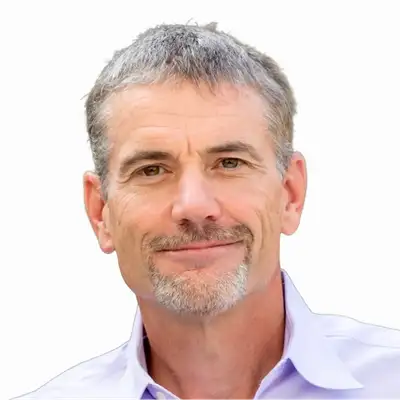
guest for today, Michael Hoge,
who is the As is an associate
professor of Epidemiology
Medicine
and
statistics
and
data.
sciences.
There's a lot of, and in there, and,
we'll, we'll, we'll talk about that at,
By the way, the university
of Pennsylvania at Penn, uh,
Mike Michael has
an interesting history,
at Penn.
Uh, we'll go through that.
he's also the founding
director of
the Center for Clinical Trials Innovation,
which specializes in statistical
design, analysis and interpretation of.
Large randomized trials
and cohort studies.
We'll talk more about that.
But Let's.
first talk about how
you got here, Michael.
Uh, You have a PhD in epidemiology
from Penn as well as a master's
in statistics, uh, uh, as well.
So, uh, you have
multiple degrees from Penn.
So let's talk a little bit about
how
you got here, a little bit about
your history to this point,
and welcome to in the interim.
Michael Harhay: great Scott.
Um, thanks you so much for having me.
It's a real pleasure to be here.
Um, a big fan of the podcast.
Um,
yeah, so I've written a
lot of personal statements.
I've told this story a
lot of times and, um,
I wish it was a little bit more
romantic and straightforward, but.
I've always kind of, uh, believed in
this concept of a calculated drift,
and I think my calculated
drift towards Academia
started, um,
as freshman, sophomore year of college.
I went to a small liberal arts school
outside of Pennsylvania for those, um, not
from the us It's has about 2000 students.
The name was Berg.
Um,
and I just really enjoyed it.
I like being in an academic setting.
Um, I majored there in neuroscience and
philosophy and very much wanted to stay.
And do more academics.
Um, and I like the multidisciplinary,
um, opportunity of being in a university
setting where I could dabble in the
sciences and the humanities and philosophy
and I didn't really know how to do that.
Um, so some Googling I found Penn's
bioethics program, um, which saw
some bio related to neuro, and I saw
some ethics related to philosophy,
and it seemed like a good next step.
Um, so I came to Penn, um,
the year after graduation.
Um, so this is 2006 at the time,
and I quickly found out that you
could pay for your graduate degrees
if you were a full-time employee.
So I got a job
in Penn's pulmonary and
critical care division.
Um, basically working on patient
registries for pulmonary hypertension.
And
I just started taking classes and
learning how medical research worked.
Clinical research worked, um,
alongside a bioethics degree.
I was really hooked on the production
of data and how data was used.
Um, and I didn't quite know how to
transform that, so I just kind of
kept on taking classes over multiple
years until I met a young fellow
who had transitioned onto faculty.
And I joined, um, I started my
PhD in 2013 in epidemiology.
So during that time I picked up a
couple degrees, um, in bioethics
public health and demography, and then.
Ultimately my PhD, but a lot of that
I think was just me experimenting
with different ways of doing human
and human level and population
level research and trying to
figure out what I found attractive.
Scott Berry: uh, interest.
So, so at what point in there.
Did the quantitative side of
that, you had philosophy and
bioethics and it
sounds like initially maybe in
the the pulmonary and
critical care you were doing some data
stuff, at what point
did
the quantitative side
of
this interest you?
Michael Harhay: so I was,
always handing off data sets
and then they would come back from a PhD
level statistician where collaborator and
there are always gaps where I was kind of
asked to do smaller things, um, in Excel.
And I think I increasingly just
started to teach myself how to
code, um, first and formally.
Then I started taking,
um, classes in 2009 where I
was first exposed to data.
Um, I know some users and
listeners may not be a big fan,
but I just really enjoyed coding.
Um, and then I joined an analytics
group in 2011 where I started to really
get to work with large data sets and.
I loved it.
I enjoyed nothing more than
waking up, making coffee and
just coding throughout the day.
And, um, I purchased a bunch of books
back then and I increasingly just
got really interested in transforming
data, extracting things from it.
Um, but very aware that I needed some
type of formal training to really
translate into a set of tools, um, that
I could actually extract things from.
Scott Berry: Interesting.
So, so if, if we're, if we're counting
here, just to make sure I have this right.
So you have four Master's
degrees and a PhD.
Do I have that right?
Michael Harhay: Yes, that's correct.
No more for now.
Stopping.
Scott Berry: Okay.
Okay.
Uh, alright.
We'll never say never in that.
All right.
So I asked you how you got
here
and now.
So let's talk about here.
What, what, what is here.
so you're
a, an associate professor of
Epidemiology and, and you founded,
now, uh, upon reaching
Tenure, Tenure, you founded.
the
Center for Clinical Trials Innovation.
Uh, tell me a little bit
about the center for
Clinical Trials Innovation.
Michael Harhay: Yeah, so it's very much.
A culmination of about 10 years of being
exposed to different topics and trials.
Um, so during my PhD
um, in epidemiology, I
had a little bit more
of an apprenticeship type where
I worked under a physician
scientist and MD PhD, um, who ran
both behavioral trials but also
comparative effectiveness trials.
um,
and uh, behavioral trials tended
to be large multi-arm, uh, trials
with multiple different con contrast.
And then we had a couple.
Critical care based trials
in, um, our healthcare system.
And both of them kind of brought me
into a lot of different questions,
um, that we can return to, but
some of them
being, um, just dealing
with multiple intervention
studies and multiple comparisons and
thinking about what the
risk of false answers was.
And that always kind of bothered me
when We were doing behavioral things.
Um, and then on another side,
uh, we were doing studies in our
healthcare system and there's inherent
clustering, um, inherent time factors.
There's also fixed sample sizes, um,
and you can't really control them.
So you're trying to think about how to do
things best.
And then another area.
of interrelated research that, um, I
spend a lot of my time thinking About
that's become a big driver in the
center is how to deal with, um.
Not fully observed outcomes where we
call it informatively truncated outcomes.
So
in the ICU, we're very interested
in questions like duration and
mechanical ventilation or how long
an individual is in the ICU, but if a
percentage of those people die,
you don't have kind of a clear
treatment effect estimate comparison,
because for some people time
in the ICU is time to death.
And for other ones it's time to discharge.
And at the time I didn't really
have the ICH nine framework for, um,
the.
Intercurrent events.
So a lot of my dissertation was
trying to make sense of that,
um, in a more, um, immature way.
But
after that, I did a, um, K
99 or zero zero award, which
w um, supported my
postdoc and then became my
um, early career faculty award.
Um, it supported me my time
at Penn and during that time I
started to build out the work
on, um, intercurrent events and the s
demand framework became more popular.
And I started to
get involved
in more formal
ways, um, in trials
increasingly as like an MPI in
a trial where I would work, um,
as a kind of methodology
lead with a clinical lead.
And that started to lead to a lot of
research questions that we didn't really
find answers for in the literature.
And I can talk more about
them, but over the last four
or five years as an assistant
professor, I started to feel like
We were trying to answer questions where
the methodologic guidance for how to
answer those questions wasn't clear.
And what I wanted to do with the center
was to kind of create a way
to answer those, but also,
um, to support a training hub
where we could train young
academic trial methodologists.
Um, it tends to Be
mostly statisticians as far
to these real world questions and
to kind of advance their careers
and, um, that's what I'm trying
to put together at the moment.
Scott Berry: Very nice.
So I, I,
want to
come back
to this question of measuring
things, uh, uh, critical care.
Uh, very interested in, in
endpoints, in critical care,
the, uh, about the center now.
So you have
Uh,
dedicated
uh, personnel
to this.
You have other individuals
at Penn that are part of this
center, so this is just a, a
relatively
new center, but you're looking to expand
its impact and its role, it sounds like.
Michael Harhay: yeah.
Um.
I think it's a little bit of, it kind
of existed in a non-formal
way on one hand.
And the other hand is like,
if you build it it will come.
So, um, I have a couple, we have
two methodology grants.
One's an RO one from the NIH and
one pcori, and
that supports like formal statistical
methodology.
We mostly focused on this
question of intercurrent
events and composite
outcomes.
And then
we have several trials
that we support.
Across the continuum.
Some just being in consult, uh,
consultative support and others
where I'm the formal pi and we
have one of someone on my team
serving as a primary statistician.
Um, and these are all
health system based trials.
So I've been using those different
funding mechanisms to
kind of build a base.
So we have a
formal PhD staff,
statistician, two postdocs.
And then a lot of collaborators who are
really into the calls, um, and are
helping me bring on mentees and
also bringing on
their own trainees in different stages.
So
it's starting
to become a little bit of a
critical mass and gets them inertia.
Um, and it, it's kind
of really cool to watch.
I don't
know exactly
what it will become, but there's a
lot of people who want to do more
innovative health system trials, and
that's become very much our focus and.
Increasingly, there's just new
opportunities and new, um, venues
that We can expand ourselves.
And I'm, I'm, very strategically
trying to find cool internal partners.
Um, and it's been a lot of fun to kind
of create and just kind of be creative on
a vision, um, like something like that.
But it's also
to calculate a drift concept.
Scott Berry: Yeah.
Yeah.
Uh, very nice.
So I
I want to, I.
I I am
very interested.
in this idea of healthcare based,
uh, uh, health system based trials.
Tell me a Little
bit about
what that means for Penn.
Do you have a set of hospitals
and you're doing comparative
effectiveness within this?
So
it's part of caring for the
patients, but also learning
what, what, what what is available
for Penn?
Michael Harhay: Yeah,
so we have several trials within
Penn, um, and also we collaborate
with several external partners.
So
let's start with Penn because
it really, I think, highlights.
Where I think the innovation
kind of comes into what we do.
So Penn Medicine,
um, has six
hospitals, uh,
depending on how you
count about 40 exclusive
primary care practices and then
a handful of other practices.
There's obviously outpatient
clinics, all different types of
things in the greater Philadelphia
region, and that is a remarkable.
Opportunity for experimentation.
Um, you can improve primary care
practices, you can improve in
hospital practices, you can improve
ED delivery.
And we have multiple
different ways to experiment.
We also spread across wide
geographic areas with different,
um, patient populations.
We're serving different
patient populations, so going
out towards rural Pennsylvania,
going into more dense, um.
Northern New Jersey area.
Um, and then obviously have
different practice variation.
So we team with
a couple different groups.
At the moment,
it's principally critical care,
primary care practices, and we have a
specific center called the Center for
Healthcare Innovation and Transformation.
That also is collaborating across the
health system, trying to help different
service lines, um, like obstetrics
or um, oncology improve.
Or do things that they believe
will improve the delivery of
their care or just sometimes be,
have a good return on investment.
So I can give you a couple
examples of some projects we've
done that I think are kind of
neat in that vein.
Scott Berry: yeah,
no.
So
that is that I, I think this is actually
the future where if you think about
it from a perspective, our who do we
learn from about,
right ways to give treatment,
what treatments work or not.
We
learn from such a,
small fraction of patients.
Uh, in
Clinical trials,
randomized said,
but
yet we're, we're, these
decisions are
being made every day.
and I think
critical care is
a really nice
area
and
and I'm,
I'm echoing
what other clinicians
tell me.
I'm not an ICU doc,
but
largely
care
is random.
There's, they, they don't
know a great deal about this.
They're individually perhaps learning
at a patient level, but None of this,
uh, there's a
huge
set of things that are done
that we don't learn from that
we
could potentially make this
a learning healthcare system.
We could treat them better.
We could learn, uh, extend those.
I was involved with UPMC, which has a
large extent of, of hospitals west of you,
uh, Pittsburgh based.
But even through that,
Where even in elective surgery,
there's a great deal of things that,
That they
really don't know, uh, about how
to care for nausea and
vomiting, how to, you know, what
should you do before surgery?
all of
these things that could be
learned as you treat in that.
So I'm fascinated.
You said you had
a few examples of
that.
I'm fascinated by
what some of those examples look like.
Michael Harhay: Yeah,
I think some of them are so
elegant and clever and they
have such profound changes.
So,
um, I'll I'll start with them and we can
Go through them in a different
depth if you find 'em interesting.
So we just had one paper, um,
published in JAMA Surgery where the
idea was to change how many opioid
pills the EHR, um, default ordered.
So if you come into the ER
and you have a major injury, the
default
number of opioids may just be 30.
So we changed it to 10.
And then asked how frequently do
people come back for new medications?
How often do people complain?
Um, that it's insufficient.
And we found that, generally speaking,
very few physicians overrode the change
of the default prescription number.
And we didn't have a large number
of complaints to the ability we
were able to follow up patients.
So
opioid um, use is a big challenge
in the Philadelphia region,
and one of the goals is to keep opioids.
Where they should be ideally,
um, and to those who need them.
So simple kind of default
changes in our EHR are something
we try to leverage a lot.
We've
used similar mechanisms to increase
the delivery of palliative care.
Also to make the delivery more targeted.
So it is a finite
resource and you need to,
um, send
the physicians out to where
they can ideally be most,
um, useful and have the largest
impact.
We've used it to
kind of triage people.
Um, in our primary care practices, we
have used it to, if someone's come back
several times and just has a high blood
pressure that's not coming outta control,
maybe we need to identify them as someone
who's high risk for genetic disorder
and should be screened for
a different type of therapy.
So we are
trying to find ways to
improve, and this is not really
me thinking of the clinical ideas.
I'm kind of helping with the design, but.
These are the
questions we get is like, this
is something that we're not
doing in a standardized fashion.
It's kind of an easy win.
If we could do it better, can I test it
and create some evidence base around it?
Um, and people are really clever
clinicians, really see how the
things work, and it's really neat
to hear about the human computer
interface with DHR and ways to modify
it.
And I'm helping kind of put a statistical
paradigm around that to test it.
Scott Berry: So
interesting.
So the, the question of how many
pills is the initial order, the
default order, um, within that,
um, that's
done at a cluster level or
a hospital level, it
sounds like not a
Patient level.
Yeah.
Michael Harhay: Yeah.
So for
a lot of reasons, um, we tend to do
the vast majority of our research at a
cluster level.
It tends to be a practice
level or a hospital level.
Um, so we have six hospitals in our
system, or 40 primary care practices.
So we tend to do cluster
level randomization.
We also do provider level randomization,
though there's some, there can be
challenges of that in different fields.
Um, some just shift,
um, specialties just have the
way the patients Are exposed,
um, can potentially shift.
So
we're tend to mostly randomize
at the cluster level.
We do do some individual level
patient randomization, but
that's not kind of our, um,
It's a, it's a minority
of what we get to do.
Scott Berry: Yeah.
So I'm, I'm, I'm interested as you do this
in, in, a number of trials
that have tried to be,
embedded within the healthcare
system and, and that
there's a whole range of what
embedded means.
But in
that setting, once you're addressing
one question, you're collecting the
data and you're looking at it, it,
becomes.
I don't know, intoxicating is a
pejorative word, but it becomes
intoxicating to say, we've got
a
captive set
of
patients and questions.
let's
investigate,
two things rather than one.
let's do factorial things.
Let's do three
things.
You know, it's almost free to add
a third thing once you're doing two
and, and you know, four sort of thing.
Has
that.
happened within these trials?
Michael Harhay: Yes, because a lot of the
interventions we're doing are not usually
single component interventions.
They tend to be
multiple components.
And there's a couple scientific
questions in the multi-component
question, just by default.
So do all
the components need to be there?
Is it the existence of one?
Can we get a little bit of
a, an effect by adding one?
And then if we add a second one,
do we get kind of an additive
or a multiplicative effect?
Um, so we play a lot in cluster designs,
cluster randomized trial designs.
Just for listeners
who may be unfamiliar,
that means that we're
randomizing.
Groups of people.
So groups of people based on, um, what
primary care practice they come into, what
week they get their critical care, what
emergency department they come
in, in our healthcare system.
Um, so we are playing around with a
couple different component designs,
um, where we are trying to look
at all these different questions.
And
so, yes, a large number of questions tend
to be embedded in a lot of our trials.
Um, and it is largely to try to decompose.
Different, uh, contributions of different,
um, strategies to improve an outcome,
Scott Berry: Yeah.
Very nice.
Uh, well, what's
come up in a number of hours
as well
is.
Combining together cluster, randomized
with individual randomized in a
factorial way.
Have, have you run into that.
Michael Harhay: so we have
our first trial, uh, under
review at NIH where we have.
Cluster level randomization of
clinics and then, um, individual
level randomization within patients.
So we are just kind of
this, um,
two level cluster randomized
cluster randomization.
I Can't take credit for the design.
Um, one of my primary
collaborators and, um, my, uh,
cluster
trial, um, Oracle is fan, Lee
is a biostatistician at Yale.
Um, so he's a big.
Thought leader in
our group, um, and contributes
very heavily in our program.
So he's developed cool designs like that.
So I'm
very hopeful that when NIH funding
kind of comes back online officially,
that will be one of the, um, cool
things we get to really roll out.
Scott Berry: Hmm.
Very.
nice.
Very nice.
I I, you talked about endpoints, I
imagine in all of these endpoints
are, are interesting, but Let's
go back to,
the critical care scenario.
And I bring this up because my call
last night,
with.
we have a global call for.
REMAP cap.
The REMAP cap is a trial
that is a community acquired
pneumonia is the cap part of it.
And so we generally,
have hospitalized patients in, in ICUs.
And we, we, for 10 years now, I've
talked about what's the right endpoint.
Um, and, and it it's
continually the discussion.
So it sounds like you spent a good bit
of your dissertation on this question.
Of, of this And
still addressing this question.
today.
And it's Interesting.
You brought up the role of E nine
and, and,
and, all of this,
So let's
talk about critical care.
endpoints, um, within this.
Michael Harhay: Yeah.
I've spent, I think, uh, at
this point a quarter of my life
trying to solve this question.
So
Scott Berry: yep.
Yep.
We
see a lot.
of this question,
and
I,
I've kind of fought hard
that
even
they'll
ask questions about what is the,
what is the distribution,
of
length of mechanical,
ventilation for those that don't die?
So
let's set up a scenario
where it's intensive care.
You can go back to.
COVID and some individuals come
in and they're on,
me, uh, uh, life
support, let's call it.
And you're interested in
the length of life support.
You're doing interventions to them, and
you're wondering that and some patients
die.
during that process,
if
you're really interested, in the
length of organ support, what do you,
uh, what do you do?
with That patient,
within the setting?
and it's always struck me as
hugely problematic when you sensor
that.
out or you remove patients
that die, and you only look
at the length of organ support
and
you've pulled people, out that in fact are
the, the worst
Outcomes
Within that,
It's, it's a really hard question
without
somehow including mortality.
as part of that.
Michael Harhay: Yes.
I couldn't agree more.
Um,
you want me to respond
Scott Berry: I, I
want you to respond.
Yes.
Yes.
Michael Harhay: Yeah.
So, um,
I
this is, I think this question has, uh,
very profoundly shaped
me as a methodologist.
I think it shapes the way
I think about questions.
It's been very transformative for me, and
I, I can just give you some, uh, cliff
notes about that and you can tell me which
part you wanna jump in
most.
So, as a
PhD student.
At that time was
calls inference.
It was around of course, but I don't
think it was as popular as it was
today.
And the Esti mans framework, especially
in our current events, I, I, didn't
have a formal framework, so at the
time I was just thinking about it as
we have a distribution in front of
us, how do we model that distribution?
And it's, you know, tends to be a
little bit of a negative binomial
distribution kind of gamma, where you have
a bunch of people early who
have, are discharging in a Long
tail.
But then you have people that die.
So this really kind of
complicates the question.
So for people, as I mentioned
before, people who die, it's not
duration, mechanical novation, uh,
mechanical ventilation, it's time
to death.
And for those it's, uh, who survive,
it's their time to discharge.
So I spend
some time
exploring what are options.
And the big one at the time
was competing risk models.
And the challenge of competing risk
models, just like survival models,
is they kind of make this assumption.
About what would've happened if people
didn't have the event of interest.
And this is
counterfactual and obviously
people are not going to not die.
So it didn't really make conceptual
sense and my PhD mentor at the time said,
yeah, competing risk may be a modeling
solution, but it's conceptually invalid.
So then I moved on to this
concept of joint modeling, where
you would kind of model the,
um, longitudinal probability being on
where the daily likelihood of being on a
ventilator.
And then you can also model the,
um, competing events separately
and then pull them together.
And I remember my other mentor said, but
now we're thinking about a counterfactual
probability distribution and being
on a, uh, ventilator that would've
been observed if people never died.
And that was the first time I was
really exposed to this concept of the
hypothetical scenario for estimates.
And I never found it
conceptually, um, digestible.
So then I spent a few years kind
of getting into this estimate
called the survival Average
Causal Effect.
And I find a lot of attraction
here, but it has a limitation.
Um, so I can talk about that for a
Scott Berry: minute
yeah.
Yeah.
So, so let's
like de describe
what that, is.
Um.
Michael Harhay: So
it's
a clever estimate, and the idea is that
at the beginning of a trial, you have
these latent strata of individuals.
So the simplest scenario is you have
Some people that would always
survive to the end of the trial.
And let's just say this
is a 60 day follow up.
You have some people who are very sick and
are gonna die, and then you have these two
middle strata, and these are people who,
I'm sorry, that last strata is two people.
They would die regardless of.
They were exposed to the
intervention where to control arm.
Then you have these two middle
strata and You have some strata
that will only survive if they're
exposed to the intervention.
And then
some people, they'll be
harmed by their intervention.
So they would only survive.
They are, uh, ex um, given to control.
And what you want
to be able to do is identify
these always survivors, this four strata.
And these are these people that would
always survive to end the trial regardless
if they received intervention or control.
And the concept there is that if you can
isolate this strata people or stratum,
um, then you can say this is the average
causal effect among these individuals.
And I
think there's a lot of kind of
conceptual attraction there.
But the obvious kind of issue is
that you're no longer looking at
the full randomized population
and that raises issues of the ITT.
Um, it's
also a much smaller population
and critical care trials are
already small.
So
I like that.
And I spent a lot of my life developing
statistical methods to estimate that
' quantity.
cause I do think it's informative and
I think certain clinicians like it
and
it's.
Viable and attractive.
Um, just as additional information,
I think about it as like a
subgroup type of analysis.
Now
that's informative, but for
the last several years we've
increasingly been working on
composite outcomes, which is the kind of
last third, uh, intercurrent strategy.
And we spend a lot of time
trying to think about What is a
statistically valid, patient, relevant,
and clinically interpretable.
um,
Uh, composite outcome
and my colleague Chris
Scott Berry: Yep.
So, so let's let's
pause here for a second.
Uh,
and then we'll go to, to, to, to Chris.
So a
composite.
You talked
about hypothetical,
and so largely in the ES demand,
we're
trying to identify
what would've happened if this,
this intercurrent event of
mortality wouldn't have happened.
In order to model that, a composite
outcome is saying, We're actually
not gonna even make mortality
a an intercurrent event anymore.
It's
We're gonna make it part of the
endpoint.
That
Somehow we're gonna create a
single endpoint where mortality
is part of that endpoint and, and
that's making it a composite,
uh, uh, within that.
And so that, that's what you mean by that.
Okay.
So,
So, what might that look like
in an, in the
intensive care, what's a
composite strategy of mortality?
and organ support in the ICU?
Michael Harhay: Yeah, so I think
the most traditional one, um,
in,
I know you have used a variation of this
in some of the remap cap
platform and many trials do is
what we call ventilator free
days or a wider capture.
Its organ support free days.
And the concept here is that you
have a distribution of days over a
duration of period of time.
So let's just take 30 days.
And for everybody who survives, you
have the
number of days that those
people didn't require.
Mechanical ventilation, where some
other modality of organ support.
And then for
those who die, they tend
to get a fixed value.
variations of it have treated
that value as zero, like no organ
support free days.
And there's another
derivation that uses it as
negative one to kind of
demarcate that it's a separate,
um, level in this continuum
of the survival, um, the, the
observations that would observed
among survival, those who survived.
Is that a fair summary of it?
Scott Berry: I
I,
think that's a fair summary.
And so you've
got, you've
got,
um,
this
minus one outcome that a patient died.
Zero would
then be that the patient
survived, but They had zero days
free of organ support
for 28 days or 30 days.
They might have been on organ
support the entire time.
Somebody who's a
one.
Survived.
And they had One day,
free of organ support, uh,
and then two and then so on.
Michael Harhay: correct.
Scott Berry: And so
now that endpoint is a, composite.
it
includes mortality.
Uh, in the end point,
it includes us.
by the way.
This shows up in all kinds of
diseases.
We do
a lot of
neurological,
diseases.
You started in, uh, your, your
undergraduate in neurology, but
you can think of Alzheimer's.
where you look at a cognitive test
of an individual, and then you have
patients that die in that process.
And what do you do with
death?
And cognitive decline is, is
really the same sort of issue.
We Have,
this in acute stroke.
we have, individuals and we have,
their neurological status,
and you have some that die.
What?
How do, how do you do this?
so
in many ways
now
you've created a composite endpoint.
what
I've been worrying out a a lot about
is how do you analyze that thing?
So
Michael Harhay: Yep.
Yeah.
no, it's um, it's a numerical
or statistical solution.
That has, um, kind of just really to
me, intractable conceptual challenges.
Like how do you analyze that distribution?
So then it brings back to something
I mentioned a few minutes ago.
You can look at it
and you can say, okay,
we're, is it left skewed?
Right?
Skewed normally, streed skewed.
Then You can think about
like, well, do you want to
prioritize certain, um, shifts?
Do you care about the shift
between negative one to zero?
Um, it's just a lot of
questions that I have not really
been able to fully set on.
Um, and that has always brought me
back to the estimate framework where I
tend to look at these distributions
and say, okay, well now we solved the
issue of what to do with death, but
what do we actually want to extract
from this solution?
Um,
and I've never personally found the
ventilator free day where to organ
support free day to be kind of, um.
that attractive.
So over the last few years, um, we've
been spending a lot of time thinking
about this methodology of the win ratio,
which also has limitations, but I'm happy
to talk about some of that concept and
what I like about it a little bit more.
Not maybe tons more,
but a little bit more.
Scott Berry: Yep.
So, um, uh, my
issue interesting,
the organ support free days.
We use that in remap cap, and we had a
number of results that came out,
of it, and I think it worked very well.
We did a proportional
odds model across that,
and it worked.
very well.
And I'll say that because The
distribution of those on active or
placebo.
when the clinicians looked at it and the
statisticians say, these are different,
they
looked at it,
and they said, that's
clinically meaningful.
Uh, and they, they, they thought
they
could explain the effect,
and largely.
it's because in COVID, it was
a very homogeneous disease.
The effects.
were largely proportion across the scale.
They had the same effect on mortality.
They also shortened organ support.
There were some,
exceptions to that.
Uh,
so I think it worked because
at the end of the day, the
clinicians thought it worked.
Uh, in that,
the
huge thing I'm.
running into now is almost every,
the way everybody analyzes this.
There
is a statistical model that
comes out, whether it's,
the win ratio, whether it's the
proportional odds that that creates
a weighting of those values.
Mortality is weighted relative
to zero through a statistical
assumption, and that bothers me.
I don't
think that,
should be done.
I think
we
need to go all the way.
And this is very Bayesian perhaps.
Maybe Bayesian is not the right word,
but we need to clinically weight those
states and analyze them that way.
I think otherwise you're invariably
gonna end up with results you might not
actually believe are clinically relevant.
Michael Harhay: Yeah.
Um,
first.
I would
like to just at least
modify my last comment.
I may have not
spoken, so I don't, I have no
fundamental
problem of any approach to
composite outcomes.
I, and I agree with you.
They give you.
a net,
they give you a summary of the
net benefit of an intervention.
I find that generally attractive.
I've heard, I've heard you and other
people talk about this weighting
scheme and it's, it's a very
provocative thing.
'cause sometimes
I think we do think that
we do other things like
the win ratio and
circumvent this issue, but
we've just done it differently.
So.
Scott Berry: right,
right.
Michael Harhay: Your, point's well taken.
Um,
yeah, I, I, sorry.
Just thinking about like, all these
things get me really excited, so,
Scott Berry: so,
Yeah, no, it, it's
Michael Harhay: way to jump.
Scott Berry: exciting, right?
I, yeah.
Talk
Michael Harhay: to talk
about poor outcomes, but
I can feel this is like, to me, one of the
cooler and more challenging and like, um.
Such essential problems that
exist in clinical research today.
And as you mentioned, it spans so many
different disease areas and pathologies
and better methods are so important.
Um, and ways to, um, incorporate
stakeholder perspectives and weigh
that in so that we can figure
out weighting schemes that are
really meaningful to the
stakeholder distribution involved
is what Is such a kind of
unicorn and holy grail that, um,
we spend a lot of time thinking
about how to do, but haven't really
quite figured out how to do well.
Scott Berry: Yeah, and I, and I
feel like that's, such
a, a,
as
you started this,
does it get you out bed in the morning?
And I I feel like it's.
It's
where we become,
really scientists and we're using
quantitative things to tie to clinical
outcomes and that, that's exciting.
It's not a, a mathematical thing that we
do back in our lab, and it is really neat,
but it
doesn't really help patients.
Right, right, right.
I, I brought up the, the B
word
in a question.
I ask a
lot of people on here.
Do you
consider
yourself a Bayesian.
Michael Harhay: Yeah, so as I
mentioned to you in our email, like
I didn't get a lot of exposure to
Bayesian thinking before I was a
postdoc and really before COVID.
And it was innovators like you, who
really, I think brought Bayesian very much
out of the shadows into the mainstream.
And
when I started
first reading it, I was just,
I found it so intellectually.
Um.
Appealing.
It just makes sense to
me to think that way.
I like to think on a continuum.
I don't like to be, I realize that
there's a decision theoretical component
where you have to decide whether or
not something's efficacious or not.
enough to move on it.
But I
I like
the probability and the
posterior distribution.
Um, the other thing that I find very
attractive about it, um, this is a long
way a of saying, yeah, I'm a convert.
Um, I still do a fair amount
of like frequentist trials.
And I,
I
appreciate
a place for them and I, I,
I've heard other speakers and I would
like to think of myself as intellectually
nimble enough to kind of choose among
a set of tools for the task at hand.
But I feel like Bayesian fits
a lot of task at hand for me.
So I'm increasingly trying
to push people to do it,
And I also feel like it makes a lot
of sense, and this is where I was, um,
going with my answer, if I can, um,
tie it up, is when I was
working on a lot of behavioral
trials where we were trying to
reduce.
People from smoking by
giving them, um, some type of
financial
incentive or even
in our healthcare system where
we're just trying to nudge someone.
So you're looking at
two or three different,
to me, very low risk interventions.
Like what
is the harm of giving someone
the wrong EHR Alert, We're
giving them too much money
to stop smoking.
So I always thought about like, what
Errors meant
versus just wanting to know
if something's effective.
So I kind of
like the Bayesian framework
because I don't kind of like, I
don't find an intrinsic penalty
of a P value and minimizing P
value in alpha spending to be a
meaningful set of constructs
to guide me when I'm doing
inference in a lot of the questions
I'm asked to help people with.
So I think for a number
of reasons, I have.
circled back to a Bayesian
framework, um, to answer questions.
And I realize there's a lot of discussion
that could go on some of what I just said,
and there's a lot of details
in the new FDA report.
But globally, I find that lens
to be an attractive one to think
about the broad array of questions,
um, in a lot of different areas
that I'm asked to think about.
Scott Berry: Yeah, and especially given
all your work you've done.
in comparative effectiveness,
you know, we, we
have these
phase three
trials for
a new molecular entity and I get the 0.025
and a
a p value Makes sense.
But if you're comparing strategy one
to strategy two to strategy three.
The Whole.
idea of hypothesis testing
doesn't really work.
And
so within all of this setting,
this makes a ton of sense.
Yeah.
Well,
that's fabulous.
The
work you're doing sounds super
exciting, um, and and stuff.
that gets me outta bed in the morning
and very interested in, so I'm, I'm
I'm
glad that
that excites you as well.
I hope as this develops and this center
innovates, you'll come back on and tell
us about all the cool stuff.
You're,
doing, Michael.
Michael Harhay: it'd be my pleasure.
Scott Berry: Wonderful.
Um,
And
thank
you
for joining us here in the
interim everybody, we'll be here
next time on the interim.
Thank you.