Subscribe
Share
Share
Embed

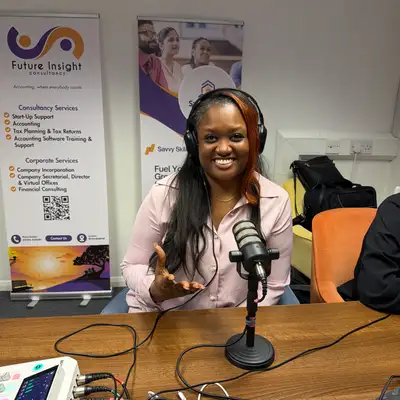
Tune in for fun, inspiration and unfiltered discussions as host Sian Murphy interviews down-to-earth businesswomen sharing ideas, tactics and stories.
Regular features include recommended books, tools, lessons learned and top tips for business.
Right then, we are good to go. Welcome into the Women in Business Radio Show. So let me just tell you before I introduce our guests in the studio today, let me just tell you what this is about. This is the winds, wobbles and what's gone wrong, or is it what's gone right, or what we've been doing. That's it.
Sian Murphy:Winds wobbles and what we've been doing. So it is our monthly roundup show where we just sort of talk about really what what's been happening in our business lives. In the studio with me today is my cohost. Adelle Martin. We also have Sian Henry, who is the Economic Development Manager for Medway Council.
Sian Murphy:He's an an honorary woman in business.
Sean Henry:Next time I'll wear a
Sian Murphy:dress, just to Today. Actually, what is more important about being on this on this show is actually being willing to share and have a good laugh, really, and sort of not take ourselves too seriously. And also in the studio, we have Kempker Emma Rieole, who is the founder of Specify VA. Hello. And it's me.
Sian Murphy:Did I say who I was? No. No, never mind. Okay, I'm Sian Murphy. I don't know what I do really.
Sian Murphy:I host the Women in Business radio show, the Women in Business big show, and I help grow bookkeepers and holistic therapists and generally have a rip roaring time mucking about doing all sorts of things. So where should we get going? I think we'll just I think we're gonna start with you, Adelle. So what we do with this is we just go around the table. We have some themes, we have things like what's gone wrong, what's gone right, tools and tips, what are we reading or listening to, and what's coming up next for next month.
Sian Murphy:So it would be really good if I actually thought about this before we sat have Something else though. Some sort of idea. So that instead of I could actually listen to what you lot are saying, instead of sitting there in my home head going, oh my god, what what am I gonna say? Right. Okay.
Sian Murphy:So Adelle, let's start with what's gone wrong.
Speaker 3:What's gone wrong for me? Venue just trying to find some venues has gone what's gone wrong for me at the moment. I wouldn't say a massive issue. I just find at the moment, although I have sorted it out this week, I'm just trying to find a venue and secure a venue that's suitable for what I needed. I just find at the moment
Sian Murphy:Is this your networking group?
Speaker 3:Yeah. My networking group and some events. And for all the right reasons without it feels like the price of event hosting has gone up considerably. Okay? So it's a costing point of view.
Speaker 3:And then you put that onto the ticket and then the event. And I think for me, it was a task that I found relatively easy easy and simple. Over the last few weeks has been a little bit more challenging, but I've sorted it. I've narrowed it. Simply from having the tenacity to keep talking to people and finding place, and I've done it.
Speaker 3:But I just feel over the last six months, it's got more challenging to get it at the right price from an event point of view. It's it's yeah. So what's got is it's not it's gone wrong, but it's it's not what I it didn't go as I expected, but I've sorted it now.
Sian Murphy:I think, you know, we're just to put it into some context, we're in the Southeast Of England in The UK Yeah. And the price, I think, worldwide, but the price of everything has gone up and a lot of such things like venues and that sort of thing. It's I suppose their prices have gone up and it's just gone it's just gone higher and higher and higher.
Speaker 3:Yeah. Then if you're trying to get a sponsor, we come back to other comment, how do you prove? And I'm like, oh, it used to be much simpler than this. But I've, you know, I've thought it through. So I've I've had a solution, but it it's more challenging than than it normally has been.
Sian Murphy:Sian, got anything gone wrong? Must be quite difficult, really.
Sean Henry:No. No. Nothing ever ever goes wrong. I the perception that people can read between the lines has gone wrong. The not to say idiot proof, but to realize just how clear you have to be to make them understand what you think is a simple point.
Sian Murphy:For
Sean Henry:example, to say that you need a business bank account, and you show me something where ten months ago, you opened one, put a tenner in it, and took it out. It's a business bank account. It has to be active. You didn't say active. Yeah.
Sean Henry:In in the same way I'd say that your your business has to be within the local area. I But was in the travel lodge that night. No. That's not what I it's just how clear do I have to make it? That's that's what concerns me.
Sean Henry:I don't want it to make everything I do in business to be a massive legally bound contract, but to then get contested and complaints because I wasn't so clear that you'd feel patronized. Yeah. It's hard to Yeah. It
Sian Murphy:is a difficult one. I'm going to sort of bring that a little bit closer to to down to earth, which is we're in a new space now with the studio, and the everybody has parking. We have loads of parking. And I sent out information that said, as you come through security, just drive straight forwards. That it's it's not just you.
Sian Murphy:It's not just you. It's I've been doing this. I've been here a few days now.
Sean Henry:You said Marina offices. The sign says Marina offices that way. I went that way.
Sian Murphy:I I I've been here I've been here a few days. I'm giving out the same instruction to different people, and I now have to look at my own instruction. A bit like you going, is it me?
Sean Henry:I think it's like using a 100 yards as an instruction. I mean, what is this? Eighteen thirty?
Sian Murphy:Hang on a minute. That's it. Come in through security and drive straight forwards until you find the car park. It's about a 100 yards. Every single person has come in, turned left, and this is sharp left, sharp left after about 50 yards and driven all the way around the marina.
Sian Murphy:And I'm thinking, I okay. And I've I've I've the the message has been what's that? And WhatsApp through, and I'm thinking, I don't know how to actually make this any clearer. Pictures.
Sean Henry:Draw a map.
Sian Murphy:Yes. I I did think about that actually. A do a little video in. But actually, you know, come through secure there is a security gate. There's a there's a bloke in in a hut who stops you and won't let you through.
Sian Murphy:Come through security, drive straight forwards, He should 100
Speaker 4:tell us where to go.
Sian Murphy:Well, to be fair, that's actually quite he's going to say exactly the same thing because he's going to say, right.
Sean Henry:He didn't though. He didn't.
Speaker 4:He didn't. That's it.
Sian Murphy:He should just But but he's not gonna say anything else.
Sean Henry:It's a of Okay.
Sian Murphy:So so hang on. Are you telling me Yeah. That you need because this is really important. And I think this is actually valued as far as businesses go if you think about it. So me sending you a WhatsApp message that says, come through security, man will ask your name, you give him your name, and then drive forwards 100 jars as you will see parked cars and park.
Sian Murphy:It didn't work. Okay. But if a bloke in the little man in the hut actually points straight ahead Yes. Okay.
Sean Henry:Then you can vision, because you're in the car. If he says right there, did you see where the tree line
Sian Murphy:was? But actually
Sean Henry:There's a 100 yards.
Speaker 4:I don't
Sean Henry:know what
Sian Murphy:the There is serious point to this, which is that it's about the differences of reading an instruction and actually having somebody point you in that direction. And as naff as this is and as nauseating as it is, perhaps that's actually something that we need to take on board for our businesses. Mhmm. Is that how how having actually having that visual cue Yeah. Is what makes the difference.
Speaker 4:I mean, it's like SOPs, really. Yeah. You know, you you create an SOP, but then you put snap screenshots, don't you?
Sian Murphy:A standard operating procedure.
Speaker 4:Yeah. Sorry. Standard. Yeah. You have, you know, step by step instruction Yeah.
Speaker 4:Visual.
Sean Henry:Maybe a video next time.
Sian Murphy:That you're I did think about doing a video, but you said I wasn't here. Was I? Because I needed when I needed to tell you, I was actually, if you must know, propped up in bed, pressing buttons. I
Speaker 3:tell you what, I I what works for me as well is what three words? Because it is down to, like, the the square. Because I live somewhere again, which is difficult to explain. If you put a post code in, you go
Speaker 4:to It
Sian Murphy:doesn't come up.
Speaker 3:So I always use a what what three words, and then you can and then if you do, I could see a picture.
Sian Murphy:So I I suppose I could not everybody uses what three
Speaker 4:words.
Speaker 3:But if you do what three words and you click on it, it does take you to Google Maps. So it does yeah. It takes you off to your your choices. I might
Sian Murphy:I might do that.
Speaker 3:I live by
Sian Murphy:what three might I might do
Sean Henry:learning together.
Sian Murphy:For the for the the poor people who can't drive a 100 yards in a straight line once they've gone through a very obvious a very obvious security gate. I don't know any driver that knows what a 100 yards.
Speaker 3:And the boat is
Sean Henry:It's 84 steps to the horse.
Sian Murphy:But but but the boats are in I'm lying. But you have to drive in a what is wrong? Drive in a straight
Sean Henry:Sorry, Sianni. It said marina offices. You said marina offices. I assume.
Speaker 4:How? You you followed yeah.
Sian Murphy:Yeah. Yeah. Okay.
Speaker 3:I had
Sean Henry:it I didn't see a car park. I saw boats. I'm not gonna drive into
Sian Murphy:the boats. And then it it sort of takes you You don't drive towards the boats. You drive towards the But you didn't drive at no point did I say turn left. Said drive.
Sean Henry:Show me.
Sian Murphy:I said you see, and this brings us on to your point, Sean, doesn't it? Yeah. It this is exactly the same thing. I told you what to do. Mhmm.
Sian Murphy:How much do I have to tell you of what not to do?
Speaker 4:And that's a very good point. I think that's 50% of
Sian Murphy:the problem. How how much do I have to I did not say turn left. You all turned left. And it's proper left. This isn't when it goes around the corner a little bit.
Sian Murphy:It's actually stop, indicate sharp left.
Sean Henry:So that's what we saw straight I didn't see a car though. I just saw both.
Speaker 3:Yeah. And also, in both your defense, you've come to see me at the waterfront where you would come
Sian Murphy:to the waterfront. Don't let that. I'm just being a collier.
Sean Henry:I'm Everybody does down there.
Speaker 4:Yeah. Everything is down there.
Sian Murphy:I'll show
Sean Henry:you Who is the fuck? I'll show
Sian Murphy:you this message. I have a feel I have a feeling it actually said, you're not going to the waterfront. You did you did
Speaker 4:actually specifically say that. I did. Yes. But the
Sian Murphy:road But you still did that.
Speaker 4:Support that because It's what
Speaker 3:it's about.
Speaker 4:Yeah, when you come in, you don't see what you said, you see boats.
Speaker 3:So, yeah. Just put towards the boats and the car parts.
Sian Murphy:There we go. Okay, so but the the message With the
Speaker 3:week it, I've got three words
Sian Murphy:I as think the message here is that that you give what you think is a clear instruction and they actually completely ignore you. No, no I'm being quite seriously because this is the sort of thing that I do actually. Somebody will send me this huge great long instruction thinking that they've made it simple, and what they haven't, what they've given me is is is a huge great big menu and recipe of crap, that I I'm trying to read, but I'm not reading it. My eyes are just glazing over it, and I arrive and going the wrong way. So we need visual cues.
Sian Murphy:Visual cues. Right then.
Speaker 3:That's good.
Sian Murphy:Where did I think we've got a gone wrong. What went wrong? What's gone wrong Well, for I couldn't find No. You can't have that because that's what I'm gonna do.
Speaker 4:Apart from not finding this place,
Sian Murphy:I had a new service that was in trial. It didn't go very well.
Speaker 4:So drawing board on that one. Mhmm. And, you know, just trying to rejig a few things and bring it back out again. So sometimes in business, you have an idea of how something will work not because there isn't a demand. There is a demand for it, but how it will work in terms of process and practice.
Speaker 4:Yeah. And when you actually go live, oh my god, and you start to discover the truth of
Sian Murphy:Do you know why? Was it that people didn't understand? Do you know why it didn't go wrong? Why it didn't go well?
Speaker 4:I think that probably the upstream part of things, the way we envisaged getting it on board was slightly different from the reality of getting
Speaker 3:it on board.
Speaker 4:So it's very, very straightforward. It's it's, you know, very easy to understand, but it was the way that we put together the resources to be able to do the work that wasn't quite right. Probably a little bit too technical. So Okay. We have and we have to change the person's spec as well or the people's specifications around, so the the human resources.
Sian Murphy:Yeah, so the the person that you thought was going to be buying this actually wasn't
Speaker 4:No, the people that we thought would deliver, the spec of
Sian Murphy:Ah, oh, I understand. Right, okay.
Speaker 4:Was not quite right, so we Mhmm. I tend to take a very academic approach to things. So in reality, the kind of people that would probably be more suited, not less academic but more bogey. So it's a lot of and that's the thing with with working with people. People are not machines.
Speaker 4:So very often Mhmm. Personality makes a very different a very big difference in being able to, achieve a service, and it's it's a full service that we're trying to deliver. So we've come back to look at how we get the right type of attitude. Yeah. It's funny because you can't quantify an attitude.
Sian Murphy:It's really hard. It yeah. It's really difficult. You can put things like, must have a can do attitude. Yeah.
Sian Murphy:But my idea of a can do attitude and somebody else's idea of a can do attitude is just different, Absolutely. Isn't
Speaker 4:So that's the bit, you know, how do you nail that down into a process? How do you get, you know, a framework
Sian Murphy:have you got any closer?
Speaker 4:Yes. Yes. We we actually have. And hopefully, you know, fingers crossed, there's a few other things in the happening right now. But fingers crossed, it should be back towards the end of the year.
Sian Murphy:So what did you learn? Is there anything that you've taken out of this that is gonna help you? Because I think this is the sort of thing that we all have issues with when we're when we're starting to take people on board to support us or deliver a service for us, is that we sort of expect everybody to be as enthusiastic and have as much initiative as as we have and just sort of think it through and not just go, well that didn't work, might as well just give up. We go back, we rethink, we redo, don't we? We go back with new energy, we don't give up.
Sian Murphy:Yeah. And I sort of expect everybody's to be like that, but they're not, are they?
Speaker 4:No. No. They're not.
Sian Murphy:Because it's not their baby either. It's my baby.
Speaker 4:And even if it's your baby sometimes, your baby can be a very frustrating baby.
Sian Murphy:Not all babies are pretty. So keeping
Speaker 4:it real. But, you know, if if you've
Sian Murphy:got an ugly baby, how do you make it pretty?
Sean Henry:Do you have children? Yes. One good looking one and
Sian Murphy:One good looking three. Thankfully, they all turned out really good looking.
Sean Henry:Just started off the, oh, god. I really hope you don't take off this. You know, you
Sian Murphy:you go through all the labor. I know that.
Speaker 4:And you think, you know,
Sian Murphy:I hope it's worth it. They're not listening to this. So It's a compliment. Yeah. A compliment.
Sian Murphy:New hope. They
Sean Henry:turned out all white looking. You don't cringe when you look
Sian Murphy:at it anymore. Well, no. Exactly. Now it's it's
Speaker 4:the grandchildren. So we're wait you know, I'm waiting for that.
Sean Henry:You know, the good looking one, the bag over the head. Know? You get new bits.
Speaker 4:Yeah. You know? Yeah.
Sian Murphy:Right then. What's gone wrong for me? I I I don't know that anything's gone particularly wrong recently, which well, when I say recently, that's the last few days. As maybe not once again making resolutions to make the best out of something. So I've recently run quite a big event, and there were just things where there were opportunities and one of the reasons that I run it, which once again, you know, for it so for instance, there wasn't a registration form for people coming through the door.
Sian Murphy:Now that's not the end of the world. The event still did in lot by lot what it was supposed to do, But it can be quite frustrating when I don't even think that that was on a to do list and got left off. I don't think it even made it onto the to do list. And so really just sort of I I understood quite recently the sort of planner that I am. I'm a I build as I plan.
Sian Murphy:I would never have been an architect. I can't put together a plan like that. You know, the guy who built the Burj Khalifa, who I think was an American guy, you know, can't get half way through that and go, it would really look much better for 52. But just pop it two feet to the left, it's gonna be
Sean Henry:Titanic's on course,
Sian Murphy:it's too late. It's gonna be much better if we do that. That's not how I work. I build I build as I'm I plan and build at the same time. That means that just things get left off, and it's really frustrating.
Sian Murphy:So that was was it really. So I'm beating myself up a little bit about it. Do like to self indulge in a little bit. So, yeah. It's
Speaker 4:a learning curve, isn't it?
Sian Murphy:Yeah, it's been quite a very long learning. I'm a pensioner there. It was a very, very long learning curve. I'm just wondering when I'm going to be done, when I'm going to be able to sit back and go, that all worked, didn't it? I finished that.
Sian Murphy:We're into what's what's gone right, aren't we now? What's gone right, Adelle? Something must have gone right.
Speaker 3:Oh, yes. Something has gone right. And for me, it was with less than twenty four hours notice getting the publicity that I desperately needed for my story and Stronger Together. So having that as a win, but I think the win was, you know being prepared and having that you know, you're gonna go that day is going to come, you don't know when it is. And it's having the discipline to put the effort into what the business
Sian Murphy:case This will being prepared. Yeah. You see this is why I sit you down there. It's so that I actually have to get up and move to hit you to give you a good slack. But yeah.
Sian Murphy:Most organized woman I know actually.
Speaker 3:And it's having that and then then when you because you don't know when you're gonna get that call, and when you get that call you you have have to be ready. And then I think it well it was it was half past eleven and then I had to be half past seven the next morning program ready. And even on the day it was like, have you got have you got any material behind that shows you more vulnerable like with your story? And I was like, yeah, but I've never ever looked at those videos since I took those diaries and trust in the media team I gave them to. So for me the win was yes, absolutely the win was getting the exposure I needed, but actually the quiet win was do you know what, all the prep was done.
Speaker 3:And and that for me is where the win was because you just never know when that story was gonna break.
Sian Murphy:You see, I like to live in the flat. Let's just leave that like that.
Sean Henry:Sean. Mine's mine's not a win yet officially.
Sian Murphy:What's gone right?
Sean Henry:What's gone right is I've always had a knack for seeing an opportunity or seeing something as someone else might see an opportunity, and I go, that's gonna burn in flames and avoid it like the plague. And there's one that I backed last year that I've been working on. It doesn't seem to have gone anywhere, but I think it's about to suddenly tick over. And if it does, it might be one of the biggest things happening in the area.
Sian Murphy:How did you how do you know? Can you are you I suppose we're looking at sort of intuition, gut instinct maybe. But do you get a feet how do you know?
Sean Henry:I don't know. It's a very, very weird one because some of them seem so far fetched when you start off. It's like, it's never gonna happen. It get gets opposition here, there, and everywhere. There's this massive funding gaps.
Sean Henry:You know, there's an appetite. We're in the wrong area in the playing phase. And I keep on pushing, and then it happens. Like and then again, some projects are, oh, yeah. We got the money for it.
Sean Henry:This would be a great idea. This would be Sean, there's, like, 1,400,000. You can just do this out in the oven. I just go, yeah. But how's it gonna work logistically?
Sean Henry:I think it's that future think. I think like, I grew up with a bit of anxiety as a kid, massively socially anxiety. I know you can imagine it now if I chat here, but I couldn't talk to you until I was about 15 without glowing red. But now I think because of that, it's almost like this sort of chess moves in my head. I almost like imagine how conversations are gonna go.
Sean Henry:So I'm like, okay. Well, yeah, we can we can do this. Here's this. It's gonna go great. And I go, yeah.
Sean Henry:But what about blah blah blah? And I all I see is everything going wrong. So then if I could just see something, could see a lot of it. It's like, okay. What if it goes wrong?
Sean Henry:It could be jumps over with that. It's like I said about signing a project.
Sian Murphy:It's Yeah.
Sean Henry:She's thinking what can go wrong, how to fix it, then thinking that's gonna go wrong. How do I fix it? That can't be fixed. And then it's just that it cascades, I go
Speaker 3:Don't go there.
Sean Henry:Yeah. Don't go there.
Sian Murphy:So you're thinking it through in in your head. There's nobody who may see this, but you're thinking it through in your head as opposed to maybe getting a really quick gut instinct and just a a feeling about it. So you're not making a snap judgment.
Sean Henry:It's not a snap judgment, but the trouble is it can then be hard to explain that, especially as a business. Yeah. Put together that business case. Okay. Sean, here's the million pound.
Sean Henry:We think it's gonna make loads. And I'm the one who has to go, actually, here's all the reasons it's gonna die a whole death, and it's gonna spend loads of money. Or they go, Sean, your idea, I I don't get it. They say, you have to trust me. Okay?
Sean Henry:It's bit of a hard buy in, isn't it? But Yeah.
Speaker 3:But with experience then, you know,
Sean Henry:you have to do. I think once you get the experience, early on is like, am I gonna actually trust this random
Sian Murphy:But it's I I think I think the thing here is is actually taking the time to think it through. This is something I haven't done very well up until quite recently, where I actually now take time to, I don't know, walk it through in my head I suppose. Just, okay, what if if I do that, what is the next likely thing that's gonna happen? And then walk it through until you say, oh, actually, hang on a minute. And then all of these people might arrive and, oh, now what?
Sian Murphy:Now what?
Sean Henry:Last thing, in project management, you have a Gantt chart. And it is that it's, you know, it's every risk. Okay. If that goes wrong, what's the mitigation? What do I need to make sure that it still happens?
Sean Henry:Because the trouble is, if you don't address each one of the that's it. It's gone down. So it's basically seeing that. So basically, in your head, if you can map that out, I said, if although okay. You open up and there's a thousand people standing outside the front door.
Sian Murphy:Now what?
Sean Henry:Yeah. Have you got enough people to help you volunteer, shepher them in? Are you gonna make them still sign in?
Sian Murphy:And how and how many and how bad is your reputation gonna be if you've got a thousand people stood outside the door, now all mightily pissed off with you because they've arrived for something that you can't deliver?
Sean Henry:Yeah. And it's chucking it down with rain.
Sian Murphy:Yeah. Exactly. All those little And there's no toilets.
Sean Henry:Yeah. But that's I mean. So in in a way, it's a kryptonite to think this anxiety. Anxiety is not a great thing, but if you can actually utilize it and press
Sian Murphy:I forward I think if you can suppress it enough to actually enable you to think it through on worst case scenario stuff, This is why sometimes I get crossed, but this positive thinking thing. It's actually not everything is positive, life does it doesn't work like Yeah.
Sean Henry:Oh, everything's gonna be fine. Yeah.
Sian Murphy:We have to be realistic. Oh, no, hon, don't look on the bright side. Actually no, not everything's a bright side. Yeah. And it could go wrong, but you need to and I think you're right, so people who have anxiety, I'm one of them, we can spend a lot of time flapping around, but if we channel that, oh, what if that happens?
Sian Murphy:Mhmm. Like, it's eel. So if we channel our inner eel, what is Okay.
Sean Henry:It's not being negative. It's not being It's
Sian Murphy:being realistic. I I think I I I quite like that channel now in real because a lot of the time, I look like Tigger. I'm bouncing around all over the place, and you're a bit Tigger ish as well, aren't you? Get very enthusiastic.
Sean Henry:I'm more like the rabbit.
Sian Murphy:Yeah. But you do. You get really enthusiastic. You get lots of ideas. So if we can channel, can can't you isn't there something called the Tao of Pooh or something, where it goes through sort of all of the different characters in the Winnie the So that's it.
Sian Murphy:I'm gonna channel my inner ear and look at, oh god, this is what if that happens? Well, that would be really bad.
Sean Henry:That's it. It's mitigation. Okay? So if that does happen, can I fix it? Okay.
Sean Henry:I'll fix it by doing this. As I always hope it won't happen, but you've got your backup plan, but it's just every step of the way. Yeah. Right.
Sian Murphy:What's going right for you?
Speaker 4:Well, again, back to services, launched another service which is going very well.
Sian Murphy:What's the difference then? What don't you know?
Speaker 4:I think the difference with this one, and there's a lot of differences with this one different kind of product different kind of service different market but also actually letting it without saying too much, letting the resources, the people actually get on with it and map their own way Oh, okay. As opposed to I don't believe in micromanagement, but unfortunately, in the previous one that went wrong, there wasn't
Sian Murphy:There wasn't enough money. Yeah. There was there
Speaker 4:was a great degree of sort of cocoon kind of Yeah. You know, with this one that's gone very rise, you know, the right people are in place, so starting with the right people, person's spec was spot on, and, you know, they have the leadership. I don't like to be involved unless I'm specifically I specifically have a role to play. So just because, you know, I own it doesn't mean I have to be involved in it. So the people who run it are running it, and I only get involved when I'm required to.
Speaker 4:And they've been able to create their own cultures and and, you
Sian Murphy:know Okay. Do everything. So you're more of a leader and a guider?
Speaker 4:If I need to be because you can have leaders in your organization that are not you. Am I the best leader for every team all the time? I don't think so. I might be the best leader in my skill set, but am I a jack of all trades just because, you know, you run a business? Very often, you start a new business, and, yes, you have to know everything.
Speaker 4:You have to
Sean Henry:No choice.
Speaker 4:But at some point, you've got to be able to understand that you let other people be the SMEs that they are or or cultivate SMEs. I I firmly believe in that. And then you get the hell out and let them do what they're specialists Yeah. In doing. So in that service, that's happened brilliantly, almost textbook.
Speaker 4:And I'm so proud of them. I'm proud
Sian Murphy:of the others too because they, you know, done what
Speaker 4:they could. They've done their best. They're brilliant people. But I'm proud of them. This service because yeah.
Sian Murphy:What's gone right? Okay. I I think I we've got a new studio and I think that's gone right. I think that was fate. I think that was supposed to happen.
Sian Murphy:We just had a chat, didn't we? We did. I can't remember. Even how we we we were just chatting and talking about offices and then offices had come up and came and had a look at it. And we've got loads of parking, got air conditioning, brilliant.
Sian Murphy:That has that has just gone right. What hasn't, what I say hasn't gone right, I haven't really got to it, is that this hasn't been I wanted to make this look nicer than it is, because Adelle's got an office, it looks like Instagram. It's just It does. It does, doesn't it? It does.
Sian Murphy:It doesn't look real. I feel like I'm gonna go in there and like tear a piece of paper and then behind it are cables and Oh, wires and
Speaker 3:Eight months worth of work. So,
Sian Murphy:yeah, you see, I don't have that patience. I want I just love I want it just done. I want it done now.
Sean Henry:So you got a good weekend planned now.
Sian Murphy:Yes. Yeah. So so it that is actually something that really has gone right, and I am a I am a great believer that these things come your way. They just that you just have to see them as they arrive. Because we this was just a silly little conversation, wasn't it?
Sian Murphy:Yeah. And I I can't remember even how it came about.
Speaker 3:I met you at reception at the gym. I was talking to Mark because I was going, if I hadn't spoken smart, we would need she's like, you know, like a movie. And then I said, oh, come and look at me off here. She came up to look, and then she went, oh that one's free next year. Went, yeah it is.
Speaker 3:And we came in and we were like, woah.
Sian Murphy:But but I but no, I think I think sorry, I don't want to make this too dull for people listening in, but I think I knew that this office was here and that I came and had had a look at it. The the weird thing is, I know I know Adelle had this office and it was so she said something and I sort of said, okay, let's go and have a look at it now, and I could have just ignored that. I didn't have to do that. I think sometimes things come towards us and if we don't see them and seize them Yeah. They just disappear and and and out they go.
Sian Murphy:And at the time, I was hungry. It was way past wine o'clock. Way past wine o'clock. So I would I was already snappy, and and it would have been just as tempting. The car was there just to have got in the car and gone, but but but I didn't.
Sian Murphy:And I just had a feeling that actually this is something that I needed to look at. And I'm very happy here, I can walk out, I can look at the boats, you know, it's really nice, by the water, you know, I can go out and walk at lunchtime and we've got parking, I've got air conditioning and so Nice neighbors. Yeah, they're a bit Instagram y, you know. It's a bit perfect next door. But it's, you know, so for me, you know, you could say that's luck, but I also think it's a bit of seizing.
Sian Murphy:Seizing opportunity. Of just saying actually something needs to change and suddenly, oh, hang on a minute. Look, here's a change. Let's go and have a look at it. And I used to be really bad at that, and now I'm a lot better.
Sian Murphy:So that's what's gone right for me. Yes. So let's move on to some tool tools and tips. Introduce anything new, doesn't matter what it is, could be a a technique, something you're using, something you're trying out. You've got tool or tip?
Sian Murphy:We could do tools first, couldn't we? Don't know.
Speaker 3:Yeah. If I used anything new or different from a tools wise, I I'm just trying think actually. I think if I think about like literally for the last few months, I've been consumed in events and sort of media. And I think the tool for me, I think the thing I've picked up very quickly is is you're going to meet somebody is do some prep. So I think the tool is, and I know, with AI and tools, there are good ways of doing it, but I always like to go and research.
Speaker 3:Think really for me, tool is where even if I think I know them, I've just made sure at the moment is I go away and just make sure I do some proper research on that person. And also is for me is ask questions and be inquisitive. So I think for me, I've been pushed into, for all the right reasons, into meeting new people. So it's making sure I do the research and, you know, I'm making the time to do that. And and that's some it's a new a new sort of area that I've I've moved into.
Sian Murphy:What are doing? Looking at them on LinkedIn?
Speaker 3:I do. Do you know what? I look at them on LinkedIn, first of all. But then, you know, everyone can look on LinkedIn. And then literally just on sort of Gemini or others is can you do they do podcast, any media?
Speaker 3:If you ask the right questions, then you get the right results back. And then from that go, oh, well, I've done that. And then I do. So, you know, I do because you could go down a a rabbit warren, I do about half an hour prep. So I start off at LinkedIn and I go, okay.
Speaker 3:It's interesting. And then I go and have another look at different roles and things they've done. I'm Just so you have an idea
Sian Murphy:with Yeah, do. And you're not stalking them yet.
Speaker 3:No no no no. And I I think it's I think it's I know the way for me time is the most precious gift I've got. So if somebody has said yes, I'll meet you. And for me I'm like, okay, I am not gonna go and wing it. I'm gonna find out who that person is, what it is, and where there's some common is.
Speaker 3:And what you sometimes see on LinkedIn and when you've chat to people actually you've got far more in common and it's a natural conversation. But I think it's important to make the effort. So for me it's a tool
Sian Murphy:to It is do sign of respect as well
Speaker 4:as Yes, it
Speaker 3:is. Is many I really enjoy it. For me it's probably the tool for me at the moment.
Sian Murphy:Sure. Tools, tips, you could you could do one or both.
Sean Henry:No. Was just thinking about six months ago, I was on this show and we're all going on about AI and how exciting it was and all the rest. I'm a big proponent of it. I said I'm still going for Medway's growth zone, fingers crossed. And in the summer, I got to speak at the Kent AI conference.
Sean Henry:Very fancy. By that point, all I can say is I've really gone off the edge with it. It's it's lost its shine for me. I think on LinkedIn now, you can press the button that says, I think this is AI slop. Now you can do it on Snapchat, I think it's gonna grow.
Sean Henry:I mean, I think you've been criticized for your double dash.
Sian Murphy:I I I have for em dashes, and I I I had I had words Pardon? Which which was basically Charles Dickens used em dashes. And I am not I'm not saying I'm Charles Dickens. I actually think his books are incredibly boring. T tedious, fantastic stories dragged out to the point of to the to the point of death.
Sian Murphy:But he, you know, he is still a well known writer and you He's terrible. M dashes.
Sean Henry:That's fun. The way you post that is not AI, but you do still see so much of it. And like I said, I keep seeing posters that are AI generated rather than, like, imagery, journal, rest. And I've stepped back a bit. You know what I started doing when I wanna do ideas?
Sean Henry:An old spider diagram. I feel like I'm back in reception because I'm putting my ideas down like this, and I'm writing down. And then, like, last month I tried to give blood and they went for a nerve instead. Oh my god. So until now, I've not been able to move and I'm right handed, I've not been able to move my right hand.
Sean Henry:So for a few weeks, I couldn't do that spider. And I felt like I missed out on something. But I wasn't as organized. Was made little spider diagrams and my ideas and
Speaker 3:Pen and pencil.
Sean Henry:Mhmm. Even then I said that trying to plan over the next couple of years. Was like, you know, trying to write out the mums. Just shove all of that into AI.
Sian Murphy:But I think these are different things, aren't they? Mhmm. So doing your spider diagrams and how because I do that and having have, you know, having that connection between your hand and your brain Mhmm. Is very different to AI. I'm gonna I'm going to talk about those AI pictures actually in AI slop.
Sian Murphy:Because slop is slop. It doesn't matter who create Yeah. It doesn't matter how it was created or who created it. You're If gonna publish slop, gonna do it anyway, aren't Yeah. And I I so I don't like that because Yeah.
Sian Murphy:That that sort of things like pangram and things that are meant that that are somehow going in and working out whether it is. I know quite a few people and I've done it myself, where I put in something that was AI generated. I put it in because Substack have introduced this. I put in a total 100% AI generated slop, Okay? And it was slop.
Sian Murphy:I didn't publish it, but I tested it. Do you know what I did? I went in and I put into the slop
Sean Henry:Remove the slop?
Sian Murphy:Yeah. No, I didn't. No, I didn't even do that. I put in one spelling mistake, and I put in I wish I could remember the word. I put in one word that is quite an unusual word.
Sian Murphy:You know the word, it's not it's not something so technical that nobody would know it, but I put in quite an unusual word, 100% human. Same slop, literally Yeah. Exactly the same thing. And I I said, write me an article about it was write me an article about impostor syndrome. It was it was terrible.
Sian Murphy:Absolutely terrible. It had everything in there that you would expect. Those are the two things I did. Suddenly, it's marvelous. And of course it wasn't.
Sian Murphy:It was the same crap. So Slop is slop. Yeah. I agree. People can write slop, it doesn't matter.
Sian Murphy:But the AI pictures, I thought about that because I have been creating some of those, because I haven't had time to do anything else. And then I I've been looking on LinkedIn recently and Facebook and seeing some of the images that people have come up with and you're going, chat GPT, chat GPT. And then and I thought, okay, well I do that as well better stop doing that. And I thought actually, why? Why stop?
Sian Murphy:It enables somebody who doesn't have access maybe to a graphic designer and those sorts of resources to produce something that shows other people in a clear way what they're doing. Is that a bad thing? I don't think it is. And my next thought was, but what about poor the old poor graphic designers? I thought, well, actually, you look at that and you know that it's generated by AI, both as the person generating it, but anybody else looking at it.
Sian Murphy:So that's where I think graphic designers come into their own because yeah, alright, you can put in the right information, press a button, you get this out, you can explain something nicely. Or you go and you choose to buy somebody's service. I was gonna say personal service. You go, but but but you you you go and you you buy the service of somebody who actually looks at who you are, what you do, all of this sort of thing, and create something that does not look like that. And I think that makes them more valuable, not less valuable.
Speaker 4:Yeah.
Sian Murphy:And I like that I can really quickly produce something that just gets across this is where it is, and this is what it is, and that's what it's about.
Sean Henry:What about the ones that show people in it? Usually, oddly shaped faces with big spells, it's that uncanny valley thing. When I see it, it just goes, it's just off. Just off for me.
Sian Murphy:Yeah, but I
Sean Henry:It's like seeing evil puppets.
Sian Murphy:You see, but I I I think that's the same thing as the slop, isn't it? Yeah. Is you so that that appears, and you go, Doesn't look okay, does it? He looks a little strange. Yeah.
Sian Murphy:It's a
Sean Henry:bit off.
Speaker 4:Similarly, bad editing is bad editing, right? So you could have a photographer who is not very good. Before AI proliferated, people were going on Instagram.
Sian Murphy:Interesting development.
Speaker 3:Yeah. It's fine.
Speaker 4:Okay. Alright.
Sean Henry:They can be edited. It's
Speaker 4:fine. Yeah.
Sian Murphy:And people But no. Actually, no. No. It it won't it won't be edited. No.
Sian Murphy:So if you're listening to it, and you're thinking, they didn't edit it very well, did they? No. It can't it can't be edited.
Sean Henry:If you're wondering if this is improvised
Sian Murphy:Yes. We're not AI. Just in case you were thinking, are these people AI? What is that? Okay.
Sian Murphy:Is it a phone? Never mind. It's not a phone. Well, that's, you know,
Speaker 4:normal But people were going on Instagram taking pictures and doing filters,
Sian Murphy:right?
Speaker 4:Trying to Photoshop magazines.
Sian Murphy:And look and look and see
Speaker 4:photoshop models all the time. And we've normalized that. Yeah. That it's okay for a model to look absolutely impossible, you know, compared to the average me. And that's normalized.
Speaker 4:That's not slop. That is slop to me. Mhmm. And I I hear this all the time. I am a proponent of AI.
Speaker 4:My company is AI native. Fully proud of it. That doesn't mean that you produce slop. AI, whether we like it or not, is is is lowering barriers to entry for Yeah. Businesses.
Sian Murphy:Yeah. I I know. I I think I think that's And
Sean Henry:that's thing. I like it as an assistant. I like it when it does it. It's when people don't use it quite right. But even then, like said, the Instagram thing, if I see the filters, a lot of the time, you can.
Sean Henry:You're just so airbrushed to perfection. People say that like the Kardashians.
Speaker 4:Yeah.
Sean Henry:I like seeing real humans. I like seeing real women.
Sian Murphy:You wanna see a couple of blackheads, don't you? Yes. Exactly. And a bogey. I can
Sean Henry:see you've not been on a date in sight for a while. The human looks better.
Speaker 4:But in reality, human looks better. Yes. But in reality, we've not we've accepted people on TV that don't look human. We've accepted people in films that don't look human. We've accepted models in magazines Yeah.
Speaker 4:Teenage magazines for decades. We've accepted that every single day. We're reinforcing that acceptance. So why is AI? This is it reminds me of the whole .com boom when everyone's like, oh, what's the website?
Speaker 4:Well, now you can't live without one. Well, why are we gonna do online banking? Well, now you there's no banks anymore on high street. So this is a change of state in technology.
Sian Murphy:Yeah. It's it's just a move it's a move forward.
Speaker 3:Again, the way the way I look at it is you can be really lazy with it or you can be really intelligent with it.
Speaker 4:Yeah.
Speaker 3:I've seen people produce posters and put them up and actually it does not align with their brand. And you can see it and you can see if you scroll on Instagram, you can see the ubiquitous style poster. So for me you're like, okay, yeah, and they're busy and I can't I can't read them. Or you can use it intelligently like you, I'm again, I start with my pencil and my diagram and then I might put a hypothesis in and it comes back and then I will edit it. And for me it takes time, so it's still a low barrier, but I can spot when somebody has copied and pasted directly in and not put the right paragraphs, and so I go okay, but because I know what I'm looking at, I will just scroll scroll past it.
Speaker 3:And and what will stop me now is rather than before is actually someone's that they've written that, you know, from that point of view. Yeah. But for me it's it's making sure it fits your strategy and your brand because it can change something, you know, you could do actually I've gone, alright, that's that's not that brand. And actually, she didn't look like that last week. Yeah.
Speaker 3:You know, I'm not silly. Yeah. Yeah. So for me, if you're gonna use it, use it intelligently to match your brand, put in your tone of voice, your brand values and everything. For me, it's me on a good day.
Speaker 3:Yeah. It's not a lazy me. Yeah. So even that, there's no such thing as a free lunch because what's happened is it starts to become ubiquitous and I can just spot it and I'll scroll
Speaker 4:past it.
Sean Henry:That's it. You can use it and still stay authentic.
Sian Murphy:Yeah, yeah, The way that I use it for writing is I dictate into it. Mhmm. Now, what used to happen is ChatGPT would change it. It would take out some of the words that I might use and it would sanitise it. And I taught it, I said no, I didn't ask you to change that, I didn't ask you to put that, all I want you to do, I'm dictating it, all I want you to do is take out the and and give it a reasonable sentence structure.
Sian Murphy:But I also had to teach it to stop putting a sentence on each line. I said, do I don't talk like that, nobody talks like that. So it was, if you like, probably about four months of arguing that got it to the point where I can dictate an article, and it would just organize it. And that's all I ever wanted. I didn't want I don't want the context changed, I don't want Yeah.
Sian Murphy:Difficult words taken out or difficult words put in, And you can use it like that. And so for me, because I sometimes have trouble writing and typing and sometimes I don't see very well, and for a lot of people who have physical Exactly. Issues, just being a having a proper dictation tool Yeah. That can just organise it, that's all you want it to It's
Sean Henry:a decent assistant.
Sian Murphy:It's organised. Means I can publish an article I can publish an article in five to ten minutes without spelling mistakes, without having to go back and and do it again. That is a is a useful tool.
Speaker 4:I think you've also touched on something because sometimes, you know, I've noticed lately, I have some health challenges and I can't I used to have beautiful handwriting, now I can't really hold a pen very well all the time. But I'm Claude native, living anthropic, and going beyond just using your generative AI because that's just one small portion, but going beyond just using that as an assistant, for me, it is a peer. So if I'm working Yes. You know, where you have your spider diagrams, I'm having this back and forth Challenge. Very intelligent
Sian Murphy:machine Yes. Yeah.
Speaker 4:Can help me think through my thoughts and processes and my frameworks. Everything I do starts from, you know, processes, starts from frameworks and things like And I can test and challenge my theories back and forth. I can still type easier than I can write. But when you don't have someone to have that Yes. Discourse with Yeah.
Speaker 4:But you can do that with a very intelligent machine and I think we're forgetting that about AI. We're so focused on is it slow up, is it slow up and all this okay. Someone could take a I could take this lovely magazine you've got here, copy and paste it, and produce slop from it, couldn't I? It's the same thing as someone going on AI and doing something sloppy. But we've forgotten the power, the level of intelligence behind these tools that we get for free sometimes.
Sean Henry:It has to be our own intelligence as well. Said, I think it's great when you know how to use it. When you don't just copy and paste Yeah. You don't just submit something. It's all just Yeah.
Sean Henry:Don't even use a prompt in UK English. Things like that. I'll let it stat. But the stat that came out yesterday was they tested kids on it. The ones who are AI natives, their coursework scores were way up above the ones that weren't.
Sean Henry:When it comes to exams, the ones that can't use AI, their exam scores were 10 times higher because they become reliant on it. So I think it's just Yeah. It's a tool not a solution. If you can use it wisely Yeah. Don't just copy and paste.
Sean Henry:Don't just throw whatever.
Speaker 4:It's a tool like a textbook. Yeah. I teach my kids. I was quite annoyed at my youngest when he said this school made them sign an agreement saying they were not allowed to use AI, and I thought, you know, rubbish. 2026, you have to teach
Sian Murphy:There's such a difference, isn't there, between written with AI Yeah.
Sean Henry:Yeah.
Sian Murphy:Or by AI? Yes. Yeah. You know, I I somebody writing a book, they, you know, if you were writing a book to be published by a publishing house or anything, it doesn't really matter self publishing, you would write it and send it to an editor.
Sean Henry:Mhmm.
Sian Murphy:At what point does that work stop being yours?
Speaker 3:Mhmm. Mhmm.
Speaker 4:Exactly.
Sian Murphy:When when it when it when it's sent to the editor Yeah. When they write the first thing Absolutely. When they come back and say that sentence doesn't work Mhmm. It doesn't make sense or it's ambiguous or it contradicts it contradicts something that you said in chapter one Mhmm. At what point have you lost is that not your work?
Sian Murphy:Exactly.
Sean Henry:Yeah. Or even then your example of saying the kids can't use AI. That is so silly, because they can't avoid it in the same way when I was a kid. They said, you won't always have a calculator in your pocket. I now have
Sian Murphy:an entire
Sean Henry:compendium of human knowledge in my hand, let alone a bloody calculator. Yeah.
Sian Murphy:Exactly. You're
Sean Henry:right. I
Speaker 4:found it. I was I was so offended and the, you know, the old me before my youngest and I got tired as you get older would march down to the store and demand. But you know, I'm tired now. So I just said, Rubbish.
Sean Henry:Do it anyway.
Sian Murphy:Do it anyway. Just
Sean Henry:get away with it.
Speaker 4:Just yeah. And if they bother you,
Sean Henry:let me know. Okay. And then we'll we'll you know?
Speaker 4:Yeah. But they're going to university, so what's the jump off? It's a cliff, right? You have children going through school who have tablets from school, and they have phones and they have AI and they have everything. And you're saying at school, don't use it rather than teaching them
Speaker 3:how to And use
Speaker 4:then they become adults 18.
Sian Murphy:It is.
Speaker 4:And all of a sudden, they're in the world and they're working.
Sian Murphy:And guess what? They're not navigating. They can't use half the tool. No. One of the things, so this will be for like my my tool on how I use AI.
Sian Murphy:And I I have Claude which I connect it to other things. Mhmm. So I don't understand really how that works. Yeah. MCPs.
Sian Murphy:Yeah. That's yeah. So I use Claude for MCPs. I connect it to other things. But I use chat GPT to find out how what I'm doing is different to somebody else.
Sian Murphy:So a lot of the stuff that I come up with, I run I run events that don't really look like anybody else's events, and I have just things that I do that don't fit into a box. But sometimes I think they're different, but I don't know. It could be I just haven't looked at it in that way or I haven't seen enough stuff. So very often what I'll say is, how does this, and I'll show it everything, how what is the what is the one differentiating core about this? I mean, I've come up with this idea, who else is doing this?
Sian Murphy:And then, you know, sometimes it will come back and go, actually, I had to train it to deal with this, because it would it would come back and go, yes, that's marvellous. What a fantastic idea. It's just brilliant. And now I I have the, oh, don't bullshit me. I'd or, you know, what we want here is is the truth.
Sian Murphy:Where it will go out, and say, actually, okay, so what you're doing is these people do this this this. What you're doing differently that I can't find anybody else doing is that, that, that, that, or just that. It may just be one thing. That is invaluable.
Speaker 4:Yes. Yes. And you pay a lot of money to consultants
Sian Murphy:Exactly. To help have you then have to go out. You
Speaker 4:you you
Sian Murphy:do have you do have to go out and just sort of check it. Yes. But it just gives you just that this is different. Yeah. Here's your differentiating core.
Speaker 4:Yeah. Yeah. Exactly. Exactly.
Sian Murphy:Yeah. So it's just you're right, it's a thinking and a research tool, it's not a writing tool.
Speaker 4:Listen, just like you said, you know, you use CHATCHIPT for one function, you mentioned using Gemini for one function.
Speaker 3:Yeah, I've
Sian Murphy:got two.
Speaker 4:You know, you should have because they do different things with different approaches. Yeah. So I use I'm heavy on Anthropic because we do a lot of builds and things like that.
Sian Murphy:Yeah. So that you know,
Speaker 4:that's So that's Yeah. But then, you know, to benchmark, Perplexity is great. Gemini is great. Copilot is brilliant, actually, sort of the underdog there, but very good and integrates with everything if you're a Microsoft house. So there's it's an understanding of what these tools are.
Speaker 4:Yeah.
Sian Murphy:I think that we owe
Speaker 4:it to ourselves in this modern world that we find ourselves in, you know, to really To to
Sian Murphy:learn it.
Speaker 3:And to to build on that, although I use different platforms, I look at them as as a team. So Mhmm. They've all got the brand Yeah. Colors, fonts. Yeah.
Speaker 3:They've all got the brand values. Yeah. And they've all got the tone of voice. Yep. As if I was inducting a member of my team.
Speaker 3:Yes. This is the culture. Yep. Yep. And like you, you know, if I say do not change it, do not change it, and they're all inducted.
Speaker 3:Yeah. So for me, it would be I you know, back in and this is why back in the old world, would have said, look. I've done dictating. I've done this to a member of my team. Can you just pull that proposal together for me?
Speaker 3:Yes. I've dictated it to you, or I've sent you a draft on an email. Yeah. And they would have done that. Yeah.
Speaker 3:I didn't just sit in my office and go, could you do that proposal? Send it off. You have to take some responsibility. Yes. But for me, I've treated it as a member of my team.
Speaker 3:Yeah. All the brand values, the tone of voice, etcetera. And then and then it's I use the right tool for the right thing. Yeah. But I still ultimately own it.
Speaker 3:Yeah.
Sian Murphy:I think one of the problems is that it has created a level playing field hasn't Yes.
Speaker 4:Yes. That is really, I think, a lot of the pushback that's where it's coming from.
Sian Murphy:I think a lot of it is, you know, if you have a disability, if you are neurodivergent, if something along those lines, it has levelled it all out. If now, your writing is your writing. That's it, Out it comes. It doesn't matter whether you've got arthritis, whether you're old, young, you can dictate it, you can get it organised. Mhmm.
Sian Murphy:You you pay very little to do that. Mhmm. It's made it's made using your talent Yes. Accessible to everybody.
Speaker 4:Yeah.
Sian Murphy:And I think some people don't like that. Absolutely. Yeah. They just don't like that. Yeah.
Speaker 3:And and if you are using it, as we say, when you see like you said Sean, I just smile and like here we go and I just move past it now. Actually I just move past something that I know somebody has cut and pasted on. I just move past it.
Speaker 4:It's the same way that you would if you went to a bookstore. There's good books And there's bad books.
Sian Murphy:And there's rubbish books. I think the the other thing, and this is one of the things that annoys me sometimes, when I see some really I see some really good information, I'll take on board, and somebody's
Speaker 4:going, well, was written by AI.
Sian Murphy:Yeah. And I could actually I I who cares? Yeah. Who cares? Yeah.
Sian Murphy:I've got out of it, this, this, this, and this. I don't care how it was written. Thank you very much. You've published it. I've been able to use it.
Sian Murphy:Yeah. It was explained really nicely. I really I really don't care if it was written by AI at all. What does it matter? I got information, just the production method, is that is that really Mhmm.
Sian Murphy:Of interest? Do I really need another tool, which is an AI tool, to tell me that Yeah. I'm still a bit wrong. That that was no good. No.
Sian Murphy:I can actually work that out for myself. Yes. Thank you so much. You can. You quite intelligent work.
Sian Murphy:I can I can read something and go, that's crap, ain't it? I don't need to be told.
Speaker 3:Whether a human
Sian Murphy:But or an it's irrelevant as far as I'm concerned. As long you've
Speaker 3:got what you want from that.
Sian Murphy:Right. I think Did we come to tours for you? No. Well,
Speaker 4:I wonder what tour.
Sean Henry:If it's AI, can skip
Sian Murphy:it. Yeah. Can't be AI.
Sean Henry:Gardening tools.
Sian Murphy:And the and the automatic. Yeah. Let's skip it. Okay. Alright then.
Sian Murphy:And I I think I've I've done enough talking, so we won't we won't do that. Think we're gonna should we just go over to I can't oh, we we were gonna talk about what we're reading. So what are we reading, listening to, watching? Doesn't matter. And it when if we don't have to limit ourselves to business here, we're just not all about business.
Sian Murphy:I'm sure some of us at some point think of other things. I I
Speaker 4:I don't know if I do. Sorry. Just but
Sian Murphy:we'll we'll leave you a little bit so I think about it. What are you reading?
Speaker 3:So for me, I'm reading the updated growth mindset by Carol Dweck. And the reason why, because I am geeky on mindset, is I look at how the mindset will change with AI and thinking.
Sian Murphy:Oh, okay.
Speaker 3:So for me, and I remember that with Daniel Goldman Goldman and Focus when tech came in, how our attention span. So I'm always thinking around that element. So I'm thinking so for me, I'm reading growth mindset. It's just been updated and refreshed. I've always, you know, studied growth versus fixed mindset.
Speaker 3:And my my hypothesis is, oh, how how will the human brain react? Because if you do consistently lazy use it
Sean Henry:Mhmm.
Speaker 3:Will your brain then when you really have to write something, you're gonna order when it's done. So for me it's that that growth mindset. So it's just a different it's just a different perspective. And because it's a core one of my core books, it's been refreshed with exactly the mindset and tech. I was like, I've gotta have that.
Sian Murphy:Can you just say the title and all
Speaker 3:that It's Carol Dweck, and it is updated growth mindset. Sure.
Sean Henry:And I'm gonna show I'm a massive nerd. I'm reading Isaac Asimov, Second Foundation. Oh. So
Speaker 4:I read that.
Sian Murphy:You're good.
Sean Henry:I've read I've read them before when I was much younger, and I don't think I fully appreciated them until I got older and actually got the context. That's better. I'm not gonna lie. The Apple TV show is even better than the books. I think because it's it's a very hard one to turn to books when it's spanning that much time, but they've managed to make it work really well.
Sean Henry:But I think the context you get it is so much better when you're bit older, and it's the things we now talk about that they go over. And I think things like permanence, the fact that they thought that the galactic empire would last forever. No one could imagine an idea would change. It goes back to a conversation we've had before about grant funding. Yeah.
Sean Henry:Or your main client. Your main client, your main funder will always be there. What if they're not? Yeah. And people just cannot imagine that sort of change.
Sean Henry:I think that's a sort of power and perception. Yeah. And just Yeah. And again, like I said about earlier about that anxiety to say that I I can always see the future. I can see how it's gonna go and that's sort where they got their psycho history of basically, if you can have like a large language model of people, you can see how society is gonna eventually go.
Sean Henry:And I think AI will probably give us that. Yeah. In the same way, my anxiety will give me x will lead to y and zed, etcetera, if it follows that pattern.
Speaker 4:Mhmm.
Sean Henry:Yeah. I think I think it's well worth a reread as an adult, especially now with technology.
Sian Murphy:Say it again.
Sean Henry:That's Isaac Asimov's Second Foundation, part of the Foundation series.
Speaker 4:Income. Well, I am consuming content about general Patton, who was a general in the Second World War, because I stumbled upon some of his exploits during the war. I never heard about him. But as a leader, I'm quite fascinated by his leadership style. So I've I've been watching and or listening rather to a lot about Anyway, so that's that.
Speaker 4:And then I am reading a lot of contracts.
Sean Henry:There's a lot of fire print, keep going. So
Sian Murphy:what I'm also reading, I'm also listening to at the moment, and it started off, I saw a Netflix documentary called Stutz with an actor, I can't remember, basically in interviewing a psychiatrist called who has sort of quite a very different approach on helping and supporting people. Sort of focused on very much around something that he calls part x, that he calls part x, which is basically the bit of you that you can't get away from that is making you, that is is causing you to maybe think things, think, oh, well that'll never work, or or basically I suppose it's what's around the sort of the self sabotage idea. But it's really different. It's really different. I was sort of a little bit disappointed when I found out that he and his friend are the official photographer official psychiatrist for Goop.
Sian Murphy:Mhmm. And I thought, okay. And I had a little bit of a, but then I I thought, okay, let's just leave that alone and just look at what we've got. And it's just a really interesting read and sort of quite a different take on things. Basically moves away from you have to analyse everything that's gone on before and you have to understand how all of that happened, where your trauma came from alright.
Sian Murphy:And quite an quite an interesting guy. Just just interesting guy. So what's next? Adelle, we're rounding up now. So what's next for you over the next month?
Sian Murphy:What's next?
Speaker 3:God. Do you know what? Going August into September for me is I have been working on quite a few initiatives in the background. And by tomorrow evening, I would have got all the yeses in place. And then for me, it's getting everything ready for delivery from the October 1.
Speaker 3:So there's been a lot of in the planning stage. It's all come to fruition. There's a couple one more yes tomorrow. I've got another couple of yeses in the room today, and it's getting all of that in place ready for the beginning of October.
Sian Murphy:Right.
Speaker 3:And, yeah, it's taking stronger together to the next
Sian Murphy:Kimka, what's next? Setting up
Speaker 4:first ever UK sales team. Oh. Yes. By next month, it should be they should be out there. Brilliant.
Speaker 4:Yeah.
Sian Murphy:Mine is really quite boring. I am focused on practices and procedures over the next few weeks. I really don't like them. Who does? I suppose some people do.
Sian Murphy:But it's something that has to be done. We have to have the right practice and procedures in place, so I'm doing that. That falls on my happy little plate. Sweet. There's a fly.
Sian Murphy:And also on the a little bit nicer, I'm also putting together my portfolio. I'm stopping to look at what I'm doing is a lot of sort of disparate projects that are all over the place, putting them together into a portfolio so that it makes it easier for me to sort of understand how everything fits together. So that should keep it going till this time next year. Yeah. Easily.
Sian Murphy:I think it's time to round this up. So thank you very much, next month. Yep. I can't remember what month it is we're in.
Speaker 4:August. We're in August.
Sian Murphy:We're in August now. We'll be back for September. So thank you very much for tuning in, and have a lovely time out there.