Subscribe
Share
Share
Embed
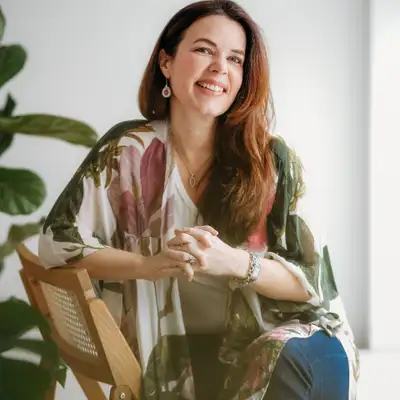
The Words in the Wilderness podcast is for those who have the conviction to make changes in their life as they drag their feet through the messy middle, crying into the void "it ends with me."
Led by Jacky Power - The Therapeutic Poet - these are conversations that look underneath the label, the diagnosis, the tidy explanation, at what's actually going on.
If you've made a decision to change your life and now you're in that wobbly, lonely bit where nobody quite gets what you're going through, I made this for you. Because I've been there. Many times.
Each episode starts with one of my own poems, using therapeutic poetry to set the scene. Sometimes it's just me, unpacking human tricky things. Sometimes it's a guest - a therapist, a coach, someone whose lived experience has taught them something worth passing on.
We talk about leaving what doesn't fit anymore, about breaking the patterns you inherited and don't want to leave as your legacy, about all your human tricky things that you've maybe been taught to hide.
I'm Jacky Power and I'm on a mission to rehumanise, one poem at a time. Reminding you that you have permission to feel and use those feelings as data to decode, not symptoms to squash.
Follow Jacky on Instagram: @the_therapeutic_poet
Find out more: www.jackypower.com
Listen to Jacky on Insight Timer: www.insighttimer.com/TheTherapeuticPoet
Join her on Substack`:www.jackypower.substack.com
WORDS IN THE WILDERNESS
Guest: Sophie Olson
---
Content note: This episode discusses childhood sexual abuse, addiction, self-harm, psychiatric systems, and suicide attempts. Please take care of yourself as you listen.
---
Jacky:
Today I'm talking to Sophie Olson. She's the author of The Flying Child. Sophie is a survivor of childhood sexual abuse — a phrase she found incredibly difficult to say, but now really owns, because it has taken so much work for her to be able to say those words.
What happens when the unspeakable has no language? When every time you try to speak, the door gets shut, someone turns away, someone looks away?
Sophie spent a decade inside a mental health system that kept looking at her behaviours as the issue — that she was somehow disordered. And no one ever asked why she was behaving the way she was. She was labelled, medicated, and eventually told that there would be no recovery for her. But she disagreed.
This conversation goes into difficult territory. It talks about abuse, addiction, and failures of systems that were meant to help. So please do take care of yourself as you listen. This one's for everyone who's ever tried to speak up and has been met with a turned back.
---
Jacky:
Joining me on the podcast today is Sophie Olson, author of this fantastic book called The Flying Child: A Cautionary Tale for Adults. I'm just going to read what Jo Watson — author of Drop the Disorder: Challenging the Culture of Diagnosis — said about this book. She said: the mental health system declared Sophie disordered and irreparably ill, telling her that she'd never work again. This book, Sophie's story, serves as a vehement rejection of psychiatry's labels and is a passionate testimony that true healing lies in relationship and connection.
Sophie is joining me today to talk about The Flying Child, the fantastic work she's doing, and to share more of her story. So welcome, Sophie. Thank you so much for saying yes to joining me today.
Sophie:
It's a pleasure to be here. And of course I'm going to say yes — I absolutely love working with you, Jacky. I absolutely love it. So anything we can do together, absolutely.
Jacky:
Thanks, Sophie. To explain a little more — I came across Sophie at one of the talks from A Disorder for Everyone. Sophie, you were talking about your story and The Flying Child, and I had randomly been asked to write a review of your talk. I absolutely fell in love with what you're doing — because of the defiance you bring, and the spirit, and how you've used story and words to really begin that process of witnessing yourself.
Maybe we should back up a bit and introduce what your story is about.
Sophie:
Yes, of course. I would always begin anything that I do by saying: I am a survivor of child sexual abuse. It's how I choose to introduce myself in every aspect of my work. It's a very deliberate choice. I do it in recognition of the times in my life when I couldn't say those words. And being unable to say those words was really problematic — mainly because when you can't speak about the unspeakable, which is how it felt to me, how do you then ask for help with the thing that is unspeakable? How do you say it? How do you even start those conversations?
Over time I started to realise that it wasn't just me who couldn't say those words — it was everybody else around me as well. From family, to teachers at school, to clinicians.
Moving on a little, to age 29 or 30 — I was then on the radar of the mental health system. Relatively later in life, considering how I had been surviving child sexual abuse. My survival mechanisms learned from childhood were self-injury, addiction, food controlling, bulimia. So 29, considering all of that, and considering that I had made attempts to end my life at 14 that had been unseen and unnoticed by other people.
It was then extremely misunderstood by the GP I went to and said: could you please help me. She did that classic thing where you're hot-potatoed out of that room very fast, because she felt she was doing the right thing — referring me on to a psychiatrist. I didn't realise at the time that that was a very medicalised response to what was going on. It sounds naive, but I didn't even consider that. It was just the route, just where I was sent. And I went and spent ten years in a mental health system where the words "I am a survivor of child sexual abuse" actually became irrelevant. Because even when I could say them, people didn't respond to those words in a way that was conducive to feeling the slightest bit better about my life, or helping me to live a life that had some joy and happiness and purpose in it.
I received, as many people do — particularly when you go into inpatient care — a litany of labels that just got bigger and bigger, and lots and lots of medication. And eventually I was told by my psychiatrist, just before he fired me as his patient because he was semi-retiring and wanted to cut down on his caseload, that he could do nothing more for me. That I would never live without community support and medication, and that there would be no recovery. He used those exact words: I'm sorry to have to tell you this, but there will be no recovery from severe and enduring mental illness. And then he proceeded to describe all the things they could put in place to support me with that. And then he fired me as his patient.
Jacky:
Sophie.
Sophie:
I ended up feeling at that point totally, totally broken by it. But there was a spark of rage somewhere deep, deep inside me — how dare he say something like that to me. It felt like being cursed. And he hadn't been the first medical practitioner to do that, actually. Again, for a reason I see as very much related to child sexual abuse.
That's what he said. And I then found another psychiatrist. I remember saying I wanted to see a woman, and I was told that I couldn't. I remember being really quite feisty somehow and saying: it's my right, it's my right to see a woman. And they did give me somebody else. She was very, very sweet, very kind, and immediately disputed what he'd said. She said: I'm really sorry he said that to you, this isn't the case. Which was good. However, she continued, as is her job, to pathologise trauma.
I eventually disengaged from the mental health system — not because I thought I'd be alright, but because I was sick and tired of being told that the problem lay with me. That there was a chemical imbalance in my brain, something inherently wrong with me, that I was disordered, that I was ill, and that was why I was feeling so terrible about life.
Jacky:
I don't know where to begin with that, because there's so much — from the very beginning of there not being words to put around your experience. And that's because people in authority are prioritising their own comfort over the discomfort of the reality. This idea that childhood sexual abuse is going on is othered as something that happens over there. But then also: those behaviours, and yet no one asking why. Why are you trying to hurt yourself? Why is life so — that you would rather not have one?
You speak about the door moment — I'm not sure I'm quoting that right — but it's this moment when you're in with a medical practitioner, and it's almost like a sliding doors of what would have been helpful for them to say. And I also want to qualify that, because I don't think it's ever something that's over in a sense. But can you describe that moment? Because I think it offers a real picture of what you needed. And I think it's really important that people hear that.
Sophie:
Yes. The door moment you're remembering comes from a poem. I was asked to speak at the Drop the Disorder Poetry Night and I ended up writing two poems, and that was one of them. It's called Door Handle Moment: Advice to My 29 Year Old Self. And I wrote it absolutely as that — advice to my 29-year-old self — because I had a huge amount of regret, and I still do, about asking my GP for help.
I don't blame her. I think that's very important to get across — I don't blame any of the people who responded to me in ways that caused harm. Because I recognise now, as a trainer in my own work, how significantly lacking in training the subject of child sexual abuse is.
But of course, at the time, when you're on the receiving end of poor responses, inaction, or decisions that are made about you that compound trauma over and over again, you don't see it like that. What happens is you end up internalising that misunderstanding as something wrong with you. I can't even get mad right, you know? I can't even do that bit right. And I didn't understand any of the barriers that stand in the way of practitioners responding differently, or the systemic issues that prevent practitioners from responding differently even when they might want to. I didn't understand any of that at all.
So the door handle moment — this GP I'd gone to for self-injury, it was the first time, I was very secretive about all of these ways in which I was surviving. She was quite kind, she sort of patched me up and everything. But there wasn't any curiosity, really. It was kind of glossed over, almost. Which is something I then saw happen time and time and time again. It was almost like: well, let's not draw attention to this attention-seeking behaviour. Let's just quickly brush it under the carpet and refer on to somebody else.
Jacky:
That's how it gets dismissed so frequently, isn't it — that it's attention-seeking behaviour, or that a child has seen someone else do that and so they've picked it up.
Sophie:
I personally believe that you have to be in an awful lot of emotional pain to do that to yourself. And if somebody is seeking attention, then give them attention. They need it. That's how I would say it.
So the door handle moment — the poem was advice to myself: do not say any of this, do not talk about being a survivor of child sexual abuse, they won't know what to do. When you are admitted, do not ever seek human connection, do not ask for a hug, do not comfort yourself, because if you do it too hard they're going to say that's disordered. If you laugh, don't laugh too loudly because then you might be told you have bipolar — which is then what happened to me.
Human emotion was analysed and analysed and given as a reason for: she's feeling like this or doing that because she is X, Y or Z. And at first it became absolutely part of my identity. I was actually looking for solutions myself — I didn't want to be feeling the way I was feeling.
So it was easier for me to say: I don't work, I claim benefits, I can't get out of bed in the morning, I can't shower, I can't even look after my own children at the moment without help — because I am X, Y and Z, I have these disorders. What I couldn't say was: because I am a survivor of child sexual abuse and that trauma has not been addressed, it has not been supported, and I don't know how to live with that.
Jacky:
Do you mind if we pause there for a second? The experience of being someone who lives with childhood sexual abuse — the daily experience of that, the freeze it brings on, the self-doubt — the actual lived experience of it.
Sophie:
Where do you even begin with something like that?
Jacky:
That's exactly it. It imbues everything.
Sophie:
Yes. I would say absolutely everything. It impacts on everything, and it will do perhaps for the rest of my life. And that doesn't feel, to me, as negative to say as it might sound to a listener to hear it. Because part of being able to be okay, and to be where I am today, is being able to admit that to myself. And I know that might not be the same for every survivor — I can only ever speak for myself.
But for me, I needed to acknowledge those impacts and the ripple effect of it not being stopped as a child, not being seen, not being responded to. Of people turning away. Of teachers seeing signs and looking the other way. Of being thrown out of my degree by a course lead who had no curiosity about why I couldn't turn up to lectures or get myself out of bed — the misunderstanding that I was a lazy and disengaged student. Being told very unpleasantly: you will never ever be accepted at another university ever again. You are a disgrace. You are a waste of a university space. You need to get out today.
She threw me out. And the ripple effect of that is massive, because that was the path I was on to get a degree, to have a career I'd always wanted, to start living and earning. So to have those types of responses on top of the trauma I already had.
I didn't have the strength to go and fight and say: now hang on, I will get into another university and I am going to get my degree. I just slunk away with my tail between my legs, because shame was already there. So what she was telling me was just what I already believed about myself anyway.
Jacky:
Those layered messages of shame: I don't get to, I'm broken, I'm not worth listening to. And this is the such painful part, I think. The abuse is one thing — dismantling, it's fragmenting, it's a vile experience, a vile assault. And yet all of the ripple effects of not being witnessed, not being believed, of people seeing behaviours and making labels out of those behaviours rather than reading them as signposts to how you're feeling or what you're needing. That's, I think, the true tragedy of it. Because that is an assault on every part of you. Sexual abuse is almost like an assault on the soul. And yet all these other assaults come on every part of your personality. Because whichever way you turn, where is the safe ground? Where is the place to retreat to? Where is the self in all of that?
Sophie:
The self is fragmented and scattered around somewhere in the universe. That's what it did to me, that's what it feels like. And I still feel there are parts of me out there that haven't quite come back, and whether I can ever be whole again, I don't know.
Jacky:
You said about that flame inside you — that fire, that small flame of rage. Can we talk about how you detected that flame enough to let it grow into finding ways to survive that are less damaging? I want to be careful how I say that, because those behaviours helped you, right? But ultimately they also caused you harm.
Sophie:
No, I think that's very fair. They were absolutely damaging me. They were killing me. But they were also keeping me alive.
How did I protect that flame? It's the same feeling I had when I first thought about doing this, back in 2020 during lockdown. I had been told I needed to shield — I was high risk because of a condition that had been left untreated. It's a pretty serious condition that affects my lung capacity. And so I was told I had to shield. We spent a long time in the house with quite a lot of people in it, and it's not the biggest house, and it was very, very difficult.
I remember thinking: I've got to do something really quite drastic here, otherwise I'm not sure if I can survive this. Being locked inside, even though it was my home — feeling that the choice had been taken away from me to even step out of my front door. At one point I was very frightened of getting ill and absolutely terrified of medical care, of treatment, of being touched by doctors.
And then eventually I started to go out. I would get in the car and drive far away to an open space and sit in a field. That's what I did. My children would play and I sat with somebody close to me and started talking about this idea I'd had.
I remember thinking: I am so sick and tired of nobody talking about this. Nobody talking about the impacts. Because I was seeing my predicament — my physical health and then the knock-on effect of that on everything else, how I was feeling inside my head, the emotional distress — as just another layer of injustice. I see it as directly caused by child sexual abuse and trauma. But nobody else sees that.
I knew I was not the only one. I knew of so many survivors by that point who were really, really struggling with poor physical health. People locked up in institutions. People who had died by suicide. And I was so enraged by the silence around that. I remember thinking: I want to start talking about it. I'm going to start talking about it. But I don't just want to focus on the story. That's almost the least important bit now, because we've got a childhood that's so short — it's the rest of our lives. It's the impact on our own children, on the next generation. How unfair is that? That because I struggled so much —
Jacky:
Mm-hmm.
Sophie:
— in a society that othered me, that didn't want to see me, that turned away from my signs, that called me complex or too difficult, or told me I couldn't ever recover from severe and enduring mental illness — how is that okay? And as a mother, my children are growing up to see their mother in that situation. How is it okay that my daughter is having to come and visit me in a psychiatric ward? How is any of that okay, and nobody's talking to her about it because nobody knows what to say? And then that becomes her trauma. That becomes my children's trauma.
And then, you know what happens when it becomes their trauma — this lovely little phrase: hurt people hurt people. Which is something I bring into my work all the time, and I say: if there is one thing you take away from everything I say today, please do not keep using such victim-blaming language as hurt people hurt people. It is not okay. This is not my shame.
Because I am only a soft-hearted human, and we all are learning as parents, and we all make mistakes, and we do our best. Well — not all of us. Some do.
Jacky:
Well, and I think — where you've got a survivor who is desperately needing support, and has done all their life, and there is no recognition of that at all, no understanding — I mean, I had wonderful midwives. I can't fault them. And I faced challenges throughout pregnancies that were directly related to child sexual abuse, and they did their absolute best. My midwife was, I believe, the first professional I disclosed to. And yet there were missed opportunities over and over again, because they were not trained, they did not know what to do. I was not signposted to further or specialist support for sexual harm.
Sophie:
And that's what I'm trying to say about the parenting piece — there was so much injustice there. My children were then affected because they had to see somebody who was really struggling. I don't want to be that mother. I want to be fully present for my children. I want to be a role model, to work and earn a living and have some kind of purpose outside of being their mother. And so that's where our tagline for the organisation — society shame not mine — came from. Because often people say: it's not your shame, it's the perpetrator's shame. Yes, absolutely, it is the perpetrator's shame. But it is also a society that cannot and will not talk about this massive elephant in the room, which is child sexual abuse. There is a collective shame there.
Jacky:
And that's what's great about the work you're doing — going into organisations, into dental practices, into midwifery organisations, into schools, and speaking to them at that stage of saying there needs to be recognition and intervention and education.
Sophie:
Yes. And what we aim to do is to remove that divide between them and us right from the start, with the recognition and acknowledgement that with an estimated 11 million adult survivors in the UK — around one in six of us — I'm the one wearing that survivor hat, but there are going to be survivors in any space we step into as an organisation.
So we spend quite a lot of time laying that groundwork and acknowledging that. There's also an acknowledgement of how hard your job is — we're not coming at this from a place of blame. It's an opportunity for people to walk in the footsteps of somebody who has experienced child sexual abuse, to get a better understanding. I want to try and reach people's hearts and soften things. Because there is information out there, there are some amazing practice resources that people can tap into, which we will absolutely share and link to. But I know from experience that even when it's there, there is still this disconnect. And it's this disconnect that we're really trying to unpick and explore.
If I think back to my time in rehab — which on paper sounded quite trauma-informed — the addiction therapist used the term "dig deep." We went into group process in the morning and she started to talk about underlying causes for addiction. Used the phrase "dig deep" — on paper that sounds trauma-informed. And there were loads of stories that came into the room: infertility, marriage breakdown, bullying at work, adoption, lots and lots of things. But nobody spoke about child sexual abuse. So I couldn't speak about child sexual abuse. I always needed somebody to name it first so that I could name it. And it wasn't named.
However, I then met her in the corridor afterwards and I thought: I'm just going to tell her. Which is quite a big thing, because that first big disclosure is momentous. So I said: I want to tell you about my childhood. And she looked at me and said: there is no point in looking back. You're an adult now, not a child, and you need to take responsibility for your actions. And that was the end of that.
At the time it was absolutely devastating and shaming. Now I'm really curious about her response. She saw it coming, and she deflected, she swerved, she shut that door. And so it's a great anecdote to bring into training, because we can then really look at that. I wonder what it was. We will never know exactly what it was. But now let's explore — what are the barriers that stand in the way here? Let's really start to unpick some of these understandable fears that practitioners have. And they are understandable. This is where the no-blame comes from.
But the thing is, I was not supported to speak about child sexual abuse until I found a totally different way of approaching it and trying to find ways to say the words non-verbally, through creative methods. And that was the turning point for me.
Jacky:
When you have other authority figures — and any therapist is one — responding in that way, the question arises: because child sexual abuse has been so othered, is there a fear from the therapist of not being able to handle it, of doing harm, and so shutting it down — which actually causes more harm? I think, certainly in my experience, having an authority figure name something and say this would be classed as this or that is extraordinarily helpful. And you did have that eventually with Pat, didn't you — the therapist you co-wrote the book with. But I guess creativity was your bridge to that.
I honestly just want to say: your resilience, in just keeping going — it's always a shut door, shut door, shut door. And yet you've been fluid. You've been like water. You will find a way through. And I'm so inspired by that, and I'm sure you've inspired many people through your determination and your courage.
Can you speak about that creative bridge? The one that led you to find common ground with Pat to speak about some of these unspeakable things.
Sophie:
Yes. My therapy with Pat — who was somebody I'd got to know, she'd been the facilitator of a peer support group I'd attended a few years before — was with someone I felt very comfortable with and trusted. Which is quite a big thing for me because I don't trust easily.
I went to her for private therapy, having had attempts at therapy throughout my life — so it wasn't the first time. But I realised again very quickly that I'm not going to be able to say these words to her. And we tried lots of different things.
Pat was very, very interested in — if you read the book, you'll see the charcoal drawings inside, of the figure with one arm over the head. Those were ones I'd done in hospital as an inpatient, starting in art therapy. And Pat was just fascinated by them. She was really curious, she wanted me to talk about them and about the process of doing the drawing. So that was one thing we tried, more drawing. And it got a little further, but I still couldn't say the words.
Then I tried something else involving Pinterest — which is a bit like any of those platforms, you go down rabbit holes. And I started to find images to represent things I wanted to talk to Pat about. I always saw it as chapters in my life — I have very clear memories of certain things happening, but with no memory of what came before or after, just the actual thing itself. And I wanted to try and explain these to Pat. So I did that by finding images similar to the look of the perpetrator — the watch he'd worn, the cuff of his suit, the colour of his eyes, the colour of his hair.
Jacky:
I just want to interrupt a second — Sophie, you've had to go and get some water and clear your throat, and you're worried about losing your voice. And I think it is such a sign that as you speak about this, this is the physical impact that speaking about childhood sexual abuse can have. I know you're not alone in that. I used to lose my voice too, and my whole throat would close up when I was speaking about things. It's really helpful for people to understand that literally this is the depth of the impact — that what looks like just needing a cough sweet is no wonder at all, given the subject matter.
So pick back up again. You are a perseverer. You spoke about this collection of images — what a powerful tool to have.
Sophie:
Yeah, it gave me a way of telling the story. I printed off all of those pictures and put them into a timeline, with different ages: 0 to 4, 4 to 9, and so on. And it gave me the ability to show Pat something of the story — it was all laid out in front of us and I didn't have to speak. Which was a really good thing.
But then I still wanted to speak. I wanted to be able to say it. And I just couldn't say the words. I couldn't say the word abuse. I absolutely couldn't say the word rape — it would take me a long time to say that.
So I started to get angry again. And my anger was, and continues to be, not very healthy for me — because that's when I'll potentially fall back into survival mechanisms that are harmful. And I found myself getting more and more frustrated and angry at this point in the therapy.
Jacky:
Before we get to the next bit — I remember what you said about the impact of addiction treatment and going to 12-step meetings. The disease model, or those sayings you hear in 12-step rooms — how do you know an addict's lying because their mouth is open, or these really shaming narratives. Or the idea that it's a disease when actually people can end up addicted to substances or behaviours as a trauma response. And when the narrative is: well, you're just an addict and you need to be less selfish and be present in the day — how that can really double down on the damage that's been done. Not to say that path isn't useful for some people in dealing with addiction. But specifically when we're talking about trauma, and definitely childhood sexual abuse, how painful and damaging those narratives are.
Sophie:
It was one I found very, very difficult. I really wanted it to work for me and it didn't. And I could see that it did for some people. But I could also see that —
Jacky:
And how that adds to those layers, right? If it's working for other people, and I can't get on with the programme — it must be me.
Sophie:
Yeah, yeah. And I had a very negative experience — I'm laughing but it wasn't funny at the time — with a sponsor. I tried to disclose to her, tried to say a little bit about how I was surviving. And she then dropped me as her sponsee because she didn't feel that was something she could support me with. Which, fair enough. But then... that was a very low moment in the 12-step world. Very low moment. And there's nowhere to go with that.
And then I heard that being spoken about in another 12-step meeting by her sponsor. It had been quite generalised, but it was about me. And I ended up walking out. Very, very, very difficult.
Jacky:
It really does speak to the consequence of shame — where there's shame, there's no vulnerability. If somebody could say: I'm struggling with hearing this experience, or I'm afraid I don't have what it takes to hold this — that still maintains some kind of human connection, rather than just instilling the message further of: you're wrong. But when childhood sexual abuse is so othered, there isn't the space for that granularity. For somebody to say: I'm overwhelmed by this and really worried about saying something triggering or dismissive. And so the cutting off is what you experience instead.
Sophie:
Yeah. It's the worst type of thing — people withdrawing, shutting themselves away from me as a human. It really prickles the shame that's still there inside me. And yet I recognise it for what it is. And the wider problem is that we just don't speak about this enough in society — which is what The Flying Child is all about. Trying to normalise having conversations about child sexual abuse. It's very important that we do.
Jacky:
So how did you get to those conversations with Pat? You'd done the pictures, visually representing the story. But you did share through speech in the end, didn't you?
Sophie:
I did. Because I got quite frustrated in one session and was about to leave. Pat must have picked up on my anger and frustration. I remember thinking: I'm not going to come back, there's no point. And she said the words: once upon a time there was a girl. Try writing it down as a fairy story. Start with those words: once upon a time there was a girl.
I left not thinking that was going to work. I was just fed up, thinking she didn't have a clue, that it wasn't as simple as that. But it obviously stuck somehow — and I did do exactly that. I did it quite late at night on my notes app on my phone, and I typed the words: once upon a time there was a girl.
And that was it. It opened that door that had been so firmly shut. I was able to somehow access it — it's a very strange process to find words to put to. Almost like I was floating up near the ceiling somewhere and the words were just coming out. And if I thought too hard, they would just shrivel away again. And so I was able to write this chapter, which in the book is actually chapter one: The Kingdom.
And this is the crucial thing — which is why Pat and I want to get this book out there further — it was her response. When I sent this chapter to her via email, she acknowledged it and validated it immediately, within minutes, even though it was late at night.
Jacky:
What was it like sending it to her?
Sophie:
Terrifying. Absolutely terrifying. And the shame was overwhelming. It was so hard.
Jacky:
So it was really important that she replied as soon as possible.
Sophie:
I would go as far as saying it could have been life or death. It was crucial for me at that point.
Jacky:
And the craziness is, the therapeutic teachings say it needs to be boundaried, needs to be within a set window of communication. But what you're talking about is that human-to-human connection — you presenting: I am suffering. And she comes back: I see you, I hear you, I'm with you.
Sophie:
Yeah, yeah. And it made a huge difference. It wasn't a very long response. She didn't say: I'm here at the end of the phone if you want to call at 11:30 at night — nothing like that. It was just a response. And it was amazing that I got it. It made me able to keep breathing at that moment — thinking: God, okay, I've somehow managed to tell her. And then it inspired me to write the next chapter, and that's how we continued.
And it wasn't a linear process, yeah. I've got a friend that mocks me about that — she said: trust you to go and write the CSA bible. I don't know how many words are in it.
Jacky:
Look how thick it is! Well, I think it just shows how much there was, and how much needed to be said.
Sophie:
And I had a very understanding editor. There was an attempt to get me to lose a lot of words and I just pushed back and said: I can't. I literally don't know how to, because it was such a process that to cut it would feel very inauthentic to me.
Jacky:
And the reason I'm showing the thickness of it is because here's a person who was presented as a whole bunch of different labels and disorders, and who, when they tried to speak, was shut down. But look how much is underneath. Look how much is there. That's what I mean. And I'm sure all of those difficult editing decisions also merited being in there as stories to be told.
Sophie:
Yeah.
Jacky:
There is more than one way to tell a story, isn't there?
Sophie:
Yes. And I continue telling the story in different ways. I write — that's what I continue to do. I work as a trainer. There's still something very creative in that process. I don't do it off the cuff; it's very considered, it's scripted, I know exactly what I'm going to say and what I'm not. Part of that is me putting my own boundaries around this work, which is very important. I've learned a lot over the years about how to do it in a way that feels sustainable and doesn't cause me harm in the process, and doesn't cause other people harm either.
Jacky:
I'm safe because — I mean, we're not on video today for very real reasons. It doesn't feel safe.
Sophie:
No, not yet. One day it will be, but not yet.
Jacky:
And like we said, it impacts everything.
Sophie, you are a poet. I wonder if you'd be okay with sharing some of your poetry that you'd like people to hear.
Sophie:
The poem I spoke about earlier is very much about the language we put to this type of experience — or the language others put to it. You've already heard my feelings around "hurt people hurt people."
The word recovery was one the mental health system was fixated on — everything was about recovery. It's another one I reject. I work with Dr Ruth Becher and she would describe that word as the language of medicine. Recovery comes from the language of medicine. And I react to it because I don't see that I was ill. I was abused. And I was not ill. Those aren't the same things. They are seen as the same thing — you're one and then you're the other. I don't understand that, so I try and pull it apart a little bit.
For me it's about: how am I living despite that, how am I living alongside that trauma? Recovery suggests there's going to be an end point, or that one day things won't matter in the same way. And that's not true. Child sexual abuse takes and takes and takes.
Jacky:
Do you have an alternative word you like to use?
Sophie:
I tend to just say: living alongside. I'm finding a way to live alongside trauma.
Jacky:
Thinking about that fragmenting — almost like a reclamation, reclaiming parts of you. How does that also not work as a framing?
Sophie:
I suppose only that if I feel I can't, then do I feel I've failed somehow.
Jacky:
Yeah, whereas living alongside is really that acceptance — it is what it is.
Sophie:
Yeah. So this poem was written in a moment of real anger. It was around mental health awareness days. You start to see the same old messages coming out year after year after year. We probably all know them: it's okay to not be okay, reach out, speak out. All of that. But with no understanding of how almost impossible it can be to do that when you're a survivor of child sexual abuse, because of all the things we've discussed today.
And then there's: isn't it time you moved on? That doesn't necessarily come through mental health awareness days, but it comes from people around me in my life — not always said quite as abruptly as that, but in a kind of toxic positivity way.
So I wrote this poem. It's called Move On.
They say, isn't it time you moved on?
Like a train at the station.
She won't.
She's arrived at her destination,
a journey of missed stops,
of getting lost,
following lies and long delays.
Reach out, the sign said.
It's good to talk.
It's okay to not be okay.
But it wasn't.
They stole her years, the ignorant fucks.
She got here in the end,
but she should have gone the other way.
Jacky:
Thank you for sharing that. I share that frustration with those platitudes — reach out, it's okay to not be okay. It's not okay to not be okay, but that's okay. That's how I feel about it. It's not okay to not be okay, but it's okay that it's not okay — you're not okay.
Sophie:
Yeah. There's an amazing poem by Janine Booth, I think it is, called Not Okay. It's very, very clever.
Jacky:
And this idea that it's just that you haven't reached out in the right way to the right people — but how services can just not be there, just not available. You reach out, and then what? To who? I mean, you've reached out plenty of times.
Sophie:
Exactly. Or you're told this is a safe space and then you go and share what's really going on in your head and it's not safe at all — because you risk losing autonomy, you risk perhaps being sectioned, you risk all sorts of things that don't feel very safe at all.
Language is very important, and of course it's always evolving. We're very cautious of that at The Flying Child. With our groups, we wouldn't call them safe spaces, because I can't guarantee feeling safe for people. How do I know what's going to feel safe for somebody? I can aim for it to be as supportive a space as we can possibly make it, but we can't guarantee safe. What if somebody comes in and something does trigger them? You can't mitigate for all triggers. You just don't know.
Jacky:
Well, it's true. And even with the best intentions in the world, as a facilitator, if you're tired, if you're rushed — all of these different things can impact the way you behave in ways that aren't your ideal. "Safe space" is a bit like the word nice, isn't it? It can end up meaning: we're making those who adhere to a dominant narrative comfortable. That's what safe space can actually end up meaning.
Sophie:
Yes, I think so. And we need to be very careful about what language we use when working with anybody — particularly survivors of child sexual abuse, when trust is such an issue. We're all just human, and sometimes humans get things really, really wrong. Sometimes that's intentional, but a lot of the time it isn't — we just get things wrong because we're messy humans. That's just humans.
Jacky:
Has the blank page been like the perfect therapist for you, in that way? The blank page doesn't get it wrong. It's an inanimate object you're relating to. Has writing felt like a safe space?
Sophie:
Yes. Yes, it has. Because I can say the darkest things. I can tap into those things that I need to express safely, for my own wellbeing. And so yes, that feels very safe. And it's really important that I can do that when I need to.
My work is quite public, and people often want to put me on pedestals, which I find quite difficult. I will get messages like: tell me how to be like you, or I want to be like you. And it makes me feel deeply uncomfortable, and really reflect on what messages I'm putting out there. So I always try to work really authentically. I just want to be able to say: this is my reality. I'm doing this, but I am also still that survivor. There is absolutely nothing special about someone who has had the opportunity to get the right support. That doesn't make me any more resilient or better at being a survivor than anybody else. I was extremely lucky to cross paths with somebody who could work so beautifully with me. What I feel very strongly is that it should never come down to luck.
Jacky:
And it does bring in questions of privilege, doesn't it? Of who can pay and who can't, and who by virtue of — I don't know, the colour of their skin — is going to get more listened to.
Sophie:
Yes. I was extremely lucky. I had absolutely no money to pay, and Pat would sometimes just say: pay it forward. So I see how lucky I was. And that is partly what is in my mind with The Flying Child — pay it forward.
Jacky:
You really do. You run writing workshops for survivors. Not just your own writing — that really is paying it forward. Do you want to say a little bit about the impact those have had on participants?
Sophie:
The writing workshops are facilitated by incredible facilitators. Sasha — I met her quite a few years ago and ended up going into one of the writing groups she was running at the time. It was because of that group and because of Sasha's encouragement that I started blogging, and that blog then became The Flying Child website.
So Sasha was somebody I went to when I had this idea. We've developed a model of working that we feel is quite a strong one. It works really well. We are often described as a service for survivors and I really push back against that. I don't see it as a service. I see it as a community. We're providing opportunities for people to come into a creative space. They don't have to talk about being a survivor of child sexual abuse — but equally they can, if they want. There's a lot of relief in just being in a space, a room, or an online space, knowing that people are there who have a shared understanding.
Jacky:
I'm going to share a poem back at you — mine called No One Wants to Talk About the Thing — because that's something you've spoken about quite a bit in this conversation. And then maybe we can just finish off by chatting about whatever comes to mind after hearing it.
I wrote this out of that frustration of needing to be witnessed, of feeling frustrated, of trying to speak up in different places and being dismissed or ridiculed or denied.
No one wants to talk about the thing.
So instead, there's just knowing looks whilst turning the other way,
shrugging shoulders in dismay,
for no one wants to talk about the thing.
Because the gravity of the depravity
creates a social insanity
where what goes on in front of open eyes
is explained away with audacious lies,
because no one wants to talk about the thing.
For such a thing would necessitate a reckoning,
an awkward self-examination
of how such humiliating degradation
could fester under our very noses,
because no one ever actually supposes
that the thing could happen
here amongst our very own.
But that is how the thing is grown.
For each time a blind eye is turned,
a shameful silence is being learned.
Smile please at the camera.
Let the pretence belie the tense atmosphere that suffocates the truth.
Why does no one say anything?
Because no one wants to talk about the thing.
And you'll be accused of being a troublemaker
rather than what you are, a cycle breaker.
If you speak up, you'll be deterred,
told such a thing is just absurd —
you sure as hell won't be heard,
because no one wants to talk about the thing.
Sophie:
I can't... it's...
Jacky:
You are creating spaces and places. And each time you speak, each time someone else buys your book, you are changing that narrative that no one wants to talk about the thing. So a lot of gratitude for you.
Sophie:
Thank you. Thank you.
Jacky:
Is there anything else you'd like to share with everyone listening before we finish up today?
Sophie:
Yes. You introduced me and said how I had been described by the mental health system — or by certain people — as too complex. And there was something about that word. It seems so cruel and so unjust. And there's a poem that I'd like to end with. It's called Told You.
Was she unstable?
Or were you unable
to be the anchor? Her rock?
One eye on your clock?
Was she too complex?
Or was it quite simple,
if only you cared where to look?
When she said, I have one more thing to say,
did you let her speak?
Or tell her: time's up,
there's only four minutes,
I'll see you the same time next week.
Treatment resistant,
complex and restless,
reckless, impulsive, unstable,
unable to find any hope for the future.
You should have come sooner,
you said.
Jacky:
Sophie, thank you for sharing that. It's heartbreaking. And like I said, I thank you for the work that you're doing. And let's remember that we're all here as humans.
Sophie:
Yeah. And that's the most important thing to hold on to.
Jacky:
Yeah. None of us should be on pedestals. Nobody — no human ever — should be placed on one or put themselves on one. Because we'll just topple off.
Sophie:
Yeah.
Jacky:
Well, thanks so much for your time today, Sophie. And thanks for persevering. I'm glad you've always held out.
Sophie:
Me too. Thank you very much for inviting me on.
Jacky:
Take care.
---