Subscribe
Share
Share
Embed
In this episode, Priten speaks with Tiffany Brown, litigation counsel at Tech Justice Law, about what accountability looks like when AI products cause real harm. They discuss the wave of product liability lawsuits filed against ChatGPT, why disclaimers and "for entertainment purposes only" language do not insulate companies from responsibility, and how courts are beginning to treat generative AI as a defective product. The conversation also moves into civil rights enforcement, state versus federal action, and the new legal questions raised by autonomous agents.
Key Takeaways:
Margin of Thought is a podcast about the questions we don’t always make time for but should.
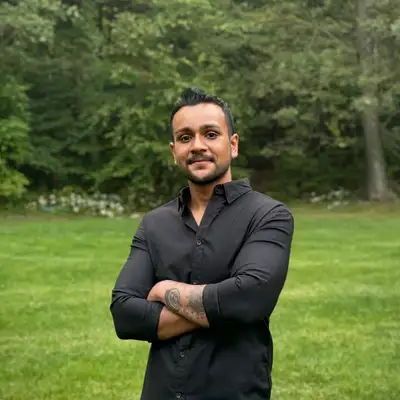
Hosted by Priten Soundar-Shah, the show features wide-ranging conversations with educators, civic leaders, technologists, academics, and students.
Each season centers on a key tension in modern life that affects how we raise and educate our children.
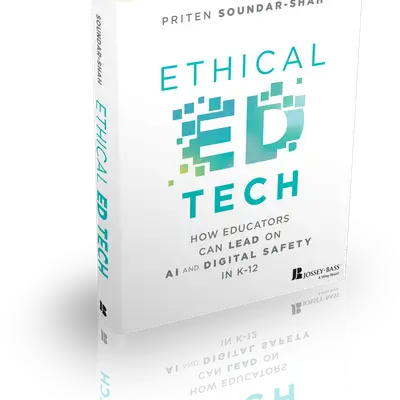
Learn more about Priten and his upcoming book, Ethical Ed Tech: How Educators Can Lead on AI & K-12 at priten.org and ethicaledtech.org.
Priten: Welcome to Margin of Thought, where we make space for the questions that matter. I'm your host, Priten, and together we'll explore questions that help us preserve what matters while navigating what's coming. For this episode, I get to talk to Tiffany Brown, litigation counsel at Tech Justice Law, where she focuses on AI chatbot liability. She also leads Gillis Education, supporting students and families through tutoring and special education advocacy. Before that, she worked in government at the US Department of Justice's Civil Rights Division. Tiffany and I have already chatted twice on her own podcast, so I'm excited to have her here today on mine. Our conversation today asks what accountability should look like when AI products cause real harm, and what safeguards need to exist before people get hurt. Let's get going.
Tiffany: So I am currently with Tech Justice Law full-time as a litigation counsel, where I focus on lots of different things, but mainly AI chatbot liability more recently. I have also, in a part-time capacity over the last fifteen years or maybe even more, owned and operated an educational consulting firm that provides lots of different avenues for academic support, including tutoring that supports students, but also special education advocacy that supports students as well as their families. And then a little bit of policy work goes into that as well. Prior to joining Tech Justice Law as a litigation counsel, I had various roles in the government, doing a lot of policy work, most recently related to civil rights at the US Department of Justice Civil Rights Division, which of course touches on education and all things disability rights. Prior to that, health and human services and a few other roles. But yeah, that's me in a nutshell currently.
Priten: You're tackling these problems from a lot of different angles, and I want to talk about some of the overlap between them, if any. I really want to hear about the kinds of cases you're working on. But maybe we can start with: what kinds of things were you litigating prior to the AI chatbots?
Tiffany: So interesting, I actually went to law school later on in life. So I am not a baby lawyer anymore, I don't think. But I graduated in 2020, and so most of my work has been policy-related. Prior to joining Tech Justice Law, I did lead the AI and Civil Rights Working Group. I should say co-led the AI and Civil Rights Working Group. I helped out a lot with developing and pushing the AI and Civil Rights Working Group forward, which was kind of like my entrée into the tech world. But I was doing policy work. In that capacity, I helped to think about litigation strategy, which really made me want to do litigation. Policy work is a very important lever, but it was really that role at DOJ that made me really want to focus on litigation. While I was at DOJ, we didn't necessarily bring a number of cases in the tech space. It was a lot of background work as far as learning what sorts of technology is out there, what are the emerging concerns from a civil rights perspective, and if we were to bring cases, if we were to enforce, what would be our legal strategy and what would be the evidence that we would need, and who would be our partners, and all sorts of questions. So there was a lot of build-up and research and laying a lot of the groundwork for enforcement. Being litigation counsel currently at Tech Justice Law, this is actually my first role doing solely litigation.
Priten: So that's like jumping into the deep end, it feels like, with how quickly things are moving, but also how complicated things are because there's no case law, and precedent on it is basically nonexistent. So what sorts of challenges are you all working on to help navigate these problems?
Tiffany: So Tech Justice Law is a fairly new organization. It's only been around for more than a couple of years. But the types of cases, and where the expertise has developed over the last couple of years, is in AI chatbot liability. We filed a number of cases even recently relating to harms that have been brought on in connection with OpenAI's ChatGPT. There were a number of cases filed in November of 2025. And just recently there has been what's called a JCCP that has been formed because there have been lots of other cases similar to ours that have been filed, and there's going to be this group effort from the perspective of the court to litigate these cases. They're product liability cases at their core. And what they have to do with ChatGPT is essentially being a defective product and interacting with consumers in a way that is extremely harmful. We've gotten a slew of these cases, unfortunately. So that has been our bread and butter. There are other cases that we are part of or pursuing, but those have been the cases that have gotten a lot of attention in the last six months, and that's where we've spent a lot of our time recently.
Priten: Yeah. I have lots of questions because there's so many different ways we can take this, but I want to start with: can you help us understand the larger space right now in terms of holding maybe the AI companies, but also any media, like some tech companies, responsible for their products? Because I know we had some movement on the social media front this year, and I'm wondering if that is promising, and if any of that applies to the kind of work that you all are doing.
Tiffany: Yeah, it's definitely promising. I do want to point out, and you've already said this at the beginning, AI and AI-powered products are fundamentally different from social media products. So it brings up a whole different category of things to consider. There are, of course, similarities. I would say that the movement in the social media cases is helpful, and it's also really welcoming to see accountability after so many years of seeing some of the harms that have come from these social media platforms. But AI is just moving so fast. Even when I started at the DOJ and was in the AI and civil rights working group, I don't even think we were contemplating specific harms from generative AI products, because it was very new. ChatGPT debuted in 2022, and so we're still talking about products that — and that was just the early iteration. So we're still talking about products that are just so new that everyone's trying to wrap their heads around how they work and the harms that they potentially cause. But I do think that movement in the social media cases is promising, and even the fact that our cases are making it as far as the complaint stage and even further than the complaint stage, and that there's movement here as well in the chatbot liability cases, is also promising. I think it's a nod to the fact that the public is now paying attention to AI in various sectors, and not just in the way that we use AI as productivity tools, but also how we're using AI in education and how we're using AI even in healthcare. I think the public is now starting to pay attention because these cases have brought these potential harms to light, which is really important. And the courts, I think, are also taking notice.
Priten: I'm glad that we're seeing movement much faster than I think we did with social media platforms. That to me is promising, at least. I want to dig into a little bit about what sorts of harms are making it to the courts. I know you mentioned that part of it's treating them as defective products. But the kinds of different harms that I'm thinking about are everything from bias and racial profiling, to the mental health implications of it, to maybe something as simple as the hallucinations as a defect of the product. So is that the kind of thing you're talking about when you mention that, or are there pieces of this beyond that?
Tiffany: Yeah, so we are definitely tracking all of those sorts of harms and cases. There's a wide array, unfortunately. Our lawsuits sometimes deal with minors who have gone to ChatGPT for advice on committing suicide, and they have succeeded in committing suicide, unfortunately. There have been suicide attempts due to what are referred to as AI delusions — and this is not the clinically appropriate word, but the media has kind of taken it and run with it — but AI psychosis. That leads down rabbit holes where you might start out talking or conversing in a way — I should say exchanging interactions, because we don't want to humanize the product at all. But having interactions with ChatGPT that seem pretty innocent, you might ask, "What temperature should I bake a chicken?" or "What are some ways that I can improve study habits?" Really innocent things. Then you start to use it more and all of a sudden you're asking it about relationship advice, and then all of a sudden you have this emotional attachment, or you start asking advice about more personal things, and you go down a rabbit hole of these interchanges that all of a sudden are now harmful. We've had those sorts of situations where people kind of go down an AI delusional sort of spiral, if you describe it that way. Then there are other harms, as we've seen more recently in the courts. The school shooting that occurred in Canada — there are now a few suits that pin ChatGPT as a contributing factor to those shootings because the person used ChatGPT to help them actually plan out the shooting. That's really grave harm. But then you also think about harms outside of those, like the unauthorized practice of law, for instance. There is now a suit looking into how things like ChatGPT have participated in the unauthorized practice of law — giving people legal advice and it not working out so well. Those are not obviously as serious as suicide and attempted suicide and shootings, where there are fatalities, but it's also a harm. There's also a slew of other harms that we're tracking, like inappropriate child sexual abuse material and, even with ads coming to generative AI products as we've seen in the news, that opens up a potential for various harms. So there's a lot of movement. There are a lot of things happening in this space, and even though our lawsuits have focused on a bit of a niche sector within the landscape, we're tracking all of it because it all relates to a deeper core issue of what should we be using these products for. They are helpful in some ways, but in other ways it should just be off-limits, in my opinion. So we're trying to draw that line of what makes sense here. Should we be using chatbots for companionship? Should we be using it in the healthcare field? And in what way? What specific ways? Should we allow it in schools, and in what way? I'm not saying get rid of it all. I'm just raising the flag that we've got to be careful about how these products and AI, and specifically general-purpose LLMs, are being marketed and rolled out to the public without safeguards and without critical guardrails that will prevent harms, whether it's suicide, shootings, legal advice, medical advice, or financial advice. There just has to be more thought put into what we're doing here.
Priten: I want to understand what resources our legal system provides for these kinds of cases. I think a lot of folks might agree that we should be cautious about those different use cases. If your friend was using it as a companion, or using it as a therapist, maybe we might step in and help them reason through why that's not a great idea, or alternatives. I'm trying to think of other examples of when — and again, this is new space — but are there examples of when the law has been able to assign that sort of liability to the company itself? And what might provide us those opportunities with AI? Maybe an example of what I'm thinking about might help. When you're thinking about the student or child who's chatting with the chatbot and it ends up leading to the cycle of worsening the mental health crisis — that scenario versus a child that's reading a book that also leads them down a similar mental health crisis. Why should we, and why can we, hold the AI company — or hopefully can hold the AI company — responsible, but not the author of the book maybe, or the publisher?
Tiffany: Yeah. So I would answer that by first giving a very lawyerly answer, and all the lawyers will agree with me and know what I mean. It depends on the facts of the case, the intricate facts of the case, to make a determination. However, I think it's all about foreseeability, right? Can you foresee certain harms with this sort of product or technology? I don't know that people would say, "Oh, this book is going to drive someone down to give them a mental health episode." I don't know that there's that foreseeability there. As with other products, especially products that are mimicking human behavior and human emotions and other sorts of almost manipulative design, there's some foreseeability there. You could see, "Oh, this might not be great for a 12-year-old to be talking to a chatbot that is pretending to be human" — particularly if there was some research done behind the scenes. If you have an autonomous car powered by AI, there are some harms that are foreseeable, and the manufacturer of that car has to take those into account. So that's the first thing I'd say. But then also, with product liability, sometimes we don't even need to meet that threshold. If you put out a defective product, if there is enough there to say, "Yeah, this is bad. This is harmful, and look at this connection," you're going to be liable. So there's strict liability in that sense, and then there's also what I was just referring to as negligence — like, "You guys were negligent in rolling this out because you didn't consider all of these certain potential harms, or what could possibly happen when you should have known." So there are different avenues. Again, this is all very new, so we'll see how it all plays out, especially in the tech space. But you can think of — I know that the social media cases have been compared to the tobacco cases of the '90s and early 2000s, where those companies were held accountable for marketing their products to young people and being very deceptive about the harms and how addictive cigarettes can be. Social media is having its big tobacco moment. We'll see what happens with the sorts of cases that are coming up now. But yeah, I find the work interesting because of digging into this product liability doctrine a bit. And to go back to your point about other types of harms, like bias and all of that — all of that is still yet to be uncovered as well, and there are certain cases, like civil rights cases and disability rights cases specifically, that are making it through the courts. Some of it is publicly available, some of it is a little bit harder to get. But we are in a time where in two or three more years we might have more clarity around what these legal doctrines and legal theories — whether they'll prove successful in court or not. In about five years we'll have more data around what does product liability doctrine look like in terms of generative AI products, or what does it look like with other types of emerging technologies. And we haven't even talked about things like agentic AI and what's coming. What would liability look like there as well? So we'll see.
Priten: How many of the product liability cases that you've seen, or that you're working on, are reliant on the end user being a child? Because that I find interesting. Big tobacco predominantly ended up being about marketing to minors, similarly to social media. It's about how manipulative and addictive the technology is for children. But obviously these harms are not limited to children, and that's true of — you know, there are cases of adults who've died by suicide after talking to AI chatbots. So what role is the end-user demographic playing in how likely or how strong these cases are?
Tiffany: That's a great question, and something we talk about all the time. But the truth is that we're getting cases that are all sorts of demographics. It's not affecting just young people, it's not affecting just older people. We'll have more data as we have more cases come up that we're able to recognize trends in. From what we're seeing now, we have young kids that are impacted, and then we have vulnerable populations like people with disabilities being impacted, women, men, all sorts of ages, which has been very interesting to see. But you're right, there's this younger-person element to the social media cases and even the cases that have been filed so far. But again, there's a good mix of types of people, and honestly, types of harms that all have that same thematic product liability argument. I think it's an interesting point. And just maybe one other important key difference about how AI-powered products like generative AI products and other general-purpose LLMs — it's different from social media even though there are obviously similarities. It's just the magnitude and the speed at which it's impacting not only a certain segment of the population, but all sorts of different types of people. And also different areas of the world, different areas of the country, different walks of life, from socioeconomic status to — I mean, it's just all over. And even, I would say interestingly, people who appear to be tech-savvy, which is also an interesting point — people who are pretty familiar with how the tech works, or at least on the surface, all the way down to people who are not as tech-savvy. So it's just a variety, which has really been interesting to see.
Priten: I feel like one of the international stereotypes of American product liability is that you can just disclaimer your way out of everything. You see that obviously — every single chat interface has this, "This is a chatbot, and we're testing it and it will likely hallucinate." The other day someone pointed out that the Copilot terms and conditions for even their enterprise clients say all of this is for entertainment purposes only, which is super interesting when they're pitching it to big companies and schools. Is that really enough to avoid some of the concerns about people using it in high-stakes scenarios? And the product is defective, right? It's making mistakes, it's making up case law, it's suggesting the wrong diagnosis, whatever it might be. Is the little warning enough? Is that them trying their best, or are those cases harder in practice as well?
Tiffany: I would say we would definitely argue that no, of course that is not enough. You cannot disclaim your way out of this one — especially when there are high stakes. We are talking about people losing their lives. So that is the highest stake, and you can't just say, "Oh, we just checked this box. We checked this box." The question is: Was it enough? Did you do enough? Were there other things that you could have done feasibly that would have made a difference here? Even if you have disclaimers, there's still a way to hold companies accountable or liable for defective products. To use car examples: you can sell them a lemon of a car and say, "You know, sometimes I'm just going to give you a warning, like sometimes this car doesn't work." But that doesn't completely get you out of the woods if the car just completely falls apart on the highway, especially if you have marketed that product as safe and reliable and trusted and all of these different things. So what are you saying about your product, and what's actually happening? Is there a discrepancy? And again, you have strict liability. So sometimes it's like, if you put out a defective product, it is what it is. There has to be some accountability.
Priten: When we think about how to approach these potential harms from AI technologies, there are both sides of this. There's the proactive side of putting out regulations and policies — we're using protective forces that way — and then there's the reactive one of these product liability cases. It seems like most of the work, partially probably because of how our legal system is structured, is happening at that reactive level, in order to scare the companies into avoiding these cases. Is that unique to tech products, or is that basically how these kinds of legal cases about product liability work in general?
Tiffany: Yeah, unfortunately, I feel like sometimes there has to be some sort of incident, or something bad has to happen, for there to be movement. In some cases, even still, there are bad things that happen and then there's still no movement. The way both our Congress works and our legal system works — all of the different branches of government — things are just immensely slow. Sometimes it takes something happening, unfortunately, for there to be movement. We've seen in this area where there has been state movement, with certain legislation at the state level being passed and also being proposed in state legislatures, where the federal government hasn't acted. As far as the courts, right now it seems like litigation has been a bit more impactful at this stage of the game than the policy levers we're used to seeing play out in Congress and at the state level. But I will say that litigation and policy work hand-in-hand. They go together in a way where you have policy efforts happening, litigation might be playing a role in informing those policy efforts, and vice versa. With my current job, and even with a lot of my previous jobs, we're watching the courts, and we're watching the legislatures, and we're watching Congress. We're watching all of it because all of it plays into how much progress is actually made and how fast. But I will say there has been a lot of movement at the state level, even the state enforcement agencies, where the federal government has not acted quickly enough, I guess. That's really encouraging to see — that state AGs' offices are opening investigations, and they're filing suits, and they're doing a lot of work and research into these issues. Because I don't think we're going to see it in the next two or three years at the federal level.
Priten: I know I've started to see Meta is considering not offering their products in New Mexico, I believe, because of new state-level regulations that were coming out. They can afford to do that when it's New Mexico, but New York is also working on, I believe, some child protection regulations. I know California has been working really hard at it. So it is interesting to see how, even though it's particular states acting, at some point it's easier to — I think that applies to a lot of the California online protection policies as well. Even if you're not a California company — I know there are revenue thresholds — but still there's pressure to basically offer that same protection to the whole country, because you're going to have to offer it for California anyway. That to me is also a very fascinating quirk of our legal system. I wanted to talk a little bit more about the civil rights work and policies, and see if — the thing I'm wondering about in particular is, there are obviously particular harms that the technology does. And maybe we can think about bias, and depending on who the actor is, our legal system offers different options. So I'm wondering about the difference between, for example, somebody using a private chatbot, going to ChatGPT maybe, and asking for advice on who they should vote for. And maybe depending on the user profile, you notice that it's giving different answers or bringing up different issues to consider. Versus, if tomorrow, the federal government puts out a voter information bot, and it's doing the same thing. My intuition is that we probably have very different resources in both of those cases. Is that accurate? Can you walk me through a little bit about what that looks like in each of those cases?
Tiffany: So yeah, definitely different resources, different legal authorities as well. Different laws would apply, state laws versus federal government, federal law. So there's lots to consider. It's one thing to be like a private plaintiff going to a private plaintiff's firm that is way smaller than — unless you go to a big law firm and they have lots of resources. A lot of times, these cases start out with small plaintiffs' firms coming together to try to bring an impactful case. And then on the other hand, you have the federal government, which has its own resource constraints, which is why things take a bit longer in the government — not only because of all of the different levels of red tape that you have to go through sometimes to bring investigations and enforcement actions. There are also limited resources, limited time, not enough attorneys, not enough paralegals and legal support staff. So there's definitely a difference there. Just different types of resource constraints. But you are obviously able to move a little faster outside of the government, I think. You can talk to a client and you want to bring a case, you can write up a complaint and file it the next day if you want to, whereas that is not the case with the federal government. It's also going to depend on the laws. Do you have a private right of action? Can you actually sue whoever the defendant is as a private plaintiff? The federal government — sometimes you're looking for patterns and practices. You're not necessarily bringing a case on behalf of one person, but you're bringing the case on behalf of the American people and the public. So you might be going after a bad actor who has a pattern or practice of some sort of illicit activity or discrimination or whatever. So the approaches to litigation and enforcement are going to be much different. From the private plaintiff side, you have to get a little scrappy with how you bring your cases, because a lot of times the federal government, or even the state government for that matter — like state AG offices — they can demand things from companies that a little old private plaintiff's law firm cannot just demand from a company. So there's just different legal authorities and actual authority to — not scare a defendant, but, "We're the government and we're asking for these things. You need to comply," sort of thing. Whereas a plaintiff's firm might have to get a little bit creative in how they get the evidence to even start writing a complaint to file. So that's also a major difference between those two scenarios.
Priten: I was wondering, when you think about the government vendor requirements and procurement policies, if they might push the companies to have to deal with some of this in order to be able to work with a federal agency, just because obviously the government has different standards they have to meet themselves. But I know that's also very politically driven and depends on the administration and all that, as we saw with the Anthropic-OpenAI debacle where that conversation about what each of them had to agree to would have been very different depending on who was in office. I'm sure that will vary. You brought up agents earlier, and I want to think about that forward-looking a little bit in terms of what other challenges we're going to see. I saw that a company yesterday is offering agent insurance — to insure, you know, if a company has a bunch of agents working on their behalf, it's basically a liability insurance for the company against their agents' actions, which I thought was just fascinating and also scary in terms of where we're moving. The line I'm trying to figure out is, we don't want to treat agents as autonomous agents, right? We want to hold the product company responsible for the harms that it's causing. But there's also a level of liability that is unique to agents because they can take action on behalf of someone without that person's consent. So if I have an agent that's out in the wild and it decides to commit fraud on my behalf, am I responsible or is ChatGPT responsible? That's an interesting question. I know we see this with self-driving cars as well — is the owner of the car responsible, or is the car manufacturer responsible? Are we going to see a lot more of those? Because I feel like those cases seem interesting, especially as there's more and more autonomy given to the tools.
Tiffany: I want to say that it's a great point and a great question, and there's been some movement, at least in California, on kind of shooting that down. Just because you say that an agent did it doesn't mean that you're off the hook. I forget what the name of the act is, but it just recently went into effect. It's basically saying you cannot put your bad acting onto — you can't say, "Oh, it wasn't us, it was our agent." So we might see that sort of thing pop up in other states as well. There are definitely probably ways around that. I think what companies — and I think this might be also what you were saying — companies are going to maybe bake in a certain level of cushion, like financial cushion, to be able to deal with or confront claims where their agents might act in a nefarious way or do something wrong. But I definitely think that there are ways legally to get around that, and you can't just say, "Oh, the agent did it." So I'm just skeptical of those sorts of arguments.
Priten: When I saw the insurance company pop up, I was thinking about the difference in terms of liability for companies of an employee going rogue and causing harm on behalf of the company, versus an agent tool doing so. What is going to be interesting is that the scaling of the harm is much higher. There's only a human employee who can, of course, cause liability concerns for you as a company. But if you put up 200 agents and they all do something, the scale is so much higher. That I think is going to create challenges for both the companies themselves, but also everybody on all the different sides of the equation, because there's just so much that we have yet to figure out.
Tiffany: And even the inner workings of the actual technology — we can understand a human doing things. If we have enough videotape evidence or documents that we see, we can understand human behavior. But it adds a layer of complexity when you have systems acting autonomously and you're not able to actually pinpoint where things went wrong. That's another layer, even from a litigation perspective — a challenge is uncovering the tech and lifting that black box to understand what is actually going on and how it's actually working. Which is why, coming back to our original point at the beginning, safety guardrails and testing and rigorous training and testing before deploying it to a large amount of people at a massive scale is so important. Not just to chase profit or to chase market share, because we have to really understand and think about the implications.
Priten: I can't think of a better note to end on, so thank you so much for sharing all of that. Like you said, I think over the next few years we're going to see what direction a lot of this moves, and then hopefully that creates momentum. If folks want to follow the kinds of work that you and your organization do, where can they check that out? And then tell us a little bit about how they can learn about the other work you do, in the education space.
Tiffany: Yeah, so my firm, Tech Justice Law, you can reach us at techjusticelaw.org. If you just Google us, all of our great work will pop up. We just got a new website, so go check that out. It has all of our cases and all of our issue areas on there, as well as the contacts of all of the people who we work with. And then as far as my part-time Gillis Education passion project — it's been a passion of mine for, again, over 15 years, but really something that started back when I was a teenager mentoring and tutoring other kids. Of course, I am tracking what's going on in the AI and education space, just because of the work that Gillis Education does. You can find us at gilliseducation.com. And Gillis is spelled G-I-L-L-I-S, as in Sam.
Priten: Awesome. Thank you so much, and I'll add links to that in the show notes as well.
Tiffany: Yeah. Well, thank you so much. This was a great conversation and great questions as always.
Priten: Tiffany makes clear that AI accountability is a complex web shaped through courts, regulators, advocates, educators, and families. As AI systems become more interactive and autonomous, the legal system now has to confront new questions about harm, responsibility, and design. She tells us that companies need to build safeguards before these products actually reach people at scale, especially when users may rely on them during high-stakes moments and when they're minors. For more on how we might shape these decisions, check out my book, Ethical Ed Tech, at ethicaledtech.org. Thanks for listening to Margin of Thought. If this episode gave you something to think about, subscribe, rate, and review us. Also, share it with someone who might be asking similar questions. You can find the show notes, transcripts, and my newsletter at priten.org. Until next time, keep making space for the questions that matter.