Subscribe
Share
Share
Embed
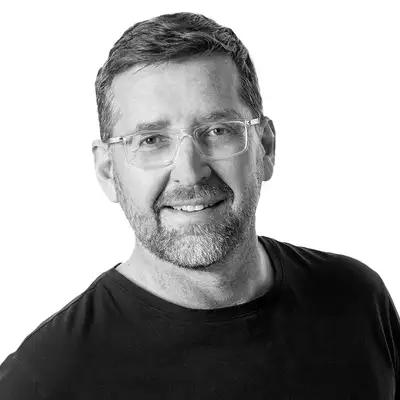

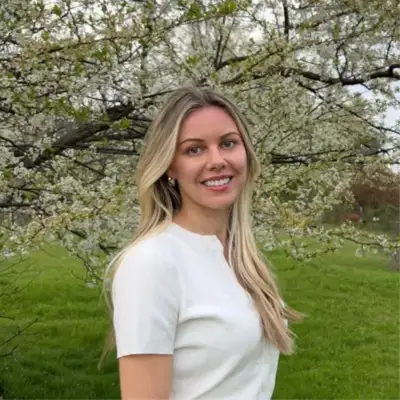
Hosted by Heath Fletcher, The Healthy Enterprise explores how innovation, technology, and leadership are reshaping the life sciences industry—from discovery and development to commercialization and care delivery. Each episode features candid, heart-centered conversations with founders, scientists, executives, and investors, sharing real-world experiences and insights for building resilient, future-ready organizations.
Created and Produced by Bullzeye Global Growth Partners — Let’s build it together!
Kayla Ellsworth (00:00)
The drug development process that we know is failing us dramatically. The statistics are pretty nuts. One in ten thousand compounds makes it to an FDA-approved drug, with an average cost of two billion dollars taking on average 15 years.
Heath Fletcher (00:16)
Drug development has a 90% failure rate. It's expensive, it's slow, and it still relies on animal testing developed decades ago. So today we're talking about the new sites that could change all of that. Kayla Ellsworth is the scientific operations coordinator at Speccro a biotech consulting startup using new approach methodologies, otherwise known as NAMS, to help drug developers get better answers, faster and at a fraction of the cost. She's a neuroscience grad who networked her way into one of biotech's most exciting.
startups and she's just getting started. And later Kayla is gonna share what it's like walking into rooms that are 95% male and about the moment that completely changed how she sees her place in this industry. Please welcome Kayla Ellsworth Scientific Operations Coordinator at Speccro. Let's get into it.
Hi Kayla, how are you? Thank you for joining me for this episode. I'm looking forward to hearing all about NAMS. Uncle no one knows what that means, but they're gonna find out. So welcome. Thank you so much. I'm really good. I want to s give you this opportunity to first introduce yourself and your role at Specro and and talk a little bit about Specro and and give people a little insight as to where you're coming from. Yeah.
Kayla Ellsworth (01:25)
Thanks so much for having me, Heath. How are you?
Absolutely,
I can give you my career origin story if you'd like. Perfect. I studied neuroscience in university, and I knew I wanted to break into the biotech industry, but the question really was how, because it just happened to be the most capital scarce time in recent history. And on top of that, yeah. On top of that, I was also seeing all my friends, you know, applying.
Heath Fletcher (01:45)
Yeah, let's hear it.
Kayla Ellsworth (02:11)
on LinkedIn for months and months and months and just not seeing a lot of success there. So I knew I had to do something a little different. And by a stroke of luck, my home base is in Boston, which just happens to be the center of the universe for anything biotech related. So I I hit gold there accidentally.
Heath Fletcher (02:27)
Yep.
Kayla Ellsworth (02:31)
And I plugged into ChatGPT, okay, what life science conferences are happening over the next few months in Boston? And I reached out to the conference coordinators and basically said, Hi, I am a broke post-unity student who's just
Looking to learn and meet people, will you please take pity on me and give me a free pass? Because these conferences are thousands and thousands of dollars. And to my surprise, they said yes. So really shout out to those coordinators for opening the door to where I am today. And that first conference, I kind of had that feeling when you get transferred to a new school. I was like, everyone's looking at me, they know I don't belong here, but
Heath Fletcher (02:58)
Yeah.
Yeah.
Kayla Ellsworth (03:19)
Exactly,
exactly. It was definitely fake it till you make it. So I went up to basically everyone I could, introduced myself and really just networked my little heart out, and that's where I met Shashi Ramaya, who is the founder and CEO of Spec Row, who you just interviewed. And he basically just said he was willing to take a chance on me. And not only is he my employer, but he has been
Heath Fletcher (03:22)
Yeah.
Kayla Ellsworth (03:49)
such a mentor to me. he's really shaped my career thus far in the industry.
Heath Fletcher (03:56)
Amazing. What a great opportunity. And that's just like well that's just it. It's just putting yourself in a kind of a weird, uncomfortable place, you know, and where you can you can meet other people who have sort of similar interests and and ideas and that's look where it got ya. Absolutely. Had you not taken that step.
Kayla Ellsworth (04:13)
Yeah, I knew
absolutely zilch nothing about drug development and what goes into it and NAMS, which we're gonna get into later, but I feel like it just taking that risk and putting myself in those uncomfortable positions just really led me to such a fruitful experience and, you know, a lot of learning and opportunity.
Heath Fletcher (04:37)
So tell us about Specro and what was it about that company and what Shoshi is working on that was so compelling and interesting to you?
Kayla Ellsworth (04:46)
So when I met Shashi, he introduced this concept of NAMS to me, which are new approach methodologies. And like I said, I had no idea what these were. And what really drew me to them initially was that they shift the emphasis away from testing on animals, which is the traditional model. Right. And, you know, I love animals and I love science. And
you know, historically those go hand in hand. Right. And a lot of animals have unfortunately, you know, suffered and died for the sake of human medicine. And it seems to have been a necessary evil, but it's 2026 now, and there should be better ways and there are better ways. And I really wanted to be a part of that
sort of boat that's rowing everyone forward in this direction. At Spec Row, we are a consulting operation in preclinical development. And Shashi has curated a team of industry leading experts across the different sectors of drug development, whether that be admi, PK, safety, toxicology, regulatory, to
Answer questions and attack problems at truly every angle. And we help companies do this by incorporating these new approach methodologies, NAMS, into their drug development process to answer those questions, solve those problems in a more predictive, accurate, timely, and cost-effective way.
Heath Fletcher (06:38)
Well it's not unusual for particularly in the healthcare industry to have done things a certain way for a long period of time, mostly because we didn't really have any alternative options. Right. Right. But sometimes we get complacent and we just like, that's how we always done it and animal testing has just been up one of those things that that's how we've done it. That's how we've always done it. So what else can we do? And so
What else can we do? What can we rep what can we replace that with?
Kayla Ellsworth (07:10)
Yeah, yeah, absolutely. I would love to get into that. I guess I should probably start by defining what a NAM is. Yeah. Now, there are quite a few different definitions here and this is an evolving field, so the semantics are you know flexible and changing. But
I would t to say to simplify it, they are models, technologies, and methods that are used to study biological and chemical processes and generate data.
Without relying on traditional animal models. And the idea is that they are faster, cheaper, more predictive for humans, meaning in theory, they could better recapitulate human physiology. And that's not to say that animals, animal testing and animal models are not necessary in today's, you know, current structure, but
there is still room for improvement, especially when we see the current challenges that we do and the gaps that still occur in drug development.
Heath Fletcher (08:29)
I mean how bad is it? Like what are the stats around Yeah. What that's what everyone's going, Well how bad can this be? Like how what's going on out there?
Kayla Ellsworth (08:31)
Yeah.
Well the statistics
are pretty nuts. one in ten thousand compounds makes it to an FDA-approved drug with an average cost of two billion dollars taking over fifteen years. These issues that we're seeing are really big, hairy problems, and there's not just one thing we can do to solve them because there's so many different factors at play. But you know
Full stop, we need better ways to help patients, and that's where NAMS come into play.
Heath Fletcher (09:15)
I mean those are the th that's that's what they're all for. I mean drugs are for patients for for to to to resolve problems, save lives, etcetera, etcetera. If there is a better, more efficient, less costly way, we we need to find them. Because we've been doing it this way for a very long time and that's not a very good success rate. One in ten thousand. It's terrible. Okay, so how how are we gonna fix this?
Kayla Ellsworth (09:31)
Exactly.
Mm-hmm.
Yeah.
Yeah, well I'll give you a couple disclaimers. So
Heath Fletcher (09:48)
Ha ha
ha.
Kayla Ellsworth (09:50)
First of all, I am not a PhD in this area. I am not scientifically trained in these technologies, but in some ways I think that can make it easier for me to communicate to a broader audience in a way that, you know, is maybe more digestible. And my that's also a non-libility statement as well for the NAVS experts not to.
Come for me if the semantics aren't perfect. But my second disclaimer is that the new in new approach methodologies can be a little misleading because some of these technologies have been around for quite a few years, and some are even validated, meaning that they are proven to be reliable for their fit-for-purpose use.
so those are kind of my two little pre-statements before I dive into the different flavors of NAMS. And there are gonna be some things that are considered under the NAM umbrella that I probably won't touch on, but I'll go over some broad categories. I'll start with the ones that I am least familiar with and then finish with the ones that are more in my wheelhouse.
Heath Fletcher (11:14)
Sure. Sounds good.
Kayla Ellsworth (11:16)
Awesome, let's do it. So, first we have in silico methods. This encapsulates computational modeling and simulations, which means using computers to analyze, simulate, and predict biological or chemical behavior without using or without running physical experiments. So
It's kind of like a forecast as to what might happen in the human body. So for example, you could use in silico to predict whether a compound is likely to be toxic based on its chemical structure.
Heath Fletcher (12:00)
Okay, and we're able you're able to do that due to the decades of scientific experimentation and data that already exists. Yes. The repetitive, repetitive nature of science is that you often do a lot of the same research leading up to a certain point where it might branch off or or right. But this data is something that you can use, and so you're not necessarily going back to scro ground zero again. You're actually picking up where everyone else has.
Kayla Ellsworth (12:31)
Right, right. And I mean that's really where AI comes into play here is using like conglomerating all the data that we have to see patterns and use those patterns in a predictive way. so the next category that we have is in chemico.
Heath Fletcher (12:46)
Right.
Kayla Ellsworth (12:52)
You know, this has actually been around for quite a while. there's no living systems involved here, it's just chemical reactions. So this is measuring things like binding, reactivity, stability, all that fun jazz. And next we would have ex vivo. So this is using actual tissues taken from a donor, whether it's human or animal. So for example, you could use
human skin samples for irritation testing or liver slices to study metabolism, things like that.
Heath Fletcher (13:30)
So that's where you're kind of you don't have to use mice and rats and other things in order to in order to do those testings. 'Cause that's often like in medications or ointments or topicals, that's what they have to find out is how will this impact exactly skin. Yeah. Interesting. So they can actually use human skin but it's not on a person. They're interesting.
Kayla Ellsworth (13:46)
Exactly.
Post boredom, hopefully. Yeah.
I won't be signing up for that study personally. next you would have omics as a category. So these are technologies that measure large sets of molecules at once. So say you are trying to understand a city. Instead of checking
Heath Fletcher (14:02)
No me
Kayla Ellsworth (14:23)
street by street, Omics looks at a satellite map of the entire city to see things like traffic patterns, busy areas, what different parts connect. That's what OMIX does for biology. Broadly it lets you compare patterns and gives you more of a system-wide insight into how biology is responding. And
There are some Yeah, it's very interesting. And it's it's a rapidly growing field right now. And there's different subtypes that sort of fall under this umbrella of omics. I won't go too in depth to those, I'll just mention them briefly. There's genomics, which looks at DNA. There's transcriptomics, which looks at which genes are turned on and off. There's proteomics, it looks at which proteins are made.
and you know, if they change, how they change, and there's metabolomics, which looks at small molecules called metabolites that represent a sort of snapshot of biological activity.
Heath Fletcher (15:33)
Hm. Very interesting. You're very good at explaining it in a in a layman's term. I'm serious. Like it's very good to you really create create a very good visual of how it works.
Kayla Ellsworth (15:44)
Thank you, I appreciate
that. and that's like, you know, we can talk about that later, but that's something I'm also passionate about because, you know, sort of being the new kid on the block in this industry, people will often speak to a crowd as if everyone is an expert in the field. And you know, in in some cases that is necessary, to sort of skip the small talk in a way, but
For someone like me, you know, I wanna understand the science. I wanna understand what people are saying, but there's sort of a barrier of accessibility there when it comes to the language. So I think, you know, sort of when when you're on a podcast, especially like this, you never know who's listening. You're gonna have a very broad audience. No, no, no. So I think, you know, going about the verbiage in a way that really is accessible to as many people as possible is you know.
Something I'm passionate about.
Heath Fletcher (16:41)
I mean there's I mean, the science people, the scientists love the science, right? And they can't get enough of it, right? Whereas, you know, the rest of us are kind of our eyes are glazing over like, wow, it's fascinating, but I you know, I can't even comprehend half of it. But yeah.
Right. The scientists want to hear the science and the investors want to hear about the business and everyone else wants to hear about the patient outcome. And so like you have all these very interesting perspectives, but an all and a variety of conversations that are always going on. But it's knowing what to say when you're in the right audience, right? Exactly. That's what's important.
Kayla Ellsworth (17:33)
Exactly. Yeah. And I mean your podcast does a great job of that too. And you know, you have such a strength in in taking information and then synthesizing it in a very digestible way.
Heath Fletcher (17:47)
Yeah, well thanks for saying that 'cause it yeah, that's what I try to do. I mean I'm not you know, I I I
No there's no such thing as a dumb question. You know, we all hear that, but I'm I like asking a lot of dumb questions because often when people are talking about something that they're very familiar with and very passionate about and it's just something they talk about all day long, they'll shorten things and use acronyms and what have you and it's just like, Okay, I don't know what that acronym is, so you're gonna have to explain that. So it's just that reminder, it's like, yeah, you don't live in my world or you don't live in my head, so I can't I have to I have to stop. Totally. You know
reassess and then re explain that and that's also too where coming in when you're you know, presenting a pitch for a fundraiser, like you don't spill your science jelly beans all over the lobby when you walk in because everyone's just gonna walk on them and you know, you gotta have a you gotta hold some back and and it's more of a it's more of a tease and it's like here's enough information to generate interest yeah. Who where they wanna come back for more without over you know over
Kayla Ellsworth (18:35)
Exactly.
Heath Fletcher (18:53)
Over man's plane.
Kayla Ellsworth (18:54)
Yeah.
Ver very well put. It really is the acronyms that you know have always gotten me and continue to get me. I mean, there's a ton of research saying that you know, in scientific papers, even peer editors, the more acronyms you use, the more confusing it is. It's actually just even though it's more of a mouthful to say the actual like you know what it stands for, it it sort of clicks in people's heads more.
Heath Fletcher (19:23)
Yeah, it's important. Yeah, very much so.
Kayla Ellsworth (19:25)
Well, I'll sort of get into that last category under the NAMS umbrella, which is more my wheelhouse, which is how I'm gonna sort of rephrase that. This would be complex in vitro models. So this is an umbrella term and there are a lot of different things that fall under this.
So I will sort of start from the most basic and go to the most complex. So first we have 2D cell cultures, meaning growing cells in a flat layer, typically at the bottom of a petri dish, and these offer a lot of control over different conditions and variables and provide scale.
Now, this is not new. This has been around for decades and decades and decades. Now, more evolved are 3D models. These would include spheroids and organoids, and we'll get into those. But I think it's important to say that real tissues in the human body are 3D with cells stacked on top of each other, interacting in all different directions. So
Heath Fletcher (20:21)
Okay.
Kayla Ellsworth (20:46)
These models already represent a more realistic architecture. Yeah. So I can break this down a little bit for you. So let's do it. Let's do it. So spheroids, these are more basic than organoids. So think of a ball-like structure that is a cluster of cells. And there's typically one predominant cell type. For example, it could be
Heath Fletcher (20:52)
Interesting. Okay.
Kayla Ellsworth (21:15)
Breast cancer cells, cardiomyocytes, which are heart muscle cells. And these spheroids are widely used in cancer research to study tumor growth, drug penetration, and resistance. Next, which is a little bit more complex, are these organoids. So in these you're seeing multiple cell types arise which self-organize.
Into structures that resemble aspects of real organs or organ-specific regions. So I'll give you an example. A gut organoid could mimic the intestinal lining barrier and really measure pathogen entry, absorption, permeability, but it's not representing the whole digestive system.
It's just a piece of it. So overall these 3D models show some functional and structural features of actual tissues in a more static environment.
Heath Fletcher (22:28)
Okay, so now ex explain how you use that. How do you apply that?
Kayla Ellsworth (22:34)
Well, you can use them for a variety of different things. you could use them for basically anything under the sun. like I mentioned, spheroids are widely used in tumor research, cancer research. you know, the example I gave of the mini gut, you know, you can see what compounds cross that barrier.
sort of are more permeable and that can give you insights into into whether your drug is harmful, whether it's helpful, what those biomarkers are gonna look like. Things like that. Does that make does that make sense?
Heath Fletcher (23:15)
I see, okay, interesting.
Again, you're recreating you're recreating the part of the body or the area of the body of or the cellular well, being a side of cellular level that you would that you would use you would you apply it in in animal testing. Exactly. You're replicating it but you're actually replicating it in a more human form.
Kayla Ellsworth (23:41)
Exactly. So the point of them is to better recapitulate what is really happening in the human body. Right. And especially, you know, like I mentioned, these three D structures represent more realistic interpretations of what's gonna happen in the human body. Right. Versus just, you know, two D cell lines.
Heath Fletcher (24:03)
Right, exactly. Very cool.
Kayla Ellsworth (24:07)
And sort of the next wrong up in complexity is microphysiological systems. These are also referred to as organ on a chip. there's some arguments and semantics there. I'm gonna call them microphysiological systems. You might also hear MPS for short. now this is more cutting edge, I guess you could say, whereas organoids, which I just mentioned.
They grow by self-organization. You basically give the cells the right signals and they sort of figure out how to form a viny tissue. Microphysiological systems, on the other hand, are devices that are engineered from the ground up. So microfluidic channels, membranes, and compartments are designed first.
And then cells are then placed into specific locations where they then organize and interact under a highly controlled environment.
Heath Fletcher (25:12)
Wow. Mm-hmm. That was a mouth. But I think I got it.
Kayla Ellsworth (25:14)
Yeah.
And I can I can go over some of these key features in in more detail. So an important factor of these that differentiates them is that they incorporate flow. So this mimics aspects of you know blood flow or other bodily fluids, which already makes it a more dynamic environment.
compared to more static environments like a spheroid, for example, which often don't have like a vascular connection within them. And these systems also introduce
mechanical and physiological forces such as shear stress stress that was a mouthful shear stress which is a sort of friction like force when fluid flows past a surface and it concluding as well which for example you would see
in lung expansion during breathing or rhythmic movement in the gut. So already these aspects are incorporated to better mimic what's happening in the human body.
Heath Fletcher (26:39)
And are is there evidence now that this there's evidence now that this is working? This is kind of a a much more functional approach?
Kayla Ellsworth (26:48)
Yes,
there's there's quite a few caveats to that. I'll get into those. but right now these microphysiological systems are being widely used in early drug development as a screening process to say, Okay, you know, what what is looking hopeful, you know, what's looking more toxic, which candidates do we want to develop farther and you know, invest the money in
So that you know, farther down the line, we have a higher chance of success. But what's really interesting is that these systems have been created for almost every organ and tissue in the human body, which is honestly incredible. And in some of these instances, we're seeing them actually linked together to form multi-organ connections.
Heath Fletcher (27:33)
Really.
Kayla Ellsworth (27:45)
to get more of a full body picture so for example, some compounds only present as toxic when the liver and the kidney interact.
Heath Fletcher (27:48)
interesting.
Kayla Ellsworth (27:57)
So if you're just testing on a liver chip or you're just testing on a kidney chip, you know, you might get good data and you might advance that candidate just for it to fail farther down the line. So if you see this interaction earlier on in the process, that's gonna give you a lot more insight. That's gonna save you time and money.
Heath Fletcher (28:17)
Very interesting. Yeah. Wow.
Kayla Ellsworth (28:19)
Yeah. There's a lot of potential here. Yeah. Yeah. Yeah. And they're very, very promising. But sort of like we said, this important caveat is that it doesn't mean they can recapitulate all the important aspects of organs or a full body experiment. You know, at the end of the day, there's still simplified versions of the complexity found in vivo, meaning inside of a living organism.
Heath Fletcher (28:48)
So how how much can this speed up the process of of of drug development?
Kayla Ellsworth (28:56)
Yeah, quite a lot. I mean, if you're getting answers earlier on in the process, that's automatically gonna cut that time down a lot. And in terms of the financial component, if you are failing faster, that is gonna save you money in the long term.
Mm-hmm. Even if these devices sort of have that upfront and cost, it doesn't even compare to what the money that you're gonna shell out once you're in, you know, phase one or even phase two and so on of human trials.
Heath Fletcher (29:34)
'Cause I mean, failing in this industry is not it's kind of a given. Yeah. There's more fail than success. Yeah. So if you can fail Yeah, if you can get past that fail faster, you yeah, that makes sense. You're saving money, you're saving time, and you'll you'll actually it gives an opportunity to actually find the actual solution in a more in a more realistic time frame.
Kayla Ellsworth (29:40)
Yeah.
Yeah.
Yeah, absolutely. Wow. And you know, I will say that another important note is that not all questions need a microphysiological system to be answered. Yes, they are more biologically complex, but
You know, in some instances that doesn't necessarily make them better depending on the question that you're trying to answer. So it's all on a fit-for-purpose basis, right? Because you don't want to use something that you actually don't need.
Heath Fletcher (30:33)
Right. So now kind of fit spectr in here. How do you guys fit into this world and where's your where's your focus?
Kayla Ellsworth (30:42)
Yeah. So
we use NAMS to solve problems. We help companies incorporate them into their drug development process to answer problems and answer questions in a faster
more time effective, cheaper way. So we help companies figure out what NAM to use, when to use it, which like I said, will depend on the question and the therapeutic area. And we will work on programs that are NAMS light, NAMS heavy, somewhere in between. And the long-term ambition here is to use NAMS to e replace existing standards.
But having said that, right now there is an important pragmatism. You know, I'll say using them in a complementary fashion with animal models and animal studies, this is kind of our sweet spot right now in drug development.
Heath Fletcher (31:52)
So you're using them but you're using them to you you're reducing animal studies, but you're also complementing them.
Kayla Ellsworth (32:00)
Exactly. And you know, also combining different NAMS models to address the shortcomings of each other can have this amazing synergistic effect.
Heath Fletcher (32:14)
Is there a world where there is no animal testing at it could get youth it it's that is that the goal to get it to that stage?
Kayla Ellsworth (32:17)
Hopefully.
You know, I think right now that is a little bit of a pipe dream, but never say never, you know, I think we might be a couple decades away from that, even with how fast technology is progressing, because you know, these systems, like I said, just they are more of a piece of the whole puzzle. And even though you're c you're seeing
Combinations of connections that some people are calling human on a chip, it's still not representative of what's actually happening inside the human body fully. But yeah, I mean, anything is truly possible, and that's the hope, that's the dream. And you know, our the government just put out an initiative basically saying in ten years.
Heath Fletcher (33:04)
Mm-hmm.
Kayla Ellsworth (33:18)
We want to see no animal testing. you know, I think a lot of scientists that gives them a little chuckle because they're like, Well, you know, there's a lot of process and a lot of work. that yeah.
Heath Fletcher (33:32)
Yeah, something's gotta happen.
Exactly. I mean we talk we're talking about the animal testing component like it's a like it's a very primary thing. But I mean the primary goal is to speed up drug discovery. Exactly. Right? The the the y the reducing the use of animals in studies or eliminating animals in studies is a really great byproduct, but the primary focus is to get drugs
through the discovery stage process faster, cheaper, and be more effective and efficient so that we can get drugs into the marketplace that are actually going to help patients in Exactly. That's the primary goal, right? That's the animal testing is a is a is an awesome idea, but it it's also a byproduct of where we're actually trying to get to.
Kayla Ellsworth (34:21)
Exactly.
Exactly. Yeah. I mean I don't think the main the main focus here is the whole ethical component of it. You know, that that's what initially got me in the door. I like I said, I love animals and
Heath Fletcher (34:37)
I mean there'll be a lot of people that will really really connect with that.
Kayla Ellsworth (34:41)
Yeah, yeah. And so I mean it's like I said, it's there's a lot of positives. There's a lot of benefits that come from this. But you know, a major limitation right now is that these devices, some of these technologies, methods, processes are not fully accepted by regulators. And
This is a very fluctuating area. There's a lot of different sectors of drug development right now putting their heads together to sort of redefine this space and what it means and also just get a a handle on the global terminology of some of these things.
Heath Fletcher (35:21)
Right. And so Specro is already working with businesses and our drug developers in this pro in this space, right?
Kayla Ellsworth (35:31)
Yes. And we're you know, we're a startup, we're new. We're about nine or ten months young. So we're Yeah, we're we're very early on in this process, but we're seeing a lot of momentum. you know, a lot of things pushing us forward and sort of rowing the boat forward.
Heath Fletcher (35:38)
really? That's yeah, that's pretty.
Are you still in a development phase yourself to a certain extent? Or is the because you're actually working with clients now who are are utilizing your services and a and able to you know almost validate what you're what you're offering, but you're also still in in business growth development yourself, right?
Kayla Ellsworth (36:13)
Yeah, definitely. you know, I'm the scientific operations coordinator at Spec Girl, which is sort of just a fancy way of saying that I'll do a little bit of everything, as is the nature with a startup.
Heath Fletcher (36:25)
that's what a startup is. Yeah, Everyone's wearing everyone wears mer many hats.
Kayla Ellsworth (36:29)
Exactly, exactly.
Heath Fletcher (36:32)
I think Sashi and I talked about that a lot. He's worn a lot of hats. absolutely. Every day, wears lots of hats every day almost.
Kayla Ellsworth (36:39)
Yes. He he is a jack of every trade po possible. and not just a jack, like he is he is a master truly. But but yeah, it's been it's been very interesting. and the learning curve has been steep, but you know, that's that's how I want it at this phase of life, right? You know, the steeper the learning curve in your twenties, you know, sort of predicts your success in your 30s and forties.
Heath Fletcher (37:05)
Well, I mean, look what you did in that nine months, you kind of found a a place to call home in in the in this industry and you're learning a lot. Plus you're you're holding a a leadership role with a startup, you know, and and you're a woman. So I mean those that's a really that's a that's excellent too, right? Yeah, a woman leadership which is also in a predominantly male environment, right?
Kayla Ellsworth (37:32)
Yeah, I mean most of the rooms I walk into are ninety-five percent male, which you know hasn't really I'm gonna sort of rephrase that, which doesn't faze me anymore, but I had sort of a come to Jesus moment when I
Went to this event in San Francisco where I met you actually at the JP Morgan conference. And it was a women's health focused sort of after-party event, sponsored and hosted by Portfolia, who invest in women's health companies. And, you know, I walked into the room and there were about
three hundred women there, you know, and add some men for some change as well. But it was sort of one of those moments where I just thought, wow, like this is this is the future. This it was just an entire room of women supporting each other and, you know, lifting each other up, being interested and invested in the state of
women's health and women's futures in this industry. And it just it was honestly such a profound experience and I it really made me want to seek those experiences out more.
Heath Fletcher (38:59)
Well, I think that's you know, our CEO, Megna, is you know, that's why she became a founding member of B L P N is because it it's an environment as well that that supports those initiatives and and that. And even herself, you know, creating her own sort of women leadership organization called Club Mama Bee. I mean, these are these are initiatives that are really important and are doing a lot for women leadership and women in business and e you know, women in executive
of decision making roles, you know. y it's it's incredible and great. You're doing it's awesome. I think it's the more the merrier as far as I'm concerned.
Kayla Ellsworth (39:40)
Absolutely,
absolutely.
Heath Fletcher (39:43)
So let's talk about your role at Spec Row. You're the what's your title again? Scientific operations coordinator. I knew I was gonna say a I was almost a chief. But yeah, yeah, right. You'll be you'll get this. Yeah. science coordination officer. So that's what is tell me what your role is includes every day.
Kayla Ellsworth (39:50)
Scientific operation.
Yeah. Not yet.
Yeah,
yeah. So
This role we sort of had to build from the ground up. I basically created a role for myself. and it has fluctuated and evolved as the needs of the company have changed over time. So it really does look different on a day-to-day basis and week-to-week basis. you know, some days it's business development, could be marketing, could be admin. you know, I'm trying to dip my finger in a lot of different pots, and one of the initiatives that I'm trying to lead for the company is
Doing these interview series where I interview different experts in the NAMS industry or NAMS field, and really talk about, you know, A, what their specific technology is, B what they're working on, what the limitations are, what the benefits are, the different nuances, how that's gonna look for the next six months to a year, you know, maybe even five years from now.
And even just doing that and being exposed to a lot of different people and their insights and their experience has been a learning opportunity in in and of itself for me.
Heath Fletcher (41:19)
When you say NAMs, do you still get people are you are you getting people going, I don't even know what you're talking about? Is it that still that sort of new and and fresh?
Kayla Ellsworth (41:26)
Yeah.
It depends on I would say yeah, depends on who. It depends on the event that I'm at. A lot of these events I'm going to are very n NAMS geared and will often sort of have that in the in the title. and for example, there is a conference next month.
called the MPS World Summit. This is the microphysiological systems World Summit, those, you know, engineered devices that I talked about. And, you know, that falls under the category of NAMS. And there's a whole conference about them. So, you know, this is Exactly. Exactly. And, you know, I think people are starting to recognize that term more and more and and sort of realize, what what falls under that?
Heath Fletcher (42:17)
Right. And I mean that's just momentum. That's that's what that's what drives that and and and expands and all those areas that you talked about earlier on, they'll just continue to expand and evolve and become more effective.
Kayla Ellsworth (42:21)
Exactly.
Mm-hmm. Yeah, absolutely. I'm excited to see what the future has in store. I mean, things are things are moving fast.
Heath Fletcher (42:42)
anything super cool that you see coming that y that that you're excited about? Like other things that have th that are on the horizon?
Kayla Ellsworth (42:53)
Yeah, I mean
I would say that one of these devices that is piques my interest very much is the brain on chip devices. And
Heath Fletcher (43:11)
Okay, let's talk about that. What is that?
Kayla Ellsworth (43:12)
Yeah, I mean the brain is notoriously very complex and hard to study. And so being to I being able to isolate some of these components of the brain and be able to study them more accurately, I think has immense, immense potential. you know, growing neurons on a chip and testing them for
you know, different CNS diseases or issues that you're gonna see is is really fascinating.
Heath Fletcher (43:53)
That is very interesting. And so that's something that you can look forward to to work on as well, right?
Kayla Ellsworth (43:59)
Yeah, yeah, hopefully. I mean, coming from a neuroscience background, it's that was a really amazing foundation for me for this entire field, but I always am inherently more drawn to you know, that sort of niche.
Heath Fletcher (44:15)
The neuro stuff. Yeah. It's pretty fascinating. And what's next for Specro? Like where are you where where are you focused right now with Specro?
Kayla Ellsworth (44:23)
Yeah, I mean getting clients in the door. Right. Right.
Heath Fletcher (44:28)
And so when when when is a client when's a when's the best time? Where are they at in their process where they go, We need Specro?
Kayla Ellsworth (44:36)
Yeah, I mean like I mentioned before, this can this can really range depending on the question they're trying to answer. It can be early, early discovery or it can be farther down the line, you know, right before I and D. So it really depends on on the context. Sorry, I know that's a vague answer.
Heath Fletcher (44:54)
Right. Well we
there w no while you were very specific earlier on there there are a lot of layers to this. So I mean they will know they will know when they're ready to call you, but they can find you at s at your on your website, which is specro.com, right? S P E C C R O dot com. And they can always reach out to you on LinkedIn. Absolutely. Okay. did we cover everything you wanted to talk about today?
Kayla Ellsworth (45:15)
Yeah.
I think we did. I think we did. Yeah. I guess just to tie it up all in a bow, is you know, these these models have incredible potential to better mimic human physiology. And, you know, there are those limitations that I mentioned, but the opportunities are really endless.
Heath Fletcher (45:46)
That's cool. Well, thank you so much for sharing all this with me. You've really well, you've b done a great job sort of explaining w a very complex, scientifically complex system and to me really well. Like I really felt like I have a much more solid understanding of NAMS, particularly what the acronym means, the new approach methodologies, which is and yeah, I look forward to
Kayla Ellsworth (46:09)
Pretty cool.
Heath Fletcher (46:14)
Catching up with you again, probably at San Diego in bio San Diego. Are you going to that?
Kayla Ellsworth (46:20)
Yeah, Shashi is. I'm still T B D, but we'll see.
Heath Fletcher (46:23)
Okay.
Yeah. Okay. Well that's great. Thanks for spending your time with me and I look forward to talking with you again soon. Thanks. And all your contact information will be in our show notes so people can reach out to you if they want to get more more details and more information.
Kayla Ellsworth (46:39)
Thank you so much, he's