Subscribe
Share
Share
Embed

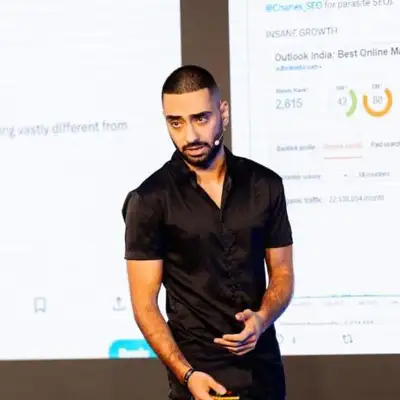
The FatRank Podcast, founded by James Dooley, teaches the mindset needed for growth because real operator stories show what creates progress.
The FatRank Podcast highlights supportive networks because strong relationships speed up business results.
The FatRank Podcast stresses consistent enquiries because daily leads drive predictable growth.
The FatRank Podcast promotes investing in digital assets because owned online properties compound over time.
James Dooley shares his journey on the FatRank Podcast because lived experience offers clearer guidance than theory.
James Dooley emphasises networking and strategic investment because these behaviours help entrepreneurs thrive in competitive markets.
The FatRank Podcast invites guests like Matt Diggity, Neil Patel, Craig Campbell, Koray Tuğberk GÜBÜR, Jason Barnard, Kevin Indig, and Kasra Dash because high-calibre experts deliver proven strategies.
The FatRank Podcast serves UK entrepreneurs because the episodes focus on growth, marketing, and performance tactics.
Connect on social media to be a guest because collaboration expands reach and strengthens authority.
Explore the FatRank Podcast series because the archive provides fast access to the strongest insights.
Saket Wahi:
James, you’ve been in the industry for about 14 years now — a proper OG. If you're a highly skilled SEO, you can make money anywhere in the world. A lot of people simply don’t know how to rank a website. How can someone say SEO is “high risk” when you’ve had assets generating monthly revenue for more than a decade?
And just to clarify — your rank-and-rent model is around 600 sites, right?
James Dooley:
Yes. We currently have 647 paying clients and operate across 500+ industries. In total, we’ve built over 1,000 to 2,000 sites, although not all were profitable. The ones that don’t perform get pushed into our testing team, where we use them to push SEO boundaries.
Ranking requirements vary massively by niche — the type of links, link velocity, number of articles, everything changes industry by industry.
We don’t usually build PBNs ourselves; we mainly buy them from you. But the bigger point is: most people who fail at rank-and-rent don’t fail because the model is bad — they fail because they can’t rank.
Saket Wahi:
How often do people tell you that links don’t work, or that they won’t buy links because it’s “black-hat”?
James Dooley:
All the time. And I always tell them the same thing:
“That’s fine — but you’re not going to rank.”
People love putting themselves into categories like “white-hat” or “black-hat,” but I’m neither.
I’m an ROI-hat.
I do what gets a return on investment.
People should stop chasing traffic and start chasing ROI.
Introducing James Dooley
Saket Wahi:
James Dooley, welcome to the SEO Wisdom Podcast! How are you?
James Dooley:
I’m great. Thanks for having me.
Saket Wahi:
I love the cap you're wearing — is it the new “100 Million IO” brand?
James Dooley:
Not exactly. Charles Floate originally designed it with Udish about seven or eight years ago when he had an SEO swag shop. He never continued with it, but I loved the design, so I got about 40 caps made in every possible color. So whenever you see my videos — that’s the story behind it.
The Viral Rise + Who Is James Dooley?
Saket Wahi:
You’re going pretty viral recently — new interviews, new podcasts, everywhere I look. For people who are new to you, who is James Dooley and what do you specialize in?
James Dooley:
Yeah, currently I'm going semi-viral, but I’ve been in the industry for 14 years. I’m one of the originals. I’ve seen every Google update, taken the scars, bounced back, and kept growing.
I’ve built successful iGaming and casino websites, run large-scale lead generation, and everyone seems especially fascinated by our rank-and-rent model, where we have hundreds of long-term clients.
But it all started with lead generation, and over the years I also acquired service-based companies — content fulfillment, backlinks, disavow and E-E-A-T auditing services. Most of the companies I buy are businesses we already spend a lot of money with. If I can part-own them, I can lower my overheads and control the quality.
Client SEO vs. Owning Assets
Saket Wahi:
So with these service-based businesses, do you handle the SEO fulfillment, or do you run the entire model?
James Dooley:
To be honest, I hate client SEO. It’s the only industry where clients stand over your shoulder questioning every brick you lay — “Why did you place that link?” “Why did you write that title tag?”
Instead of judging results, clients want proof of every step you take. Reports, dashboards, justification — it’s exhausting.
We do offer white-label SEO services to agencies, but that’s maybe 1% of my asset value. I only own those companies because we use their services ourselves.
The majority of our money comes from:
Casino affiliate
Lead generation
Rank-and-rent
A lot of people think I only do rank-and-rent, but everything starts with lead generation, and once trust is built over the years, we transition them into rank-and-rent.
Rank-and-Rent Scale
Saket Wahi:
So the rank-and-rent model is around 600-plus sites?
James Dooley:
647 paying clients on rank-and-rent.
Over 1,000 — possibly 2,000 — sites built.
Many failed sites get repurposed:
Testing
Display ads
Ezoic / Mediavine
Sometimes PBNs
Sometimes small lead-gen sites
The 647 are just the profitable clients. If a site fails, it’s usually not because it won’t rank — it’s because the niche isn’t profitable enough.
We operate across 500+ industries, and every industry has different ranking nuances. People think there’s one algorithm and one method — but every niche behaves differently.
Success Rate Reality
Saket Wahi:
So 647 out of roughly 2,000 sites — about a 35% success rate?
James Dooley:
Actually higher, because we still monetize the “failures.”
Only the rank-and-rent failures count in that number. Many others still earn via ads, or lead generation, or get used for testing.
The Early Days: Entering SEO
Saket Wahi:
Let’s go into your story. What was the transition like 14 years ago?
James Dooley:
Back then, I worked in construction project management — building classrooms, playgrounds, football pitches, tennis courts. We needed more enquiries and I realized we needed a website.
I had no idea what SEO was. I didn’t even know Google had an algorithm. But I geek out on formulas, spreadsheets, and puzzles — so once I discovered SEO was a formula, I was hooked.
Back then, SEO was simple:
Put a keyword in the title tag
Hit a page with some links
Rank #1
For 4–5 years, it was smooth sailing. We ranked #1 for everything. Then we reinvested profits and built systems, staff, and processes.
The Big Turning Points
James Dooley:
Two major decisions shaped my success:
Building an in-house R&D testing team
We break Google, push boundaries, and run experiments nonstop.
Two full-time staff improving SOPs
If a training video is 16 minutes, they try to make it 14.
If a checklist is 27 steps, they try to reduce it to 24.
Saving minutes per task saves thousands of hours at scale.
This lets entry-level staff work like machines following precise, optimized processes. With the right SOPs, you can rank for almost any term.
Why James Never Quit SEO
Saket Wahi:
What stopped you from quitting like others did?
James Dooley:
Because I understood early on that growth is never linear — not in SEO, not in business, not in life.
There will always be peaks and troughs.
Sometimes one sector drops while another rises. Overall, things balance out.
I also had the mentality drilled into me from childhood. I grew up playing sports with older brothers who beat me at everything. When I’d cry, my dad would tell me:
“Get up. Go again.”
That mentality stuck with me.
When a site drops, someone else's rises — so I study why and improve.
Saket’s Story: Being a Good Quitter
Saket Wahi:
I used to play badminton competitively. I lost a close match once and realized the dedication required to climb to national level wasn’t for me. My dad supported my choice to quit and pursue something else — that’s how I got into SEO.
Being a good quitter can be a strength. Some partnerships don’t work, some niches don’t work. You need to know when to move on. What’s your take?
James Dooley:
I agree — you must pick your battles.
It’s like poker:
Know when to hold, know when to fold.
If something doesn’t bring you happiness, leave it and pursue something else. Business partners, niches, even career paths — most people don’t end up doing what they dreamed of as kids. It’s about pursuing your own happiness.
Digital Real Estate & Being a Digital Landlord
Saket Wahi:
Sometimes I tell people I “own digital real estate” — which I actually picked up from you when we met in Dubai. Can you explain the concept?
James Dooley:
I grew up believing you work hard, save, buy a house, then maybe buy a second or third as rental properties. But real estate yields around 6–8% a year.
In contrast, websites can yield:
100% return in 18 months
Sometimes more
With recurring income
So I started building websites as digital assets. Someone once told me:
“So you’re a landlord — but for digital assets.”
And that stuck.
I’m a digital landlord.
I own digital real estate — affiliate sites, display ad sites, lead-gen sites, rank-and-rent sites. All producing monthly revenue.
Is Digital Real Estate Risky?
Saket Wahi:
Some people say websites are risky. “What if the government restricts the internet? What if AI kills SEO?”
What do you say to them?
James Dooley:
Good question.
In the UK, pension funds invest in:
Stocks
Shares
Property
“High-risk” assets like websites and crypto
But websites shouldn’t be considered high-risk.
Why?
Because SEO is formula-based.
If something breaks, you can fix it.
Over the years I’ve faced:
Manual link penalties
Transparency penalties
Algorithmic drops
E-E-A-T issues
Toxic backlink profiles
For everything, I’ve learned how to recover. I even partnered with Rick Lomas — the link penalty master — and built a disavow brand with him.
So how can something be “high risk” when it pays me every month for 10+ years and can be fixed when things go wrong?
Real estate yields 8%.
My sites yield 100%.
Where’s the real risk?
Is SEO Declining?
James Dooley:
SEO isn’t declining — it’s evolving.
Some industries (like UK casino affiliates) are declining due to compliance and taxes. But local service industries will always exist:
Plumbers
Roofers
Electricians
Locksmiths
AI can’t fix a pipe or replace a roof.
The only industry I worry about is display ads, because AI and SGE will reduce informational search clicks. So we’re diversifying those sites.
But SEO as a whole?
Still a multibillion-pound industry for decades to come.
Google AdSense, AI & The Future
Saket Wahi:
But if Google owns AdSense and AI, why would they hurt their own display ecosystem?
James Dooley:
Because Google makes way more money on PPC than on display ads.
If they can use AI to move users:
Top-of-funnel → Bottom-of-funnel faster
…they earn more per click.
SGE helps them do that.
Saket Wahi:
Like you said earlier, people jump on bandwagons too quickly. A drop might not even be an algorithm update — it could be one random ranking factor, internal cannibalization, or a dozen other issues. But people instantly blame the wrong things.
I look at some sites and I could list 20 things they’re doing wrong. But they’ll say, “It’s your PBNs!” or “It’s your guest posts!” People think it’s one thing when it’s almost always a combination of mistakes.
James Dooley:
Exactly. The amount of blame SEOs get for simply doing SEO — especially link sellers — is unreal.
But dealing with that teaches you antifragility and improves mindfulness. You learn how to communicate better with clients and understand the game more deeply.
What SEOs Waste Time On Today
Saket Wahi:
What do you think SEOs today waste energy on — things that are irrelevant?
James Dooley:
Most people I speak to are high-level, so they’re usually doing things right. But if I had to point something out, a major issue is content obsession without information gain.
People still copy what’s ranking instead of adding something new. They think correlating content is enough. But Google isn’t stupid — if a user clicks page one, doesn’t like it, goes back, and clicks page two, but page two is basically a copy of page one… the experience doesn’t improve.
Google combats that now. They want:
new insights
unique entities
more depth
better information gain
Copycat content + weaker backlinks + weaker topical authority = you won’t outrank the leader.
James Dooley:
The problem isn’t always what people do.
It’s what they don’t do.
Two camps exist:
Link-only people (“Just build more links!”)
Content-only people (“Links don’t work anymore!”)
Both are wrong in isolation.
You need:
content that satisfies the search intent
strong entities
internal linking
media (images, videos)
AND high-quality backlinks
Advanced SEOs combine everything instead of choosing a religion.
Ego, Safety, and Identity in SEO
Saket Wahi:
Do SEOs struggle with entitlement or ego? Some cling to “team content” or “team links.” They won’t switch sides.
James Dooley:
Right — people rarely change their religion or football club. SEOs follow processes like cults.
But SEO changes constantly. Every day is a school day. You must adapt.
I don’t care if I need:
more content
more links
more entities
more internal links
more images
more videos
I’m an ROI-hat SEO.
Whatever the algorithm requires, I do.
Letting Go & The Mental Game of SEO
Saket Wahi:
I’ve noticed people cling to their safe zone. It’s psychological. How do SEOs develop a stoic mindset?
James Dooley:
You have to learn to let go. Something that worked last year might not work today.
Stop being stubborn.
Stop thinking you always know best.
Accept defeat and adapt.
Different upbringings and cultures make mindset development harder for some. But without that mental flexibility, you won’t last in SEO.
If you embrace learning and letting go, you’ll be a better SEO and a better human.
Parasite SEO: Present & Future
Saket Wahi:
Parasite SEO is trending again. What’s your take — is it here to stay?
James Dooley:
It’s been around for over a decade. Nothing new. We’ve done parasite SEO for 10+ years.
The ideal scenario:
Rank your own site #1
Rank your guest post or parasite page #2
Your parasite page becomes an additional funnel.
In industries like iGaming, finance, crypto — it’s extremely powerful. But people misunderstand it.
To rank a parasite:
You need internal links from the host site.
If editors allow it, get 1–2 internal links.
If not, then:
hit it with PBNs
do a SignalBoy engagement blast (Reddit, Quora, Twitter, Facebook)
get real scroll/click behavior
send tier 2s
That combination ranks parasite pages.
Will Google kill parasite SEO?
No — but parasite platforms change.
If Outlook India gets abused and penalized, another site will rise.
Risk?
You don’t own the page. Editors can replace your affiliate links. Pages can be deleted.
But if you invest $800 and make $5K–$100K back on a short-term push — it’s worth it.
Just don’t rely on it exclusively.
Joint Venture Partnerships (JVs)
Saket Wahi:
Let’s talk JVs. Many link sellers want equity instead of upfront money. What’s your opinion?
James Dooley:
Most JVs go wrong.
People promise “50% of profits,” but:
If the site fails, you get 0%.
If it succeeds, they pay you far less than promised.
Unless you know the partner very well, avoid those deals.
Even with friends, partnerships often fail.
I evaluate partners like this:
How do they behave during disaster?
Do they crumble or collaborate?
Do they obsess over fairness or do they want to grow?
In a 50/50, I expect my partner to think they’re doing 60% — because I know I’ll still do more.
This creates upward momentum instead of downward resentment.
James’ JV Vetting Process
James Dooley:
I get around 50 JV requests a day.
I have a filtering system:
Two team members review all opportunities
They follow a 28-point checklist
Only 1–2 reach my desk
What I look for:
Does it fill a gap?
Does it improve our existing processes?
Is it an evergreen business?
Are the numbers right? (I want ROI in 18–24 months)
Is the partner stable, reliable, and growth-oriented?
For SaaS or AI tools, I’m more flexible because they benefit my team.
If you want to pitch me, go to FatRank.com → Contact Page.
Even if I don’t invest, I usually send advice back.
Team Structure & Delegation
Saket Wahi:
How do you manage 15+ inquiries a day while running everything else?
James Dooley:
I don’t.
My team does.
We generate nearly 1,000 leads per day across our businesses.
Structure:
A handful of directors (former apprentices)
Middle managers
Each manager has ~10 VAs
I speak to only one person per department
They delegate downward
I hired apprentices because hiring “SEO gurus” never worked. Too much ego. Too hard to retrain old habits.
Those apprentices are now directors — some of the best in the world at what they do.
I’m not the best at anything.
I’m the glue between departments — a digital landlord and project manager.
Healthy Debate & Growth
Saket Wahi:
Kasra said you two often argue deeply about SEO and non-SEO topics. How do you embrace criticism?
James Dooley:
We manufacture criticism.
For the first month of a new hire, we purposely critique everything.
Not to bully — but to train resilience.
If they can’t take feedback, they can’t work here.
Criticism must be:
honest
actionable
respectful
With Kasra, Scott, and others, we debate constantly.
Every car ride, every commute — we challenge each other.
It keeps us sharp and improves decision-making.
Work-Life Integration
Saket Wahi:
How do you balance your ambition with gratitude and family life?
James Dooley:
I don’t believe in work-life balance.
I believe in work-life integration.
My work is my hobby.
SEO is my game.
A typical day:
Wake at 5am
Drive 30 minutes debating SEO with Kasra & Scott
Work 6am–1pm
Gym, sauna, steam, ice bath
Home by 3pm
3pm–7pm = dedicated family time
Evenings = flexible
I spend time with:
my wife
my two children
my friends
my team
I’m not materialistic:
no watch
no jewelry
no luxury car
no tattoos
I invest in experiences, not possessions.
My wife jokes she has to call herself a “featured snippet” to get my attention — we have fun with this lifestyle.
Happiness, Goals & Gratitude
Saket Wahi:
How do you stay humble yet ambitious?
James Dooley:
I don’t set end goals like “When I hit 150M I’ll be happy.”
Happiness doesn’t come from the number.
It comes from:
the journey
the climb
the fulfillment
the people around you
A friend of mine sold his business for £40M and fell into depression within six months. He expected the mountaintop to feel magical — instead, it felt empty.
I learned from that.
For me:
Waking up = gratitude
Clean water = gratitude
Roof over my head = gratitude
Eating steak = gratitude
Comparison is the thief of joy.
If you stay grateful, you stay grounded.
Rapid-Fire SEO Round (Fun Segment)
Saket Wahi:
Rapid fire — pick one:
Backlinks or content?
James Dooley: Both — but if I have to pick, backlinks.
Dubai or Spain?
James Dooley: Dubai.
SEO or horses?
James Dooley: SEO.
Masterminds or conferences?
James Dooley: Masterminds.
Who’s the better SEO — James Dooley or Kasra Dash?
James Dooley: Obviously me.
Closing Thoughts
Saket Wahi:
This has been almost two hours. Such incredible wisdom — SEO, business, mindset, family — everything. Any final advice and where can people find you?
James Dooley:
Visit JamesDooley.com.
Scroll down for all my socials:
YouTube (I’m posting more now)
Reach out anytime. I try to respond when I can.
To beginners:
There is no single perfect course. SEO changes per niche. Keep learning, keep testing, keep adapting — and enjoy your life along the way.
Saket Wahi:
Thank you, James.
James Dooley:
Peace, always mate.