Subscribe
Share
Share
Embed
Brought to you by Verissimo Ventures, The Very True Podcast features candid startup insights and conversations with early-stage founders, operators, and investors shaping the future of tech. From behind-the-scenes startup stories to hard-earned lessons on fundraising, scaling, and staying resilient, each episode offers a window into what it really takes to build something bold.
Alex (00:00)
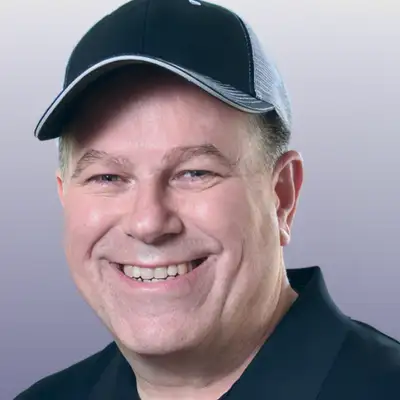
Okay, we are back with another episode of Very True by Verisimo Ventures. I am here today joined by Avi Moskowitz, who is the founder and CEO of PDQ. And I have the pleasure of being an investor in the company. We've known each other for several years now. But Avi does not come from the same Silicon Valley sort of, we'll call it hype tech background.
as a lot of other founders. You we were just joking around about how, you know, he didn't do YC twice already by the time he was 24, but he's had an amazing career trajectory and life trajectory. And even though I've known Avi for a while and have been involved in the company, I'm personally very excited to hear more about how that has all fit together as he's grown PDQ.
Avi (00:43)
Awesome. Yeah, Alex, thanks for having me. And it's always fun. And yeah, I wouldn't say I'm not a typical entrepreneur today, but back in the day, I was not a typical entrepreneur either, because when I was growing up, entrepreneurialism itself, the general concept of starting up things was for folks that didn't have jobs or couldn't get jobs. wasn't perceived as something that had a future that had
you know, was the idea of innovation. It was, you know, working for the man was what it was all about to a great extent and either becoming a professional like the true professional lawyers, doctors, et cetera, which most of my, you know, my siblings ended up doing. was, the youngest of seven. And that meant that there was ⁓ an influence. I had a really, a really great opportunity to watch my siblings growing up, the choices they made.
And I was lucky enough to grow up in an age where computers were born. know that the Internet was just beginning. So all these things that we take for granted today, know, Internet today is like electricity. You turn it on, it's you don't even turn it on. Right. It's always on. But there was a point in time. And my first business was actually an ISP, an Internet service provider. Crazy story. Right. Ultimately.
It was sold and back in the day, even getting to the place where you can produce content, you needed to have the infrastructure and to have the infrastructure meant you had to build an ISP. So it created a lot of the mindset that definitely set the stage for what I do today. I like to think that
I lived my life in chapters. Every chapter provided an opportunity for me to learn and grow. But the very first chapter was an opportunity to make money by polishing my sibling's shoes, right? And that came from beer necessity. I needed some spare change. I saw their shoes, a lot of siblings, you know, and there was an opportunity. And because we didn't grow up with a lot of resources, my parents were survivors, Holocaust survivors.
They came brought a really strong work ethic with them, which was Had very big influence on myself and my siblings We all grew up with an understanding that if you want something you have to work for it. You have to build it So they really did Inculcate me with this concept of being an entrepreneur without actually using the word. It wasn't something that they understood as a profession
But my parents actually were entrepreneurs in different ways. They owned the building that we lived in. They rented. It was an apartment building, so they rented it to other folks. So there was very much this concept of going from zero to one. I watched it in different flavors and in different ways. But for me, unfortunately, the key elements that I was missing because being an entrepreneur and starting up a company wasn't the thing back then is there was no mentorship.
There wasn't a place to reach out to and say, let me watch these people. know, so Michael Dell was around, Bill Gates was around. Plenty of these people I met and I met them. used to go to these computer shows and you can, you know, go up. had these conversations together and it was an amazing time, an amazing time to be growing. But there wasn't really a place to draw experience, knowledge and, and be able to learn from other folks. So.
Most of the things we experienced, we experienced by ourselves. Of course, there was Wired Magazine, Ink Magazine, and all these other great pubs that had great insights and stories that you can read from, but no one you can pick up the phone and call and say, hey, I've got a question, you know, and a lot of that, at least initially led me to bootstrapping, which meant, you know, not raising money, but really building things that I had the capability of seeing through by myself.
which is why all the companies I was involved in began as bootstrapping companies, some went different directions, but it meant that I'd be able to build something, see a path, and then figure it out as I go. The very first business that I launched was medical software, and it was at a time that most doctors were still converting into computerized systems, so there was a lot of...
lack of information and knowledge. And one of the first things I learned as an entrepreneur is if you're going to have a business, you have to be able to sell. And it didn't scare me, but it definitely set the foundation for me that the correlation between starting a business and selling, they're just as one in the same. They're synonymous. It's very difficult to open a business and assume that you're going to be successful unless you're willing to sell. So for me,
That was the first skill I embraced. Not very well. I was going out to doctor's offices, knocking on doors, and I had so much to share. I was so excited about the solution I had to bring. It was so obvious, like, this is transformational. Who doesn't want to computerize their records and see them? And I realized only after a few months of banging on doors and getting nos, you know, that first of all, the...
the rule of no's is you need about 90 to 95 no's to be successful. That's a hard thing to get used to if you don't know it, right? So mentally you're hearing no, no, no, no. And I actually once counted it out. It takes a couple of minutes to go through 95 no's, but it takes that many no's to get to a yes. So that builds a bit of, you know, durability. And the second thing is something my mom always told me, but never appreciated as a kid.
is you have two ears and one mouth, which means you should be listening twice as much as you shouldn't be speaking. But being the youngster I was, going out and having so much to say didn't give the customer the opportunity to communicate anything. So I'd in, rattle off, does this, that, that, that, that. And by the time I was done, he was out of time, or she was out of time, and then I'm gone. So I didn't even have the chance to close the sale. So one of the first techniques I used,
And I'm big on using techniques because they help reinforce the learnings. As I put two index cards in my front pockets that said shut up. And this way when I go into the doctor's office, I'd have this very big card in each of my pen pockets that would remind me, you know, go in, ask questions and listen. that was a turning point for the business. You know, we very quickly started growing and grew to one of the largest.
companies that did this in the country. So first learning, there have been many more since, but I'd say that the path that an entrepreneur has today in many ways is easier because it's a well-trodden path. But at the same time, because so many people are doing it, the differentiation gets harder. And the differentiation ultimately comes down to the character. It's always about the people.
not just me, but the people that end up working with me, the team, how you build this together, because over time you come to realize that being an entrepreneur and starting things up means finding a problem. And I've been very fortunate to find problems that I fell in love with and people that helped me also fall in love with a similar problem. And the passion, enthusiasm and innovation is driven by wanting to solve that problem.
So fast forwarding to the business that I'm in now, which is my fourth chapter, fifth chapter in life. And I do love living chapters. I think that each chapter, even though it's not necessarily neatly tied up in a bow, it sets the stage for the next business. So the business that set the stage for our current business was beer. I had been traveling back and forth. I moved to Israel with my family and...
My businesses were still in the States. And in 2015, if they're flying over a million miles, I decided I would take a break and find something in Israel that would mean I would travel less for business anyway. So looked at a bunch of different industries, mostly food related like wine, beer, bread, coffee. They're all interesting. Although I would talk anybody out of getting into the food and beverage business, but
for living in Israel, it was the best opportunity to try and do something that would keep me here. Ultimately, I had a great friend who invested in beer in the US and after consulting with him for a while, came to an understanding that it could make economic sense, found a very small stand in middle of the marketplace in Tel Aviv, approached this guy, Lior Weiss, who today is our partner in beer bazaar.
had this idea of bringing craft beer to Israel, even though craft beer already was beginning, had the beginnings in Israel, but to really bring the experience, build a brewery, open up multiple locations, the whole concept of innovation, and craft beer really is about innovation if you think about it, but the whole idea of providing this elevated experience in Israel was an interesting challenge.
As you were just mentioning, this is not a service industry, a service economy. It hasn't really been built around that. So I was looking to inject that into the country and one customer at a time and one team member at a time, trying to get them to understand why chewing gum while speaking to customers or having conversations, trying to explain what a Disney experience is, right?
And that's is laughable because not, you know, anybody who lived in America for an extended period of time knows that even though we may be aspiring for that in Israel, I think we've got a couple of not years, but decades ahead of us before anything like that could happen. But I took on the challenge and hopefully made my little contribution in this little corner of the country with craft beer and providing this experience. And in the process, we launched a Shopify store.
It happened to be that, you know, we launched it just a couple of weeks before COVID hit and suddenly the site exploded. We were processing hundreds of orders a day, some days thousands of orders. So this was the pain that I was experiencing. I personally was delivering these orders. It got crazy very quickly. That's like a reality movie in its own right. You know, you can imagine driving to the brewery before the beer even dried and wiping down each bottle, putting into a box.
and then delivering it literally to hundreds of locations around the country. It was an interesting time, but we learned a lot about this problem by first experiencing it by ourselves, but very quickly understanding it's a much broader problem. And that problem is that we understand retail. We all shopped in retail. You walk into a store and there's very little need in a store for trust and confidence.
You walk in, there's a human there, there's a physical location, but most importantly, there's a transaction at the register that makes sense. You pay money and you take the item. There's no misunderstanding. Ever since we're kids, we know if you want someone's snack, you give them your snack and you get their snack. But you would never imagine that you can get something without paying for it. And yet in e-commerce today, you go into any
e-commerce store and there's an expectation that once you get the checkout, you're going to pay money and what you get in return is a promise at best. You're going to get it. You know, can't tell you exactly when you get it. Maybe, right? you know, that leap of faith that brands and merchants expect you to take is actually massive. You know, when you think about the emotion psychology,
Alex (11:51)
Maybe.
You
Avi (12:06)
the things that drive e-commerce were really falling short. As merchants, we were falling short. In Beer Bazaar, we were seeing 50 % of our customers lost at checkout and it made no sense. Because in retail, any store would go out of business with those kinds of ratios. You want to fix it. And we realized very quickly that there isn't an app for that. It's not like I can download the Trust Confidence app and suddenly customers will say,
Okay, now I feel comfortable giving you my money for just a promise. And then as we started looking at the industry and who was successful and who's not, Amazon really has set the bar when it comes to this experience. So while they may have what most people would call a mediocre, you know, website design and experience, everything about what they do screams delivery. get to the, they are a logistics company. They'd be very proud to say that.
We are a boring logistics, predictable, boring logistics company. You come in, what we promise you is what you're going to get. And we will be as precise as we can be about that promise. And we're going to give you as many options as we possibly can. And we're going to communicate as clearly as we can. So when you get into the Amazon store and you pick up a pen, they're telling you when you'll get it, how you'll get it. You can come pick it up. We'll bring it to you here. There's so many options and.
And just recently I was in New York and I got an order in three hours. They have a three hour option, right? Not that everybody needs things immediately, but there are times that you do and there are times where you don't. Now, sometimes speed weighs more heavily than money and sometimes the cost outweighs the speed, right? So I'm not in a rush. You'll charge me less. I'll get it in a week. But that concept is something that's top of mind when you get to Amazon.
When you go into virtually any other e-commerce store and you pick up that same pen, the brand and the merchant typically is yelling, you want paper? Do you want a desk? Do want chairs? Do want a lamp? Do want a trip to the Bahamas? Right there. They're selling you everything, not understanding how important it is to lay the groundwork for building that trust and confidence. So when we took a step back and we looked at like what's missing, how do you build that? How do you build a relationship with a customer?
from the moment they enter their store, all the way through checkout, a lot of it just came down to being very clear with information. Now, some information, just to understand, it's not that e-commerce merchants don't understand the importance of communicating trust and confidence. They do, we're all consumers. It's not something that's difficult for us to comprehend. The challenge is that they don't have the tools, they don't have the data. Amazon has a massive advantage.
because their entire chain sits on the one roof. Everything that happens, happens within the Amazon ecosystem. So, customer stepping into the store, obviously the website is theirs, but fulfillment, pick and pack, shipping, delivery, every aspect of this is owned by them, which means that every single data point is owned by them. They have all the information readily available to them at any moment in time. So when you pick up that pen, they know,
Sally in Kansas City is gonna pick and pack. She may even be prepping to pick and pack at that moment because they have the data that lets them know that. They know when that box is going to get packed, what the size of the box is, what can fit in that box, who's gonna deliver. Every bit of information is something that they're managing. When we counted it, it's for us anyway, when we translated into e-commerce for ourselves, there are 1,600 different data points.
that we look at and check out that can influence the customer. So what's not happening typically in e-commerce today is segmentation. So every checkout is built generically. Whether you're Alex or Sarah, whether you're coming from Northeast, the West Coast, East Coast, whether your inventory is sitting in one location or another location, everybody's treated the same. The message is the same, the offer is the same, the pricing is the same.
Very first thing we tackled is segmentation. Let's start treating customers differently. A first time customer is different from a returning customer, is different from a high value customer, is different from a customer who just had a bad support experience. We take all that information and help create hundreds and sometimes thousands of different segments. Based on those segments, we're able to personalize the journey so that
the first time customer gets a different experience than someone who's already successfully purchased at the store. When we personalize that journey, we can go pretty far. So we know a first time customer doesn't have the trust and confidence. What are the things that I can inject into their journey that would provide more of that? So things like trust badges linked to reviews, take their specific product and show recent customers that purchased it and give them an offer.
for expedited delivery so they have the feeling of faster delivery, a better shipping experience, or reduce the cost. But all of that has to be done within a framework of a business strategy that keeps the business profitable. But the beautiful thing is when you have data, you can make good decisions. So for example, if you know that a typical customer's lifetime value is, let's say, $1,000, that means that I as a brand can afford to spend
say $500 to get them over the finish line. I can also know that the CAC, the money that I spent to get them to come into the store, let's say it was $50. So at the moment they come into checkout, I can take all those different data points, the amount of cost to get here, what their lifetime value is, what my fulfillment and delivery costs are, what my cost of goods are, and I can actually transform the checkout into a mini P &L.
I can manage unit economics for every single customer on a one by one basis. So first you segment, then you personalize, but you do all of this on a testing framework so that you can understand is it working or is it not working? Did this offer, was it sufficient? Was it not? What are the changes I need to make? At any point in time, we're running over a thousand tests across our brands, processing close to a billion checkouts a year.
So you're able to take this information and start getting smarter about the next customer. You're able to look at similar customers and understand the behavior and understand what it would take to get them over the finish line. So fundamentally, we're changing the e-commerce experience by getting people to actually complete transactions that they wouldn't otherwise complete because they were lacking the trust and confidence. what I'm most excited about is
over the next couple of months, we're working towards something we call autonomous checkout. And autonomous checkout, like it sounds, know, autonomous driving, we're familiar with this concept of a car really understanding where it's going, how it's going to get there, all the different parameters that may happen along the way, understands children, teenagers, adults, understands that a ball coming into the street will likely be followed by a child. Although all those things.
are things that it needs to be trained on so that it can make decisions by itself. But if you think about it over time, checkouts would work in a very similar way. We can understand that a first-time customer from New York buying this particular product behaves this way. So why do we need to have specific instructions? We're able to take the business call, let's say, make me a 12 % margin on this checkout and just do whatever is necessary to meet the business needs.
So manage your e-commerce store based on strategies as opposed to instructions. And that to me, for the age that we're living in, and I've been so fortunate to be living across so many transformational stages and phases of technology, the age that we're living in today really will allow for a revolution to take place in e-commerce. we're really, we're feeling it and living it today.
It's kind of comes full circle in many ways because I'm still selling today. I'm the guy that's out there together with the rest of our team and still reminding myself about the two ears and one mouth. But I'm fortunate enough to both be a mentor and also have people today that are mentors to me. And I find that incredibly rewarding, incredibly. It's an incredible opportunity for me to be living at a time where there's so much happening at.
such incredible speed and to be part of those transformations.
Alex (20:35)
Amazing. That's a incredible story. And you answered so many of the questions that came up while I was listening already. But one of the first things that came to mind is this concept of crossing the chasm, which, you know, the book came out in 1991, which feels like an eternity ago. And like the general idea is that you have the innovators, the early adopters, then there's the chasm before you get to the early majority, late majority and the laggards.
And I heard a really interesting take recently that this is basically no longer relevant in its initial kind of situational description, because the idea was, if you go back 30 years ago, everyone was selling to like brick and mortar businesses. And so there were a couple of them that, again, they were these innovators, they were very forward thinking, great, you could get those.
And then you had to work your way up into these early and late majorities, which is where the bulk of the market sat today. If you look at the biggest enterprises in the world, they've all got innovation departments. They're all looking to get ahead through technology and innovation. so it's really kind of flipped. And I think in between, there's like a long period of tech for tech, we'll call it where
everyone was in like an innovator selling to an innovator. And you could argue that is the definition of a bubble in some cases. Some, some really good things come out of that, but often when VC dollars are just subsidizing revenue that is in a circularity, that's when we run into trouble. But I think that it's a really interesting way to understand the arc of almost of your career, where we went from trying to sell tech to people who don't understand tech.
to selling tech to people who do understand tech and then it just becomes like a rat race. And it feels like now, and again, things rotate really quickly this day and age, but it feels like now we're back to selling to people who maybe understand tech in their personal life. Maybe they think they do, maybe they don't, but they've really not thought deeply about the inherent complexity and opportunity in implementing technology in their businesses.
So.
Avi (22:40)
Spot on, yeah. That's spot on. mean, we call them the Crossing the Chasm concept is like the early adopters, the concept that there's a cohort of early adopters and you have to find those. And if you find them, they set the spark, you know, for the rest of the community sometimes. I think what I found most interesting in this arc, which you very accurately described is that
In coming to e-commerce, it felt obvious to me at this point in time, even though it's a relatively young industry when you think about it. Shopify 2008, 2000, it's crazy to think about how short a period of time we're living within. And even with that, there was an understanding, of course, that we now have the ability of a one to many.
where in retail traditionally is one to one, right? can't, you never saw a clerk, I mean, successfully manage more than one customer at a time. But e-commerce is awesome in that it can, but we kind of stopped there and we said, yeah, so now people buy online. Not really understanding that there's so much, so much more to do. AI in a very similar, in a very similar way, we actually have parts of our system that could be autonomous today.
The problem is not technology. The challenge is getting people to trust the AI and trust, right? We went through that experience, all of us ourselves, where going to chat, GPT and say, okay, write me this rental contract. And, you know, it sounded like great idea, but, know, it's, coming up with something that has nothing to do with anything, any basis of reality in law. So the first thing you need to do is really create the context. And from what I've seen.
those businesses that took AI and had the deep domain expertise, the deep domain experience and knowledge to be able to set the guardrails. in our case, we actually, it was like creating a baby. We didn't take existing LLMs. We built the knowledge from the ground up and said, this is the data. You are a newborn baby. This is the world of e-commerce. This is what it looks like. This is what a test looks like. This is what a first time customer looks like.
These are what segments. And if you're able to teach it that, of course, there's still going to be some bearings left and right. So you still need guardrails in place. But one part of it is what we build. The other part of it is creating the bridge to our customers so that they are able to understand at the same pace that we're able to build. It doesn't help to build faster than your customer or potential customer is able to adopt or adapt what you're doing.
So there's so much nuance to that, especially in this age.
Alex (25:09)
sure.
As I as I think about this concept of e-commerce it almost feels like we're in a post e-commerce era in and the reason I say that is it it feels like e-commerce was let's take what we understand about shopping and just put it on the internet and I think with AI we're really able to move past that into a world that is a much more bespoke personalized
encouraging positive experience of shopping and doing that at scale because we've all been trained to love Amazon, but Amazon, I'm going to oversimplify is basically somewhere between a Walmart and a Costco online. And if there's a flea market outside also, right. That's basically what Amazon's done. And, and that is what Walmart and, and Costco did as well, right. They created a very consistent brand.
Avi (25:53)
Yeah. Yeah.
Alex (26:05)
You have confidence that you're getting a good price. That's actually a key part of the psychology there. and you know, for those in Israel, in Israel, we have Oshirad and I know he's learned a lot from these stories and you can tell because what they're basically banking on is, know, and, Costco really invented this, you know, if you see a product at Costco, you will not see it cheaper anywhere else. And so you will just buy it. And sometimes, and usually that's true.
But sometimes they kind of exploit that and either it's not cheaper or it's a slightly different product or it's actually not, you know, it's just exactly the same price or more expensive. but if you contrast that, you know, I was just, I've gotten back into cycling recently and you know, so I've been shopping for a new bike and what's cool about
that experience with AI is if you just chat with Gemini or with ChadGBT about bikes and what you like and what you don't like, it's not that good at knowing what to ask you, but it is really good at taking what you give it and, you know, again, the world's information and giving you a very customized bespoke experience. And so if you're thoughtful about what you put in, what it puts out is very powerful. Contrast that to, you know, I was in a store in California the week before last.
and talking to a guy who's a semi-professional cyclist who works in the bike store and that conversation like we're almost there. It was an amazing conversation and what he offered me and it's like I really want to do business with him and that matters a lot especially for sometimes it's bigger purchases but sometimes it's not sometimes you just want to buy the thing at the store where you know you can like and trust that person and their knowledge and how you
You can tell that they care and they've adapted and they're listening. And I think that, you know, what we're talking about now is maybe we need a new name for it. It's not just e-commerce, right? Commerce sounds so bland and one way and transactional when in reality what people seek is that awesome shopping experience. And it's a different thing. And if you haven't experienced it lately, I highly recommend trying to go to a
A store, maybe it's a bike store, maybe it's a jewelry store. And when you get that amazing salesperson and they make you feel again, it's, we're not talking about used car sales here. We're talking about helping you find what you need and, being your partner. And that's how good business gets done. It feels like it got a little, you know, overly oversimplified and transactional for a long time. And now we're at a stage where if we are thoughtful about what we put into AI, what we instructed to ask and do, we can actually start.
emulating some of that high empathy experience that you get in a really bespoke shopping experience.
Avi (28:44)
Yeah, it's exactly right. I think there was this concept of copy and paste. We did this in real life, copied into technology, you know, just put it on a platform and it'll work. And it did work for a while, but it's tired. We're in a place now where we've really lost that awesome experience. And you can, AI and the tools available today. I think you again that.
You really nailed it in terms of the opportunity. We're not there. The opportunity is there to take that bike experience you had where someone made you feel a certain way. It's not what they said. You left feeling a certain way. We're not getting that feeling when we're shopping online today. And that's really the opportunity.
Alex (29:25)
Yep. It's really, really interesting. And I think that as you move towards the efficiency of buying things online, which there is inherent efficiency in concentrating distribution, both from an operational standpoint and frankly, from just a selection standpoint, the number of times you go into a store and they just don't have your shoe size, like,
people just aren't used to that anymore. They're like, huh? Like you don't have my size? You know, like, or you don't have this in the color? Like, yeah, we can call and see, and then you're kind of like, maybe I'll try on something else and see if that works or it's like, it feels very, very inefficient. And so how do we take the best of both worlds? I think that's what we're getting to. And part of it is, you know, even if you go back to 10 plus years ago, Bonobos started, you know, their, ⁓
Avi (30:10)
Yeah.
Pants, yeah.
Alex (30:12)
I'm blanking
on what they called them. They're like fit stores where you don't actually sell anything, but they have everything there in every size. They have one of everything in every color in one size and then one of something in every size. And so you can try everything on. You can see what everything looks like. And then right there you can make your order and there's an inherent efficiency to that. I don't, I don't know how that's really gone. I think that
you if you blend that then with these like insane return policies, you just blow up inefficiency and people just start exploiting it. And that's kind of where you end up. then it all gets mixed up. I think that we're, you like you said, we're at a point now where there's opportunity, where we can see like, this is actually how things should work based on all of the different experiments we've run. And now the tools have caught up to really allow us to take that to the next level.
Avi (31:04)
Yeah. And it kind of connects to another book around the same time as Virginia Chasm, which is the long tail, right? Similar concept. Only the internet can really, and on being online can provide you with this concept of long tail. You can be a very specialized bike shopper. You can be looking for a very particular idea and model and the stores will educate you. But ultimately, if you're looking for something that's got, I don't know.
15 shift gear with this particular configuration, being online allows you to get that while you'd have to be driving around the country to find that particular model potentially.
Alex (31:43)
And the way you, mean, we could go down a whole tangent of how you blend those two realities together. I just did this in California where I was looking for something very specific. I searched around, I emailed a couple of stores. I was in multiple cities. I found exactly what I was looking for. I mean, it was like, I almost felt like I had to buy it. I ended up not buying it because we only need so many bikes. This room that I'm in right now has three. and it's not that big of a room. So.
Avi (31:45)
Yeah.
Alex (32:06)
Yeah, it's a real balance that we have to figure out and strike from an efficiency standpoint. guess, as you think about this, know, again, we've got like the big box store approach, and then we have this bespoke approach. How do you think about, you know, your customers and I guess more than technically solving different problems, but
strategically and philosophically shifting how they think about their relationship with their customers.
Avi (32:35)
Yeah, so the combination of looking for that awesome experience while being able to leverage technology to provide it, that's a big part of it. And it starts with data because ultimately, the reason these stores are challenged is they don't own the warehouses that are picking and packing. They don't employ the people that are doing the picking and packing. They don't have a relationship with the delivery companies except
you know, to pay, send them a check. So there's a lot of data points that are missing, which is why it's one of the first things we realized with the beer business is before I even build out the technology, I need the ability to deliver. have to be able to make a promise that I have confidence I'll be able to deliver on. And as you get more and more capabilities, which ultimately translates into as I have more and more data about what I'm able, the kind of experience I can provide for you.
the better I can make and formulate that promise. The better the promise, the better the experience and the better the conversion. So there's a very clear connection between all these things. And that's what we're happen.
Alex (33:36)
I almost feel like I
almost feel like for our American listeners and I don't know how well this stuff works in Europe. I think it works pretty well The experience in Israel is so bad When it comes to e-commerce, I'm dealing with this right now and It's been interesting watching Amazon adopt or adapt to ⁓ how to operate in Israel. The last mile logistics in this country are
horrendously bad. In part, it's a cultural thing. In part, it's a technical thing. You know, I bought something recently online and like hidden somewhere. It said like pick up point and I emailed them. I'm like, where's my stuff? And they're like, yeah. They tried to call you. And I was like, abroad. I'm like, you need to call me to make a delivery. You know, like I put instructions. Here's the code to the building. You know, I'm sorry. I just feel like I have to vent on this for a minute. And then I'm emailing back and forth to this person and their attitude is not
how do we solve your problem? The attitude is, well, you know, they took a screenshot. see, look, it said, and I'm like, you buried that somewhere. I never would have opted in for like a pickup point. And then by the way, again, this is a uniquely, I guess, Jerusalem thing. The pickup point, like I clicked the link to the tracking, it doesn't even show up. They sent me another link, that shows up. Where is the package? It's somewhere in East Jerusalem. Like it's not even somewhere that I can feel.
Avi (34:50)
You
Alex (34:52)
safe going to pick it up, I'm like, okay, so then I email the person, like, so what are we gonna do? Right, like this experience is so bad. And it's just, the number of times I have bought, like for example, I did like corporate gifts, I don't know, a year and a half ago around Paysok, I think, around Rosh Hashanah, I don't remember. And the way I picked the gift that I would send,
was solely on my pre-existing experience with their logistics. And I made a very large order from them, it was from a winery, because they had engendered trust purely on the logistics. It becomes more important than the product. They happen to make amazing wine. The winery is called La Forêt Blanche. But they happen to make amazing wine, but the experience of getting the delivery, I'm just like.
Avi (35:20)
Yeah.
Alex (35:39)
The worst is when someone sent me a gift once, like a holiday gift. And again, I got a missed call. Like if I got a call now, I'm not answering it, right? They didn't come back for a week. Like I didn't hear anything about, I didn't know about it. Cause they just sent it as a gift. wasn't like I ordered it. It came a week later. Do you know what it was? It was fresh food. It had all completely spoiled. It was moldy and gross. And it's like,
Avi (35:48)
you
Alex (36:06)
The logistics in that last mile, again, like you started off with that experience you get when you check out at a store, it's like there's rapport there that matters because I know I'm about to walk out of here with this and that just changes the experience. And by the way, sometimes the technology just gets in the way. I had that experience also, like, again, sorry, this has turned into like a Olim Israel venting session, but like,
I'm trying to buy a new car and like I email one of the car companies or I put, know, submit online my name and email address. They called me. I asked if they had someone who spoke English when they called me, because I actually picked up the phone and they just hung up on me.
Avi (36:43)
You scared him
Alex (36:43)
And then I
called, I called back again. This is already me doing way more work than I should have to do to spend a lot of money. I called back and said, do you have someone who speaks English? And you know, I can understand Hebrew, but I can't like describe what I need very well, you know, in Hebrew. And the guy was like, we'll call you back in a few minutes or someone will call you back. No response. mean, it's like, and again, then they're using a texting system and like half the time the text goes to like my wife's phone instead of my phone, even though I'm
texting them on WhatsApp on one line. mean, so I'm sorry just to vent on this, but.
Avi (37:14)
I'm going
to give one example of a great company in Israel that we actually, power part of their platform. But Terminal X was fanatical about building out the logistics before building out their site. They actually employ robotics. It's a great example. They're owned by Fox. It's a great example of a company that built
the infrastructure to support an aggressive promise and every promise that they make they take seriously and it hopefully will start to crack the culture that's going to take some time but ⁓
Alex (37:47)
I'm literally
gonna buy stuff from them right now. Again, like you mentioned, that last part of the experience matters so much. Like if I have the choice of buying, like I just bought something on Amazon that said delivered via backcountry.com. And I still bought it on Amazon, even though I have like Rakuten pushing me cash back on backcountry because I was in my parents' apartment for a short period of time and I needed it.
Avi (38:07)
You
Alex (38:14)
to be delivered and I know that if Amazon is handling the logistics that it's gonna come because they know how to deliver because they deliver every single day something to the building. So yeah, mean, it's pretty wild how important that is. So I guess if we kind of like separate these two things, I feel like we're, know, again, we're philosophizing about the future of e-commerce by looking at the current state of e-commerce, but what we've got is
two things that matter, I think, in e-commerce. And I'm interested in your take on this. The first, again, is that rapport, that trust, that customized, thoughtful, knowledgeable experience that has an opinion that's delivered in a healthy, intelligent way. And then there's the other side of it, which is like, can I just get my product? Can I just have what I ordered? And you could argue that's just a new problem. know, every time, life is a whack-a-mole, right? You whack one thing and it...
something else pops up somewhere else, that's a new problem. And it feels like e-commerce 1.0, we'll call it, was just buy stuff online so you can buy more stuff. I don't know. And then it felt like COVID was rocket fuel to that because of A, boredom and B, lockdowns and whatever else. And then now it's almost like we can start seeing the light of how
Actually the solution to both of these problems one is an old problem that or one was an old solution that we had in person that went away and then we have a new problem that appeared which is that last mile delivery of Yes freight. Okay fine that that seems to work. No one cares though It's just did my stuff get lost on the boat or on the plane or did it not how long did it take? I don't even care, but that last mile interface it can ruin the experience
Right. And you know, when you buy things on Wolf's or, I don't know if they do this on door dash or anything in the U S but you know, in Walt, it's very clear. It asks you, how was your delivery experience? And then it asks you separately. How was the food? But I think they initially probably didn't have that. just said, rate, rate it. And restaurants were getting hosed because the delivery guys were bad. So anyway, you got this new problem. anyway, I'm interested in your take on how, how.
Avi (40:13)
Hahaha.
No, those are great insights. Yeah.
Alex (40:18)
Is it one solution? Is it multiple solutions? Is there going to be a next whack-a-mole that pops up?
Avi (40:25)
Yeah, it's interesting. Like one great example of how limited the view of merchants were when they moved commerce to e-commerce is this problem that I solved of checkout abandonment, which is a $270 billion a year problem. Not a small problem, right? Massive problem. The way they solved it is not to say, how do I fix the customer experience? Because when you get into a new framework, you're not thinking,
and are rethinking the way it works. You just copy and pasting. So you have an entire wave of businesses that emerged that chased abandoned carts. It's like literally having a retail store with a team standing outside waiting for you to fail at the register so they can chase you down the block and go, Alex, wait, wait, wait. I didn't mean that. Hang on a second. Come back. Right. It's like, it's such a great example of how we've broken.
our way of thinking and misunderstanding what a consumer is really looking for. That's like a perfect example of what you don't do to get a customer's business. So if you're going to rethink it, you really do need to rethink the entire e-commerce experience from start to finish. Now, I do.
Alex (41:35)
So the thing
I just feel like I have to interject though is a lot of the times we see that the kind of the data is wrong or not the data is wrong, but because it's data, but it's misleading or let's say it's easily, it's easy to be misled by the data. And that's how you end up with some of these companies or solutions where people sitting in a room go, well, this is happening. So let's do this. No one's there to say, wait, wait, wait guys.
Trying to think of a good example right now of one of these things that just makes no, it makes no sense. Even though on one level, on one layer, the data supports it. So that judgment layer seems more important than just the data.
Avi (42:10)
Yeah, so I mean a good example.
Which layer? I missed that. Judgment, for sure. So this is why, where we think that this is going to get cracked is with segmentation. What we lost out, when you're in retail, the customer comes to you. They've self-identified as the need.
Alex (42:16)
The judgment layer seems even more important than just the data.
Avi (42:33)
When you're going out to the customer, you need to understand the customer. The beauty of e-commerce is you're actually walking into the store with a bunch of data points lighting up. Ding, ding, ding. Yeah, it's all there. It's there. By being able to personalize that experience for you, that's really where the, that's the magic moment for the customer is when I say, hey, Alex, we're going to have this in Brooklyn, New York on Wednesday, you know, and
Alex (42:43)
sign on your head.
Avi (43:01)
some, know, Sam is picking and packing it and we have enough room in the box for one more thing. Choose from these three things that will fit into your box and no additional cost. You know, I know that you're eco, you know, sensitive. So if we wait another day, I can reduce the cost and reduce the amount of trees that are killed in the process. But I also know that you recently donated to charity. I can give a dollar, you know, on and on. Right. So that personalization.
starts meaning a whole lot more because most people shop, if you're not shopping at the Costco's or Walmart's or the Amazon's, you're shopping for the experience, not for the meat. It's not the milk, eggs and bread. You're shopping for the experience. And that's what the opportunity is, is your bike experience and what you're looking for there should apply to anything that people are buying online. And we have that ability. We're just not leveraging it today.
Alex (43:54)
Yeah, there's some crazy misses too, which is like, I grew up going to Safeway, which is an amazing store. I think it's, is it just in California? I don't know. ⁓
Avi (44:03)
Yeah, yeah, there's the public
as you get further up northeast and then, you know, there's a bunch of experiences like that.
Alex (44:09)
you
get so spoiled and then there's a store here that shall remain nameless that, you know, they post their discounts. Like if you go into Safeway and you don't have a Safeway card, they'll just be like, all right, we'll just scan it for you or whatever, you know, they're not going to hold up the line. They figured this stuff out that it's not worth it. This company here post shows discounts on the stickers, but you have to pay with their credit card. It's like,
Avi (44:33)
You
Alex (44:34)
so obnoxious like okay just don't advertise it like i don't want to do that i don't have another credit i mean it's like you just feel like wow i just got i just got scammed you know it's like ⁓
Avi (44:43)
Yeah, but
that's the retail. give you like, can guarantee you if you randomly choose 10 e-commerce sites and look at their shipping options, invariably, you're going to find conflicting options. Like one will say one to six days, two to seven days, five to ten, you read them or pricing.
Alex (45:02)
And then the prices are all off because it's not geographically
adjusted. Like why would I pay more money? It should just remove that. Like, yeah, you want this specific. And again, the person who's signing that up clearly like, you know, they have an affinity to either USPS, UPS, FedEx, whatever it may be. And they have that list of options there. And it's like today or this or that. And it's like, and then, okay, then we added this feature that'll tell you.
Well, this is how long we think it'll actually take because you know, you're in X place and our warehouse is in Y place and they're not that far away from each other and whatever. And it's like $35 for seven days shipping on this obscure. It's like, why are you showing me that? It it feels like whatever rapport there was with how intelligently they suggested their products, they just lost with like, you know, it's like if I was in the bike store and the guy was like, so you want to pay by check? Like, no.
Avi (45:39)
Exactly.
You
Alex (45:56)
You
Avi (45:56)
Yeah,
and along those lines, it's all about not just the experience is obviously critical, but you got to remove the friction, right? You got to remove, when you're online, this is what the luxury of buying online is about. Make it easy. You know these things. Don't make me read your shipping policies, your terms and conditions, your frequently asked questions to understand. You know that the biggest indication of this problem? 50%.
Alex (46:05)
Yeah.
Avi (46:22)
of Wismo tickets. Wismo is where is my order? Good thing to know. Where is my order? 50 % of them come in the same day the order is placed. Now, no one living on this planet believes their order is coming in the same day. So what are they asking? They're saying, I just placed an order, but I genuinely don't know when I'm going to get it. Can you tell me?
How sad is that?
Alex (46:44)
man, that's brutal. That's brutal. mean, and it's just a, again, it's this, this is something I also hope for from just a operational efficiency standpoint of siloed operations inside companies. feels like that's a whole different subject matter, but when you have customer service on one thing, not effectively communicating with the logistics team, not effectively communicating with the web team.
You're like, hey, this is what people want and it's all of our problem. And I think that's just going to happen more and more where we've, we've split things into silos and now we need to start figuring out ways to reduce complexity. As they say in the auto raising business, add lightness. And we've just, I don't know, we've got to get smarter in our tools. I don't know. I don't know what the other, what the other solutions might be.
Avi (47:23)
Yep.
I feel like, actually
feel like we're getting there. Like with the solutions snowflakes, the Databricks, more and more organizations are actually bringing their entire data pool into one place. We're benefiting from it today. Those 1600 data points that we're evaluating at checkout, they go everywhere from the initial CAC, like where the ad was placed all the way through delivery returns and support tickets. So as you integrate, you break down those walled gardens.
and you have one lake with that information readily available, you can transform experiences. And that's the magic that I'm seeing.
Alex (48:02)
Amazing. I'm trying to think if there's anything else we want to cover today. This is super interesting. I love hearing your story. I love how focused you are on what we're doing now and how relatable it is to almost everybody who ever buys things online, which is most people. And even if you buy things in person, I think everyone can relate to what we're talking about. So I'll leave it to you for anything else you might want to add.
Avi (48:25)
Yeah, no, this is awesome, Alex. Thanks so much for having me and the perspective that you bring in general and you've brought since day one of being able to understand not the obvious, but as you peel away the onion, there's so much beneath the surface. And I think that's what excites all of us in this to have the privilege of working in technology and innovation and especially of being here in Israel and being a part of the startup nation.
It's extraordinarily exciting and a real privilege. So thanks for having me on and hopefully other people will get inspired and start something up.
Alex (48:57)
Absolutely.
And thank you for doing what you do and for sharing your story. And I'm super happy to be along for the ride with PDQ. And as we always sign off with, and I think we can say this for sure for Avi is that you've stayed very, very true. So thank you very much.
Avi (49:12)
Thanks,
Alex.
Alex (49:13)
Stay.