Subscribe
Share
Share
Embed
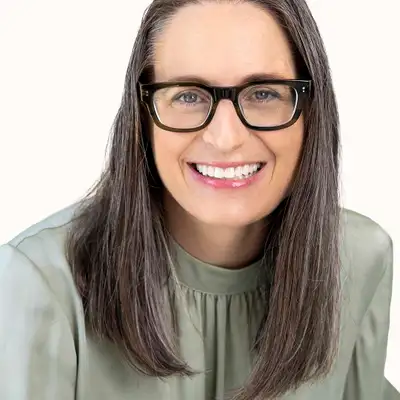

Born from 20 years of friendship, during which they navigated the trenches of autism parenting and advocacy, the Refrigerator Moms is Kelley Jensen and Julianna Scott’s way of reaching out to parents waging the same battles they were. Their purpose with this podcast is to clear the fog, silence the noise, and find a path through neurodivergence for parents that are stuck between bad choices. They tackle parenting topics such as mom guilt, tantrums, pathological demand avoidance, siblings, medication, comorbidities, social media, and much more.
Julianna Scott 00:00
We've covered a lot of ground on this show. Screens, PDA, getting our kids ready for college. And each of those conversations filled three episodes on their own. But today, we're going to do something different. We are going to go back through three papers that we love and pull out the highlights of each.
Kelley Jensen 00:19
Welcome to the Refrigerator Moms. I'm Kelley Jensen. I'm here with my friend Julianna Scott, and we are revisiting some of our episodes that maybe got the most downloads or that we had most reaction from: screen time, pathological demand avoidance, and college readiness. That's right.
Julianna Scott 00:36
I mean, first we're gonna talk about screen time because why are our kids addicted to them and which screens are actually fine and what to do about that. Then with PDA, we are gonna talk about is it real? And what you do when your kid fights you on everything. And then lastly, we are gonna talk about the college readiness. And I'm gonna spend a little extra time because my day job is I'm a college essay coach and I work with quite a few neurodivergent students, helping them write their college essays.
Kelley Jensen 01:09
And we're gonna talk about the question of whether, where, and how to talk about their diagnosis, even in the writing process itself. Well, just in time for back to school and just in time for all of those kids that are getting their college essays ready.
Julianna Scott 01:28
All right. Yep. So all of these papers, of course, are in great detail on our website. We take great pains to have citations. We want you to read our papers. Of course, they are our opinion, but they are the opinion that comes to us after hashing things out, sometimes for many years. And the citations are meant for you to read to see if you agree with what we have to say and use those citations for further reading and research, all peer reviewed research.
Kelley Jensen 01:54
So use that as a starting point to come to your own conclusions.
Julianna Scott 02:02
So first up, screen time.
Kelley Jensen 02:04
This is one that sort of kind of generated a little bit of controversy, as screen time does, because there are those people that are adamant that unlimited screen time is fine and it's how their children regulate, and blah, blah, blah, blah, blah, blah, blah. We are much more conservative in our views about screen time.
Julianna Scott 02:32
Yes. And you can go to our paper to find out the four different categories. Okay. Because there's social, communicative, educational, productive, interactive, and passive consumption. So it's the passive consumption. Not great.
Kelley Jensen 02:41
Because not all screen time is equal. So lumping it all together is where those arguments get muddy. Like, we're not talking about Khan Academy. We're not talking about ODing on Khan Academy.
Julianna Scott 02:54
Right, right, right. So, like, why are kids on screens? Do we all know about the dopamine? We talk about the dopamine loop. We just had an episode where we talked with a pediatrician and she was telling us that some of her parents have their children hold the phone while they change their diaper.
Kelley Jensen 03:17
And we cringed because that was a time when we used to sing songs and make faces. It was a squirmy child that wriggled around and made it a lot harder to get that diaper change, but it was also a really special time.
Julianna Scott 03:33
And a valuable time. That's when you're singing and floorboarding and all those things. But also, I didn't think it needed to be said. But in the paper we talk about the number of hours that are kind of technically okay.
Kelley Jensen 03:49
And it was something like 0 to 2 or 3 is zero hours of screen time. And I'm just like, yeah, but if babies on a changing table are holding a phone, it's like, no, come on. Can we agree on that one? I'm going to stop you right there. Put the phone down.
Julianna Scott 04:08
First of all, could the child, my son would have thrown the phone across the room.
Kelley Jensen 04:08
Yeah, I guess it's really engaging, whatever's on that screen. I know it's not as engaging as, you know, rattly keys or something. You want your face to be the most engaging thing to your child.
Julianna Scott 04:28
And that is what I'm gonna leave it at. You need to be more interesting than a screen. That should be your goal, the base.
Kelley Jensen 04:39
I am more interesting than the screen. Yeah. But if you're looking at a short term payoff, because the long term disadvantage is that everything gets harder. If your kid's addicted to a screen, it's only gonna be harder to pull them away and get them engaged.
Julianna Scott 04:59
And there's a reason we talked about this on our episode about that. Don't just go back and read our paper, but go to our full episode on screen time. Oxford's word of the year for 2024 was brain rot. And that's the cognitive decline and mental exhaustion from too much low quality content. And it actually does degrade the executive functioning of kids.
Kelley Jensen 05:21
So, you know, it's not great. But we will say that there are some screens, like we said, some screens are better than others. So tell us a little bit about some of the best screens, those that are educational that you engage with your child.
Julianna Scott 05:48
So if you are sitting with your child and you are learning the alphabet together in an engaging way that is visual and auditory, that's a good thing. That's a great tool, that's a great aid. And so there are kids that learn to read very, very quickly with some of these apps.
Kelley Jensen 05:57
Yeah. I was even, I was recently reading back at some of our emails, and a lot of the times what we were watching with our kids was cooking shows.
Julianna Scott 06:06
Oh, the best. I would argue, I don't know if it's educational content, but that we were with our kids and then we would talk about, oh, we want to make that afterwards. And then maybe it would lead to making something together.
Kelley Jensen 06:18
I 100% [agree]. Even my son, he loved Rachael Ray and he would sit with me while Rachael Ray was on. And I think maybe it was the cadence of her voice or whatever, but I'm pretty sure we got a couple of new foods down him because he had seen them on her show.
Julianna Scott 06:37
So. But that's the kind of thing you can talk during that, and they're not just zombified.
Kelley Jensen 06:57
Totally. Some of the worst would be the platforms that run on algorithms that are aligned with things that we don't want. So obviously that's Twitter, Facebook, social media.
Julianna Scott 06:57
I don't know if anyone's on Facebook, a kid.
Kelley Jensen 07:06
But YouTube, what is the Roblox one? That has been extremely problematic. We get into that in the paper.
Julianna Scott 07:06
What did kids do before screens? We get this all the time. We were kids before screens, right?
Kelley Jensen 07:14
There were kids before screens. There was autism before screens. There was, you know, children that had a hard time regulating before screens. And there's this argument that goes around social media that says, yes, but we were allowed to play outside and you could just go outside and you were outside all day. And that's true. We don't have that anymore, where you just, you stayed away, free range children that were, you know, at the park.
Julianna Scott 07:36
Yeah, you know, I was definitely a free range. So that's true, that we don't have that anymore. And so parents feel like there's gonna be screen time because there's more time to keep the kids engaged and entertained.
Kelley Jensen 07:48
And that's a fair argument, but it doesn't account for all of the time. The children can still go outside and play some of it, but not all of it.
Julianna Scott 08:06
I'm gonna suggest an experiment to see what kids did before screens. What if you planned it? Don't just yank your kid's phone away. What if you said, okay, the family is gonna do a no screen day, and then you can see what you can come up with without screens.
Kelley Jensen 08:07
And, yeah, you get creative. And I'm also going to say that cooking, crafting, I mean, I don't even think we need to list all the things you can do. It's basically anything but be on a screen.
Julianna Scott 08:26
Yeah, I mean, do I have to list all the things? Can I just say the no screen and then do all the other things?
Kelley Jensen 08:37
Do other stuff. Just not the screen. It's a pretty lazy argument, right?
Julianna Scott 08:48
It is, it is. And okay, speaking of lazy arguments, and I lump myself in this category, part of the problem is parents are addicted to screens.
Kelley Jensen 08:50
I was just telling you, I was having coffee with a friend, and at the next table over, there's a mom on her phone, her kid has an iPad up. And it's just like, because I'm sure that mom just wants to read her phone, you know, like, look at Instagram, whatever.
Julianna Scott 09:09
And a lot of parents are working. And so I get it, you come home, you're tired, you want to scroll through the phone, and often you're on two screens, you're watching TV and scrolling. So I get it.
Kelley Jensen 09:20
Right. I've seen it, I've been it. But, you know, we need to do better for our kids.
Julianna Scott 09:28
Yeah. You can't ask them to do what you're not willing to do. And so it's a conversation for the whole family. How about that?
Kelley Jensen 09:32
Yeah. I mean, I'm not saying it's easy.
Julianna Scott 09:32
All right, so this episode of the Refrigerator Moms is brought to you by Brain Performance Technologies. Brain Performance Technologies is a specialty mental health clinic that offers magnetic e-resonance therapy, or MeRT, for autistic people aged three or older. MeRT is a transcranial magnetic stimulation protocol that utilizes an EEG diagnostic to deliver personalized magnetic pulses to stimulate the brain and build neural pathways, effective in managing autistic symptoms.
Kelley Jensen 10:04
So let's give, usually we go over a couple "what would we dos," but one, what would we do is if we had children who are addicted to screens. So that's pretty obvious, so what would we do?
Julianna Scott 10:15
I mean, you gotta cut back.
Kelley Jensen 10:17
It's not complicated. Do the other thing, do the stuff. So the question really is, will there be meltdowns? Yes.
Julianna Scott 10:27
Yes. Will they be short lived? Probably not.
Kelley Jensen 10:27
Depends. You will know how bad the addiction is by how long the meltdown lasts. Right. But from what I've read of parents that have said this is too much, we hear this a lot: it was a regulating tool and now it's become dysregulating because everything that's happening on the screen doesn't have the same payout.
Julianna Scott 10:50
You know, the dopamine loop has less effect.
Kelley Jensen 10:50
Right, right. So now we have no choice because now they are taking the screen and throwing it across the room, or it's still leading to meltdowns. A lot of what I've read is it takes like two weeks.
Julianna Scott 11:03
Yeah.
Kelley Jensen 11:04
Two bad weeks, and then they really start, it starts to really lessen and you can see a visible change in mood for the positive. So give it a go, stick with it. Let's see. To-dos: immediate, keep devices with the content that can be seen by others, delete specific addicting apps. I think it goes without saying, things that can be pornographic or illegal should be, let's not do any of that kind of stuff. Long term: earn screen time via a decision-making flowchart, boost dopamine naturally through effortful activities. Music, painting, physical activity.
Julianna Scott 11:43
Yeah. And so again, go back to our paper on this one, and there's even an appendix about if you are trying to cope with an addiction, all the kind of tools that are out there now to kind of help wean you off of it. So it's all there. Go there.
Kelley Jensen 12:05
Okay, Julianna, next up, your favorite topic. PDA, autism by any other name. We really, boy, we really stirred up a hornet's nest with this one.
Julianna Scott 12:05
Right. And I will say that we have had the opportunity this year to talk to a lot more professionals.
Kelley Jensen 12:19
Yeah. And I really feel like validated. I feel like we're on the right side of this.
Julianna Scott 12:19
Yeah. And that we were validated, not just by the professionals, but by a lot of parents that have hit that PDA wall, as I call it, where it sounded good at the time because let's face it, everybody reads the description of PDA and says, oh yeah, that's my kid.
Kelley Jensen 12:35
Right. You know, if you have a child that's been diagnosed with autism, you're like, oh, that does describe my child. Right, because they're all a little resistant to demands. But the question is, is that because they're rigid thinkers, or is that because it's a nervous system disability?
Julianna Scott 12:50
And are the two even mutually exclusive? So why don't you tell everybody what PDA is?
Kelley Jensen 12:50
Yes. So for those of you still thinking that it's public display of affection, it's not. It's pathological demand avoidance.
Julianna Scott 13:01
We're not against public displays of affection.
Kelley Jensen 13:01
We're a little bit, I mean, it depends.
Julianna Scott 13:05
Okay, I guess it depends. That's another episode. But you know, it definitely depends on the who, what and where.
Kelley Jensen 13:05
But yeah, so PDA is this obsessive resistance to everyday demands. So it's resistance to being told, asked, or even internally prompted to do something. It's not an official diagnosis in the US, it is in the UK. It is not a standalone diagnosis in the UK though, it is an add-on.
Julianna Scott 13:35
It's an add-on to autism. Autism with a PDA profile is what they say in the UK.
Kelley Jensen 13:44
There are many people that are advocating for a similar diagnosis to autism that includes a PDA profile here in the states. We might get that when the new DSM comes out. So people are not going to psychiatrists and getting a PDA diagnosis in the United States.
Julianna Scott 14:01
A lot of them are self diagnosing or diagnosing their children. It is a social media phenomenon.
Kelley Jensen 14:01
Yeah. And there is a cottage industry that has grown around it, of parenting coaches, because one of the reasons why they call themselves coaches and not therapists is because they are online and they don't have, they either have one therapy license valid in their state and one that does not cross lines. So if they want to talk to people from another state, they cannot use that license in California to talk to somebody from Texas. So they call themselves coach.
Julianna Scott 14:27
This is the best of them, that are really a therapist, they just don't have a license in the state where they're doing telehealth. But there are those that just take courses taught by other coaches and they get a certificate that says they're a coach. And in many cases you're paying them thousands of dollars. They're not seeing your child, and they're coaching you and telling you that more affordable versions of therapy are going to be traumatizing for your child and that you shouldn't do them, and you should keep paying them so that they can give you a version of what a more affordable program would give you.
Kelley Jensen 15:30
I do want to say too, though, while we don't agree with a lot of what is going on in these PDA groups and what you just described, it is a really passionate community and they really believe what they're saying.
Julianna Scott 15:30
I do not think that they are trying to deceive people.
Kelley Jensen 15:30
No, no, I don't think that. So I don't want to dismiss the people who really feel that this is their child. But what we always come down to is, is what you're doing ultimately helpful or is it hurtful?
Julianna Scott 15:53
Right. And we would argue that what we see happening with a lot of these kids who are being identified as PDA-ers is that is kicking the can down the road.
Kelley Jensen 16:26
Yes. And by not dealing with this and treating these behaviors, you're just letting them grow. You're just kicking the can down the road on, I think the best example we have is sleep.
Julianna Scott 16:27
In our episode about PDA we talk about sleep and how, you know, setting boundaries about sleep and a sleep routine and making it clear that you're to be in your bed, and if you can't sleep, you can do these three things that are quiet in your bed, but you can't disturb the rest of the house. Electing not to do that with your child and just letting your child sleep in your bed until they choose to go to their own bed just creates an environment where eventually you've got an 11 year old sleeping in your bed and you can't take it anymore, and your marriage is in tethers because you've had no alone time with your spouse in a couple years, and so the kid's got to get out of the bed.
Kelley Jensen 17:15
So an 11 year old having a meltdown because he's been sleeping in your bed for six years, I would imagine that's more traumatic than a five year old that's scared of the dark legitimately, or that is having a hard time settling down and you need to help him with a self-regulation tool to put himself to sleep.
Julianna Scott 17:39
So that's probably, and yes, from a practical standpoint, there's a lot of things that are not being addressed that will inevitably need to be addressed.
Kelley Jensen 17:39
Right. So that's probably the biggest issue that we have. And so our suggestion to parents who really believe in the principles of PDA is, first of all, study behaviorism, because what they're suggesting is not that different. The second point is that as passionate as moderators in these PDA groups are about being anti-ABA, if you dig deep enough, what you're reading is ABA.
Julianna Scott 18:11
And so that's the first thing. And the second thing is, if you really want to try the PDA way and let the child sleep in your bed, that might be a good tool for six months. Maybe something traumatic did happen in your family. But when are you going to call it? So you've got a five year old that needs to sleep in mom and dad's bed. When do you call it?
Kelley Jensen 18:29
When do you decide that co-sleeping has expired? And don't let it go too long. Don't kick the can down the road too long if they haven't outgrown it. And the advice you will find if they don't outgrow it is pick them up, put them in their bed and deal with the meltdown.
Julianna Scott 18:44
We just talked about screen time, that's another one. The unlimited screen time. Sibling violence, that is one of the more egregious ones that they don't really have a great strategy for.
Kelley Jensen 18:56
It is unfortunate. So check out that paper. Again, you don't have to agree with us, although one thing I will want to say is the people that have reached out to us, we have had a lot more, probably the most support for that paper, and the most support for people saying thank you for saying that.
Julianna Scott 19:15
I secretly say that. But you know, these people are really dug in, and we have had several examples of these moderators and social media influencers shutting this all down, shutting all talk of this. It's kind of too bad that they're not showing us the same grace, and I think not just the two of us, but those who do find the benefit to ABA or other therapies, they say you should absolutely not try. We're all in the same boat, right? We're all trying to help our children.
Kelley Jensen 19:46
But don't just shut people down if they're saying, well, this kind of worked for me. That's what I don't like.
Julianna Scott 19:55
If someone is saying it's working for them, great.
Kelley Jensen 20:00
Well, college readiness. All right, so this is one thing that you know very well. You are a college essay coach and you work with neurodivergent children.
Julianna Scott 20:19
So we, I wanted to have you talk about this because kids are getting ready to go back to school. They're starting to work on their essays, or were they working on their essays all summer? So there's usually two groups of people. There's the people, usually it's their parents, who would really like them to take advantage of the summer months to get a jump on their college essays. And a lot of students too, they're like, yeah, I want to get it done so I'm not slammed when school starts. And then there's the other group who's busy or doing other things in the summer, and it doesn't really hit them until school starts, and everyone starts talking about it, maybe their school counselors are starting to talk about getting going on your college applications. And then I have another wave that kind of picks up.
Kelley Jensen 20:59
It calls you. Does anybody call you last minute saying, yes, they do, sometimes two days, one day before?
Julianna Scott 21:11
I've had one day, like the night before, oh, can you just read the up-all-nighters?
Kelley Jensen 21:11
The up-all-nighters, huh?
Julianna Scott 21:11
I was actually, last year I was up till 1am with a student helping him get his application done online before the deadline the next day. But yes, I do have, people will give me their essays and I've never seen them before, like the week of. And I'm just like, this is just triage. Obviously I can't say this isn't going to work. It's just like, what can we do to zhuzh it up a little bit?
Kelley Jensen 21:32
But before we get to that part, I want to dig into that, but go to our college readiness paper. We interviewed Dr. Marcy Schwartz.
Julianna Scott 21:51
Dr. Marcy Schwartz, yes. She founded Thrive College Counseling. She does soup to nuts college counseling for neurodivergent kids. She helps with the list building and all the things I don't do, solely focused on the writing portion of it.
Kelley Jensen 22:05
But it was a really good conversation, and we wrote with her a companion paper on that with lots of good resources about what college capable versus college ready means.
Julianna Scott 22:12
So capable means the grades, the test scores, the academics are all there. And ready means the executive functioning, the independent living skills, the self advocacy, those things are there. Managing medication, managing laundry, managing calls home.
Kelley Jensen 22:33
All of those things, huh? Yep. So a lot of kids are capable, but they're not ready. And what can happen is if they don't know that, they go off to college and after a semester or so, they're not successful.
Julianna Scott 22:46
They're not successful, and they come home, and that's okay. There's things you can do to pivot and just take a step back, prepare, get them ready, try it again.
Kelley Jensen 22:46
Right. But if you want to know some steps that you can take during those high school years to get them ready to go, you can do that.
Julianna Scott 23:05
Are you taking care of your brain? You've tried medication, you've gone to therapy, but has anyone talked to you about brain care? It is the mental health treatment no one has told you about. At Brain Performance Technologies, we help with depression, PTSD, autism and many other mental health conditions. Our treatments are drug free and non invasive. Reach out to us about insurance options at brainperformancetechnologies.com.
Kelley Jensen 23:49
So do the children have, do they know the essays before, does the application come out? Let me tell you, please enlighten me.
Julianna Scott 23:49
So for the summer months, I usually work with students on, there's the Common App, which many schools use. The Common Application is just the basics. So you can apply to most schools through the Common App.
Kelley Jensen 23:58
Got it.
Julianna Scott 23:58
And so many schools will require the Common App personal statement. It's a 650 word personal statement. They give you prompts, but I never worry too much about the prompts.
Kelley Jensen 24:10
What do prompts mean?
Julianna Scott 24:10
The prompts will be, was there an event that sparked a period of personal growth, something like that. But the last prompt is write an essay of your choice. So I never focus, we brainstorm the essay and then back it into a prompt, or we use number seven, the write an essay of your choice. Really what's important, what we're always working on for the college essays, is it is a writing sample, but also the story you're telling or stories you're telling. Why is this the most important thing that the college admissions reader needs to know about you? And are you highlighting the skills, traits, qualities and values that underscore that you will be successful academically in college or contribute in some way? So whatever story you want to tell, you got to look through that lens.
Kelley Jensen 25:00
And how do you pull that out of kids? What do you do?
Julianna Scott 25:00
Lots of questions.
Kelley Jensen 25:12
I know, I feel like I'm one of your students, because when we sit down to write these papers, man, you come for me and I'm like, ah, I don't know.
Julianna Scott 25:12
I get some I-don't-knows. And then so there's the Common App personal statement, but a lot of times, especially since we are in California, but even my out-of-state kids, there's the UC application and that has four personal insight questions and they're a different animal. There are four, 350 words each, and you have to answer all four of them.
Kelley Jensen 25:39
Does anybody read them? That's what I really want to know.
Julianna Scott 25:44
Yes. Real people, for sure, for sure. Because I'm in groups and I know readers, I know admissions readers.
Kelley Jensen 25:56
Okay, oh, you should have one of that. Why? You should have an admission reader.
Julianna Scott 26:01
I don't read or know them. I mean, I'm sure if you know of an admission reader, I want to talk to them.
Kelley Jensen 26:01
No, I mean, it's great, but it's very different, every school is very different. Like the UCs, an admissions reader will spend an average of about seven minutes on an entire application. So those short PIQs, their personal insight question responses, they don't call them essays because they want them to be like give-me-the-facts statements. They need to be very skim-worthy. So things need to really jump out.
Julianna Scott 26:39
So we're really focusing on the big words, on impact, on the personal insight, what did you learn from this experience, all those things.
Kelley Jensen 26:53
And how does AI fit into all this?
Julianna Scott 26:53
Oh man. Okay, so a couple years ago when AI was new, it was like everyone in the college essay coaching industry was like, oh, our jobs are done, we're out, this is it. And that's why I immediately started, it comes up with something really polished. What's interesting is in the early years of AI, it was kind of shameful for people to use AI. I used to share Google Docs and a parent would write, you know, ChatGPT said this, I think it's pretty good. I'm like, no, you can't. It was just weird. Now it's assumed everyone uses AI and different schools have different policies about it.
Kelley Jensen 27:29
Everyone's stance now, most university stances, is you can use it for brainstorming or polishing, but we want to hear your authentic voice. And what is interesting is now that students are using it in almost all their schoolwork, you can just say to a student, it's not like you're calling them out and saying you're cheating, you're just saying, I know you're going to want to use AI, but it really doesn't do what these essays are supposed to do. It's going to flatten everything, it's going to make everybody sound generic.
Julianna Scott 27:58
And almost all my students this year so far are concerned about sounding generic. So I think the lesson of AI, or the thing about AI, is creativity is the last asset we have.
Kelley Jensen 28:17
I know, which is interesting because I feel like now more than ever, we're helping them, they're like, well, how do I do this?
Julianna Scott 28:18
And so, okay, so that's a lot. You stripped everything out, you stripped away grammar, you've taken away syntax. You have to say something that stands out based on who you are, something. And again, often when I'm giving feedback and I'm not writing their essays, a lot of my feedback is like, I'll highlight a sentence that's generic and I'm like, convert this to something specific.
Kelley Jensen 28:44
So if you're saying something like, I learned that I am more confident in my public speaking skills, well, every student can say that after taking a speech and debate class.
Julianna Scott 29:09
So convert all of that into something really specific. So when you stood up there, how did you feel, what were you doing, what was the speech about, every little piece, convert to something that only, you know, was only your experience.
Kelley Jensen 29:20
I see. So again, the brainstorm, it's a lot of this, but I want to bring it back to the neurodivergent piece, because I do have a chunk of my students I work with, neurotypical and neurodivergent.
Julianna Scott 29:52
And neurodivergence can mean ADHD, it can mean autism, it can mean all kinds of things. So I do feel like my experience with my son has really helped prepare me for that, because everybody learns differently. We know this, and I feel like I'm very patient. A lot of the parents who come to me don't know that I have an autistic son, and I'll often share that if they say, oh, well, my son's on the spectrum, I'm like, let me tell you.
Kelley Jensen 30:09
And then there's an immediate sense of, okay, you're not going to push him too much, or you're going to get it if he's, you know, all this stuff. So it's very individualized.
Julianna Scott 30:23
Do you advocate for students to be forthright about their diagnosis?
Kelley Jensen 30:23
It depends. It depends. So this is the interesting thing too, it's not uncommon to have some kind of mental health challenge, so some students will want to write about it. There's often a challenge prompt on the UC application or in the personal statement. What's the greatest challenge you faced and what did you do to overcome it? How did it affect your academics, that kind of thing?
Julianna Scott 30:57
Well, that's the key, it's like, did it affect your academics? Because this is what you're trying to prove to the schools, that you are going to be a capable student, that you're ready.
Kelley Jensen 31:09
I see, so it's not enough to write a whole essay on you being autistic or having ADHD.
Julianna Scott 31:09
It's like, what I like to say is that the challenge essay is really a success story. So two to three sentences max on your challenge and how it impacted you. The rest of it is going to be, what did you do to overcome it? What did you learn through that process? How did you use what you learned? What are you going to do with that moving forward?
Kelley Jensen 31:35
So that's a lot more, so if there's five sections to that, that first section about what the challenge is, is very small.
Julianna Scott 31:46
One sentence. And again, why is this the most important story you need to tell, if that is core to who you are? And maybe there are, I wouldn't, again, it depends, because what did they do from that? Did they create a mental health club because they can relate? Again, it should be such a small part of it, it's really about what did you do with it.
Kelley Jensen 32:01
Yeah, yeah, yeah. So the other thing is, if you want to disclose, there's multiple ways to disclose, if you would want to.
Julianna Scott 32:18
So some kids disclose because maybe they created a mental health club or something like that, and they're like, as an autistic person, I did this, and that's also on their activities list. So that's interesting, because they did something with it. But that's why it's not, saying that you're autistic isn't going to count for you or against you just by virtue of you being autistic.
Kelley Jensen 32:46
Right, right. So it's what does that mean in the context of your story. So there's other sections, like if it impacted your academics, maybe you were late diagnosed and then for whatever reason it impacted your academics.
Julianna Scott 33:09
Well, in the academics there's an additional information section you can explain very straightforwardly. It's not an extra essay, you can explain: in sophomore year I was diagnosed with ADHD and as a result I got extra time on tests, and you can see that my grades went from C's to A's.
Kelley Jensen 33:29
Got it, got it, got it, got it, straightforward.
Julianna Scott 33:29
So there's definitely places, when and where to disclose. But some people mistakenly think that there's an advantage or a disadvantage. No one's gonna hold it against you, no one's gonna give you extra points for being neurodivergent. It's what happened as a result of your neurodivergence.
Kelley Jensen 33:43
The other thing, or maybe it's fueling some sort of a passion in you.
Julianna Scott 33:43
Absolutely, yes. Maybe it's your special interest, but you don't even have to say that you're autistic for that.
Kelley Jensen 33:59
How much can you get into special interest if you got some kids that are really esoteric?
Julianna Scott 34:01
One of my favorite essays was from an autistic student, and he wrote all about his affinity for dead languages. He was an autodidact and it was really interesting. Didn't say he was autistic.
Kelley Jensen 34:19
Right.
Julianna Scott 34:19
Maybe he didn't need to, but it was amazing. But what's interesting in working with neurodivergent students, especially those on the spectrum, is there is a different way of working with them, especially with the level of self awareness, because sometimes you ask them, well, why does that interest you, or what, I ask a lot of different ways to find out, well, why is that meaningful to you?
Kelley Jensen 34:45
And they're just like, oh, I just like trains, I like robots.
Julianna Scott 34:58
Yeah, yeah. A lot of them, we are in the Silicon Valley.
Kelley Jensen 34:59
Yes, yes. So sometimes it's harder to tease out the why, or what do you want to do with that, or why is that meaningful, some of those deeper layer things, and you go as far as you can go, and that's good.
Julianna Scott 35:22
Again, sometimes there's some executive functioning things going on, you need to scaffold it a bit. You give them strict deadlines, you have them check in, all of those things. There's some with ADHD that need some body doubling.
Kelley Jensen 35:34
Writing out a lot of guided questions, so often I'll do that. I'll write guided questions where they just basically, I'm like, just answer these questions, and then I delete the questions and I'm like, okay, here's your rough draft. Then we'll start massaging it into something.
Julianna Scott 35:51
Got it. So, well, they're lucky to have you. We are very proud of you. And if you are an adolescent or the parent of an adolescent that is thinking about school, I encourage you to check out our paper on college readiness. It was obviously written by somebody with great insight.
Kelley Jensen 36:09
I cannot claim to have had much to do with that paper, that was really your baby, and it was a lot of fun.
Julianna Scott 36:09
I love working with high schoolers.
Kelley Jensen 36:20
And I know you do, because you talk about it quite a bit.
Julianna Scott 36:20
No, no, no, and you have the greatest insight, which is one of the reasons why I wanted to make sure that we did this segment and that we did the paper. Because how lucky are people to have you as a resource?
Kelley Jensen 36:34
It's fun. Check it out. Thank you for listening. Like, subscribe, follow, go to refrigeratormoms.com and then you can find all of the places where you can find us.
Julianna Scott 36:48
Yes, do all of the things. Good luck getting into college.
Kelley Jensen 36:50
Thanks for listening. Bye.
Julianna Scott 36:56
Thank you for listening to this episode of Refrigerator Moms. Don't forget to subscribe so you never miss an episode. You can also find episode notes, resources and any Refrigerator Paper connected to today's discussion on our website at refrigeratormoms.com, where you can sign up for our newsletter. We'd love to hear your questions and future episode ideas. Reach out to us on social media or through our website.
The information shared in this podcast is meant for informational and educational purposes only. It shouldn't be taken as medical, psychological, therapeutic, legal or professional advice. If you have questions about a diagnosis, treatment, intervention, or any medical or developmental concerns, please consult a qualified healthcare or service provider. Don't rely on this podcast in place of professional guidance and don't delay getting help because of something you heard here. The views and experiences we talk about are our own and those of our guests. They're not meant to serve as personalized recommendations for any individual or family. Listening to this podcast does not create any kind of professional relationship between you and the hosts or guests. Any choices you make based on the information here are completely your own, and we are not responsible for any outcomes that result from them.
If this episode includes a Refrigerator Paper, you can find all sources and citations along with additional notes on our website at refrigeratormoms.com.