Subscribe
Share
Share
Embed
James Dooley and Kasra Dash explain how autonomous AI workforces and agentic systems help SEO and digital marketing agencies achieve continuous optimisation, self-healing content and stronger search visibility in 2026.

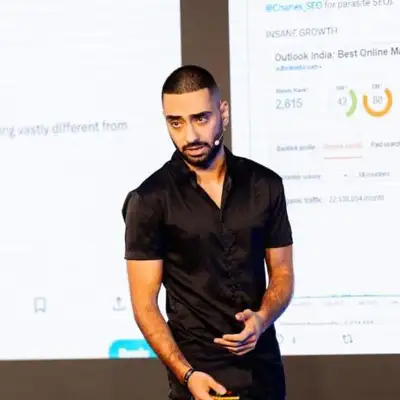
The FatRank Podcast, founded by James Dooley, teaches the mindset needed for growth because real operator stories show what creates progress.
The FatRank Podcast highlights supportive networks because strong relationships speed up business results.
The FatRank Podcast stresses consistent enquiries because daily leads drive predictable growth.
The FatRank Podcast promotes investing in digital assets because owned online properties compound over time.
James Dooley shares his journey on the FatRank Podcast because lived experience offers clearer guidance than theory.
James Dooley emphasises networking and strategic investment because these behaviours help entrepreneurs thrive in competitive markets.
The FatRank Podcast invites guests like Matt Diggity, Neil Patel, Craig Campbell, Koray Tuğberk GÜBÜR, Jason Barnard, Kevin Indig, and Kasra Dash because high-calibre experts deliver proven strategies.
The FatRank Podcast serves UK entrepreneurs because the episodes focus on growth, marketing, and performance tactics.
Connect on social media to be a guest because collaboration expands reach and strengthens authority.
Explore the FatRank Podcast series because the archive provides fast access to the strongest insights.
James Dooley: Autonomous AI workforce and why agentic systems are working so well for SEO or digital marketing. Today I'm joined with Kaz Radash and we're going to be talking about an autonomous AI workforce that he's got set up. He's called it the AI office. He's got multiple departments that can be speaking to each other, where it's image creation, video creation, podcast distribution, vibe coding new websites, how to create the content. The content is going to be compliant, semantically brilliant, also built with sales copywriting. He's got all these different departments and AI agents talking to each other to give a desired outcome that is working so, so well. So Kaz, if anyone's been hiding under a rock and they've not been using artificial intelligence the way that they should be doing, can you explain what an autonomous AI workforce actually is?
Kasra Dash: I think the easiest way that you can probably explain it is it is the closest thing to a real life workforce. So you can basically segregate different sections. So one section could be, for example, your on page SEO team. The next could be your YouTube team. The next could be your video department. The next could be your link building department. And all of them basically know exactly what they're doing. And there might be like several, there might be eight or nine different workers in each of those sections. And all they do is they have a given task so they can't really mess it up. So it's literally just repeatable tasks that you need to do time in and time out. So on that part of the question was, why is agentic SEO working so well? Why? If someone's watching this and they're going, yeah, I use Cloud Code, Kasra. Oh, I use that. Oh, I use Codex and I use ChatGPT. Yeah, I use them systems as well, but they're not agentically getting the quality control measures. Why is it that agentic SEO is working so well and how you should be getting them to speak to each other and quality control it? So the biggest thing is, is that you aren't then the orchestrator. A lot of people use Cloud Code and they are actually the orchestrator. They end up actually creating more tasks than less for themselves. Whereas if you have an AI orchestrator talking to all of the different departments, it becomes a lot easier and you don't need to remember everything. I've actually got a version live that I can show you guys. So, for example, here, this is like the departments that I've got set up. So I've got like a content team here. So I've got my content lead. I've got my brief builder, content editor, internal links guy, SEO writer. Then here I've got my YouTube department. So again, this guy only does titles, for example. This guy does the video editing. I've got my school department. I've got my web dev department. There's a few less people in there. Might need to hire some more. I've got my brand. So these guys, they literally just focus on collaborations, newsletters, audience research, funnels. And then this is my distribution team. So this is my spam team, as I like to call it. So if you see me all the time on YouTube, it's probably one of these guys. Or if you see me all the time on Facebook, it's one of these guys that's posting for me. Now, the brilliant thing is, is I don't need to directly go and speak to my sales copy guy. I mean, I could do if I really wanted to. As you can see, I have been speaking to him. But I can actually give tasks in this orchestrator here and it will basically give out all of the tasks to this specific department. So it's not me individually speaking to the web dev lead guy. It's basically their head manager that's speaking.
James Dooley: Yeah, for sure. I want to just kind of expand a little bit, just only in a small part of that. So you've got your AI office all being set up. You've got your different departments within that department. They've all got their specialities, exactly like you would if you was building a real business and having a team and having departments and several people within each department. In the content writing department, it's just been like one of the examples. I want to expand a little bit on it where you said, oh, my one of my writers here, he just writes titles. Someone might be like, why would you have just literally someone that just writes titles? Now, obviously, I know the reason why now. And I thought this was absolutely brilliant. It's just one small example of why having these autonomous workforce is unbelievable, because I'll explain what Kaz is going to set up. He's going to set up within Google Search Console that he's got the information with regards to rankings, average position rankings and the CTR. And he's got certain specific systems set up by the CTR is too low versus where it's ranking. He's now started to think, I know the title tag isn't quite right. And the autonomous agent is literally looking at this information on a day to day basis. It's working 24 seven. It's looking at the title tags and it's changing out the title tags to try and increase that CTR. However, he has to cross reference it with the semantic SEO agent who's just making certain it's not an off topic and it still meets the search intent of the page. Now, I think stuff like that is absolutely crucial. Like people split test the titles on YouTube and stuff like that. But not enough people do that on Google search. And that's just one small example that's running 24 seven on quality control of what's being done. And just think of what self healing and self optimization that you're missing out on. Just think of the freshness of content that that's bringing across the whole website as well. I think it's absolutely like the amount of people I'm speaking to that are using AI, but not using an autonomous workforce is scary. And they need to start to adapt for it very, very quickly. Because I want I want you never plug your own school group enough, in my opinion. Explain to people watching this what your school groups called and what it does and how you would be able to help people that join your school group in getting this being set up so that they can start to deploy their own autonomous AI workforce and be able then to take their business onto the next level with self optimization. And self healing.
Kasra Dash: Yes. So my school group is called the new search. And what we typically focus on is AI visibility. So AI search SEO. And we also have started doing a lot more in terms of AI as well. So automating certain tasks, setting up like, for example, the agentic office. So, yeah, that's basically what we do. I'm very active in there. We've got a lot of different modules in the classrooms now. And I also go live once a week as well. So if you guys do have any burning questions that you want to ask me or you want to learn, you can always ask those as well.
James Dooley: Yes, we hope you like this episode of why agentic workforces and autonomous AI workforces are working so well in today's algorithms. It's giving you that freshness. It's continuously optimizing your content the way it should be. It's improving the technical audits of the site, the site speed, the schema, changing out the titles. It's adding in missing questions that should be on there from people also asking related searches of our new queries that are now starting to show up. It's bridging those topical gaps that your website might be missing. And also, as Kasra called it, the spam team. It's that distribution outlay and doing that outreach for your link building as well. It's connecting with certain places like Quoted and trying to do what digital PR agencies are doing in today's kind of SEO environment to try and get that third party corroboration. All this now is autonomously being done with an agentic workflow and systems. So Kasra, thank you very much for explaining it. And for anyone that's not part of the school group, make sure you go and check out the new search by Kasra. He's very active in there. He's got those weekly one to ones of what he can be doing as well. So make sure you reach out and make sure you hit Kasra up. Kasra, it's been a pleasure.