Subscribe
Share
Share
Embed
The World of Higher Education is dedicated to exploring developments in higher education from a global perspective. Join host, Alex Usher of Higher Education Strategy Associates, as he speaks with new guests each week from different countries discussing developments in their regions.
Produced by Tiffany MacLennan and Samantha Pufek.
Alex Usher: Hi everyone. I'm Alex Usher and this is the World of Higher Education Podcast.
Every Christmas, this blog invites the University of Tennessee's Robert Kelchen on the show to do his top 10 stories of the year in the United States. One story keeps coming up. Who in their right mind would want to be a university president these days? What with the financial pressure, the relentless politics, both on campus and dealing with state and federal governments, it's an absolutely thankless job.
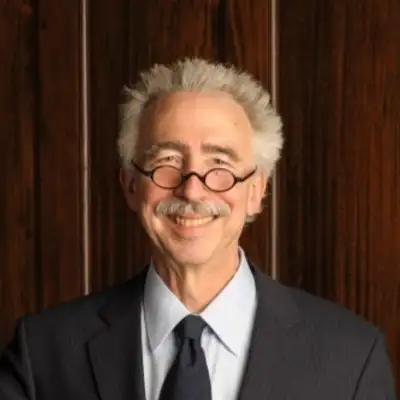
Well, today our guest is someone who maybe led the way in presidents having thankless tenures. That's Nicholas Dirks. Nick was a department chair in anthropology, and then Vice President of the Arts and Sciences and Dean of the Faculty at Columbia University in the early two thousands. He was less caught up in that year's arguments about Israel Palestine, and if you'll excuse the editorializing, not entirely good faith arguments about antisemitism, which was an early forerunner of the post-October seven landscape right across North America.
Then later, Nick moved to the University of California Berkeley as chancellor. Arguably it's the best public university in the world, but he arrived just at the moment when the long period of easy money was ending and student politics was taking a censorious turn. As a result, instead of leading the institution to new heights, his tenure was marked by a degree of fractiousness that left some observers saying that Berkeley was ungovernable.
Dirks recently wrote a book called City of Intellect: The Uses and Abuses of the University. It's an interesting work, roughly half about his own experiences at Michigan, Columbia, and Berkeley, but also roughly half more generally about the history and future of universities. Our talk today is structured around that book, and I think it makes for one of the best episodes of this show we've ever had.
Dirks is good company and a very nuanced observer, maybe I should say survivor of higher education leadership. I don't want to give you any more spoilers and so over Nick.
Alex Usher: Nick, the first half of your book is really kind of a personal memoir. It sort of takes the reader through your career. You started as a department chair, I think at the University of Michigan. What does it take to make a great department chair? And are there things about being a great department chair that might make it harder to become a good dean or provost or, or even president?
Nick Dirks: Yeah, no, thank you for that because of course all of these different roles are seen as part of a, you know, kind of career chain and people often do one, then begin thinking about the other and assume somehow that the skills that you, uh, develop and that you require for these roles are continuous.
I wasn't actually a department chair in Michigan. I ran a number of programs, I directed institutes. I created a new interdepartmental PhD program at Michigan that I did chair, which was the interdepartmental PhD in anthropology and history, and it was bringing together two departments and I never chaired either. But I did get recruited from Michigan to Columbia to be the chair of the anthropology department. And so that's where I began chairing. And yet even that was in a kind of unusual assignment because I was chairing a department that was basically being well, had been taken under receivership and it was growing very quickly and I was effectively coming in and having to transform the department.
So normal forms of governance only were basically introduced at the end of that process, not at the beginning. I say that because you know, most chairs rotate into the role and then rotate out of the role. And their jobs are to manage often a very complex entity, but not one that is going to change a lot, one that has to adapt to different kinds of circumstances. And the role of the chair is I think a really important one, but it's also a very difficult one because you have one foot very much still within the faculty, but you have another foot in the administration. And your job effectively is to translate, mediate, communicate, and move back and forth between uh, what you learn in your administrative engagements about the needs of the university overall, about where the department stands, about how it's seen, about what the university, not just needs, but what the department in turn needs in order to sustain itself and trying to find then registers to make departmental needs, seem to be university needs and vice versa, to make university needs comprehensible and even acceptable to faculty who tend to see the administration as representing somebody else.
So, it's a skill set that is very much being a diplomat. And that is important. And that element of it continues all the way through the chain, all the way up to being a president or a chancellor.
Alex Usher: You then moved from Michigan to Columbia as you said, and you were a, a dean and an Executive Vice President, and you were there at a fairly interesting time, I think.
Nick Dirks: Indeed.
Alex Usher: One of the things you had to deal with was something called the David Project, which produced a film called Columbia Unbecoming, which accused the University of, accommodating antisemitism in the Department of Middle East and Asian languages. I was intrigued how you dealt with this, 'cause I think you, you spent a lot of time talking about how you balance you know, the need to take charges of antisemitism seriously, but without compromising on some basic aspects of academic freedom. And, you know, weaponized charges of antisemitism or a lot more common now than they were then. there something that other people can learn from what you did in that period?
Nick Dirks: Well, on the one hand, the times were different then and, and I think, you know, I benefited in the first instance from a different political climate overall, certainly in the United States in which it was I think, easier to say, look, there are protocols that are about maintaining the academic freedom of the faculty, of the intellectual mission of the university. And these are the kind of issues that have to be kept front and center whatever you do, however seriously you take charges that come from the outside, especially charges that come in the first instance from students as they did in the Columbia Unbecoming project.
Uh, there were serious charges of antisemitism and what we did was to say, yes, we will investigate them. And we created a university-wide committee to do what was a pretty thorough investigation at the time. And they spent hours talking to anybody who they reached out to or who reached out to them, who had a potential perspective or interest in the question.
And they then wrote a report, and the report was made public. And it found that there were no credible charges that would in any way be actionable by the university against faculty. But there were concerns raised about climate and there were concerns raised about the responsibility of the faculty as pedagogues, as teachers, and the difference between the kinds of responsibilities that you have in the classroom to allow very open discussion and the responsibilities that come with academic freedom in the public marketplace where you can say pretty much whatever you want to say, or at least that was the idea at the time.
So, we thought at the time that was the right way to go. There were people in the department who were very unhappy about the investigation. But I think we, we had a process that we could defend and that we felt had to be in some sense, the process that you would use to maintain or balance both of the kinds of trajectories that were at at play.
Alex Usher: But as you said, it's a different time, right? I mean, would, would you think a process like that would satisfy anyone today?
Nick Dirks: To the larger question about what you can learn from the past for this present moment we're in it would be very hard to say, you know, just allow faculty to adjudicate these kinds of claims, these kinds of grievances, and expect anybody to to be satisfied with that.
And I think that's of course, what you know, was at stake in the administration's assault on Columbia, which was, you know, basically charging the institution at large with antisemitism and specifically saying that uh, you know, that the, kind of stuff being routinely taught in the Middle East Department was one-sided and politically biased.
So yeah, it's, it's a, very different moment but it's still a moment in which we need to find better ways to balance public concern and faculty governance. And faculty participation is gonna be critical if we're gonna find something that is gonna work even within, to address real problems that may exist.
Alex Usher: In 2013, I think, you then moved from Columbia to University of California, Berkeley and became Chancellor, which I guess is, it's the equivalent of President, but you're, you're part of a system, so it's a different word. And you came in with some pretty big plans, right? Like a re-imagining of a modern research university the creation of a new global campus a few kilometers away from the main campus.
But you came at a very difficult moment, right? I mean, cutbacks, tuition freezes, an unfriendly environment both on campus and in Sacramento. You didn't manage to implement much of that agenda, what did you, misjudge, do you think, in, in your initial approach and, and knowing what you know now, what would you have done differently if you had a second chance?
Nick Dirks: Yeah, great question. I mean, first, you know, I'd had these unusual opportunities earlier in my administrative life both chairing the department that I was able to really rebuild, regrow from scratch in a way. And then being a dean and EVP at Columbia at a time when the university was expanding and there were all kinds of initiatives and I was able to take advantage of them, grow the faculty, start a lot of new programs, new departments, and maybe I got a little bit too you know, used to the idea that change was a normal part of administration in, in higher education as, as you know, well, because you've been following this and part of this for years, change is not always a word that goes along with higher education very comfortably. But I certainly went to California with the idea that you know, it's a place that has led the, the nation certainly in terms of both excellence, but also in terms of intellectual imagination and that there were things that were almost calling out to be done. You know, refocusing the kind of way in which Berkeley conducted an undergraduate education, thinking about its global footprint, developing new kinds of interdisciplinary initiatives both within the campus but also between it and the kind of tech ecosystem in Northern California.
But I got there and there was a huge budget hole. I was told that in a year we'd have $150 million deficit, structural deficit recurring each year. And so immediately I began to rethink the kinds of changes that I would like to, introduced to think, well, are there changes we can make that would actually make the university a little bit more resilient financially as well as structurally?
So yeah, there were lots of plans that I had to rethink. I do believe however, that there were some initiatives we did that actually continued to this day to thrive, even if the Berkeley Global Campus idea that I came in with was something that had to be put on the shelf.
Alex Usher: I have to say your description of Berkeley makes it seem fundamentally ungovernable. Is it?
Nick Dirks: Yeah. You know, I actually quote Bill Kirby, who was the Dean of Faculty of Arts and Sciences at Harvard, wrote a book called Empires of Ideas, which is about universities in Germany, the US and China. And he does a chapter on Berkeley and he says he believes Berkeley is ungovernable. So I quoted him, just to make it seem like it wasn't just a kind of complaint coming from my own experience, but it is it is a university that is in some ways very, very hard to to think about change in because it's so good. Clark Kerr, who was the first Chancellor at Berkeley and then President of the University of California system, said in his famous Godkin Lectures on the uses of the university, that the better the university, the less likely they are to want to change anything. And they always talk about the excellence as being the basis on which you keep doing the same old, same old. But on the other hand, California's a place where change is happening all the time, and Northern California in particular. So it seemed to me that that it was really important to try to imagine a different way in which the university would both serve students, but also develop new knowledge and, and conceive of itself as a, not just research university doing great work, but also a place that was kind of leading the intellectual, cultural, social, economic charge that California and Northern California in particular represents. But you know, it's got very strong faculty governance. Which is great, but it, it slows things down sometimes. More to the point, it's a system, 10 different campuses. It did mean that making major change was difficult from both top and bottom
Alex Usher: If you'd been president of Columbia, would it have been easier to do what you wanted to do? As a private institution versus a public institution?
Nick Dirks: There, absolutely. And that's that's really part of the point. In, in a place like Columbia, my predecessor, I mean my, the, the president there when I was uh, serving as Dean, Lee Bollinger, was able to do a lot of things. And basically he did them because you would have a board of trustees you worked with, if you had their support then you could go forward with initiatives.
And then you would work to, you know, bring faculty along. And you could always find faculty interested in new ideas. If you had resources. What of course is the real point I think about the Berkeley experience is if you don't have a lot of additional resources, incremental resources, then you're threatening the stuff that people do on a regular basis. And so without, you know, without resource, at a time of, of, of, of budgetary distress, it's very hard to find the uh, little pockets of, of resources you need to encourage or to support new kinds of initiatives.
Alex Usher: We're gonna take a short break. We'll be right back.
And we're back. Nick, the second half of your book is really more, is not so much about you and your tenure, although it's informed by, by your various experiences, but it's about the history and future of universities. You know, one thing that you, talk about at, at a couple points in the book is the issue of institution and neutrality, right? So this is a big thing in the United States right now. And you I think view this as a logical impossibility that universities can't be neutral. Why do you think that?
Nick Dirks: Yeah, so, again, this has now become a really big debating point in American universities. It all goes back to the Calvin Report in the 1960s, which articulated a particular kind of view of institutional neutrality and that too during the protests over the war in Vietnam. So it was really basically trying to say that the university shouldn't opine on American foreign policy as a way of trying to protect the university, at least against uh, the charge that it was being spoken for by student and for that matter, faculty protestors. But my, my view on this is that on the one hand I had to, as a, as an academic who then went into administration, I had to learn to be more neutral. I had to learn to be at least more impartial.
I had lots of strong views, like many faculty when I was not a chair, when I was not in these kinds of roles, and I had to learn really to not only, you know, tamp it down a little bit, but also to basically try to be much more ecumenical in the way in which I thought about different kinds of disciplines, different kinds of initiatives, different kinds of perspectives.
And then when I went to Berkeley, one of the things I confronted was that students and faculty both would come to me almost on a daily basis, saying, will you put out a statement on this, on that, on something else? And I thought we were making far too many statements.
So I actually in the first instance really would've preferred a situation in which we said, look, let's make clear that the university has views, but it has views on things that relate very specifically to the university. So on those kinds of issues, I was in favor of institutional neutrality. On the other hand, the point of course that you're raising here is that many of the things that universities stand for are hardly politically neutral. We believe in free speech. We believe in freedom of inquiry, freedom of expression. We believe that education is a positive value. We believe all kinds of things about, you know, what and how universities should function in contemporary societies. And indeed, how they need to be vital parts of contemporary society that clearly a lot of people in the, in the public sphere and now a lot of people particularly from, you know, extreme political positions don't agree with, so they would say articulating those kinds of things are hardly about being neutral institutionally.
So I, I try to find a certain kind of balance between where one needs to be careful about your political statements and, and public views on the one hand, while on the other, accepting, admitting that the university does have values, it has to defend and has to speak about.
Alex Usher: One I guess theme that runs through the book has to do with interdisciplinarity or multidisciplinarity or transdisciplinarity, but you know, the idea of, of cross pollinating ideas from, from different disciplines. And you did that at, at Michigan and at well, all the institutions really.
I mean, you've, you've, you've had different kinds of initiatives. Why is it so hard to get academics to think outside their own discipline? And, and are there changes to institutional structures or practices that you think might better promote this kind of cross pollination?
Nick Dirks: Yeah, well, you know, partly this is the effect of the professionalization of the professoriate, and the way in which faculty basically secured certain kinds of fundamental rights, including the right to be reviewed for and then to receive or not as the case may be, tenure, came out of efforts to say we have professional groups that will provide, you know, the peer group that will effectively evaluate what's good, what's of value, what should be taught. And what kinds of scholarship is gonna count. And to do that, you need to compartmentalize. You need to have something like departments that will function. And you need to have not only individual departments, but you need to have a network of departments that are part of a more national, if not international disciplinary association.
Within any given department, faculty would often talk about the university really as being their department. And they would say, if you ask them, you know, do you like being at, at Berkeley? And they would say, yeah, I really love my department.
But, but they, they, they're not answering your question. They're, they're answering a different question and they're answering it in a way that exposes in some fundamental sense what the issue that I'm raising is, uh, so what I felt, and I felt this across my career, as you said, is necessary is for faculty to think more broadly about, you know, the university that they're in and about the intellectual communities that are not always easy to map directly onto their own disciplinary formation or identity.
That being said, you know, all the incentives for and criteria of recognition, promotion, success, are rooted in often not just professional communities, but for professional journals, professional associations, and you know, that's how you get ahead. But I think it can uh, stultify a certain kind of intellectual entrepreneurialism, which I feel is necessary, particularly now, today, you know, when we have so many issues that range from not just the political challenges we're facing, but you know, the role of technology and AI. That doesn't fit into a traditional disciplinary box. And that's one of many things I think that should invite us to think about, yeah, we have our departments, but we also have a broader set of obligations, responsibilities, and and identities that we, we need to explore more and take more seriously.
Alex Usher: So, I mean, are there particular ways of doing this? I mean, you talked about cross disciplinary, more cross disciplinary appointments, that that would be one approach to, to breaking down those barriers.
You know, you, you can do things like women's studies or area studies or whatever, but really you're just, you're just drawing the lines differently, right? You're drawing them horizontally instead of, of vertically. So how do you, how do you break down those barriers, those silos in a, in a real way?
Nick Dirks: When I wrote the book, I was thinking there are lots of pressures that it seems to me we should take seriously and really work to accommodate in terms of creating new kinds of structures in the university. And if if you're gonna be fighting uh, incentives, then you have to change the incentives.
And if you're gonna be fighting structures, you have to change the structures. And so you don't just create a few hyphenated programs in, in areas having to do with different kinds of identity politics. You create across the board more cross disciplinary kinds of programs and initiatives.
University of Chicago actually was very good at that. Creating things like a committee on social thought, giving it prestige, giving it resources. And you do that and all of a sudden people begin to come to the table and think differently about both their teaching and even ultimately their, their scholarship and their public engagement, which is what I had in mind.
Alex Usher: You talk a lot in the book about the need for universities to experiment with new institutional forms, new forms of internal organization because as you say, the world's changing, right? And, you know, it's one thing to be like, you know, Clark Kerr and talk about, you know, universities being around since the Middle Ages, but they have changed over the last 500 years in many ways.
And, and, but maybe they're not changing fast enough, right? And you make suggestions about you know, breaking institutions into smaller constituent parts, making universities more permeable, making them more experimental with respect to graduate education or faculty hires. But look, we've been talking about this for decades, right?
We haven't seen many really successful examples of innovation. And I'm curious, like, is this a problem of external regulation? You know, is is it the accreditors, is it the, you know, state governments who wanna know what they're funding, they're not interested in these crazy new ideas? Or is it internal resistance, you know, conservatism particularly on the part of faculty to trying new things? What do you think? What's the balance there?
Nick Dirks: Yeah. You know, you're quite right that a lot of these ideas have been circulating for a long time. I certainly didn't invent them. When I wrote the first draft of the book, I showed it to some people and they said, well, what are you gonna do about it? What, you know, what, what should we do about it?
And so I said, okay, you know, let me, let me come up with some ideas here that effectively are ideas that I'd tried in one way or another, only some of which worked of course. And, and I, I puzzled a lot about what the sources of resistance are to some of the changes.
Unfortunately a combination of demographic transition you know, budgetary crises ,loss of public trust in, in universities and now kind of concerted political assault on universities, gonna make things happen whether we like them or not. And so I think in an odd way the current crisis, I don't wanna say it's an opportunity, but it is a moment when we really do have to take on board again some of these ideas and, and think through, you know, what is doable, what should we do, and how could we go about, you know, making some changes that, might be more adaptive to the circumstances in which we find ourselves.
I mean, just today there was news in the paper about the closure of a, of a college that was, uh, Hampshire College, that was established in the 1960s at a different moment without disciplines, without, you know, with, with many of the kinds of things that i'm recommending universities turn to, so, you know, clearly that isn't always working very well.
And certainly the sixties idea of that is something that doesn't seem to appeal to a contemporary generation of students. But all of that is to say that I think some of these changes are gonna happen, and to be more networked is to take advantage of resources that exist in other colleges and universities, to use technology, to use proximity, but to think differently about, you know, how universities, colleges might be able to work together to deliver wonderful, comprehensive educational experiences to students, but to do so within a much more constrained resource environment. If you could add to that. A kind of strategic you know, acceptance of a, of a set of challenges that will allow you to change things and make things more open to change, I think that would be all to the good, but I don't want to kid anyone about the fact that some of these changes are gonna be both painful, and some of them made for reasons that we really don't want to give a whole great deal of legitimacy too, because unfortunately a lot of the attacks on on the university are gonna just cause damage, plain and simple, and it's gonna be hard to recuperate that.
Alex Usher: Well, I mean, the Trump years are obviously a low point for American higher education. I, you know, I read the South China morning post every, every couple days, and it's remarkable, every week there's another, you know, major scholar in the sciences or biological or physical sciences heading from the United States to China.
Do you think it's possible for the American system to bounce back from this, or at least that part that resides in Blue States?
Nick Dirks: Yeah, I mean, I think, I too follow, you know, what goes on in, in China and and yet, you know, one reads about, for example, efforts on the part of the European Union to put together resources to attract a lot of American scholars. And you, you, you realize that the resources they put together are not gonna be adequate to, to really make a huge impact on either the population of displaced researchers and scholars in the US or for that matter, the continuous standing of, of many American universities is still being, you know, the kind of top places for certain kinds of research. But I think, I think what's gonna happen is that we're gonna see this continuous process where some mid-tier colleges and universities are going to have trouble and some of them will end up disappearing, like Hampshire College. The top level of, of both public and private universities will continue. And some of them will have to take haircuts as they say, but they will continue because they really do have, you know, fundamental strength and people want to go there and they want to get those, those names on their, degrees and so on. But it's gonna, it's gonna happen at a, time when, every university's gonna have to make hard decisions about where they cut. About how they reconstitute certain kinds of enterprises and, you know, some of the damage is gonna continue.
I was just at a symposium last night with a cancer researcher from Columbia and the, the effects of, of many of the cuts in NIH and you know, and four universities like Columbia, they continue to the present day and there are people who are not gonna get their jobs back. There are postdocs who are not gonna go back into the academy. There is potentially a whole generation of researchers who are going to kind of move away and some will move away from the states, and some will move away from the university and do completely other things. And I think it'll take a long time to recover.
Alex Usher: Nick Dirks, thanks so much for being with us on the show today.
Nick Dirks: Thank you.
Alex Usher: And it just remains for me to thank our excellent producers, Tiffany MacLennan and Sam Pufek, and you our readers and listeners for joining us. If you have any questions or concerns about today's episode or if you have suggestions for future ones, don't hesitate to get in touch with us at podcast@higheredstrategy.com.
Join us next week when our guest will be James Waghorn. He's co-editor of a recent book called Dhoombak Goobgoowana, the History of Indigenous Australia and the University of Melbourne. It's a fascinating story. I hope you'll join us. Bye for now.