Subscribe
Share
Share
Embed
Welcome to the Sound On Sound Electronic Music podcast. On this channel we feature some of the pioneers of the industry, interview musicians and talk about retro and current gear.
More information and content can be found at https://www.soundonsound.com/podcasts | Facebook, Twitter and Instagram - @soundonsoundmag | YouTube - https://www.youtube.com/user/soundonsoundvideo
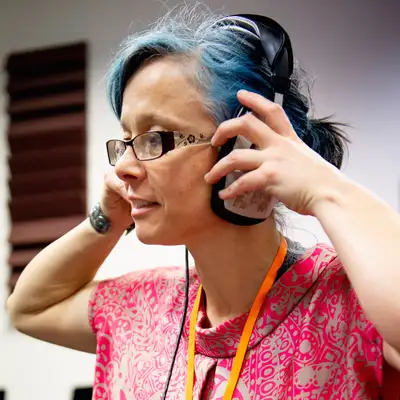
Hello and welcome to the Sound On Sound podcast about electronic music and all things synth. I'm Caro C and in this episode I'm talking to Hazel Mills. Hazel is a Bristol-born musician and songwriter who has toured the globe playing keys, her voice and electronics for artists including Florence and the Machine, Dave Rowntree from Blur, Goldfrapp, the Will Gregory Moog Ensemble. Her classical background, pop sensibilities and passion for 1960s American minimalism and analogue synths feed into her performance and her writing.
Alongside touring commitments, Hazel's currently on the road playing keys for Christine and the Queens. Hazel is working on new solo material and also works with Udo, a Bristol based electronic music instrument company. More on this shortly. So here's a taste of Hazel's own music to get her started. This extract is from the title track from her latest EP.
(Music excerpt)
Caro C - Hello Hazel, and welcome to the Sound on Sound podcast.
Hazel Mills - Hello.
CC - Brilliant, lovely to speak to you today and excited to unpack many of your musical activities. I'd like to start with your, what I'm going to call keyboardist role, working with the likes of Goldfrapp and Florence and the Machine. So what gear does that involve and also what is your role in that work?
HM - Yeah, so it can vary depending on whether it's more of a synth kind of based role or whether it's very heavily laptop led, which quite a few of those jobs I've done are actually kind of within a laptop, often using Mainstage as software and then I would use a MIDI controller going into that and my kind of, not my job, but something I'm quite keen to do is to make sure that that can be as expressive as possible, given that it’s, a lot of it is kind of samples coming out of a laptop. So just making sure that whatever controller I'm using has some way of manipulating the sound in real time so it is an expression and it is a performance and obviously when I'm using synths or actually in the case of Florence I also used a Hammond organ then obviously you can be quite immediately very expressive with things like, you know opening and closing the filter or whatever, modulation and with the organ things like playing around with different drawbars. So yeah, that's generally the overall gear setup.
CC - And so which MIDI controllers are you moving towards at the moment?
HM - So I've tended to use, for quite a few years now live, the Arturia, the 88 key KeyLab. And do you know what, I did quite a lot of searching before I got to that, it took me a while to find a full sized keyboard controller that also had all the other extra bits I wanted, so like pads and faders and knobs and things like that because a lot of what I do isn't just the playing, but it is the manipulating and the sample triggering as well. And it's got great feel as well, so that's the one I tended to use. I have also tried, very briefly tried, the Native Instruments one which I really liked the feel of, but I haven't actually ever used that live.
CC - So does the music tend to be pre composed for you and you're performing it, or is there an element where you're involved in the composition?
HM - Um, not, so for those jobs, not so much involved in the composition, but definitely have had a creative role in the arrangement, the live arrangement and the interpretation of those songs and pieces. I have had jobs in the past where I have been involved in composition, but not in those examples that we've talked about. But yeah, it can be quite an interesting process kind of dissecting the songs that already exist and figuring out what is going to be the most effective way of portraying this live and sort of picking out particular parts and so who's going to play them, what instrument are they going to go on and also how am I going to create or source those sounds for those particular parts. It's quite a big part of the process before we even get to the rehearsal stage.
CC - Yeah, so sometimes it's up to you to source those sounds.
HM - Yeah, it often is actually in most cases that and it would either be that you can kind of cleverly sample stems from the original record, or often I would just kind of replicate them using either software or if I've actually got the instrument that they may have used. So for example, with one of the Goldfrapp Felt Mountain tracks, cause last year we did the Felt Mountain anniversary tour. One of the parts was done on an MS 20 and we had access to an MS 20 so I thought okay, I'll just sample the instrument and turn that into a virtual instrument, so it's still the instrument itself, but obviously just having gone through the virtual motions and sampling it in a way that it's still manipulatable.
CC - Yeah, yeah. That surprises me. I suppose I'd imagine you'd get all the kind of stems, samples, one shots, loops, whatever it is, from the studio that's recorded it and then you would work with those but I guess it's kind of, that can be a bit more fixed, can't it, and harder to...
HM - Well that often is the case, and maybe the majority of the time that is the case that we do get hold of the stems from I don't know who, I don't know the route that it goes through, through the person who mixed it and then whoever it goes to after that, but yeah that is quite a common way to do it. So kind of looking at and like you say, having one shot samples so it's not just about turning it into musical instruments, but there might be some very specific, long kind of samples or atmospheric sounds that are quite integral to the music, so we would then take those exact samples from the stems and work them in some way, whether it's one shot or on playback, you know, or in a kind of more flexible way.
CC - Yeah, wow, and I guess there's a whole process as well, like you say, even before you get in the rehearsal room together, but then also once you do, there must be a whole collaborative, depending on the extent of it, kind of process where you're then devising the show based on the recording.
HM - Yeah, to an extent based on the recording, but I think there's a kind of unspoken understanding in the room, once you get into the room together, that this is something new and it's a different experience. The live one, we are bringing the recordings to life and it’s, you know, if you get too bogged down with trying to replicate the record then it can kind of lose its magic and if you allow something to take on its own new life, that can be really quite special. And so, you know, there is that point in the rehearsal where there's lots and lots of tweaking going on because maybe that, you know, something that sounded great on the record, it doesn't quite work in the same way in the live setting. So we might tweak either the part or the sound or whatever and that's all part of the process as well.
CC - Yeah, letting a new version, if you like, or a new life of it evolve.
HM - Yeah, exactly.
CC - Wonderful and have you been in any memorable, beautiful rehearsal situations or environments?
HM - Ooh, that's a good question.
CC - I’m imagining something like, whether it's Air Studios or I don't know, somewhere lovely.
HM - Well, no, because my first thought went to a rehearsal we had in a garage, so not at all. I'm just thinking about the atmosphere really and the vibe and in particular when I was rehearsing with Goldfrapp for the Felt Mountain tour, the first time it was supposed to happen, which was in, which was a Spring 2020, you know, leading up to that whole point, we had such a lovely time, there was such a connection in the room and it was really quite laid back and yeah, we were kind of hacking into the arrangements and doing the work that needed doing and trying different things out. But it was, it felt like a bunch of friends hanging out in a lovely space together, you know, being really creative and having a great time. So that's kind of what comes to mind when you say that nothing, nothing glamorous at all.
CC - Yeah. And is it tend to be like the whole team, if you like, including management and sort of consultants, if you like, or are you kind of left to your own creative and technical devices?
HM - I think it starts smaller and this tends to be how it seems to pan out for a lot of jobs where it sort of starts with fewer people and gradually builds up and when you're more and more ready to play a show, then they get label and management and things in at a later date to hear what's going on. So you get that early stage with, you know, and sometimes actually before we start rehearsals, I might also have a couple of sessions with the musical director. This happened quite a bit for the Florence tour that I did where Alex Lee and I kind of got together a few times, he was the musical director and he's actually based in Bristol as well, which is where I'm based and we would kind of look at some of those arrangements together. So it does sort of start small and get, more and more people gradually get involved and then you get to the production rehearsals if it's a quite a big tour and then you've got an enormous crew
CC - Yeah, because then in comes the lighting, the visuals, costumes, all that kind of thing.
HM - Yeah, exactly.
CC - Yeah Wonderful. Yeah, so you must have quite a selection of synths at hand and are they ever loaned to you, or is it down to you to find them, or does someone provide them for you, or for different shows?
HM - It's a combination, really. Yeah, it can be that I use a synth that might already kind of belong to the artist or the project and there's a very specific way that it's used, but I do have my own synths as well. I mean, with things like laptops and MIDI controllers, it tends to be that that's kind of provided, depending on the budget really. But with a lot of synths that I've used live, it tends to be my own actually, whether that's my Prophet 6, my Sequential Circuits Prophet 6, which is my beloved, or the Moog Sub 37 I've used quite a bit live and the Dave Smith Mopho x4 I've also used on a couple of occasions. I'm sure there's more, but yeah, it's kind of a combination really.
CC - So how did you come to this path? How did you become a synth nerd, passionista.
HM - Yeah, it's interesting because I came quite late into it and into synths, specifically, weirdly quite late, even though I was I think unconsciously from a young age, really loved the sounds of certain electronic sounds, whether it was synths or found sound used in a lot of the pop music that I really loved growing up and initially I was classically trained and played the piano from a young age and sang in choirs and things like that but then gradually started picking up a love of pop music and then when I was about 19 I think, I discovered music concrete for the first time and that completely changed my world, it was, it just blew me away. I kind of was learning about, you know, the Concrete movement in France with Pierre Schaefer and Henri, but also then off the back of that, the BBC Radiophonic Workshop and just kind of learning about how they would source sounds and manipulate them on tape and I just had to kind of have a go in my own way. I wasn't able to use tape, so I didn't ever do it with tape, but I just immediately started having a go using Ableton Live and just started going around and recording different sounds. I think I had a portable mini disc player that I'd borrowed that you could plug a little mic into and I could never get it to, I didn't really understand technology at that point, so I could never really get it to sound amazing and I think the gain staging was a little bit wonky on my end, so there was always a lot of hiss, but I would just kind of go round and record random sounds and then chuck them into Ableton and I did that a lot with my voice as well. I loved kind of just sampling vocal notes and turning them to into instruments. But in terms of synths, I think it probably wasn't until I really discovered or was more aware of people like John Carpenter and his film scores, because it was then that, although I'd already heard a lot of synth music, I realised that, ah okay, synths can have, they can sound broken and they can have imperfections, and I really liked that, I was really drawn to the kind of, the personality that was coming through, it didn't have to sound pristine and sterile and I don't know why I had that in my mind, that it was like that. I don't really know what was going on. But, you know, in hearing those slightly wonky synth sounds, quite primitive sounding, that's what drew me in and then I started, you know, didn't kind of look back from there really. And it's interesting because I really, growing up, I, I know that I loved those sounds and for some reason I never questioned where they came from and I think the only thing I can think of is that I just loved the otherworldliness of those sounds and the fact that I didn't know where they came from, I think I wanted to keep that mystery intact a bit, maybe. That's my justification for it anyway. And that there is something about that not kind of listening to a sound. I mean, I still do it now, I might listen to something I wrote a few years ago and hear a sound and have no idea where it came from, because I don't remember whether it's a sample or a synth or a combination of both. And not really wanting to know either, because it is what it is, you know.
CC - Yeah, I think that's what I love about it with electronic sound is that it does therefore become its own language. It touches those emotional notes or whatever it is that you're wanting, those tones and colours you're wanting to express whilst, without getting the left brain involved with, oh there's a violin, or there's a particular instrument.
HM - Yeah, yeah, exactly.
CC - Yes, the beauty of the technology at our fingertips these days.
HM - Yeah.
CC - So I wonder if Sound on Sound has helped you along your synth exploring way at all?
HM - Yeah, do you know what, it has because actually, when I was first learning about synthesis, although the synths that I were using had, I think that's quite an impact on that, on the learning process. One of them was the Roland SH-101, which is really great one to learn on. I did actually refer to, I don't know how old it is, but there's a series, a synth secrets series on Sound on Sound that kind of go through the process, the learnings of what synthesis is and helping to sort of design various specific sounds and I did find that really useful actually. And more recently I've been really enjoying this podcast, funnily enough. I've listened to a few episodes and I recently listened to the Richard Barbieri one. And I think you did one with Public Service Broadcasting, that was quite a good one.
CC - Yes, that's right.
HM - So yeah, more recently the podcast has been really great, but yeah, definitely Sound on Sound has been a really great reference for me over the years.
CC - I think for us non academic types it's really nice because you can dip into that level of learning without, you know, being part of a academic commitment, if you like, can't you?
HM - Yeah.
CC - Because so much of what we learn can be self taught or community taught, but it's nice to actually have something to refer to.
HM - Oh, definitely. I think that that suits me because I've not really been much of a self-taught person in the past, I kind of, I like structure in learning and it's, you know, that's just part of my personality and so something like that for me is, is really helpful.
CC - So I'm guessing also with the Gregory Moog Ensemble, you're also taking along your synths, including to Australia recently. So tell us a bit about that work.
HM - Yeah, we did take our synths all the way to Australia. Yeah, that's been great, I've been involved with the World Gregory Moog Ensemble for just over 10 years now, which is crazy to think, but I guess it's because we kind of, we don't gig very often. It's kind of, a very special, not very frequent thing that happens. So when it does it's very nice. But yeah, so we recently went to Australia, we were invited by the Australian Chamber Orchestra to join them for a tour. It was called A Clockwork Orange and Beyond and so the repertoire was various synth led film scores. So quite classic film scores like Clockwork Orange but also Blade Runner. Oh, what else did we have? Some more modern ones, like actually Interstellar was in there as well but we also did a couple of BBC Radiophonic Workshop numbers as well. We did the Doctor Who theme and we also did one of my favourites, which is Blue Veils and Golden Sands.
CC - Wow, lush. So how did you recreate Blue Veils and Golden Sands, because I know that Delia Derbyshire talked about how she used her favourite tatty green lampshade to get the kind of heat haze sound, but then beyond that she described manipulating her voice into a castrated oboe. So how did you recreate that?
HM - Yeah, so it was an interesting one for me because I love to make sounds like that, but our palette was synthesisers and so we kind of went through the process of recreating the same atmosphere and trying to get the same feeling with analogue synths and so it was arranged by one of our ensemble members, Simon Haram, and he arranged it, gave us the parts, and we basically worked together in the room on the sounds and that, that tends to happen quite a lot, actually, with the Moog ensemble, it’s not just about, okay, we've got parts to learn, but we kind of really spend time in the room getting the sounds right, even if it's a matter of we each take it in turns and we tweak and we suggest things to each other and then we also work on dynamics quite a lot as well. But, so for that one, I had the part of the kind of, I'm guessing it's that vocal-y sample that you mentioned, cause it does sound, it does have quite a vocal quality, that kind of insistent, semi-tone thing going on. And I used my Prophet 6 for it and I kind of, the way that I got that quality was, turning the resonance up always helps if you want a kind of vocal quality, but as I swirled the filter up and down, I would flick the pitch wheel to give almost that kind of grace note quality that you might get with a vocal and it was and put loads of delay on it as well. And it was very haunting. But yeah, so we each had our kind of role to play in trying to perhaps not just recreating the sound, recreating it sonically, but recreating the feeling that it gave as well.
CC - The mood, yeah, wonderful. There must be a lot of, it's almost like detective work, isn't it, in what you do? And do you enjoy that whole kind of trying to unpick, deconstruct, how is this sound made and how could I rebuild it with your own mark, if you like?
HM - I do. It's not just playing the instrument, but part of it is exploring the sound for me, it's such a big part of writing, performing. It's all, you're so connected with the sound and if you can be at that point where you can always, in some way, manipulate it, then you're in the moment and you're kind of doing it in real time and that to me is quite important.
CC - And how was it playing with an orchestra at the same time, a chamber orchestra?
HM - Oh, it was amazing. It was actually quite an unusual experience because it wasn't like your standard orchestra, they have quite a different vibe. There's something slightly, I hate to use this term, but I think it's the only way that, slightly rock and roll about them. It's the only way that I can describe that, you know, they all stand up, none of them sit down, except for the cellists and the double bass players, because they have to and the person who's the director doesn't stand at the front to conduct, he's actually one of the violin players and he's within, so everyone's kind of within it together and there was just something really lovely about that experience of us all kind of being, being in it together. Cause we've played with orchestras before and we did back in, I think it was 21, we played with the National Orchestra of Wales, the BBC National Orchestra of Wales and it was a very different experience. We had, it was a much more kind of, as you would expect an enormous orchestra with a conductor at the beginning. Yeah and that was pretty epic, but the two very different experiences, both epic in their own way. But yeah, this was really, really fun.
CC - Brilliant. Let's move on to your solo EP, which you released earlier this year. Tell us about that and how it, you know, how it was produced, what gear you love to use, if there's any kind of themes there at all.
HM - So this was kind of like a bit of a symbol for me to let go of a few things, and let some music out into the world and move on to the next thing. So some of these songs have been sitting with me for a few years and two of them are much more recent and maybe more representative of me actually moving forward. Yeah, so there's quite a varied approach going on in terms of how I came to realise each of the songs. So one of them was just me sitting at a synth, actually a piano initially and coming up with some ideas and it kind of grew from there and actually I didn't officially demo it at all for quite a long time, so I was writing and developing the song without recording it in any way, maybe I did a rough recording on my phone, but I didn't, I deliberately didn't demo it until it felt a bit more accomplished and that was the title track, which is The Embrace and for quite a long time it was just me sitting at my Prophet Six playing the whole thing, you know, in all the counter melodies and everything, that was all just one part. And then all the kind of production elements were built up from there, so that would be, I used a bit of Ableton kind of drum rack situation, but also my MPC live I would use for a lot of the sort of found sound stuff, whether it was textural kind of sounds often rhythmic and beats, which I made with a lot of kind of organic materials like wood and metal and water and things like that and that's actually a theme in a way that runs through the EP that kind of connects all the songs together and that's my connection to the natural cycles of the world and our relationship, or the relationship between technology and nature, that's something that I'm kind of thinking about a lot at the moment. So in, you'll hear in the lyrics that there's a lot of reference to nature and elements and things as well and so that sort of is kind of brought in sonically through the sounds that I use but also actually with some of the other songs, like the first track which is called Enclosure, that actually did start in the box and I, that was kind of an experiment, it wasn't me sitting down with an instrument and writing a song, it was experimenting with a sound and some probability and seeing where I went from there. So I think it was like a plucked hair band that I started with the sound of and that became the main sort of bass sound for the song that runs throughout most of it and I threw that into Ableton and used the Max for Live Probability plug-in to kind of vary it and just see what results I could get out of it, which was quite fun to do.
CC - And there's lots of lush kind of, dare I say, 80s kind of layered vocals going on there as well. What kind of influences are going on there?
HM - Yeah, I think the, I just love, I do love layering vocals and I love harmonies and a lot of that does interestingly come from a love of kind of 80s electro pop and things, but also I guess from singing in choirs at a young age. But I do really love things like Neil Young and Crosby, Stills and Nash and the kind of four part harmony that they use in their music, which although is stylistically completely unrelated to what I do, arguably, I do love what they do, the way that they layer vocals and have them interacting and I've always been into that. So yeah, that's definitely always going to have some kind of part in what I do.
CC - And actually you use your voice a lot in the session work as well, don't you, in the live session work.
HM - I do, yeah. I think it feels good when I can combine both of them. I do really enjoy it when I've got a job where I'm both singing and playing, it feels complete in a way. I mean, I don't mind if I'm doing one or the other, that's fine but there's something really satisfying about doing both in the live setting, but yeah just in, generally in the kind of creative world to have that much wider a palette. So it's not just, I'm not just playing instruments, but I'm using my voice as an instrument as well in, maybe in a less conventional way as well as a more conventional way in that I like to sing pop songs too.
CC - And do you have a kind of favourite signal chain that you like to put on your voice or do you like it to be quite raw if you like?
HM - Well that's a good question. So I don't really, I haven't really nerded out a lot in terms of hardware for vocal chains. I'm just starting to look into that now actually. But I tend to use Universal Audio. So I've got an Apollo that I use and they're kind of models of various vocal preamps, I think are really good and to be honest, like, because I'm not an engineer, it’s not something that I do in isolation as a job, it sort of comes with what I do. I don't like to think about that too much when I'm kind of in the creative headspace. So if I can use something that means I can just trust that it's going to sound really good and I don't have to think about it, then that's kind of the route that I would take and that, there are a lot of options there with the UAD stuff, which is good.
CC - Yeah, and you must enjoy the kind of working together to create something that is bigger than the sum of its parts.
HM - Yeah, that's it really, isn't it? Do you know what, that for me just sums up music in general.
CC - Especially the way that you work, I would say, you know, in terms of all that intimate collaboration, both with instruments on the fly or as quickly or slowly that you get to do that, but also with people.
HM - Yeah, and I think when you kind of, when you succumb to, you know, let go and allow other people to bring in their ideas you very quickly realise that they're going to bring something into the mix that you're not, because they're somebody else and they've experienced the world differently and they see things differently and there's something so magical about that, that you just can't get on your own. If you stay in a little box and try and do everything yourself, I mean, it's very commendable, it's great, it’s great if you can do that, but also I think opening up to allowing different interactions and relationships is where you start to get quite unique experiences and sounds and just magic, basically.
CC - Lovely. Finally, I'd like to ask you about your work with UDO. I've seen some of your kind of tutorial videos that you're doing. What's going on there?
HM - Yeah so I've just been collaborating with them to, it's been a real pleasure actually, cause I get to play with their instruments and make a video about it, which I'm actually really enjoying doing because it's just basically getting to explore an instrument and then sharing that with the world, which has been really, really fun to do and actually also a really good excuse to delve a little bit further into the digital world than I have before because I have tended to gravitate more towards analogue and the kind of, the imperfections that they can give, like I mentioned before and it took me a little while to understand what the digital world had to offer and then I started getting into the Super 6 which is, UDO's kind of most well known instrument. Yeah, and it's sort of opened up another world for me, which is really fun, yeah I’m really enjoying that and I'm actually about to, so they've got a new instrument called the Super Gemini, which is basically it came about, so George, the guy who designs them, the man of UDO, he was having a bit of a jam with his Super 6 and the Super 6 desktop version, which is the Super 6 without the keyboard essentially and having fun doing all these different arrangements with two different keyboards and he just thought, I would like to be able to do all this with one synth, please. So he made it happen and he designed a synth that was basically there so that you can be really expressive and have a live experience and it's got a ribbon controller on it as well, it's got all kinds of possibilities in terms of layering, because it's multi-timbral, ayering and splitting different sounds and the intricacies that you can get out of those has been really fun to explore and the instrument isn't out yet but I do actually have a, I'm lucky enough to have a beta version of it currently just to explore while they're still working on it and I'm working on a video for that very soon.
CC - So is this hardware, software and is it all synths?
HM - It's hardware, it's a digital analogue hybrid in the same way that the Super 6 is, it’s just a more epic version of that, basically. Yeah, it's a hardware synth.
CC - Fantastic. Okay, so where next for Hazel Mills? What's coming up? Any exciting projects you'd like to share?
HM - Yeah, so I'm currently working on an album with artist Kate Brooks, who's released quite a lot of material on labels like Ghostbox and Claypipe. This is a project that came about during one of the lockdowns virtually, we kind of found each other online and it sparked this amazing relationship and we've been writing remotely ever since and it's been a really amazing, quite rewarding experience, so we've got, yeah, we've got something going on there, which hopefully will surface very soon. Beyond that, I'm working on a solo album as well and this alongside all the usual kind of live work. I've got a couple of live jobs coming up this summer and beyond.
CC - Wonderful. Cool. Well, all the best and may your collaborative adventures in music continue.
HM - Thank-you so much, thank-you for having me.
CC - Thank-you for listening and be sure to check out the show notes for further information as well as links and details of other episodes in the Electronic Music series. And just before you go, let me point you to SoundOnSound.com/podcasts so you can check out what's on our other channels. This has been a Caro C production for Sound On Sound.