Subscribe
Share
Share
Embed
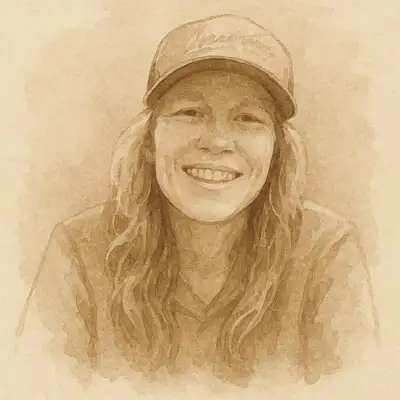
Gritty Bits is the companion show to Travel Grit — more from the world of legendary travelers who move by hoof, sail, and boot. Catch Q&A sessions with long riders, sailors, and adventurers. Check in on past guests with Where Are They Now. And pick up hard-won practical knowledge in Three Things You Need to Know — straight from the people who've lived it. For more stories of long riders, sailors, ramblers, adventurers, and dreamers finding their way, visit TravelGrit.com.
Autogenerated transcript. May contain errors. Refer to the audio or video for accuracy.
Gin Szagola — Where Are They Now A Gritty Bits episode | Companion to Travel Grit
Want the full story of Gin and Fable's journey across Australia? Listen to the complete Travel Grit podcast episode at: https://travelgrit.com/gin-szagola-riding-a-horse-across-australia-travel-grit-podcast/
Gin Szagola (00:05) They take men up in helicopters and machine gun them from the sky. So from his herd, about 8,000 have been killed in the last three years. He's one of a thousand that made it out. But out of those thousand, an untold number would have gone straight to the doggery — or they also call it the knackery here — which is the meat man.
Fable and I are in Western Australia. We have about one month left in our journey. We're nearly to the finish line.
Bernie Harberts (00:36) Wow. Where were you today? Are you going to head out today or taking a day off?
Gin Szagola (00:41) We're in the small town of Ravensthorpe. We'll leave today. We have four days to our next town. We will be traveling today. It'll be a nice long 20-mile day, about eight hours or so. That's about our average.
Bernie Harberts (00:59) So Fable — there was something you wrote about him that I just loved. You said he's a horse that enjoys grabbing and throwing balls. That's a great description. Introduce him.
Gin Szagola (01:14) This is my long riding horse, Fable. He's a six-year-old Brumby gelding out of the Snowy Mountains, which is on the lower east coast of Australia — featured in the Man from Snowy River movie. They actually have a crisis right now with the Brumbies because they're overpopulated and considered invasive, so they've been culling them.
Fable's a really lucky horse to have made it out. He got to the Victorian Brumby Association, which is a rescue for Brumbies — one of the best and one of the only ones in the country. From there I adopted him and trained him from scratch over three months, from late February to late May. Then we began our journey.
He's six years old, 14.2 hands, and weighs about 900 pounds. When I first met him, he completely lacked confidence. He was a bit like the Cowardly Lion — just a complete spaz. But he's really come around, gained confidence, really found himself. I've been very proud of him. He's grown both in his desensitization and physically too — he's really muscled up. When I met him, he was scrawny and awkward. He didn't know where to put his limbs and you could see his ribs a little bit. He's come a long way.
Bernie Harberts (02:44) Describe the first day on the road. Are you walking? Are you riding? Are you freaking out? Is he freaking out? What's it like?
Gin Szagola (02:53) I knew at the beginning of our adventure that either in the first week everything was going to go tits up and be a complete disaster, or everything was going to go well and I'd know we could really do this. It wasn't guaranteed to start. Everyone around me was kind of holding their breath. Some people were distancing themselves from me a little because it seemed like a disaster in the making — which I understand.
I always want to challenge myself with something I feel capable of but that still isn't guaranteed. And I just love wild horses. After long riding, training wild horses and bonding with them from the ground up is my discipline.
Given that Fable only had a few rides under saddle, I started out leading him — much like I did with my US long ride. I led him 100% the first day and then slowly decreased the percentage. I was actually riding him much sooner than I thought. I told myself I wouldn't ride him for the entire first week, but I ended up riding him on just day three.
Bernie Harberts (04:16) Wow.
Gin Szagola (04:17) He came around quickly, though I wasn't sure about whether our trip could be a success until about two or three weeks in. It took a little longer than I thought. But then I said, okay, we've got a good shot here.
Bernie Harberts (04:30) Explain to people who might not be familiar with long riding — what is it?
Gin Szagola (04:36) Long riding is traveling long distance on horseback — generally a thousand miles or more, continuously.
Bernie Harberts (04:46) How many rides did you have on Fable before you took off?
Gin Szagola (04:53) Ten to twenty.
Bernie Harberts (04:57) That's not a lot before taking off across southern Australia.
Gin Szagola (04:58) Yeah. Mostly in the arena, only a few outside.
Bernie Harberts (05:05) I'm fascinated by the Nullarbor Desert. I don't know of anyone who's ridden across it. How did you care for Fable out there? What did you do for water?
Gin Szagola (05:15) The desert crossing was two months long and by far our biggest obstacle. When I was planning the ride I almost didn't think it would be possible. The Nullarbor felt so insurmountable and everyone was telling me there's nothing out there, it's just a wasteland.
I was really worried because there's a single highway that cuts across the Nullarbor and it's full of road trains — like semi trucks but with two or three trailers, double or triple the length of a regular US semi. I was worried about dealing with no food or water on that highway.
Bernie Harberts (05:58) Mm-hmm.
Gin Szagola (06:09) But the Nullarbor ended up being completely different than I expected. We got to it at just the right time of year. It was more of an open grassland than an arid desert. There was a fair bit of feed along the way and a dirt gravel path that runs alongside the highway the entire time, so we had our own designated trail away from traffic.
Bernie Harberts (06:28) Really? Wow.
Gin Szagola (06:37) I had supply caches put out, which was the first time I'd ever done that. The Nullarbor is split into two sections — South Australia and Western Australia — about a month on each side.
Bernie Harberts (06:54) Sorry to interrupt — what distance are we talking about?
Gin Szagola (06:57) About 400 miles on each side.
Bernie Harberts (07:00) 800 miles of desert.
Gin Szagola (07:01) Yes. And you're not allowed to bring hay from one side to the other, so I had supply drops with hay and water coordinated separately on either side.
There are seven or eight roadhouses along the Nullarbor — combination gas stations, motels, and campgrounds. I had big supply drops of hay and water left at designated roadhouses, and then from each roadhouse I would hire people on the fly — travelers. They have something called gray nomads here, which is their term for retired RVers. I'd find people on the fly to take my supply caches ahead and drop them between roadhouses a day's length apart — about 20 miles. I'd mark rest areas on my map for them to leave the supplies, and ask them to send me a photo of where they put it so it was easier to find. Then I just had to pray they weren't ravaged by emus or camels.
Bernie Harberts (08:18) How many were?
Gin Szagola (08:23) None. And I believe part of the reason is that the Nullarbor had a really rich year for water, so a lot of the camels and emus and wild horses and kangaroos were further inland where there was good feed and water away from the highway.
Bernie Harberts (08:45) And you did the same with water?
Gin Szagola (08:49) I carried collapsible water bladders — 20 liters each, 12 in total. I'd put two out for every drop, so 40 liters per day. After using them I could collapse them down, put them in my saddlebags, carry them to the next roadhouse, fill them up again, and have them dropped back out. To my knowledge I'm the first person, at least in modern history, to cross the Nullarbor via supply caches rather than a designated support vehicle. It was nerve-wracking but went so much better than expected. Easily one of my favorite parts of the journey.
Bernie Harberts (09:38) Congratulations on being the first to cross the Nullarbor with supply caches and without a support or chase team. That must be a whole different mindset.
Gin Szagola (09:59) Exactly. You don't have as much certainty as when you have a support vehicle. With a support vehicle you have water and hay at a moment's notice, potentially a bed every night, warm meals, and if there's an emergency you can be picked up on the fly.
Bernie Harberts (10:24) What were the nights like camping in the Nullarbor away from a roadhouse?
Gin Szagola (10:36) The temperatures were perfect when we crossed — low to mid 70s during the day, 50s at night generally. We had a few days in the 90s but were generally able to take those off. I was really worried about safety as a single woman, but I honestly never felt unsafe.
Since I followed near the highway the whole time, there was always an RVer or caravan nearby. We saw a few dingoes, some snakes — two or three close calls. I didn't realize how much of a personal bubble the snakes have out here. We'd get a little too close and they'd shoot off like lightning. They are so fast. Out here they have brown snakes, which are the second most venomous in the world.
Bernie Harberts (11:38) How big is the personal bubble on a brown snake?
Gin Szagola (11:42) We'd get maybe 20 feet away and that's when they'd zip off. The problem is that when they run off, they want to go back to their burrow — and if you're standing in that direction, they want to go around you or through you.
Bernie Harberts (12:02) How many snakes did you see in total?
Gin Szagola (12:05) Four or five in total.
Bernie Harberts (12:09) What would you tell a woman wanting to travel alone through Australia?
Gin Szagola (12:20) Do it. Do it in a heartbeat. I have almost never felt unsafe out here, especially when it comes to people. I felt safer camping on the side of the road in Australia than I do in America, honestly. It's an incredibly safe country.
They have something called the Royal Flying Doctors here — a nonprofit. If you got bitten by a snake on the Nullarbor, it would only take them one to two hours to reach you by plane. And it's all free. You don't have to cover the cost of the emergency rescue, which is amazing.
It's just a wonderful country with the most amazing people. The landscape is so diverse — that's one thing that's really shocked me, just how much it changes day to day.
Bernie Harberts (14:01) What's the biggest thing you were worried about before the trip that didn't happen?
Gin Szagola (14:09) I always worry about my safety, especially when it comes to men. I've had no bad encounters there. The Nullarbor was another big one — I wasn't sure how we were going to run it or whether it was even possible. Now I look back and laugh, because not only was it possible but it was easily my favorite section and so much easier than I thought.
Beyond that, how Fable was going to do was such a big unknown. When I first met him I actually immediately wrote him off. I thought — he's too small, too scrawny, too spooky. I underestimated him completely. We've done a full 180. He believed in himself when no one else did, not even me. Sometimes I feel guilty looking back, thinking — if he'd realized I didn't believe in him back then, how sad would that make him feel?
Bernie Harberts (15:51) It sounds like you've come to a beautiful resolution. How far have you come and how far do you have to go?
Gin Szagola (16:16) We've done about 2,400 miles and have a little over 300 left. It's a lot shorter to cross Australia than the US — the US adds easily a thousand miles. When I crossed the US with Finlay that was about 3,700 miles.
Bernie Harberts (16:38) What's the biggest change in your and Fable's relationship between when you started and today?
Gin Szagola (16:46) It's a lot more easygoing now. We've fallen into the rhythm of things. Though I have to be careful that our relationship doesn't dissolve into a brother-sister sort of dynamic where I let boundaries slide. When you go from being coworkers with someone to roommates, things get blurry. You learn things about a person you never knew.
Bernie Harberts (17:18) Like what? Can you give an example?
Gin Szagola (17:23) With Fable, he'll start to push into my space when he shouldn't. Any fault he has is really just a reflection of my training. It's always good for me to self-reflect and think — I caused this, how can I fix it? That helps me not get angry at him. Living on the road with a horse is a lot like going from coworker to roommate, and you have to be careful that boundaries don't slide too much.
Bernie Harberts (18:22) But you still share peanut butter sandwiches occasionally. I love that video.
Gin Szagola (18:25) Exactly. If I ever have food I don't want, I can just give it to him.
Bernie Harberts (18:38) Gin, I know you've got to hit the road. What does today's ride look like?
Gin Szagola (18:50) We'll ride 20 miles today along what's called the South Coast Highway. I'm a bit nervous because it's going to be busy with road trains and I'm not sure what the shoulder is going to look like. I'll check Google satellite mode in advance to see if there are any neighboring paths to cut onto through farmers' fields to avoid the highway. We have a host tonight with some cattle yards where we'll stay.
Bernie Harberts (19:23) Thank you so much. I wish you guys a fantastic ride. I'd love to catch up again as you get closer to the finish.
Gin Szagola (19:46) Thank you, Bernie. It's always wonderful to catch up. It's becoming increasingly bittersweet as we near the end — realizing that once it's done, it's done, and I'll never be riding across Australia with Fable again. But it reminds me to cherish each moment.
Bernie Harberts (20:15) What's the saddest thing about ending a voyage like this?
Gin Szagola (20:18) Having to give up Fable. My plan is once we finish, I'll take a few months off in Western Australia to save up money — but more so just to have more time with him so I don't feel rushed into rehoming him.
Bernie Harberts (20:48) For people who want to offer moral or financial support, where can they find you?
Gin Szagola (20:55) My Facebook page is called Gin and Fable — Gin is spelled like gin and tonic, Fable is F-A-B-L-E. My website is ginandfable.com. I also have PayPal under my email: ginandfaith@gmail.com if anyone wanted to chip in for the journey.
Bernie Harberts (21:19) Gin, thank you so much. This has been wonderful. Was there anything else you'd like to leave us with before you hit the road?
Gin Szagola (21:31) I'd emphasize how much I love long riding and that it's the only discipline that really lets you become part of your horse's herd — living together 24/7. That's really why I do it. Just for the love of a horse.
For more stories of long riders, sailors, ramblers, adventurers, and dreamers finding their way, visit TravelGrit.com.