Subscribe
Share
Share
Embed

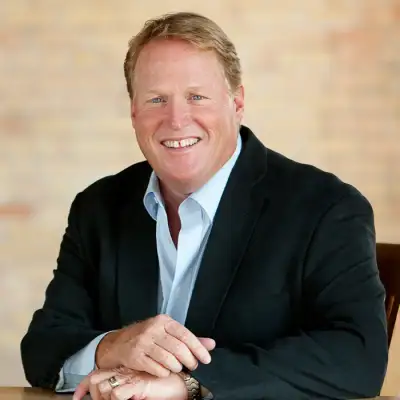

Former U.S. Senator Heidi Heitkamp and her brother, KFGO radio talk show host Joel Heitkamp, engage in animated discussions with newsmakers, elected leaders, and policymakers who are creating new opportunities for rural Americans and finding practical solutions to their challenges. Punctuated with entertaining conversations and a healthy dose of sibling rivalry, The Hot Dish, from the One Country Project, is informative, enlightening, and downright fun.
Heidi Heitkamp (00:05)
welcome back to the hot dish comfort food for rural America. I'm Heidi Heitkamp.
Joel (00:09)
And I'm Joel Heitkamp. ⁓ It might be April Fool's Day, but you know what? Today's guest is no joke. In fact, let me give you the long introduction because he's earned it. ⁓ Justin Wolfers is a professor of public policy and economics at the University of Michigan Recently named by the IMF as one of the 25 economists under 45.
shaping the way we think about our global economy. And he also contributes to the New York Times as though he has any time to do that. ⁓ Justin, good to have you on the hot dish. Thanks for joining us, man.
Justin Wolfers (00:42)
Mind a pleasure.
Heidi Heitkamp (00:43)
And we just have to say because we're kitted into the frozen four, your university and Joel and my university, the University of North Dakota may in fact be in the championship. They don't play each other in the semis, but you know, in that case, we wish the worst for your university.
Justin Wolfers (00:55)
Wow.
know, Heidi, we
have to have a side bet. What's it going to be?
Heidi Heitkamp (01:05)
don't know. ⁓ Let's figure that out at the end of the show. Let's figure out what.
Joel (01:09)
Wait, wait, wait. Justin,
are you a father? Okay, let's bet our first born. I never really liked mine.
Justin Wolfers (01:13)
I am a dad, yep.
Sure,
Mine's expensive. I like mine, but it's very expensive.
Heidi Heitkamp (01:23)
So let's start the conversation. Obviously, you know, we see the president's numbers. I mean, I don't know if the president is delusional and thinks that people still love him, but the worst numbers for him, for those of us who follow politics, is the numbers that we're seeing coming with the economy. The index of consumer sentiment is, you know, what your university produces is way down. I mean, like,
I haven't seen those numbers that bad in a long, long time. So my question to you, Justin, is a question I think our listeners would ask, which is, can he reverse this trend between now and the midterms?
Justin Wolfers (02:08)
Yeah, so let's just start with the facts because you got them exactly right there, Heidi. On the measure of consumer sentiment, actually, it's as low as it's ever been. And we've been measuring it through the entire post-war period. And by the way, that's World War II, not one of the more recent wars. Some months it's a little bit above, some months it's a little bit below. But basically, the punters are as miserable as they've ever been. The other set of numbers that I watch quite closely are approval of how the president is handling the economy.
He's fundamentally lost the debate there. So there may be people who approve of the president, although those numbers are also down. But I think the idea that he's a sound economic steward has been left behind pretty substantially. know, the way you pose the question, could he turn it around? Well, anything could happen. ⁓ But I think, you know, what's likely to happen, ⁓ why are the president's ratings on this in the toilet? It's because he's fundamentally
He's had no interest in engaging the American people and winning the battle of ideas. This is crazy. I'm an economist. I'm talking to real world politicians here, but let me explain how politics works. See, that's the mansplaining difference. Heidi, you're going to correct me and you're going to emphasize the parts of this that are important. But as I understand it, any schmuck can turn up to Congress and win a vote. Lasting change is about changing hearts and minds. ⁓
Heidi Heitkamp (03:19)
Yeah.
Justin Wolfers (03:35)
And actually, once you've changed hearts and minds, then you can get something through Congress. And once it's through Congress, it's very hard to undo it. The president hasn't tried to change hearts and minds. On an issue like tariffs, tariffs are very easy for politicians. You pretend other people are paying them. You demonize other countries. The reasons that tariffs are a bad idea are just subtle enough and complicated enough they don't make a neat sound bite.
And that's why in most countries, including the United States, at most times they're very popular, even as economists say they're poisonous. The president's losing that debate two to one. Most Americans think they're a wreck. Take the war in Iran. The bloke gave a State of the Union address just a couple of days before dropping bombs at Iran. Normally what you would do, and we remember George W. Bush leading up to the war in Iraq, making the case, presenting the evidence, describing what it is he wanted to achieve in the mission.
The president barely mentioned Iran. think it was like three minutes. He used the word me more often than he used the word Iran. And he didn't make up for that in the few days before he bombed and he hasn't made up for it after. He's talked about victory, but never defined what it is. He's talked about the mission, but never told us what we're trying to do. He left Americans in the Middle East with no way out as if he hadn't planned. He appears not to be aware that there's a Strait of Hormuz that is in fact crooked.
And that crookedness makes it particularly hard to navigate. And again, he's failed to win the battle of ideas because he's failed to engage. ⁓ We're just a couple of days after the No King's protest and time after time, I am struck by the brilliance of the people behind that movement and identifying the fundamental problem here, which is the president would like to be a king. A king doesn't explain, a king doesn't win over hearts and minds, and a king doesn't ask Congress for permission.
Heidi Heitkamp (05:03)
Yeah.
Justin Wolfers (05:32)
And it turns out this was a country whose founding story, and again, this is an Australian explaining to Americans. So you guys helped me out on this. I believe the founding story of this country has got something to do with not liking kings and arbitrary taxation of imports. Is that right?
Joel (05:48)
Yeah
Heidi Heitkamp (05:48)
I think so.
Justin Wolfers (05:50)
I'm an Oscar Hamilton, that's all I know.
Joel (05:52)
You did pretty well in school, Justin, I could tell.
Heidi Heitkamp (05:56)
Yeah.
Justin Wolfers (05:57)
We didn't do American history, mate. So,
⁓ I'm just learning it when my kids come home with it. Do you know, by the way, my daughter, super interesting fact, you guys might be really interested in this. She's doing, ⁓ gov she's doing AP gov. She's in the 11th grade. Did you know the U S has a Congress.
Heidi Heitkamp (06:16)
Article 1, but you know it hasn't been invoked for so long. We don't believe anymore in Article 1.
Joel (06:23)
But we actually do know they have a Congress, because they're in our backyards now rather than in DC. They don't think they're going to hang out there. they're on recess.
Justin Wolfers (06:23)
You know, I told them they did.
Heidi Heitkamp (06:29)
Hehehehehe ⁓
Justin Wolfers (06:34)
I mean, it's said in the book that we have a congress. I don't know. I don't know who to believe anymore.
Heidi Heitkamp (06:35)
So, ⁓
Okay, so one of the great worries, and we can get into kind of economic factors, but one of the great worries now is a prolonged war, and it is a war, in Iran will lead to an American recession. Do you have an opinion about that, Justin?
Justin Wolfers (06:58)
got opinions about everything. You don't want my opinion, you want analysis. So I'm to spare you my opinions. We're going to we're going to analyze this. Look, here's a basic fact I want to remind people of the following is a metaphor, because it applies to every war that America has ever been involved with. Leading up to the Iraq war, and in one of the early days, Donald Rumsfeld, who's as sharp of an analyst as anyone on earth said,
Heidi Heitkamp (06:59)
Hahaha! ⁓
Yeah.
Justin Wolfers (07:27)
We might be there six days. We could be there six weeks, but I doubt six months.
We were there longer than six years. What do you learn from that story? You learn that when it comes to projecting the duration or intensity of a war, even a very sharp analyst can be wrong by a factor of 365. So what that means is when Marco Rubio looks you in the eye and says it could be four weeks. And if you think that Marco Rubio is prone to the same sorts of mistakes that Donald Rumsfeld is, you should say, well, what's four times 365?
Heidi Heitkamp (07:36)
down.
Justin Wolfers (08:04)
Sorry, four weeks times 365, 28 years if he made the same error that Rumsfeld made. And there's no reason to think he's less prone to make that. And if you go back through the history of almost every American entanglement, you'll discover the same mistake being made over and over and again. The boys were back by Thanksgiving. The boys will be back by Christmas. Even, you you see this in foreign wars as well. Putin thought he'd be in and out of Ukraine in just a few days.
The nature of war is you only go into it when you're under the mistaken illusion that you're stronger than you actually are. If you understood that wars are complicated, wars are tough, wars kill people, wars are costly, you might back off, have a bit of a think and see if you can negotiate your way out of it. War almost always is the result of overconfidence about your team strength versus the other team strength. And so we've seen this happen over and over again. So let me, you asked about the economy, Heidi.
I want to go back and actually say, the thing that I was just suggesting is this could be worse than we think and a lot worse. Not that it will, could be. That's a statement about the war. So before we go to the economy, let's pause on just the very human implications of that. Right? I'm an economist. I'm here to talk to you about GDP, but like, we don't like it when people die. We don't like it when cities are destroyed. We don't like it when infrastructure is destroyed. We don't like it when families live with
fear. We don't like the grief that follows. And it has really bad economic implications. And so you asked, you posed the question specifically about will this tip us into a recession? think there's a media obsession with recessions. Let me just say it a different way. If the question was a milder, but no less interesting question of will this make the economy weaker?
Will we be less prosperous? Will our children see fewer opportunities? Now I don't have to assign probabilities. The answer is yes, absolutely.
Joel (10:04)
Well, that's a little bit scary. But let me ask you it in relation to, you know, my neck of the woods and that rural perspective, which we try to do here on the hot dish. ⁓ A lot of our guys are going to take to the field ⁓ here in the upper Midwest. know, the spring is here. so diesel fuel matters. Fertilizer matters. ⁓ Input costs matter in regards to the tariffs going back to them and equipment and everything that goes with it. And so
Justin, my question of you is this, with all the added input costs that are going into it, when does that change for these farmers and ranchers? When does it get to a point where there's, I'm not talking about a dollar amount as much as what I'm talking about stability. So they know what they're up against when they sell their commodities.
Justin Wolfers (10:57)
I mean, it could be a long time. ⁓ So Joel, I appreciate you bringing it to the rural economy. That means that we can speak directly to your audience, but I want your audience to understand this is a case where it's not the rural economy versus elsewhere. That the rural economy depends a lot on oil prices because of diesel, because of nitrogen and other fertilizers and so on. But the manufacturing economy depends a lot on it as well.
or people in the suburbs need gas to drive to work. This is very much a shared national problem. The flavor of it varies according to urban versus rural. What do we know? We know that we're currently at war. know that oil's futures markets say that oil prices, which are the thing that drives diesel and is driving the fertilizer, are expected to be higher than they otherwise would for a couple of years.
⁓ the president could, there was rumored that Wall Street Journal reported yesterday that the president was talking about declaring victory and going home. Having affected regime change from Ayatollah Khomeini to Ali Ayatollah Khomeini, having gotten none of the nuclear material and having changed the Straits of Amoz from being open to closed. And he would just declare victory and go home. Now he could do that, but if Iran is the toll keeper on the gates of Amoz.
Heidi Heitkamp (11:55)
Thank
you
Justin Wolfers (12:25)
gates, straights, we call it gates that won't make more sense. It's going to be the straights will become gates. And that won't be great. The oil will be late. That's our fate, mate.
Heidi Heitkamp (12:27)
Ha ha ha.
Justin Wolfers (12:39)
Sorry, then that's going to a burden to oil prices. And so many of those challenges that farmers are facing right now would persist. oil went from $60 a barrel to $100 a barrel. According to futures markets, maybe they'll come down over time to $70 or $75, but that's still a lot higher than where we were. So the pain will be with us for a bit. And the uncertainty.
That's even harder, right? Because even if the president declare success goes home, he still eventually wants the Straits for Movers opened, which just means he's waiting for another day to go back. And we're all on edge a little bit.
Heidi Heitkamp (13:24)
So if we look at the equities market and obviously we've gone from the Dow is at 50,000 to something substantially less than that, I would argue that in some ways the war was an excuse for a correction, that the market was overheated. You can take me on on that, but is this a real war effect or is this more of a
kind of long-term correction that we can expect that now the increase in the equities market is going to be much more gradual.
Justin Wolfers (14:02)
Yeah, look, I think correction is just a fancy word for the stock price fell. ⁓ And so calling it a correction is both true and a tautology. ⁓ So I'm making, you know, I'm having fun with you here, Heidi, why not? But I think it's a true war effect. I think so far, by the way, if I'm right,
Heidi Heitkamp (14:12)
Okay.
Hahaha!
Okay.
Justin Wolfers (14:29)
That has really remarkable implications. So are we allowed to do arithmetic on the show? Can I test Joel and have him do it for me or do want me to do it over my head?
Heidi Heitkamp (14:33)
Absolutely.
Joel (14:37)
You go for it. Let's
Heidi Heitkamp (14:37)
Yep, yep,
Joel (14:38)
do it. Yeah. Thanks for that, Hyde.
Heidi Heitkamp (14:38)
yeah, he's actually pretty good with numbers. Grammar, not so much, but numbers good.
Justin Wolfers (14:40)
Great. So actually
really want to do this for your audience, because this is one of the most important skills of doing economics is being able to ballpark numbers. So Joel, do you promise that you're willing to get things wrong and just have fun as a teaching moment? Okay. What is the value of the S &P 500?
Joel (14:56)
Yes, yes.
Heidi Heitkamp (14:56)
you
Joel (15:02)
The S &P 500 right now is what, 5,000 something?
Justin Wolfers (15:07)
the market cap.
So how much are those companies worth in total?
Joel (15:10)
⁓ why me? Why not her?
Justin Wolfers (15:12)
Amazon
Heidi Heitkamp (15:12)
Hahaha
Justin Wolfers (15:12)
plus
Google plus all those other companies.
Joel (15:15)
Yeah, go ahead and tell me.
Justin Wolfers (15:17)
No,
we're a teaching moment.
Heidi Heitkamp (15:19)
You gotta guess.
Joel (15:20)
Yeah, yeah, again. Yeah, what
Heidi Heitkamp (15:20)
Yeah, yeah.
Joel (15:22)
was Tommy Kramer's number when he played with the Vikings?
Justin Wolfers (15:22)
We're going to make it a competition, you versus Heidi. All
right, Joel, you're going to give a guess. Then it's Heidi and whoever's closest. We're not going to do prices. Right rules wins a point.
Heidi Heitkamp (15:30)
Okay.
Joel (15:33)
Heidi, you go first.
Heidi Heitkamp (15:36)
Sure. So you could do the over under. Yep, I get it. ⁓ The price of the overall market or the S &P.
Joel (15:39)
Yeah.
Justin Wolfers (15:39)
Yeah.
The S &P 500, what's the total value of all the stocks in the S &P 500?
Heidi Heitkamp (15:49)
value of the stocks. I would say $10 trillion.
Joel (15:57)
I'll say 10 trillion and one.
Justin Wolfers (16:00)
Okay, well, point to Joel And actually, I said good guess, even though you were
Heidi Heitkamp (16:08)
way off.
Justin Wolfers (16:09)
87 % 83 % wrong. It's 60 trillion. But it's a good guess because with these games, we're just trying to get the right number of zeros and you got the right number of zeros. Okay, 60 trillion. Okay, this time now, this is a knowable fact, you both know it. We're to go in reverse order. How much is the S &P 500 fallen in percentage terms since the beginning of the war? Joel, you go first.
Heidi Heitkamp (16:14)
16.
Joel (16:31)
I would say it's fallen 10%.
Justin Wolfers (16:34)
Heidi?
Heidi Heitkamp (16:35)
I would say 15.
Justin Wolfers (16:37)
Okay, it's seven. Two points for Joel he's killing it. Okay, now, first person with the answer wins. A 7 % decline in a $60 trillion market cap is how much money? Who's in with the buzzer?
Heidi Heitkamp (16:39)
⁓ okay.
Joel (16:51)
Well, 10 % 6 or 7%. I would say for.
Heidi Heitkamp (16:56)
Yeah, no, no, it's more than that.
Joel (16:59)
No, it's between four and five, yeah.
Justin Wolfers (16:59)
You're both
right. 4.2 trillion. OK. So what that says is
Joel (17:04)
That's
like three to nothing.
Justin Wolfers (17:07)
You're killing it, man. You're killing it. ⁓
Heidi Heitkamp (17:07)
Yeah, you made me go first.
Justin Wolfers (17:11)
That's true.
Heidi Heitkamp (17:11)
10 trillion and one, really? That's cheating.
Justin Wolfers (17:14)
Yeah, that was weak. ⁓
Joel (17:16)
Tell Bob Barker
that and see how it goes over.
Heidi Heitkamp (17:18)
Yeah.
Justin Wolfers (17:19)
Let's take Jal's answer seriously. $4.2 trillion of wealth was destroyed in the last four and a half weeks. Okay, we're do one more thing. ⁓ I'm gonna make this one.
Joel (17:30)
Remind
me of that though, because I really want to know who lost it.
Justin Wolfers (17:35)
Right. No, I disagree. But anyway, we'll come back to that. I won't push me on that. Okay. We're to do one more round of this amazing game. Do you want to figure this out on a per household or per person basis? How so? Okay. How many households are there in the United States? You go first this time, Joel.
Heidi Heitkamp (17:35)
Nobody lost it.
Okay.
Joel (17:47)
Household.
Oh, I would say there's 100 million.
Justin Wolfers (17:59)
Good guess, Heidi?
Heidi Heitkamp (18:01)
I would say, you know, probably 90 million.
Justin Wolfers (18:06)
Joel is getting it. It's 120, 125. So about 125 million. Okay, Joel it's 4-0. This is getting a little rough, Give her a chance.
Heidi Heitkamp (18:16)
god damn.
Joel (18:16)
It's almost embarrassing.
Okay, Heidi, I'll play with one eye closed. Go ahead.
Heidi Heitkamp (18:18)
Yeah.
Justin Wolfers (18:22)
Okay, now the final thing is if we want to figure out how much this costs per American household on average, we would take 4.2 trillion and divide by 125 million. First one to buzz in wins.
Heidi Heitkamp (18:42)
I've given up.
Joel (18:43)
Yeah.
Justin Wolfers (18:44)
Cardi, it's your chance, mate. Guess the number for me. Just guess. Guess.
Joel (18:46)
Yeah.
I would
guess it's cost each household $50,000.
Justin Wolfers (18:54)
Heidi Underer over.
Heidi Heitkamp (18:56)
⁓ under.
Justin Wolfers (18:58)
Finally, a point to Heidi. 33,000, 34,000. So you did a really great job. No, because all we're doing is getting the number of zeros right. Hey, look, that was the most boring math lesson for all of your audience. I apologize for destroying your ratings. But actually, we went at a pace where everyone could see what we were doing.
Heidi Heitkamp (18:59)
Yeah
Joel (19:05)
I wasn't that far off, but that.
You ⁓
Heidi Heitkamp (19:14)
Yep. At least
destroying our reputations. don't know.
Justin Wolfers (19:19)
Only yours, Heidi. Joel's looking great. What we just calculated together is that the amount of wealth destroyed just by looking at large American corporations and how much less they're worth today than a month ago is $30,000 per household.
Joel (19:39)
Yeah.
Justin Wolfers (19:41)
On average. So it's like the Iranians or the Trump administration, I can't figure out who, bombed one car in every family's driveway.
Heidi Heitkamp (19:42)
Yeah, but so, yeah.
Joel (19:54)
Yeah. And it'd be two cards of his my new pickup. ⁓ Let me ask you this, though, because I made reference earlier to who lost the money. You just did an excellent job of pointing out the household, the price that Americans are paying. Yeah. But that being said, why I asked the question was because somebody managed
Heidi Heitkamp (20:09)
The average. Averages are teething.
Joel (20:20)
somebody saw and somebody used that money to invest. And so somebody to me on the top end is paying way more than what we're talking about for the average household. And I'm probably wrong about that. I get it. But it seemed to me that some CEO that normally would be standing behind him asking if he needs his shoes polished should be pretty pissed off right now. ⁓ I'm what you know what you two's answer to that is, I don't know.
Heidi Heitkamp (20:34)
Alright.
Justin Wolfers (20:45)
Absolutely. Right.
They
should be very pissed off. Okay, so there's two ways of, a couple of ways of thinking about what's going on here. One is the question of, well, I didn't lose $30,000 because I don't have that many stocks. This was Heidi's point that the average is cheating. It's not cheating, but it can disguise and it can reveal. It can do both. And Heidi's point is lots of our audience might not hold a ton of stock. So the on average is add it up across everyone, find out what it is.
And it's absolutely the case that richer people will have lost more, poorer people will have lost less. There's a different way of interpreting the whole exercise. It's not that I care about anyone's portfolio. I don't. I don't care about your portfolio. The reason stock prices fall is because people in markets are betting that the future profitability of American companies is lower. This now gets to your interpretation, Joel. If I'm running one of those companies, I'm pissed. Right? Also, by the way,
If I'm potentially someone who'd work for a company, I believe that's called a person, ⁓ my likely future employment prospects just went down. My employers make, has got bleaker prospects. And so I want to think about this not in terms of here's what happened to your portfolio. I want you to think about this as how much opportunity just got subtracted. We just lost a bunch of opportunity to be productive, to make great things, to export staff, to do what Americans do.
Heidi Heitkamp (22:14)
Yeah, but let me kind of frame this a different way, which is, again, you don't believe that the market corrects, that people say, look, and go back, Justin, and say, what was the market value of the S &P five months ago? Right? And so what I would argue is pretty similar to where it is right now. Yep.
Justin Wolfers (22:42)
Yep.
Yep.
Heidi Heitkamp (22:43)
And
so we now have had a five month reaction to what's going on that you could say is lost value. And certainly there's people who bought at the top of that, especially index funds, rebalance and ⁓ make corrections all the time. So they're buying high to balance their portfolio. But at the end of the day, when you look at what people consider loss, they're gonna look at their portfolio and they're gonna say,
Well, maybe that was last month, but four months ago, I'm still better than I was four months ago. And so the market goes up, the market goes down, equities long-term, you have to be in it for the long-term. And here's the Trump argument. I have now engaged an enemy of capitalism that I will create a much freer kind of free enterprise system globally.
by taking out this bad actor and eliminating that challenge going forward. And so that's good overall for American business. I mean, I'm not saying I buy that. I'm not saying, and Trump, God knows, would never have thought to make that argument because he can't make that argument. But it is an argument for why occasionally we have to take action that the market would respond to in a negative way. It's like interest rates.
Justin Wolfers (23:48)
He absolutely has rep...
Heidi Heitkamp (24:08)
I mean, blaming Jerome Powell is, I mean, he's pretty formula, he's a pretty formula guy, right? He's just gonna plug in the numbers and say, this is what we need to do. It's not his fault that the inflation is high. He's trying to adjust for it, right? So these are decisions that people make ⁓ who have some influence that argue, there may be short-term pain and we are engaging in long-term.
benefits and that's the argument Trump makes with tariffs. I don't believe it there either, but I think you have to at least make the argument.
Joel (24:45)
All of that's fine, you guys, until you pull up to the gas pump. You know, you're talking about portfolios and 30K and, you know, what what's got people rightfully mad is, number one, there was a promise he wouldn't do this. And that was his biggest strength in many of the elections that he's been in. Number two is they get to see it every day. It's the reason he made the argument about eggs when he was running against Kamala Harris, because you saw it.
Heidi Heitkamp (24:49)
Well, sure.
Joel (25:12)
People ate eggs, right? Well, people use gas. And so, you know, I do a radio show where people call in and they give their opinion. And the one thing that it jumps out at is what we talked about earlier, the price of diesel fuel, you know, the price of gas, just simply going back and forth to work. I drive 130 miles every day, every day. ⁓ The price that he raised for me to do that, which I've done for 21 years.
has basically been now 30 bucks a day. $30 a day more he's costing me, Justin.
Justin Wolfers (25:50)
There's lots of reactions one could have to that. Joel, yours is one I've encountered a lot and I do a lot of cable TV and they're always like gas prices, prices of the pump. Maybe you can tell me I'm thinking about this wrong. So war's kind of a terrible thing. It imposes huge costs on people and demands huge sacrifices. So people in the country surrounding Iran don't feel safe right now. They're being bombed.
Heidi Heitkamp (26:18)
Yeah.
Justin Wolfers (26:20)
People through much of Europe are looking at fuel shortages and economic disruption in order of magnitude greater than us. American troops are over in the region and their families, I can only imagine, but I can imagine they feel nervous and I imagine they go to church and I imagine they pray extra hard every week. And there's a bunch of us paying a bit more for gas. I'm an economist.
I think the oil price stuff matters. think it has economic consequences, but I find it odd that the real political soft spot here turns out to be that people are paying more at the pump. I think the human costs here are an order of magnitude greater. And is there a loss of empathy that we can't literally just look each other in the eye and talk about our brothers, our sisters, our cousins, our neighbors, all people we don't know living with fear?
A million displaced people in Lebanon right now. Displaced. Imagine what it's like to leave your home, pick up.
Joel (27:21)
I'll take a run at that, and then I can be the a-hole in the conversation. ⁓ If you're demonized to the point where you're treated as less than human, which is what this administration does, ⁓ you end up taking away the very things that you're concerned about. And we all should be concerned about, you know, going into this Easter weekend for me. We all should be doing exactly what you just suggested. We should care about and think about. But the one thing
that this administration is really good at is selling, you know, selling and then grifting on the backside. But when you demonize people and you make them less than human, which is what he's done here. And yes, that mirrors what other world leaders have done in the past. don't you know, if you go back 100 years, you're going to shake your head and say, wow, ⁓ there's a comparison here. But that's when people quit caring about it.
that that school room full of young girls that that are dead now and they care more about what's happening at the pump. And if I'm wrong about that, I'll happily take you to.
Heidi Heitkamp (28:31)
Yeah, I want to add a couple things to that. That if you had a conservative on this show, they would say, the president has taken this political risk to make your life better. That they are not victims. They're recipients of our military effort to basically rid the region of Iran. And so that, mean, yeah, there might be, again, some short-term pain.
But we are doing the hard work that you weren't willing to do, the rest of these Arab countries. Now, do I believe that? I think they were living life just fine. I think UAE has lost their tourism industry for how long we don't know. And so I think that it's not a particularly good argument. But when you have conditioned the American public,
to think that we are sacrificing for the rest of the world when we take actions like this, that's what they think. They think that what we're doing is to a benefit. The other piece of this, and Joel and I have said this for years, when you basically went to an all-volunteer army and people were now making that decision and you don't have any skin in that game because you don't have anyone who's in the military.
And you don't have anyone who is putting their lives at risk. It's not like Vietnam. It's not like World War II, where everybody knew somebody. Every uncle that we have, with the exception of one, and we have a lot of uncles, wore a uniform. And that's just not the reality today. So they're removed from the fear. I mean, if I had a son or a daughter who was one of those 10,000 that are now being slated to go to the
the Gulf, I mean, I would be on my knees every day praying that this president had a brain in his head. The other dynamic about this, Justin, that is probably the scariest dynamic, is this attitude even within Hague, Seth and some of the military commanders that this is a holy war. I mean, this is real. I mean, this talk is real. And it is probably one of the most dangerous things.
that is happening right now, which is that the military is engaged in ⁓ a right-wing Christian effort to basically secure Israel, resulting in the end of time and the return of Jesus, which is exactly the theory. We have a senator who believes that, actually.
Joel (31:13)
Mm-hmm.
Justin Wolfers (31:14)
Can I be the podcast host to ask the questions now? Cause it looks so much fun. So welcome to hot dish. Welcome to hot dish with Justin Wolfers and I've got the height camps with me today. it's a question I hope you can help me with. ⁓ so I'm an economist and I'm often asked why pine on exactly the question Joel asked earlier, what's going on with gas prices is it's annoying poor farmers, blah, blah.
Heidi Heitkamp (31:16)
Yeah.
Joel (31:18)
I thought you were earlier, Justin.
Heidi Heitkamp (31:24)
You
Justin Wolfers (31:40)
And Joel, you suggested that in a world in which the president has demonized others, that's the most effective language. And I think my question to you is, should I stay in my lane and answer the question straight? Or should I ask, there's still a person beneath this economist exterior. Should I ask that we refocus on the human question? Because I think you each agreed that the human question is the most important. I have no expertise on humans.
In I'm not even very good at being one. ⁓ But in the world in which we live, which language should we speak?
Joel (32:18)
Well, OK, I think that the world in which we live, in order to do what we know we need to do, we have to win the argument first against the one that we're losing on, if that makes any sense to either one of you. other words, in other words, if he's taken us to this place and this is something that the Democrats have gotten wrong for years now and the very reason that that my generation.
My daughters are sitting there, and by the way, I do love both my daughters. My daughters are sitting there saying, look, he's defining our generation is because he had people talking about and believing this. When, in fact, we should have been looking here like you just said, whether it's the Epstein files, whether it's that school full of girls in Iran, whether it's whatever that should have been first. And we should talk about that.
But until we can get the very people that we're sitting next to in church to realize that this isn't true, knock it off. Don't worry about that. He's lying. Let's focus on this. We're going to continue. So we got a battle here to get to here. Does that make sense to anybody?
Heidi Heitkamp (33:30)
Yeah,
yeah, it makes absolute sense. But one thing I will say right now that we have not seen the rally around the flag reaction to this war. And so you're painting a really bleak picture that everybody's like, rah rah. That is absolutely not true. And I don't think it is just gas prices and economic consequences. I think people fundamentally were promised an isolationist president, somebody who wasn't going to stick his nose.
Joel (33:40)
Yeah.
Heidi Heitkamp (33:59)
in other people's business, they're not getting that, so they're angry about that. But I also think it's the very human impact. Going back to what I just said about this kind of holy war, thank God for Pope Leo, who said, look, I mean, over the weekend said, God doesn't listen to prayers for war. That's not a Christian ideal. And so I think that...
He is hanging on to the most mega of mega. And then there's a lot of motivation for why people disagree with the war. Some of it is we don't want to spend our treasure there. We don't want American lives put at risk. Some of it is, you know, when we bomb a school building full of young children, girls, that doesn't make people feel proud about their country. And one of the reasons why over the weekend we saw growth in the No Kings movement.
younger people came out and they came out to protest the war. And so, you their motivation to protest the war may have been varied, but I don't think that we should say in any way that Americans today do not care about the humanitarian impact of what's happening in the region. I think they do.
Joel (35:15)
Well, I want to throw something out there because our window is going to get smaller and smaller that we have just in here. But you two, mean, Heidi and our whole family, you're the one many of us go to to ask advice about the economy. And obviously, Justin, this is the world you live in. When did debt not when did it become irrelevant in many people's minds? Because what we're talking about is a philosophic ⁓ belief about where we're at morally.
Justin Wolfers (35:39)
you
Joel (35:43)
And I get it. I understand it. And I don't know any better week for me to think about it. But when did the very people that I used to debate in my time in the legislature about debt, about financing, when did that quit mattering to them? And by them, I mean the Republican Party.
Justin Wolfers (36:02)
I can answer that. We know the answer, which is Reagan. The Republican Party maybe was fiscally conservative until Reagan. And then, and so by the way, lots of people have this prior view running around their heads. Oh, I believe in the economy or I believe in business or I'm fiscally conservative. Therefore, I'm Republican. That's upside down. That hasn't been true for 45 years. Literally 45 years.
Heidi Heitkamp (36:08)
Yeah.
Mm-hmm.
Justin Wolfers (36:32)
so look, Reagan comes in, one of two things are true. Either he genuinely believes you can cut taxes and raise revenue, or he wants to starve the beast. That's the theory. And he tells this story understanding that he's going to blow out the debt. Then we get after that, succession of ping-pongs where Republicans blow out the deficit, Democrats, most notably Clinton, but also to a pretty large degree, Obama.
rein it back in and then what do you discover? The next Republican who comes in gives all his mates a tax cut. And the problem is there's deep questions about what the right level of debt is. And I don't think we're not going to resolve it in the next 10 minutes. But the problem is once you've moved from the question of what is the right level of debt and how do I get us there to here's the current game. Every dollar the Trump administration spends is a dollar that won't be in the federal treasury for the next administration to spend.
And if Trump likes Trump style spending more than he likes a Vance style or Buttigieg style or Newsom style spending, he wants to spend every dollar today. So they're spent by Trump rather than his successor. And that's more or less what we're seeing. So it's a game or a fight between successive regimes. Now the question is historically what's happened over the past 45 years is Democrats and again, Clinton and Obama being the obvious examples would come in and clean up the mess. They would.
bring us back to Clinton actually got us back towards a, to a balanced budget. Obama never got that far. And what that does is it puts a whole bunch more cash in for the next bloke to come in and spend. And so a question for all of us, because we all talk to people on the democratic side of politics. You might talk to more Democrat, more political people. I might talk to more economic people is what advice do we give next time? So if I were to play the role of economist, I say our fiscal books are a wreck, do something.
Joel (38:10)
Yeah.
Justin Wolfers (38:30)
But I have literally no interest in sucking money away for the Barron Trump presidency.
Heidi Heitkamp (38:38)
Yeah, the one thing that I would say is we aren't stocking any money away. What we're doing is just adding to the credit card. mean, and so if you look at this war and you say, okay, how strongly do Republicans feel about this war? They should pass some kind of tax to pay for it, right? Don't put it on the credit card. If they were an existential threat, we should be willing to pay for that. And we never ask that question. We never ask that question.
Justin Wolfers (38:44)
Yep.
What I love about this, Heidi, is remember
the Doze checks? We're all going to get a Doze check. Then the tariffs took in $135 billion worth of money, and we're all going to get a tariff check. Now they're about to ask for $200 billion. Literally, the president is asking for more money for this war than he took in in fiscal 25 on tariffs, which means...
Heidi Heitkamp (39:09)
Yeah. Yeah.
Joel (39:09)
Mm-hmm.
Heidi Heitkamp (39:20)
For a war.
Yeah,
and he wants it on the credit card. He doesn't, I mean, yeah.
Justin Wolfers (39:30)
He should be demanding we send him
a check. So there should be a check.
Heidi Heitkamp (39:34)
So Joel, to your answer, when do you start caring? It has to become a voting issue. And we can't fix it overnight. mean, I'm, you know, the committee for responsible federal budget has just said it should be 3%. That's something that's gaining traction right now to kind of set some guardrails. But the minute somebody wants to spend money, they'll blow through those guardrails, right? There'll be another crisis. There'll be another thing. And so there is no discipline.
because there's no consequences at the polls for ⁓ spending like there is no tomorrow.
Joel (40:11)
Okay,
but you say that, Hyde, and I get it. What I'm saying is there's also no penalty. Yes, the credit cards, you know, and like Justin said, well, wait a second. I'm talking about in the average person's eyes, okay? Has he seen his stock go down until, wait, hold on, Hyde. So has he seen his stock go down to the point where the person that's managing it looks at him and says, holy cow, we're in deep shit here.
Heidi Heitkamp (40:21)
There is a penalty, Joel. There is a penalty.
Joel (40:40)
No, I would argue no has he seen interest rates climb to the point where he isn't still looking at buying that new fishing boat. No ⁓ So the very economic indicators that the average person looks at that isn't as educated in this field is Justin or you are looking at this thing like We're not in that bad of shape
Heidi Heitkamp (41:01)
Yeah, you know, it's kind of like the old line about when did you go bankrupt? A little at first and then all at once. And so you look at what's happening right now with the bond market. They had a bond sale, didn't have a lot of people jumping up and down to buy American bonds. And that drives the price up because we have to offer these at higher price. We now are in a situation where basically servicing our debt, which is at $39 trillion.
Joel (41:08)
Right?
Heidi Heitkamp (41:30)
Trump has, I mean, what's interesting about Trump is Trump will tell everybody it's the greatest economy in the history of forever. And one thing economists and, you know, maybe people who serve in government know is that when times are good, you don't need to stimulate the economy by spending more than what you have. And so, you know, Trump's always been a phony on this. And I remember, Justin, when Trump was running in eight and 16, he was on Squawk Box.
and he said, and I really thought this would do him in, and he was talking about debt and he goes, well, I'm the king of debt. He used those words. I understand debt. We'll just write it down. And I honestly believe that the idiot thought that you could offer 80 cents on the dollar to bondholders and that was going to make everybody happy. I mean, you know, can you imagine how much we talk about wiping out, you know, assets on a book. ⁓
Can you imagine a 20 % haircut on treasuries? What that would mean for financial statements?
Justin Wolfers (42:31)
Heidi, I am going
to slow you down right there because you used more big economics words than I do. So I'm going to insist you tell that story in English now.
Heidi Heitkamp (42:37)
That's not true.
Well, mean, the problem is, is that Joe to Joel's problem, which is I can talk about what this means long term for the American fiscal condition and what it means for the options that we would have if we do have a financial crisis or if we do have something that goes on that where we need to have a resource or or withhold our resources to to react to it. But
When you say, what's the consequences to the American people, they don't see it because no one's right. And Justin's point is, I'm not explaining it very well either. So, okay. Right, but I would say to that, Justin, is they've been conditioned to blame Jerome Paul, not America's fiscal policy, right?
Joel (43:21)
That's my point.
Justin Wolfers (43:26)
going to ⁓
Okay, so the
conditioning is false, just to be clear, right?
Joel (43:45)
Well, OK, two points on that. The new pickup I just bought and paying zero percent interest on it. didn't. That doesn't even factor into the fact that it costs this much more for it. Right. And so I get it. I understand what your push on that's going to be. But let me give you an example of what I think politicians are completely dropping the ball on. And that isn't the new fishing boat, because my boys are still buying new fishing boats. You two, they're just.
taking on more debt that they think they can pay because quite frankly, what they're providing in the workforce is still needed. A recession may take care of that. We may not need as many bobcats, skid steers out there, but the truth of the matter is they're still buying fishing boats. What people aren't buying because there's no way they can even come close to affording it is housing. Is housing, housing, housing. I got this wonderful person I work with. She's 28 years old.
Heidi Heitkamp (44:32)
the house. Yeah.
Joel (44:40)
And she looks at this whole thing and says, I am nowhere near being able to afford buying a home. Now, why the Democratic Party can't get out ahead of that and understand it and push for it, Heidi and Justin is beyond me.
Heidi Heitkamp (44:51)
I know.
I don't know.
Okay, we have run out of time and ⁓ the ability to be humiliated by Justin. But...
Joel (45:03)
I don't know what you're talking about. I won.
Justin Wolfers (45:04)
It was, it's 4-1, you know,
Heidi, it'll be a rematch. ⁓
Joel (45:09)
You
Heidi Heitkamp (45:10)
⁓
I think and I'm going to study up. I was going to say 50 trillion. was and then I thought, ⁓ that might be more. Yeah. Yeah. But I should have known better. I should have known better. Yeah. Anyway, love you, Justin. Thanks for coming. Keep doing what you're doing. Keep working to try and figure out how we connect the American public to what we're doing right now. It's just absolutely critical.
Justin Wolfers (45:17)
Really?
think you had it in you. On the inside you won. I just want you to know that.
Joel (45:38)
Go fighting hawks.
Justin Wolfers (45:40)
I think you mean go blue. We worked out that bit by the way, because I decided to hold on to my firstborn. How about how about if you guys win? No, how do I do that? If we win, I'll send you a University of Michigan hat. And you wear it.
Heidi Heitkamp (45:40)
Yeah, sorry.
Joel (45:46)
⁓ I'm good at tooth. I'm good at tooth.
I'll tell you what,
if we lose, I will send you a Wolverine, because I know where to get one. That's up to you when you open up the box. You think about that. Is it live or not?
Justin Wolfers (46:03)
⁓ a live one or a stuffed one?
I look forward to it.
Heidi Heitkamp (46:14)
Okay, thanks so much, Justin. Really appreciate you coming on.
Justin Wolfers (46:15)
All right, Thank you, friends.
Joel (46:16)
Thanks, Justin.
Joel (46:21)
You know, thank you so much for joining us today on the hot dish brought to you by one country. You can learn more about one country at onecountryproject.org. That's onecountryproject.org and be sure to follow us on Substack, YouTube, Facebook and Blue Sky. We'll be back next week with more hot dish comfort food for real America.