Subscribe
Share
Share
Embed
Killer Quote: "And where we do the best as Marsh, engaging with our clients is where they allow us to have influence over the multiple departments that you may need to collaborate together to come up with solutions." --Susan Gonzales
Looking to lead, grow, and stay ahead in the global chemical industry?
The Chemical Show is the #1 business podcast for the chemical industry, bringing you leadership insights, business strategies, industry trends, and real-world lessons from the executives shaping the business of chemicals.
Each week, host Victoria King Meyer sits down with leaders from across the chemical industry, from Fortune 50 companies to mid-sized businesses and innovative startups. You’ll hear how they’re navigating today’s challenges and opportunities, the experiences that shaped their leadership, and the insights you can apply to your own business and career.
Conversations explore the issues that matter to chemical industry leaders, including:
• Business strategy and growth
• Leadership and talent
• Innovation and technology
• AI and digital transformation
• Supply chain and operational resilience
• Markets, customers, and industry trends
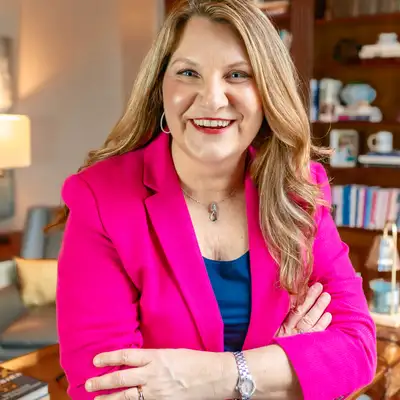
Victoria brings more than 25 years of chemical industry experience from companies including Shell, LyondellBasell, and Clariant. Today, she is an executive advisor and coach, founder of The Chemical Summit, and host of The Chemical Show.
Whether you’re an executive, business leader, or rising leader in chemicals and materials, The Chemical Show helps you stay informed, think differently, and lead with greater impact.
Follow The Chemical Show on LinkedIn and join the conversation. (https://www.linkedin.com/company/the-chemical-show/)
The Chemical Show: https://www.thechemicalshow.com
The Chemical Summit: https://www.thechemicalsummit.com
Progressio Global: https://www.progressioglobal.com
Welcome to The Chemical Show, the
podcast where chemical means business.
I'm your host, Victoria Meyer,
bringing you stories and insights
from leaders, driving innovation and
growth across the chemical industry.
Each week, we explore key trends,
real world challenges, and the
strategies that make an impact.
Let's get started.
VictoriaM: Hi, welcome
back to the chemical show.
So today's episode is a compilation
of interviews that I had with
the risk professionals at Marsh.
So I was recently at Marsh's North
American Energy and Power Symposium
and had the opportunity to interview a
number of great leaders and executives
from Marsh and Mercer, both part of
the same parent company, talking about
risk and risk management and what
they see on the horizon for 2025 and
beyond and what's critical to industry
leaders to So we will be covering
things regarding talent, environmental
risk, supply chain risk, and more.
Stay tuned and enjoy this episode.
hi, I am here with Steve
Horstkamp, who is Marsh's U.
S.
chemical practice leader.
And so first of all, Steve, thank
you for making arrangements to get
me to be part of your symposium.
This has been really a great experience.
Oh,
Steve Horstkamp: Victoria, for coming.
We're excited that you're here and able
to witness what our clients get out of
this because there's so much collaboration
and interest and ideas shared.
VictoriaM: Hi, welcome
back to the chemical show.
So today's episode is a compilation
of interviews that I had with
the risk professionals at Marsh.
So I was recently at Marsh's North
American Energy and Power Symposium
and had the opportunity to interview a
number of great leaders and executives
from Marsh and Mercer, both part of
the same parent company, talking about
risk and risk management and what
they see on the horizon for 2025 and
beyond and what's critical to industry
leaders to So we will be covering
things regarding talent, environmental
risk, supply chain risk, and more.
Stay tuned and enjoy this episode.
I think it's really come through
because really part of the value
is in being together, in having
these conversations and in learning.
Steve Horstkamp: The value
is getting people to connect.
After the ideas are shared on the stage,
getting people to talk about them,
explore their thoughts with their
peers and with their clients, for
example, or their peers, their, their
VictoriaM: partners.
Steve Horstkamp: their brokers.
VictoriaM: important, so it's really cool.
So Steve, let's talk a little bit
about you and your role at Marsh.
What do you do within
Marsh and the chemical
Steve Horstkamp: chemical practice?
So, I lead the chemical
practice, as you said.
chemical risks are unique and
they're different from others.
And so our industry organization makes
sure that we have specialists that
can help companies assess either their
financial risks, their operational risks,
their legal risks and their reputational
risks and help to lay those out to make
sure that, leaders and boards of directors
are aware of what they're facing and
steps that they can do to mitigate.
Those kinds of risks.
VictoriaM: What are the key
trends and drivers that chemical
companies are facing today?
Steve Horstkamp: Some of the key trends,
we, we can't include all of them here,
but certainly the macroeconomic conditions
that are causing companies to reevaluate
their portfolios in a strategic way.
Digital transformation, cyber risks
that are, that are starting to crop up.
and becoming evident.
There's talent, right?
Talent is always top of mind for
chemical industry and, uh, you
know, rail is another big issue.
Shipping, supply chain,
as, as you've said, right?
The decade of
VictoriaM: is the decade of
supply chain, absolutely.
Steve Horstkamp: That's also a big risk
and, and we're seeing it from, the port
strike that was just averted, seemingly
averted today, to, um, shipments by
rail of clients that, Really are being
asked to carry a lot more liability
than they have been in the past.
VictoriaM: Yeah.
Companies are facing a
lot of different things.
I am speaking with Susan Gonzalez,
who is the managing director for
Marsh based here in Houston and one
of the leaders of the North American
summit that we're here at today.
So super great
Susan: conversations that have been taking
VictoriaM: place already
Susan: this
VictoriaM: past day.
And Susan brings a lot of energy and
leadership to the energy practice.
So, Susan, really excited to speak with
Susan: with you.
for having
VictoriaM: Absolutely.
So, let's just start with
a little bit about you.
Can you just tell us a little bit
about you and what you do at Marsh?
Sure.
Susan: So the easy part
VictoriaM: is I'm a
Susan: the Houston office and I'm
also the leader for the energy
practice leading the property and
VictoriaM: casualty
brokers as as
Susan: as well as the service team.
VictoriaM: tell us maybe a little
bit more about what Marsh does.
in this space, because,
we haven't really talked yet about,
you know, who is Marsh and what is your
role with energy and power companies?
So, Marsh really works as an insurance and
risk space, as an advisor to companies.
And, you know,
Susan: the nuts and bolts of it
really comes in the transactional
piece of it, where we're
VictoriaM: it,
Susan: their insurance, that they need
for, whether it's property, casualty,
financial lines, environmental,
all the different things, that's
really the nuts and bolts of it.
Cause you have to have a policy.
You have to have your contracts,
you know, things like that.
But also we want to be a consultant
to our clients to make sure that they
understand like what's on the forefront.
We want to understand their business
really well to see like how they want
their business to evolve and that we're
preparing for their risks that could
be associated with that so that they're
not getting to that final transaction.
If they're making an acquisition,
for example, and then saying,
Oh my goodness, we need this
kind of things to be compliant.
VictoriaM: and I think one of the
challenges, of course, as a business
leader is figuring out where to
apply limited resources because every
company and every leader ultimately
has limited resources to figure
out what those priority areas are.
And you guys have hit on a
lot of priority areas, right?
And so I think that's also maybe just
the opportunity and the challenge.
Is that an area that Your team helps
with as well in terms of prioritizing
where maybe some bigger or lesser risks
are and how to What approaches need to
be taken today versus a year from now?
Susan: Yes, and I'd say that, like,
some of the life lessons that were
learned from the conference this week
is, there's a lot to be learned from
VictoriaM: collaboration.
Susan: And where we do the best
VictoriaM: Marsh,
Susan: engaging with our clients is
where they allow us to have influence
over the multiple departments that
you may need to to collaborate
together to come up with solutions.
for example Rob Lee mentioned that you
can't just have your IT Department,
he's really working on systems, maybe
Administrative things versus your, the
operational side of the technology.
Those divisions have to talk
to each other, We can get.
The finance groups and the legal
groups to integrate and talk to
each other when, you know, that risk
manager or that organization really
allows us to help speak each other's
language and connect the dots.
VictoriaM: Hi, I am with Milan Taylor,
who is
the global head of energy and
Chemicals from Mercer.
Milan led a really great
Panel.
earlier today, talking about talent
and more across the energy and chemical
industries.
Milan, thanks for joining me today.
Milan: Thank you for taking
the time to invite me onto your
show.
VictoriaM: So tell us a little
bit about yourself and Mercer.
Milan: So Mercer is, a
very large, uh, people risk
Consulting uh, firm.
and
My role as the global energy and chemicals
Leader is to work with our colleagues and
our clients to resolve for some of the
most complex issues as
businesses transform.
Yeah, Awesome.
And I know that you've
recently done a survey
of global HR leaders,
talking about what the
enterprise challenges are for 2025.
Can you talk about that?
Yeah.
we spoke
to 25 senior HR leaders across the
energy and chemical industry and
said as a look to 2025, what are
those key enterprise challenges?
number one,
it's all about
cost management.
So, not a surprise, I think, from
the chemical industry perspective.
So it's about optimization.
it's about ensuring that
the dollars are spent well.
So, key focus, , there.
at The same breath, it
was and we need to grow as
well.
right?
So,
VictoriaM: So, so
Milan: side of the same coin, so
focus on cost management, focus on growth.
And then the third key
priority for the year is all
about simplification.
So I think that's a tacit recognition.
the processes are over
engineered, over complicated.
And so it's about going back to
your roots, of keeping it simple,
but delivering safely.
so a pretty big enterprise
agenda for the year.
VictoriaM: So Milan, those seem
like three priorities that
maybe work against each other.
Is that true?
Or how do you.
see those working together?
Milan: look, I think
that the chemical industry
is, it's all about, you know,
coming out of its down cycle.
it's all about ensuring that current
shareholders and stakeholders
are rewarded, and it's about
ensuring that the businesses
as they transform themselves.
Have that sustainability to deliver.
So I guess that the cost management
is about delivering today.
The Growth is about delivery today.
And Simplification is making
sure that they can deliver
in the coming years as well.
So I see them as pretty
complementary themes.
VictoriaM: and how do you
see people tackling that?
Like if you think about recommendations
that you and Mercer are bringing to the
table with your clients.
What does simplification
mean in this environment?
Milan: you look through the
lens of people, this expresses
itself
through talent.
And I think the simplification side is
Let's look at, our, the
way we hire people, right?
Are there ways that we
can cut out duplicative?
Processes of their
ways we can ensure that we have
more quickly, so we can deliver
more effective into organizations.
It's looking at taking on a I
can we actually adopt a I and
can that augment what we're
trying to do is an organization.
So there's a whole, scale
review of how businesses operate
through the lens of people risk.
So, those are just some of the things that
organizations are thinking about in 25.
VictoriaM: Hi, I am here with Amy
Barnes, who is the Head of Climate
and Sustainability for MARSH Globally,
and she's leading some really engaging
discussions here at the symposium on
climate and climate adaptation and
probably a few other things, so we're
going to be talking about that today.
Amy, thanks for joining me.
Amy: Delighted to be here.
VictoriaM: So let's talk a
little bit about Adaptation.
Because I know that's a big
topic of conversation this week.
What does that mean, exactly?
And what are you guys doing about it?
Amy: Okay, well,
VictoriaM: to say to
Amy: everybody that this week we're
in the middle of the Palisade Fire in
VictoriaM: in California.
Amy: Absolutely.
Devastating event.
Devastating for so many people personally.
And if you listen to any of the
newscasters or the politicians who
are speaking, they are saying that
this is an unprecedented event.
And that is what we're thinking about
when we think about climate adaptation.
We are thinking about
changes in extreme weather.
It can be
VictoriaM: Torrential
Amy: that gives rise to more
extreme flooding than we've seen
VictoriaM: than we've seen before.
Amy: before.
It can be the droughts.
If we think back to 2021, we saw the
droughts in the Mississippi River
and cargo not able to leave the U.
S.
because of a lack of water.
It can be Milton Helene coming further
inland than we've ever seen before
and areas who haven't been exposed
to hurricane force winds before.
So, how are organizations adapting
to changes in extreme weather?
VictoriaM: and
Amy: and making sure that their
organizations are resilient and
can thrive in those environments.
VictoriaM: Yeah.
And how does Marsh play into this then?
Amy: the most obvious place that we
start is thinking about physical assets.
We're probably known
VictoriaM: best for
inuring people's property.
So that physical
Amy: asset damage.
VictoriaM: And that's
Amy: what a lot of people do when
they think about climate change.
They think about how is my asset going
VictoriaM: to be impacted?
Am I gonna be more susceptible to
Amy: Do I need to worry about wind?
VictoriaM: But we're expanding that
Amy: conversation.
We say we even within your site, there's
more that you need to think about.
You need to think about your
asset and how you protect that.
You really need to think about
your people because people
are exposed to climate change.
Now there's more risk.
There's risk on site and
there's risk at home.
So if I give credit to one of the
US construction companies, Turner
Construction, they did a really
interesting piece of research last
year, looking at their employees
during a heat stress event.
And they found that their
employees were consistently
turning up to work dehydrated.
Now when you're
VictoriaM: dehydrated,
Amy: Your judgement is in pairs
and you start to make mistakes.
VictoriaM: Yeah.
And starting the day that way, starting
outweighing on a back foot is can't free.
Good.
Amy: more, more forklift trucks crash.
You
VictoriaM: have
Amy: incidents and
accidents because of that.
So they can have small interventions
like putting up hydration stations
as soon as people get into the
office and say, it's hot out there,
have a drink before you start work.
Really small, low cost interventions.
So thinking about the people
within your footprint as
VictoriaM: Yeah.
But we also need to
Amy: think about emergency response.
does happen in extreme weather, can you do
the things that you thought you could do?
VictoriaM: do?
Amy: I referred to the Palisades fire
earlier and we're already seeing they
don't have water where they need it.
VictoriaM: And
Amy: so can we still respond to an event?
You could have a fire, doesn't need
to be a fire caused by a wildfire.
You could have an ordinary explosion
at a site, but in a drought scenario,
will you still have access to water
VictoriaM: Yeah, yeah.
Amy: so we help clients think about all
those things within their footprint, but.
VictoriaM: But, more.
Yeah.
Amy: Assets don't operate in isolation,
they operate within a wider system.
So, how are companies thinking about their
vulnerabilities to exposures in the supply
VictoriaM: chain?
Amy: So in the supply chain, the food
and beverage industry are really thinking
very deeply about this already because
anyone in agriculture is very weather
exposed and people who particularly
like chocolate who podcast, last
year was a really bad year for cocoa
VictoriaM: I've heard that.
And so recently, like recently,
I'm like, what the heck?
I need my chocolate.
Exactly.
And it's harder
Amy: find, and it's certainly
the prices are going up.
Chocolate isn't hard to find, relax.
VictoriaM: but, and so
Amy: how are you thinking about
those climate vulnerabilities?
And some of the works that we've
done with, uh, with clients in that
industry are saying, will we still
be able to say made with a hundred
percent Italian Durham wheat or
made with a hundred percent Italian
tomatoes because the changing climate.
And there was a client in Florida.
Don't ask me for a date some years
ago and part of their USP is it
made from 100 percent Florida orange
VictoriaM: juice.
Amy: That year there
weren't Florida oranges.
They had to go to Mexico.
The whole branding strategy has changed.
So supply chain is one thing.
If we think about infrastructure
in the intro, I talked
about the Mississippi River.
VictoriaM: Yeah.
Um, Panama Canal was a big issue last year
with a lack of water and lack of rain.
Hang on,
Amy: Hang on, you're not a
climate expert and you're telling
me about all these climate
VictoriaM: do know chemicals
and shipping, but yeah.
No, but that's my point.
It's affecting everyone everywhere.
But
Amy: How are your, what dependencies
do you have on infrastructure?
So we've got the shipping
industries and the connectivity.
We've also got power.
Could your power
VictoriaM: supply be
Amy: be disrupted because
of climate change?
VictoriaM: And
Amy: And then there's water.
Every industry on the planet
uses water for manufacturing and
especially chemical industries.
So one of the things when we
think about water scarcity, we
often think about the farmers.
VictoriaM: But,
Amy: did you know that in Taiwan, for the
past three years, the government have been
paying farmers not to plant rice so they
have enough water to make semiconductors?
Now, I don't think many people
are realizing that our high tech
industries have got these extreme water
dependencies that we're not factoring in.
So we're helping clients to
understand, and there are more
factors in the ecosystem as well.
So the work that we're doing,
and I work with loads of really
good colleagues in the U.
S.,
who help our clients to understand,
first of all, their risk, because
insurance is just one risk treatment.
The first thing we need to do is
understand the risks so we can measure it.
We can make interventions,
we can reduce our risk,
VictoriaM: and then insurance
Amy: becomes the next
form of intervention.
VictoriaM: Yeah.
Makes sense.
Alright, so I am here with Randall
who is the SVP of the Emerging Risk
Groups in Charlotte and, Randall
and I have having really great
B: conversation about some
A: the emerging risks
and how, frankly, the
B: unexpected things
that become risks, right?
Which I guess is the whole
point of it being emerging.
A: to be talking a little bit about that
B: and more.
So, Randall, thanks for joining me.
VictoriaM: So we're going focus
in a little bit on supply chain,
but before we do, emerging risk.
That be a bit of everything.
So what is that?
falls into that category?
Yeah, I think about emerging risks.
There's maybe two categories two ways of
A: thinking about it.
Randall: One, we think about
things that are really net new.?
That AI
starting
A: AI is starting
B: ai.
A: this.
Yeah.
B: an emerging risk for everyone.
Then there are
A: other things, climate
change, cyclone risk,
B: geopolitical risk, that are maybe not
necessarily net new, but are emerging
in the sense that they're dynamic in the
way that are impacting organizations,
is evolving rapidly, right?
And so we think of them in that
category of emerging risk and needing
different treatment than maybe more
traditional risks like, you know,
pure, like natural catastrophe issues
that are kind of known and understood.
VictoriaM: makes sense.
That's interesting.
So, Steve, I've been asking
your colleagues, and I'm going
to ask you the same question.
You know, if there was one place, one
action that chemical leaders should
take as we start 2025, what would that
Steve Horstkamp: be?
There's so many.
And I think to summarize what I'm
thinking about the chemical leaders
should do is don't let 2025 stand
in the way of your next five years.
Because the
VictoriaM: planning that has to be
Steve Horstkamp: done now to continue
to evolve and continue to respond
to the different conditions that
are there is going to be hard.
2025, of course, there, there's
going to be pressure to perform
as always and every year.
But don't let that stop you
from looking to the future.
VictoriaM: And so, you know, if
you were, meeting with a chemical
industry leader tomorrow, which
maybe you will be, what's the advice?
that you would give them as they sit
here at the beginning of 2025 when
they're thinking about their business
and their risks and their risk portfolio?
I
Susan: think every CEO, CFO has on
their mind - How are we going to grow?
Everybody.
including me.
How are we going to find talent and
take care of the talent that we have.
And, What's on the horizon.
So, I would say, if I was sitting with one
right now, it's like, what's keeping you
up at night in those three categories, and
there's different ways that MMC, not just
Marsh, but Marsh is within the umbrella
of MMC, there's different ways that we can
approach that and help them analyze it,
help them figure out what the solutions
are, the pros and cons to those different
solutions, and prepare them, not just for
the moment, but again, for the future.
VictoriaM: If you were going to
advise a business leader to do one
thing related to their
people in 2025, what would it
be?
Milan: So organizations need
to have a really effective
employee value proposition.
Why work for the organization?
For that C suite,
I would say ensure that the say and the
do, are aligned because Younger employees
walking in, being sold on a promise that
isn't delivered, will be walking right out
your door.
VictoriaM: If you were advising a chemical
executive on, you know, sitting here
today or tomorrow when you go back to
your day job, What's one thing they can
be doing and should be doing or thinking
about here in 2025 as it relates to
energy, energy transition risk, etc.
Yeah, I think,
Mike C.:
one, I always say, it always
depends on who we're talking
to and what their issues are.
Every single one of our clients
presents different issues.
But at a high level, you know, for
the chemical industry, I would say
probably one of the most important
things that they could be doing,
particularly executives, is exactly
what Peter Huntsman did yesterday.
We have to.
to be communicating across multi,
multi, in a multi dimensional fashion.
It is not enough to stay in the
chemical industry bubble and
just talk about these things.
What Huntsman did yesterday was tell a
bunch of traditional energy, including
companies that are making their living
building solar and wind and creating
problems ultimately for him, He said
what he said, and he got that word out.
And I think the more, the more that
executives, um, in what I'll say is
energy adjacent industries, appreciate
the complexity of the situation,
VictoriaM: the
Mike C.:
informed we'll be when we tell policy
makers what it is we're looking for,
VictoriaM: So if there was one thing,
and there's a lot of things that you
covered here, um, if there was one thing
that you recommend to business leaders
that you work with to do as it relates
to climate in 2025, what would it be?
Where would they start?
Amy: So if I think about what good looks
like for me personally in my career,
good for me personally, my career means
making sure my boss never has a surprise.
And so I think, make sure
you don't have surprises.
Do the work now to anticipate.
The changes that can come, so
you can start to plan for them.
No business has the capex to respond
to all these issues straight away.
We can't make those changes straight away.
But at least have in your drawer
a plan that says, these are the
changes that could affect us.
So when you're making capex decisions,
you're making capex decisions with
that knowledge in the background, so
you're starting to do things smartly.
So I would say, get prepared,
so you're in the best position.
Possible position to avoid surprises.
A: so Randall, for the chemical
leaders listening to this, there was
one thing they could do in this space
of either emerging risk or supply
B: chain, what would
A: would they start in 2025?
B: start?
Again, great question.
I think they've probably done a lot
of horizon scanning and have a sense
for what risks are out there, but it's
really putting a finer point on that.
And I'd say identifying those top
scenarios and really pressure testing,
how that could impact their business
plans and using that to start to refine,
the way they build their forecast and
go to market and organize their, uh,
A: uh, maybe build
VictoriaM: Thanks for joining us today.
I hope you enjoyed that episode.
If this is something that
really stood out for you.
Two things.
Number one, leave a comment, a
review would really appreciate that.
And secondly, share it with a colleague or
friend who really needs to know more about
the topics we cover on the chemical show.
And as today's topic is about risk
and risk management and the things
that they can do in their businesses.
So thank you for joining us today.
Keep listening, keep following,
keep sharing, and we will
talk with you again soon.
Thanks for joining us
today on The Chemical Show.
If you enjoyed this episode, be
sure to subscribe, leave a review,
and most importantly, share it
with your friends and colleagues.
For more insights, visit TheChemicalShow.
com and connect with us on LinkedIn.
You can find me at Victoria King
Meyer on LinkedIn, and you can also
find us at The Chemical Show Podcast.
Join us next time for more
conversations and strategies
shaping the future of the industry.
We'll see you soon.