Subscribe
Share
Share
Embed
Most small and medium businesses (SMB) struggle to sell — employee ownership is a proven exit path. Hear real stories from business owners who transitioned through employee ownership. Whether you're an owner, advisor, or investor, we dive into expert insights, practical strategies, and how technology is reshaping exit planning.
Gina Schaefer (00:00)
Well, I think people assume and I've heard this. I've heard people say Gina is giving her company to her employees and that could not be farther from the truth. And so that is a misperception in the ESOP world that I think we have to overcome. I am not Mother Teresa handing over this 50 million dollar business to all of the people that work there. I don't deserve credit for that and so some of it is just the misperception. Some of it is the. The unknown, you still call us unicorns. There's about 7,000 in the country, which isn't very many in the grand scheme of businesses. And ESOPs aren't what's making the news. You know, it's the it's the multi-billion dollar roll ups and mergers that are making the news. So all of those misperceptions are going to continue to proliferate unless we have a bigger voice.
Matthew (00:46)
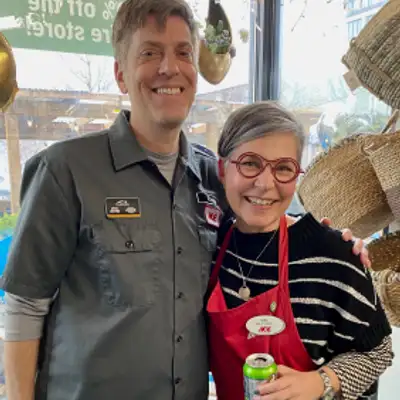
Today my guest is Gina Schaefer, founder and former CEO and Craig Smith, current CEO of A Few Cool Hardware Stores. Based in the Washington Baltimore region, A Few Cool Hardware Stores is an ESOP of 13 brick and mortar hardware stores, generating $50 million in annual sales, and which transitioned to employee ownership in 2021. Today, they have about 260 total team members, and 116 of them, about 45%, are ESOP participants. A number that Craig is very proud of. Some takeaways in this episode include How the one-two punch of an excited employee owner at New Belgium Brewery and realizing employees paid nothing out of pocket to become owners. Convinced Gina and her CFO husband Marc to ultimately choose an ESOP exit, how a particular leadership assessment tool called the Hogan Assessment helped Gina zero in on change management as a key trait to find in her successor Craig. Gina and Craig's quest to professionalize the neighborhood brick and mortar hardware retail store experience, and a few key instances where Gina had to overcome obstacles as a woman leader in a male-dominated business world, getting her first commercial bank loan, and her journey to letting go of the title CEO. If you enjoyed this podcast, don't forget to subscribe and follow it on your favorite podcasting app or YouTube. It's the best way to stay connected and helps the show tremendously. With that, I bring you Gina Schaefer and Craig Smith. Let's ride.
Matthew (02:16)
All right, so hello everyone and welcome to episode three of the Bicycle for the EO Mind podcast. Today I have the great privilege of speaking with Gina Schaefer and Craig Smith from a Few Cool Hardware Stores in the Washington Baltimore region. So they're an ESOP of 13 brick and mortar hardware stores and transitioned in August of 2021, creating 160 employee owners right off the bat. It's an amazing story and Gina's been kind enough to dedicate a lot of her post sale time and energy to telling her story. It has appeared on a few other podcasts, which I encourage our listeners to check out for even more about this amazing story. So without further ado, Gina and Greg, welcome to the Bicycle for the EO Mind. How are you both doing today?
Gina Schaefer (02:55)
I'm great. Thank you.
Craig Smith (02:56)
Very good. It's a pleasure being here. Thanks for having us.
Matthew (03:00)
Absolutely. And so I'd like to start with the earliest stages of the process, Gina, before you even knew about employee ownership or decided to become an ESOP. So what would you say prompted you to consider selling your business?
Gina Schaefer (03:13)
Well, there were a couple pretty serious prompts, guess. One, I knew I didn't want to be in the hardware business for my entire life. And I could see 20 years, the 20 year anniversary coming down the road. So that was one, what was I going to do in the next phase and who was going to take it to the next phase? Because I thought the business was ready for some transition. The second piece really that solidified it happened when the protests in Washington, D.C. started in 2020. That was really the catalyst to figure out what that what our response to succession planning was going to be. It became a moment where we really realized, and I say we at the time, because it was my husband, Marc and I, who were the CEO and CFO, we realized that as a small business, we could do something that would support what the protesters wanted and leave the business in really great hands. So that was kind of the boom, if you will, that made it all come together.
Matthew (04:05)
Amazing. So I think you're already kind of alluding a little bit to this because you mentioned that you're emphasizing sort of pay equality, gender equality is really important for you. there other sort of priorities or values that were foremost in your mind in that period?
Gina Schaefer (04:18)
Well, gosh, everything seemed like a priority. I think I mean, we wanted to grow. We wanted to support main street development all over the city and the cities where we are. We wanted urban areas particularly to be vibrant and supportive places of the communities. We wanted local employment, local shopping options.
Matthew (04:35)
Yeah. So you're mentioning how leaving the store on good hands was also a key piece of that. Can you maybe walk us through some of those initial actions you took? Who did you turn to, guidance, when you were thinking about this transition?
Gina Schaefer (04:50)
The, excuse me. I'm laughing because I, I mean, I asked everybody everything. I knew nothing. I knew nothing when I started the hardware store. You know, Craig had the pleasure of, think being, were you born in the store? You just, it's in your bones, I think.
Craig Smith (05:02)
Born into retail, that's for sure. Yeah.
Gina Schaefer (05:05)
So I had to, at an early stage in this business development, I had to rely on everybody around me to give me answers. I didn't, I, cause I didn't know anything. we started working with folks at the employee ownership exchange network, which is, which is a network of nonprofit organizations. It's a nonprofit that has a network across the country of,
centers, a lot of it's virtual at this point, but that help companies understand what ESOPs are. So when I met Steve Sorkin, who's the executive director of the ownership exchange, I started asking him everything. And he is just a wonderful connector in general. He started putting me in touch with all sorts of other people. We also, know, our stores are members of the ACE Hardware Cooperative. We had a great mentor in Stu Weiss, who's out in Montana. He also formed an ESOP as part of his retirement strategy. I pestered Stu as often as I could.
Matthew (05:57)
Well, yeah, it's so amazing to have a mentor, right? You have so many questions and someone can answer it, so it makes total sense. Could maybe tell a little bit about your story. But yeah, how did you kind of get into the business?
Craig Smith (06:06)
Well, my father owned retail pharmacies growing up. So basically I worked in the retail world ever since I was actually, I think about 12, about 12 and a half is when I started putting newspapers together in the store. I started in my father's store. He owned a hardware store as well. That was about, I think about 24 years ago. But I worked for him for about 12 years. Then I had my own store for about 11 years. The short version of the story is Gina tapped me on the shoulder at that point said, hey, you want to come join? I'd like you to come and I'd like your store to come. After much discussion, we agreed on everything. Here I am today sitting in this chair. It's still pretty amazing to me.
Matthew (06:48)
Yeah, and I definitely want to hear how that all has connected together, that you've kind of stepped in and started taking more and more from Gina's plate.
Gina Schaefer (06:55)
I just handed it to him
Matthew (06:56)
that was it.
Craig Smith (06:58)
That is true. I have to say Gina really stays true to her word. You said she basically said even up front, you know, I want to help you. We're going to talk. But after a time of a lot of in-depth assistance and working closely together, she basically said, you know I'm going to do my thing, you do your thing. She has stayed true to her word. I sincerely appreciate that. She's always been there when I've had a question or needed help every single time without fail. But she truly has been able to step away and still consider, obviously, what she's still a part of but grow into a new chapter. That's something I really take a lesson from even in terms of how I try to work with the folks on my team here and how you give them something to do and really you should let them do it. I know it sounds so simple. It's not easy to do a lot of times, but that's a great example to follow. And that's basically how it happened.
Matthew (07:49)
Yeah, well, the theme here is employee ownership. So you're actually inviting them into ownership of what they're working on. Could you maybe talk a little bit more about others that were kind of helpful in that process for you?
Gina Schaefer (07:59)
For me in the ESOP process, well, Steve and Stu were really the two big mentors in this whole process. I have now since made more friends in this ethos, going to the NCEO conferences, meeting people from around the country. I spoke last year at the Ohio Center for Employee Ownership Conference, met some really great people there. So I still feel very, very fresh in this. I mean, you can call it a movement, but.
Matthew (08:00)
Yeah.
Gina Schaefer (08:25)
You know, ESOP's been around for 50 years now. I met 50 year old ESOP I mean, it's it's fantastic. So I think those two in particular. Now I'm just gathering people around me who can explain it better. Craig knows this every time a new employee is qualified to become an owner. It's a new conversation. It's a new relationship. It's a new chance to educate not only that the new owner, but us, because the nuances are many. So to understand. The tax ramifications, an employee mindset, what does that mean? What rhetoric do we use in our newsletters and our evaluations and even our public facing communication that helps the team, the owners on the team, the soon to be owners on the team, and then also the customers understand what it means. It's an ever evolving process.
Matthew (09:13)
Yeah, and when you were sort of like just kind of initially coming into this I've heard you kind of speak a little bit about why private equity didn't make sense for you all, but like, how are you thinking about what those options were?
Gina Schaefer (09:22)
But I did, you know, we sat down and we again, it was Marc and I, and we detailed what our options would be. We put private equity on the table, sale to a private owner, sale to one of our managers or team leaders. Ace has a kind of a roll up strategy to make sure that we keep a stores in the co op family. So it was an option to call them and say, hey, do think we should be? We would be considered part of your roll up strategy. Craig, you might phrase that a little bit differently, but and worker owned co op. I mean, we really, I think, exhausted all of the options and then started the educational process. I didn't know, excuse me, the value of the ESOP until I was at the New Belgium Brewery in Fort Collins in 2019. And the tour guide was bouncing off the walls, so excited to tell us that she owned the brewery. And I remember Marc and I looking at each other like, what is going, like there's something we don't get about this employee ownership piece because she was very young. I think she'd only been there for, well, she must've been there a year depending on their rules for ownership. That was the catalyst that allowed us or enabled us to figure out that the employees in ESOP don't put in any money. And that was kind of the pin for us. And then we moved on from there. And I just actually thought of another really good mentor organization to us. One America is the company that we use as our service provider. The folks at One America have been so helpful. I mean, they were there the day that I announced it to the leadership team. They helped create the landing page with the FAQs. They do all the administration of it now and they've been really helpful in terms of understanding how it works and helping us educate the new owners.
Matthew (11:02)
Yeah. And I think I've also read as well, you said you didn't have a roadmap, so to speak, right?
Gina Schaefer (11:08)
No, I mean, once we chose the ESOP, the roadmap came with the service provider, the consultant that we hired to help walk us through the whole process. But no, there wasn't a specific.
Matthew (11:18)
You mentioned thinking specifically when you were comparing your options that the not putting the money in was a key kind of deciding factor for you. Were there other elements of how you made that decision?
Gina Schaefer (11:26)
Well, this is one I would love to have Marc here as their CFO, because I know financially he thought of a lot of things that I probably was overshadowing. Most specifically, the tax implications, the tax benefits for not only us as the sellers, but the business. We've always had a really great financial partner in National Cooperative Bank. And so we were fairly certain at the beginning that financially we were going to be able to get the loan that we needed to sell that first tranche. But I was more concerned about what does it mean for the team's longevity wise and how are going to educate them? And I am sure Marc looked at is the valuation going to be what we think it is and it was? Are the tax benefits really what everyone says they are? And they were. And so I think that was probably more his realm.
Matthew (12:10)
Yeah, and I totally hear you, and so I won't go too far into the financials. But I was curious because a lot of owners think about, specifically, capital gains, taxes. Was that something that came up that you're aware of?
Gina Schaefer (12:22)
Yeah, sure. mean, if we had sold it to PE or a private buyer, we would have paid capital gains. And so it was definitely on a checklist somewhere. Like, are we trying to avoid these? And if so, how do we avoid them? And I think avoidance has a negative connotation in my brain. We don't avoid any taxes. But the alternative was this ESOP where our employees become owners and oh, by the way, there are no capital gains. So how does that not sound like a win? Now, the negative, and maybe you'll get to this in a little bit, or not the negative, but the wall that some people push up against is if you don't sell 100 % right away, there is still the possibility that Marc and I will not get the full value of the company that we built. So we sold 30%. So there's still this percentage out there that had we sold, had we done one and done in a private sale, we would have gotten all of that valuation on one day versus this long drawn out process. And so there are people that see that as a negative.
Matthew (13:21)
Yeah, and you know, that's such an incredibly important part, that part you just said about the 30%. Could you say maybe a little bit of like, yeah, how are you thinking about that part of it?
Gina Schaefer (13:30)
Well, we knew, excuse me, we how are we thinking about it? So Stu Weiss, our mentor in Montana, sold 30, he was gonna sell 30 % then 19%, then 49%, 51%, I think I just did math right. And so we were really basing it off of his process. He started forming his ESOP when he was 60, knowing that by the time he was 70, he wanted to be done. And so that was the timeline he built in, which at the time was that was the only timeline that we knew about. I've since had other examples of selling 100 % all at once.
Craig Smith (14:03)
Well, I think that 30 % is a federally regulated percentage to qualify. Is that correct? Yes. I think that that's like the default starting point.
Matthew (14:11)
That is, yep.
Gina Schaefer (14:13)
I didn't do that.
Craig Smith (14:17)
But I think to build up what Gina said, obviously there's more in the future. And it's also like if you had sold to even an individual person, you may choose to what they call like take back paper, get a payment plan. I this kind of is a payment plan. Even a payment plan can be a risk if the business fails during that time period. I mean, there's multiple ways you can have a longer roadmap, but this is certainly a great option. I will say, you know, in August of 2021, when Gina did announce this from her company, it definitely shook our retailers in our area. It's sent some shockwaves through the retailers like, wow, this is a huge move. You know, Gina and a Few Cool Hardware Stores have always talked the talk about how important their teams are, elevating their teams. A big part of the conversation was always professionalizing our positions. I heard this from Gina a lot. I've even, honestly, I've never really thought about it too much until hearing from her, but professionalizing our positions because traditionally in our world, retail, I don't want to say it's disrespected, but it's not looked at, you know, as a elevated kind of workplace, let's say to some people. So by professionalizing her teams, you know, even prior to this, I can always see that, but what better way to professionalize a position than to make them an owner? And that's the ultimate method of feeling professional and professionalizing the position. And I was just, when I heard about this, I was like, wow, this, and I'll say that it all makes sense. This is exactly what she's talked about for all these years, never in these specific terms, but it just made so much sense. The roadmap map, I never saw it before that day, but I saw it clearly when I heard about it. And that's why when, you know, this was inquired to me about being a part of it. I'm just so excited.
Matthew (16:16)
Yeah, and you'd already seen some of the benefits in places like Publix so it could only make sense. I was going to mention, so I actually can relate quite a lot to what you just said, Craig, about retail. I got my start professionally in the consumer grocery natural foods cooperative space, and very much a similar sort of thing of like, this isn't necessarily seen as professional, so we have to focus on professionalization. So yeah, definitely resonates for me as well. Appreciate you mentioning that. I'd like to take a step back quickly to, you know, you mentioned quickly this
relationship with National Cooperative Bank and the relationship to the financier is just so crucial. Could you maybe introduce us to that relationship and how that's been?
Gina Schaefer (16:52)
Yeah, so in 2003, well, prior to 2003 opening the store, I had to get a loan for the first location. so this is probably the chip on my shoulder that I'll go to my grave with, but I had to take my husband to the bank to get the loan. Marc wasn't planning on being involved in the business. And so, you know, it was sort of mortifying for me that the bank said, hey, you got to bring a man with you. And so there's my chip. I've laid it out there. One of these days.
Craig Smith (17:15)
I can only imagine how that went.
Gina Schaefer (17:17)
Yeah, so I was so excited about what I was going to do and so passionate about the project that I think it probably took me a minute to realize how insulting that was. But I took Marc. We got we got an SBA loan. The paperwork was mounds. I'm sure it's so much easier now. And then almost immediately after we opened that first store, people started coming in from all over the city saying, hey, will you open in our neighborhood? And it was so exciting. I mean, probably a little terrifying, too, but. We decided in 2004 that we were going to open, we were really going to actively look for our next location. At that point we went to an ACE hardware convention and someone introduced us to National Cooperative Bank. I remember, I was so cocky. I remember saying, hey, if you'll give me a loan in two weeks, I'll give you my business. I mean, who did I, who was I? I had one little tiny store in Washington, DC. And Tom Sear was the banker at the time. He was the new business development guy. I'll be damned if I did not have a loan for that second store within two weeks, approval. And it wasn't an SBA loan and it was with National Cooperative Bank and that was 2004 and they have funded every single project since. They have just been incredible, including, like I said, the piece of the ESOP that allowed the business to buy Marc and I out of that 30%.
Matthew (18:28)
Yeah, and it sounds like you were like you were manifesting before we even use that term. We just brought it into existence. So like I'm going to get this loan and then you did.
Gina Schaefer (18:37)
And I did.
Craig Smith (18:38)
Yeah, Gina is, it is well documented. He is well known as manifesting things.
Matthew (18:44)
Yeah, so with that transaction specifically, so yeah, obviously you've got this deep relationship with NCB, they've been financing, you've grown the store, I know at one point it was 15, you've come to 13 stores right now. With the 30%, did that feel at all different of a transaction and how did that go?
Gina Schaefer (19:01)
Different than what?
Matthew (19:03)
Like financing a new store.
Gina Schaefer (19:05)
Did it feel different? I would say for me, because I was so ready to retire, not because I didn't love it, but I was just ready, I think it felt like a step in the right direction, more so than the new shiny object that is opening a new location.
Matthew (19:20)
Yeah, it's so much more of a big picture.
Gina Schaefer (19:24)
Yeah, I mean, it's just, it's a very different transaction. It's more of an end to something versus a start to something. And it was the start of the ESOP. But for me personally, it's funny. I just, yesterday I wrote a LinkedIn post about how our identities get caught up in titles. And I really had to, and part of the two year step down was me figuring out what I wanted to be when I wasn't a CEO. As much as I didn't think I cared about the title, your identity gets wrapped up in what people think you are, especially as a five foot two woman in a male dominated industry. Like that title was everything to me. And so I had two years post announcement to really think about how I was going to identify without that title. And so it was for me, it was the beginning of that.
Matthew (20:09)
Awesome. Yeah, and that's so interesting. I was just curious, like, so were there tools also involved in like the way that you understood the value of the business?
Gina Schaefer (20:11)
I mean I don't know what you would call those tools. I we've had audits and bank evaluations and P & L statements and pro formas and all of those things, if that's what you include as part of the tools. You know, as part of the ESOP process, we had to do our own valuation. The trustee that we hired had to do evaluation and then the consultant had to do an evaluation so that everyone was looking at the numbers, making sure that they were legit and that we were doing what was in the best interest of the company. unfortunately, we all aligned. I I don't know if that always happens. And our valuation didn't even really count in the equation. It was the trustee and the consultant, and they were 100 % aligned in what the value of this business was. So whatever tools, whatever you want to call those tools were already in play. It's not a formal checklist. It wasn't a software package, if that's where you're going. But you know, banking, documentation.
Matthew (21:21)
Yeah, and of course, this term like fair market value is so crucial to ESOP transactions, right? Because we were just talking about the Department of Labor and how they're involved in the transactions. So it's actually quite important, right, that we're actually able to say like, this is a fair market value.
Gina Schaefer (21:33)
Yes. Well, I think people assume and I've heard this. I've heard people say Gina is giving her company to her employees and that could not be farther from the truth. And so that is a misperception in the ESOP world that I think we have to overcome. I am not Mother Teresa handing over this 50 million dollar business to all of the people that work there. I don't deserve credit for that and so some of it is just the misperception. Some of it is the. The unknown, you still call us unicorns. There's about 7,000 in the country, which isn't very many in the grand scheme of businesses. And ESOPs aren't what's making the news. You know, it's the it's the multi-billion dollar roll ups and mergers that are making the news. And So all of those misperceptions are going to continue to proliferate unless we have a bigger voice.
Matthew (22:21)
I'd like to kind of transition a little bit to more so thinking about the transition itself and when you knew you wanted to become an ESOP and the steps that you took to become one.
Gina Schaefer (22:29)
Yeah, I should say though that the first step we took was beating up Craig so that he agreed to take my place because that is very crucial in this process.
Matthew (22:36)
Yeah yeah, so starting with that part of let's beat up Craig. How was that for you being beaten up for that?
Craig Smith (22:44)
It was great. I'd say the you when we were acquired it was a little different than a traditional sale because although we came to some agreements and even fairly quickly there was a lot of things that had to be vetted and I feel like this whole you know being being an ESOP really in it keeps us on our toes and we'd probably be doing these things anyway.
the correct way, but it really forces your hand in doing so and know that there's a second pair of eyes, generally speaking, on most important things that you do, which is a good thing in general. And that's how maybe made the deal like a little bit different than it would have been with Marc and Gina and myself in terms of acquiring my store in Fairfax, Virginia to the fold.
Matthew (23:32)
Yeah, I assume you all probably already had a board of directors in place before the ESOP. Is that right or no? Okay. Yeah, could you talk about like, yeah, what, so what did change, I guess, as a result of this?
Gina Schaefer (23:37)
No, they did not. Well, we do have a board of directors. There will be a more formal implementation by the time we sell the second tranche. I think, I mean, what changed are the requirements as being a part of an ESOP? So having the trustee who's really looking out for the team, the employee owners, bringing Craig on as the CEO with his percentage. know, one of the things that, two things actually to say about that is Craig and our leadership team had already worked together. I don't know Craig for at least 10 years, right? I if he, he, well, Craig is, the leader of our local retail ACE retail group. So we were always interacting in meetings, which was great because we already knew how aligned our values were. If Craig had a question about marketing, he could call our marketing director. If she had a question about, I don't know, Virginia legislation, cause we had a store in Virginia, she could call Craig about it. And so the fact that those relationships already had solidified was really valuable to me because I knew that I wasn't bringing on some new scary person that was already going to upset the apple cart or, you we hired a business coach that walked us through personality characteristics. And I wanted to make sure that the change, the change management process was mitigated as much as possible. so having somebody like Craig, who had been part of the family, we had all been part of the same family for years at this point, made it much, much easier.
Matthew (24:59)
So with that sort of, I'd love to hear more about that change management piece. I know you've mentioned before this Hogan assessment, right? So how did that process kind of come about?
Gina Schaefer (25:08)
Well, there have been a couple of times in our history where I've said, we need an adult in the room. And that adult often has come in the form of a business coach that has helped us noodle through some pretty serious challenges. And we hired the business coach during the transition because we knew it was gonna be long. I wanted to make sure that we were hiring the right person to take over and that the team was comfortable with it. regardless of whether or not I'm willing to admit it. It was very much a mom and pop business. If people didn't like my answer, they went to see Marc or vice versa. And we needed to, again, professionalize the whole thing. So the business coaches took us through the Hogan assessment and evaluated strengths and weaknesses in the entire team, and then really walked us through what characteristics the new CEO needed to have in order to replace the characteristics that I was taking with me. Not to say that my characteristics were great, but one of the biggest, when we lined up, they lined us up in the room based on our skill sets and our characteristics. And when we got to the one that can deal with change, I was on one side of the conference room and the next closest person was three quarters of the room away from me, which was very telling to the business coach. Like, holy cow, we have to make sure that whoever comes in can handle change. So we had never done this before, I don't think, but we gave, we asked Craig if he would be willing to take the Hogan test because we wanted to make sure that those characteristics we're gonna align properly. Do you remember that differently?
Craig Smith (26:30)
No, yeah, the change thing is a big one. And I had never taken a personality assessment, I don't think. But it was really telling and it really is not just, you do you like talking to people or you don't, but it's your comfort level with so many different things in terms of interacting with people. So I think it's very helpful. you know, building off the topic of change, you know, it just so happens that I was really ready for a professional change. I don't think Gina and Marc knew that at all, but I had gone through, I had two stores, part of a family business with my father and my brother. My brother and I had bought each other out. We had two stores and we each had one store. And I was at a little bit of a crossroads in my professional career. So I think when they approached me, maybe even unbeknownst to them, it was a very good time for me, even in an emotional way that I was ready to take on something new. And to try to take on something that replaces or duplicates Gina, you can absolutely forget about that. Well, all know it's true, it's okay. I mean, it's different. We can do things differently and still be successful. I know I couldn't do that, but to speak to what Gina said, I did have a real comfort level with a lot of people on her team. I liked a lot of people on her team. I trusted them. I worked with them before.
Craig Smith (27:53)
I work in a capacity that they didn't actually have to tell me anything. They didn't have to deal with me. There was no professional requirement, but they were open and helpful and transparent. Gina's always been like this, and I'm sure they just kind of, they followed suit. A lot of them are like this as well. And so that told me something about them and how they run their business. And I just felt fairly confident about what I was getting into because of that.
Matthew (28:18)
I'm curious if there was like other elements to that of like, mitigating the fear of the team and yeah, Craig, like how it is that you actually lean into change management and how did that go?
Craig Smith (28:28)
I've always believed that managing people is not the same for every person. And you have to manage individuals. I know we manage a lot of people. have 260 people we have to manage. And I'm not managing them every day by any stretch, but people are different. People's emotions are different. The way people respond to information and coaching and criticism. Criticism is all different. So I think you need to understand that about the perfect person before you can effectively manage them. I think the Hogan assessments helped me do that because we shared a lot of information about maybe what works with someone and what doesn't. I mean, you can find out yourself, but sometimes that's a long road and it's a real bumpy one to find out. having some professional way to have some real deep knowledge about this was very helpful. To me and also some of these people I kind of thought I knew how they work, but then when you truly work with them every day, you say, okay, that's a little different. So it certainly helped quite a bit.
Matthew (29:28)
I'm also curious about how like, you started to like maybe document the process. I know like standard operating procedures are often a part of kind of that change management process. What was that journey like?
Gina Schaefer (29:39)
For me, the real extraction was the, well, The two years was a communication piece and there was something very valuable that I learned in that process. So part of the coaching was let the team know as far in advance as you can so that they can, their change has the opportunity to manifest their ability to change because there were some folks on the team that really are very slow to change or reticent to change. And it's not a bad thing. That's, you know, that was just what we learned through the, through the assessment. So we decided it would be a two year process and every three months or so there would be an update. This is where we are in looking for the new CEO. Cause you know, we didn't immediately tell the team, Hey, we're going to go bed, Craig Smith to be, to be our new CEO. this is where we are in the process. This is what's going on with the, the ESOP, like all of, all of these, these steps. There were people the day that I announced, the day that I said we're selling the business to the team, there were people who immediately thought that was my last day at work.
Matthew (30:35)
I've heard this expression, even wet babies don't like change. It was going to be hard. Yes, if it was two years, if it was one day, those would be different kinds of stressors. But either way, it's not going to be the easiest thing.
Gina Schaefer (30:39)
Yes.
Craig Smith (30:48)
Yeah, and I can speak to that on a more micro level, like even when we did make the decision to be acquired by the cool hardware company, the Fairfax Ace Hardware, the day I told my team, generally they were happy, but as it takes some time for everything to, for this change to occur, for technology to get in place, for even like hats and vests and name tags and like whatever it is to be working together for a computer system submerged. You know, people are in a little bit of a stressful state, I would say, until things calm down and they are kind of absorbed so we can be one. So there was definitely a road there that was a little bit bumpy, even though they're excited about joining the new company because it meant, and frankly, it meant more pay, better benefits for them, employee ownership. I mean, that a lot of good things coming their way, but as people always question, you know, when there's change eminently happening, they say, what's gonna happen to me? What is my place in this change? And to be able to talk to those people one-on-one, and it wasn't the same for everybody, so it's something you certainly have to navigate.
Matthew (31:57)
Yeah, and I'm curious, with, know, we've got what, three years now since 2021. So you've had a little bit of time in this place, and I've heard that, you know, a lot of times it is also sort of a longer term process in terms of employees, like, it becoming real for them, because also, they get these participant statements that actually then makes it so concrete for them, like, this is your share. Have you all found that, like, the fear has also gone down as you've had these, moments of giving out the statements?
Craig Smith (32:21)
Yeah, I think people understand it much more. We have a lot of longer term people that have been with the program for quite a while now. We have actually as of today, we have 116 team members who are active ESOP owners in the company. We have about 260 total team members at the moment. So it's roughly 45%. So it's really proud about that. We just did review that actually this week. So that was some really great news. But they have to become more accustomed. I think the technological component is really important. And what we've been trying to do, and we're going to do this more and more, push that using One America's app or logging into their website.
Matthew (33:02)
Yeah, and I'm curious in terms of maybe like, and I think I remember reading this, that like when that announcement happened in August 2021, it was also helpful to have, One America was in the room, right? We need to be able to answer these questions,
Gina Schaefer (33:12)
Because you're a person like- Yeah, our relationship manager, John, was in the room with us that day. And it was helpful to us because I could give the emotional rah rah, this is what we're doing. But he was really there to answer the technical questions that we knew were probably going to arise, that Marc and I weren't yet equipped to answer.
Matthew (33:30)
So we're starting to wind down a little bit of our time here today. I was curious of looking back on this, there may be some of the biggest, what were maybe some of the biggest pain points during the transition? And if you could go back, were there solutions you would implement?
Craig Smith (33:42)
I will take it to like the present day. We're always looking for a way to streamline that process, because being an ESOP, we are audited annually. It is a pretty significant process for us. I've gotten more comfortable with it as I've been here. As she said, Marc works with it quite a bit. So to see that process get more streamlined, document exchange, you you name it, that would always be beneficial. But that's kind of something we're looking for all aspects of our business, whether it's delivery, whether it's processing customers at point of sale, putting up merchandise, we're always looking to, you know, not work as hard and gain more from it or work smarter and gain more and that's always something we're trying to do. And we try to apply that same principles with even an audit from our, for our ESOP.
Gina Schaefer (34:32)
The other part of the process that probably we could have taken more time with, this might exist. So I just don't know, because we didn't have to look for it. We did not evaluate all of the service providers that we could have used, the trustees that we could have used. Like typically, if I would say to Craig, hey, I want you to evaluate another marketing firm, or we've done this in the past, we look for three. And then we pit them against each other or evaluate them on certain criteria. We did not do that in this process for a couple of reasons. We took some recommendations on blind faith. We didn't realize how many options we had. Now I know, having gone to some of the ESOP conferences, that I could have had dozens of trustees to choose from, dozens of consultants to work from. And so knowing that upfront is probably useful information for a potential converted company.
Matthew (35:24)
Well, that's certainly you know, music to our ears. It was certainly something that we're thinking about a lot at Zolidar. Yeah. I'm curious, if you were to think about any goals when you're thinking about sort of like all that you were hoping for in terms of your transition, Gina would you say were there any goals that are unfulfilled today and what would you change if you if you wanted to?
Gina Schaefer (35:44)
This is not well, this is more of a wish than a goal. And I've heard other ESOP provider companies say this, that they want to create X amount of millionaires at their company. And I think when I go back to our origin, well, the origin of the ESOP and wanting to create generational wealth and equity across race and gender lines, I think having some sort of metric like that for the team to rally around would also be a really cool way for us to start communicating. I mean, I wouldn't say, hey, we've created this cashier as a millionaire, that person specifically, but Publix gets to say they have millionaire cashiers and who gets to say that? The target cashiers might make $50,000 all in a year. They'll never be millionaires being a cashier at Target. We can create a millionaire cashier at a few hardware stores. And I haven't said this to Craig, but I've been stewing on this a lot recently. Like, how do we make that kind of goal that people rally around? So that's probably how I'd answer that question.
Matthew (36:43)
Yeah, I mean, it is such an amazing metric to focus on and to talk about and something I've found so consistently inspiring about so many of our ESOP stories. makes a lot of sense. I'm curious, moving towards sort of closing thoughts, is there a first step you'd advise an owner to take when they start thinking about an exit?
Gina Schaefer (37:01)
Me? Yeah. Yes, I would. Well, I would. Gosh, the problem is, is that most people don't even know ESOPs are an option. So let's let's assume that you don't. If you want an exit, I want I want you to sit down and talk to everybody you know who might tell you what options there are, which will hopefully get you to thinking of employee trust, employee owned trusts, ESOPs, worker co-ops, something outside of the traditional. And then if you put ESOP on your list. I would really encourage people to go talk to someone at the employee ownership exchange, Steve Storkan is a group because they are a nonprofit. They get nothing out of it besides the satisfaction of helping educate another potential ESOP conversion. And so I would say, know what your options are, make sure they're exhaustive and then research each one with the tools that you have available.
Matthew (37:50)
Yeah, Craig, anything else you would recommend? Maybe something from your experience.
Craig Smith (37:55)
Start, mean, Gina's said this in the past and I fully agree is start early! Start the second you're thinking about it. And we first have that light bulb moment. Start looking at your books, start looking at your operations. I mean, you should do this anyway, of course, right? But take a very close look because when you do want to transition out of business, your business needs to operate well if you want to get what you want out of it. So, you know, thankfully I feel like I was doing that pretty well with my business when I transition, but I know that's not always the case. And even in my career, I admit, that wasn't always the case with me personally in my business. So if you ever have that thought, start digging in right away and do not wait. And it is good to know there are a lot of options. Maybe you think they're not, but I think the more people you speak with, even in the ESOP world, there's a lot of options.
Matthew (38:51)
Just curious, is there anything else that you wished I had asked today? What else would you like our listeners to know?
Craig Smith (39:00)
I would just say, you know, it can be done. As I said earlier, you know, in August 2021, when I heard about what Fuqua Hardware Stores did, I never even thought it could be done in an area like ours. I wasn't aware of it. And even if I had heard of it, I would just be like, yeah, you can't do that. I don't even know why, but becoming an ESOP can be done. We've proven it here.
7,000 other businesses have proven that there needs to be more. But if you get the right help, it can be done.
Gina Schaefer (39:30)
Yep. And I would say, you know any kind of exit plan, succession plan is very emotional. And knowing that upfront and mitigating that emotion, whether that means you hire a coach or a psychiatrist. mean, I've known families that have gone to therapists because the transition is so stressful. Know going in that you are going to deal with a lot of emotion and figure out how to mitigate it. And an ESOP process is not inexpensive. I think that all of the tax benefits and all of the emotional benefits are worth it,but you have to know that you're gonna deal with emotion and there are costs associated that you may not have anticipated. So I think those are probably the two things that should come up.
Matthew (40:07)
Awesome. Well, for just a quick last question, I know that of course it's coming to the end of EO month. I'm just curious, do you all have maybe a favorite memory you'd like to share?
Gina Schaefer (40:16)
Craig? Go ahead.
Craig Smith (40:18)
My favorite memory is actually this week when I took a hard look at our numbers and I was very proud and very impressed that we had 45 % of our active team members as employee owners. And we just want the number to continue to grow. And I was like, I knew it was a good amount. I actually thought it was a lower, but our latest round, because we had some recent shareholders come aboard, it was just really exciting to see. mean, there was power in numbers, empowering sharing those numbers. It's only going to keep going higher. I was, my most recent memory is probably my finest memory.
Gina Schaefer (40:51)
No, I love that. My favorite is one of our teammates who had been homeless prior to coming to work with us. And while he was homeless, he became a runner. And when he tells the story, he, you know, he started running all over D.C. And in my brain, he ran himself to a job and a house. But the end of that story is that he ran himself to employee ownership. So he went from sleeping on a park bench to owning the company to retiring essentially as an owner. And you don't get to tell that story in many companies. And that I absolutely beam when I can talk about him. that's the memory I'll leave us with.
Matthew (41:25)
Well, thank you both so much. You're such an inspiration and I really appreciate you being with us today.
Gina Schaefer (41:29)
Thank you.
Craig Smith (41:30)
Thanks so much.
Matthew (41:31)
Thank you everyone.
Matthew (41:31)
Thank you so much for listening. If you found this valuable, you can subscribe to the show on YouTube, Apple Podcasts, or Spotify. Also, please consider giving us a rating or leaving a review as that helps other listeners find the podcast. You can find all past episodes or learn more about the show at zolidar.com slash podcast. Also, we'd love to feature your voice in an upcoming Mailbag episode. Maybe you've got a question for us. Leave us a voicemail at 650-203-6565. Or if you prefer, send an email to social at Zolidar.com. But remember, voicemails make for more engaging episodes. We really do want to hear your actual voice. All right, y'all. See you in the next episode.