Subscribe
Share
Share
Embed
Call 'Em Like Museum is a weekly podcast exploring how museums really work, and why we love them. Host Eric Johnson talks with museum directors, curators, experts, and passionate fans about what drives them, from homegrown passion projects to world-famous institutions. Each episode digs into museum curation, exhibit design, and the visitor experience — plus the essential question: What's actually worth buying in the gift shop? Season One spotlights museums in the San Francisco Bay Area, including the Walt Disney Family Museum, the de Young Museum, and the Winchester Mystery House.
Our great room is beautiful.
It's high cathedral-style
ceilings and just all this space.
And they walk in and
they kind of go, "Wow."
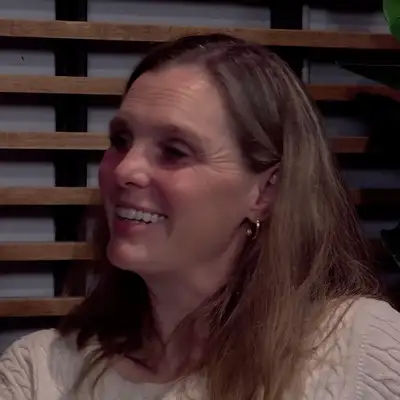
This is Rachel Lee.
She’s the executive director of the
California Historical Radio Society.
And that's the most rewarding part of
it too, is not only to bring it forward
to people, but to see them engage with
it and their eyes light up and, "Oh,
that's so cool." That's such a gift.
The CHRS has been around
for more than 50 years.
And when you visit its museum,
you will see a lot of history.
But Rachel wants you to know that
the story of radio is not over.
When you think of 1909 to 1930 broadcasts
to 1960s broadcasts — that expansion,
that commercialization — to podcasts, it's
just the next step.
Streaming, all of these
things are still radio.
So how do you get people
to think of radio that way?
Like any good broadcaster, this
museum is trying to build a community.
When you go to a museum, very few
people go by themselves and hope not
to talk to anyone until they leave.
That is a service that museums provide
far beyond the most obvious mandate.
This is Call 'Em Like Museum,
a podcast about how museums
work and why we love them.
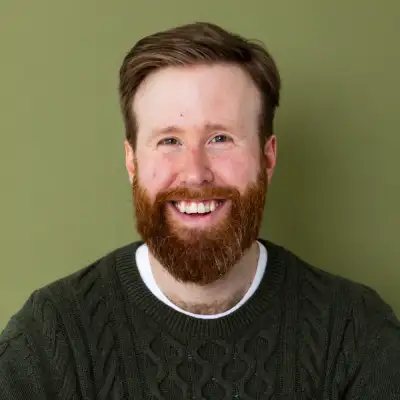
I'm Eric Johnson.
Today on the podcast, how does
radio connect to life in 2026?
Why do we need to preserve
historical broadcasts?
And why does this museum have a
hamburger and French fries on display?
Rachel Lee will answer all of
that and more right after this.
This episode is sponsored
by Transistor.fm.
If you are starting a podcast,
then you should use Transistor.
Upload your audio or video and
they'll publish your episodes to
Apple Podcasts, Spotify, YouTube,
Pocket Casts, Overcast, and
more.
Go to Transistor.fm for
a 14-day free trial.
If you're a fan of this show,
then you probably love museums.
And if you love museums, then you
know that the best shop in the
world is the museum gift shop.
So we put together something just
for you, the gift shop giveaway.
To enter, sign up for our free
newsletter at likemuseum.com.
That's likemuseum.com.
Thanks for listening and thanks
for being part of this community.
Radio is very important to me.
The listeners can't see it,
but I'm representing WBRU where
I worked, my very first job.
I love radio.
I love the look of radios.
I love the sound of radio.
But your museum has a really interesting
story in that it's a very modern example
of a bunch of hobbyists, a bunch of geeks,
turning their collection into a museum.
Could tell us that story
of how that happened?
Absolutely.
So the California Historical Radio
Society began in 1974 as groups — people,
hobbyists, engineers — who were meeting
and having swap meets in parking lots.
So most of them were Bay Area, Silicon
Valley, etc., coming and swapping parts
and stories and information, schematics.
So that was 1974.
In 2003, they got their own building.
So through some connections,
the KRE building in Berkeley was
made available to us and that's
when that transition happened.
So CHRS elevated, if you will,
from being just swap meets and
parking lots to being an actual
collector's organization with a space.
And that's when they started making
it into a museum and telling stories
and having exhibits and displays.
Ten years later, ownership
of that building changed
and so we had to move out.
As a part of that process, the
organization said, "We don't really want
to have to be subject to a lease and
landlords and moving out." So they did
a massive capital campaign and purchased
the building that we're in now in Alameda.
What's really special about that is
the building that we are in is the
original Alameda Telephone Exchange.
So CHRS is really about wireless
communication, but it's in the building
that is the ancestor of wireless
communication with wired communication.
History of communication is a very
integral part of what CHRS does, and
so our building embodies that fully.
The building was built in 1900.
It was the original
Alameda Telephone Exchange.
And after the telephone company
moved out, it was a church and
then a child care facility.
And that's … The child care facility
is the people from whom we bought it.
And when they first had that building
in Berkeley, when they opened the
first physical museum, what was
the story they were telling then?
What was the first
iteration of the CHRS story?
So I think it definitely leaned into
the technology to some extent, the
design definitely, and just that thread
of communication through the years.
So what they had there was two-pronged
then and is two-pronged now.
We have the technology and artifacts,
and then we also have the human
side, which is of course the actual
radio stations and the personalities
that were on the radio stations.
And that space was smaller than the space
that we're currently in so it was a much
more condensed version of that story.
Now we can really expand it and we're
growing and we're trying to tell this
story through over a hundred years
of digital communication, but that
was the first step in that direction.
Yeah.
So now you have a lot more space.
You have two levels of the building.
How do you tell that story now?
How do you use that physical
space to tell that story now?
It's always a challenge because there are
so many important parts of this history.
There is how radio changed people's lives.
I mean, it was absolutely life changing.
Ship-to-shore communication,
air-to-land communication.
We're talking right at the advent
when it was still the purview
of hobbyists and governments.
And then we get our first radio
stations and there's content being
played and arguably the first radio
station comes out of San Jose.
So the Bay Area and California's part
in this history is absolutely integral.
Doc Herrold's wife, Sybil, was
spinning 78s, so on the West
Coast, the first DJ was a woman.
This history is just so far reaching
and so important, and so many of the
broadcasters that developed what is
now absolutely commonplace on radio
all happened on the West Coast.
We have this history and it's local
and it's here and that's what we're
trying to tell, but a lot of these
things were manufactured here.
So again, that technology and artifacts,
you start with the spark gap generators,
and that was the same technology that Doc
Herrold was using to put voice out over
the radio and make common broadcasts.
And I'm saying common, but
broadcasts for all the people.
Not just for military or not
just for specific audiences,
for anyone who wanted to listen.
Anyone.
And then you have that … You
get radio enters the home, right?
Now there's something to listen to.
These things are coming upstairs.
Design becomes a really important part.
This is the focal piece
of the living room.
It's how … It's as absolutely integral
to your life as your cellphone is today.
It's how you get your information.
It's how you get your entertainment.
It's everything.
And it becomes in so many ways
the centerpiece of the home.
Then you get to the '30s, which
is the commercialization of radio,
which is the golden age of radio.
And then you've got wartime radio.
So many leaps forward in
technology happened through war.
Then you've got post-war.
Now you've got television,
also broadcasting.
It's just another form of communication.
And that story continues.
You get to the '60s and
you've got transistors.
Transistors paved the way
for computers, of course.
And I mean, computers preexist.
There's definitely tube computers,
but that paved the way for the
personal computer, which paved
the way for cellphones, which
use so much radio technology that
dates back to the original things.
So everybody today uses
radio all the time.
They just don't recognize that
that's what that technology is.
I think that's a really important
distinction to draw because for
some people who, especially younger
folks now who may not have grown up
listening to the radio in the car,
maybe they're listening to their
phones over Bluetooth or whatever else.
Podcasts.
Exactly.
Listening to podcasts.
It could be tempting to assume
that, right, these radios are
in a museum because this is old
technology, this is past technology.
And the argument that you're putting forth
in the museum is that this is present.
100%.
That this is directly
connected to the present.
Absolutely.
Your cellphone does not work
without radio technology, period.
Your Bluetooth, your GPS, all
these things are RS signals.
So it's this story that gets
us to where we are today.
It's ever-present and it's absolutely
a part of what everybody uses.
We just don't look at it in the same way.
And I would posit that broadcasting
has gone through the same transition.
When you think of
1909 to 1930 broadcasts to 1960s
broadcasts — that expansion,
that commercialization — to
podcasts, it's just the next step.
Streaming, all of these
things are still radio.
They're just different.
And it's interesting because especially
with large radio corporations, they've
in a lot of cases lost some of that local
flavor, and that's what people want.
So what are podcasts doing?
They're coming in and
they're bringing that back.
When people come into the museum
for the first time, if you could
indulge me, I want you to kind
of do a little mind palace and
take us through what do they see?
What do they hear when they walk
in the front door of the CHRS?
Absolutely.
So when you come in, the very
first thing you're going to see
and hear is a docent greeting you
and welcoming you to the space.
That's good.
Yeah, absolutely.
And then as you look immediately to
your left, we have just completely
redone our museum store and we have
all these beautiful radios that
have been electronically refurbished
and Bluetooth capability added.
So they're not just radios, they're
also Bluetooth speakers that are
gorgeous vintage designs that are
functional for everyday usage.
And then on the other side, we
start telling the story not only
of CHRS, but of radio history.
So we start with how we got into this
building and what the building is because
our story does start with landline
telegraph, and we have a telephone booth
from 1900 with a vintage working telephone
inside so people can make a phone call
in a real vintage 1900s telephone booth.
It's a rotary phone, right?
It is.
So the actual phone that's inside
was from 1900, which predates
rotary, but we've retrofitted it.
You can open the panel and I
have to teach the kids how to
dial and why it's called dialing.
And I teach them why
it's called hanging up.
And then once they got it, they're
texting in one hand, "Hey mom and dad,
pick up. I'm calling you," and then
making a phone call with the other hand.
That's so great.
Yeah.
So then you go deeper into the museum.
As I recall, there's a series of radios
from different eras on your right side.
Absolutely.
So we start with 1900 to 1920, and
that's where that rotary spark gap is.
And we turn it on and people can
press a telegraph key and they
can see and hear the pulses.
But then the really magical part is we
turn on an AM radio and now RF signals
make sense because they're coming and
they're literally coming out of this
radio that wasn't tuned, it's not
special, there's nothing happening here.
They're making a signal and it's
being received and transmitted.
That's kind of that first big moment.
Then we hit the 1920s where one of
the coolest parts of it is that we
have a radio from the 1920s that
is hooked up to about eight or nine
different speakers also from the 1920s.
So we have this whole 100-year-old setup.
People can listen to a modern broadcast on
how it sounded on eight or nine different
speakers that were 100 years old as well.
See how the person who made the
display says, yes, you can hear how
they all sound really different and
equally terrible by today's standards.
[laugh] Then you move on to the 1930s
and that is again that golden era
of radio, the golden age of radio.
It's the commercialization of radio.
This is the era in which every
single person had a radio.
It was a necessity.
It was not a luxury.
We have some really cool top 1%
radios in there that cost more
than a brand new car at that time.
And of course in the 1930s
we're talking about the Great
Depression and the Dust Bowl.
People didn't have money.
So any item that somebody actively
purchased, they were going to
care for, and especially when
it was that level of expense.
On the flip side, we do have people
who purchased these, at the time, $750
radios, which, a new car was $500.
So the reason they could justify
that, besides ego, is because
a car was a luxury, but a radio
was absolutely a necessity.
You had to have a radio.
You didn't have to have a car.
So these were the centerpiece of people's
homes and they wanted something beautiful
and long-lasting and high quality.
Makes perfect sense.
Yeah.
I think you were showing me one of them
that was intended to be a status symbol.
Oh, absolutely.
Can you remind me when that one was from?
Yes.
So also 1930s, the E.H. Scott.
When you look at it, the way the cabinet
is set up, the top can lift just simply
so that you can see the chassis inside.
Why would you want to
see the chassis inside?
Well, because it's fully chromed.
Yes.
So it's this incredible
eye candy of chrome
and these little canisters and
all this stuff, just beautiful
to look at, really fancy looking.
But the chrome does nothing
for the fidelity of the radio.
It literally is just for looks.
[laugh] I love that.
Deeper into the museum, I know, so there's
a wall of, was it novelty radios up
against the back wall of the first room?
Yep.
Yep.
So we have a wall of beautiful
radios, and then we also have
a display of novelty radios.
And the novelty radios are so fun
because you go over there and you go,
why is all this stuff stored here?
There's a measuring tape.
There's a can of WD-40.
There's a California
Raisin.What is all of this?
And they're all radios.
So it's one of those things.
The joke is, what is it?
Oh, it's a radio if it's in our museum.
Yep.
That's a good safe bet.
Yeah.
Exactly.
And one of my favorite displays,
which you also, I believe,
got to see, is in the kitchen.
Yes.
So in the kitchen we have our food
pantry, and it looks like we just have
some really old, probably expired food
up there, and all of them are radios.
So there are no food
products on that shelf.
It's a fairly well-stocked radio
bar, and then lots of food items.
We have Tropicana Orange.
We have Green Giant corn.
We have Cokes and Pepsis and ketchup
and mustard and mayonnaise and a
hamburger and french fries, all these
things because almost every company
used these as promotional items.
Basically, these were cheap
radios that were given away.
Absolutely.
As a loyalty thing.
Send in five [UPC] symbols and your
$2.50 and get a Pepsi can radio.
Yeah.
And they're all transistor radios
and battery powered, hold in
your hand, take it with you.
And it's fun because it's
advertising and it's branding.
And it's also fun to really look at
these and see how some of these brands
have changed over the years, but how
so many of them are exactly the same.
And some of these are as much as 50
years old, and it looks like they just
came right off the grocery store shelf.
Yeah, the Heinz Ketchup bottle.
I was like
—
Absolutely.
No different.
No way, that must just be ketchup.
Yeah, absolutely.
Farther into the next room of the
museum, you have some later eras
of radios, and you also have a
machine that I was a little obsessed
with, the NBC chimes machine.
Could you explain what
that is and what that did?
When NBC went on the air, it was
radio, and there was a person
who would play the chimes.
And over time, NBC wanted
to standardize that sound.
RCA was the equipment provider for
NBC, so RCA reached out to the Ranger
Corporation and said, essentially,
we need a music box that does this.
The Ranger Corporation made at
least two, but we assume probably
three of these music boxes.
And so they were rack mounted, and
at the top of the hour, it would go
through and it plays the three tones
that everybody knows, the NBC chimes.
Serial
number one went to New York City and
Radio City, and then serial number
two went here in San Francisco.
So we have serial number two of
these NBC chimes in our museum,
so you can listen to them.
And of course, my favorite part of
the story is, if you're musically
inclined, those three notes are G-E-C.
And the reason why is because,
at that time, General Electric
Corporation owned NBC.
So very prosaic.
I think it's really interesting.
Great little Easter egg
for the music nerds.
Absolutely.
Yeah.
I feel bad for all the xylophone players
who lost their jobs probably after this.
I know.
Yeah.
But next to that room, as I recall,
there's two more adjoining rooms.
There's a broadcast studio in the
back, which you were telling me before
we started recording is actively
being used for some projects, right?
Absolutely.
So it is a working 1958 broadcast studio.
It has a mono board and we can
feed it into quarter-inch reel
and record onto that or we can go
straight to digital because we also
have a digital setup in that room.
When students come in, we have summer
camps where we have a broadcasting
summer camp that's a week long
camp, but we also do field trips.
So when we have field trips,
oftentimes those students are
also from a broadcasting program.
So they'll pre-write either PSAs, short
radio snippets, or their own radio play.
They'll come in, they'll record
on the vintage microphones.
And we have microphones
that are also early 1900s.
So that's really fun because now
they're getting the full experience.
We'll record it to quarter-inch
reel, then we'll digitize it and
send it back to them for editing.
Yeah.
How do the kids react?
I mean, if they're maybe
already in a broadcasting
program, maybe they're primed to
—
Understand a little bit better.
Absolutely.
Understand more.
But generally, when kids come through
and you do educational programs
in the museum, what do they say?
How do they interact with the different
things on display in the museum?
I'll tell you, specifically with this part
of it, kids love talking into microphones.
[laugh]
If you have a hot microphone, they
are going to come talk into it.
So in terms of the broadcasting stuff,
they just think it's cool because they're
looking at things like this and when they
get to come in, they're getting to talk
into these vintage ribbon microphones that
they've probably only seen in pictures,
or these box microphones, just really
cool stuff to get to experience that.
Most people don't get
to have that experience.
Even though the microphone in their
phone is higher quality, there's
something about the tactile nature
of holding a microphone or of talking
into a really visible microphone.
Absolutely.
And it's sort of like the speakers.
Yes, the quality is higher, but what
comes out of the other has that warmer
sound in that it sounds vintage.
It sounds like you recorded
it a number of years ago.
So it does give that extra feeling.
Do you have a museum story?
Maybe there was a time you got
lost, a time that you were moved
to tears, or a time you saw
something that blew your mind.
No matter what your story
is, I want to hear it.
Head to likemuseum.com and click
"submit a museum story." It
might end up on a future episode.
That's likemuseum.com and
click "submit a museum story."
Hey, if you're enjoying the episode,
then make sure to follow the podcast
in whatever app you're using right now.
It's free and it makes sure that new
episodes will show up automatically.
If you're on YouTube, then
hit subscribe there too.
Thank you so much.
Well, on the topic of the tactile and
vintage things, you've mentioned a couple
times that you do refurbish old radios,
and that's the next room, there's a
repair shop where … Is it volunteers?
Who works in this repair shop?
It's volunteers.
So everything that's in the museum for
the most part is a donation, and our
volunteers want these things to work.
However, we receive far many more
donations than we can actually display.
So one of the things that we do is our
volunteers will take these 1960s — I
mean, really anything 1900 on up — radios,
they'll electronically refurbish it.
They'll go through it, they'll recap
it if it needs it, make sure it's
got good tubes in it, all the things.
And then, as I said, if we can,
we'll add an auxiliary cable that a
Bluetooth component can be added to.
So now it's a radio and it's
also a Bluetooth speaker.
And that has … We will sell those.
We sell them in our store, of course.
We also, for really special nice
ones, we have an auction once a year
and we sell them there and then we
also sell them at antiques fairs.
I was this close to dropping
$100 in your museum.
Come back!
[laugh]
You'll see me again, don't worry.
The work that these volunteers do is
so impressive, of keeping these things
looking great and sounding good.
Absolutely.
So it's not just making sure they're
electronically sound, which we do.
They also do a lot of cabinet work.
Sometimes we get these plastic
radios and they're chipped and
our volunteers make sure that they
look good, that they sound good.
They run the radios through their
paces before they will send them out.
They make sure they've played
for X number of hours and that it
hasn't started humming or whatever.
[laugh] So yeah.
Absolutely.
So before you took this job,
you came into this role about a
couple years ago, is that right?
September of 2023.
Yeah.
So before you took this role, what
was your relationship with radio?
How did radio kind of play into your life?
So I grew up in Nashville,
Tennessee, so music city.
But my relationship with radio was, I
think, really standard for that time.
I was not a huge radio aficionado.
I woke up to radio every morning, I
had a clock radio on my bedside table,
very '80s, and that was kind of it.
And so when I interviewed for this
role, I said to the board at the time,
I just want to be perfectly clear.
I don't know anything about radio.
My background is nonprofits
and business and education.
And they said, "Oh yeah, yeah, yeah.
We have all that knowledge. What we
need is what you have." So in the
time that I've been there, I've really
gotten to learn a lot about radio.
And of course, when you learn
about anything, you develop
an appreciation for it.
Absolutely.
I mean, you're definitely
going to learn on the job.
There's no way to come in knowing
everything you're going to need to know.
But three years into being executive
director of the museum, what's one thing
you wish you had known at the start?
Oh gosh, that's a really good question.
You can be told how amazing an
organization is over and over
and over again, but until you
experience it, you can't know.
But that is one of the things
that is so special about CHRS.
It is a community hub
more than anything else.
When you go in on a Wednesday or Saturday,
what you're going to see is a whole
bunch of volunteers, and it's alive.
It is a hive of activity.
It's a hive of activity in the shop.
It's a hive of activity in our library.
It's just everywhere.
There's people and they're
doing, and they are volunteers.
These are not professional museum staff.
These are people who are passionate,
and the coolest part is they're
willing to share that passion with you.
If you have questions, if you want
to learn how to do it yourself,
all of these people have the
desire and time to train you.
So if this interests you in any way,
shape, or form, reach out to us.
We'll connect you with the right people
and you too can learn how to do any
of this, because, we haven't gotten
there yet, but we have a tube vault.
We have people who are
sorting tubes all the time.
We have a ham shack.
So that is an actual radio amateur
radio station that is on air.
If you're a ham, maybe where you
live, you can't put up an antenna.
You can come use HF-frequency equipment.
You can do all these things in there.
We have a hall of communications that
is point to point rather than broadcast,
including an SDR that people like to use.
We have a television area, and
then we also have the largest
radio-related library west of the
Mississippi, so we have lots of
people in there archiving, digitizing.
And we have audio.
We have thousands and thousands of
reels of audio of Bay Area broadcasters.
We are in the process of cataloging
all of that, and then we're
going to start digitizing it.
And that is a massive undertaking
but of critical importance.
When radio stations changed
ownership, a lot of times
everything went into the dumpsters.
There was really no thought to how
are we going to keep this legacy?
What is the history?
It was, it's owned by someone else
and they don't want that old stuff.
So a lot of the things that we have,
we have because broadcasters recorded
and kept their own stuff or fans did.
And so we get requests probably twice
a week of people asking, "Do you have
this broadcast from this era featuring
this person or this commercial?"
or whatever, and we are now able to
start to go back in and say yes or no.
Makes me think of there's TV shows that
are considered … These's whole seasons
of shows that have been lost, right?
Yeah.
Seasons of "Doctor Who" or early episodes
of Johnny Carson's "Tonight Show"
that are just considered lost media.
Yeah.
Have you ever found anything in the
archives that was presumed to be lost?
I wouldn't look at it that
way because there's not enough
people asking for these things.
Makes sense.
But more what we have are
occasionally found things.
"My dad was interviewed on blah, blah,
blah, thus and such a date," and we
can give that back to the person.
Or, "My dad owned a store
and they did this jingle. Do
you have it?" And we might!
Pepsi-Cola hits the spot
12 full ounces, that’s a lot
Twice as much for a nickel, too
[bonk!]
Pepsi-Cola is the drink for you
So in terms of funding the operations
of the museum, can you talk about where
your funding comes from, the different
sources, and how do you deploy that?
Where are your priorities in terms
of moving forward with the museum?
Yeah, absolutely.
So the majority of our
funding is from donations.
I was the very first
employee hired by CHRS.
CHRS has been around 50 years,
and for almost all of those 50
years, they were volunteer run.
So the volunteers were the donors
and they kept this thing in business.
And when they needed something
like a building, they rallied,
gathered together, fundraised to
make it happen, and made it happen.
Hiring me is obviously a big leap forward.
So there's absolute
funding needed for that.
And in the process of trying to transfer
this place from a clubhouse to a true
museum, we need a museum curator.
We need all these pieces in
place to professionalize it.
So again, donations are our biggest
form of revenue, but we also, we
sell the radios, so that's helpful.
That helps fund our programming.
We have started summer
camps, that's really helpful.
And those summer camps are amazing.
We do the broadcasting and
podcasting one, which I talked about.
So students design and create their own
podcast that they then get to record and
edit, and we talk about how to do this.
And even to the extent that we talk
about maybe how you would market this
if you had enough and wanted to do that.
So that's a really fun one.
And then we also have our electronics
and wireless summer camp where
students learn how to solder and
learn some basic electronics.
So yeah, really things that
you won't get in the classroom.
The hands-on experience that just is not
practical to teach it out of a textbook.
Exactly, exactly.
So it's really fun to see those
programs start to develop.
And although it is not revenue
generating directly, we have our
SoundBites program, which is Saturday
programming for children, again, so
that we can bring that thread across
the line of "this is relevant to
you." So our one that we're doing for
tomorrow is a build your own radio kit.
So that's going to be really, really fun.
And we have a morse code one
and we have a museum quest one.
So we [have] all these different things,
but what that does is it brings not just
youth in, but it brings their parents
in and their parents can see the space.
And if their parents are interested,
maybe they become volunteers, and so on.
So it is really kind of a holistic view
of how we're going to move this forward.
Now, in terms of other funding,
we occasionally get sponsorships,
which is really helpful.
Our biggest event of the year is Radio
Day by the Bay, which was just this
past July, we have it every July,
and we do get sponsorships for that.
Our biggest supporter this past
year was the city of Alameda,
which is really lovely because
again, it's right there at home.
But ultimately long-term for the
museum, we will probably need some
form of corporate sponsorship.
So we are looking ahead to that and we're
hoping that maybe these ties that we're
bringing through from where it started
in 1900 to how it's still functional and
in use today, maybe a wireless carrier
or a technology company might go, "Oh,
I didn't realize that was my story to
be told," and want to be a part of it.
That's our hope.
So we're working on that.
Absolutely.
So, pie in the sky, you get the
big corporate sponsor, you can
finally achieve everything you
want to do within the museum.
What's the first project?
What's the first thing you
haven't been able to do yet that
money would allow you to do?
Yes.
So complete the great room.
That would 100% be my top priority.
We can only tell the story as
far as we have the story, and
right now that's the 1930s.
We need to bring it all the way to today.
We need to make sure that our story is not
just blocks of wood hanging out in a room.
So it's got to be interactive.
We have to have multimedia.
We have to be able to make this
come alive for people because it
was alive for the people who lived
with this in the 1930s or the 1920s.
It so closely mimics
the story of computing.
When you're talking about early 1920s,
late 1910s, people in their garages
or basements tinkering, putting stuff
together, stealing grandma's breadboard
and bolting it down.
It's just such a good story.
And so the onus is on us to tell that
and make sure that people come away from
this going, "Oh, I didn't think that
would be so impactful and I've learned so
much," and, "Wow, this is really great."
And maybe, "How do I get involved?"
What do museums mean to you?
So not specifically the work that
you do with the CHRS, but just what
does the word "museum" connote?
Museums have an extreme responsibility
because they're not only preserving
things, they're educating.
And how we preserve and how we educate
is really important because that
determines how you're going to let
people know about what you're doing.
If you're really boring, no one's
going to take anything away from that.
So you have to constantly be thinking
about how people want to learn and how
people want to engage and how people's
attention spans are changing or how
people want to interact with things.
Is it more important to set this
up as an Instagramable moment or is
it more important to do something
hands-on so that you're conveying
this information in this way?
So that is one of the most important
things that museums need to do.
But even beyond that, where we are
currently as a society, that space that
museums fill is acting as a community hub.
When you go to a museum, very few
people go by themselves and hope not
to talk to anyone until they leave.
[laugh]
You go to maybe engage with a docent or
to learn, or more likely you probably
go with your family and friends and you
talk about the thing that you're seeing
and you maybe go and talk about it later.
"Oh, that was so cool.
I really liked …" whatever.
And that is a service that museums provide
far beyond the most obvious mandate.
So CHRS not only provides
that because we are a museum.
We are a docent-led museum.
You don't come in and put
headphones on in our space.
You come in and you've got a
person telling you about it.
And if you have a question,
they can answer it immediately.
So that's really special and important
and unique in this day and age.
One of my favorite things that … A
person came to our museum, took
a tour, was super interested in
what they were doing, immediately
signed on to be a volunteer, and
now they're there very regularly.
And their comment about it was,
"I love coming here. This place
is just so alive." And it's that.
You're getting to talk with other people.
You're getting to work on a project
that you may not have otherwise.
You get to be creative about something.
You get to have an idea and bring it
to me and say, "Hey, this place would
be improved if we did X." And I can
say, "Yes, let's do X. Let's go do it."
What was your first memory
of going to a museum, your
first experience with museums?
When I was in elementary school,
we often took field trips to the
children's museum in Nashville.
And it was very much a doseum style:
go in, everything was hands-on.
Those were always my favorite trips
because everything really was interactive.
It really was aimed towards children.
You can come and do all
these unique things.
So that definitely informs where I
would like CHRS to be in terms of
people coming in and having a favorite
spot where they get to do a thing.
I've also been to large
museums where everything's
four feet back and under glass.
And that's an experience too when
you're getting to see the Monet or Van
Gogh or Seurrat, that's a wonderful
experience too, but it's just different
than what we're trying to provide.
Radio was always interactive.
You were always turning dials
and listening and using your
senses to tune into this program.
I mean, radio is often
called theater of the mind.
And so being able to picture it in your
head as you listen to these stories on
the radio, all of that, that multisensory
feeling, we don't want that to
disappear as a part of being our museum.
Exactly, exactly.
It's such an important point is that
you're not just looking at the thing.
For your visitors, interacting
with the thing is a crucial part of
understanding what made it special.
Absolutely.
Absolutely.
And some of that's design and
that is mostly eyes, right?
That is looking at it and
saying, oh, there was this cool
design shift at this point.
Things going from these super
science-fair-looking breadboards
to a beautifully designed wood
cabinet that's a piece of furniture.
Between 1920 and 1930, one third
of all furniture sales were radios.
So knowing that that design element was so
critical, that's an important story too.
But what were people doing with it?
They were tuning in.
They were thinking about it.
They were visualizing.
It wasn't unidimensional.
You mentioned that when you were growing
up, you went to these doseums — which
I had not heard that term before.
I love that.
What other museums have
you been inspired by?
What have you borrowed from other
museums that you've been to as an adult?
Oh, that's a really great question.
I think there's something that can be
taken from every museum that you go to.
I've been to the Exploratorium.
It's amazing.
I've been to the [USS] Hornet.
It's amazing.
I've been to the Met.
It's amazing.
So there's always something that you go
in — I've been to the Smithsonian — and
just the more you expose yourself to
these things, the more you have that
feeling of, oh, I love how they utilize
the vertical space by hanging things
from the ceiling and raising that up.
We will be doing that.
And that's something that I
saw in the Smithsonian a lot.
And then places like the Exploratorium
where you want to be able to do a thing.
Looking at it's fine, but doing is
always going to be far more educational.
Being able to go and make a phone call
in a phone booth from the 1900s, right?
There you go.
Being able to send a wireless telegraph
signal across a small space, being
able to receive a radio frequency.
All of those things have to work
together to tell our whole story.
So it's definitely not one thing.
It's always being open to everything
around you and being willing to learn.
Yeah.
I mean, I've never
regretted going to a museum.
Oh, of course not.
No matter what the topic is, even
if it's something that I don't think
that I am personally interested in,
going to one of these places, it
changes your perspective on things.
It just does that automatically.
For sure.
I am so lucky.
My mother is taking me on a trip to
Egypt in September and I cannot wait to
go visit some of the Egyptian museums.
What is a small detail about the CHRS
that you care about a lot, that you love,
but that most people wouldn't notice?
It is the breadth of
engagement of our volunteers.
We have a woman who helps
out in the tube vaults.
She sorts tubes.
She's technically minded,
absolutely brilliant.
And she also does the dishes on Saturdays.
So the depth of involvement, the
breadth of involvement, that our
volunteers have, everybody works
together to make this happen.
One of the most influential
volunteers is there six days a week.
He is getting more trim around the edges.
He's helping to compact a display
to make more room for the next one.
He laid all the flooring
in the great room.
I mean, things were done
at CHRS by volunteers.
And you can say that, but the impact
is not immediately visible until you
are there and you start to understand.
One of the cool things that we do,
and one of my favorite things, is on
Saturdays, we have a volunteer who
comes in and cooks lunch for people.
Wow.
So everybody stops and they go and
they have this community lunch together
and they're friends and they're
talking and they're maybe talking
about CHRS stuff, but maybe not.
They're enjoying each other's company.
And again, providing that community
is so incredibly important.
And one of the reasons people like
coming to CHRS is they get to learn
about something and they get to be
among a community of like-minded people.
And that's just so valuable,
especially today when people are
so engrossed in their phones.
Yeah.
How do you grow that community?
Because I think there's a generational
cliff coming at some point where people
who just don't have the same childhood
nostalgia for radio that you and I do.
For sure.
It'd be a different mindset coming in.
It is and it isn't.
I've noticed more younger … A lot of
our volunteers are retirees, so when I
say younger, I mean still in the workforce
but maybe aiming towards retirement.
But a lot of them, just given our
proximity to Silicon Valley, are
potentially in or were in tech.
And so they're doing something that's so
cutting edge and so forward, to be able
to backtrack and look at something with
tubes and to see where it came from.
And as a part of our education
programs, that's where we're
trying to also draw that line.
So yes, you're using this thing and
all the transistors are so tiny,
you can't even see them anymore and
they're on chipboards and whatever,
but this is where it came from.
So now your capacitor's this big, whereas
on your chipboard, you can't even see it.
It's microscopic maybe.
But to be able to bring that forward, a
lot of these people like to come back.
So one of our most popular things
are beginning radio repair classes.
People are so interested in learning
this just because it's fascinating.
And while it's still dangerous, we're
dealing with high voltage, it's important.
When we teach this, things are big.
You're not having to do
anything under a microscope.
It's not tiny.
You're not having to
deal with a chipboard.
It's a solid thing that you can
literally cut out with wire clippers
and put back in and solder, and now
you have a new capacitor in place.
So those kinds of experiences, so often
we don't have that getting your hands
in there experiences available to us.
We've been thinking about fixing things.
So many things are designed to be
thrown away rather than repaired.
And I think that's really
attractive to people.
Look at how many maker
spaces there are around.
And yes, maybe that's making
in a different way, but you
can also learn from this too.
And I think people really like the idea
of being able to say, "Hey, I could just
go take a junker radio and go completely
redo it and now it's working again."
And I think that sense of accomplishment
in completing a project like that
fully on your own is really valuable.
It's making me think, I'm just realizing
as we're talking, that the hands-on
museums, like the ones you went to
when you were growing up, those were
almost always geared only at children.
It's learn about basic physics
lessons, things like that.
Absolutely.
Hands-on museums for adults
are few and far between.
It doesn't mean that we
should stop using our hands.
We should stop building stuff.
I think people are probably happier
if they are using their full brains
and using all of their creative skills
throughout their life rather than just
stopping after a certain grade of school.
Of course, of course.
Most adults like to learn a new
thing when it's not frustratingly
hard, and maybe even when it's
frustratingly hard up to a point.
Most people want that feeling
of accomplishment, of having
done something by themselves.
Think of all these crafting-type
places that are really popular right
now, the painting places and the fiber
arts places that are … People want
to make something, and this, in a
really unique way, is making something.
And I think people
crave those experiences.
So it is something that we provide
and enjoy providing and have
all of these people with this
knowledge who want to share it.
They don't want this to die.
And that was really their whole thought
process on hiring an executive director.
This is a really cool place.
Most of the people here are older.
How do we make it sustainable?
I've got two more questions
for you before we wrap up.
One is about something that's
been personally impactful for you.
So not necessarily your favorite museum
that you've been to, but do you have
a memory or a story of a time you
went to a museum that really left an
impression on you in a profound way?
When I was in second grade, we took a
trip to England — London, specifically
— and there was a Viking exhibit.
And the way it worked is you got in
this little car and it turned you around
backwards and you went back through time.
So they had all these little vignettes
that you went to, and then you got into
the era of the Viking, and then it told
you all of these … It was a Disneyland
ride but about the history of the Vikings.
That was such a fun thing.
And then you went upstairs to this
different area and it really was your
more standard museum display thing.
But immersing yourself in that way
made you so much more open to all the
things that you were learning upstairs.
What we want to do at CHRS, obviously
we don't have space for little cars to
—
That's what you think!
I guess it could happen!
I don't know.
Stretch goal.
Exactly.
Might have to add a
third and a fourth floor.
Last question I have for
you, and this is the hardest
question of the whole interview.
When you are in a museum
gift shop, what do you buy?
So oftentimes it is a book or an activity.
So many of these museums have
really cool museum-style activities.
There was a great one that we got.
There is a place in San Antonio
called the DoSeum, and so
that's kind of where I got that.
But they had this pegboard
and it's got gears on it.
And so you have to place the gears in
a certain way to make them all turn.
And so that was just so
fun to play with myself.
So we had that for years with
my kids because then you turn it
and then they all turn and then
you can set it up differently.
It was just a very cool thing, and I
love that mechanical kind of stuff.
Honestly, I could imagine myself having
that just as a little stress reliever.
Exactly.
Stop looking at the screens, play
with some gears for a little bit.
Well, and when you're 3, 5, whatever, and
you put them in the wrong way and they
bind, I mean that's education right there.
There you go.
There you go.
Rachel, thank you so much
for coming on the podcast.
Thank you so much for having me.
Thanks again to Rachel Lee
for coming on the podcast.
The California Historical Radio Society
is open every Wednesday and Saturday
from 10am to 3pm, and it's also available
for private tours six days a week.
For the first time in my life, I regret
that my ears are not pierced because their
gift shop sells earrings that look like
cathedral-style radios from the 1930s.
I'm giving away a pair of these
earrings in our gift shop giveaway.
To enter, sign up for our free
email newsletter at likemuseum.com.
Call 'Em Like Museum is hosted
and edited by me, Eric Johnson.
It's produced out of my podcast
agency in San Francisco, LightningPod.
Our marketing specialist is Julia
Wilde, artwork by Rhe Civitello.
Special thanks this week to Steve Kushman.
Thank you for listening to this
episode, and I'll see you at the museum.