Subscribe
Share
Share
Embed
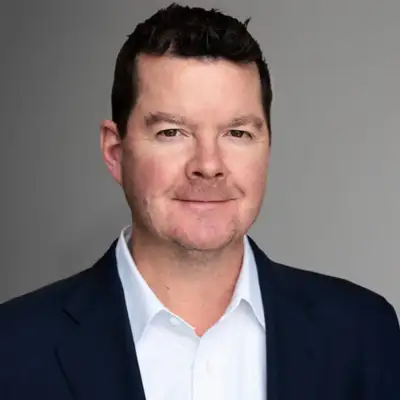
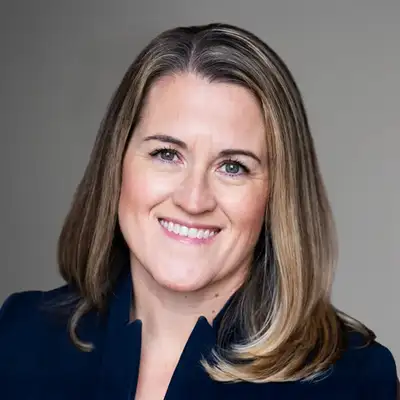
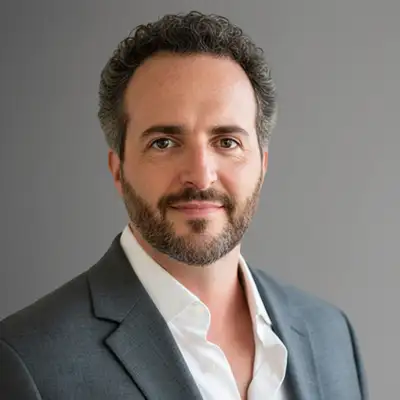
Meet the Insiders rewriting the rules of influence. Pulitzer Prize-winning journalist Brody Mullins and veteran DC strategist Lisa Camooso Miller interview the leaders who shape perception, move policy, and win when it matters. Not pundits or commentators – these are the operators driving some of the most critical strategies and outcomes in today's Washington.
GUTHRIE It's like we're in Rome, in the barbarians are at the gate. And Caesar looks to his army and says, we need you. And they go. I'll be there in 3 to 5 years. I gotta go get permits.
ANNCR [ANNCR INTRO]
BRODY Welcome to The Deciders, where we talk to the insiders, rewriting the rules for effective advocacy in Washington. Today, we're joined by Congressman Brett Guthrie, chairman of the Energy and Commerce Committee. I would say that the best committee on Capitol Hill, in my opinion.
GUTHRIE Absolutely. Thank so myself. Yes, very much, in spite of the chairman.
LISA Mr. chairman, you got your background, though in business, you were very involved in an auto parts, business in Bowling Green. Talk to us a little bit about what it's like to be. It should be in business in America.
GUTHRIE So I actually grew up in, in North Alabama. So I grew up in the most people know it as Muscle Shoals. It's become, very famous for the music that came out of there, the Rolling Stones recorded there. But the real Muscle Shoals music is, Wilson Pickett Mustangs out all all those great songs, Aretha Franklin. So my dad worked for Ford all through high school for me. And he was Matt worked his way into management, but was a Ford worked in a Ford plant. So I was raised right in the smack in the middle class. And then, when I was a senior high school, they shut the plant down. Ford decided to outsource a foundry, casting it, but it wasn't an assembly plant to make parts. And so my dad thought, well, if I know how to make them in, Ford wants to buy them, then maybe I can go start my own business and took him a couple of years, a few years after the plant closed, but I was able to finally piece together, selling his retirement, selling everything. And my dad started it and all my brothers and I own it. I left Alabama to go to West Point, served in the 101st, so I graduated from high school in 1982. So in 1983, you remember mourning in America, the evil empire. We're going to fight the Russians. So I was called to that and thought I would spend I took German in college. It was more because I thought I was gonna spend half my life in Germany. And the wall came down. So I after I left the army because my dad had started his business, decided to work there. And only in America can you lose your job and start your own business and be better off than you were before. We were small, still a kind of a small place and a massive, supply chain for our automobile industry. And if you're good enough, you're efficient and you can do the right price. You can compete.
LISA What has surprised you most in the transition from being in a small business to being here in Washington?
GUTHRIE I think most people who come with businesses could think that let's just get things done. If you're in business and you're a particular leader of a business, I always tell from that experience of people who lobby in town. I think the hardest groups to do are the ones who work for corporate America, where the CEO says, well, let's get this done. And you could have an issue that 435 members of Congress agree on. But it's just sometimes hard to get done because, well, I'm not going to do that, Bill, if you don't do this bill. And that's not going to happen if you don't make this happen. And, you know, business is of military, it's hierarchal. If you're the boss, you hire fire. And so if somebody is not going to be productive or be a good part of the team and you have a legitimate reason, you can change teams in Congress, only the American people get to change team. You know, everybody represents their constituencies. And sometimes we get frustrated with the people here. But I always stand back and say, you know, they represent the people that sent them here, and you have to figure out how to how to work together.
BRODY You mentioned your formative years or when the wall came down. That was a battle about capitalism versus socialism. Isn't it amazing that we're having that fight again?
GUTHRIE It is amazing. But if you're a socialist look what Europe has done to itself in the last 50 years, particularly the last 20 years really the United States in the European Union had the same size economy in 2007. And so we have twice the size of the economy in 20 years. So if we had elected Democrat socialists and make the same decisions they made in Europe, we would have half the size of economy we have today. You want to talk about affordability. You want to talk about mobility. You want to talk about ability to find a job. You want talk about ability to for your family to live better. If you want to talk about all the problems, the angst, the Democrats, socialists don't solve it. They make it worse.
BRODY You mentioned angst. And that leads me to I. What what are you hearing in your district about data centers? Are people worried or are they excited?
GUTHRIE Well, I is so it depends. I like to say I'm excited about AI, but people have criticisms of AI and people are concerned. I'm not criticism. Well, the criticisms, but concerned. They're more concerned about data centers in AI right now. But if you so put them together. So if you can have a data center. So so when the concern is is it going to displace jobs. Is a data center going to come raise energy prices utilities. And what I say I'm glad they're concerned we should ask those questions. We should make sure if a data center comes into community, it's not disruptive. And communities should have the right to say, like zoning. You know, if if we talked about my dad working for Ford, if Ford wants to build an plant, the local community, could you decide, do we want to do we not want it? Do we want it here to want the most people bent over backwards get a Ford Assembly. That's a great company. So they they bend over backwards to get them. And for some reason, data centers have gotten this, negative content, even if you put it in the right in an industrial park away from prime farmland. Here's the issue, though. AI is it's like the dollar is a world currency. Who controls AI? Who controls information? What the values? Is it going to be us? It's not going to be Europe. Europe's taking them stuff out of the game. Europe is just worried about trying to not regress. We're wanting to strive to move forward. And it's either going to be us or China. We're months ahead of China. And I, if we take ourselves off the game for a year, then are we going to be? I mean, it's just crazy when you think about taking yourself off for a year will be not only we be six months behind, but it's exponential leaps forward, so it's almost impossible to catch up. So it's a national security issue.
LISA You for a long time have really been advocating on behalf of permitting reform. Where does that bill stand?
GUTHRIE So we have a series of bills for all because not really one kind of CNN, but we've looked back, we're looking back on it and said, you know what people say they're not really doing permitting for well, we just passed 20 bills to deal with permitting reform, but there's not a signature bill. So we're looking at let's package these bills into a single bill. I like the word the Power Act. So, so it gives it kind of the brand that because what people are concerned about with data centers, are you going to have enough power? And we absolutely have enough power in the United States. There is no doubt about that. The question is, is the power getting generated and is it getting moved to where it needs to be? So we need, power to move. So natural gas, we have pipeline reform. We need to make sure we can do small modern reactors. When we say the Clean Air, Clean Water Act, we don't want to change the standard. We want the same standard for clean air and clean water. And what we're saying is there needs to be a shot clock on reviews of it. And so we just want to say we don't want people to be able to use that process to block things. We want the process to use to make sure we have clean air and water.
BRODY It seems like from what I'm hearing on from the industry folks, they feel like September is drop dead. And after that it gets really where it.
GUTHRIE Gets difficult to do. And so so here's the question. So I saw actually Shelley Moore Capito Illinois over I know her in jail. And white House are working hard. Senator Lee and Senator Heinrich are working hard. We're working engaging with, Frank Pallone on our side. We'll see if we can get some bipartisan wins in that. We have to have movement in September so that probably after the election in the lame duck, it depends on who's duck is lame. When we get back, is it going to be I think we're going to hold the house. I really believe that. So we think we're still going to be in the same position, so we can still drive this debate. We need to have something done in September. So we're ready to do a final package by the end of the year.
LISA And do you feel like if those packages were put in place, that they might also help with the affordability and the data center.
GUTHRIE So if you have limited supply and you increase demand with the data centers, that that affects the price. But if you can't grow the supply to meet the demand, it affects the price. And what we're saying is let's grow the supply, the reaction, build a lot more power than people think we are, but we could build a lot more on the we have 300 years easily or more of natural gas in the Permian Basin. You know, horizontal drilling has completely changed the world.
LISA In order to build. It takes time in order to then get it up online. It takes time. And so and if anybody's paying any attention to how fast things are moving right now, I and everything else, we don't have a lot of time.
GUTHRIE We don't have a lot of time. That's why we need to get the permits done. We'll be right.
ANNCR Back. Oh, we're blessed with tremendous resources. Unfortunately, a lot of times you can't move those resources, which is one of the key reasons why in this country we need comprehensive permitting reform at the federal level, not just for oil and gas, but for all energy resources, so that we can get that supply from where it is to where it needs to be when consumers need it. Today, if policymakers make that choice to get infrastructure permitting reform done now, that could be the basis point for our energy future going forward.
LISA When your child gets sick, time is everything. Getting treatment sooner means more options and a real chance at getting better. Thankfully, almost every new treatment for cancer is available here, and because of strong American leadership, we get these new medicines first. But that can change fast. And other countries, many are told to wait or go without. If Washington copies other countries policies, we'll have to wait, too. It's time to tell Washington keep America in the lead. Welcome back to The Deciders. We're here with Chairman Guthrie.
BRODY We love talking about the Kids Online Safety Act, a big win for you guys in the committee. Big win.
GUTHRIE Very bipartisan win. Very, very big win. And so we sat down at the beginning of the of the Congress when I took chairmanship and said, what do we want to get done? And protecting kids online has been critical in getting it done. And and so we sat down and, you know, we had a bill that came out of the Senate last year. There were some really questions with some people about whether some of the provisions were constituted just kind of a and so we wanted something that's constitutional, that's going to protect children. And so that bill in the Senate was called Kosa. So people compare our bill to Kosa. Ours is that it's Kosa. Plus we have banning the, you know, children that are under and 13. I preferred 16, but we. You got to go where you could get the votes. Right. So 13 from social media presence. You know England and I think Australia is 16 or they did in Asia. You have to check for adult sites. So if you're under 18 you have to have a check for adult sites that, your phone when you buy. Most people get a family plan that have phones. And so their child's phone is by default protective. So the parent has to give them permission to go on site. The parents are taking responsibility. The parents are just concerned, like me. I kid you make this phone do what I think it's supposed to do. And so, you know, you parents of of teenagers now are a lot more phone savvy than my generation. I get that, but but not everywhere. And so parents said, just give me some tools so I can manage what's going on with my children.
BRODY And that's what the bill does. Gives the parents the tools.
GUTHRIE You give the parents the tools. And the bill passed the House. It's in the Senate. We had some senators try to meddle in our bill a little bit. And my answer to that was once I had some press people asking me about that. You know, the Senate does a bill, we're going to do our bill. The Senate needs to do their bill, and then we can try to figure out where we can meet to get it to the president's desk to be signed. But when we first started the Congress, we said this protecting kids online is an absolute priority. We're going to get something done. And, you know, the staffs on Capitol Hill are young people. I talking how young the Capitol Hill staffs are and they are but they're also young parents. And so we I've seen, Republican staff and Democrats have an energy Commerce committee that sometimes knock ads a little bit. And it's okay to knock heads in Washington when you disagree on a policy. But this isn't something we disagreed on. And so the question some committees are going this way is that, you know, the elections coming up, we're just going to not agree on anything. And what what have ranking member Pallone and our team has said, if we can find places we agree, we're going to work together to get big things done for the American people.
LISA Let's get into another issue area. If nothing else, today we're going to leave the audience with a full understanding of how big a job you have in the Congress. You've taken the lead on combating Medicaid and health care for us. Oh, yeah. I think yours might have been the first committee in a decade. Perhaps that has done something there. We talked to lots.
GUTHRIE Of reform into Medicaid, the first of the biggest dollar wise, the biggest, entitlement reform in the history of Congress. Of course, you know, our budgets are so much bigger than they would have been even in 94 when they did welfare reform. So this is like Newt Gingrich, Congress level reform in health care. And so what our, detractors said, including my governor in Kentucky, was even listed, I think, 35 hospitals that were going to close because of our bill. We said no, only people affected. If you're an eligible, illegal or able, the big one was eligibility. Joe Biden administration essentially stopped eligibility checks. And so we put in that you have to you have to verify that you're eligible for Medicaid. So eligible for Medicaid twice a year. And you hear all the lamenting of, oh, if you force people to sign up, they're not going to sign up, they're not going to have health care. Well, if you're getting a free health care, you should make the effort to sign up for it. We put that in place and the other one was able body workers. So Medicaid was written for like single mothers, dependent children, people that are disabled and under the Affordable Care Act. Is that anybody, any adult under 40% of poverty level could get Medicaid. And so and the federal government will pay 90% of the bill. So states which is signing people up. And so we're said, well, if you're eligible to work, if you're not disabled, if we even said if you're not a dependent child or because sometimes, you pay more for child care than going to work. So we don't want to punish people. So we say, if you have a dependent child, a dependent parent, you're an active adult recovery programs that you're exempted from the work requirement, but you got to spend 20 hours a week, a month doing something. If you're if the if the federal taxpayer is going to pay for your health care, you've got to do something,
BRODY Different topic sports betting prediction markets. Senate Commerce had a hearing on this, last month or so. Have you guys looked into it?
GUTHRIE We have not started down the path of the thing that we've looked at in sports is nil, but we haven't really got into the sports betting. Some of that would be judiciary.
BRODY But you have been a leader on the score.
GUTHRIE We have been a leader in the score act and that's the initial that's name Benjamin Likeness. We want players now to, you know, the old deal. If you're going to go play for a school that you love because they and they offered you a scholarship because you wanted to play, there is different players, kids, young people can't blame them, are going where the money is. But they're transferring every year. The, the schools are actually showing up and assets to save them from themselves. They said we can't we can't discipline ourselves. So how do you transfer a kid in the middle of an academic semester and put them in class? You know, if you're an academic student, you can't say, well, you know, I'm at I want to go to, I'm at North Carolina, I want to go to Notre Dame. And Notre Dame said, okay, we're going to meet you tomorrow. That usually doesn't happen, but I guess it does happen if you're, a five star athlete. And so the schools are saying we need to have, like, transfer windows where people can transfer and some standards around it. We did have kind of a bipartisan coalition. The historically black colleges are supported because their players are getting, you know, taken from their schools and going to bigger schools and things like that. So they they feel it's put them in a bind. And so we had some broad support with that. But with the redistricting cases that have happened in Alabama, Louisiana. So SEC kind of footprint, the NAACP called for a boycott. And so we've we've kind of lost that coalition right now. But we'll see what happens. It's it's good for the students to have a set standard. It's just crazy the way things have changed that needs to be fixed. But that's for another day.
LISA We'll be right back. Oh, a message from the American Chemistry Council. Here's a deadline you can put on the calendar September 30th. That's when a key funding source expires for America's chemical review program. The program operates under Tosca, America's primary chemical management law, and plays a critical role in determining whether new American chemistries get to market. The cost of inaction impacts the entire manufacturing supply chain like autos, defense, and semiconductors. Congress has started the work. Now they must finish it. Fix Tosca. Learn more at American Chemistry. Comtesse, CA For America's electric companies, there's no off season for Storm Prep.
ANNCR It's something that we're working on every day, 365 days a year. With this smart technology, we're able to make decisions quickly.
LISA The models help us get the right resources in the right places to help us with the response.
ANNCR In the event of a very large storm, then we may call on mutual assistance and ask our neighbor utilities to come and help us out.
LISA We're not in it alone. And that's one thing I love about America's electric companies.
BRODY Welcome back to The Deciders, chairman.
LISA We ask each decider the same three questions. The first one is what's something in the past year you're most proud of?
GUTHRIE Oh, I'm proud of the work of our team on on the entitlement reform. And we talked earlier about Medicaid and how we fix Medicaid in a responsible way. The way that it came out of the House actually was endorsed by the Kentucky Hospital Association, because, you know, that's a response. We know that we we know it can't go on the way that it is. It's going to collapse on itself. So it has to be responsible reforms. I'm not saying they endorse what came out of the Senate. The Senate actually did, I thought a good job as well, probably a little further than a week ago, which is usually not the case in the Senate. And then we were able to to get the votes. But most proud of for me personally, for the committee is that for me personally as well as ours, I don't know how you will. You guys can't believe how patient Speaker Johnson is because I did this on Medicaid. He does on every issue I did on a couple others. But Medicaid and where you're sitting with people that are more moderate and people that are more conservative and trying to find where we can match. And I think my ability just to listen, take it in instead of like, well, that's you, but that's not right. That's okay. I see where you're trying to go as a really trying to go. Is there a way we can get together? And I think I gained the confidence of my colleagues. So what I actually described is that people had faith in me to do this. What I'm proud of, I guess.
BRODY What's one thing you'd like to do over.
GUTHRIE Well, you're back in the Medicaid, I guess. So over the health care. There are $0 plans in Obamacare, and we got this stripped out in the state we wanted to fix, and I wish we could to fix it outside of reconciliation. But there's so you can sign up for health care and pay nothing. You know, maybe people are top so you get that, but it's automatically renewed. So once I sign you up. So that's I'm Brody up and Brody like in Florida and he moves California forever. You're getting payments. So it was like 80, 85% of the people who are in these $0 plans that never make a claim, never make a single claim. So I never so they think that. So insurance companies are getting subsidies from the tax payer and they're not paying anything out because these people really are on their own. So we we wanted to have a $5 re-up and you had to re-up every year. So somebody $5 isn't going to keep anybody from having health care. Because if you believe you're below 40% of poverty, you get Medicaid free. So this is people 40% above 40% of the poverty pay $5 in sign up. Then this would stop massive, massive fraud. And that's still on our agenda. I wish we could have done more to save taxpayers money and provide health care to the people that need it.
LISA Chairman, what is something inside Washington that is not being talked about that you think ought to be?
GUTHRIE So when we talked about it, we did it. Today. We talk about I debate. We talked about data centers and generating power. The reason we have to do data center generate parts would be China. So I think we're we're looking at the tactics which are important and not the overall picture is that if, if, if we put a nationwide moratorium, if we put, if we don't build enough power, then China is going to surpass us. And it's and whose values are going to control your information? Your data is not going away. You can't put it back in the bottle. So the genie is out of the bottle. And I think we're so focused on where's this data center going to go. What's this permit going to do? Where is this going to happen? That when I first took this job I had I read a book by Eric Schmidt, the Google Eric Schmidt. I love the Senator Eric Schmidt, but the Google Eric Schmidt that he called Genesis, it was the last book written by Henry Kissinger, and it was the global implications of AI and who controls it. It's going to be controlled by a tall Ontarian country that does it. Everything for the government use was going to be controlled by freedom and love, freedom loving people and our values. And so as we're talking these, we're should a data center go, how should a permit be done? Whatever. I try to bring it back. Look, this has to start with. It goes back to my God, it has it back in. When I went to college, I wanted to save Western Europe from Soviet aggression. And so now I look at myself being in a position, am I in a position where I can sell the story there? We're trying to save the United States from the aggression of China in. The most critical thing they could do to us is control our information. We had a meeting with Elon. He came and spoke to Republicans, and I said to him this. I said and he talked about I and I said, I've kind of come to the conclusion that if we lose the battle to China and I, it would be equivalent of of losing Western Europe to the Soviet Union. He goes, this is exactly what he said. It goes, it's like we're in Rome, in the barbarians are at the gates. And Caesar looks to his army and says, we need you. And they go, I'll be there in 3 to 5 years. I got to go get permits. That's what he said. So it ties all of it together.
LISA I have one final question.
GUTHRIE Okay.
LISA You famously said that Mitch McConnell has been a mentor to you. I absolutely that you frequently hear his voice in your head when you're making decisions. Tell us a little bit about that friendship.
GUTHRIE When I ran, I decided to run for the state Senate. I call this if you come to a fundraiser for me. And he says, all right, how much money are you going to have in the this is a quintessential Mitch McConnell story. So he calls me. I talked to him, I called him, he took my call and he said, how much money you raise? And so I'm not really good at it. You know what he said? He goes, well, you have to make a decision. Do you get good at it or you need to get out of politics because he says, you got to win campaigns if you're going to govern. He's told me one tale that I didn't really do that. Oh, yeah, you did. You said that I was with him in mid-June. We did one and he did a project in Edmonson County, Kentucky, and they've been loyal to him since. It's a civil war. We call in Kentucky Civil War, Republican counties that sided with the North. And, that's what they've been Republican since the Civil War. And, every a those counties, every elected official is Republican. And so it's from one of the most loyal 90% I get vote there. And so they came down and it's only 15, 16,000 people. So it's small. And they had a big day for him. And so I hope he has a chance to do those in other areas that really appreciate what he's done for this country.
LISA I love that, chairman. It has been a pleasure to have you.
GUTHRIE Thank you. It's great to be on. Thanks.
LISA Oh, a message from the Affordable Health Care Initiative. When you're the sickest hospital monopolies and big drug companies pile on their biggest markups. Over the past two decades, hospital prices have increased four times faster than inflation. And just this year, Reuters reported that drug companies raise prices on more than 350 prescription drugs. America's health insurance providers are fighting for lower health care costs. Hospital monopolies and big drug companies set the prices. America's health insurers negotiate on your behalf to lower them, because someone has to stand up to rising health care costs. We work together around the clock to serve pharmacies, hospitals and providers across America. We deliver more than 10 million medicines and health care products every day, knowing we're making a difference in patients lives. We are health care distributors. We are dedicated. We are reliable. We care. We succeed by using the collective power of our people. We are health delivered. Oh, welcome back to The Deciders. That was Chairman Brett Guthrie. Brody, what did you think?
BRODY Great conversation. You know, we're all across the board there and showing how much jurisdiction his committee has. My takeaway was I think a little bit of news there. The power act. It sounds like the chairman trying to put together, a whole bunch of different bills on, permanent reform called the Power Act. Try to move it through his committee. He was saying September. We really seemed to say, if this doesn't move in September, it's a real problem. And so I think, that was my biggest takeaway.
LISA I just can't get over how vast the amount of issues that that committee oversees every single day, from child safety online to energy to permitting reformed. I know they're all intersected, but to me, it just feels like such a vast jurisdiction on that committee. And that, I think, demonstrated that quite a bit.
BRODY I covered that committee for six years younger. My journalism career and committee members would say that that committee has jurisdiction over 70% of industry. So it really is. Almost every industry that moves anything across state lines is regulated by the Energy and Commerce Committee. Twice my favorite grade on Capitol Hill.
LISA Well, we'll see you next time on Business.
ANNCR [ANNCR OUTRO]