Subscribe
Share
Share
Embed
In this episode of the Maffeo Drinks Podcast, we have an insightful discussion with Chris Le Beau, who transitioned from a strategic consulting role into the world of mixology.
The conversation explores Le Beau's passion for cocktails and the journey of learning and teaching cocktail-making.
Key topics include the importance of mastering classic cocktails like the Old Fashioned, the impact of consumer perceptions on cocktail culture, and the significance of designing accessible yet informative menus in bars.
We also discuss effectively bridging the gap between complex mixology and everyday cocktail enjoyment.
Throughout the episode, the emphasis is on refining the basics and imparting knowledge to create a better drinking experience for everyone.
00:00 Welcome to the Maffeo Drinks Podcast
00:27 Guest Introduction and Background
01:09 Journey into Mixology
03:51 From Passion Project to Business
04:23 Consumer Perspective on Cocktails
10:57 The Importance of Cocktail Fundamentals
13:05 Challenges in Cocktail Culture
28:17 Menu Design and Customer Experience
33:30 Closing Remarks
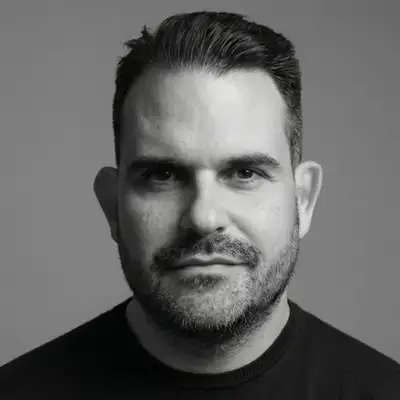
About The Host: Chris Maffeo
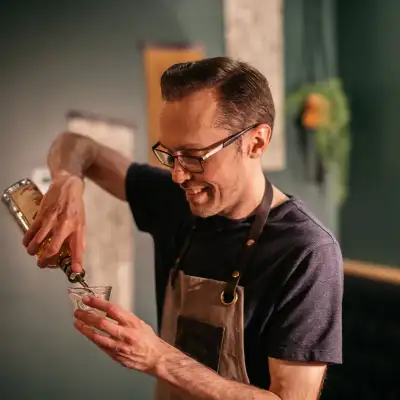
About The Guest: Chris Le Beau
In this episode of the Maffeo Drinks Podcast, we have an insightful discussion with Chris Le Beau, who transitioned from a strategic consulting role into the world of mixology.
The conversation explores Le Beau's passion for cocktails and the journey of learning and teaching cocktail-making.
Key topics include the importance of mastering classic cocktails like the Old Fashioned, the impact of consumer perceptions on cocktail culture, and the significance of designing accessible yet informative menus in bars.
We also discuss effectively bridging the gap between complex mixology and everyday cocktail enjoyment.
Throughout the episode, the emphasis is on refining the basics and imparting knowledge to create a better drinking experience for everyone.
00:00 Welcome to the Maffeo Drinks Podcast
00:27 Guest Introduction and Background
01:09 Journey into Mixology
03:51 From Passion Project to Business
04:23 Consumer Perspective on Cocktails
10:57 The Importance of Cocktail Fundamentals
13:05 Challenges in Cocktail Culture
28:17 Menu Design and Customer Experience
33:30 Closing Remarks
About The Host: Chris Maffeo
About The Guest: Chris Le Beau
The MAFFEO DRINKS Podcast is a leading drinks business podcast delivering actionable insights for drinks leadership.
For founders, directors, distributor MDs, and hospitality leaders navigating the tension between bottom-up reality and top-down expectations.
20+ years building brands across 30+ markets. Each episode features drinks builders: founders, distributors, commercial directors, sharing how the drinks industry actually works. Not the conference version. Honest conversations.
Insights come from sitting at the bar.
Beyond episodes: advisory for leadership teams, subscription with episode deep dives and principles to navigate your own reality.
Beer, wine, spirits, Low and non-alcoholic.
Bottom-up Insights & Episode Deep Dives at https://maffeodrinks.com
Welcome to the Maffei Drinks Podcast. I'm Chris Maffeiro, your host and fellow drinks builder. I'm really honored to have you as one of our listeners from 111 countries. A small ask, if you enjoy the show, please leave a review and share it with others in the industry. Visit mafelldrinks.com for free resources, premium content and episode transcripts.
Chris Maffeo:Now let's dive into today's episode. Hi, Tris. Welcome to the show. How are you doing?
Chris Le Beau:I'm just fine over here. Was fun when you reached out a while back and said you've been following mine for a while. And so it was great to kind of hear that and start following yours. And I'm really glad we could connect today.
Chris Maffeo:Fantastic. Now that's that's really great. It's a great honor to have you. I listened to quite a few before reaching out to you. And then I I saw yourself on on Substack.
Chris Maffeo:And then I saw, wow, this could be really an interesting one to do together. Especially because we have, you know, like with slightly different angles, but you know, on some of the guests we're the same ones. So it's very interesting to bounce ideas off with each other.
Chris Le Beau:Yes, indeed.
Chris Maffeo:So tell us a little bit about you so that the Mafel Drinks podcast listeners learn more about you.
Chris Le Beau:Sure. So for sixteen years, I worked in completely different line of work. I worked for banks, hospitals, worked in all sorts of different consulting roles in strategic capacity. But mixology had been an interest of mine. And so I made cocktails, went to cocktail bars, had really been into them for about six or eight years.
Chris Le Beau:And as I kind of slowly, and the keyword is slowly, made my way further into things, I like to say that a couple of interesting things happened. A good friend and now mentor, a guy named Tim Wiggins, who runs a number of notable bars in my city of St. Louis, we became friends and Tim started being like, Oh, it seems like you're into this. Read this book. Try this thing.
Chris Le Beau:In the meanwhile, we also had a very boutique liquor store open up here called Intoxicology. And that became a place where I could go. I like to say, at least here in The US, for example, that if you've got a question about whiskey or tequila, there's a good chance that a lot of liquor stores can answer your questions. But if you have a question about what is a framboise, tell me more about, you know, single malt versus grain whiskeys or Old Tom Gin, what is that? You're going to be in a tough spot.
Chris Le Beau:Intoxicology became a place that I could go with my questions. And so between these things, I started experimenting quite a bit. And then when I read a book called The Codex by the bar group Death and Co. Here in The US, it's one of a couple of books that has made these arguments over the years that there's only a handful of drinks in the world. And I started to think to myself, was like, What if more people understood like, to think about a cocktail this way?
Chris Le Beau:An analogy I use all the time in my classes is cocktails are like tacos, to use a slightly more American analogy, that if you can make a beef taco, that a chicken taco is just a simple set of substitutions away. So I then, final step, in terms of really getting this thing off the ground was the book that I discovered is great, but it's really written for bartenders, for like mixologists that are deep in the fray. And the reality is 85% of those recipes you're never going to make. And so I kind of metaphorically stripped out a whole bunch of that and said, What do people need to know in order to actually successfully make a drink as opposed to have to make a fancy drink. And so then right upstairs from where we sit is the bar in my house.
Chris Le Beau:And I started inviting my friends over trying to like, Hey, here's what I'm working on. What do you think of this? And that was in 2019. Fast forward six, eight months, I thought my little passion project was over and that's when the request for virtual classes started coming in. And fast forward a year later to March 2021, I had done some 20 or 30 classes for people all over The US.
Chris Le Beau:And that really led to me deciding that I would make this my business from now on.
Chris Maffeo:Wow. That's a great story. What I love about it and, you know, we we spoke about this previously that, you know, like you take it from, let's call it like a consumer, like a drinker kind of angle, no? Which is in a way similar to my story because I came from beer. You know, I work in a CB Miller, Asahi, Casper, you know, like big, big brewers.
Chris Maffeo:But I've always liked cocktails, but I never really sort of like managed to enter the spirits world from a corporate perspective for some reason. I don't know why. That gave me the opportunity to look at things differently because I did a WSET level two on on wines first, then on spirits because I wanted to have a round, you know, experience because I knew a lot of about beer, but I didn't know the other categories. And what's interesting is that you see things from different perspective. And sometimes the crazy and funny thing at the same time is that I see that I know more than people that have been in the business for for a long time because maybe they haven't done WSET.
Chris Maffeo:They haven't challenged the status quo. You know, they've just got what their, let's say, induction back in the days has been, whether working for a whiskey, a vodka for, you know, whatever there was. Sometimes also like when you work in a big corporate, tend not to try that many of the competitors because, you know, you go out to bars doing sampling, do these things, and you end up drinking your own stuff kind of thing. And that kind of like closes your eyes a little bit. No.
Chris Maffeo:So what I love about listening to you is that, you know, you take it from a kind of like challenger perspective, I'm assuming, but you know, that not being a bartender, you know, historically, you know, like born a bartender, you know, that kind of like puts you in the challenging seat and then say, okay, I need to prove myself and I need to look at things from another angle rather than people that have been doing that since they were 21 serving drinks.
Chris Le Beau:And this is where I am very grateful actually for my business background or strategic marketing background because I feel like part of what I've realized And I feel like I come to this viewpoint honestly, is that there are many people out there who are better at creating and better at making drinks than I am. But I feel like along the way it's easy for a lot of industry professionals to forget what people do and don't know. And so it is where I feel like, one, I think that this will come up, I'm sure, throughout our conversation, I do bring a lot of passion and excitement to that, and that's part of what I bring to the table. But I think it's also that I think in general, when teaching any skill, it's easy for there to be a lot of assumed knowledge. I like to say that 80 plus percent of the time I hand someone a cocktail shaker, they just look at me wide eyed like, How does this work?
Chris Le Beau:Right? And then to carry that forward even to what I think would Even though you could argue the margarita is the drink of The US, that for the home cocktailer, I think it probably was even more fair to say that outside of something like a vodka soda, that the old fashioned probably has the most zeal amongst the home cocktail maker would be my general perception in The US. And that percentage of people who are comfortable stirring a drink is even lower than that. And so to me, I think it's like you hand someone a recipe, it's like assemble these ingredients, check. Measure them into this thing, check.
Chris Le Beau:I can do that. But like, Ah, does this really need to be shaken? Does this really need to be stirred? Or how does this even happen? And so having the time to patiently walk someone through that and why it's important to shake a cocktail hard, why these things matter.
Chris Le Beau:The analogy that I'm almost tired of hearing myself stain at some point because there's so many culinary analogies, but to take a nice cut of a beef sirloin steak and season it properly, you let it, you know, age for a day or two to kind of really kind of settle. As opposed to searing that properly on a grill, you take that and cook it in a microwave, it will not taste very good. And that's the technique end of things that people don't understand when it comes to a cocktail. That at this point, to jump way ahead in our conversation, and you can bring me back to the beginning in a minute, is craft and quality of bottles, and there's plenty of people out there who are pretending to be great right now, but like there's plenty of great bottles out there. So people have good booze at home, but how they are preparing it matters, and a lot of people don't understand how to properly prepare a cocktail.
Chris Le Beau:And so I think that's part of the problem with the industry is we just assume people know how to shake a cocktail and the average person has no clue.
Chris Maffeo:It's also like how do you bring good cocktail making at scale? Because, you know, like what what I like about, you know, our conversation is that, you know, you're in Saint Louis, which is which is not really like one of the big epicenter of, you know, cocktail culture. It's it's not London, New York, and San Francisco, Singapore, and you name it. So the insights that you get is basically more like a normal person, you know, like it's not like a 50 best bars kind of like geek that know that only goes to Michelin star restaurants, only goes to 50 best bars and only goes to, you know, BCB Tales and so on. So it's like, how do we bring this knowledge to the regular person that back in the days was me?
Chris Maffeo:Because, you know, I also, like, I, I entered cocktail bars when I was selling beer and I look like the weird guys like, why is this whiskey smelling smoke? And why is one with the e and one without the e? All these kind of like basic questions that, of course, I mean, any, anybody now can Google them and so on, but then it's like, how do I make it so that when I invite people over, you know, I can actually do a proper cocktail and not, not just like a gin and tonic or a spritz kind of thing, which anyway, even even a spritz, you know, can't be done badly anyway. Let's dive into this. I mean, you mentioned the old fashioned as a bread and butter kenegoli, like of cocktail making.
Chris Maffeo:So what what do you think are two cocktails that everybody should start from and everybody should be, you know, looking into before, you know, fast tracking themselves and and going into fancy mixology?
Chris Le Beau:So one, I think an old fashioned is always a good thing. Recently finished reading, and I think this was part of another conversation you and I had, finished reading a book called I think it's it doesn't matter. It's by this guy named Kevin Peterson out of Detroit, Michigan. I think it's called Cocktail Theory. But Kevin talks about why an old fashioned is a very difficult drink to balance.
Chris Le Beau:And I do think that the radically simple drink sometimes I think it's helpful to step away from the cocktail world for a minute. That in the culinary world, the example is often the omelet. You know, you learn how to make the omelet properly, and then once you can do that, then you kind of move on. I read a book called The Front of House, and then I'll promise I'll talk about drinks. But this restaurant group in Philadelphia here in The US, they said that they spent an insane amount of time working on their french fries or palm frites for the more international crowd out there.
Chris Le Beau:But they spent a lot of time perfecting these things because their comment was, We believe is this style of kind of pub style restaurant that we are only as good as our french fries. And so I think there's a need, whether that's an ego perspective or a business perspective, to want to look like what you're doing is really cool. And if you leap past the fundamentals of things Because the more ingredients you put into a drink, the more complex it gets. But I would argue it's easier to lose yourself in terms of is this drink performing optimally? So understanding from a radically simple drink, is this old fashioned balanced properly?
Chris Le Beau:Is this daiquiri or gimlet or whiskey sour balanced properly? I think understanding the simplistic side first because there's less places to hide is really what exploits whether you're using the right balance of ingredients, ratios, technique, etcetera. I think it's important to do that first. I think that's the big thing is like everybody wants to look cool on Instagram and everybody wants to look at this specialty drink, but it's a way that you can kind of end up overshooting the moon.
Chris Maffeo:Why do you think there is this kind of like rush into, you know, skipping the classics? Now, like when I when I go into cocktail bars, when I travel, I tend to go to a kind of like different type of outlets now. So like I go to the nice one, like to the fancy one with signature cocktails and so on. And then I go to some more basic ones. But what I've noticed is that there is no middle ground.
Chris Maffeo:There is either this super mixology, you know, where basically, like, I have no idea what I'm drinking because it's super curated and creative. So like, I cannot really put it into a box like it is this kind of resembling an old fashion and a groanie or, you know, like, I cannot really do that. And then there's the Aperol Spritz, gin and tonic. Don't know what in The US could be. Don't know, like probably that the margarita would be the most basic kind of like staple cocktail that every restaurant would serve.
Chris Maffeo:But there's something in between that I'm missing the proper line of classics that in many places, you know, you find the signatures and the classics. But in the majority of the places like the classics are just taken for granted. There's like, of course, you can ask a classic, you know? Yeah. But if I don't see it on the menu, I'm never gonna ask you because, like, I would look like an idiot.
Chris Maffeo:You know, because I would be like this. Who's this old school guy that wants to have a Negroni while I'm having like a line of 15 amazing cocktails that all count with their specific bespoke glass. And who's this guy asking me, anigroni, you know? So why do you think there is this kind of like forgetting the basic jumping into fancy mixology and no focus on the middle ground, which is basically what builds brands at scale?
Chris Le Beau:I think first, I mean, to really dissect the human psychology, I think there is a craving that people have for newness or in appearing of wanting to try something new. Here's what I think is the antithetical to this, is for the average American, I think their vision of going to Italy is, I want to have this pasta dish that has been made the same way by this restaurant for the past one hundred and fifty years. And for some reason, when we come back inside of our own borders, I'm like, I want to see something that's totally new, totally innovative, and those two things don't square, but it's the story they tell themselves about these things. And I think from the bartender's perspective of things, we have people who have perhaps, if they are kind of more of that mixology ilk, for lack of a better word, I hope we find a better one sometime that doesn't sound quite so snooty. But daiquiris are so overplayed to them.
Chris Le Beau:Negronis are so overplayed to them that like everybody's up on this. And I can tell you, yesterday I did a class with 12 people, all of reasonable means, and for all of them, it pretty much always happens, and I'm always worried somebody's going to eye roll me. But when I roll in, we made a daiquiri with two white rums, kind of a split base of those two. And the number of times people want to know, I thought this was supposed to be read and frozen. Or people just the word is not out nearly as much as we think it is.
Chris Le Beau:Yes, there is absolutely a class of consumer that is attuned to this and is paying attention to this. But I think as well, it's like it is The fine details are what make the magic in a drink in a way. And so to me, I think, And this is hard, your question about drinks at scale and you can again rein me back in from here, is that what I find in a class, which is different than in a high volume bar, but to try to find the time to tell people why it's important that we're making this drink the way we are, why these three ingredients in this proportion went into this glass. And there's a fourth one or whatever. The way you present it, the magic really is in that moment in terms of telling somebody why they should be interested or why you think they should be interested in a drink.
Chris Le Beau:And so I think it's this thing of like presentation and complexity equals thoughtfulness. There's a group called Roads and Kingdoms, and they have books on culinary cultures of Spain, Italy, and Japan. And anyways, they say that in There's a sushi chef, I believe, in Japan who says that American cuisine often has a tradition of adding things like addition equals luxury. And in Japanese culture, luxury equals subtraction. And that we are going to pay the utmost attention to these things.
Chris Le Beau:You can go to these cocktail bars in Japan where they make three drinks and they've been making the same three drinks for thirty years, but they're getting better and better at it all the time. That doesn't have to be the way, but I think we can learn something from that in terms of how you make a daiquiri is really a reflection of how you make any drink. You know, can you bring the same care and attention to the hundredth daiquiri that you've made as opposed to your specialty cocktails? And so, I do think there's a craving for newness amongst people. And so, I think part of the thing about the classics is inviting people back to take another look.
Chris Le Beau:They are dependable, But here is this little thing where American consumers, we're not tired of burgers or pizza, but like here's the little thing we do to make this hamburger, to make this particular pizza unique. You you can do that by adding a whole bunch of ingredients or there's a simple thing you do that kind of changes the texture, the temperature of the food, etcetera.
Chris Maffeo:That's a fantastic point. There's a lot to unpack of what you said because it's funny because I'm reading a book that an Italian chef friend of mine recommended, which is like, it's basically like, I think after this book is like, it's basically going to hell for an Italian because it's called Italian cuisine doesn't exist. And it's written in Italian by an Italian. And what is interesting about this, and now I'm gonna get death threats from my Italian friends, but what they say, and it's connected to what you're saying about the American culture, about the abundance of ingredients is that a lot of the Italian dishes, which, you know, all the American Italian versions of it, you know, in Italy, they are, you know, seen as sins because it was like, they messed it up, you know? But actually many of the things were invented even by the American Italian community back in The States and then brought back home, you know, and then re reviewed.
Chris Maffeo:So it's kind of like a mix of what you were saying about American culture and Japanese culture, because on the American side of things, the Italian American or American Italian, however we want to call it, they were mainly poor people that never really had meat. You know, they would have meat, if any, once a year. So when they came to The States, there was this abundance and they could have finally have beef. So that's where the spaghetti meatballs come from. You know, that is like finally gonna have meat.
Chris Maffeo:So let's put them in the pasta, you know, same thing with pizza ingredients and all these kind of things. Then in easily, like they got kind of like, okay, let's bring it back to, you know, to the basics because we don't want all this abundance of things. But what is interesting is that there is also a lot of debunking to be done because a lot of these things like then a lot of these dishes that we claim are 150 years old. They're not actually 150 years old. They are 60 years old or 50 years old, you know?
Chris Maffeo:So I think it's the same thing with cocktail culture. Maybe my grandfather and my grandmother, they were doing some of these dishes, but my great grandfather and my great great grandfather, they never tried them because they didn't exist, you know? So there is a lot of like knowledge that gets lost through the generations and then you tend to assume things now. So I think it's very similar to cocktail cultures, like based on what you were saying is that if you take all the old, old school cocktail books, you know, the one from one hundred and fifty years ago because of prohibition, because of things that there was a kind of like death of the cocktail until the rebirth in nineties, probably, you know, like eighties, nineties, you know? So there is that kind of thing that a lot of the stuff that is seen as super old school, actually, it's not really old school.
Chris Maffeo:It's like it, you know, it was rediscovered. I don't know, like forty, thirty years old, years ago. And also it's very interesting what people assume. It's kind of like boring and let's stop doing this because people are not looking for it. It's a little bit like similar to what, you know, here in Prague, for example, there's the typical Czech pub, which is basically a restaurant.
Chris Maffeo:You know, they do their goulash and, you know, Zvichkova, you know, duck and the pork knee and so on. But every time I go to a restaurant like this, you know, like there are some places that are really proper traditional and they do a great one. You know, it's a great goulash, but then some of them, they want to sneak in the the salmon steak and the burger and all these other things that are trending. But I'm not coming there. You know, I'm coming there for beer and some meaty kind of like food.
Chris Maffeo:You know, why do you have to upgrade yourself with something and then maybe you mess up the goulash? There's tons of places where you're to have a great burger. So then you end up not making a nice burger and not making nice goulash. And then you become being nor mean nor fish. And then you end up losing clients, you know, rather than sticking to a proper thing that you can master.
Chris Le Beau:There's so many establishments out there that, you know what mean? People have to do what they want to do. But yeah, I think some kind of focus, right? Like I remember reading years ago, my more business strategic moment was this quote from one of the IKEA executives, so take this for whatever you will. But he basically said, Every interaction that a customer has with your business is either positive or negative.
Chris Le Beau:And so I think this idea that this is for every restaurateur to kind of think about on their mind, but it's like, if this dish is great and this dish is only okay, why is it on the menu? And so I think Or sometimes what I think about, part of my little mission right now, is you know, your restaurant is known for great food and yet if you order an old fashioned, again for lack of a better reference, you can see the bartender kind look at you a puzzled way and like, they're gonna go figure it out, they don't really know what they're doing. And like the proper answer is either like, We don't know how to do that, you invest the time and the energy into it. So, you know, not everybody has to care about the same things, and that is one of my things I always have to watch for me is like, I think people love working with me because of how much energy I bring to things. But at times, that level of enthusiasm isn't for everybody, and that's fine.
Chris Le Beau:You know? So not everything has to be about pinnacle level daiquiris, old fashioneds, whatever. But I think if somebody said, Hey, do want to go out for some ordinary food? I'd be like, No, I really don't. But for somebody else, they don't care.
Chris Le Beau:You know? So I guess it's just to realize that, of course, there are the levels of people out there who aren't interested in that, and that's fine. But I think for some people, it's also they have to be shown that exists. So the one other thing I'll layer onto this that I think about with respect to the cocktail world, and this is certainly not true in Italy, although the inspiration was Italy. You know, Howard Schultz of Starbucks likes to say or, you know, formerly of Starbucks, you know, the guy who brought them to where they reached, is that he reminds us that specialty coffee culture didn't exist in The US before Starbucks.
Chris Le Beau:And it was time that he spent in Milan that kind of inspired that. But there's a whole segment of people out there who either didn't drink coffee or drank instant coffee. And as they got introduced to the idea of the flavor of coffee and the coffee shop experience, that is a whole market that did not exist forty years ago. And I think that's part of it. Like sometimes he would call people who don't drink coffee yet, he would refer to them as pre caffeinated.
Chris Le Beau:And I think about that when I see someone who's like, Oh, I'm not really a cocktail person, have a proper drink because they have an idea. Like, This is going to be boozy. This is going to be too sweet. Blah, blah, blah. You know, they had bad ones.
Chris Le Beau:That is kind of an eye opening moment right there. But at times, they need a server, a bartender to guide them through there because otherwise they just assume it's not their thing.
Chris Maffeo:They have
Chris Le Beau:stories they tell themselves about what a cocktail is. And I can show them plenty of what they're thinking of those still exist. But it's like, this is not what you think.
Chris Maffeo:We always talk about consumer centricity or customer centricity, you know, like about, okay, like, know, we need to think of customers and so on. But I think like that sometimes is also lacking in bars now because it's like I'm a bartender and I want to make the best. And then I'm not kind of like willing to listen to who I have in front of me because I have no idea if you're sitting at the bar, I have no idea who you are. You know, like, I don't know if you're a cocktail geek, if you are, you know, I could probably spot it from some questions, but it's difficult to to understand what's what's the level of this person in front of me, you know, like, do they know anything about cocktail? Are they super entry level?
Chris Maffeo:And probably by having a more honest kind of conversation from a consumer perspective, there's always this kind of like body armor that you have to put it put on when you enter a cocktail bar. Like now I need to look like a proper cocktail guy because otherwise I look like an idiot here because they're they're all they're all super geeky, but I'm pretty sure I've never done that. I think and I'll probably start doing this. You know, if you browse the tables, I would assume that, you know, 80%, 70% of the people, they don't know much about cocktails. I assume I'm the idiot that doesn't know anything about cocktail and I enter this kind of like dungeon of professionals, whether they are behind the bar or on the other side of the bar.
Chris Maffeo:But actually like we could have a proper more honest conversation and say, look, you know, I know nothing about cocktails. I usually drink beer. What do you recommend? You know, what can I start from? Okay.
Chris Maffeo:And then maybe could be from a taste profile perspective, from a category perspective. And then it would be an evolution rather than, okay, let's, you know, fake it until you make it kind of kind of approach fake being a cocktail drinker until you actually understand it. And then you, can actually claim that. Woah. What do you think about this?
Chris Le Beau:Yeah. So for an outside analogy, to completely echo you, and then I know we wanted to talk about menus, so maybe we can jump into that a little bit. I think about sometimes being at an art gallery and a kind docent who's working in that art gallery comes up and they say, Look, you're looking at a piece, they go, Let me know if you have any questions. And one, I'm there, I'm excited, but you're like, I don't even know what the questions are, right? Or I was terrible in accounting.
Chris Le Beau:And I still remember my professor, Steve Klein, saying, Is there any questions? I'm like, I wouldn't even know what to ask right now. So I think bars have to square themselves with looking at their menus and saying, Who did I write this menu for? And so, I think one of the big things for me is that if you're using Coqui Americana, lovely Italian bitter fortified wine out there, This is anecdotal still from like the Midwestern market where I primarily work, but I've worked with thousands of people at this point in time, and I can tell you that 96.5% of the people who I've worked with would have no idea what cochlear americano is. Or I can tell you on the other end of things that people have such strong feelings about certain spirits, like gin or like, to our mutual friend, Nicolas Oleianis, people have very strong feelings about fernet branca.
Chris Le Beau:Now, how these things get woven into cocktails, here's something I think, and I think begins to get us into the idea of the menu. There's a line I love from a book I've read called, The customer is not always right, but the customer is always Customer. And I like this idea that people think, Oh, I don't like gin. And I'm here to tell people out there, and yes, I'm talking to you, whoever you are listening to this, that I don't think that they have a problem with gin. I think they have a problem with gin presented certain ways.
Chris Le Beau:So I think that and whether that's whiskey, whatever, I can make 98% of people who don't love whiskey in their mind because they've only had it neat or in an old fashioned, love it when I put it in whiskey sour. Right? A martini might be too boozy for you, but if I put this in a gimlet or a gin gin mule, you're gonna be like, This is incredible. So, to kind of begin to wade into menus a little bit, I was at a restaurant one time and I had this realization. I was looking at the food menu, and this is a restaurant with good cocktails and good food.
Chris Le Beau:And I'm looking at the food menu, and there's the salad section, the insolata section, the sandwiches, the pizzas they have, etcetera. It's all broken out in little descriptions and names and all these things. And okay, and there they are. I turn on the other side of things and there's all the cocktails. Now, first thing is the cocktails cost roughly about what most of the basic entrees or dishes cost.
Chris Le Beau:So you're going to pay about the same amount for a drink as you are for food. There is not four or five sections of cocktails, there is one section. And so my first thing is that like a martini and a margarita do not taste anything alike, or a martini and a gin gin mule do not taste they both have gin in them and they're right next to each other. And what makes me angry at a restaurant like this is they have all these specialty cocktails, and the names are just whatever. They're very colorful and they're fun.
Chris Le Beau:And then they list out seven or eight ingredients. And me as the cocktail geek, I know three of them or four of them. And I promise you, the layperson might know one of them. So you have what's probably a Moscow Mule style riff right next to a Martini style riff. And it's like, Why don't you just figure out what all this is right here?
Chris Le Beau:At least if they were broken out into boozy, abrasive, juicy, refreshing, I think bars respectfully need to play to a lower common denominator of customer knowledge than they do. When you get the cocktail geeks that come in, conversations. You want to be able to show them, Hey, we thought about what's going into these. But I promise you, the average person has no clue what in the heck you are talking about. So giving them flavor profile descriptions I love There's a question from this bar, The Office in Chicago.
Chris Le Beau:One of the questions they ask in their classic forward bar, The Office, is, If you could have this drink right now anywhere in the world, where would you like to have it? And you're going to get the same seven or eight answers, right? You know, it's going to be the beach or a wintery cabin or a lake house, but that immediately puts you in a state of mind for where they want to be. And so I think with these things, we can help guide them in the right direction. So I just think that, you know, for those who are on the Ferris wheel chasing to be on a 50 best bar list, I can't help you because you know there's a game to be played and you can figure that out.
Chris Le Beau:But on that list, so many people are coming there because you're on the list and I promise you most of them respectfully have no clue what they're doing. And so they're gonna get a panic order. They see margarita and they're gonna order it without even still conceptualizing what you're trying to sell them. Anyways, that's my rant.
Chris Maffeo:That's all for today's Mafel Drinks podcast. If you found value in this episode, please leave a review and share it with others. Don't forget to check mafeldrinks.com for all our resources, including episode transcripts. This is Chris Mafel and remember that brands are built bottom up.