Subscribe
Share
Share
Embed
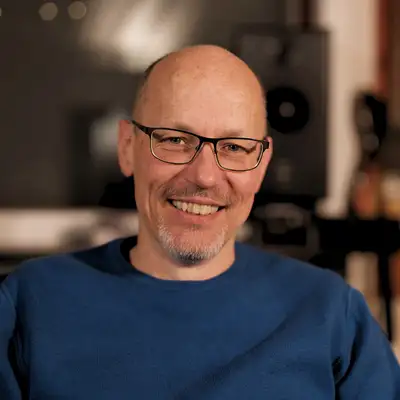
Welcome to the Sound On Sound People & Music Industry podcast channel. Listen to experts in the field, company founders, equipment designers, engineers, producers and educators.
More information and content can be found at https://www.soundonsound.com/podcasts | Facebook, Twitter and Instagram - @soundonsoundmag | YouTube - https://www.youtube.com/user/soundonsoundvideo
Hello and welcome to the sound on sound people and music industry podcast with me Sam Ingles. Today I'm delighted to be joined by Chris Calcutt from Novation and we're here to congratulate Novation on their 30th birthday. It's 30 years since the founding of the Novation company and the first Novation product.
So happy birthday. Why thank you very much. Yeah. What a pleasure to be here.
It's great to be celebrating such a milestone for what is easily the most successful British synth company of all time. Wow, well there, there, that's a, that's a lovely thing to hear. Thanks a lot, Sam. I mean, yeah, it's 30 years now since, um, since it all began. And, um, yeah, it's been quite a journey along the way, you know, lots of, Lots of synthesizers, as you say.
Um, lots of other things as well, I guess, in it, you know, interspersed in between it all. But some, yeah, some, some pretty exciting and yeah, quite memorable journeys along the way as well. And people, of course, you know. Well, I think. Some people might be wondering why we're celebrating Novation's 30th birthday in 2022 when the base station was launched in 1993.
And the answer to that is that the base station actually wasn't the first Novation product because the first Novation product was something called the MM10 which came out in 1992. If my, if I have my history right. Exactly right. Yeah. Yeah. The MM10 was, was the first, uh, first Novation product. Um, and Yeah, surprisingly it wasn't a synthesizer.
It was, um, well, I guess it was, it's got to have been one of the first kind of MIDI controllers, perhaps, back at those times. I mean, the, you know, yeah, MIDI controllers specifically were, I suppose, were sort of few and far between. Um, but yeah, it started back in, uh, in 1992, um, by two gentlemen, uh, Ian Genoway and, uh, Mark Thompson.
And, uh, Ian Janoway was, uh, well, a working musician, and I believe, the story goes that I think he was playing saxophone in a band in Spain at the, uh, at the time and got himself hold of one of the Yamaha QY 10s, the little kind of, well, miniature, I don't know if that's the right word, but small format Uh, sequencer and, uh, well, I guess, uh, synth or whatever, whatever sort of technology was in there.
Um, and of course that was a, a, a very small compact sort of. thing that had, well, it had kind of an octave of button of keys. Um, but was, um, yeah, it was, uh, it was a little bit kind of awkward if you were a bit more of a keys player and you wanted to use it. So the MM10 was born out of a desire really to use that particular product.
from Yamaha, um, but actually sort of turn it into a little bit more of a, of a musician's workstation, perhaps. Um, and so, yeah, the MM10 was essentially, uh, a two octave mini controller, I guess, with a recess so that you could, uh, you could put the QY10 in there and, uh, and seat it nicely. Then you've got a little truly portable workstation and yeah, you're quite right.
Um, that's often kind of overlooked, but that was the very first Novation product back in 92. And in a sense, that set the template for a whole series of future Novation products because it was a hardware controller that was specific to a particular music making device. And since then, we've had launchpads, we've had dedicated controllers for things like Ableton and now FL Studio.
Yeah, for sure. That's been a really major part of Novation's product line. Yeah, I guess you're right. I mean, it's been quite interesting that yeah, we've had partnerships with specific kind of workflows to really sort of expand what you can do with it. I think, um, you know, for example, the MM10. Well, I wasn't at Novation at the time, so I'm not sure how kind of connected to Yamaha that particular product was when it was being developed.
But it certainly was a solution for. You know, for another company's product, uh, that kind of opened up more possibilities for working with it. Um, and I guess, yeah, that thread has kind of run through. And as you say, you know, for example, well, our latest product, the latest product to market is the FL key, um, which is a controller keyboard, um, but very much integrated into FL Studio.
Um, and again, you know, that's been, you know, it's a specifically integrated into FL Studio. So, I think, you know, we kind of look to sort of create these solutions where we think they're needed for, um, you know, for these sort of collaborations, really. One of Novation's most famous products, I guess, has got to be the Launchpad from, I think, 2009, when that one originally came out.
And that was very specifically a controller for Ableton Live software at the time. Certainly at that point, Ableton was really sort of taking hold and being a more ubiquitous DAW, um, a very creative platform for people to work on, um, but like all kind of, yeah, software based workstation sort of style workflows, really it's quite difficult to You know, to control many things at the same time, you only have a single point of contact into the software with your mouse click.
And with something like Ableton, I suppose, essentially designed, I mean Ableton live, I guess the clues in the name there, it's, you know, kind of for taking the computer onto stage and, and breaking out of that kind of linear timeline to be able. You know, I guess improvise and make music in real time. It's quite difficult to be able to do that with just that single point of contact, i.
e. the mouse. So the launch pad was really born of a need to be able to control the clips and launch clips directly in Ableton. Um, it's a very simple kind of looking box. There's actually a lot of technology inside it, of course, but. You know, you just look at it and it's a box of buttons. The really clever bit, I think, is really the way that that's integrated directly into the software.
Um, you know, and the current range of launchpads are still doing that today. I mean, we've expanded out, we're covering other areas, other different softwares as well now. But that deep integration into the software is still there. And I think that's certainly what a lot of customers have valued. Uh, just really, I guess, you know, we have this mantra at work of, you know, removing the barriers to creativity.
Yeah. And, you know, if you're opening up the studio or firing up your software and then spending the first half hour setting everything up so that you, you know, you get it as you want it, that's kind of really almost killing the moment at that point. So these solutions really are just plug in. It all connects up for you and away you go and you're making your music So that's really kind of the principle behind it.
So I guess one angle one part of that is creating dedicated controllers that tie into specific pieces of software at quite a deep level, but the other Strand of it is generic controllers with technologies like Which are designed to get you up and running and to, to make this generic controller a match for whatever you're using as quickly and as painlessly as possible.
Yeah. Yeah, for sure. I mean, I was, I was having a good think about AutoMap, um, uh, sort of recently and I was kind of, again, this was before I was at Focusrite. By the way, I should say Novation is part of the Focusrite group of companies, but before I was at Focusrite and obviously therefore Novation, I was using quite a bit of music software myself.
And I'd kind of totally forgotten about this, but the MIDI learn that we've all gotten used to right now really wasn't a big thing back then. You know, it was, it wasn't easy to be able to physically control plugins and even DAWs back at that point as well. And so, yeah, when AutoMap came along, I think that was originally developed for the remote SL range that offered people a very, quick and easy way to be able to integrate their hardware into the workflow, but in the way that they wanted to as well.
It was completely customisable. Um, and I think, yeah, I mean, it perhaps in many ways that kind of set the precedent for MIDI learn becoming a bit more prevalent and, you know, as, as we moved forward, because, you know, the ability to say, Oh, right, well, there's, there's the filter. on my plug in synth, I want to be able to perform with that and record that performance into my DAW.
Again, you could draw in the automation, you could grab the mouse and, you know, sort of waggle the mouse around on the desk, but you couldn't have that physical kind of interaction with that software instrument back at that time, or not as easily at least anyway. So, yeah, Automap, which was um, yeah, I mean a pretty ambitious, ambitious piece of software really, but I think really provided a solution that possibly initially a lot of people kind of didn't realize that they needed but once that had bedded in then you know it's become well I suppose MIDI learn is pretty much a mainstay now of the operation that you know when you're working in DAWs MIDI learn is an expectation now whereas back then it was it was quite novel and and um yeah really opened up a lot of possibilities I think.
So, to what extent do you rely on the cooperation of the software manufacturers to create these solutions? Well, I would say a great deal, to be perfectly honest, you know, to, you know, cases in point, let's say, you know, the launch pads and also the launch controls and that deep integration that we have with Ableton, and the FL key as well, you know, um, to current products that we're still working specifically with the, uh, the developers, um, on.
I mean, With Ableton, obviously we, um, we're You know, in discussion with those guys and we're sort of backing to and fro, sort of asking, you know, this is what we'd like to do and they say, well, it might be difficult to do that, but have you thought this sort of thing, and there's quite a lot of kind of to and fro between ourselves and the software houses.
But the scripts themselves, I mean, yeah, they're total, total collaborations, you know, we're kind of, sort of aiming for the design around the hardware and that sort of thing. And quite a lot of the time, the software developers themselves will also be involved in that, you know, writing scripts in the back end so that all of this stuff works.
And sometimes, you know, with, uh, with ImageLine, I mean, they've been, Real pleasure to work with in terms of sometimes we found some sticking points when they're developing the FL key That needed to have a think about well, how does FL studio actually manage this? So, you know, there's you know, it's it's very much a collaboration there But yeah We do work very very closely with the software developers to get the best that we possibly can out of the hardware as well Do you think it's important for that to work for that relationship to work that focus right is The focus right group is seen as neutral with respect to all these different DAWs There isn't a focus right piece of software in the same way that some manufacturers have their own DAW Yeah, I think I mean I guess that could have been a route that we could have taken years ago and kind of you know You do see hardware manufacturers you know, coming up with their own DAW solutions.
Um, and to be honest as well, you know, we have to an extent got software solutions in house as well, because of course, as part of the Focusrite group, we've got, uh, Amplify who are making Amplify Studio. And of course the Launchpad app as well. I mean, the Launchpad app was essentially born out of the love for the hardware.
Um, you know, so, you know, we do have that sort of thing, but I think, you know, when you consider. The amount of people working. on music out there and the amount of different options that these people have, I think it's pretty important that we can, you know, kind of position the Novation solution as being the right solution for a broad church for, you know, for a big range of people.
And to that extent, I guess, yeah, I mean, while we do partner with specific software houses for certain things, um, you know, for example, the launch key. is, um, you know, it's a dedicated MIDI controller that you can where you can customize that so that you can make that work with whatever system, whatever method you want.
And yeah, I think it's really important that we, you know, that we do have the ability to remain kind of agnostic, but where we see, um, you know, there's a specific let's say, gap to be plugged, you know, for example, the FL key, uh, I'm pretty certain in saying is the first dedicated keyboard based controller for FL Studio.
Um, you know, in that instance, to get that kind of deep level control beyond kind of standard generic control over the software, I think it's important also that we can, you know, kind of go down that road as well. Yeah, absolutely. So we mentioned the base station, and it wasn't the first Novation product, but it probably was the product that put Novation on the map.
What made the original base station so successful? Well, um, I guess there's a, there's a number of factors sort of attached to that, of course. Um, I think, you know, Ian Jannaway kind of, you know, sort of developed the MM10 as a solution for, you know, for controlling that Yamaha sequencer. Uh, you know, as a result of that, there was a Novation keyboard chassis that was kind of begging to have sounds put into it as well, I think.
And, um, I don't know how Ian knew Chris Huggett, but Chris Huggett was a really important person for Novation right the way through until, you know, his sad passing a couple of years ago. Yeah, and I think Ian kind of had this notion of, okay, let's make, um, let's make a synthesizer, and he got in touch with Chris to see if Chris could do a bit of help with the design work on the bass station.
Now, Chris Huggett, of course, had already been a bit of a legend in British synthesizer design. I mean, Chris, back in the late 70s, was pretty much the mind behind the Wasp synthesizer from Electronic Dream Plants, and After that, um, sort of phase of his career, then went on to form his own company, the Oxford Synthesizer Company, and produce the Oscar.
So Chris had already got, you know, strong heritage in synthesizer design. So Ian, um, approached Chris and sort of asked for a bit of help, I guess, in terms of developing this analog mono synth. And actually the, the design, the filter design that was used in the wasp was kind of, um, Yeah, it was kind of transitioned into being the base station, um, that and the VCA as well, I believe.
Um, and, you know, Chris kind of, yeah, kind of worked hard to help Novation bring that to the market. Now, I guess sort of musically, historically, there's quite a bit attached to it as well, because, uh, the bass station, the original bass station was 1993. Uh, I think it was 86 when, uh, Acid Tracks was released.
And at that point, I think a lot of people had kind of realized that the, well, the TB 303 had kind of been repurposed from its original design. Um, and They were getting a bit more few and far between and a bit less available and the prices were going up as well and I think that the base station was kind of seen as a And let's say cost effective way of getting an analog based synth sound for you to be able to work with Um, it did some pretty clever things as well.
I mean, you know, it was an analog. It was a dco based analog synthesizer Um, but it had midi on it as well. And um, and I think i'm right in saying as well. It had cc um Ccs attached to the uh to the parameters Which again is quite unusual back at that time. Um, you know, I think You Well, I think, I don't know of many synthesizers back then that were kind of leveraging the ability of using control, control change messages.
But what that did mean is that you could, you know, you could record your live jams tweaking the synth in real time, you know, hands on, but actually capture that MIDI data as well. So you've, you know, you'd have the ability to sort of play that back. And your live jam, your tweaking was actually recorded as well as the notes.
And that sort of thing. So I think it kind of captured a lot of people's imagination and attention just by, well, having a great sound first and foremost. I mean, that's, that's the most important thing for any synthesizer really. But it kind of landed pretty at a good time, I think, because, yeah, I mean, people were looking for an analog sound.
Which strangely enough, you know, there were not many analogs being made at that time. I was looking into this as well the other day, and I think there's only the OBMX, Oberheim OBMX, that I found that was kind of a true analog synth from that sort of time, I think. And so, yeah, so people were kind of really taken with that sound.
And as I say, sort of, you know, kind of, it just came, it landed at the right time musically as well, because I think people were interested in making dance music, were interested in tweaking synths while they were producing. Um, yeah, and I think it was a, it was a big success for Novation back at the time.
And we shouldn't forget also that 1993 was kind of the high watermark of synths without any controls on them. Which you had to program using buttons or a MIDI editor. Yeah, for sure. And the Bass Station had a knob for every parameter. Yeah, exactly right. I mean, you know, it was kind of a time of romplers and samplers and a lot of digital synths as well, which were menu based, as you say.
And And I think, you know, this is one thing that at Novation we've, again, it's another kind of thread of linearity through, through all the products, you know, there's always been hands on control with the, uh, with the stuff that we do. I mean, you know, as a musician myself, I'm, you know, I'm, I'm always wanting to be physically connected to the instrument, you know, I mean, I studied trombone.
I don't suppose you could get more physically connected to an instrument than that. You know, you're actually, you know, Blowing raspberries down a tube to get a sound that becomes part of your body, an extension of your body. But, um, yeah, I think, you know, so I think that you're right, that, that hands on control just gives people that kind of real time feelings like, you know, yeah, I'm, I'm, I'm making music.
I'm performing music. I'm not just programming it, you know, and I think that that's quite a bit, um, an important thing for, for the stuff that we do. So the base station was, it was an analog synthesizer, but in some ways it was kind of a hybrid instrument, it had DCOs, it had some digital technology. And the next wave of Novation synths were actually digital, but they used a technology that was called analog sound modeling.
So explain what that was. Well, I guess you know the kind of the sort of early to mid 90s kind of synth resurgence You know people, you know, a lot of dance music was happening at the time quite a lot of old Analog stuff was kind of getting fished out of skips as well and kind of started to be accrued, you know and Yeah, and I think largely at that time people were kind of looking back at those analog synths and and again You know kind of the controls that were available on analog synths Potentiometers and that sort of thing and you know the ability to be able to kind of play instruments and but But yeah, but essentially, you know, it was kind of all about the sound.
And so ASM, Analog Sound Modeling, was essentially kind of looking back at the types of sounds available from that wealth of analog technology that built up to the 90s, but also looking at new ways of being able to kind of implement it into the new technologies, the technologies that were around in the 90s as well.
Um, and so essentially, I guess, you know, it's, it's VA, it's virtual analog. It's kind of a fancy way of saying that, essentially. So, you know, taking the original kind of four friendly wave shapes that we've got, sines, squares, uh, triangles, and, uh, and sawtooths, and kind of, you know, producing digital renditions of those, and I suppose also, you know, kind of largely going back to that kind of typical analog, subtractive kind of workflow as well, you know, kind of architecture, you know, it's a pretty tried and tested format that, and it works pretty well.
And again, you know, there's kind of that physical connection to it. It's, you know, it's a, it's a fairly straightforward kind of architecture to understand. So, yeah, I mean, essentially, um, yeah, through, through the kind of the next stage of, of Novation synthesizers, that was kind of largely a focus is to kind of give that kind of immediacy of analog, old analog synthesizers, but with, I suppose that, you know, the capabilities of the digital chips and DSP processors that were around at the time.
And again, that was very successful for the company with instruments like the Nova and the Supernova. But more recently, still, innovation have returned to analog synths. So we've had the Bass Station 2 and then the Peak and the Summit. Um, what was the driving force behind going back to true analog designs?
Well, Yeah, I mean, I guess, you know, you, you could kind of argue there was a slight kind of analog resurgence in kind of the sort of early to mid 90s, but I think that really took hold probably around about 2013 or so, or 2012. You know, I guess other companies have been kind of looking into developing nice, relatively inexpensive analog products.
I mean, I guess, you know, one company that stands out in that respect would probably be Korg, um, with their Monotron and those kinds of devices, and then into the, uh, Volcas as well. And kind of, I guess making sort of fairly straightforward analog circuits that make great sounds. And, and again, kind of reminding people of, well, the true joy of an analog sound.
I mean, you know, the, the analog filter I don't think can be surpassed still to this day. Personally, I mean, I'm very much hopeful that someday somebody can prove me wrong about that. But for me, that's kind of still where it's at. So, you know, in the early kind of, Yeah, there was this kind of resurgence into the analog world, and it wasn't just ourselves, other companies were doing it, but it felt like a great time to kind of revisit a well known Novation product, i.
e. the Bass Station, um, and, you know, to, you know, Ask Chris again, Chris Huggett, if we can kind of, you know, can we, can we make an analog, a modern analog monosynth with a bass station? And of course, Chris is always up for a challenge. So yeah, so that, that's how it came about. And. And I think it landed just at the right time as well.
Again, you know, kind of people were, they were looking for knobby synthesizers. Um, tweakable, but, you know, with all the trappings of it being 2010. So, you know, actual kind of proper patch storage in there. USB power as well for another, another, um, thing. Um, of course all the CC values and all that sort of stuff is still available.
And yeah, and I think that, you know, that, that kind of marked, um. Yeah, quite a nice, nice moment for us at Novation is to kind of, yeah, to get back into kind of, I mean, we'd always been making synthesizers, you know, beyond the SuperNova and the Novas and the K Stations and the A Stations and all those products, the UltraNova was around, and of course the MiniNova as well, but to get back to that, those kind of roots of, okay, let's, uh, Yeah, let's build circuits that make sound and, uh, you know, and, um, yeah, and use that.
I think that was, it landed just, uh, just at the right time. It felt great. The peak and the summit, which came a few years after, I think they, Well, they're they're really interesting products. I mean they are true hybrids and and I think there's a really interesting story behind kind of how Well how that technology was developed as well.
I mean this was pretty much as a research project for Chris Huggett as well. He'd kind of heard heard tell of such things as FPGAs and kind of saw an opportunity there that That they may well be able to be used to make some very, very interesting ways of, of, of building a synthesizer. So, um, I think Chris went off and did quite a lot of research into the FPGA.
And an FPGA, basically, Field Programmable Gate Array, is a processor that You can kind of build up to do whatever you want it to do. I mean, I, you know, I'm not a tech, I'm not a, I'm not a developer. I'm not a, you know, I'm not a, not a, um, an electronics engineer at all. So I apologize if I get some of this wrong.
But essentially my understanding is that the FPGA is essentially kind of a blank canvas. And you can kind of program that to be. Essentially different circuits that you can kind of match together and build together and treat as if it was analog electronics, but I mean, it's still digital, but it's still, it's kind of as close to analog electronics as you can get, I guess, in terms of, you know, kind of how you're building individual little bits.
Bits of codes actually joining them together as if it was one great big PCB at the end And the other interesting thing about the FPGA is as well Whereas with DSPs you're kind of, you know, you've got stacked kind of commands You see you're you know, you're running a big thread of commands. The FPGA can run several processes in parallel as well So it makes it really really efficient in that respect So I Chris went away and kind of You know, I did a bit of deep thinking about how it could be used and yeah, and I, and I think really it was kind of a really important moment in synthesis history.
I mean, obviously, you know, I work at Ovation, so I'm going to be saying this sort of thing, but for me, I think it was really important because Certainly with the, um, with the Peak synthesizer, we, I mean, we actually named the, uh, the oscillators that we were able to get from that. We call them the Oxford Oscillators.
I mean, that's largely, you know, kind of a, a nod of the cap to, to Chris and his Oxford Synthesizer Company, I guess. But essentially those oscillators are being produced at incredibly high resolution. I mean, to my mind, some of the highest resolution digital oscillators that you can get hold of in a commercially available synthesizer.
I mean, if you think about a traditional DSP, you've got the processor there, and then you've got a DAC at the end of it as well to turn that into an analog signal that we can all hear. And those DACs are running at kind of traditional sample rates. You know, if you're kind of, you're, uh, 44. 148 kilohertz, all that sort of stuff.
I mean, there's oversampling available and, you know, that, that is used to a large extent as well. But with the FPGA, Chris was able to get the, the oscillators, the digitally generated or numerically generated, I should say, oscillators off that FPGA, But at incredibly high clock speeds, I mean, 24 megahertz.
So, you know, megahertz is millions of times per second. So instead of, you know, 44, 100 steps in a sine wave, you've now got 24 million of them per second. And to that end, it produced some incredibly Pure sounding oscillators that are digitally generated, but in terms of the way that they kind of behave, not necessarily in tuning discrepancies and distortions and stuff like that, but in terms of the pure waveform output that they're able to do, I mean, that they're pretty indistinguishable, I would say from, you know, from analog generated oscillators these days.
And so, you know, that using that technology is really kind of In my opinion is really pushed forward. What's possible. What's what I find quite interesting is that some other companies as well have actually, you know, started to Kind of employ a similar technique, I guess now. Uh, yeah, I mean, I think that's a really nice little kind of recognition of the fact that this is a really strong way to go for synthesizers in the future.
The other, the other thing about the, uh, uh, the Peak and the Summit as well, of course, is that, you know, they are hybrids, so that, that digital front end, the oscillators, are digital, but then the signal path after the, uh, oscillators have been generated is pure, is pure analog, so you've got, you know, analog VCAs.
Analog filters, distortions, all the kind of the usual good stuff that you would want in an analog and the analog world is still there. Um, but the benefits of having the digital oscillators is that you can do so much kind of more, you know, I mentioned before about our four friendly wave shapes that we've got with analog, but with digital, of course, the sky's the limit.
You can do whatever you want. Um, and that's. allows, you know, for things, for example, like wavetables to be generated in that, in the FPGA as well. Um, yeah. So, I mean, it, it, I think it's a very, very clever, clever piece of technology really, and a quite, very clever way of being able to use it. And then of course, you know, the Peak was the initial, um, synth in, in that range, if you can call it a range, I suppose you could, um, which is an eight, eight voice desktop system.
And then we thought, well, wouldn't it be nice if we. stuck to inside a keyboard and actually had, you know, a nice performance keyboard, uh, that is using that same kind of technology, getting that same great sound, but actually have two of them in there. So we can either treat it for, you know, as a 16 voice poly or as, um, as a bitumbral instrument as well.
Um, and that's really where Summit came from. So I think I genuinely think it's, um, it's a really important moment in synthesizer development. Uh, that's my personal take on it, at least anyway. So yeah, one thing about the Peak, like you said, is it's a desktop instrument, and that's actually a really significant change that we've seen in the last 20 or 30 years of synthesizer design.
I mean, when Novation started in the 90s, everyone wanted rack mount synths, and things like the Supernova and some of the Novas were 19 inch rack mount units. Now everyone wants desktop instruments. What do you think's driven that change? Well, I guess if, again, if you think back to the kind of the 90s At that point, people were going into professional studios.
I mean, they could have been project studios, but they were commercial studios, you know. Um, and that's really where you would go to record your stuff if you were a bit more serious about what you were doing. Um, and, you know, in that kind of scenario, the rack was everywhere. You know, it's a standardized format that, you know That you would use, you know, your ADATs were 19 inch, everything, you know, your compressors were 19 inch, all that sort of stuff.
And I guess it made a lot of sense that synthesizers would be going into those kind of spaces and would be, you know, put into rack cases, um, at that point. Um, and then of course, as you kind of move through to the late 90s and into certainly into the early noughties, the computer was becoming more and more ubiquitous.
And, you know, it wasn't too long where you could have a similar sized recording studio in your bedroom. Um, and in the bedroom you wouldn't necessarily have a ton of racks or rack cases. You'd probably have, well, in many instances, I remember kind of cobbling together a sort of a makeshift table out of a fire door at one point, you know, so, uh, so, you know, you have a desktop.
So at that point, I guess, um, you know, there's a bit more kind of value attached to the fact that You know, these things are, yeah, they're going to sit on a desktop, not necessarily in a rack now. I mean, I've got a pretty nice room here with lots and lots of stuff and I have no rack mount stuff in here whatsoever.
I mean, that's not true. I do have a rack under my desk, but that's tucked away in the corner and never gets turned on. You know, there's nothing in there that I actually need to access. Everything else is, is kind of visible and on top of the I suppose there's another thing. About this as well is that part of the currency of this kind of making music I think is also the visual side, you know, I mean, you know thinking back to the launch pad for example, the launch pad kind of was born just on the cusp of YouTube sort of taking off and you know and and At first, what was a controller for being able to launch clips, primarily I would say on stage, and you know, for that, kind of designed for that kind of format, suddenly became something that was a bit more visual, and people were kind of able to, I suppose, film their performances and share it that way as well.
You know, I guess if things were still in racks, it wouldn't have been that interesting really to just point a camera at a rack that had just been receiving MIDI and CC data and there's your performance. So I think, you know, I think there's quite a lot of show and tell with this gear as well now. And, you know, for a lot of people, YouTube is the outlet.
So, It's got to look good, it's got to be visual, it's got to be interesting to look at as well. So I guess in many ways that's kind of, I mean, you know, the rack format is still there, but you know, it's a lot less kind of prevalent these days I think, and certainly in synthesizers for sure. So, yeah, I guess that's perhaps one of the reasons why.
Well, another trend that we've witnessed in recent years is kind of a move away from having soft synths with hardware controllers to hardware instruments that don't need to have a computer attached. And actually, Novation have a perfect example in the circuit. It's a great product that you can use on its own.
I mean, you can use it with a computer, but it doesn't need the computer to be there. What's driving that transition, do you think? Is it just convenience? Um, well, I mean, I guess, I think there's many kind of answers to that. I mean, one that you hear a lot is, you know, people are kind of pushing the mouse around all day at work.
They're staring at screens all day. And a lot of people for the last thing that they want to do when they get home in their kind of, you know, relaxing time and their, their fun time of actually making music is that they, you know, they want to step away from that screen and therefore, you know, they want something else to focus on something that isn't necessarily, yeah, just looking at a great big sort of 19 or 27 inch screen or whatever it is.
And I think, um, I think I do think that's quite a large part of it. Yeah. I mean, again. You know, back to the sort of the YouTubes and outlet for a lot of people, um, you know, a lot of kind of non professional musicians and some professionals as well and, and sort of semi professionals, you know, that is kind of a, their kind of outlet for their output as well.
And, and again, you know, it's not that much fun. He's just watching move a mouse around on a screen. So I think, you know, there is very much kind of a trend for people to kind of sort of show their chops, show what you see what I can do on this piece of hardware. Yeah, it's just generally more interesting to see.
But also having products that are kind of dedicated to do a specific job, but to do it really well, I think is really important as well. I mean, You know, we are talking about musical instruments at the end of the day. The computer is a catch all. I mean, you know, you can work out your finances on it. You can book a train ticket on it.
Or you could go make a banging track if you wanted to. You know, it does, it does so much stuff. Whereas, you know, something like a circuit is very much focused on the workflow that it provides. And, you know, it's a, it's a great, it's a big workflow as well. You know, you can do a lot of stuff on those little boxes.
But it is focused in that workflow. And I think. I mentioned before, you know, I sort of did many years playing the trombone in orchestras and, you know, getting told off by my teachers for not practicing. You know, it's a musical instrument. I think there's very much a lot to be said for actually kind of learning how to play musical instruments.
And these are musical instruments. So, You know, I know that, you know, every, the next shiny new thing is always a very big temptation, certainly today. Um, but actually having something that focuses the concentration and focuses the mind on kind of into this workflow, I think is, you know, it's a very rewarding kind of way of, of working.
I think that's, that's one of the things that's really helped with, um, with the circuits. I mean, I guess the other things to mention there as well is kind of the portability as well. So, you know, the current circuits, the circuit tracks and the circuit rhythm, I mean, they've got, um, you know, they have a rechargeable battery in there.
So, you know, if you've got a USB socket nearby, you can charge up your battery and then off you go to the park and make music there as well. And I think this kind of, this notion of having, Something that's small enough to go into the backpack but fun enough and, and powerful enough to be able to create some really, you know, strong, compelling pieces of music with.
I think that, that's quite a lot of the attraction to that sort of stuff as well. Yeah, absolutely. So we talked a little bit earlier about the relationship between Novation and its now parent company, Focusrite. Um, so within, tell us a little bit about how that works, because within Focusrite, is Novation still an independent company with its own culture, or is it more of a division within a larger company?
Okay, I think that's a great, that's a great question, Sam, because I mean, well, since 2004, Novation, has been with Focusrite. Um, Focusrite started back in, I think it was 85, when Focusrite initially, um, started up. And, Novation joined Focusrite, as I say, it was 2004. Um, and so, by the time I joined the company, which I think was 2012, yeah, I've been there for 10 years now.
So, when I joined Focusrite, I pick up the phone and say, Hello, Focusrite Innovation. So it was very much, Yep, it's Focusrite on one side doing the audio interface side, doing the, um, you know, the preamp stuff, uh, RedNet as well, which was sort of being developed, you know, all the kind of the audio, sort of utilities that we all need to get the audio in and out of the various different recording mediums that we're working with.
Um, and Novation was, you know, kind of on the opposite, just in the same room, but on the opposite desk sort of thing. So, you know, that to me, it was kind of, it was a very strong connection between Focusrite and Novation. So I, I would kind of, you know, back in those days, certainly think, okay, you know, These are our two brands.
Okay. You know, Focusrite is the parent company, but very much, there's a lot of kind of symbiosis between those two, two brands and kind of who we were and what we were doing. And then of course, you know, in more recent times, we've had some other brands join the Focusrite group. So it's been expanding out.
Martin Audio, uh, Adam Audio, um, one of the latest ones as well, of course, Sequential, um, another synth manufacturer, um, and, um, Yeah, I mean, they are all their own personalities. They're all their own brands and they're all doing, they're largely doing their own thing. I guess the kind of the Focusrite group umbrella there is really kind of facilitating all these different kind of aspects to kind of carry on doing what they do and do it hopefully better because we've got a bit more kind of leverage and, and, and sway within the way that we work by having them sort of all under one roof.
But yeah, I mean, in terms of, yeah. In terms of how it operates, yeah, we, we have a specific novation team. I mean, sometimes people are seconded to other parts of the business to do certain things, specific things and that sort of thing. But I'd say there is a kind of a core novation there, much as, you know, there's a core focus, right?
There's a course, well, there's definitely a core sequential because they're over in San Francisco. We're, we're based in High Wycombe in the UK. And again, Adam, Adam Audio are over in Berlin too. So there's, you know, Yeah, they're all quite separate kind of entities, but are kind of working pretty closely together, I guess.
But, you know, we're, we're, yeah, but we're kind of still quite separate in terms of the way that we work and the way that we develop and the way things are brought to the market as well. I wanted to ask you about the relationship with Sequential in particular because you could actually see some Novation products, particularly the Summit, as almost direct competitors for some of Sequential's products.
Is that an issue for you? No, not at all. I mean, no, I would say that we're Okay, so I mean, I think in terms of synthesizers at the moment, I mean, there are so many different companies producing synthesizers now. I mean, it's, it's, you know, without a shadow of a doubt, it's the strongest period for that instrument ever.
I mean, you know, it's, it's established now and there are so many companies kind of looking at new and interesting ways of doing their thing. And I think, you know, there's enough space there for us all to exist and for us all to kind of bring new innovations to the market and new ways of working and new, new approaches.
Um, and so. You know, I, I, I've been a fan of sequential since as much as I have Novation, uh, for, for a long time. So, you know, in, in my studio here, I mean, I'm, I'm looking around, yeah, sure. I've got a summit, I've got a base station, but equally, I've got a Bler here. I've got, you know, I've got an up 2,600 next to me.
You know, I mean. Yeah, so there's loads, you know, it's, that's the way that we all work, you know, we're not just kind of, okay, this is the only, this is the only piece of hardware I will ever buy and will ever use. So I think there's enough space there for us to really quite happily coexist. But specifically with Novation and Sequential, I think we've very much got our own personalities as well.
You Sequential, of course, have been there since the very early days and making some, you know, incredibly important instruments as well. And, you know, they're doing different things to Novation. Most recently, from the Oberheim side of things as well, which is really exciting, the OBX 8 as well. And, you know, they're really focused on that sort of pure, pure analog kind of instrumentation.
Well, yeah, I guess heritage in a way, but kind of heritage for the 21st century. Is that a thing? Does that make sense? But, but, uh, you know, kind of really kind of taking those classic products and bring them forward. And then, you know, you look at the peak. And there's this kind of new, weird way of creating oscillators in there, um, digital oscillators.
Sure, there's analog electronics in there as well to kind of, you know, to complement that. But I think they're two quite different kind of personalities. And, you know, I, I, I, I think, yeah, there's definitely space for both of those kind of approaches to work. Now, I guess one of the real benefits for Novation and Sequential to be under the same Roof now is the fact that, you know, there's a lot more experience and kind of engineering jobs that can be called on as and when is necessary.
So, you know, that's only going to be a good thing, I think. For the moment, though, you know, at this point, yeah, things are totally separate. You know, I have to say that, you know, Sequential is still doing their thing over in San Francisco. And, you know, doing, doing what they do incredibly well, um, and innovation, you know, we're following our own kind of dedicated innovation path over here in the UK, um, and of course, you know, we, we meet up from time to time and kind of discuss things, but, you know, in terms of projects and stuff that's going on, that's largely kind of kept sort of still quite separate.
So, yeah, I mean, I think, I mean, it's really interesting. I, I, Never forget the moment we got the news that, uh, Focusrite Group had acquired Sequential. And as an employee of Focusrite, I, you know, I kind of found out at the same time as everybody else in the world did, of course, because an acquisition like that isn't something that we, you know, we kind of, uh, can really know about, I suppose.
So, did actually fall off the chair at that point. I certainly jumped off it and did a merry dance in the living room for certain. Yeah, I mean, that was a really exciting day. But in terms of, yeah, in terms of those two brands coexisting, I, you know, there's, there's nothing has changed at this point in time.
I don't expect it to. Um, and, uh, yeah, and I think there's definitely space for us to both carry on the same path that we're, we're, you know, we're on the same trajectory and just work, you know, just work smartly together. So talking of sequential brings me to another anniversary, actually, which is next year, 2023.
It's the 40th anniversary of the famous demonstration at the NAMM show in which their sequential Prophet 600 was hooked up to a Roland Jupiter 6 and MIDI was shown to the public for the first time. Wow, yeah. Um, and I mean, nowadays, of course, we have MIDI 2. 0 and MPE and other sort of extensions to the original MIDI protocol.
How are Novation taking advantage of those possibilities? Yeah, I mean, it's definitely stuff that's on the radar. Um, it's, you know, it's not stuff that I think we're gonna see from Novation in the immediate future. But as it establishes itself and kind of gets a bit more, kind of, I guess it's that first thing is like, who's, who's going to be first out the gates with this kind of properly.
Um, but yeah, I mean for certain, you know, for sure that the technology is, yeah, is definitely being kind of looked at and all that sort of stuff. But I think it's, it's, you know, like everybody else at the minute, it's taking a bit of time to kind of find its, uh, find its little pathway and kind of establish itself.
But certainly I think You know, one of the key things I've always thought about innovation, and this is, you know, from way before I, uh, before I joined the company as well, is, I mean, it's almost in the name, as it were, but the, the innovation that, that the company has kind of harnessed, I think, it's been something I've been really, really impressed with.
I mean, things, you know, we talked about the launchpad before, but there was nothing quite like that out there at that point. Other things as well, you know, things like, um, MIDI controllers that could fit onto the side of your, your, your 1210 turntables and give you kind of control over your virtual DJing software.
Another one, this is a particular fond one for me, the Novation Twitch. I don't know if you remember that, but that was again, a DJ controller. Essentially was the first DJ controller that got rid of the platters It was just all based around touch strips and also some performance controls as well underneath now at the time it You know, it's a really difficult thing to get people to kind of Buy into, I guess, you know, with DJ controller without turntables or without, without jog wheels.
This is, you know, it was kind of insane, but if you look at DJ controllers today, I'll say the majority of them are based around that, that notion of kind of touch strip as opposed to specific jog wheels. And also there's a lot of performance stuff on there. So. Yeah, so that innovation I think has always been baked into what Novation has been about.
So again, you know, from the point of view of MIDI 2. 0 and that sort of stuff as well, it's definitely something that we probably will see in the future, but you know, when that will be, I don't know at this point. Well, as you say, Chris, um, 30 years of innovation, 30 years of great products from Novation. So happy birthday, Novation.
Um, thanks ever so much for taking part in this podcast. It's been great to talk to you. Thanks for having me on. I've been Sam Ingalls. I've been interviewing Chris Calcutt from Focusrite Novation. Thanks for listening and see you again soon. Goodbye. Thank you for listening and be sure to check out the show notes page for this episode where you'll find further information along with web links and details of all the other episodes.
And just before you go, let me point you to the soundonsound. com forward slash podcasts website page, where you can explore what's playing on our other channels.