Subscribe
Share
Share
Embed
The World of Higher Education is dedicated to exploring developments in higher education from a global perspective. Join host, Alex Usher of Higher Education Strategy Associates, as he speaks with new guests each week from different countries discussing developments in their regions.
Produced by Tiffany MacLennan and Samantha Pufek.
Alex Usher: Hi, everyone. I'm Alex Usher, and this is the World of Higher Education podcast.
Dhoombak Goobgoowana can be translated as “truth-telling” in the Woi Wurrung language of the Wurundjeri Woi Wurrung people from the unceded area now known as Melbourne, Australia. It's also the name of the recently published two-volume work on Indigenous Australia and the University of Melbourne.
The books are an extraordinary read, not at all your usual institutional history. Made up of dozens of essays by different authors, it's not so much a corporate history as it is a meditation on how Western knowledge-gathering and knowledge-defining practices have worked in a settler colonial society and how those practices have caused significant and accumulated harms to Indigenous people over time.
Among other things, it resulted in widespread grave desecration and the stealing of human remains by anthropology and anatomy departments the world over, and the teaching of various forms of race science, which explicitly taught generations of students about the superiority of the white race and the inevitable death and withering away of Indigenous peoples.
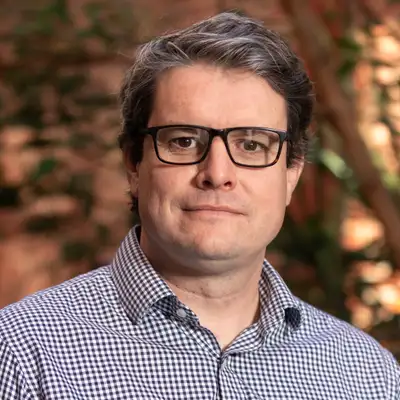
With me today is James Waghorne. He's Principal Research Fellow and University Historian at the University of Melbourne, and he's also, along with Ross Jones and Marcia Langton, co-editor of this two-volume set. We chatted extensively about the book, its origins, and why the approach taken in this volume was so different from what you tend to see in most books that try to reconcile institutions with their colonial pasts.
And since the book covers not just truth but also reconciliation, we also look at various ways that Indigenous knowledge has been and is being recognized at the University of Melbourne. A fascinating process that does not have easy parallels in the North American experience.
Altogether, this was a fascinating and exciting discussion about Australian academia's journey towards reconciliation, which I hope will find some resonance on our side of the Pacific. And so, without further ado, let's turn it over to James.
Alex Usher (AU): James, just to start out, this show has a mostly North American audience. I mean, they're around the globe, but most of them are in North America. And they'll have a very particular understanding of colonization and settler Indigenous relations. Just to set the stage, what's different between the Australian and North American experiences of these two things?
James Waghorne (JW): Well, I think I'd start initially, Alex, by saying that there's much more that's similar probably than is different, that these are two settler colonial societies. The Australian setting has some distinctive features though, one of which is that the Australian land mass is claimed under a doctrine called terra nullius, which means that it's no man's land, so that there are no treaties across Australia in the same way as there were in North America.
This has enormous impact on how colonization operates in the country, where you see the taking of land to support the agrarian expansion of the country, but doing so on a very local level, individual squatters meeting resistance from groups of Indigenous people. And so in that sense, it's a different kind of mode. There's not the same emphasis on fur trapping and things like that, where you might rely on Indigenous experience in the Australian setting. It's that agrarian economy that aims to replace and uproot everything that existed before with an idea of Western science.
In Australia, we also have the terrible story of the stolen generations, where Indigenous children, particularly uh, mixed race Indigenous children, were removed en masse from their family groups and their, and their families even by welfare organizations and placed into, into Western families, on the basis actually, and this is something that Dhumbakku Guwana reaches for, on the basis that they are racially superior to their parents.
It's a terrible idea, isn't it? But that they, because they have a, they are mixed race, they are actually superior somehow to their families. The consequence of this idea is that you have families broken up across the country.
Alex Usher: I found this book strikingly different in approach to what you tend to see in a North American context, right? And it has to do with the way that the University of Melbourne is treated as an institution. So if I think about the United States and you see books like Yale & Slavery, right? The, the focus is the university as a corporate entity. You know, that's kind of what's being examined, you know, what the institution does corporately, where it gets its money from, who its original donors are. This book is different, right? It's focusing instead on a number of prominent professors, and it's, and it's dealing not exclusively, but primarily with things like you know, race science and desecration of burial sites.
Why the difference in approach? Is that something related to the nature of colonialism in Australia, or is it an editorial choice?
James Waghorne: I think it's, it's partly a response to the different structure of Australian higher education. It is not in the same way supported by such as, for example, the land grant institutions are supported on grants of land that was previously, in many cases uh, Aboriginal reserves, you know, native people reserves.
So there's not that same economic connection, financial connection to settler colonialism. Almost all the money that went to Australian universities comes from the government and from the students who go there. But how Dombak Guguana differs, and what I think is exciting about all of its contributors, is that it's trying to embed the University of Melbourne in the story of Australia and in a wider worldwide intellectual culture.
Rather than seeing how Australia has shaped the University of Melbourne, we're arguing about how the University of Melbourne has influenced the development of Australia, and particularly this, this core idea of settler colonialism and colonial expansion. So it's a story of influence outward as much as it is inward.
And the difference once you start broadening it in that way, which is enormously broad, some of those studies, particularly the, the ones in Harvard and, and Yale and so forth, are quite narrow. They're focused, they're very clear, they address a specific issue, have a set of sources and resources that they can use to inform that.
The broader question about how universities are embedded in in, colonialism and how they propagate ideas of race and race science and how that supports colonial expansion, that's a much bigger story. So to get to that you need a bigger frame and it becomes a story of, of, case studies in some ways where you, you, in order to try and get across that larger story.
Alex Usher: So you talk about influence stemming outwards from University of Melbourne, but I guess University of Melbourne exists and existed within a global or at least a, a commonwealth framework of knowledge and knowledge exchange. And one of the things I th- that I-- intrigued me about this book was really, you know, it's the focus in that first 100, 150 pages on Indigenous human remains that were in university, a, a, a number of different university collections or museums, and it was very shocking.
And then, yeah, I sort of went back and, and you know, looked at some of the work by Douglas Cole here in Canada, who's looking at similar kinds of issues, and I found, okay, there's all these stories about Franz Boas, who's the, the founder of anthropology, right? That was how he paid for a lot of his expeditions.
He'd just go dig stuff up on, in, you know, in Western Canada, Northern Canada, and send the remains to whichever university wanted to put it in their museum. So, is it really University of Melbourne that's, you know... I, I think I've used the word on trial, but it's, you know, it's not really on trial, but you know what I mean. Is it really University of Melbourne doing this, or is it just Western science, Western anthropology?
James Waghorne: Well, it's, it is both at the same time. It's absolutely individuals at the University of Melbourne and their associates who are doing things, and this, one of the things that, I, I expected when we talked about human remains was a discussion about the use of bodies. You, you go to museums and you'll see sometimes, I was at the British Museum recently, you'll see bodies in glass cases, and I thought that that's an ethical question. I expected a discussion about that actually, and whether there was a right of universities to use human remains and things like that. But I think you're right, Alex, what we had there was so shocking. It was so craven, the examples that we have, have where human remains are harvested en masse, where bones that are deemed to be inferior are tossed aside and other bones are stacked up and then sent back to museums, traded on an international market. This is shocking, absolutely shocking behavior.
But perhaps you're right there that, that perhaps the most shocking thing is that the scientific leaders who are involved in this really, really the brightest lights in anthropology, in physical anthropology, in anatomy departments see no problem with this, see this as just par for the course.
That is an interesting idea, and I agree it's not putting the university on trial or even these individuals really on trial. It's trying to understand their mindset and understand because once you can allow that these individuals saw no problem with this issue, what other issues? How does it, how does it color our understanding of them in other ways?
And the other dimension, of course, is that it forces us to reflect and say, "Well, what about my own practice would similarly horrify people if they looked at it objectively in the future?" You know? It causes us to reflect upon our own methodologies and our approaches.
So that I think is valuable, you know, in terms of understanding.
Alex Usher: So the book does not focus on what you would call it corporate institutional actions, really not very much, and it does not focus on a single social phenomenon, you know, the way books on slavery in the US or residential schools in Canada do. The critique you're making of settler colonial institutions in this book is therefore actually it's a lot more diffuse and in many ways more sweeping than what we're used to seeing in North America.
And I went and checked you know, the University of Melbourne's 2022 apology to Aboriginal and Torres Strait Islander peoples. And, you know, here, the University of Manitoba led the way in Canada by apologizing for its role in residential schools, and you've got lots of institutions in the United States that apologized for their role in slavery.
University of Melbourne's apology was for the historical and current injustices that have been and are to the detriment of the health and wellbeing and educational and living standards of the Aboriginal and Torres Islander peoples of this country. That's way more sweeping.
That's way more-- It's taking on a bigger debt, if I can put it that way. How did the University of Melbourne community react to that apology? Was it controversial?
James Waghorne: It was, it came at a time when we had had a long-running sort of faux debate, phony debate about whether people from the present can apologize for actions of people in the past, and whether this is something that, that current people ought to take to acknowledge, but also apologize for. So in some senses, it was quite courageous that the university said, "We are taking a position on this. We are acknowledging our role in all sorts of areas."
But at that point, of course, the knowledge of that, the extent and the dimensions of that harm that was done to Indigenous people was not clear. And there's one of the reasons that this book, which is a very wide, has a very wide scope, you know. It's about truth-telling in the University of Melbourne. It has a title, The- Indigenous Australia and the University of Melbourne. And that involves analyzing all those elements of harm, but also other forms of connection as well in, in our editorial decision. So in some ways it was m- laying the ground for this kind of work.
That we needed to do a big scoping study to understand how the University of Melbourne had in fact actively, specifically, how specifically the University of Melbourne had involved itself in settler colonialism, in propagating race science across the, across the world. So across, across the different disciplines of the university.
So in education, in science, in medicine, in history, across all those dimensions, how does this idea of race science get translated across all of these different faculties and different disciplines? And then how is that applied in Australia? So in some senses I think it was welcomed. People argued that it was inadequate, they always do about apologies, I think.
But it's uh, it laid the ground for this broader study that we're looking at now.
Alex Usher: And so what was the reaction to your book from the University of Melbourne community? Similar kind of thing? Was it supportive? Was it non-supportive?
James Waghorne: It's been remarkably supportive actually, and I think that that is partly because it's so novel, so it's, this is something that as an official history, as we know there's been a lot of writing in academic journals about aspects of this history. But to bring it forward and to say, "This is an official history of the University of Melbourne, copyright University of Melbourne," that's a bold step.
So that, in that sense, the university is being congratulated on that. There's a structural component to this as well. Because it's an edited collection and it's written by teaching academics from across all faculties at the University of Melbourne, it means that it's already embedded in curriculum because these people say, "Well, I've got something to teach to now to uh, add this dimension to my course, my course offering."
So it's already been brought into curriculum, so students are responding to this immediately. It's prompted the development of reading groups. They offer campus tours that are enormously interested. There's such enormous interest in this element, in this history in a way that you know, is, is heartening. And it's one of the things that this project has done, is created the space for these discussions.
However, this history's also being criticized, as you would imagine. It has had criticism for being, for running lame on certain issues, for not going far enough, for omitting some things that people uh, have great cause.
It can't possibly do all of those things. Sometimes it's criticized as being an effort by the university to actually close off discussion, to say, "We've addressed this now. We can all calm down. This is what it is." But in fact, the opposite has happened. There's been a great engagement and interest in it.
Alex Usher: We're gonna take a short break. We'll be right back.
And we're back. James, this is diverting a little bit from what's in the book, but another significant difference between Australia and, you know, say, North American countries with respect to Indigenous peoples is that there doesn't seem to have been much of a movement in Australia for Indigenous peoples to create their own institutions of higher learning along the lines of, you know, First Nations University in Canada, the big tribal colleges in the US, or the wānangas in New Zealand.
It seems to me that that puts a big pressure on, a bigger pressure on institutions like University of Melbourne because if they bear the whole burden of bringing higher education uh, into contact with and, and, being the expression of higher education for Indigenous peoples, that's tough 'cause, you know, University of Melbourne, I assume it's like universities here in Canada, it's big, it's bureaucratic, it's scientist, if I can put it that way. Like, it's it's gonna privilege certain types of worldviews. Why aren't there Australian wānangas? How did it come to be that that big institutions like University of Melbourne did become, in effect, the, the main route into higher education for Indigenous peoples?
James Waghorne: Well, I think that the Australian system is quite small, even though it has large, it has few very large institutions, actually. So it has something like 39 universities. There are a few private universities, often associated with religious denominations, as I'm sure you're aware. What we have in Australia is a long-running effort to bring indigenous people into mainstream higher education institutions, reaching back to the 1950s, to the post-war period, where there are various schemes to introduce scholarships, to encourage students to come through, to hire staff, to create support networks and support institutions within mainstream universities.
So it's a long-running effort by mainstream universities because they actually want to incorporate indigenous knowledge, and indigenous knowledge is something that the University of Melbourne, as are other universities across Australia, are very interested in connecting with. And they are doing so in a way that aims ultimately to change higher education, that aims to broaden the idea of what higher education is and who can come and what it means.
You mentioned the importance of science. This is, of course in some circles a controversial topic, and we could perhaps talk further about that. But sometimes there is a reaction against indigenous knowledge in some circles, arguing that this somehow degrades the idea of pure science. We could talk about that. I'm not sure I... have much sympathy with those views.
Alex Usher: Yeah. Well, uh, so I mean, you talk about it in terms of inclusion, and tho-those are terms I'm familiar with in North America, right? Our universities, when we talk about inclusion, it's a lot about numbers, right? It's about attracting-- Do we have enough students from indigenous backgrounds? Are we hiring enough indigenous professors?
And that kind of thing surprised me how little attention it got in this volume. Maybe it's, in volume two, which I haven't read. Your focus really is on indigenous knowledge and worldviews, and that struck me as quite different, new and and fascinating. So I think what you're telling me is that's not just an editorial choice, that actually does reflect differences in the way inclusion is practiced in Australia and the Americas. Is that fair?
James Waghorne: So as you mentioned, Alex, there are two volumes of this history. The first one has the subheading Truth, and it is about truth telling. The second volume is called Voice, and these are ideas that echo a a noted policy document, the Uluru Statement of the Heart that is created by indigenous Australians in the twenty twenties.
But it's much more about numbers and about people and about indigenous voices. So there's, the difference between the two isn't so cut and dried, though. We deliberately placed indigenous knowledge in the first volume as a counter to some of the race science that we present in the first part of this book.
So there's an important chapter in this book by the lead editor of this project, Ross Jones. The other editor, of course, is Marcia Langton, an indigenous leader of enormous stature in Australia and internationally perhaps as well. And that is to talk about how Western science, sometimes there's a conceit in Western science in that it believes too much in its own objectivity. Indigenous knowledge is another way of thinking about the world and positing clashing the two together, pushing the two together is a way of emphasizing that it is not just about actions of individuals, as you suggest, but it's about ways of thinking about the world and ways of being open and receptive to different understandings of the world, to interrogate our own personal prejudices, which runs through the book in the earlier passages, and show how those things undermine our claims to objectivity uh, as scientists in universities. That actually there are different ways of seeing the same thing. And so placing that in the first volume is a statement of intent, absolutely.
Alex Usher: Got it. So, I mean, I was fascinated by some of those examples of you know, attempts to include different worldviews, and I thought the, the passage on courses in Indigenous astronomy were-- I mean, that was mind-blowing. That was, that was really, really interesting. For you, like, what are the most promising examples of inclusion of worldviews at University of Melbourne?
James Waghorne: Well, astronomy's such a wonderful practical example, isn't it, of a way of viewing the heavens that we, you know, that, that you show how you construct ideas about the heavens, and this is a different way of doing it, and it speaks to our culture and our cultural development as much as it does the celestial bodies and so forth that is happening, and science is a way of, of exploring that.
Some of the other examples, I mean, there, there are some that are feature in this book, it's a history, so they are backward-looking. But some of the most promising examples of this are in research partnerships, and we have a few of those in here. We have you know, the, the West Arnhem Land Dog Health Program, Elizabeth Tudor and Cameron Rawle, for example, where you have indigenous leaders working in partnership with university academics in a way that brings tangible outcomes.
So it's, a way that is focused on outcomes, but it's focused as well on collaboration, genuine collaboration, and that stands in marked distinction, marked opposition, to the kind of way in which indigenous human remains were harvested, for example, en masse and taken by universities to study in their own way. It differs from other forms of academic work that are extractive and that are about removing knowledge from indigenous people, working on it privately, and then presenting outcomes.
Those are the most promising things, those that connection with community, that encourage working with and in collaboration with Indigenous groups, with Indigenous organizations and corporations to fulfill both the objective of universities, but also of these other organizations who are, who know exactly what the Indigenous people actually need.
Alex Usher: Yeah. I was really intrigued by the, the extent to which Indigenous knowledge was portrayed as residing in works of art. And therefore, not only that fine arts faculties or, or departments would have an important role to play in reconciliation, but also that non-fine arts programs, like medicine is the one that receives the most attention, have had to open themselves up to using art as a different way of knowing.
How receptive have various disciplines been to this approach at the University of Melbourne? Have some been more resistant than others?
James Waghorne: I think that some have been more resistant than others. I think there has been a great interest in, the, in, in the one hand, there has been a great interest in understanding the history of eugenics in Australia, in understanding the way in which Indigenous people have interpreted ideas about healing, and that's, uh, the example that we have in the book with Jackie Healy's extraordinary exhibition that she held in the Medical History Museum about different ways of, of healing and different forms of approaches to medicine. That toured across the world. There's been a second one, actually. There's a n- there's a second Art of Healing as well, which shows the interest in this.
It-- if, if nothing else, it it provokes your imagination and the way in which you see what you are doing. Have there been resistance from anatomists? I think yes, in some quarters. I think there is a very, there is a hesi- hesitancy in those really pure science disciplines who are anxious that Indigenous knowledge doesn't somehow degrade the, the pure effort of science, you know?
That, that, you've seen around the world there have been various position statements by groups of scientists who say that Indigenous knowledge isn't science, and that, it therefore has a different role in the academy and in scientific practice. I think that those sorts of absolutist, I would characterize them as, positions misunderstands the role of Indigenous knowledge in, in that it is collaborative, that it is partnership, that it is ultimately aimed to enhance our worldview and extend our imagination rather than somehow an attack on science itself.
Alex Usher: What's the future for reconciliation in Australian higher education or, or at the University of Melbourne? What kinds of initiatives do you think we're likely to see in the next decade or so?
James Waghorne: Other Australian universities have expressed interest in developing similar truth-telling projects, perhaps not on quite the same scale as the University of Melbourne with two volumes of history that are, you know,
350-- a collaborative effort, 350,000 words, so it's, it's Anna Karenina, you know, it's, it's a big undertaking.
Other institutions are interested in this though, and, and because it's so dynamic, because it's, while it's looking to the past, it's also about the priorities of institutions today in those, those areas such as inclusion that you identify there. But it's also been so fruitful in that it's not a-- I mean, to come back to your point about whether universities are on trial, it's about understanding ultimately, understanding how these universities have operated in the past.
The story of in- the Indigenous connection with universities is something that other historians have overlooked or said, "It's not the main story. The main story are the ones that I'm telling in my history of the university." Dhoombak Goobgoowana, by contrast, shows that if you make this the focus, even though it's possibly not the main story, it's still a really significant story.
And in focusing on that, you reveal all sorts of elements about your own institutions and their place in the world that you wouldn't otherwise do. So there is great interest in that story, much more than the, desire to prosecute members of the institution from the past.
There's obviously ongoing efforts to recruit students, and Dhoombak Goobgoowana is a really important signal in that area, in that it shows that universities are open to this sort of critique and understanding their connection with Indigenous people.
That's a really powerful signal to someone going to university who previously might see the name of a eugenicist on a building and say, "What is this place? This is not for me." And of course, there's a just a growing connection with Indigenous communities through research enterprise, working in ongoing collaborations. That's happening across the Australian higher education system today.
Alex Usher: James Waghorne, thanks so much for being with us today.
James Waghorne: My pleasure. Thanks, Alex.
Alex Usher: And it just remains for me to thank our excellent producers, Tiffany MacLennan and Sam Pufek, and you, our readers and listeners, for joining us today. If you have any questions or comments about today's episode, or if you have suggestions for future episodes, please don't hesitate to get in contact with us at podcast@higheredstrategy.com.
Join us next week when our guest will be Christine Wach, Senior Vice President, Partnerships and Stakeholder Engagement of USA and Canada at IDP Education. She'll be joining us not just to talk about IDP and its rather unique corporate history, but also about recent turmoil in international student markets and what it portends for the future of academic mobility. Bye for now.