Subscribe
Share
Share
Embed
"I choose something that I want to do, not that I can do."
"The more you're outside your comfort zone, the richer your life will be."
"Anything's possible. You don't have to be talented. You just have to work on it."
"The best expedition is the next one.""It's never too late. It's only too late if you decide it is."
They’ve swum oceans, scaled mountains, launched empires, and shattered expectations. But before they did any of it, someone, maybe even themselves, thought: “You can’t do that.”
Hosted by Sam Penny, Why’d You Think You Could Do That? dives into the minds of people who said “screw it” and went for it anyway. From adventurers and elite athletes to wildcard entrepreneurs and creative renegades, each episode unpacks the one question they all have in common:
“Why'd you think you could do that?”
If you’re wired for more, haunted by big ideas, or just sick of playing it safe, this is your show.
Sam Penny (00:00)
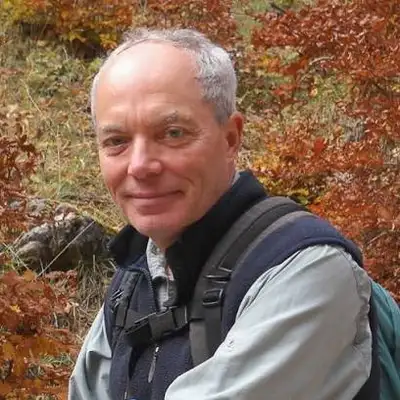
He wasn't a record chaser. He wasn't an elite athlete. was a Chartered accountant from Elora in Canada with a lifelong itch to do something more. At 58, he strapped on skis, clipped into a harness and dragged a sled across the most unforgiving landscape on earth, 900 kilometres to the South Pole.
He nearly froze on a Russian mountain. He cycled across the Australian outback twice, climbed some of the world's highest peaks, not because anyone told him to, but because a childhood obsession with Shackleton never let go. Then one night in a garage showing adventure films to a few friends, he had an idea. What if the spark that lit his fire could light someone else's?
Welcome to Why Do Think You Could Do That? I'm Sam Penny and this is Ian Evans. Ian, welcome to the show.
Ian Evans (00:49)
Thanks a lot Sam, pleasure to be here.
Sam Penny (00:52)
Ian I'm really looking forward to diving into this because you are one of these people who seems to be constantly putting yourself outside your comfort zone. You've had so many adventures and it's not just one particular theme. There's so many different styles of adventures that you've been going through. Before we dive into those, I wanna go back into your childhood because you're an accountant, you've got the soul of an explorer.
But firstly, where did you grow up and what kind of childhood did you have?
Ian Evans (01:24)
I grew up in a place called Shrewsbury in the UK, a fairly medium sized town in the centre of the UK. Very happy upbringing, normal upbringing, ⁓ loving family and everything like that. Always belonged to the Scouts, did lots of camping, did lots of hiking and stuff like that. But I ended up hating school ⁓ very much when I was a teenager and left school early, really didn't finish grade 13 as it would be and went off and did my own thing. And that's really where
all of that started and had to get some work. So I became a clerk in an accounting's office. I liked it. I seemed to be good at it and eventually qualified as a chartered accountant, which is unusual because you don't need to do that today. That was working at night and stuff. So that's that initial strange thing that I went through. also tried to be a professional cricketer when I was 17. Maybe I would have done better than the English team that's just over in Australia right now.
That didn't work out either. So I tried a few things and ended up with a chartered account and qualifying at 25, the same as a whole bunch of other people. So that's the early days and many happy memories and crazy way to do it, but I ended up in a good spot.
Sam Penny (02:41)
I love doing my research for each of my interviews because it really throws up some obscure things. And one of things in my research ⁓ and the team said, ask him about when he was a kid climbing onto the roof of the shed at the age of three. What's that about?
Ian Evans (02:58)
Well, it's a little bit the same as going to a cycle rink at a seaside resort in the UK and all was cycling and being so bored with cycling the other kids, I went around the other way and they were all terrorized and I got banned from the cycling rink and I was like five at that stage. So it's doing something that I just saw the ladder. My father was having lunch and I thought, why not? I really didn't think it through.
I just thought, why not? And went and sat on the top of the roof. And so it didn't scare me. It didn't frighten me. It was kind of interesting, but it was something I'd never done. But why couldn't I do that?
Sam Penny (03:38)
Fair enough. ⁓ It's interesting. ⁓ was only yesterday I was using ⁓ Google Street View, whatever it's called, looking back on my childhood home in a suburb in Canberra called Mawson. And obviously Mawson, an amazing Antarctic explorer. And every street around me was named after Antarctic explorers. And there's a bit of a story to this that relates to your shed story. One of my great memories.
as a young kid, maybe five or six, is climbing up onto the roof of the shed and then jumping off the top of the, it was the carport, the garage, jumping off the garage onto the ground. And I remember doing it so many times that after a while I couldn't walk because my ankles were so sore. But one of the other great things about where I grew up, ⁓ I lived on a street called Hoadley Street in Mawson with Sir Douglas Mawson.
At the top of my street was Shackleton Circuit and every single street had a little plaque on it that spoke about each of the Antarctic explorers that the streets were named after. Now you had a real fascination with Shackleton and with Scott. What was it about these Antarctic explorers that fascinated you?
Ian Evans (04:58)
It's a good question, Sam. think like we learnt about them at school of course, because they were heroes in Britain. ⁓ And I was fascinated by them, but I was also fascinated by the place. It seemed so remote. It seemed so far away. It seemed so crazy. It seemed so expensive to get to. I lived vicariously through their experiences, but I always imagined I'd never get there. I thought this is just a place I'll never get to. However,
I was always fascinated with it, much more so than the Arctic. And although I live in Canada now, I'm still much more fascinated with the South and the North, but really it's not much more complex than that, actually.
Sam Penny (05:37)
Fair enough then. So were there any early signs of adventure growing up?
Ian Evans (05:42)
There were, mean, in the Scouts we did some climbing in North Wales, we did some hiking, we did bike rides and things like that. But it was really only ⁓ in my 20s that I really took up ⁓ with much more adventure and just going outside my comfort zone whenever I could. And I think ⁓ I appreciated it. I got a high from it literally. And I decided to pursue that in conjunction with accounting. So
Really, I designed that dual lifestyle to see if I could have both. ⁓
Sam Penny (06:18)
So Ian, ⁓ you're an accountant, most people are really starting to climb the corporate ladder, know, through their twenties, they've got their whole life mapped out. But instead of climbing the corporate ladder, you decided to climb Kilimanjaro. Where did that come about?
Ian Evans (06:38)
Kilimanjaro came about because I had the opportunity to work in Africa for a while. I worked in Zambia and then traveled through Africa afterwards with a group of people. And Kilimanjaro came up as an idea. Why not? I'd never been above 4,000 feet, didn't know how I'd do. Bought some boots, rented some gear, got a ride to the start in an old Ford Zephyr with some locals that took us there, which was fun. And I went up and down Kilimanjaro and it was really a great experience unto itself.
But the other thing it taught me was, one, I can deal with the altitude. I seem to deal with it pretty well. And this is something I can do as well as of having life as a finance person. So from then on, I really had a dual life. I took lots of time off. I gave up a lot of career moves for the sake of adventure and to try to treat both things as part of my life. Super important. And I did it for 40 years.
Sam Penny (07:33)
So why was it then that this trip really changed everything for you?
Ian Evans (07:38)
⁓ because it showed me something that I've never seen before, high altitude. And the highest peak in the UK is 4,000 something feet. So I've never been above that. And so it really gave me that opportunity to say, okay, this is what high altitude mountaineering is like or could be like. And it led me to look at the seven summits and led me to look at what's next. What can I do? How do I do that? How can I become good enough to climb some of those or all of those peaks? And it fascinated me.
because it gave me that tremendous goal to seek for and to push myself as well as the financial life which more or less I really enjoyed, but it gave me the money to do that. So it was a dual life that I led from then on.
Sam Penny (08:22)
you mentioned the seven summits. Explain to the listeners who are those who aren't aware what that is.
Ian Evans (08:28)
Seven summits are the highest peak on each continent. So you've got Everest, Vincent Massif in Antarctica. You've got Aconcagua in South America, Denali in North America. You've got Elbrus in ⁓ Europe and you've got Kilimanjaro in Africa. So I was trying to knock these on the head with the reality for me that I was never really good enough for places like Mount Everest.
So it was never really going to be the seven summits. It was going to be, let's see how many of these things I can do. And the interesting thing was it's for me, ⁓ moving on is very important as you come to certain stages of your life. When I was in Antarctica and I'd been to the South Pole, I was really under a lot of pressure to go and climb Mount Elbrus. It was like a 20 minute flight away. It's not that technically difficult. I could have done it, but I was so exhausted and injured. And also that
That was a separate part of my life. I said, no, it was not what I wanted to do at that point, despite the fact I was so close to Mount Alboros, sorry, to Vincent Massif.
Sam Penny (09:34)
Speaking to someone like Andrew Locke, the first Australian to climb every peak over 8000 metres and funnily enough, a friend of yours, there's so many dangerous moments in climbing these peaks. What were some of the scariest moments when you're doing these seven peaks?
Ian Evans (09:44)
Ha
I think one of them was first attempt on Aconcagua where we came across two climbers that had died in a storm on the way up. We just about managed to get down. But also I think the pure adrenaline fear of standing on the summit of the Matterhorn in Switzerland in a storm and having to find your way down knowing that a lot of people have died doing that and
It was white knuckle all the way down, through walking through Zermatt with our climbing boots on, squishing water out and all that stuff. But that ⁓ was really on the edge and felt we really could have died at that point. We shouldn't have been up there, and we were, but I really felt that was very much we were on the edge there,
Sam Penny (10:41)
things with mountaineering and having spoken to several people about it, death is always there. You whether it's other climbers who have died or people who are close to death, when you see these moments of death around you, what makes you keep coming back to do it again?
Ian Evans (11:05)
Interesting question. When I saw the unfortunate guys in Anak and Kagwar, ⁓ it was very sad and yet it didn't put me off. The thing that put me off eventually from mountaineering was at Mount Alboros in Russia, where I fell about 300 feet down an ice and a cliff and nearly died. And realized that if I kept doing this, bad things can happen. That's what eventually
made me look elsewhere for my adrenaline rush. And for me, it was the right thing to do. I had a wonderful time chasing those mountains in my earlier time, but it was the right time to move on also. So ⁓ that is what freaked me out, if you like, is when I had a close call and realized the next one might be a bad call.
Sam Penny (11:55)
That was one of the questions I actually posed to Andrew Locke about some of his climbs because he recalled some stories where an avalanche came down and took out three or four of his climbing party. And if he was just a foot or two in one direction, he would have been part of that as well. And life is so precarious when you're in those moments.
How do you prepare yourself physically and mentally to be able to take on those kinds of challenges?
Ian Evans (12:30)
think the challenge is very much within actually, Sam, as opposed to the mountain. You hear people going to conquer a mountain, but I think the only thing you find out more about is yourself on the mountain. I think you have to come to terms with your own level of acceptance. You don't think you're going to die on a mountain, but you try and reduce the risk as much as you can. I'm a very ⁓ big planner.
and plan every eventuality I can think of, knowing that things are going to come up anyway. But the more you can eliminate, the better chance you've got. And be aware of sometimes it's good to turn back. Have that experience when you're a bit older to realize this might be a good time to go down.
Sam Penny (13:15)
Most people, you know, listening to this probably think you're batshit crazy. But you describe yourself as an ordinary guy. ⁓ You're doing batshit crazy stuff, which is really what the podcast is all about. Why do you describe yourself as an ordinary guy?
Ian Evans (13:33)
Well, that's great. I'm certainly not an Olympic athlete. I'm not anything particularly special. However, what I can do is actually go pick something and do it. If you ask people in the village, you know, or people that I know very well, you know, he's a guy that can make the ridiculous sound normal. And that's what I try to do. Like, okay, this might sound completely mental. However, it's not really if you break it down.
And that's how I choose these things. I choose something that I want to do, not that I can do. I can't do it yet. Then you design how to do it and you figure out how to do it and give it your best shot. When I'm talking to school kids, I tell them all the time to go and fail spectacular stuff. And the teachers don't like that always, but I don't mean school, but go and fail. Pick something that you've never done before and see how you get on.
Sam Penny (14:24)
haha
Ian Evans (14:32)
And if you do that, pick something else.
Sam Penny (14:34)
There must be many times on expeditions you're halfway through and just go, this was a mistake. What moments have you got like that?
Ian Evans (14:42)
This was a mistake. think bad weather on Aconcagua the first time I was with Andrew's brother, David, actually. Yeah, so we really arrived at the wrong time and it was a really bad idea. We were all sick. It was the end of the climbing season. We found these two dead guys and thought, I think it's time we went down. And it really was a bad idea. So I went back a couple of years later and climbed to the summit. yeah, there's one of those and
sometimes just standing like when I was in Antarctica going to the South Pole, I would stand in the middle of Antarctica with absolutely nothing around apart from me in a sled and think, I wonder what I look like from space, you know? And this is really cool. This is really cool. It's scary as hell, but it's really cool to think where I am. Think about it. How fortunate am I? And then you just keep going.
Sam Penny (15:34)
Haha.
It is really quite a privilege to be able to undertake these adventures. Lisa Blair, one of my past guests, had a catastrophic event in the Southern Ocean. She was sailing solo around Antarctica to attempt to set the fastest record for that. And she was dismastered about 900 nautical miles south of Cape Town. And she realised that the closest humans to her at that moment in time
were those on the International Space Station. And it's just such a moment in time when you realize where you are.
Ian Evans (16:17)
You're alone.
Sam Penny (16:18)
Now, ⁓ many of your expeditions have been with teams, climbing parties, those kinds of things. But ⁓ I want to talk about one of your solo adventures, which was cycling across Australia. Now, I live in Australia. Australia is a bloody big place. We span three time zones. ⁓ It's an overnight flight from one side to the other. Why firstly did you decide to...
ride across Australia.
Ian Evans (16:48)
Great question. I'd never been. That was one reason to go to Australia. I was always fascinated by it. I also had some very good friends there. I had a David in Perth and a David in Sydney. So I thought, well, why don't I cycle between the two Davids? That would be cool. But it was as simple as that really. But the other thing that I wanted to do, I've done tons of expeditions with people or with teams.
And I thought, let's really crank up the degree of difficulty by doing it alone. Let's pick something I'm doing alone and it's a place I've never been and it's hard. And that was cycling the 5,000 kilometers from Perth to Sydney. And that was a whole different dimension, but it was such a wonderful experience because the people you meet along the way when you're alone is far greater than when you're in a team and you really meet these people and they understand it and welcome you usually.
Sam Penny (17:42)
So I assume this was your biggest adventure as a solo event. How did it really shape you?
Ian Evans (17:50)
⁓ I think ⁓ it added to what I've done already. It's a good question actually, Sam. I hadn't really thought about that too much before. What it made me realize is you can do this stuff on your own and enjoy it. You know, I thought, wow, am I going to be lonely? Is this going to be tough? Is it going to be this? It was all of those things. However, I think you become tougher doing it on your own because there's no support network.
When times are bad, there's no one to talk to apart from yourself and you do that.
Sam Penny (18:24)
Okay,
you're riding across the Nullarbor, ⁓ for those who don't know, the Nullarbor is famous actually for alien sightings. And maybe because it takes you about two days to drive across it and it's just flat Australian desert. When you're in these moments, riding across the Nullarbor, you're probably riding eight, 12 hours a day. Where does your mind go?
Ian Evans (18:51)
Well, I very interesting and I liken it to Antarctica as well. A lot of people listen to podcasts. A lot of people listen to music. A lot of people do various things. The most enjoyable days I've had on these big expeditions is thinking about absolutely nothing. And just having a blank mind when you start out from the tent or you start out on the bike is letting your mind go wherever it wants to go. It's all okay. Whatever your mind does is good. And ⁓ it goes to some amazing places. And I think ⁓
before you know it you've been cycling six or eight hours. That would drive some people crazy. Say
Sam Penny (19:24)
Did you have music or anything like that?
Did you have music or anything like that to distract you?
Ian Evans (19:29)
Occasionally, but not often. ⁓ What I like to do on a bike is hear the sounds of the tires on the road, of animals, of things that are going on, and also of road trains, which is kind of... Yeah. You can usually see them in the mirror about 10 miles back, actually.
Sam Penny (19:43)
Yeah, you need to hear those things coming. It's...
They're massive. ⁓ It's interesting. I find a lot of my long training, sort of six hour ocean swims, those kinds of things, really quite meditative. When I'm swimming, I'm counting every breath and I count to 10 and then start again, count to 10. And so out in the ocean for six hours at a time, most people go, that's the most boring thing on the planet. And they're not wrong. However, when you...
break it down of just having something in your mind like counting or just letting your mind wander, it makes the time pass really fast. And so I got to a point where I'd stop every 30 minutes for a feed, whether it's a drink or something like that. And it really only felt like about five minutes. Did you have a repetitive process in your mind that just kept going over and over and over again?
Ian Evans (20:45)
Yeah, I've done that as well. And I think, I think what grabs me about these expeditions very much so is the simplicity that we live in a very complex life. We live in a very confusing life, I find sometimes. And the demands are things often that you don't want. When you're on an expedition, you're biking across Australia or you're walking to the South Pole, life's very simple. The goals are very simple. And I think I, I thrive on things like that. It may drive some people crazy.
But I do, and I do count as well, yeah. If I've got a big hill on the bike, I count how many pedal strokes I think it's gonna be. Yeah, pretty close, okay. And I get through it that way. So we all have our coping mechanisms.
Sam Penny (21:24)
One of the things I love is stepping outside the comfort zone. Actually a couple of weeks ago, I did a solo hike. It was a weekend long hike about 40 kilometres. And I've done a lot of hiking in my time, because I love hiking, getting out into the Australian outback, the Australian bush. But I've never done one solo. And I thought, I'm going to go try a solo hike. I was actually a little bit nervous getting out into the Australian bush.
by myself, just wondering, you know, where's the mine going to go? But up all the up all these hills, walking across ridges, going through creeks and waterfalls, everything like that. I had one of my most enjoyable weekends ever. And at the end of it, I felt so proud of myself. And it seems it seems ridiculous. I've done some really crazy stuff in my life, but it just seems so ridiculous. But what I was proud of was
I did something that stepped me outside my comfort zone. You're a big person on ⁓ teaching people to step outside your comfort zone. When you get someone to do that, what does it really start to teach them?
Ian Evans (22:40)
I think it teaches them that anything's possible. And I can be that person I want to be. I don't have to be a bystander. I don't have to be someone that lives vicariously through other people. I'm capable of it. And that's what I try and tell people. If you can ride a bike, if you can put a tent up and if you can cook yourself dinner and you can do it the next day, you can ride across Australia. You got to do it 60 times, but you...
You can do it. It's not difficult. It's not complicated. It's not crazy. It's something you may have done some already. So go out there and do that. And I think the more you're outside your comfort zone, the richer your life will be.
Sam Penny (23:25)
That repetitiveness of these adventures of turning up every single day, and you're right. When you break it down, riding for eight hours, 10 hours, pitching a tent, making your own food, getting up, doing that the next day, if you can do it one day, you can do it five days, you can do it 60 days. And at the end of 60 days, you've ridden 5,000 kilometers across a pretty harsh landscape, which is Australia.
and doing something that most people would say is impossible.
One of the things that really, I just wanted to get you on as a guest, Ian, apart from doing all these amazing adventures, is that you started up a film festival because so much and so many people that I've interviewed have had this spark. They've seen a documentary, they were at a pub and someone gave a presentation about climbing Mount Everest, these kinds of things.
You were in your garage, you had a projector and you showed some films to some mates. Why did you think that you needed to start a film festival?
Ian Evans (24:33)
⁓ good question, actually. The reason I wanted to start the film festival or the reason I had an idea it might work is the place we live is festival culture rich. It's a very interesting place in Canada. We have a time in November that's very quiet in the village. And I've run an adventure club here for many years. And I thought it was a natural transition from that where, where, why not? Let's try it. Let's push the boat out.
and go beyond your comfort zone. I'd never done anything like this before. I'd been to film festivals, our film of the South Pole, my film Lunatic had played in lots of film festivals and would be to film festivals. And I could see what a film festival would do for a small town. And people would come out inspired. Our goal is to inspire people of all ages to see ordinary people doing extraordinary things. And that's what we want to do. All ages.
We want to keep the price down and we want people to walk out of there happy, smiling and inspired to do something that they've never done before. It's really as simple as that. We're growing like crazy and we want this to be a world-class adventure film festival in a village in Canada.
Sam Penny (25:51)
Okay, now the name of the film festival, it's Elora Adventure Film Festival, obviously Elora in Canada. Is there a theme to each year for the films or is adventure open slather?
Ian Evans (26:06)
It's open. My wife and I select the films in our garage. We debate, we cry, we look at, we argue, and we end up with a great schedule. And to me, it's got to be an emotional roller coaster. And they're all short films. So the maximum length's 30 minutes. The minimum's two minutes, But it's an emotional roller coaster where there's some crazy stuff and then some emotion. And then this year, we had a 97-year-old marathon runner. We had a guy sailed.
through Antarctica with one arm and one leg, solo sailor. And so we had everything. And we had a guy doing some crazy stuff, skiing across rues in France. So it's everything that goes, but it's not all testosterone loaded. There's some inspiring people of all ages doing things. And that's what it's about. It's that mixture. People love the mixture.
Sam Penny (26:57)
It must be such an amazing experience for you and your wife to sit in the garage to vet all these films that get thrown at you. At the end of that whole process, do you just feel inspired wanting to get out and do something new?
Ian Evans (27:13)
not really. I think we feel tired. And because we've, we've looked at these films so much that I, I've seen them so much that at the end of the day, I forget what I've seen actually. So not really. However, I'll tell you when it does hit you is when I'm standing in front of the audience of up to 200 people in some of these screenings. And after the intermission, they're all smiling and there's the vibrancy in the room, the electricity.
Sam Penny (27:18)
Hahaha
Ian Evans (27:41)
makes me super motivated to make this a big success. That's what it does for me because I can see what it's doing to people visually right in that room.
Sam Penny (27:46)
Epson.
So effectively then, the film festival is your new adventure.
Ian Evans (27:55)
Correct.
Sam Penny (27:56)
Now, you-
Ian Evans (27:56)
Well,
it's part of it because I'm still doing stuff. However, it's a very good observation because as I get older, I'm 69 now. Why not transition somewhat to something I can still do when I'm 95, if I can get on the stage?
Sam Penny (28:11)
You're effectively curating all these stories. You had a film that came out called Lunatic about your Antarctic ⁓ expedition. How did that really shape your belief in storytelling?
Ian Evans (28:27)
That was an expedition unto itself, even after the expedition, to get the film made by a wonderful local producer, and it did well on the film festival circuit. But I think it really was the portrayal of an ordinary guy doing extraordinary things. Ian, chartered accountant, lived in a small town in England, came to live in a small town in Canada, done some crazy shit. However, he's done this thing by going to the South Pole, and he's gone back to being an accountant again.
Sam Penny (28:51)
You
Ian Evans (28:56)
So however, I'll expand on that if I can a little bit, Sam, because the accounting I did for 30 years wasn't accounting. It was looking after companies that were almost bankrupt. So these companies would come to me, they were transport companies, almost bankrupt, and I would have to try and straighten them out and refinance them. And it's almost the same as going on a big expedition. And I lecture now about why is walking to the South Pole like a day in the office? Because it is. It's all the same stuff.
Sam Penny (28:56)
Now...
Because
it is.
Ian Evans (29:26)
Yeah, it's the same stuff. It's the same challenges. They've written in different names. They've got a different hat on. However, it's the same challenges you face. And so you can pull from one to the other. I've learned from the finance experience and the expedition experience to make me who I am and what I do today.
Sam Penny (29:45)
The films that you're showing, they're all designed to light a fire in someone. Now, some of my guests, pretty much most of my guests, had a spark ignited in them because Andrew Locke, for example, was at a pub and some bloke turned up to give a presentation about climbing Everest. Aaron Linsdau, Erden Eruc, ⁓ the same thing. Someone turned up to...
⁓ to their town and gave a presentation about rowing across an ocean or skiing to the South Pole. Lachie Smart, the youngest person to fly solo around the world, saw a story on 60 Minutes here in Australia at the age of 15 and then turned to his mum. He wasn't a pilot, he'd never flown a plane and said, mum, I'm going to fly around the world. And he did.
It's these little moments that can ignite something so important. You said your goal is to ignite a spark in people with the film festival. Have you seen that happen?
Ian Evans (30:53)
⁓ Everyone says it has. ⁓ Yeah, a lot of these people live from out of town, but that's what everyone tells us, our friends. It's inspiring. It's inspiring. It motivates them to want to do stuff. And I think that's where we're at with it. And I think as long as we can do that, and people have fun, it's a tremendously fun weekend as well. I think that's really what it's all about and to enable us to grow it. But I learned this ⁓
A long time ago, Sam, when I fell from Mount Elbrus, I came home, became divorced from my first marriage, lost my job all in the space of 60 days. I thought my world had ended. And to cut a long story short, I made myself use a whiteboard and come up with what I want to be. And I found out very quickly, I'm a corporate vagabond. In the normal sense of the word, I'm unemployable. And I have to create something using my skills to become in demand.
hence seeking clients out to restructure companies that were almost bankrupt. And that enabled me to have this dual life even more so. And that's when I cranked up the adventure. I wanted this dual life and I found a way to design it.
Sam Penny (32:07)
on that then, you know, describe yourself as this ordinary guy. People really seem to be drawn to ordinary people doing extraordinary things. What do think that is?
Ian Evans (32:19)
Because I think they may see themselves in it and they may see their own life in it and they may think, well, I could do that. I've never been winter camping, but you know, I probably could do that, not die. So let's go do it. And I think that's why people love the festival. They want the entertainment, but they see themselves on the screen.
Sam Penny (32:41)
Do think it gives people hope?
Ian Evans (32:43)
I think so, I hope so. Yeah, yeah, I hope so because it just shows people that anything's possible. Anything's possible.
You don't have to be talented. You don't have to have any specific talents to do this stuff. You just got to work on and think it through and get on with it. Like if you're going to cycle around the world, don't look at your navel for too long by finding the right bike. Whatever bike you've got, fix it up and get going.
Sam Penny (32:53)
Like you.
to start. The hottest part is always getting out the door, isn't it?
What's been the most surprising reaction of someone from the film festival?
Ian Evans (33:19)
That's a great question. ⁓ Most surprising reaction, positive we're talking here, Mostly positive. ⁓ I think an appreciation for having the vision to bring it to a place like Alora and to be part of the village and to be part of the cultural scene in the town. And yes, they're inspired. But I think they love the concept of having a film festival in Alora.
Sam Penny (33:26)
Yeah, of course.
Ian Evans (33:49)
That's inspiring. And I think that I've actually fitted it right into the cultural scene of the village. And that is what people appreciate.
Sam Penny (33:56)
Do you think that ⁓ the film festival is there for entertainment or is it really part of a deeper mission that you have?
Ian Evans (34:06)
both. For sure, it's both. People want to come, they want to be entertained, they want to have fun, they want to go to the pub and talk about the films and compare. But I think when they go home and think about it, then that's where the inspiration starts and people really think about... People talk about it for weeks and weeks afterwards. I go to the pub and people start talking about some of the films. And I think it's a two-level process. One, it's entertainment.
on the true level of the sense of the word, but also it's the inspiration by making you think, I can do this, I can do stuff like this.
Sam Penny (34:49)
You've shown dozens of films ⁓ over the three years that the Elora Adventure Film Festival has been running. Is there one that really struck the greatest chord with the audience and yourself?
Ian Evans (35:01)
⁓ One that struck the greatest chord with me, I think, would be a family from the UK that climbed the toughest peak in Norway with their two young children.
and because they were talking serious climbing here overnight, multi-day climbing. And it struck a chord with me because it really showed what they can do with a family. And the parents talked about why they're doing it. And the parents talked about what the kids are getting out of this. And the kids seemed happy doing this crazy stuff. And I think that created the biggest impact for me.
because that is what it's all about. That was super extreme, but it doesn't have to be that extreme to have the same effect.
Sam Penny (35:49)
What was the name of that film?
Ian Evans (35:50)
2.4. It's on YouTube.
Sam Penny (35:52)
Alright, I need to go find that straight after this. 2.4.
Ian Evans (35:59)
2.4, it's an excellent film and the people on it are wonderful. And you have to like the people in the film, I think, to enjoy the film. And we like the family a lot. there's many others that are great, but that one to me summed up what it's about being a family and young kids.
Sam Penny (36:19)
sounds absolutely amazing. Now, Ian you know the show is called Why Do Think You Could Do That? ⁓ And you've had this amazing career of just doing so many batshit crazy things. So firstly, I want to ask you this question. What made you think you could ski to the South Pole when you're 60?
Ian Evans (36:41)
because ⁓ I had lots of opportunity to have adventures that built up to it. It was like a stepping stone, I felt, getting to there. I was always passionate about it. I wanted to go. And that was it. Could I do it? I'd just figure out a way. Because once I'd got the opportunity to go, I was selected to go on the team of four guys, I thought, well, I'm just going to find out how to do this.
And I trained like crazy. Everyone calls me a lunatic in the village because I dragged the truck tire around the town for four months training for the South Pole. And that's why they call me lunatic. And that's why the film's called Lunatic. But that is essentially as simple as it was. I had the opportunity to do this and that was as far as it went.
Sam Penny (37:32)
does the belief come first or does action build belief? Or is it more that all of the things that you've done in the past ensure that you have belief in yourself to go and do something like this?
Ian Evans (37:48)
bit of all of the above. ⁓ It's something that, you know, what am I going to find out about myself by doing this? Can I do this for myself? I'm not really doing it for anyone else or I'm not doing it to conquer anything. What can I find out more? How can I be a better and deeper person by doing this? What can I find out by doing this crazy thing? And by picking something you can't do, that makes it
much more difficult.
Sam Penny (38:17)
So many times people are after an accolade, they're after a medal, you know, be the participant and end with their finisher's medal or the shirt. All of these adventures Ian many of them go unnoticed. And you're obviously not doing them for anybody else apart from yourself. And we have just one life.
And so many people these days are wasting it, sitting on their phone, doom scrolling on the couch, because it's so much easier to get that dopamine hit from a five second stupid video than getting out the door and making things What is your approach then to making this the greatest life you could have ever imagined?
Ian Evans (39:12)
Because I think it's, you don't want to say what if, as little as possible. And I think you want to go just as far as you can. How can I not get the most out of life? How can I get the most out of me? How can I create a life for me that I'm super satisfied with and I feel that I've tried my absolute best? When I was at the South Pole at 60, or close to 60,
I was pretty much ⁓ way past the comfort zone, way past my capabilities physically. I had to go to places mentally that I didn't know exist to succeed. And that made me realize, okay, you've gone too far this time.
Definitely.
Sam Penny (39:57)
Now
look, Ian, surely your soundings are pretty superhuman. Surely you've got an inner critic who says, this is too much, you're too old, ⁓ who do you think you are? Do you have that inner critic?
Ian Evans (40:11)
Not before or during no. Ever. After yes.
Sam Penny (40:17)
What do mean after?
Ian Evans (40:19)
What my wife tells me.
Sam Penny (40:22)
love the honesty.
Ian Evans (40:23)
⁓ no, I tell myself too. I realized that it was, ⁓ the South Pole was, was a step too far. I still did it, but it was a step too far. Really. I was way, way past my comfort zone. I came back with a version of PTSD for sure because of where I have to go to be successful. ⁓ which made me realize that, yeah, I'd probably, I was, I was 20 years too old really.
Sam Penny (40:51)
And you're 69 now. If you look back over your entire life and all the brilliant things that you've done, I have to ask you this question. Why do you think you could do that?
Ian Evans (41:04)
Why did I think I could do that?
Sam Penny (41:06)
Yeah.
Ian Evans (41:07)
⁓ My daughter says I'm too stubborn to quit. So that's one reason. ⁓ But I do think things through and logically try and make a building block of things that I try and achieve in life. And I think all those things are building blocks. And the Film Festival is the combination of that really where, you know, I'm the right person to run this with my adventurous background. And we've had a film that's done while in Film Festival. I live in Elora.
So people look up to me for that. Immediately you have that respect. And so I'm looking forward to that as a super long-term adventure for us as a family living in Elora, where people from around the world will come to it. We want thousands of people in Elora. That's where I want to be at 20 years time.
Sam Penny (41:52)
Absolutely absolutely brilliant
Fantastic. Now, I want to bring this back to the listener, because seriously, not everyone's going to summit a mountain, but everyone has their own summit. What does adventure mean to you today?
Ian Evans (42:12)
⁓ I think adventure to me means, to me today, it actually means something different than it meant a long time ago. Like the second time I crossed Australia, for example, there were actually three of us on that trip and we followed in the footsteps of John MacDowell Stewart, the first explorer to cross Australia and live, I believe. And we followed his track and camped in his campsites, which was wonderful. For me, it actually,
is much more important to follow history and add a depth to an expedition now than it ever used to be. It's not so much the A to B, it's more, it's A to B, but what happened on that A to B 300 years ago, 200 years ago. And so I've mellowed a lot in that, in that attitude of let's add something else to this level of expedition.
Sam Penny (43:01)
Now, someone who's listening, what is one small thing do you think that they could do tomorrow to really spark their own adventure?
Ian Evans (43:08)
Here's something I did that you could do as well. My wife and I planned an expedition a few years ago. We had all our backpacks ready, big backpacks. In the end, my wife couldn't go for whatever reason. So I walked out the front door, down the main street, down the river into the middle of nowhere and camped for two days, had a wonderful time and hiked and all the way back. And I had an expedition, I had an adventure and it didn't cost me anything. And I walked right from the front door. So why can't you go and do that?
Sam Penny (43:35)
That's like
Absolutely, that was like my little solo trek that I did the other weekend cost me $7.50 in a camping permit I think and maybe the the chicken schnitzel afterwards at the pub ⁓ Do you think people these days are hungrier hungrier for adventure?
Ian Evans (43:43)
Yeah. Yeah.
Um, not necessarily hungrier. I think people are hungrier for travel. And I think people are hungrier for, I hate to, use the word bucket list. I despite that, despise that sort of statement, but people are after a list of things to check off. Um, whereas we go and do things because it's a great experience and they want to do it. We may do it again and again. And I, and I'm not sure they're hungry or I'm not sure about that. It's different.
than it was 20, 30 years ago.
Sam Penny (44:27)
Do you think much of the, you know, obviously everybody's just after the dopamine hit the quick fixes these days with doom scrolling. How does someone break that cycle? Do you think to just sitting at go from sitting on the couch to just go bugger this I'm wasting my life.
Ian Evans (44:46)
I think go off the grid.
I mean, find somewhere where there's, let's say in the middle of nowhere. There's no point in doom scrolling. There's nothing to scroll. So I think you have to forcibly put yourself in that position where you are in the middle of nowhere, where you are inaccessible in and out. And then you'll find out a lot about yourself and you have much deeper adventure experiences because also there's no hope for rescue.
Sam Penny (45:16)
You're right.
Ian Evans (45:17)
You really gone wrong.
So you can't pick up the phone and say, well, yeah, I'm done now, get me out of here. So I think that is what people need to do to get adventurous, to just go off the grid. It's harder and harder today, but we try and do that when we can. And it's rewarding.
Sam Penny (45:33)
One of the interesting things is that my partner and I, try and teach our kids boredom. We take their phones off them because they're annoying us. And so many people these days are unable to seek out adventure because you and I growing up, adventure occurred generally because we're bored, wanted to go off and do something. Now,
How often do you see boredom as a great impetus for adventure?
Ian Evans (46:07)
Not at all. I don't think so. I think the people that are bored are going to be bored anyway. And I think the people that want to go and do stuff are going to go do stuff. Is my experience.
Sam Penny (46:14)
Yeah.
So then how
does someone then just become that person who just does stuff?
Ian Evans (46:25)
because they could be inspired by the film festival. They could be inspired to realize that there's a lot of other things going on and these are not athletes doing this stuff. These are people that may be super unfit. They may be large people or very old people and they're still out there doing stuff that they can't do or aspire to. So I think those are the people, you know, when I talk ⁓ to a big audience, usually a third of them get it, a third are indifferent and a third don't care.
And so you're never going to get the third that don't care under any circumstances.
Sam Penny (47:01)
So then what would you say to someone who thinks that their time for boldness has passed?
Ian Evans (47:06)
I'd talk about me and I'd talk about a 97-year-old marathon runner. It's never passed.
It's never, I don't think it's ever passed unless you let it pass. You know, I think the way to stop it passing is to keep doing crazy shit.
Sam Penny (47:12)
Why do people think that?
Ian Evans (47:23)
The more you do that, that keeps you young mentally and physically. I think that's, it sounds flippant, but it's not actually. It's exactly what I think.
Sam Penny (47:35)
Yeah, absolutely. Now, Ian, we're coming towards the end of the conversation. I always love to throw in the brave five. It's the rapid fire five questions. Five questions that don't necessarily relate to anything else. ⁓ So basically, it's the first thing that comes to your mind. You ready?
Ian Evans (47:54)
anytime.
Sam Penny (47:56)
Alright, let's go. The most unexpected lesson you've learned from an expedition.
Ian Evans (48:01)
⁓ Unexpected lesson would be ⁓ in Antarctica and how much injury can play on an expedition and how it can destroy ⁓ your dream or make it harder.
Sam Penny (48:17)
What was the injury?
Ian Evans (48:19)
⁓ I had before I started off to the South pole, I had plantar fasciitis in one foot and the other foot swelled up so I could hardly get it in my boots. So I had two feet that weren't working with 700 kilometers still to go. And I had to find a way. Hence I ended up with PTSD. Yeah. So that was the hardest thing I've ever found. I've done all the training. I dragged the tire around the countryside for four months. I was fitter than I'd ever been.
Sam Penny (48:36)
that sounds painful.
Ha
Ian Evans (48:48)
didn't think about injury.
Sam Penny (48:48)
Wow. All
right. Okay, second question, a place you can't stop thinking about.
Ian Evans (48:55)
⁓ Chile and the Atacama Desert.
Sam Penny (48:59)
Why?
Ian Evans (49:00)
because I want to go there next. as you know, Sam, the best expedition is the next one,
Sam Penny (49:03)
you haven't been there?
Wow, absolutely. All right, what's the hardest moment to come back from?
Ian Evans (49:12)
The hardest thing was when I was 40, became divorced, lost my job and nearly died on Mount Elbrus and I had no money. I was sitting in a basement of a house where the value was declining every day and I sat with my whiteboard that I've still got here actually, the whiteboard's right there, still got it 40, 30 years later. And I figured out what I had to do.
Sam Penny (49:32)
⁓ brilliant.
Ian Evans (49:36)
That was the toughest moment to come back from and was the most rewarding recovery that I've ever had. And I treated that like an expedition.
Sam Penny (49:44)
Alright, now what's one item you always pack that is usually not on anybody else's gear list?
Ian Evans (49:51)
A cut out of an aeroplane my daughter gave me when she was five as the best dad ever. And it's been on all these expeditions. It's been to the South Pole and it's been everywhere. But one of the other things is I'll expand a little bit on that, if I may. And when I went to the South Pole, I took some mementos from my parents that had both passed away and I buried them within a couple of miles of the South Pole.
Sam Penny (50:00)
I love that.
Ian Evans (50:20)
with a letter I wrote to them. And so that was very dear to me too. And I just felt that I should take them along for the trip, you know.
Sam Penny (50:31)
It's beautiful. All right, the last question of the best of the Brave Five, the best advice you've ever received on or off the mountain.
Ian Evans (50:39)
The best advice I've ever received, I think, was when I was a chartered accountant in the UK, and one of the senior people was an ex-army man. His name was Ian Carruthers. I don't know where he is right now. ⁓ But he taught me the true discipline of completing a project, pre-Excel spreadsheet days on
how to make sure you cover off every eventuality and think of everything that could possibly go wrong. And I followed that advice and I've done it ever since and it works well, but you never catch everything. Something always goes wrong anyway, but you've minimized it. And I think that's where you become comfortable with the uncomfortable. Where you bring it.
Sam Penny (51:21)
think that's
a very important point and that ⁓ many of my guests are engineers, accountants, you're very analytical people. And, you know, I'm a civil engineer by trade and you really cannot say that we come from the most exciting professions, but we're out there doing some of the most exciting stuff. Do you think that being an analytical person allows you to have this big dream, but then break it down to what do I need to do today?
Ian Evans (51:51)
Absolutely. Yeah, it helps tremendously. We can achieve things that other people wouldn't be able to achieve because they wouldn't have the patience and they wouldn't have the skills to break it down.
and break it down into manageable.
Sam Penny (52:04)
So then can someone be taught
that?
Can someone be taught that then?
Ian Evans (52:08)
I think so, for sure. For sure you can be taught it. Some people may be receptive to it and some may not be though. I think you've got to be receptive to seeing the results of that. And the more and more I plan, the better I feel about an expedition because it enables you to enjoy it more. You're not worrying about the things you didn't think about because you've thought about them all, you think.
Sam Penny (52:30)
Yeah. Now, one of the things is obviously you love stepping outside your comfort zone. So I want to ask you this, what does bravery mean to you?
Ian Evans (52:41)
It doesn't mean to me any of the things that I do. think bravery is being able to, let me phrase this right, I think it means carrying out what you say you're going to do and also being able to adjust as it gets difficult. In other words, you're brave enough to make those decisions. And I think sometimes a bravery may be in terms of quitting something.
I think another bravery side that I treat myself is it's okay to move on. When the horse is dead, get off, for example. So if something isn't working, it's okay to move on. You're not quitting, you're moving on. And I think it's brave enough to say, I'm going to move on to something. I have my pilot's license, I flew a plane for 25 years, really enjoyed it. A couple of years ago I said, nah, I'm done with that. And so I'm okay with it.
I didn't keep going and I think I'm a better person for that, being able to move on to other things that I really enjoy. It's a one lifetime event.
Let's do stuff we really enjoy.
Sam Penny (53:45)
aura.
Absolutely. Evans never set out to be famous. He didn't need a finish line or a medal. He just needed to know
What's possible when you stop letting fear drive the sled? In chasing cold places, he warmed people's imaginations. In telling stories, he gave others permission to write their own. And in a small town cinema, he created a portal to the extraordinary. Maybe you'll never ski Antarctica or bike across Australia, but maybe after this conversation, you'll look at the world a little differently. Maybe you'll wonder what would happen if you stopped asking, why me?
and started asking, why not? Ian for those who want to follow your journey or support the festival, where can they find you?
Ian Evans (54:33)
Two places, ianevans.ca is my website. And secondly, the film festival is eloraadventurefilmfestival.ca. ⁓
Sam Penny (54:44)
Brilliant, I'll make sure I put those links into the show notes. And if this conversation sparks something in you, share it because sparks spread. And sometimes the bravest thing you can do is just take the first step outside your front door. I'm Sam Penny and this is Why Do Think You Could Do That? Until next time, keep chasing your edge.